
digital retailing
Digital retailing means buying a car using online tools instead of doing everything in person. You can usually pick options, see payment estimates, and start the trade-in process from your phone or computer.
RET1
RET1 is software dealerships use to sell cars online. It lets shoppers see estimated monthly payments, handle trade-ins, and add optional protection products without waiting for a salesperson.
placing its bets on four core brands
Stellantis is trying to focus money on fewer brands. Instead of trying to push every brand equally, they’re picking the ones they think will do best.
Tesla
Tesla is the company being discussed here. The point is that future self-driving features may not work the same on every Tesla without hardware changes.
self-driving hardware upgrades
The hosts are saying self-driving won’t just be a simple software update for all cars. Some vehicles may need new parts—like sensors or computers—to handle the driving features safely.

Jeep
Jeep is a major car brand within Stellantis. The hosts are saying Stellantis wants to put more money behind a few brands like Jeep instead of spreading resources across too many.

Ram
Ram is the truck brand within Stellantis. The discussion is about Stellantis focusing investment on a smaller set of brands rather than trying to push everything at once.

Jeep Brands Jeep
The Jeep Grand Cherokee is a midsize SUV made by Jeep. It’s designed to be comfortable for daily driving but also capable on rough roads. It may be mentioned because it’s one of Jeep’s important vehicles in the company’s plans.
Opel
Opel is a European car brand. In this segment it’s used as an example of a brand that might not get enough support if the company spreads money across too many names.
Lancia
Lancia is an older European car brand. Here it’s mentioned as an example of a brand that could lose strength if the parent company doesn’t put enough money behind it.
Citroën
Citroën is a European car brand. It’s mentioned here to illustrate the “too many brands” argument—spreading investment too thin can make smaller brands struggle.
Alfa Romeo
Alfa Romeo is a European car brand. In this discussion it’s used as an example of a smaller brand that might suffer if the company doesn’t invest enough.
Dodge
Dodge is a well-known American car brand. Even if it doesn’t make the most money, people still recognize it, so dropping it could hurt sales because customers associate it with what they want.
Chrysler
Chrysler is a long-established U.S. brand. The hosts’ point is that many buyers still think of these cars as “Chrysler,” so the name itself helps customers connect to the products.

Dodge Ram
Ram is a brand of pickup truck made by Stellantis. Pickup trucks are built for hauling and towing, and they’re popular with people who need a truck for work or big projects. The podcast may mention Ram because it’s one of the company’s main brands getting attention.
Fiat
Fiat is a well-known brand, but the hosts are saying it doesn’t sell as much (or matter as much) as the top brands like Jeep and Ram. That’s why they’re debating whether Stellantis should focus more money on the biggest sellers.
brand portfolio focus
This is the idea of putting more money into the brands that are already doing well. The hosts also warn that cutting back on other brands can weaken the company’s overall lineup.
Stellantis
Stellantis is the big company behind a bunch of car brands. The discussion here is about whether they should focus their money on the brands that sell the most instead of spreading it across too many names.
franchised auto dealers
Franchised auto dealers are independent businesses that sell a specific brand under an agreement with the automaker. The hosts explain that shutting down brands is difficult when dealers are already locked into those franchise relationships, because it affects contracts, inventory, and local business operations.
re-badge
Re-badging means taking an existing car and selling it under a different brand name. The idea here is that a new company could use the old brand name to market the cars faster.
turnkey operation
A turnkey operation is like buying a business that’s already up and running. In this case, it would mean buying the brand and setup so you can start selling quickly.
Chinese automakers
The hosts are talking about Chinese car companies potentially buying existing brands in other countries. The idea is they could keep the familiar brand names and sell cars faster instead of starting over.
brand awareness vs profitability
This is about whether a brand’s money-making performance is the only thing that matters. The hosts say customer recognition can be just as important, because people buy what they already know and trust.

Challenger Hellcat
The Challenger is a muscle car, meaning it’s built for strong acceleration and a sporty feel. People often talk about making it “bigger and louder” by choosing higher-performance engine versions. The podcast mentions it because it has a dedicated group of fans who care about those upgrades.
addition by subtraction
“Addition by subtraction” means doing better by removing things that aren’t working. Here, it’s about cutting the least profitable brands or models instead of trying to keep everything.
GM electric pickup plans
GM is talking about backing away from electric pickup trucks. The hosts think it’s because making these trucks is expensive and because electric trucks don’t always meet what buyers want for towing and hauling.
battery electric full size pickup
This is the idea of making a big electric truck like the ones people use for work. The problem is that towing and hauling can drain the battery faster, and the electric versions can be more expensive while not matching what buyers expect from gas trucks.
tow or haul
“Tow or haul” means pulling something behind the truck or carrying heavy stuff. The point here is that when you do that, an electric truck’s battery can run down faster than people expect.
standalone platform
A standalone platform is basically a “purpose-built” vehicle design. Instead of converting an existing gas-truck design to electric, you build the EV truck from the ground up, which can help with efficiency and costs.
MSRP
MSRP is basically the “official” price on the window sticker. If the MSRP is too high, fewer people can afford the car—especially when incentives change.
federal tax credit
A federal tax credit is money the government gives you to help lower the cost of buying an EV. If that credit goes away, the same EV can suddenly feel too expensive for many buyers.
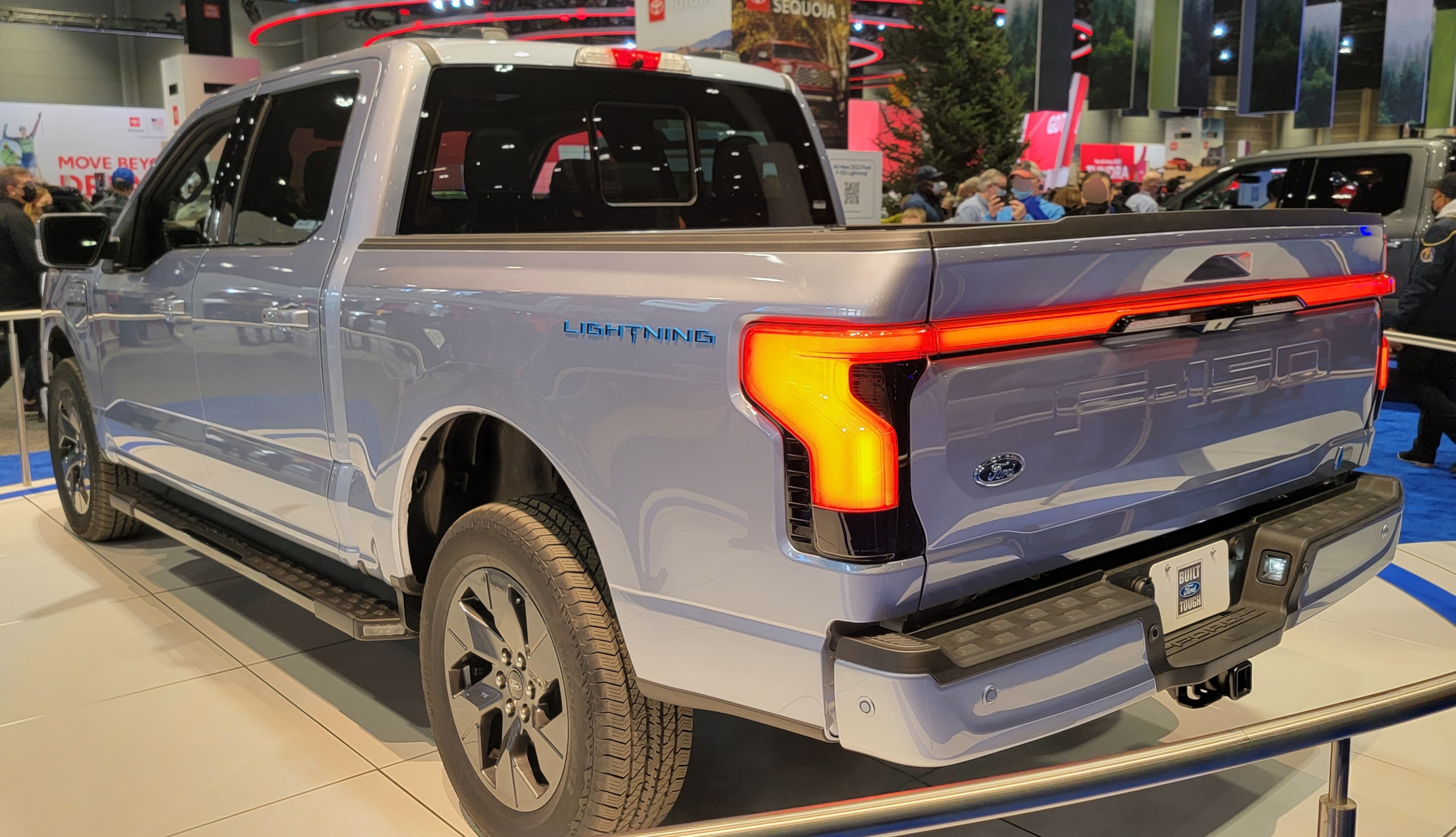
Ford Lightning
The Ford Lightning is Ford’s electric pickup truck. The point here is that Ford stopped making it, showing how hard it is to make EV trucks work when prices and incentives change.

Tesla Cybertruck
The Tesla Cybertruck is Tesla’s electric pickup. Even if it’s popular, the conversation here is that its design didn’t appeal to everyone, which can limit sales.
lifestyle products
A “lifestyle product” is something you buy for how it fits your image and lifestyle, not because it’s built for heavy work. With EV trucks, that can be a problem if people want a truck that works like a normal truck.
consumer demand
Consumer demand is just how many people actually want to buy something. If a company builds an EV truck before enough people are ready to pay for it, sales can fall short.
oil and gas industry impact on EV sales
EV sales can depend on gas prices. If gasoline gets expensive, driving an EV can suddenly look like a better deal, and more people may want one.
mass market electric vehicles
“Mass market EVs” are electric cars meant for everyday people, not just expensive specialty models. The hosts are saying some companies may have bet too hard on EV demand before the market was truly ready.
hybrid
A hybrid uses both gas and electricity. It can use electric power sometimes, but it also has a gas engine for longer trips and flexibility.
EREV development
An EREV is mostly an electric car, but it has a backup system that can make electricity to keep you going when the battery gets low. Think of it as “electric-first,” with a built-in way to recharge.

Ford Mach-E
The Ford Mustang Mach-E is one of Ford’s early electric vehicles aimed at regular buyers. The hosts mention it to show what Ford launched first, before the newer EV strategy.
hedge its bets
“Hedging its bets” means companies don’t want to bet everything on just one type of car technology. They’re trying to be ready for whatever happens with rules, incentives, and customer preferences.
wide swath of pure EV for certain use cases
They’re saying electric cars are great in some situations, but not every situation. So automakers plan to offer EVs broadly, while still using gas hybrids or other setups when that fits better.
Boston Consulting Group
They mention Boston Consulting Group, which is a big business consulting firm. The hosts are using it as a reference point for strategic advice—basically, don’t swing too hard in one direction. In this case, it’s about how automakers manage the EV transition.
battery tech
They’re talking about how EV batteries are getting better. “Energy density” is basically how much energy fits in the battery, and “recharge rate” is how quickly you can charge. Even if charging stations aren’t perfect yet, better batteries can make EVs more competitive.
Shanghai Auto Show
They’re pointing to the Shanghai Auto Show as the event where new EV and battery updates were announced. It’s being used to explain why China’s progress is getting attention. Think of it like a major auto industry news event.
infrastructure issues
They’re saying EVs aren’t just about the car—they also depend on charging stations. If charging is hard to find, slow, or unreliable, people may not switch. Better batteries help, but charging infrastructure still matters a lot.
full self-driving
They’re talking about “full self-driving” as in advanced driver-assist features. The key idea is that some cars may need extra hardware—like sensors or computer power—before the software can work as promised. So it’s not always just a simple update.
pivoting back too fast
They’re talking about companies changing their plans too quickly. If automakers switch directions based on short-term market pressure, they might lose money or get stuck with the wrong investments. The point is that transitions need a careful pace.
digital retail solution
Digital retail means the dealership uses websites and apps to help you shop and buy without as much back-and-forth. It can estimate your trade-in value and help you plan payments before you ever show up.
Route 1 Fusion
Route 1 Fusion is a software service dealerships pay for to make their online shopping better. It helps estimate your trade-in value and can help set up appointments and financing steps before you visit.
trade and valuation feature
This is an online tool that estimates how much your current car might be worth as a trade-in. If you know that number early, it’s easier to understand what your payments could look like later.
appointment scheduling
Appointment scheduling means the website lets you pick a time to come in. That way you don’t have to call around to find a slot.
prequalification tools
Prequalification is an early step that estimates what kind of financing you might qualify for. It helps you understand possible payments before you commit to a full application.
Automotive News Confidence Index
This index is basically a “how confident are car-industry leaders” score. When it drops, it means executives expect things to be tougher soon.
price hikes in terms of oil and gas
When oil and gas prices jump, it can make everything more expensive—especially transportation and shipping. That can lead to higher costs across the car business and make people less willing to buy.
oil futures turning into the physical price of oil
Gas prices don’t change instantly when traders move oil prices. There’s a lag while the oil is delivered, refined, and priced for actual use—so the gas pump catches up later.
fuel costs coming straight off the top for working people
Higher gas prices squeeze your budget right away. And because diesel affects shipping and food delivery, groceries can go up too—so people delay buying things like a new car.
delaying service and putting off large purchases like automobiles
Economic pressure often shows up as deferred maintenance and postponed big purchases. For automakers and the broader industry, that means weaker demand for new vehicles and more strain on service and parts ecosystems as owners stretch repairs longer.
ATP pricing and margins
“ATP” here refers to average transaction price—what customers pay on average for vehicles. Automakers worry not only about ATP being too high for demand, but also about the profit “margins” they can earn at those prices, especially if incentives rise or costs don’t fall.
financial distress for the supply community
Car companies rely on a network of suppliers for parts. If those suppliers run into money problems, they may struggle to deliver parts on time, which can slow down vehicle production.
FSD
FSD is Tesla’s name for its self-driving software. The big point here is that the system may need extra car hardware and more time than Tesla originally suggested.
software upgrade vs hardware
Some people think self-driving features can be added just by updating the computer. But if the car doesn’t have the right sensors and processing, software alone can’t make it work.
Waymo
Waymo is one of the best-known companies working on self-driving cars. The point is that real autonomy takes a lot of work, not just a simple software promise.
self-driving tech
“Self-driving tech” is the whole system that tries to drive the car by itself. The hosts are saying other automakers are watching to see if Tesla’s approach actually works when it’s put into real cars.
legacy automakers
“Legacy automakers” are the traditional big car companies that have been building cars for decades. The discussion is about how they’re approaching self-driving more step-by-step than Tesla.
level two, level three, level four
These “levels” are a way to describe how self-driving a car is. Higher levels mean the car does more of the driving and the human has less to do—though Level 4 is still usually limited to certain conditions.
beta testing on their consumers
This is basically saying some companies release self-driving features before they’re fully ready, and customers end up testing them in real life. The concern is that the results may not match the marketing or expectations.