Cadillac is a luxury car brand. They’re talking about their performance “V-series” cars and saying their racing background helps make those cars feel more exciting.
Formula One (F1) is the top tier of open-wheel racing, known for cutting-edge engineering and strict technical rules. When a car brand claims “racing pedigree” from F1, it’s usually a marketing way of saying their technology, development, and performance focus are influenced by motorsport.
Cadillac is calling the Lyriq V an all-electric performance car. “V” generally means it’s meant to be quicker and sportier than regular trims.
Car
CT5V Blackwing
The CT5V Blackwing is Cadillac’s top performance version of the CT5. It’s the “Blackwing” badge that usually means it’s tuned to feel more powerful and more exciting to drive.
The OPTIQ V is a Cadillac model meant to feel quick and easy to handle. The “V” badge usually means it’s tuned for more sporty driving than the regular version.
The grid is where the race cars line up at the start of the event. “Sitting on the grid” means you’re ready to go, waiting for the start lights to turn on.
At the start of an F1 race, there are lights that tell everyone when to go. The driver has to be ready to accelerate right away when the lights change.
Driver development means helping a young driver improve step by step. It can include coaching, advice, and getting the right chances to race and learn.
In F1, “tests” are structured on-track sessions used to evaluate car performance, gather data, and refine setup. They’re especially important early in the season when teams are still learning how the car behaves and what changes are needed.
They’re saying Formula 2 feels more “work” for your body than Formula 1. Because the car has fewer helpers, you have to push harder on the steering and brakes, so it’s more tiring and requires more physical effort.
They’re talking about how hard it is to drive the cars in different series. In F2, the driver may have to fight the steering more, which can make it harder to feel the car’s behavior precisely.
Power steering is what helps you turn the wheel with less effort. If a car has little or no power steering, you have to use more strength to steer, especially at speed.
They’re imagining what it’s like to drive at Silverstone and how hard you have to work with your arms and body in tight corners. It’s less about the exact racing line and more about the physical challenge.
Topic
turn three Barcelona
They’re talking about a particular corner at Barcelona (turn three) to compare how hard it feels to steer and move your arms. It’s a way to make the driving feel more concrete.
Topic
Qatar (turns 12-14)
They mention Qatar’s later corners to explain which parts of the lap feel most demanding. Different tracks force you to turn in different ways, so the driving workload changes.
When you’re done turning into a corner, you gradually straighten the steering back out. That’s what “unwinding” means, and it helps the car move more smoothly.
Topic
Kuali (driver memory of steering limit)
They’re recalling a time at a track (Kuali) when they pushed the car and hit a point where they couldn’t turn the wheel anymore. It shows how intense steering can get when the car is loaded up.
They’re talking about how racing in Formula 2 prepares you for Formula 1. Some tracks felt much harder than others, and the difficulty didn’t always carry over the same way into the race.
They’re saying that in Formula 1 the cars push down harder on the track, especially in fast corners. That extra force makes your neck work much harder, so neck strength and endurance matter.
They’re saying F1 races last longer, so you need more stamina. That means training isn’t just about driving skill—it’s also about being fit enough to handle the whole race.
Concept
Technology makes all the difference in who has a clear advantage
The idea here is that today’s racing advantage often comes from technology, not just the engine. Even computer systems and data tools can help teams make better decisions and stay ahead.
Ferrari is a famous racing and car company from Italy. Here, they’re mentioned because their computer systems and data are being protected from cyber threats.
Bitdefender is a company that helps protect computers and phones from hackers and malware. They’re mentioned here because even racing teams like Ferrari need strong digital security to keep systems safe.
Topic
cut through the chaos
This phrase is more about attitude than car tech. It means acting decisively when things are hectic, like during a chaotic race moment.
A “launch” is how strongly a car gets moving at the beginning of a race moment—like right after a corner. If it’s good, the car can pull ahead or set up a pass sooner.
Topic
3-1
“3-1” sounds like a quick shorthand the commentators are using for how things are lining up. From this snippet alone, it’s not clear whether it’s about positions, gaps, or some other race math.
When they say “Melbourne,” they’re talking about the F1 race weekend in Australia. Drivers often remember it because it’s a special early-season event.
Term
Q3
In qualifying, drivers get multiple timed sessions. Q3 is the last and most important one, where only the fastest cars from earlier sessions get to fight for the best grid spots.
Lap one is the first lap after the cars launch from the grid. It’s usually hectic because everyone is trying to get positions while the tires are still warming up.
Term
P3
P3 just means “third place.” If you’re P3 on lap one, you’re near the front almost immediately after the race starts.
The grid procedure is the official pre-start routine—how the cars line up and what happens as the start approaches. The key point here is that F1 builds more structure and spectacle into that moment than F2.
Term
F2
F2 is a lower-tier series that helps drivers move up toward F1. The race weekend feels less ceremonial, especially around the grid and start routine.
Leaving the car on the grid refers to the driver stepping away from their F1 car after it’s positioned for the start. In modern F1, there are strict timing and procedural rules about when drivers must return to the car for the anthem, formation lap, and start.
In F1, the garage is the team’s area near the track where they handle the car and team stuff. It’s a place drivers can go briefly before they have to be back for the next step.
The National Anthem is a formal ceremony before the race. Drivers have to be in the right place at the right time, so there’s not much freedom to wander around.
Concept
getting back to the car
After a big moment, a driver has to quickly switch back into race mode. That means getting ready to drive and follow the exact steps needed to start and race.
Topic
race to do
In racing, you don’t have much time to think—you have to perform right away. Even if something emotional happens, the race schedule keeps moving.
Before the race really starts, the cars do a “follow-the-leader” lap to get lined up. Drivers use it to make sure they’re ready and that all the race-start steps are done correctly.
In modern Formula 1, the “battery” refers to the energy storage system used with the hybrid power unit. Drivers and teams manage when and how that stored energy is deployed, which adds new procedures and workload compared with older eras.
The grid box is your exact parking spot on the starting grid. Right before the race starts, you use that space to get ready and make sure everything is set for the lights.
The opening lap is the very first lap of the race. It’s when drivers try to gain positions quickly, but they also have to be careful because the tires and track grip are still coming up to speed.
“Around the outside” means passing a car by going wide through a corner instead of taking the inside line. It can be bold because you need enough space and grip to make it work.
Winter testing is the pre-season period where F1 teams run cars to develop setups, validate upgrades, and build driver confidence. Results from testing can hint at readiness, but they don’t guarantee performance once qualifying and race conditions arrive.
They’re referencing a pre-season test in Bahrain. The idea is that on the final day, the driver did a lot of laps, which usually means the car was running well and the team was prepared.
Qualifying is the session that sets where cars start on the grid for the race. It’s a key moment because it shows how fast the car really is under race-like pressure.
In racing, “procedures” are the step-by-step habits you do every time you drive. If you do them the same way each session, you make fewer mistakes and stay consistent.
When people say “fearless” in racing, they usually mean being confident and committed—like braking and turning without hesitating. It’s about controlling nerves so you can drive consistently.
In racing, staying calm matters because if you get frustrated you can start making bad decisions. Keeping your emotions in check helps you drive smarter and stay consistent.
Formula E is a racing series where the cars are fully electric. Being a world champion there means the person is an extremely skilled race driver, even though it’s a different series than Formula One.
Here, “data” means the car’s performance information recorded during sessions. Engineers and drivers look at it to figure out what’s working and what needs changing to go faster.
Telemetry is the car’s live “numbers” from sensors. It helps teams understand exactly what the driver did and how the car behaved, not just what it felt like.
Company
Premier
“Premier” sounds like a team or workplace Pedro Matos used to be with. In racing, who you’ve worked with before can affect how well you can help a driver.
In Formula 1, the “opening races” are the first events of the season. Drivers and teams are still figuring out how fast they really are, so approaches can be more cautious early on.
“China” means the next Formula 1 race after Melbourne, held at a track the driver hadn’t raced on before. New tracks can feel tough because you don’t yet know the best braking points and lines.
They’re saying that after doing well early, they felt more confident. In racing, that can change how boldly you push, especially when you’re trying to balance speed with not making mistakes.
A driver’s “first weekend” on a new circuit is when they have limited track-specific knowledge—like braking zones, corner entry/exit behavior, and tire wear patterns. That uncertainty often shapes how they manage risk and confidence during practice and qualifying.
In a sprint weekend, there’s a smaller race before the main Grand Prix. The result helps decide where drivers start on Sunday, so teams have to plan differently and take more chances.
Formula Two is a racing series that helps drivers move up toward Formula 1. The speaker is saying the sprint weekend felt similar to how F2 weekends run.
Formula Three is a step in the junior racing ladder. The guest is saying that the experience from F2 and F3 is similar enough that it helped him adapt.
A “high speed” track is one where cars spend a lot of time going fast through corners. That means setup and driver confidence matter a lot because the car has to feel stable at speed.
At very high speed, you can’t really “think” about every move. With practice, your hands and feet start doing the right things automatically, while your brain mainly watches what’s happening around you.
Karting is usually how racers start out. It’s where you learn the basics of driving fast—like when to brake and how to steer—before moving up to bigger cars.
Ayrton Senna was a legendary Formula 1 driver. People admire him not just for winning, but for how fearless and skilled he was, and the way he changed what it meant to race.
Suzuka Circuit is a famous Formula 1 venue in Japan known for its distinctive layout and high-speed cornering. The speaker highlights it as a place where Senna’s legacy feels especially connected to the present because the track’s character hasn’t changed much.
The Acura NSX is a sports car made by Honda’s luxury division. It’s designed to be fast and handle well, and it’s known for being a special, high-performance model. If it shows up in a story or video, it’s usually because it’s a recognizable car associated with that era.
Term
heel and towing
This is a driving technique used when slowing down for a corner. The driver uses the brake and a quick throttle blip at the same time so the car doesn’t jerk when changing gears.
A “quality lap” in racing is a lap that’s not just fast, but executed cleanly—hitting the right lines, maintaining traction, and carrying momentum. Teams often use this term to describe a lap that proves the car and driver are working at peak performance, even if conditions make absolute speed harder.
Term
Q2
F1 qualifying is split into parts (Q1, Q2, Q3). Q2 is the middle part, and if you’re not fast enough by the cutoff time, you get eliminated and won’t race in the final part.
F1 weekends have practice sessions before qualifying. FP1/FP2/FP3 are times to test the car and get comfortable with the track so you’re ready to qualify.
“Commitment” means you fully trust your line and your braking/turn-in and go for it. On a fast track, hesitation costs time and can make the car feel unstable.
In qualifying, there’s a time limit that decides who moves on. If you’re a little slower than that limit, you get knocked out even if you did a good lap.
The lap is split into sections called sectors, and timing is measured separately for each one. If someone finds time in sector one, they’re driving that first part of the lap faster than before.
A double apex is a cornering line where you touch the inside twice—once earlier and once later. It helps you carry speed, but it’s harder because you have to place the car perfectly.
A straight is the part of the track where you’re mostly accelerating. If you exit the previous corner faster, you carry more speed down the straight and can gain time.
Concept
Lasher Cane
This sounds like the name of a particular corner on the track. Drivers talk about it because each corner has its own braking point and line, and that’s where time gains usually come from.
“Delta” is the time difference shown on the driver’s timing screen versus a reference lap (often the current best lap or another benchmark). When the delta “went up,” it indicates the driver’s lap timing improved relative to that reference, typically due to better braking, cornering, or exit speed.
“Broke late” means you brake later than normal, closer to the corner. That can make you faster, but it’s risky—if you brake too late, you can lose grip or miss the corner.
A curb is the raised edge at the side of the track. Drivers try to use it to help the car turn in and exit faster, but you have to do it smoothly so the car doesn’t bounce or lose grip.
A neutral car is one that feels balanced in corners. It doesn’t feel like it’s pushing outward or sliding the back around, so it’s easier to drive fast consistently.
Oversteer is when the back of the car feels like it slides outward in a turn. Some drivers like it because it can help the car rotate and turn in quicker, but if it’s too much the car can get hard to control.
LIVE
This episode is sponsored by Indeed.
There's a lot that goes on behind the scenes of this show,
booking guests across time zones,
tight turnaround edits, and constant time management.
And when things get chaotic,
you realise pretty quickly how important it is
to have the right person on your team.
If I had to hire someone tomorrow,
I wouldn't just want a good editor.
I'd want someone who understands pace
in long formings of use and can work fast under pressure.
And in moments like that,
you think, this is a job for sponsored jobs.
Because Indeed sponsored jobs boost your listing
in search results,
helping you reach the candidates
with the specific skills and experience you actually need.
And it works.
Sponsored jobs posted directly on Indeed
are 95% more likely to report a hire
than non-sponsored jobs.
That's a serious edge when the pressure's on.
Spend less time searching
and more time actually interviewing candidates
who check all your boxes.
Less stress, less time, more results.
When you need the right person to cut through the chaos,
this is a job for Indeed sponsored jobs.
And listeners of this show
will get a $75 sponsored job credit
to help get your job the premium status it deserves
at Indeed.com slash podcast.
Just go to Indeed.com slash podcast right now
and support our show
by saying you heard about Indeed on this podcast.
Indeed.com slash podcast.
Terms and conditions apply.
Need to hire.
This is a job for Indeed sponsored jobs.
Cadillac has entered Formula One,
deepening the racing pedigree
behind every V-series on the road.
Discover a lineup that delivers pure adrenaline
in the form of modern luxury.
Experience the quickest Cadillac ever,
the all-electric Lyric V,
the peak performance of the CT5V Blackwing,
the nimble agility of the OPTIQ V,
and the legendary Roar of the Escalade V,
all engineered to thrill.
Find out more about Cadillac's performance story
in Formula One
and our race-tested V-series lineup at Cadillac.com.
I started this journey when I was five,
and I always believed I could be in Formula One.
As I got closer to the race,
I felt like I was getting more calm instead of more nervous.
Our journey around the world to crown a champion
is about to begin.
The grandstand's completely packed.
Everything's so exciting.
So remember, sitting on the grid before the race,
just like really feeling the moment, you know?
My coach, Ollie, was there,
and he said to me just before I was getting in,
all the years of hard work were for this.
And that hit me really deep.
I remember in the moment,
I almost immediately shed a tear.
Cars forming into position,
and the last car is in place.
It will be time to look to the lights.
I had to sort of calm myself down
because, you know, I had a race to do.
The new season is underway.
And what an absolutely superb getaway
for Arvid Lindblad, who's into four.
On that day in Australia, aged 18,
Arvid Lindblad,
the fourth youngest Grand Prix driver in history,
showed he belongs on track with the very best.
Every category I've done,
I've always sort of been pushed as early as I could.
I've always been the youngest guy on the block,
the new kid, the underdog, you could say.
So I'm kind of used to being in that situation,
which also helped me, you know, to not be intimidated.
In his first race, Arvid jewelled wheel-to-wheel
with Lando Norris and Lewis Hamilton.
He finished in the points.
On just his third F1 weekend,
he outqualified Max Verstappen.
In his words,
Arvid Lindblad is getting stuck in.
Hello, everyone, Tom Clarkson here.
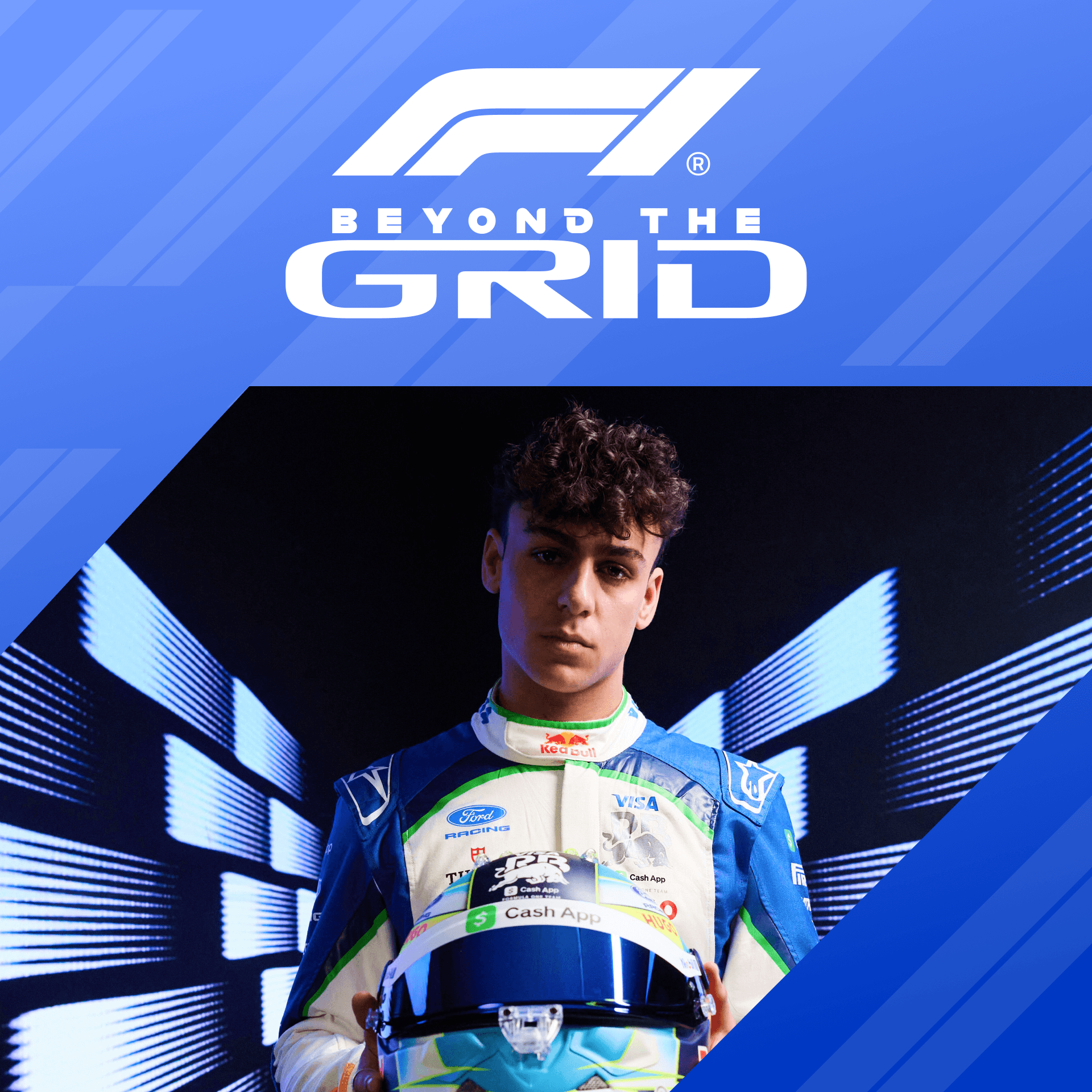
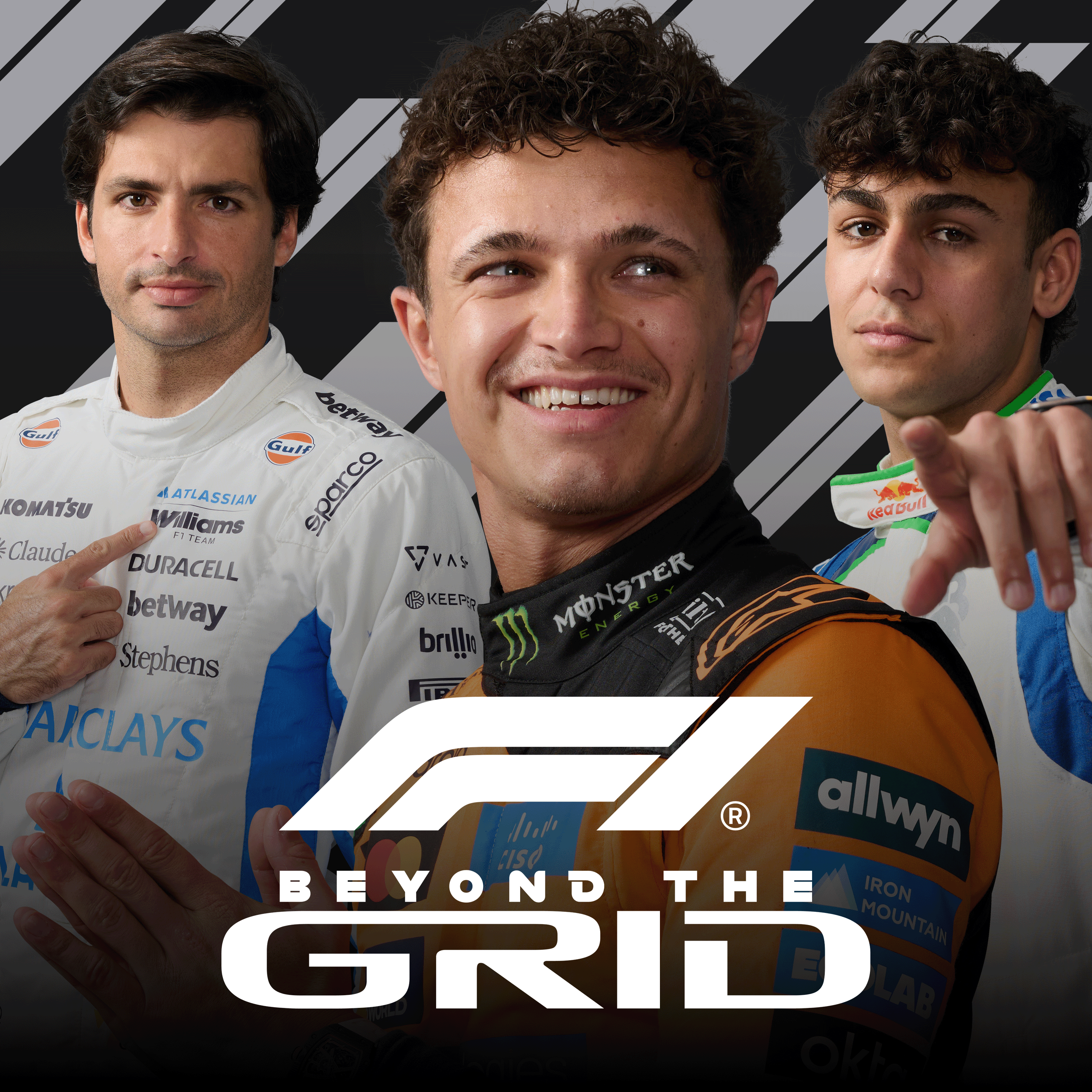
I loved speaking to Arvid for this episode of F1 Beyond the Grid.
The seed of his F1 dream was sown
when he watched a Grand Prix on TV at the age of four,
and he asked his dad,
could I ever be there one day?
Like, how does this work?
Is it possible?
His family, his coach, racing driver Oliver Rowland
and Red Bull's former motorsport advisor, Helmut Marco,
helped him get there.
And you can really tell how much Arvid's enjoying
living his life's ambition.
How are you?
I'm good. I'm good. How are you?
Yeah, I'm great. Thank you.
Enjoying the break.
How has the break been for you?
Yeah, it's been good.
I've tried to obviously have a bit of downtime,
a bit of switchoff.
It's been quite a busy start to the year.
Obviously, it started quite early with, you know,
we had three tests already starting in January,
so it's been quite intense.
I mean, the last time I went home before this break
was like middle end of January,
so it's been nice just to sleep my own bed again.
But yeah, trying to have a bit of switchoff,
but also at the same time staying fit,
also, you know, working with the team,
utilising the time to be on the sim,
trying to maximise the learning from the first couple of events
to be as prepared as possible for Miami.
So a bit of training as well.
How is the training?
How much have you upped the training since Formula 2?
A bit more, but not massively more.
I think people maybe underestimate
how physical the F2 cars are as well.
It's different, you know,
what you have to, the physical demands between F2 and F1,
because so F2 is a car itself,
I'd say it's actually more physical,
because you have, it's much more simple.
So there's no power steering, the brakes much heavier.
The pressure on the brake pedal.
Yeah, you have to really slam it,
but the biggest thing is just the power steering,
like there's none, so it's really heavy.
When the high speed corners, yeah, it's a lot of effort.
It's sometimes the point where you're more,
you almost lose a bit of feeling,
because you're just, it's like just brute force
trying to make it turn.
Can I ask you all about that?
So let's imagine cops at Silverstone,
very, very quick corner, whatever car you're in.
Are you almost having to sort of wedge an elbow
against the side of the cockpit in F2?
Not so much, because of the shape of the corner,
but where would I say it was quite bad?
Um, turn three Barcelona.
Is that bad?
I'd say more like Qatar, does it 12, 13, 14.
It's, you can't really wedge your arm in,
because you're always unwinding,
but it's kind of just, you turn,
and I remember to a point where one lap in Kuali,
I knew the car could do it, so I went in a bit quicker,
and I just got to a point where
I just couldn't physically turn the wheel anymore.
So it's like, you kind of go and you try to,
like almost wedge your arm in,
you almost have to sometimes move your,
your hand up to almost try to like force it down,
but yeah, it's a bit nuts.
So with power steering in Formula One,
how much easier is the steering?
Oh yeah, it's a different level.
I mean, you just blow on the wheel and it turns.
I mean, coming from F2, it's easy.
I mean, F2, I mean, it was in Kuali for like one lap,
it was really hard.
Then in the race, it wasn't as extreme as that,
and it was only like that for, you know, one or two tracks.
But yeah, there were times when it was,
especially also if the balance wasn't very nice,
it was a bit on the nose,
then you always tense a bit more.
It was quite physically draining.
But then obviously F1, as everyone knows,
the neck is a big thing,
because the cars are faster, there's more downforce.
So the neck's the main thing,
but then also the races are longer.
So you need to be more just physically fit.
So there's more cardio that comes with that.
So it's different training.
What's your cardio go to?
Is it a running?
Yeah, running sort of what I like.
I used to do a quite a lot of swimming when I was younger,
but then I kind of went off that a little bit.
But yeah, now I love to run.
I think what's so nice about it is,
because we get to go to all these crazy amazing places in the world,
you can just take a pair of trainers with you,
and you can go, you know, you can just go,
almost sight seeing what you're running.
So I went, when we were in Japan,
I went running around Tokyo.
I did like a 12K loop in the city and stuff,
and you get to see it all.
It's quite cool.
They did the same in Melbourne.
I don't know.
I enjoy running.
I think it's good for the mind,
but also just because of the nature of what we do.
It's also quite fun on the road.
And your trainer, your physio, Sam Village,
he is a runner.
I've come across him in the past.
Yes.
I guess he was always going to turn you into a runner,
even if you weren't, right?
Yeah.
I mean, I liked running, but to fair,
maybe you'd say that Sam was kind of the transition
for when I really started to get more into it.
But yeah, talk about Sam.
He's a big runner himself.
I think he did the Ironman like 10 years ago.
He's doing the marathon again here in London.
Yeah, he loves running.
He's obviously, he's quite busy now.
It's not easy, but there's a lot of times on Saturday morning
or on a Friday night, whenever we get a bit of time,
he's trying to do laps around the track or laps around the city.
Do you run the track?
I do sometimes.
I wouldn't say it's like a routine thing that I do every week,
but there has been quite a few events,
especially last year where I wanted to sort of clear my head
or I wanted to sometimes see the track because you do a track walk,
but I don't know.
I just kind of wanted to see it again where I go for a bit of a run
on a Thursday night or something like that.
Technology makes all the difference in who has a clear advantage,
where Bitdefender is renowned for driving leading edge innovation in cybersecurity.
Bitdefender helps safeguard the data of Ferrari.
They supercharge the cybersecurity team's ability
to swiftly identify and respond to any threat that arises.
Bitdefender has earned the trust of Ferrari
for its commitment to innovation
and for being at the forefront of cybersecurity
to manage continuous and evolving challenges.
Join the millions of consumers and businesses
that trust Bitdefender to protect their digital worlds.
Visit bitdefender.com to learn more
about how Bitdefender supports Ferrari
to stay ahead of cyber threats
and how you can make your digital life safer.
Tight turnaround edits and constant time management.
And when things get chaotic,
you realise pretty quickly how important it is
to have the right person on your team.
If I had to hire someone tomorrow,
I wouldn't just want a good editor.
I'd want someone who understands pace in long form interviews
and can work fast under pressure.
And in moments like that, you think this is a job for sponsored jobs.
Because indeed sponsored jobs boost your listing in search results,
helping you reach the candidates
with the specific skills and experience you actually need.
And it works.
Sponsored jobs posted directly on Indeed
are 95% more likely to report a hire than non-sponsored jobs.
That's a serious edge when the pressure's on.
Spend less time searching
and more time actually interviewing candidates
who check all your boxes.
Less stress, less time, more results.
When you need the right person to cut through the chaos,
this is a job for indeed sponsored jobs.
And listeners of this show
will get a $75 sponsored job credit
to help get your job the premium status it deserves
at Indeed.com slash podcast.
Just go to Indeed.com slash podcast right now
and support our show
by saying you heard about Indeed on this podcast.
Indeed.com slash podcast.
Terms and conditions apply.
Need to hire.
This is a job for indeed sponsored jobs.
Hamilton's got a good launch on back corner.
About to go wheel-to-wheel.
Are we about to go 3-1?
Lindblad prices are getting through.
Lindblad's a third.
Hamilton's a fourth.
And Hatch are down to fifth.
Unbelievable of it, Lindblad.
Well, if anyone doesn't know his name, they do know.
Oh, but Lindblad scores points
to the 18-year-old on debut.
I've made this happen.
I've done many points on my debut.
Incredible stuff.
Perfect weekend.
Very birdie thing.
Can we just do a very brief resume
of what's been a phenomenal start
for you in Formula One?
Wine the clock back to the beginning of March.
When I say Melbourne to you, what springs to mind?
The first thing that happens when it's like a little bit
butterflies already.
And Goosebumps just thinking about it.
I mean, it was an amazing weekend.
What was the highlight?
I think just a lot of motion comes.
That's sort of the first thing that really comes to me
just because obviously the weekend went very well,
but also the meaning behind the weekend.
It was my first race in Formula One.
This is something I've been working towards
and dreaming of my whole life.
So just to have my debut was very exciting.
I had my parents there with me as well,
which was really cool.
And then obviously the way the weekend went as well,
it was Q3, then finishing the points,
but even running P3 at one point on lap one,
it was just a pretty magical weekend.
Yeah, I couldn't have even dreamt of it.
Tell us about that opening lap on the race.
As you say, you were up to P3.
Just what was it like from inside the cockpit?
Because you look so assured from the outside.
Did it feel all calm inside?
Yeah, I don't know.
It was weird because I remember like,
I'd say from half an hour, 45 minutes before the race,
all the way till sort of the lights going out.
Like 45 minutes before, I was pretty nervous, as you would expect.
But almost as I got closer to the race,
I felt like I was getting more calm instead of more nervous.
And I remember very well, sitting on the grid,
obviously the grid in F1 is completely different to F2.
In F2, there's basically no grid procedure.
We never get out the cars, but in F1,
the grandstand's completely packed, the music, the vibe,
everything's so exciting.
So remember, sitting on the grid before the race,
just like really feeling the moment.
It was pretty surreal for me even just to be there.
So I was just kind of taking it all in,
and it was quite a pinch me moment just before the race,
sort of appreciating what was about to happen.
And what did you do when you got out of the car?
Because the first time in your career
that you have left the car on the grid, what did you do?
I think my trainer, Sam,
sort of came and picked me up because obviously I was a bit confused.
I mean, it is quite new.
So you kind of picked me up.
Is that right?
Okay.
When we would discuss it before the race,
because we discussed it before how it was going to work,
but he picked me up.
We went to the garage, went to the bathroom,
had a bit of a sit down, bit of a chill out,
but you don't obviously have long, you have about five minutes
before you have to go back for the National Anthem.
I remember that quite well.
When I arrived at the National Anthem,
obviously I had your name card for where to stand.
And it said my name, and obviously above it was the F1 logo.
It said, you know, Formula One, World Championship,
and then Arvid Limblad.
And even just seeing that, I got a bit emotional,
just sort of appreciating what was about to happen.
And then I said, yeah, when I got back to the car,
I was really chill.
And then I was starting just to get ready.
And my coach, Ollie, was there.
And he said to me just before I was getting in,
all the years of hard work were for this.
And that hit me really deep.
Like I mean, I remember in the moment,
I almost immediately like shed a tear.
I had to sort of calm myself down
because, you know, I had a race to do.
I don't know, it really hit me that sort of thing, you know,
because it's, I don't know, maybe it's hard to relate to.
Maybe it's not, I don't know, but I mean,
I started this journey when I was five.
And I always believed I could be in Formula One.
And it's something I've always been working towards.
It's always been at the forefront of my mind.
And just the fact that it was coming true
and it was really happening was incredibly exciting.
And then obviously, yeah, sort of, I'm in the car,
the formation lap starts, just focused on obviously
trying to manage the procedures.
It's all quite new with these new cars with the battery.
I luckily did that quite well.
I remember coming around the last corner just before coming
into my grid box and feeling super calm.
Like I could see all the people in the grandstand.
I could see that it was completely packed.
But I don't know why I almost got these flashbacks,
almost this vision of when I was six, seven,
racing here in the UK.
I had track called Hooton.
Well, it was just me and my dad because it's quite,
the shape of the last corner was quite similar.
And I don't know, I just got that,
that sort of picture in front of me
and it really calmed me down in the moment.
I knew it was my first Formula One race
and how busy it was, but it felt to me
just like a karting race from 10 years ago
and it was just me and my dad.
So I remember I parked in the grid box feeling really cool.
Lights start coming on.
I'm just sort of trying to focus on nearly my procedure,
which I did okay.
And then as soon as the lights went out,
I was just went for every gap I could find
and just kind of got stuck in
and was sort of slotting in between Lando and Lewis.
And before I knew it, I was in P4.
Lando and Lewis, can I repeat what you just said?
It was amazing.
Yeah, I mean, it is pretty crazy to talk about.
I mean, obviously they're both world champions.
I think for me, I mean, obviously later on in the lap,
I passed Isaac and then it was me, Isaac and Lewis,
really racing and racing side by side with Lewis is pretty nuts.
I mean, Lewis was a big reason for why I fell in love with the sport.
You know, he was, I wouldn't say an idol,
but he was the one I sort of looked up to, you know,
it was just nuts, you know,
to be able to race side by side with him.
Someone that I'd watched on the TV for years,
you know, winning all those world championships.
So it was pretty cool to think about,
even like to a point where I remember I was doing it,
but it only like hit me about 20 seconds later.
I was like, oh my God, I've just, I'm in P3.
I've just been racing with Lewis.
Like, wow, like this is insane.
My memories of that lap were that you were fearless.
And actually we talk about Lewis.
It reminded me of Lewis's opening lap in Formula One, Melbourne, 2007.
You hadn't even been born at this point,
but you know, he was fearless.
He went around the outside of Fernando Alonso,
his guarantee made at the time.
And just seeing you go for those gaps
and not be intimidated by the champions that were around you
was an extraordinary thing.
What were your expectations going into Melbourne?
Because at least it looked like winter testing had gone well.
I remember last day in Bahrain,
you had the highest lap count of anybody, I think.
You know, did you feel ready?
I think so.
I mean, it's always hard to know in the end before it really happens.
You know, you do all the preparation, do all the work.
You do everything you can, you know.
So you feel like you're ready,
but you can never say with confidence, never know,
you know, until you're in qualifying,
until you're in the race and it's really happening.
So I think on that side, I felt as ready as I could be.
Because of that, I really tried to go into the weekend,
which to be honest, I've done all the first weekends
without really any expectations and just focused on myself.
Because, you know, these cars are so new, we're all learning.
I didn't really want to start the season
by comparing myself to others or whatnot,
because I know there's so many boxes I need to tick just in myself,
because there's so many new things that are happening.
So to answer your question of expectations,
there weren't really any.
And the goals I had coming into the weekend
were very focused on myself, doing the basics well,
nailing the procedures and just, yeah, getting,
I mean, it was one of them also was, you know, being,
I wouldn't say being fearless, but, you know, getting stuck in,
you know, and I'd say on that side, I'm quite lucky,
because every category I've done,
I've always been pushed as early as I could.
I've always been the youngest guy on the block,
you know, the new kid, the underdog, you could say.
So I'm kind of used to being in that situation,
which also helped me, you know, to not be intimidated.
And you were able to keep your emotions under control as well.
Yeah, I don't know.
I feel like I'm not a particularly emotional person when I'm in the car.
I go into a bit of a different zone
where I'm just very much focused on the driving
and very in the moment and just reacting to what's happening to me.
So, yeah, there wasn't really much emotion though.
You finish eighth, Britain's youngest ever point score
in the history of Formula One.
Can we talk about celebrations?
Did it go on all night or what happened on Sunday night?
No, I mean, I enjoyed the evening.
Like I said, I was there with my family, with my coach, with Sam.
Even my coach brought his family as well.
So it was, we were all together.
It was really, that was an add to, you know,
making the weekend feel a bit more special.
It wasn't just, you know, it really felt like the whole team,
you know, from the beginning, because, you know,
I've been working with Ollie, my coach, since I was seven.
Oh, we should just clarify.
This is Oliver Rowland as a reigning Formula E world champion.
So he knows his eggs, right?
He knows how to drive a car.
He knows what he's doing.
Yeah.
He's pretty handy behind a wheel.
What he actually do for you as your trainer, as you describe him.
I mean, it's a bit of everything.
It's sort of more of a mentor, a guide, a coach sort of role.
I mean, he does a bit of, you know, we talk about driving.
We talk about mentality to go into the weekend,
how to handle different situations, even, you know,
with the media, you know, how to approach that,
to make sure it takes away as little energy out of me as possible.
So it's a bit of everything.
You know, he's a driver himself.
He's done it all.
So he's just giving me a bit of guidance,
a bit of help on sort of all the different aspects of being a driver.
I wonder if it's something similar to what Oscar Piastri has this year.
He's slightly changed the entourage around him.
He has his old Premier engineer, Pedro Matos,
coming to all the races with him now,
just as another set of eyes and ears really,
you know, look at the data with him or make any sort of recommendations,
if that's the right word.
Is that what Oliver's doing for you?
Yeah, I would say similar, probably a bit more involved though.
I know Pedro from, because when I was in Premier and he's a really cool guy,
but obviously, you know, Oscar and Pedro have a great relationship
and that's why he's able to help him.
But I've known Ollie since I was seven, Ollie's a driver himself.
So I would almost say our relationship and bond is probably a bit stronger,
just because he's known me for longer and he can really relate to me closer,
because he's done it all himself.
You know, he's still driving now.
It wasn't that long ago when he was on the ladder to F1.
Don't look like a sibling.
I would say he's like more like a second dad.
I'd say growing up, he was like a second dad.
Maybe now he's like more like an older brother.
I don't know.
But yeah, it kind of goes between the two.
Sometimes he's my mate and then he's my older brother.
And then when he's a bit more angry, then he's like a second dad.
You know, you said you didn't have expectations at any of the opening three races.
Did your approach change going into China just a week after Melbourne,
having had all that success, having proved that you deserve to be there
and that you could do it in Formula One?
No, no, I wouldn't say so.
I would say I had a bit more confidence in myself
just because I had, you know, I'd showed what I could do.
Maybe I had a little bit more belief.
But honestly, on an approach point of view, on a from mentality side,
I approached it the same.
I knew China was going to be a really difficult challenge.
It was a new track for me as my first weekend.
So it was going to be a tall order to be able to perform and do things right.
So no, I wouldn't say things really were any different.
Being a sprint weekend, though, it kind of,
the format is almost more like Formula Two, isn't it?
It is closer to Formula Two.
Yeah.
I mean, I was talking about it with Ollie and Sam before the race,
that it's a bit like what I'm used to from the last couple of years,
you know, because F2 and F3 are the same.
They're very similar.
So yeah, that helped out a little bit, you could say.
Fast forward to two weeks later.
We're now in Japan.
Again, the approach is the same, right?
Yep.
But what about Suzuki?
Can I just ask you about the track?
How many times have you played it on the F1 game?
You know, what was it like to drive such an iconic circuit?
It was amazing.
It was probably the race I was most looking forward to this year.
It was my first time there.
Obviously, the junior series don't get to go.
Yeah, and it was unbelievable.
I mean, I think there's not that many tracks now that are such high speed,
so punishing if you make a mistake.
And because of both of those parts, something that I almost felt was that
because everything's happening so quickly and you're so in the zone,
you can't think everything's almost subconscious.
And it's rare that you do think, but there are, you know, laps that are a bit more,
that aren't quite as intense.
But because it was so subconscious and just so much on feeling,
so pure, that it almost reminded me of my early karting days, you know,
when you're just driving, you're not thinking you're just sending it,
you know, you're just having fun, you're just really,
just you and the cart and just going.
So that, for me, was really enjoyable.
It was almost taking me back to the early days.
So that, for me, was the thing I almost enjoyed the most about the track,
but then obviously going into the circuit itself, it's amazing.
It's such high speed, you need a lot of commitment,
and it's such an iconic circuit as well.
So it was just really enjoyable to drive.
Did I read that you were a Senna fan?
You are a Senna fan, Ayrton Senna?
Not really.
Okay.
Where did I read that?
I would say I have a massive respect for Ayrton and, you know,
obviously what he's done in the sport is unbelievable.
The only reason why I say I wouldn't say I'm a Senna fan or maybe I don't idolize Ayrton,
is just because his time was so much before mine,
and I don't feel like I really know that much about him.
I mean, obviously, there's some stories and there's stuff,
but I mean, growing up seeing Lois, you know, I could,
I was watching him on the TV.
I could see everything.
I could watch his on boards, you know, I could watch his overtakes,
all that sort of stuff.
Whereas with Ayrton, the sort of footage available,
the stories available are so much smaller,
that for me, it was just, I couldn't get enough of a grasp,
you know, and an understanding of him.
So that was why.
The only reason I ask about him is I find whenever I'm at Suzuka,
it's the one place that I feel the bond between Senna and now is strongest,
because the track hasn't changed.
And there is some amazing footage on YouTube of Senna driving,
I think it's an NSX in his, you know, in his civvies, and he's got...
Yeah.
You watch him stabbing at the throttle and heel and towing,
which I guess you haven't had to do in your career.
But it's a great bit of footage.
But look, final thing on Suzuka is that quality lap.
Everyone in the team said it was an absolute, it was a giant of a lap.
And it put Max Verstappen out.
That's the one I'm referring to, you know, it put Max Verstappen out in Q2.
How good was the lap?
And what did it feel like to take that scalp if that's the right expression?
Yeah, it was pretty nuts.
It was cool.
I mean, going almost a bit sort of back, it wasn't an easy weekend.
FP1 went okay, but then I missed all of FP2 with an issue.
I'd missed a good chunk of FP3.
So I was coming into the quality, a little bit lost and not really sure what to expect.
Like I said before, Suzuka is such a high speed track,
so you need a lot of commitment, which means you need confidence.
You need laps to build that confidence.
And coming there as a rookie, that was kind of the one thing I needed.
Because if you're more experienced in, you know, you've done it a lot of times,
maybe if you miss a few laps on the weekend, you can kind of figure it out.
But I mean, it was my first time there.
And having such an interrupted week leading up to quality was not easy.
So I really just tried to make the best of the situation and learn during especially Q1.
The team did a really good job to give me a car that I'd confidence in, that I could build with.
And then I know I remember coming in after that first round of Q2,
looking on the timesheet, seeing I was about four tenths off the cutoff.
And I thought to myself, it's going to be a bit difficult to get through here.
I'm going to need to, I don't really know if it's on the cards.
So I told myself, right, I'm just going to, I've got nothing to lose.
This potentially is probably going to be my last lap of, you know, this qualifying,
the last lap on low fuel, I'm just going to send it and just go have some fun, you know,
and just leave everything on the track and just have no regrets.
Because that was something I was a little bit sad about from Melbourne and China,
even though Melbourne went so well, you know, with Q3, because of, you know,
we had a few issues during the qualifying and all this kind of stuff.
And same in China with the yellow flag coming out.
I didn't feel like I got that one lap where I could just switch off my brain and just go,
you know, and just not really think and just leave everything out there.
So, you know, I told myself, it's probably going to be my last chance.
You know, this is my lap to do that.
That was the approach I went in with and I just sent it and hope for the best.
And it was, it was pretty cool.
I mean, it was a pretty good lap.
I didn't really make, I didn't make any mistakes.
I sort of hooked up well.
And where did you find that four tenths?
It was a bit everywhere.
Right.
I mean, there was a good chunk in sector one, there's probably two tenths in sector one.
But then, you know, there was a bit in, in the hairpin and 11, a bit more in 13, 14, just
because they're committed a bit more in 13, but then still got the line nice for 14,
which is not easy there because, you know, it's a double apex, the tires overheat,
all this kind of stuff, just got that spot on.
I was really efficient as well with the approach I had.
So, I had lots of energy for the straight.
So, I gained a little bit more on the straight, even though I was quicker in the corner as well.
I mean, I remember coming into the lasher cane and I think at this point, I was
half second up on the dash because I was four tenths off the cutoff at the time,
but obviously that improved.
So, I'm like half second, I think five and a half tenths up on the dash.
I remember even screamed in the helmet because I was just like, you know, come on,
like don't mess it up kind of thing.
That was all in the lasher cane.
I was like, just don't mess it up, just nail it.
But then, yeah, I don't know.
I just broke late, got the curb nicely and Delta went up to like six and a half tenths.
And then I crossed the line.
I remember, I think the first thing I opened the radio with was like,
hey, come on, that's got to be enough.
Like, please tell me that's enough, you know.
And yeah, like 20 seconds later, I was like, you know, congratulations are in Q3.
And it's just like, wow.
Come on, man, that's got to be a good one.
He does it.
The rookie driver, 18 years of age.
Arvid Lindblad knocks out the four-time champ.
An almighty shock at a circuit for Stappen has made his own.
You're such an instinctive driver.
We've learned that about you already.
What did Max say?
Did he come up to you afterwards or any conversation with him?
No, we haven't really spoken about it.
I mean, obviously for him, it was not a particularly nice day.
He hasn't had the most fun so far this year.
But I mean, for me, to be honest, I don't really care who it is that I knock out or beat.
In the end, I was just so happy to be in Q3 after all the difficulties that I'd had so far that
weekend to really just pull it together with my guys, you know, on my side of the garage.
It was just a very special moment.
So yeah, it doesn't really matter the person.
It was just being able to start at the top 10.
You know, you said the team gave you a really good car.
I guess every racing driver wants a neutral car.
But what is your preferred car?
I mean, do you like a car that's right on the nose?
Or just what is a really good car that you really feel you can get a hold of and do your thing?
I don't know.
I would say I'm probably more on the oversteer than the understeer side.
I don't really like understeer.
I just think it's slow.
In the end, I mean, we need to go around the corner as fast as possible.
So if the car turns quicker, you go around the corner a bit quicker.
So I mean, obviously there's to a point where then you're limited by the rear.
But if you can just turn quicker, then you go quicker.
So I don't know.
I would say I like a car that is relatively neutral.
But if I had to choose one, I'd say a bit more on the nose than on the understeer side.
Something Alan Permain said recently was that you can be a bit harsh on yourself.
Can you see that character trait in you?
Are you a perfectionist?
Maybe a little bit.
I like to do things properly.
But at the same time, I don't know, I tried to get the balance right.
But in the end, you don't learn anything by not being honest to yourself and accepting
when you haven't done things well and when things can be done better.
So I tried to get the balance right and cut myself some flak when it's needed.
But in the end, I think the point I am in my career at the moment,
there's a lot to learn and there's a lot I can improve on.
And that's kind of what I'm focused on and that's where I'm looking.
So.
Well, that's why I keep coming back to Rag and Bone's Infuse Denim range,
because they have that comfortable broken infill from the start.
Stretch where you need it, structure where it matters, and they look great as well.
It's all down to a mix of premium materials and an eight-step overdive process that gives
the denim a rich dimensional color that actually gets better with time.
And they come in a range of different fits, whether you prefer slim, straight, athletic,
or relaxed, the Infuse Collection has something that works whatever your style.
Rag and Bone have spent more than 20 years perfecting their denim.
So these are built to last season after season,
and they only get more comfortable the more you wear them.
It's time to upgrade your denim with Rag and Bone.
For a limited time, our listeners get 20% off their entire order
with the code GRID at ragbone.com.
That's 20% off at rag-bone.com with the promo code GRID.
And when they ask you where you heard about them, please support F1B on the grid
and let them know we sent you.
This episode is sponsored by CarGurus.
Buying a car can sometimes feel like a bit of a guessing game.
I remember the last time I was looking, comparing prices, mileage, different models,
and wondering if I was actually looking at a good deal or not.
But it really doesn't need to be that stressful.
CarGurus is the only site in the UK that shows a deal rating on every car from great to overpriced.
So you can quickly see whether the price makes sense based on the vehicle's condition,
mileage, and features.
What's great is that it puts you firmly in the driver's seat with complete car specs,
vehicle history, price change information, and dealer reviews.
So you've got all the important details right there before you make a decision.
And with hundreds of thousands of cars from top-rated dealers,
it makes it much easier to compare options and find something that works for you.
You can even set up real-time alerts for price drops and new listings so you never miss out.
So join the millions who have already found their best deal with CarGurus.
Go to CarGurus.co.uk for complete vehicle details without any surprises.
That's CarGurus, C-A-R-G-U-R-U-S.co.uk.
CarGurus.co.uk.
CarGurus, search, buy, sorted.
You say there's a lot to improve on.
Something Colton Hurter said on this podcast last week was that really, by the time a driver's
sort of 16, 17, assuming he's been carting from a young age, which he had and you have,
he says he doesn't really think the speed gets any faster by the time you're 16, 17.
You become a more intelligent racing driver in terms of how you read a race,
but the speed doesn't improve. Do you agree with him?
Not really.
You think there's more speed to come?
Yeah. I think you can always improve. I think obviously,
I think you were saying you can improve, but just the raw speed.
I don't know. I mean, obviously it's hard to compare sports, but in tennis you have a coach
no matter what. Even Djokovic when he's 37 or 36 is getting showed how to improve his forehand.
I would say in racing, it's the same. I think there's, in the end, we drive to the limit,
which is our feeling. And if you can improve your feeling, then you go faster.
So something I'm trying to do to improve, I mean, I think the sims are really good
because they're not actually perfect. In the sim, you don't feel what you feel in the real car,
which means your stimulus for where you feel what's going on is different to the real car,
which means if you can improve that, then you have more feeling in the car.
I think it's really good when you drive different cars because then you start to
get different feelings. If you were to drive a rally car,
you start to get a very good feeling for the car in a different way.
If you drive a road car, all these kind of things.
These are the kind of things that I'm looking to potentially explore with time.
In terms of feeling, the sim, it's all through the hands. Whereas in the real car,
it's more through your bum and your feet. Well, all of it, right?
It's mostly your bum, yeah.
Okay, your gut. Do you feel it through your bum? But then your brain is like,
it holds you back a little bit. It's like you have a horse and you're holding the reins.
And every session, you kind of release a little bit. And then it's sort of, for example,
in Japan in qualifying, you're always releasing a little bit,
but it was only that last lap of QT where I just let go of the reins.
And sometimes the horse is just going to go and it's like, can you hold on to it?
And that's kind of, you know, when you just send it. I don't even know how we got into this,
to be honest. But I mean, yeah, I don't know.
What about you and your competitiveness? Are you competitive in everything that you do,
not just at the race track?
Yeah, I'd say so, yeah. I mean, even in school, I mean, school is very important in my family.
I come from Indian background on my mum's side, which is very known from the academics being
important. Was mum at Cambridge? Mum was at Cambridge. My uncle was also at Cambridge.
My mum's cousin was also at Cambridge. So I've come from quite an academic background.
I think my mum went to Trinity. I think it was Trinity. But anyway.
Oh, Harvard, you haven't gone to Cambridge?
I know. Unbelievable. My mum still gives me a flack for that.
Well, I mean, talking about mum, I think for her, when I told her at like 13 or maybe earlier,
11, you'd have to talk to her to know. But I think it was around 11, 12.
I told her, mum, I'm not going to go to uni. She was like, what do you mean? What are you on about?
I'm like, mum, I'm going to be a Formula One driver. I'm not going to uni.
She's like, well, let's see kind of thing. You know, I was like, no, no, mum,
I'm going to be in Formula One. So don't get your hopes up on uni.
We'll find a way around the school, but that's Plan B, but I don't really see that as...
And what did mum say to you after Melbourne? Did she say, okay, I get it now?
No, I think that was the moment where she got it. I think for her, that conversation was a bit of a...
It sent a bit of shivers down there. She was very confused. She couldn't really...
I think that was where she understood how driven I was and this was what I was going to do,
which I knew since I was five. I knew since I was five, this is what I was going to do.
But that for her was when she realized that I think she kind of appreciated the way of it.
So then from that moment, she's been on board and she's known this is what I'm working towards.
So in Melbourne, she was just happy and she just gave me a hug and just said,
well done. It was amazing. And I think my parents have always been very supportive on that side
because it's always been, as I've said so far, it's been my goal, my dream. It's been
my drive that's got me here and my parents have been... I'm here because of them,
because of how hard they worked in their life to be able to have the opportunities to do this
and their help through my journey. But they've always just supported me and they've never really
been any more than... My dad's not one to really shout to me, that is what I'm trying to get at.
He was the one who was always just there for me, even if things didn't go well, because he knew
that I was already annoyed at myself. So in all these kind of situations, my parents have always
just been very supportive, very loving, which has always been nice.
So mum's side of the family, not motorsport fans, is that fair to say?
So that influence came from the paternal side, from your dad, Stefan?
Yeah. So it actually more comes from my paternal grandfather, far, far as I call him, Swedish,
which in Swedish, far as dad's dad. Yeah, I mean, far forward, he loves motorsport.
He'd watch anything with wheels in an engine. I mean, I remember when I was maybe like six,
six or seven, my far, more far, far, they can't, they don't have much money, to be honest,
they can't afford cable TV. So my dad has to, now he pays for them to have it,
but I mean, 15 years ago, and it wasn't 15, anyway, 12 years ago, they didn't have it.
So I remember coming down, my mum came down actually, and she told me afterwards,
she came down to get some water at like three or four o'clock in the morning.
My granddad was there, scrolling through all the motorsport channels, watching them all,
because he was just, he loves it, he just wanted to watch everything.
So that's sort of where the passion started. So when he took my dad, they did it for about a
year, they did motocross, that to stop quite early, but he did motocross for about a year,
so that sort of passion passed down to my dad. When I was three, my dad got me a motocross bike,
so I started with motocross. It didn't last very long, only a couple of months.
I think it was a little bit too much for my mum to see a little kid that's
learning to walk on a motocross bike. Just to be clear, we're not talking mini-motor,
we're talking off-road, right? Yeah, like in the mud, I wasn't quite going on jumps because I was
three, but I mean, the traditional step would be to go supercross, then they do in the states.
Did you enjoy the freedom that you get on a bike?
Yeah, I don't really remember it that well. To be honest, I liked it now.
No, I haven't really been on a bike since. We're actually talking today about potentially doing
some stuff on it, but no, I haven't really been on one since. I don't know, I enjoyed it, but it
wasn't that instant love. I enjoyed it like any person does when they go to an amusement park,
but it wasn't like when I went karting for the first time, I didn't want to leave.
I was about to be dragged out, and then immediately when we got when I was in the
cars asking him, when can we go again? When we go again, you know, when I went
karting for the first time, I loved it. So that really stuck a lot more.
And that was a sand down in the UK. Is that right?
Yeah, I did a lot in sand down. I think I went karting the first time somewhere else. It wasn't
really karting, it was like basically like this toy bumper cars thing, but that was the first
time I kind of sat and like moving vehicle like that. But then I went to sand down quite a few
times because my dad knew that I had this sort of passion and I enjoyed it, but he, you know,
obviously it's expensive. So he was just like, right, let's just do it for a couple of months
to see if you actually enjoy it and you're actually serious. So for about good four months,
went to sand down park in Isha a lot. And then my dad bought me my first go kart when I was five,
a few months later, we went a lot to Rye House where Lewis started. We went to Bayford Meadows.
Those were sort of two tracks I started at, but then where things really took off was when I was
seven, we were moving house and the house we were moving to wasn't quite ready yet. So we went to
live with my grandparents for the summer and they live in Bolton in Manchester and about 45 minutes
away from there was a car track called Hooten Park, which is very small. There's not nothing really
nice about it, to be honest. But that was where me and my dad would go every other day that summer
and I was driving all the time and absolutely loved it. And that was where everything really took
off. And I remember very well, my grandparents would come, you know, during the days they'd bring
Indian food, you know, I remember having my nannies Rajma and Chapatthi's, you know, out the back of
the car. But that was sort of the summer that really changed everything. And that was the moment
when you thought, I want to get to Formula One. No, I'd say that happened already when I was...
That had already happened. That's extraordinary clarity of thought, isn't it?
For me, the moment where the seeds sort of was sown was when I was four. My dad was sitting on the
sofa at home and he had the F1 on and I came and sat next to him and I was watching the cars
and I was in awe, you know, I was sitting there for a couple of minutes just looking at all these
cars go past. This would have been, what, 2011? So, you know, I've got Seb, Jensen, Lewis,
I'm watching this race and I'm just like, wow, this is so cool. This is crazy. And I remember
asking my dad, like, could I ever be there one day? Like, how does this work? Like, is it possible?
You know, and I started badgering him with these questions. And that was where I was really like,
this is nuts. I want to do it. And then a few... A year later, we went to Silverstone.
It was, what, 2013 Grand Prix? So it must have been end of 11 or maybe beginning of 2012,
but a year later went 2013 British Grand Prix. And that was the moment where I really knew.
Sort of the sofa was when the seed sort of came, but then when I went to the F1 race the first
time, I knew I wanted to do it and I wanted to be in Formula One.
And did that change your attitude to how you went karting?
Yes, but I would say that it was so early on that it didn't really feel like it changed.
It was kind of just like... It was still kind of in the beginning. It wasn't like
I was halfway through, so then all of a sudden I was like, right now I'm going to start.
You know, it was really so early on that I don't really remember from before this moment.
So all I remember is every time I went to the kart track, I had the goal of getting to Formula One.
It was never a hobby for me. It was always, you know, maybe my dad will say it was,
but for me it was never a hobby. Every time I went to the track, I was having fun, but I was also
thinking, you know, how can I be better? How can I learn? How can I improve?
And a lot of that also did come from my dad. It's a big part, thanks to him,
in the beginning he was never focused on the equipment. You know, a lot of,
you know, kids and their parents, they were trying to get the best engines, the best chassis,
the best team, and I had quite lousy equipment, but my dad spent the money on driver coaches.
All the time I'd have driver coaches, you know, work on how can I get better.
I do remember having a conversation with him at one point, you know, I was like,
dad, you know, it's just so difficult running around in like P10, you know, I've got no power,
like I'm not having fun here. You know, why can't you just get me a better engine?
And he's like, no, no, you can, when you're ready, you'll get a better engine,
but you're not ready yet, you know, you've still got a lot you can improve on. So
it was always about driver coaches. And that's when Oliver Rowland came into your life.
That leads into Ollie. So I was driving for a team called Zip, which had a relationship with RSF,
which Ollie was a part of Racing Steps Foundation. And my dad asked the team, he was just like,
you know, if any of the drivers have a weekend off and they want a bit of extra pocket money,
you know, it mean the world to us if they could come and just do a day with Arvid.
And Ollie was sort of scrambling for anything he could get. So he was, you know, immediately up for
it. And I remember meeting Ollie when I was seven. And every six months we do a test day.
And he'd help out.
Oh, but how would he help out? Would he be telling you where to break? Would he be
helping with setup, that kind of thing?
No, it was driving. Not so much a setup. It was, yeah, really, it was everything on driving. It
was talking about lines. It was, you know, break here, you need to turn this way. You need to
feel the car in this way. And it was really just like, it was obviously very basic, but it was
really just, it was all about driving. Because he was so good at the driving, he, you know,
he really helped me. I loved working with Ollie. So every time he could come, you know,
I'd ask for it. And we had a very close relationship because of that. So remember at the end of 2016,
at the end of my first year, we're in a bit of a difficult first year of like racing properly.
It's like national British championship and stuff. It was a bit difficult with the teams
because we'd moved team to something called, a place called AIM that was going really well,
but the boss, he didn't want to stop with the team. We didn't really know where to go
because there was another team called Fusion. We didn't really want to go there because it was
a big team. And my dad wanted me to be in a small team. He didn't mind if it was worse,
he wanted me to be in a small team because then I get more attention that helps me to learn and
improve. So we didn't really know where to go. And so my dad asked Ollie to come to a race.
So Ollie came in the other, maybe January, 2017 on the first races. And he was saying,
right, I'm going to start a team with Arvid. You know, this, this isn't working. Let's, you know,
I think what he told me actually was that plan A was you go to Fusion, plan B was you stay in zip
or plan C is I could start a cutting team with, with Arvid. And my dad immediately was like,
yeah, let's do that. Let's start a team. Do plan C. Yeah, yeah, plan C later, start a team. That
sounds great. So, and I think Ollie kind of said that more out of a, yeah, you know, maybe we could
do this. I don't think he'd really thought it through. But then it was happening before we
know we brought we, we had a sprinter van with a little pop up tent. And it was me, Ollie, my
mechanic, Alex, going all around the UK. And we were learning stuff together. I mean, for Ollie,
he was racing F2 at the time, which is pretty nuts. You know, he was racing with Charles that
year, 2017. And yeah, we're going all over the UK. And that was where things really took off. I
finished second that year to Taylor Barnard, who's now racing in Formula E. Then the year after,
I won the British Championship. And yeah, then I went to race in Europe, 11. And obviously,
Ollie couldn't continue the team in Europe, but we stay very much in contact at the end of every
day, you know, I'd send him a voice note, we'd have a call about how things were going. He'd come
to a few of the races in Europe. Then it was similar in F4, he came to a few of the races,
a few of the tests. And then it was beginning of F3, sort of between F4 and F3, where he really
stepped up, because it's very rare for people to do the step from F4 to F3, because it is such a big
step. Just to put it in lap time terms, between F4 and F3 is the same as F3 and F1. It's about
13 seconds, 14 seconds. So almost no one does that step. And the people that do that step,
almost none of them have been able to perform the first year. And we know what happened.
Well, you win your first race. Well, this is what, you know, it was,
this was, you know, Helmut, we had the vision and this was, you know, what we were doing.
So we had to put a lot of effort in. I remember I was pretty nervous at the start of that year,
and I needed all the help I can get. So Ollie became a lot more involved, and he started coming
to a lot of the races. I think he came to six or seven of the races in that year. And yeah,
it went pretty well. I won my first race in Bahrain. A few rounds later, I won the
feature race in Barcelona. And then I had the double win in Silverstone. And yeah.
First time that had happened. Yeah, it was, it was pretty nuts. I mean,
it was a very special year. I think I broke a few records. And I think that was,
yeah, the year that I think changed things. Because yes, last year in F2 was good,
but there was a lot of ups and downs. But I would say the year in F3 really
helped me to be here. Change things from a red bull perspective in terms of how they
looked at you. Is that what you mean? I think, I mean, I always had a very
close relationship with Helmut. And I think there was always the vision that we had together.
But I would say maybe it helped consolidate things and gave me maybe a bit more of a
buffer when things were a bit more difficult in F2. We've talked about some of the key people,
dad was clearly one, Oliver Rowland was clearly one. Can we talk a little bit about Helmut?
He can be quite harsh on young drivers. How was your relationship with him?
He can be. And there is a lot of stories, obviously, about Helmut. But my relationship
with Helmut was very special. And a lot of these stories I can't really relate to.
We met for the first time in Porta Mau when I was 13. And I remember I was just very excited
to meet the guy that had brought Max to F1, that brought Sebastian, all these
amazing guys that had gone on to do great things. And I was obviously very proud that he'd
wanted to give me that same opportunity. But yeah, our relationship was very good.
We were very honest with one another. We said things how it was. And that helped me to learn
and to improve. There was never any rubbish. Like I said, it was always very honest. And it was a
lot thanks to his guidance and expertise. Also, thanks to Rocky as well, that was able to come
through the ranks so quickly to be here today. Rocky as in Sebastian Vettel's race engineering.
Yes. So I think it's Guillem Rockalan is his name. Yeah, everyone calls him Rocky now.
He joined the program in 2022. I joined end of 2020, but I was in casting at the time. So I
wasn't that heavily really involved in the program. But then when I, as soon as I stepped up to cast,
he was obviously there. So they were both a big thanks to why I've been able to come through
the ranks so quickly. And yeah, I don't know. Like I said with Helmut, we always got along very
well. We said things how it was and he helped me to learn. And there's a lot of stories about
him being difficult and, you know, not the easiest to work with, but for me, he was always amazing.
And he's a big thanks to why I'm here today. He always had my back and he always believed in me.
And even when things were going difficult last year, he was the one who believed in me most and
has helped for me to have this opportunity this year. So I'll always be grateful to him for that.
Even though Helmut's not traveling this year, have you stayed in touch? I imagine he's very proud
with a view and how it started. Yeah, we stay in touch. We called after Australia.
And he's still following along. He's trying to stay a bit more sort of in the shadows and,
you know, a bit more away from it. But he still knows everything that's happening.
And I'm sure that he'll be raised this year. Yeah, obviously, I'm sad that he's no longer
in the paddock because we did get along really well. But I think the way I try to look at it is that
it's, I think it's really impressive that someone of his age was going to 24 races a year,
showing his passion, dedication, love for the sport at his age.
I'm trying to imagine what he said to you after Melbourne.
Ah, Arvid, not bad. Something like that. I can imagine him saying something like that.
Not bad, well done. He was like, so, Arvid, everyone in Red Bull is now a Limblad fan.
That was what his words were. So, yeah, that was pretty cool.
Arvid, I think after this chat, a lot of people listening to this will be Limblad fans as well.
Thank you so much for your time. It's been great to get to know you a little bit.
Final one for me, really, is the season kick starts in Miami this coming weekend.
But what does success look like for you over the remainder of 26? What are your goals?
Honestly, even though the first few races have gone well, I'm still going to try to keep with
that same mentality of just focusing on myself and doing as best as I can. So, I wouldn't say
I've got too many outcome goals. I mean, obviously, I want to do well. Me and Liam have been fighting
hard the first couple of races, so I want to continue to be right up there with him and
obviously try to beat him. But in the end, that is an outcome thing. That's an output.
So, that's what I'd like to achieve. But to make that happen, I need to focus on myself and make
sure I'm doing everything right on my side, all the procedures, all that sort of stuff.
So, that's where I'm going to put the effort, especially these next few races. But I think
for the rest of the year, and then we'll see what happens. Very good luck with it all.
Thank you very much. Cheers. Thank you for your time.
What an incredible conversation. I had to keep reminding myself that Arvid is only 18 years
old because he's already so articulate and confident. His story so far is both unique
and inspiring. But let's remember this is only the beginning of the beginning for him.
Arvid, thank you very much for your time and good luck this coming weekend in Miami and for
the remainder of the season. And as you said, keep focusing on yourself and I'm sure everything
will pan out just fine. Now, on the subject of Miami, Joliet Palmer, James Hinchcliffe and I
look forward to the race on this week's episode of F1 Nation. That's out now. Thanks very much
for listening and I will of course be back next week with another great guest from the
world of Formula One. F1 Beyond the Grid is produced by Formula One and AudioBoom Studios.
Until next time, keep it flat out.
to my personal development from my professors. That's extremely valuable to me.
About this episode
Arvid Lindblad reflects on his rapid rise to Formula One, from watching races as a four-year-old to scoring points on debut in Melbourne at 18. He talks through the physical demands of F2 versus F1, the mental side of racing, and how running, sim work and coaching help him prepare. The episode also digs into his family background, early karting days, and the role Oliver Rowland has played as mentor, coach and guide.
‘I’ve always been the youngest, the new kid, the underdog. It helps me not be intimidated’. Arvid Lindblad, the fourth-youngest F1 driver in history, is full of confidence. In his first race he fought wheel-to-wheel with World Champions. The Racing Bulls driver has made a fast start to his first season in Formula 1. He always believed he’d race at the top. He’s living his childhood dream and he’s loving it. Arvid tells Tom Clarkson how he went from watching F1 on TV aged 4 to racing in F1 aged 18, inspired and supported by his family, his coach – the racing driver Olly Rowland – and Helmut Marko, Red Bull’s former Motorsport Advisor. He explains the coaching which helped him beat more experienced drivers as he progressed up the motorsport ladder in ever-faster cars.
Arvid also looks back to his Formula 1 debut in Australia, where he overtook Lewis Hamilton and Lando Norris at the start and scored points at the end, and relives the stunning qualifying lap in Japan which saw him eliminate Max Verstappen.
This episode is sponsored by:
Bitdefender: visit bitdefender.com to learn more about how Bitdefender supports Ferrari to stay ahead of cyber threats and how you can make your digital life safer
Rag&Bone: for a limited time, our listeners get 20% off their entire order with code GRID at Rag-Bone.com
CarGurus: go to cargurus.co.uk for complete vehicle details without any surprises