They say Ferrari is going to be the main focus of the episode. The rest of the conversation connects back to Ferrari’s new electric car and what people think about it.
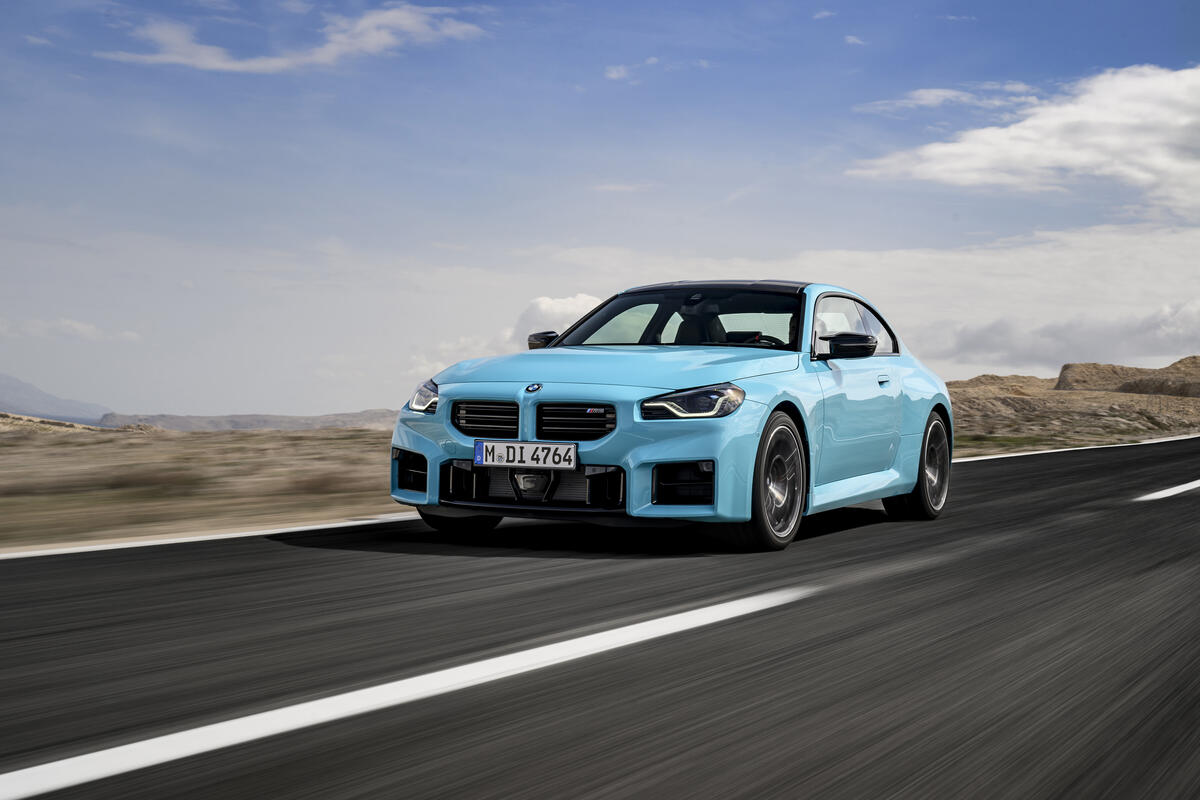
The BMW M2 CS is a high-performance version of a compact BMW sports car. It’s made to handle more aggressively and feel more exciting when driving. The podcast mentions it because someone drove it for a week and is sharing impressions.
The BMW M Coupe (E36) is a sporty two-door BMW made for driving enthusiasts. It’s part of the E36 generation and is tuned for better handling and performance than a regular model. It comes up when people talk about classic BMW “M” cars.
Mercedes is a major luxury car brand. The hosts are saying that Mercedes designs have often been controversial for a long time, so they’re not surprised by styling reactions.
The Honda CRX is a small sporty car, usually a hatchback or coupe. It’s known for being light and fun to drive. People mention it when talking about how car designs from the past can influence later styling.
Chris Bangle was a BMW designer. The hosts mention him because his BMW designs were famous for being very polarizing—some people hated them, others liked them.
“Bangle butt” is a nickname for a BMW design look that many people either loved or hated. It points to a very noticeable, flared rear shape that came from designer Chris Bangle.
Term
Luce
The hosts mention “Luce” as a Ferrari thing that long-time fans don’t like. The problem is the clip doesn’t say what “Luce” specifically is (a model, concept, or design change).
A “publicly held company” is a company owned by public investors who buy and sell shares. The hosts are saying that can push companies to keep growing and bring in new buyers.
That phrase means the company’s stock price has dropped a lot and investors haven’t been happy. They’re using it to suggest the market may be reacting to what the company is doing.
They’re saying the company’s worth (as investors see it) has dropped by about a third. The point is to connect that drop to how the market might be judging the company’s direction.
Term
Arimez chart
They mention an “Arimez chart,” which sounds like a specific graph they’re looking at. This clip doesn’t explain what the chart shows, so it’s hard to pin down its meaning here.
“Straight pipes” means a freer-flowing exhaust that’s usually louder than stock. People do it mainly for the sound and sometimes for how the car feels.
They’re talking about a specific turn on a test track called “Cliche Corner.” It’s a known spot they use so they can compare how different cars handle it.
Top speed is the highest speed the car can reach. The host is saying many modern cars hit similar top speeds, so it’s not as meaningful a differentiator anymore.
A V8 is a type of engine with eight cylinders arranged in a V shape. It’s known for a particular “muscle car” sound, and the host is saying Mercedes tried to mimic that sound on an electric car.
The Honda NSX is a sports car designed to be fast and fun to drive. It’s considered a special, top-tier model that shows off engineering and performance. It comes up in discussions because it helped shape how modern supercars are built.
A “halo car” is a brand’s showpiece—its most exciting, attention-grabbing performance car. The host thinks today’s cars are so similar in raw numbers that they don’t feel as special.
The Mercedes CLA is a Mercedes-Benz luxury car. In this episode, the host talks about how it feels fast and smooth, and how nice the cabin details are.
Instant torque means the car’s electric motor gives you pulling force right away. That’s why electric cars can feel quick without you hearing an engine rev.
The BMW i7 is BMW’s big luxury electric sedan. The host says it feels more special than many EVs because it’s very quiet and smooth, like a “floating” ride.
“Magic carpet ride” means the car feels extremely smooth, like it’s floating over rough roads. The host is saying that kind of comfort can make an electric car feel more special.
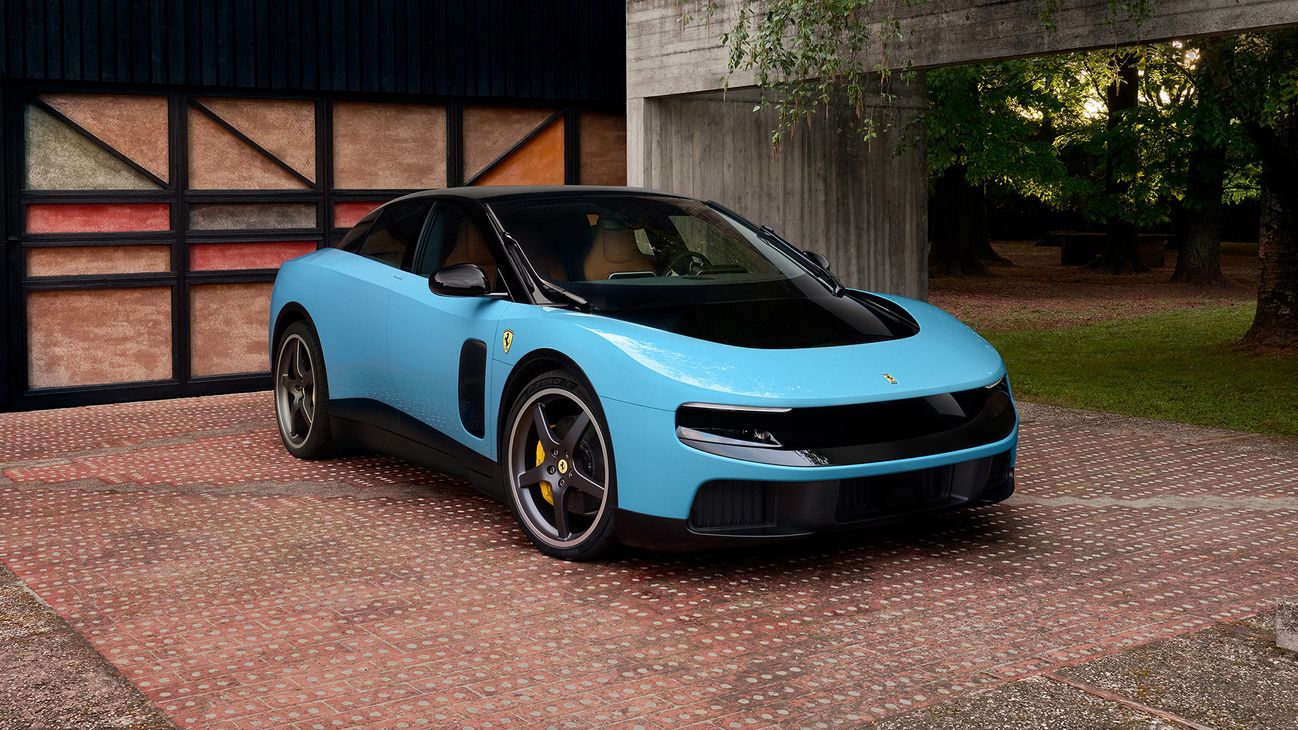
The Ferrari Luce is a new Ferrari idea that’s meant to seat five people. The discussion highlights that it feels very different from what Ferrari is usually known for—especially in design and who it’s trying to attract.
Pininfarina is a well-known Italian company that designs cars for other automakers. The host brings it up to show that Ferrari usually works with Italian design houses, so using a non-Italian firm feels unusual.
A “compliance car” is basically a car made to meet government requirements. In this discussion, the host suggests the Ferrari Luce exists partly to help Ferrari pass efficiency rules, not just to be a pure performance statement.
Lamborghini is mentioned as a contrast to Ferrari in terms of regulations. The host is basically saying some brands don’t have to jump through the same hoops to meet efficiency rules.
Tesla is brought up as the comparison point for “tech” cars. The host’s argument is that people expect Tesla to do this kind of thing, so they wouldn’t be as shocked if the same concept wore a different badge.
Lucid is mentioned as another company known for techy, modern cars. The host’s point is that people would be less upset if the same idea came from Lucid than if it came from Ferrari.
“Bucktooth grill” is just a nickname for a car’s front grille that looks unusually big and aggressive. It’s the kind of design that can make you react strongly at first glance.
They’re describing a design trick where the inside and outside of the car are shaped like separate layers. That layered approach is also why the car can look two-tone.
“Digital stuff” means the modern screens and electronics in the dashboard. The speaker likes the classic-looking interior, but they’re talking about how the screens are handled.
Apple is a tech company known for its design style and products. The speaker is using it as a comparison to talk about whether tech should dominate a car’s look and feel.
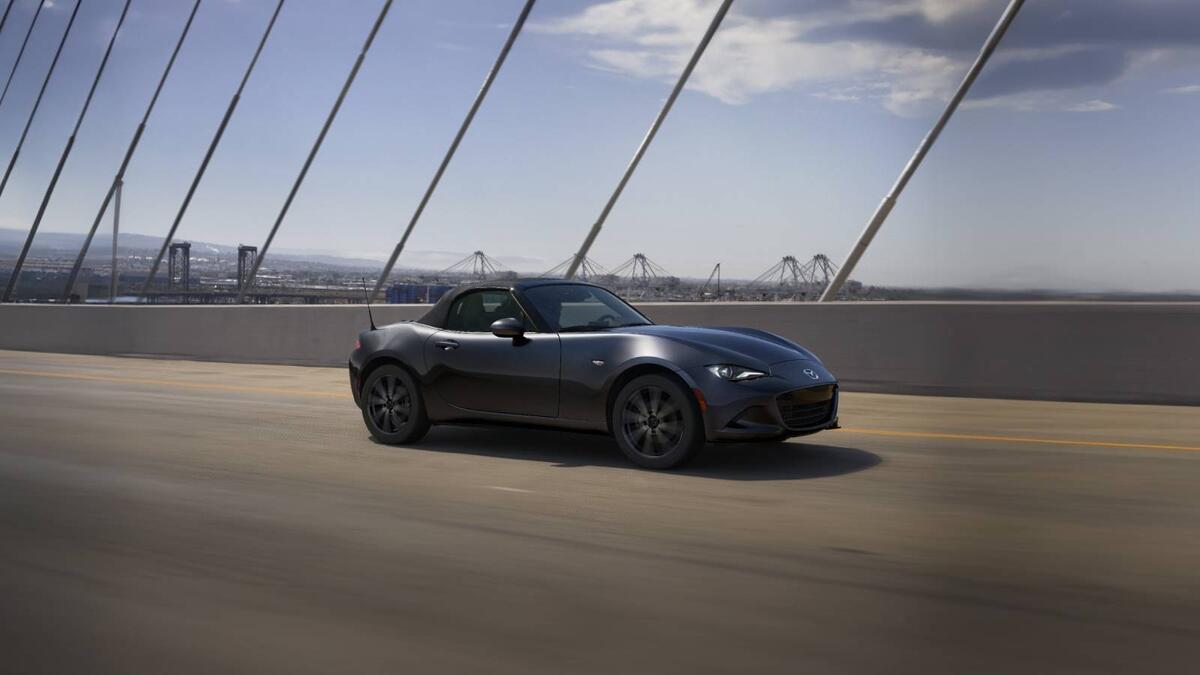
The Mazda MX-30 is a small crossover from Mazda, and it’s especially known for its EV connection and unique look. In this conversation, it’s used as a visual comparison for how another car looks in person.
Suicide doors are doors that open from the back hinge instead of the front hinge. They look dramatic and can make getting in and out feel different, but they need extra engineering to be safe.
The BMW M2 CS is a sporty BMW coupe meant to feel small and fun to drive. The speaker points out you can still get it with a manual, and also that it’s actually bigger and heavier than it looks.
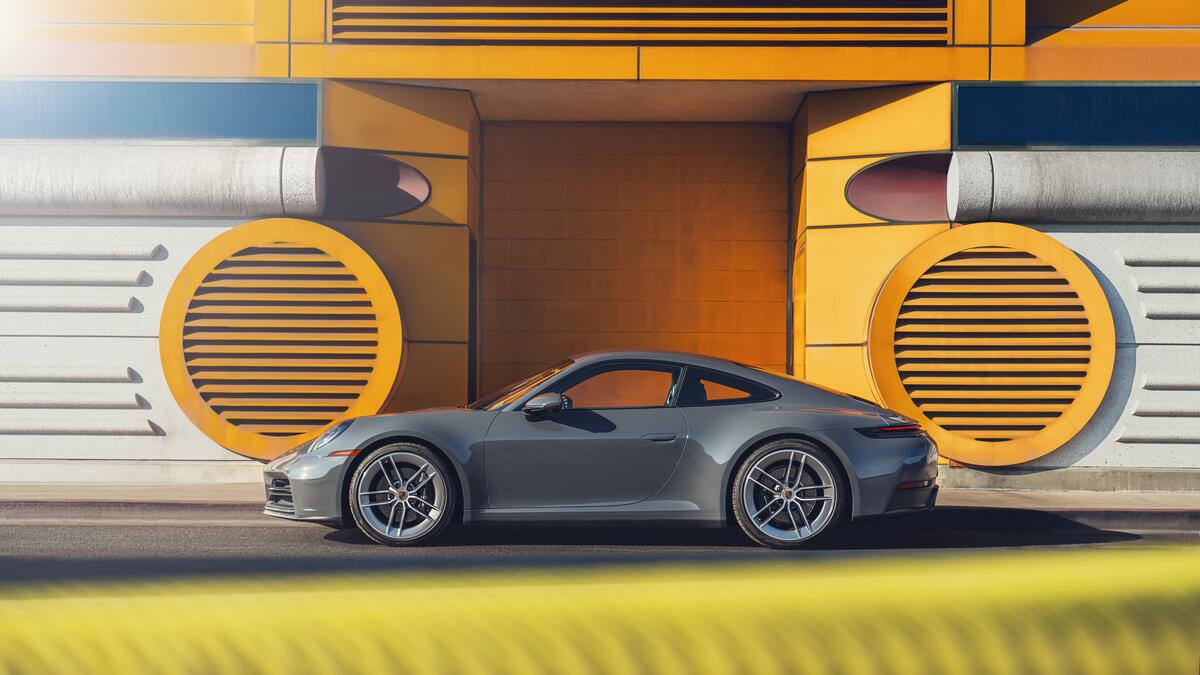
“Nine to eleven” is the Porsche 911, one of the most famous sports cars ever made. Here it’s used as a comparison point to say the BMW M2 CS is actually bigger and heavier than you’d expect.
Term
ductail
“Ducktail” is a type of rear spoiler that sticks up a bit at the back of the car. Here it’s mentioned as a clue for spotting the higher-trim BMW M2 CS.
“Stick” means a manual transmission—where you shift gears yourself instead of letting the car do it. The host is saying you can get one version with a manual and not the other.
This is a BMW M2, a small sporty coupe. The big difference the host is talking about is that the regular M2 can be bought with a manual transmission, while the more extreme CS version can’t.
The Dodge Challenger is a sporty car made for strong acceleration. People like it because it looks bold and can be driven every day, not just on weekends. It’s often mentioned when someone wants a powerful car they can still use normally.
The Ford F-100 is a pickup truck, meaning it’s built to carry things and handle tougher everyday use. It’s part of Ford’s long-running truck lineup. People mention it when comparing what different trucks feel like to drive and own.
The G-Class is a luxury SUV with a very recognizable, boxy shape. It’s built to handle rough roads and off-road conditions. People mention it when talking about SUVs that combine toughness with comfort.
The Ferrari Enzo is a very rare, high-end Ferrari supercar. Because it’s so desirable and limited, people watch its auction prices to see how strong the collector car market is.
Tariffs are taxes the government charges when you bring something in from another country. For car auctions, they can make imported cars noticeably more expensive, which affects bidding.
The Nissan GT-R is a famous fast Nissan sports car. Here it’s mentioned because Americans are still buying it for Europe even when import taxes make it more expensive.
VAT is a tax added to purchases in many European countries. The host is saying that for some buyers, VAT can add a big extra cost on top of what the car sold for at auction.
The hammer price is the winning bid at the auction. But you usually pay extra on top of that—like the auction house fee—so the real total cost is higher than the hammer price.
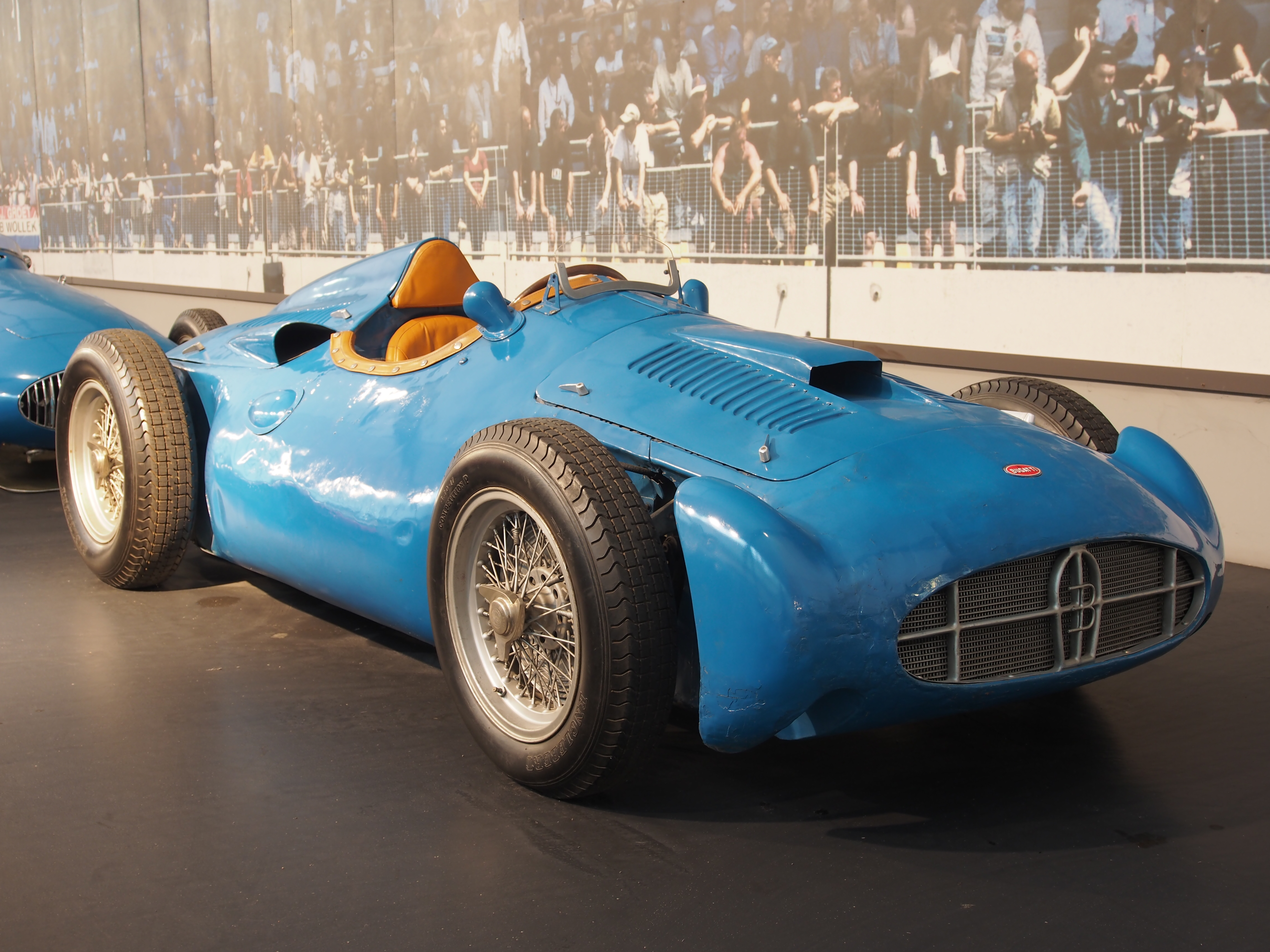
The Bugatti Type 43 is a classic Bugatti, and “roadster” means it’s an open-top version. The point of mentioning it is to show how much extra you pay beyond the auction’s winning bid.
The auction house adds a fee to the winning bid. The host is giving examples of how that extra percentage can be around 5%, and sometimes higher (like 12–13%), depending on the auction.
The Bugatti Veyron is a very expensive, very high-performance supercar. It’s known for being extremely fast and powerful. People bring it up because it’s a famous example of a “hypercar” that stands out even among other supercars.
The speaker is describing how reserve pricing changes bidder behavior. With a reserve, even the top bidder might not win the car, so bidders may bid differently than they would in a no-reserve setting.
The Bugatti Type 251 is an older Bugatti car from the past. It’s mentioned because it’s rare and could be very valuable to collectors. The podcast is talking about it as a hypothetical “what if” scenario for buying something like that.
They mean that when you sell a group of cars, the results can be better than selling just one. If one car doesn’t do great, the rest of the collection can still keep overall interest high.
The Ferrari Daytona SP3 is a very rare, expensive Ferrari built around a V12 engine. It’s unusual because the engine is placed behind you, not in the usual front position, which helps make the car feel more exotic.
A depreciation curve is just a fancy way to say how quickly a car’s value goes down. Here, they’re saying the value drop can be dramatic once a car is no longer “barely used.”
“Delivery mile cars” are vehicles that have only a tiny number of miles—often just enough to get them from the factory to the buyer—so they’re still effectively “new.” The host is explaining that these ultra-low-mile cars can command a huge premium compared with cars that have a few thousand miles, even though that mileage is normal for daily driving.
Lockup periods are contractual restrictions that prevent an owner from selling a car for a set time after purchase. Here, the host says some Ferrari customers can’t sell the car freely during the lockup, and if they do, they may have to sell it back to Ferrari—affecting market supply and pricing.
“Low miles” means the car has been driven less. At auctions, collectors often pay more for low-mile cars, but sometimes a car with low miles still isn’t that fun or appealing.
They’re comparing the same model sold in the US versus the version sold for Europe. The cars can differ in features and regulations, and collectors sometimes prefer one version over the other.
“Engine out” means the shop has to take the engine out of the car to do the repair properly. That usually takes a lot of time and labor, so it costs more than normal maintenance. They’re mentioning it to explain why some repairs on an F40 could be extremely pricey.
The Ferrari 250 GTO is a famous, extremely rare classic Ferrari from the 1960s. Because so few were built, it’s considered a top-tier collector car. Here, they’re talking about how rare it is and why its price is so hard to pin down.
Topic
Vildeste Concor
This sounds like the name of a concours event or entry group mentioned in the story. The important part is that the person with the Ferrari 250 GTO wasn’t just showing it—they talked about driving it. That’s what the hosts are focusing on.
Concept
holy grail
“Holy grail” here means “the ultimate dream car” for collectors. They’re saying the Ferrari 250 GTO is one of the most desirable classic cars people chase. It helps explain why driving it on the street feels extreme to some people.
A BMW 760 is a large, high-end BMW luxury car. The point here is that it can lose a lot of value after a few years, even if it was very expensive when new.
Depreciation just means a car becomes worth less over time. The host is saying some expensive cars drop in price so quickly that they can look like bargains after a few years.
“Wealth transfer” means money moving from older family members to younger ones. The host is connecting that to car auctions—new buyers can shift demand toward different types of cars.
“Understressed” describes an engine that’s designed to run with more mechanical load capacity than it typically sees in normal operation. The speaker connects this to durability—if the engine isn’t pushed near its limits, it can tolerate very high mileage.
“Hot laps” means quick laps driven fast to show off or test how the car feels on track. It’s like doing a few intense runs rather than a long steady drive.
A sprint race is a shorter Formula 1 race during the weekend. It helps decide where drivers start for the main race, and it often makes drivers push harder because there’s less time to make up positions.
Term
supercar EV launch
They’re talking about how an electric supercar accelerates right from the start. EVs can feel super quick because the motor gives torque immediately, so the car has to manage traction and smoothness.
Term
supercar launch
They’re talking about how a supercar performs when you really accelerate from a stop. It’s about whether the car hooks up smoothly and feels controlled during that initial push.
“Zero to sixty” means how fast a car can go from standing still to 60 mph. People use it as a quick way to compare acceleration between different cars.
Term
occupants
Here “occupants” just means the people riding in the car. The claim is that if the car accelerates too aggressively, it can feel uncomfortable to the people inside.
“EVs” are electric cars that run on electricity from a battery. In this conversation, it’s used to explain why Mercedes might offer a gas-engine version too.
Car
G
“The G” refers to the Mercedes-Benz G-Wagen, the iconic boxy off-road SUV known for its rugged design and traditional mechanical feel. Here it’s mentioned in the context of owning and driving it, including discussion of gas mileage and powertrain choices.
The Suzuki Jimny is a small SUV that’s designed to handle off-road driving. It’s compact, so it’s easier to drive in tight spaces than bigger SUVs. The podcast mentions it as a small car with real off-road capability.
LIVE
Bloomberg Audio Studios, Podcasts, radio News. I'm Hannah Elliott and
I'm Matt Miller.
This is Hot Pursuit. Coming up on today's program, we
have Ken On, formerly of Goldman, Sachs and Sotheby's, now running the Broad Arrow Auction group, which you know has seen such incredible growth lately, right.
Yeah, Yes, and Ken is fresh off coming from the Villadeste auction, which of course returned amazing results, especially on some Ferraris. I think Ferrari's is going to be a
big theme for us this episode, Matt.
Yes, I was just gonna say that, so a warning that we spoke with Ken before Ferrari released the Luce.
It's new critical six hundred and forty thousand dollars four door, five seat electric vehicle that everybody has a take on, and I mean everybody, yes, people who aren't car people at all.
I think it's important to keep that in mind, that we all know what opinions are, like, everybody has one, and it's important to be able to stay a little bit clearheaded and not get mired down in the peanut gallery of people who have an opinion but not much else.
Well, the thing is, people don't have very different opinions.
Everybody has pretty much the same take on the Luce.
Well, I don't know, Matt, I think you and I have different opinions about it.
Yeah, I personally I think I do as well. So
we'll talk about that. And I have driven well one
Bonker's nine to eleven competitor, the M two CS, BMW's M two CS. I spend a week with that, so
I have some thoughts. And I've driven an electric Mercedes,
which isn't anything like good.
Yes, this is good to know because right you're gonna say, it's not anything like the.
AMGGT exactly which you saw and would have been like, according to the Global Peanut Gallery, the ugliest and most horrible EV and any car launch of the year. Until
a week later. Ferrari was like, hold my beer.
Right exactly, I love it. You know. I did go
to that launch on the Sixth Street Bridge. It's very
close to our garage anyway, so it felt like right in my own backyard. And I don't think that car
looked that bad.
To be honest, I didn't get the outrage to I know.
I've got other there, they're sure. Let's talk about other
issues associated with AMG doing an electric sedan, but the car itself, for a sedan, looked fine. I have no
problem with how it looks.
I mean, I feel like, if you think that's the worst thing in the automotive world, you really haven't been following Mercedes design language for the past twenty five years.
Or Jaguar for that instance.
Right, But I mean even Mercedes, that to me is just an extension of what we've been seeing.
I think it's slightly better. I actually I thought it
looked more interesting.
Yeah, yeah, no, I totally agree, And I mean I just I grew up with the C classes of the late nineties early two thousands and there were horrible like Honda CRX design elements in Mercedes then, so like now I'm immune to it. I didn't think it was as
awful as I mean, do I particularly love that car? No,
But yeah, that's not the that's not they don't want to be pleasing everyone all the time, and across brands, that's I think the case. You want to have some
kind of controversy about the brand, you don't want to make it as bad as Chris Bangle did at BMDL.
The Bengal Butt, the infamous bangle butt.
Yeah, you don't want people saying, oh, it's a Fiat multiply right, No.
But I agree you don't. Not everybody has to like
everything all the time. I totally agree with that. The
important thing is to be very specific about what you're trying to say and what you're trying to communicate to the people that you do want to buy the car.
That to me is the thing, and that is really I think the tension with Ferrari because their core base pretty universally I think, doesn't like the Luce. But Ferrari
has done this thing where they're trying to attract some new They need to expand they you know, they need to.
They're a publicly held company. They need to continue to
somehow bring in new people, right, and like this maybe will do it.
I so on that note, I mean a publicly held company whose stock has been crucified right from the high.
They've lost a third of the value of their company.
And I wonder how much this has to do with it, or I did wonder that. Wait, was I showing you
the Arimez chart?
Also, ah, you sent me a charge.
Yeah, if you put Ferrari stock up against Amez, they track each other almost perfectly. So as soon as the
Luce came out, I thought, oh, this is why everyone sold the stock, because it started at that investor day when Michael Dean of Bloomberg Intelligence saw all the Chinese battery boxes.
You know.
But the fact is they they've been tracking Arimez perfectly.
It's a luxury issue. It's not an ev issue. I
want to just drill down though, and get some more specifics on the on the Mercedes. Because you were there
at the launch, Brad Pitt, I think drove it. Is
that right? Yes, Brat and b you got a black eye.
I did get a black eye. Yeah, And let this
be a reminder for everyone that just be careful at Karshos.
This was I'll say, I have no problem saying this was a freak accident. I don't hold Mercedes livele any
and anyway. It could happened to anywhere. They had swept
that road a million times. I'm very familiar with the
asphalt on that bridge. It's a very compromised bridge and
we can go into that. So it was a freak thing.
But I did get hit in the eye with rock and I got a really good shiner.
By the way, unrelated. I love these car review guys
out of Canada. I always talked about the straight pipes,
you know, yeah, yeah, yeah tube. They go around as
part of their you know, normal testing track, a corner that they call Cliche Corner, and for the important cars like this, they go out and sweep Cliche Corner, which, yeah, it's a real thing.
It is.
Yeah, it's a real thing. And you know, when you're
getting pushed. This didn't happen to me. I was actually
pretty far back in the stands. But at other car evans,
when the security are pushing you back from the road, there's a reason for that. It's because who knows what
could you know get kicked up?
But this is this car isn't a production vehicle, right, it's is it a concept still?
Oh no, it's production. This car is going forward. This
is this is the first electric vehicle from a falter Bach and it's moving forward. This is this is full
steam ahead.
AMG's headquarters in southwest Germany are in falter Bach and it's one of my favorite German town names.
To say, yeah, it makes you sound like you know what you're talking about exactly. I've not been there, but
I liked a reference.
It's not far from from Stuttgart. I've been there quite
a bit, figured you had, yeah, because I went to school in tubing In, which is also right there. And
but so this car is going to actually come out.
And the interesting thing I thought, besides the fact that everyone thought that was super ugly and almost died until the luce came out, and then they thought they were even more dead, It's got eleven and fifty three horse power as fourteen hundred and seventy five pound feet of torque.
It does zero sixty and two point one seconds like just massive numbers. But does anyone care about that?
Here's the thing. The electrification of cars has totally commoditized
speed performance figures, by which I mean, no, they all start to sound the same. They all have a thousand
horse power, they all do zero to sixty in just under three seconds, they all have a top speed of around two hundred miles an hour, and they all look like the same sedan or tiny suv. So it no,
it starts to feel like nothing. It starts to fill
mid it starts to feel like AI slop. And the
other thing about this car that people really didn't like was the fact that Mercedes made such a big point of fabricating a V eight engine sound to it. I
actually thought it sounded cool. The problem was that Mercedes
is saying it sounds like a vaight, which like, it's not a VA So you know, it sounds like and is are two different things. I thought it sounded cool,
it's a it's a different thing. But to your point, Matt, No,
and I'm actually working on a story right now about the death of the halo car, the true traditional halo car, like the Kara GT, like the Accura are A, like the NSX, like these were halo cars. And now we
see lots of cars that have these performance figures that would beat any supercar from the past, but they all kind of blend together.
Yeah for sure.
Yeah.
So, like right now, I'm driving the Mercedes CLA and it's a world away from what was that one that you saw called the gtamg.
AMGGT four door coop.
Okay, this little Mercedes that I'm driving is an absolute world away. I mean, for one thing, it starts at
I think forty seven thousand dollars or something, right, Okay, it has two hundred and sixty eight horse power.
Wow, that's a quarter.
It has two hundred and forty seven pound feet of torque, and yet it feels it's an electric car. So it
feels so quick and I have been flying to work in this thing. It's it's kind of fun. But like
with every electric car I drive, the first few hours or the first few days with it, the novelty of the instant torque and going so fast without making sound or vibrations is pretty cool. And then and then it
wears off because there's nothing for me to really connect with longer term. This is the Alex roy like vibrations
or heartbeat theory, and so that's totally I think it's spot on, Like no electric car I've ever driven for a full week has enough to keep me, has enough soul that I that I feel like I could actually own one and be happy with the longer term, with the exception of the huge like Luxo barges like the BMW I seven, because to me, the isolation, the suspension, like the really expensive trickery that they that creates the
magic carpet ride, actually does give it a soul. It's
not the engine anymore. It's about the thing else. Yeah,
But I just want to say quickly about the this cla Mercedes is so good at the finishing touches, at the fit of the panels, at the you know, the windows switch when you pull up on it or push down on it, it's so it's like butter. The turn
signal makes the perfect sound. They have little pieces of
actual metal, where my Dodge has like cheap plastic everywhere.
The wood finish even I'm not a screen a fan of the huge screens, and this thing is just like a sixty inch flat screen in the front. But the
way they've done it, it works. It works really well, totally,
and that's the luxury, that's what you're paying the extra premium for.
Totally. I think Mercedes has the best interiors. Maybe there
are some that are equal to it, but none are better than a Mercedes interior right now. And maybe people
don't like the screens, but the thing is the screen.
These screens work. They feel apropos to the overall package
of the car, So I totally agree.
All right.
So now with that all out of the way, before we get to Ken, let me get your take on the Ferrari Luce, the Johnny I've collaboration that created Ferrari's first five seater.
Okay, the more I think about this, the more I think it truly is an aberration for Ferrari. It is
weird that they did it. I think it's very fascinating
that they have chosen to have a completely outside design firm, and by outside we mean outside of Italy for the first time ever. It's not unusual that an automaker would
have consult with a design house. They have been doing
it since the beginning of time, think of Pininfarina, for instance, but it is odd they would consult with a design house that has no experience doing cars, and one that is outside of Italy, which is kind of a convenient off ramp to sort of separate and perhaps protect the core Ferrari brand that they can say this came from outside, let's get to it. When I first saw the car,
I just thought, that is so ugly and terrible.
It's abhorring, terrible.
It's secrecure. You know. I have to withhold some judgment
because I know because I haven't seen it in person and I haven't driven it, and I know cars photographed differently now. But I do think two things are really important.
Number One, this car is a compliance car. It helps
them meet efficiency regulations, et cetera, et cetera, and.
A lot of other companies don't have to do that.
Lamborghini does not have to do that because they're exact bulkswag exactly.
That doesn't answer the question of why does it have to be ugly. You could have done a full performance car.
The other thing that I think is if this car had come from and we've talked about this before, if this car had come from Tesla or Lucid, we would not be freaking out. The problem is that it comes
from Ferrari, this beautiful brand known as the epitome of elegance and sophistication and Italian life, this dulce Vita. And
when you look at this, this is not that no matter which, even if you like it, it's not that.
This is a car for tech pros. And again back
to our earlier point, maybe that's the point. They're trying
to get a new audience. They're trying to appeal to
drivers in Asia and tech pros who are way more who are able to afford something way more expensive than in Tesla.
Okay, sure, people who don't care even for a minute about dropping six hundred and fifty.
Grand Yes, so I understand all of that. If you
look at it from a business PERSPECTI maybe this is not as damaging. If you look at this from a
pure Ferrari soul DNA of the company, this is like so sacrilegious, But if you look at it from a business standpoint, it may be rather savvy. And Kevin Tynan
we talked about before, I will never forget now when he said the purpose of a car company is not to sell cars, it's to make money.
Right. So Kevin Tynan, who used to work for Bloomberg Intelligence,
he's an analyst now he worked at the pre Udio Group exactly. Yeah, So one quick question, how do you
feel about so At first glance, it's abhorrent, it's repugnant, it's grotesque, and I think everybody had that. I don't
think there's an exception. What do you think about it
after having looked at it for a week, having read about it, having heard everyone else's takes your have your thoughts changed? Because the first time I saw BMW's bucktooth grill,
I also hated it, and now I think it's really cool.
My reactions and my thoughts stand really so.
When I first saw this thing, I thought, I almost I thought I was going to have a heart attack, Like I couldn't believe it. And I thought immediately of
Benedetto Vinya, and I was like, I had so much respect for you, you know, the CEO of Ferrari. But
then I realized, these ugly cars or cars that on first glance make you recoil and shudder a lot of times grow on you. And so the first one I
saw was the reddish orange with the horrible wheels, and then Bloomberg did a story on it, and we put out the blue one with more Ferrari like I thought, oh, that looks a lot better, and I thought, this is going to grow on people. And now I really I've
been reading a lot more about the point of the design and what they're trying to do with it. Now
I really really like it. A roadent tracted some strong
reporting with Johnny Ive who or actually not with Johnny, but with another former employee of Love from the design firm, who said, like, we're trying to really separate. Well, they
did the space of the interior and the outside of the car, so they basically made a shell and then put an additional shell on top of it. That's why
it's like two tone. And you know, the interior, I
don't think anyone debates is absolutely beautiful because it looks like an interior from the seventies or eighties. Yes, with
the exception of the digital stuff, but they don't go, it's not in your face screens, right. And so now
my thinking is if this had been an Apple car by Ferrari, it would be a home run. The problem
is that it's a Ferrari by Apple. That's the issue here.
Yes, and that gets to my fundamental sort of recoil on a theoretical standpoint that I just don't like the idea of tech taking over everything. And it feels like
when Jeff Bezos buys the met Gala and his wife is now quote unquote in fashion, which is just not true.
You know.
It's the whole gaslighting of the modern day culture. If
you say it enough times, it's true, even if it's a blatant lie.
And there it's a It's a fundamental for me on a personal level, and this does not apply to when I drive the car, and I the car drives are later this year and I look forward to it. But
on a fundamental level, I personally just recoil against tech buying and controlling every industry.
Yeah, I mean, well, I've I have already had a problem with the technology increases we've seen and Ferrari, you know, the the pure saying, which also everybody hated at first gate it. That's because the first time you saw it,
you saw it in the.
Form person, which is an advantage.
Most people saw it in pictures and they were like, oh, it looks like a Mazda MX thirty or whatever. Remember,
I think, now it looks beautiful. I've seen one on
the street now and I'm like, Wow, that really looks cool.
I still have a problem with the fact that Chris Harris described it as like, you know, a supercomputer at each wheel. I have issues with that in a Ferrari.
But I guess they have to keep up with the times.
And I don't know. I just the the the Luce.
I just I can't wait to see it in real life and I can't wait to get in it and experience I love the suicide doors. I wish more car
manufacturers would have the kahonas to put suicide doors on a production car instead of just putting them on a concept.
And yes, so I'm pretty I'm pretty excited about that.
Can I quickly tell you? Tell you about the M
two CS?
I want to hear about it.
So for me, the M two is such a tantalizing vehicle.
It's like the smallest BMW and it looks and you think it's very small. And you can still get it
with a stick which although people complaints about the actual stick shift mechanism, everyone's happy that you can still get a sports car three pedals. I didn't realize until this
week that the M two, no matter what guys you buy it in, is longer, wider, taller, and heavier than a nine to eleven. Wow it looks tiny, right, Yes,
it's big.
You have quite a nose on it. Interesting.
And this is another car that was people didn't like it when it first came out. A lot of people
still think that design is controversial. The squared off. No,
it isn't. The muscular, brawny look. I love it. I
like it too, I absolutely love it. And I had
I was kind of like wiping it down after washing it in my driveway and.
Some wow, you wash the cars too.
Sometimes if they get because I have a lot of pond these these kids like twelve or thirteen were walking by and couldn't see it from the back. And the
only differentiation between a CS and I mean there's a body kit kind of, but the big difference is the ductail on the CS compared to the Base M two.
This like twelve year old kid goes, oh, man, is that the M two CS? Cool car? Dude?
No way?
I was like, yes, that's very cool.
You can't get the CS with a stick, so I would buy the base model and you can get a lightly used Base M two with a stick. I'm talking like,
you know, one or two years old with ten or twelve thousand miles for sixty grand.
Like, would you get this over a nine to eleven?
I would, because well, because then the nine to elevens that I want are starting at like one thirty, right, And if you're talking about like if you're talking about newish cars, sure I would want the Kara Tea and even a used Kara Tea. And you really want the
twenty five and up models. They're they're one hundred thirty
thousand dollars. That's a lot of cash. I'm about to
have a third kid, Like, it's much more responsible for me to drop sixty k on M two and spend two thousand dollars beefing up the stick shit a little bit, and I feel like I would get just as much pleasure out of it. It's also got four seats and
two doors.
Yeah, amazing, I love that. That's great to know. How
was the gas mileage on this?
I've never paid attention to gas mileage in any car test driven. Really, I drive a Dodge Challenger as a
daily right.
So I get like, are you finding yourself going to the gas station more often? Just or not necessarily?
I mean not, you go to the gas station a fair amount. I just feel about the Challenger. It was uh,
I think six dollars and thirty six cents a gallon.
The full tank was one hundred and ten bucks. And look,
I mean, you know I've had a g Wagon, a Ford F one fifty raptor. I'm used to getting like
sub fifteen mpg right.
The same we're a really bad test group.
I mean exactly, the most MPG I've ever had on a car that I own has been my nine to eleven.
No, that's that's a low bar. Really not.
They're pretty efficient, I think, well.
Sure, sure, but it's still a sports car.
True.
Oh that's cool. What color was your BMW?
By the way, it was the Brooklyn gray. It's a
very cool color. I would probably choose a skyscraper gray
or I wish they made it in the dark purple that they make the regular two series.
But I like purplews.
I like purple cars in general.
Yeah, they're kind of I feel like there's a having a moment, kind of like how we spoke with Brett Burke.
They're having a moment for sure.
Yes, all right, with all of that out of the way, shall we get to ken On.
Let's get to ken On. I want to know all
about the auction market and what to expect for the summer.
Ken You do now a ton of these really cool events, and I'm sure you're at Pebble and you're obviously Amelia Island and Villadeste. To me, that would be the one,
if I could only do one in terms of the concourse, I think that would be it.
It's an amazing setup and head I'm with you. Even
in Detroit it was probably a seventeen hour door to door trip back all nights ago. But it is a
magical setting on the shores of Lake Como. It's certainly
you know, once in your life. If you're a car person,
I highly recommend at least once in your life. But
it's the longest standing concord, the Elegance, I would argue, the first one in current form that we now started in nineteen twenty nine and it's maintained its tradition over the years and it's a very beautiful. So the quality
of the cars, the setting, the people, the concor itself is just amazing.
We I mean, we obviously brought you on CAN to talk about some of the auction sales because in addition to the concord, you guys hold an auction and I'm so interested to dive into these results with you. You know,
the top top sellers are like two Ferraris and a Portia supercars. Can you just give us a rundown of
is this a surprise at all to you? How did
the numbers come out? What are when you look at
the results? What are you seeing that we should know?
Yeah, so this was actually only our second auction there at the last day. We actually that was our launching
point last year for our European auctions schedule, and obviously when a lot of the car events and auctions go hand to hand, just like you see a Monterey Peninsula or when you see an Amelia when car collectors and car lovers gather and it's a great place to launch your actions. And the results were fantastic. We were up
about thirty three percent year over year, and we thought we had an amazing first year. We actually thought to ourselves,
how we're going to repeat that number and not be a one hit wonder, but it was. It was very strong.
By the way, that is also in line with what's happening in the broader marks. So before we dive into
the specifics of the auctions, based on our HAGRID Market Intelligence and Automotive Intelligence team's data through April, year to date, total sales across all auctions live and online is up about thirty percent, and so that's not surprising that we were up thirty three percent year over year as well.
We're seeing a very robust market condition. What's really interesting,
and having been a form of Wall Street Guy and looking at the markets and looking at the data, is I've never seen in my ten years this kind of phenomenon happening, where the average sale price so far this year year over year is up twenty five percent, but medium prices is down one percent. So what that means
is the very high end of the market is incredibly robust, whereas the broader market is relatively flat, and so that's a very interesting phenomenon we're seeing. Now, you know, that's
a shape.
You've got a K shape. Collector car market just took.
The word exactly out of my mouth. It's a K
shape that we're seeing everywhere. We're seeing this in fine arts,
we're seeing this in fine wine, seeing in luxury real estate watches, and it's really a K shape where stocks the stocks, yes, and you know it's it's it's not a unique phenomenon to the car world, but we are seeing this consistent theme happening. And the fact at the
very highend of the market is very robust, I think is obviously the big wind behind a lot of the auction houses in the industry, But the broader market is relatively flatt and I would argue on the lower price points it's actually fairly we can that's not surprising given all of the broader macro and geopolitical situation that we're obviously going through. There is also I think something that's
additional to that, which is we see this in the capital markets. You know, the gold is up like fifty
percent just this year so far, right, And there's a gravitational force towards tangible assets. And I think cars, among
art and other things, are especially very high end cars, excluded limited production cars, fully grailed type cars. I think
that's where the capital is gravitating towards.
By the way, it's so cool that you have all this haggardy data and that you analyze it the way you do, which is pretty unique because of your background.
Tell us how you started in your professional life and what led you then to the world of high end cars.
Yeah. Man, it's a good question. It's an accident, and
I love the fact that that accident happened for me.
I've always been interested in business. I started my career
as a management consultant, and then after business school, I spent about seven years on Wall Street at Goldman Saxis investment banker. And I always wanted to I wanted to
manage to leverage my strategy and financial markets background to be in business and more towards entrepreneurial opportunities. It was
by sheer accident that I ended up at Sotheby's as the head of Strategy and corporate Development back in twenty fourteen when I left Wall Street, and I didn't actually know that this world existed. But in my personal life,
cars were my ultimate passion since I was a little kid.
You know, I've always been cars, cars, cars. I was
probably the only football player in college where on Friday nights I'm in the library looking at the latest car magazines that just came out that week, you know, whether it's Car Driver, Motor Trend, you know, Auto Week. I
would go through every one of those magazines. So I've
always loved cars. I've always wanted to be in business.
I didn't I never thought that my professional sort of desire and my passion on a personal life would intersect.
And somehow I find myself at Haggerty in the car world, driving a business that's really the heart.
More from kenn on a Broad Arrow Auctions on the other side of this break, this is Bloomberg. Let's get
back to more with ken On from Broad Arrow Auctions.
On bloom Hannah, do you mind if I go off on a slight tangent here take it just for a minute, because you said when you said football player at college that peaked my interest. And when someone pauses and then
says college, I know that what you want to say is Harvard, right, which is which is where you did your undergrad and your MBA.
And very discrete, very discreete.
What was football like? What was football like at Harvard?
Because whenever you talk about Harvard football, people are always like, that's not a D one school, you know, but there have been some Harvard players that went to the NFL, and it is actually the beginning really of college football.
That's the roots of football.
Yeah, I mean early days it was you know, it's the Big Four, right, And there's still photos of Harvard versus Michigan and things like that. Back in the days.
I would argue Chicken Toung that it is still Division one, it's Division one, Double A. I would say, it's still
very competitive, but you know, the academic environment and the athletics environment was great. And to your point, Matt, several
of my teammates went to the NFL. Matt Burke was
the multiple Pro bowler, you know, won the Super Bowl.
My classmate Isaiah Kazwinski was a linebacker that played special teams for seat Seahawks. When they went to the Super Bowl.
So there's few that come out of the IVY leagues.
And you, I mean, I imagine as I don't want to go too far here, but I imagine as a football player who was on the field of future NFL guys and an MBA dude who ended up at Goldman Sachs.
A lot of your colleagues, a lot of your classmates, and a lot of your teammates are probably clients now a broad arrow.
Yeah, I think that's right. And I somehow ended up
in the used car business. But that's.
Well.
Can we talk about some of these top sellers, you know, not to get back to the boring stuff, but like, I just find it so fascinating that these are it seems like a continuation of what we've see we have seen, which is that these are sort of late model supercars.
Is that going to change anytime soon? I mean, let's
we can talk into the future. We've got big auctions
coming this summer, We've got the sales in Monterey. Do
you see any sign of this changing?
It's a very good question, Hannah and I get asked that question a lot from our clients as well. Math
would indicate that it would be very difficult to sustain.
And what I mean by that is we've seen this.
We started seeing this in Q four and really into the beginning of this year, where the hypercars and modern supercars have really gone up in value. You know, a
Ferrari enzo nearly tripled in value in a period of about twelve months, right, And the question then becomes, you know, we have a humans all have a tendency of recency bias and a tendency to linearly project. If you were
to linearly project that type of growth rate, the implied market caps, so to speak of Ferrari enzos would be could be bigger than Ferrari itself, and it just creates, you know, you wonder, how long can it last? Having
said that, as of now, the market still appears to be very robust. We saw that continuation just in this
past weekend in Italy, and we've been seeing it over and over. There were some questions after January Mika had
an amazing sale and you know, was that a flash in a pot or is that a sustainable trend? And
February and end of January Paris auctions and then so on and so forth through March through our Amelia sale and Monaco as well as Filadeste. You're seeing this robust
market for the high end and the case shape that we talked about across both sides of the pond.
Currently, how are tariffs affecting these sales? For instance, in
sales in Europe? Are those cars staying in Europe with
mostly European money and is that a change from previous years.
It's a really good question, Terras. It certainly has an impact,
right because what used to cost two and a half percent to import to the US is now costing a lot more with the current tax regime. Having said that, it's.
Much a lot more, ken is it like fifteen percent if you want to bring a power back from Italy?
That's right, a lot, that's right, Yeah, that's a lot, and so that changes your dynamics. But what's interesting is
in Europe, I was surprised by the number of US buyers who are still purchasing cars. So we had a
Ferrari five to fifty Barkeetta as well as a couple of Nissan GTRs that were all purchased by US buyers, fully knowing that it would cost them fifteen percent to important addition to transport and everything else. And that's interesting
because in Europe as well, for some of the really low mileage modern cars, because of the way the VAT system works, a lot of the European buyers still have to pay a twenty percent VAT on top of what they purchased it for. So what it ended up doing
was still still advantageous for certain cars and models for US buyers to buy. I would say it's less robust
than I guess a year or two ago when US dollar was relatively much stronger and the tariff was lower.
That was very robust for US buyers. But we do
see subdued interest from the US pie. But it's still happening.
So, by the way, what's the all in price? If
I buy a car for a million dollars? Say I
pick up this nineteen twenty nine Bugatti Type forty three roadster that you sold for basically a million, I'm paying what am I paying? On top of the hammer price?
I pay five percent to the auction house, it.
Would be more like twelve thirteen percent depending on the auction.
Thirteen percent of the auction house and then and then I pay fifteen percent on top of that.
Yes, so it quickly becomes one point you know, two one point three million time it lands here.
What are you seeing with online sales? You know, it
seems like people still like to go to have an experience where it's beautiful and they can drink champagne and you feel the energy in the room. It's kind of
a form of entertainment. And that's why I love these,
especially the European sales. What are you seeing in the
online market too, because you guys have online auctions, Like, how's that business?
It's doing really well. It's really interesting to see both
live and online being very robust and arguably for different reasons.
Your life going away, I'm sorry to interrupt you. You don't
see live going away as.
No, that's exactly what I was going to say. Actually,
is a during COVID when online there's a huge proliferation of online options, surely because surely because we couldn't travel and gather right and there were questions posed that it's just the beginning of the end for live auctions. So
far this year, live auctions are up forty two percent in total sales and online options up twelve percent. And
this is interesting. They're both up you know, ten plus percent,
which is great. Friends that you're seeing on forty two
versus twelve is really that case shape that we talked about the really high end. So when you think about
live auctions so far, you know, what we're observing is one online has its unique advantages, lower friction cost. You
can bid from the comfort of your living room. You
can look through hundreds of photos and hundreds of listings at any time from anywhere, and that's super convenient when it becomes when generally speaking, very high end cars or classic cars, they're not as easy as looking at a Carfax report for a car that has twelve hundred miles that's three years old, so people want to inspect them.
It's generally higher value and auction houses it costs a lot to put these auctions together. You know, usually well
into the seven figures just to execute the event. And
you know, when you have seventy cars, divide that by you know, and let's just say around numbers million, that's quite a bit per car in terms of costs that you're doing. So generally what you see is average transaction
values for live auction houses be much higher, and that jives with the fact that high value cars people want to typically kick the tires, crawl underneath and look at before they spend seven figures. The other difference is, as
much as online community and convenience is there, there are the benefit of live auctions actually the fact that there's a social element to it, as you pointed out hand, a big social element to it. In fact, you know,
in our auction room this past weekend, we probably had about a thousand people, nine hundred to a thousand people, but at the end of the day, the real actual bidders were probably in the low hundreds, right, So the other eight nine hundred people are there because it's entertain it's a form of entertainment it is. It is also
a forum to see other people that you haven't seen in a while, interact, talk, talk about the cars.
Show them how m how do you have.
My first out?
Yes, well this is something that yeah, I think maybe I didn't realize before I got into into this world that you know, most of the time these auctions are open to the public. If it's a live auction, anybody
can go and watch and have fun. You don't have
to bid, Just don't raise your hands, you know, like, don't do any sudden movements that way, but you know, you anybody can go watch and feel like you're part of it and it's free or you know, maybe thirty dollars for an auction catalog or something, and it's really fun.
And sometimes you know, I come. I mentioned to you,
I was in the part auction world for a few years.
And that's very different when you when you walk on Bond Street and you see this auction house, what you see outside the door are two men in black suit standing there and it's almost as if, hey, you don't want to come in unless you belong here. And it's
a different environment. Car is much more casual, and we
sat from early on that we want to make this as a except as possible, welcome kids, welcome anybody to come look at not only the previews, but if the room allows, go ahead and come in for auctions. And
in the case of the our Italian sale this past weekend, it was actually very interesting because there's so much so many people that wanted to be in the auction and we had stanchioned off the bidding area versus non but the number of people that had their phones up filming this because if it's the first time they've ever seen a live auction for a lot of them. And you
know the matt we talked about, you know, the source of Como and the beautiful nature. Well, those roads and
traffic is horrendous because those were not roads that were built for modern day traffic. And when you factor in
the amount of people that are coming to that event later on, the number of kids and teenagers and young adults that are on the streets trying to take photos and videos of these cars that are coming through or auction cars absolutely gems up the traffic. But we all
have smiles on our face as we say, you know this, the future for car world is still pretty bright. When
you have a lot of young, young people who are just there were you see kids running around. I think
they're talking to each other because I've just walking down and say, hey, there's a Bugatti veyrone coming down you know, Wherever street, and you see like dozens of kids just absolutely running as fast as I could to try to go take a glimpse of that car. And I think
that was really really cool.
Also, I want to point out so I've spent a lot of time not only driving cars, but more importantly riding motorcycles around this area. And once you get out
of Como and get to Lago Logano and Lago Majora, you have clear, twisty mountain roads that honestly some of the best driving I've I've ever done in my entire life.
It's almost unfair, I know, when you think about the Swiss, you know, Alps and the passes and the Italian roads to the riding or driving roads are just phenomenal Europe, And I would argue in parts of state of California, I'm always jealous.
So I have a question for maybe our listeners in terms of like service that we can help them with, because I always think of this, and Matt and I talk about it. Do you have a general rule of
thumb about whether a car should have a reserve on it or not have a reserve on it, and whether it's and whether and we kind of touched on this, but whether it's more appropriate potentially for an in person auction versus an online auction. Give us a sense of,
like how you advise your clients when they're not sure what the best fit is.
So I'll speak in terms of generalities and then I'll talk a little bit about some of the specific considerations.
In general, We've seen this over and over again, and you can see this on online auctions as well as live.
When a car is offered with that reserve, you'll get two to three times more number of bids for that lot than a car that's with reserve. And when you
think about the psychology of why that is, if there is a reserve on a lot and you're bitter, you have no idea, even if you're highest bidder, whether you're going to bring this car home or not, and there's you know, I'd say thirty thirty percent chance because most average auctional self the rate is about seventy thirty percent chance that you could be the highest bidder and you don't take that car home. And whereas if you're if
it's a no reserve lot and the gavel is about to come down or the online digital clock is about to expire, you know that the next as long as you're the highest bidder, you'll take it home. And if
you're not, you better put another bid in because otherwise that car is gone for good. So from a demand
side perspective, no reserve is always better from a maximum demand generation, which usually leads to the maximum value for cars from a seller perspective, that's not always it's it's very psychologically difficult barrier. You know, there is always a
theoretical chance that the Bugatti Type forty three cells for fifty thousand dollars technically right, and so when it's worth a million euros, and so a lot of the sellers want to put a reserve on and not in many cases rightfully. So here's my simple recommendation to most people,
why are you selling it? You need it to be gone,
and you know you just want it out, then absolutely sell it without reserve, because if you sell it with reserve and it doesn't sell, there's a mark at which this was the highest pid in that car didn't sell, you're going to have a much harder time trying to go sell that car at a much higher price than that because for the market, spoke court two is it's really your portfolio effect. So if you have one car
and it's valued a lot, then selling it without reserve is riskier. It's no different than portfolio diversification of stocks
or bonds or securities. When you have five, ten, fifteen
cars or more, or you're selling your entire collection, then some of the parts tend to be greater than the whole.
And what I mean by that is when there's a collection and it's no reserve, everyone pays attention to that collection, and even if one doesn't do so well, you're diversified.
And so the outperformance that you're likely to get from a no reserve offering is going to outweigh generally the individual.
So you know, it's always hindsight's twenty twenty. But when
you're leading into it, it's always difficult. I would say
buy and large. It's say eighty ninety percent when it's
a big collection, when you have outsized returns, those are all no reserve collections.
If you do well at your job, then I should have more faith in putting my car up for no reserve because the concern is that the right people don't show for the auction right money's not in.
The world on average is always key on average. So yes,
it's the auction hous this job to make sure that the cars are marketed and have a very global audience.
But in certain cases it's a very specific niche. If
it's a Porsche Outlaws or if it's a pre war American Classics, you've got to make sure that those audience in the marketing across those audiences is very strong. But yeah,
you're right, Matt, and that's how auction houses try to differentiate themselves with.
I want to I want to talk about some of the specific cars because ever since Hannah sent me this link, I've been lusting over, specifically the top seller, which was the twenty twenty three Ferrari Daytona SP three. This is
a V twelve where the motor sits behind you, which normally you know in a Ferrari V twelve it's in front of you. And to me that that makes the
car even more special than it than it already is.
It's a I guess kind of limited edition. There were
only six hundred of them, but that seems like, I mean, that's already more than the BMW seven sixty. Yeah. Still,
what an amazing car. And you were talking about a
car that sold for three times. I think the MSRP
was like two million euros and you ended up selling it for six and a quarter million euros. Yes, so
many questions. I have so many questions, Ken, Like, first
of all, you have to you can't say anything bad about your clients, but you also can't respect a person who is selling Ferrari SP three that he just bought in twenty twenty three, and he's only put like five hundred, not even five hundred miles on this car. What are
you doing? I would be ripping this car around mountain
roads all year long.
We'd never see you again.
That is one of the biggest conundrum I think for people who have these amazing cars. You know, the depreciation
curve is very steep when it comes to mileage, particularly with modern cars, so you know, we often call it delivery mile cars. The amount of premium that brings versus
a car that has six thousand miles, which is nothing for a daily driver, is so big that people oftentimes it's a shame that their sort of museum, you know, esque setting.
With GiB it Ken. If you're dropping two million bucks
on a Ferrari, and by the way, in order to even get that allotment, you've already sent many millions more, then you don't. You shouldn't care at all about it.
That's what life is for. It's like baking a batch
of fresh chocolate chip cookies and then not eating any.
I don't understand the point of it.
Yeah, and SP three is particularly interesting right now to the market because when Ferrari sold these cars, because of the exact phenomenon you mentioned about buying these cars for a couple million and flipping it, there are in many cases, a lot of these car manufacturers now have what's called lockup periods where you're not allowed to sell for a certain period, and if you do, you can only sell it back to Ferrari. And so the lockups are just
expiring for these cars this year, and so there's more of them the market. So if you're an owner of
those and you say, hey, I want I like this From a financial return perspective, I don't need this car, it won't necessarily hurt my standing with Ferrari because I fully abided by the terms of the contract. The earlier
you are as a seller or you're more likely to maximize the value. I think there's a financial aspect of
that that's certainly happening. Now. I'm not saying that's the
case for this particular seller. I don't know the specifics.
They may just not like the car. I don't know,
but that's what we're saying.
This car. Look how beautiful this I'm going to post
on my Instagram a picture of your SP three that you sold, because this thing is one of the most beautiful cars I've ever seen. I mean, it makes the
F forty look positively ugly. I wouldn't want the two
photographed together, Hannah.
Parenthetically, I will say, I do think some cars have low miles because they're not actually fun to drive. I
don't think this applies to this car, but I do, you know, I do think there's there there are some cars that have low miles because no one actually wants to drive.
That's fair.
But I do have a question about this. You know,
it's it seems like, you know, this market is pushed by speculators and investment firms and like people who are trying to trying to elevate the market for these cars.
Has that always happened, Ken, or is this a new phenomenon like in the ages of in the early days of these auctions, I mean a couple decades ago, we'll say, were people doing this with other cars or not to this level.
I wasn't around long enough. I've been around in this
industry for about a decade.
But I would say, when did you graduate? When did
you graduate?
Harvard for undergrad oh for undergrad two thousand, So it's been about twenty six years, but in the car world, in the car auction world, about ten years, and we're certainly seeing more of that happening over the last you know, two three four years, just because of the values of these cars have gotten so high, and the differentiation of values for low mileage versus high mileage is so high.
I will say though, and Mal you were talking about some of the top lots that sold in Italy. What
surprised me, I thought it was great was the F forty.
So there was an F forty. It was a nineteen
ninety German delivered car that had forty thousand, two hundred and seventy one kilometers, So in the F forty world, that's a pretty pretty good mileage for that car. And
we were all interested in seeing how that does because we had a it's a plenty different US spec versus EuroSpec.
But for in Emelia Island, we had a nineteen ninety so same year US delivery car that was you know, certified with eight thousand miles on it, and so, you know, how would that relatively do. The US one was three
point eight million when we sold it, but this one with higher kilometer, We had an estimate of two point three to two point nine euros, and it's sold for two point nine three euros, which is something like three and a half million bucks. Right, So the difference of
forty thousand kilometer one selling for US dollar equivalent thirty you know, three and a half versus the one that we sold in US for eight thousand miles or three point eight the difference was fairly negligible. And so in
this case, Matt, the person who owned that car or people who owned that car that really enjoyed it actually got probably more out of it.
And I think it's great, and to me it makes total sense. Also, Ken, I mean, if you're the kind
of person who's going to drop three and a half million dollars on an F forty, you can also probably afford I don't know if it needs engine out I don't think it needs an engine out built service, but you can afford a Ferrari maintenance. You know what's the
worst case, Like you maybe you have to replace the suspension, Okay, you can afford that worst case scenario, like it's a blown engine. You can probably afford to replace the motor too.
I mean, it's the time, it's the time you lose. Well,
it's in the shop.
I just think, like that's the real if you if you drop three and a half million hannah on a nineteen ninety f forty and you have a month to put it in the shop and have them restore it back to showroom condition, you probably can afford it. I
think it's great that somebody drove that for forty thousand kilometers.
Yeah, me too.
This is a little bit extreme, but Vildeste Concor, one of the Concore entrants, had a Ferrari two to fifty gto and that's sort of the holy grail of the sixty for.
There's only like thirty eight of them right in the world.
Yeah, thirty six of them, and the values, you know, wildly debatable, but between collected in today's market, probably between fifty and seventy five million, right, depending on the car and the mc assimon Kitson actually asked the Concord participant when he drove up and talked about driving the car, and he said, he's putting on thousands of miles, he plans to put on thousands, a couple of thousand miles this year driving that car. And he actually gingerly asked
a question, aren't you a little worried about driving a car like that on the streets and putting a couple thousand miles on? I thought his response was amazing. He
actually said, well, amazing for most people. As an insurance company,
maybe less so. But he said, these are what these
cars were meant for to be driven, and I'm going to drive and enjoy them, and I'm not worried my insurance company might want might be worried.
That's great, that's great.
You're listening to Hot Pursuit on Bloomberg Radio. More from
Ken on on the other side of this break. Welcome
back to Hot Pursuit on Bloomberg Radio. Let's get back
to our conversation with Ken on broad Arrow auctions.
I mean, are you ever tempted? You see so many
cars come across your desk. Are you do you ever think, oh,
I'm going to pull that one to the side for my own for my own self or what are you tempted by?
Yeah, I'm tempted by. It's like a kid that loves
candy that works in a candy store is very good thing.
Of course, I love going through catalogs and looking you know looking at cars. Uh, there are strict and especially us,
you know, you being a public company and you know the agency role that we play. I can't pull good
things to the side. Of course, I could put a
commission bid in advance of an auction to you know, make sure that I'm not bidding against clients actively in the room. But here's the maximum price that I'll go
to buy that car. Uh. But yeah, it's the tempt
is real. But in reality I can't do that. But
I am pretty active and actually it was so funny talk about meeting random people at random places. As we're
talking about this. When I was in Italy this past week,
because we're partners with BMW group Classic, they held a it's called a Prelude tour, So it's a sort of a mini rally across the map to your point of twisty roads around you know, Lake Como and and you know Lugano, and we ended up at Manza or you know, and there there were a couple of Classic and Modern BMW's that BMW had set up to run the track.
And as clients are running the track, you know, as I I still have a day job, and my emails were exploding. So I snuck to the back from the
paddock and went outside and was diligently looking at my email and someone comes up to me. It should occur
to me in Italy this completely American accent. Someone says,
do you mind if I grab this chair? Is is he taken?
And I actually didn't even look up, and I said no, no, no, no, it'll take to take the seat. And then I thought, wait,
this person's American. So I looked up and the voice
sounded familiar and it was Randy Nonenberg of and it just so happened. He was not part of this event.
He was not part of anything.
Oh interesting.
Him and his buddy, two of them decided to drive his He has a Ford Falcon sitting in Europe, and they decided to drive down to Italy and it's one of those bucket list things for them, and so they decided to go on Manza. I guess he saw me
down the track and decided to come over to find me when I was diligently through my emails and we were talking. We grabbed lunch together outside of the food truck.
And it's so funny because he was following my ID tag and he said, man, you've been really active on our platform too.
That's funny.
That's funny.
By the way, do you think there are any crazy steals out there? Do you think there's anything that this
market's undervalued. I've noticed lately that any big German limousines,
and I'm specifically looking for and have had three deals for a BMW seven sixty have fallen through, but they depreciate like mad. I mean, somebody buys them for two
hundred grand and then three years later they're going for sixty.
Yeah. Yeah, yes, I think there's two things. One thematically,
a lot of the really good iconic classics have really been weak over the last few years with all of the things that are happening on the high end and modern cars. There is Hannah you had you had a
really good article last Friday. I think it was about
you know, and.
Thank you very much for your comments.
They were very oh no, thank you, thank you for having me on. But you know, in there you talk
about this great wealth transfer, and you know, the current owners passing away or passing the wealth to the next generation.
And there are a number of cars that are coming to the market. There are what we're seeing is a
clear change and shift in the demand outside of the cars and the genres of cars that people like, the younger generation Millennials and Gen X are much more gravitating towards nineteen eighties, nineties, two thousands cars, whereas the baby boomers were collecting you know, if your collector pre war iconic, you know, pre war cars or fifties sixties race cars, et cetera. As supply of those are coming to the
market at a very fast pace because we've, at least in the Western world, we've not seen this population of baby boomers who are kind of going through the snake, right.
I'm sort of imagining a cow going through a snake, right, and as they're coming to the stake.
We're not going to use the word hoard.
Yeah, we're not going to use the word no, no use of work. But I guess my point long when
we have saying fifty sixties, seventies, great iconic classics have really come down a lot in value. You know, we
had a in an Aston Martin Volantage short chassis. Those
were nine hundred thousand to a million dollar cars four or five years ago. We're struggling to bring half of that. Oh,
now you talk about Matt the Bugatti that you mentioned earlier.
Those are multi million dollar cars, you know, five ten years ago when I started in this industry, you know, we barely cleared a million euros for it. And it's
all relative, but from a value percively, that.
Guy had eight thousand miles on it, though I.
Have en rolled over a couple of times. But yes,
I'm just joking.
But anyone who's listening, if you go to the broad Era website, you know, you can click on the result and you can see the actual speedometer on that Bugatti. Uh,
it shows eight thousand, but that's but it's only a four digit speedometer.
So and then, and then to your point earlier, I personally like modern you mentioned Mercedes, you know, I love the late nineties early two thousands, you know, European Mercedes and BMW's especially like I sell sixty five with you know six leader. Those things are remarkable mechanical engines. But
those cars are in there thirty forty thousand dollars. They
used to be two hundred thousand when new, and I think, personally, I think those are really cool.
That's the W one forty, right, So that's I like that absolutely Vault like I mean that was over engineered to the point of loss making for Mercedes. That was
before cost cuts came into vogue. And the motor is understressed,
so you get, you know, mountains of torque, but it can do so much more Like it's never gonna you can put hundred hundreds of thousands of miles on that motor for sure.
And you know, again I like sort of the eighties nineties just because I grew up with those. But BMW, EH,
fifty CSI right, it's a V twelve sixty manual car.
You know those things are I don't know, depending on the mile age. Seventy thousand dollars two hundred thousand dollars
that were iconic and those when BMW made those, they lost in today's dollars billions in terms of producing those and low quantity. There's only a couple hundred that came
to the US. So there are some spots where I
think it's whether whether it's a long term financial gain or not. I think for value for the money, there
are cars that are very attractive.
That was kN on with bra Arrow. Now we're going
to leave and go about our business.
Wait a second, we didn't get to Yes, I didn't get to hear about your Indy five hundred, and I saw a pictures. Yes, it looked like you guys were
doing like hot laps. It looked like Magnus was wearing
like an actual race car driver suit.
Yes, Mad did. Magnus did do a few hot laps.
I did not, but he did. I have to say
I have been to Indie races before, but I never really got it. I admit I spent so much time
thinking about Formula One. I never really got Indie, but
I get it now. The five hundred was incredible. I
want to go back every year. It was like Woodstock
and Seabring combine. It was so fun and the race
itself of closest finish in IndyCar history in one hundred and ten years. Amazing race, amazing access they It's kind
of unbelievable compared to F one, where everything is very strict and very tightly regulated, and you it's all these layers of access in Indy. I mean we were on
the track until about two minutes until the start of the race. It was very free flowing. It took fifteen
minutes to get to the track in the morning, and then about two and a half hours to get out of the track, which was actually kind of cool because then I spent a lot of time watching everybody party in the in the grass in the infield, and yes, yes it was kind of honestly so cool.
And did you drink a ton of light beer?
I don't drink beer, but I did have, you know, a couple tipples of champagne.
Is it fair? Is it okay for us to say
I'm bummed that McLaren didn't win.
Oh, it's totally fair, you know, Poto, I why are you exactly clare?
Because I want Zac Brown to win every race in the Triple Crown under his leadership of McLaren.
Well, I saw Zach there. He I greeted him. He
loves our podcast, so that was really great. That was
before the race, though, so I did not see him after the race. I will say for me, I was
disappointed that Alex Rossi didn't get to finish because you know, he had broke his foot and in in pre the race pre race and then raced with a broken foot, which I thought was very courageous. So I would have
liked to see him at least finish, but congrats to Felix roseen Quist.
Very cool champion. Did you get to watch Montreal the
F one race?
I didn't see a lick of it.
It was good, was it?
Yeah?
Very good weekend for F one, mainly because of the of the Intra Mercedes rivalry, Kimmy and George fighting hard.
I don't know if I'm necessarily a Kimmy fan, but he's a kid, and he's got a chip on his shoulder.
And during the sprint race, he like came very close to crashing his car and knocking his teammate off the track on a couple of occasions. Like he was really
making some lunges. And that's what I'm That's what I'm
here for. You know, I'm bummed that George's car had well.
I don't want to spoil it.
For you, but no, no, no, you're not spoiling it.
All right, So George broke down in the race, you know, and and Kimmy one again. And what's that four races
in a row that he's yeah one is that that can't be possible? Am I thinking? That's no, that's.
Crazy, that's true. And I will say I can totally
get why George George would be royally annoyed by this, because I remember when he was the bright young thing and he was like the cute kid that came on and was doing so well and yes, yes, and now it's just like that would royally annoy me as well.
I get it. I get it. It's the it feels
like young, young, dumb luck sometimes kind of it's not, but I'm sure that could be what it feels like.
I mean, it's it's just I thought Formula One was gonna blow like so hard this year after watching the first race, and it's really been every race since then pretty great. I was hoping for Max to like make
a big comeback at the end. He didn't, but I
was glad to see Lewis like get into it. And
the Ferrari's doing really well. By the way, the Ferrari Luce,
all of their stats are weaker than the Mercedes AMGGT whatever it's called, and that's not great. So like they're
losing out in their supercar launch, their supercar EV launch, and they're losing on the track. They need to change something.
And apparently, according to Benedetto Vina, I think he gave an interview to like some Indian car mag He said they purposely did zero to sixty and two and a half seconds because any faster is uncomfortable for the occupants.
Do you believe that? No? I find it hard to
believe because the Mercedes does it in two point one seconds and the taekon the Taekwon turbos from Portia does it in like one point nine seconds. Like, wouldn't you
want to be the fastest, especially since you cost by far the mostest. Yeah?
Yeah, I don't get it.
Anyway, you got anything good going on this weekend?
You know what? I'm going to drive to Carmel on Sunday,
and it's for an interview with Sondra Button, the head of Pebble Beach Concord Delegance, and an interview on a drive with Vince Finaldi, the new head of Pebble Beach.
I'm going to do like a back to back interview with those two, and then it's for a feature that we're going to do in Business Week that will come out right around the Concord August. So I'm looking forward
to spending some time with them, getting to know them a little bit better, and being in Carmel in big surf for the weekend. I think it's going to be fair.
I love love going up there.
I would like to go too.
Yeah. Yeah, what are you up to?
That sounds awesome.
Yeah, it should be good.
Yeah. I'm not really doing much of anything this weekend.
That also sounds lovely.
I'm going to ride my bike.
What about Moto GP? Is there a race?
There is a Moto GP race, So I'll be excited if Mark is back. You know, he had a bad
crash and he was out for the last couple of races, so I'll you know, I will watch that, and I probably will go to the Greenwich the Greenwich Conqueror as well.
So there's a car show here, but it's not the same as being in Big.
Sur Well, that will be really nice. You know what
I just remembered. I should say this is kind of
a weird pivot. But the thing that I remember the
most from this AMGGT for launch actually is the fact that Mercedes said they understand that the US doesn't want evs really and they're gonna come out with an ice baby g Wagon, which I feel like got totally buried buried.
But for those of us who love the g you mentioned driving the G and owning the G when we're talking about gas mileage. They actually had always said the
Baby G was going to be electric, but now they said, because of the US market and their dealers telling them please give us one with an internal combustion engine, they're going to do both, which is really exciting because I think the Baby G will be very cool.
Yeah, that's cool because they're a nice little There already was a Baby G and yes with an ice motor called a Suzuki Jimney if you recall. Yeah, yeah, like
just recently. They don't know why, I think for compliance,
for regulatory reasons, they don't sell it anymore. But like
twenty seventeen, twenty eighteen, those those little so cute.
You and silver Lake. I see them every now and
then I'm like, oh, that's so cool Intel for like bright orange.
Yeah, they they have good colors. All right, That does
it for this week's show. Remember to follow and subscribe
to Hot Pursuit on Apple, Spotify, and anywhere else you listen.
You can also send us your comments, email us at Hot Pursuit at Bloomberg dot nex.
And check out my columns and stories on Bloomberg dot com and the Bloomberg Business app, you can go to some car reviews, events and stories that you won't find anywhere else. Find it all at Bloomberg dot com. Slash Pursuits,
slash Autos.
I'm Hannah Elliott and I'm Matt Miller. We're back in
your podcast feed again next week
About this episode
Ferrari’s new electric Luce sparks a debate about whether electrification is diluting brand identity—especially when performance specs start to feel interchangeable. The conversation pivots to the auction world through Kenneth Ahn, covering how live events compare to online bidding, why reserves change bidder behavior, and how fees, VAT, and tariffs affect all-in costs. Market trends get quantified with a “K shape,” while the group also argues over what makes cars feel special: sound, comfort, and even manual availability.
The boss of Hagerty's Broad Arrow Group and Broad Arrow auctions recaps the recent highs and lows of the sales at Villa d'Este and gives his forecast for what's hot on the collectible market this summer. Plus, Hannah and Matt discuss the polarizing new Ferrari Luce EV, and Matt recaps his time with the BMW M2 CS.