Mechanic Shane Martin joins the discussion on the critical importance of safety assist system calibrations in modern vehicles. With a background in Honda and now working at ATE, Shane explains how these systems, which include automatic braking and lane-keeping features, require precise calibration after incidents like accidents or windshield replacements. The conversation delves into the technology behind these systems, the necessity of using proper targets for calibration, and the potential safety risks of neglecting this process. Listeners will gain insights into the evolving automotive technology landscape and the importance of professional calibration services.
Safety Assist System Calibration (ADAS calibration) is the crucial process of precisely aligning a vehicle's cameras, radar, and sensors to ensure features like automatic braking, lane keeping, and adaptive cruise control work accurately, typically needed after accidents, windshield replacements, wheel alignments, or any component changes that affect sensor positioning. Without it, systems can misread the road, leading to malfunctions, false alerts, or failure to activate when needed, compromising driver safety.
"Now, I usually do a write up and let me tell you something about safety assist system calibrations. I know nothing. Well, that's pretty much commonplace, right? So here's here's my description of what it is. Safety assist system calibrations is the crucial process of precisely aligning a vehicle's"
Safety assist system calibrations are adjustments made to a car's safety features to make sure they work properly. This includes things like warnings for when you drift out of your lane or automatic braking if you get too close to something.
Safety assist system calibrations involve adjusting and aligning various safety features in a vehicle, such as lane departure warnings, adaptive cruise control, and automatic emergency braking. This process ensures that these systems function correctly and effectively to enhance driver and passenger safety.
"Shane now works for ATE is automotive technology experts. And it's a part of crash champions."
ATE stands for Automotive Technology Experts, a company that helps fix and maintain cars. They have skilled technicians who know a lot about car technology and repairs.
ATE, or Automotive Technology Experts, is a company specializing in automotive repair and technology services. They are known for their expertise in various automotive systems and repairs.
Acura is a brand of luxury cars made by Honda. They focus on making high-quality vehicles with better features and performance.
Acura is the luxury vehicle division of Honda, known for its performance-oriented vehicles and advanced technology features. It aims to provide a premium driving experience.
"...when we think about technology for the safety assist systems, well, we just think we get in them..."
Safety assist systems are features in cars that help keep you safe while driving. They can warn you if you're about to hit something or help you stay in your lane.
Safety assist systems are technologies in vehicles designed to enhance safety by assisting the driver in various ways, such as preventing collisions or providing alerts. These systems can include features like lane departure warnings, adaptive cruise control, and automatic emergency braking.
"...go into calibration mode, see what you're supposed to be seeing. And this is where it's at. And that's how accidents and, you know, minor fender benders..."
Calibration mode is a special setting used by mechanics to check and adjust the sensors in a car. It's important to make sure everything is working properly, especially after an accident.
Calibration mode refers to a specific setting in a vehicle's diagnostic system that allows technicians to adjust and verify the alignment and functionality of various sensors and systems after repairs or modifications. This is crucial for ensuring that safety systems, such as cameras and sensors, operate correctly.
"...you use the scan tool to basically say, OK, go into calibration mode..."
A scan tool is a device that mechanics use to check what's going on inside a car's computer. It helps them find problems and see how well different parts are working.
A scan tool is a diagnostic device used by automotive technicians to communicate with a vehicle's onboard computer systems. It retrieves error codes, monitors system performance, and assists in troubleshooting issues.
"...on a collision, OK, you said even a small fender bender or a large fender bender, you know, changes the way..."
A fender bender is a small car accident where usually just the outside of the car gets a little damaged. It's not a big crash, but it can still need fixing.
A fender bender refers to a minor car accident that typically results in damage to the vehicle's fender or bodywork. These incidents usually do not cause significant injury or damage but can still require repairs.
"Well, that's also a mounting point for where the bumper attaches to the vehicle. And a lot of these newer cars, the radars are integrated to the grill or the emblem."
The bumper is the part of the car that helps protect it in case of a crash. It can also hold important sensors that help with safety features.
The bumper is a crucial component of a vehicle designed to absorb impact during a collision, protecting both the car and its occupants. It also serves as a mounting point for various sensors and features, such as radar systems.
"And a lot of these newer cars, the radars are integrated to the grill or the emblem. So if you were to adjust the mounting point of the bumper,"
Radar is a technology that helps cars detect other vehicles and obstacles around them. It uses radio waves to see what's in front of the car, which helps with safety features.
Radar systems in vehicles are used for various safety features, including adaptive cruise control and collision avoidance. They typically operate by emitting radio waves and measuring the reflections from nearby objects.
"...that are designed to collision mitigation, maybe pull you back into your lane..."
Collision mitigation is a safety feature in cars that helps avoid accidents by warning the driver or braking automatically if a crash is likely.
Collision mitigation refers to systems in vehicles designed to prevent or reduce the severity of collisions by alerting the driver or automatically applying brakes.
"My wife has a HRV twenty three model HRV Honda and the vehicle."
The Honda HR-V is a small SUV that's great for city driving and families. The 2023 version has new tech and safety features that make it a good option for many drivers.
The Honda HR-V is a subcompact crossover SUV that offers versatility and practicality for urban driving and small families. The 2023 model features updated technology and safety features, making it a popular choice in its segment.
"As you can say, it will change of adapted crews. I can get I can change how far it reads before it starts slowing down."
Adaptive cruise control is a feature that helps your car keep a safe distance from the car ahead by automatically changing its speed. It makes driving on highways easier because you don't have to keep adjusting the speed yourself.
Adaptive cruise control is an advanced driver assistance system that automatically adjusts the vehicle's speed to maintain a safe distance from the car in front. It enhances convenience during highway driving by reducing the need for constant speed adjustments.
"You're going down the road and you set the lane keeping assist system and it literally holds you right on top of the line."
Lane keeping assist is a technology in cars that helps you stay in your lane while driving. If you start to drift, it can gently steer the car back into the lane for you.
A lane keeping assist system is a safety feature in modern vehicles that helps the driver stay within their lane by providing steering assistance. It uses cameras and sensors to monitor lane markings and can automatically adjust the steering to prevent unintentional lane departures.
"...it's called haptic feedback, haptic feedback. OK, well exactly how does that car know that I'm over that line?"
Haptic feedback is when you feel something in your steering wheel, like a vibration, to let you know something important, like if you're drifting out of your lane.
Haptic feedback refers to the use of touch sensations to communicate information to the driver. In vehicles, it often involves vibrations or movements in the steering wheel to alert the driver about lane departures or other important notifications.
"just because of thrust angle and thrust angle just being is the car traveling straight down the road from emblem in the front to emblem in the back is the car going straight down the road."
Thrust angle is how the back wheels are lined up with the front wheels. If they aren't aligned correctly, the car might not go straight when you drive it.
Thrust angle refers to the angle at which the rear wheels are aligned in relation to the front wheels. Proper thrust angle ensures that a vehicle travels straight down the road without veering to one side.
"So if it's dog tracking or, you know, moving down the road sideways, that camera is now pointing off to one side or the other."
Dog tracking means the car is moving sideways instead of going straight. This can happen if the wheels aren't lined up properly.
Dog tracking is a term used to describe a situation where a vehicle is not traveling in a straight line, causing it to appear as if it is 'tracking' sideways. This can be a result of misalignment or suspension issues.
Tesla is a company that makes electric cars. They are known for their high-tech features and are popular for being environmentally friendly.
Tesla is an American electric vehicle and clean energy company known for its innovative electric cars, including the Model S, Model 3, Model X, and Model Y.
"...semi-autonomous driving modes. And that's what they're. That's what all of the manufacturers are trying to get to is..."
Semi-autonomous driving modes are features in some cars that can help drive themselves but still need the driver to pay attention and take over if necessary. It's like having a helper while you drive.
Semi-autonomous driving modes refer to vehicle systems that can handle some driving tasks without human intervention, but still require the driver to be ready to take control. These systems are part of the broader development of autonomous vehicles, which aim for full self-driving capabilities.
"...I think it's called level three autonomous driving. I think we're at two right now..."
Level three autonomous driving means the car can drive itself in some situations, but the driver still needs to be ready to take over if needed. It's a step closer to fully self-driving cars.
Level three autonomous driving allows the vehicle to handle all aspects of driving in certain conditions, but the driver must be ready to take control when requested. This level is more advanced than level two, where the driver must constantly monitor the environment.
"...I did a night vision calibration on a Jeep Grand Cherokee, which is the first night vision that I've seen..."
The Jeep Grand Cherokee is a type of SUV that is great for both city driving and off-road adventures. It's known for being comfortable and having lots of space inside.
The Jeep Grand Cherokee is a mid-size SUV known for its off-road capability, spacious interior, and advanced technology features. It has been a popular choice for both urban and outdoor driving since its introduction in 1992.
"It's basically thermal imaging on the dash. So it's just things like that. I mean, they are trying to find every way to make the driving experience more safe."
Night vision helps you see better when it's dark outside. It uses special technology to show things like animals or obstacles that you might not notice otherwise.
Night vision technology enhances visibility in low-light conditions by using thermal imaging or infrared sensors. This allows drivers to see objects on the road that would otherwise be difficult to detect at night.
"That's a car in California that's autonomous car. And it's been in the news the last couple of days of having wrecks."
An autonomous car can drive on its own without needing a person to control it. It uses special technology to see what's around it and decide how to drive safely.
An autonomous car, also known as a self-driving car, is a vehicle equipped with technology that allows it to navigate and drive without human intervention. These vehicles use sensors, cameras, and artificial intelligence to interpret their surroundings and make driving decisions.
"Now to fix this issue, dealers are inspecting and updating the instrument panel software or replacing the instrument panel cluster as necessary for free. Well, you know, I've had to change a couple of those instrument panel clusters in there."
The instrument panel cluster is the part of the dashboard that shows important information like speed and fuel level. If it breaks, you might not know how fast you're going or if there's a problem with the car.
The instrument panel cluster is a component in a vehicle that houses the speedometer, fuel gauge, warning lights, and other indicators. It provides essential information to the driver about the vehicle's performance and status.
"Yeah. And so, you know, when you get in there, you know, as long as it's under warranty, you're good. But if it's not under warranty, it's going to cost you a pretty penny..."
A warranty is like a promise from the car company that they'll fix certain problems for free if they happen within a specific time. If your car is still under warranty, you won't have to pay for repairs covered by it.
A warranty is a guarantee provided by the manufacturer or dealer that covers repairs or replacements for a certain period. If a part fails within this time, the cost of repair is typically covered.
"..., in recall news, Ford has recalled 108,000 plus escape SUVs for liftgate hinge covers. This includes mo..."
The Ford Escape is a small SUV that is good for families because it has a lot of space. There have been some recalls for problems with the back door, so it's important to check if those issues have been fixed.
The Ford Escape is a compact SUV that offers a balance of practicality and comfort, making it a popular choice for families. Recent recalls have highlighted some issues with liftgate hinge covers, which potential buyers should be aware of.
"...ay, coach Charlie, I've got a problem with a Ford Maverick Hybrid 2023. I think if they computer glitch, yo..."
The Ford Maverick is a small truck that can carry things in its bed and is also available with a hybrid engine, which means it uses less gas. It's popular because it's affordable and practical for everyday use.
The Ford Maverick is a compact pickup truck introduced in 2021, known for its hybrid powertrain and affordability. It represents Ford's return to the small truck segment, appealing to buyers looking for versatility without the bulk of larger trucks.
"...by the time you call for a roadside assistance and get a tow truck, the truck will be running fast..."
Roadside assistance is a service that helps you if your car breaks down while you're driving. They can tow your car, jump-start the battery, or change a flat tire for you.
Roadside assistance is a service that provides help to drivers who experience vehicle breakdowns or emergencies while on the road. This can include towing, battery jump-starts, and tire changes.
"...ll make it. I guess it's the model. The Chevrolet Sonic? Yeah, or the Spark. Maybe you could probably ge..."
The Chevrolet Sonic is a small car that's easy to drive and doesn't cost a lot of money. It's a good choice for people who want something simple and reliable.
The Chevrolet Sonic is a subcompact car known for its affordability and practicality. It offers a comfortable ride and decent fuel efficiency, making it a suitable option for budget-conscious buyers.
"What? It's got a bed on it? It's called a Hilux. I'd like to have that sound good. Oh, no, not a..."
The Toyota Hilux is a tough truck that can carry heavy loads and drive on rough roads. It's famous for being very reliable and strong, especially for work purposes.
The Toyota Hilux is a rugged pickup truck known for its durability and off-road capabilities, popular in markets outside North America. It's often discussed for its reputation as a workhorse and its ability to handle tough conditions.
"...0. It's a list of 10. So they got the 2019 Toyota Corolla. Would you buy that used coach? I would. All rig..."
The Toyota Corolla is a small car that many people buy because it's dependable and doesn't use much gas. The 2019 version is a good option if you're looking for a used car that is safe and easy to drive.
The Toyota Corolla is one of the best-selling cars globally, known for its reliability, fuel efficiency, and affordability. The 2019 model is particularly noted for its comfortable ride and advanced safety features, making it a popular choice for used car buyers.
"used cars under $20,000. It's a list of 10. So they got the 2019 Toyota Corolla. Would you buy that used coach? I would. All right. All right. All right. The next one up is the 2018 Mazda CX-5. Would you buy that used, Shane? I wouldn't. Shane. No, I wouldn't. Not the Mazda. Mazda. No."
The Mazda CX-5 is a small SUV that has a nice design and is fun to drive. It's a good choice for families because it's comfortable and has plenty of space.
The Mazda CX-5 is a compact SUV known for its stylish design, engaging driving dynamics, and upscale interior. The 2018 model is particularly noted for its comfort and safety features, making it a great option for families.
"...s, Ford everything. The Mazda truck was really a ranger. Right. They didn't like that no more. Right. Tha..."
The Ford Ranger is a medium-sized truck that can carry heavy loads and is good for off-road adventures. It's a great choice for people who want a truck that's not too big but still tough.
The Ford Ranger is a midsize pickup truck that has gained popularity for its ruggedness and off-road capabilities. It was reintroduced to the North American market in 2019 after a brief hiatus, appealing to those who need a capable truck without going full-size.
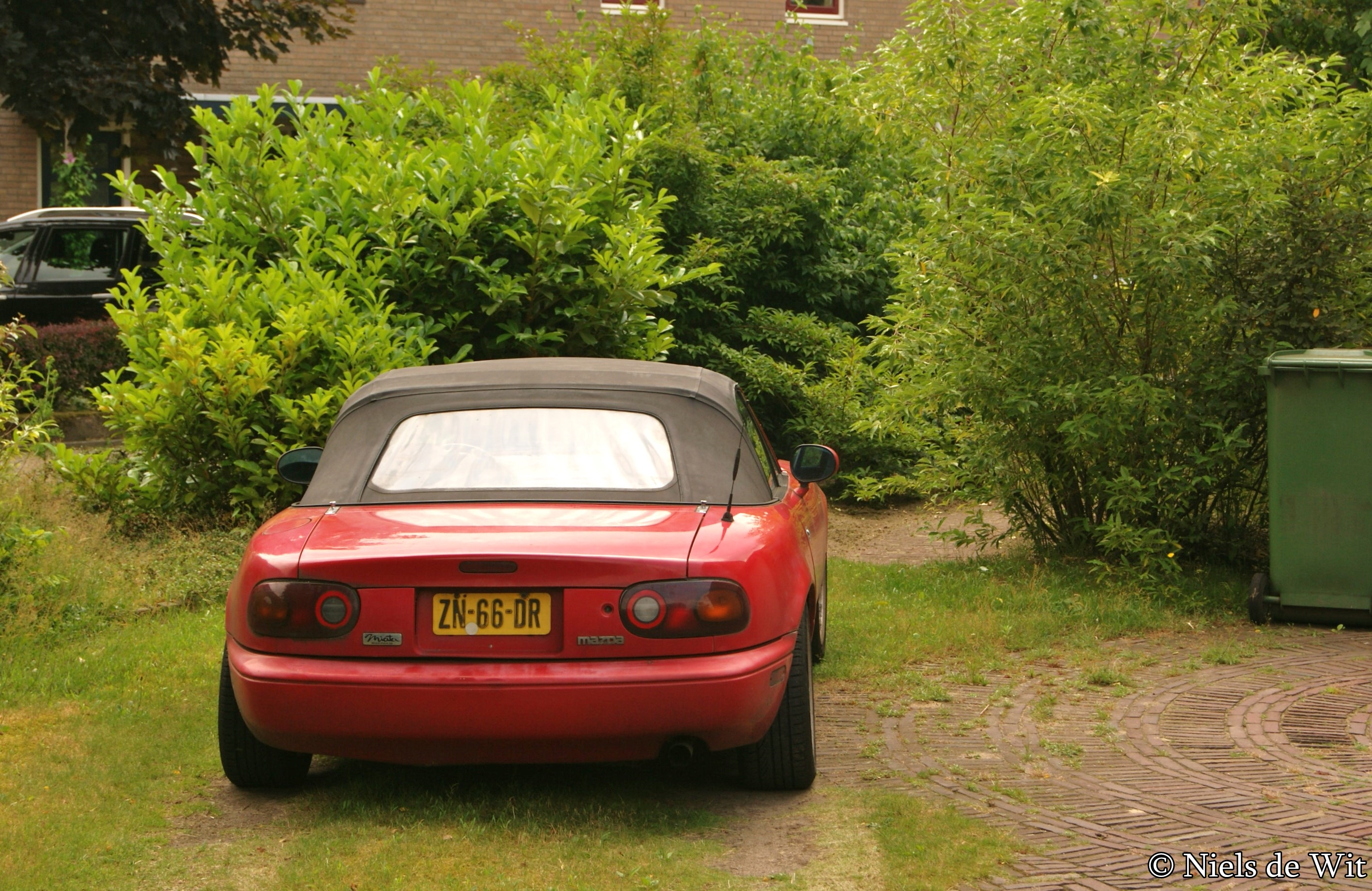
"was really a ranger. Right. They didn't like that no more. Right. That's too funny. Too funny. Okay. Up next is the 2020 Mazda MX-5 Miata. Coach, would you purchase this one under $20,000 used? That wouldn't be for me. That's a little sport. That just ain't for me. Yeah. I would purchase it"
The Mazda MX-5, or Miata, is a small sports car that you can drive with the top down. It's known for being very fun to drive and is great for people who love the feeling of speed.
The Mazda MX-5, also known as the Miata, is a lightweight sports car celebrated for its nimble handling and open-top design. The 2020 model continues the tradition of delivering an exhilarating driving experience at an accessible price.
"... right. Up next, Shane, we've got the 2018 Toyota RAV4 Hybrid used under $20. Would you do it? Though I..."
The Toyota RAV4 is a small SUV that has a lot of room inside and is good for families. The 2018 version is known for being safe and using gas efficiently.
The Toyota RAV4 is a compact SUV that combines practicality with a spacious interior and strong safety ratings. The 2018 model is particularly noted for its reliability and fuel efficiency, making it a popular choice among families.
"Yeah. The battery's probably the only serviceable part that you would really have to replace."
Battery replacement means changing the battery in a car, which can be very expensive, especially for hybrid cars that use special batteries.
Battery replacement in hybrid vehicles can be a significant maintenance cost, as hybrid batteries can be expensive and may need to be replaced after several years of use.
"...at one. Okay. Up next, we've got the 2015 Toyota Tacoma. Coach, it's a pickup. It's under $20,000. I'm g..."
The Toyota Tacoma is a smaller truck that is very strong and can handle rough terrains. The 2015 version is a good pick if you're looking for a reliable truck that can do a lot of different jobs.
The Toyota Tacoma is a midsize pickup truck known for its durability and off-road prowess. The 2015 model is often praised for its strong performance and reliability, making it a favorite among truck enthusiasts.
"...ms. It's auto Casey on auto correct. If you're a Corvette fan who either doesn't like the idea of a mid-eng..."
The Chevrolet Corvette is a fast sports car that many people love for its cool looks and speed. It's known for being a fun car to drive, especially if you like going fast.
The Chevrolet Corvette is an iconic American sports car, celebrated for its performance and distinctive design. The latest models feature advanced technology and mid-engine layouts, enhancing driving dynamics and overall experience.
"...lly good alternative for you this week. The 2025 Nissan Z. Now, I know it's a Nissan, but it does look clas..."
The Nissan Z is a sporty car that looks really cool and is built for speed. It's a fun car for people who enjoy driving and want something that stands out.
The Nissan Z is a modern sports car that pays homage to the brand's long history of Z-cars, combining classic styling with contemporary performance. The 2025 model is expected to deliver thrilling driving experiences with powerful engines and agile handling.
Select text to request an explanation
We have got a guest in so let me just let me set it all up because I want to go ahead
and throw him into the conversation.
Today we're talking about safety assist system calibrations with mechanic Shane Martin.
Shane Martin is in with us today, you know, and it's really amazing how Shane got this
far and how we got back together.
I taught Shane 20 years ago.
That's, I want to, I want to hear the story, Shane.
How was he as a teacher?
He was great.
You know, one of the things that always keep with me is him inspiring me to use this as
a career or something that I could feed my family with for, you know, the rest of my life.
Just buckle in and figure out how cars work and how these systems work and make it work
for you.
This is an MPB think radio podcast.
Want to know what's going on in your neck of the woods and learn the history and the
people behind the events that you love across the state?
Get to know the real Mississippi.
Check out MPB think radios next stop Mississippi podcast on all platforms or on the MPB public
media app.
Welcome to auto correct, helping you correct your auto problems.
Our hosts is coach Charlie Melton, ASC certified master technician.
I'm your main flood.
Hey, coach.
Hey, how are you doing today?
I'm doing good today.
Do you see my decorations in the studio?
You know, I like the decorations.
I like the blue tree.
I really like that.
I tried my best, you know, it reminds me a little Ole Miss there.
I saw it like that.
Good, good, good stuff.
It's a good day today.
And the reason is because we have got a guest in.
So let me just let me set it all up because I want to go ahead and throw him into the
conversation today.
We're talking about safety assist system calibrations with mechanic Shane Martin.
Our email address for questions is auto at MPB online.org.
The phone number is 1-877-MPB-RING.
That's 1-877-672-7464.
OK, Shane, welcome to auto correct.
First off, thank you for having me.
Thank you so much for coming on with this.
Now, I usually do a write up and let me tell you something about safety assist system
calibrations.
I know nothing.
Well, that's pretty much commonplace, right?
So here's here's my description of what it is.
Safety assist system calibrations is the crucial process of precisely aligning a vehicle's
cameras, radars and sensors to ensure features like automatic braking, lane keeping and adaptive
cruise control work accurately, typically needed after accidents, windshield replacements,
wheel alignments or any component changes that affect sensor positioning.
And without it, systems can misread the road leading to malfunctions, false alerts or
failure to activate when needed, compromising driver safety.
I did not understand any of that, coach, but I know you did.
I do know that is a mouthful, all that at one time.
You know, I was thinking, you know, Shane Martin's in with us today, you know, and it's
really amazing how Shane got this far and how we got back together.
I taught Shane 20 years ago.
That's I want to I want to hear the story, Shane.
How was he as a teacher?
He was great.
You know, one of the things that I always keep with me is him inspiring me to use this
as a career, something that I could feed my family with for, you know, the rest of my
life, just buckle in and figure out how cars work and how these systems work and make it
work for you.
I would love I would have loved to have him as a shop teacher.
I mean, like mechanic shop for sure.
Yeah, he was great.
We were always fixing the other instructors cars, you know, some of the other classes
and stuff.
So we did that hand in hand and it gave me a knack for this.
So yeah, I really appreciate it.
Yeah.
Coach, let everybody know what Shane does.
Where where he works, where he's from, all of that good stuff.
Shane now works for ATE is automotive technology experts.
And it's a part of crash champions.
He works at a body shop, but he was at 15 years at Honda Acura.
OK, that's where he cut his teeth in really doing vehicles and all.
But then he changed over to a more technology part of the car.
And that's, you know, when we when we think about technology for the safety assist
systems, well, we just think we get in them, you know, we always had this thing
with that camera in the back of the car that goes out all the time.
You know, well, Shane is the one that can now calibrate those.
And it's after a collision is when he works and gets calibrated.
OK, OK.
And let's let's go through it.
I want to know how to calibrate these safety assist systems.
Well, just tell us a little bit, Shane, what do you think?
So basically, it was like Jermaine said in the opening,
you're basically just going to get a center line of the vehicle.
And all of the manufacturers have, you know, prescribed specifications
on a certain distance to one side or the other to the front of the car
to the back of the car and there's different ways of measuring it.
So you're going to be using targets for the radars.
It's often a trihedral cone or a Doppler box that sends out a signal
to the radars to say, hey, I'm right here.
And that's how it's calibrated.
If you put it in the right spot, the manufacturers have designed
a certain distance from the car.
And as as you put it up, you use the scan tool to basically say, OK,
go into calibration mode, see what you're supposed to be seeing.
And this is where it's at.
And that's how accidents and, you know, minor fender benders
even can affect stuff like that.
So it's always imperative that you have those systems aimed after a collision.
That's what I was going to ask.
So the importance of calibrating and why?
Well, you know, once again, if you think about he mentioned the first thing,
the scan tool, OK, the scan tool is a big part of our automobile systems.
Now that you had to have a scan tool in order to work on them anymore,
you know, especially when you're doing calibrations, because like I say,
you can't keep all those numbers in your head constantly.
So the scan tool is loaded with all that software in order
so they can go back and look at that, you know, in order to make sure.
You know, I was thinking, Shane, on a collision, OK, you said even a small
fender bender or a large fender bender, you know, changes the way, you know,
a lot of people say, well, my fender is just barely bent.
I can don't have it fixed.
Well, that's also a mounting point for where the bumper attaches to the vehicle.
And a lot of these newer cars, the radars are integrated to the grill or the emblem.
So if you were to adjust the mounting point of the bumper,
but IE the fender being bent or, you know, pushed back or pushed forward
that would affect the angle that the radar is more or less shining down the road.
Just imagine like a flashlight.
If you skew that flashlight to one side or the other, it's going to be looking left.
It's going to be looking right.
And that's why it's imperative after these collisions to have them aimed
the proper direction.
OK, you know, because there's so many people that, you know,
they just take the insurance money and they don't get them fixed.
And they say, well, there's nothing wrong with my cars.
It's OK. But yet there is really not OK.
That is absolutely correct.
I've been in vehicles mostly in my Acura and Honda experience
that were not calibrated correctly and they will alert you or some of them
that are designed to collision mitigation, maybe pull you back into your lane.
So if it thinks that you're in the lane and you're not in the lane,
it would give the wrong inputs and maybe even put you off the side of the road.
Oh, OK, we've heard jeeps going off the side of the road,
but that was that was a software issue as well.
But, you know, as you start, as you start getting into this calibration,
what got you into doing the calibrations of the vehicle?
Well, it's one of those things that at the dealer level,
not everybody understands it or has the want to understand it.
So as I was elevated into the position of shop form,
and I kind of was the person that handled most of those things.
So and it really interested me to see how some of the radars have more range
or less range than the others.
And as, you know, the cars are getting newer and newer,
the technology is getting more and more.
They're able to see farther and do more.
So it really becomes more precise.
You know, we measure in millimeters or so.
You might be thirty six hundred millimeters from the front of the car.
That matters.
If you're doing it thirty seven hundred millimeters from the front of the car,
it would be incorrect and it would be giving the car the wrong calibrations.
My wife has a HRV twenty three model HRV Honda and the vehicle.
As you can say, it will change of adapted crews.
I can get I can change how far it reads before it starts slowing down
and how close I can get before it starts slowing down.
Typically indicated by bars in the front of the in front of the car on your steering wheel.
OK, so I've sort of like mine being further away, personally,
because I like to be where I can get to have a pretty good space before.
You know, as you as you were talking about calibration and
what are some of the things that you come up with that maybe
that's not a everyday thing in calibrations?
Man, I've seen it all.
I've seen windshields put in that were,
you know, the triangle in the glass not be cut right
to where it's not seeing anything run into all sorts of different things.
But that's that's when you'll know this car is not calibrated or
that there's something wrong with maybe the installation or a part
is when the calibration fails.
And that's when you start investigating some of the things that you wouldn't
necessarily think of. So let me ask you a question.
And you brought this to my mind, think about a windshield.
OK, a lot of people go get windshields in many different places.
You know, and each of one of those windshields
in these newer vehicles has to be calibrated in order to for the vehicle
to see what it needs to see, right? Correct.
And now what if somebody got a windshield
that was not really up to the specifications of what that car was supposed to
just got him a windshield, went to the cheapest place, got a windshield,
no calibration, no nothing just got it stuck in.
What does the insurance how would that affect insurance on that?
Do you know? I don't know if it would affect
directly affect insurance, but I mean, these insurance companies,
like if you were to do a claim with your insurance company
to have the windshield replaced, they are they would be held liable
if you didn't get the calibration done at that point.
Now, if they just wrote you a check or something that was up to you,
I would imagine that would probably be on you.
I haven't run into that instant,
instance specifically, but I know, like I was saying earlier,
my experience at Acura has taught me
I've seen cars with windshields put in that would have you
probably two feet over the line on one side or the other.
You're going down the road and you set the lane keeping assist system
and it literally holds you right on top of the line.
Right. You could see immediately where that would be dangerous.
But even systems that are designed to make adjustments
to the steering or the braking or anything like that.
It would further compound the safety issues.
You know, I was thinking my wife's car likes to, you know, it says,
I reckon I can't drive a straight line.
I sort of move over every now and then to the left and the right next.
I know I feel it in my steering wheel, moving me back over, you know,
it's called haptic feedback, haptic feedback.
OK, well exactly how does that car know that I'm over that line?
Is it just because of the calibration to how far in millimeters
it's supposed to go or what what is reading that me going on that line?
So the lane keeping assist is done by the windshield camera.
Now, some of them integrate the radars as well for distance measurements.
But typically your lane keeping is a camera mounted in the windshield
or some vehicles rarely mounted in the grill, things like that.
But yeah, lane keeping is camera.
So it would be windshield or and, you know, further into this,
even some of the manufacturer's statements will tell you
if the car had structural body damage, right?
Even if it was in the back of the car, you need to aim the windshield.
You need to aim the radar, such as GM Honda.
They all have position statements.
Specifically regarding what needs to be done.
In the case of a structural body repair, you know, I was thinking
what alignment have anything to do with the way that my vehicle is
absolutely doing it that way.
Service information will also tell you the vehicle needs an alignment or
just because of thrust angle and thrust angle just being
is the car traveling straight down the road from emblem in the front
to emblem in the back is the car going straight down the road.
So if it's dog tracking or, you know, moving down the road sideways,
that camera is now pointing off to one side or the other.
That radar is now pointing off from one side or the other.
And it doesn't have the ability to discern, hey, the car's not going straight.
It just knows what it should be seeing.
And it interprets the data that it is seeing.
And that's where you get incorrect.
Manipulations to the steering or the braking, which could cause safety issues.
You know, I was thinking something, you know, a lot of people ain't heard
that word dog tracking and where that word came from is that you would
18 would be driving down the highway and you would see its trailer
not straight with the tractor.
And that's what when I used to work on 18 wheelers all the time,
that's what we'd call dog tracking.
OK, so if that vehicle is running sideways, not straight down the road,
like you're saying, I think that
the safety concern that the collision people have, along with the insurance,
is that they had to have people that really know what they're doing.
Because if they're off just a little bit, then that causes a problem
with the whole way of the vehicle running, really. Absolutely.
You know, and now a lot of those, they got different modules
and different cameras and different radar systems in there.
What type of new stuff is coming on the line?
And I know since you've been in Acura and you're doing now,
what kind of new stuff do you see coming up on the line?
Well, we all know Tesla has
semi-autonomous driving modes.
And that's what they're.
That's what all of the manufacturers are trying to get to is.
I think it's called level three autonomous driving.
I think we're at two right now.
As far as Tesla's go, some of these Brivians and stuff like that.
The latest thing that I've dealt with was I think it was Monday.
I did a night vision calibration on a Jeep Grand Cherokee,
which is the first night vision that I've seen.
But it's really cool.
It's designed to at night when you're driving down like a country road,
you might not see that possum or that dog or that deer from as far away
as you would with the night vision.
It's basically thermal imaging on the dash.
So it's just things like that.
I mean, they are trying to find every way to make the driving experience more safe.
Well, what do you think about this has to do with calibration?
And what are these vehicles supposed to drive?
Way more. That's a car in California that's autonomous car.
And it's been in the news the last couple of days of having wrecks
and running in each other because they don't know where to go.
So what is the what do you think would be the cause?
They just don't know where to go.
They're hitting each other.
They're stopping and running the school bus.
The stop sign on the school bus.
They're running the school bus stops.
I saw that they had a whole like it was a congestion
that happened somewhere in Cali or something like that.
Yeah. And just running the school bus stop sign.
Well, I'm not particularly familiar with that vehicle or how it's set up.
But I imagine it's covered in cameras and and radars on every corner.
OK. And things like that.
So I would assume the GPS link and what it's seeing
just told it the wrong yes or no.
It was like four of them with the wrong yes or no.
There was a whole heap of them together like they all met up and just said we're stuck.
Yeah, we're stuck.
Listen, we're going to get into some more safety
assist system calibrations with mechanic Shane Martin.
The phone number is one eight seven seven MPB ring.
That's one eight seven seven six seven two seven four six four.
If you've got a question, you can send emails to auto at MPB online.org.
We're talking about safety assist system
calibrations with mechanic Shane Martin is your car under recall.
I'll tell you how you can find out next.
You're listening to AutoCorrect with Coach Charlie Melton.
I'm Jermaine Flood.
If you want even more AutoCorrect, find the podcast on all podcast platforms
for your smart device. AutoCorrect is heard on MPB Think Radio Thursdays
at 10 a.m. with the replay Saturdays at 11 a.m.
Before we go to the phone lines and before we get back
to safety assist system calibrations, we've got some recent recalls.
Coach coming up first on the list.
It's seventy two thousand five hundred Ram trucks have been recalled for instrument
clusters affected vehicle includes model year twenty five to twenty six Ram
fifteen hundreds twenty five hundreds thirty five hundreds forty five
hundreds and the fifty five hundreds.
A software error may cause the instrument panel cluster to be blank,
increasing the risk of a crash and preventing drivers from seeing important
information such as warning lights and gear selection.
Now to fix this issue, dealers are inspecting and updating the instrument
panel software or replacing the instrument panel cluster as necessary for free.
Well, you know, I've had to change a couple of those instrument panel clusters
in there. Really, they say, well, the module you're really the module itself
on a lot of these vehicles now are made into the instrument panel itself.
Yeah. And so, you know, when you get in there, you know, as long as it's under
warranty, you're good. But if it's not under warranty, it's going to cost you a
pretty penny and you better find somewhere that to get a good used one.
Yeah. If that's the case, it can be programmed.
If that's the case, you just got it.
Like my daddy said, when my gas hand broke, you need to figure out how many miles
you can go. That's all you got to do.
So how many miles you went until you got empty?
That's right. You got to figure it out.
That's right. All right. And finally, in recall news, Ford has recalled
108,000 plus escape SUVs for liftgate hinge covers.
This includes model year 2020 to 22 and 25 escapes.
The liftgate hinge covers may not have been fully engaged or adhered during
vehicle assembly and made detached from the vehicle, creating a road hazard
and increasing the risk of a crash. Here's the thing about this one, though.
I said model year 2020 to 2022 and 2025.
So 23 and 24, they did right.
And then somebody's hand slipped, come up this year.
Well, the engineers said, well, you know, we're fixing them too good.
We're making them. We've got to change something, you know, they got it right
for two years and then it was like, no more.
All right. To fix it, dealers are replacing any missing liftgate hinge
covers or inspecting and reinstalling them as necessary for free.
Letters will be mailed out for this January 15th, 2026.
If you want to find out if your car has a past or recall, you can go to the
National Highway Traffic Safety Administration's website in htsa.gov
forward slash recalls and inputting your VIN number or you can find their safer
car app. Today, we're talking about safety assist system
calibrations with mechanic Shane Martin.
We're also taking your vehicle repair questions.
Our email address is auto at mpbonline.org or you could just give us a call
just like Edward did in Meridian.
That's 1-877-MPB-RING-1877-672-7464.
Let's go to Edward and Meridian.
Edward, you are on with coach Charlie and Shane Martin.
Okay, coach Charlie, I've got a problem with a Ford Maverick Hybrid
2023. I think if they computer glitch, you probably can't help me with this,
but it's so random that every once in a while, you go get ready to start and
it tells me shift failure and it will not, you can put it in gear, but it just
blinks down there the way you put it in gear and it says system failure.
The motor will run, they let you in the gasoline, but it won't go into gear.
By the time you call for a roadside assistance and get a tow truck, the truck
will be running fast. So if you take it into the dealer, they say they can't fix it
because it's not broke, basically. When it's broke, they make and fix it.
I always think about that. I understand where you're coming from in 2023.
It's still under warranty and they say they can't fix it till it breaks.
I understand that, but this is where you need to be a little assertive with the dealership.
First of all, they need to give you a loaner vehicle. Go ahead and tell them that you need
a renter vehicle and that your vehicle is doing this and it's been doing it for a while and you've
already taken it in and they say they can't fix it till it breaks. If the dealership will not
help you on that situation, you need to call customer service, customer relationships,
and they will get that fixed for you and you will get a loaner car. You need to be assertive here,
you can get a loaner car, and you can leave your vehicle there as long as it takes
to get that vehicle fixed. It may not happen until a week from now. It might go a week.
Well, that's what I'm saying. That's what I'm saying. You leave that vehicle at the dealership,
make them give you a renter car, and they will fix that car. They'll bring somebody down from
Honda or, I mean, from Ford and they will get that vehicle fixed, but you've got to be assertive
and call customer relations. Don't even deal with a dealership at the moment.
Customer relations, okay. Yeah, look in the back of the owner's manual,
and the back of the owner's manual will have that to customer relations. Call them on the phone,
tell them what's happening, and tell them that it's happened randomly, that it doesn't happen
all the time, and they will take care of that, especially if it's done to warranty, and you
can get that renter car from them. One thing I will say is try to figure out any conditions that
are surrounding when it happens. The more you can give them, the better it is for them to try to
figure it out. And what comes to mind on it won't shift out of park is, okay, is the brake light
switch malfunctioning? Does it not see that you're pushing the brake lights or the brake pedal?
Go ahead. Well, it's acting. It's so random. Yesterday morning, it wouldn't go. I went in the
house and did something 30 minutes later. It's going. I mean, it's not like it's anything physical.
It's got to be in the computer somewhere. No, it was just like maybe ambient conditions. Is it
raining outside? Is it? No. I can go to the farm and park it two hours late. It won't go. Yeah,
I'm about to call roadside assistance and get a locate. It goes. It's going, you know, maybe 15
minutes late. Yeah, I would go ahead, Edward, I'd go ahead and talk to customer relations,
go ahead and get it over to the dealership, leave it at the dealership, and let them give
you a renter car until they fix your car. You know, I've had, I will tell you, I've had the
dealership manufactured by one of my vehicles back just because of problems like that. They
couldn't fix it and they tried and tried and tried and they never could fix it. And they would,
we went through arbitration and they bought it back. And then the back of the book and your
owner's manager talks about arbitration and everything. Yeah, lemon law and the status,
three unsuccessful repair attempts. So yeah, I love this truck, though. It's the perfect truck
for me. Well, I'll get 42 miles to the gallon. I can haul a thousand pounds of feed on it.
That's what I'm saying. It accelerates well. If I got another truck, I want one just like it,
except for this problem. Well, like I say, they got another one just like it and you can get
them to fix it. So that's right. That's what I would do. That's right. Edward. Check your brake
lights, Edward. See if the brake lights are coming on when it happens. That's the first
piece of advice I could give you. The brake lights. Yeah, just make sure when you push the brake
pedal, the brake lights are coming on. Okay. And then like the dealership, should be able to see
that when they that's one of the things, you know, they test when it doesn't come out.
Yeah, when it doesn't come out of park, that's one of the first things they check. All right.
Edward, thank you. Okay. Thank you. All right. Bye bye. 42 miles to the gallon, though. That's
what I'm talking about. I'm jealous. My truck only gets like 17. That's nice. That is nice. Listen,
if you have an issue with your car, you can give coach and Shane a call right now 877 MPB ring.
That's 1-877-672-7464. Our email address where you can send questions is auto at mpbonline.org.
When we get back from the break, we'll get back into safety assist system calibrations
with mechanic Shane Martin, all in between your car repair questions. What's in the news?
I want to save you some money. Consumer report says these are the best used cars under $20,000.
Can you believe that, coach? Under $20,000. They're doing it today. It's used, but...
You better get it now because they're going up. It's used. It's used, but you can do it.
Consumer reports are giving you this list and I'll tell you more next. Thank you for listening
to AutoCorrect on MPB Think Radio. Coach Charlie Melton, retired instructor from Clinton High
School's Automotive Tech program is our expert host. I'm Jermaine Flood. I hope you've downloaded
the app for your smartphone. That's the MPB public media app. In addition to listening to the show
on that app, you can click on the support button and make a contribution. And those
contributions help keep our programs on the air for you and others to enjoy. And we thank you for
your contribution to Mississippi Public Broadcasting. AutoCorrect is heard on MPB Think Radio Thursdays
at 10 a.m. with the replay Saturdays at 11 a.m. quickly. In the news, Consumer Reports says
these are the best used cars under $20,000. And you can't do that nowadays with anything new.
Not at all. I think you can. Let me just say this one vehicle. Possibly new. I don't know if they
still make it. I guess it's the model. The Chevrolet Sonic? Yeah, or the Spark. Maybe you
could probably get one of those under $20,000. You could get a new Mitsubishi under $20,000.
A new Mitsubishi under $20,000. Okay. And Toyota just launched a budget truck for like $15,000.
What? It's got a bed on it? It's called a Hilux. I'd like to have that sound good. Oh,
no, not a Hilux. It's a little bitty joker. Oh, it's smaller than that. It almost looks like a
car. Like a Japanese little tiny thing. But they are going to bring the Hilux. But it's got a bed,
I haven't seen that. Well, you can't get them in America right now. But that was usually,
that was what the first Toyota was named was a Hilux Toyota. Okay. You know, and now
they're bringing it back. Okay. Okay. It's nice. Is it cheap? It's going to be a lot cheaper than
a big size truck. It's between a medium and a small. Okay. Okay. Okay. Okay. They're indestructible.
Oh, yeah. What? Yes. Indestructible like in a wreck. You, they don't tear up. No,
they're just good trucks. I'm going to look that up on a break. All right. Here's some of the best
used cars under $20,000. It's a list of 10. So they got the 2019 Toyota Corolla. Would you buy
that used coach? I would. All right. All right. All right. The next one up is the 2018 Mazda CX-5.
Would you buy that used, Shane? I wouldn't. Shane. No, I wouldn't. Not the Mazda. Mazda. No.
Not that. Okay. Okay. I'm just going to take y'all's word for it. I'm not going to ask why.
Is it? Well, maybe I will. Why? They don't have any plaguing problems, but it is a Mazda.
That's what I came out of. It's not plaguing, but yeah. When they took Mazda, you know, Ford used
to be, Mazda used to be part of Ford. Okay. They used Ford parts, Ford everything. The Mazda truck
was really a ranger. Right. They didn't like that no more. Right. That's too funny. Too funny.
Okay. Up next is the 2020 Mazda MX-5 Miata. Coach, would you purchase this one under $20,000 used?
That wouldn't be for me. That's a little sport. That just ain't for me. Yeah. I would purchase it
only because I know that. But that would look like you. You could get the drop top version.
That would look like you. That would not look like me. This is definitely one that I would
purchase. All right. Up next, Shane, we've got the 2018 Toyota RAV4 Hybrid used under $20. Would you
do it? Though I'm a little scared of the hybrid components phasing out. Yes. That was the same
thing. I would be scared of the hybrid components, but I would buy it. Yeah. The battery's probably
the only serviceable part that you would really have to replace. Yeah. On that one. On that one.
Okay. Up next, we've got the 2015 Toyota Tacoma. Coach, it's a pickup. It's under $20,000.
I'm going to tell you, these Toyota trucks, they are just some good trucks. The Tacoma was a good
truck. I saw a 1978 Toyota to pick up SR5. Okay. That sun gun was $18,000. Okay.
It was in 1976. I mean, 96. They were proud. Oh, yeah. Yeah. So, yeah, I would probably buy it.
It had to be, it had to really look good. Okay. Okay. Okay. All right. Well, that's the list.
And I'll include a link to this story in our show's podcast description today. We are talking about
safety assist system calibrations with mechanic Shane Martin. You can email your questions to
auto at mpbonline.org or you can give us a call. We just got a ring in the number is 1-877-MPB
ring. That's 1-877-672-7464. Coach, before we go to our phone lines again, let's jump back into
safety assist system calibrations with Shane. You know, I was thinking about that. You know,
Shane said he did a night vision. I said, wondering if you could drive around at night with your
lights off in the night vision work. That would be pretty neat. That would be dope.
Yeah. Usually it's all self-encompassed. So it would work. Yeah. So it would work. Yeah.
You know, my being stealthed. Right. That's good stuff. I thought that would be funny.
Okay. Back to the calibrations. You know, on what year did all this calibration that all these safety
systems started really started for the manufacturers? I haven't done specific research, but I'd say
around 0809, some of the top level fully loaded cars were starting to come with front radars.
Then you started kind of seeing cameras more and more. And that's when we really didn't know
anything about them. The technicians didn't know anything about them. They had to send
everybody to school in order to learn how to calibrate. I think when all this new stuff starts
coming, you know, there's technology and as technology comes and it gets better and better,
if we can just layer it on top of each other and it works better. And you know, from you leaving
Accra to coming to where you're at now doing the calibration, what type of transition was that for
you? Well, you know, Acura's, I don't mean to bash my product, but it's a it's a badged Honda.
It is a Honda to its core. So it's kind of an economy. You know, not as not as loaded as some
of these other brands like now I'm getting into Mercedes, which may have a total of 12 radars
on the car. Some of them use two cameras in the windshield as opposed to one that gives you
kind of like your eyesight. You close one eye, you can't really see the depth perception. Well,
if you add that other eye, you really can tell what's out there. So now you're having to do some
matching and making sure they're together now. Yeah, or as opposed to aiming one radar on the
front of the car, you might have to offset it to one side, aim this camera offset it, aim this
camera or multiple radars, which there's a lot of dynamic calibrations as well. These cars have
the ability for you to just put it in calibration mode, drive down the road. It sees the stop signs,
it sees the other cars, it sees the metallic objects and determines its environment. And that's
how it calibrates. And like I say, it's all over the place. You know, for listeners, I like you to
explain something you said earlier, I know what you're talking about. But most of our viewers
probably don't know what you're talking about when you say targets, when you're calibrating,
what are you talking about when you talk about targets? So targets is something that the car
can see to know exactly where it is. Anything visual like the cameras are going to be,
it looks like an actual bullseye typically. It's a combination of white and black.
Looks like a bullseye and they're kind of be segmented. A lot of the AVM cameras are a brown
view monitor. So when you put your car in reverse and it gives you that bird's eye image, it's because
you have cameras on all four corners of the car. So typically, those are going to be the same way
with the black and white patterns, the windshield cameras, black and white patterns, a lot of the
backup cameras. So for radars, you're going to be looking for a metallic object. Or like I was
telling you, the night vision has a heated target. So it just it's this X up on a stand that you push
the button and it heats up. And that's what the night vision sees and says, okay, there's the center
of where it's supposed to be. And it basically centers that camera image. The radars is a
trihedral cone. It's just made of metal. So where the radar can pick up that it's pinging that metal
and saying, okay, it's this far out. Remember that. And that's what, you know, where I remember
targets from, I knew that you had to do that same thing. It's just like if you were adjusting
headlights, if you're doing alignments, we have targets, you know, and a lot of just consumer
don't really know what you're really talking about when you talk about targets. But now they do
because you just gave them a good definition. Yeah, my van is full of probably, I couldn't
even tell you probably $40,000 in targets is full of all these different brands targets.
And so when you start talking about calibrations, you start talking about different things and the
technology, a consumer really needs to know what they're talking about. So they're able to ask
questions, right? Because you know, if they don't know what they're talking about, what you're
talking about as an individual, they don't have the questions to ask to make sure their vehicle
is fixed correctly. Yeah. I mean, a lot of people are just used to going, oh, man, I got a crack in
my windshield. I got to go get it replaced. Hey, I need you to put a windshield in. And if those
people were to never tell you that it needs to be calibrated, you would never know. Wow. Wow. So
and a lot of them are good about it. I'm not trying to bash your body. Like I say, as a consumer,
we need to know that what people are doing to our vehicle. So we don't get ripped off that
we're paying for what we get. Yeah. Yeah. Or we don't, you know, get an issue with like,
I've had to bring my win my car back for the windshield to be calibrated because they forgot
to calibrate. So yeah, let's go to the phone lines, though, coach. We've got Carl and Natchez.
He's got a drum break question. Carl, you're on with coach Charlie and Shane Martin.
Oh, yes, sir. We have an older car that we were trying to restore. I just want to know if you
know, you know, if they have any new technology or new material they're using for drum breaks,
for manual drum breaks. Well, you know, drum breaks were really been the same since the
beginning of time. You know, you've got different levels of drum breaks, a different material if
they're using a surrounding material. They're using organic material in the pad itself of the
lining that's on the shoe itself. So as a new technology of the type of material, probably
not at all, because like I said, we're using semi-metallic, ceramic or organic. Those are your
three types. And you know, really, I can see you're working on older car because it has a
carburetor as well, that you had to be careful about those drum breaks because of the asbestos
and the brake dust creating asbestos dust at those certain vehicles. And they have did away with the
asbestos in those lining material now. So you don't have to worry about that. But used to,
we had to worry about them all the time. Okay, also, do you know if they make any type of
gadget or whatever, I could put on my exhaust to adjust the carburetor from lean to rich to get it,
you know, to try to get as perfect as I can. You're talking about to read the oxygen
content coming out. You know, vehicles today use sensors in the coming out of the Catholic
converter. They don't usually come out of the muffler and all because it changes a little bit
as it goes through the muffler. But they're reading it off the call it converter itself.
Now, I'm just going to tell you typically on if you had a holy carburetor on that vehicle, run the
screw in the adjustment screws mixture screw all the way in running about one and a half and then
you can tweak it from there. It's usually how you do it. And you can tell when it starts running rich
because the engine will start sputtering and then you take it off a little bit. But as a gadget to
put on there now, I would say an aftermarket wideband. Yeah, you do that. Yeah. All right.
Well, he just dropped up so hopefully it'll help. Just just get you an aftermarket wideband,
put a bung in the exhaust pre cat, any sort of cats, and I'm probably about 18 inches away from
an exhaust port on the engine. And you'll just need a simple 12 volts. That's what I would do.
Well, Carl, I hope that helps. And you can give us a call back though. If you got any more questions,
the number is 1-877-MPB-RING. That's 1-877-672-7464. We're discussing
safety assist system calibrations with mechanic Shane Martin and taking your repair questions.
Send us an email to auto at mpbonline.org because next week it's all email all call.
We've got a new car review from Casey Williams coming up and coach's tip of the week. This
is auto correct on MPB Think Radio. Here's a new car review from Casey Williams. It's
auto Casey on auto correct. If you're a Corvette fan who either doesn't like the idea of a mid-engine
Corvette or thinks they've gotten too expensive, I might have a really good alternative for you
this week. The 2025 Nissan Z. Now, I know it's a Nissan, but it does look classic. Looks like the
1970 Nissan Z brought forward, but a lot more modern. I think it was really cool. On the inside,
I really like this one too. It has the blue interior in it, but it's simple. It's got the
technology, but simple. Flat screen gauges, nice big touchscreen, very intuitive,
automatic climate control, Bose audio system, and all the crash avoidance systems.
But the fun parts are underneath the hood. A twin turbo, 3.0-liter V6 delivers 400 horsepower,
350 pound-feet of torque. This one has a six-speed manual transmission, so you get from
zero to 60 miles per hour in four and a half seconds. Gas mileage, not great, but okay for a
sports car, 18 miles per gallon city, 24 highway, and it is just a blast to drive on a country road.
So let's talk about price. Well, the Z starts under $43,000. This one all in, $55,585.
With the replay Saturdays at 11 a.m. and stay tuned after the show at 11 a.m. today at Southern
Remedy, Kids and Teens with Dr. Morgan McLeod. I'm Jermaine Flood. Our expert is Coach Charlie
Melton, ASC certified master technician, and it's time for Coach Charlie's tip of the week.
You know, as I was sitting here thinking and talking to Shane about the calibrations of
these safety systems on these vehicles, you know, I don't think that you would be able to take your
car just to any body shop today and have it worked on due to the calibrations that need to be done.
So take your car to somebody reliable, take it to ATE, crash champions, take it over there and let
them, if you have a problem, take it over there and let them check it out and just be careful that
wherever you take it, if you're a collision, that they do it correctly. And I think that Shane
Martin here can always lead you in the right direction on that. Shane, what would you call
regular calibration intervals?
When they should be checked. Yeah, like when like, you know, every three, every six.
Well, that's the thing that there's not necessarily a schedule for. Okay. It's only
when you would be removing or installing a part. Now there is some taboo in the industry and I
follow some Facebook groups and people have differing opinions. There's actually been some
studies done, some of the earlier cars that had the radars or whatever have kind of deteriorated.
When they go back to check them and test their effectiveness, they've actually lost
effectiveness and have to be recalibrated. So there's no specification, but anything
manmade can be man manipulated. So I wouldn't say, I wouldn't say every three years, six years,
10 years. I would just say if it's given you any sort of any sort of unexpected feedback,
that's when I would check the calibration. Well, it's acting wonky. You know, when he talks about
that feedback, we're talking about that check engine light coming on once again. You know,
and like I say, I just got to get back to that check engine light just a second because it couldn't
just be something else, just the engine sometime. It could be other things because they have
different systems in that vehicle's computer. And as it reads those computers, as it scans that
computer every day, every time you cut that key on automatically it goes through a scan.
If it sees something wrong, that check engine light is going to come on. And so many people
ride around with it just own. They don't even know what's wrong with their car and there could
be something wrong with the car. You know, somebody said, well, the cruise control don't work. Well,
there's a reason the cruise control don't work. It may be that radar, it may be a simple sensor,
you know, it may be the brake light, you know, won't go out of park, you know, and so
doing calibrations on safety systems. It sounds like brain surgery a little bit.
I think it is. Is that right, Shane? You're a brain surgeon of the car. You know, the thing is,
he told me when he got in here that because I asked him about the transition, he goes, well,
it makes me use my brain, makes me think all the time. It's just not one brand, you know,
it's just like anything else. If you're working on it and you're used to one thing, you get good
at it. But then you've got to take and widen your horizon to get better at what you're doing.
Right. I think it's mostly just the collision repair side of it. You're never going to have
this. You can't duplicate the same wreck. You can't duplicate the same force that the car
experienced. I mean, so it's always based on inspection and we're in the business of making
sure that it's perfect. We're not going to, it's not ever a good enough. It has to be to the millimeter
perfect for me to put my name on it and say, I'm going to put you and your wife and your kids in
the backseat and let y'all go down the road. Oh, I like that where he says he wouldn't put his name
on it if it's not right. If it's not perfectly calibrated. It's not calibrated that it comes back
on him, comes back on to the company. Legally. So when you think about crash champions, hey,
this is a crash champion guy. I believe it. Now look, I know Shane is one of the top calibrators
probably in the state, but when it comes down to just us regular people shopping for professional
calibration services, how do we know when we've made it to a place where they're going to do it?
Right, Shane, like you. Well, there's a lot of companies out there that do this. A lot of them
don't have the same standards that we do. We were required to include service information in every
job that we do. We're required to prove when it needs it, when it doesn't need it. So then we
need to be looking for those details. So I'm thinking that I think we are the pinnacle of
of ADOS calibrations. You know, we used to have their calls still today. Shade,
shade tree mechanics. Well, I don't think I'd take my car to Joe down the road and tell him to
calibrate because I may run it. Hey, I may have my cruise control on and I'm just
I can hear Joe right now. I'll calibrate that car for you real quick. $20 dollars.
No, Shane is the real deal. Shane, I got to thank you for joining us today on AutoCorrect.
Well, thank you guys for having me. It's been an eye opener. He is the brain surgeon of vehicles.
Coach is definitely the doctor of them all. And we've had a great show today. If you've missed
any other program, make sure you listen at auto correct dot mpb online dot or crew engineer was
yours truly. That's me call screener Marissa Vaughn for Coach Charlie Melton master technician.
I'm Jermaine flood next week. It's all email all call for December. Thanks for listening to
AutoCorrect on MPB think ready. This is an MPB think radio podcast to hear previous shows.
Visit MPB online dot org or download the MPB public radio app to listen on your iPhone or
Android phone on demand.
Request an explanation for:
15 cars
Scroll for more
15 cars featured
Request an Explanation
Heard something you'd like explained? We'll add it to this episode.
Sign in to request explanations for terms you heard.
Want to learn more?
Browse our glossary for plain-English explanations of automotive terms, jargon, and concepts.
See something that's not quite right? Our annotations are AI-generated and can sometimes miss the mark.
Click the flag icon on any annotation to suggest a correction.