Fleet sales are when companies buy many cars at once, like rental companies or government agencies. This helps car manufacturers sell more vehicles quickly.
CAFE standards are rules that set how many miles per gallon cars and trucks need to get. They help make cars use less fuel and be better for the environment.
K cars are small cars made in Japan that have very small engines, usually around 660cc. They are designed to be affordable and easy to drive in cities.
Stellantis is a big car company that makes cars under different brand names like Chrysler, Jeep, and Fiat. It was created when two companies merged together.
Rental car companies are places where you can rent a car for a short time, like a few days or weeks. They usually buy many cars at once to have different options for customers.
The average transaction price is how much people usually pay for new cars, including any deals or discounts they get. It helps show how much cars cost on average.
Tariffs are extra fees that the government charges on things brought in from other countries. This can make cars more expensive for companies to make and sell.
The Ford F Series is a group of trucks that are very popular in the U.S. They are known for being strong and useful for many different tasks, which is why so many people choose them.
The Ford F-150 Raptor is a tough truck made for driving on rough roads and off-road adventures. It has a strong engine and special features that help it handle tough conditions, making it popular with people who love outdoor activities.
XLT is a version of the Ford F-150 that comes with more features than the basic model. It usually has nicer interior options and some extra technology.
The Ford Edge is a medium-sized SUV that is great for families and everyday driving. It has a nice mix of comfort and technology, making it a good option for people who need a reliable vehicle.
Kelly Blue Book is a guide that helps you find out how much a car is worth, whether it's new or used. It shows prices based on what people are paying in the market.
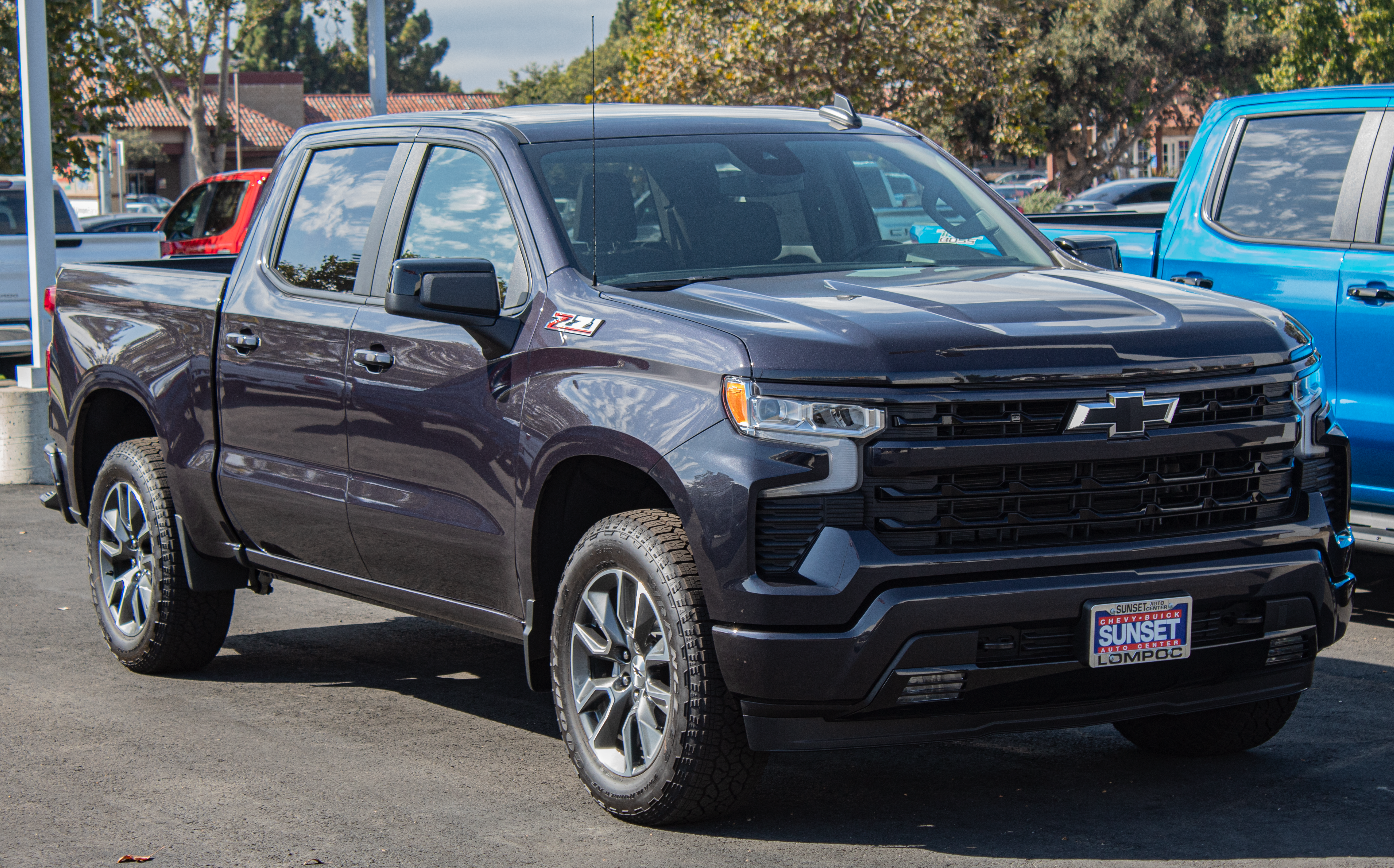
The Chevrolet Silverado is a big truck that can be used for work or fun. It's known for being strong and able to carry heavy loads, which makes it a favorite choice for many people who need a reliable vehicle.
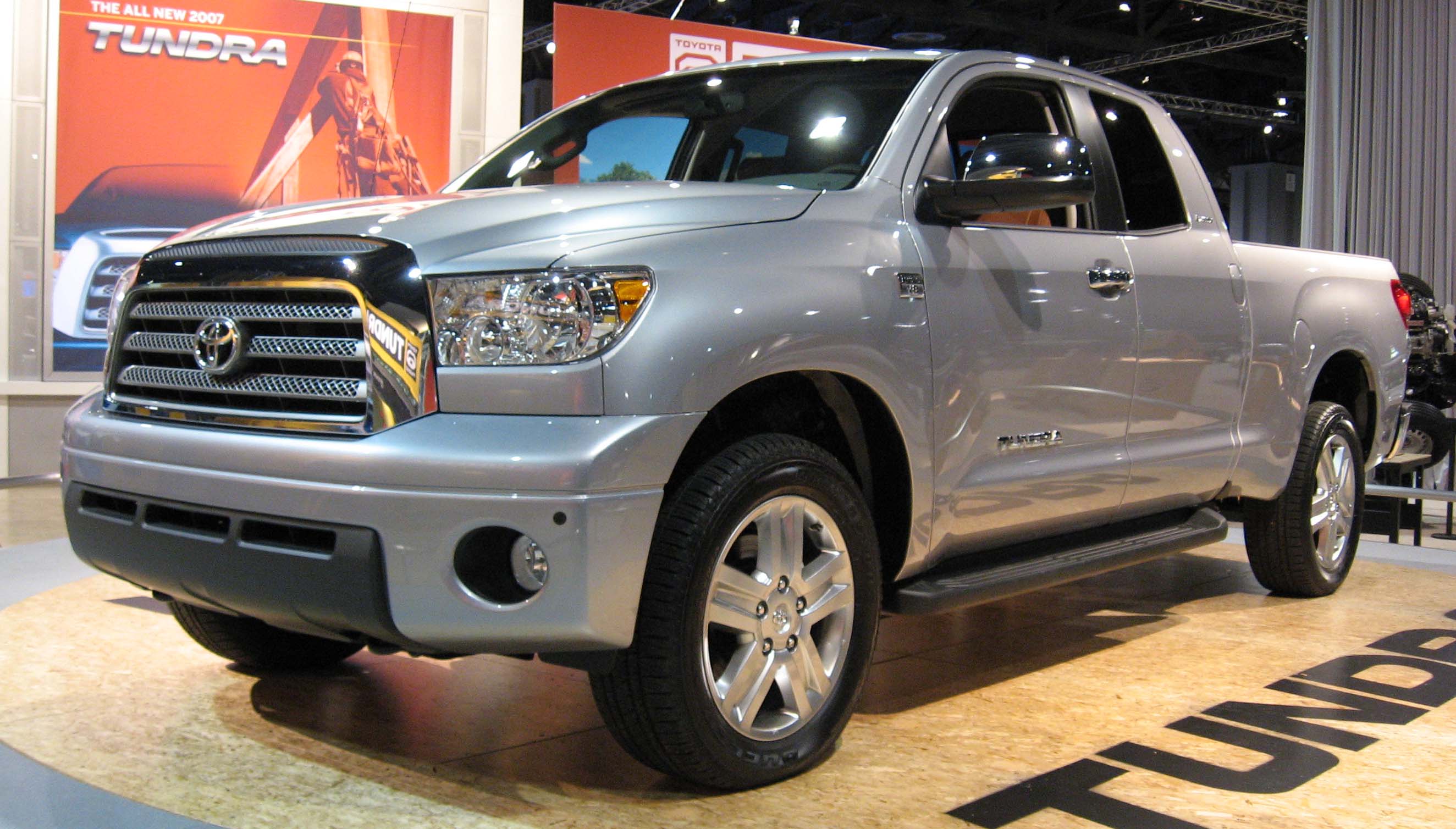
The Toyota Tundra is a large truck that is built to last and can handle tough jobs. It's a good option for people who want a dependable vehicle that can also be used for everyday driving.
The Cadillac Escalade is a big, fancy SUV that is very comfortable and has a lot of luxury features. It's popular among people who want a stylish and spacious vehicle, which sometimes makes it hard to find in stores.
An oversupply of inventory means that there are too many cars available for sale compared to how many people want to buy them. This can lead to sales and lower prices.
A dealer discount is when the car dealership lowers the price of a car to make it more appealing to buyers. It's a way to encourage people to buy from them.
Dealer add-ons are extra things that a car dealership might try to sell you when you buy a car. They can be things like extra protection for the car or warranties, and they usually cost more money.
Financing means borrowing money to buy a car and paying it back over time, usually with extra money added for interest. It helps people afford cars without paying all at once.
A credit union is a type of bank that is owned by its members. They usually offer better loan rates and services, like car loans, compared to regular banks.
Sales tax is an extra amount you pay when you buy something, like a car. It's added to the price and goes to the government.
LIVE
Did you know that driving under the influence of marijuana is illegal?
Driving high will get you a DUI.
And if you're wondering if law enforcement can tell you're driving high, well, everyone
else can.
Friends?
I can tell you drove high.
Parents?
I can tell when you drive high.
Relatives?
I can tell.
You drove here high, didn't you?
So what makes you think law enforcement can't?
I can tell.
If you feel different, you drive different.
Drive high, get a DUI.
K-4 by NHTSA.
Last year, I went through many different life changes.
I needed to take a pause and examine how I was feeling in the inside to better show up for
the ones who need me to be my best version of myself.
When you're navigating life's changes, talkspace can help.
Talkspace is the number one rated online therapy, bringing you professional support
from licensed therapists and psychiatry providers that you can access anytime, anywhere.
Living a busy life, navigating a long distance relationship, becoming a first step father.
Talkspace made all of those journeys possible.
I could speak with my therapist in the office.
I could speak with my therapist in the comfort of my home.
I was never alone.
Talkspace works with most major insurers and most insured members have a $0 copay.
No insurance, no problem.
Now get $80 off your first month with promo code SPACE80 when you go to talkspace.com.
Match with a licensed therapist today at talkspace.com.
Save $80 with code SPACE80 at talkspace.com.
12-0-2 here in Ventura City, New Jersey at our nation's capital and this is Carriage
Live coming to you late today because I don't know.
The fire alarm just went off of my building and I had to evacuate and the fire department
is on their way here as I speak but no fire.
This is Carriage Live with your host, me, Ray Inventor and Zach in Washington, DC.
How are you today, Hanson?
I'm doing fantastic, man.
I did a really hard workout this morning and I feel fantastic on the other side of
that and I know that you've got working fire alarms at your condo building so that
makes me quite excited as well.
Probably they go off at three in the morning instead of a couple minutes to show time.
Hey, whatever it is, what it is.
Folks, today's show is brought to you by caredge.com.
My dad and I over about six years ago now, we started this company.
We've got an incredible team of about 50 people that work every day to help you
get the best possible deal on a new or used car.
I also want to call out.
I see some people in the chat talking about all state and insurance companies.
Folks, please go to caredge.com.
Check on insurance right there and save some money on your auto or your home insurance at
a minimum.
At least shop that stuff once a quarter or so.
I continue to talk about it because it is such an expensive part of buying and owning
a vehicle.
Again, a friendly reminder, we're doing $150 off our car buying service and 15% off
caredge.
Bro, please check it out back at caredge.com.
Now, we've got the promotion out of the way.
The big story this morning is there is an ugly secret that all of these new car automakers
have and they don't want you to know it.
Now, year over year, dad, we've seen sales for new vehicles decline 7.3%.
That's what the month of November showed us.
Now, what's interesting here, dad, is even though sales were down 7.3%, it was actually
significantly worse than that.
Fleet sales actually increased 45% to rental companies and overall increased 18%.
This is the ugly secret of the auto industry.
Not all of their vehicles get sold to consumers like you and me and everyone that tunes into
this.
Many of their vehicles get sold to fleet customers and we've actually seen that
a tremendous increase, there's another chart showing it, in fleet sales for the month
of November, a significant increase in vehicles sold to fleet companies, whether that
be commercial, rental, government, or any of those three.
Dad, this is a huge storyline here because sales again for the auto industry were actually
down 7.3% year over year.
That's buoyed by an insanely significant increase in fleet sales year over year.
Talk about this ugly little secret, dad, and how it makes the numbers look better
than they actually are.
Well, I can't make the numbers look better than they actually are.
They actually are what they are.
What they show is that nearly 20% or almost one in five of every vehicle retail last month
in November was sold to a fleet customer, not a retail customer.
Yeah, they count as retail sales for the seasonally adjusted sales rate of, you know,
we're tracking for 15.6 million new car sales based on the sales rate in November,
which was down from, I think, 16.5 million in October.
But yeah, the ugly secret is, they realize that the vast majority of the population cannot
afford...
It's okay.
You're good, dad.
We can only hear it in the background.
You're good to go.
Yeah.
Well, I don't know if that continues for a while.
Yeah.
Yeah, sure.
You want me to continue?
Do you think you're actually having a fire or is it just the fire alarm going off?
You muted yourself.
I appreciate that.
Yeah.
Do I think there's a fire?
No.
Do I know for a fact that there's not a fire?
No.
Other than the location of the fire is supposed to be the stairwell on the 11th
floor, and well, people came down by the stairwell on the 11th floor, and there was no fire or
no smoke.
But other than that, I don't think there's a fire.
No.
All right.
We're going to go to the chat here.
Should my dad stay on the show?
He stopped.
Should my dad stay on the show or should he evacuate?
What do we think?
Put it in the chat.
What do you think?
But dad, while we're waiting for those responses that dictate your future, because we
are really heavily influenced by the internet here, your thoughts on the fact that fleet
sales are buoying the numbers.
I think you are getting to the point where these automakers know that they can't sell
these cars to consumers because they're so expensive.
Oh, here we go, dad.
You got to stay.
You got to stay, man.
Sorry.
You know, much like the captain of the Titanic, I will go down with the ship, damn it.
I will not be the first one in a lifeboat.
I'll be the last one.
So perhaps they'll pull my charred remains out of, you know, live on YouTube.
We shall see, but I seriously doubt that.
All right.
So back to the point.
What I'm about to say, though, before the interruption was, I think the manufacturers,
they realize, they know, everybody knows, hell, the President of the United States knows,
that there's an affordability crisis.
And we don't know a way to really address that.
So if you want to continue selling cars and the average person can't afford to buy them,
well, then you look for fleet customers to buy your products.
And obviously, that's what the manufacturers were doing in the month of November.
So it is the reports of sales being down slightly are exaggerated because they're really
down a considerable amount when you take out the fleet sales.
Now, are fleet sales always part of the equation?
Yes.
Are they supposed to be close to 20% of the equation?
I don't think so.
And it just further proves the point that what vehicles are available are not affordable
in this country.
Yeah.
And I think it is that it's this little hidden secret that most people, including
ourselves, it's not like you and I talk about fleet sales all that often.
Why would we?
We focus on the implications of buying cars as consumers.
But when automakers have this kind of off ramp where they can sell excess inventory,
that gives them some more, I don't necessarily call it leverage, but just gives them more
space to operate within.
But we also know what happens on the other side of this.
After you tap out your fleet sales, you've now run out of that off ramp.
And I think that's inevitably what's going to happen here as we continue to see
sales dry up on the consumer side, which I'm going to share some data here in just
a moment that helps quantify the affordability crisis.
We have the latest and greatest data from Kelly Blue Book.
You've got to imagine that even these fleet companies, eventually, they're not going to
keep buying these cars as well.
That's when the real pressure hits for these automakers.
And it's so fascinating.
It's okay, Deb.
We can barely hear it.
And it's what's fascinating about this is to your point, we're up to almost
one in every five new vehicles sold last month was a fleet vehicle, not a retail
vehicle.
And that's not the norm.
That's really not the norm.
And so this is most certainly an off ramp safety valve for them and something that we'll be
watching closely because if it dries up, then you've got both your markets, both your areas
of demand going away.
That's a really scary moment for these automakers.
It is.
And I know yesterday I did some couple of media interviews of radio station in Milwaukee
and a radio station in Denver.
You know, the concept behind the interviews was, well, with the cafe standards being kind
of put on hold or reversed by the Trump administration, will we see that lead to more affordable cars?
And the other question was the K cars, the little cars, the 660cc engine vehicles that
are made in Japan, will that solve our affordability crisis in this country?
So I'm going to take the second part first.
The K cars will not.
And the reason they will not, in my opinion, is, A, the president said, I want them to
come build them here and sell them here.
Well, okay, that's great.
Where are you going to build them?
You have to build a facility to build them in first, where you have to retrofit
an existing facility to do that.
And that's, well, that doesn't happen overnight.
And then there are all the regulatory issues because they won't pass any of the safety
regulations that we have for vehicles in this country.
So even though they might be $10,000 vehicles in Japan, they won't address the
affordability crisis in this country because they won't be able to build them here,
at least any time soon, or to match up with any of the existing regulations.
Yep.
And then the other was, OK, so if we change the CAFE standards so that they're
not as stringent as what the Biden administration had suggested, that that
would allow the manufacturers to build less expensive cars.
Well, that would be true if you could just hit a switch and change things up.
For sure.
Yeah.
For sure.
The affordability issue has to be addressed at the manufacturer level
where they decide that it is in the country's best interest to start
producing less expensive, lower priced vehicles.
And I don't see that happening any time soon.
For sure.
I want to stay on fleet just a little bit longer if that's OK,
Deb, because that really is the ugly secret, again, that no one talks
about is the fact that fleet is this off ramp.
And I want to focus on one brand in particular, and that would be
Stellantis, that Stellantis is, Chrysler Dodge, Jeep Ram, Alpha, Fiat, et cetera.
This actually, this article came out the end of November, that Stellantis
strategy shift seeks to regain lost fleet shares.
So this is to be very clear.
Before we talk about affordability anymore, this is that strategy
that these automakers who have a dramatic oversupply of inventory
turn to, you can see it right here, Stellantis is prioritizing
North American fleet growth after lagging with 12% share.
The automaker reported a 22% jump in fleet sales in the third quarter.
They're diversifying into higher margin government and commercial fleets.
Like this is the strategy rather than lowering prices or quite frankly,
you know, investing in more affordable vehicles.
This is the strategy these automakers turn to.
And it's important that our audience and our community understands
this because when we come with another report on this next month,
two months, three months, four months, five months, six months
from now, and we start to see fleet sales decline because
we did watch this happen during the past couple of years as well,
where fleet sales went up and went down and went up and went down.
We know when they're going down, that means that these automakers
are more reliant on retail customers to purchase their inventory
because they're not getting the demand that they need from their fleet customers.
What we're seeing right now is a tremendous increase in fleet sales,
specifically from rental car companies, which is interesting.
And that is a dynamic that ultimately gives the manufacturer
some leverage because they have that off ramp.
So just want to make it really clear to everyone
that fleet is something we don't talk about that often,
don't think about that often, but we're talking about hundreds
of thousands of cars every month getting sold via fleet sales.
And it also shows that the manufacturers are making a conscious
decision to abandon the retail customer.
Yeah.
They have decided that if they can sell between 15 and 16 million
new vehicles annually to the 12% to 13% of the population
that can actually afford them, they're OK with that.
They have many of the manufacturers, and Stalantis was one of the worst,
abandoned their customer base to move more upscale and upmarket
to higher profit margin vehicles.
Will they come back down to earth to a certain degree?
Will we ever see it come back down to where it truly is affordable?
I kind of sorted down it, and so, yes, they're going to have
to rely more and more and more on fleet customers.
I don't want to cut you off, but there's...
Let me share one thing with you.
I had a phone call from our dear friend Glenn Bob this morning.
And the Mercedes-Benz dealership that he works in, in the Phoenix metro area,
had a large influx for the first week of December of are you sitting down?
Fleet sales, so that they actually were the number one volume Mercedes-Benz dealership
in the United States the first week of December because of their fleet transactions,
not their retail transactions.
Yeah, so I want to show you some data that backs up a point you were making,
which is the abandonment of the retail customer, and that's this chart.
So sorry for trying to jump in there, but it just fits so perfectly.
So you're making the case, and I agree with you,
that manufacturers are abandoning retail consumers,
and we're seeing that because they're increasing their fleet sales
and relying less on selling retail to retail customers.
This chart shows you the average transaction price of new cars,
that's the blue line, and it shows you the average incentive spend
as a percentage of that average transaction price on the yellow line.
So for example here, go all the way back to November of 2019.
On a $50,000 vehicle, you would anticipate getting about a $5,000,
10% $5,000 incentive from the manufacturer to purchase that vehicle.
Nowadays, dad, we are at 6.7% as the average incentive spend
as a percentage of the average transaction price,
significantly lower than where we were pre-pandemic
and quite frankly lower than we were at the end of last year,
significantly lower than we were at the end of last year,
where it was close to 8%.
This also demonstrates a willingness from the manufacturers
to abandon their retail customers.
We've been really proud to share that there were 40 to 0% financing offers last month,
and so far in December we have 44% financing offers.
But this yellow line should be going up significantly higher
if the manufacturers were serious about retailing their inventory.
Instead, they're choosing to your point dad,
to abandon retail customers and sell more vehicles to fleet.
I think this chart perfectly demonstrates your point.
I think there's a couple of reasons for that.
One of the reasons that we have seen a decline in the percentage of incentive spend
through this year is, I hate to say the T-word, but tariffs.
You can only eat so much in tariffs
and then still be able to incentivize your customers
through the various rebates or finance incentives
to get the customers to buy the cars.
It's not as if the manufacturers have unlimited funds to throw towards incentives.
They have to... Oh, for God's sake!
You're good. You're fine, dad.
It's not that much background noise. It's okay.
You can eat yourself for a second, but it's really not that bad.
I think the point you were going to make is because tariffs have increased
the cost infrastructure for these, you didn't eat yourself.
Because the manufacturers eat yourself,
if you're going to eat yourself, there you go.
Because the manufacturers have increased their costs as a result of tariffs,
they don't have as much money to spend on the incentives.
We saw last year, a good point of this would be pre-tariff Toyota lost 99%
of their operating profit year over year because of incentives,
not because of tariff costs.
I think, get me honest here,
but I think that was the point you were going to make.
Well, I couldn't hear you because this loudspeaker in my condo
is so loud that I could hear Dale, but I couldn't hear you.
My point, dad, was that the manufacturers don't have money to spend on incentives
because they're losing money that's a result of the tariff costs.
Yes. I mean, you can only budget so much towards incentivizing the sale of each vehicle.
And the amount that you can budget goes down
with the increase that you absorb in tariffs.
So there's only, as I said, there's only so much money to go around.
And there's dealer incentives.
Remember, we had Dan LeGrain, John from Chiada Group,
and he was saying what over at Solantis?
Up to $3,000 is what Solantis is paying him, the dealer,
if he hits his volume goal.
So I mean, think about that.
They're not only shelling out money to the dealer, to the consumer,
the increase costs for, I mean, it's getting expensive.
And yet these companies still make a bunch of money year in and year out.
Well, some of them actually have started to lose a lot of money,
but now it's pretty clear why.
Yeah. I mean, and literally, this was a conversation I was having
with our friend Glenn earlier today.
It's like, how do people afford this?
And, you know, obviously he works at a Mercedes-Benz dealership.
And so he's dealing with a slightly, well, not exactly.
I think you get a little more affluent.
Yeah, somebody working at a Chrysler dealership or your local Nissan dealership.
Yep.
But every manufacturer has to make a decision.
And right now it appears as if most of the manufacturers have made the decision
that they are going to try and continue to cater to the 12% to 13% of the population
that can actually afford these vehicles, as opposed to worrying about the 87% or 88%
of the population that says no can do, not until you lower your prices significantly
and the manufacturer is gone.
That ain't happening.
Yeah.
We're not going to do that.
All right, people, serious question time.
Did you know that driving high is considered driving under the influence?
That's right.
Driving under the influence of marijuana is against the law in every state.
That means even in states where marijuana is legal, that means driving high
could get you a DUI.
And if you think law enforcement officers can't tell when you're driving high,
well, you're wrong.
If you're high, they can tell.
Your friends can tell.
Your coworkers can tell.
Even your parents can tell.
Everyone can tell.
So what makes you think that law enforcement officers don't know when
you're driving high?
You'd be wrong.
They can tell too.
Driving under the influence of marijuana can slow your response time
and change how you perceive time and speed.
So even if you think you're fine to drive when you're high, you're not.
Because the bottom line is if you feel different,
you drive different and driving high is driving under the influence.
So remember, drive high.
Get a DUI.
Paid for by NHTSA.
Tires matter.
They're the only part of your vehicle that touches the road.
Tread confidently with new tires from TireRack.
Whether you're looking for expert recommendations or know exactly what
you want, TireRack makes it easy.
Fast, free shipping, free road hazard protection,
and convenient installation options.
Go to TireRack.com to see tire test results, tire ratings,
and consumer reviews.
And be sure to check out all the special offers.
TireRack.com, the way tire buying should be.
Toyota Thon, Toyota Thon, Toyota Thon is on.
Oh, what fun it is to drive a new Toyota today.
Hey, Jan from Toyota here reminding you Toyota Thon is on.
Make your holiday wishes come true with a new Camry,
RAV4, Tacoma, and more.
All right, let's sing it together this time.
Toyota Thon, Toyota Thon, Toyota Thon is on.
Dealer inventory may vary.
Toyota Thon ends January 5th.
See your participating dealer for details.
Toyota, let's go places.
Tired of paying for channels you don't watch?
Well, a new select package by Sling
gives you a curated lineup of live and on-demand TV
you actually want with channels like Fox News, NFL
Network, FX, and more.
Starting at $19.99 a month, there's even some 4K content.
And in select markets, subscribers
get local broadcast networks too.
No long-term contract, no hassle.
Just the live TV you love.
Sling lets you do that.
Visit sling.com to learn more.
Restrictions apply.
Let's look at the latest Kelly Blue Book data
in a second here, Dad.
Before we do, let's come here from Garse 5562.
Thank you so much for your kind contribution.
Hey, Ray and Zach, I'm new to the channel.
Discovered it three months ago.
Welcome.
I wanted to let you guys know
that you have been amazing and helpful with the info
you've provided.
It was extremely helpful with my buy yesterday here
in Tempe, Arizona.
Well, congratulations.
That's fantastic.
Thanks for the kind contribution.
Yes, that's almost local as far as we're concerned,
since you were born in Mesa, Arizona.
Yeah, that's awesome.
Well done.
Well, here's the deal, folks.
Kelly Blue Book report, as affluent households
drive the auto market, November new vehicle prices
hold near $50,000.
That's exactly what you were just saying.
It's literally affluent households drive the auto market.
I'll read you some of the data points that we've got here,
Dad.
The average transaction price for new vehicles in November
was $49,814, up 1.3% year over year.
The average incentive, like we talked about a moment ago,
6.7% of the average transaction price.
That's down from 7.9%, which is where we used to be.
The average new vehicle MSRP was higher 1.7% year
over year for the month of November.
We're up to almost $52,000, being the average MSRP,
not transaction price, but MSRP.
Full-size pickup trucks, Dad.
The average MSRP, $70,178, 1.8% higher year over year.
Incentives staying steady at 8.4%, which is not nearly
enough.
And then new vehicles sold in November with an MSRP
below $30,000, accounted for 7.5%
of total sales last month, down 10% year over year.
So there's your trends right there, folks.
And if I may, prior to the pandemic,
it was not uncommon for incentives
to equal 11% to 12% of the purchase price.
So whatever the average transaction price
was before the pandemic, the manufacturers
were investing between 11% and 12% in incentives
to get the customers to buy them.
That number has dropped back down to 6.7%.
It had been higher earlier this year.
So it just really shows that they are just
concentrating their efforts on the folks
that they feel can buy.
And is the average incentive higher on a $70,000 pickup
truck than a $50,000 car?
Apparently so, and significantly so.
If it was 8.4%, the average for the industry was 6.7%.
That's 1.7% higher to move customers
to purchase those high profit margin pickup trucks.
One of the conversations I was having yesterday
when they said, but wouldn't people
want inexpensive $10,000 to $15,000 new cars?
And my response was this.
You would think, but what we have seen statistically
that when there were new cars available in price points
between $18,000 and $25,000, those sales stagnated.
And those vehicles didn't sell in volume.
So you have to ask yourself, if we have this affordability
crisis that we have, why is it that when those type of vehicles
were available, people weren't buying them?
And I come back to, I think the answer
is that the industry has spent the last 50 years convincing
us that bigger is better.
And we all need to have a pickup truck or an SUV.
We don't need a small sedan of any type or kind.
And so we have ingrained in the American buyer's mind
that you haven't accomplished anything in your life.
If you can't afford that pickup truck or SUV,
when really, sometimes, basic transportation
is all that you need.
But people will know you're poor if that's all you buy.
I want to read you one more quote.
I roll my eyes.
You're not poor if you drive an affordable vehicle,
but I think your point is well heard.
That's the scared perception for many.
I want to read this quote from Erin Keating.
She's the executive analyst over at Cox.
The average price is a quote, the average price
for a new vehicle in the US remains near $50,000
with no indication of softening.
It's important to remember that KBB average transaction
price reflects what consumers choose to buy,
not what's available.
Many new car buyers today are in their peak earning
years and are less price sensitive,
opting for vehicles at the higher end of the market
to get the features and experiences they value most.
The November sales of vehicles priced above $75,000
outpaced those below $30,000 underscoring, excuse me,
this preference for premium products.
The Autopian Dad recently did a really interesting article
talking about the monthly payments
that truck buyers are taking on.
And I share this on the screen in part
because it reiterates just how crazy some of the decisions
consumers are making.
Let's hone in on the Ford F-Series, for example, here.
And you can see the average monthly payment
is on the F-150 Raptor, which 7% of all Ford sales,
and this is a data set that looked at a quarter's worth,
yeah, 20, 25 second quarter sales,
the average payment's over $1,425.
The average payment on the XLT is $840.
I mean, look at these payments
that people are taking on for an F-150.
Like, this is absurd.
The word that comes to mind for me is insanity.
This is insane.
There is no earthly need for the vast majority
of those people who buy an XLT to, A,
need to buy the XLT F-150 and pay $847 a month.
And that, my friends, is before insurance on that vehicle
and before maintenance and before fuel costs.
It is as if we need a reset of our brains
to understand that what we want
and what we need are two significantly different things
and that sometimes, sometimes,
it just makes more sense to buy what you need
as opposed to what it is that you want.
It's a great reminder, Dad.
We're gonna do this all together here, you ready?
I'm gonna share a different tab.
Let's come over here.
Car edge 10% rural affordability, okay?
Read the little AI overview, click on our website.
How much should I spend on a car?
Doesn't really matter.
It's a great reminder about total cost of ownership
and 10% rural.
It's crazy when we start to look at this data
and obviously the point that the industry's trying
to make, Aaron, we're trying to make
is it's just more people choosing more luxury items.
Crazy, though, to see the raptor with that much
market share and almost a 14 over $1,400 payment,
monthly payment.
And we know the average loan term is over 70 months.
And one other thing where they said,
well, the percentage of sales of $75,000
and more is significantly higher than sales
of vehicles, $30,000 and less.
Well, there's a real reason for that
and that is that vehicles between $20,000 and $30,000
might make up 10% of availability
and pickup trucks and such might make up,
I don't know, as much as 30% of availability.
The $30,000 and less vehicles just aren't as readily available
as these really expensive pickup trucks.
It's just mind-numbing to me.
Look at this step. I went to the Carage Car Search.
Yes.
Over here, price.
And let's do between, let's do $18,000
because there's maybe potentially some bad data in there.
So let's see.
We've got 276,000 new cars for sale nationwide
with a price below $30,000.
Okay.
All right.
So on the other side,
what do you want to look at?
Over 75, right?
Yeah.
And we know there's about 3 million new cars in inventory.
So it's less than 10%.
So let's put this at like 250,000
and we'll put this one at...
Wait for it.
$75,000.
$410,000 at $75,000 and up.
So yeah, you've got significantly more inventory
at a $75,000 or higher price point
than at a sub $30,000 price point.
So no wonder we see what we're seeing here.
Dad, let's come here from Rich Diana.
Thank you, Rich.
Thank you, Rich.
Super kind.
Always great to see you.
You're the best.
Merry Christmas.
Oh, yeah.
We're getting close to Christmas time, man.
Really excited.
It is.
Really, really, really excited for that.
But yeah, man.
The ugly secret for those of you that joined late fleet sales,
that's buoying the auto industry's down month of November
because there were obviously an increase in fleet sales.
We covered that at the beginning of the show.
We talked about then today,
consumers taking on more and more expensive vehicles.
The latest Kelly Blue Book data shows that this data,
which I'm not mistaken came from Experian
for the monthly payments that we were looking at before.
Just absolutely mind boggling that F-150 owners
are accepting north of $800 a month payments consistently
and then upwards of $1,000 on the Raptor, the Tremor,
the Platinum, the King Ranch.
Just mind boggling.
Can you pull that up one more time
and just scroll to the left?
Yeah, yeah.
Do you want to look at the other automaker?
I want you to look at that.
Keep going.
That's the one.
Overado.
Overado.
The average payment on the Silverado,
the most popular Silverado,
is even more than the average payment on an F-150.
I mean, here, let's look at the Tundra.
That's even more.
And then let's look at the Ram.
There's your bargain, folks.
It is.
If you looked up the word insanity
in the dictionary,
it would pull up that chart.
I mean, what more,
and just out of curiosity,
what do you think the percentage of those trucks are
that are actually being used as pickup trucks
or work trucks?
And I don't consider,
well, I need to have a pickup truck,
because I go to Costco every Sunday,
and all that toilet paper and paper towels,
they take up a lot of room in the bed.
We need to have a return to sanity in this country.
I'm sorry.
I realize we are allegedly a capitalist country,
and so we reward capitalism.
But what we look at is,
these manufacturers are just concerned with
what their quarterly profits are
to keep their shareholders happy,
and why we're doing that.
We've abandoned the vast majority of people in this country,
and we have brainwashed us to believe
that we need a pickup truck
or this giant-ass SUV.
You know, why is the Cadillac Escalades
they can't keep them in stock?
There's something wrong here
when smaller couldn't be better.
Yeah, you're not going to make as much per vehicle you build,
but you could sell more vehicles to more people
if you made them desirable,
and how do you do that?
Well, you do it the same way
you decided to make SUVs and pickups desirable.
You market the crap out of them
to convince the people that this is what you need.
It's amazing what you can do with advertising.
A little advertising here, folks,
and then we're calling it a show.
CarEdge.com.
If we can help you out with anything,
car buying related, car selling related,
warranty insurance, please check it out back on the website.
Again, we're offering $150 off our end-to-end
car buying service.
To be clear here, y'all,
this is where you get a car buying expert
to find and secure your next vehicle,
start to finish for you,
things like researching dealer outreach,
test drive coordination, price negotiation,
paperwork review and delivery logistics.
We handle all that and more with our car buying service.
Join thousands who are taking advantage of this
before the end of the year,
and please start with a free consultation schedule
time to talk to our team
and meet our incredible concierges
back at caredge.com.
CarEdge Pro are the tools you can use,
including our AI agent,
to get yourself that best deal.
We'll be back at caredge.com as well.
And a final reminder on the insurance front.
Please shop your insurance rates.
Save some money there.
Go to caredge.com.
Click on insurance and give us a chance
to help you save.
Dad, let's do it all again tomorrow.
Okay.
No squire alarms.
Oh.
Oh, wow.
Well, thank you.
We're hanging tight.
Yeah.
Another incredibly thoughtful contribution here
from Garc5562,
the second one today.
Wow, we are so grateful
for these contributions.
Thank you.
We bought a 2026 Volkswagen Atlas
SC Tech all-wheel drive.
Now, Volkswagen is a great brand
to be targeting right now, Dad,
because they are losing money.
They are losing market share,
and they have an oversupply of inventory.
So great job targeting a vehicle
that is in that situation.
MSRP was $49,975.
Selling price was $46,225.
After a $3,749 dealer discount,
plus a $3,000 Volkswagen rebate,
the OTD price with no dealer add-ons
was $48,400.
We financed that 3.84%
for 60 months to a credit union.
3.84% is awesome,
and 60 months is responsible.
I love that.
Yes.
And only for 60 months.
I mean, they're...
Bless you.
That's all I can say is bless you.
Bless you for realizing
that you don't want to go 72
or 84 or 96 months.
Bless you for
utilizing the tools
that are available on the Internet
to be able to save money
and to be able to work the customer.
You know, and
we know you're in Tempe, Arizona.
So I know,
excuse me, between
title and registration
and sales tax.
Using our tools, Pops.
Isn't that awesome?
Yeah.
You're probably looking at
11% to 11.5%
of that $48,000
out the door was
sales tax, title, and registration.
The lieu tax for the plates
is a percentage of the
MSRP.
So it's much higher
in Arizona than elsewhere,
and their sales tax rates
are a little higher than elsewhere.
So I am sure
that $48,000,
11% to 11.5%
of that was state fees,
which is
just crazy when you think about it.
Yeah, but it's again a testament to a job well done
doing the research planning a good vehicle.
So congratulations again on that.
I actually will end the show on this.
CarEdge.com slash year end one word.
We've got all of our year end sales
information from the automakers
in one place. It's our year end deal hub.
Please check it out again.
CarEdge.com slash year end
one word. It will take you to that page.
Use those resources that Justin, Rebecca,
and Steven on the team are pulling together.
So please, please, please spend some time
reviewing those. Let's do it all again tomorrow.
Thank you so much for sticking with it.
I know that was probably frustrating for you, but you did a great job.
And we'll be back with more CarEdge lives then.
Continue to subscribe to the channel.
We really appreciate everyone tuning in.
And we'll be back here tomorrow. Yes, we look forward
to seeing you back here tomorrow.
And remember, tell a friend to come join us.
Tired of the hassle of constant repairs?
This holiday season,
Renewal by Anderson helps you
slay the savings.
Buy one window or door and get one 40% off.
Plus, take $200 off your
entire purchase with a minimum of four.
And with special financing available,
replacing those old, inefficient windows
has never been easier. Don't let drafty
worn out windows crash your holiday
cheer. Visit RenewalByAnderson.com
today to schedule your free
consultation.
What if you could have reliable and intelligent Wi-Fi
at the same price for five years?
That's the Xfinity
five-year price guarantee.
No annual contracts, no hidden fees
and our best equipment included.
Just five years of Wi-Fi that boosts
speeds to the devices that need them most.
That finds and fixes problems
before you even notice them.
And that keeps you gaming in the fast lane.
Lock in your price and unlock
the possibilities. Xfinity.
Imagine that. Select plans only.
Restrictions apply.
Did you know 39% of teen drivers admit to texting
while driving? Even scarier, those who text
are more likely to speed and run red lights.
Shockingly, 94% know
it's dangerous, but do it anyway. As a parent
you can't always be in the car, but you can stay connected
to their safety with Greenlight Infinity's
driving reports. Monitor their driving habits.
See if they're using their phone, speeding
and more. These reports provide real data for
meaningful conversations about safety. Plus
with weekly updates, you can track their progress
over time. Help keep your teen safe.
Sign up for Greenlight Infinity at Greenlight.com
slash podcast.
If you're an HVAC technician
and a call comes in,
Granger knows that you need a partner that
helps you find the right product.
Fast and hassle free.
And you know that when the first problem of the day
is a clanking blower motor, there's no
need to break a sweat.
With Grangers easy to use website and product
details, you're confident you'll soon
have everything humming right along.
Call 1-800-GRANGER, click
Granger.com or just stop by.
Granger, for the ones who get it
done.
Looking for the ultimate car talk?
Buckle up for CarCast,
the podcast that blends horsepower,
insider knowledge and big personalities.
Join me,
Motorator Matt DeAndrea,
along with Edmunds.com,
Editor-in-Chief Alistar Weaver
and WWE Hall of Famer Bill Goldberg.
As we dive into the
latest rides, car culture
and behind the scenes stories,
you won't hear anywhere else.
From track tested reviews
to legendary car collections,
this is where passion meets performance.
Subscribe to CarCast Now
on Apple Podcasts, Spotify
or wherever you get your podcasts.
About this episode
A deep dive into the automotive industry's hidden reliance on fleet sales reveals an alarming trend: nearly 20% of new vehicles sold are going to fleet customers rather than individual buyers. The hosts discuss how this shift impacts overall sales figures, masking a significant decline in consumer purchases. With rising vehicle prices averaging around $50,000, the episode highlights the affordability crisis facing many potential buyers. The conversation also touches on the implications of manufacturers prioritizing fleet sales over retail customers, leading to a potential market collapse if consumer demand continues to dwindle.
Today on CarEdge Live, Ray and Zach discuss the latest info on fleet sales. Tune in to learn more! Hosted by Simplecast, an AdsWizz company. See https://pcm.adswizz.com
for information about our collection and use of personal data for
advertising.