
Automotive YouTube is changing FAST… thoughts?
About this episode
Automotive YouTube is portrayed as more fragmented, more informed, and more competitive than before. The speakers say viewers now follow the car or project more than a single creator, which makes it harder for any one format to dominate. They also discuss how stretched-out build series can draw backlash, how sponsorships and paywalls are viewed skeptically, and how public comments and social media now quickly correct mistakes and amplify bad advice.
Welcome back to KONIG’s Behind the Wheel Podcast. In this episode, we take a step back and look at the state of automotive content in 2026—how we got here, and where things might be headed next.
There was a time when car culture lived in the pages of magazines like Super Street and Import Tuner. You’d wait weeks (or months) for the next issue to drop, soaking in builds, tech features, and industry trends. Fast forward to today, and everything has changed. Content is instant. The options are endless. And the way we consume automotive media has completely evolved. With great channels like @mightycarmods , @CleetusM , @chrisfix , @speedacademy , @BisforBuild , etc…. there’s no shortage of automotive content out there now.
At some point, the upgrades that make your car exciting can start to make it… miserable.
Now, it’s all about YouTube, social media, and a constant stream of creators pushing out builds, reviews, hot takes, and everything in between.
We’re talking about machines like the Dodge Neon SRT-4, the cult-favorite Nissan NX2000, the bizarre-but-brilliant Infiniti FX50, and more that completely defy expectations.
But with so much content out there, we have to ask:
- What do enthusiasts actually want to watch in 2026?
- Are we oversaturated with the same formats?
- Do we miss the depth and storytelling of older media?
- Or is this the best era of automotive content we’ve ever had?
Nick and Matt dive into:
- The shift from print to digital and what we lost (and gained)
- The rise of automotive YouTubers and evolving content styles
- Algorithm pressure vs. authentic builds
- Viewer expectations in today’s fast-paced content cycle
- What WE want to see more (and less) of going forward
- Whether you’ve been in the scene since the magazine days or you’re part of the new wave of digital-first enthusiasts, this is a conversation you don’t want to miss.
2026 Behind the Wheel Podcast | All Rights Reserved
Thank you for tuning in, and if you enjoy our podcast, please SUBSCRIBE! We’re on Spotify, Apple Podcast, and iHeartRadio, and we always upload our full video interviews on our YouTube Channel: https://www.youtube.com/konigwheels (we’d love for you to subscribe there as well!) Thank you for listening!
FOLLOW:
Konig’s Instagram: @konigwheelsusa
https://www.instagram.com/konigwheelsusa/
More on the Konig Behind The Wheel Podcast and to SUBSCRIBE:
podcast.konigwheels.com
The post Automotive YouTube is changing FAST… thoughts? appeared first on Konig Wheels Behind The Wheel Podcast.
throttle stuff
"as of late, a lot of the throttle stuff has been doing really well. I know you've seen the numbers, but just in general, like they've been putting together really great builds..."
“Throttle stuff” just means videos that focus on how the car responds when you press the gas. The hosts are saying that kind of content is doing especially well right now.
“Throttle stuff” is a casual way to refer to content focused on engine and driving behavior—often videos about acceleration, pedal response, and how changes to the drivetrain or tuning affect performance. In this segment, it’s used to explain what kinds of car videos are currently popular.
Koenig wheels
"And some of them are running Koenig wheels as well. We've done a few pull out with them on a few different projects."
Koenig wheels are aftermarket wheels made by a company called Koenig. The hosts are saying some of the popular car videos use those wheels on their builds.
“Koenig wheels” refers to Koenig, an aftermarket wheel brand. In the context of the podcast, it’s mentioned as part of the builds featured in popular car videos, implying the wheels are a visible upgrade or styling choice.

Ford Mustang
"Right now, they're working on a Mustang project that has a turbo K series in it. I'm loving the project, really cool."
The Ford Mustang is a popular sports car. In this segment, they’re talking about a Mustang that’s being heavily modified, so it’s not just a bolt-on upgrade—it changes how the car drives.
The Ford Mustang is a long-running American sports coupe/convertible platform. Here it’s the base for a major modification project, which matters because the hosts discuss how the engine choice and turbo setup change the car’s balance and character.
turbo K series
"Right now, they're working on a Mustang project that has a turbo K series in it. I'm loving the project, really cool."
A turbocharger forces extra air into the engine, which can make much more power. “K series” here means they’re using a particular engine design/family, and then turbocharging it as part of the swap.
“Turbo” means adding forced induction using a turbocharger to increase the engine’s air intake, allowing more power from the same displacement. “K series” refers to a specific engine family (commonly associated with Honda’s K-series), so a “turbo K series” swap implies using that engine architecture and then turbocharging it for the Mustang.
V8 modular engine
"...because you're going from a, you know, a V8 modular engine that really made about the same power as that naturally aspirated four cylinder."
A “modular” engine is built using a design that’s meant to be shared across different engines. They’re saying the car started with a V8 modular engine, and the project changes that baseline.
“Modular” refers to an engine design strategy where related engines share common architecture and components, making them easier to build and service across multiple models. The speaker is describing a V8 modular engine as the Mustang’s starting point before the swap, emphasizing how the original engine’s output is being compared to the new setup.
naturally aspirated four cylinder
"...a V8 modular engine that really made about the same power as that naturally aspirated four cylinder. And now you're also turbo charging it..."
Naturally aspirated means the engine doesn’t use a turbo or supercharger—it just breathes normally. A four-cylinder engine has four cylinders, and they’re comparing its power to the V8 before the turbo swap.
“Naturally aspirated” means the engine relies on atmospheric pressure for air intake rather than using a turbocharger or supercharger. A “four cylinder” is an engine with four combustion cylinders, and in this context it’s being used as the comparison point for power versus the V8 modular engine.
turbo charging
"And now you're also turbo charging it and moving the weight back further in the chassis."
Turbocharging adds a device that squeezes more air into the engine. More air usually means more power, but it also requires extra parts and careful tuning.
Turbocharging uses a turbocharger to compress incoming air, which increases the amount of oxygen available for combustion. That typically allows higher power output than a non-turbo setup of similar displacement, but it also adds complexity (boost control, intercooling, and heat management).
moving the weight back further in the chassis
"And now you're also turbo charging it and moving the weight back further in the chassis. Yeah."
When you swap an engine, you can move where the car’s weight sits. Shifting weight toward the back can change how the car handles and feels when you drive.
Changing the engine (and related components) can shift the car’s center of mass. Moving weight rearward in the chassis can affect handling balance—often making the car feel more responsive or changing how it behaves under acceleration and cornering.
K software
"...obviously K software are done everywhere. We just did a piece about why it's so popular..."
This is probably referring to the computer tuning/software used to make an engine run correctly and efficiently. They’re saying this kind of setup is very common, so it’s not as “surprising” as the more unusual build.
“K software” is likely referring to the engine management/software ecosystem used with K-series engines, including tuning tools and calibration. In practice, it’s mentioned as being “done everywhere,” meaning the approach is common in the tuning community.
fab work
"...there's probably going to be a lot of fab work involved, a lot of, you know, strategy and word of, you know, interplacement, things like that."
“Fab work” means making custom parts or modifications by building or shaping materials. For big projects, it’s the hands-on work that makes everything physically fit and function.
“Fab work” is short for fabrication work—custom metalwork or assembly needed to build or modify a car. Engine swaps and custom projects often require fabrication for mounts, brackets, exhaust, wiring routing, and fitment.
word of, you know, interplacement
"...a lot of fab work involved, a lot of, you know, strategy and word of, you know, interplacement, things like that."
It sounds like the speaker is talking about planning—making sure parts are positioned correctly and the build is thought through. For custom car projects, that kind of planning can be as important as the actual wrenching.
This appears to be a transcription error for a term related to planning/strategy and component placement during a build. The speaker is emphasizing that custom projects require careful planning and positioning of parts, not just bolting things on.
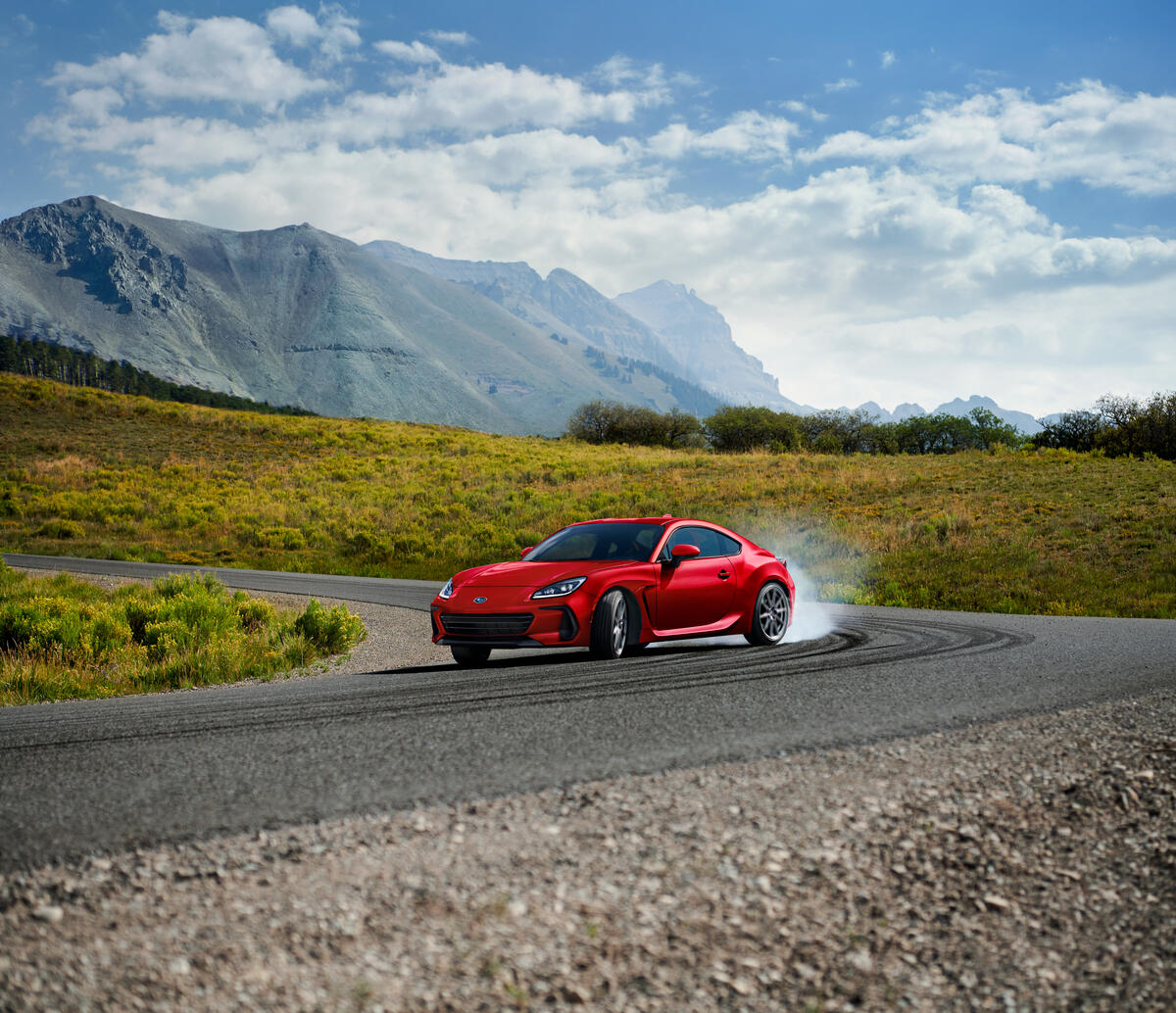
Subaru BRZ
"Whereas if you're doing like a, you know, a K swap BRZ or me on or something, you just do that one episode, right?"
A “K-swap” means swapping in a Honda K-series engine. Here, it’s being discussed as a swap into a Subaru BRZ, which usually requires custom work to make everything fit and work together.
A “K-swap” is an engine swap where a Honda K-series engine is installed into a different car. In this case, the speaker is talking about putting a K-series engine into a Subaru BRZ, which changes the car’s powertrain character and fabrication needs.
3D printing
"Mike from Stanceworks, like that's a prime example of a very long form content where, you know, he got me more into 3D printing and figuring out CAD and solid works than any other video that I've ever watched..."
3D printing is a way to make a physical part from a computer design. Car builders use it to prototype or create custom pieces without needing a full machine shop for every one-off part.
3D printing is a manufacturing method that builds parts layer-by-layer from a digital model. In automotive builds, it’s often used for prototypes, brackets, interior pieces, and custom components where traditional fabrication would be slower or more expensive.
CAD
"...he got me more into 3D printing and figuring out CAD and solid works than any other video that I've ever watched..."
CAD is computer software for designing parts. Instead of guessing dimensions, builders can model the part digitally to make sure it fits before they cut, print, or fabricate anything.
CAD (Computer-Aided Design) is software used to create precise digital models of parts and assemblies. For car projects, CAD helps designers fit components correctly, check clearances, and generate files that can be used for manufacturing like 3D printing.
solid works
"...he got me more into 3D printing and figuring out CAD and solid works than any other video that I've ever watched..."
SolidWorks is a computer program for designing 3D parts. Car builders use it to create custom pieces that match the measurements of the car and other parts.
SolidWorks is a CAD software package used to model parts and assemblies in 3D. In automotive builds, it’s commonly used to design custom brackets, mounts, and other components that must fit accurately.
Suncut Send
"...here's a resource out at Suncut Send that we can design all this stuff, send it to them."
The speaker mentions a place where you can send your designs so they can turn them into real parts. It’s basically a “send your file, get a made part” kind of service.
Suncut Send is referenced as a resource where designs can be sent to be made into physical parts. The context suggests a service that takes CAD files and produces components, likely via cutting or manufacturing.
three piece format
"But then you get the really sweet spot where you get guys like Speed Academy who we're, we're great friends with, but they have, they have like that little three piece format sometimes where it's like, you know, get the car, assess the car, go over the parts, start taking parts out of the car, finish building it, get it on the dyno out the door."
They’re describing a video structure that’s split into steps. In this case, it’s basically: start with the car, check what’s there, take parts off and build it up, then test it on a dyno and show the finished result.
A “three piece format” is a structured video workflow broken into distinct stages. Here it’s described as: get the car, assess it, go over parts and remove/modify components, then finish building and run it on a dyno, culminating in an “out the door” result.
dyno
"...finish building it, get it on the dyno out the door."
A dyno is a testing machine that measures how much power and torque a car makes. People use it to see what changes when you modify the car.
A dyno (dynamometer) is a machine that measures engine power and torque by running the car or engine under controlled load. It’s commonly used to quantify performance before and after modifications and to compare results across builds.
out the door
"...finish building it, get it on the dyno out the door."
They mean the car is fully finished—like the build is done and ready to go. It’s the “end result” after the testing and work are complete.
“Out the door” here means the completed build is finished and ready—often implying the project is delivered as a finished product rather than left in-progress. In automotive media, it’s frequently used to signal the end of the build/test sequence.
YouTube ecosystem
"So the question is, is there a place for each of these things to exist in the YouTube ecosystem or are, are we going to see one dominate over the others?"
They’re talking about the whole world of car videos on YouTube—who makes them, what kinds of videos people like, and how that affects what shows up. They’re asking if one style will become the only popular one, or if different styles will keep working.
The “YouTube ecosystem” refers to the overall ecosystem of creators, formats, audiences, and distribution that shapes what automotive content gets made and watched. In this context, they’re debating whether one content style will take over or whether multiple formats will coexist.
stance works
"I really like, uh, with stance works, you mentioned, um, this is like nerdy stuff, but I really like his, um, narrative style."
Stance Works is mentioned as an example of a creator whose “narrative style” keeps the host engaged. The discussion highlights how presentation and storytelling can be as important as the technical content.
coilovers
"They got, you know, um, the kind of style you like to do the kind of builds you like, so they could do anything they could do, you know, fill in coilovers."
Coilovers are suspension parts that let you adjust how high the car sits and how it soaks up bumps. People use them to improve handling and to get the look they want.
Coilovers are an adjustable suspension setup that combines a coil spring and a shock absorber into one unit. Enthusiasts use them to fine-tune ride height and damping for handling and stance.

BMW Series Bmw
"...if he turned around and started building a three series BMW, I probably will check it out, but I won't, it's ..."
The BMW 7 Series is a large, luxury sedan meant to be comfortable and feature-rich. It’s designed more for a smooth ride and upscale appointments than for a smaller, simpler driving experience. In the podcast, it’s mentioned as part of a comparison between different BMW model sizes.
The BMW 7 Series is BMW’s full-size luxury sedan, built to prioritize comfort, quietness, and high-end features. It can come up in a conversation about what someone would choose to build or buy because it represents the brand’s flagship, not a smaller, more basic model. The context suggests the speaker is comparing model lines and deciding what they’d be interested in checking out.

Ford Fairmont
"I'm watching a guy that has a Ford Fairmont that he's got a VK 56 turbo in it, that he's running down at, at, you know, the drag racing and doing drag racing with it."
The Ford Fairmont is a Ford car model. Here, it’s interesting because it’s being used for drag racing with a big V8 setup.
The Ford Fairmont is a classic Ford model (commonly associated with the Australian Fairmont and related variants). In this segment, it’s notable because the host describes it as being fitted with a VK56 turbo V8 for drag racing.
VK 56 turbo
"I'm watching a guy that has a Ford Fairmont that he's got a VK 56 turbo in it, that he's running down at, at, you know, the drag racing and doing drag racing with it."
This means a V8 engine (VK56) that’s been turbocharged. A turbo helps the engine make more power, which is great for fast launches in drag racing.
“VK56 turbo” refers to a turbocharged VK56 V8 engine setup. Turbocharging forces more air into the engine, which can significantly increase power—especially useful for drag racing where acceleration matters most.
drag racing
"that he's got a VK 56 turbo in it, that he's running down at, at, you know, the drag racing and doing drag racing with it."
Drag racing is when two cars race side-by-side to see which one accelerates fastest over a short distance. The car setup matters a lot for getting off the line quickly.
Drag racing is a motorsport where cars accelerate over a short, straight distance to determine who’s fastest. It heavily rewards power, traction, and drivetrain setup for quick launches.
builder yourself
"[477.8s] Like, you know, the guys over, as I said, at builder yourself, you know, that [482.0s] Lincoln Continental is what got me into them, but I've watched a couple of their"
“Builder yourself” here means building or working on a car yourself, not just buying one off the lot. The speaker is talking about the DIY-style car project videos they like to follow.
“Builder yourself” refers to a do-it-yourself (DIY) build approach—watching or following along with how someone constructs, modifies, or restores a car. In this context, it’s describing the kind of creator content the speaker gravitates toward.

Lincoln Continental
"[482.0s] Lincoln Continental is what got me into them, but I've watched a couple of their [485.2s] other videos and then I got into the Mustang project because I do like Ford [488.5s] projects."
The Lincoln Continental is a luxury car made by Lincoln. The speaker is saying that seeing videos about it is what got them interested in car projects in the first place.
The Lincoln Continental is a classic full-size luxury car from Lincoln, known historically for comfort and big, traditional styling. In this segment, it’s mentioned as the specific car that sparked the speaker’s interest in watching and building projects.
drift truck
"[562.0s] I'm going to jump over to this guy's channel because he's doing a drift truck [564.6s] or he's doing, you know, whatever you're into. [566.3s] So it seems like now you have so many different options."
A drift truck is a truck that’s built to do drifting—driving sideways on purpose. It usually needs special setup so it can slide safely and consistently.
A “drift truck” is a pickup truck set up to slide through corners in drifting events. Drifting typically requires suspension tuning, tires suited for sustained sideways driving, and a drivetrain setup that can keep the car controllable while maintaining wheel slip.
circle track stuff
"[583.0s] If he's doing, sometimes they'll do the, the Cleetus McFarland, like the, you [586.7s] know, the track racing thing they do, like the circle track stuff or the burnout [590.8s] contest, they're into it."
Circle track racing is racing on an oval track where you turn left (or right) a lot. Cars are set up differently than for road courses because the corners are more constant.
“Circle track” refers to racing on oval or circular tracks (often stock-car or short-track formats). The driving style and car setup differ from road racing or drifting because the car spends a lot of time loaded in steady cornering.
Cleetus McFarland
"[583.0s] If he's doing, sometimes they'll do the, the Cleetus McFarland, like the, you [586.7s] know, the track racing thing they do, like the circle track stuff or the burnout [590.8s] contest, they're into it."
Cleetus McFarland is a well-known automotive YouTuber whose channel often features racing, builds, and events. The speaker uses the name as a reference point for the kind of track racing content viewers might like.
burnout contest
"[586.7s] know, the track racing thing they do, like the circle track stuff or the burnout [590.8s] contest, they're into it. [592.5s] Then he's building the NSX, they're into it, the MR2, they're into it."
A “burnout contest” is an event where drivers intentionally spin the tires to create tire smoke and heat, aiming for the biggest or longest burnout. It’s more about traction control, tire choice, and throttle technique than outright lap speed.

NSX
"[592.5s] Then he's building the NSX, they're into it, the MR2, they're into it. [595.7s] Everything he does, they're into it."
The NSX is a Honda sports car. Here it’s mentioned because people get interested in videos when the car is something like an NSX.
The Honda NSX is a well-known sports car from Honda, famous for its performance and engineering. In this segment it’s used as an example of a car that draws an audience when someone builds or modifies one.

Toyota MR2
"[592.5s] Then he's building the NSX, they're into it, the MR2, they're into it. [595.7s] Everything he does, they're into it. ... [612.3s] building the exhaust on his twin turbo MR2 when he's first doing it, he stretched [616.0s] it out like three or four episodes, like you can tell they're getting pissed off."
The Toyota MR2 is a mid-engine sports car line known for its handling and modding potential. The speaker specifically references a “twin turbo MR2” and building an exhaust, which is a common enthusiast path for making more power and changing the sound.
twin turbo
"[608.5s] I think he got a little bit of flack at one point for, um, when he was first [612.3s] building the exhaust on his twin turbo MR2 when he's first doing it, he stretched [616.0s] it out like three or four episodes, like you can tell they're getting pissed off."
“Twin turbo” means the engine uses two turbochargers to make more power. It’s a common upgrade on enthusiast cars, but it also requires careful tuning and supporting mods.
“Twin turbo” means using two turbochargers to force more air into the engine, typically to improve power and throttle response. How it’s set up (turbo size, plumbing, and tuning) strongly affects drivability and reliability.
exhaust
"[608.5s] I think he got a little bit of flack at one point for, um, when he was first [612.3s] building the exhaust on his twin turbo MR2 when he's first doing it, he stretched [616.0s] it out like three or four episodes, like you can tell they're getting pissed off."
The exhaust is the system that carries burned gases out of the engine. If you’re adding turbos, the exhaust has to be set up correctly so the car makes power and sounds the way you want.
In this context, “exhaust” refers to the system that routes gases out of the engine, including components like headers, downpipes, and mufflers. When building a twin-turbo setup, exhaust design matters for flow, sound, and how well the turbos can spool.

Acura NSX
"...ing to always want to do the, you know, the turbo NSX or something. You don't want to do something els..."
The Acura NSX is a fast, sporty car made for performance driving. People talk about it a lot because there are different versions, and some are more focused on turbo-style power. The conversation usually centers on which kind of NSX experience someone prefers.
The Acura NSX is a high-performance sports car known for its advanced engineering and strong performance focus. In a discussion like this, it often comes up because people compare different versions or “setups” (for example, turbocharged variants) and talk about what kind of driving experience they want. It’s a significant nameplate because it represents a modern, technology-forward approach to a supercar-style car.
paywall
"look to try to capture some of the automotive audience with a paywall and it didn't"
A paywall is a system that restricts access to content unless viewers pay a subscription or fee. In the transcript, it’s mentioned as a strategy some media companies used to try to monetize automotive audiences, but it didn’t work as intended.
build quality
"Have you seen a change in the way that the build quality and build complexities and things like that have changed from the magazine generation to the YouTube generation?"
Build quality just means how well something is made. In cars, it’s about whether parts feel solid, fit together nicely, and are made with good materials.
Build quality refers to how well a product is made—things like fit and finish, materials, and how consistently parts are assembled. In car media, it often comes up when comparing how different generations of cars or aftermarket parts feel and perform.
bargain hunters
"There's a lot of YouTube creators that they're sort of like bargain hunters, right? Like they go to the junkyard..."
Here, bargain hunters means people who look for good deals and cheaper parts. They still manage to build cars that look and drive well, just without paying premium prices.
In this context, bargain hunters are creators who focus on finding low-cost parts and deals to build impressive cars without spending top dollar. It’s a content style that emphasizes value and creativity over expensive components.
junkyard
"Like they go to the junkyard, they get parts that they need from the junkyard, or they might get stuff off of like, you know, Amazon, no name stuff, but they still put together great builds."
A junkyard is where vehicles are dismantled for parts, often including older or less common models. In enthusiast circles, it’s a common way to source used components cheaply for projects and builds.
conic wheels
"Like you would see, Oh, it's got conic wheels. It's got, you know, fortune auto coilovers."
They’re talking about a specific kind of wheel design. Wheels aren’t just for looks—different wheel styles can change how the car rides and handles, but here it’s mainly mentioned as a recognizable “name” from magazines.
“Conic wheels” refers to a wheel design/brand name that’s being called out as part of a car’s setup. Wheel designs can be a big part of a car’s look and can also affect weight and ride/handling, depending on the exact wheel style and material.
product placement
"Like sometimes I feel like with YouTube, you don't know if it's a product placement or if it's been provided. Like sometimes I feel like with YouTube, you don't know if it's a product placement or if it's been provided."
Product placement is when a product shows up in a video. Sometimes it’s paid for by the company, and sometimes the person just uses it—this segment is about how viewers can’t always tell the difference.
Product placement is when a brand’s product shows up in a video or media content as part of the story or visuals. The key issue here is whether it’s paid/arranged (advertising) or simply shown because the creator genuinely uses it.
replica stuff
"They were, um, replica stuff, they copied from another brand. Um, maybe they don't have the best reputation, things like that."
They mean knockoff or copycat car parts. The worry is that they may not fit as well or last as long as the real brand.
“Replica stuff” refers to products that copy another brand’s design rather than being made by the original manufacturer. In automotive circles this can include wheels, body kits, or accessories, and quality can vary widely—fitment and durability are common concerns.
project car
"...building a project car and an advertiser would, you know, hit up one of the sales guys and like, look, I know you guys are building, you know, such and such a vehicle..."
A project car is a car you’re working on, usually to fix it up or modify it. It’s more like an ongoing hobby than a finished, “done” car.
A “project car” is a vehicle someone is actively working on—often modifying, restoring, or building it over time. The key idea is that it’s not just owned; it’s a work-in-progress that may be changed to fit a specific goal or style.
advertising space
"...it's different if you're buying advertising space that, that, you know, when you crack open the magazine..."
Advertising space is the portion of a magazine, video, or website that companies pay to show their ads. It’s different from using a product on a real car you’re building.
“Advertising space” refers to the specific spots in a publication or media platform that are sold to brands. In this context, it’s contrasted with putting brand products directly on a project car, where performance and fitment matter.
Genji
"...some people do a good job of just telling you that, look, this is brought to you by, Genji, I'm a good example."
Genji is used here as an example brand that might sponsor a video or segment. The speaker is saying good disclosure matters so viewers know it’s an ad.
Genji is mentioned as an example of a brand that would sponsor or be credited in a media segment. The point is that some creators clearly disclose sponsorships instead of implying the product is independently chosen.
doing the research
"I think you got to do your own research. If you're going to be purchasing products you've seen online or on, you know, social media or YouTube..."
They’re saying you should look things up yourself before buying. Don’t rely only on what you see in ads or videos—make sure the product really matches what you need.
The hosts emphasize due diligence before buying products promoted online—especially when it’s hard to tell what you’re actually getting from social media or YouTube. In practice, this means checking specs, fitment, reviews, and the seller’s track record.
Shopify
"Anyone can set up a Shopify these days and integrate in a turn 14 back end and be a speed shop."
Shopify is a website tool that helps people open an online store fast. The point here is that a store being easy to set up doesn’t prove the products are good.
Shopify is an e-commerce platform that lets businesses set up online stores quickly. The speaker uses it to argue that having a website doesn’t automatically mean a company is established or trustworthy.
Fortune
"[1123.7s] Um, I think when it comes to like their channel, you can see a lot of the [1126.6s] stuff that they do, they're consistently running fortune on pretty much all their [1130.4s] vehicles, right? [1130.9s] Fortune, which I like, I have those on my vehicle and I love them."
Fortune is a tire brand. The host is basically saying they use those tires on their cars and they’ve found them to work well.
“Fortune” here refers to a tire brand. The speaker is saying the channel consistently runs Fortune tires across their vehicles, and that they’ve personally used them and like how they perform.
hypergrams
"[1144.8s] Um, so that's one example, you know, even, um, Asian Ben Scott, you know, he's [1150.1s] got, um, and he has hypergrams on the, on the spider, right? [1154.0s] So he had those on there for a long, long time and he's checked that car."
“Hypergrams” sounds like a brand of aftermarket wheels or parts. The host is saying that brand has been on that car for a long time, so it’s likely part of the setup they trust.
“Hypergrams” appears to be a wheel/aftermarket component brand. The speaker says the creator has “hypergrams” on the spider for a long time, implying they’re part of the car’s setup and performance look.
affiliate thing
"Um, or do some sort of an affiliate thing. [1180.8s] Um, you know, that comes with the territory."
An affiliate setup means the YouTuber gets paid if you buy something through their link. It can affect what they talk about because they may earn money from certain products.
An affiliate program is a marketing arrangement where a creator earns a commission when viewers buy through a special link or code. In automotive YouTube, this can influence which products get reviewed or promoted.
fuel pump modules
"[1204.9s] They like making videos and that's how they got into it. [1207.7s] So it's different when I, you know, I've watched, you know, fuel pump modules [1211.5s] fail on name brand products."
A fuel pump module is the part in the gas tank that moves fuel to the engine. If it’s put in wrong, it can stop working and people might blame the part instead of the installation.
A fuel pump module is the assembly inside the fuel tank that typically includes the electric fuel pump and related components (like the level sensor and filter/strainer). If it’s installed incorrectly, it can cause failures that get blamed on the product even when the install is the real issue.
installed wrong
"[1211.5s] fail on name brand products. [1213.5s] And it turns out that it was installed wrong and they're getting bashed [1216.9s] online for a product that it's not the product's fault."
“Installed wrong” refers to mistakes during installation—such as incorrect wiring, improper sealing, or incorrect orientation/fitment—that can lead to premature failure. In product reviews, this distinction matters because it separates installer error from a defective component.
bashed online
"[1213.5s] And it turns out that it was installed wrong and they're getting bashed [1216.9s] online for a product that it's not the product's fault. [1220.4s] It's the installer fault and things like that."
“Bashed online” describes how online communities can quickly assign blame to a product based on reported failures. This can spread misinformation when the root cause is actually installation error or user/installer mistakes.
comment section
"[1232.0s] to install or air with YouTube, it's, that's the receipt, right? [1236.6s] Like people up and we'll go back and post on that, on that, on that [1240.0s] thread or on the comment section and be like, Hey man, you installed [1243.2s] this completely wrong."
The comment section is where viewers respond to videos and share experiences, including troubleshooting claims. In automotive content, these threads can become informal “case studies” that influence how others judge a product’s reliability.
rage bait
"And then I think now with the amount of attention that that kind of stuff gets, people are doing stuff they know is incorrect, just to get the reaction to get the rage bait."
Rage bait is when someone posts something on purpose to make people mad. The goal is usually to get lots of attention and comments, not to be correct.
“Rage bait” is content designed to provoke anger or strong negative reactions. In this context, people intentionally do or say incorrect things to trigger comments, backlash, and engagement.
toe hook
"...and she was putting a toe hook on, on her view. I don't remember what kind of part it was, but she was putting one of those like fancy toe hooks on the back..."
A toe hook is a strong metal point on the car that you can use to pull it out if it gets stuck. It has to be bolted to a solid place on the car, not a weak panel.
A toe hook is an aftermarket front- or rear-mounted attachment used to pull a car during recovery. It’s typically bolted to a strong mounting point so the load doesn’t tear out thin body panels.
diffuser
"...so she just mounted up to like the diffuser, which, you know, it's like paper thin, right? So she put a couple of bolts through there..."
A diffuser is a part under the back of the car that helps air flow better. It’s usually not meant to take big pulling forces, so bolting things to it can be unsafe.
A diffuser is an aerodynamic panel under the rear of many cars that helps manage airflow. Because it’s often thin and designed for aero, mounting heavy hardware to it can be structurally risky.
injectors
"...but there's also a timing place where you can't get a no-name set of injectors without any load, without any, without any tables and then expect the thing to work."
Injectors are the parts that deliver fuel into the engine. If you swap them, the car may need settings updated so the engine knows how much fuel to inject.
Fuel injectors spray fuel into the engine in precise amounts and timing. For aftermarket injectors, the engine’s control system often needs matching calibration (like injector flow data and tables) to run correctly.
tables
"...you can't get a no-name set of injectors without any load, without any, without any tables and then expect the thing to work."
“Tables” are the car’s built-in settings that tell it how to run the engine. If you install new parts but don’t have the right settings/data, the engine can run poorly or not at all.
In engine tuning, “tables” are calibration maps inside the ECU that define how the engine responds under different conditions (e.g., fuel delivery based on sensor inputs). If you install parts without the correct supporting data, those maps may not match the hardware.
forum days
"knowing what you're doing, that also goes back to the forum days. Cause there would be guys that would do like a DIY type thread and they did it all wrong, right?"
“Forum days” means the time when people mostly talked in message boards instead of social media. Those discussions could last a long time and were easier to find later.
“Forum days” refers to the earlier era of car and tech discussion happening mainly on message boards. Compared with today’s short-form social platforms, forum threads were often longer, more searchable, and stayed in the community longer.
DIY type thread
"Cause there would be guys that would do like a DIY type thread and they did it all wrong, right? And they put it up there and then everyone just be jumping on them."
A DIY thread is basically a post where someone tries a project themselves and shares what they did. Other people in the community can comment, point out mistakes, or suggest better ways to do it.
A “DIY type thread” is an online post where someone documents a do-it-yourself project and asks for feedback. In car communities, these threads often include step-by-step instructions, photos, and troubleshooting—so mistakes can be publicly corrected by other members.
social media
"But nowadays though, if that happens on YouTube or something, it's going to make it's way to social media. It's going to make its way to like, you know, Instagram or TikTok or something."
They’re talking about how today’s platforms share content fast. If a video or post gets criticized, it can spread to other apps and reach more people.
The hosts are contrasting older, more contained online communities with today’s “social media” ecosystem. When something goes wrong on YouTube, it can quickly spread across platforms like Instagram or TikTok, amplifying both praise and criticism.
cold air intake
"So like guys going, you know, this, this intake under your hood is not good because it's not a cold air intake. It's hot air. And they're kind of explaining it."
A cold air intake is a modification that tries to feed your engine cooler air from outside the engine bay. Cooler air helps the engine burn fuel more effectively than hot air from under the hood.
A cold air intake is an aftermarket intake system designed to pull in cooler, denser air from outside the engine bay. Cooler air can improve combustion efficiency and throttle response compared with drawing air from the hot engine compartment.
hot air
"So like guys going, you know, this, this intake under your hood is not good because it's not a cold air intake. It's hot air. And they're kind of explaining it."
Here “hot air” means the engine is breathing air from inside the engine compartment. Hot air is less effective because it’s not as dense, so the engine may not perform as well.
In this context, “hot air” refers to intake air that comes from the engine bay rather than from outside. Hotter air is less dense, which can reduce how much oxygen the engine gets, potentially hurting performance and efficiency.
intake being in the engine bay
"Like, Oh yeah, of course the, the intake being in the engine bay is going [1511.8s] to suck in hot air. [1513.2s] It's common sense."
An intake is how the engine gets air. If it’s placed in the hot area under the hood, it may pull in hotter air instead of cooler air from outside, which can hurt how efficiently the engine runs.
The intake is the part of the air system that pulls outside air into the engine. If the intake is located in the engine bay, it can draw in hotter air, which is generally less ideal than cooler outside air.
stick
"And, you know, obviously there's a lack of new, um, you know, stick [1565.7s] "
“Stick” is shorthand for a manual transmission (a gearbox you shift yourself with a clutch pedal). When people say there’s a lack of new “stick” cars, they mean fewer cars are being sold with manual gearboxes.
K swap
"...I'll, you know, I'll chat with them, you know, with, with my K, K swap, you know, they're like, wow, is that, that's a super charge."
A “K swap” is when someone puts a Honda K-series engine into a different car than the one it originally came with. People do it because those engines are popular and have lots of parts and tuning options.
A “K swap” usually means installing a Honda K-series engine (the K20/K24 family) into a different car that originally had another engine. It’s a common enthusiast modification because the K-series engines are popular, well-supported, and make good power with aftermarket parts.
super charge
"...with, with my K, K swap, you know, they're like, wow, is that, that's a super charge. I'm the master alternator."
A supercharger is a device that helps the engine breathe more air. More air usually means the engine can make more power.
“Super charge” here is almost certainly referring to a supercharger, which is an engine device that forces extra air into the engine to make more power. It’s different from a turbocharger, but both aim to increase airflow and boost output.
master alternator
"...wow, is that, that's a super charge. I'm the master alternator. But, you know, explain to you why..."
A “master alternator” usually means the car has an upgraded or extra alternator, and one is treated as the main one that charges the battery. People do this when they have lots of electrical stuff running.
“Master alternator” suggests a setup where the car has more than one alternator, and one is designated as the primary charging source. Enthusiasts sometimes add extra alternators to support high electrical loads (like audio systems, lighting, or charging multiple batteries).
Request an Explanation
Heard something you'd like explained? We'll add it to this episode.
Sign in to request explanations for terms you heard.
Want to learn more?
Browse our glossary for plain-English explanations of automotive terms, jargon, and concepts.
Help improve this episode
See something that's not quite right? Our annotations are AI-generated and can sometimes miss the mark. Click the flag icon on any annotation to suggest a correction.