
Why Modern Cars Lack “Soul” (Analog vs. Digital)
About this episode
The hosts dig into why modern cars can feel like they’ve lost “soul,” using Nissan GT-R generations and a 2006 Z/350Z as reference points for an analog-to-digital shift. They argue electronic systems can disconnect drivers—steering, braking, and throttle behavior become “ones and zeros”—and they connect that to numb feedback, rev hang, and even fears about computer-controlled braking. They also discuss how OBD2, ECU access, and standalone setups change diagnostics and tuning, sometimes restoring more mechanical feel.
Are modern cars actually better, or have we traded driver soul for digital convenience?
In this episode of Konig Wheels’ Behind the Wheel Podcast, we are diving deep into the massive shift from Analog to Digital in the automotive world. We break down the technical transitions that changed how cars feel—including the loss of throttle-by-cable systems for drive-by-wire, and how electric power steering (EPS) has completely altered our connection to the road. Which is easier to work on and to live with? Analog or Digital… that is the question.
2026 Behind the Wheel Podcast | All Rights Reserved
Thank you for tuning in, and if you enjoy our podcast, please SUBSCRIBE! We’re on Spotify, Apple Podcast, and iHeartRadio, and we always upload our full video interviews on our YouTube Channel: https://www.youtube.com/konigwheels (we’d love for you to subscribe there as well!) Thank you for listening!
FOLLOW:
Konig’s Instagram: @konigwheelsusa
https://www.instagram.com/konigwheelsusa/
More on the Konig Behind The Wheel Podcast and to SUBSCRIBE:
podcast.konigwheels.com
The post Why Modern Cars Lack “Soul” (Analog vs. Digital) appeared first on Konig Wheels Behind The Wheel Podcast.

R35
"…do you see yourself getting a R35 or an A90 Supra or is it this time period that really is what's speaking to you?"
“R35” is the generation code for the Nissan GT-R. It’s a modern supercar that uses a lot of technology, so it often comes up in discussions about how newer cars feel different from older ones.
“R35” refers to the Nissan GT-R (R35 generation). It’s known for blending everyday usability with serious performance, and it’s a key reference point when people talk about how modern drivetrains and electronics changed the feel of sports cars.
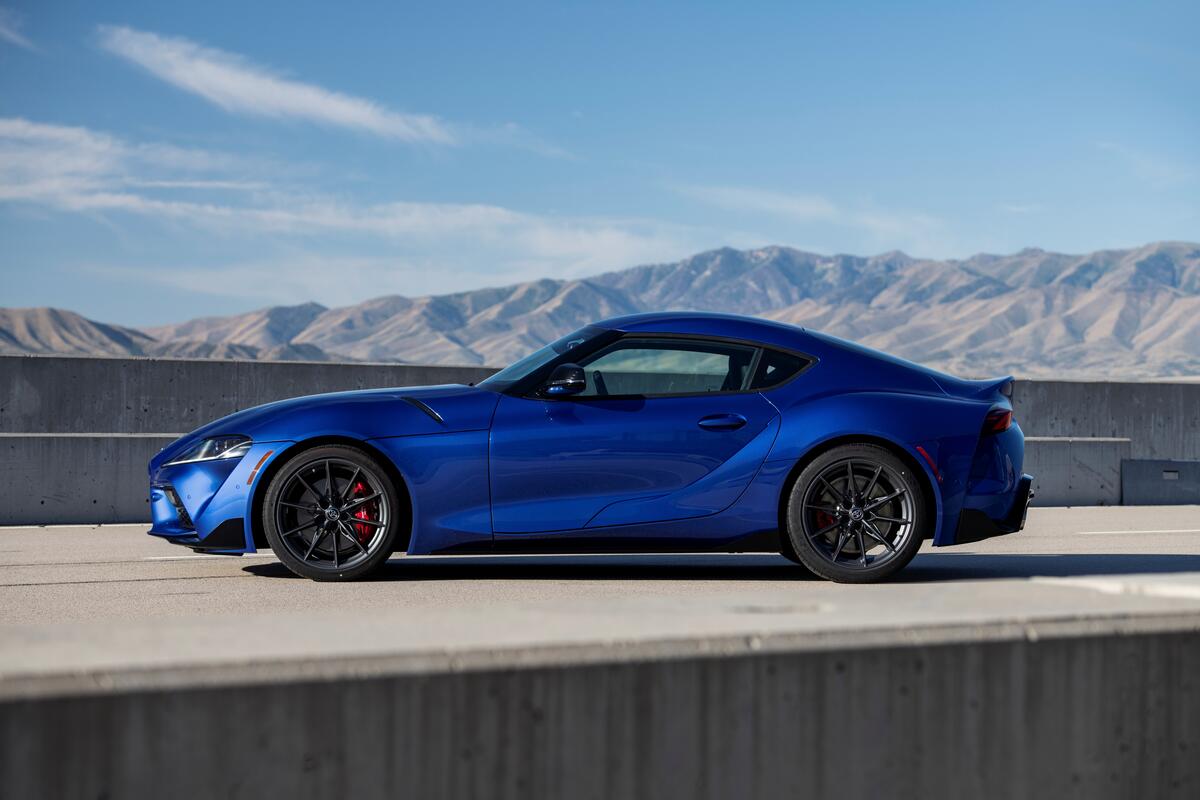
Toyota A90
"…do you see yourself getting a R35 or an A90 Supra or is it this time period that really is what's speaking to you?"
“A90 Supra” means the newer Toyota GR Supra. It’s a modern sports car, so it’s often used to compare how newer cars can feel more computerized than older ones.
“A90 Supra” refers to the Toyota GR Supra (A90 generation). It’s notable for bringing back the Supra name with a modern, tech-heavy sports-car approach, which makes it a useful comparison point for “analog vs. digital” driving feel.

Nissan R32
"...ink like when we look at the GTRs, right, there's R32, which everybody would say is the most analog and..."
The Nissan Skyline is a performance car line that has different versions over the years. In the podcast, it’s mentioned because people connect it to the GT-R and to specific older generations like the R32. The point is usually about how those cars feel and drive compared with newer ones.
The Nissan Skyline is a performance-focused model line that’s closely associated with the GT-R story and enthusiast culture. In the podcast context, it’s referenced alongside the GT-R and the R32 discussion, highlighting how certain Skyline/GT-R eras are remembered for their driving character. That’s why it’s brought up—Skyline models are often used as shorthand for a particular kind of “analog” feel.
analog into digital
"R33 is kind of a combination. It's when it started to go from analog into digital, but it's not really digital yet."
The speaker is talking about how older cars feel more “mechanical” and direct, while newer cars use more computers to manage things. That can make the driving feel smoother, but sometimes less raw or less connected to what your foot and hands are doing.
This is a shorthand for how modern cars increasingly rely on electronic control (ECUs, sensors, traction/stability logic, drive-by-wire) rather than purely mechanical behavior. The “soul” argument here is that more electronics can smooth out or filter driver inputs, changing the rawness and feedback you feel through the steering, throttle, and drivetrain.
traction control
"off the, you know, the traction control is a little bit more work than just pushing the button. [109.4s] People think it is, but like you turn it off and you, it still has some there."
Traction control is a system that helps the tires grip the road. If the wheels start spinning too much, it steps in to reduce power or brake a wheel so you don’t lose control.
Traction control is a driver-assistance system that reduces wheel spin by cutting engine power and/or applying brakes when the car detects loss of grip. Turning it off can make the car feel more responsive, but it also removes that safety net during hard launches or slippery surfaces.
scan tool
"because you don't have to get involved [128.3s] with a scan tool that requires you to scan a hundred modules and, you know, try to look [134.7s] for all the different things that could be fighting each other."
A scan tool is like a computer that plugs into the car to read what the car’s systems are doing. Mechanics use it to find problems and to see live information from sensors.
A scan tool is a diagnostic device used to communicate with a car’s onboard computers (ECUs) through the vehicle’s diagnostic port. It can read fault codes and live sensor data, which is especially important on modern cars with many interacting modules.
OBD2
"I think that the aspect I do enjoy about that, and I think that's where we differ is I very [157.4s] much enjoy the OBD2 aspect of it. [159.8s] I like being able to plug in, well, I like being able to pull data stream and actually [163.9s] watching and, and being able to see data right there."
OBD2 is the standard way cars report their status to a diagnostic computer. It lets you plug in a tool and see things like sensor readings and error codes.
OBD2 (On-Board Diagnostics, second generation) is the standardized system that lets tools read engine and emissions-related data and diagnostic trouble codes from a car. It’s why enthusiasts and technicians can plug in and view live data streams without needing brand-specific proprietary equipment.
data stream
"I like being able to plug in, well, I like being able to pull data stream and actually [163.9s] watching and, and being able to see data right there. [167.3s] But these cars can do that."
A data stream is live, continuously updating sensor and system information pulled from the car via OBD2. Watching the data stream helps you understand what the car is doing in real time (for example, how inputs and engine management respond).
flash codes
"or God forbid you're pulling flash codes, things like that. It's just a more in-depth process to do the diagram where honestly with OBD2 I plug in"
Flash codes are an older way cars tell you what’s wrong. Instead of plugging in a computer, the car blinks a light in patterns that you have to interpret.
“Flash codes” are an older diagnostic method where the car signals fault information by blinking an indicator light in a specific pattern. It’s typically used on pre-OBD2 vehicles, and it’s more manual than modern scan-tool code reading.
sensor
"go, oh, look, the sensor's not really doing what I want it to do. Let me pull it up and scope it right there... when you look at the raw sensor value is looking to be fine"
A sensor is a small electronic part that measures something about the car (like air, temperature, or engine conditions). The car uses those readings to decide how to run the engine, and wrong readings can trigger error codes.
In this context, “sensor” refers to the car’s electronic measurement devices (like airflow, oxygen, temperature, or position sensors) that feed data to the engine control unit. If a sensor’s readings don’t match what the car expects, the system can log trouble codes even if the underlying issue is elsewhere.
scope
"and I can go there and go, oh, look, the sensor's not really doing what I want it to do. Let me pull it up and scope it right there and be ready to go."
To “scope” a signal means checking the electrical pattern with a special tool. It can show whether a sensor signal is actually behaving correctly, not just whether the computer logged a fault.
“Scope” here means using an oscilloscope to inspect an electrical signal waveform from a sensor or circuit. It helps diagnose whether the signal is noisy, intermittent, or out of spec—information that a simple code readout can miss.
check engine
"you have it tuned and you get it back and now it's got a check engine line, right? And you know, you're going to go pull that thing, you'll get a code"
The check engine light comes on when the car’s computer finds a problem. Usually it stores an error code that a scanner can read to help figure out what’s wrong.
The “check engine” light is the driver-facing warning that the car’s engine-management system has detected a fault. On modern cars, it corresponds to stored diagnostic trouble codes (DTCs) that can point to issues in sensors, wiring, or control modules.
module
"So you're going to now deep dive through things and you know, what do you do when you have a module, one of maybe, I don't know, 16 of them that goes bad and all of a sudden it's throwing codes"
A module is a computer in the car that controls a specific system. If one computer starts acting up, it can cause error codes even if the sensors seem to be reading normally.
A “module” is an electronic control unit (ECU) that manages a specific subsystem—such as engine control, transmission control, or body electronics. Modern cars can have many modules that communicate, and a failing module can trigger trouble codes that don’t obviously match the raw sensor values.
OBD1
"The second thing is the VR4, well, it's a first gen and it would have been an OBD1 car. [319.2s] You know, I have a Jester Chrome ECU, so it's actually a 99 style ECU."
OBD1 is the older “self-diagnosis” system used on earlier cars. It can be harder to read than OBD2 because it’s less standardized across vehicles.
OBD1 (On-Board Diagnostics, first generation) is the earlier diagnostic standard used on many older cars. Compared with OBD2, it’s typically less standardized, so scanning and troubleshooting can require more model-specific knowledge or tools.
standalone
"Sure, but that's because the complexity of the later cars is just so much different, [345.0s] right? [345.5s] Like, I mean, it really is tough for me when I start to think about wanting to make big [349.9s] power on some of these other cars. [352.9s] If you're not going to a standalone, I think that's the if, right?"
A standalone is an aftermarket engine computer that takes over control of the engine. It can make tuning simpler because you’re not depending on the factory computer network to work correctly.
A standalone ECU is an aftermarket engine management computer that replaces or bypasses the factory ECU. The host’s point is that going standalone can reduce diagnostic and compatibility headaches because you’re no longer relying on the factory system’s network of modules.
Haltech
"Because here's the thing, if you build a car too that you take and you go, you go full [361.5s] Haltech or something like that, you don't need to worry about a lot of that stuff."
Haltech makes aftermarket engine computers used for tuning. The host is saying that using something like this can simplify things when you’re aiming for big power.
Haltech is an aftermarket engine management brand known for standalone ECUs and tuning solutions. In this segment, it’s used as an example of a path that avoids some factory-module communication issues when building a high-power car.

Audi
"But if you were to do that on a new Audi, let's say, a lot of those functions aren't [372.5s] going to work because those modules won't be able to communicate with each other."
Audi is mentioned as an example of a modern car with many computers working together. If you change parts without using a full standalone setup, some features may stop working because the computers don’t communicate correctly.
Audi is used here as an example of a modern car brand with lots of electronic modules that must communicate with each other. The host argues that if you don’t go standalone, some functions may not work after certain swaps because the modules can’t “talk” properly.
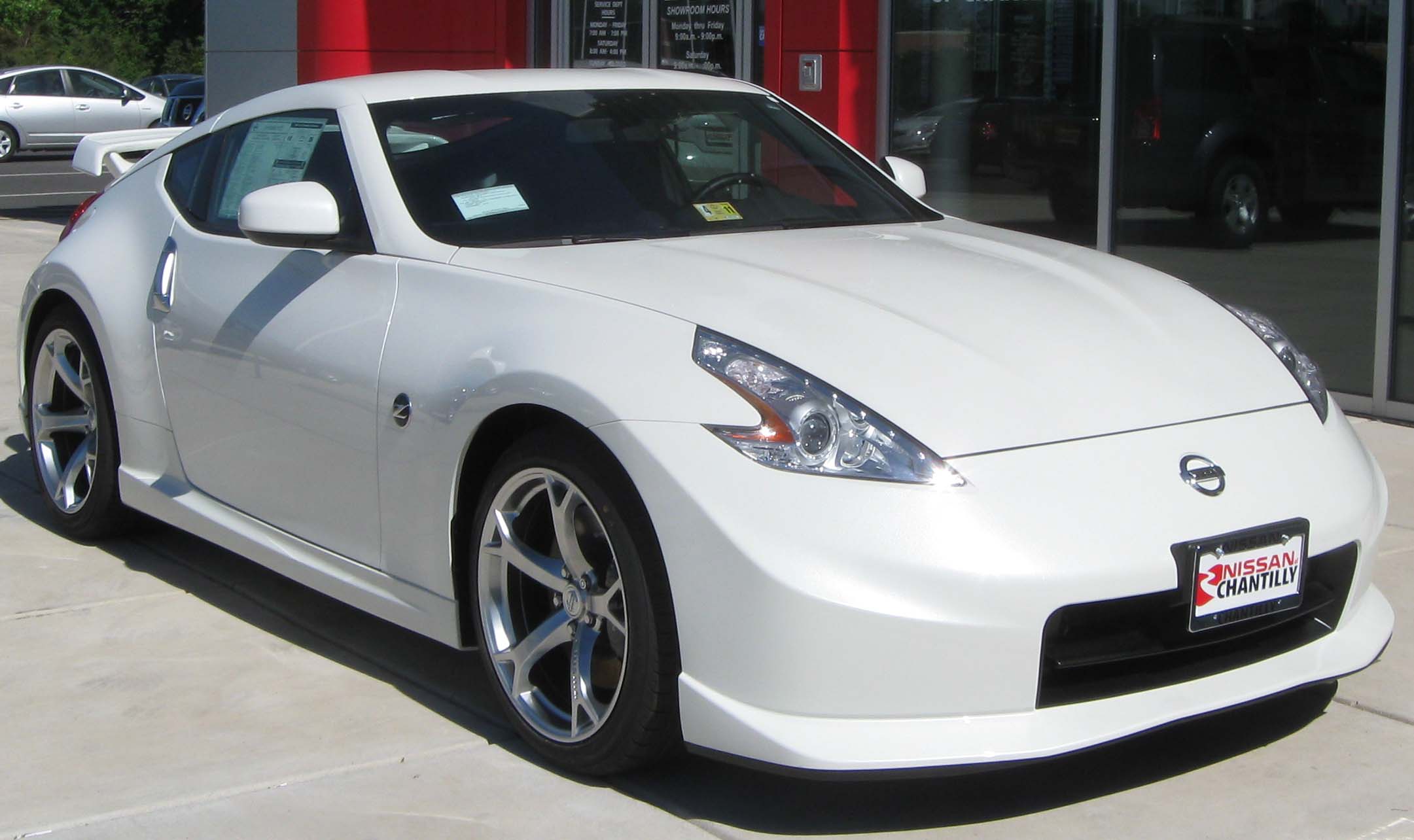
Nissan 370Z
"...ah, and you do see some, so being that I'm a G37, 370Z fan, we run into that problem a little bit with t..."
The Nissan 370Z is a two-door sports car made for driving enjoyment. It’s rear-wheel drive, which helps it feel more connected and sporty. It’s mentioned a lot by people who like the Z and similar Nissan sports cars.
The Nissan 370Z is a rear-wheel-drive sports coupe in the Z-car line, built to deliver a classic “driver’s car” experience. It’s discussed often among fans because it sits in the same enthusiast conversation as earlier Z and G-series cars, including comparisons to the G37 mentioned in the podcast. The 370Z also tends to come up when people talk about what’s available now versus what enthusiasts remember from the past.

G37
"Yeah, and you do see some, so being that I'm a G37, 370Z fan, we run into that problem [383.4s] a little bit with the Vivo control because a lot of guys will say, I'm not going to deal"
The Infiniti G37 is a popular enthusiast car that people modify for more power. The host is saying some tuning paths can run into problems with the car’s factory control systems.
The Infiniti G37 is a rear-wheel-drive sports sedan/coupe platform that’s popular with enthusiasts for tuning. The host brings it up because it has a “Vivo control” issue when people try to avoid dealing with that system and instead do hardware swaps.
Vivo control
"we run into that problem [383.4s] a little bit with the Vivo control because a lot of guys will say, I'm not going to deal"
“Vivo control” sounds like the name of one of the car’s factory computer systems. The point is that the car’s electronics are connected, so swapping parts can cause problems unless you manage the engine control properly.
“Vivo control” appears to be a mis-transcription of a factory control system name related to the car’s electronics. The context is about modules needing to communicate, so the key idea is that factory control logic can limit what works when you change engine components without a full standalone approach.
VQ35 heads
"with the Vivo control because a lot of guys will say, I'm not going to deal [387.4s] with the Vivo and go straight over to putting VQ35 heads on it and doing away with that [394.0s] and just running cams so that they can run a standalone."
“VQ35 heads” means cylinder-head parts from Nissan’s VQ35 engine. The host is saying that swapping parts like this can be tricky with the car’s factory computers, so people often switch to a standalone setup.
“VQ35 heads” refers to cylinder heads from Nissan’s VQ35 engine family, which are sometimes swapped onto other VQ-based builds. The host’s point is that doing this without addressing the factory control strategy can create compatibility issues, pushing some builders toward standalone engine management.
drive by wire throttle bodies
"But I do see a lot of benefits from, for instance, the drive by wire throttle bodies. [413.9s] I think that getting away from cable drive, I do very much enjoy not having to mess around"
Instead of a cable pulling the throttle open, the car uses electronics to tell the throttle to open. A computer (ECU) sends the command, which can make throttle response and idle behavior more consistent.
A drive-by-wire throttle body uses electronic signals instead of a mechanical cable to control the throttle plate. The ECU (engine control unit) commands the throttle actuator, which can improve response consistency and enable features like smoother idle control.
cable drive
"I think that getting away from cable drive, I do very much enjoy not having to mess around [419.4s] with idle control motors as much and things like that where the throttle bodies doing all"
Cable drive is the older setup where pressing the gas pulls a cable that opens the throttle. It’s straightforward, but it doesn’t let the computer control the throttle as flexibly.
Cable drive refers to the traditional mechanical linkage where the accelerator pedal moves a throttle plate via a cable. It’s simpler and more direct, but it can be harder to integrate with advanced electronic controls for idle and traction/drive modes.
idle control motors
"with idle control motors as much and things like that where the throttle bodies doing all [423.2s] of the work right there in the ECU cracks open. [426.3s] And now I'm not fighting with trying to get something dialed in"
Idle control motors help keep the engine speed steady when you’re stopped. They adjust airflow or throttle position so the car doesn’t idle too fast or stall when systems like A/C or power steering kick in.
Idle control motors are actuators used to regulate engine speed when the car is at rest. They help maintain a stable idle by adjusting airflow or throttle position, especially when loads change (like power steering, alternator load, or A/C).
ECU
"where the throttle bodies doing all [423.2s] of the work right there in the ECU cracks open. [426.3s] And now I'm not fighting with trying to get something dialed in"
The ECU is the car’s engine computer. It reads sensors and decides what to do, like how far to open the throttle to keep the engine running smoothly.
ECU (engine control unit) is the car’s computer that monitors sensors and controls engine functions. In throttle-by-wire systems, the ECU decides how much to open the throttle to meet targets like idle speed, drivability, and emissions requirements.
adjustment screws
"And there's between fast out of the air valves, idle control motors, adjustment screws, different [444.5s] things like that where you're basically parsing different air around the throttle body."
Adjustment screws are mechanical settings used to fine-tune airflow and idle behavior on some throttle/idle systems. On cable-driven or older setups, these adjustments can affect how much air bypasses the throttle at idle and therefore how stable the idle is.
fast out of the air valves
"And there's between fast out of the air valves, idle control motors, adjustment screws, different [444.5s] things like that where you're basically parsing different air around the throttle body."
These valves help the engine idle faster for a short time, like when it’s cold. They add a bit of extra airflow so the engine runs smoothly until it warms up.
Fast idle valves (the transcript’s “fast out of the air valves”) are auxiliary airflow controls that raise idle speed temporarily, such as during cold starts or after certain operating conditions. They’re part of the system that manages idle behavior without relying solely on the main throttle plate.
tip in
"you can use to be able to help with tip in and be able to help the idle and do some different [504.4s] things, right?"
“Tip in” means the instant you begin to press the gas. A good tune makes that first movement feel smooth, while a bad one can make the car hesitate or jerk.
“Tip in” is the moment you start to press the throttle from a light or closed position. It’s a key drivability metric because poor calibration can cause hesitation, surging, or an abrupt response when you first request torque.
tune
"If you're tuned, you can go in and get that one-to-one ratio. [521.3s] What's your tune? [521.8s] Yeah. [522.4s] And I think that's also part of it, too."
A “tune” is a change to the car’s engine computer settings. Here, it’s being used to make the throttle feel more direct, like older cable-driven cars.
A “tune” is an ECU calibration change—software settings that alter how the engine operates. In this discussion, the tune is used to make electronic throttle response behave more like a mechanical cable setup.
one-to-one ratio
"If you're tuned, you can go in and get that one-to-one ratio. [521.3s] What's your tune? [521.8s] Yeah."
They’re talking about making the gas pedal and throttle opening match up more directly. The idea is that when you move your foot, the engine responds in a more predictable way.
A “one-to-one ratio” here means the throttle input and throttle opening (or engine response) track each other in a direct, predictable way. The goal is to reduce the “lag” or nonlinearity that can come from electronic throttle mapping.
linear
"You make it linear without having that. [544.1s] Exactly. [544.9s] So I get that part."
“Linear” here means the response is smooth and predictable as you press the gas. Instead of the car feeling jumpy in certain spots, it changes in a steady way.
In throttle mapping, “linear” means the relationship between pedal position and throttle opening (or engine response) is consistent across the range. Making it linear is meant to improve drivability by reducing sudden changes in response.
factory electronic throttle body
"And I think that might be part of it, too, is that I'm not dealing with some of those same situations that other people are with a factory electronic throttle body."
Your gas pedal controls a valve that lets air into the engine. In many modern cars, that valve is controlled electronically instead of by a direct cable, so the response can feel different.
A throttle body is the valve that controls how much air the engine can ingest. When it’s “electronic” (often called drive-by-wire), the accelerator pedal position is translated into electronic commands to the throttle body instead of using a direct mechanical cable.
electric power steering
"But there is one thing I think we all agree on, and I'm not the biggest fan of the electric power steering. I really do like a good hydraulic steering feel."
Electric power steering uses a motor to help you turn the wheel. Some drivers feel it doesn’t “talk back” the way older hydraulic systems can.
Electric power steering (EPS) uses an electric motor to assist the steering effort, rather than hydraulic pressure. Enthusiasts often compare EPS to hydraulic steering because hydraulic systems can provide a more direct, “connected” feel through the steering wheel.
hydraulic steering feel
"I really do like a good hydraulic steering feel. I think that they've done a lot to get the electronic power steering better."
Hydraulic steering uses fluid pressure to help turn the wheels. People who like the “feel” usually mean the steering wheel gives more direct feedback.
Hydraulic steering uses pressurized fluid to assist steering effort, typically via a pump and steering rack. Because the assist is tied to hydraulic pressure, many drivers perceive it as more “natural” or communicative than electric assist.

Ford Explorer
"I love that Explorer ST. But there's sometimes where I'm turning and I want the feedback from the tires and I'm not getting it."
The Ford Explorer ST is a sportier version of the Explorer SUV. The host is using it to explain that even in a fun modern truck, the steering can still feel less “connected.”
The Ford Explorer ST is a performance-oriented version of the Ford Explorer SUV, known for being more driver-focused than a typical family hauler. In this discussion, it’s used as an example of a modern vehicle where the speaker still feels the steering feedback is “electric” and disconnected.
Roman mechanical feel
"Right? Like, I like the analog nature of some of these older cars. It's a Roman mechanical feel. It's a different thing."
They’re describing the kind of driving feel you get from older, more mechanical cars—where the car feels more “connected” to what you’re doing. Newer electronics can make that feedback feel muted or artificial.
“Roman mechanical feel” is a metaphor for a traditional, analog driving experience—where steering, throttle response, and feedback feel more directly tied to mechanical action. The speaker contrasts this with modern electronic control systems that can filter or “soften” feedback.
electric differentials
"There's a big difference in feel to me between, let's say, you know, electric differentials"
A differential helps the wheels turn at different speeds when you’re cornering. Some modern cars use electronics to control how power is sent to the wheels, which can change how the car feels on the road.
A differential is the gearbox component that allows the left and right wheels on an axle to rotate at different speeds. When people say “electric differentials,” they usually mean electronically controlled limited-slip or torque-vectoring systems that use electric actuators and sensors to manage how power is distributed—changing the car’s feel and traction behavior.
AYC system
"Even within, you know, the AYC system and all that stuff, like, the car just naturally [636.2s] feels like it's connected, right?"
AYC is an electronic system that helps the car rotate and grip better when you turn. It uses computers to shift how much power each wheel gets, which can make the car feel different than a more mechanical setup.
AYC (Active Yaw Control) is an electronically controlled system used on some Mitsubishi AWD cars to help manage yaw—how the car rotates around its vertical axis. By actively varying torque distribution, it can improve stability and traction, but it can also change the “feel” compared with more purely mechanical setups.
drive by wire break
"to come more into the production sense of Brembo, where a few years ago they patented [654.3s] that whole thing about the drive by wire break. [658.3s] Break by wire, it sounds like it's coming."
This is the idea of brake-by-wire: instead of your pedal directly controlling hydraulics, it sends electronic signals that tell the brakes what to do. That can make the pedal feel different because it’s not a direct mechanical link anymore.
The host is referring to “brake-by-wire” (often discussed as replacing hydraulic/mechanical brake actuation with electronic control). In a brake-by-wire system, the brake pedal input is translated into signals that command the braking hardware, aiming to improve integration with stability systems—but it can also alter pedal feel because the connection is no longer purely mechanical.

your 3000 GT
"[765.2s] your 3000 GT over the EVO because that grand touring car to me is more of that feel. [771.1s] So I feel like the R33 has more curve to it, more car to it."
The “3000 GT” is a Mitsubishi sports coupe from the JDM era. The point here is that it’s more of a comfortable, long-distance style car compared with the more track-focused EVO.
“3000 GT” refers to the Mitsubishi 3000GT, a late-’80s/’90s Japanese grand touring coupe. The speaker contrasts it with an EVO to argue that the 3000GT’s “grand touring” character feels closer to the kind of driving “feel” they associate with soul.

EVO
"[765.2s] your 3000 GT over the EVO because that grand touring car to me is more of that feel. [771.1s] So I feel like the R33 has more curve to it, more car to it."
“EVO” usually means the Mitsubishi Lancer Evolution. It’s a turbocharged, all-wheel-drive performance car, and the speaker is comparing its vibe to the more grand-touring feel of the 3000GT.
“EVO” is shorthand for the Mitsubishi Lancer Evolution (Evo), a rally-bred performance sedan known for its turbo power and all-wheel-drive grip. Here it’s used as a comparison point against the Mitsubishi 3000GT to highlight different driving personalities.
Brembo
"[794.2s] The reason I wanted to go back is because I thought I had a really fun example. [799.8s] So you are struggling with the idea of trusting this Brembo thing. [805.3s] What part of it scares you?"
Brembo makes high-performance brake parts. The speaker is worried that if a computer-controlled braking system stops working, you might not have enough braking left to stay safe.
Brembo is a performance-brake brand, and the speaker is talking about a “Brembo thing” in the context of braking system behavior. The key concern raised is how electronic or computer-assisted brake systems could fail and what redundancy remains.
redundancy
"[809.6s] That if the system stops working, the redundancy of the, I can still push that pedal one more [816.9s] time before I don't have brakes."
Here, “redundancy” means there’s a backup plan if something fails. The speaker is worried that the backup might only work for a short time, and then you could lose braking.
In this context, “redundancy” means backup capability in a braking system—so that if one part stops working, another path still provides braking. The speaker’s fear is that the system might fail and leave only limited remaining braking before total loss.
computer
"[829.8s] Yes, it was not me from buying it, 100%. [833.0s] Because you're worried about putting your life in the hands of a computer that essentially [838.5s] could fail and then could be catastrophic."
They’re talking about the car using computers to control braking. Their worry is that if the computer fails, you might not be able to stop safely.
The speaker is referring to computer control of vehicle functions, specifically braking behavior. The concern is that a computer failure could be catastrophic if the system doesn’t fail gracefully or provide enough backup braking.
fly by wire
"And, and I think you have all the people that are on the Boeing side say how shitty the Airbus is because of the fact that it's all by wire. [957.8s] It's, you know, it's fly by wire. [960.3s] I mean, the whole thing is right."
Instead of cables and rods directly moving the airplane’s controls, the pilot’s commands become electronic signals. Computers then help move the control surfaces, which can make the plane easier to handle and more consistent.
“Fly by wire” is an aircraft control system where pilot inputs are converted into electronic signals instead of using direct mechanical linkages. Those signals then command actuators to move flight control surfaces, which can enable stability aids and more precise control.
drive by wire throttle body
"Okay, maybe, but like, so, so I guess, I guess I'm a little bit less worried about the break by wire, not because I don't think that it needs to go through its, you know, trials and tribulations first. [995.0s] But because I think that it's just as reliable as a drive by wire throttle body, it's just [1006.1s] as reliable as, you know, some of the other things we've given to, I mean, think about"
On a drive-by-wire setup, pressing the gas pedal sends an electronic signal. That signal tells a motor to open or close the throttle body, which controls how much air the engine gets.
A “drive-by-wire throttle body” uses electronic control to regulate engine airflow instead of a direct cable connection between the accelerator pedal and the throttle plate. The throttle position is commanded by an electronic system, typically improving response mapping and enabling traction/stability integrations.
self driving cars
"But because I think that it's just as reliable as a drive by wire throttle body, it's just [1006.1s] as reliable as, you know, some of the other things we've given to, I mean, think about [1010.9s] it like, you know, you have self driving cars, right?"
Self-driving cars use cameras, radar, and computers to help steer, accelerate, and brake. The point in this discussion is that modern electronic driving tech can become dependable over time.
“Self-driving cars” refers to vehicles that use sensors, software, and automated control systems to perform driving tasks with varying levels of human supervision. The comparison is used here to argue that electronic control systems can be reliable after sufficient development and validation.
adaptive cruise control
"You have, you have, you know, adaptive cruise controls that basically really take over a lot of the cars functionality and, and we trust that. Took a very long time to get used to the adaptive cruise control."
Adaptive cruise control is cruise control that “watches” the car in front of you. If the traffic slows down, it can slow your car too, so you don’t have to constantly brake and accelerate.
Adaptive cruise control is an advanced cruise-control system that automatically adjusts your speed to keep a set following distance from the car ahead. It uses sensors to detect traffic and can slow the car down (and sometimes speed back up) without you manually changing the throttle.
defaults
"I would imagine that at some level, a car's ECU has to be done in a way where if the pedal fails, it has to do something in defaults."
“Defaults” here means the car has a backup plan. If something important stops working, it switches to a safer, simpler mode so it doesn’t act strangely.
In vehicle electronics, “defaults” refers to the safe fallback behavior the ECU uses when a system or input fails. The idea is that the car should continue operating in a limited, predictable way rather than behaving unpredictably.
lock up the rear brakes
"It's going to be lock up the rear brakes. Dude, there's got to be something."
It means the rear wheels stop turning and start sliding. Sliding wheels don’t grip the road as well, so the car can feel sketchy or harder to control.
“Locking up” the rear brakes means the rear wheels stop rotating and slide instead of rolling. That usually reduces traction and can make the car unstable, especially under hard braking or on low-grip surfaces.
hydraulic line
"I'm sure most of us have experienced a break blowout on a hydraulic line, you know, or a failure of a fitting or a master cylinder fail or something like that."
Brake systems use fluid under pressure to move the brakes. If a brake line fails, the fluid can’t reach the brakes, so you may not get normal stopping power.
A hydraulic brake line carries pressurized brake fluid from the master cylinder to the brake calipers. If a line breaks or leaks, the system can lose pressure and the pedal may go soft or to the floor, resulting in little or no braking.
master cylinder fail
"line, you know, or a failure of a fitting or a master cylinder fail or something like that. And it's terrifying."
The master cylinder is like the “pump” that creates pressure for the brakes. If it fails, pressing the pedal won’t build enough pressure to stop the car.
The master cylinder is the component that pressurizes brake fluid when you press the brake pedal. If it fails, the hydraulic pressure needed to clamp the brake pads can drop dramatically, leading to a sudden loss of braking.
knockback
"if you've ever had like a, a tremendous amount of like knockback on a track, when you go to get into that, into the brakes or whatever, you touch the brakes usually before you hit a turn so that you know that the pedals there, right?"
Knockback is when the brake pads get pushed slightly away from the brake disc. The first part of your pedal press may feel “dead” until the pads move back into contact.
Brake knockback is when the brake pads are pushed back away from the rotors, often after suspension movement or hard cornering. That increases pedal travel before the pads clamp again, making the pedal feel like it suddenly has less immediate bite.
pads out all the way
"Pads out all the way. And so like, like, you know, if you've ever had a knockback where you're basically"
“Pads out all the way” describes the pads being fully positioned against the rotors so the pedal has normal travel and immediate braking response. In track driving, people may “pre-load” the brakes to reduce the chance of knockback making the first pedal press feel weak.
brake fade
"where you're basically standing on the pedal or you're extreme brake fade, where you're on this thing and you get that feeling of like, doesn't matter how hard I push, it's never going to stop."
Brake fade is when your brakes stop working as well because they’re overheating. You press harder, but the car still won’t slow down like it should.
Brake fade is a loss of braking effectiveness after the brakes get too hot. As friction materials and brake components overheat, the pedal may feel less effective and the car may not slow down as expected.
analog versus digital
"So yes, I understand the whole, the whole thing, but what about the feel of these [1161.1s] cars to me, to me, that when I hear the term analog versus digital from a nature of [1167.7s] cars, I'm less worried about the tech. [1169.8s] I'm more worried about like, how does it feel?"
This phrase is about whether a car’s driving feel is more “mechanical and direct” (analog) or more “computer-controlled” (digital). The point being made is that the listener cares less about the technology itself and more about whether the car feels fun and responsive.
“Analog versus digital” here is about how modern cars use electronics and software to manage driving feel—versus older cars where the experience was more directly tied to mechanical inputs. The host argues that even if the tech changes, what matters is whether the car still responds in a raw, engaging way.
connectivity
"there [1185.9s] becomes that point where they become, they start to become refined enough that some of [1192.5s] that connectivity that rawness goes away."
In modern-car talk, “connectivity” usually means the car’s ability to link to networks and devices (for apps, services, and data). In this segment, it’s contrasted with “rawness,” implying that as cars become more connected and refined, they can lose some of the unfiltered, analog-like character people associate with earlier driving experiences.
golden era
"I think that they all have those model generations or years where people will say, [1220.1s] this is the golden era. [1222.2s] Yeah."
A “golden era” is when fans look back at a certain time period and say, “That was the best version.” Here, it’s used to explain why people miss the feel of older cars and why newer ones don’t always match that vibe.
“Golden era” is the idea that each car model line (or brand) has a specific time period that enthusiasts consider the most authentic or emotionally satisfying. The host connects it to the analog-feel discussion, suggesting automakers struggle to recreate that earlier character once cars become more refined and connected.
market share
"And I feel like a lot of automakers are struggling with that because they're trying [1227.2s] to capture that as a market share. [1229.0s] Like they, let's be honest, like the Civic Type R, they're trying to capture what we"
Market share just means how much of the car-buying market a company gets compared to competitors. Here it’s used to say automakers are trying to chase what sells, not necessarily what makes the car feel special.
Market share is the portion of total sales in a market that a brand captures. The host uses it to criticize automakers for chasing the “golden era” feeling as a sales strategy rather than focusing on preserving the driving character that enthusiasts actually want.

Honda Civic
"...arket share. Like they, let's be honest, like the Civic Type R, they're trying to capture what we all loo..."
The Honda Civic is a popular small car made for everyday driving. Some versions are tuned for performance, like the Civic Type R, but most Civics are built to be efficient and easy to live with. It’s often mentioned because it’s so common and has both normal and sporty options.
The Honda Civic is a mainstream compact car known for being practical, efficient, and widely available. It often comes up in discussions because the Civic lineup includes performance-focused variants like the Civic Type R, which helps show how Honda can blend everyday usability with enthusiast appeal. It’s a common benchmark when people talk about market presence and what buyers are trying to capture.
electronic power steering
"you have electronic power steering and you have electronic brakes and you have [1257.3s] electronic, no, I don't think you will because you're disconnecting the driver more [1261.7s] and more from the mechanical nature of the vehicle."
This is power steering that uses electronics and a motor to help you steer. Some people feel it can make the steering feel less “connected” to the road than older, more mechanical setups.
Electronic power steering uses sensors and an electric motor to help turn the wheels, instead of relying purely on a hydraulic pump. It can change how directly the steering feels because the system can filter feedback and add assist based on driving conditions.
electronic brakes
"you have electronic power steering and you have electronic brakes and you have [1257.3s] electronic, no, I don't think you will because you're disconnecting the driver more [1261.7s] and more from the mechanical nature of the vehicle."
This means the braking system is controlled with electronics rather than only traditional hydraulic feel. That can make the brake pedal feel different, and some drivers think it reduces the “connection” to the car.
When people say “electronic brakes,” they’re usually referring to brake-by-wire or electronically controlled braking systems where the car uses sensors and actuators to manage braking. Compared with purely mechanical/hydraulic control, this can affect pedal feel and how much the driver perceives the car’s mechanical behavior.
Civic Type R
"I always felt like when you start to see cars [1269.5s] like Civic Type R come out or a Nismo edition, you know, let's say, you know, any, any Nismo [1275.6s] edition car, maybe not the Juke, but what you're really like, I'm talking about, like,"
The Honda Civic Type R is a high-performance version of the Civic. The host brings it up as an example of a modern car that feels more “engineered” than old-school raw driving.
The Honda Civic Type R is a performance-focused hot hatch known for its track-oriented tuning and enthusiast appeal. In this discussion, it’s used as an example of a modern “special edition” style model that can feel more engineered and system-managed than raw and mechanical.

Nissan Juke
"...u know, any, any Nismo edition car, maybe not the Juke, but what you're really like, I'm talking about, ..."
The Nissan Juke is a small crossover, meaning it’s higher than a regular sedan and designed for easier everyday use. It’s known for a unique look and compact dimensions. The podcast mentions it because people are talking about Nismo-style performance versions and which models are included.
The Nissan Juke is a small crossover that’s known for its distinctive styling and compact size. In the podcast context, it’s brought up in relation to Nismo editions, which are performance-oriented versions of certain Nissan models. That makes it relevant to discussions about which models get performance treatment and which ones don’t.
Nismo
"like Civic Type R come out or a Nismo edition, you know, let's say, you know, any, any Nismo [1275.6s] edition car, maybe not the Juke, but what you're really like, I'm talking about, like, [1279.8s] when you see a Nismo, you catch these strays every time when you see like a Nismo"
Nismo is Nissan’s in-house performance brand, used for higher-output and track-oriented versions of Nissan models. In the episode, “Nismo edition” is mentioned as part of the pattern of modern special trims that enthusiasts hope will stay “raw,” even as cars gain more electronic control.
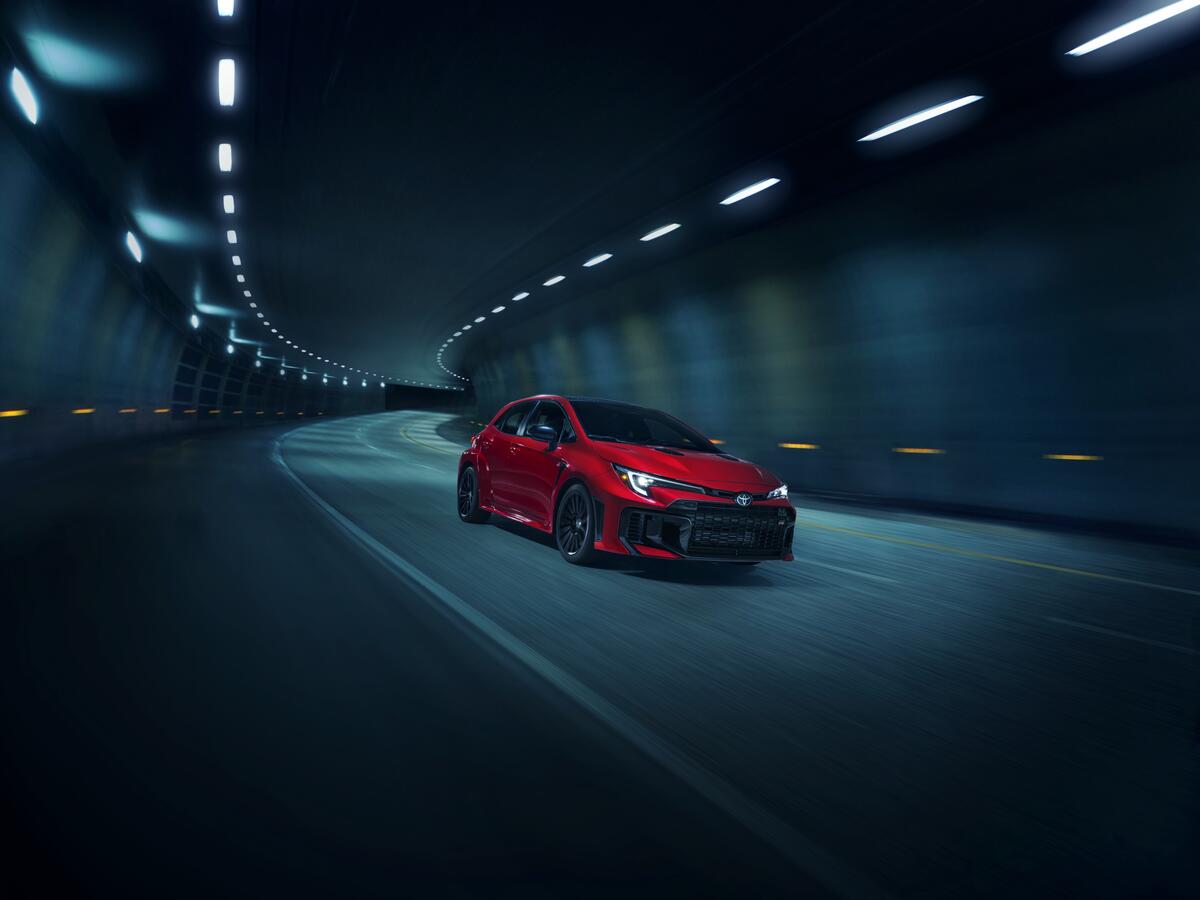
Toyota GR Corolla
"right? But like I drove a GR Corolla. I wasn't really that impressed."
The Toyota GR Corolla is a sporty version of a compact hatchback. It’s designed to be fun to drive and to handle well, not just to get you from place to place. People often talk about it after test drives because it’s meant to feel special behind the wheel.
The Toyota GR Corolla is a performance compact hatchback built for enthusiasts, with a focus on driving feel and grip. It’s significant because it brings rally-inspired engineering to a practical body style, which is why it gets discussed when people compare real-world impressions of “hot hatch” cars. In the podcast context, it’s being used as an example of a car that didn’t meet expectations after a test drive.
automated
"So to say that, you know, I would want to say that automated, I'm sorry, maybe auto manufacturers are noticing the demand for a little bit of that driver feedback"
Here, “automated” means the car is doing some of the work for you, like shifting. The host thinks that can make the car feel less connected to you.
In this context, “automated” refers to drivetrain control that handles shifting for you instead of requiring direct driver input. The speaker links it to a loss of “driver feedback,” implying that automation can blunt the tactile connection.
driver feedback
"auto manufacturers are noticing the demand for a little bit of that driver feedback and we're getting that."
Driver feedback is how the car “talks back” to you—through how the steering and pedals feel. The host is saying automakers are starting to bring back that more direct, connected feeling.
Driver feedback is the information a car communicates back to the driver through steering, pedal feel, and drivetrain response. In this context, the speaker is arguing that modern cars are trying to restore more “analog” sensations so the driver feels connected to what the car is doing.
braking systems
"They got, you know, they went in, they redid some braking systems on it from what I understand they, I think they upgraded the rotors and they went with"
The braking system is what makes the car slow down and stop. The host is saying Nissan updated the brakes because they found problems when the car was actually being driven.
A braking system is the full set of components that slow the car down, including the rotors and pads that create friction. Here, the speaker says Nissan “redid” the braking systems on the Nismo after noticing shortcomings during real use.
rotors
"what I understand they, I think they upgraded the rotors and they went with like a better pad, things like that."
Rotors are the brake discs that the brake pads clamp onto to generate stopping force through friction. Upgrading rotors and pairing them with better pads can improve braking consistency and pedal feel, which is exactly what the speaker credits for making the car feel better.
better pad
"what I understand they, I think they upgraded the rotors and they went with like a better pad, things like that."
Brake pads are the replaceable part that actually rubs against the brake disc to stop the car. A better pad can make braking feel more responsive and less likely to fade.
Brake pads are the friction material that presses against the rotors to create braking. In performance applications, choosing a “better pad” can change bite, fade resistance, and how the brake pedal feels—so it directly affects the driver’s sense of connection.
rowing through the gears
"I don't know that that's enough to make the car like, look, there's, there's definitely a feel that you get from at rowing through the gears."
“Rowing through the gears” just means you’re actively shifting yourself through the gears. The host is saying that kind of hands-on shifting feels more engaging than automated shifting.
“Rowing through the gears” is enthusiast slang for actively shifting through gears in a manual transmission (or with a very manual-like feel). It emphasizes the physical, rhythmic involvement of the driver, which the speaker contrasts with more automated systems.
fake manual
"But now you've seen like Hyundai and some of these companies that are starting to go to these fake manual, you know, so, so, so I guess try to block that out."
“Fake manual” means the car pretends to shift like a manual, but it’s still controlled automatically. The host thinks it can feel less connected than a real manual where you shift yourself.
“Fake manual” refers to automated transmissions that mimic manual shifting using paddles or shift modes, rather than a true manual gearbox. The speaker’s point is that these systems can reduce the tactile, mechanical feel you get from actually rowing through gears.
manual gearbox
"but I don't think you can make the car analog because you put a manual gearbox."
A manual gearbox is the kind of transmission where you choose gears yourself. You use a clutch to switch gears, and the host is saying the car’s feel isn’t just about having a manual—it’s about how directly it responds to you.
A manual gearbox is a transmission controlled by the driver using a clutch pedal and gear lever. The host argues that you can’t “make a car analog” just by adding a manual gearbox, but that the broader goal is restoring a direct connection between driver inputs and vehicle response.
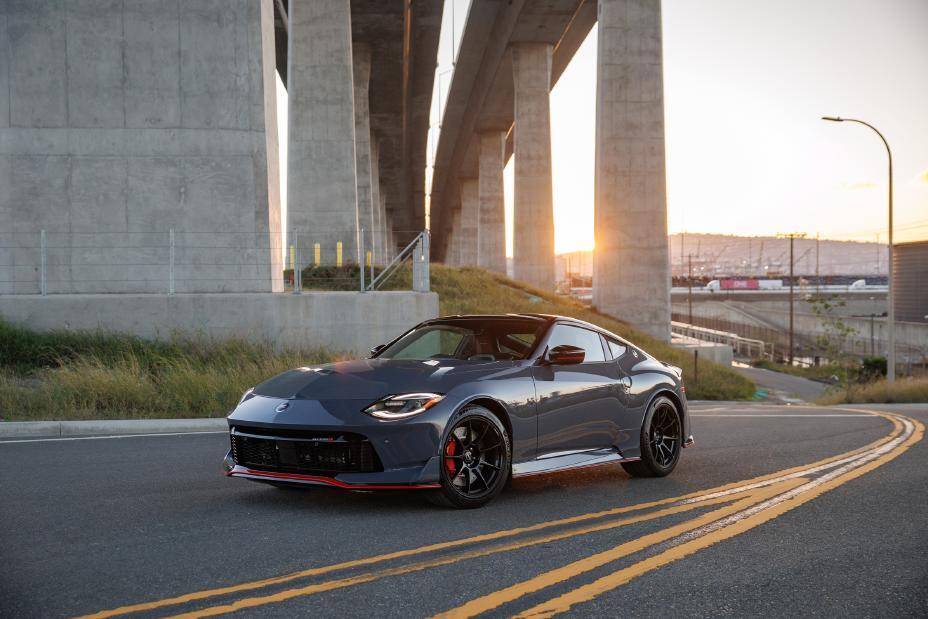
Nissan Z
"Like the biggest thing, one of the complaints I know from the regular Z to at least the Nismo, because I drove both the regular base model and I drove a Nismo model..."
The Nissan Z is a sports car that’s meant to feel engaging to drive. Here, the host is talking about how the steering and throttle feel can change between versions of the Z.
The Nissan Z is a long-running sports-car nameplate known for driver-focused steering and throttle response. In this segment, the host compares the “regular Z” to the Nismo version, focusing on how the driving feel changes with different driveline/controls strategies.
throttle hanging
"...was the steering feel and the, and the throttle hanging and things like that."
Throttle hanging means the car keeps revving or pulling for a moment even after you let off the gas. The host thinks that makes the car feel less responsive and less “connected” to the driver.
Throttle hanging is when engine speed (and sometimes power delivery) stays elevated briefly after you lift off the accelerator. The host links it to a less natural, more “digital” driving feel—where the car doesn’t immediately match the driver’s input.
rev hang
"Um, the same thing with the rev hang on the throttle, like you're accelerating and you let off the gas and it's just staying up there..."
Rev hang is when the engine doesn’t drop RPM immediately after you lift off the gas. The host is saying it can make the car feel delayed and artificial, instead of responding instantly.
Rev hang is a tuning behavior where engine RPM stays higher than expected after you lift off the throttle. In this segment, it’s described as the engine speed “staying up there” because the throttle is closing slowly, contributing to a numb, game-like feel.
analog and digital
"Like the, you know, if you're, if you're driving these cars, where's your stance on, first off, where you think the line gets drawn between analog and digital, like where, where is that happy medium, happy sweet spot that exists?"
“Analog vs. digital” here means whether the car feels like it responds through direct mechanical action or through computer-controlled logic. The host is basically asking: how much computer is too much before the driving feel stops being satisfying.
In modern cars, “analog vs. digital” is shorthand for how directly mechanical systems and driver inputs translate into vehicle behavior versus how much is mediated by sensors, computers, and software. The host is asking where the “happy sweet spot” is—how much electronic control is acceptable before the car starts to feel less connected or less “alive.”

my 350 Z
"Um, I think for me, like my 350 Z it's 2006. [1555.6s] I think it's like, like that to me, if you're looking at a scale, right?"
The Nissan 350Z is a sports car that many enthusiasts describe as feeling more “mechanical” and connected. In this discussion, the host uses their 2006 350Z as the baseline for what they consider a good analog-vs-digital balance.
The Nissan 350Z (often written “350 Z”) is a mechanically engaging sports coupe known for a more analog-feeling driving experience compared with many newer cars. Here, the host uses their 2006 350Z as a reference point on a spectrum between analog and digital driving feel.
numbness
"Like when you get into the German cars, I feel like that numbness kicked in [1606.1s] back in like 2005. [1608.1s] Yeah."
Here “numbness” means the car doesn’t feel as responsive or communicative. Instead of giving you clear feedback through the controls, it can feel muted—like the car is doing things for you rather than letting you feel the road.
In this context, “numbness” describes a perceived loss of steering/throttle/chassis feedback—often associated with heavier electronic intervention, insulation from road feel, or more standardized calibration. The speaker links it to a timeframe (“back in like 2005”) and to the shift toward certain German-brand driving characteristics.
analog feel
"But yeah, I mean, look, I think, um, I think there's a very specific [1653.9s] feel to an analog car. [1655.6s] So, um, you know, I'm super interested to hear what people say."
“Analog feel” means the car feels connected to you in a more mechanical, natural way—like you can sense what the tires and suspension are doing. The speaker is comparing that to newer cars that can feel more controlled by computers, which may feel less exciting.
“Analog feel” is the idea that a car communicates through mechanical feedback—steering, throttle response, and chassis behavior—rather than being filtered through modern electronic controls. In this episode’s framing, the speaker contrasts that with newer “digital” behavior that can feel numb or less emotionally connected.
generations of cars
"Do you, you know, especially when they start talking about generations of [1661.7s] cars, comparing all the, you know, all the GTRs together, like where, where [1665.4s] do you think that analog feel still is where it's not, right?"
“Generations of cars” means the same model across different redesigns over the years. Each redesign can change how the car drives, so the speaker is asking which versions still feel more engaging.
“Generations of cars” refers to how a model changes across redesigns—new platforms, engines, electronics, and tuning that can alter how it drives. The speaker is using this idea to compare “all the GTRs together” and ask where the “analog feel” still exists.
Request an Explanation
Heard something you'd like explained? We'll add it to this episode.
Sign in to request explanations for terms you heard.
Want to learn more?
Browse our glossary for plain-English explanations of automotive terms, jargon, and concepts.
Help improve this episode
See something that's not quite right? Our annotations are AI-generated and can sometimes miss the mark. Click the flag icon on any annotation to suggest a correction.