
Old School vs. New School: Why We Still Crave the Legends
About this episode
The hosts kick off with real-world seat time, comparing a newer Acura Integra A-spec to an older Integra that lacks “AC” and “power steering,” and using that contrast to frame the episode’s “old school vs new school” theme. They debate why modern cars can be objectively better yet still lose the “legend” factor—often driven by nostalgia and media like Initial D. The conversation then ranges across Z/GT-R/Supra/NSX/Civic Type R and even Corvette identity, ending with a listener-style “which would you pick?” lineup.
In this episode of Behind the Wheel, we’re stepping back from the spec sheets to ask the big question: can modern technology ever truly replace the raw, mechanical soul of a classic?
From the lightweight legends of the 90s to the 600hp+ digital monsters of 2026, we explore a variety of platforms to see where manufacturers got it right—and where they lost the plot. It’s a deep dive into the passion, the engineering, and the “X-factor” that makes us fall in love with a car in the first place.
Whether you’re a fan of vintage iron, JDM icons, or the latest performance EVs, this is a conversation about the heart of car culture.
So the question arises… old school or new school? EK9 Type R or FL5 Type R? Both very different, but share the same name.
If you could only have one car for the rest of your life, would it be a 1-of-1 classic or a brand-new factory-warrantied beast?
2026 Behind the Wheel Podcast | All Rights Reserved
Thank you for tuning in, and if you enjoy our podcast, please SUBSCRIBE! We’re on Spotify, Apple Podcast, and iHeartRadio, and we always upload our full video interviews on our YouTube Channel: https://www.youtube.com/konigwheels (we’d love for you to subscribe there as well!) Thank you for listening!
FOLLOW:
Konig’s Instagram: @konigwheelsusa
https://www.instagram.com/konigwheelsusa/
More on the Konig Behind The Wheel Podcast and to SUBSCRIBE:
podcast.konigwheels.com
The post Old School vs. New School: Why We Still Crave the Legends appeared first on Konig Wheels Behind The Wheel Podcast.
flared fenders
"So we saw a newer Integra A-spec with like, you know, has like the flared fenders and [28.8s] you know, it was lowered, had wheels, it's pretty loud too."
Flared fenders are fender shapes that stick out more around the wheels. They can help fit wider tires and make the car look more sporty.
Flared fenders are body panels that extend outward over the wheel area. They’re commonly used to fit wider tires/wheels and to give a more aggressive, “stance” look.

Acura Integra A-spec
"So we saw a newer Integra A-spec with like, you know, has like the flared fenders and [28.8s] you know, it was lowered, had wheels, it's pretty loud too. [32.2s] And but he had not seen that car before."
Acura’s Integra A-spec is a sportier version of the Integra. The speaker is using it as an example of a newer car that looks and feels different from an older Integra.
The Acura Integra A-spec is a sport-oriented trim of the modern Integra, identified by styling cues like flared fenders and a more aggressive look. In this segment, it’s contrasted with an older Integra to highlight how size, presence, and driver experience can feel very different between generations.
lowered
"[28.8s] you know, it was lowered, had wheels, it's pretty loud too. [32.2s] And but he had not seen that car before."
“Lowered” means the car sits closer to the ground than stock. People do it for looks and sometimes for handling feel.
When a car is “lowered,” its suspension ride height is reduced so the body sits closer to the ground. This often changes handling feel and appearance, and can make the car look more aggressive.
power steering
"because we go for a ride at my car, there's no AC, there's no [81.5s] power steering."
Power steering helps you turn the wheel with less effort. If a car doesn’t have it, steering usually feels heavier, especially when parking or driving slowly.
Power steering uses a motor or hydraulic system to reduce the effort needed to turn the steering wheel. Without it, steering is typically heavier—especially at low speeds—so the driver experience can feel more “raw” and physical.
AC
"Basically, I kind of just explained to him that it really depends on the driver and what [76.8s] your expectations are because we go for a ride at my car, there's no AC, there's no [81.5s] power steering."
AC means air conditioning. The speaker is saying their older car doesn’t have it, which affects comfort on drives.
AC here means the car’s air conditioning system. The speaker notes their older Integra lacks AC, which is a practical example of how “old school” cars can be more stripped down and less comfortable for everyday driving.

Honda Prelude
"You know, you kind of think like with some of the older vehicles and all these newer replacements for them, and there's, you know, there's a bunch of like, you know, the prelude and there's, you know, even like the Civic Type R, you know, all compared to new, there's"
The Honda Prelude is a Honda coupe that people often liked because it felt fun to drive. Here, they’re talking about how older Preludes compare to newer cars that replaced them, especially in terms of how they drive.
The Honda Prelude is a long-running Japanese coupe known for being a driver-focused alternative to more mainstream sedans. In this segment, the hosts compare older Honda Prelude versions to newer replacements, focusing on how the driving feel and expectations change over time.

Civic Type R
"and there's, you know, there's a bunch of like, you know, the prelude and there's, you know, even like the Civic Type R, you know, all compared to new, there's"
The Civic Type R is a high-performance Civic made by Honda for people who want a sportier driving experience. They mention it here to compare what modern performance cars feel like versus older favorites.
The Civic Type R is Honda’s performance-focused version of the Civic, built for enthusiast driving rather than just everyday commuting. In this discussion, it’s used as a modern benchmark to compare against older “legend” cars and how expectations shift when you move to newer models.
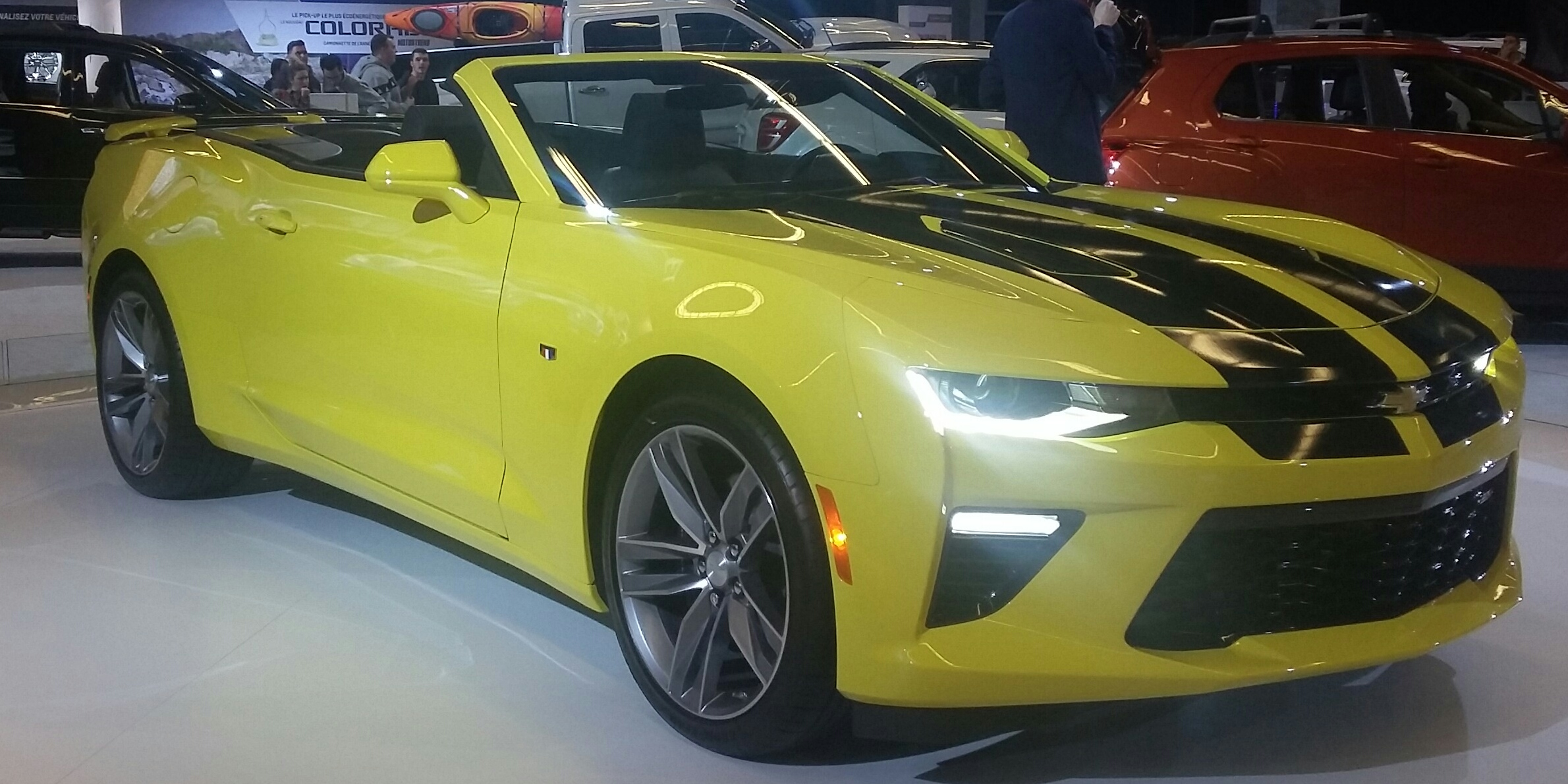
Chevrolet Camaro
"... know, like you look at an older Mustang or older Camaro or older Challenger charger. Yeah, they're not ne..."
The Chevrolet Camaro is a sports car from Chevrolet. Older versions are often talked about for their classic design and performance. It’s a well-known model that many car fans compare to other muscle cars.
The Chevrolet Camaro is an American performance coupe/convertible that has been produced in many generations since the late 1960s. When someone mentions “older Camaros,” they’re usually referring to how those earlier cars look and drive compared with newer performance vehicles. It’s frequently discussed alongside other muscle cars because of its strong enthusiast following.
subframe
"obviously you put a whole new subframe underneath and do everything and switch everything out to modern."
A subframe is like a strong inner frame that holds important parts of the car. Swapping in a modern subframe is one way to make an older car handle and drive more like a newer one.
A subframe is a structural mounting framework that supports components like the engine, suspension, and steering. The hosts mention putting a new subframe underneath as part of converting an older car to modern specs—essentially updating the chassis structure to match newer technology.
showroom floor
"right off the showroom floor, they were never, you know, based on the technology that they had."
“Showroom floor” means the car is brand-new from the dealer, not modified. They’re saying the original, unmodified experience is part of what people still enjoy.
“Showroom floor” refers to a car as sold new, before any enthusiast modifications. The hosts contrast that factory-new condition with the older cars’ baseline technology and the later modifications that create the “hot rod” feel.
hot rod culture
"I still think that can apply to our, our generation of, I guess, hot rod culture, you know, like you're looking back and you're seeing some of these cars and"
Hot rod culture is about modifying older cars to make them more fun or more powerful. The hosts are saying that kind of hands-on, DIY attitude is part of why people still love the legends.
Hot rod culture is the tradition of modifying older cars to improve performance, change the feel, or personalize them—often using simpler, more mechanical setups. The hosts connect it to the “visceral” experience of driving older muscle cars, especially when enthusiasts strip out modern conveniences.
quarter mile run
"They made it faster. They made it do, you know, you know, better eighth mile run to quarter mile run to whatever it was."
It’s a drag-race timing over 1/4 mile. It’s a common way to compare how quickly cars accelerate in a straight line.
A quarter-mile run is a classic drag-racing distance where cars accelerate over 1/4 mile (about 402 meters) and the results are typically reported as elapsed time (ET) and sometimes top speed. It’s a widely recognized benchmark for straight-line acceleration performance.
eighth mile run
"They made it faster. They made it do, you know, you know, better eighth mile run to quarter mile run to whatever it was."
It’s a drag-race timing over a short distance—1/8 mile. People use it because it’s a quick way to compare how fast cars accelerate.
An eighth-mile run is a drag-racing distance where cars accelerate over 1/8 mile (about 201 meters) to measure how quickly they can build speed. It’s often used for quicker, lower-power cars because the shorter distance can show performance differences sooner than a longer run.
differentials
"manufacturers started offering like premium models with, with big engines and, you know, lots of power and the transmission and the, and the diffs to hold that power."
A differential is part of the drivetrain that lets the wheels spin at different speeds when you turn. That matters for traction and how the car feels when you accelerate.
Differentials (often shortened to “diffs”) are gear mechanisms that allow the drive wheels to rotate at different speeds, especially when turning. In performance cars, the differential setup is important for how power transfers to the road and how the car behaves under acceleration.
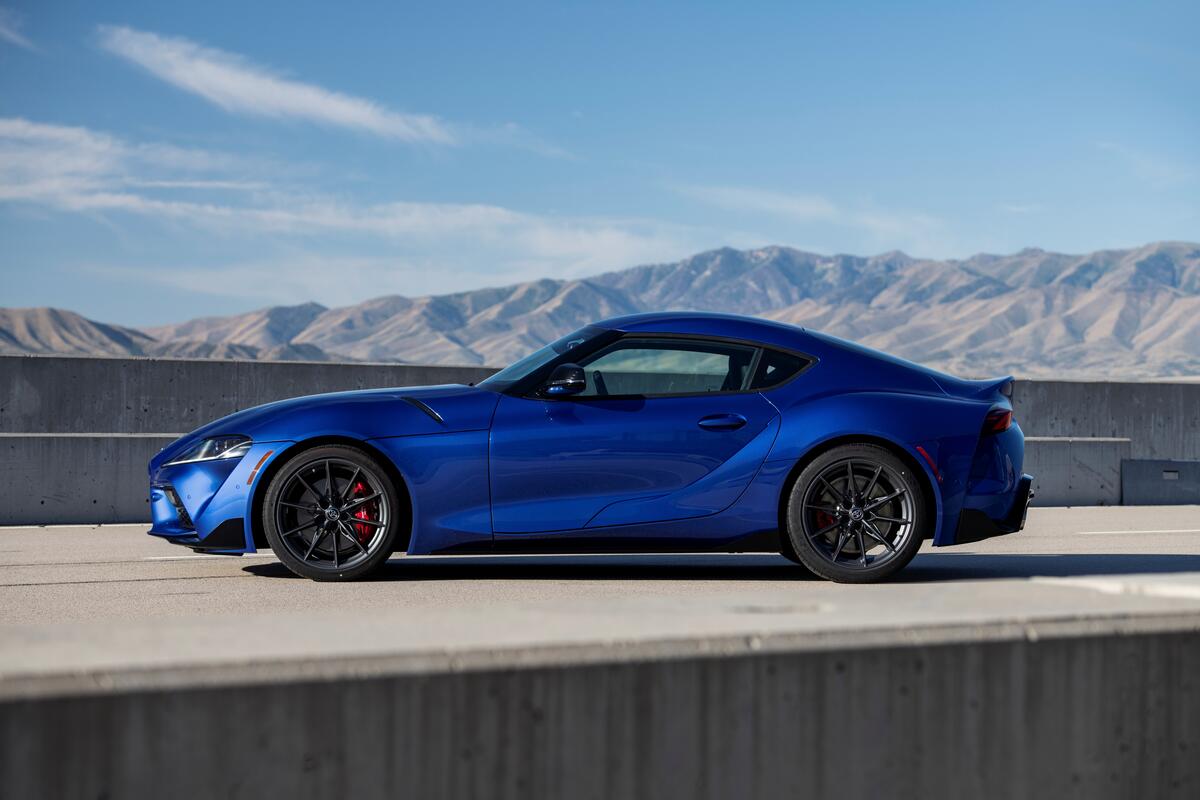
Toyota Supra
"you have the, you know, the, the civic type R, you have, uh, let the, you know, the Supra and things like that."
The Toyota Supra is a well-known sports car. The point here is that modern versions are offered as high-performance packages from the factory, like the “legends” people used to chase by modifying older cars.
The Toyota Supra is a performance sports car known for its strong straight-line acceleration and, in recent generations, a more modern turbocharged setup. In this discussion, it’s used as another example of today’s factory performance options that mirror the old-school idea of turning a normal car into something faster.

Nissan 350Z
"Just so everyone knows before the 350Z, like I'm wearing my 300ZX shirt right now. [359.4s] They did it. [360.3s] Yeah, I know."
The Nissan 350Z is an older Z-car that many enthusiasts love. In this conversation, it’s used as an example that a car doesn’t have to sell a ton to become important later.
The Nissan 350Z is a late-1990s/early-2000s Z-car that helped define the modern “affordable sports coupe” era. The speaker brings it up to explain that earlier Z models didn’t necessarily sell in huge numbers, even if they later gained enthusiast status.

Nissan 300ZX
"Just so everyone knows before the 350Z, like I'm wearing my 300ZX shirt right now. [359.4s] They did it. [360.3s] Yeah, I know."
The Nissan 300ZX is an older Nissan Z model that’s considered a classic by many car fans. The host mentions it to show that the Z has always had enthusiasts, not just modern buyers.
The Nissan 300ZX is a classic Z-car from an earlier era, known for being a more premium-feeling sports coupe compared with many contemporaries. Here it’s name-dropped to reinforce the idea that older Z models had dedicated fans even if sales weren’t massive.
bang for the buck
"But I think that car has a ton of potential that in 10, 15 years down the road, [389.8s] it's going to be a great bang for the buck for what you get. [392.8s] I mean, even now it's a good bang for the buck."
“Bang for the buck” means getting good value—getting a lot of car for the money. The host is saying the car could be worth more to enthusiasts later.
“Bang for the buck” is a value idea: getting a lot of desirable capability or features relative to the price paid. The speaker argues that even if sales were modest, the car’s long-term appeal could make it a strong value later on.
manual transmission
"That are now priced low enough that you can get 400 horsepower and a manual [400.8s] transmission, yeah, manual transmission, which is a big step up."
A manual transmission is when you shift gears yourself with a clutch and a stick. The host is saying that getting a car with a manual is a meaningful upgrade.
A manual transmission requires the driver to select gears using a clutch pedal and a gear lever. The speaker highlights it as a “big step up” because it’s often associated with more direct driver control and a more engaging driving feel than an automatic.
400 horsepower
"That are now priced low enough that you can get 400 horsepower and a manual [400.8s] transmission, yeah, manual transmission, which is a big step up."
Horsepower is a number that tells you how much power the engine can produce. Here it’s used to say you can get a lot of power for the money.
Horsepower is a measure of engine power output, used to compare how strongly engines can accelerate a vehicle. In this segment, the host uses “400 horsepower” as a benchmark for what buyers can get at a relatively low price.
gentleman's agreement
"it made 300 horsepower... Everyone, you know, the gentleman's agreement was out there... but regardless, um, they cheated."
A “gentleman’s agreement” here means car companies were kind of agreeing to cap the horsepower numbers they advertised. The host is suggesting the official ratings didn’t tell the whole story. So the real performance could be closer to what enthusiasts measured.
A “gentleman’s agreement” refers to an informal industry practice where automakers limited advertised horsepower numbers to keep competition from escalating. In this segment, the host says the agreement was “out there,” implying that published power ratings were capped or managed. That context is used to argue the 300ZX’s real-world potential was higher than the marketing numbers.
USDM
"the, the USDM cars, I know for a fact that the stock one can make almost 300 horsepower."
USDM means the version of a car sold for the U.S. market. Different countries can have different rules for emissions and engine tuning, which can change how much power the car makes. The host is saying the U.S. version still performs surprisingly well.
USDM means “U.S.-market” versions of a car, typically tuned to meet U.S. emissions and fuel requirements. In this segment, the host contrasts USDM cars with other markets to argue that a stock U.S.-spec 300ZX can still make close to 300 horsepower. It’s essentially about how regulations and calibration affect real-world performance.
timing light
"a little bit of, uh, throwing a timing light, adjusting the cam angle sensor, and you're there."
A timing light is a tool that helps you see when the engine’s spark is happening. If the spark timing is off, the engine may not make as much power. The host is saying you can tune timing to help the car reach higher output.
A timing light is a diagnostic tool used to check and adjust engine ignition timing. In this segment, the host claims you can get close to 300 horsepower by using a timing light and making adjustments. That implies the engine’s ignition timing is a key lever for performance on these cars.
cam angle sensor
"throwing a timing light, adjusting the cam angle sensor, and you're there."
The cam angle sensor tells the computer where the engine’s camshaft is. The computer uses that info to time things like spark and fuel. The host is saying getting that sensor adjustment right helps the engine make more power.
A cam angle sensor measures the position of the camshaft(s) so the engine control unit can time fuel injection and ignition accurately. In this segment, the host says adjusting the cam angle sensor is part of how you can unlock near-300 horsepower. That suggests sensor calibration and timing accuracy are important for how the engine runs.
93
"Um, and you have to run 93, but you can get there."
“93” is a type of gas with a higher octane rating. Higher octane helps the engine run more aggressively without knocking. The host is saying the tune they’re talking about works best (or safely) on 93.
“93” refers to 93-octane gasoline, a fuel grade that resists knocking under higher load or more aggressive ignition timing. The host says you have to run 93 to reach the claimed horsepower target, implying the engine’s tune depends on higher-octane fuel for safe combustion. Using lower-octane fuel can limit timing and reduce power or increase knock risk.

Nissan GT-R R35
"Um, but I think that the R35 is better than any other skyline that was ever made... The R35 has the sky's the limit potential... It's very easy to make good power on bolt-ons... you're buying Nissan parts and you're getting supercar performance."
The Nissan GT-R (R35) is a high-performance Nissan designed to be fast right out of the box. The point here is that it’s relatively easy to add upgrades to make more power, and the replacement parts are usually cheaper than what you’d pay for some exotic brands.
The Nissan GT-R (R35) is a modern supercar-baiting sports car built around performance from the start, not just as a tuned commuter. In this segment, the hosts argue it’s especially easy to make strong power with aftermarket bolt-ons, and that its parts ecosystem (Nissan parts) keeps ownership costs more reasonable than buying into a Ferrari-style parts market.
bolt-ons
"It's very easy to make good power on bolt-ons."
“Bolt-ons” are upgrades you can add without doing a full rebuild of the engine. They’re popular because they’re usually simpler and can still add power.
“Bolt-ons” are aftermarket parts you can install without major engine rebuilding—commonly things like intakes, exhausts, and other supporting mods. The idea is that they can still produce noticeable power gains, especially on engines designed with performance potential in mind.
residual value
"Um, it dipped down for a little bit, but they're kind of back up there after production stops... So you're not really losing money on the car when you own one."
Residual value means how much the car is still worth after you’ve owned it for a while. The point here is that the R35 doesn’t seem to drop in value as badly, so ownership feels less financially painful.
Residual value is what a car is worth later, after depreciation. The hosts are arguing that even if prices dip briefly, the R35 tends to hold value better—so you’re not “losing money” as much when you own it.
supercar performance
"and you're getting supercar performance."
“Supercar performance” just means the kind of very high-level speed and driving feel you’d expect from expensive exotic cars. The hosts are saying the R35 can get you close to that experience without the same cost of ownership.
“Supercar performance” refers to the level of speed, acceleration, and overall driving capability typically associated with high-end exotic cars. In this segment, it’s used to argue that the R35 can deliver that kind of feel without the same parts-cost burden as buying into a brand like Ferrari.
Ferrari
"You're not buying a, you know, a Ferrari and paying Ferrari parts, parts pricing to be able to have that same experience of owning a quote unquote supercar."
Ferrari is mentioned as the example of an expensive exotic brand. The claim is that parts for Ferraris tend to cost more, so the Nissan GT-R approach can feel cheaper for similar thrills.
Ferrari is used here as a benchmark for exotic-car ownership costs, especially parts pricing. The speaker contrasts buying Nissan parts for an R35 with the idea of paying Ferrari-level parts costs to get a similar “supercar” ownership experience.

Nissan Skyline R34
"The R34, R33 and R32 were very capable cars, but they were built on that same ideology... The R35 was designed up for performance in mind."
The Nissan Skyline R34 is one of the famous older Skylines people love. Here it’s being compared to the newer GT-R (R35), with the claim that the R34 was more of a modified base car, while the R35 was built from the start to be a performance machine.
The Nissan Skyline R34 is part of the classic “old school” GT-R era, known for being a capable performance platform. In this segment, it’s contrasted with the R35: the R34 (and R32/R33) are described as following an ideology closer to a special commuter base, while the R35 was designed specifically with performance as the goal.
nostalgia
"And I think a lot of that just comes down to, yeah, I think a lot of that comes down to, like I said, like nostalgia, what they grew up with, you know, playing, you know, uh, you know, Gran Turismo and things like that."
Nostalgia is when you like something because it reminds you of your past. In this case, it explains why people might prefer older cars they remember from games or shows.
In car culture, nostalgia is the emotional pull of the cars you grew up seeing—through movies, games, and media. The host argues that this is a major reason enthusiasts may prefer older “legend” models even when newer cars are objectively better.
Gran Turismo
"...playing, you know, uh, you know, Gran Turismo and things like that."
Gran Turismo is a popular racing video game series. The host is saying it helped create car fans’ favorites when they were younger.
Gran Turismo is a long-running racing video game series that has strongly influenced car fandom. The host mentions it as part of the “what they grew up with” factor that shapes which cars people consider legends.
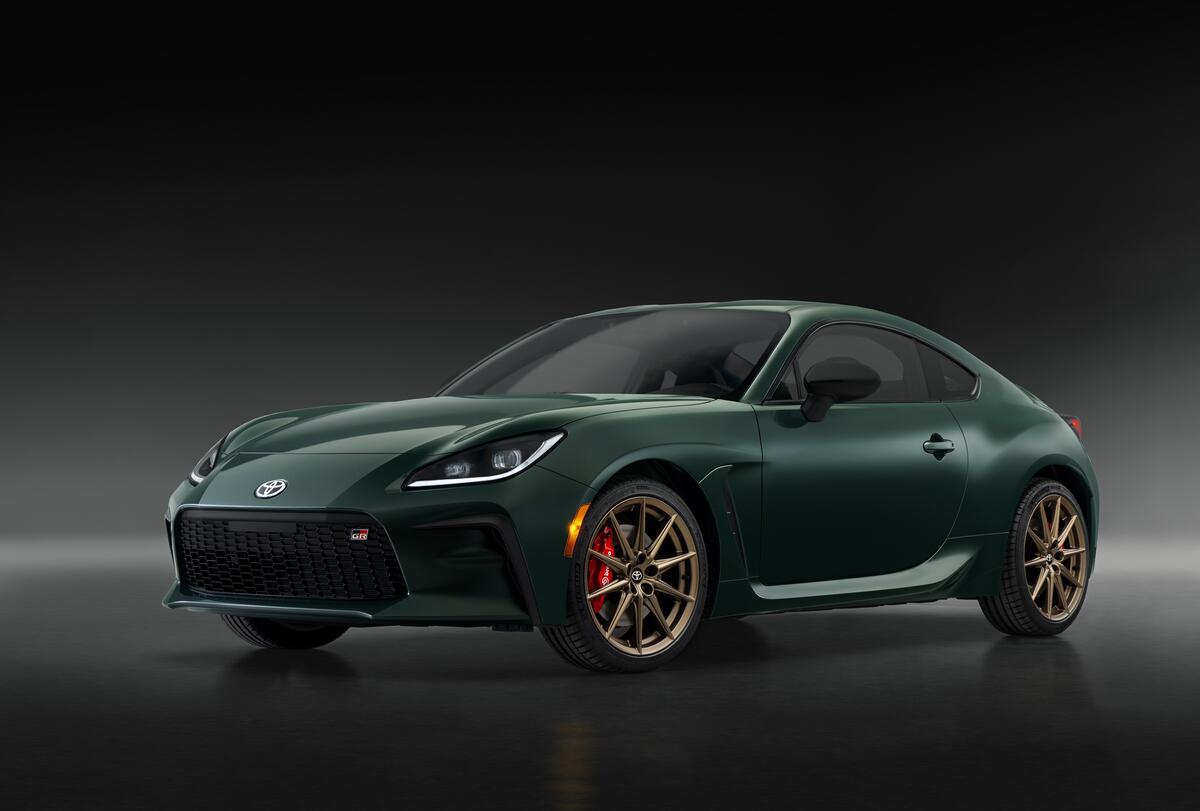
Toyota Gr86
"But do you feel that, that way about the GR 86 and the 80 86?"
The Toyota GR 86 is a modern sports car meant to feel fun and engaging to drive. In this discussion, it’s being compared to older “legend” cars and whether it has that same cultural pull.
The Toyota GR 86 is a modern, lightweight sports coupe built around a driver-focused formula (notably its boxer engine layout). The host brings it up in the “old school vs new school” debate, questioning whether the GR 86 has the same kind of legend status as older cars.
initial D
"Like that was a hundred percent on the back of initial D for sure."
Initial D is a Japanese anime about racing and car culture. The host is saying it played a big role in making those cars and driving styles popular in the United States.
Initial D is a Japanese anime series centered on street racing and drifting, which helped introduce many people in the U.S. to Japanese car culture. In this segment, the host credits it with spreading the scene beyond Japan.
drift events
"We knew about it, you know, previously because of all the Japanese magazines, um, drift events, things like that."
Drift events are car events where drivers practice sliding the car sideways through turns. The host is saying enthusiasts already knew about this world, even before the anime made it popular.
Drift events are motorsport gatherings where drivers intentionally oversteer and slide the car through corners while maintaining control and speed. The speaker mentions them as part of how people learned about the scene before the anime made it mainstream.
anime
"But, um, the general public, I think, if it wasn't for the anime, wouldn't have known about it."
Here, “anime” means Japanese animated shows. The host is saying that the show helped make car culture more widely known to people who weren’t already into it.
In this context, “anime” refers to Japanese animated storytelling that can influence car culture by popularizing specific vehicles, driving styles, and communities. The speaker argues that without the anime, the general public wouldn’t have learned about the scene as much.
clone
"And now we have, we did the, the, uh, the clone, the, you know, the, um, I get the Alibaba, um, 86 clone and they're starting to mess around with those."
A “clone” here refers to an unofficial replica or copy of a car (the speaker mentions an “86 clone” from Alibaba). The point is that people are modifying or critiquing these replicas, comparing them to the original factory car.

Toyota Corolla
"Um, so it was a mass produced Corolla at the end of the day. And I think the GR, well, I mean, the FRS, obviously"
The Toyota Corolla is a very common, everyday car. The host is basically saying the performance legend they’re discussing still comes from a normal, mass-market starting point.
The Toyota Corolla is a mainstream compact car, and the speaker uses it as a contrast point—saying the subject ultimately traces back to a mass-produced Corolla platform. That’s an enthusiast talking point about how a “legend” can be rooted in ordinary, high-volume engineering.
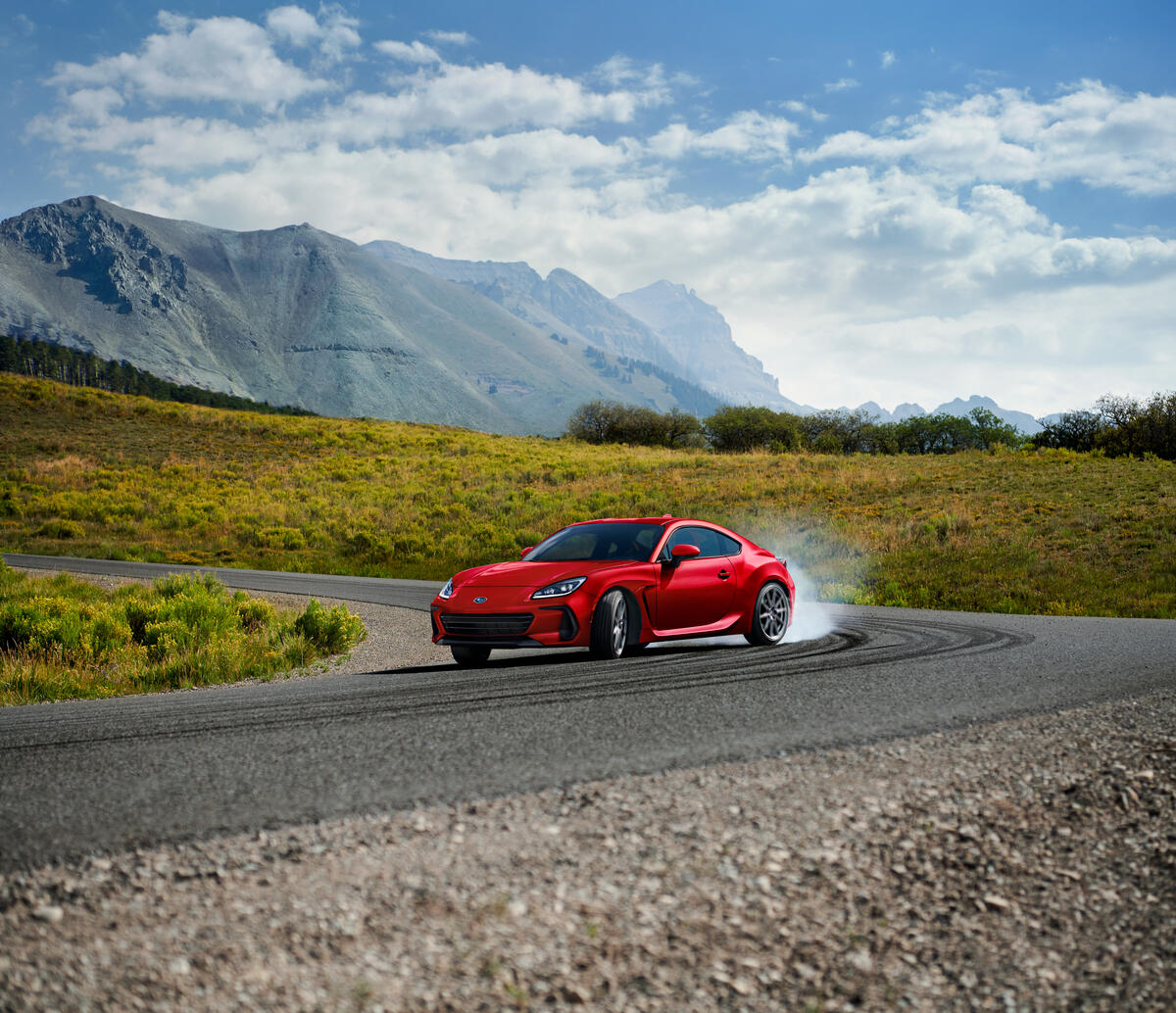
Subaru BRZ
"And I think the GR, well, I mean, the FRS, obviously, and the, and the BRZ started to lay that groundwork, but I really feel like the GR 86 is a much more performance oriented vehicle"
The Subaru BRZ is a sports car that shares the same general “86/FR-S” idea—lightweight and made to be fun to drive. Here, it’s brought up as part of the lineup that helped shape the later GR 86 performance focus.
The Subaru BRZ is the Subaru counterpart to the Toyota 86/FR-S platform, built to deliver a lightweight, rear-wheel-drive driving feel. In the transcript, it’s mentioned alongside the FRS and GR 86 as part of the development path toward a more performance-oriented direction.

Toyota FRS
"And I think the GR, well, I mean, the FRS, obviously, and the, and the BRZ started to lay that groundwork, but I really feel like the GR 86 is a much more performance oriented vehicle"
The Toyota FRS is an earlier version of the same basic sports-car idea that later became the Toyota 86 and Toyota GR 86. They’re using it as a reference point for how the platform evolved toward more performance.
The Toyota FRS (often written as “FR-S”) is the first-generation Toyota 86/Scion FR-S sports coupe that helped establish the modern, affordable rear-wheel-drive sports-car formula. The transcript groups it with the BRZ and GR 86 as part of the “groundwork” for the later performance direction.

Mitsubishi Eclipse
"What, what does the Mitsubishi Eclipse, uh, SUV, it's so weird, right? ... I feel like that was just badge engineering at its finest..."
The Mitsubishi Eclipse is a name that used to mean a sporty car. In this discussion, the host argues that a newer Eclipse variant didn’t really match what people associate with the original.
The Mitsubishi Eclipse is a long-running nameplate best known historically for its sporty coupe roots. In this episode, the host criticizes a modern “Eclipse SUV” direction as not truly honoring the original car’s identity—calling it an example of badge engineering.
badge engineering
"I feel like that was just badge engineering at its finest because that didn't, that did not harken anything back to the car."
Badge engineering is when a company basically rebrands a car—same underlying vehicle, different badges and marketing. It often feels like the new model doesn’t really earn the name it’s using.
Badge engineering is when a manufacturer sells a car that is largely the same under a different name or with different styling/badges. The key idea is that the “new” model is not truly designed to carry over the original car’s identity or engineering.
twin turbo
"And yeah, it's not the same thing, but it is a twin turbo. It's manual."
“Twin turbo” means the car has two turbochargers. They help the engine make more power by pushing extra air in.
A twin-turbo setup uses two turbochargers to force more air into the engine, which can increase power. Depending on the design, one turbo may spool up earlier while the other fills in at higher engine speeds.

Nissan cube
"You know, not everything is this, you know, cookie cutter Nissan cube of the world and you're doing, you know, you still have something fun."
The Nissan Cube is a small car with a very boxy, unusual shape. The speaker brings it up to contrast it with more characterful, enthusiast-style cars.
The Nissan Cube is a quirky, boxy compact car known for its distinctive styling and practical interior layout. In the segment, it’s used as an example of a “cookie-cutter” mainstream design that doesn’t feel as special as enthusiast-focused “legacy” cars.
legacy cars
"even if every automotive manufacturer just has one or two little, you know, legacy cars, let's call them, or something that, that harkens back to their motorsports or harkens back to a car that they did in the past."
“Legacy cars” are modern vehicles that intentionally reference a brand’s past—either in name, styling cues, or driving character—to keep the enthusiast identity alive. The speaker argues that having one or two such models can help manufacturers stay relevant with fans even as the lineup changes.

Ford Mustang
"And if you, you know, Mustang is probably one of the best examples of that. And yeah, they've had a lineage."
The Ford Mustang is a famous American sports car line that’s been around for decades. The host uses it as an example of a car brand that keeps its history and spirit alive.
The Ford Mustang is a long-running American pony car with a strong “legacy” identity that spans multiple generations. In this discussion, it’s cited as a best-in-class example of a brand keeping continuity and heritage while still evolving the car over time.

Dodge Challenger
"And look at Dodge. They had to cancel the challenger and now they brought it back or charger or whatever they want to call it."
The Dodge Challenger is a well-known muscle car. The host mentions it as an example of a model that was paused and then returned, because people still want that kind of heritage.
The Dodge Challenger is a classic American muscle car known for its long hood, aggressive styling, and strong enthusiast following. The speaker references it in the context of Dodge canceling it for a period and then bringing it back, highlighting how “legacy” models matter to brand fans.

Dodge Charger
"They had to cancel the challenger and now they brought it back or charger or whatever they want to call it. They, now it's one car, but you know, they killed off an entire platform for a"
The Dodge Charger is another iconic muscle car from Dodge. The host brings it up as part of the same idea: keeping famous model names alive for fans.
The Dodge Charger is a muscle car that’s historically been positioned as a bigger, more practical alternative to the Challenger while still delivering performance. Here, it’s mentioned alongside the Challenger to illustrate Dodge’s “bring it back” strategy for legacy nameplates.

Nissan Altima
"and enjoy it versus just everyone goes to driving around an Nissan Altima and [955.2s] we lose that, that aspect of it, you know, over."
The Nissan Altima is a common, regular commuter car. The hosts mention it to contrast it with the more exciting cars that create car culture.
The Nissan Altima is a mainstream midsize sedan that represents everyday transportation rather than the enthusiast “legend” cars being discussed. In the segment, it’s used as a contrast to more exciting, culture-driving models.
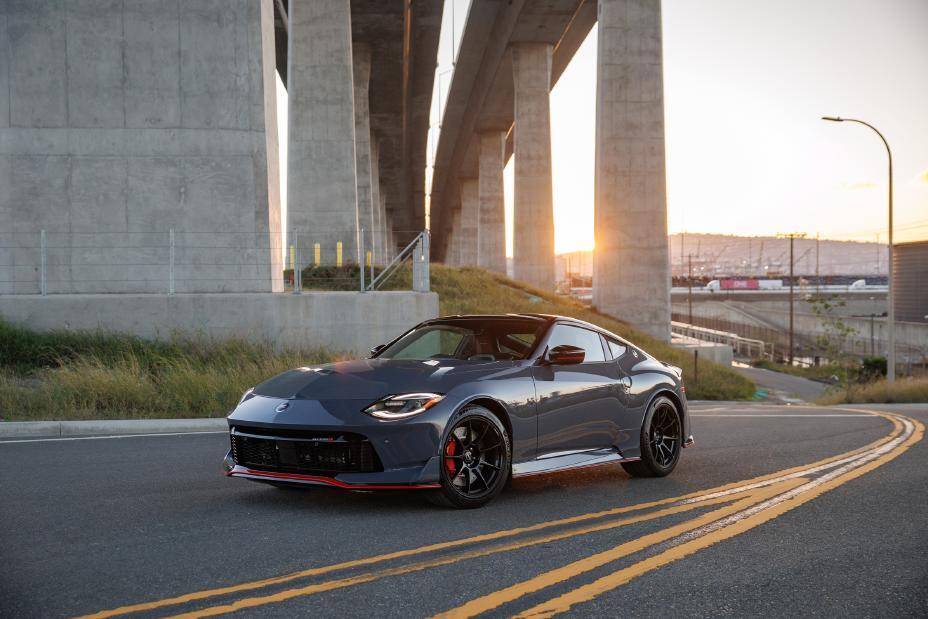
Nissan Z
"So do you, when you like for me, when I look at Nissan and I go, OK, the Z [990.8s] lineage S 30, S 130, so even though the 280 ZX is like the redheaded, ugly [997.2s] stepchild of, of the Z and so is the Z 31, I still count them,"
The Nissan Z is a famous sports car line that’s been around for decades. In this segment, the host is talking about how the older Z generations still feel like real Nissan, even if they weren’t all their favorites.
The Nissan Z is a long-running sports-car nameplate known for its rear-wheel-drive layout and enthusiast appeal. The host references the Z lineage (including S30 and S130) and argues that, even if some Z models aren’t favorites, they’re still “pure Nissan,” unlike the Toyota Supra’s perceived BMW influence.

Datsun 280 Zx
"...OK, the Z lineage S 30, S 130, so even though the 280 ZX is like the redheaded, ugly stepchild of, of the ..."
The Datsun 280Z is an older sports car from the Z family. It’s one of the earlier versions that helped shape what later Z cars became. It comes up when people talk about how the Z models evolved.
The Datsun 280Z is part of the Z-car lineage and sits in the early evolution of Nissan’s long-running sports-car formula. In the podcast context, it’s being used to explain the “Z lineage” and how the 280ZX fits into the family history. It’s discussed because it represents a specific step in the model’s development over time.

Nissan 280 ZX
"so even though the 280 ZX is like the redheaded, ugly [997.2s] stepchild of, of the Z and so is the Z 31, I still count them,"
The Nissan 280 ZX is one particular generation of the Nissan Z sports car. The host is basically saying some fans don’t like it as much, but they still consider it part of the Z family.
The Nissan 280 ZX is a specific Z-car generation in the Z lineage, known as part of the late-1970s/early-1980s era of the Nissan Z. In the segment, it’s called out as the “redheaded, ugly stepchild,” highlighting how enthusiasts can disagree about which Z models best capture the spirit of the nameplate.
JZ
"I mean, let's, you know, the two JZ is dominant, you know, don't get me wrong."
“JZ” is Toyota’s engine family used in certain Supras. People love these engines because they’re strong and respond well to upgrades, which is why they’re often associated with big power builds.
“JZ” refers to Toyota’s JZ-series inline-six engines (most famously the 1JZ and 2JZ used in the Supra). The hosts call the JZ engines “dominant,” implying they’re a big reason older Supras are so respected and modded for high power.
boost lag
"drive a big turbo Supra... they are still tail happy, you know, boost lag, you know, it's gotten better over time... you're sitting there waiting for boost to load."
Boost lag means there’s a short delay before the turbo really starts pushing power. In the segment, that delay is part of why the car can feel unpredictable right when the turbo finally kicks in.
Boost lag is the delay between when you press the accelerator and when a turbocharger actually produces full boost. The hosts mention it as part of why older big-turbo Supras can feel like you’re waiting for power, and then the car suddenly changes behavior when boost finally arrives.
tail happy
"they are still tail happy, you know, boost lag... you're sitting there waiting for boost to load. And then all of a sudden you're looking sideways because the turbo kicks in."
“Tail happy” means the back of the car is more likely to slide out or feel loose. The hosts are saying older turbo Supras can get that way when the turbo spools up.
“Tail happy” is enthusiast slang for a car that’s prone to the rear end stepping out—especially under throttle or during quick transitions. In this segment, it’s tied to turbo Supras being less stable when boost arrives, causing the car to rotate or slide.
turbo kicks in
"you're sitting there waiting for boost to load. And then all of a sudden you're looking sideways because the turbo kicks in and the car kicks out completely out on you."
“Turbo kicks in” is when the turbo starts producing boost strongly, and the car suddenly feels much more powerful. If the tires don’t have enough grip, that sudden push can make the car slide.
“Turbo kicks in” describes the moment the turbocharger reaches effective boost levels and the engine’s torque rises quickly. The hosts connect this sudden torque increase to abrupt changes in traction and steering balance, which can lead to the car “kicking out” when the rear loses grip.

Acura NSX
"Like if you look at how close they are in terms of like the four, Mark four and the A90, and then you look at something like the original NSX and then the newer, you know, the modern hybrid version, they're like completely different animals, right?"
They’re comparing the older Acura NSX to the newer one. The newer NSX uses a hybrid setup, so it drives and feels very different from the original.
The Acura NSX is a mid-engine sports car that has existed in both an older, purely internal-combustion form and a newer hybrid form. The speaker contrasts the original NSX with the modern hybrid NSX, emphasizing that the turbo vs hybrid powertrains and overall system behavior make them feel like “different animals.”
hybrid system
"differences between, you know, the turbo and the hybrid system and essentially all will drive and all these different things."
A hybrid system uses both a gasoline engine and an electric motor. That can change how the car delivers power—sometimes making it feel smoother or more responsive.
A hybrid system combines an internal-combustion engine with one or more electric motors and a battery. Depending on the design, it can blend power sources, enable electric-only driving in some conditions, and change how torque is delivered compared with a non-hybrid car.
collectible classic
"Um, maybe, maybe in like 10 years, 20 years, maybe it'll become, uh, you know, a collectible classic and people will be after it."
They mean a car that becomes popular to own later, like a “future classic.” If enough people want it, it can become more valuable over time.
A “collectible classic” is a vehicle that becomes desirable over time due to limited availability, cultural significance, or a reputation for being special. In practice, that can drive long-term demand and raise values well beyond what the car cost when new.

Honda NSX
"I've seen more of the original NSX is actually, I've seen more of pop-up headlight NSX's than I have of the new one."
The Honda NSX is a famous Honda sports car. The earlier version had pop-up headlights, and the newer one looks different—so they’re using that difference to explain why some people prefer the older “legend” vibe.
The Honda NSX is a mid-engine sports car known for its engineering-first reputation and, in earlier generations, distinctive styling cues like pop-up headlights. In this segment, the hosts compare the original NSX’s pop-up headlight look to the newer NSX, using that contrast to talk about how the “legend” feel can fade with modernization.
pop-up headlight
"I've seen more of pop-up headlight NSX's than I have of the new one."
Pop-up headlights are headlights that slide up from the front of the car when you turn them on. They’re a distinctive design feature that makes the car look more special.
A pop-up headlight is a headlamp that retracts into the front of the car and rises when activated. It’s a styling and packaging choice that can strongly shape a car’s “character,” which is why the hosts use it as a shorthand for the original NSX’s more iconic look.
raw and visceral
"And it's this high revving, you know, this tiny little 1.6 liter and it was like really very raw and visceral."
“Raw and visceral” is a way of saying the car feels intense and hands-on, not muted. The hosts are basically saying the older cars feel more connected to what’s happening underneath.
“Raw and visceral” is enthusiast language for a car that feels immediate and unfiltered—sharp throttle response, noticeable engine/road feedback, and less insulation from vibration and noise. In this segment, it’s used to contrast older, more mechanical-feeling cars with newer ones that prioritize comfort and refinement.
high revving
"And it's this high revving, you know, this tiny little 1.6 liter and it was like really very raw and visceral."
“High revving” means the engine is meant to spin fast. Drivers often like it because it can feel more exciting and responsive as the RPM goes up.
“High revving” describes an engine that is designed to spin at high RPM (revolutions per minute), often producing power higher in the rev range. Enthusiasts associate it with a more urgent, responsive feel because the engine’s sound and power delivery change dramatically as RPM climbs.

Chevrolet Corvette
"I have a big problem with a mid-engine car being a Corvette. Yeah, I definitely, man, it's so far outside like the, the, you know, what"
The Corvette C8 is a Corvette model where the engine sits closer to the middle of the car, not up front. Some people feel that changes what a Corvette “should be,” so they argue about whether it still fits the Corvette name.
The Chevrolet Corvette C8 is a Corvette generation that moved the engine to a mid-engine layout. That’s a big departure from the traditional front-engine Corvette formula, so debates about whether it “counts” as a Corvette are really about identity and driving character.
mid-engine
"Cause I have a big problem with a mid-engine car being a Corvette. Yeah, I definitely, man, it's so far outside like the, the, you know, what"
“Mid-engine” means the engine is placed near the middle of the car instead of the front. That can make the car feel more balanced when you steer and corner.
A mid-engine layout places the engine near the center of the car, typically behind the front seats and ahead of the rear axle. This helps balance weight distribution and can improve turn-in and handling feel compared with front-engine designs.
turbo setup
"come out as the all will drive, uh, you know, uh, turbo setup that everyone, you"
A turbo setup uses a turbocharger to help the engine make more power. It does this by pushing extra air into the engine, which can make acceleration feel stronger.
A turbo setup uses a turbocharger to force more air into the engine, which allows higher power output from a smaller displacement. Enthusiasts often discuss turbo setups because boost control and how the turbo delivers power (spool-up vs. steady pull) strongly affect driving feel.
all-wheel drive
"the internet was like, they got to go all we'll drive... And I know people love all we'll drive because it led to street race..."
All-wheel drive means the car can send power to all four wheels. That can help the car grip the road better, which is why people think it’s great for quick launches.
All-wheel drive (AWD) sends power to more than just the front or rear axle, which can improve traction—especially when accelerating on slippery or uneven surfaces. In the segment, AWD is discussed as something people pushed for to “keep up with the competition,” and as a factor that made certain cars more appealing for stoplight-style racing.
Honda Civic
"It would completely change the way just the dynamic of what the Civic really was."
The Honda Civic is a popular compact car. Here, they’re saying that if Honda changed it too much, it wouldn’t feel like the Civic people expect.
The Honda Civic is a compact car that became a benchmark for everyday drivability and efficiency. In this segment, the hosts mention how a change in direction would have altered the “dynamic” of what the Civic is known for, implying a shift away from its traditional character.
street racing
"And I know people love all we'll drive because it led to street race and they like to go, you know, stop light, grand prix and a lot of stuff."
Street racing is when people race cars on public roads, often from stoplights. The point here is that some car features get popular because they seem good for that kind of driving, even if the car is great without it.
Street racing is informal competition on public roads, typically involving quick acceleration from a stoplight or a short run between intersections. The hosts mention it as a cultural reason people like “all-wheel drive” setups, even though they prefer how the car drives in normal use.
V8
"But to me, a Corvette is a V eight route. Well, not necessarily V eight because they did have, I, well, maybe."
V8 means the engine has eight cylinders. The speaker is basically saying they associate the Corvette with a V8 sound and feel.
V8 refers to an engine with eight cylinders arranged in a “V” shape. In this discussion, the host uses V8 as part of their personal definition of what a Corvette “should” be.
straight six
"Well, not necessarily V eight because they did have, I, well, maybe. Did they have a, I think they did have a straight six at one time."
A straight six is an engine with six cylinders lined up in a row. The host is noting that Corvettes haven’t always been V8s.
A straight six is an inline engine configuration with six cylinders in a single row. The host mentions it to argue that Corvette’s identity has sometimes included non-V8 layouts, even if they personally prefer V8s.
front engine
"you know, we will drive V eight front engine, two-seater. To me, that's a Corvette, you know, that's the definition of the Corvette."
Front engine means the engine is mounted at the front of the car, ahead of the driver. The host frames “V8 front engine, two-seater” as their definition of a Corvette, contrasting it with other layouts.
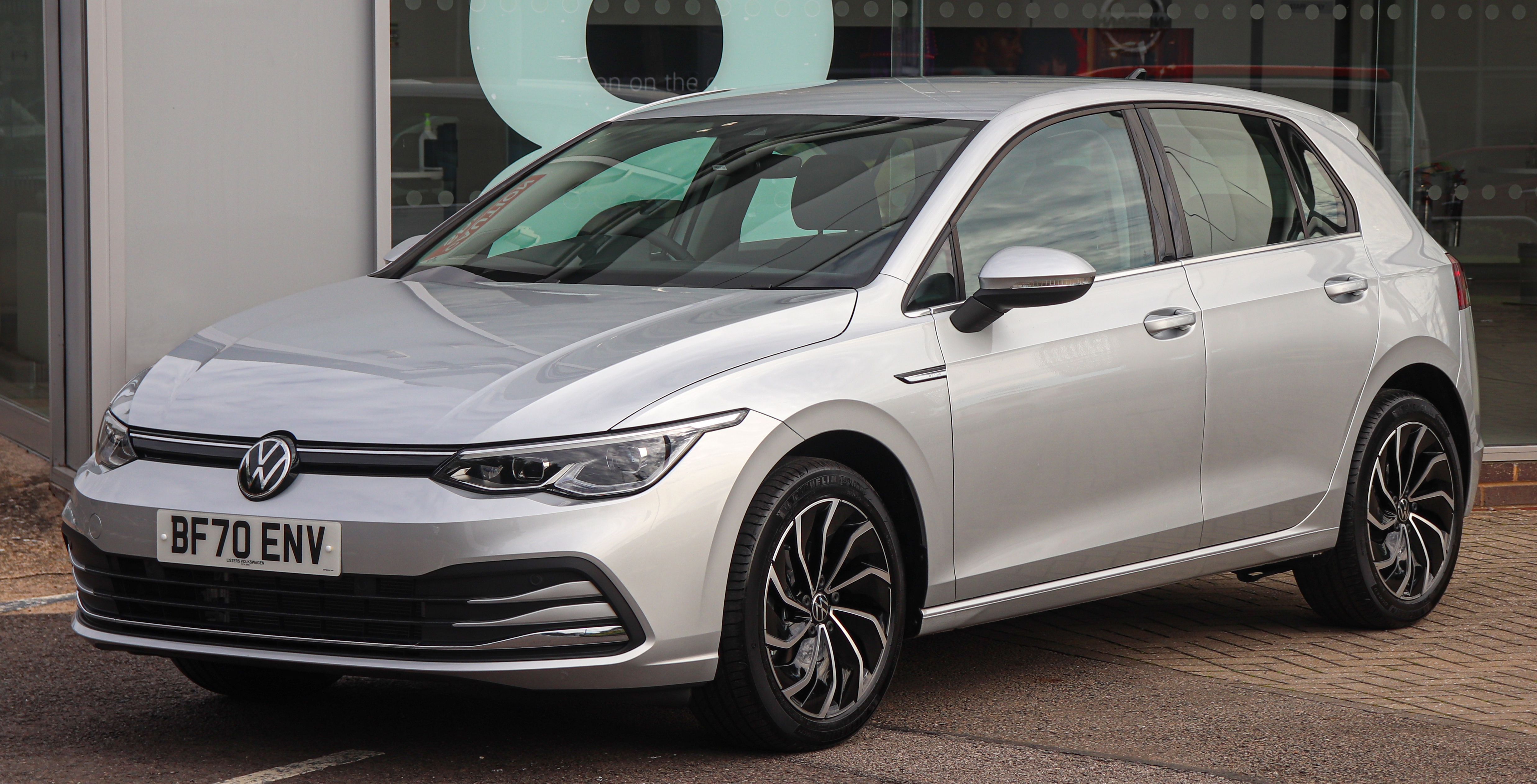
Golf Gtd
"...Corvette to me. That's like, at least the Mustang GTD still has the engine in the front, you know, and ..."
Here, “Golf” is mentioned as a car that has its engine in the front. The point is about layout—where the engine sits—rather than about a specific trim or racing version. It’s used to help explain the difference in design compared with other cars.
In this podcast context, “Golf” is being referenced as a comparison point for engine placement and overall layout rather than as a specific performance model. The discussion is centered on what it means for a car to have its engine in the front, and how that relates to the Mustang GTD. So the Golf is used as a general example of a front-engine configuration.

Ford Mustang GTD
"...s not a Corvette to me. That's like, at least the Mustang GTD still has the engine in the front, you know, and ..."
The Ford Mustang GTD is a special, high-performance version of the Mustang. The main detail mentioned is that it keeps the engine in the front. That helps define how it’s built and how it drives compared with cars that use different layouts.
The Ford Mustang GTD is a high-performance, track-focused Mustang variant discussed as having a front-mounted engine layout. In the podcast context, it’s used to contrast with other cars that may not have the same engine placement. The key point is that it’s still a “Mustang” in the sense of keeping the engine in the front.
super charge
"And he insisted that I drive his NSX, he put a super charge on it and I was like, all right, I wasn't comfortable with it because, you know, it's his baby. But I drove around the block and, and that feeling of driving that vehicle,"
A supercharger is a device that forces extra air into the engine. More air usually means more power, and it can make the car feel more aggressive and different to drive.
A supercharger (often shortened to “super charge”) is a forced-induction device that compresses incoming air so the engine can burn more fuel and make more power. In this story, the NSX owner added a supercharger to his car, which can significantly change throttle response and overall driving feel.
Request an Explanation
Heard something you'd like explained? We'll add it to this episode.
Sign in to request explanations for terms you heard.
Want to learn more?
Browse our glossary for plain-English explanations of automotive terms, jargon, and concepts.
Help improve this episode
See something that's not quite right? Our annotations are AI-generated and can sometimes miss the mark. Click the flag icon on any annotation to suggest a correction.