Awards special!
About this episode
The AutoCar Awards take center stage, with the hosts setting the scene for the Royal Artillery Company HQ event alongside the London Concourse, plus sponsor and guest mentions. Between awards talk, they compare “best” picks—from the latest Dacia Duster launch and their long-term Duster ownership to EV and hybrid winners like the Škoda L-Roc and Honda Prelude. The show also ranges into practical ownership (MOT prep, EV range), design identity, and why road testers shape award outcomes.
On this week's My Week In Cars podcast, Steve Cropley and Matt Prior talk about the Autocar Awards, taking place the night before this pod is published. We give gongs to cars and gongs to people too, so stay tuned here and over at Autocar for more.
The pair also talk your letters, the BMW M2, Westfield sports cars and more. For details of a special offer which gives you SIX issues of Autocar for just £6 if you click here.
Hosted on Acast. See acast.com/privacy for more information.

Mercedes CLA
"And some of the best cars include best saloon car, Mercedes CLA, good car."
The Mercedes-Benz CLA is a compact luxury sedan/coupe-style car known for its sporty look and entry-level Mercedes positioning. In this awards-style discussion, it’s mentioned as one of the “best saloon car” picks.

Dacia Duster
"... car. Yeah, good car. Best value car, that's your Duster. Good car. These are all good cars. They're all j..."
The Dacia Duster is an affordable SUV. It’s designed to give you SUV space and usefulness without costing as much as many other SUVs. The podcast calls it a strong value option.
The Dacia Duster is a budget-oriented compact SUV known for offering a lot of space and capability for the money. It’s often discussed as a value choice, especially for buyers who want an SUV without paying premium-brand prices. In the episode, it’s praised as a “best value” car.
4x4
"They were pretty keen on demonstrating the 4x4 capabilities, which interested me because ... my old-shaped car is a 4x4."
4x4 means the car can drive all four wheels at the same time. That helps it grip better on rough ground or in bad weather.
4x4 means a vehicle has four-wheel drive, so power can be sent to all wheels for better traction. The hosts mention the launch focusing on 4x4 capability, which is especially relevant for off-road or slippery conditions.

PV5 Kia Pv5
"... Yeah. Yeah. Best large car I haven't driven one, Kia PV5. Have you tried one? No, I have not, I'm afraid. ..."
The Kia PV5 is a large vehicle that the speaker is interested in. They haven’t driven it yet, but they’re considering it based on how it fits their needs. The podcast mentions it as a top option among bigger cars.
The Kia PV5 is referenced as a large car the speaker hasn’t driven yet, described as a “best large car” candidate. The context suggests it’s being considered for its size and overall practicality rather than performance. It comes up because the speaker is weighing options based on what they’ve heard and seen.

Kia EV2
"... had enough of that. Yeah. I like the little one, EV2. EV2? But have I spent much time in an EV2? Well,..."
The Kia EV2 is an electric car from Kia. The speaker says they like the smaller EV idea, but they haven’t had much time driving it. The podcast is basically checking whether they’ve experienced it enough to judge it.
The Kia EV2 is an electric vehicle model mentioned as a smaller EV option the speaker likes. It’s discussed in terms of whether the speaker has spent enough time with it to form a proper opinion. In the episode, it’s part of a conversation about electric cars and personal experience.
tiger nose grille
"you remember the previous Kia styling in the so-called tiger nose grille? Yes, I liked that. Yeah. And when that died, I was really sorry."
A “tiger nose grille” is Kia’s signature front grille design. It’s the bold shape you see at the front of the car, and the host is saying the lighting can make that design stand out more at night.
A “tiger nose grille” is Kia’s distinctive front grille design language, characterized by bold, vertically oriented shapes that resemble a tiger’s face. In this discussion, it’s also described as being visible when the headlights are on, meaning the lighting helps emphasize the grille’s pattern at night.
Peter Shrayer
"Well, I'm not sure that I think it was a sort of carryover in the first, first of the new shape cars. Yeah. Because who was the Peter Shrayer, was the design boss,"
Peter Shrayer is a car designer the host mentions as being in charge of design at Kia. The point is that he helped shape the look, and then other people continued that design direction after him.
Peter Shrayer is mentioned as a design boss connected to Kia’s styling direction. The host links him to the “tiger nose” design idea, saying he led it and then handed it on to others who continued it for a while.

Audi Quattro
"... it's not, it's not going to, you know, be like a quattro and be remembered fondly for what it looked like...."
Audi quattro refers to Audi cars that use all-wheel drive. It’s known for helping the car grip the road better. The podcast mentions it because the speaker is talking about how it will be remembered, including its appearance.
The Audi quattro is a name strongly associated with Audi’s all-wheel-drive system and the cars built around it. It’s often discussed because quattro-equipped vehicles became famous for traction and rally heritage. In this episode, it’s mentioned in the context of how the car might be remembered for looks.

Audi Q5
"...l we think, think, ah, the quattro. Yeah. But the Audi Q5 is just a goner. And he was upset about that. He ..."
The Audi Q5 is a compact SUV from Audi. It’s designed for everyday driving with room for passengers and luggage, and it can be had with all-wheel drive. The podcast mentions it as a car that’s no longer in the plan.
The Audi Q5 is a compact luxury SUV that’s known for practicality, comfort, and available all-wheel-drive systems. It’s frequently mentioned because it’s a common choice in the premium SUV segment and can be configured for different needs. In the podcast context, it’s described as being “a goner,” implying it’s being replaced or written off.
260,000 miles
"else I think has got one, another journalist has got one, I think he's got like 260,000 miles on it, or something like that. Paid more for it than I did mine."
“260,000 miles” means the car has been driven a huge distance. The point is that it’s still being kept and used even with that kind of mileage.
“260,000 miles” is a high odometer reading, used here to emphasize that the car can rack up serious mileage and still be owned/used. In enthusiast discussions, mileage like this often becomes a proxy for durability and long-term ownership costs.
MOT
"I spent some money on it a couple of months ago to get some servicing and MOT prep done. But I mean, the total of purchase price and maintenance is still nothing."
MOT is the UK safety check that cars have to pass to stay legal to drive. “MOT prep” means doing any needed work beforehand so it’s more likely to pass.
MOT refers to the UK’s annual vehicle inspection test that checks roadworthiness and safety for cars and light vehicles. “MOT prep” typically means getting the car serviced or sorted ahead of the test to reduce the chance of failure.
Kia PV5
"Yeah, I would have talked about on this part, the Kia PV5 is a proper MPV, isn't it, in the old school sense. Yeah, it's boxy and van like, which strikes me that has become the luxury car again, in a way…"
The Kia PV5 is a family-people mover, like a van (an MPV). The host likes that it’s boxy and practical, instead of looking like a typical SUV.
The Kia PV5 is being discussed as a proper MPV, meaning a multi-passenger van-style vehicle. In this conversation it’s highlighted for its boxy, van-like shape—an “old school” approach that’s different from the SUV trend.
MPV
"Yeah, I would have talked about on this part, the Kia PV5 is a proper MPV, isn't it, in the old school sense. Yeah, it's boxy and van like…"
MPV means a multi-passenger van. It’s built to carry people comfortably, with lots of interior space and an easy-to-get-in layout.
MPV stands for “multi-purpose vehicle,” but in car terms it usually means a minivan-style vehicle designed to carry multiple passengers comfortably. Compared with SUVs, MPVs are often more upright and space-efficient, with a focus on ease of access and interior room.

Toyota Alphard
"...w, that, that crazy Lexus Toyota thing called the Alphard, you know, that mad thing with the, with the gril..."
The Toyota Alphard is a big minivan meant to carry people comfortably. It’s built for space and passenger comfort rather than sporty driving. The podcast mentions it because it has a very distinctive look.
The Toyota Alphard is a large people-mover (minivan) designed to carry passengers in comfort, often with a more premium feel than typical vans. It’s discussed because it’s a distinctive, family-focused vehicle with a strong emphasis on interior space. In the episode, it’s referenced as a “crazy” Toyota with a notable front grille design.

Lexus Toyota Alphard
"Yeah, yeah. Well, you know, that, that crazy Lexus Toyota thing called the Alphard, you know, that mad thing with the, with the grill, the size of a house."
The Alphard is a big luxury van (an MPV) from the Toyota/Lexus family. The host’s point is that it’s fancy and comfortable, not just practical.
The host is referring to the Toyota/Lexus Alphard, a large, luxury-focused MPV known for its dramatic, “house-sized” presence. It’s used here as an example of how MPVs can feel like true luxury cars, not just family transport.

Renault Twingo
"Best small car. I don't think you've driven it yet. It's a Renault Twingo. No, I've done extensive walk arounds and chats about it. It's actually an interesting car because it seems to me to be at least as big in size as a Renault 5, isn't it?"
The Renault Twingo is a small car meant for city driving. The host says it’s related in design to the Renault 5, but it uses a simpler rear suspension to keep things cheaper and compact.
The Renault Twingo is a small city car built around a compact, efficient layout. In this segment, the host highlights that it shares the Renault 5 platform/architecture, but uses a simpler rear suspension setup for cost and packaging reasons.
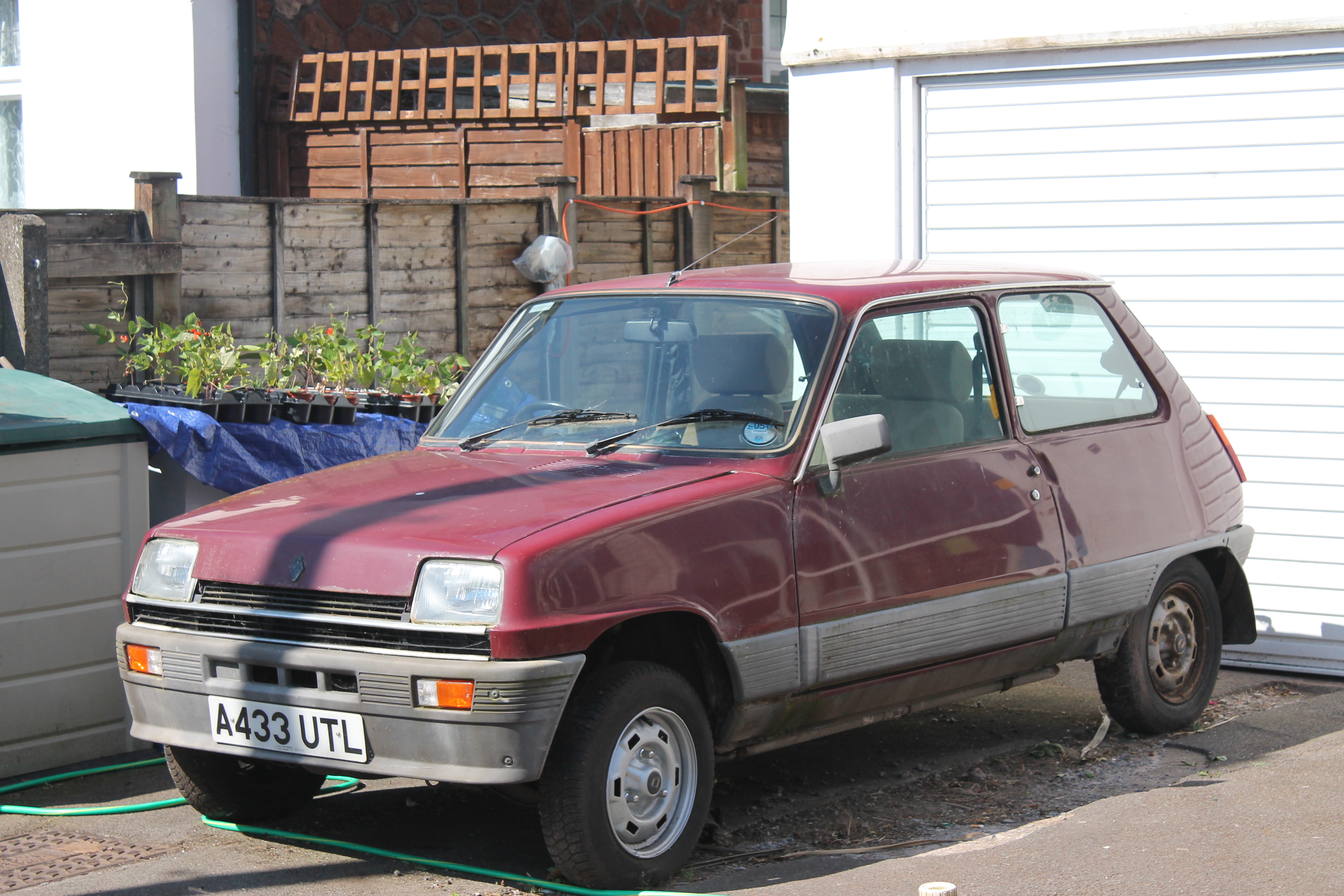
Renault 5
"It's actually an interesting car because it seems to me to be at least as big in size as a Renault 5, isn't it? I mean, it is the same architecture, same platform. Yes. It's got the rear, instead of a multi-link rear suspension, it's got a torsion beam from a Renault, something else."
The Renault 5 is an older small hatchback. Here, the host uses it as a comparison point for the Twingo’s size and design, and explains that the Twingo’s rear suspension is simpler.
The Renault 5 is a classic small hatchback whose platform/architecture is referenced here as the basis for the Renault Twingo’s size and underpinnings. The host specifically compares rear suspension designs, noting the Twingo uses a torsion beam rear axle rather than a more complex multi-link setup.
multi-link rear suspension
"It's got the rear, instead of a multi-link rear suspension, it's got a torsion beam from a Renault, something else. Sorry, Renault 5 people. It's got a rear axle off of a torsion beam, a cheaper rear axle."
A multi-link rear suspension uses several connected arms to control how the rear wheels move. It can help the tires stay planted for better handling, but it’s usually more expensive and complicated than a simpler setup.
A multi-link rear suspension uses multiple control arms/links to manage wheel movement more precisely. Compared with a torsion beam, it can better maintain tire contact and allow more refined handling, but it’s more complex and typically costs more to build.
torsion beam
"Yes. It's got the rear, instead of a multi-link rear suspension, it's got a torsion beam from a Renault, something else. Sorry, Renault 5 people. It's got a rear axle off of a torsion beam, a cheaper rear axle."
A torsion beam is a simpler type of rear suspension. Instead of many separate links, it uses one beam that flexes to help the wheels move over bumps—usually making the car cheaper and more compact.
A torsion beam rear suspension is a simpler rear axle design where a single beam twists to provide springing and control. It’s commonly used on smaller, lower-cost cars because it’s cheaper and takes up less space than more complex multi-link rear suspensions.

5 Renault 5
"...m, a cheaper rear axle. But otherwise, yeah, it's Renault 5 platform. Lovely little car though. Yeah. Catch u..."
The Renault 5 E-Tech Electric is a small electric car. It’s based on the Renault 5 design, but it runs on electricity instead of petrol. The podcast calls it a nice, compact car and talks about how it’s set up for EV use.
The Renault 5 E-Tech Electric is an electric version of the Renault 5, built on the Renault 5 platform. It’s discussed as a “lovely little car,” suggesting it’s valued for being compact and easy to live with. The episode also mentions details like a cheaper rear axle, indicating the conversation is about how the EV is packaged.
EV
"They're going to sell it for... So, it's refined, isn't it? Yeah, and it's going to be less than 20,000 pounds when it arrives here towards the end of this year, which is not very much for an EV."
EV means electric vehicle. It’s a car that runs on electricity from a battery, not gasoline. They’re saying it should cost under £20,000 when it comes.
EV stands for electric vehicle, meaning the car is powered primarily by an electric motor and a battery rather than a gasoline engine. In this context, they’re talking about the price of an EV being under 20,000 pounds when it arrives.
range
"I did see a post by our friend David Pooke, the engineer, formerly of JLR, who does tweaks for Alpine's and stuff like that. The range he's getting now from his 290 is so much more than he was getting in the winter."
Range is how far the car can go on a full battery charge. They’re saying the EV is getting more range now than it did in winter.
Range is the distance an EV can travel on a full charge (or under certain conditions) before it needs recharging. The speaker contrasts how much range David Pooke is getting now versus what he saw in winter, implying cold weather reduces usable range.
M1
"everything went wrong, didn't it? It was cold and there was this kind of gale blowing straight into us as we tried to forge down the M something, you know, M1, was it?"
The M1 is a big UK highway. They’re describing how the drive felt on that road in bad weather.
The M1 is a major motorway in the UK, connecting London to the north of England. Mentioning it helps set the driving conditions for the story—cold weather, strong wind, and a long run on a fast road.
monochrome colours
"And I mean, hang on a minute. Why are [938.6s] there now these monochrome colours in the range?"
“Monochrome colours” means the car is mostly one color family, like mostly black/gray/white. The point here is that those plain colors can make a car blend in instead of stand out.
“Monochrome colours” means using a single-color palette—typically shades like black, white, gray, or silver—rather than bold contrasting hues. The host is discussing how these muted, single-tone choices can make cars look more anonymous.
front engine Ferrari
"What's your dream car, Steve? Actually, I've just, yeah, we've got, let's, [1046.2s] do you know what it is? Or have you? What the award winner is now? Yeah. Oh, excellent. Good. [1051.9s] What would your dream car be? Oh, I think it would be some sort of a front engine Ferrari."
A “front engine Ferrari” is a Ferrari where the engine sits up front. The host is saying that’s the kind of Ferrari they’d want most, even though many Ferraris are known for having the engine more in the middle.
“Front engine Ferrari” refers to Ferraris where the engine is mounted at the front of the car, as opposed to the more common mid-engine layout in many modern supercars. The host is using it as a dream-car wish, contrasting it with the typical Ferrari packaging most enthusiasts associate with the brand.

Morgan Supersport
"So he's picked, and I'm absolutely behind it, the Morgan Supersport Yeah. Well, you spent some time in that too, haven't you?"
The Morgan Supersport is a small British sports car made by Morgan. In this case, it uses an engine from BMW, and the episode talks a lot about how the exhaust and settings change what it sounds like.
The Morgan Supersport is a modern Morgan sports car built around a BMW-sourced engine. In this episode, the hosts focus on the Supersport 400 variant’s tuned exhaust and how it changes the sound and character.
Morgan Supersport 400
"Yeah, I drove the 400 the other day. And it was pretty, pretty... I mean, 20% more power than a regular Supersport"
The Morgan Supersport 400 is the higher-output version of the Supersport, aimed at adding more punch over the standard Supersport. Here, the hosts quantify it as having about 20% more power and then connect that to the way the car sounds and feels.
BMW 6
"What's the engine like? When the engine's percolating, because there's BMW 6, isn't there?"
The hosts are referring to a BMW inline-six engine. That engine layout has a distinctive sound and smoothness, which is why they think the Morgan Supersport’s engine note feels “special.”
“BMW 6” is shorthand for a BMW inline-six engine family. The hosts use it to explain why the Morgan Supersport’s engine sounds special—because the underlying BMW engine architecture influences the exhaust note and running character.
sports exhaust
"Now it's got, so the Supersport 400 has got a sports exhaust, where it's got a race spec catalyst."
A sports exhaust is an exhaust setup tuned to make the car sound different (usually louder and more “alive”). It can also help the engine breathe a bit better, and that’s part of why the hosts are talking about the Supersport’s sound.
A sports exhaust is an aftermarket or factory-tuned exhaust system designed to change both sound and flow characteristics. In this episode, the Morgan Supersport 400’s sports exhaust is paired with other changes to make the engine note more dramatic.
race spec catalyst
"Now it's got, so the Supersport 400 has got a sports exhaust, where it's got a race spec catalyst."
A catalyst is part of the exhaust that cleans up the gases coming out of the engine. “Race spec” here suggests it’s designed to work better with a performance exhaust while still keeping the car legal for emissions and noise rules.
A catalyst (catalytic converter) is the emissions-control device that helps reduce harmful exhaust gases. Calling it “race spec” implies a performance-oriented catalyst design that can support a sportier exhaust note while still meeting regulations.
mufflers
"And they've taken out one of the mufflers in the exhaust as well."
Mufflers are the parts of the exhaust that make the car quieter. Removing one usually makes the exhaust louder and can make the engine sound more noticeable.
Mufflers are the exhaust components that reduce noise by controlling sound waves. The hosts say one of the mufflers has been removed, which is a common way to increase volume and change the character of the engine’s sound.
drive by noise regs
"And it still meets the drive by noise regs, because, you know, the, the cat's clever."
Drive-by noise regulations are the legal limits for how loud a car is allowed to be when it passes by during an official test. The hosts are saying the car’s exhaust changes still stay within the law.
Drive-by noise regulations are legal limits on how loud a car can be measured while passing by, typically using standardized test procedures. The episode claims the Supersport 400 still meets these rules thanks to its catalytic setup.
sport plus mode
"And you can put it in a sport plus mode, I think, in which case it all and burble and stuff appropriately."
“Sport Plus” is a button or mode that makes the car behave more aggressively. In this case, the hosts say it changes the exhaust behavior so you get more dramatic sounds, including pops and burbles.
“Sport Plus” is a drive mode that typically adjusts multiple vehicle settings—often throttle response, shift behavior (if applicable), and exhaust valve behavior—to make the car feel more aggressive. Here, the hosts connect it to louder sound and “burble” behavior.
burble
"in which case it all and burble and stuff appropriately."
A burble is the distinctive “popping” or “chugging” sound some cars make when you lift off the throttle. The episode says the Supersport 400 does this in its sportier mode.
A “burble” is the popping or gurgling exhaust sound that can occur when the engine is decelerating or when fuel/ignition events happen in a way that makes the exhaust note more audible. The hosts describe it as part of what happens when the Supersport is in Sport Plus mode.
injectors are quite high pressure
"At really low speed, there's, because the injectors are quite high pressure, you get that really very smooth, but slightly weird ticking noise"
Fuel injectors are how the engine delivers fuel. When they’re high-pressure, they can make the engine run more precisely, and the episode says that at low speed you can hear a subtle ticking sound from that system.
High-pressure fuel injectors spray fuel at higher pressures to improve atomization (how finely the fuel breaks up) and combustion control. The hosts link this to a “smooth but slightly weird ticking noise” at very low speeds.
buying power
"that's about buying power, isn't it? Yeah. Mind you, I might have, had they made a super three"
Buying power just means how much money people have available to spend. In this discussion, it’s about whether older buyers have more ability to buy sports cars than younger ones.
Buying power is the ability of consumers to afford cars, influenced by income, savings, and overall economic conditions. The host uses it to connect age demographics to who can actually purchase sports cars.

3 Three Wheeler
"...it gave me, a suggestion that the original Morgan three wheeler took a while to gain much traction, which I did. ..."
A three-wheeler is a vehicle with only three wheels instead of four. The Morgan three-wheeler is a well-known example of this type of car. The podcast mentions that it may take a moment for the tires to grip well.
The “Morgan three wheeler” is a three-wheeled sports car known for its distinctive layout and classic roadster feel. It’s often discussed because the unusual three-wheel design affects traction and handling compared with normal cars. In the episode, the speaker mentions a suggestion about traction taking time to develop.

Morgan three wheeler
"60 plus year reader, but couldn't let Mr. Price column third paragraph go without mention of the laugh it gave me, a suggestion that the original Morgan three wheeler took a while to gain much traction, which I did."
The Morgan three wheeler is a quirky three-wheeled car made by Morgan. It has one wheel in front and two in back, and the episode is talking about how the early version didn’t sell well at first—so Morgan changed it to get more attention.
The Morgan three wheeler is a modernized take on Morgan’s early three-wheeled concept: a single front wheel with two wheels at the rear. In the story here, the key point is how the original “one wheel footprint” layout affected traction and sales, leading Morgan to refine the design.
traction
"a suggestion that the original Morgan three wheeler took a while to gain much traction, which I did. I did thank you for that because I did mean it figuratively and literally at the same time."
Traction is tire grip—how much the tires can “hold on” to the road. If traction is poor, the car can spin or slide instead of moving smoothly.
Traction is how well a tire can grip the road so the car can accelerate, brake, and corner without slipping. In the context of a three-wheeler, traction can be harder to manage because the vehicle has fewer contact patches than a typical four-wheeled car.
power slide
"kicking the tail out and doing a sort of, you know, neat sort of 180 power slide round an uphill head."
A power slide is when a driver deliberately makes the tires lose grip and the car slides sideways. The driver uses the accelerator to keep it sliding and steer to control the direction. It’s basically a controlled “drift” move.
A power slide is a drifting-style maneuver where the driver intentionally breaks traction and keeps the car sliding by using throttle input. It’s often associated with rear-wheel-drive cars because the rear tires can be made to slide while the driver controls the angle. The host mentions it while describing a 180-degree slide on an uphill.
three wheeled
"But I think, yeah, and I think that from that point onwards, I've always had a soft spot for a three wheeled, correct configuration, three wheeled car."
“Three wheeled” means the vehicle has three wheels instead of four. That affects how it handles compared with a normal car. The host is saying they really like that kind of setup.
“Three wheeled” here refers to a specific vehicle layout: a three-wheel configuration rather than the more common four-wheel car design. That layout changes stability and how the vehicle responds during cornering, braking, and throttle changes. The host is treating it as a meaningful, enthusiast-specific design choice.
V twin
"But that idea that that SN two liter SNS V twin, that was an American engine wasn't it? Yeah, there was definitely a relationship between."
A V twin is an engine with two cylinders arranged in a V shape. Because it has only two cylinders, it can feel and sound very different from a typical four-cylinder car. The host is talking about what kind of engine the three-wheeler uses.
A V twin is an engine with two cylinders arranged in a “V” shape, typically sharing a common crankshaft. The host links the Supersport’s “SN two liter SNS V twin” idea to an American engine relationship, emphasizing that the engine’s origin and design influence the car’s character. V-twins are known for distinctive sound and torque delivery compared with four-cylinder engines.

Bugatti Veyron
"...se it is great. It's a relief for it not to be in Veyron or something. Yeah, I think so. I agree because b..."
The Bugatti Veyron is a very rare, very expensive supercar built for maximum performance. People talk about it because it’s known for being extraordinarily fast. The podcast references it as something the speaker is relieved not to be dealing with.
The Bugatti Veyron is a landmark supercar famous for extreme performance and high-end engineering. It’s often discussed because it set a benchmark for speed and technology in its era. In this episode, it’s mentioned as a point of comparison in the speaker’s conversation.
SUVs
"nice to steer, rides well. You know, some some of those SUVs can get a bit bouncy and lumpy and you sit up in the air a bit."
SUVs are taller cars that sit higher off the ground. Some can feel a bit bouncy on rough roads, so the ride can feel less smooth than lower cars.
SUVs (sport utility vehicles) are taller, heavier vehicles with higher ground clearance and a more upright seating position. Because of their shape and suspension setup, some SUVs can feel “bouncy” over uneven roads and can transmit more body motion to occupants.
electricity tariff
"ongoing where if you sign up to an electricity tariff, you get a certain number of free miles of motoring."
Your electricity tariff is basically your electricity price plan. Some plans give EV owners extra benefits, like a certain amount of cheap or free charging miles.
An electricity tariff is the pricing plan you’re on for your home electricity. Some tariffs include perks like a set amount of “free miles” for EV charging, which can strongly affect your running costs.

Dodge Charger
"...et a certain number of free miles of motoring. My charger has been going flat out. I've had this flow of el..."
A Dodge Charger is a big car from the US that’s built to be fast. People talk about it because it can have powerful engines and a sporty feel. In the podcast, it sounds like the speaker has been driving theirs very aggressively.
The Dodge Charger is a large American performance sedan/coupe-style car known for strong engine options and a muscular look. It often comes up in car podcasts because it represents a classic “big power” approach and has a long history in motorsport and street culture. In this episode, it’s mentioned in the context of the car being driven hard.
PHEVs
"I've had this flow of electric cars. I had two electric pandas one after another and the various PHEVs and so on."
PHEV means plug-in hybrid. It’s a car that can run on electricity, but it also has a petrol (or other) engine for longer trips.
PHEV stands for plug-in hybrid electric vehicle. It uses both an electric motor and a conventional engine, and it can be charged from the grid to run some trips on electricity alone.
fast charges
"Yeah, I agree because I mean, there are charges near me and there's quite a few fast charges."
“Fast charges” means EV charging that adds battery power quickly. It’s typically what you use at public chargers when you don’t have time to wait for a slow charge.
“Fast charges” refers to high-power EV charging that can replenish the battery much quicker than standard home charging. It’s usually tied to public DC fast chargers, which are designed for shorter stops rather than overnight charging.

Bmw I4
"because I had to drive to the Peak District in a BMW i4 last week. It doesn't have the world's longest range."
The BMW i4 is an electric BMW. They’re using it here to talk about how far it can go on a full charge and how charging stops can make a trip easier.
The BMW i4 is an all-electric Gran Coupe built around BMW’s electric powertrain and long-distance usability. In this segment it’s used as an example of real-world range expectations—around 230 miles from full—plus the convenience of charging stops on a trip.

Honda Prelude
"Best hybrid, it's a Honda Prelude. Have you tried a Prelude? Yes, I have."
The Honda Prelude is a Honda coupe that’s known for being fun to drive. In this episode it’s being talked about as the hybrid award winner, and they’re sharing impressions from having tried one.
The Honda Prelude is a classic Honda coupe known for its sporty driving feel and driver-focused layout. Here it’s specifically mentioned as the “Best hybrid” winner, and the hosts discuss how its styling and character match (or don’t match) expectations.
Thraxton
"I went on a shoot at Thraxton. Oh, of course you did."
Thraxton is a track where people go to drive cars more aggressively than on public roads. The host is saying they tested the Prelude there.
Thraxton is a motorsport venue used for driving events and track sessions. In this context, it’s where the host says they went to experience the Honda Prelude.
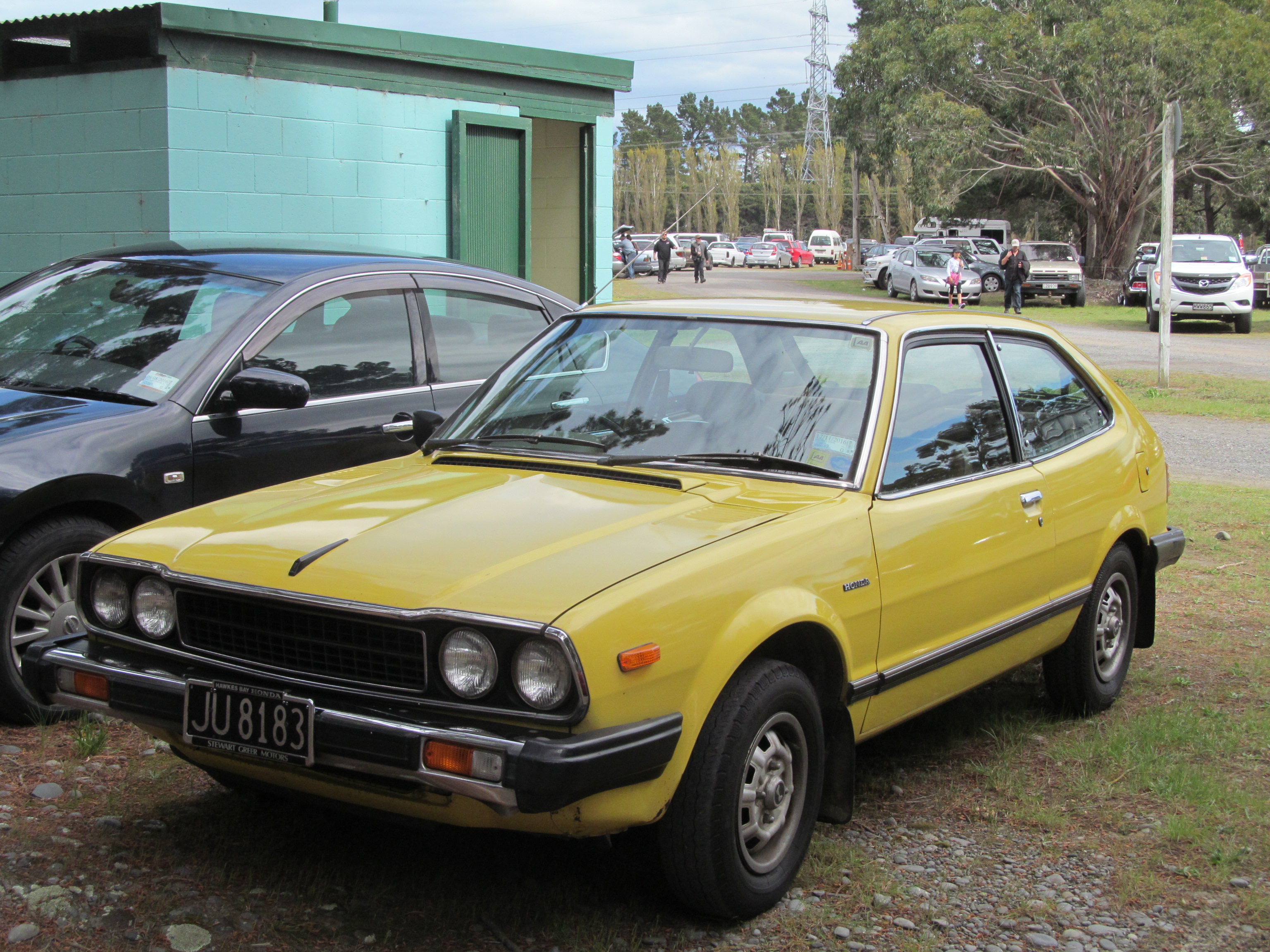
Honda Accord
"... 250s that I owned. It somehow reads across to an accord. It's weird. Yeah, that is true. But this car, th..."
The Honda Accord is a normal everyday family car. It’s known for being comfortable and practical, and it’s been around for a long time. The podcast mentions it because the speaker is comparing it to something else they’ve owned or noticed.
The Honda Accord is a mainstream midsize sedan (and in some markets, a close relative in the same family) that’s known for comfort, practicality, and long-term ownership appeal. It’s frequently discussed because it balances everyday usability with efficient, dependable powertrains. In the episode, it’s referenced through a comparison or connection to another car the speaker owned.
plug-in hybrid
"“There's a very cherished BYD expression for plug-in hybrid, isn't it? Yeah, I'll search it up now.”"
A plug-in hybrid is a hybrid car you can charge at home or at a charger. It can drive on electricity for a while, but it also has a gas engine for when the battery runs low.
A plug-in hybrid is a hybrid electric vehicle with a battery large enough to be charged externally. That typically allows more electric-only driving than a non-plug-in hybrid, while still retaining an engine for longer trips.
BYD
"“There's a very cherished BYD expression for plug-in hybrid, isn't it? Yeah, I'll search it up now.”"
BYD is a car company that makes a lot of electric and plug-in hybrid vehicles. Here, they’re mentioned because they use their own special name for plug-in hybrids.
BYD is a Chinese automaker known for electrified powertrains, including plug-in hybrids and battery-electric cars. In this segment, they’re mentioned for using a branded acronym for “plug-in hybrid.”
Mark Webber
"Partly it's the eyes. I think a lot of... Mark Webber told me this. Sorry, name drop, clang. [1973.6s] I said, how far... When he was... Well, it still is actually, I think, a Porsche ambassador"
Mark Webber is a famous Formula 1 race driver. Here, he’s talking about how racing gets harder as you get older, especially because your eyes don’t react as quickly.
Mark Webber is an Australian Formula 1 driver who later became a well-known motorsport ambassador. In this segment, he’s used as a source for how racing speed changes with age and eyesight.
Porsche
"I said, how far... When he was... Well, it still is actually, I think, a Porsche ambassador, [1978.3s] so he appears at events now and again."
Porsche is a sports-car company from Germany. The host mentions it because Mark Webber is connected to the brand as an ambassador.
Porsche is a German sports-car brand known for high-performance road cars and a major presence in motorsport. In this segment, it’s mentioned because Mark Webber is described as a “Porsche ambassador.”
Teddy Sheringham
"Well, any sports people would carry on playing for a long time. I saw Teddy Sheringham play for [2001.3s] Cultuously United. He was 42 or something like that. Fantastic."
Teddy Sheringham is a well-known footballer. The host brings him up to show that some athletes keep performing for a long time.
Teddy Sheringham is a former professional football (soccer) player. The host uses him as an example of a sports person continuing to play at a high level into their 40s.
Presby-myopic
"And he said, [2053.6s] it's the eyes, mate. It is the eyes that are the problem. And that's... You get to that middle-aged, [2060.8s] Presby-myopic thing where they just don't focus and refocus quickly enough."
This is a description of older-age eye problems. It means your eyes don’t switch focus as quickly, which can make fast driving or racing harder.
“Presby-myopic” refers to age-related vision problems where you become both presbyopic (reduced ability to focus on near objects) and myopic (needing correction for distance focus). The host links it to slower visual focusing and refocusing while driving or racing.
Sterling Moss
"But they're better than the alternative. I remember Sterling Moss, his version of events was that it [2077.8s] was the confidence. You knew what to do, but you didn't quite have the [2086.1s] gonads to do."
Stirling Moss was one of the greatest race drivers in history. The host is using his quote to say that sometimes the problem isn’t skill—it’s having the confidence to commit.
Stirling (Sterling) Moss was a legendary British Formula 1 and sports-car racer. Here, the host quotes Moss’s idea that confidence can be the limiting factor—knowing what to do but lacking the nerve to do it.

mini John Cooper works
"“Future classics going to be a mini John Cooper works, because it is, as I was reading earlier in the script, I think the only or about to become, if it isn't already, the only petrol hot, hot, hot hatchback still on sale.”"
MINI John Cooper Works is the sporty, performance version of the MINI. It’s the kind of small “hot hatch” that people buy for fun driving, and the hosts are talking about it as a car that could become collectible.
The MINI John Cooper Works (JCW) is MINI’s performance-focused model line, tuned for higher power and sharper driving feel than regular MINIs. In this episode, it’s discussed as a “future classic” and specifically as a petrol hot hatch that’s still available.
hot hatchback
"“...the only petrol hot, hot, hot hatchback still on sale. Interesting. Is that right?”"
A hot hatchback is a small car (a hatchback) that’s made to drive more aggressively—usually faster and more fun than the regular version. It’s the kind of car enthusiasts look for when they want something compact but sporty.
A hot hatchback is a compact hatchback that’s been tuned for stronger acceleration and more engaging handling than a typical family hatch. The “hot” part usually means a more powerful engine and sport-oriented setup, while “hatchback” refers to the rear door that opens upward with the cargo area.
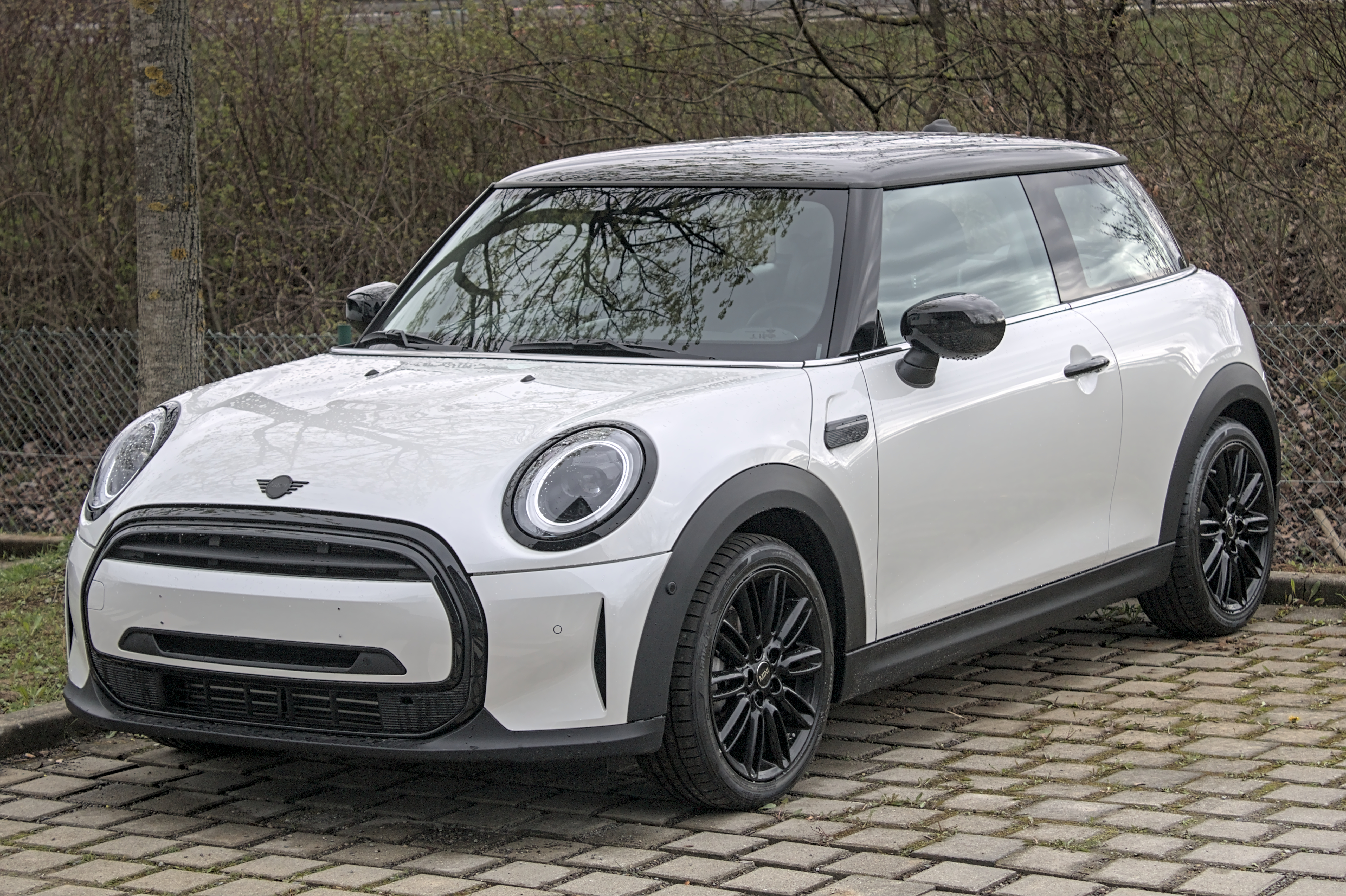
Cooper S
"“...We've replaced our Cooper S with another one, a Cooper. They are somehow distinctive.”"
MINI Cooper S is a sportier version of the regular MINI Cooper. In the episode, they’re saying they swapped from a Cooper S to a different Cooper, and they’re commenting on how the car feels and looks distinct.
The MINI Cooper S is a performance-oriented trim within the MINI Cooper lineup, historically positioned above the base Cooper. Here it’s mentioned in the context of the speaker replacing a Cooper S with another MINI Cooper, highlighting how the model’s character is evolving while staying recognizable.

a Cooper
"“...We've replaced our Cooper S with another one, a Cooper. They are somehow distinctive.”"
The MINI Cooper is the main MINI model. They’re saying they replaced their Cooper S with a Cooper, and that the newer one still has a recognizable, distinctive character.
The MINI Cooper is the core model line in MINI’s lineup, typically positioned below the Cooper S in performance. The host contrasts it with the Cooper S they replaced, suggesting the newer Cooper still feels “distinctive,” even if it’s not the top performance trim.
Charlie Cooper
"“...somebody who's telling me the other day that the Cooper, the bloke that is now the BMW's Cooper representative from the Cooper family...”"
Charlie Cooper is referenced as the current MINI Cooper representative from the Cooper family. The host ties him to the family’s racing heritage, connecting the Cooper name to the origins of the performance cars and motorsport history.

three series
"so that they'd launch a new three series. And then Alpina would go, yeah, here's our version of it,"
The “three series” is BMW’s 3 Series model line. They’re saying Alpina got to see BMW’s upcoming 3 Series engineering early, so they could build their own version quickly.
The “three series” here refers to the BMW 3 Series, BMW’s long-running compact executive car line. The segment is describing how Alpina had early access to BMW engineering prototypes before a new 3 Series launch, then produced its own Alpina version.

Mclaren F1
"And they went to endless trouble with the original McLaren F1. Yeah. And that was, you know, a magnificent BMW engine, but required a lot of effort and input from BMW"
The McLaren F1 is a famous supercar. Here they’re saying BMW helped with the engine, and it took a lot of BMW work to make it work properly for the small production run.
The McLaren F1 is a landmark supercar known for its extraordinary engineering and the involvement of BMW in its powerplant. In this segment, they highlight that the BMW engine in the F1 demanded significant effort and input from BMW for the limited number of cars built.
A-Series powered
"they've helped us make the jump between minis that were sort of dopey little A-Series powered cars"
The A-Series is the original engine used in many early Minis. If a Mini is “A-Series powered,” it means it has that older engine, which affects how it sounds and feels.
The A-Series is an engine family used in early classic Minis. When someone says “A-Series powered,” they mean the car is using that specific small-displacement inline-four design, which strongly shapes how the car sounds and drives.
gear whine
"with a sort of deafening gear whine and no performance to something entirely different."
“Gear whine” is a high-pitched sound you can hear from the gearbox. It usually happens when the gears are working, and some gear designs make it more noticeable than others.
“Gear whine” is the high-pitched noise that can come from a gearbox or differential under load. It’s often associated with the way gears are cut and how they mesh, and it can be more noticeable in certain transmission designs.
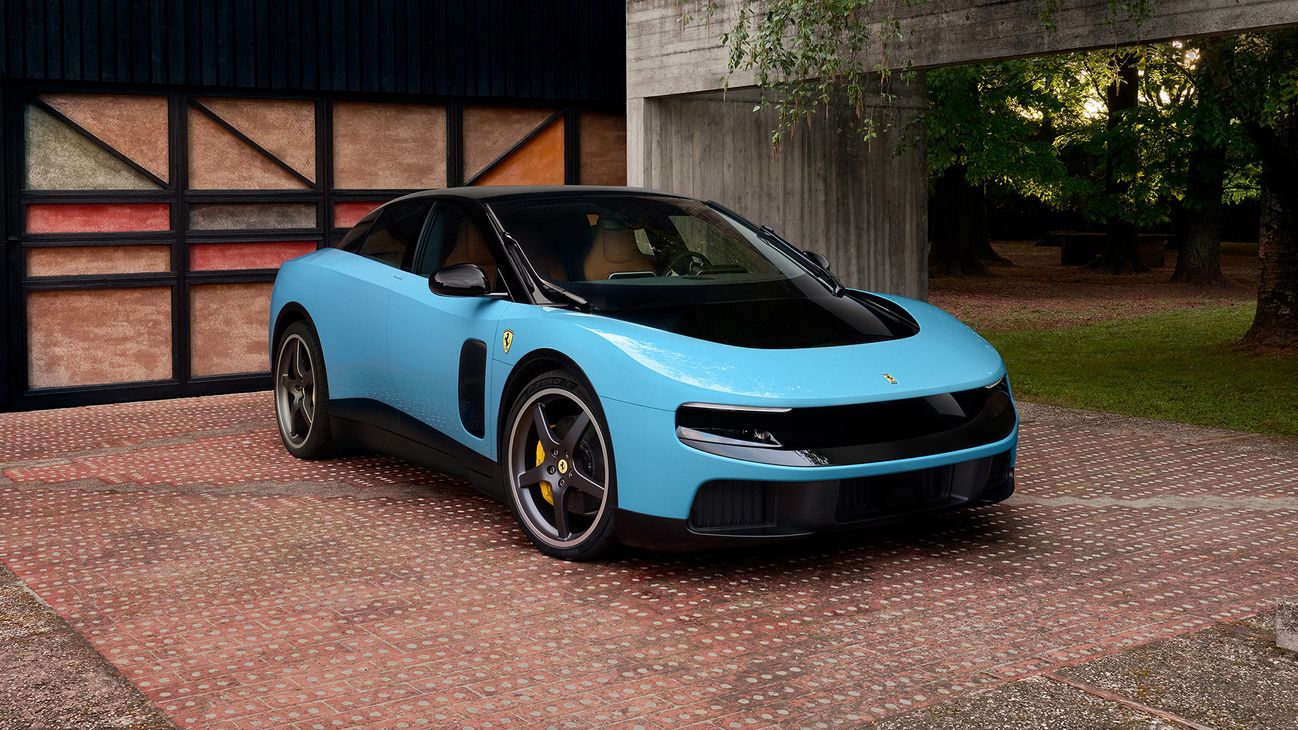
Ferrari Luce
"...years, the new Jag, Ferrari, and also the Ferrari Luce Outrage, there wasn't really around 99-2000, alth..."
The Ferrari Luce is a Ferrari model name being mentioned in the podcast. The speaker is talking about what cars were available around a certain time period. The discussion is more about timing and lineup than about driving details.
The Ferrari Luce is referenced as a model name in the context of a discussion about what was around in the late 1990s to early 2000s. In this episode, it’s mentioned alongside other brands and model timing, suggesting the conversation is about lineup history or what existed during that period. The key point here is that “Luce” is being used as a reference in a timeline discussion.

BMW Mini
"I was one of those people that said, you know, that the BMW Mini was far too big and, [2447.6s] you know, he said, Goanus wouldn't have approved and all the rest of it."
This is the Mini you know today, made by BMW. The discussion here is about how the newer Minis got bigger, and whether that was a good or bad change.
The BMW Mini refers to the modern Mini brand that BMW developed after taking over the Mini name. In this segment, the host is talking about how the Mini grew in size over time and whether that change was acceptable to enthusiasts.

JCW
"if somebody's going to buy a car from 2025 in 2050, come back to this podcast in 25 years time [2478.7s] and tell us if we're wrong, that people will go, yep, I would have a JCW as a classic. [2484.3s] I had an electric JCW here a few weeks ago."
JCW is Mini’s performance badge—think of it as the “hot-rodded” Mini. It usually means the car is tuned to feel quicker and more aggressive, and here they even mention an electric version.
JCW stands for John Cooper Works, Mini’s performance sub-brand focused on higher-output engines, sportier suspension, and more track-oriented tuning. The host also mentions an electric JCW, highlighting how the performance badge is being applied even as powertrains change.
Shells LeWalt
"I had an electric JCW here a few weeks ago. Oh, in fact, I ran it up the hill climb at [2484.3s] Shells LeWalt."
This sounds like a hill-climb event they took the car to. A hill climb is basically a timed run up a steep course, so it shows how well the car accelerates and handles under load.
“Shells LeWalt” appears to be a hill-climb venue where the host ran the electric JCW. Hill climbs are timed events where cars drive up a steep course, often revealing traction, braking stability, and power delivery.
five star road test
"Let's talk, well, on the subject of cars that are getting better, [2521.2s] more relevant, whatever the five star road test cars, we give out a little gong at the award [2528.5s] ceremony every year for a car that scored five stars in the road test in the past 12 months."
A “five star road test” means the car scored the top rating after being driven and judged on how it behaves on the road. The podcast is describing an award they give to cars that earned that top score recently.
A “five star road test” refers to a magazine-style evaluation where a car is scored highly after being driven and assessed in real-world conditions. In this segment, the hosts say their awards give a gong to cars that achieved five stars in the past 12 months.
road test places on a car
"Sometimes there aren't any because that's how, what's the word I'm looking for? [2539.4s] Pretty unattainable. Yeah, that's how much scrutiny the road test places on a car. This"
They’re saying the road test is really strict—cars have to prove themselves in more than just one situation. That’s why it can be hard for cars to earn the very top rating.
The phrase is describing how demanding the road test process is, implying that cars face heavy scrutiny before earning top ratings. That level of testing is meant to filter out cars that only feel good in limited conditions.
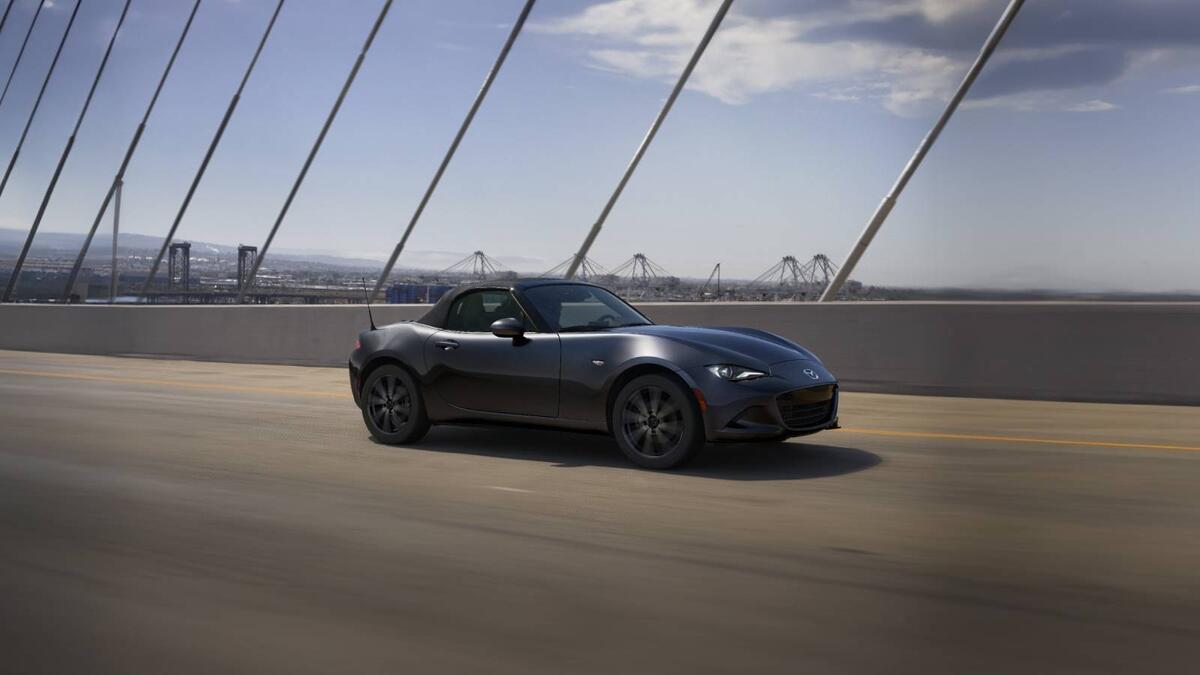
Mazda Mx5
"year there is one, some Mazda MX-5. Isn't that amazing? ... What a good car that is. It's, and I find it amazing that it's, it was a, am I right? It was a five star car, then it sort of faded a bit."
The Mazda MX-5 is a small, lightweight two-seat roadster that’s meant to be fun to drive. Here they’re talking about how it’s been a highly rated “affordable sports car,” and how newer versions are bringing it back into the spotlight.
The Mazda MX-5 is a lightweight, affordable roadster built around giving drivers a fun, connected feel rather than outright power. In this segment, they discuss how the MX-5’s rating and appeal have shifted over the years, and how newer versions (including a 2.0-liter variant) are being positioned as a top “small affordable sports car.”
diff
"they've improved the suspension, you know, messed around with the diff to Stormy's, but Matt is always big on the, on the influence of this new diff they've got, which, you know, allows you to do anything you like with it."
“Diff” is short for the differential, which sends power to the wheels. If the differential is changed, the car can grip better and feel different when you’re driving hard.
“Diff” is short for differential, the part that splits engine torque between the driven wheels. Changes to the differential can strongly affect traction and how the car behaves when you accelerate out of corners.
track days
"Down the excellent two litre Hurmura. If I was planning to do track days I'd have probably gone for the two litre, but my days of track days is over."
Track days are organized events where you drive your car on a race track. It’s harder on the car than normal driving, so people often choose a more performance-focused model if they plan to go.
Track days are events where drivers take their own cars onto a closed circuit for timed laps and performance practice. They’re different from normal road driving because sustained high speeds and repeated hard braking/turning stress tires, brakes, and cooling more.
Castle Coon
"Honestly, I think a one and a half Mazda MX5 would be great around Castle Coon, which is where I've been recently."
Castle Coon is the track the host has been driving on. They’re using it to explain what kind of corners and driving style make certain cars feel especially good.
Castle Coon is the circuit/location the host references for recent driving. The discussion uses it as a real-world example of a track with faster corners where driving technique and momentum can matter more than drivetrain complexity.
throttle
"Yeah, because there are places with slightly faster corners and things where you don't necessarily need a differential to get extra traction and play any games with a throttle."
Throttle is basically how much you press the gas pedal. More throttle usually means more engine pull, and drivers can use it to help the car grip and turn the way they want.
Throttle refers to how much you open the engine’s air/fuel control (via the accelerator pedal), which directly changes engine torque delivery. The host mentions “games with a throttle,” meaning using throttle changes to influence traction and how the car rotates through corners.
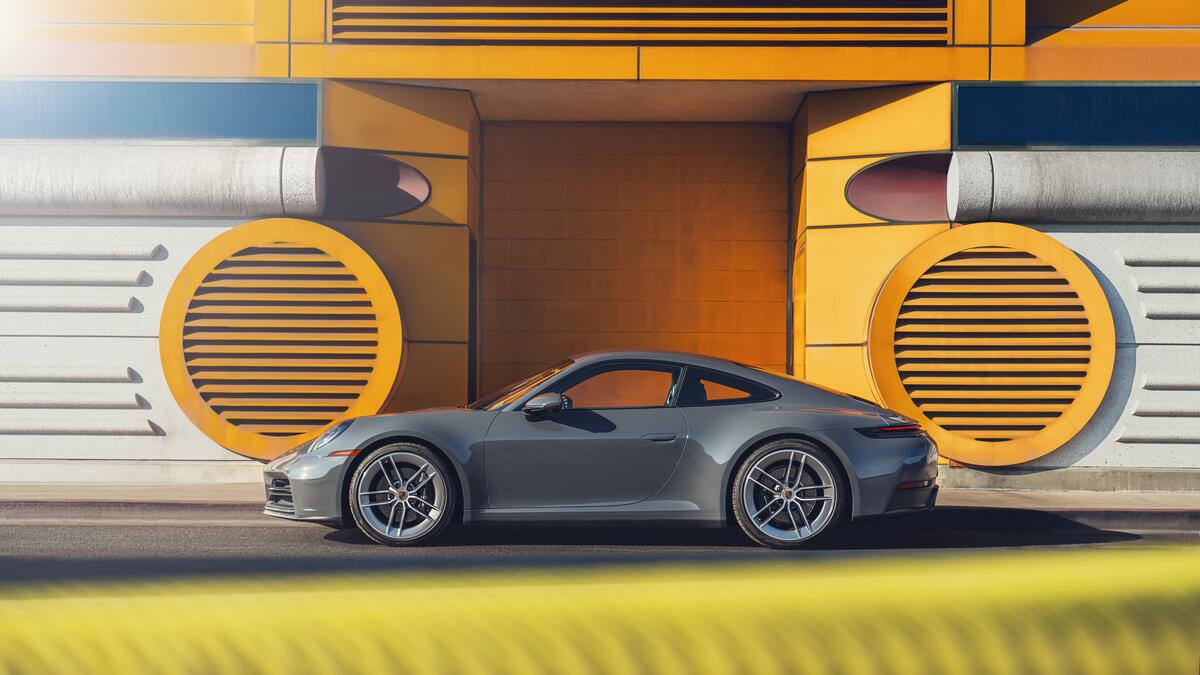
Porsche 911 GT3 Touring
"winner of that Porsche 911 GT3 Touring. Because I mean, just drive. What else is there? Yeah, you just, it's one of those, everybody gets in, drives it, gets out and goes, well, okay, yep, okay, that's."
This is a special version of the Porsche 911 made for drivers who want track performance but still want it to be comfortable enough to use normally. The host is basically saying it’s easy to enjoy right away—people get in, drive it, and instantly “get it.”
The Porsche 911 GT3 Touring is a track-focused 911 variant that’s tuned for real-world drivability rather than being a pure race car. It’s known for pairing a high-revving GT3-style setup with a more usable, “get in and go” feel—so it works for everything from road trips to occasional track days.
particulate filter
"And actually, I think they had to put an extra, maybe a petrol particulate filter or something on it. So it reduced the power, the power, I think just about stayed the same."
A particulate filter is an emissions device that traps tiny soot particles from the exhaust. The host is saying adding one can add weight and slightly change how the car performs.
A particulate filter (often called a diesel particulate filter in diesel cars) traps soot and other fine particles from exhaust gases to reduce emissions. The host suggests the GT3 Touring’s updates required adding a particulate filter, which increased weight and affected power slightly.
crash bars
"But they had to put some extra crash bars in the doors and a bit of extra trim in which was took the weight up."
Crash bars are stronger metal reinforcements meant to protect the car and occupants in a crash. The host is saying they added more of this kind of protection, which made the car heavier.
Crash bars are structural reinforcement members designed to improve occupant and vehicle protection in impacts. The host claims extra crash bars were added to the doors, contributing to added weight and changes in gearing to keep straight-line speed similar.
gearing
"So they dropped the gearing ever so slightly, to make sure it was still as fast as it was in a straight line."
Gearing is how the car’s transmission is set up to turn the engine’s power into wheel speed. Changing it can help the car stay quick even if it gets heavier.
Gearing refers to the transmission’s gear ratios (and how the drivetrain is set up to multiply engine speed/torque). The host says the car’s gearing was dropped slightly to compensate for added weight so it would remain fast in a straight line.
turbo
"let's give it, I mean, they are with the turbo, but not with the GT3. No. And it's,"
A “turbo” is a device that uses the car’s exhaust to spin a small turbine. It pushes extra air into the engine so it can make more power.
A turbocharger (often shortened to “turbo”) uses exhaust gas to spin a turbine, which forces more air into the engine. That extra airflow lets the engine make more power without needing a larger displacement.
Bulgaria
"And it was, I've never been to Bulgaria. It's, it's so pretty. Really?"
Bulgaria is a country in Europe. The speaker is talking about visiting there and how it’s a nice place to drive around on quieter roads.
Bulgaria is a country in southeastern Europe, mentioned here as the speaker’s first trip. The context ties it to driving on quieter roads (“green lanes”), which is relevant to how and where vehicles get used.

Toyota Hilux
"And that was part of the, one of the reasons that Toyota launched the Hilux there, because [3000.9s] they had a route like, well, this route is 60 kilometers, whatever it is, half of it is on [3006.8s] byways."
The Toyota Hilux is a tough pickup truck meant for hard work. Here, they’re talking about a newer version that’s been updated for strength and durability, while still keeping the basic truck layout.
The Toyota Hilux is a rugged pickup truck built for tough, off-road-capable work. In this segment, the host discusses Toyota launching the Hilux for a specific market and highlights how the latest version is still based on a revised ladder-frame structure with updated body and frame reinforcement.
diesel 48 volt hybrid
"Yeah, it's effectively carry over diesel 48 volt hybrid from the previous gen car. [3051.0s] And that's now the only one they offer in the UK. Whereas you could previously get a non hybrid [3056.6s] and a hybrid."
A 48-volt hybrid is a mild-hybrid system that helps the diesel engine with extra electric power. It’s meant to use less fuel and feel smoother, without being a full plug-in electric car.
A “48 volt hybrid” system uses a 48V electrical system to assist the diesel engine, typically improving efficiency and drivability. In this segment, the host says the Hilux’s diesel hybrid setup is carried over from the previous generation and becomes the only diesel option offered in the UK.
battery electric version
"And there is a full battery electric version, [3064.0s] which is it's got quite a short range because it's only 60 kilowatt battery because the battery [3069.5s] has to fit in the chassis rails"
A battery electric version means the truck is powered by electricity from a battery pack. The host is saying this one doesn’t go as far on a charge because of how the battery has to fit inside the truck’s frame.
A battery electric vehicle (BEV) runs on electric motors powered by a large battery pack instead of a diesel engine. Here, the host notes the Hilux BEV has a short range and explains the battery packaging constraint—its battery must fit inside the chassis rails.
60 kilowatt battery
"which is it's got quite a short range because it's only 60 kilowatt battery because the battery [3069.5s] has to fit in the chassis rails because otherwise they don't trust, they don't, [3073.5s] they don't want to leave a battery exposed in a car like that."
The battery size affects how far a fully electric vehicle can drive. The host is saying this Hilux’s battery is relatively small, which is why the range is limited.
Battery capacity is often described in kilowatt-hours (kWh), which roughly correlates with how much energy the pack can store. The host says the Hilux BEV uses a “60 kilowatt” battery, and ties that limited capacity to the truck’s short range.
Dedeon rear axle
"I think it's only the third car on sale [3086.1s] to have a Dedeon rear axle. Because instead of the live axle with leaf springs, which would be [3094.5s] a lot of unsprung mass, the motor is now attached to the motor and gearbox for the back"
A De Dion rear axle is a special way of connecting the rear wheels. The goal is to reduce the weight that moves with the wheels, which can help ride quality and traction.
A De Dion rear axle is a rear-axle design where the wheels are kept at a fixed relationship while the differential can be mounted to the body rather than being part of the unsprung mass. The host contrasts it with a live axle plus leaf springs, arguing it reduces unsprung mass and changes how the electric drivetrain is packaged.
live axle with leaf springs
"Because instead of the live axle with leaf springs, which would be [3094.5s] a lot of unsprung mass, the motor is now attached to the motor and gearbox for the back"
A live axle is a traditional rear suspension setup where the axle assembly moves with the wheels. Leaf springs are the older-style springing method; together they can make the ride harsher because more weight moves up and down.
A live axle is an axle where the differential is part of the moving assembly, and leaf springs are a traditional suspension method often used on pickups for durability. The host says this setup would create more unsprung mass, which can hurt ride comfort compared with designs that reduce what the suspension has to move.
unsprung mass
"Because instead of the live axle with leaf springs, which would be [3094.5s] a lot of unsprung mass, the motor is now attached to the motor and gearbox for the back is attached [3102.1s] to the chassis frame rather than hanging off the suspension"
Unsprung mass is the part of the car that bounces with the wheels instead of being cushioned by the suspension. Less unsprung weight usually helps the ride feel smoother over bumps.
Unsprung mass is the weight not supported by the suspension—things like parts of the axle and wheels that move directly with road bumps. The host uses it to explain why switching from a live axle/leaf-spring approach to a De Dion-style setup can improve ride quality.
semi independent rear end
"And then [3109.0s] so it's got a semi independent rear end, which actually improves the ride as well. [3113.0s] But the problem is it's a much heavier car."
A semi-independent rear end is a compromise suspension design. It helps the truck ride better than a fully rigid axle, but it’s not as independent as some cars with fully separate rear suspension.
A semi-independent rear suspension means the two rear wheels aren’t fully independent, but they also aren’t rigidly locked together like on a solid live axle. The host says this setup “actually improves the ride,” while also noting trade-offs like increased weight and reduced payload/towing.

Toyota Land Cruiser
"...h. Yeah. I think that's what I'd buy. That were a land cruiser. And I think I'll take one of those 40 years, you..."
The Toyota Land Cruiser is a tough SUV meant for rough roads and off-road driving. People like it because it’s designed to last and handle difficult conditions. The podcast mentions it because the speaker thinks it would be a good buy.
The Toyota Land Cruiser is a rugged, body-on-frame SUV designed for durability and off-road capability. It’s often discussed because it’s built for long service life and can handle difficult conditions. Here, it’s brought up as a potential purchase the speaker is considering.

Porsche 356
"Oh, yes. Yeah. Well, a bit of a bombshell that the, there were rather depressing news a few weeks ago that the owners of Westfield and Chesil, Chesil being the business that makes Porsche 356 replicas coin, you know, puts them on, we used to put them on Beetle chassis and Westfield, they"
The Porsche 356 is a famous old Porsche sports car from the early days of the brand. The host is saying Chesil makes replica versions of it, using parts from a Volkswagen Beetle chassis.
The Porsche 356 is the early, classic Porsche sports car that became the foundation for the brand’s reputation. In the segment, it’s mentioned as the basis for replica cars made by Chesil, which produces replicas using Beetle chassis components.

Beetle chassis
"Chesil being the business that makes Porsche 356 replicas coin, you know, puts them on, we used to put them on Beetle chassis and Westfield, they"
A Beetle chassis means the basic frame/underpinnings from a Volkswagen Beetle. The host is saying some replica cars were built using that Beetle foundation.
A “Beetle chassis” refers to using the Volkswagen Beetle’s platform as the foundation for building other cars, including some replica sports cars. The host mentions this because Chesil historically put Porsche 356 replicas onto Beetle chassis components.
voluntary liquidation
"had to liquidate the company or put the car into the company into voluntary liquidation."
Voluntary liquidation means the company is closing down on purpose, with a formal legal process. The host is using it to describe why Westfield and Chesil had to stop operating.
Voluntary liquidation is a formal process where a company’s owners choose to wind the business down because it can’t continue operating. In this segment, it’s used to explain why Westfield and Chesil “struck hard times” and had to stop trading.

Westfield SE
"His plan is to keep manufacturing the cars pretty much as made. So the Westfield SE that we all know and love. But he's got some plans to make improved versions because he feels that the saving of Westfield is to keep it close to the competition track he'll climb."
The Westfield SE is a small, lightweight sports car that people often build and use for track days. The host is saying the company wants to keep it feeling like the original, but with some upgrades.
The Westfield SE is a lightweight, track-focused kit car (often built from a donor car) that’s strongly associated with grassroots motorsport and track-day culture. Here, the host says the new owner plans to keep manufacturing it close to how it’s known, while making improved versions.
sprints
"saving of Westfield is to keep it close to the competition track he'll climb. Sprints, you know,"
Sprints are short races on a track. The host is saying the Westfield will be kept competitive for that kind of racing.
In motorsport, sprints are short-format races—typically fewer laps and less time than endurance events—often used for club racing and development. The host mentions “Sprints” as part of the competition environment the Westfield will be kept close to.
circuit meppen
"And that led to having a circuit called circuit meppen, which is this place called meppen just inside the inside it just lower Saxony, they call it just inside the Dutch border. ...And he's the plan is to have a big jamboree on this circuit meppen in August."
Circuit Meppen is a driving track in Germany. It’s the kind of place where people can go and drive cars on a proper course. Here, it’s where the event is planned for August.
Circuit Meppen is a motorsport venue in Meppen, Germany, near the Dutch border. It’s known for hosting track-day style events and for being used as a real-world driving destination rather than just a race circuit. In this segment, it’s the location tied to the track-day company and the planned August event.
Westfields
"And you can go over there and drive around. He has these arrive and drive Westfields and thoroughly good news."
Westfield makes small, lightweight sports cars that many people build or buy as kits. They’re popular with enthusiasts and often show up at track days. Here, they’re talking about the kind of cars they’re arranging for people to drive.
Westfield is a kit-car brand best known for lightweight, open-top sports cars that are often driven on track days. In this segment, the speaker says the track-day company has people driving Westfields, implying a focus on accessible, enthusiast-oriented cars. The mention is about what cars are used for events and spares logistics.
EU price hikes
"The plan, I think, is to make loads of spares and try and make sure they get sent over here so that there isn't ridiculous EU price hikes and so on."
They’re talking about parts getting more expensive because of rules and costs tied to Europe. The idea is that if you can get spares shipped in efficiently, you can avoid those big price jumps. It’s a cost-and-availability concern for enthusiasts.
“EU price hikes” here refers to higher costs caused by European Union-related pricing and import/tariff or regulatory effects. The speaker’s concern is that parts shipped into the UK (or across borders) could become much more expensive. It’s mentioned as a reason to stock spares and ship them over to avoid inflated costs.
low volume individual vehicle approval
"Yeah, because also there are some local laws differ, don't they, depending on what you're allowed to do to cars and how easy or difficult it is to register low volume individual vehicle approval, whatever vehicles in the UK is fairly straightforward, isn't it?"
This is a special approval process for registering unusual cars or modified cars when they’re made in small numbers. Instead of using the normal “this model is approved” paperwork, you get approval for that specific vehicle. The point here is that it can be easier in the UK than in Germany.
Low Volume Individual Vehicle Approval (often shortened to IVA in the UK context) is a process for registering a small number of vehicles that don’t fit standard mass-production type approval. It’s relevant when you’re dealing with niche cars or modifications that would otherwise be difficult to certify. The speaker contrasts how straightforward it is in the UK versus more problematic in Germany.
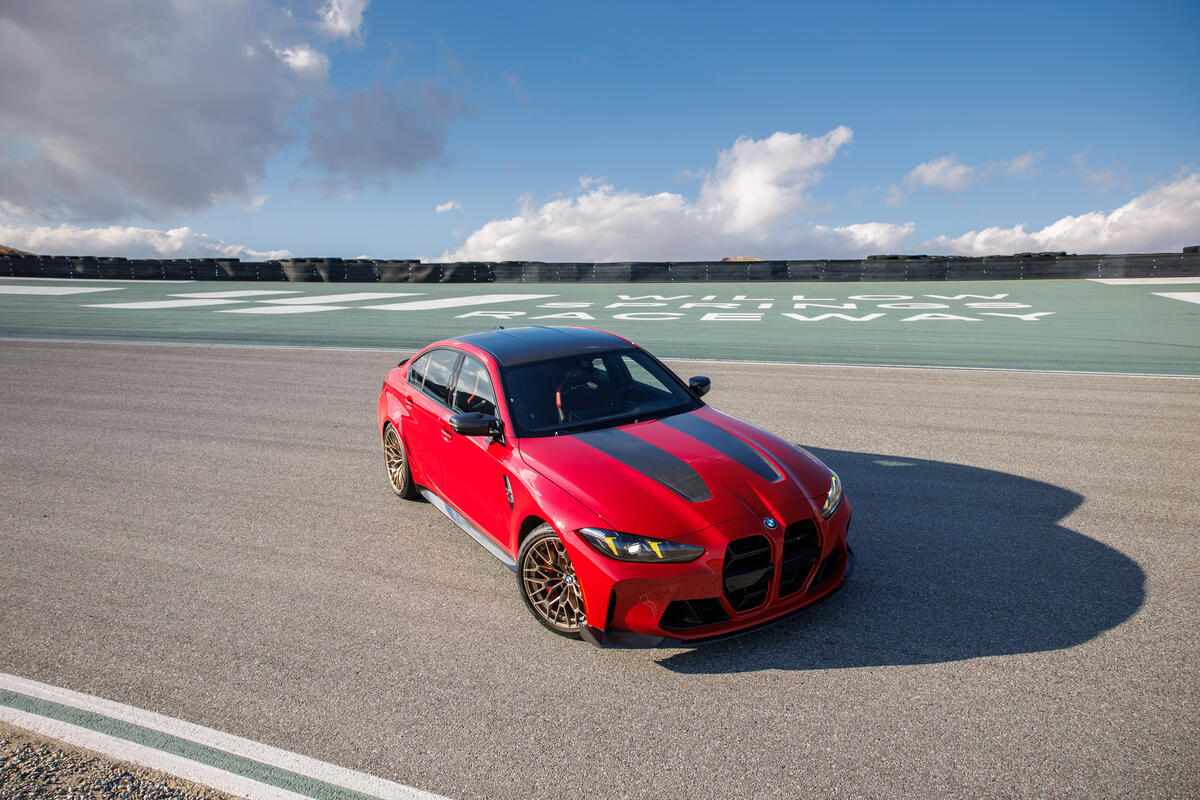
E30 BMW M3
"And then it's got various different tracks, including M3 videos have there. That's an M3. How good does that sound? Nice. Anyway, that's that's an E30 BMW M3 going around meppen."
The BMW E30 M3 is a classic BMW from the 1980s that’s famous for being fun to drive and having a strong racing background. People still talk about it because it feels sharp and engaging. Here, they’re showing one driving around the track.
The BMW E30 M3 is a legendary 1980s performance car known for its lightweight, high-revving character and motorsport heritage. It’s especially famous as a homologation-era BMW that helped define the modern “driver’s car” feel. In this segment, it’s specifically referenced as going around Circuit Meppen.

Hyundai i20N prototype
"In fact, even to the, there was a drive of the Hyundai i20N prototype that the Nurburgring, whatever that would have been five years ago,"
The Hyundai i20N is Hyundai’s performance version of the i20. A prototype is an early, test version used to develop and improve the car before it’s sold.
The Hyundai i20N is Hyundai’s performance “N” model line, and the speaker specifically mentions an i20N prototype. Prototypes are pre-production cars used to test development work—here, the host references a Nürburgring drive as part of that testing history.
faffery
"And there wasn't the faffery at the other end for you. No. And I think I went and I think I went in an Alpina D3 as well."
“Faffery” just means extra hassle and messing around. The host is saying driving was simpler than the group travel plan.
“Faffery” is informal for unnecessary hassle or fuss. Here it’s used to contrast driving yourself versus having to coordinate buses and flights for the trip.

Alpina D3
"And I think I went and I think I went in an Alpina D3 as well. So, which is the ideal wagon for making that sort of journey."
The Alpina D3 is a BMW-based car tuned by Alpina. It’s described here as a great “wagon” choice for long trips because it’s set up to be easy and enjoyable to drive over distance.
The Alpina D3 is a performance-oriented diesel sedan/wagon from Alpina, a German tuner known for making factory-like “premium” versions of BMWs. The host calls it the ideal wagon for a long journey, emphasizing its suitability for comfortable, efficient highway driving.

Dodge Journey
"... which is the ideal wagon for making that sort of journey. Very much the ideal wagon. Yeah. Which brings us..."
The Dodge Journey is a family-sized SUV/crossover. It’s meant to be practical for trips because it has space for passengers and luggage. The podcast mentions it as a good choice for traveling.
The Dodge Journey is a midsize crossover/SUV built for family use, with a focus on practicality and space. It’s mentioned in the context of choosing an “ideal wagon” for a journey, which highlights its role as a long-distance, people-and-stuff carrier. The episode uses it as part of a broader discussion about what makes a good travel car.
Request an Explanation
Heard something you'd like explained? We'll add it to this episode.
Sign in to request explanations for terms you heard.
Want to learn more?
Browse our glossary for plain-English explanations of automotive terms, jargon, and concepts.
Help improve this episode
See something that's not quite right? Our annotations are AI-generated and can sometimes miss the mark. Click the flag icon on any annotation to suggest a correction.