About this episode
A tense night in Wally Bottoms Texas turns into a crash-and-capture spree when Tony steals a glossy 1977 Pontiac Grand Prix, outruns a trooper, and ends up in jail. The aftermath shifts to Carl Jr., now a jailer, and the long-buried guilt between old friends. Meanwhile Tiffany spirals after overhearing her father’s threats, runs to Danny and Carl Sr., and Danny records Tom to force the truth. The episode closes with a hidden tape, a guitar handoff, and Tony’s family trying to move forward as the town’s violence echoes back.
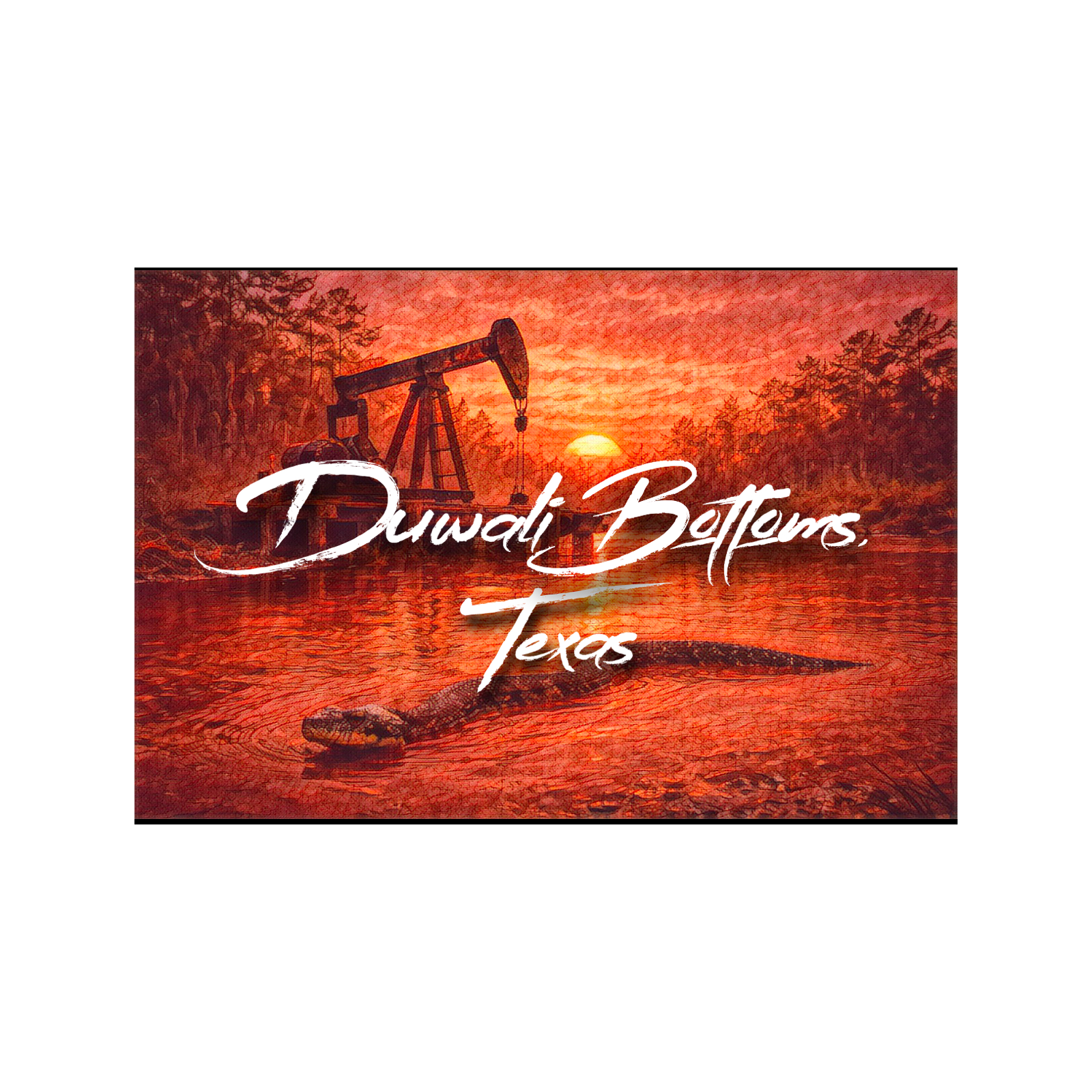
With the Reckon Yard Podcast on hiatus for a couple of weeks, Duwali Bottoms must go on,
1977. A stolen Pontiac. A state trooper on Sexton Road. A jail cell in Rusk County where two former best friends finally tell each other the truth. 1987. A phone call Tiffany wasn’t supposed to hear. A confession Danny was never supposed to get.
steering wheel
"Tony gripped the wood-green steering wheel tightly as the 455 idled."
The steering wheel is what you turn to control where the car goes. Gripping it tightly usually means the driver is tense or trying to stay in control. Here it shows the character is scared.
The steering wheel is the driver’s primary control input for directing the car. In performance or high-stress moments, gripping it tightly is often a sign of nervousness, traction concerns, or aggressive maneuvering. The transcript uses it to emphasize the character’s fear and tension while the car idles.
exhaust
"A low rumble from the exhaust echoed deeply off of the cinderblock wall of Walden's liquor store."
The exhaust system routes engine gases out of the vehicle, and its sound can be a big part of how a car “feels.” A “low rumble” often suggests a larger-displacement engine and/or an aftermarket or freer-flowing exhaust. The transcript uses the exhaust note to set the car’s presence and character.

1977 Pontiac Grand Prix
"A 1977 Pontiac Grand Prix, just waiting for him, keys inside, brand new, right off the Bill Wilson lot, dripping in gloss black with a hood as long as the Bible."
This is a 1977 Pontiac Grand Prix—an older American car from the late 1970s. Those cars were usually big, loud, and had a strong V8 sound. The story uses it as the flashy vehicle that draws attention.
The Pontiac Grand Prix is a full-size personal-luxury coupe/sedan from Pontiac’s lineup. The 1977 model is part of the late-1970s “land yacht” era, known for big dimensions, long hoods, and a V8-heavy culture. In the scene, it’s portrayed as a glossy, attention-grabbing car that stands out in a small-town setting.
donuts
"They bawled half a tire doing donuts in the lot before the pills ran out or the bad ideas."
“Donuts” means spinning the car in circles so the tires slide and smoke. It’s a stunt that’s hard on the tires and can be dangerous. Here, it’s describing reckless driving.
“Donuts” are a driving stunt where the car spins in place, typically by breaking traction at the rear tires. It’s usually done in a parking lot or open area and can quickly overheat tires and stress drivetrain components. In the transcript, it’s used to describe reckless behavior and the chaos of the moment.
mashing the pedal to the ground
"He slipped a big Pontiac into drive before mashing the pedal to the ground, swinging around the front of the liquor store, scattering gravel in every direction."
It means he pressed the gas pedal all the way down. That’s the most aggressive way to accelerate and usually makes the car surge forward quickly.
“Mashing the pedal to the ground” is slang for full-throttle acceleration. In older cars, this often means the engine is revved hard and the drivetrain is asked for maximum torque immediately.
speedometer passed 90
"When he topped Laird Hill, the speedometer passed 90, but he didn't let off, even when the front end got a little light and shaky on the downside."
Passing 90 on the speedometer indicates sustained high speed during the chase. It also helps explain why the car becomes unstable—high speed reduces the margin for error, especially on hills and uneven roads.
red and blues
"He was still laughing when the State Trooper camped out at Sexton Road, flipped his red and blues on, the Plymouth Fury squad car throwing a cloud of red dust up as the big block Mopar roared to life."
“Red and blues” refers to the flashing red and blue emergency lights on police vehicles. In a chase narrative, it marks the moment the pursuit is officially underway.

Plymouth Fury
"the State Trooper camped out at Sexton Road, flipped his red and blues on, the Plymouth Fury squad car throwing a cloud of red dust up as the big block Mopar roared to life."
A Plymouth Fury is a big American car. In the story it’s being used by police, so it’s treated like a fast, capable cruiser.
The “Plymouth Fury” is a full-size American car commonly associated with the late-1960s/early-1970s muscle-car era. Here it’s described as a police “squad car,” emphasizing its role as a powerful pursuit vehicle.
Mopar
"the Plymouth Fury squad car throwing a cloud of red dust up as the big block Mopar roared to life."
“Mopar” is a slang term for Chrysler-brand cars and their performance parts. Saying “big block Mopar” means it’s a big, powerful V8.
“Mopar” is a nickname for Chrysler’s performance and parts ecosystem, covering brands like Plymouth and Dodge. In muscle-car culture, “big block Mopar” usually implies a large-displacement V8 built for strong acceleration.
held his foot to the floor
"Shit, shit, shit, he muttered as he held his foot to the floor, trying to wheel the car to go faster."
He’s pressing the gas pedal all the way down. He’s trying to make the car go as fast as possible.
“Foot to the floor” means the accelerator is fully depressed. The phrase implies the driver is demanding maximum power, likely to keep up with the pursuing car.
wheel the car
"Shit, shit, shit, he muttered as he held his foot to the floor, trying to wheel the car to go faster."
“Wheel the car” here reads like “steer aggressively” or “maneuver hard” to gain speed or control during the chase. It suggests the driver is using steering inputs to manage traction and stability.
440s
"The red and blues were closing distance way too fast the way them 440s would and he was out of pedal."
“440s” likely refers to engines in the 440 cubic-inch displacement class (commonly associated with Mopar big-block V8s). In context, it’s used to describe the pursuing car’s strong acceleration and ability to close distance.

Volvo 440
"...s were closing distance way too fast the way them 440s would and he was out of pedal."
The Volvo 440 is a compact car made by Volvo for everyday use. It’s not usually known as a supercar, but in this podcast it’s mentioned because it seemed to move quickly in the driving situation. What it can do depends on the specific engine and year, but it’s generally a practical, smaller car.
The Volvo 440 is a compact car from Volvo’s lineup, typically associated with practical everyday driving rather than outright performance. It’s being mentioned in the podcast in a way that points to how quickly it could close distance or respond during driving. That makes it notable as an example of a smaller, more straightforward car being used aggressively or effectively in the moment.

Porsche 918 Spyder
"... His Torino might have made the hard left on the 918 he tried at Sexton City, but the long Pontiac sl..."
The Porsche 918 Spyder is a very expensive, very fast sports car made by Porsche. It uses both a gas engine and an electric motor, so it can accelerate quickly. People talk about it because it’s designed for high performance and advanced technology.
The Porsche 918 Spyder is a high-performance plug-in hybrid supercar known for combining an electric motor with a gasoline engine to deliver very strong acceleration and top-end performance. It’s the kind of car that often comes up in discussions about speed, handling, and advanced powertrain technology. In a podcast context, it’s likely mentioned as a benchmark for how quickly a car can move and how it behaves under hard driving.
Pontiac Torino
"out of pedal. His Torino might have made the hard left on the 918 he tried..."
Pontiac is a car brand that made lots of different types of vehicles. In this podcast, it’s likely being mentioned because a Pontiac was involved in the driving story. The exact performance and features depend on the specific Pontiac model and year.
Pontiac refers to a brand of cars that was known for producing a wide range of vehicles, including performance-oriented models. In the podcast context, it’s mentioned alongside other cars in a way that suggests the speaker is talking about how a Pontiac performed in a driving situation. Because “Pontiac” covers many different models and years, the specific significance depends on which exact car is being referenced.
spinning out
"long Pontiac slid right off the highway before spinning out into a stand of red bud trees."
“Spinning out” means the car lost grip and started sliding/rotating instead of driving straight. It usually happens when the tires can’t keep traction.
“Spinning out” describes a loss of traction where the car rotates uncontrollably, often after leaving the roadway or hitting a slippery surface. In crash discussions, it’s a key indicator of traction loss and vehicle instability.
passenger door
"The sudden impact throwing his body into the passenger door hard enough to knock all the wind out of him."
The passenger door is part of the vehicle’s side structure and is a common impact point in side collisions. Door intrusion and occupant contact with the door area are major factors in injury severity.
buckling in
"He had just enough time to regret not buckling in before he was gasping."
“Buckling in” means putting on your seat belt. In a crash, it helps keep you from being thrown around inside the car.
“Buckling in” refers to fastening a seat belt. Seat belts are one of the most important safety systems in a crash, reducing the chance of serious injury by keeping occupants restrained.
wrecked car
"He was just about to get up and run when the officer came around the back of the wrecked car, gun-drawn, the blue steel of the revolver clear in the moonlight with red and blue flashes"
A “wrecked car” indicates the vehicle sustained enough damage that it’s no longer drivable in the normal sense. In crash narratives, this often corresponds to significant impact forces and potential occupant compartment intrusion.
cuffed
"as he sat cuffed, head down, gazing at the concrete floor."
“Cuffed” means handcuffed. It’s describing what happened after the crash, when police took control of the situation.
While “cuffed” isn’t a vehicle term, it’s tied to the crash aftermath and how the scene is handled by law enforcement. For listeners, it helps frame that this is an active incident response rather than a purely mechanical discussion.
tire center waiting room
"He had been walking through Walmart when he saw her sitting in the tire center waiting room with the baby while they changed her tires."
A tire center is where they change and install tires. The waiting room is just where you sit while they work on your car.
A “tire center” is typically a retail/service area where tires are sold and installed. The “waiting room” implies the vehicle was being serviced on-site while the customer waited.
Gravel scattering
"Gravel scattering in every direction before the car crunched to a stop near the front door. My God, is that Tiffany? I ain't seen that girl in ages."
Gravel on the ground makes it easier for tires to lose grip. That’s why the car can skid or stop in a rough way.
“Gravel scattering” indicates the tires are moving over loose aggregate, which reduces traction and can cause sliding or loss of control. It’s a useful real-world cue for how road surface conditions affect braking and cornering.
car crunched to a stop
"Gravel scattering in every direction before the car crunched to a stop near the front door. My God, is that Tiffany? I ain't seen that girl in ages."
The wording suggests the car stopped hard, like it hit something or braked very suddenly. It’s meant to feel intense and immediate.
“Crunched to a stop” is a descriptive way to convey a sudden, forceful stop—likely involving impact or hard braking. In car terms, it suggests the vehicle didn’t roll in gently; something about the approach (speed, traction, or obstacle) made the stop dramatic.
recorder
"Danny cut him off again and me, I presume. Tom looked down at the floor. Yeah, you too. My nephew is dead because you always thought that you and yours are too damn good for this town."
This is a device that records audio. In cars, people use dash cams for the same reason: to capture what happened.
A handheld recorder is being used as evidence in the scene. In automotive terms, this is the same general purpose as an in-car recording setup (dash cam, event recorder) used to document incidents.
record button
"Tom began to speak but Danny wasn't having it. He had already pushed the record button in his pocket and he didn't know how much time he had."
He presses the button to start recording. It’s similar to turning on a dash cam so it captures what happens.
“Pushing the record button” describes starting an audio recording session. For listeners who like cars, it’s analogous to how dash cams and in-car event recorders begin capturing when triggered.
badge
"Red took the guitar and climbed into the old dodge he'd bought from his dad. He turned his badge in earlier."
A “badge” is usually an ID or uniform item for a job. In this scene, it’s something Red turns in, not something attached to the car.
“Badge” here is likely a job/identity badge (e.g., law enforcement or security), not a car badge. Since it’s mentioned right as Red turns it in, it’s part of the character’s role rather than a vehicle component.
Request an Explanation
Heard something you'd like explained? We'll add it to this episode.
Sign in to request explanations for terms you heard.
Want to learn more?
Browse our glossary for plain-English explanations of automotive terms, jargon, and concepts.
Help improve this episode
See something that's not quite right? Our annotations are AI-generated and can sometimes miss the mark. Click the flag icon on any annotation to suggest a correction.