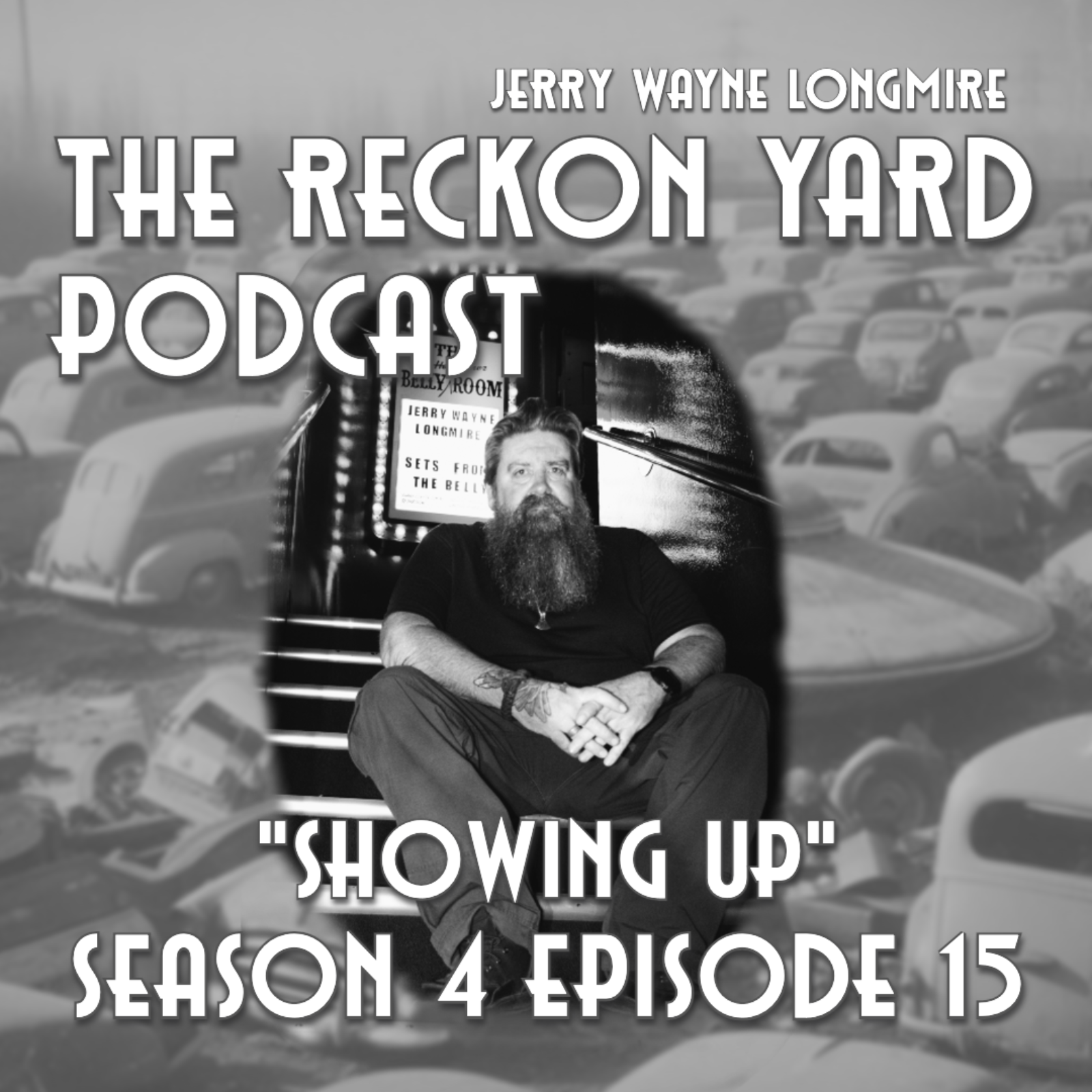
About this episode
“Welcome to the wrecking yard” energy sets the tone as the hosts catch up after travel delays—torn studio gear, Waze-driven traffic chaos, and birthday-week detours around Sunset. Between comedy-club logistics (tickets, meet-and-greets, backstage photos) and personal stories, the conversation swings into car culture: Jefferson Boulevard’s “Jefferson Speedway,” a basement of “muscle cars,” and a modernized “68 Mustang” that’s “not a resto mod.” The episode’s through-line is showing up—especially when people don’t.
I recall an eventful week in Southern California with lots of milestones and folks that show up.
Culver City
"And that part of Los Angeles over there in Culver City [1545.2s] And also"
Culver City is a part of Los Angeles. The hosts are talking about where car shops and car culture were based there.
Culver City is a neighborhood/city in Los Angeles County, California. In this segment it’s used as the geographic setting for a car-focused community and shop history.
Jefferson Speedway
"Jefferson Boulevard [1553.2s] Which they used to call Jefferson Speedway [1555.0s] Back in the day [1555.9s] Because in the 40s, 50s, and 60s"
Jefferson Speedway is an old nickname for Jefferson Boulevard. The idea was that people would test their cars there, right outside the shops.
Jefferson Speedway is the name the speaker says Jefferson Boulevard was called in earlier decades. The segment ties it to mid-century hot-rod culture where shops would test cars in front of their buildings.
Edelbrock
"Because in the 40s, 50s, and 60s [1558.5s] This is where Edelbrock was [1559.8s] This is where the Shelby Plant"
Edelbrock is a company that makes performance parts for car engines. Here, the host is saying Edelbrock was located in that area back in the day.
Edelbrock is a well-known American performance-parts company, best known for engine components like carburetors and intake manifolds. In this segment, the speaker places Edelbrock’s historical presence at Jefferson Speedway.
Shelby Plant
"This is where Edelbrock was [1559.8s] This is where the Shelby Plant [1562.7s] Was [1563.1s] This is where Ed Iskendarians came"
Shelby is the famous performance name associated with high-performance cars. The host is saying there was a Shelby factory/operation in that area.
“Shelby” refers to Carroll Shelby’s performance brand, which is strongly associated with high-performance muscle cars and racing. The speaker’s “Shelby Plant” mention indicates a manufacturing/operations site tied to that performance legacy.
Ed Iskendarians
"This is where the Shelby Plant [1562.7s] Was [1563.1s] This is where Ed Iskendarians came [1566.4s] Shopped, the Camfather was"
Ed Iskenderian is a well-known name in the performance-parts world. The host is saying his business was part of the car-shop scene in that area.
Ed Iskenderian (spelled in the transcript as “Iskendarians”) is associated with the Iskenderian performance brand, known for camshafts and other engine parts. The host is using his name to anchor hot-rod shop history around Jefferson Speedway.
Camfather
"This is where Ed Iskendarians came [1566.4s] Shopped, the Camfather was [1568.1s] It's everybody in hot rotting"
“Camfather” sounds like a nickname for someone famous for performance camshafts. The host is listing recognizable names from the classic hot-rod community.
“Camfather” is a nickname-like reference in the hot-rod/performance world, typically pointing to a camshaft-focused figure or shop. In this segment it’s dropped as part of the roster of well-known people who were connected to the Jefferson Speedway car scene.
hot rotting
"[1568.1s] It's everybody in hot rotting [1570.9s] That you've ever heard of [1572.2s] They started out right there on Jefferson Speedway"
“Hot rodding” is car culture where people modify cars to make them faster and cooler. The host is saying that area was where that scene started.
“Hot rotting” appears to be a transcription of “hot rodding,” which is the culture of modifying cars for performance and style—often with engine upgrades and custom builds. Here it’s used to describe the community of famous car people tied to the Jefferson Speedway area.
tarmac
"And it looked like they were breaking up tarmac Because there was so much rubber Melted into the pavement"
Tarmac just means the paved surface—usually asphalt. When rubber is melted into it, that usually means tires were spinning and getting very hot.
Tarmac is a term for paved road or runway surface, commonly asphalt. The host describes “rubber melted into the pavement,” which is a sign of heavy tire friction and heat from aggressive driving or burnout-style activity.

Chevrolet Suburban
"...d this like thousand horsepower Like 67 Chevrolet Suburban Down there"
The Chevrolet Suburban is a large SUV made to carry lots of people and gear. It’s often used for towing and everyday family use, but some owners modify them to make much more power than stock. That’s likely why it came up in the episode.
The Chevrolet Suburban is a full-size SUV known for combining passenger space with serious towing and hauling ability. In the podcast context, it’s being referenced as a heavily modified, high-power example, which is why it stands out in a conversation about unusual builds. It’s a significant platform because its size and durability make it a common choice for big power and long-term ownership projects.

Chevrolet 67 Chevrolet
"They had this like thousand horsepower Like 67 Chevrolet Suburban Down there"
hand-stamped fenders
"[1645.3s] But like hand [1648.2s] Stamped fenders [1649.8s] Everything assembled by hand"
“Hand-stamped fenders” means the metal fender shapes are made using stamping tools, but with more manual work. It’s the kind of detail that suggests the car was built with extra care.
Hand-stamped fenders means the sheet-metal fender panels are formed using stamping tools by hand rather than purely by automated mass-production methods. It’s a detail that signals a more craftsmanship-focused build process, which the speaker ties to the idea that the car is assembled “by hand.”
restomod
"[1656.4s] And everything [1656.9s] It's not a resto mod [1659.2s] It's an original car"
A restomod is when an old classic car is updated with newer technology so it drives better. Here, the speaker says this isn’t being treated as a restomod.
A restomod is a classic car that’s rebuilt and updated with modern mechanicals (like newer engines, brakes, and suspension) while keeping the original body style. The speaker contrasts that with this car being presented as an “original car” with “zero miles,” implying a different kind of build philosophy.

68 Mustang
"“Zero miles [1664.2s] Modernized 68 Mustang [1665.7s] It's crazy to look at”"
“68 Mustang” means a 1968 Ford Mustang. The speaker is saying this one looks like the classic, but it’s been updated with newer parts so it drives more like a modern car.
A “68 Mustang” refers to the 1968 Ford Mustang, a classic American muscle car. In this segment, the speaker emphasizes that it’s been modernized with a late-model engine while still being treated as an original-style build (not a restomod).
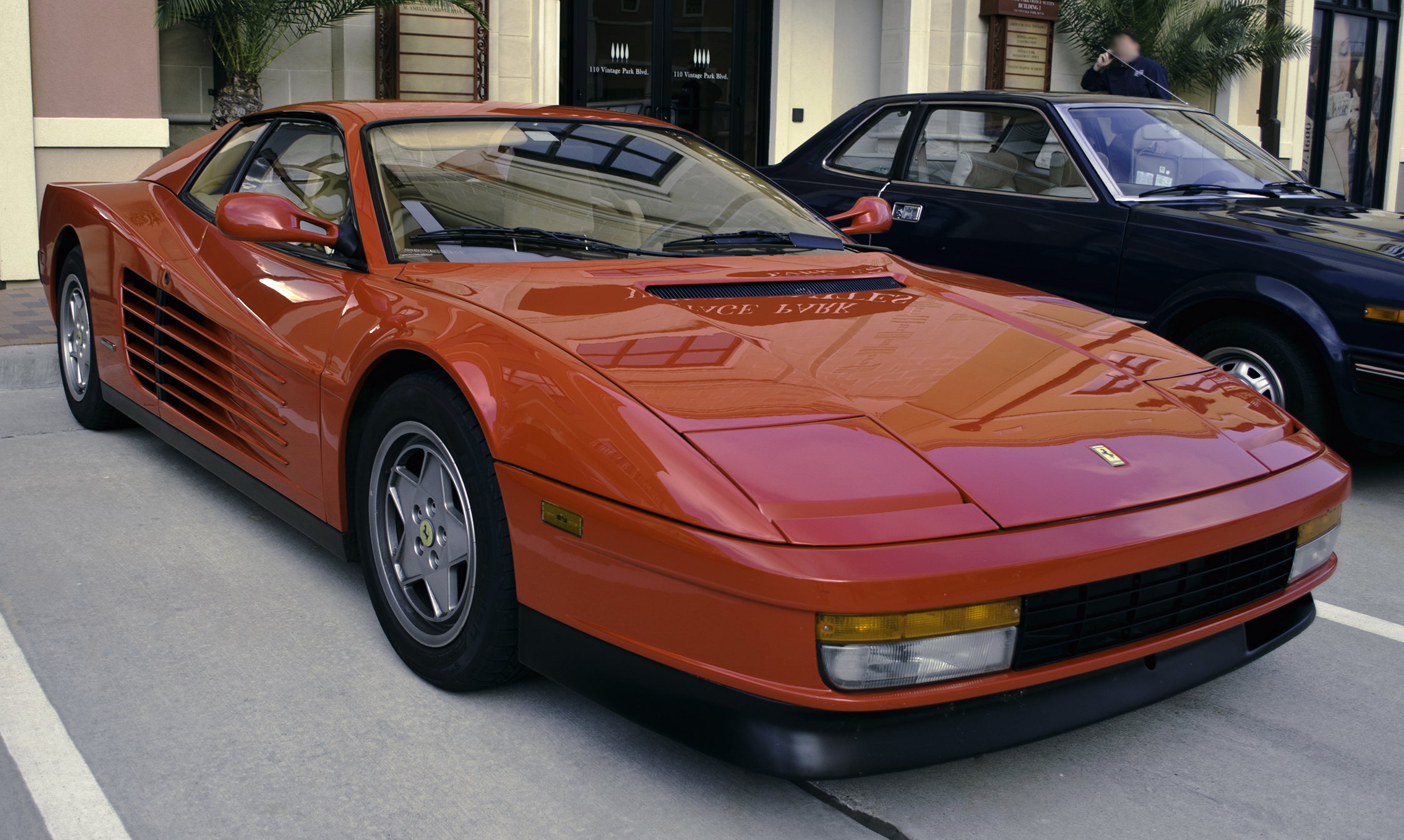
Testarossa Testarosa
"Ferraris There's even an old Testarosa back there I mean it was cool"
The Testarossa is a sports car made by Ferrari. It’s famous for its distinctive styling and for being a collectible classic. The episode likely mentioned it because it’s an impressive car to spot in person.
The Testarossa is a well-known Ferrari model associated with the brand’s 1980s-era design and performance reputation. The podcast calls out an “old Testarossa” as something cool to see, which fits how these cars are often discussed as collectible icons. It’s significant because it’s instantly recognizable and frequently sought after by enthusiasts.
brakes are treacherous as hell
"But he told me he didn't ride it Because he said the brakes are treacherous as hell He says it's got the 80's"
They’re saying the brakes don’t feel trustworthy. That could mean they’re too sensitive, inconsistent, or not easy to control smoothly.
This is a descriptive phrase, but it’s pointing at a specific driving concern: brake feel and/or braking performance that’s unpredictable or hard to modulate. In enthusiast talk, “treacherous” often implies the brakes may be grabby, inconsistent, or require more care than you’d expect.
power band
"He says it's got the 80's Chirpy power band Crazy power band but the brakes are kind of"
“Power band” is the range of engine speeds where the car feels strongest. If it’s “crazy” or “chirpy,” it means the car really wakes up in a specific RPM range.
A power band is the engine speed (RPM range) where an engine makes most of its power and feels most responsive. When someone says a car has a “chirpy” or “crazy” power band, they mean it comes on sharply in a certain RPM window, making it fun to drive and rev.
BW Museum
"Because Brian [1764.8s] Got us into Fluffy's [1767.0s] BW Museum [1769.4s] And so we had to drive out to Long Beach"
They’re talking about a museum Brian got them into. It’s the kind of place car fans go to see cars and automotive history up close.
The “BW Museum” is mentioned as a destination Brian arranged for the group to visit. In car-enthusiast contexts, museums like this are usually where you see notable vehicles, restorations, and automotive history in person.
Long Beach
"And so we had to drive out to Long Beach [1771.4s] Which was a whole other adventure [1773.4s] Right? Cause driving to Long Beach [1775.3s] Took like an hour and a half [1777.2s] Get to freaking Long Beach [1778.6s] But I got to drive, there's this big blue"
They’re driving to Long Beach, California. It’s a common place for car events and car culture, so it fits with their enthusiast trip.
Long Beach, California is a major Southern California destination the hosts drive to as part of their car-focused outing. It’s also well known in the enthusiast world for events and automotive culture, which is why it comes up in car podcasts.
Gerald Desmond Bridge
"Big blue bridge in Long Beach [1783.3s] Called the, I think it used to be called [1785.1s] The Gerald Desmond Bridge [1788.7s] But this blue bridge if you've ever played"
The Gerald Desmond Bridge is a well-known bridge near Long Beach. They’re saying they drove over it as part of getting to their destination.
The Gerald Desmond Bridge is a prominent bridge in the Long Beach area, connecting key routes around the port and waterfront. When the hosts mention driving over it, they’re describing a specific local landmark that’s part of the trip’s “adventure” route.

Volkswagen Tiguan
"we were in a Volkswagen Tiguan so we were not going 120 I don't even know if that car goes over"
The Volkswagen Tiguan is a regular, everyday SUV. Here, they’re saying they were in a Tiguan instead of doing the extreme driving you see in the game.
The Volkswagen Tiguan is a compact SUV from Volkswagen, known for being a practical daily driver rather than a performance car. In this segment, it’s mentioned as the vehicle they used to drive over the bridge in the real world, contrasting with the game’s higher-speed chaos.
car collection
"I've seen some car collections But nothing like this"
A “car collection” just means someone owns multiple cars they keep because they love them. It’s not the same as having one car for commuting.
A “car collection” is a curated set of vehicles owned for their history, rarity, or personal meaning rather than daily use. The host contrasts typical collections with this one, implying a higher level of specialization and rarity.

Volkswagen Bus
"I've never even seen a 23 window bus in person He's got three of them"
A Volkswagen Bus is a classic van designed to carry people and gear. A “23 window” version is a specific, rarer layout that has more windows than many other buses. The episode mentions it because it’s uncommon to see one in person.
The Volkswagen Bus (often called a Microbus or Kombi) is a classic van known for its roomy interior and distinctive look. The podcast specifically mentions a “23 window bus,” which refers to a rare window configuration that collectors often chase. It’s discussed because owning multiple examples—and especially rare ones—is a notable part of a car collection.

Transporter
"He's got a docket to Transporter Karma gear"
“Transporter” is Volkswagen’s classic van line. It’s the same kind of vintage van people collect, like the multi-window buses.
“Transporter” is the Volkswagen Type 2 name used in many markets, referring to the classic split-bus/van platform. In enthusiast circles, it’s the same family as the window-bus collectibles the host mentions.

87 Monte Carlo SS
"Hit a [1922.1s] 87 Monte Carlo SS [1926.4s] With like [1928.4s] 106 miles on it or something"
This is a classic Chevrolet Monte Carlo with the “SS” performance trim. The “SS” usually means it came with sportier equipment than a base model, and the speaker is impressed that this one looks almost untouched even under the front bumper area.
The Chevrolet Monte Carlo SS is a classic American muscle-era coupe, and the “SS” denotes the performance-oriented trim. In this segment, the host highlights a low-mile example and notes the condition down to the front air dam.
air dam
"Even the air dam underneath it wasn't scratched up [1934.9s] The car was perfect"
An air dam is a low panel near the front of the car that helps the car’s shape control airflow. If it’s not scratched, it usually means the car hasn’t been driven or scraped much.
An air dam is a front-end aerodynamic panel that sits low to the ground to help manage airflow under the car. When the host says it “wasn’t scratched up,” they’re pointing to careful condition and originality on a visible exterior aero piece.

Delorean DMC-12
"And he drives all his shit He's got DeLorean He's got a real low miles"
The DeLorean DMC-12 is a sports car with special doors that open upward. It’s known for its unusual look and for being a collectible car. In the episode, the mention of low miles suggests the car has been driven very little.
The DeLorean DMC-12 is a distinctive sports car best known for its gull-wing doors and stainless-steel body panels. The podcast context highlights a low-mile example, which is a big deal for collectors because it can mean less wear and fewer unknowns. It’s often discussed as a memorable, unusual classic rather than a mainstream performance car.

Chevrolet Impala
"Big body Impala [1942.7s] Like a 96 Impala Super Sport"
This is a 1996 Chevrolet Impala with the “Super Sport” (SS) trim. The speaker is saying it’s a low-mile example from that performance version of the Impala.
The Chevrolet Impala Super Sport (SS) is a performance-focused trim of the full-size Impala. The host’s mention of “96” and “Super Sport” points to a specific mid-1990s SS-era car and again emphasizes low mileage and pristine condition.
leaking oil
"And underneath Every one of them Volkswagen There's a piece of cardboard for leaking oil Because no matter how much money you got"
“Leaking oil” means the engine oil is coming out of the car instead of staying inside. On older cars, this usually happens because seals or gaskets wear out over time.
“Leaking oil” refers to engine oil escaping from seals, gaskets, or other joints. On older cars, it’s often a sign that age and heat cycles have degraded rubber seals or that a gasket needs replacement.
Request an Explanation
Heard something you'd like explained? We'll add it to this episode.
Sign in to request explanations for terms you heard.
Want to learn more?
Browse our glossary for plain-English explanations of automotive terms, jargon, and concepts.
Help improve this episode
See something that's not quite right? Our annotations are AI-generated and can sometimes miss the mark. Click the flag icon on any annotation to suggest a correction.