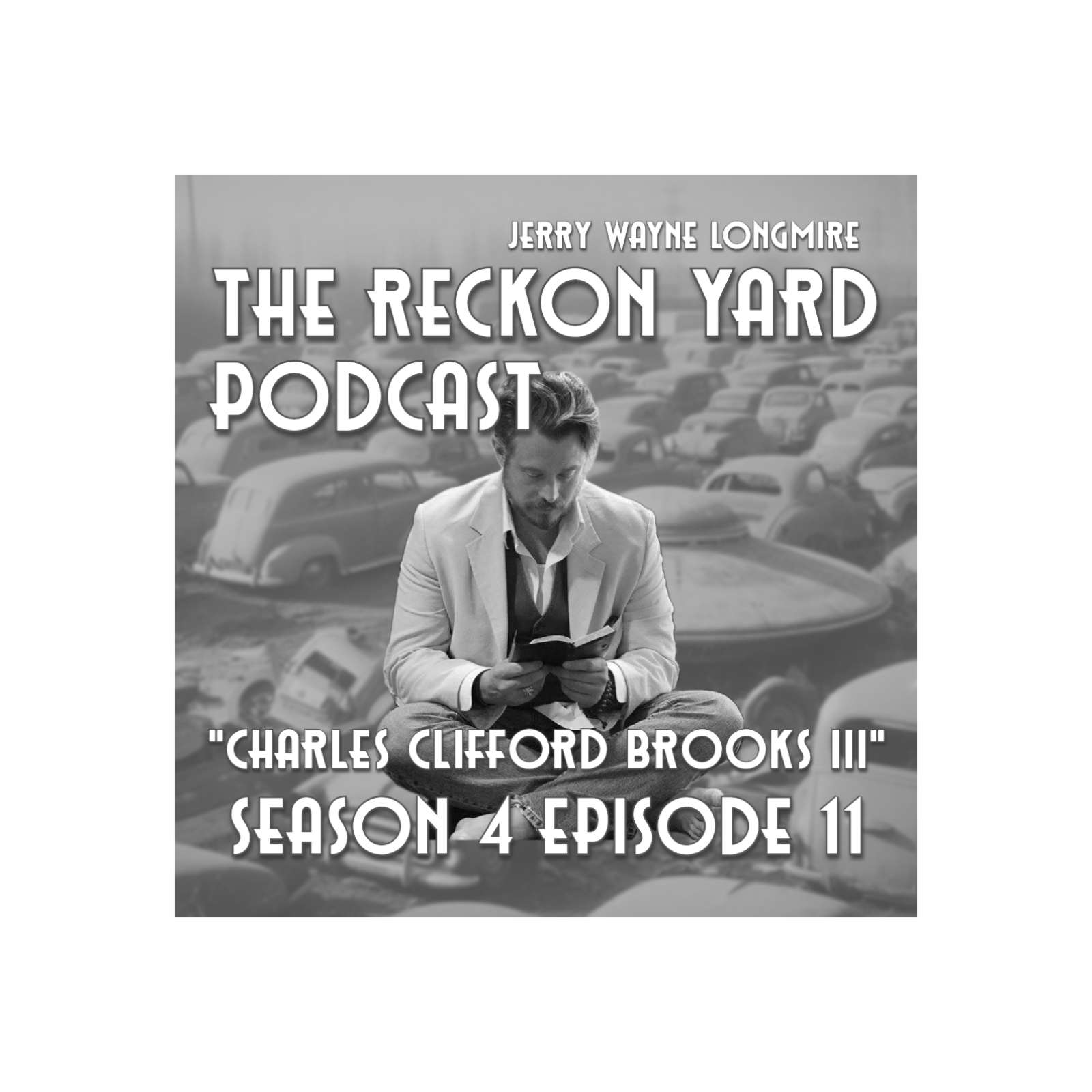
Charles Clifford Brooks III
About this episode
Heavy rain in Houston sets the stage as the host tries to get things done on the pickup and plans a family trip to Colorado. The conversation then shifts into racing and regional events, before turning into a deep dive on audio troubleshooting—head units, Bose “premium” expectations, harnesses, and grounding issues that can even affect AC. Later, the Father’s Day interview spotlights Charles Clifford Brooks III: his publishing disruption, Forbes attention, and his autism-informed work in writing, teaching, and support.
I got the opportunity to interview Pulitzer nominated poet, author and publisher Charles Clifford Brooks III. It’s a lively conversation about writing and a short dive into the majesty of Faulkner.
Back in Duwali Bottoms,
Carl Sr. has a plan. Alana already knows about it. Two young men from Houston who came to Duwali Bottoms because a hurricane left them no choice are about to find out that sometimes the storm knows where you need to be.
head unit
"[379.0s] He said I think the head unit [381.3s] And there's no good [383.4s] I said damn, damn, damn [385.1s] So I got playing around with it [386.9s] Messing around with it [387.8s] And the head unit was okay but the screen was bad in it [390.9s] So it looked like crap"
The head unit is the main screen/radio control box in the dashboard. If you “pull” it, you’re removing it so you can fix or upgrade parts of the sound system.
The head unit is the main electronics module for a car’s infotainment and audio controls—typically the radio/media interface and touchscreen. When someone says they needed to pull the head unit, they usually mean removing that dashboard module to access wiring or other audio components.
Bose system
"[409.7s] Where all of a sudden [413.0s] The premium audio packages in vehicles [415.4s] Was the Bose system [417.7s] But it wasn't like [419.8s] It was like [421.9s] The Bose system [423.2s] They were putting in these cars"
Bose is a well-known audio company. The host is saying that for a while, lots of cars offered Bose as the premium sound option.
Bose is an audio brand known for premium in-car sound systems that were commonly offered as factory options. Here, the host is describing a period when many vehicles’ premium audio packages used Bose branding, implying it was a default “upgrade” choice.
Diamondback bicycle
"[423.2s] They were putting in these cars [424.6s] Was like [426.6s] The Diamondback bicycle [427.9s] You could buy at Walmart"
Diamondback makes bicycles. They’re using it as a joke/comparison to say the car’s “premium” audio didn’t feel that impressive.
Diamondback is a bicycle brand, and the host uses it as a comparison to describe the perceived quality/value of the Bose-equipped cars. This is a metaphor rather than a technical automotive detail.
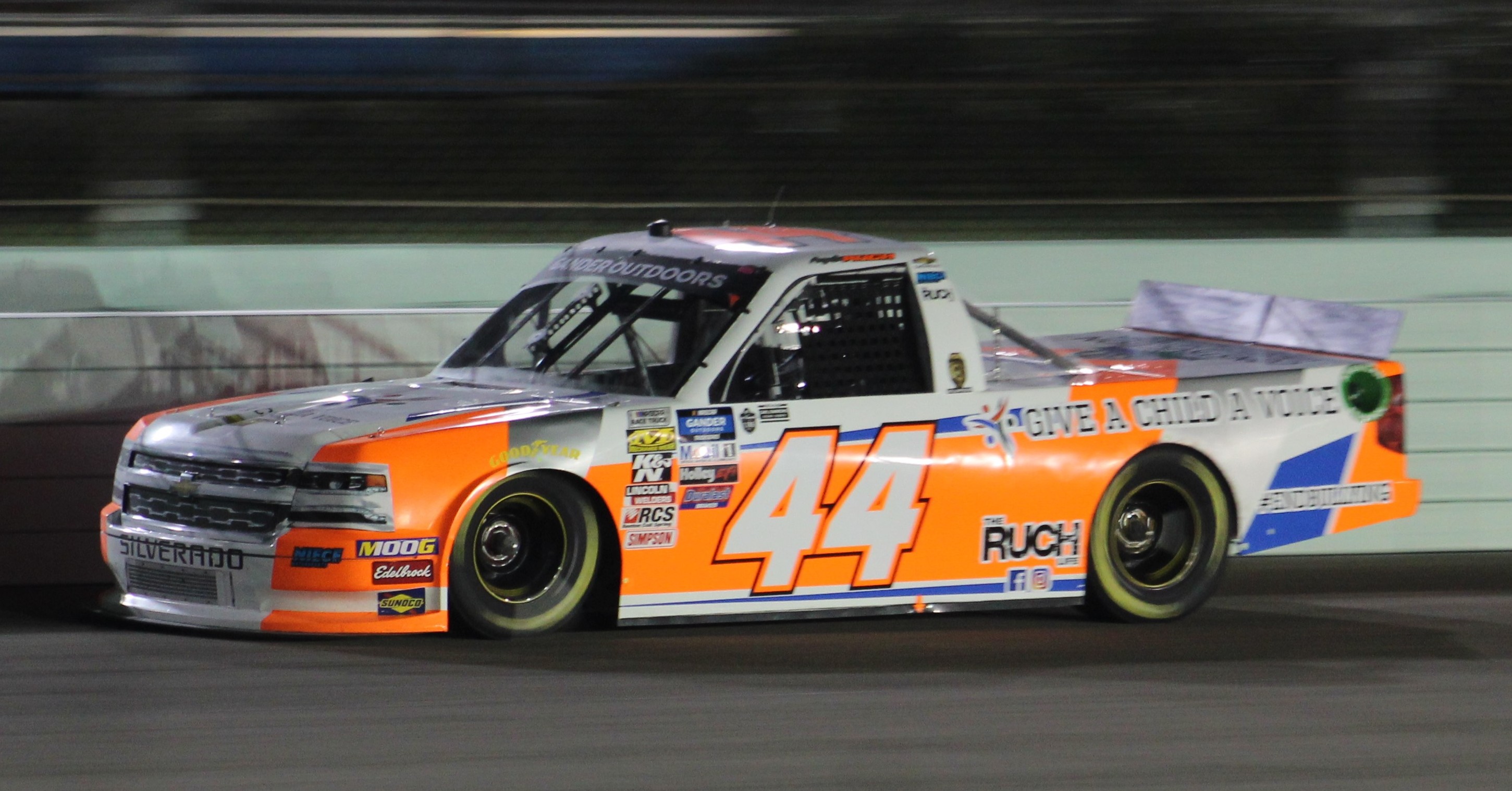
Chevrolet Silverado
"With those Avalanches And I'm sure some of the Silverados and stuff When you had the LTZ"
The Chevrolet Silverado is a large truck made for work and towing, like hauling cargo or pulling a trailer. Different versions (trims) add different features, and the podcast mentions an LTZ-style trim. That means it’s likely being discussed as a more equipped Silverado.
The Chevrolet Silverado is a full-size pickup truck built for everyday hauling and towing, with trim levels that can add comfort and convenience features. In the podcast context, it sounds like the discussion is about specific Silverado trims (like the LTZ) and how they compare to other GM trucks mentioned. It’s a common choice people talk about because it’s widely used and comes in many configurations.
LTZ Package
"[471.6s] When you had the LTZ [473.9s] Package and the Bose system"
The LTZ Package is a higher equipment level on certain GM trucks. Here it matters because it’s the trim level that was commonly paired with the Bose audio system.
The LTZ Package is a GM trim/option package that typically adds higher-end features compared with lower trims. In this context, it’s tied to a Silverado configuration that also included a Bose audio system.
subwoofer
"[476.1s] It had a little amp [477.7s] And a subwoofer [479.4s] It had a little amp up under the console"
A subwoofer is the speaker that handles the deep bass notes. The host is saying the Bose package included a subwoofer, which helps explain why the system should sound better than a basic setup.
A subwoofer is a speaker designed to reproduce low-frequency “bass” sounds. The host mentions that the Bose-equipped GM trucks used a subwoofer along with an amplifier, which is a key part of what makes a premium audio system feel fuller.
Harnesses
"But I had to look it all up and order the [520.0s] Harnesses and all that stuff [521.2s] When I first bought the Yukon for Rachel"
A wiring harness is a set of wires/adapters that lets you connect a new car stereo to your car’s existing wiring. It usually makes the install cleaner and avoids having to splice wires together.
In car audio, wiring harnesses are plug-in adapters that connect the aftermarket stereo to the vehicle’s factory wiring. They reduce cutting/splicing and help preserve correct power, speaker, and signal connections.
Crutchfield
"I bought her a nice system from [526.2s] Crutchfield [528.8s] As Mother's Day"
Crutchfield is a store that sells car audio gear. They also help you find the right parts and wiring for your specific car so you can install a stereo more easily.
Crutchfield is a consumer electronics retailer known for car audio and vehicle-specific installation parts. Enthusiasts use it to match head units, speakers, and wiring harnesses to their exact vehicle so the install is less guesswork.
amp
"And somehow [588.4s] I got enough parts to put this whole damn thing together [595.2s] And bypassed that amp [597.0s] And damn if it don't sound good"
An "amp" is the part that makes the music louder. It takes the audio signal and powers the speakers so they sound better.
In a car audio setup, an "amp" (amplifier) boosts the audio signal so the speakers can play louder and with better control. Many factory systems use a basic amplifier, while upgrades often add a dedicated aftermarket amp.
GPS antenna
"Because all the harnesses going back in the stereo were gone [617.9s] And the GPS antenna [619.7s] All that stuff was missing [621.0s] So I had to order all that"
The GPS antenna is the part that talks to the GPS satellites. Without it (or if it’s not connected), navigation can fail or be inaccurate.
A "GPS antenna" receives satellite signals so the car’s navigation system can determine location. If the antenna is missing or not connected correctly, the GPS may not lock onto satellites or may show incorrect positioning.
part numbers
"And find hunt down part numbers [624.6s] And find all that mess and order all that [627.7s] And I [629.0s] Crutchfield's a little slow on shipping so I was having to do it all through Amazon"
Part numbers are like exact product IDs for car parts. Using the right one helps you get the correct wiring or components that will actually fit and work.
"Part numbers" are the unique identifiers manufacturers use to specify the exact component needed. When restoring or upgrading a stereo, using the correct part numbers helps ensure the wiring, connectors, and modules match your vehicle’s configuration.
bad ground
"Got it all straight [639.9s] I think I've got the AC problem straightened out [643.3s] I found a bad ground underneath the truck"
A "ground" is the car’s electrical connection back to the battery. If it’s bad, certain systems can act up because the electricity can’t flow properly.
A "ground" is the electrical return path that completes a circuit in the vehicle. A "bad ground" (loose, corroded, or broken connection) can cause intermittent faults—often including problems with accessories like the air conditioning—because the system doesn’t get a reliable electrical reference.
GMT-800s
"People talking about GMT-800s And their grounding issues So the next thing is If I can get a day with no rain tomorrow"
GMT-800 is a GM truck generation/platform. Some of these trucks can have electrical gremlins because the car’s wiring grounds (the metal connections that complete the electrical circuit) aren’t making good contact. Cleaning or replacing the ground cable can make a lot of those problems disappear.
GMT-800 is a General Motors truck/SUV platform family (used on vehicles like the Chevrolet Silverado and GMC Sierra from the early 2000s into the mid-2000s). When people talk about “grounding issues” on GMT-800s, they’re usually referring to electrical problems caused by poor chassis-to-body or battery-to-frame grounding. Fixing the ground cable and cleaning frame/cab ground points can noticeably improve symptoms.
grounding issues
"People talking about GMT-800s And their grounding issues So the next thing is"
In a car, electricity needs a good “return path” back to the battery. If the metal connections that provide that path (grounds) get dirty or corroded, the car can act strangely. Fixing the ground connections helps the electrical system work normally again.
“Grounding issues” means the vehicle’s electrical system isn’t getting a solid return path to the battery negative through the chassis/frame. Many symptoms—intermittent electronics, weird behavior, and faults—can come from corroded or loose ground connections. Cleaning and replacing the ground cable can restore stable voltage reference for modules and sensors.
ground cable with battery
"If I can get a day with no rain tomorrow I'm changing that ground cable completely out Ground cable with battery"
This is the thick wire that connects the battery’s negative side to the car’s metal frame. If it’s corroded or loose, the car’s electronics can get bad connections and act up. Replacing it and cleaning the connection points helps everything get proper power/ground.
The ground cable with the battery is the heavy electrical strap/cable that connects the battery’s negative terminal to the vehicle’s chassis/frame. Because it carries the return current for many circuits, a corroded or failing ground cable can cause voltage drops and unstable sensor/module behavior. Replacing it and ensuring clean contact points is a common troubleshooting step for electrical gremlins.
frame rail
"On the bottom of the frame rail At the bottom of the cab And cleaned it up"
The frame rail is part of the car’s main metal structure. Some electrical grounds are attached to it with bolts. If that spot is dirty or corroded, the electrical connection can be weak—cleaning it can fix the problem.
A frame rail is a main structural beam of the vehicle’s body-on-frame construction, and it’s often used as a grounding path for electrical circuits. Ground points are frequently bolted to the frame rail, so corrosion or paint buildup there can increase resistance and create electrical problems. Cleaning the ground connection on the frame rail can improve circuit stability.
AC
"And a whole bunch of problems went away So I think I've got The AC straightened out so"
“AC” means the car’s air conditioning. When the host says it “straightened out,” they mean the air conditioning started working normally again after they fixed an electrical grounding problem.
“AC” is the vehicle’s air conditioning system. The host says the AC “straightened out,” implying that after fixing the grounding/connection issues, the climate control behavior improved—often because electrical control modules and blower/actuator circuits need stable grounding to function correctly.
plugs
"Day And I changed the plugs In the truck"
“Plugs” here are almost certainly spark plugs. They make the spark that lights the fuel in the engine. If they’re old or worn, the engine can run rough, so replacing them can help.
In this context, “plugs” refers to spark plugs—ignition components that create the spark to ignite the air-fuel mixture. Replacing worn spark plugs can improve misfire behavior, idle quality, and overall combustion consistency. The host ties this to other electrical/maintenance work, suggesting a broader “fix what’s causing drivability/electrical symptoms” approach.
seat heater
"And the seat heater is coming on by itself now ... The seat heater is still coming back on"
A seat heater is a built-in electric warmer in the seat. It uses wiring and a heating element, and it’s usually protected by safety parts like fuses.
A seat heater is an electric heating element built into the seat cushion and/or backrest to warm the cabin. It’s controlled by a switch and typically protected by fuses and/or a control module so it can’t overheat or short.
unplugging
"Thought I was unplugging The right thing Unplugged something Thought that would be the end of it"
Unplugging here means disconnecting an electrical plug under the seat. It’s a way to stop power to a part and see if that fixes the problem.
In automotive diagnostics, “unplugging” usually means disconnecting an electrical connector to isolate a circuit or component. If the seat heater still turns on after unplugging, it suggests the power feed, another module, or a different connector is still allowing the heater to energize.
element
"Worst case scenario I'm going to take that Dag gum element right out there"
The element is the part inside the seat heater that actually makes heat. If you remove it, the seat can’t warm up even if the wiring tries to turn it on.
In this context, the “element” refers to the actual heating element inside the seat heater system. If the heater is acting up, removing or disconnecting the heating element can be a way to stop heat generation while the electrical cause is investigated.
fuse
"Supposedly there's a fuse that operates that seat ... I'll just pull that fuse until we get back to Colorado"
A fuse is like an electrical safety plug. If too much current flows, it breaks the circuit to protect the wiring and prevent damage.
A fuse is a safety device in the car’s electrical system that melts when current is too high, preventing wiring damage or fire. If a seat-heater fuse is blown, the heater won’t work; if it’s not blown but the heater turns on by itself, the issue may be in the switch, wiring, or control logic.
GMT-800
"I had a GMT-800 that I loved And I drove it until every little Nip picky thing wasn't working right anymore"
GMT-800 is a name for a generation of certain Chevrolet and GMC trucks/SUVs from roughly the late 1990s through the mid-2000s. The point here is that the vehicle eventually started needing repairs and the host kept driving it until things got worse.
GMT-800 is a Chevrolet/GMC truck and SUV platform code used for several late-1990s to mid-2000s models. In this segment, the host is describing owning one and dealing with age-related breakdowns and repair needs as it accumulated problems.
maintenance issues
"These are all things that need to be repaired They're maintenance issues There are too much electronics"
“Maintenance issues” means the car is having problems because parts are wearing out or weren’t kept up with. The idea is to repair them before they turn into bigger, more expensive failures.
“Maintenance issues” refers to problems that come from wear, aging, and deferred upkeep rather than a single catastrophic failure. The host is framing the car’s problems as fixable items that should be addressed methodically to prevent them from compounding.
electronics
"There are too much electronics And too much this and stuff and cars No they're just maintenance issues"
“Electronics” here means the computer-controlled parts of the car—like sensors and control modules. If those start acting up, the car may need troubleshooting and repairs, not just simple mechanical fixes.
In modern vehicles, “electronics” can include sensors, modules, and wiring that control functions and monitor faults. When the host says there are “too much electronics,” they’re pointing to the idea that more systems can fail or require diagnosis compared with older, simpler cars.
Texas Motorplex
"About 1990 there was a BW bug At the drag races at Texas Motorplex"
It’s a drag strip in Texas where cars race down the track and get timed. The host is talking about racing there.
Texas Motorplex is a drag-racing facility in Texas where cars run timed acceleration passes. In this segment it’s referenced as the venue for the speaker’s drag-racing stories.
run what you brung car
"Its attraction was that it was a run what you brung car And the driver seat"
It means you race the car you already have, not a super expensive custom race build. The challenge is making it work well without spending tons of money.
A “run what you brung” car is a drag-racing setup where you bring the car you already have and race it with minimal changes. The idea is to compete based on what’s in the car, not on spending a fortune to build a purpose-built race machine.
quarter mile passes
"454 that consistently Ran 12.50 to 13 second quarter mile passes"
Drag races are often measured over a quarter mile. The time numbers (like 12–13 seconds) tell you how fast the car gets down that distance.
A quarter-mile pass is a drag-race run measured over 1/4 mile (about 402 meters). Times like “12.50 to 13 second” are commonly used to compare how quickly cars accelerate in a straight line.
454
"And they had a 454 mounted in the back Of that Chevy Love Truck But this wasn't no wrecking yard 454"
“454” is the engine size—about 7.4 liters—used in some classic Chevy V8s. Bigger displacement like this usually means lots of pulling power, which makes the truck feel fast and exciting.
“454” refers to the Chevrolet 454 cubic-inch big-block V8 displacement. It’s a classic American engine size associated with high torque and strong acceleration, which is why it’s a popular swap choice for hot rods and show trucks.
wrecking yard
"But this wasn't no wrecking yard 454 They had built this thing to the hill And that Chevy Love Truck"
They’re using “wrecking yard” to mean a junkyard-style build. The point is that this truck wasn’t just thrown together from scraps—it was built to be exciting.
“Wrecking yard” here is shorthand for a junkyard-style car build—something assembled from leftover parts rather than purpose-built for performance. The speaker contrasts that with their “454” setup, emphasizing it was built to run and impress.
Request an Explanation
Heard something you'd like explained? We'll add it to this episode.
Sign in to request explanations for terms you heard.
Want to learn more?
Browse our glossary for plain-English explanations of automotive terms, jargon, and concepts.
Help improve this episode
See something that's not quite right? Our annotations are AI-generated and can sometimes miss the mark. Click the flag icon on any annotation to suggest a correction.