They’re talking about Porsche as a company and brand. The episode is about how Porsche is trying to be more like Ferrari in how people view and value the cars.
Ferrari is the “gold standard” they’re comparing Porsche to. The idea is that when Porsche becomes more like Ferrari in reputation, Porsche cars tend to become more valuable too.
“Manual” means you shift gears yourself using a clutch. The host is comparing it to PDK to see which one makes more sense depending on the car and the driver.
The Porsche 981 Cayman is a newer Porsche coupe. In this discussion it’s an alternative to buying an older 911 when you’re trying to stay near a certain budget.
EV stands for electric vehicle. The host argues Porsche bet heavily on EVs, but consumer demand wasn’t strong enough yet—especially for “electric sports cars” without a gas alternative—so Porsche is adjusting its strategy.
Tariffs are taxes imposed on imported goods, which can raise the cost of vehicles and parts. The host connects tariffs to Porsche’s bottom line because Porsche imports much of what it sells, making trade policy a direct cost driver.
“Value over volume” means selling fewer cars, but making more profit per car. The host says Porsche is trying to focus on the cars that make the most money instead of pushing huge sales numbers.
The Porsche 918 Spyder is a very expensive, very fast supercar that uses a mix of electric power and a regular performance engine. In the podcast, it’s mentioned as a reference point for a future top-tier “halo” car. The idea is that the next big Porsche could be similar in spirit—very advanced and built to stand out.
MSRP is the price on the window sticker that the manufacturer recommends. What you actually pay can be different, especially if the dealer adds extra charges.
R&D is the company’s process for inventing and improving technology. Here, they’re saying Porsche invests a lot in engineering that helps their cars perform better.
A turbocharger (often shortened to “turbo”) uses exhaust gases to spin a turbine that forces more air into the engine. More air can mean more power and better efficiency, especially when paired with modern engine management.
“Snapped up” is describing fast sell-through—when buyers quickly purchase available inventory. In a limited-supply situation, that kind of demand can accelerate price increases across the affected market segment.
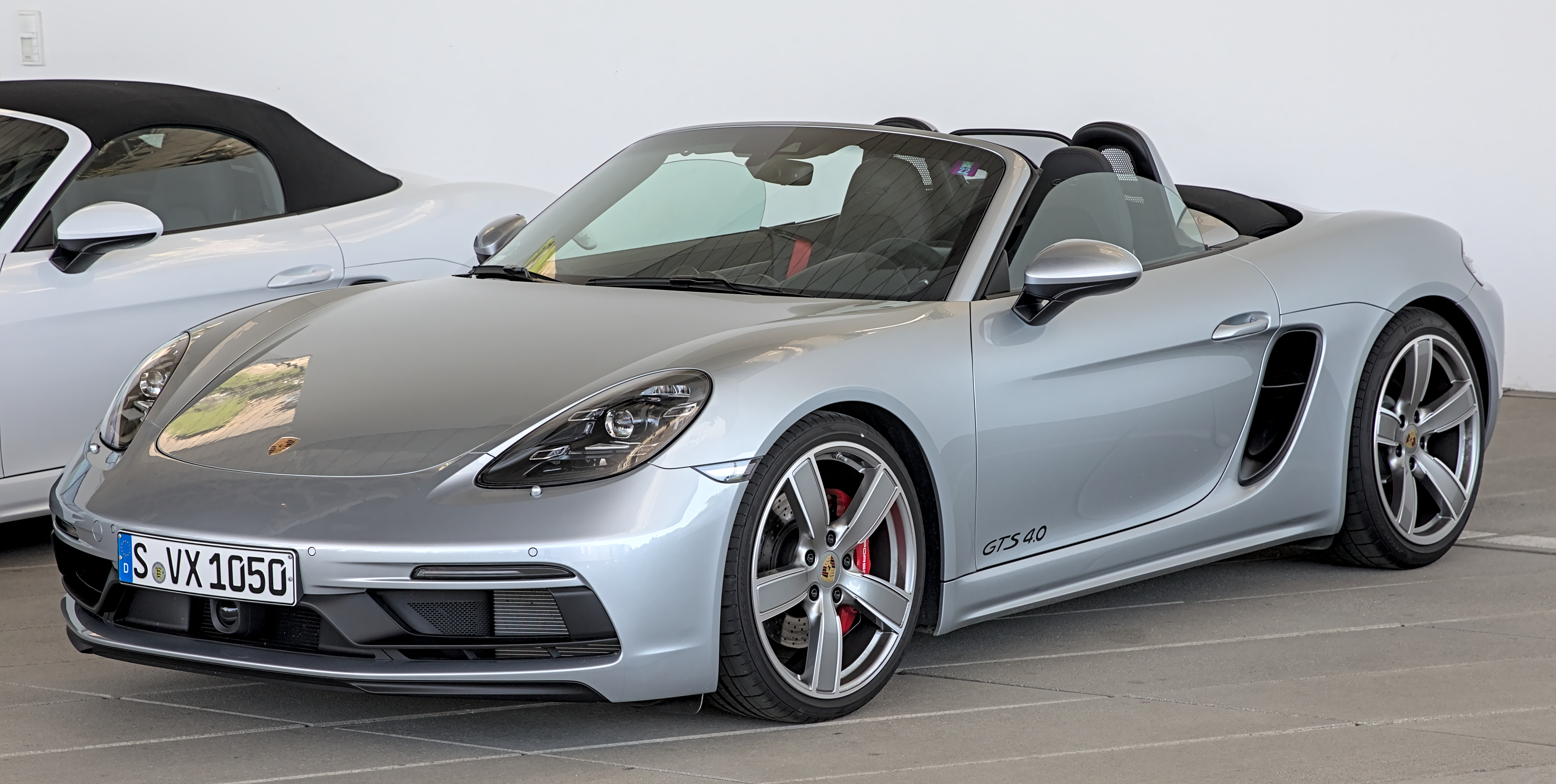
The Porsche Boxster is Porsche’s entry-level roadster. In this discussion, it’s used as an example of Porsche making a more affordable, easier-to-get-into car.
They’re using “gatekeeping” to mean Porsche feels more exclusive, so it’s harder for new people to get into the brand. Usually that happens when prices rise.
They’re telling you which years count as the same “generation” of Boxster and Cayman. That helps you shop the right cars instead of mixing in different eras.
“Eight tenths” and “nine tenths” are ways drivers talk about being near the car’s limit. The idea here is that the newer 981 feels easier to push hard without as much effort.
“Labor rate” is the hourly shop charge for mechanics’ time. The host uses it to explain why maintenance costs don’t necessarily drop when you choose a Boxster/Cayman over a 911—if the same labor hours are required, the hourly rate is the main driver.
A normally aspirated engine makes power without a turbocharger; “six-cylinder” points to Porsche’s traditional flat-six layout in many 911 and Boxster/Cayman variants. The speaker says many buyers prefer this setup, and that preference helps support resale values.
The “don’t settle rule” is basically: don’t buy a Porsche you don’t really want just because it’s easier or cheaper. If you’ve always wanted a 911, wait and get the one you actually want.
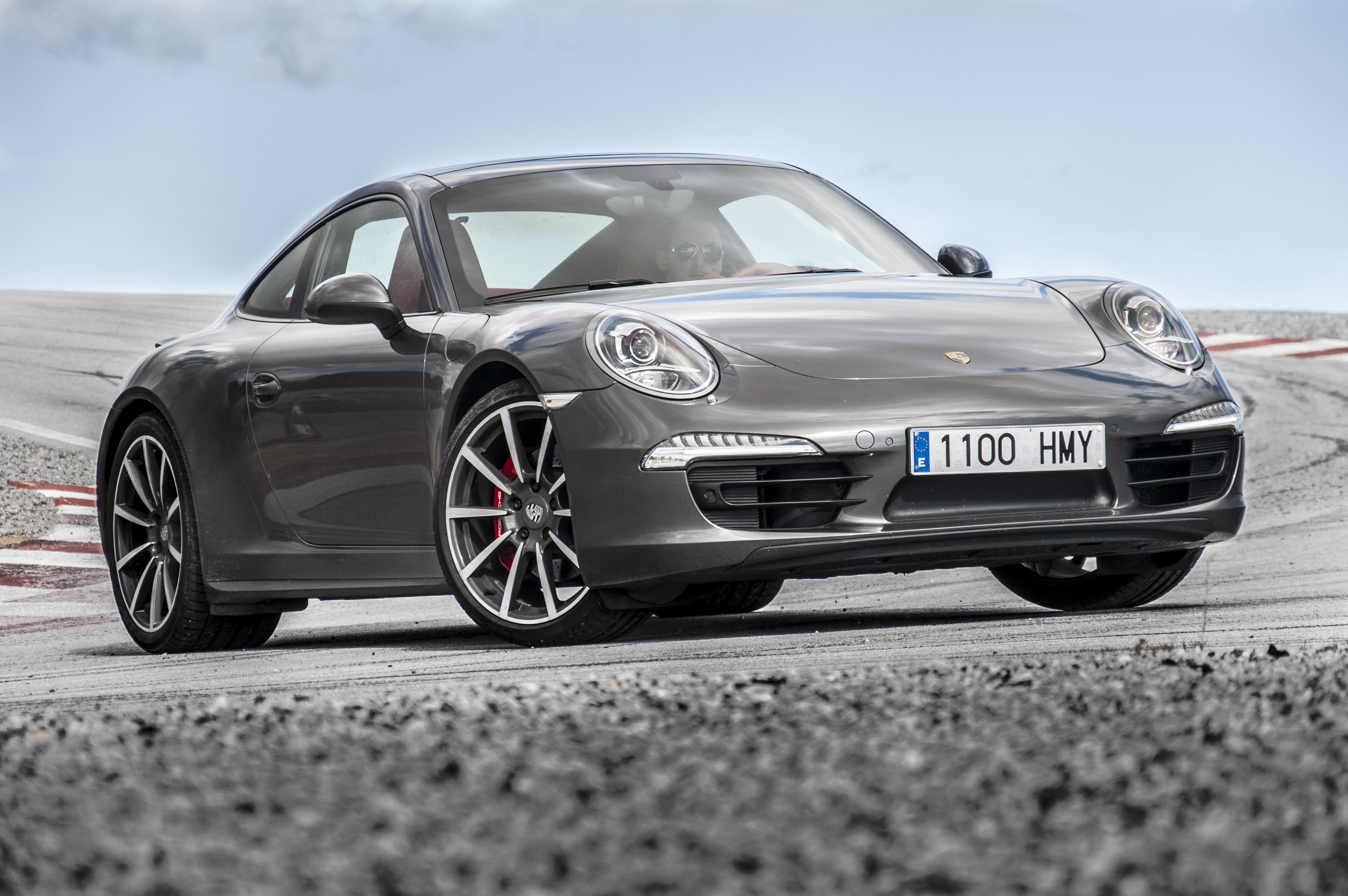
The Porsche 911 is Porsche’s most famous sports car. The host is basically saying: if you really want the 911, don’t talk yourself into buying a different Porsche just because it’s newer or “more reliable.”
“Two trunks” means there’s storage in the front and in the back. The host is using it to highlight how the Boxster/Cayman can be more practical for daily driving.
“Warm up” refers to letting the engine reach operating temperature before driving more aggressively. The host says the 997 is “grumpy” until it’s warmed up, which is a common way older or performance-tuned cars can behave when cold.
“Addition by subtraction” means you can make something better by taking things away. Here, the host is basically saying the car’s feel improves because of what’s simpler or more raw.
“Old school grit” is a descriptive term for a more raw, mechanical driving feel—often less refined than newer cars. The host is saying they wanted that character from an older 911, while still getting some modern comfort and convenience.
LIVE
Hey everyone, I'm Derek, and this is 11 After 9, and today we're going to be looking at why
Porsche is trying to become Ferrari and why it makes all of our older cars even that much more
valuable. But before we get into that, I just want to say thank you so, so much. The outpouring of
support in the last week or two launching this podcast has been so unbelievably heartwarming.
I've literally had people sending me notes from sea, from boats. I've had people sending me notes
from planes flying to Asia. I've had people sending me goodwill as they're just sitting in
commuter traffic saying how much they're enjoying getting this community back together. And I just
want to really thank all of you because without this group of just regular folks that just love
Porsche, love talking about cars, love talking about how to get in and out of cars and talk about
figuring out ways to convince our significant others to let us get those cars, none of this
would be possible. And I just really wanted to say thank you from the bottom of my heart.
With that in mind, because we are this Ninja group, if I could ask you to head to your Apple
podcast or Spotify or wherever you listen to your podcasts, and please review and rate,
usually it's with stars. But just leaving a review, a worded review bumps us up in terms of searches.
So when people are looking for Porsche content, we can grow naturally. And that would be absolutely
fantastic. And I would really very much appreciate it. Also, as always, check me out on Instagram on
the 11 After 9, the 11 After 9. On my YouTube, I just dropped an awesome video where I compared
the 991.1 versus the 991.2. And I talked about what gearbox should you pick? Is PDK the right
answer all the time? Is manual the right answer all the time? I dig into which model it makes
sense for. And I really had a lot of fun making that video. All right, so let's get into it.
I want to, on this podcast, God, there's so much to talk about. On this podcast, I want to talk
about probably two things. I want to talk about an interesting article that I read that I think
really relates to a generally larger topic regarding what it means to have a portion make
it approachable for kind of the every man and being an every man sports car. And I have gotten
an outpouring of questions through 11after9.com. And I picked one that I thought was kind of cool
because I released a YouTube video the other week on my 997.1. And of course, last week on the podcast
we talked about that. And the question was, if I have $40,000 in my pocket, should I go with a
higher mileage 9-11, like a 997.1? Or should I look for a more modern Porsche like a 981
Boxster or Cayman from the early 2000s? And so I kind of want to get into that a little bit because
in this crazy world of prices that are flying up and never seeming to come down, $40,000 is a
good chunk of change. But the great news is you can get a lot of Porsche for that. So let's talk
through that after we kind of get to this point where in 2025, Porsche had a really tough year.
The numbers were absolutely brutal. Their operating profit, Porsche as a company,
crashed almost 93%. So that's like $478 million down from $6.5 billion with a B.
And it's due to a lot of things. The big thing is sales in China have plummeted and so Porsche
really took it on the face on that. The other thing is they bet really heavily on EV. And I
think the public is just kind of saying we're not ready for all electric sports cars without
an alternative that has a gas engine. And so Porsche has kind of done an about face and their
whole strategy was to go full electrification. Now they're starting to rethink that, they're
starting to push models back that are electric only, they're coming out with ice internal
combustion engine alternatives or maybe hybrid. And so this is all really interesting, but it
really hurts the bottom line because they invested billions of dollars into that. The article that
I read also talks about how tariffs had made a huge impact on to Porsche's bottom line because
they import everything. And so they have been hit very hard over the last year because of that.
So they're hurting for money and the CEO, Michael Lighters, came out and he's shifting to a value
over volume strategy. And essentially what they're doing is they're cutting a lot of jobs,
they're cutting production in many cases and they're coming out with, I mean, let's just say it,
they're coming out with the expensive untouchable cars that bring in a lot of money because from
a profit standpoint, there's just a lot of padding there, but that very few people can afford.
They're going to be coming out with the new Halo car, which is kind of like the next 918
super duper car. They're going to be coming out with a lot of special models. And these cars are
going to come out with price tags that have many zeros on the MSRP. And I just kind of want to talk
about that because, I mean, as all of you know who listen to me, I'm just kind of like a regular
dude who tries to work really hard and save up to buy cars that I love to drive. And I don't
really have in means many, many, many zeros to drop on one car. And certainly there are people
in line that don't even think twice, that don't even have to check a bank account
when they run and spend hundreds of thousands or perhaps millions of dollars on a very limited
edition Porsche. So what does that mean for you and me? Well, let's take a quick step back and
let's talk about maybe... All right, here, I'm going to give Porsche a little reprieve on this
because maybe it's not entirely their fault because inflation really is a reality. I mean,
everything is just more expensive. When you want to pick up a new pickup truck and you head down
to the GMC dealer or the Chevy dealer and try not to pick up a truck that has an engine that's
going to explode, don't ask me how I know. You're looking at price tags that are like
starting in the 60s and $70,000 range. I mean, the top of the range trucks that are more luxurious,
that are more like luxurious family cars, I mean, those are over $100,000, $107,000. And so those
prices have absolutely jumped in the last five, six years and we know that. And so inflation really
is a contributing factor to kind of the Porsche bottom line. But the other thing I do want to
give them, I guess, a little bit of grace or a little bit of past is that Porsche's R&D department
is sick. And all of their technology, all of their pushing the boundaries of what can be done on
four tires really comes from their racing programs. And, you know, that is expensive.
And those kind of trickle down technologies and efficiencies and all the things that bring
very vain technology to your turbos or hybridization, that starts somewhere and it's usually their
racing program. And that is extremely expensive. And so, you know, if I'm going to point to any
manufacturer that really, I guess, maybe pushes the boundaries of what can be done when it comes to
eking performance out of a lump of metal. I mean, Porsche really does it better than almost
anybody and continues to come out with fantastic iterations on these cars. And so there is this
innovation tax. And, you know, Porsche is a premium priced product. And there are some very good
reasons for that. I mean, I can remember, I don't, this is going to go way back and really show my
Porsche nerdery. But they're, they're in their racing program, they had something called KERS,
it's spelled K-E-R-S. This was like back in 2010 on their GT3R Hybrid, so their race car.
And this was such, I just remember saying this is such a cool, like out of the box, like what
technology instead of heavy batteries in this hybrid race car, they used a flywheel energy
storage system. And so what I want you to picture is like you have this race car, you have the
driver and the driver seat. And where the passenger seat is, is like this, God, all right, if you
folks have ever baked a cake and you put it in like a Rubbermaid container, it's like an oval,
it looks like a big Rubbermaid donut, that's kind of what it looked like. And it sat where the
passenger seat is. And this thing was essentially like a centrifuge. It was just a spinning flywheel
in its spun at 40,000 revolutions per minute. And I mean, it was essentially like this mechanical
bomb that sat next to the driver. And it would capture the braking energy, and then it would
give 160, 170 horsepower boost to this electric motor to help it pull out of corners and pass
where you needed it. And I just remember thinking like, what in the world is this, but how cool.
And of course, this was a precursor to their hybrid technology that they've brought into
the more modern cars, more specifically, the GTS, which is on sale now. So it's this kind of wild
research and development is why Porsches are of course special and also maybe a little bit
why they're so expensive. Okay, so I've given Porsche their grace, all right. Now I want to
plead with Porsche to why this isn't a great idea. In my mind, Porsche has always been an
aspirational brand, not an unapproachable brand. And I'm comparing this to Ferrari, right? I mean,
Ferraris are sick. And back in the 70s and 80s, the kind of cars you could get on the streets were
incredible. But I feel like in the last 20 years, Ferrari has gone down this road of making these
ultra high end, super expensive. If you know someone, get on your Rolex list to perhaps buy
two or three cars, and then maybe you'll be looked at to get the super halo car. And that costs
millions and millions of dollars. And it sits in a collection and blah, blah, blah. Now listen,
Porsche has done that too, right? Like buy a couple of McCons and we'll get you on the list for a 911R
whatever that is. Hey, we have to sell a couple tie cans here. Same thing. But Ferrari has built
their brand on exclusivity. Okay, it's marketed to the elite few who have bank accounts that
won't even feel a pinch to drop a couple million dollars on special cars. But Porsche to me and to
millions have always been in an every man supercar. This was something that you work towards. This car
was always a reward for hard work. It was something that a guy or a girl could have a good job and
save up for. And it was maybe a car that was on their wall or it was something that they watch
YouTube videos all the time about and they became so passionate about. They had this dream and then
that dream could be realized and they could put that car in their garage. But here's the disconnect,
right? Like if a car comes out, and it's many hundreds of thousands of dollars, I'm just not
interested. I know it's not in my future. I know it's not going to come down over time and on the
same devaluation curve as most cars. And so I know it's not going to be in my future. And so that I
lose interest. But the problem is, is that makes me lose connection with the brand. Because if
Porsche keeps coming out with these high expensive cars, and they're not coming out with the volume
cars that still give us a taste of what the brand is, then what happens is, is I start to think that
they're Ferrari. And I start to think that it's an exclusive brand that I don't have any part of
anymore. And I don't want that to happen because it's such an amazing car company. It's such an
amazing product. And it's, and it really resonates with the hundreds of thousands, millions of people
that own and drive these cars and just have this connection. And the next generation isn't going
to have that. They talk about the next halo car, which is $3 million. And that's what everyone
kind of looks at. I mean, how many people have a Conan's egg in their future that they're going
to be picking up in the next six to eight months, right? I don't want these cars to become museum
pieces. I want them to become fun, approachable tools that bring a lot of pleasure and a lot
of happiness into daily lives. And here's the other thing that I think that we all have to really
consider. And it's the vacuum effect. And some of you might have heard me talk about this earlier,
but it's essentially like this trickle down vacuum effect. See if I can throw any other
analogies at you. I had a gentleman reach out to me, you know, some folks reach out and send me
their builds like on the configurator. And, and, and if I have time, sometimes I like to look through
them and, and give feedback and stuff like that. And a lot of times with kind of my consulting
stuff, people will sit with me for an hour and we'll go over what they really want and what
makes sense. And so I remember specifically, I was looking over this build for a GTS that was
well north of $200,000. And it was a beautiful car. I mean, what a great build. And it was just,
I mean, it was really just the bees knees. My point is, is that if someone is saved up for,
you know, 30, 40 years, they're retiring and this is their presence to themselves, like good on you.
Fantastic. I'm so excited because that's a dream realized. But in, in, you know, as the economy
kind of changes and things are more expensive and inflation happens and people are, you know,
thinking about putting food on the table and fuel in their oil tanks to heat their homes,
coming up with many hundreds of thousands of dollars for what amounts to a volume car. It's
not a GT car or something like that. I mean, that's just a lot of money, right? I think we can all
agree on that. Not saying it's not worth it. Beautiful car. But that car, say five, six years
ago was $150,000 car, which was maybe a little bit more approachable as well. And so this creates
a vacuum because the people that wanted that $150,000 car, but now it costs over $200,000,
they say, okay, well, I can't, I can't swing that. What can I get for $150,000? And so then they
start to look into the previous 992 generation market of pre-owned cars. What does that look like?
And then they take that buying power and, and snap those up. Now everyone who had aspirations for
those cars are now looking at the next generation down, the 991s that are hovering, you know, maybe
around 80 to 100,000, and those get snapped up. And so it's kind of this vacuum effect where all
these cars, because of demand, get snapped up. And so the prices rise because there's only a finite
number of them. And, you know, now you're looking at 997s that are $60,000, $70,000 when forever
and a day they were 30, 40, $45,000 cars. So, I mean, you get my point, I don't want to belabor it.
But when the true enthusiasts, the true drivers, the people that might never have had a Porsche and
really want to get into the brand, can't afford to get into the brand, well, then they get disillusioned
and they go elsewhere. And that's not cool because I mean, I want everyone to be able to enjoy this
stuff. I'm all about this Porsche ownership kind of being more of like a dream realized.
But when the prices skyrocket like they do and the door closes, I mean, that's everything but.
Certainly for folks that own cars now and decide to hang on to them and keep them for some time,
most likely they will continue to appreciate, you know, in a vacuum, of course, outside of,
you know, the greater economic world. Gosh, don't I wish that Porsche would kind of go back to that
ethos they had when they were going bankrupt in the 90s and they came out with the Boxster.
And it was like, hey, here's an amazing car that handles beyond your dreams and it's approachable
for the every man. We're going to make a ton of these. We're going to try to make them price
properly. And so you can all enjoy what it's like to drive these kind of cars. We're going to sell
them like hotcakes because everyone wants that badge and that driving experience. And we want to
try to put them in as many garages as we can, pushing really hard for a nine seat Cayenne
that's, you know, partially electrified. That's going to be like however many hundreds of thousands
of dollars to buy for an SUV to compete with a Bentley Bentayga or like a Halo car that's going
to cost millions of dollars is fine for the headlines, but it's not great for the you and
me's. I'll never forget. I can't remember what year this statement was, but I'll never forget that
Detlev von Platten, he was the president and CEO of Porsche cars North America.
He was asked a question about, I think it was the question was, you know, would Porsche ever
consider developing cheaper new models to fill this vacuum or fill the desires of people that
want to get into driving a Porsche but can't afford 911 prices or even Boxster Cayman prices.
And essentially, you know, to paraphrase, he said the cheaper new entry level models are
pre-owned Porsches. And I understand that in terms of gatekeeping the brand and having a level
of exclusivity to a point, but we've just established through my long die tribe that
pre-owned Porsches are getting really expensive. And those are out of the price range of a lot of
people. And so I don't know, I'm just hoping there's a different way because they don't want
what I'm seeing to be the inevitable happen. So to put a final point on it, I really just don't
want Porsche to lose the next generation of owners. And I feel like they're doing that by
engaging in this new strategy and it hurts my soul. And I hope you agree. All right,
what I'd love to do next is I'd love to pivot to a question I received from one of our listeners.
Every week, folks are fantastic about reaching out to 11after9.com and on the comments
or the comment box, leaving me some questions about what they're thinking, or of course,
on the YouTube videos. And eventually, hopefully within a week or two, when I start getting some
YouTube videos up for the podcast, we can ask a lot of questions on there. Anyways, what I think
I'm going to do moving forward is with each episode, let's answer a question or two, because I'm sure
if it's on some people's minds, it's on a lot of people's minds. And so as long as you guys don't
mind me pontificating about what I think based on my ownership experience, I'm going to answer it.
So this week, the question was, hey, Derek, I have about $40,000 and I'm looking to purchase
my first Porsche. What should I do? Should I buy a higher mileage 997.1 like you did?
Or should I look at a 981 Boxter or Cayman? And so the 981 Boxter Cayman, for those of you
not quite in the know, is the generation of Boxter and Cayman that started in 2012 and
went to 2016. I think they look absolutely beautiful. They have some really sharp lines with the
wheels pushed out to the utmost edges of the cars. They're just, they just have a really
beautiful stance to them. They are very fast, very fun, and on the up and up. And so both are
great choices. $40,000 is no small amount of money, but it is an amount of money that really does
kind of open up the book in terms of some really cool choices. So let's talk about these two.
I'm very blessed to have owned both and own both now. I have a 2014 base 981 Boxter, as you probably
all know, guards red on black with about 47,000 miles on it. And about a month or so ago, I picked
up a 2005 997.1 with 103,000 miles on it. All right. So first, what I'm going to do is I am going to
give you a very tired, stupid piece of advice, but I feel like I have to do it. And the question
really is you have to go drive both. These are fundamentally two entirely different driving
experiences. This isn't like, oh, you know, what are the nuances between a 996 and a 997? Or should
I do the 997.1 or 997.2? What are your thoughts? Those are more, that's more of a nuanced discussion.
I mean, these are fundamentally two extremely different chassis setups, two extremely different
driving experiences, both amazing, both engaging, both very different. So let's get into it a little
bit and I'll kind of share with you my thoughts. You know, when you have a 911, of course, the
motor's in the back, 911 is a car that you have to meet halfway. It's an extremely engaging
experience, but it is very unique. And the fact of the physics of the car, I mean that when you
come into a corner at any kind of speed, you really have to get your braking done early.
And then when you turn in, you feel kind of the front end bite. And then you can get into the gas
early in the turn. And you feel like, let's say you're taking a left turn, that passenger side
rear tire really sits down tight and digs in. And that pendulum really does start to swing. And you
feel the front end of the car just rotate really, really quickly. And so it's a super rewarding
experience, really unlike anything out there. And for the people that get really good at it over time,
it's a very rapid way to get around corners. But it doesn't come naturally. It's something you
really have to learn. And of course, it's much more pronounced in the older cars. And then the
newer cars with suspension setups and nice wide tires and wide stances, it has been kind of built
out of the experience a little bit, but it is still there. But when you can get good at it,
and I mean, feel the car enter the enter the turn and you just become kind of one with this
idiosyncratic vehicle. It is so rewarding. And it is the feedback is brilliant. And it becomes
like a slalom fun arcade game of how can I take this corner and come screaming out the exit.
The Boxster on the other hand, it's a mid-engine car, the motor sitting right behind you. And this
is a car that's just like a loyal friend. It comes to you. And it says, how do you want to drive?
How fast do you want to drive? I'm there. I can do it for you. As a matter of fact,
it is such a forgiving chassis that quite often, admittedly, if I come into the corner and I'm
cooking a little too hot and I might break mid-corner, which is a no-no, of course, in any car,
or if I decide to downshift because I'm not carrying enough speed, the chassis really isn't
upset. Or if it is upset just so briefly, the car just shakes it off and says, no problem,
we'll do better next time. I mean, that's just such a fantastic partner to really get out and
enjoy driving these cars. With the 981 on the electric steering, the car moves as you just
brush your fingertips across the steering wheel. It is very responsive. You have an excellent sense
of where all the four corners are, where the tires are planted, and you can place that car with such
precision that it really does feel more of like a scalpel than a sledgehammer. The 997 still definitely
harkens back a little bit to kind of that air-cooled 996 where a sports car was supposed to have
character. And by the definition of having character, it means that there's some things that you
might not love or that the car is going to have and you have to come again, meet it where it is.
Both offer great experiences. Both, once you learn how to drive them, allow you to drive pretty much
as fast as you want, but you can drive a 981 to its higher level. You can drive it at eight tenths,
nine tenths, a lot more quickly and easily than you can an older water-cooled car like a 997.
So take that into consideration if you're looking at these two cars. Neither is bad,
both are different, but in my mind both are a wash. What I do want to talk about, which I think is
also a wash, is the maintenance myth of a Boxster's might be cheaper to run an own because they're
cheaper to buy. And that is categorically not true. Listen, the labor rate is the labor rate.
And if you go to your Porsche dealer, it's going to apply to a Boxster Cayman or a 997.1 equally.
So there's really no cost savings there. And even if you go to an independent mechanic,
they're still going to charge the same rate depending on which car you have. I mean, arguably,
you could say that if you do a lot of your own work yourself, earlier 911 might be a little bit
simpler to work on, less computers to interface with, etc. But I think that's marginal because
Porsche parts still cost the same. They have that Porsche tax. It's not a cheap car to buy and run.
And it's something, of course, that you always want to have a little kitty
to save up for those rainy days. It's going to cost you a couple thousand dollars a year.
So there's no great savings. The other point I'll make and some of you might know this is that
there are no cheap Porsches. If you go and get yourself a cheap Boxster 986 Boxster, 986 Boxster
ass and say, oh, I got I picked this car for 12 grand, unless you happen to steal something that's
been well maintained, that car will with maintenance cost you as much as say a $14,000 986 Boxster.
You're going to have to put parts, you're going to have to put time and effort into that car.
And so there are no cheap Porsches to own and run. Just realize that going in.
Have a what if fund, have an old crap fund. But I do think you have to take
money off the table as a factor when it comes to maintenance between these two cars.
So let's talk about the value discussion. The value discussion of should I buy one over the
other because I think it's going to maintain its value or it's going to go up in value over time.
This is a tough one, right? Because you can't look in a crystal ball with these cars.
There's certainly not investments over time, paying insurance, paying maintenance and repair
costs. Both will cost you a fair amount of money, which will eat into any profits you have,
unless it's some sort of crazy special model or something like that. Listen, the 911 is always
going to be the 911. It's a nameplate that carries a level of respect. And it also maintains a price
floor that rarely breaks. Once it depreciates down to a certain level, generally you don't see
them dip further. As we talked earlier in this episode, the vacuum of its sister cars might
make it appreciate over time as it becomes more appreciated and goes up kind of like the 996.
But generally you can expect that probably what you put into this car in terms of a purchase price,
you should be able to get out of it unless you pile on crazy miles. And that really is kind of
the ultimate deciding factor is if you pile on crazy miles with these cars, regardless of how
much they appreciate in value, miles will affect values over time. But 911s are a little bit more
protected. And if 997.2s continue to appreciate and people look at the 997.1s, you know,
that star will continue to rise and you will see a gentle upward progress in values. But the 981
is really interesting too, because it's 10 years out, it's at the bottom of its depreciation curve
for the most part. And I think its values are a little bit protected as well. And this is,
has less to do about the car, because obviously there's plenty of them out there,
but more about the actions and movements of Porsche as a company. Following the 981 generation,
Porsche moved to a four-cylinder turbo motor in 2017. And a lot of people look at those cars as
not Porsche, which is completely wrong by the way, and we'll have an episode about the four-cylinder
turbo boxers and Caymans another time. But that really does keep the values artificially up,
because people, when they think Porsche want a normally aspirated six-cylinder motor,
I can understand it, I get it, I understand what they're saying, that does protect the
values of these cars. And then especially because at the end of the run of these four-cylinder turbo
boxers and Caymans, Porsche decided to move to full electric. And so as of last year,
they stopped making boxers and Caymans entirely with the advent of EVs coming down the track.
Again, as we talked about earlier in the episode, that's not to be. While those cars will be coming
out, Porsche made the decision to also come out with internal combustion engine models as well,
but that won't be for another year or two. And so people are still going to go back to
a normally aspirated six-cylinder car, especially if you can get it in a stick.
Because what we don't know is if you're going to be able to get this next generation with a stick
as readily as you can the 981 generation. So these are all things to consider. I actually think both
are going to hold their value pretty well and eke up maybe the 911 a little bit more than the Boxster.
But both I think are a great place to put your money and you should be able to get it out when
the time comes to move on to your next model. I will say this though, please don't settle.
You know, let's call this the don't settle rule. If you've always dreamed of a 911,
buy the 911. If you buy the Boxster just because it's newer or maybe a little bit more quote-unquote
reliable, you're going to kick yourself every time you're at a stoplight and you look over at
someone in a 911 and that's the car you really wanted. Save up a little longer, look a little
harder, try to find a car in your price range that has a 911 badge. If that's what you've always
wanted, that's okay. I give you permission. But I can tell you this, people I know with
fairly large Porsche collections are buying Boxsters. I think that they've owned a lot
of 911s and they've come to realize that Porsche really hit it out of the park with a very special
chassis setup, very approachable speed, a very fantastic Porsche experience and people go back
to these Boxsters saying, if I want a driver's car, I might go Boxster and that's something to
consider too. They're both fantastic in their own rights. All right, so what's my verdict?
The one thing I hate is at the end of a YouTube video when someone goes, well,
I know I gave you two different experiences, but you got to choose your own. They're both great.
Well, that doesn't help. I want your experience said commenter, tell me which one I should buy.
So I'm going to do my best. I'm going to give you the scenario you should buy one over the other.
In my mind, I think you should choose a Boxster or Cayman 981. If you want to drive a Porsche
four to five days a week, if you want a modern car that most likely will start every time,
especially if it has sport exhaust, it has air conditioned seats, it has two trunks,
it's a sensible masterpiece of a Porsche. The driving cannot be beat. They're fun,
they're engaging. They are, in my mind, such an approachable every man sports car, every man's
baby supercar. And I can't tell you how much I think the world of them, but I do think maybe
because they are a little bit newer, they do have a little bit more of the creature comforts.
If you're thinking about driving the more days than not, that's your choice. I want you to think
of the 997.1 if you want a little bit more drama in your life. If you are maybe a little bit more
attracted to the older cars, the cars that have characteristics that might be a little painful
to live with from day to day, maybe the air conditioning is an ice cold. Maybe you have
to let it warm up a little bit longer before it starts to drive like a Porsche should because
it's a little grumpy. Those kind of things really add to the experience of a 997. You feel the motor
behind you and it's wailing in the inconsistencies of that older car are what really make you fall
in love with it. It's kind of like addition by subtraction. Listen, I bought them both. I bought
the Boxster first and I absolutely adored it. And then I bought that 997 because I wanted a little
bit more of that old school grit while still having some of the modern conveniences that I
don't have in my 1972 911. So I'm not sitting in your seat and only you know which badge is going
to make your heart race. But I can tell you that if you go either way, you won't be disappointed.
You really just have to look at your use case. And there I go sounding like that YouTube commenter
that I don't like. So sorry about that, folks. But those are my ideas when it comes to those
two cars. And I just really want to thank you again for coming along in the journey. Once again,
just asking very gratefully if you don't mind getting on to Apple and Spotify and leaving a
star rating and also leaving a written review because that's going to be huge in terms of
making this podcast explode. I'm so excited for what we have upcoming. It's going to be truly
fantastic with the guests we have going. I'm going to be bringing some video podcasts out
for those of you that like to consume it that way. And we're just going to have a great time.
We're building this together and I'm very grateful for all of you. And so with that,
have a great week and I can't wait to see you next Tuesday on 11 After 9, the podcast.
About this episode
Porsche’s 2025 struggles—profit down nearly 93% amid China weakness, EV missteps, and tariff hits—set the backdrop for a bigger debate: is Porsche chasing Ferrari-style exclusivity with ever-more expensive halo cars? Derek argues Porsche’s “everyman” appeal is at risk as prices and demand create a “vacuum effect,” pushing would-be buyers out of the brand. He then answers a listener’s $40k first-Porsche question, weighing a high-mile 997.1 against a 981 Boxster/Cayman, comparing driving feel, maintenance myths, and value outlooks.
Is the "Everyman’s Supercar" disappearing? This week on The ElevenAfterNine Podcast, Derek dives into Porsche’s recent financial shift toward a "Value over Volume" strategy. With operating profits seeing a massive shift and a new focus on ultra-exclusive halo cars, we discuss the "Vacuum Effect"—how rising new car prices are sucking up the values of the 997, 991, and 981 generations.
Later in the episode, Derek answers a high-stakes listener question: If you have $40,000, should you buy a high-mileage 997.1 911 or a modern 981 Boxster/Cayman? We break down the "Loyal Friend" vs. the "Idiosyncratic Icon," the reality of the maintenance myth, and the one "Don't Settle" rule every first-time buyer needs to hear.