Best $40k Porsche and is Porsche the Next Ferrari?
About this episode
Porsche’s 2025 struggles—profit down nearly 93% amid China weakness, EV missteps, and tariff hits—set the backdrop for a bigger debate: is Porsche chasing Ferrari-style exclusivity with ever-more expensive halo cars? Derek argues Porsche’s “everyman” appeal is at risk as prices and demand create a “vacuum effect,” pushing would-be buyers out of the brand. He then answers a listener’s $40k first-Porsche question, weighing a high-mile 997.1 against a 981 Boxster/Cayman, comparing driving feel, maintenance myths, and value outlooks.
Is the "Everyman’s Supercar" disappearing? This week on The ElevenAfterNine Podcast, Derek dives into Porsche’s recent financial shift toward a "Value over Volume" strategy. With operating profits seeing a massive shift and a new focus on ultra-exclusive halo cars, we discuss the "Vacuum Effect"—how rising new car prices are sucking up the values of the 997, 991, and 981 generations.
Later in the episode, Derek answers a high-stakes listener question: If you have $40,000, should you buy a high-mileage 997.1 911 or a modern 981 Boxster/Cayman? We break down the "Loyal Friend" vs. the "Idiosyncratic Icon," the reality of the maintenance myth, and the one "Don't Settle" rule every first-time buyer needs to hear.
Links & Resources:
- Official Website: ElevenAfterNine.com (Send your questions here!)
- YouTube: ElevenAfterNine – Watch the new 991.1 vs 991.2 Gearbox Comparison!
- Instagram: @theelevenafternine
- Support the Show: Please leave a worded review on Apple Podcasts or Spotify to help us grow the community!
Hosted on Acast. See acast.com/privacy for more information.
Porsche
"Hey everyone, I'm Derek, and this is 11 After 9, and today we're going to be looking at why Porsche is trying to become Ferrari and why it makes all of our older cars even that much more valuable."
They’re talking about Porsche as a company and brand. The episode is about how Porsche is trying to be more like Ferrari in how people view and value the cars.
The host frames the episode around Porsche’s strategy and brand positioning. In this context, “Porsche” isn’t just a car maker—it’s being compared to another luxury performance brand, Ferrari, in terms of desirability and market impact.
Ferrari
"Hey everyone, I'm Derek, and this is 11 After 9, and today we're going to be looking at why Porsche is trying to become Ferrari and why it makes all of our older cars even that much more valuable."
Ferrari is the “gold standard” they’re comparing Porsche to. The idea is that when Porsche becomes more like Ferrari in reputation, Porsche cars tend to become more valuable too.
Ferrari is used as the benchmark for what Porsche is trying to emulate. The comparison is about brand prestige and how that can influence pricing and desirability for older cars.
PDK
"the 991.1 versus the 991.2. And I talked about what gearbox should you pick? Is PDK the right answer all the time? Is manual the right answer all the time?"
PDK is Porsche’s dual-clutch automatic transmission. The host is asking whether it’s always the best choice compared to driving a manual.
PDK stands for Porsche Doppelkupplung, Porsche’s dual-clutch automatic transmission. It’s a key decision point for many 911 buyers because it can deliver fast shifts and strong everyday usability compared with a manual.
manual
"Is PDK the right answer all the time? Is manual the right answer all the time? I dig into which model it makes sense for."
“Manual” means you shift gears yourself using a clutch. The host is comparing it to PDK to see which one makes more sense depending on the car and the driver.
“Manual” refers to a traditional manual transmission with a clutch pedal and driver-selected gears. In Porsche 911 ownership discussions, it’s often weighed against PDK for feel, engagement, and daily drivability.

Porsche 981 Cayman
"Or should I look for a more modern Porsche like a 981 Boxster or Cayman from the early 2000s?"
The Porsche 981 Cayman is a newer Porsche coupe. In this discussion it’s an alternative to buying an older 911 when you’re trying to stay near a certain budget.
The Porsche 981 Cayman is the coupe sibling to the 981 Boxster, sharing much of the same platform and engine family. It’s brought up as another “more modern” Porsche option versus an older 997.1 911, reflecting how buyers compare model generations and mileage for value.
EV
"The other thing is they bet really heavily on EV. And I think the public is just kind of saying we're not ready for all electric sports cars without an alternative that has a gas engine."
EV stands for electric vehicle. The host argues Porsche bet heavily on EVs, but consumer demand wasn’t strong enough yet—especially for “electric sports cars” without a gas alternative—so Porsche is adjusting its strategy.
tariffs
"The article that I read also talks about how tariffs had made a huge impact on to Porsche's bottom line because they import everything."
Tariffs are taxes imposed on imported goods, which can raise the cost of vehicles and parts. The host connects tariffs to Porsche’s bottom line because Porsche imports much of what it sells, making trade policy a direct cost driver.
value over volume strategy
"So they're hurting for money and the CEO, Michael Lighters, came out and he's shifting to a value over volume strategy. And essentially what they're doing is they're cutting a lot of jobs..."
“Value over volume” means selling fewer cars, but making more profit per car. The host says Porsche is trying to focus on the cars that make the most money instead of pushing huge sales numbers.
A “value over volume” strategy means focusing on fewer, higher-profit sales rather than selling the most units possible. The host links this to job cuts, production reductions, and prioritizing expensive, low-volume models.
Halo car
"They're going to be coming out with the new Halo car, which is kind of like the next 918"
A “halo car” is the flashy, top-tier Porsche that’s meant to make the brand look great. It’s usually expensive and designed to turn heads.
A “halo car” is a flagship model designed to generate excitement and brand prestige, often with cutting-edge tech and high pricing. The host compares Porsche’s upcoming halo car to the Porsche 918, implying it will be a special, attention-grabbing product.

Porsche 918 Spyder
"... the new Halo car, which is kind of like the next 918 super duper car. They're going to be coming out ..."
The Porsche 918 Spyder is a very expensive, very fast supercar that uses a mix of electric power and a regular performance engine. In the podcast, it’s mentioned as a reference point for a future top-tier “halo” car. The idea is that the next big Porsche could be similar in spirit—very advanced and built to stand out.
The Porsche 918 Spyder is a high-performance hybrid supercar known for combining electric power with a traditional performance engine. In the podcast, it’s referenced as a benchmark for a future “halo” car—essentially a top-of-the-line, attention-grabbing flagship. It’s a natural comparison point because the 918 is associated with advanced technology and extreme performance, which makes it a reference for what a next-generation halo model might aim to deliver.
MSRP
"And these cars are going to come out with price tags that have many zeros on the MSRP. And I just kind of want to talk about that because, I mean, as all of you know who listen to me..."
MSRP is the price on the window sticker that the manufacturer recommends. What you actually pay can be different, especially if the dealer adds extra charges.
MSRP (Manufacturer’s Suggested Retail Price) is the sticker price a carmaker sets for a vehicle. In practice, the real price you pay can be higher due to dealer markups, add-ons, and market demand.
inflation
"because maybe it's not entirely their fault because inflation really is a reality. I mean, everything is just more expensive... And so inflation really is a contributing factor to kind of the Porsche bottom line."
Inflation means everything costs more over time. That can push car prices up because it costs more to build and deliver cars.
Inflation is the general rise in prices over time, which increases costs for materials, labor, shipping, and ultimately vehicle pricing. The speaker argues that inflation has contributed to higher car prices, including Porsche’s.
R&D department
"But the other thing I do want to, I guess, give them, a little bit of grace... Porsche's R&D department is sick. And all of their technology..."
R&D is the company’s process for inventing and improving technology. Here, they’re saying Porsche invests a lot in engineering that helps their cars perform better.
R&D (research and development) is the work a company does to create new technologies, improve performance, and refine engineering solutions. The speaker credits Porsche’s R&D capability as a major reason it can push performance “on four tires.”
hybridization
"...bring very vain technology to your turbos or hybridization, that starts somewhere and it's usually their racing program."
Hybridization means the car uses both a gas engine and an electric system. The electric part can help the car move faster and waste less energy.
Hybridization means combining an internal-combustion engine with an electric motor and battery system. In performance contexts, it can improve acceleration, energy recovery, and efficiency while adding complexity and cost.
turbos
"...bring very vain technology to your turbos or hybridization, that starts somewhere and it's usually their racing program."
A turbocharger (often shortened to “turbo”) uses exhaust gases to spin a turbine that forces more air into the engine. More air can mean more power and better efficiency, especially when paired with modern engine management.
electric motor
"and then it would give 160, 170 horsepower boost to this electric motor to help it pull out of corners and pass where you needed it."
An electric motor is the part that turns stored energy into forward push. It can add quick extra power when you need it.
An electric motor converts stored electrical (or hybrid system) energy into torque to assist acceleration. In this racing hybrid example, it provides extra power to help with corner exits and passing.
museum pieces
"“I don't want these cars to become museum pieces. I want them to become fun, approachable tools…”"
They’re saying they don’t want these cars to be so rare or expensive that people only keep them locked up. They want them to be driven and enjoyed.
“Museum pieces” are cars that are preserved rather than driven—often due to rarity, cost, or collector status. The speaker wants these expensive models to remain usable and enjoyable, not treated like untouchable exhibits.
demand gets snapped up
"...And then they take that buying power and, and snap those up. Now everyone who had aspirations for those cars are now looking at the next generation down... and those get snapped up. And so it's kind of this vacuum effect where all these cars, because of demand, get snapped up."
“Snapped up” is describing fast sell-through—when buyers quickly purchase available inventory. In a limited-supply situation, that kind of demand can accelerate price increases across the affected market segment.
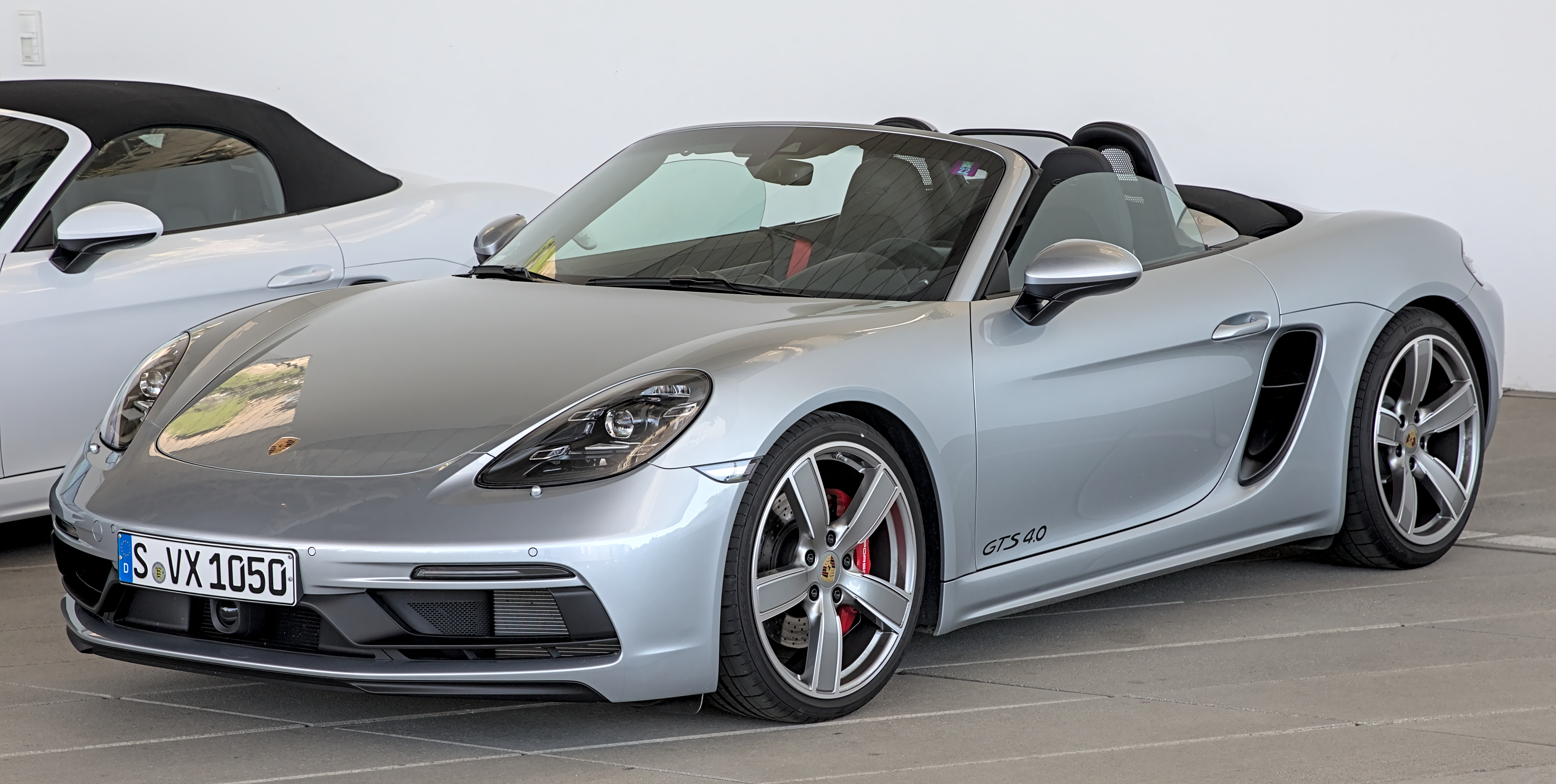
Porsche Boxster
"Gosh, don't I wish that Porsche would kind of go back to that [897.7s] ethos they had when they were going bankrupt in the 90s and they came out with the Boxster."
The Porsche Boxster is Porsche’s entry-level roadster. In this discussion, it’s used as an example of Porsche making a more affordable, easier-to-get-into car.
The Porsche Boxster is a mid-engine roadster that Porsche introduced in the mid-1990s as part of a turnaround. The host frames it as an “approachable” entry point that helped broaden the brand beyond only the most expensive 911s.
gatekeeping the brand
"pre-owned Porsches. And I understand that in terms of gatekeeping the brand and having a level of exclusivity to a point, but we've just established through my long die tribe that pre-owned Porsches are getting really expensive."
They’re using “gatekeeping” to mean Porsche feels more exclusive, so it’s harder for new people to get into the brand. Usually that happens when prices rise.
“Gatekeeping” here means Porsche maintaining exclusivity so fewer people can access the brand, often through pricing and availability. In enthusiast circles, this can be seen as pushing out new buyers.
generation of Boxter and Cayman that started in 2012 and went to 2016
"And so the 981 Boxter Cayman, for those of you not quite in the know, is the generation of Boxter and Cayman that started in 2012 and went to 2016."
They’re telling you which years count as the same “generation” of Boxster and Cayman. That helps you shop the right cars instead of mixing in different eras.
This is a generation-year framing for the Porsche Boxster/Cayman (981) era, which helps buyers understand what model years to shop. Knowing the generation window matters because features, pricing, and typical condition vary by year.
mid-engine layout
"The Boxster on the other hand, it's a mid-engine car, the motor sitting right behind you. And this"
A mid-engine car has the engine near the middle of the car, not in the back. That usually makes the car feel different when you turn and accelerate.
A mid-engine layout places the engine behind the driver but ahead of the rear axle, which typically changes how weight transfers and how the car rotates. The speaker contrasts this with the 911’s rear-engine behavior, setting up why the Boxster feels different in corners.
eight tenths, nine tenths
"“Both, once you learn how to drive them, allow you to drive pretty much as fast as you want, but you can drive a 981 to its higher level. You can drive it at eight tenths, nine tenths…”"
“Eight tenths” and “nine tenths” are ways drivers talk about being near the car’s limit. The idea here is that the newer 981 feels easier to push hard without as much effort.
“Eight tenths” and “nine tenths” are track-driving references to how close you are to the car’s true limit. The host’s point is that the 981 can reach very high performance levels more quickly and easily than an older water-cooled 997.
labor rate
"“Listen, the labor rate is the labor rate… And even if you go to an independent mechanic, they're still going to charge the same rate…”"
“Labor rate” is the hourly shop charge for mechanics’ time. The host uses it to explain why maintenance costs don’t necessarily drop when you choose a Boxster/Cayman over a 911—if the same labor hours are required, the hourly rate is the main driver.
value discussion
"So let's talk about the value discussion. The value discussion of should I buy one over the other because I think it's going to maintain its value or it's going to go up in value over time."
They’re talking about which car is the better financial choice over time. It’s not just the purchase price—repairs and other costs matter too.
“Value discussion” refers to whether one model choice holds value better than another over time. The segment frames it as a tradeoff between purchase price, depreciation, and the real costs of ownership (insurance, maintenance, repairs).
normally aspirated six-cylinder motor
"because people, when they think Porsche want a normally aspirated six-cylinder motor, I can understand it, I get it, I understand what they're saying, that does protect the values..."
A normally aspirated engine makes power without a turbocharger; “six-cylinder” points to Porsche’s traditional flat-six layout in many 911 and Boxster/Cayman variants. The speaker says many buyers prefer this setup, and that preference helps support resale values.
don't settle rule
"...both I think are a great place to put your money... I will say this though, please don't settle. You know, let's call this the don't settle rule. If you've always dreamed of a 911..."
The “don’t settle rule” is basically: don’t buy a Porsche you don’t really want just because it’s easier or cheaper. If you’ve always wanted a 911, wait and get the one you actually want.
The “don’t settle rule” is the speaker’s advice that if you’ve always wanted a specific model—here, a Porsche 911—you shouldn’t compromise just to buy something “close.” It’s a behavioral concept about matching purchases to long-term desire, not just market value.
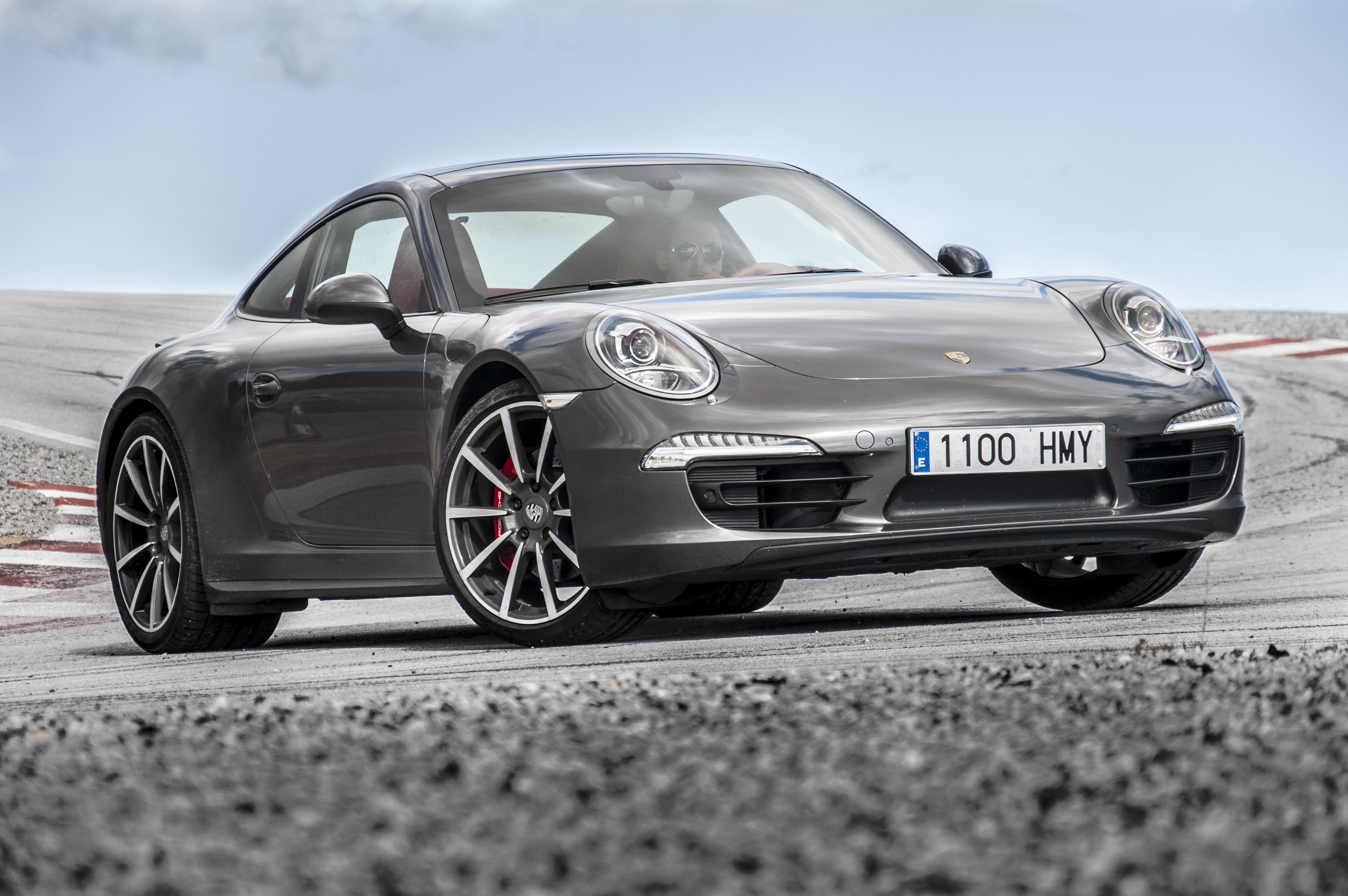
Porsche 911
"buy the 911. If you buy the Boxster just because it's newer or maybe a little bit more quote-unquote reliable, you're going to kick yourself every time you're at a stoplight and you look over at someone in a 911"
The Porsche 911 is Porsche’s most famous sports car. The host is basically saying: if you really want the 911, don’t talk yourself into buying a different Porsche just because it’s newer or “more reliable.”
The Porsche 911 is the brand’s iconic rear-engine sports car, and it’s often the benchmark for “real Porsche” ownership. In this segment, the host argues that if you truly want a 911, buying something else (like a Boxster) will feel like settling.
two trunks
"it has air conditioned seats, it has two trunks, it's a sensible masterpiece of a Porsche. The driving cannot be beat."
“Two trunks” means there’s storage in the front and in the back. The host is using it to highlight how the Boxster/Cayman can be more practical for daily driving.
“Two trunks” refers to the front trunk (frunk) plus the rear trunk found on many mid-engine Porsche models. It’s a practical packaging advantage that makes these cars more usable for everyday errands compared with many traditional sports cars.
warm up
"...to let it warm up a little bit longer before it starts to drive like a Porsche should because it's a little grumpy."
“Warm up” refers to letting the engine reach operating temperature before driving more aggressively. The host says the 997 is “grumpy” until it’s warmed up, which is a common way older or performance-tuned cars can behave when cold.
addition by subtraction
"It's kind of like addition by subtraction. Listen, I bought them both."
“Addition by subtraction” means you can make something better by taking things away. Here, the host is basically saying the car’s feel improves because of what’s simpler or more raw.
“Addition by subtraction” is a mindset where removing complexity or weight can improve the driving experience. In this context, the host implies that the 997’s character comes from what it does (and doesn’t) do compared with other cars—making it feel more engaging.
old school grit
"...because I wanted a little bit more of that old school grit while still having some of the modern conveniences..."
“Old school grit” is a descriptive term for a more raw, mechanical driving feel—often less refined than newer cars. The host is saying they wanted that character from an older 911, while still getting some modern comfort and convenience.
Request an Explanation
Heard something you'd like explained? We'll add it to this episode.
Sign in to request explanations for terms you heard.
Want to learn more?
Browse our glossary for plain-English explanations of automotive terms, jargon, and concepts.
Help improve this episode
See something that's not quite right? Our annotations are AI-generated and can sometimes miss the mark. Click the flag icon on any annotation to suggest a correction.