Porsche's $300 Suspension Cheat Code
About this episode
From “cheat code” suspension upgrades to dealer-level diagnostics, the hosts connect Porsche ownership to practical DIY wins. They start with why updated lower control arms (a physical redesign) can sharpen older cars—plus how to source the parts and even feel 718-style suspension on a 986 Boxster. The conversation then widens into oil analysis, exhaust modifications, and Porsche-specific tools like Piwis, including coding and PDK relearn workflows. Along the way, they share event stories from Porsche Parade, concours culture, and spotting a 959.
We are back with Joe Finkel from FCP Euro! In this episode, we tackle a brilliant factory suspension "cheat code" for water-cooled Porsches, bring you boots-on-the-ground stories from Porsche Parade, and discuss the absolute baller move of street-parking a $2M Porsche 959 in a rainstorm.
But first... Derek has to confess his sins. After preaching the gospel of DIY wrenching, a nightmare of rusted exhaust manifold hardware and a crazy schedule forced him to do the unthinkable: he outsourced his Fister exhaust install and DT40 oil change.
Once the guilt is cleared, Joe breaks down how Porsche silently updated older lower control arm blueprints to mirror modern 718 geometry—and how you can score this massive handling upgrade on a budget. We also debate the "500-HP cap" for usable street performance and name the #1 diagnostic tool every owner needs in their garage.
- Lemon Manuals (Free OEM Service Manuals): https://lemon-manuals.la
- 914-6 Infonet (Classic Air-Cooled Workshop Manuals): http://p914-6info.net/Manuals.htm
- FCP Euro DIY Guides: Check out @FCPEuro on YouTube for step-by-step Porsche maintenance.
- 00:00 – Catching up with Joe Finkel & FCP Euro Summer Rush
- 01:25 – Confessions of a Porsche Poser: The Fister Exhaust Drama
- 03:15 – The Oil Change Absolution (Driven DT40 Oil)
- 05:05 – Wrenching vs. Time Management: Balancing Life & Projects
- 06:37 – What Makes the Fister 997 Exhaust So Special?
- 09:22 – Triple Zero "Rare Shades" Event: A Masterclass in PTS Colors
- 13:48 – The $300 Suspension Cheat Code: 718 Control Arms on Older Porsches
- 20:13 – Free Workshop Manual Hacks: Lemon Manuals & 914-6 Infonet
- 26:30 – Left Turn: Backcountry Discovery Routes (BDR Motorcycle Adventures)
- 29:35 – Inside Porsche Parade at Lake Placid: Summer Camp for Adults
- 32:41 – Baller Status: The Rain-Driven, Street-Parked Porsche 959
- 34:00 – The Great Concours Debate: Art Pieces vs. Dirty Drivers
- 44:30 – First Looks: The New Electric Cayenne & Macan Tech Specs
- 46:39 – The 500-HP Cap: How Much Horsepower is Actually Usable?
- 51:23 – GT3 vs. GT3 RS: Is the Aero Worth the Jump?
- 53:16 – The #1 Specialized Porsche Tool Every Owner Needs in Their Garage
- 1:03:30 – Outro & See You Next Tuesday!
- Podcast: Available on Apple Podcasts, Spotify, and all major platforms.
- YouTube: @ElevenAfterNine
- Instagram: @theElevenAfterNine
- Contact: www.ElevenAfterNine.com
- Joe Finkel & FCP Euro: https://www.fcpeuro.com
- Fister Exhaust Systems: https://fdmotorsports.net/fister-sport-exhaust/ / Darren Fister
- Vintage Sports Restoration: Bedford, NH (Thanks, Chris!)
- Backcountry Discovery Routes (BDR): https://ridebdr.com (Thanks Tim!)
Make sure to LIKE, COMMENT, and SUBSCRIBE!
Tell us in the comments: Are you a fastidious Concours cleaner, or are your Porsches wonderfully dirty from daily driving?
Hosted on Acast. See acast.com/privacy for more information.
FCP Euro
"Hey everyone, I'm Derek. This is 11 After 9 the podcast and I am here once again with [5.3s] my good buddy Joe Finkel of FCP Euro. He and I are just going to shoot the shit a little [10.2s] bit when it comes to some of the questions that I have for a Porsche Goldmeister mechanic."
FCP Euro is a company that sells car parts (and supports repairs) for European cars like Porsche. Joe works there, so he can talk about both the technical side and what it’s like for owners shopping for parts.
FCP Euro is an aftermarket parts and service retailer focused heavily on European cars, especially Porsche. In the context of this episode, Joe’s role there connects the technical discussion to the real-world parts people buy to keep their cars running.
oil
"Oh, dude, actually, I gotta tell you, I literally just changed my oil with driven DT40 oil from FCP [84.1s] Euro. And it was fantastic. So thank you for that. As I was having my fister exhausts installed."
Oil is what keeps the engine’s moving parts from grinding against each other. Changing it regularly is one of the basic things you do to help an engine last.
Engine oil is the lubricant that reduces friction and helps carry heat away from moving parts. When Derek says he changed his oil, he’s describing routine maintenance that keeps the engine healthy.
exhaust manifold
"But part of the spoiler is when I got [108.5s] under there, dude, I'll have to put up some pictures. All of the brackets that were holding my [113.8s] exhaust manifold to the car, the nuts that are there, dude, they were fused shut. I mean, [120.7s] they were so bad that I couldn't even recognize them as fasteners."
The exhaust manifold is the engine’s “collection point” for exhaust gases before they go down the exhaust system. If the bolts/nuts there rust badly, it can be a pain to remove or install an exhaust.
An exhaust manifold is the part that collects exhaust gases from the engine’s cylinders and routes them toward the rest of the exhaust system. Derek’s story focuses on the manifold mounting hardware corroding badly (“fused shut”), which can make exhaust work difficult.
fused shut
"All of the brackets that were holding my [113.8s] exhaust manifold to the car, the nuts that are there, dude, they were fused shut. I mean, [120.7s] they were so bad that I couldn't even recognize them as fasteners. And so I actually got Darren"
“Fused shut” means the rust got so bad that the nuts/bolts are basically stuck and won’t come apart. Exhaust parts often see a lot of heat, which makes this kind of rust-seizing more common.
“Fused shut” describes severe corrosion where fasteners effectively become stuck together or to surrounding parts. In exhaust work, heat cycles plus moisture can cause nuts/bolts to seize, turning removal into a major job.
Darren Fister
"And so I actually got Darren [127.3s] on the phone, Darren Fister, and he FaceTime with me. And I show him, I'm like, so what is this? [132.8s] Because I feel dumb. I've installed your exhaust before. And he's like, Derek, honestly, that was [138.3s] what was once a nut, but now looks like it's a cone of rust."
Darren Fister is the person Derek called while working on the exhaust. Derek asked him what was going on with the rusted fasteners.
Darren Fister is referenced as the person Derek called for help during an exhaust installation issue. The mention is mainly about troubleshooting the seized hardware problem rather than a broader technical topic.
Blackstone kit
"I, I have a Blackstone kit here in my office and I forgot to give it to him. We won't tell Joe."
Blackstone is a company that tests engine oil. Their kit makes it easy to collect a sample and mail it in so you can learn how your engine is doing.
A Blackstone kit is a consumer oil-analysis sampling kit used to send engine-oil samples to Blackstone Laboratories for wear and contamination analysis. It’s a common way enthusiasts monitor engine health without waiting for symptoms.
Fister exhaust
"And what's really cool, I don't know, do you have any experience with the Fister exhaust? I haven't. It's kind of the first time I'm hearing about it."
Fister exhaust is an aftermarket exhaust setup made by a Porsche-focused specialist. People upgrade exhausts like this mainly for the sound and how the car feels when driving.
“Fister exhaust” refers to an exhaust system associated with Darren Fister, a specialist known for Porsche exhaust work. Exhaust upgrades on a 997-era 911 are often chosen for sound character and drivability changes, not just raw volume.
stage two
"like in the Goldilocks, like a soft, medium and super loud, depending on [436.7s] which stage you do. And I had a stage two, and it was the best sound."
“Stage two” here means a more aggressive version of the exhaust modification than the milder option. The host picked it because it gave the sound they liked most.
“Stage” is an exhaust-modification level that indicates how aggressive the changes are, typically affecting sound volume and how the exhaust behaves across the rev range. The host says they chose “stage two” because it delivered the “best sound” for their setup.
cold air intake
"when it comes to making my 997 sound a little bit more [447.2s] like an air cooled car. I did the cold air intake. And then this was step two."
A cold air intake is a modification that helps your engine breathe cooler air. Here it’s mentioned as part of a two-step plan along with the exhaust to change how the car feels and sounds.
A cold air intake is an intake setup designed to pull cooler, denser air into the engine compared with the stock system. In this segment, it’s mentioned as an earlier step in the host’s plan to make a 997 sound more like an air-cooled car, pairing intake changes with exhaust modifications.
core charge
"He sends them to you with a, what is it? Not a deposit, a core charge? With a core charge, exactly. [477.4s] And then you shoot your set back to him so he has them for the next guy."
A core charge is extra money you pay up front when you buy a modified part. You get it back (or it’s handled as part of the deal) when you return your old part so it can be reused.
A core charge is a refundable fee added when you buy an exhaust or other component that has a “core” (the old part) that can be rebuilt or reused. The host describes sending the exhaust back so the modifier can keep parts in circulation for the next customer.
mid throttle
"But then when you get into the mid throttle, [499.7s] it really starts to, it gives the car texture."
Mid throttle just means you’re not flooring it, but you’re pressing the gas enough to get the engine working. The host is saying the exhaust sounds best or most noticeable in that driving zone.
Mid throttle refers to the engine operating range where the driver is partway into the accelerator, often producing a distinct sound and response compared with idle or wide-open throttle. The host says the exhaust really “starts to” show its character in this range, which is a common way exhaust notes become most noticeable.
PCA has something called Renbo
"So it was a color show. Yeah. Yep. It would make, I think PCA has something called Renbo where you can go on and see what color and they kind of rate it by how many, [..] paint buckets and that's their rating scale."
PCA (the Porsche club) has a color-rating idea called “Renbo.” It’s basically a way to track which Porsche paint colors are rare, using a simple scale where the rarest colors score highest.
PCA’s “Renbo” is a Porsche Club of America color-rating concept where members can view and compare Porsche paint colors. The idea is to score how rare a color is using a bucket-based scale, with higher numbers indicating fewer cars painted that way.
affect values in the car
"I know a lot of people out there are kind of coming into the Porsche brand and might not yet understand how important colors are for people when it comes to the Porsche brand and what it can do to affect values in the car."
The host is describing how Porsche paint color can influence a car’s market value. In enthusiast circles, rare or desirable factory colors can command premiums because they’re harder to find and can change how “special” a car looks.
metallic colors
"especially because Porsche does like a lot of metallic colors. And so because of that deep rich hue that they even put into a black, it really makes things pop."
Metallic paint has tiny reflective particles in it. That means the color can look different depending on the light and angle, which is why it can make a car’s curves look more dramatic.
“Metallic colors” are paint finishes that include metallic flakes, which change how light reflects as the car moves. The host connects this to why even darker metallic blacks can look especially deep and “make things pop” on Porsche body shapes.
lower control arms
"So about, could be five years ago, Porsche came out with a supercession for their lower control arms. What does that mean, a supercession?"
Lower control arms are part of the suspension that holds the wheel in the right position. If Porsche updates them, it usually means the newer version is meant to work better or last longer.
Lower control arms are suspension links that locate the wheel and control how it moves relative to the chassis. On Porsche 986/991/981-era cars, a Porsche "supercession" for the lower control arms implies an updated design intended to address durability or fitment issues seen in the field.
supercession
"So about, could be five years ago, Porsche came out with a supercession for their lower control arms. What does that mean, a supercession? So in this supercession, supercessions are, could be a few things."
A "supercession" is when a car part gets updated and the old version is replaced with a newer one. The new part might be redesigned, made by a different supplier, or use different materials.
In Porsche parts catalogs, a "supercession" means one part number is replaced by a newer revision. That replacement can involve a redesign, a supplier/manufacturer change, or a material change—so the updated lower control arm is intended to supersede the earlier one.

Porsche Carrera GT
"...tail. But if you look at other context clues like Carrera GT, which I think they're on their sixth rendition o..."
The Carrera GT is a very rare, very high-performance supercar made by Porsche. It’s the kind of car people mention because it’s special and not common on the road. In the podcast context, it’s used to help identify which Porsche model is being talked about.
The Porsche Carrera GT is a rare, high-performance supercar that’s strongly associated with Porsche’s halo era. It’s mentioned in your context as a “clue” to identify the specific model being discussed, and it’s also tied to how many times the name and concept have been referenced or reinterpreted. Because it’s so distinctive and limited, it tends to come up when Porsche culture or enthusiast history is being discussed.
coffin arm
"A lot of people actually refer to the original part as the coffin arm because it looks like Dracula's coffin. If you were to look at it from the top view looking down."
“Coffin arm” is a nickname people use because the older lower control arm looks like a coffin from a top-down view. It helps enthusiasts tell which version they’re looking at.
“Coffin arm” is an enthusiast nickname for the earlier-looking lower control arm shape, described as resembling Dracula’s coffin when viewed from above. The term matters here because it’s how owners identify the older vs updated arm design by appearance.
bushing
"And they offer, I think the bushing is different as well now. So it's, it is kind of an upgrade."
A bushing is a soft insert in a suspension connection. It helps the parts move smoothly and quietly, and changing it can change how the suspension feels.
A bushing is a rubber (or elastomer) isolator inside a suspension joint that allows controlled movement while reducing noise and harshness. If the host says the bushing is “different as well,” that implies the updated lower control arm may change how the suspension compliance and alignment behavior work.
not a recall
"But it's not a recall, right? So that's like one of those things where if you go, you would have to buy your own piece."
A recall is when the manufacturer tells owners to fix a problem, usually for free. The host is saying this situation isn’t that—owners would have to buy the updated part themselves.
A recall is an official manufacturer action where a safety-related defect is corrected, typically at no cost to the owner. The host contrasts that with an owner-paid “proactive” replacement, meaning the updated lower control arm would be purchased and installed voluntarily rather than automatically.
Porsche OEM
"You'd have to buy a new lower control arm through FCP. It would probably be like a Porsche OEM type of situation."
OEM stands for Original Equipment Manufacturer, meaning parts made to the carmaker’s original specifications. When the host says it would be “like a Porsche OEM type of situation,” they’re implying the replacement would be the factory-style updated component rather than an aftermarket alternative.
handling characteristics
"But even if you don't, and you could potentially affect the handling characteristics and update it as it were by 15 years, because it's now the same style as the,"
They mean how the car drives—how it turns and how stable it feels. Updating suspension parts can change that feel.
“Handling characteristics” refers to how a car behaves dynamically—how it turns in, how it holds a line, and how it responds to steering and bumps. The host is saying that updating suspension hardware can alter these traits even if you don’t do the full retrofit.

718 platform
"But even if you don't, and you could potentially affect the handling characteristics and update it as it were by 15 years, because it's now the same style as the, I mean, universally loved handling of the 718 platform."
The 718 is Porsche’s modern mid-engine Boxster/Cayman platform. The host is saying the suspension approach from that newer platform can be used to make an older car feel more like the newer one.
The “718 platform” points to Porsche’s mid-engine 718 Boxster/Cayman architecture, which is widely praised for its balance and steering feel. The host’s key idea is that older cars can be updated to use the same suspension “style,” effectively borrowing that modern geometry and tuning approach.

986 Boxster
"We're actually, we're doing a DIY series right now on a 986 Boxster, and we're like, hey, we have to showcase this."
A 986 Boxster is an older Porsche Boxster generation from the late 1990s/early 2000s. They’re doing DIY work to update its suspension so it drives sharper, more like newer Porsches.
The Porsche 986 Boxster is the first-generation Boxster (1997–2004) with a mid-engine layout. The host is describing a DIY suspension retrofit on a 986, aiming to make it feel closer to the “universally loved” handling of newer Porsche suspension setups.
clutch, flywheel, rear main seal and IMS bearing
"I'm excited. I know we're finishing up clutch, flywheel, rear main seal and IMS bearing in the next coming weeks."
They’re listing big jobs inside the engine/transmission area: the clutch and flywheel, a rear main seal (a seal at the back of the engine), and the IMS bearing (a bearing in the Porsche’s intermediate-shaft area). Doing these together is a common way to fix known trouble spots and get the car back to feeling right.
These are major engine/drivetrain components and a known Porsche-specific weak point. The IMS bearing (Intermediate Shaft bearing) is a bearing in the Porsche flat-six gearbox area; replacing it along with the clutch, flywheel, and rear main seal is the kind of “while you’re in there” refresh that can prevent future failures and restore drivability.
Rust-O-Mod
"But very rarely do you ever get to retrofit and modern suspension unless you're doing some sort of Rust-O-Mod situation, like I talked about last week with Zach Klattman."
“Rust-O-Mod” is a joking term for taking an old, neglected car and rebuilding it with modern upgrades. They’re saying you usually only get this kind of big suspension modernization when you’re doing a full project like that.
“Rust-O-Mod” is an enthusiast term for turning a neglected, rusty car into a modernized build—typically combining restoration with performance/handling upgrades. The host uses it to contrast full modern-suspension retrofits with more limited updates.
repair information
"I want to add to that there is a website, I believe it's now Lemon Manual, and they have somehow got their hands on repair information for every car from like 1980 something up to 2025."
They’re talking about detailed instructions for fixing or maintaining a car. The host compares it to having Porsche’s official repair manual handy. The point is that it helps you do the job correctly.
“Repair information” here refers to detailed service documentation used to guide maintenance and repairs step-by-step. The host specifically compares it to having Porsche’s repair manual available, implying the content includes procedures and reference material needed for accurate work. This is a key part of the “DIY support” value being discussed.
Lemon Manual
"I want to add to that there is a website, I believe it's now Lemon Manual, and they have somehow got their hands on repair information for every car from like 1980 something up to 2025."
“Lemon Manual” is a website the host says has repair instructions for lots of cars. They’re saying it’s like having the Porsche repair manual available when you need it. It’s meant to make DIY repairs easier.
“Lemon Manual” (as spoken by the host) is presented as a website that provides repair information spanning a wide range of model years, including Porsche. The host frames it as a tool that effectively puts Porsche repair documentation on demand, similar to having the manual on your desktop. The value being emphasized is accessibility of service procedures for DIY owners.
print this page
"You might be able to do like a print this page and then save it as a PDF. I don't know if smart. Yeah, I don't know if they'll let you like download the whole file for your car."
They’re talking about a way to take online repair instructions and print them out. The idea is to have the steps right there while you work on the car. That way you don’t have to keep looking things up on your device.
The host discusses a workflow for using online service documentation by printing a page (or saving it as a PDF) to use during a repair. This matters for DIY work because it keeps the procedure visible at the workbench and reduces the need to bounce between a phone/tablet and the car. It’s essentially about making repair instructions “shop-ready.”
CV
"from my driver side rear. And I think it might be maybe the CV or the half shaft. And so I was"
“CV” is short for a joint in the axle that helps the car’s power keep going even when the wheels move up and down. If you hear clicking as the wheel turns, it can mean that joint is wearing out.
In this context, “CV” refers to a constant-velocity joint, which is part of the drivetrain that lets the axle transfer power smoothly while the suspension moves. Clicking that happens with each wheel revolution is a common symptom of a worn CV joint or related half-shaft components.
half shaft
"And I think it might be maybe the CV or the half shaft. And so I was"
The half shaft is the part that transfers power from the drivetrain to one wheel. If it or its joints are worn, you can hear clicking when the wheel turns.
A “half shaft” is the axle shaft that connects the transmission/transaxle to one wheel. If a half shaft or its joints are worn, you can get driveline noises like clicking, especially under rotation of the wheel.
air cooled
"And so if you have an air cooled, that's a great website to jump in and say, it's paper."
“Air cooled” means the engine is cooled mainly by air flowing over it, not by liquid coolant. The host is saying the website has manuals specifically for these older air-cooled Porsches.
“Air cooled” refers to Porsche’s older engine family that relies on airflow and finned cylinder design for cooling instead of a liquid coolant system. That matters because the service/diagnostic procedures and manual references are often organized by these air-cooled model families.
dual sporting
"Well, I'm a huge motorcyclist. I love dual sporting, which is taking bikes on-road and off-road. So you will do tracks through old roads that are unmaintained and full of rocks or dirt and crossing streams and camping out and one of my favorite things to do."
Dual sporting is riding a motorcycle on both regular roads and dirt trails. It’s the kind of riding where you might hit rocky paths, dirt roads, and even stream crossings.
Dual sporting is a style of motorcycling where you ride a bike on both paved roads and unpaved off-road trails. It usually means the route includes rough surfaces like dirt, rocks, and sometimes water crossings, so the bike and rider are set up for mixed terrain.
Backcountry Discovery Roots
"And so there's a nonprofit organization called the Backcountry Discovery Roots. And this is an organization that literally will work with experts to find all of the class four, class five roads, class six roads that are in disrepair or that you can traverse that are just like dirt tracks through states."
Backcountry Discovery Routes is a nonprofit that helps people find adventure routes to ride. They work with local experts to map out roads that are rough or unmaintained but still doable.
Backcountry Discovery Routes (BDR) is a nonprofit that helps create and promote route networks for adventure riding. In this segment, the host describes BDR working with experts to identify specific road classes that are traversable even when they’re in disrepair.
class four, class five roads, class six roads
"And this is an organization that literally will work with experts to find all of the class four, class five roads, class six roads that are in disrepair or that you can traverse that are just like dirt tracks through states."
“Road class” is a way to rate how hard a route is to ride. Higher numbers usually mean the road is rougher and more difficult, with more obstacles.
“Road class” is an off-road route difficulty rating used in adventure-riding communities to describe how challenging a route is. Higher classes generally imply rougher surfaces, more obstacles, and more demanding conditions for the rider and bike.
Porsche Parade
"All right, that being said, Porsche Parade was in the Adirondacks, which is where this latest BDR episode was, in a place called Lake Placid. So that's where the US had a host of the Olympic Games in the 1980s."
Porsche Parade is an annual Porsche owners’ event organized through the Porsche Club of America. The episode frames it as a week-long gathering where a couple thousand Porsche enthusiasts arrive from across the country and participate in driving tours, social events, and technical sessions. It’s positioned as both a celebration and a learning opportunity for common ownership topics.
Lake Placid
"Porsche Parade was in the Adirondacks, which is where this latest BDR episode was, in a place called Lake Placid. So that's where the US had a host of the Olympic Games in the 1980s."
Lake Placid is a town in the Adirondack Mountains in New York. It’s famous for winter sports and hosted the Olympics in the 1980s. In this episode, it’s the location where Porsche Parade happened.
Lake Placid is a town in New York’s Adirondack Mountains, and it’s where the episode’s Porsche Parade event took place. It’s also known for winter sports, including the 1980s Olympic Games. That setting helps explain why the hosts describe the area as pastoral and surrounded by mountains.
Porsche Club of America
"What Porsche Parade is, is it's part of the Porsche Club of America. So the PCA hosts this, it's kind of, I don't know if it's their like national get together meeting."
The Porsche Club of America is a big Porsche owners’ group in the U.S. In this episode, they’re the ones organizing Porsche Parade. The club usually plans events like drives, dinners, and technical talks.
The Porsche Club of America (PCA) is a major enthusiast organization for Porsche owners in the United States. The episode describes Porsche Parade as being hosted by the PCA, which helps frame the event as a structured, club-run gathering rather than a random meet. PCA events typically include driving activities, social dinners, and technical sessions.
IMS bearings
"Anything from driving tours to concor events to dinners to technical, like sit down classroom type of stuff to learn about your Porsche or events of, you know, issues like IMS bearings and what you can do to fix it,"
IMS bearings are a specific small bearing inside some Porsche engines. Over time, they can wear out, and if they fail it can cause major (and expensive) engine problems. That’s why Porsche owners talk about checking them and fixing the risk early.
IMS bearings refers to the Intermediate Shaft bearings used on certain Porsche flat-six engines, most famously in many 1997–2008 911 models. If they wear or fail, they can lead to expensive engine damage because the bearing supports the intermediate shaft that drives components inside the engine. Porsche owners often treat this as a known “watch item” and discuss preventive checks or upgrades.
time distance rally
"They do like time distance rally stuff, you know, where you have your wife or your partner is your navigator and you go to all these different spots and then they have awards and all that stuff."
A time-distance rally is like a timed driving game. You follow a route and try to arrive at checkpoints at the right times. The passenger often helps by reading instructions and keeping the team on schedule.
A time-distance rally is an event format where teams follow a route and must hit specific time targets between checkpoints. The navigator (often the passenger) helps keep the car on schedule while the driver focuses on driving. Awards are typically based on how accurately you match the target times rather than outright speed.

Porsche 959
"There was a 959 driving around with a car seat in the back. That's awesome. Dude, I mean, no doubt there are entry level Porsche owners and then they were very affluent Porsche owners and this dude. So for the audience, 959s were Porsche's supercar in the 80s..."
The Porsche 959 is a super rare Porsche from the 1980s that was way ahead of its time. It’s known for having all-wheel drive and twin turbo power. Because so few were made, it’s considered a collector “dream car.”
The Porsche 959 is a late-1980s supercar that’s famous for being technologically ahead of its time. It used an advanced all-wheel-drive system and a twin-turbocharged setup, which helped define what “twin turbo” performance could be at the highest level. It’s also extremely rare today, which is why it’s often treated like a “unicorn” car.
all wheel drive
"It all wheel drive, they developed an all wheel drive system for it and it was twin turbo when Porsche was revolutionizing what a twin turbo really was."
All-wheel drive means the car can send power to all four wheels. That usually helps it grip the road better, especially when it’s wet or slippery. It can make the car feel more stable when you accelerate or turn.
All-wheel drive (AWD) sends power to both the front and rear axles, improving traction compared with two-wheel drive. On a car like the Porsche 959, AWD was part of the package that helped it stay stable and fast in poor grip conditions. The key idea is better control of wheel slip during acceleration and cornering.
twin turbo
"they developed an all wheel drive system for it and it was twin turbo when Porsche was revolutionizing what a twin turbo really was. And it has no, it's like the ultimate unicorn..."
Twin turbo means the engine uses two turbochargers to make more power. Turbos compress air so the engine can burn more fuel and produce more horsepower. The 959 is remembered for showing how serious twin-turbo performance could be.
Twin turbo refers to using two turbochargers to force more air into the engine, allowing higher power output than a single-turbo setup. The Porsche 959 is often cited historically because it showcased how twin-turbo technology could be packaged for real-world performance and drivability. The “two turbos” arrangement can also help manage boost response and efficiency depending on the design.
concourse
"I go to car shows, but I know a concourse is a little different. ... Down in Rhode Island, the Audrain Concourse is kind of like the pebble beach of the East Coast."
A concours is a very serious car show where judges look for how “factory-new” a car is. People don’t just clean the outside—they also check details inside and under the hood to make sure everything is right.
A concours (often said as “concourse”) is a high-level car show where judges score cars based on how close they are to factory-new condition. At events like this, details such as interior materials, engine-bay cleanliness, and even small items are inspected for correctness rather than just overall appearance.
Amelia Island
"I seem to miss Amelia Island every single year. I know Rhode Island is coming up..."
Amelia Island is a place in the U.S. that hosts big car events. The host is saying they usually miss that event.
Amelia Island is a well-known U.S. car event destination, famous for concours-style judging and classic-car culture. In this segment, it’s referenced as a recurring event the speaker tries to attend but often misses.
glove box
"They get down and they are looking inside the glove box and under, they're looking at the suspension."
The glove box is a storage compartment inside the car. In a concours, judges check it because it’s part of the interior details that should look correct and well-preserved.
In concours judging, the glove box is inspected because it’s part of the car’s original interior presentation. Judges look for correct materials, condition, and details that should match how the car left the factory.
suspension
"They get down and they are looking inside the glove box and under, they're looking at the suspension."
Suspension is the system that connects the wheels to the car and helps it ride and handle. In a concours, judges look at it because it needs to be clean and correct, not just the body panels.
Suspension components are inspected at concours events because they’re visible and can reveal whether a car is truly maintained to factory-correct standards. The speaker notes judges look under the car and around suspension areas for correctness and condition.
shock towers
"the owners were with Q-tips in the engine bays, cleaning around, getting just a little bit of dust off the shock towers inside the engine bays."
Shock towers are strong metal points in the car where the suspension struts/shocks attach. Concours owners often clean around them because judges notice even small details.
Shock towers are structural mounting points in the engine bay where struts/shocks attach. In concours culture, owners may clean around these areas because they’re part of the visible “engine-bay correctness” that judges scrutinize.
aftermarket wrong color gas cap
"Nothing, the judges are so good, they're so knowledgeable where they know when there's an aftermarket wrong color gas cap, as if for an example."
An aftermarket gas cap is a replacement part that isn’t the original. In a concours, judges can notice if it’s the wrong look (like the wrong color), because they’re checking for factory-correct details.
An aftermarket gas cap is a non-factory replacement, and concours judges may penalize it if it’s the wrong color or otherwise not period-correct. The speaker’s example highlights how detail-level correctness matters in these competitions.
trailer
"Admittedly though, they kind of make me sad, Joe, a little bit. They make me sad because all these cars are trailered, they're not driven up."
Here, “trailered” means the car is carried on a trailer instead of being driven. People do it to keep the car looking perfect and avoid adding miles or risking damage.
In this context, “trailered” means transporting the car on a trailer rather than driving it to the event. Enthusiasts often do this to protect paint, tires, and mileage—especially for show cars with very low odometer readings.
low miles
"They make me sad because all these cars are trailered, they're not driven up. They all have relatively low miles, you know, 5,000 miles, 500 miles."
“Low miles” just means the car hasn’t been driven much. For collector cars, that can be a big deal because it helps keep the car in better shape and can protect resale value.
“Low miles” refers to a very small number of miles on the odometer, which can matter a lot for collector cars. Lower mileage often signals careful ownership and can help preserve value and originality—especially for concours-level examples.
rock chip
"Because if you got one rock chip, the 80 to $100,000 paint job is out the window."
A “rock chip” is when a small stone hits the car and leaves a little mark in the paint. On a very expensive paint job, even small damage can be a big problem.
A “rock chip” is a small impact on the paint from road debris like gravel or small stones. On expensive paint jobs, even minor chips can be costly to repair and can reduce the car’s show-car appearance.
paint job
"Because if you got one rock chip, the 80 to $100,000 paint job is out the window."
A “paint job” means the car’s paint finish. The host is talking about a super expensive custom paint that you’d be afraid to scratch or chip.
A “paint job” here refers to a high-end, expensive repaint or custom paint finish, not just routine factory paint. The host uses it to illustrate how show-car owners avoid driving to prevent damage that would ruin a costly finish.
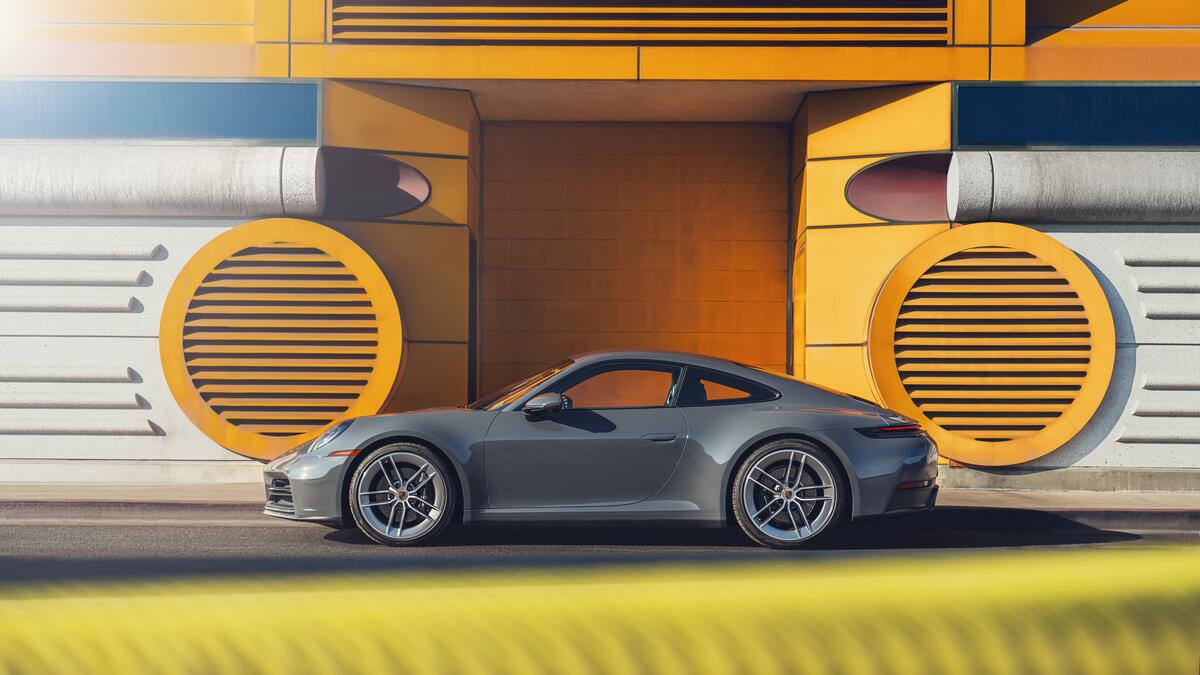
Porsche 911
"Porsche on the other hand, it's like, okay, timeless design. You know, they've, you kind of look at the overall shape of a 911."
The Porsche 911 is Porsche’s iconic sports car, known for its distinctive shape. The host is saying that even though newer 911s look a bit bigger over time, they still keep the same recognizable outline.
The Porsche 911 is defined by its rear-mounted flat-six layout and instantly recognizable silhouette. In the segment, the host points out how the overall shape and “silhouette” has grown slightly with each model year, but the core 911 look remains consistent.
autocross
"Porsche, when it comes to racing, they really want to offer that to the people coming to these events. And autocross is more or less, it was at the airport, but it's a large parking lot with cones with a prescribed route."
Autocross is like a timed driving course made with cones. You drive through a set path as fast as you can, focusing on turning and control more than straight-line speed.
Autocross is a timed driving event where cars run a short, cone-marked course, usually in a parking lot or airfield. Drivers aim for the fastest time through the prescribed route, so it’s a test of handling, braking, and driver technique rather than top speed.

Porsche Taycan
"And I mean like rivers in a deluge of rain. And they were doing autocross in anything from a Taycan to an old air-cooled 911 to a 356, they were out there killing it."
The Porsche Taycan is Porsche’s electric car. It’s fast and handles well, and here it’s used as an example of newer Porsches that can still be driven hard at events like autocross.
The Porsche Taycan is Porsche’s all-electric performance sedan, known for quick acceleration and a focus on high-speed stability. In this segment, it’s mentioned as one of the modern cars that participated in an autocross at Porsche Parade.

Porsche 356
"And I mean like rivers in a deluge of rain. And they were doing autocross in anything from a Taycan to an old air-cooled 911 to a 356, they were out there killing it."
The Porsche 356 is one of Porsche’s oldest classic models and a big deal to enthusiasts. Here it’s brought up to show that people were actually using these rare cars in an event, not just displaying them.
The Porsche 356 is Porsche’s early sports car, celebrated as the brand’s original classic. Mentioned alongside a Taycan and an air-cooled 911, it highlights how even vintage Porsches were driven in an autocross setting.
paint to sample
"But like, I mean, people showing like a 997 in a paint to sample color. I don't know. I struggle with it."
“Paint to sample” means the car is painted a custom color you pick from a sample, not a normal off-the-shelf color. The host is saying he prefers driving his cars rather than keeping them perfect like that.
“Paint to sample” means ordering a custom paint color based on a specific sample or reference, rather than choosing from standard factory colors. In the segment, it’s used to describe a very show-car-like Porsche that’s kept in a highly curated finish.
sap on the paint
"Because if we all drove them and all beat them up and they're all, you know, sap on the paint and on the, you know, and the body works all, you know, messed up."
“Sap” refers to sticky tree resin that can land on a car’s paint and be difficult to remove without damaging the clear coat. The host uses it as an example of how driving cars hard (and outside) can quickly mar a pristine finish.
Nathan Mers
"talks from different folks from the PCA. Nathan Mers was there. He gave an amazing talk about how to plan for your car after you pass away..."
Nathan Mers is the person giving a talk about what to do with a car when the owner passes away. He deals with situations where families need help selling the car.
Nathan Mers is described as giving a talk at the PCA about planning for what happens to a car after someone dies. The episode frames his expertise around handling calls from widows/widowers who need help selling a Porsche after a spouse passes away.
Columbia Valley Motor Cars
"Nathan Mers, he owns a company, Columbia Valley Motor Cars, where he represents cars that are being resold and he gets a lot of those calls from widows..."
Columbia Valley Motor Cars is the business Nathan Mers runs. In the story, it helps people sell a car when a family member has passed away.
Columbia Valley Motor Cars is the company Nathan Mers owns, and it’s presented as representing cars that are being resold. The episode ties the company’s role to helping families sell vehicles after a spouse dies.
Turbo S
"It was a, was it a turbo s? Maybe it was a, it was definitely a turbo. I don't know if it was a, I don't know if they may make a turbo s."
Turbo S is Porsche’s label for a stronger, higher-performance version of a model. The host is trying to figure out whether the electric Cayenne they saw was the top Turbo S trim.
Turbo S is Porsche’s naming for a higher-performance, more track-oriented version of a model within the Turbo lineup. In this segment, the host is unsure whether the Cayenne Electric they saw was specifically a Turbo S, but they treat it as the top-end variant.
computer screens everywhere
"And the inside is like classic, you know, kind of computer screens everywhere and, and, and all that."
This refers to Porsche’s modern digital cockpit approach, where the dashboard and controls rely heavily on large displays instead of traditional analog gauges and physical buttons. The host highlights this as a defining feel of the Porsche electric SUV interior.

new electric Cayenne
"going to be doing some videos upcoming on both the electric Macan and the new electric Cayenne."
The Cayenne is Porsche’s bigger SUV. This “new electric Cayenne” is the all-electric version, and the discussion is about whether it still drives like a Porsche in real life.
The Porsche Cayenne is Porsche’s larger SUV, and the “new electric Cayenne” refers to the upcoming all-electric version. The host is focusing on whether Porsche can keep its handling feel and drivability even with an EV layout.

Porsche Macan
"going to be doing some videos upcoming on both the electric Macan and the new electric Cayenne."
The Macan is Porsche’s smaller SUV. This “electric Macan” is the all-electric version, and the point here is that it’s still supposed to drive like a Porsche, not like a typical EV.
The Porsche Macan is Porsche’s compact SUV, and the “electric Macan” refers to the upcoming all-electric version. The host is discussing how Porsche’s electric powertrain and chassis tuning can still feel like a Porsche rather than “just an EV.”
horsepower
"Yeah. It's a big horsepower number on that. Dude, over 1000. Maybe over 1200. Something stupid."
Horsepower is a number that describes how strong the engine is. The host’s point is that having a huge horsepower number doesn’t automatically mean you can use it all the time—tires, traction, and driving conditions decide what you can actually get.
Horsepower is a measure of engine output power, but the host is specifically discussing it as a practical question: how much of that power you can actually use in real driving or on track. Their argument is that beyond a certain point, extra horsepower doesn’t translate into usable acceleration because you can’t apply it effectively through the corners and traction limits.
GT3RS 991.2
"So I jump into GT3RS 991.2 GT3RS. I think that was 520 horsepower. And I find myself a lot of times getting out on the back straight at VIR"
The 911 GT3 RS is Porsche’s hardcore track 911. The “991.2” part is the specific generation, and the host is saying that even with big power, you still have to manage it carefully on track.
A Porsche 911 GT3 RS (991.2) is a track-focused version of the 911, known for its high-revving naturally aspirated flat-six and serious aero. Here it’s used as the host’s reference point for how much power you can actually use on track without constantly overdriving the car.
VIR
"And I find myself a lot of times getting out on the back straight at VIR"
VIR is a famous race track in Virginia. The host is using it as an example of where you learn how much engine power you can actually apply in corners and on straights.
VIR is Virginia International Raceway, a road course in Virginia used by drivers to evaluate braking, cornering, and acceleration. The host mentions it to ground their “usable power” argument in real track behavior.

Cayman crew
"I think that's probably, I mean, the biggest plus for the Miata crew, right? Or the Boxster crew, or the Cayman crew, base lower horsepower,"
The Porsche Cayman is a sports car with the engine in the middle, which helps the car feel balanced. The host’s idea is that with less power, you can drive more confidently and learn faster instead of getting overwhelmed.
The Porsche Cayman is a mid-engine sports car, and the host groups it with the Boxster to make a point about balance and manageable power. Here, “Cayman crew” is used to contrast lower-horsepower cars that let you use more of the car’s capability without constantly fighting traction.
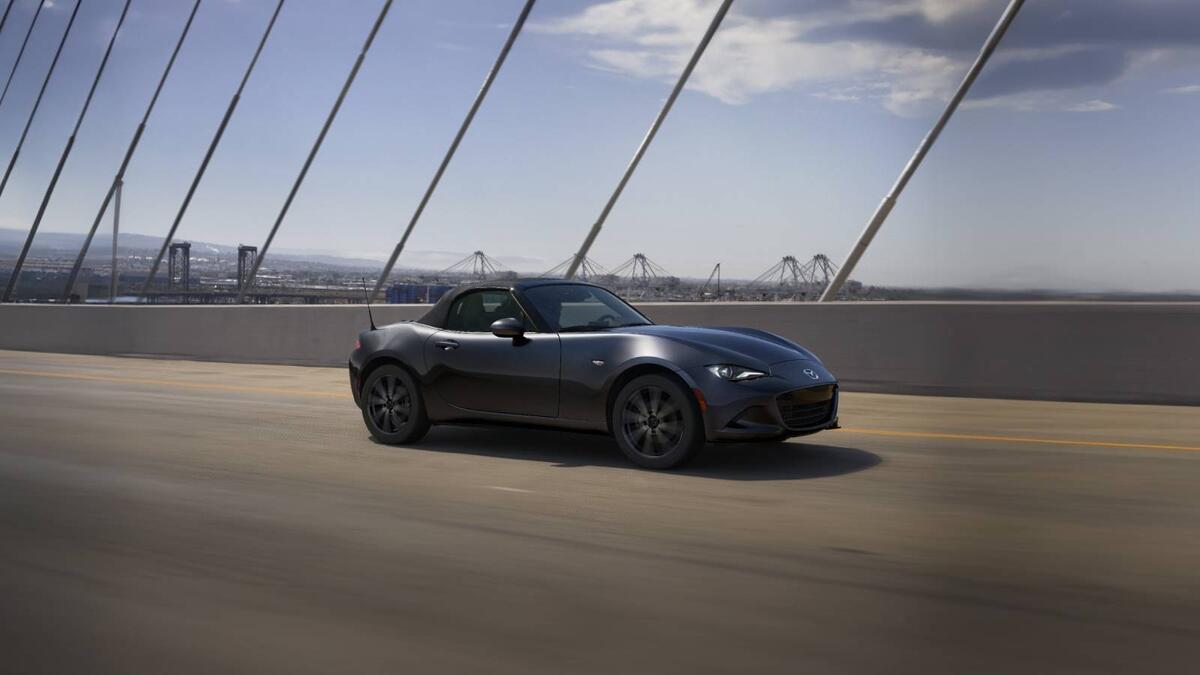
Mazda MX-5 / Miata
"...that's probably, I mean, the biggest plus for the Miata crew, right? Or the Boxster crew, or the Cayman c..."
The Miata is a small two-seat roadster made by Mazda. It’s built to be light and easy to drive, so it feels fun even without being a huge, powerful car. That’s why it often gets mentioned when people talk about great beginner-friendly sports cars.
The Mazda MX-5, commonly called the Miata, is a lightweight, driver-focused roadster that’s known for being fun and approachable. In podcast discussions, it’s often brought up as a “big plus” for people who like small, engaging sports cars—especially when compared to other roadsters. Its popularity also makes it a frequent reference point in conversations about what makes a car enjoyable to drive.
2018 Cayman S
"My car that I got back into HBDE was a 2018 Cayman S. You know, 300 horsepower had to get used to driving a turboed engine reacts very differently than naturally aspirated,"
The 2018 Porsche Cayman S is a mid-engine sports car, which generally makes it feel well-balanced. The host says it’s a great learning car because it’s powerful enough to be fun, but not so overwhelming that you can’t practice good driving habits.
The Porsche 2018 Cayman S is a mid-engine sports car that’s known for its balanced handling and driver-friendly behavior. The host specifically contrasts its turbocharged power delivery with naturally aspirated engines, and emphasizes how the car’s “50-50 balance” helps you learn and recover from mistakes.
turboed
"You know, 300 horsepower had to get used to driving a turboed engine reacts very differently than naturally aspirated, and you just, you have to get used"
“Turboed” means the car has a turbocharger. It can make power come on differently than a non-turbo engine, so you need to learn how the car responds before pushing it hard.
“Turboed” refers to a turbocharged engine, where a turbocharger forces more air into the cylinders. That changes the power delivery versus naturally aspirated engines, which can make traction and throttle control feel different—especially on cold tires or slick surfaces.
naturally aspirated
"You know, 300 horsepower had to get used to driving a turboed engine reacts very differently than naturally aspirated, and you just, you have to get used"
Naturally aspirated means the engine makes power without a turbo. The host is saying turbo engines and non-turbo engines feel different, so you have to adjust how you drive them.
Naturally aspirated describes an engine that draws air in without a turbocharger or supercharger. The host contrasts it with a turbocharged engine because the two deliver power differently, which affects how quickly torque arrives and how the car behaves while you’re learning.
50-50 balance
"You're having that 50-50 balance, you kind of get to play with different things, you could make some mistakes and get away with it."
“50-50 balance” means the car’s weight is split about evenly between the front and rear. The host says that helps the car feel predictable, so it’s easier to practice driving without the car suddenly getting unstable.
“50-50 balance” is shorthand for a near-even front-to-rear weight distribution. The host connects it to the mid-engine layout, explaining why the car can be more predictable and forgiving when you’re learning—because the chassis is less likely to feel “front-heavy” or “rear-heavy.”
low-moar aerodynamics
"it just, yeah, it's that there's like this little edge it has over the base, and I would probably attribute it to low-moar aerodynamics. You could do things a little differently through each one of the corner."
This is the host’s joking way of saying the RS has better aerodynamics. Better aerodynamics usually means the car sticks to the road more at speed, so it can handle corners with more confidence.
“Low-moar aerodynamics” is a colloquial way to say the RS’s extra aerodynamic features create more downforce and stability. In practice, that can let you take corners differently—often by increasing grip at the tires so the car stays settled at higher speeds.
downforce
"So downforce and otherwise? Yeah, downforce is really helping you out there. I can't really say the little tweak in horsepower that you get going from, you know, a 3 to an RS,"
Downforce is the “suction” effect from a car’s shape and wings that presses the tires onto the road. That helps the car stick better in fast corners. It’s why track-focused cars often have big wings and aero parts.
Downforce is the aerodynamic force that pushes a car’s tires harder onto the road. On a Porsche (especially an RS-style track car), features like wings and aero surfaces create downforce to improve grip and stability at speed. More downforce generally means better cornering traction, but it can also increase drag.
rear wing
"Mm-hmm. When I fantasized about cars and how I think they should look. It had the big wing on the rear, and it had the dive planes in the front, and you know, all these louvers, and you name it,"
A rear wing is the spoiler on the back of the car. Its job is to push the back tires down onto the road so the car grips better, especially at speed. It’s a common track-car feature.
A rear wing is an aerodynamic device mounted at the back of a car to generate downforce. By shaping airflow over and under the wing, it increases grip and helps keep the car stable under cornering loads. The segment connects the wing to the RS “track car” look and its real-world aerodynamic purpose.
dive planes
"Mm-hmm. When I fantasized about cars and how I think they should look. It had the big wing on the rear, and it had the dive planes in the front, and you know, all these louvers, and you name it,"
Dive planes are little fins near the front of the car. They help shape airflow so the front end can grip better. They’re one of the aero details you often see on track-focused cars.
Dive planes are small aerodynamic fins on the front of a car that help manage airflow and generate downforce. They’re designed to influence how air travels under and around the front end, improving front-end grip. In this segment, they’re part of the RS-style aero package the host associates with track performance.
louvers
"Mm-hmm. When I fantasized about cars and how I think they should look. It had the big wing on the rear, and it had the dive planes in the front, and you know, all these louvers, and you name it,"
Louvers are vent-like slats on the body of a car. They help air move the way the designers want—often for cooling or airflow control. On track cars, they’re both functional and part of the aggressive look.
Louvers are slatted openings or vents in a car’s bodywork used to direct airflow and manage cooling or aerodynamic flow. On performance cars, they can help reduce pressure in certain areas and improve airflow over/through body sections. Here, they’re mentioned as part of the RS “fins in the world” visual language that also ties to aero function.
full-spectrum scan tool
"Owning a full-spectrum scan tool is probably going to save you a lot of hardy, right? Because"
A scan tool is a device that plugs into your car to read error codes and live data. A “full-spectrum” one can check more systems than basic tools. It helps you figure out what’s wrong (or what’s working) without guessing.
A full-spectrum scan tool is an automotive diagnostic device that can read and interpret data from multiple vehicle control modules (ECUs). It helps you troubleshoot faults, monitor sensor readings, and verify what changes (like suspension or aero-related setups) are actually doing. The host frames it as a “specialized Porsche tool” that improves how effectively you own and maintain your car.
coding
"[3264.3s] tow it to the dealership because it needs to get coded, programmed, something needs to [3269.6s] get taught in, you have to have a test plan, and you need something to talk to the car to do that [3275.2s] test plan."
Coding is when a technician updates the car’s computer settings. It can be used to turn features on or off or make the car’s modules match what’s installed.
In this context, coding means changing software settings in the car’s control modules (ECUs) using a diagnostic tool. It’s commonly used to enable/disable features or configure options after repairs or upgrades.
Piwis
"[3275.2s] test plan. And so there's actually a couple ways you could go about it. There's the Chiwis, [3281.6s] which we joke, it's the Chinese Piwis, so there's... Can you explain what Piwis is for the audience? [3288.3s] It's not a dirty word, I promise. Piwis is the Porsche diagnostic system, comes on a laptop,"
Piwis is a Porsche computer tool that plugs into the car. It lets a shop diagnose problems and also update or change settings inside the car’s electronics.
Piwis is Porsche’s diagnostic system used at dealerships. It connects to the car with a laptop to perform tasks like coding, programming modules, and programming keys, plus turning features on and off.
program keys
"[3295.9s] every dealership has it, it talks to any car, it can do all the things, program keys, program [3301.6s] modules, coding, turn things on and off."
Programming keys means teaching the car to recognize a particular key. Without it, a new or replacement key may not start the car.
Programming keys is the process of teaching the car to recognize a specific key fob or transponder. It’s typically done with a Porsche diagnostic system so the immobilizer and related modules accept the new key.
PTV
"[3350.4s] Okay, there you go. Change the steering in my Boxster to different profiles and [3356.6s] turned on PTV. Yes, Porsche at Park Vectoring. Yeah. So even if you don't have the differential,"
PTV is a Porsche feature that helps the car send power to the wheels in a smarter way to improve cornering. In the discussion, it’s something you can enable through the diagnostic tool.
PTV (Porsche Torque Vectoring) is a Porsche system that helps manage how torque is distributed to improve handling. The host mentions enabling it via diagnostic programming, even when the differential hardware isn’t present.
Launch X431
"[3391.9s] you don't want to do that, you don't have a laptop and [3391.9s] you don't have Chiwis. What comes next? So I've actually used a tool, it's a Launch X431, I believe [3401.0s] it's called. They might be like $500 on eBay. I've actually used that quite a bit on Porsches and"
Launch X431 is a handheld/PC diagnostic tool you can use to talk to a car’s computers. It can do a lot of the same checking and setup work as dealer tools, but not everything.
Launch X431 is an aftermarket diagnostic scan tool used to communicate with a car’s electronic control modules. The host says it’s similar to Porsche’s Piwis for many tasks, but lacks the ability to program certain components (like a new DME).
engineering mode
"So it has, I think what we call is like engineering mode. So if you have a P this, they have option where you could do engineering mode, which basically gives you like full access to everything."
“Engineering mode” is a deeper, more powerful settings access inside the car. It lets you change things most owners can’t, so it’s easy to mess up if you don’t know what each setting does.
“Engineering mode” is an elevated diagnostic/programming access level that exposes more functions inside the car’s control modules. The tradeoff is risk: you can enable features or change settings that you don’t fully understand, which can cause problems.
PDK transmission
"that tool for resetting lights for if you have like a PDK transmission and you need to relearn or do the fill procedure, it'll do that."
PDK is Porsche’s automatic gearbox with two clutches that helps it shift fast. After some repairs or resets, the car may need a relearn procedure so the transmission works smoothly again.
PDK is Porsche’s dual-clutch transmission, designed to shift quickly by pre-selecting the next gear. Because it’s electronically controlled, certain service procedures (like relearning after a reset) may be required so it behaves correctly.
fill procedure
"that tool for resetting lights for if you have like a PDK transmission and you need to relearn or do the fill procedure, it'll do that."
A “fill procedure” is a service step that makes sure the transmission’s fluid and pressure are set correctly. It helps the gearbox operate properly after certain repairs or electronic resets.
A “fill procedure” is a transmission service routine that ensures the correct fluid/pressure state for the transmission’s hydraulic system. On electronically controlled gearboxes like Porsche’s PDK, it’s often part of relearning after certain resets or service work.
cam deviation
"If you've got a read out, you know, cam deviation, it can do that."
“Cam deviation” is when the car’s computer sees the cam timing is not matching what it expects. That can point to a timing control or sensor problem.
“Cam deviation” refers to a diagnostic measurement comparing the commanded camshaft position versus the actual position. When it’s out of range, it can indicate issues with timing control, sensors, or related actuator components.
check engine light
"even if you just pick up like they make versions that are maybe 80 bucks or 120 bucks that can talk to your car and do a lot of these things like the the functionality is really good for nothing else than when your car gets a check engine light or you have something."
The “check engine light” is a warning that the car’s computer found a problem. A scan tool can read the stored code so you can figure out what it is and whether it’s safe to keep driving.
The “check engine light” is the dashboard warning for emissions/engine-related fault codes stored in the car’s control modules. Enthusiasts often use diagnostic tools to read the code and determine whether the issue is safe to drive or needs immediate attention.
limp mode
"Can I keep driving at home? Can I? Is it something where it goes into limp mode? What what is it?"
“Limp mode” is when the car reduces power to protect itself after it detects a problem. It’s meant to get you to a place where it can be checked.
“Limp mode” is a protective strategy where the car limits power and/or certain functions after detecting a serious fault. It’s designed to help you drive to a safe location or shop without causing further damage.
OBD port
"You plug these things into your OBD port, and some of them are Bluetooth, so you just have a little dongle you plug in and it reads to it."
The “OBD port” is the car’s built-in diagnostic socket. Plugging in a scanner lets you read error codes and see what the car’s computer is reporting.
The “OBD port” is the standardized diagnostic connector used to communicate with the car’s onboard computer(s). Plug-in scanners use it to read stored fault codes and live data so you can diagnose issues without a dealer.
Bluetooth
"You plug these things into your OBD port, and some of them are Bluetooth, so you just have a little dongle you plug in and it reads to it."
Here, “Bluetooth” just means the scanner can talk to your phone wirelessly. You plug in a small dongle, and the app shows the codes.
In this context, “Bluetooth” refers to wireless communication between a diagnostic dongle and a phone/tablet. It lets the scanner send code readings to an app without a wired connection.
code number
"And so for me, that's huge, because if I get any kind of light or if my car isn't running right and I don't have a light, you can go in and it will give you a code number."
Modern cars have a computer that notices when something isn’t right. It saves a specific “code number” so you can look up what problem it’s pointing to.
When a car’s computer detects a problem, it stores a diagnostic trouble code (DTC). The “code number” is the identifier you can look up to learn what system is failing and what to check next.
misfire on cylinder
"And so for me, that's huge... it will say misfire on cylinder, you know, two. And you're like, is that a maybe that's an injector or maybe that's a spark plug or whatever."
A “misfire on cylinder” means one cylinder isn’t igniting properly, so combustion becomes uneven. That can be caused by ignition issues (like a spark plug/coil) or fuel delivery problems (like an injector).
injectors
"Or maybe it's something if you're even slightly DIY, then you go on FCP Euro, and you learn how to change out your spark plugs, or change your injectors, which is super easy."
Injectors are the parts that spray fuel into the engine. If one isn’t working right, the engine can run rough or misfire.
Fuel injectors meter and spray fuel into the engine at the right time. If an injector is clogged, leaking, or failing, it can cause rough running and misfire-related diagnostic codes.
spark plugs
"Or maybe it's something if you're even slightly DIY, then you go on FCP Euro, and you learn how to change out your spark plugs, or change your injectors, which is super easy."
Spark plugs are the small parts that create the spark to light the fuel in the engine. If they’re old or dirty, the engine can misfire.
Spark plugs provide the electrical spark that ignites the air-fuel mixture in each cylinder. If they’re worn or fouled, they can contribute to misfires and trigger fault codes.
brake flushes
"If you get into start doing your brakes and you can do brake flushes, you know, and have the computer do an ABS test, you can you can do pretty much everything with these things, which is really cool."
Brake fluid can wear out and pick up moisture. A brake fluid flush replaces it so the brakes stay consistent and safe.
A brake fluid flush replaces old brake fluid with fresh fluid and removes trapped air/contaminants. Brake fluid absorbs moisture over time, which can reduce braking performance and contribute to corrosion.
ABS test
"If you get into start doing your brakes and you can do brake flushes, you know, and have the computer do an ABS test, you can you can do pretty much everything with these things, which is really cool."
ABS is the system that helps prevent wheel lock-up during hard braking. An ABS test checks whether the ABS system and sensors are working properly.
ABS (anti-lock braking system) tests verify that the ABS module and wheel-speed sensors can detect wheel slip and command the hydraulic system correctly. Running an ABS test via a scan tool helps confirm whether the ABS system is healthy.
P0456
"then you have a fault in the DME and let's say it's P0456 evap week. You can go into lemon manuals... it'll give you the definition of the code, why it's set, and then troubleshooting steps."
P0456 is a fault code that usually means there’s a small leak in the car’s emissions system that handles fuel vapors. It’s often something like a gas cap or a small hose leak.
P0456 is a standardized diagnostic trouble code that typically indicates a small leak in the evaporative emissions (EVAP) system. EVAP-related issues can come from a loose gas cap, cracked hoses, or a failing purge/vent component.
DME
"So if you scan the car, then you have a fault in the DME and let's say it's P0456 evap week."
DME is Porsche’s engine computer. It watches engine sensors and stores fault codes when something goes wrong.
DME stands for “Digital Motor Electronics,” Porsche’s engine control unit (ECU). It monitors engine sensors and sets fault codes when it detects problems.
Request an Explanation
Heard something you'd like explained? We'll add it to this episode.
Sign in to request explanations for terms you heard.
Want to learn more?
Browse our glossary for plain-English explanations of automotive terms, jargon, and concepts.
Help improve this episode
See something that's not quite right? Our annotations are AI-generated and can sometimes miss the mark. Click the flag icon on any annotation to suggest a correction.