Best Hybrids, Plug-in Hybrids and EVs
About this episode
Gas prices are high, so the show pivots to hybrids, plug-in hybrids, and EVs—then gets specific with U.S. News’ 2026 “best of” picks. Senior editor Tony Markovich explains their methodology (EPA fuel economy/EV range/parking plus AC reliability and automotive-press input) and highlights winners like the Nissan? (actually Nissan Leaf), Hyundai Tucson Hybrid, Kia Telluride Hybrid, Honda Civic Hybrid, Toyota Sienna, Hyundai Ioniq 5, plus luxury/EV standouts from Lucid, Rivian, Lincoln, and Cadillac. Afterward, John Paul reviews the 2026 Infiniti QX80 Autograph vs Sport, then tackles a caller’s intermittent Lexus ABS/tire-pressure issues and offers a safety-first diagnostic approach. The rest covers home-tool choices (battery vs air) and quick DIY troubleshooting tips.
In this episode we chat with Tony Markovich senior editor for auto at US News. We also review the ultra luxury Infiniti QX80 Autograph. Car questions email me-- [email protected]
hybrid or a plug-in hybrid
"So gas is expensive and a hybrid or a plug-in hybrid can save you money on gas because it gets better gas mileage, obviously."
A hybrid uses gas and electricity together to get better mileage. A plug-in hybrid can be charged at home, so you can drive on electricity for part of your trip.
A hybrid uses both a gasoline engine and an electric motor/battery to improve efficiency. A plug-in hybrid (PHEV) can be charged from an external power source, which often allows more electric-only driving than a standard hybrid.
electric vehicle
"An electric vehicle, well, you don't need gas at all. You can just charge it up at home."
An electric vehicle doesn’t use gas. You charge it—often at home—so your “fuel” is electricity.
An electric vehicle (EV) runs on an electric motor powered by a battery, rather than using gasoline. Because you can charge it at home or at public chargers, EV ownership can reduce or eliminate fuel costs depending on electricity prices and charging habits.
home charger
"And we might even talk about a home charger in a bit as well."
A home charger is a special charging station for your EV at your house. It helps you charge more easily and often faster, so the car is ready when you need it.
A home charger is a dedicated EV charging unit installed at your residence, typically providing faster and more convenient charging than standard outlets. Having one can make EVs more practical for daily driving because you can top up overnight.
U.S. News
"With us on the phone is Tony Markovich. He is the senior editor at U.S. News. And they just came out with the best plug-in hybrid and electric vehicles for 2026."
U.S. News is a publication that puts out car rankings. They’re saying they recently released a list of top plug-in hybrids and EVs for 2026.
U.S. News is referenced as the source of a ranking list for the “best plug-in hybrid and electric vehicles for 2026.” Listener context: these lists are editorial evaluations that can influence shopping decisions, but they may use specific scoring criteria.
fuel economy, EV range, and parking data from the EPA
"So, we have evaluated the fuel economy, EV range, and parking data from the EPA for all the different vehicles. But we also include data points like the AC reliability."
The hosts reference EPA data as part of their evaluation process. The EPA publishes standardized testing results, which helps compare vehicles consistently—especially for fuel economy and EV range.
AC reliability
"But we also include data points like the AC reliability. And then we also factor in the defensive opinion from the automotive press."
This means how likely the car’s air conditioning is to work reliably for years. If the A/C has problems, it can make the car uncomfortable even if the powertrain is great.
“AC reliability” refers to how dependable a vehicle’s air conditioning system is over time. For hybrid and EV owners, a failing A/C can be especially noticeable because comfort features are used frequently and the systems are integrated with the car’s electrical systems.
defensive opinion from the automotive press
"And then we also factor in the defensive opinion from the automotive press. So, we want it to be a vehicle that has a good gas mileage and an easy range, and part quickly, but we also want something that you're going to be enjoying"
They’re also looking at what car reviewers think, not just test results. That helps capture things like how enjoyable the car feels to drive and live with.
This appears to mean the hosts consider reviews and evaluations from automotive journalists (“the automotive press”) as part of their scoring. It’s a way to balance lab-tested metrics (like EPA numbers) with real-world impressions such as drivability, comfort, and long-term ownership expectations.
e-miles per gallon number
"And when people look at the window sticker or go to the EPA and they see that e-miles per gallon number, that could get a little bit confusing to people, too, right?"
That “e-miles per gallon” number is a comparison tool. It tries to tell you how efficient an electric car is by converting electricity use into a gas-like MPG number.
“Miles per gallon equivalent” (often shown as “e-miles per gallon”) is a way to compare EVs and plug-in hybrids to gas cars. It translates electricity use into an equivalent fuel-economy number, which can be confusing because it’s not literal gasoline MPG.
miles per gallon equivalent
"Yes. Yes. You're thinking about the miles per gallon equivalent. Yep."
MPGe is a “fair comparison” number. It converts electricity into a gas-style efficiency rating so you can compare an EV to a gas car, even though the EV doesn’t use gasoline.
Miles per gallon equivalent (MPGe) expresses how much energy an EV uses compared to the energy content of one gallon of gasoline. It helps you compare efficiency across different powertrains, but it doesn’t mean the car is actually burning gasoline.
evaluation of how to give people an idea of how efficient the vehicle is
"So, they came up with that evaluation of how to give people an idea of how efficient the vehicle is. Yeah, and let's go over some of your top picks here."
They’re discussing how car reviewers measure and report “efficiency” so you can compare cars fairly. For hybrids and EVs, the reported numbers are based on standardized tests, not just real-world driving.
The hosts are talking about how efficiency is communicated to shoppers, usually through standardized testing and combined fuel-economy figures. For hybrids and EVs, these numbers are meant to let you compare different powertrains on a consistent basis.
subcompact hybrid
"In fact, the best subcompact, a reader just wrote to me this week and they were looking for a hybrid. ... For this award, it was the Nero hybrid, so that one gets up to 53 miles per gallon combined."
A “subcompact hybrid” is a small car class that uses a hybrid powertrain (an engine plus an electric motor/battery) to improve efficiency. The key idea is that you get better fuel economy than a typical gas-only subcompact, while still keeping the car easy to park and maneuver.
miles per gallon combined
"For this award, it was the Nero hybrid, so that one gets up to 53 miles per gallon combined. And it's just a great all-around value because it's a pretty good price."
This is a combined fuel-economy number that averages how the car does in different kinds of driving. It helps you compare one hybrid to another without needing to look at separate city and highway results.
“Miles per gallon combined” is a single fuel-economy number that blends multiple driving modes (typically city and highway) into one figure. For hybrids, it’s especially useful because it reflects how the car performs across different conditions rather than just one type of driving.
small station wagon, more than a small SUV
"... but they like to go out on weekends, they like to travel. And it does, I look at it, and maybe it might be somewhat age-related, but I look at it almost as a small station wagon, more than a small SUV. Yeah, it does have that line, it almost looks a little wagon, kind of hatchback ride."
They’re saying the car feels more like a wagon than an SUV. That usually means it’s practical for cargo and has a more car-like shape, even though it’s marketed as a small crossover/hatch.
This is a styling/packaging concept: some hatchbacks and small crossovers are designed to feel more like a wagon—flat-ish roofline, practical cargo space, and a “car-like” ride—rather than a tall SUV. The hosts are using this to describe how the vehicle’s shape and usability match buyers’ needs.

Tucson Hybrid
"Yeah, and your next vehicle, kind of from the same parent group is the Hyundai Tucson hybrid, which may be my next new car actually. Yes, the Hyundai Tucson is very popular, that one has won other awards from us as well. That starts at around 32, 33,000 and gets up to 38 miles per gallon combined."
A hybrid SUV like the Hyundai Tucson hybrid uses both a gas engine and an electric motor. That usually helps it save fuel, and it can still be a normal, everyday SUV with good space and features.
The Hyundai Tucson hybrid is a compact SUV that pairs a gasoline engine with an electric motor to improve fuel economy. In this segment, the hosts highlight its real-world practicality—space, comfort, and a long list of modern features—while still delivering strong combined MPG for the class.
Hyundai and Kia
"Hyundai and Kia in general have really set their games up on doing the most interesting design. And like you mentioned, just really good use of materials on the interior to make them feel more upscale than the price suggests. Yeah, and it was a time when, you know, we looked at Hyundai specifically as, well, it's an okay vehicle because it's cheap."
Hyundai and Kia are connected brands, and they tend to build cars that feel more “premium” than you’d expect for the price. The hosts are basically saying you get a lot of features and nicer materials.
Hyundai and Kia are closely related automakers under the Hyundai Motor Group, and they often share engineering and platform strategies. In this segment, the hosts credit the brands’ recent design and feature approach—offering more content and a more upscale feel for the money.

Kia Telluride Hybrid
"And it seems like every time I turn around, the Kia Telluride, whether it's a hybrid or not, seems to win an award. And no different this time with the best midsize SUV, the Telluride Hybrid, right? Yes, and that one, the .27, they just recently redesigned that starting the new generation and the hybrid is one of the new things."
The Kia Telluride Hybrid is a midsize SUV variant that adds hybrid powertrain technology to the Telluride’s established family-focused formula. The hosts mention it as part of a redesigned “new generation,” emphasizing improved efficiency and a more mature look.
new generation
"Yes, and that one, the .27, they just recently redesigned that starting the new generation and the hybrid is one of the new things. That one gets up to 35 miles per gallon combined."
When people say “new generation,” they mean a major update to the car—new design and usually new technology. Here, the hybrid option is part of that bigger redesign.
A “new generation” means the model has been redesigned with updated engineering, styling, and often new powertrains. In this context, the hosts are saying the Telluride’s hybrid version is tied to that redesign, not just a minor refresh.

Land Rover Discovery
"“...the Santa Fe design, which looks like they stole from the Land Rover Discovery, but yeah, it's got a little bit different shape.”"
They’re comparing the look of another vehicle to the Land Rover Discovery. It’s about styling similarities, not performance or specs.
The Land Rover Discovery is referenced as another design influence in the hosts’ comparison of SUV styling. They’re not discussing the Discovery’s engineering here—just how the shapes and cues resemble it.
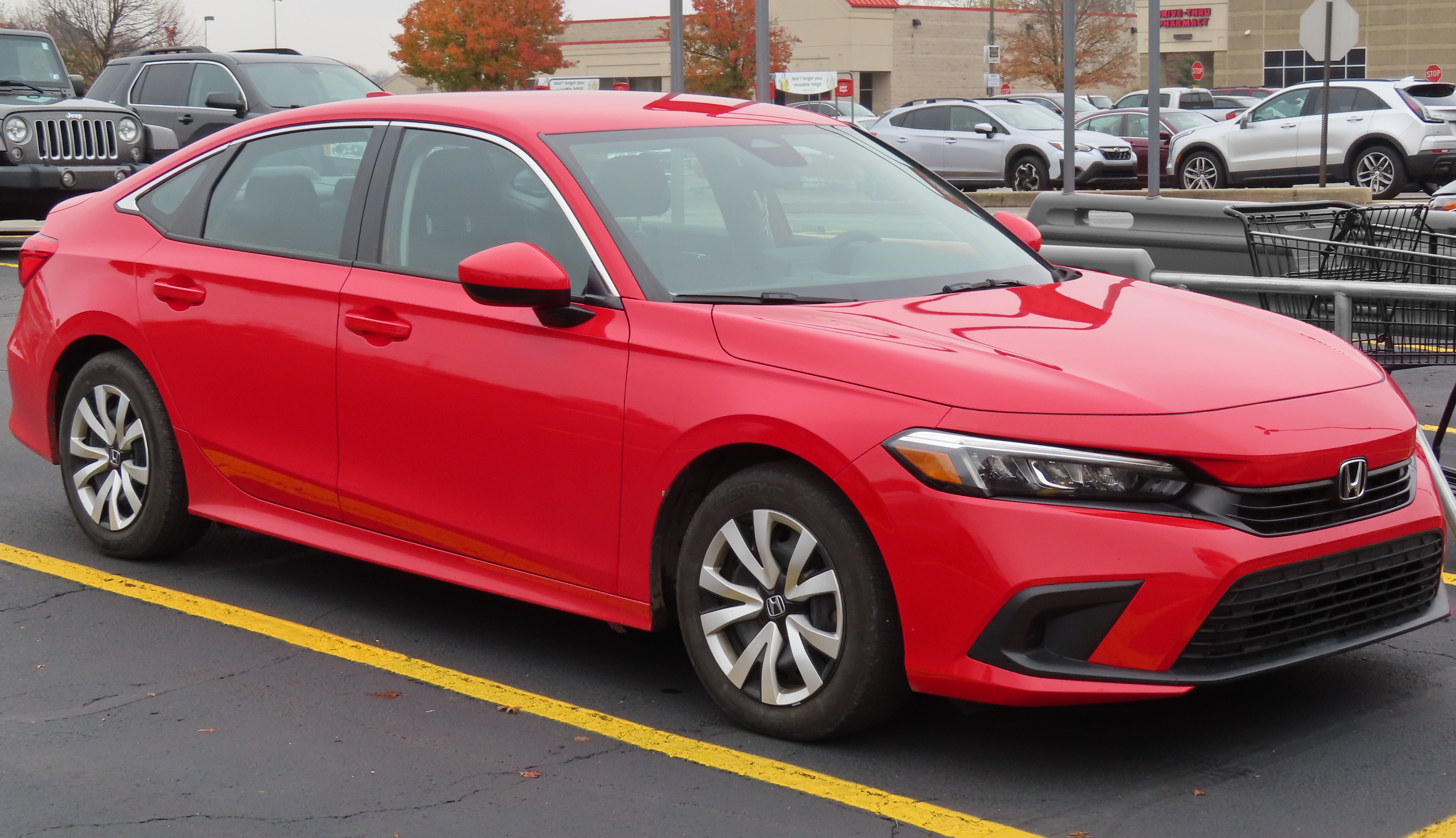
Honda Civic
"“And the best hybrid compact is probably one of the best compacts. And that's the Honda Civic, right?”"
They’re talking about the Honda Civic as a hybrid that’s enjoyable to drive. The point is that it can feel responsive in everyday driving, not just be “efficient on paper.”
The Honda Civic is being discussed as the best hybrid compact in the segment. The hosts highlight that its hybrid system can deliver strong real-world drivability, not just fuel savings.
hybrid powertrains
"“And one thing that if people haven't driven, you know, some of these more modern hybrids, the hybrid powertrains are not just designed for the fuel economy these days. They also use them to help with things like acceleration.”"
A hybrid doesn’t just save gas. It can also help the car feel quicker when you press the gas, because the electric part can add power right away.
The hosts explain that modern hybrid powertrains are designed for more than fuel economy. They also use the electric motor(s) to improve acceleration and overall responsiveness, especially in stop-and-go driving.

Toyota Sienna
"“And the minivan segment, and there's not a lot of minivans left anymore, but the Toyota Sienna has always been a hit for people looking for a minivan.”"
They’re saying the Toyota Sienna is one of the best-known minivans. Even though fewer people buy minivans now, the Sienna is still popular for its usefulness.
The Toyota Sienna is called out as a standout in the minivan segment. The hosts frame it as a proven choice for buyers who still want the practicality of a minivan.

Kia Carnival
"[608.1s] does a little bit better than the Carnival from Kia and legendary Toyota quality."
The Kia Carnival is a minivan made for families. Here, the hosts mention it because they’re comparing how efficiently different hybrid minivans can run.
The Kia Carnival is a minivan known for family-friendly packaging and comfort. In this segment, it’s used as a comparison point for hybrid minivan fuel economy.
all-wheel drive
"[620.0s] And it also is available with all-wheel drive, which is something a lot people are looking for these days."
All-wheel drive (AWD) sends power to more than just the front or rear axle, improving traction in rain, snow, and uneven surfaces. In the context of hybrids and EVs, AWD is often a key feature for buyers who want confidence year-round.
fully electric
"[625.4s] Yeah. Well, if you don't want to buy gas at all, you can go fully electric."
A fully electric car doesn’t use gas at all—it runs on a battery. Instead of stopping at a gas station, you charge it, usually at home or at public chargers.
“Fully electric” describes a vehicle that runs only on electricity stored in a battery, with no gasoline engine. This matters because it changes how you fuel (charging instead of gas) and how you think about range and charging access.

Nissan Leaf
"[630.1s] And I remember when the Nissan Leaf was first introduced and it said, you know, [636.8s] it could go 100 miles on a charge..."
The Nissan Leaf is an electric car that’s meant to be practical and affordable. The hosts are talking about how the Leaf started with a certain range and usefulness, and how newer versions aim to be even better.
The Nissan Leaf is a mainstream electric hatchback that helped popularize affordable EVs. The hosts discuss its early promise (range and practicality) and then note how today’s Leaf has evolved with updated styling and improved range on some trims.
miles on a charge
"[630.1s] And I remember when the Nissan Leaf was first introduced and it said, you know, [636.8s] it could go 100 miles on a charge..."
Miles on a charge is how far an EV can go before the battery runs out. It’s one of the biggest numbers people look at when deciding if an electric car fits their daily driving.
“Miles on a charge” is a way to describe EV range—how far the car can travel using the energy stored in its battery. It’s a key buying metric because real-world range depends on driving speed, temperature, and charging conditions.
EV range (300+ miles)
"[677.7s] And as some trims have more than 300 miles of range, [682.6s] it kind of fits the look to be a more hatchback style..."
When people talk about “300+ miles of range,” they mean the EV can drive that far on a single charge. More range usually means fewer charging stops.
The segment mentions trims with “more than 300 miles of range,” which refers to longer battery capacity and/or improved efficiency. Higher range reduces charging frequency and can make EVs more practical for longer trips.

Hyundai IONIQ 5
"[707.3s] the Hyundai IONIQ 5 is two of them that we have. [713.9s] Again, Hyundai's not afraid to go places where nobody's been before... [731.3s] It starts right around 35,000."
The Hyundai IONIQ 5 is an electric SUV-style car that many people like. The hosts mention it because it’s well-liked, award-winning, and priced starting around the mid-$30,000 range.
The Hyundai IONIQ 5 is a popular EV crossover that’s been recognized with multiple awards. In this segment, it’s highlighted as one of the electric vehicles the hosts have in their fleet and as a strong value proposition starting around the mid-$30,000s.
miles of range
"You can get more than 300 miles of range with it as well. And the gravity is up to 450 miles of range."
“Miles of range” means how far the car can go before the battery runs low. Higher range usually means fewer charging stops on longer trips.
“Miles of range” is the estimated distance an EV can travel on a full charge under standardized test conditions. It’s one of the most important metrics for comparing EVs because it affects trip planning and charging frequency.

Rivian trucks
"The Lucid gravity, the Lucid air, and the Rivian trucks all did well in your testing. And some of its range, some of its performance, and some of it I would think like the Lucid air, just a fantastic luxury car."
Rivian’s truck lineup (commonly the R1T) is an electric vehicle platform aimed at both daily usability and adventure use. Here, it’s mentioned alongside Lucid as doing well in the hosts’ testing for range/performance/tech.

Lucid Gravity
"The Lucid gravity, the Lucid air, and the Rivian trucks all did well in your testing. And the gravity is up to 450 miles of range."
Lucid’s Gravity is Lucid’s electric SUV offering, positioned as a more spacious alternative to the Air. The hosts call out its range target and frame it as part of a broader “new EV” wave.

Lucid Air
"The Lucid gravity, the Lucid air, and the Rivian trucks all did well in your testing. And some of its range, some of its performance, and some of it I would think like the Lucid air, just a fantastic luxury car."
The Lucid Air is an electric luxury car. The big idea here is that it can go a long distance on a charge and also recharge relatively quickly compared with many EVs.
Lucid’s Air is a luxury electric sedan known for very high efficiency and long driving range. In this segment, the hosts highlight its range and how it pairs that with strong charging capability.
electric motors
"But the other good thing about those is they've been able to make their electric motors really small, and then they also have really quick charging capabilities."
An electric motor is what actually drives the wheels in an EV. The point they’re making is that modern EVs can fit the motor more efficiently, which helps the car work better overall.
Electric motors convert electrical energy into motion, and their size can matter for packaging and vehicle design. The hosts note that newer EVs can use smaller motors while still delivering strong performance, which helps overall efficiency and layout.
quick charging capabilities
"and then they also have really quick charging capabilities. So it's kind of like a total package with these new electric vehicles up there, timing out all these bumps."
Quick charging is how fast the EV can recharge when you plug into a fast charger. It matters because it reduces waiting time on road trips.
Quick charging capabilities refer to how fast an EV can add usable energy at compatible fast-charging stations. This is crucial because even a high-range EV can be inconvenient if charging takes too long.

Cadillac Lyric
"...it ahead. And a vehicle I've never driven is the Lyric. And the Cadillac Lyric is a pretty interesting ..."
The Cadillac Lyriq is an all-electric luxury SUV. Instead of using gasoline, it uses a battery to power the vehicle, and it’s designed to feel like a premium Cadillac inside.
The Cadillac Lyriq is a battery-electric luxury SUV from Cadillac, built around an EV-focused driving experience and modern interior tech. It’s brought up as an example of Cadillac’s electric lineup, especially when comparing how different luxury EVs feel and what they offer. Since the host notes they haven’t driven it, it’s likely discussed as a notable EV option worth understanding.
frunk
"It's one of those vehicles that I know it doesn't have a front trunk or a frunk or whatever the current terminology is. But it looks like you could put four people in it and four people's worth of stuff in the back of it."
A “frunk” is a front trunk—extra storage space in the front of a car, common on many battery-electric vehicles because the engine bay is absent. The hosts say the Lyriq doesn’t have a frunk, which is a packaging detail that affects how you use cargo space day to day. EVs can vary a lot here depending on battery and crash-structure design.
Tesla full self-driving mode
"And Cadillac, and I guess GM specifically, a lot of people talk about the Tesla full self-driving mode. But Cadillac seems to do a little bit better job. It works well but it also keeps an eye on the driver..."
They’re comparing Tesla’s driver-assist feature to Cadillac’s. The main point is that Cadillac’s system is designed to watch the driver and keep you involved, rather than acting like it’s fully autonomous. It’s a reminder that these systems still require attention.
The hosts reference Tesla’s “full self-driving mode” as a benchmark for advanced driver assistance. They argue Cadillac’s approach is better because it “keeps an eye on the driver,” meaning the system emphasizes driver supervision rather than fully autonomous behavior. This highlights a key difference between marketing terms and real-world safety design.
Super Cruise
"So the Super Cruise system works really well and I assume it works probably even better in an electric car because it can probably modulate the speed a little bit better. Yes, the Super Cruise is really impressive. I've driven the Super Cruise in a couple of different vehicles and they work with flex roads so it's not everywhere."
Super Cruise is Cadillac’s advanced driver-assist feature that can help with steering and speed on certain roads. It doesn’t work everywhere—only on supported routes—and it still requires the driver to stay attentive. The hosts like it because it’s helpful without pretending the car can drive completely on its own.
Super Cruise is Cadillac’s hands-free driver-assistance system that can steer and manage speed under certain conditions. The hosts say it works with “flex roads,” meaning supported mapped highways/roads where the system is designed to operate. They also compare it favorably to Tesla’s “full self-driving mode,” emphasizing driver monitoring as an important safety element.
flex roads
"I've driven the Super Cruise in a couple of different vehicles and they work with flex roads so it's not everywhere."
“Flex roads” is basically the idea that the system only works on certain approved roads. Even if the car is capable, it may not be allowed to use the feature everywhere. Before relying on it, you’d want to check whether your typical routes are supported.
“Flex roads” refers to the limited set of mapped, supported roads where Super Cruise can operate. Driver-assist systems like this rely on high-definition mapping and road eligibility, so performance can vary by location. This is a practical limitation buyers should understand before assuming hands-free capability is universal.
monitor you to make sure you think that you're on the road still
"And it's going to monitor you to make sure you think that you're on the road still."
It sounds like a safety system that watches what you’re doing while driving. If it thinks you’re drifting or not paying attention, it can warn you so you stay in your lane.
This sounds like a driver-assistance feature that monitors driver attention and/or lane position to help keep you on the road. Many modern vehicles use cameras and sensors to detect lane drift and driver behavior, then provide alerts or steering/braking assistance.

Infiniti QX80
"When we come back, we are going to talk about the Infiniti QX80 autograph edition and how it stacks up against the other Infiniti QX80 that I drove about a month ago."
The Infiniti QX80 is a big luxury SUV. “Autograph edition” usually means a nicer version with extra features and styling. They’re basically asking whether that upgraded trim is worth it compared with a regular QX80.
The Infiniti QX80 is a full-size luxury SUV, and the “autograph edition” is a higher-trim package that typically adds unique styling and comfort features. In this segment, the hosts compare it against another Infiniti QX80 they previously drove, focusing on how the special edition stacks up.

Lincoln Navigator
"That puts it in the same size class as say a Cadillac Escalator and Lincoln Navigator and it's a legitimate rival to the Escalade Navigator and Lexus LX."
The Navigator is another big luxury SUV. Mentioning it is a way to tell you the QX80 is competing in the same “full-size luxury” category.
The Lincoln Navigator is one of the benchmark full-size luxury SUVs the host uses to place the Infiniti QX80 in the same market segment. Comparing size and class helps listeners gauge how the QX80 will feel in daily use and parking versus other large SUVs.

Lexus Lx
"That puts it in the same size class as say a Cadillac Escalator and Lincoln Navigator and it's a legitimate rival to the Escalade Navigator and Lexus LX."
The Lexus LX is Lexus’s big luxury SUV. The host is saying the QX80 is trying to compete with that kind of buyer.
The Lexus LX is a flagship full-size luxury SUV, and the host lists it as a direct competitor to the Infiniti QX80. This signals that the QX80 is aimed at buyers who want a large, premium, road-trip-capable SUV.
twin-turbo 3.5 liter V6
"Same driveline underneath, twin-turbo 3.5 liter V6 with 450 horsepower, 516 foot-pounds of torque, 9-speed automatic transmission, standard four-wheel drive on the higher trim levels."
“Twin-turbo” means the engine uses two turbochargers to make more power. It helps the SUV feel strong without needing a huge engine.
A twin-turbo setup uses two turbochargers to force more air into the engine, improving power and torque. Pairing that with a 3.5-liter V6 is a way to get strong performance while potentially being more efficient than a larger naturally aspirated engine.
9-speed automatic transmission
"Same driveline underneath, twin-turbo 3.5 liter V6 with 450 horsepower, 516 foot-pounds of torque, 9-speed automatic transmission, standard four-wheel drive on the higher trim levels."
A 9-speed automatic transmission has more gear ratios than older multi-gear automatics, which can help keep the engine in its best efficiency or power range. In a large SUV, that can improve both smoothness and real-world drivability.
four-wheel drive
"Same driveline underneath, twin-turbo 3.5 liter V6 with 450 horsepower, 516 foot-pounds of torque, 9-speed automatic transmission, standard four-wheel drive on the higher trim levels."
Four-wheel drive (4WD) sends power to both the front and rear axles, improving traction in snow, rain, or uneven surfaces. The host notes it’s standard on higher trims, which matters for buyers who want confidence in bad weather.
V8
"The previous models two years ago had a V8. The V6 tops the horsepower and torque in big numbers."
They’re saying the older version used a V8 engine, but the newer one uses a V6. That can change the feel of acceleration and how the engine makes power.
The host contrasts the new V6 twin-turbo setup with the previous generation’s V8. This is a meaningful change because moving from a V8 to a turbo V6 can alter how the SUV delivers power (often more torque) and how it behaves under load.
24-speaker Clipschk stereo
"...they both have the 24-speaker Clipschk. Jesse and I went over how to pronounce this before. K-L-I-P-S-C-H stereo."
They’re talking about a high-end sound system with lots of speakers. More speakers usually means better surround-style sound and clearer audio at different volumes.
The “24-speaker Clipschk” system is a premium audio setup branded by Klipsch, using many speakers to create a fuller, more immersive soundstage. The key point is that it’s an equipment upgrade that can significantly change the in-cabin audio experience.
massaging front seats
"Massaging front seats and in the Autograph you get quilted leather in all three rows. I took my neighbor out one night..."
Massaging seats have built-in mechanisms that gently vibrate or press to help you feel less tired. It’s a comfort feature you usually only see on higher-end trims.
Massaging seats use built-in motors and actuators to apply vibration or pressure patterns to reduce fatigue and add comfort. In this segment, the hosts highlight it as a luxury feature, especially when paired with other premium touches like quilted leather.
hands-free highway driving system
"Plus similar to Super Cruise Infinity also has hands-free highway driving system. That works pretty well... Unless I can take a nap inside the car and have the car take me to where I want to go... self-driving. Not there yet."
It’s tech that can take over some driving tasks on certain highways. It doesn’t mean the car is fully driving itself, so you still have to pay attention.
A hands-free highway driving system is an advanced driver-assistance feature that can control steering (and sometimes other functions) on mapped roads under specific conditions. The important nuance is that it’s not full self-driving—drivers must monitor the road and be prepared to intervene.
trim level value comparison
"Unless you need second row luxury the Sport's probably a better value. Still the last Sport that I drove that had everything imaginable in it was $103,000."
They’re comparing different versions (trims) of the same SUV. The key idea is: figure out what you’ll actually use—like rear-seat comfort—before paying extra for the most expensive trim.
This segment is essentially a “which trim is the better deal?” discussion. The host compares price versus what features you actually gain—especially whether you care about second-row luxury and styling—so listeners can decide if paying for the top trim is worth it.
flagship
"You get almost all the top of the line flagship whatever you want to call it experience. You maybe look a little sharper in it if you're somebody who likes that kind of thing."
“Flagship” just means the best, most premium version a brand sells. Here, they’re saying the cheaper Sport trim still feels like you’re getting most of the top-tier experience.
“Flagship” is marketing language meaning the top-of-the-line model or the most feature-rich version in a brand’s lineup. In this context, the host is saying the Sport trim still gets you close to the top “experience,” even if it isn’t the most expensive version.
second row luxury
"Unless you need second row luxury the Sport's probably a better value. Still the last Sport that I drove that had everything imaginable in it was $103,000."
“Second row luxury” means how nice the back seats are for passengers. If you rarely have people riding in the back, the host says you may not need the most expensive trim.
“Second row luxury” refers to comfort and convenience features for rear passengers—things like seating comfort, legroom, and rear entertainment or heated/cooled amenities. The host uses it as the deciding factor for whether the higher trim is worth the extra money.

Escalade
"QX80 Autograph is good because it feels like Infinity finally got serious about competing with luxury SUVs like the Escalade, like the Navigator, like the Range Rover."
The Cadillac Escalade is one of the most well-known big luxury SUVs. The host brings it up to show that the Infiniti QX80 is trying to compete with the top players in that category.
The Cadillac Escalade is a benchmark full-size luxury SUV in the U.S. market. The host mentions it as a competitor to the Infiniti QX80 Autograph, implying buyers compare these vehicles on comfort, status, and overall luxury feel.

Land Rover Range Rover
"QX80 Autograph is good because it feels like Infinity finally got serious about competing with luxury SUVs like the Escalade, like the Navigator, like the Range Rover."
The Range Rover is a famous luxury SUV. Bringing it up means the Infiniti is being compared to the most upscale SUVs people buy for comfort and prestige.
The Range Rover is a well-known luxury SUV brand associated with premium comfort and capability. The host’s comparison suggests the Infiniti QX80 Autograph is trying to match that “luxury SUV” experience rather than just being a mainstream family hauler.

2016 Lexus ES300H
"I have 26, 2016 Lexus ES300H. A few months ago I called you saying that the tire pressure monitor system was coming in and out."
This is a Lexus ES sedan that’s a hybrid. The “300h” means it uses an electric motor plus a gas engine, and that can sometimes cause warning lights to show up briefly.
The Lexus ES 300h is Lexus’s hybrid version of the ES midsize sedan. In 2016, it uses a hybrid powertrain that can trigger warning lights and diagnostic entries even when the underlying issue is intermittent.
tire pressure monitor system
"A few months ago I called you saying that the tire pressure monitor system was coming in and out. You'd see the icon."
This system checks your tire pressures and shows a warning light if something’s off. If it turns on and off, it can be because a tire sensor is acting up or the car isn’t reading it consistently.
A tire pressure monitoring system (TPMS) watches tire pressures and alerts you when they’re low or when the system can’t read sensors reliably. If the icon appears intermittently, it can point to sensor/battery issues, a communication problem, or a calibration/learning problem.
ABS
"And then I mentioned a couple weeks ago that the ABS was flashing literally a nanosecond if you weren't looking at the dash you'd miss it."
ABS is the system that helps your wheels keep rolling during hard braking so you don’t skid. If the ABS light flashes for a split second, it usually means the car saw a brief problem reading something.
ABS (anti-lock braking system) prevents wheel lockup during hard braking by modulating brake pressure. An ABS warning that flashes briefly can be caused by intermittent sensor signals, wheel speed sensor issues, or a related brake hydraulic/electrical concern.
no codes
"They looked around. No codes. Alright and I said I was taking the Lexus."
“No codes” means the computer didn’t save an error message when it was checked. Some problems are intermittent, so they can show a warning briefly but not leave a stored fault.
“No codes” means the car’s onboard diagnostics didn’t store any trouble codes at the time of scanning. Intermittent issues—like a warning light that flashes briefly—can occur without leaving a permanent code, which is why campaigns and live/recorded diagnostic data can matter.
service diagnostic campaign
"So it's the service diagnostic campaign. It's extended till August which is good."
This is like a manufacturer “special check” program for a known problem. If your car matches the criteria, the dealer can diagnose it and sometimes fix it under that program.
A service diagnostic campaign is a manufacturer program where certain vehicles are checked and/or repaired for a known issue, often based on diagnostic findings rather than a simple recall. These campaigns can be time-limited and may extend the coverage window, which is why the host notes it’s extended until August.
brake booster pump assembly
"And it's the customer support program 21LE02 the brake booster pump assembly and that's the thing you talked about at all data. And again no codes were set."
This is part of the system that helps your brakes feel strong and responsive. If it’s acting up, the car may show brake-related warnings even if the problem isn’t present long enough to leave a stored code.
The brake booster pump assembly is part of the brake assist system that helps generate the hydraulic pressure needed for power braking. If it’s covered under a diagnostic campaign, it suggests the manufacturer has seen cases where this component (or its control/behavior) can cause intermittent brake-related warnings without setting stored codes.
customer support program 21LE02
"And it's the customer support program 21LE02 the brake booster pump assembly and that's the thing you talked about at all data."
This is Lexus saying, “If your car has this issue, we’ll help cover the diagnosis or repair.” It’s usually tied to a specific problem and a specific set of cars.
A customer support program (like “21LE02”) is a Lexus/automaker initiative that provides additional coverage or specific diagnostic/repair steps for certain vehicles affected by a known issue. It’s distinct from a recall in that it may be targeted and tied to a particular component or symptom.
customer diagnostic campaign
"...It's outside of this customer diagnostic campaign which means basically it has to happen again before they can do anything. Before August."
This is like an official dealer program for a known problem. If your car’s symptoms don’t show up during that program window, the dealer may have to wait until the issue happens again so they can confirm it.
A customer diagnostic campaign is an organized service action (often tied to a known issue) where dealers perform specific diagnostic steps and repairs. If the episode is “outside” that campaign, the fix may require waiting until the condition sets again so the car can be properly diagnosed and authorized for work.
flash cleared everything
"...what may happen once they checked it for codes they may have gone in and just flash cleared everything just because just to see if something would turn up..."
Sometimes a mechanic can clear the car’s stored error codes to see if the problem comes back. If they clear it, the warning might disappear for a while even if the underlying issue is still there.
“Flash clearing” typically refers to clearing stored diagnostic trouble codes (DTCs) or resetting the vehicle’s fault memory after checking it. This can temporarily hide a problem until it reoccurs, and it may also make glitches seem to come and go while the system relearns.
time is going to be the tool
"So I think you know other than yeah I think I think time is going to be the time is going to be the tool unfortunately... until it starts to show up with like like you said..."
Some problems happen only sometimes, so the car may not store an error code right away. In those cases, you often have to wait until it repeats so the mechanic can capture proof of what’s failing.
This reflects a common diagnostic reality: intermittent faults may not be detectable until they occur again under the right conditions. Waiting for the symptom to repeat can be necessary to get a scannable code and confirm the root cause.
brake booster and master cylinder assembly
"Your dealership has not seen any of these chassis codes that need to be here to reflect what the bulletin says to do that replace the brake booster and master cylinder assembly and and all of that."
The brake booster amplifies pedal force (typically using engine vacuum or an electric assist), while the master cylinder converts that force into hydraulic pressure for the brake system. Replacing them together is often part of a repair procedure when there’s a confirmed hydraulic/assist fault or a specific service bulletin calls for it.
bulletin
"Your dealership has not seen any of these chassis codes that need to be here to reflect what the bulletin says to do that replace the brake booster and master cylinder assembly and and all of that."
An automotive service bulletin (often called a TSB) is manufacturer-issued guidance for known issues and recommended repair procedures. Bulletins can include specific parts to replace and diagnostic steps, but they’re usually tied to certain vehicle conditions or code ranges.
chassis codes
"Your dealership has not seen any of these chassis codes that need to be here to reflect what the bulletin says to do that replace the brake booster and master cylinder assembly and and all of that."
Chassis codes are basically the car’s “build ID” details. They help the dealer know which exact version of the car you have, so the right fix can be chosen.
Chassis codes are identifiers used by manufacturers to specify the exact configuration of a vehicle (production details, trim, and component variations). Service bulletins often apply only to certain chassis ranges, so missing the correct code can lead to the wrong diagnostic path.
tire pressure lights do weird things
"And based on what I'm telling them that the ABS kicks in at four or five miles an hour and occasionally the ABS light flickers for just a second tire pressure lights do weird things."
Those tire pressure warnings are usually related to the sensors in the tires or the tire pressure itself. If the warnings act strange at the same time as ABS issues, it could be more than just one tire being low.
Tire pressure monitoring (TPMS) warning behavior can be triggered by low pressure, temperature changes, or sensor/battery issues in the wheels. Odd TPMS behavior alongside ABS concerns can also suggest a broader electronics/sensor communication problem.
diagnose it based on not what is in the computer but based on what I'm telling them
"Is there somebody who can take this information and diagnose it based on not what is in the computer but based on what I'm telling them and whether this bulletin 0049-21 whatever it was whether this bulletin and the repairs can be applied to my vehicle without seeing those codes [1934.6s] and see what they see what they have to say."
Sometimes the car doesn’t store a clear error code, especially if the problem happens only sometimes. In those cases, the mechanic has to use your description of what you feel and when it happens to figure out what to check.
This describes “symptom-first” diagnostics, where the technician weighs the driver’s description even if the scan tool doesn’t show obvious faults. Intermittent issues can fail to set codes, so combining real-world behavior (like when ABS activates) with targeted testing can be necessary.
telephone diagnostics
"...bring that up to the you know customer service person at Lexus and also ask whether they can whether they can do some you know a little bit more kind of telephone diagnostics I guess is the only way like we're doing right now."
Telephone diagnostics means figuring out what might be wrong using what the driver reports, before the car is fully checked. It can help narrow down the problem, but it can’t replace scanning the car and checking it in person.
Telephone diagnostics refers to troubleshooting based on customer-reported symptoms and history rather than live vehicle data. It’s often used as a first step to decide whether a scan, inspection, or specific repair bulletin applies—especially when intermittent faults are hard to reproduce.
code read first
"...marriage is asking aside typically when you go to put a scanner on look for code do they flash first everything and then see if this code come back up or do they typically code read first and then. [2050.7s] I mean you you you always code read first because you want to see you want to see whether there are."
A code read is when a mechanic plugs in a tool to see what error messages the car has stored. It helps them avoid guessing and focus on the most likely problem.
A “code read” means using a scan tool to retrieve stored and pending diagnostic trouble codes (DTCs) from the vehicle’s computers. Technicians typically check codes first to confirm what systems the car thinks are failing, then correlate those codes with symptoms before replacing parts.
scanner
"...typically when you go to put a scanner on look for code do they flash first everything and then see if this code come back up or do they typically code read first and then."
A scanner is the tool a mechanic plugs in to read the car’s stored error messages. It helps them see what the car thinks is wrong, even if you can’t feel it all the time.
A scanner is a diagnostic tool used to communicate with the vehicle’s onboard computers and retrieve trouble codes and live data. It’s central to modern troubleshooting because it shows what systems the car detected as abnormal.
diagnostic codes
"first what you do is you you look for what's in their existing codes and you go oh yeah there's you know there's this this and this and as an example. Say there was an ABS code in there you would you would then clear it."
Your car can save “error messages” when something isn’t working right. Those messages are diagnostic codes, and a mechanic uses them to figure out what system is having trouble.
Diagnostic codes are stored in the car’s computer modules to indicate detected faults. Technicians use them as a starting point, then verify by clearing codes and checking whether they reappear.
clear it and drive again to see if it comes back
"you would definitely you would definitely put down the code was there but you just want to you might want to clear it just to repeat it to see if it's. Repeatable and see if any of the other odd codes come up at the same time so."
Mechanics sometimes erase the car’s error messages and then drive the car again. If the same warning comes back, it’s more likely the problem is real and still happening.
This is a common diagnostic verification method: clear stored fault codes, then test-drive to see which codes return. Repeatable code behavior helps distinguish an intermittent issue from a one-time glitch.
tone wheel
"they expect to see a bad tone wheel because that was. you know that was pretty that was pretty common on a lot of GM vehicles that tone wheels would get all rusty and they would act up and do weird things."
A tone wheel is a small toothed part that helps sensors figure out how fast a wheel is turning. If it gets rusty or damaged, the car may think the wheel speed is wrong and act strangely.
A tone wheel is a toothed ring used with a wheel speed sensor (or similar sensor) to generate signals for systems like ABS and traction control. If the tone wheel corrodes or fails, the sensor can read incorrect wheel speed data, causing odd braking or stability behavior.

Hyundai Santa Fe Sport
"I have the car I currently own the Hyundai Santa Fe Sport I bought brand new because it was actually a better deal at the time"
The Hyundai Santa Fe Sport is a family-friendly SUV/crossover. The speaker mentions it because they wanted all-wheel drive and enough cargo space for commuting and weekend trips.
The Hyundai Santa Fe Sport is a compact/midsize crossover that was offered with available all-wheel drive and practical cargo space. In the segment, it’s used as the owner’s current vehicle while discussing buying decisions and needs like AWD and room for gear.
certified used car
"What I found was their idea of certified used car and I'm guessing it was dealer certified not Hyundai certified."
A certified used car is a pre-owned vehicle that’s supposed to be checked and backed by a warranty. The important question is whether it’s certified by the manufacturer or just by the dealer.
“Certified used” programs are manufacturer-backed or dealer-backed inspections and warranties offered on pre-owned vehicles. The key difference is who certifies it—manufacturer certification typically carries stricter standards and clearer coverage than a dealer-only certification.
mismatch tires
"I saw things like mismatch tires and also the price now it was a fancier model it had more stuff in it."
Mismatch tires means the tires aren’t all the same. That can make the car grip and handle differently, and it’s especially important on cars with all-wheel drive.
Mismatch tires means different tire brands/models or sizes are installed on the same vehicle, often across axles. This can affect traction, braking consistency, and AWD behavior, and it’s a red flag during used-car inspections.
finance it with us
"he said I can also save you a little bit more money if you finance it with us and I'm like well I don't really want to do that"
When a dealer says “finance it with us,” they’re offering a loan through their financing partner. Sometimes the deal looks cheaper on the car price, but the cost can shift into the loan terms.
“Finance it with us” refers to steering the buyer toward dealership financing, which can change the effective price through incentives, interest rates, or dealer profit. The speaker later notes the dealer’s internal economics, illustrating how financing deals can be used to discount the sticker price while making money elsewhere.
Hyundai Santa Fe
"so I got a good deal it's been a good car I'm fine with it the Hyundai I had before which was also a Santa Fe that I bought used from used car lot in Weymouth..."
The Hyundai Santa Fe is a family-sized SUV. The host is saying their used Santa Fe was generally fine, but keeping it too long led to some repair costs.
The Hyundai Santa Fe is a midsize SUV. In this segment, the host discusses buying a used Santa Fe from a used car lot and later dealing with repairs after keeping it longer than planned.

PT Cruiser
"...where I also bought the PT Cruiser that my wife had they were former they were the older Hyundai..."
The PT Cruiser is a quirky, retro-looking car. In this story it’s just mentioned as another used vehicle from the same place.
The Chrysler PT Cruiser is a compact retro-styled wagon. Here it’s mentioned as another vehicle the host’s wife had, bought from the same used car lot in Weymouth.
Michelin tires
"...sold her separately for brand new Michelin tires that I was going to put on the car... two weeks later she sends me a picture..."
Michelin is a well-known tire brand. The host’s point is that the tires didn’t last long because the car accumulated a lot of miles quickly.
Michelin is a major tire brand known for longevity and performance. The host mentions selling brand-new Michelin tires intended for the car, then later discovering the tires were nearly worn out after high mileage in a short time.
wheel speed sensor
"...it was actually a wheel speed sensor or tone ring or something and and she said you know this car you sold me..."
A wheel speed sensor tells the car how fast each wheel is turning. If it’s wrong or failing, the car may turn on ABS and traction-control warnings.
A wheel speed sensor measures how fast each wheel is rotating. ABS and traction control rely on these signals, so a failing sensor can trigger multiple warning lights and intermittent faults.
traction control light
"...ABS light came on traction control light came on and it was actually a wheel speed sensor or tone ring or something..."
The traction control light means the system that helps prevent wheel spin isn’t happy. It often turns on when the car can’t correctly read wheel speed.
Traction control helps reduce wheel spin by adjusting engine power and/or braking. If the traction control light is on alongside ABS, it often points to a shared sensor issue like wheel-speed sensing.
tone ring
"...it was actually a wheel speed sensor or tone ring or something..."
A tone ring is part of the wheel-sensing system. It helps the sensor figure out wheel speed, and if it’s not reading correctly you can get warning lights.
A tone ring (often part of the wheel-speed sensing setup) is a toothed ring that helps the sensor determine wheel rotation. If the tone ring is damaged, corroded, or misread, it can cause ABS/traction control faults.
inspection sticker
"I went to go get an inspection sticker and the guy told me they were almost worn out it passed but they're almost worn out..."
An inspection sticker means the car passed a required check. The host notes it passed, but the tires were close to needing replacement.
An inspection sticker indicates a vehicle has passed a required safety/emissions inspection. In the segment, the host says the car passed but the tires were nearly worn out, which later became relevant to the story.
totaled car
"...about two weeks later she sends me a picture of the car totaled her daughter was texting and driving..."
“Totaled” means the insurance company decided the car wasn’t worth repairing. The host then talks about the insurance payout after the crash.
A car is “totaled” when the insurance company determines the repair cost is too high compared to the vehicle’s value. The segment discusses how the crash led to the vehicle being totaled and how insurance payout affected the outcome.

Toyota Corolla
"...I think the car kind of saved her life because it was up higher if she was driving our Toyota Corolla probably would have been way worse."
The Toyota Corolla is a common, smaller car. The host is using it as a comparison to explain why the higher vehicle may have helped in the crash.
The Toyota Corolla is a compact car. The host compares crash severity, saying that if the daughter had been driving a Corolla instead of the higher-riding vehicle, the outcome likely would have been worse.
insurance payout
"...finally come to an end she actually got paid $1500 more when the car was totaled and she paid for it"
An insurance payout is the payment you get from your insurer after an accident. In this story, it helped the owner cover the loss and move on.
An insurance payout is the money the insurer provides after a covered loss, such as a totaled vehicle. Here, the host notes the owner received an extra $1500 and used it to pay for the replacement.

Lexus
"but you know back to your car I'd call the Lexus customer service number and also ask whether... a Lexus field engineer can come out and look at the car..."
Lexus is a luxury car brand. They recommend contacting Lexus support and having a specialist come out to help figure out the car’s warning-light problem.
Lexus is Toyota’s luxury brand. The host suggests calling Lexus customer service and coordinating with a Lexus field engineer to diagnose safety-related faults using deeper diagnostics and fault-code analysis.
fault codes
"...maybe they can go a little bit deeper into fault codes and maybe they can do some active tests where they can test individual wheel sensors or the ABS pump..."
Fault codes are like the car’s “error messages” stored in its computer. A technician can read them and run tests to figure out what’s causing the warning lights.
Fault codes are stored diagnostic messages the car’s computer saves when it detects a problem. The host suggests having a Lexus field engineer go deeper into the codes and run active tests to reproduce or confirm the issue.
AAA
"even car geeks and do-it-yourselfers rely on AAA to give them extra peace of mind on the road AAA offers 24 7 roadside assistance"
AAA is a membership service that helps you if your car breaks down. They offer things like towing/roadside assistance and other member perks.
AAA is an automotive membership organization that provides services like roadside assistance. The segment mentions AAA’s 24/7 roadside help and related benefits such as insurance and discounts.
alternator output
"I would test the alternator output because if the alternator is not charging properly it can cause weird stuff to happen ... test the alternator output under load so turn everything on if you can and see make sure the voltage isn't dropping down"
The alternator is what keeps the battery charged while you drive. Checking its output means making sure the car is getting the right voltage, not just when things are quiet, but also when you turn on loads like lights and accessories.
“Alternator output” refers to how much electrical voltage/current the alternator produces while the engine is running. If it’s low or unstable—especially under load—it can cause battery voltage to drop and trigger multiple warning lights.
ground cable
"what that could affect all of this is the ground cable can be bad and fairly common on Honda vehicles and cause intermittent voltage loss"
Your car needs a solid “return path” for electricity to flow correctly. If the ground cable is corroded or loose, the car may act up randomly even though the battery and alternator seem okay.
A ground cable is the main electrical return path from the battery to the vehicle’s chassis/engine. If the ground connection has corrosion or internal damage, the car can experience intermittent voltage loss and confusing warning lights.
voltage drop
"a lot of times you go to disconnect the negative cable you clean it looks good but a lot of times all the corrosion builds up ... do voltage drop on the cable take your voltmeter and look and see that you're not losing voltage"
Voltage drop is a way to see if electricity is getting “stuck” at a connection. Even if wires look clean, corrosion inside the cable or at the ends can cause the car to lose voltage.
Voltage drop testing checks how much voltage is lost across a cable or connection under load. High resistance from corrosion or a poor connection can cause intermittent charging and electrical faults even when the cable “looks” fine.
digital voltmeter
"and really digital voltmeter really about the only tool you need go on YouTube if you don't know how to do voltage drop"
A digital voltmeter (DVM) measures electrical voltage accurately. In this context, it’s used to check battery voltage and perform voltage-drop tests to diagnose charging and wiring/connection issues.
cordless tools
"what do you think about air tools versus battery tools ... now cordless tools are fantastic ... you can't fly with lithium batteries so I brought a cordless corded drill down here"
Cordless tools run on rechargeable batteries, which makes them easier to use around a garage. The host is also pointing out that battery type matters for things like travel.
Cordless tools are powered by rechargeable batteries, which can be more convenient than cords for home garages. The host compares battery tools versus air tools and mentions practical constraints like flying with lithium batteries.
Makita
"my first cordless drill was a Makita the one with the long black battery it was okay"
Makita is a brand of power tools. The host is using it as an example of a cordless drill they bought and how it performed.
Makita is a power-tool brand the host references while talking about early cordless tool experiences. It’s relevant mainly as a real-world example of battery tool performance and reliability over time.
Milwaukee
"I have a smaller half inch drive impact gun that is the works brand WRX brand ... because I also have ... a weed whacker and a leaf blower that works brand so I had two batteries"
Milwaukee is a power-tool brand. The host is saying their tools can use the same batteries, so you can swap batteries between tools.
Milwaukee is mentioned in the context of an impact gun and battery ecosystem. The host’s point is that cordless tool brands often share battery packs, which can reduce cost and improve convenience.
Request an Explanation
Heard something you'd like explained? We'll add it to this episode.
Sign in to request explanations for terms you heard.
Want to learn more?
Browse our glossary for plain-English explanations of automotive terms, jargon, and concepts.
Help improve this episode
See something that's not quite right? Our annotations are AI-generated and can sometimes miss the mark. Click the flag icon on any annotation to suggest a correction.
1 community members have helped improve this episode.