“E-ray” is a Corvette model from Chevrolet that uses both a gas engine and an electric motor. The electric part helps with traction and makes it feel different from a normal Corvette.
In this context, “conversion” means the workshop process of changing the car from its stock configuration to a modified setup—here, installing the supercharger system. It typically involves fitment, reassembly, and tuning/adjustment so everything works together correctly.
These are custom wheels made in multiple parts instead of one solid piece. If they’re heavier than the factory wheels, the car can feel less smooth and less responsive.
Original equipment wheels are the wheels the car came with from the factory. The point here is that the aftermarket wheels can be heavier, which can make the ride feel worse.
Unsprung weight is the weight of parts that the suspension doesn’t really “carry,” like the wheels and brakes. If those parts are lighter, the suspension can move more easily over bumps, so the ride feels smoother and the car handles better. It’s one reason lightweight wheels are popular.
Straight line speed is how fast a car can go when you’re not turning—basically acceleration and top speed in a straight path. It depends a lot on how well the tires hook up and how the power gets to the wheels. A car can be great at this even if it’s not the best around corners.
Spring Mountain is a driving school where people learn how to drive faster and more safely. It’s known for performance-focused training, including high-speed driving practice. In this segment, it’s used to explain why someone cares about going fast in a straight line.
The Chevrolet Corvette is a sports car from Chevrolet. It’s designed to be fast and fun to drive, especially when you push it. The podcast mentions a driving school, which is a common way people learn how to drive it well.
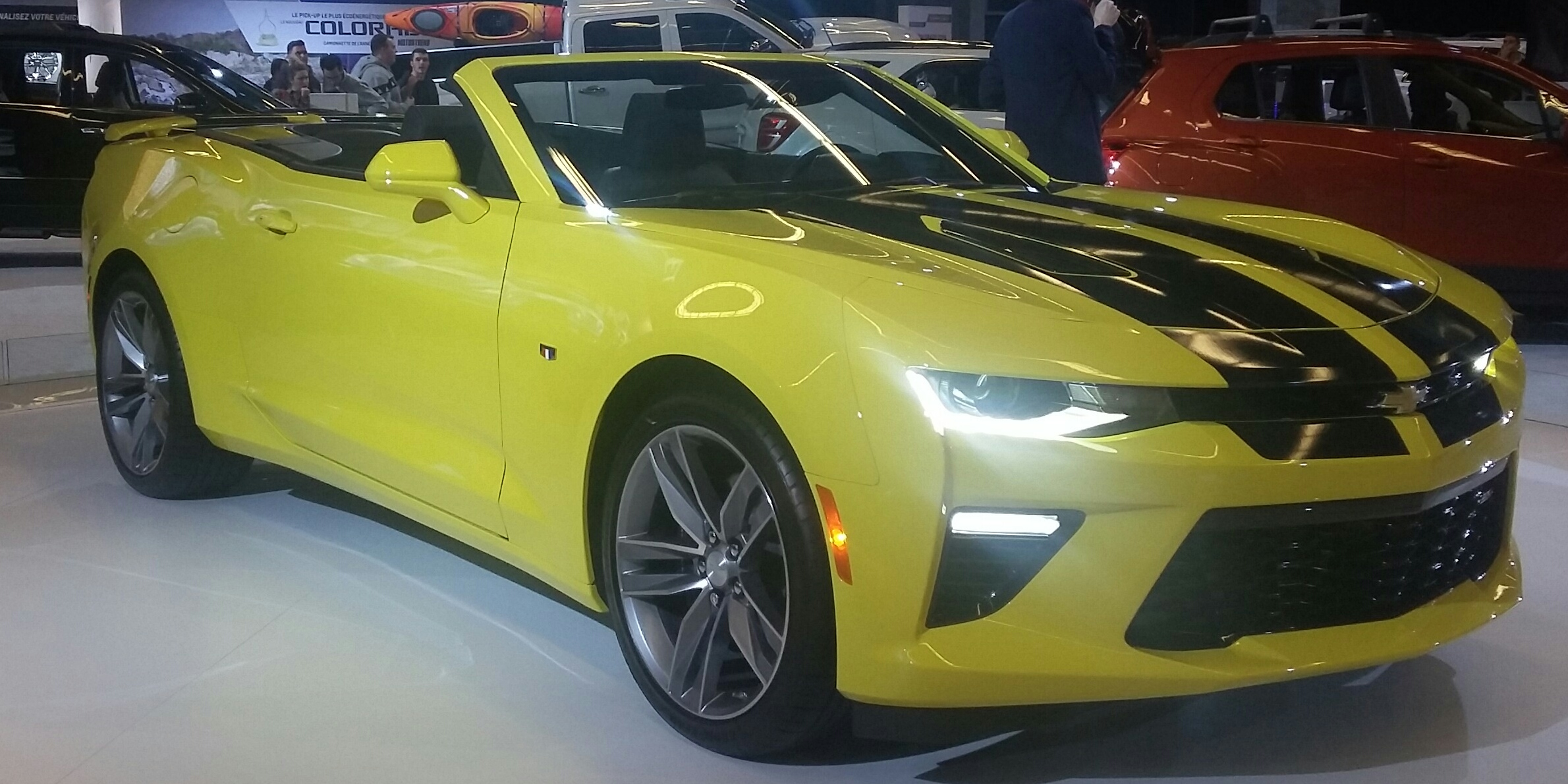
The Chevrolet Camaro is a sporty car from Chevrolet. It’s built for performance and comes in different versions. The podcast mentions it because a new one came in and had to be moved right away.
A key fob is the little remote you carry to unlock the car. Some cars also let you start the engine with a button instead of using a key in the ignition.
On a manual car, the clutch pedal has to be pressed to start the engine. The car is basically telling you, “Press the clutch first,” so it doesn’t lurch or start in the wrong gear.
A stick shift is the manual gear lever you move to change gears yourself. With a manual, you also use the clutch pedal, which is why the car wouldn’t start until the clutch was pressed.
The host is talking about how people make assumptions about cars just because of the brand. They expected an automatic, but the car turned out to be a manual, so the “assumption” was wrong.
Naturally aspirated means the engine doesn’t use a turbo or supercharger to push air in. It changes how the car makes power and how it feels when you accelerate.
Understeering is when you turn the wheel and the car doesn’t rotate enough to follow the corner. The front tires are losing traction first, so the car feels like it wants to go wide.
This is a mistake where the shop installed the wrong springs on each axle. Because the front and rear are supposed to be tuned differently, the car can handle wrong even though the parts are “new.”
Spring rate is basically how stiff the spring is. If the front springs are stiffer than they should be, the car’s balance changes and it may feel like it won’t turn in properly.
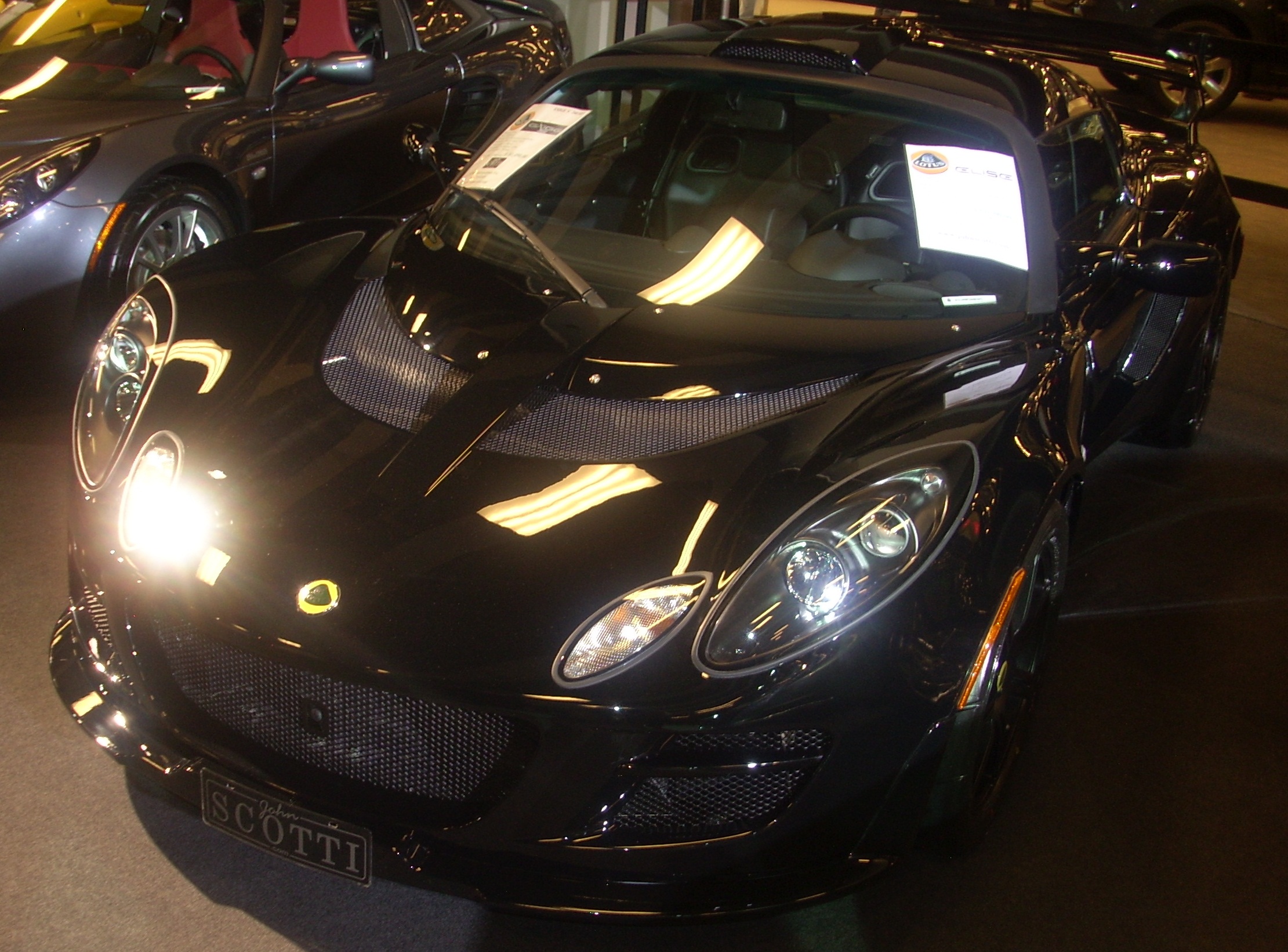
The Lotus Exige is a lightweight sports car made by Lotus. It’s designed to feel very connected to the driver and to handle well. The podcast mentions it because the host is talking about how it feels to drive and how the controls compare.
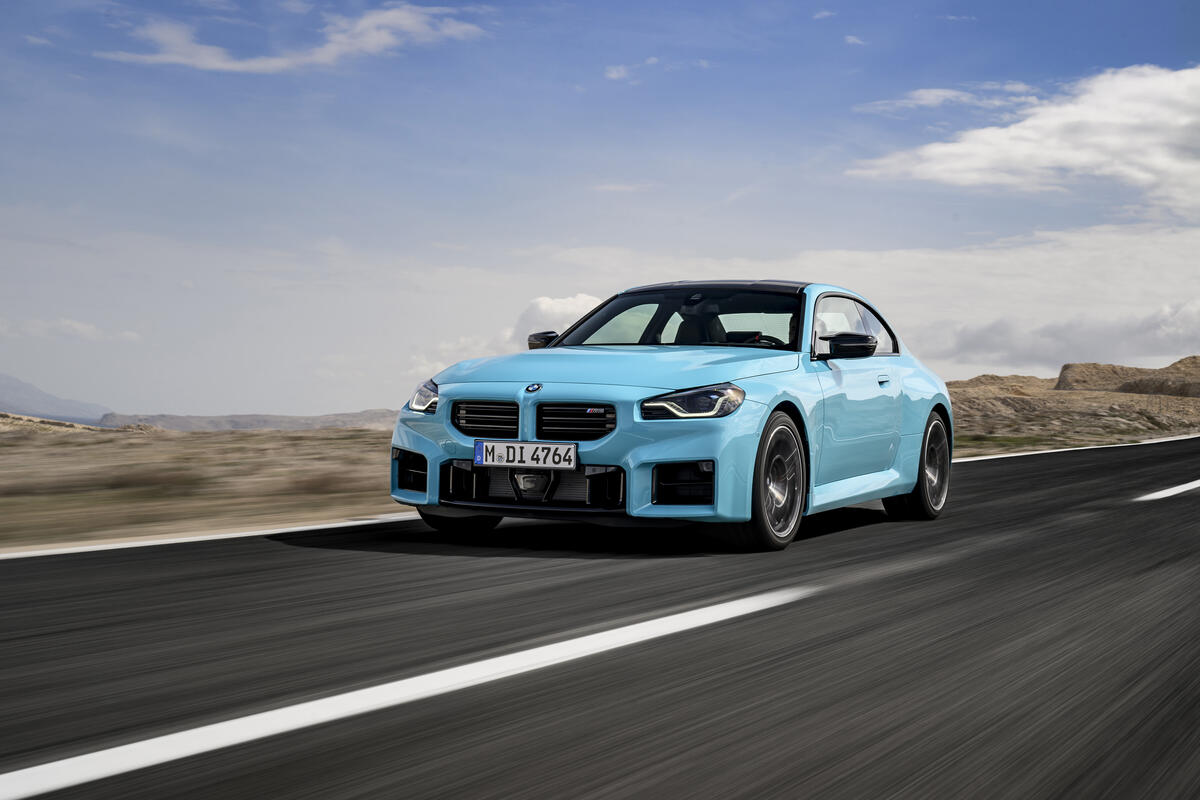
The BMW M2 is a small, sporty BMW coupe made by BMW’s performance team. It’s designed to feel quick and nimble rather than huge. The podcast mentions the M2 CS as a special version near the end of that model run.
“State of tune” basically means how strongly the engine is set up to run. If you increase it, you’re making the engine produce more power or respond more sharply.
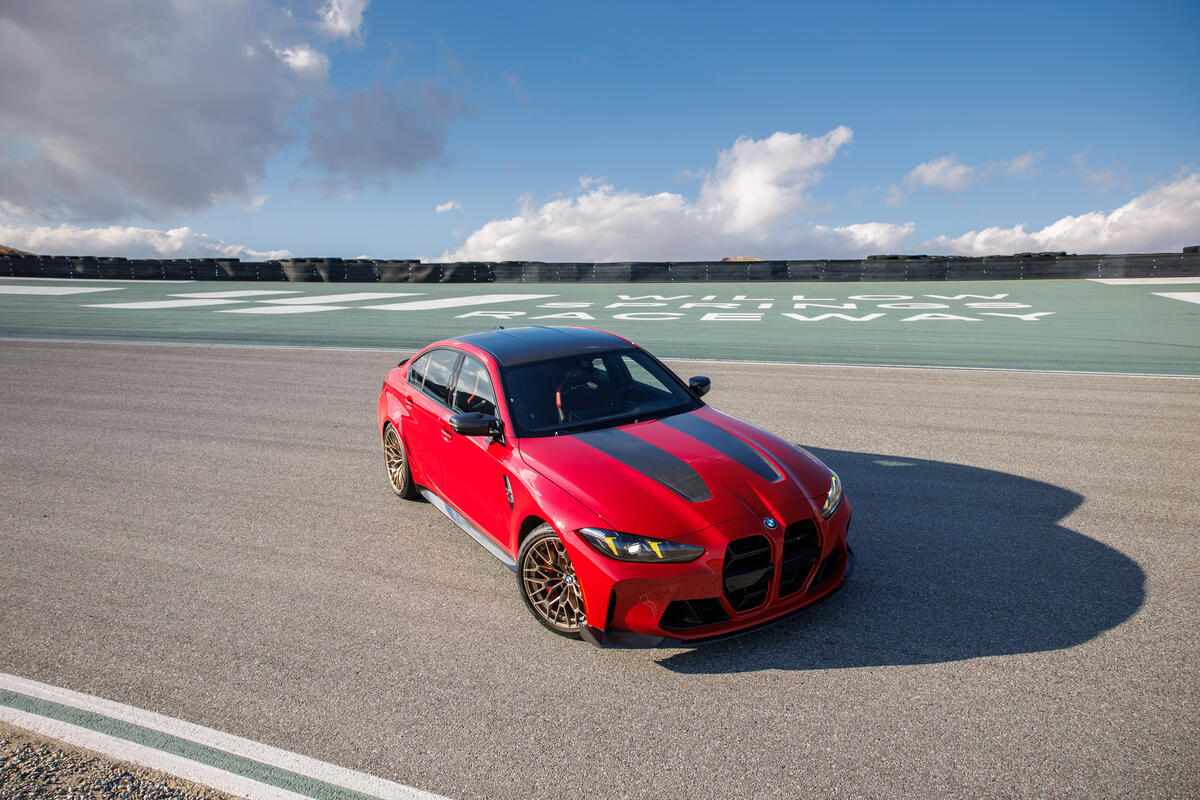
The BMW M3 CS is a special, more performance-focused version of the M3. In this segment, the important part is that the 2027 M3 CS is offered with a manual gearbox only.
Term
Han Schalter package
This sounds like a special BMW package name connected to the manual gearbox. The main point here is that it’s part of why the car is manual-only.
“Full tune” means the engine is set up to run at its best—like the complete performance settings the faster model uses. If they can’t copy that, the car may feel less powerful or less sharp.
“Base motor” means the car uses the standard, lower-output engine instead of the stronger one. That usually results in less power and a different feel.
Term
CS
“CS” here is shorthand for a special higher-performance version of the BMW. The speaker is talking about how the horsepower compares between those versions.
“Rear wheel drive only” means the engine sends power to the back wheels only. That can make the car feel more “classic” and different from all-wheel-drive cars.
“Horsepower wars” means car companies trying to outdo each other by making engines produce more power. The host is saying that chasing that number can also make the car heavier, which can hurt driving feel.
EVs (electric vehicles) deliver instant torque, which makes “speed” feel easy to access compared with many gas cars. The speaker argues that because EVs have made high performance more common, BMW needs a different kind of appeal—more engagement and simplicity rather than chasing speed alone.
The G80 M3 is a newer generation of the BMW M3. The host is basically saying it’s better than before, but they’re not sure it feels as fun and connected as older M3s.
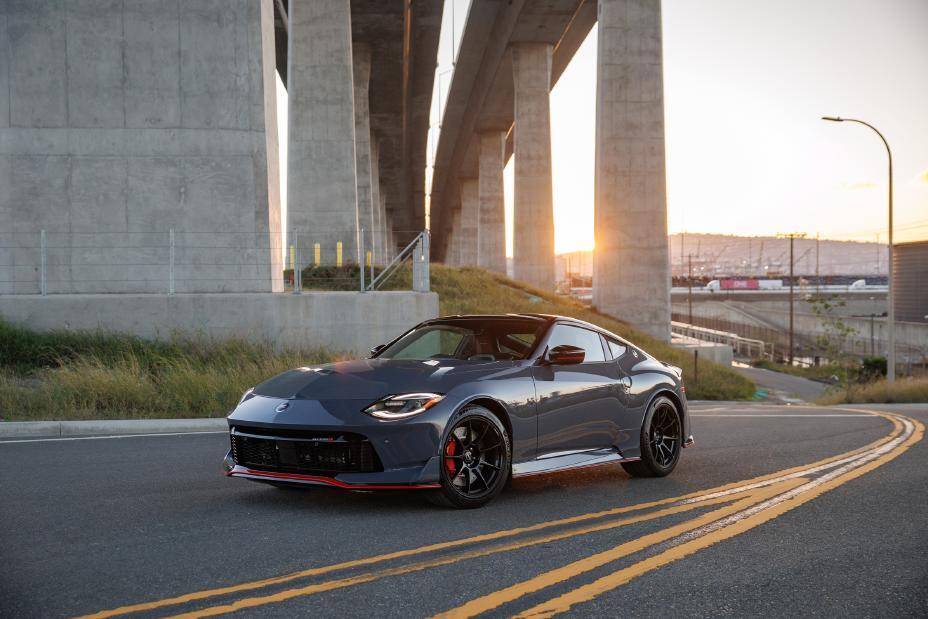
This is the performance version of the Nissan Z made by Nismo. The host is talking about how the new Z finally arrived after long rumors, and how people reacted to it.
Torque is the engine’s twisting force. More torque usually means stronger pull from low speeds, and it can also stress the transmission—so that’s why the hosts are debating manual durability.
The Nissan GT-R is a fast sports car made by Nissan. People talk about it because it can accelerate very quickly and perform strongly. The podcast mentions early GT-Rs because the host is considering what the first versions are like.
Sonoma Raceway is a famous race track in California. The hosts are saying the car was tested there, which is important because track driving is much harder on the car than normal street use.
A “GT car” is meant for fast, enjoyable driving over longer distances. It’s usually not just a race car—it’s built to feel good day-to-day while still being quick.
The “enthusiast car community” means people who really care about driving feel and car details. The host is saying that bringing back more engaging cars (like manuals) can get those fans excited again.
A hybrid powertrain is a car setup that uses both a gas engine and an electric motor. The car has to decide how to use each one so it drives smoothly and saves fuel.
A manual gearbox is when you use a clutch pedal and shift gears yourself. In a hybrid, it’s harder to make that work smoothly because the car is also using electric power.
Power flow is basically where the car’s driving force comes from and how it gets to the wheels. In a hybrid, the car has to coordinate gas and electric power so it doesn’t feel jerky.
Alpina is a company that modifies BMWs into a more special, higher-end version. The host is saying Alpina’s design choices are part of where BMW’s styling is heading.
The “kidney grille” is BMW’s distinctive front grille shape. The host likes how it looks here, especially compared to cars that use huge, loud grilles.
Term
three dimensional
When the host says “three dimensional,” they mean the grille has depth and shape, not just a flat design. It’s a way of saying it looks more detailed and upscale.
Term
four seat coupe
A “four-seat coupe” means it looks like a coupe, but it can seat four people. The host is pointing out that even though it’s a coupe, it’s still a big car.
Concept
manual comeback
A “manual comeback” means more cars are starting to offer stick shifts again. It’s popular with drivers who want more control over how the car drives.
A shooting break is a special kind of car shape that looks sporty like a coupe, but has more space like a wagon. It’s usually a more stylish, less common alternative to typical SUVs and sedans.
A crossover is basically a car/SUV hybrid. It’s the kind of vehicle that’s popular because it’s practical and easy to live with, but it can feel less unique than a sports-car style.
“Analog” here means the car feels more mechanical and less controlled by computers. The driver’s inputs tend to be more direct and noticeable.
Term
aero perfection
This phrase means cars designed to be extremely optimized by their shape and airflow. The hosts are saying older cars feel more about driving than about perfect aero and computer control.
Term
electronic saving
The idea is that computers in the car can step in to help you stay in control. The hosts are saying the older cars they’re talking about rely less on that kind of electronic help.
Heel-and-toe is a downshifting technique where you brake and quickly raise the engine speed at the same time. It helps the shift feel smoother and keeps the car stable when you’re driving hard.
“Gearing” is how the car’s gears are spaced. If the gears are “long,” the engine doesn’t spin as fast for a given speed, so the car can feel a bit slower to respond.
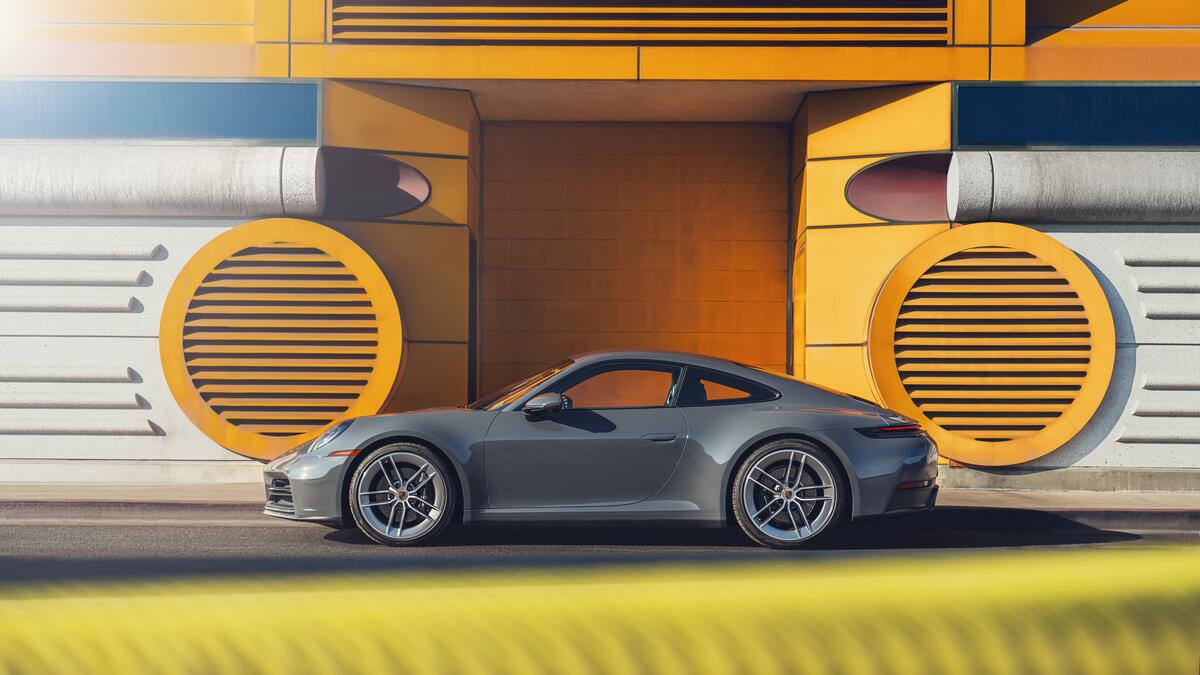
The Porsche 911 is a sports car made by Porsche that has been around for a long time. It’s known for its distinctive shape and strong performance. The podcast mentions a turbo version and how alignment can change how it drives.
Gear ratios are how the transmission “gears” the engine to the wheels. They decide whether you stay in the RPM range where the engine makes strong power when you’re driving fast and changing speeds often.
RPMs tell you how fast the engine is spinning. This matters because the engine makes its best power only in certain RPM ranges—if you’re not in that range, it won’t feel quick.
“Red line” is the top safe engine speed (RPM). It’s the point where the engine is working at its limit, so you generally don’t want to stay there for long.
PDK is Porsche’s automatic-style gearbox with two clutches. It shifts very fast and helps keep the engine in the sweet spot so the car feels quicker and smoother.
A “blip” is a quick rev of the engine, usually right before you shift down. It helps the engine and transmission “line up” so the downshift feels smoother instead of rough. People often do it when slowing down for a turn.
This means the driver is going from 3rd gear into 2nd gear. Downshifting like that changes engine speed and how the car responds as you enter a turn. The host is using it to explain that the GT4’s road gearing didn’t always match what they wanted.
The S54 is BMW’s performance engine used in some early-2000s BMW M cars. It’s designed to rev freely and respond well when you press the gas. The host is saying that with this engine, the car’s gear ratios still made it feel less satisfying for their driving.
The BMW M Coupe (E36) is a small sporty BMW coupe from the E36 generation. It’s a performance version with a stronger engine than a regular BMW. The podcast mentions a specific 2001–2002 S54-equipped example, which is one of the higher-performance setups for that model.
Brand
workmeisters
“Workmeisters” is a brand of aftermarket wheels. The host is saying the wheels were heavy, and heavy wheels can make the car feel slower to respond when you’re driving hard. That contributed to them selling the car.
This is part of the car’s rear suspension. It helps the rear wheels move in a controlled way over bumps and while turning. The way it’s designed can change how the car feels when you push it.
An LSD is a differential that helps both rear wheels work together when traction is uneven. If one wheel starts to spin, it limits that so the other wheel can still push the car forward. It usually makes the car hook up better when you accelerate out of turns.
The BMW E30 is the 3 Series generation from the early 1980s to the early 1990s, and it’s a popular platform for swapping parts. In this segment, the speaker specifically mentions sourcing an LSD “from an E30,” implying the differential hardware is compatible with what they’re working on. That’s a common enthusiast approach: use proven parts from a donor car.
The Porsche Boxster is a sports car made by Porsche. It’s designed to handle well and it’s often associated with open-top fun. The podcast mentions it because the host was thinking about buying one and researching options.
With shorter gearing, first gear can feel overly “grabby” at low speeds. The host is saying that can make smooth driving harder, so you may skip first and start in second instead.
A shorter gear set is like using “lower” gearing so the engine spins faster for the same speed. It usually makes the car feel quicker, but it can make the engine rev higher on the highway.
Platform sharing means two different cars are built on the same basic “bones.” That can make them related mechanically, even if the designers make them look very different.
The Audi R8 is a high-end supercar with its engine mounted near the middle of the car. The hosts mention it because it’s closely related to the Lamborghini Gallardo underneath, even if they look different.
The Lamborghini Gallardo is a famous mid-engine supercar from Lamborghini. The hosts compare it to the Audi R8 because they’re related mechanically, even though they look and feel distinct.
Crash structures are the parts of the car’s body that are built to protect you in a crash. They’re designed to absorb energy and keep the passenger area safer.
The Acura NSX is a high-performance sports car made by Acura. It’s meant to be fast and exciting to drive, while still being usable day to day. The podcast brings it up as one of the well-known cars people compare when talking about performance.
The Ferrari 360 is a famous Ferrari supercar with its engine mounted in the middle of the car. Here, the host is basically saying later Ferraris didn’t feel like a big step forward compared to it.
The Honda NSX is a well-known sports car with the engine mounted in the middle. The speakers mention it as part of the earlier wave of cars that felt more fresh and purposeful.
Mid-engine architecture means the engine is placed near the center of the car, typically behind the driver but ahead of the rear axle. This layout often improves balance and handling, and it also influences packaging—so it can make the car’s proportions look more “sexy” or dramatic.
The Ferrari F430 is a high-performance supercar made by Ferrari. It’s a mid-engine car, meaning the engine sits closer to the center of the vehicle for handling. The podcast mentions it because people often compare it to the earlier 360.
The BMW New Class is an older group of BMW cars from decades ago. It helped BMW become known for making compact cars with a sporty focus. The podcast mentions it as a history reference when talking about how BMW’s ideas have changed over time.
Walter De Silva is a car designer. Here, the host mentions him to explain that the design team behind the car had a strong background in creating distinctive vehicles.
Person
Frank Lamberti
Frank Lamberti is mentioned as the designer behind the car’s look. The point is that the speaker thinks the design felt fresh because of who was responsible for it.
LIVE
We go, isn't yet.
Hey, everybody, welcome back to full throttle talk.
She knew.
Hey guys, hey Blair.
I'm excited to be back.
Um, we had a fantastic episode last week.
So if you did not listen to our inaugural guest on full throttle
talk, Derek Peterson, such a great dude, his portion of VIP, he and his
brother, they really took us behind the scenes and talk about some
incredible projects and builds.
So all you Porsche guys out there, of which we somewhat consider ourselves.
Go listen to last week's podcast.
Yeah, it was very exceptional.
Yeah, Derek really brought a whole bunch of great, great information.
Fun stuff for, for all of us enthusiasts to learn.
Yeah.
Well, I was getting overwhelmed by two engineers on this call with me.
You know, there's, there's only so much my limited brain can actually
like, you know, stand with the two of you.
So I'm glad he's gone this week.
We're going to bring him back soon.
But I think we dive into this stuff.
Um, and unless you have anything from Tim, I think we should dive right in.
Well, Blair, of course, I've got a dispatch from Puerto Rico from Tim Harris.
There's the highlight of my week.
You know, all right.
Well, here it is.
Here it is from Tim.
Preparations continue for the inaugural Puerto Rico road rally.
Daddy Yankee, Bad Bunny and Ricky Martin have formed a super group to
perform the national anthem.
They're calling themselves Trace Tenores.
They want to sing it in Spanish.
I'm a bit conflicted.
My agent Claude thinks I need to be a bit more open.
Need your thoughts, guys.
Tim Harris.
Welcome to Full Throttle Talk, the podcast where a horse power
meets conversation from supercars to classic legends, high revving tech
to motorsport mayhem.
We covered all straight from the driver's seat, whether you're a
gearhead or racer or just love the thrill of the open road.
You're in the right place.
Buckle up, hit the gas and let's go full throttle into today's episode.
The best part about this is he sent us a picture last week of Ricky
Martin and his wife, Julie.
Was that Ricky Martin?
I didn't know who that dude was in the picture.
That was actually Ricky Martin.
So he said the funny thing is, guys, we actually are friends with Ricky
Martin and I'm like, yeah, well, go figure.
But listen, excellent.
My only advice is, you know, bag the Spanish and read your Miraquai back,
you know, and, you know, riff with that guy, which by the way,
you're quite as a car guy.
He's got a bunch of cool cars.
Yeah, well, that is something I did not know.
I always picture him in a big hat and, you know, some real eccentric,
but cool music from England, I believe.
So yeah, I would, I would not know the guy if he was walking on the street.
You know, I don't recognize him.
I don't really know what he looks like.
But there's that one song, you know, that that I recognize.
Virtual Insanity.
Yeah, that's the one song that's the one.
Well, we usually like to compare notes on what we did in cars this week.
She knew typical beats beats me, you know, he's kind of what to me
sometimes feels like in the epicenter of all this.
So she knew I think you did beat me this week.
So I'll go first and just make this brief on what I did in cars this week.
I've got a picture up behind me in my E46 M3.
So I think I've explained in the past that starting to feel like I have too many cars.
My daily this, this Lotus Elise, this Mitsubishi Bravo and my wife's car was having
trouble and it was just all sorts of like weird stuff going on.
I'm like, maybe it's time to downsize.
Well, and, you know, the M3 is my beloved car is the third one I've owned.
I've started to think, is this going to be the victim of my downsize?
And so I'm on as I'm thinking that coincidentally, I'm on the freeway
the other day driving to my daughter's like dance competition.
Literally at 75 miles an hour, she knew I hear this loud pop.
And what the hell was that?
So I'm looking all around.
I don't know what it is.
And I noticed the rear quarter window on the passenger side had shattered.
Oh, my gosh.
And well, it is spider web, but was still intact.
And I look over into the side mirror out on the freeway.
I start seeing little bits of glass flying off of it.
I'm like, oh, no.
And then all at once I hear boom, and this whole window flies out onto the freeway
and gone just like that within 60 seconds.
I go from, you know, being perfectly intact.
And my window is all shattered in pieces on I 215 here in Salt Lake.
So was the does this car have a sunroof?
It does. Yes.
Was anything open were your any your windows or sunroof any of it open?
I don't recall.
I usually drive with it.
If the weather's good cracked a little bit like the windows, not the sunroof.
I don't open that very often.
Yeah, interesting.
So you had some crazy, you know, kind of pressure situation going on there.
I mean, certainly maybe the glass had gotten weak.
But, you know, most of these, you know, bodies, they have these little, you know,
these basically little valves, if you will, that are in the body that allow
the air to pressurize or depressurize.
So when you close a door, you can imagine all this air, right?
It's got to go somewhere.
And so these little valves open up in the side and dump air out.
Yeah. And so, anyways, it's it's sounds more sophisticated
than it really is a really simple little rubber flaps.
But yeah, they kind of help, you know, in those situations.
So well, what's cool is, you know, on some of these older coupe BMWs,
these rear quarter windows do, there's a switch.
So they do crack open a little bit.
OK, my boys had just discovered that and had been opening that one a little bit.
I mean, not not anything too crazy.
But yeah, anyways, I think I'm I got that fix actually just today.
So the the M3 is back whole.
I've got all the glass in and I'm going to go back and watch our podcast
from a couple of weeks ago in the segment, is it OK to sell a car you love?
Because now I'm running out of excuses as to why I can't call my photographer
and get this car ready to go and bring a trailer.
And I do this every time when I start thinking, you know what?
I should simplify my life, make things easier, less crazy, less expensive,
all of that stuff.
Then I, you know, just start feeling the you're going to miss that car, though,
Blair, you're going to know it's it's such a practical car.
It's the one I use it a lot, you know.
So we'll see if I can get up the Cajones to actually do it and part ways.
But in the meantime, the other thing I've been doing is driving the wheels
off this Mitsubishi Bravo because my your micro van.
My micro van, the the practical fun car in the M3 has been out of commission
for a couple of weeks now, since that happened.
They they had a hard time, you know, finding this glass, as you can imagine,
the rear quarter on an old car.
So I've been driving this van like crazy.
And she knew, number one, the car is a complete blast to drive.
I said, next time you're up here in Salt Lake, I'm making you drive this van.
Oh, I got to. I absolutely want to.
It's it's hilarious.
And I will say, I don't know if I'm ever going to get used
to the amount of attention this van gets.
It's it's wild.
And the incredible part about it, like it has really dark tint on it.
And normally I don't mind, you know, interacting with those who are pointing
and cat calling in my van, whatever.
It's like, it's all a good time.
But I've got really dark tint.
The other night, I just was not feeling it.
And I just rolled it up.
And I'm like, maybe this.
And I was planning to strip this tint off of it.
It's too dark. Yeah.
Maybe the anonymity, I need it.
Because when I want to just like, you know, seclude myself
from the outside gawking of this van.
But everywhere we go and my kids, I think you're really taken aback by
like, why are all these people coming up to us telling us
how much they love that thing and where did you get this?
And you import this.
I had this old Hispanic couple come up and I'm just sitting there
watching my boys play soccer in a parking lot.
And they walk up to me.
They were pretty old.
And, you know, they're like, what is this van?
You know, Japanese cars, they make really good cars.
But this is so cool.
And his wife was like dying over this thing.
Said, I said, well, yeah, guys, just pull the sliding door.
He wanted to know how many people it fit.
And so it's everywhere from teenage boys to old women to guys
and jacked up one ton, you know, Duramax's that sounds like it
sounds like you've got some fodder for writing a new article, right?
Some something about, you know, the least expected, you know,
vehicle may be the one that gets the most attention, right?
Yeah, there's something so approachable about this thing.
You just can't pictures.
Don't do it justice.
You see it in person and I've got plans for this thing.
Speaking of wasting my money on cars, I really have plans to kind
of pimp this little van and nothing crazy.
I just want to thump and sound system.
Nice.
It needs a little bit of love.
Refinish the wheels.
It needs a landscape.
It needs like a little landscape picture on the side of it.
Maybe, you know, just, there's a lot of decals on these vans from the factory.
So it's, it's hilarious.
My kids are like floored that anybody cares and not only do,
just somebody care, lots of somebody's care.
And so I've been having a blast with it.
The M three's back.
We'll see if I can get up the guts to do the hard work to find a new home
for that car. It's going to be hard. What about you?
Nice. Well, listen, it's been a busy, busy, busy week.
I'd like to say I got a lot of drives in, but I really didn't.
You know, I'm going to try to get some drives in this weekend, though.
But we got started, actually, on the first e-ray
Callaway Supercharger build.
So the picture behind me is the
the camera. Yeah, that's the e-ray power train out of the car.
So it rolled in on Tuesday.
Justin had it out yesterday, Thursday.
And so like today, he's he's he's doing a couple of the prep,
you know, you know, tweaking up a couple of different things here
to get everything to fit.
And he's got the Supercharger ready to go.
So it takes about a week to do this conversion.
So it all goes back together.
So that that was pretty exciting.
I, you know, interesting thing, and I'll just make a comment.
OK, because I think maybe some of our audience, you know,
may may appreciate this and some may not.
But this car came in with some, you know, aftermarket three piece wheels on it.
And, you know, they're they're not, you know, they're not exactly to my taste.
But I went and drove the car first just to make sure,
hey, everything's working on the car, everything's fine.
I brought Justin with me and straight away,
I kind of noticed the handling or the ride quality was not quite what I expected.
You know, so I got back and I looked at the wheels like, oh, OK, here we go.
So something that a lot of people may not realize is these three piece wheels
as fancy and as cool as they look and the God knows they're expensive.
They're generally heavier than the original, you know, equipment wheels.
And heavier wheels can actually deliver worse ride quality
and frankly, affect handling as well.
So it's just something for people to recognize before you go
and put some big old fancy wheels on your car and have a real consideration
about the weight of what you're putting on there. Right.
And so do you think as long you stick to kind of a factory
weight and less, is that just a general guideline from a weight standpoint?
That's what I think is certainly the smart strategies.
And a lot of these new wheels have gotten like on good sports cars have gotten really light.
So getting them lighter is tough, but unsprung weight.
If you can save weight on the wheels, on the brakes, it really pays dividends, man.
The handling improves, the ride quality improves.
You know, it just that the car is just a better sports car.
So anyways, that was a little bit of a surprise.
I have this thought that we we car enthusiasts are so stupid, you know.
I mean, I'm talking about throwing a bunch of money at a 10000 dollar
micro van to trick this thing up.
And you got a guy bringing an e-ray that is not lacking for horsepower.
Going to spend obscene amounts of money, I imagine, to throw a supercharger at it.
I'm like, man, we are stupid. What are we doing?
You know, it's he actually admitted to me.
He goes, listen, I'm really more interested in straight line speed with this car
because I went and did the Corvette school at Spring Mountain, you know,
but I really like to go fast in a straight line.
So I said, well, you're absolutely going to be getting that.
So anyway, it's kind of kind of on a funny note.
A car marrow came in, you know, a new Camaro came in yesterday
and I had to move it real quick.
I haven't had a chance to drive it and a move and bring it into the shop.
Excuse me, sorry.
We. So I got in the car.
I saw the key fobs, you know, in the in the center console.
I got my foot on the brake and I'm hitting the start button and it won't start.
I'm like, what the hell's wrong with this thing? You know,
my cars always start. Yeah, it's a GM car.
Like, come on, what's what's the good? Come on.
And I look in the dash and says, depress the clutch.
And I'm like, what? This is a manual.
I looked at I saw a stick shift and I was like, oh, my God,
how in the hell did I miss that completely?
You know, you're you're used to driving all those automatic
Lotus releases is the problem.
You know, you know, again, it's we come with these preconceived ideas
about brands, you know, and here as a car guy, right?
You'd think, you know, I should know better, right?
But I just immediately think I'm in a General Motors vehicle.
It's just going to be an automatic transmission.
It's big. It's heavy.
It's big. It's heavy.
It's an automatic transmission, right?
But how wrong I was.
So that's awesome. It's a pleasant surprise.
Yeah. Well, the other kind of interesting thing that I mentioned
to you guys this week, that was kind of a little
technical thing that that happened in the shop.
A client came in with his Lotus of Vora, a naturally aspirated Lotus of Vora
and 2011 Malia, and he was complaining about the steering.
He had a shop previously replace the suspension, a lot of bushes.
And it was he was having problem.
He felt the steering wasn't wasn't communicative.
So we went for a drive together.
He, you know, he came in and I said, Hey, and I've got this little circuit.
I go run and I'm pitching the car into a corner.
And when I say pitching, let's just say I was going at 78 tenths.
OK. Yeah. But I could tell the car is understeering.
And I told him that I'm like, Yeah, this is understeering, you know.
And so we we get back and said, Yeah, you know, car.
I mean, the steering, everything feels good.
But, you know, we were going to do a full inspection for him
because he was really kind of nervous about it.
Well, sure enough, my mechanic, who's super detailed,
discovered that this previous shop that worked on the car
put the rear springs on the front and the front springs.
Oh, no. So we're just talking about the spring rate, you know,
compression. Now you've got these heavier springs at the front of the car,
which will exactly do what I'd experienced stiffen up the front.
If the front, right.
So when you go into a corner, now the front's not gripping.
It's too stiff.
And so it starts pushing.
So I was feeling the understeer and the understeer wasn't horrible.
I actually, you know, thought it was actually factory understeer.
And what I had said to him is like, Hey, I think we can dial that out with.
We will adjust this, you know, see where the alignment is set.
You know, sure. Yeah. Well, it turns out it was a spring rate.
So anyway, that's a pretty nice catch.
Interesting catch. Yeah.
You know, he, you know, Jorge was just brilliant, dude, to catch that, you know,
and he confirmed with the part numbers, switched it out.
I drove the car yesterday or two days ago, bang, totally fixed the understeer.
So wow, those, those are actually, you know, naturally aspirated Avorus
are kind of a hidden gem.
A lot of people know about this car, but it's it's really a good, good car.
Fun to drive.
Actually, yeah, his shifter cables were breaking too.
So we replaced those and now it shifts correctly.
That's another thing I when I drove the car initially,
I could feel like the shifter was not quite as positive as it should have been.
You can you can start to tell when the cable cables are starting to fail.
They start to feel a little bit rubbery and at the end of the travel,
they continue to travel just a little bit in a kind of a rubbery manner.
And that's usually an indication that your cables and that happens
on the least exige to same feeling, actually.
So it's funny how I can get into these cars now and you can get these feelings,
you know, of things, right?
And so anyways, you know, car, car guys, right?
We're nerds about this stuff.
So yeah, that was my week, man.
That was my week.
Well, the naturally aspirated Avorus, not something that's I've always wondered
about it, it's incredible value.
It is a really, really affordable car at this point.
And yeah, it's, you know, it's it also speaks to this point that older cars,
it's hard to really get a good sense of whether you like a car or not.
When you drive an older car as to whether or not it's sorted.
So you might get in naturally aspirated Avorus and say, hey, the shifters are horrible.
Well, and have no clue that, well, that's not really how it's supposed to be.
So it's another reminder for older car owners, shoppers, all of us,
like make sure your old cars are actually being upkept,
because it really does make a difference to how a car drives and feels.
Yeah, absolutely.
So what do you got there behind a couple of news stories
that really caught my eye, Shanu, this week.
Absolutely.
I wrote a full throttle talk newsletter article about this car.
And I want you to tell me if I'm wrong.
Is this the time where we're supposed to plug our newsletter?
Full throttle talk.com put in your email, hit submit.
And while I'm asking you to do that, if you would also go to iTunes
and give us a rating on our podcast, we we are growing in a group of enthusiasts,
a community, and that would absolutely help us continue to find the guys
and gals that, you know, we want part of this community.
So do us that favor, if you would, and subscribe to the newsletter.
Well, I want you to tell me if I'm off base here with this car.
So BMW, by me, you know, I just showed you my M3 and how much I love that car.
I love BMW, but they've lost me.
We've talked about this and podcast past.
Like it's getting harder and harder to give a crap about what BMW is doing
from my standpoint.
And so then the and the M3 we've seen the CS trim always comes out
kind of towards the end of a model run.
And we've seen it with the M2 CS just came out.
And the recipe is if it doesn't have all wheel drive already, give it all wheel drive.
Obviously increase the state of tune, save about 30 stupid pounds, you know,
and call it a CS sharpen it up a little bit.
Yeah. And I always just think I couldn't care less.
The M2 CS, the M3, the M4 CS.
Well, they just announced this week, the new 20 27 M3 CS
with the Han Schalter package, the manual transmission only for this.
Now, what stood out to me so much about this is we've talked at length
about this arms rank for more power, more weight, more complexity.
And where is it going to end?
And so then I see that BMW of all freaking manufacturers
comes out with this top trim, the top of the lineup, in theory, or at least on paper.
And they give it manual only, which means they could not put the full
tune from the competition car onto this car.
They had to use the base motor.
So that has been like major faux pas for the past how many years
where the next one always has to be faster, more capable than the prior one.
Otherwise, why even come out with it?
How do we sell it?
How do we market it?
So I don't know if I really should be as enthused about this as I kind of feel.
But the fact that they came out with a lesser horsepower by a significant margin,
this has 473, I think versus 520, I believe, in the comp.
I assume this next CS would have been 540 or something thereabouts.
And instead, they make it less horsepower, real rear wheel drive only,
which is another one that like genuinely shocked me.
They didn't put X drive on this car.
And so it's manual only, rear wheel drive only, less horsepower, super sharp.
They've done all the CS things to it, but gave it the base kind of manual treatment.
Am I not for being encouraged by this?
No, I think this is exactly what we are hoping to see out of these manufacturers.
Is the car lighter as well?
Yeah, I think they said 70 pounds or whatever, which not from 4,070 down to 4,000.
It's like how much lunch did I eat today?
You know, that's a difference in weight.
Are they doing an M4 version of that or is it just the M3?
I don't know.
I have no clue.
But look, I like the fact that it's the M3 four door.
You know, that whole nomenclature thing, don't get me started on that.
You know, the M3, M4, you know, nonsense.
But regardless, I'm glad to see what they've done here.
I think it's cool.
I think it kind of gets me excited again a bit about BMW.
I've certainly have been jaded, you know, with BMW for quite some time.
But yeah, no, listen, I think these are small indications that maybe some of these
manufacturers are realizing that these horsepower wars are just gone, you know,
crazy and the weight of cars have just gone nuts.
And maybe this is their first little, you know, foray into trying to get back to this.
But, you know, look, I think the market is very, very different today than it was,
say, in the late 90s, you know, the E36 M3 lightweight, those cars, you know,
did not sell out.
OK, they just did not.
And there there was this cool, more hardcore version of the M3 that, you know,
sadly didn't sell as as as aggressively as we want.
You know, the market is a bit different today.
There's a lot more people buying these cars.
And, you know, but I think the, you know, the reality is it looks to me
like that car, you know, maybe those Cadillac, you know, black wings have got
BMW to open their eyes and say, what the hell is going on here?
Yeah, we need to match them with something.
So totally.
And my hope is back in the 36 M3 lightweight days.
You know, they were always yearning for more and they didn't have more
and you couldn't really get more.
So if anybody gave more, you wanted that.
Well, nowadays it's not hard to find a lot more speed than even a I mean,
they are very fast, but the M3 competition all will drive.
I've driven one incredibly fast, but with EVs, speed is ubiquitous at this point.
So I hope this will be a different kind of outcome for them.
And the guys are starting to appreciate the fact that I can get speed anywhere I want.
I want different.
I want simpler.
I want engagement.
Don't know if you can call a G80 M3 all that engaging, but it's a step
in the right direction, if none, if nothing else.
The other story that caught my eye was the new Nissan Z Nismo was just kind
of brought to us.
The veil lifted from the journalist community on on what this car was.
What I found so interesting is remember the Z that was being rumored forever.
It was coming back.
And then they finally brought it back and everyone kind of hated the car.
If you go watch those early reviews, like, like that was that was a thud.
Yeah, a bit of a missed opportunity.
Yeah, missed opportunity for sure.
Totally.
And then they came out with the Nismo and everybody and then everybody
drove it and it's like, well, that is actually really good, but there's no
manual transmission.
And I vividly remember that the head product guys are said the justification
for that was there was too much torque and guys are going to want to use these
on the track, all the same old lame excuses why nobody puts a manual in
their, you know, high powered cars.
And then low and behold, maybe the manual could hold the torque.
I don't know if they just didn't know at the time or if they were just not
telling us the truth, but they launched this car.
She knew I have not ever desired a Nissan in my life.
That's that's not necessarily true.
Two forties are super cool.
They are.
There's some other stuff that is cool.
So I don't Datsun's all that kind of stuff.
Very cool.
But what about the early GTRs?
Now, I just I think if I drove one, maybe, but they've just never been my thing.
I've never felt drawn to them.
And I'm watching some of the reviews on this car.
They had it on Sonoma Raceway up there in central California and everybody
loved this car.
And I found myself thinking, man, this would actually be a really fun GT car,
daily kind of commuter car.
And anyways, they sharpen everything up.
They give it a great feeling manual from from what the reports have all said.
I think it's getting cost sixty something thousand dollars, not cheap,
but good on Nissan.
They genuinely missed your positivity all of a sudden about modern cars.
BMW seems to be making the right kind of effort.
Nissan certainly seems to be doing that.
And guys really loved it.
What one of the YouTubers who was reviewing it said, I seriously might need
to buy one of these cars fantastic on a racetrack.
So I'm enthused by what we're seeing.
They're not dead yet.
These these manual cars.
And in some ways, like we talked about last week with horse powertrain,
maybe some life is being breathed into the the enthusiast car community or car,
you know, offering right now.
I mean, look, it's Nissan is been struggling.
I'm hoping they stay alive.
And and they certainly have been one of the, you know,
a brand that that loved, you know, enthusiast cars too.
And so, you know, it's encouraging to hear this here as well.
You mentioned horse.
I just I just found out earlier this week that one of my best friends,
you know, one of my fraternity brothers is now a high ranking R&D guy
for a horse powertrain here in the States.
Yeah. That's awesome.
I'm going to reach out to this weekend.
You know, he's he's always been a good steward of confidential information.
So I don't think he's going to give me much.
But we can we we've already talked or we've already actually texted,
I should say, a bit about hybrids and the chance of manual gearboxes.
And it sounds like it's quite a hurdle to to try to manage the power flow
and, you know, all the various complexity that exists in a hybrid powertrain.
So I'm not holding out hope for a manual in the horse powertrain
lotuses that are coming in the future.
I think the lotuses to have will be the the V6 manual cars
that are, you know, being fitted to the the mirrors right now,
or frankly, the previously wars.
So when you told me that, I immediately thought, man,
maybe now is the time to go snag a vivid green of aura GT or even a mirror
in a V6 manual. Well, I'm telling you, man, those cars are really good.
We tuned in a Vora GT up to just, you know, over 500 horsepower.
We fit the suspension, changed out into nitrons.
And dial that car in and it's incredible.
It really is a proper.
I would, you know, argue a supercar.
I mean, the performance, the handling, the sound.
Holy shit, the sound was one.
So those cars are cool.
Yeah, it's really.
Hey, all that stuff about having too many cars and having to downsize.
Forget I ever said that because, you know, there's there's too
many interesting possible replacements for the M3 once if I can let it go.
You know, that my mind starts to wander.
But Blair, you're not going to run out of options.
We are not going to run out of options.
OK, I know we're kind of picky bastards, but listen, there are actually
a lot of cars that I think you and I and our listeners would absolutely
enjoy driving. So I had a buddy text me and said, hey, I'm kind of running
out of cars to experience and try.
And I said, that's funny because my list just seems to keep growing.
You know, it's like, yeah, it's not good.
Well, tell your body.
We, you know, a couple of guys who should be on their focus group.
You know, absolutely, absolutely.
Yeah, get us it.
Get us get us in on some of that.
I promise not to cry too hard about the manual conversation.
What else you got?
Well, listen, you know, we talked a bit about BMW and how both of us
are a bit jaded with the brand.
But I got to tell you, I saw this past week, their vision BMW Alpina
and I have it, you know, behind me here and, you know, they they unveil
that thing at Villa d'Est in Italy and these like Lake Como area.
And it's which is if you haven't been there, beautiful, beautiful.
Yeah, it is beautiful.
Well, this I mean, this car, the styling of this car, you know, Alpina,
my BMW is acquired Alpina and full and they want to show this as a
future direction for their designs.
And, you know, look, I have not been a fan of their a lot of their modern cars.
You know, this last 20 years, certainly in the last few years,
you know, the old Beaver teeth, you know, grills have not not been my favorites.
You know, I don't I've hated them, but I can't say I like them.
You know, some of the nonsense I'm seeing on the SUVs.
I just can't stand whatsoever, you know, but it's bad car.
You know, it's got kind of that Ford leaning shark nose.
You know, apparently it's kind of been inspired by one of the previous,
you know, Alpina B sevens.
But what's cool about that kidney grill that I think is cool.
Anyways, it's it's almost like a three dimensional.
You know, even though it is tall and large, I feel like the way they executed
the the kidney grill is completely cool, you know, versus some of these other
just obnoxious large grills that are on some of the current cars.
Yeah, because this is this is not a small car.
I mean, it's a four seat coupe, but it's big.
And, you know, when you see pictures with people standing next to it, it's it's not, you know,
this is six series, eight series, large, large coupe style of of of, you know,
presence, if you will.
And so, you know, but you know, if I'm honest, I think this is some styling
I could live with.
I thought the car looked very elegant, really, really cool.
So kudos to BMW.
I mean, it's great that we're complimenting BMW a little bit.
But let me remind you of like all the cool, well, some of the cool cars
that BMW has said they were going to come out with.
And then they never do, it seems.
And the one that's coming to mind most for me, did you see a few years back
when they they recreated the M coupe, the clown shoe based on a Z four?
Yes, the coolest looking shooting break thing.
I know everybody gets excited.
Like, I know that maybe they're going to do something cool instead of just
another variant of a crossover and charge ADK for it.
And then they don't.
I mean, yeah, I thought they were producing that for just like handful
two or three for, you know, very wealthy clients that, you know,
multimillion dollars a pop kind of, you know, price we don't we don't care
about those very wealthy clients.
We want the cars.
We want the cars.
Yeah, that was yeah, those are really cool.
I did like that car quite a bit.
Yeah, totally.
Well, you've got something else cool.
Yeah, I mean, listen, I haven't heard about.
Yeah, we don't talk too much about racing around here.
But, you know, I know you you like racing.
I like racing as well.
And, you know, I just stumbled onto this as well.
You know, this this new GT three revival series that launched in Europe.
And they're basically racing GT three spec cars from the years 2006 to 2013.
OK, and they're running some really historic cool tracks.
You know, Paul Ricard spa Lamar, the ring, you know, Barcelona.
So they have multiple dates and they're running these cars, which, you know,
what it says to me is that that era of car, which is more analog than
today's cars still resonates with people, right?
So so it's like we're beating this dead horse about analog cars, you know,
but you're seeing more of this happening in the market, whether it's
Nismo Z coming with a manual, you know, these ice power train investments
that that manufacturers are making, you know, M threes that are rear wheel drive
only and manual only, you know, the you know, these type of things.
I mean, well, even look, even that GT three SC, you know, Cabrio manual only.
So I kind of feel like there are some of these, you know,
indications in the market and things that are happening.
A race series like this just shows people love that era of car where
it isn't aero perfection, where it isn't power, you know, up the wazoo.
It isn't, you know, electronic saving, you know, you and every possible situation.
You know, these are cars that are far more hardcore.
Yeah, they're still very powerful, very brutal, but they're they're exciting.
They sound exciting.
So the fact that people are out there and racing and a series like
this is viable, that says to me, hey, there is there is this demand.
There is this longing, if you will, from from enthusiasts and the market
for this type of vehicle.
And I got to believe manufacturing manufacturers are taking note.
I think we could probably spar a little bit on this, Shano.
Yeah, you think.
But well, no, about which era is peak enthusiast car?
And I can make a strong argument.
It's 06 to 013.
So to have a racing series built around that generation.
Now, I could also be easily persuaded that maybe that's not peak era
of, you know, drivers cars, but super cool.
Like you said, people are longing for these.
And that is what that it felt like kind of where a lot of the analog
car started to sunset.
So one of the things about that generation that I didn't mention is
like the safety on the cars was significantly better as well.
You know, the cars from the 90s, certainly cars from the 80s.
So that's, you know, any way you slice it, you know, at the speeds that you're going,
you know, that safety factor is nice to see because in the end, look,
you know, racing used to be a blood sport, but we really would rather
it not stay that way.
And it hasn't, you know, it's certainly become so much safer.
So I think that era is still got enough safety.
It's got enough speed.
It's got enough passion and excitement, right?
The next topic we want to talk about, Shano, is something I could take
way too long going off on and ranting on.
I'm not going to do it, but we've teed up and kind of hinted at the fact
that we want to talk about gearing and sports cars.
Yeah, maybe two or three, you know, pods ago.
Yeah, I've just touched on this, didn't we?
But I think it's an important subject.
You and I both love manual transmission cars.
Yes.
I think that's why if you love manual, and I will say, if you love to rev
match and you love to heel and toe, then this topic should matter to you.
If you don't really care about those or it's like whatever, it's only a small
part of the driving experience, then I could see why gearing doesn't really
matter to you.
And the car that I just put up behind me is my old 981 GT4 and never, at
least to my knowledge, has a car been more hotly debated about whether or not
the tall gearing matters.
And so just getting in a little bit, Shano, tell me your thoughts
about gearing and how it affects the experience of a sports car.
Yeah, you know, the because we love, you know, manual, manual gear boxes,
you know, there's multiple things that we like, right?
There's this mechanical side of making the physical shift, you know,
with the gear lever, the play of the clutch and balancing that, right?
All of this stuff, this dance that we like, right?
But that dance, if the car doesn't respond to that input, the way we hope
it would, where we're using the car, all of a sudden, it leaves us a little
bit flat, right?
And I think that's kind of the experience that we're finding with, you
know, in the case of a GT4, where the gearing is really long, right?
And why do they have such long gearing?
You know, could it be because emissions?
OK, they're trying to show and improve gas mileage and emissions
related things, you know, could it be that Porsche wanted to kind of keep
that car from being too fun because the GT3 is really there, their pinnacle car,
right? Look, it could be that they said, hey, well, listen, we made the GT4
as a track car, so that's for you, track folks, and that's where you
should be using this car anyways.
And so, you know, it's a challenge for manufacturers to try to produce
a car that works everywhere.
So you've got to decide what's going to be the most important place for
your car to operate well.
And so, you know, look, I've certainly been in cars where the ratio is too
long. And in fact, recently, right?
I think it's actually one of our conversations from last month may have
been about that 930 turbo that I took for a drive after aligning it.
And the ratios I had forgotten how long those gear ratios were in that
four speed gearbox.
Totally. And so all of a sudden, you're just kind of out of the power when
you need it, you know, in tight little sections, you know.
And so, you know, just thinking about where Porsche probably designed that
car for, I don't think they were thinking too much about tight, twisty
California roads.
Yeah, they're probably thinking more about racetracks and the autobahn.
And so the ratios on that were honestly not ideal for, you know,
quick, quick driving. Yeah.
Yeah. Well, if I can be a little more controversial too about the GT4 is I
truly think, and again, is so hotly debated with this car, I think it makes
the car for me unbiable.
I've thought about buying another one.
I've thought about buying a spider or a boxer GTS and I want to be
specific as to why she knew the first gear in this car goes to like 43,
45 miles an hour.
I think like 50 miles an hour almost.
Yeah. Second gear goes to 83.
Third gear goes to 110.
So and people say, OK, well, why does that matter?
Well, let me tell you, first of all, because this is a naturally aspirated
car, something else I love.
So where does a naturally aspirated car make all of its horsepower?
It's between 4500 RPMs and about 8000 in this car and most cars.
So if you then and not only does it make power up there, that's where the fizz
of an NA motor really starts to jump out at you.
Right.
It gets very, you know, in this car, the noise is beautiful.
The energy builds and builds and builds.
And that's where that car comes alive.
Well, if it feels weird revving first gear out to red line, I've always thought
that was the case.
So you're not really getting into the fizz area with first gear.
So then you've got second gear.
And unless you're getting on a freeway, well, then you can get it up to 83
miles an hour, but to get that fizz out of the car and get into the energy
of what makes the car special.
And you're already going 83.
Well, forget about doing that in third gear because then you are
going to jail if a cop is lurking just beyond the on ramp.
That's my first biggest gripe with the car is I want to be in the fizz zone.
And yet you can only do it in second gear.
And that's only if you're willing to get up to 85 miles an hour.
Sure. Sure.
It's did you did you realize that the PDK actually has
slightly tighter ratios?
Yeah, they are shorter.
It's like that for that reason, the PDK in a lot of ways is
better for this car.
The other the other challenge I have is like, I love to heel and toe downshift
and I love to blip.
There were so many times when I was coming into a corner in my GT4, not on track.
I will say the disclaimer here is on track.
It mostly didn't bother me.
It's a phenomenal car to go drive on track.
But on the road, I always found myself grabbing down for the gear lever,
wanting to reach down and go find another gear, i.e.
third down to second into a corner.
Right. And I was already in second gear.
It was like, you know, so so then I just found myself and the shifter
in these GT4s is so lovely.
They feel excellent.
They are like that they're awesome.
Well, that's great because you're going to spend most of your time
in second gear in that car.
And so you're not going to get to enjoy that shifter.
The the other car that had way too tall of gearing, this was my clown shoe.
My nice BMW M coupe with the S 54 specifically, 2001, 2002.
With some heavy ass wheels.
Yeah, the workmeisters.
So that's why I sold this car.
This is not like a real hard driving, you know, kind of capable car in my view.
Looks it looks badass.
Those wheels look badass, but they look kind of heavy.
Yeah, exactly.
So you can throw all the shade you want.
I bought the car this way.
OK, I like how it looks.
OK, so then you don't actually know what it was like with the proper wheels then.
No, I did have them, but I never put them on.
Oh, well, that's actually an interesting thought.
Maybe there's some enlightening enlightenment for me there
because I was felt like this is a car that I couldn't ever drive hard,
you know, comfortably part of that's rear trailing arm,
part of its funky weight distribution in the long hood.
And you're sitting on the rear axle.
It's like that.
But the point I was going to make is in this car top
of second gear was 75 miles an hour.
And they did that specifically because it had the 46 M3 engine in it.
They did it so that it wouldn't step on the toes of the 46 M3.
They're a halo car.
Right. And so they give it these tall gears.
I couldn't deal with it.
The nice thing with this, though, is I found an E
and an LSD from an E30 online, bought a used one
and lots of different gear ratios you can choose or final drive ratios,
I should say, to make these things as short as you want.
It woke the car up like I could not believe.
So like that that was first hand experience to me of like
transforming a car.
And then you get up into that beautiful kind of
media area of the rev range and you get to shift frequently
short gearing is where it's at, Shenu.
Yeah, I agree. I agree.
Listen, I've had so many, you know, these little forebangers,
you know, in the lotuses and the aerials, BAC,
that, you know, you just got to rev the piss out of them.
And, you know, with with certain cars,
you know, it can be too tight at times, too, based on, you know,
if you're really hitting high speed, you know, sections.
Yeah. But, you know, then it gets a bit busy.
But, you know, again, it's like trying to find that ideal mix.
It seems to me that some of those cars like those GT fours
are they kind of miss the mark a bit for for Canyon Carvers
and people trying to have fun, you know, on on twisty roads.
Yeah. Well, I get a lot of hate for it.
When I when I bought your 111 RS, I was seriously thinking about a Boxster
and I made a few phone calls to guys out of state on how to shorten the gearing
in those cars.
And I thought, well, if I get another 981 or 718,
I'm stupid enough to go spend the money
and it's way more expensive than swapping in an E30 LSD on an M-Coupe.
Yeah. You actually have to change the gearing and doing first gear is tricky.
So a lot of them just want to do second, third, fourth.
And but I would love to experience a 981 or a 718 with a shorter gear set.
I think it would wake the car up dramatically and be a lot more engaging.
So yeah, absolutely.
Well, I think the aftermarket has worked out some solutions there.
So, you know, there is hope, Blair, there is hope.
It's what we all have our things.
But absolutely.
So, hey, is this our time to go into the this or that segment?
It is. So to this up for us, you know.
You know what? I you know, we've been doing the this or that and choosing
and having and having to choose different cars, these different scenarios.
Well, we are kind of debating this week.
We started talking about, you know, some different models.
And then we started talking about some platform sharing.
And I said, hey, what if we do a comparison of the Audi R8, which you owned
and its kissing cousin, the Lamborghini Gallardo, right?
Because those two cars, you know, were on the same platform.
You know, they shared, you know, powertrains, their crash structures.
But visually, they're very different cars.
And so that's what I propose.
You like, yeah, let's let's talk about it.
And then and I'm glad because, you know, the R8, when it was introduced
2003 ish, I think the concept came out.
I remember I was feeling a little bit jaded in that era of with mid-engine supercars.
You know, the styling was starting to get very derivative.
People weren't doing anything fresh, you know, as far as like Ferrari
360 and the early two early like the NSX and 4336430
Yeah, I mean, I liked I liked the 350 horses got the 996 which was whatever.
It's kind of getting bland, you know, and, you know, mid-engine architecture,
that form factor, I think, lends itself to to just having a sexier shape.
But things were just getting derivative.
Like the F 430 to me was was not a great continuation of the 360
You know, it certainly, you know, it's a very popular car.
A lot of people like it.
I was kind of blase with it.
And so when this car came out, the designing felt the design felt fresh to me.
Like they were moving forward without it being too wacky.
You know, it's not so up on guard that you're like, what in the hell are they thinking here?
You know, like most new BMWs of the last 20 some years, you know,
this doesn't feel like a Bangal era, you know, BMW.
It seems like something was fresh.
And I remember that the design director, this guy, Walter De Silva,
you know, he had a long track record of really some really cool cars.
But I think the designer on this this car is his name was Frank Lamberti.
But I like this car quite a bit, right?
And I felt that it was distinctly different from the Lamborghini Gallardo, right?
Now, you owned one of these R eights.
So, you know, tell me about your experience, you know, with with with your R eight.
And have you driven a Gallardo and give me your comments on the Gallardo?
I have not driven a Gallardo, but I've had one of the most memorable
car experiences in my life in a Gallardo.
I was working as an intern the summer of 2006 over in BMW or sorry,
working for BMW in Munich, Germany.
And I went to visit a family friend up in the Nuremberg area.
And, you know, I my friend up there, she knew I like cars.
I was working for BMW.
She said, hey, our neighbor has a Lamborghini.
We should go talk to him.
I said, yes, we should. Let's go.
He then says, hey, well, do you want to ride?
Super cool.
You know, the Germans, despite their reputation,
once you get past that exterior shelf, you know, they are warm and hospitable
and like awesome. So this guy was like, well, this guy's
into my car. He's a friend of my neighbor. Let's go.
We perceived she knew I'm passenger and I'm a 20, I don't know,
four year old kid without much car experience in my life.
To get on the Autobahn hit 330 kilometers an hour, which was 205.
Yeah. Nice.
And we get off the freeway, the Autobahn.
And he said, well, do you want to take the back twisty the back roads?
Kind of rolling hills of Bavaria back?
Or do you want to do 205 again or go top speed run again?
And I said, let's do the top speed run again.
When am I going to get to experience that?
So we did it again.
So I really have some nostalgia about Gallardo.
So when I was thinking about buying my R8, my boys, of course,
they're like, dad, get the Lamborghini. Don't be dumb.
Get a Lambo. If you're going to buy an R8, get a Lambo.
And so I did contemplate the two of those.
I bought the R8 and there were a lot of things when I drove it
that really surprised me.
Talk about gearing.
Top of 60 miles an hour in an R8 that revs to 80 to 50 or whatever it was,
80 to 100 RPMs might have been 84.
Anyways, just over 60 miles an hour, which means
you get to really let that V8, in my case, it was the V8, sing.
You get up to where the end of motor and that thing is so buttery smooth
and gearing is short, gated shifter is excellent.
Like I was taken aback by how cool the car looked.
It's stunning.
I remember seeing it in my driveway all just thinking.
Gosh, that's a cool.
It's low, it's wide, but it's it's like beautifully curvaceous
and iconic design with the side blades.
So I loved the R8.
I genuinely did.
But there is a certain use case for the car
and the only reason I sold it was that use case
didn't match what I wanted in a third car, like remotely.
And sure, sure.
So, you know, as far as this or that goes, she knew, like,
what I mean, how do you compare the two?
And the the Gallardo, I think, looks also stunning in its own way.
I love and I think it's aging beautifully, the square back end,
the wedge shape, such a great design, in my opinion.
So, so which of those cars, how do you stack them up
and which excite you more and would you take out of those two?
Yeah, you know, I think the, you know, what I love is these two cars
that shared the platform.
So from an engineering, from a business perspective,
you know, and even from the aesthetic perspective, I feel like they nailed it.
You know, this is the way to do this.
If you're going to make a really special car,
here's a smart way for you to make it economically viable.
So, you know, and so because I feel like the two cars,
if you put them next to each other, I think most people who aren't into cars
will not know that they're, you know, kissing cousins, you know what I'm saying?
And so that's why I feel the styling is different enough between the two.
You know, the R8 is so elegant to me, such a beautiful forward design.
The Lamborghini, wow, you know, it's so chiseled.
It also has a progressive look without being avant garde.
And I think it's aging exceptionally well.
You know, unlike some, you know, some of the older, you know,
cars that are out there, sports cars that are a bit nutty, you know,
I feel like this is a Lamborghini that will age, you know, really, really well.
And so, yeah, I mean, look, between the two of the cars at this point in my life,
I certainly feel like the Gallardo would be my choice.
OK, if I have to pick right now, because it's a Lamborghini
and it has a bit more flair.
It's got that Italian, you know, kind of a glow to it, if you will.
Yeah, it does.
And and so for that reason, at this point, I would choose a Gallardo.
Now, when I'm maybe when I'm 75, 80 years old,
the R8 would be the better solution for me.
You know, if I was a guy that was more interested in just cruising around
and taking some road trips at a rapid pace, you know, I feel like that would be
a good, good consideration, because I feel like the R8 just has a more elegant,
sophisticated look to it, but it's just, you know, it's just so much sportier for me.
So that's that would be if I have to choose between these two, that's the one I would take.
Well, I've been having a thought lately about sports cars
and we talk about the purpose and getting the right tool for the job.
And I think that lately that the R8 taught me this, I think,
or and I might change my tune tomorrow.
So don't ever hold me to anything I say,
because it always changes.
But especially with this Lotus that I bought and even the GT4
that we're just talking about, I like a GT4 quite a bit,
even with the tall gearing, I'm comparing it to perfection, my perfect sports car.
But like, I feel like if I'm going to buy a sports car,
especially one that's somewhat exotic, even if it's not,
I want it to be really good at doing sports car things.
So driving hard in the canyon, driving on track from time to time.
And so when I compared the R8 and the Gallardo,
this overarching thought that I'm having is like, well, neither of those cars
do those things well.
Like, I mean, you could maybe argue that a Gallardo would be fun in the canyon.
Like I genuinely didn't like I like my R8 in the canyon, but I did not love it at all.
I drove it quite a bit in the six months that I own the thing up in the mountains.
And so I've thought the R8, if anybody wants an R8, first gen, get a gated manual.
But I think these cars have to be used as like GT cars.
And I believe that the Gallardo is in that same camp, even though my recollection
of the Gallardo was way more hardcore, way more like exhilarating.
And that might have been because I was young.
I haven't experienced one since, but effectively they do the same job.
And so I'm like, as I evaluate those two, not only is the Audi way less scary to own,
but I think it's also way better at being a GT car, which effectively,
when you compare it to GT fours and Lotus Elises, that's what these cars are.
So I got to go with the R8 again.
And if I ever own another one, I'm I'm going to get in the car all the time
and just use the crap out of it, which you can do in those.
I don't think you can do it all that well in the in the Gallardo.
So the use case becomes so finite for me in a Gallardo.
Tell me why I'm wrong.
I want to hear it.
No, I mean, I don't I don't think you're wrong.
I don't think you're wrong.
I think the Audi is always going to be probably the more practical option.
Right. You know, it's it's it feels like, you know, for for for the practicality.
Right. Like we've talked about 9-Eleven's being kind of an everyday GT car
that you can you can drive, you know.
So, yeah, I would say that's the way I would I would think the two cars would
kind of compare. Now, if you gave me, hey, you give me the keys to both of them,
give me my choice and we're down in Temecula, you said, Blair,
we're going to go up in that or take a highway or one of the roads up above you.
Which one you taking?
Yeah, I'm grabbing the Gallardo keys every time.
There you go.
It's definitely more the exciting car.
But I don't know to me, if it's not a G, if it's not like a actual sports car,
you can't drive it hard and hard on track,
then I think the practicality and the comfort is worth a lot.
So agreed, agreed.
Well, it's actually we do we have an interesting question from a client
or from a listener here that's somewhat related to this.
Speaking of comfort and practicality, we did get a question from Timothy.
Timothy didn't say where he was at, but he said, guys,
when looking at prices of Ferraris, like take a 488, for example,
why not buy instead a Ferrari Challenge car or any other non street legal Ferrari
and make it more street legal for like one fourth of the price or one third of the price?
So it led to an interesting discussion between us.
We had some others weigh in.
She knew I think it's actually an interesting question.
So when you look up like a 488 Pista, for example,
those things are like 800 grand or a million or whatever they are.
Right. The concept here, which is kind of interesting is why not take a Ferrari 488
Challenge car, not street legal?
And I've heard of companies or ways to turn non street legal cars into a street legal car.
And you can get those things, I think for like 200 grand, so like a fourth of the money.
What if you say I'm buying that thing and with a 100000 dollars,
I'm going to try to make this a street legal car that would be more fun
and blow the socks off of a Pista on on track?
Why is that not a brilliant idea?
I'm not saying it is, but that's the idea here.
Well, listen, this whole concept, in fact, I think we had an article
in our newsletter that talks specifically about, you know, this whole concept
of race car for the road nonsense, you know, which was, you know, some,
you know, a romantic idea that's been perpetuated or perpetrated since the 60s
when when people were buying sports cars and going and racing them on track.
You know, that was an era when cars were not, frankly, as fast as they are today.
OK, they were cars that certainly didn't need to meet the emissions,
nor safety requirements that governments are mandating, right?
Yeah, totally.
You know, so, you know, as romantic and as rose tinted glasses,
you know, kind of perspective as that whole idea is,
it's just not it just doesn't apply today anymore.
Why? You know, look, like what's that what's that car going to be like?
What can't you not?
What can't you take out of the track carness of the or the character
out of that car?
Well, there's a whole host of things that you're going to have to take out of the car, OK,
to make it work on the street and be reasonably safe and comfortable.
OK, so compliance is a simple thing that, you know, we can understand, right?
There's a reason why road cars, you know, are they sit higher than than race cars, OK?
Race cars sit low for low center of gravity,
but street cars sit high because you need ground clearance.
Otherwise, you're going to scrape on every, you know, steep drive way
or a parking speed bump or whatever it is, you know,
that you've got to navigate in your day to day driving, right?
And so that's where these these modern race cars are simply too stiff.
Yes, you could change out the suspension, right?
You could raise it up to change the wheels, change.
You certainly got to change tires, right?
You can't be running those slicks on the on the road because they're not going to last very long.
Though, actually, I did run Hoosiers on my one of my aerial atoms and it transformed the car.
Really? Well, yeah, yeah.
So that's that's a story for another time.
But that car is light enough that you can get away with running Hoosiers on the road.
But these were DOT, actually, you know, slicks.
Sweet. Yeah, it's so look, you know, there's safety considerations.
The these challenge cars have got cages in them. OK.
Well, like, can you hack a cage out of a challenge car?
Is that even a thing? I mean, I'm sure you I think if you can't pull a cage out,
like, without, like, really being detrimental to the driving experience
of that car, the way it was designed, you can't street, in my opinion,
like, use a caged car on street, not only because I think where you're going,
you shouldn't, because if you get in a wreck, that thing becomes a serious
danger to like in a fender bender and massive.
But also getting in and out of a car with a cage is a disaster.
It's not fun. Yeah, it isn't.
And, you know, look, there are certain cars where we do this type of thing
and we we just kind of we we love it.
We grin and bear it and or, you know, it's a it's a point of pride.
You know, it's kind of a badge of honor to get into a car.
That's that's pretty crazy.
You know, caged or race seats and harnesses and all of that.
But, you know, honestly, you know, it isn't going to be the keys
that you're going to reach for on a regular basis.
When you when you start getting used to what a pain it is to get in and out of a car,
particularly when you're going to go someplace with friends
where you're getting in and out of the car a lot.
Yeah, it starts to become a bit of a headache, you know.
And so, yeah, it's look, I think, you know, there's other considerations,
for example, fuel cells, OK, the fuel, a factory fuel tank,
you know, gets changed out generally to a fuel cell, which is far safer for racing.
Well, those things don't have a very long life.
And, you know, there's a whole host of other challenges that exist with that.
There certainly can be safe.
But for street use, there's a lot of other considerations here.
You're not going to really want to change your fuel tank every three or four years,
which is what you need to do on a race car. OK.
Race car suspensions, there's a lot of components that you switch out to
rod ends and, you know, and spherical bearings.
And those things have a very short life, a lot of race gearboxes and race engines
as well, you know, have very, you know, frequent, frequent rebuild, you know,
intervals that you don't really want to deal with, you know, on a street car.
So totally. And so there's there's a host of things
why I can poo this whole concept, you know, and and thumb my nose at it.
But I think for for the real nutcases out there, you certainly could do it.
And if money is not an issue and you've got a great mechanic,
well, then hell, go for it, man.
You know, I just raise the right a little bit and be prepared to replace
a bunch of carbon splitters because you're going to be smashing them up left and right.
You know, well, one of our favorite topics, noon, we're going to dive deeper
into this topic soon with with a V Porsche VIP guest that we had on last week.
So go listen to that podcast again, because he was awesome and he's coming back.
But NVH. So NVH is is an enemy to sports cars up to a point.
Right. Noise, vibration, harshness.
Just just a yes. NVH noise, vibration, harshness.
But there is a point is which NVH reduction,
where I was saying the reduction of NVH is an enemy to enthusiast driving cars.
It is trying to make them so isolated these days, or they have made them.
Yes, but up to a certain point, to some extent, we do.
We don't want all the NVH and you get into a really hardcore track card,
the drive train noise.
I mean, just go from a Cayman GT4, which has a lot of mechanical clatter
from that motor and you hear, I swear, the valve train, whatever.
Go from that into this Lotus Elise 111 RS and the NVH goes down another notch.
You're here in a lot of drive train mechanical stuff,
but you start going further down that continuum into like race car, track car.
How are you going to add more like insulation
and reduce NVH for the common man, but who bought a challenge car?
I feel like that's another one of those that just makes this wildly difficult
and impractical and I think to compare the 488 piece to a 488 challenge car
is not the right comparison because a 488 piece is exclusive, limited.
There's a reason that's 800 grand and the challenge is 200.
But if you start comparing a 488, which I'm sure is soft and not the most
most exciting car, standard 488s you can get for like two to 250 grand.
So now now you take a challenge car and try to make it
half as livable as a regular 488.
First of all, I mean, I think I could argue you can't do it.
Well, I mean, second, second of all, you're going to be way more than what it
would cost just to get a standard 488.
And I thought about this once, not trying to make it less
raw, but I inquired about a 996 GT3 a few years ago.
And they wanted it was it was like a track only car,
but they did advertise it as being street legal.
And it was like 70 grand.
And it's the equivalent GT3 road cars like 120 or say.
So by the time you start factoring in the Lexan windows, you can't.
I'm like, where no AC, no heater.
And some of these cars might have that, but like the practicality of trying
to use one of these, let alone the cost to make it something like you said
that you would actually want to grab the keys for.
I think it's just astronomical, but it's it's a fun idea.
I think Timothy should do it.
And report back.
Yeah, if you do do it, please let us know.
We want to be proven wrong here on Full Throttle Talk.
Tell us we'll send you some FTT earplugs, Timothy, to save yourself as well.
OK, because that'll be the NVH that you that that that's going to save you
from hearing loss. OK.
And remember, I did say maybe a parting shot to this podcast.
We car enthusiasts are stupid.
We do dumb stuff.
We so we will send the Full Throttle Talk branded earplugs.
Go be stupid and do this and report back, because that's what we're all about.
Let us know.
Timothy, it's good to see you, man.
Pleasure. Absolutely. It's always a pleasure, brother.
If you get time, get out and drive your car.
She knew 100 percent.
Day by day. See you.
We'll see you.
About this episode
Gearing, manuals, and “analog” driving take center stage as the hosts bounce from real-world car ownership to enthusiast debates. They recount a BMW M3 rear quarter window shattering on the freeway, then dig into why long gearing can keep a naturally aspirated engine out of its power band—using the Porsche 981 GT4 as the flashpoint. The conversation widens to BMW’s manual-only M3 CS strategy, Nissan Nismo’s manual absence, and an Audi R8 vs Lamborghini Gallardo comparison, ending with practical talk about NVH and track-to-road compromises.
BMW may have finally built a modern enthusiast car worth caring about.
In this episode, the Full Throttle Talk crew breaks down the new manual-only rear-wheel-drive BMW M3 CS, why modern sports cars feel increasingly disconnected, and how manufacturers may finally be waking up to what drivers actually want.
They also debate the Porsche GT4 gearing controversy, Audi R8 vs Lamborghini Gallardo, Nissan’s surprisingly good new Z NISMO, analog GT3 race cars, and why race cars rarely make good road cars.
Plus plenty of real-world shop stories, driving impressions, and enthusiast chaos along the way.
Subscribe to the newsletter:
fullthrottletalk.com