Battery electric vehicles are cars that run only on electricity, using batteries instead of gasoline. They don't produce any exhaust fumes, making them cleaner for the environment.
Plug-in hybrids are cars that can use both electricity and gasoline. You can charge them like electric cars, but they also have a regular engine that kicks in when needed.
Tesla is a company that makes electric cars. They are known for their advanced technology and have become very popular for people who want to drive electric vehicles.
High-emission SUVs are large cars that use a lot of fuel and create a lot of pollution. Because of this, they may be taxed more to encourage people to choose cleaner options.
VAT exemption means you don't have to pay a tax that usually adds to the cost of things. For electric cars, this means you can save a lot of money when you buy one.
A federal tax credit is a way for the government to help you save money on your taxes. If you buy an electric car, you might get a tax break that lowers how much you owe.
Incentives are rewards or benefits that encourage people to do something, like buy an electric car. They can help make the purchase cheaper or more attractive.
Technology adoption curves show how quickly people start using new technology. Some people are quick to try new things, while others take longer to adopt them.
An EV, or electric vehicle, is a car that runs on electricity instead of gasoline. They are often better for the environment because they produce less pollution.
Great Wall Motor is a car company from China that makes various types of vehicles, including electric cars. They aim to provide affordable options for drivers.
A kilowatt-hour is a way to measure how much energy a battery can store. It helps you understand how far an electric car can go before needing to be charged again.
Total ownership costs are all the money you spend on a car over time, not just the price you pay to buy it. This includes things like repairs, gas, and how much value the car loses as it gets older.
Charging infrastructure is the system of places where you can charge electric cars. It’s important because if there aren’t enough charging stations, it can be hard for people to use electric vehicles.
Public charging stations are places where you can plug in and charge your electric car when you're out and about. They are important for people who own electric vehicles to keep their cars powered up.
Non-plug-in hybrids use both gasoline and electricity to power the car, but you can't plug them in to charge like a regular electric car. They make their own electricity while driving.
The Nissan Quest is a type of family car called a minivan, which is designed to carry many passengers and their belongings comfortably. It's great for road trips or daily errands with kids because it has lots of room inside. People talk about it when discussing cars that are good for families.
LIVE
The number one resolution for people last year was to save more money, but nearly half gave up by February.
Don't let that be you. Download RocketMoney to reach your financial goals this year, track your spending, cut waste, and automate savings in one simple app.
RocketMoney shows you all your expenses and categorizes them, so you know exactly where your money is going and where you're overspending.
From there, the app cuts waste by canceling your unused subscriptions and lowering your bills.
No customer service needed. With that money freed up, the app will automatically set some cash aside for your goals.
Whether it's an emergency fund, paying off debt, or saving for vacation, RocketMoney's got you covered.
Users love the app, with over 186,000 five-star ratings.
And, on average, users can save up to $740 a year when using all the app's premium features.
Make saving money a priority this year!
RocketMoney.com slash cancel to get started. That's RocketMoney.com slash cancel.
RocketMoney.com slash cancel!
Forget whatever plans you have this weekend because you're staying at home and playing on SpinQuest.
And there's never been a better time to sign up than right now.
New users get $30 coin packs for just $10.
All the table games you love with hundreds of slot games and real cash prizes.
That's at SpinQuest.com.
SpinQuest is a free-to-play social casino. Boyd, we're prohibited. Visit SpinQuest.com for more details.
Let's do this 60-second savings challenge.
Step 1. Download RocketMoney.
Step 2. Link your accounts and see every subscription you're paying for.
Tap 1 you don't use and cancel it. That's money back every month.
Step 3. Create a financial goal. $50 every paycheck.
Or let the app automatically move small amounts of cash when you can afford it.
In a week, you'll forget you set it up. In a month, you'll see real dollars piling up.
In a year, you'll be shocked at how much money you've saved.
Bonus challenge. Upload an internet or phone bill and let RocketMoney try to lower it.
You only pay if they find you savings.
On average, RocketMoney members can save up to $740 a year when using all of the app's premium features.
Users love the app with over 186,000 5-star ratings.
Make saving money the resolution you actually keep.
Start the 60-second savings challenge at RocketMoney.com slash cancel.
Forget everything you had planned for this weekend because you are sitting on your couch
and winning from the comfort of your own home.
I'm here with SpinQuest where you can play hundreds of slot games, all of the table games you love,
and you can even win real cash prizes.
New users $30 coin packs are on sale for 10 at SpinQuest.com.
SpinQuest is a free-to-play social casino.
Boyd, we're prohibited. Visit SpinQuest.com for more details.
Welcome back to the podcast.
Welcome to a special bonus edition of the show today.
As we ask the carrots or the stick, how do you encourage EV adoption?
Depending on which headline you read, the electric vehicle market in America
is either entering long winter, is it a crossroads,
or is taking a short pause before explosive growth.
The federal tax credit expired on the 30th of September 2025
and the consequences arrived with brutal clarity.
Fourth-quarter EV sales plunged 46% compared with the third quarter,
dropping to levels not seen since late 2022.
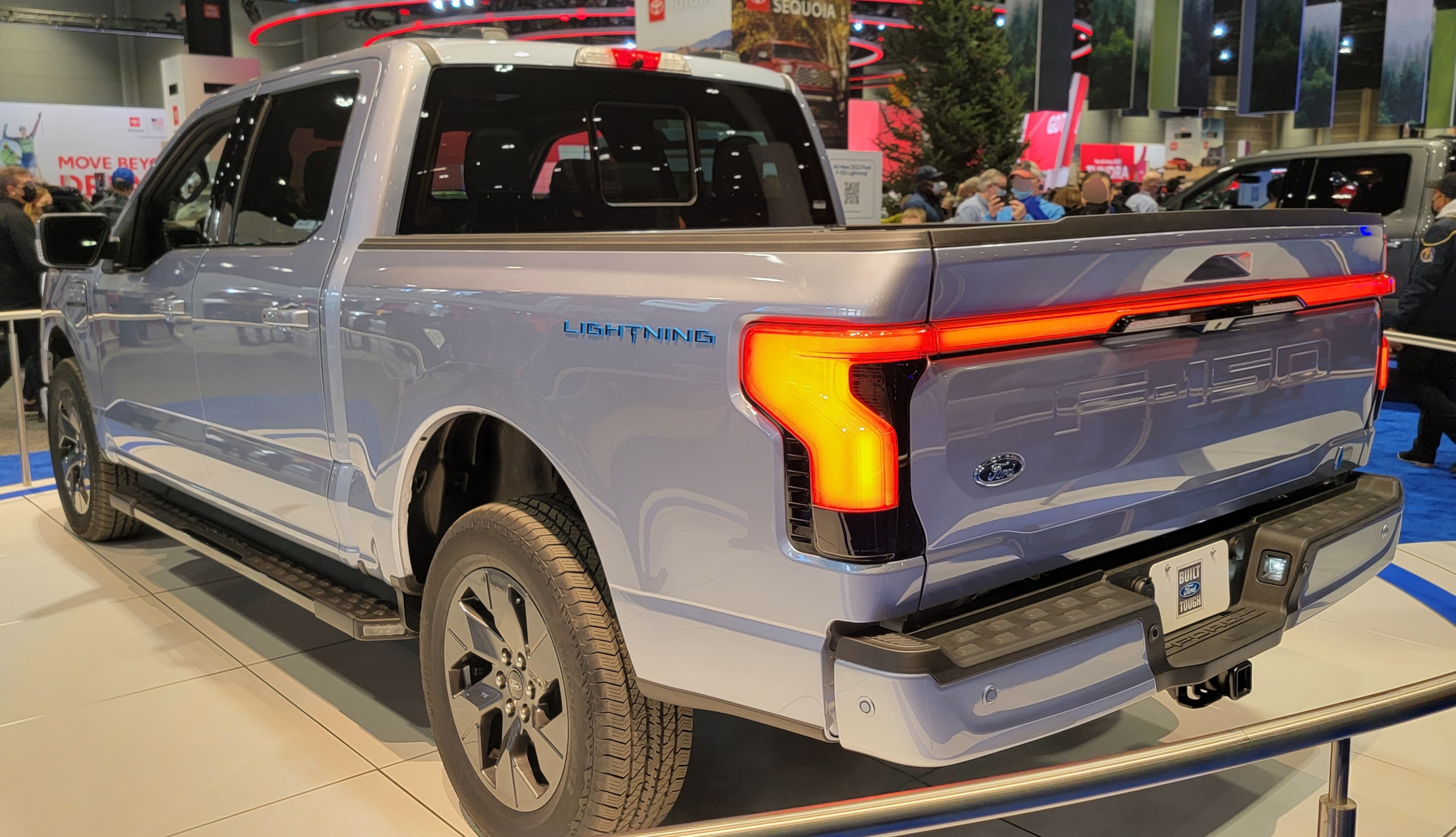
Ford announced the $19.5 billion write-down on its EV ambitions
and halted production of the F-150 Lightning.
General Motors followed with a $6 billion charge related to unwinding EV investments.
And the Detroit Giants, once racing towards electrification,
now pivot back towards hybrids, traditional powertrains,
and China's beloved powertrain of choice, the E-REV,
an extended-range electric vehicle.
America had chosen the carrot approach,
generous tax incentives to pull consumers into EVs,
but when the carrot disappeared, the market collapsed.
The timing could not be worse.
Parts of Europe have wrestled with its own crisis of confidence,
watering down its 2035 combustion engine ban
to a 90% emissions reductions target after intense industry lobbying.
China faces out subsidies, even as it mandates ever-stricter efficiency standards.
The global automotive industry faces a fundamental question at the beginning of 2026.
Can consumers be enticed into EVs through incentives alone,
or do markets require the regulatory stick of mandates and bans?
The answer, it turns out, depends less on ideology
than on execution, consistency, and time.
Welcome back to a special bonus edition of the podcaster.
I don't do these every single day, but when I do,
it's when I tend to sit down normally of an evening, to be honest,
when the kids are in bed.
Think about a topic that's been interesting me.
Jot down some notes.
Sometimes it's a little more editorial,
and sometimes a bit more fact-based, so do apologize for that.
And as I always say on shows like this,
I am somewhat of an armchair economist.
I'll do my best, but it's only a reserving suggestion.
Hey, by the way, these shows should turn up in your Patreon feed,
seven days in advance of the free feed.
So if you want to hear them first,
then you can support me on Patreon,
$1,000 a month, or maybe more, like companies and some individuals do,
to put this show on the air every single day.
That's how I earn a living now.
And if not, just wait a week and get them for free.
The elephant in the Nordic-sized room is Norway.
I know you've thought it already.
At first glance, Norway is the outlier.
In 2025, battery electric vehicles accounted for 96% of new car sales,
98% in December alone,
and we're talking about full BEVs here, battery electric vehicles,
not even plug-in hybrids.
Tesla captured nearly one in five vehicles sold in the entire country,
and combustion engines have been museum pieces rather than daily drivers.
The achievement looks miraculous,
until, you look at the time frame,
Norway started exempting EVs from purchase taxes in 1990.
The current dominance represents not a sudden overnight revolution.
This is the culmination of 35 years of relentless policy consistency.
And yes, it's gained ground in recent years,
but the Norwegian approach defies easy categorisation.
The government imposed no ban and no hard mandates.
Norwegians remained free to purchase whatever they wanted to.
If you love petrol and diesel, then fill your boots.
The strategy instead made the choice economically irrational.
Purchase taxes on combustion vehicles could reach 100% of the vehicle's value
for large, high-emission SUVs, while EVs paid zero.
A 25% VAT exemption on electric vehicles meant immediate savings equivalent to thousands of euros.
No annual road tax, no toll charges.
There were free municipal parking spaces waiting for your EV.
Access to bus lanes.
The benefits accumulated until really only those with very specific needs,
deep pockets, or just a dogma of just hating EVs were left with combustion.
Norway possessed two crucial advantages that enabled this approach.
First, oil and oil wealth.
The country's sovereign wealth fund, built from North Sea petroleum revenues, exceeded $1.3 trillion.
This provided the fiscal capacity to forgo billions in tax revenue while the EV market matured.
Second, geography and infrastructure.
With a 95% renewable electricity from hydropower,
EVs carried no environmental contradiction.
A compact, wealthy nation could deploy charging infrastructure very efficiently.
A population accustomed to very high, high vehicle taxes, incredibly expensive country to live in,
accepted further increases on combustion engines, and there was no political upheaval.
The policy evolved as the market matured.
Like I say, full VAT exemption ended in 2023.
That was replaced by a cap exempting only the first approximately £40,000 or so of the vehicle price.
Annual road taxes returned.
Though it reduced rates, toll roads began charging EVs, albeit at lower rates.
A tax increase of up to around $5,000 per vehicle took effect this year, on 1 January 2026,
prompting a surge of purchases at the end of last year.
These gradual phase-outs signal a market no longer requiring intensive life support.
At 96% market share, the job's pretty much done.
EVs have won in Norway, but it wasn't an overnight success.
Let's go to the US then.
Half my audience are from America, and America has chosen a very different path,
and you might think for better or for worse.
I've long argued that the purchase of your car should never have been tied up in filing your personal tax affairs.
It became too political recently as well, and something that from thousands of miles away
I could find at times almost amusing, because the first term of this White House had no problem with EVs,
but I sense that as the campaign wore on, and as perhaps some research or focus groups suggested
that taking an anti-EV stance, or maybe it was the funding from the oil and fossil industries helped smooth those wheels a little bit,
becoming very anti-EV, became the clarion call of the Republican Party,
and it never used to be, and it really shouldn't be.
The thing is America's incentives were very generous.
The federal tax credit of up to $7,500 for new EVs, four grand for used ones,
was all about bridging the gap between EVs and combustion.
The approach showed promise.
Third quarter 2025 EV sales surged as buyers rushed to secure credits before the deadline.
Tesla, GM, and others posted record numbers.
The market share was 10.5%, then the credit expired and demand evaporated.
Fourth quarter sales told the story.
Total EV sales dropping to 234,000 units down 46% from the previous quarter, 36% year over year down.
BMW's BEVs were down 45.5% in Q4 in the USA, from almost 14,000 vehicles to 7,500.
GM's EVs fell 43% in Q4.
The collapse extended beyond sales figures into corporate strategy.
Ford halted the lightning program, cancelled an entire generation of EV,
truck redirecting Tennessee to make combustion engines.
The company's $19.5 billion charge included $4.2 billion in cash payments to suppliers
who had expanded their capacity based on protections and contracts,
which were now no longer true.
The policy failure reveals a fundamental misunderstanding of technology adoption curves.
Incentives can accelerate early adoption, but they can't create sustainable demand
if the market lacks maturity.
America at 8% EV always required continued support.
Consumers have always cited affordability as a barrier in the United States to going EV.
The US doesn't have a cheap EV market,
so they can get EVs for 10, 13, 12,000 pounds that are maybe a few months old
or a year old, nearly new Leap Motors and Great Wall Motor funky cats.
These are small city cars, they'll fit four or five people,
but they're going to have the 30, 40 kilowatt-hour packs for city driving.
But the way that Europe is built and historically, and we don't do as many road trips,
those cars work.
The cheapest EV in America, Newcast, $30,000 this year.
Now, purchase prices remained stubbornly high in the US,
and there were plenty of premium $100,000 plus EVs you could go buy if you were American.
According to AAA's analysis, EVs had the second highest total ownership costs
amongst vehicle types when you factor in depreciation in the US.
Fuel and maintenance savings were insufficient to overcome these disadvantages
without the tax credit continuing.
The charging infrastructure gap also exacerbated the problem.
America possessed approximately 168,000 public charging stations
compared with Europe's 632,000 in 2024.
The ratio of vehicles to charging points reached 30 to 31 in the US,
versus 11 to 14 in Europe.
Growth in public charging slowed amidst public and policy uncertainty.
Consumers identified charging time and availability as barriers to EV.
Americans would see the politics playing out of the new White House
stopping the rollout of the charger funds.
Of course, the courts would step in and say,
you can't, that money has been guaranteed.
And then it was released again all the time,
sowing seeds of doubt in consumers.
All right, we haven't talked about China yet, have we?
China pursued a third model.
Industrial policy combining subsidies with escalating mandates.
Direct consumer subsidies ended in 2022
after the government spent hundreds of billions to jumpstart the market.
It replaced, at the time, them with targeted trade-in schemes,
so almost $3,000, $20,000 RMB,
if you scrapped an old vehicle and bought a new EV.
But the real driver was regulatory in China.
Beijing very much had their thumb on top of the market.
New energy vehicle sales had specific targets.
Manufacturers meeting them had access then
to purchase tax exemptions and benefits as well.
Those failing faced penalties and market restrictions.
Each local area or region in China took on its favored
or local EV manufacturers and became local champions.
Entire areas in China of cities or regions
or industrial parks would not just be devoted to building
the cars of a certain brand, but the whole supply chain
would be all around it.
Everybody in that community all worked in that supply chain
of building those cars, and those cars became local champions.
The approach achieved the desired result.
Monthly EV penetration, first hit 50% in 2025.
The year-to-date market share through the first half of 2025
was 51%.
If you listen to the spin-off show that I do
of EV News Daily called EV News China,
you'll know that we're heading to 60% EVs in China,
certainly for December.
It's looking like it's going to be that.
And China is now starting to do some very more sophisticated
things with the EV regulations.
Things like mandating energy efficiency,
capping cars at 15.1 kilowatt hours per 100 kilometers.
It's about 24 kilowatt hours per 100 miles
for passenger vehicles.
That's about an 11% stricter kind of rule
than the previous guidelines, but you can argue
should governments even get into policing
how efficient an EV should be?
Well, they are.
Compliance becomes a prerequisite if you want
any tax benefits, creating a double incentive
to make your products better, to innovate.
Yet success bred its own problems.
The aggressive subsidization and production mandates
have led to a huge overcapacity.
I've made whole special bonus podcasts on that.
There were 93 automakers in China that had a market share
less than 0.1%, only being held up by local areas.
Like I say, that championed them.
They want to admit that they've failed,
giving them very cheap access to money
and resources and things like that.
The government responded by removing new energy vehicles
from the strategic industries list
for their next five-year plan.
Signalling the sector must now stand on its own two feet.
And what about Europe?
Hmm, that's an interesting story there.
What's worked?
Carrot or stick?
Well, it's not an easy answer in Europe.
I'll take a quick break, take a slurp of coffee
and be back in a mo.
The number one resolution for people last year
was to save more money.
But nearly half gave up by February.
Don't let that be you.
Download rocket money to reach your financial goals
this year.
Track your spending, cut waste,
and automate savings in one simple app.
Rocket money shows you all your expenses
and categorizes them,
so you know exactly where your money's going
and where you're overspending.
From there, the app cuts waste
by canceling your unused subscriptions
and lowering your bills.
No customer service needed.
With that money freed up,
the app will automatically set some cash aside
for your goals,
whether it's an emergency fund,
paying off debt,
or saving for vacation.
Rocket money's got you covered.
Users love the app,
with over 186,000 5-star ratings.
And, on average,
users can save up to $740 a year
when using all the app's premium features.
Make saving money a priority this year.
Go to rocketmoney.com slash cancel to get started.
That's rocketmoney.com slash cancel.
Rocketmoney.com slash cancel.
Forget everything you had planned for this weekend,
because you are sitting on your couch
and winning from the comfort of your own home.
I'm here with SpinQuest,
where you can play hundreds of slot games,
all of the table games you love,
and you could even win real cash prizes.
New users,
$30 coin packs are on sale for $10
at spinquest.com.
SpinQuest is a free-to-play social casino.
Boydware prohibited.
Visit spinquest.com for more details.
Check out your accounts and see every subscription you're paying for.
Tap one you don't use and cancel it.
That's money back every month.
Step three, create a financial goal.
$50 every paycheck,
or let the app automatically move small amounts of cash
when you can afford it.
In a week, you'll forget you set it up.
In a month, you'll see real dollars piling up.
In a year, you'll be shocked at how much money you've saved.
Bonus challenge,
upload an internet or phone bill,
and let rocketmoney try to lower it.
You'll only pay if they find you savings.
On average,
rocketmoney members can save up to $740 a year
when using all the app's premium features.
Users love the app with over 186,000 five-star ratings.
Make saving money the resolution you actually keep.
Start the 60-second savings challenge
at rocketmoney.com slash cancel.
That's rocketmoney.com slash cancel.
Rocketmoney.com slash cancel.
I'm here with SpinQuest,
where you can play and win from the comfort of your own home
with hundreds of slot games
and all of the table games you love with real cash prizes.
Right now,
$30 coin packs are on sale for $10.
For new users,
it's all at spinquest.com.
That's S-P-I-N-Q-U-E-S-T dot com.
SpinQuest is a free-to-play social casino.
Boydwear prohibited.
Visit spinquest.com for more details.
All right, welcome back to our bonus edition.
Carrots or sticks?
What works around the world?
Well, European policy has zig-zagged
between ambition and reality.
The European Union set a 100% zero-emission target for 2035,
effectively banning combustion cars without banning them.
Member states implemented varying schemes.
Germany provided at one point up to four and a half
thousand euros per vehicle.
France offered income-adjusted subsidies
about around 4,200 plus more if the EV was made in Europe.
The Netherlands faced out direct subsidies,
but had tax advantages.
Yet by December of 2025,
the Commission proposed watering down
the targets to 90% reductions on previous amounts,
which allows for plug-in hybrids,
even synthetic fuels,
to possibly continue indefinitely, actually.
The reversal did follow intense lobbying
by the automotive industry in Germany, Italy, and more.
Seven member states formally requested revision.
The automotive sector argued that pure electric mandates
threatened competitiveness against Chinese makers
who had achieved cost advantages because of scale,
integration, cheap money, cheap labor, and more.
The political justification had some merit.
EV sales growth has been varying wildly
across the continent that at times
doesn't quite know how to pull itself together.
Germany's 27% decline when it suddenly canceled its subsidies
to Denmark's 66% plug-in market share.
Germany's experience was very instructive.
And as we get into starting to conclude the podcast,
just over halfway through,
I think that perhaps a German example
could be what my American listeners might want to look at.
When the coalition government in Germany abruptly canceled
the Umwelt-Burnes, sorry, German listeners,
for my mangling of your language,
in December 2023, they cited budget pressures.
The market just collapsed.
The program had paid out 10 billion euros
over since 2016, actually,
supporting 2.1 million vehicle purchases,
its termination without replacement,
or even a soft landing.
Transition period shocked the market.
Sales were down 27.4% in 2024,
but last year, they rebounded by 43%.
The market in Germany is now stronger
than it was before with heavy subsidization.
Could the same happen in the United States?
Well, let's find out.
The lesson resembled America,
removing incentives before the market was ready,
caused contraction,
rather than forcing continued growth.
But some subsidies have returned,
and Germany's recognized that it has an automotive industry,
that it also wants to protect and be a cheerleader of,
and it really hurt it.
America has to make a decision
about its automotive industry,
which at the moment is talking very positively about
combustion engines.
France and the Netherlands
have been contrasting.
France maintained its support through 2026,
adapting subsidy levels to its different fiscal constraints.
Policy's been pretty consistent in France, to be honest.
Netherlands ended subsidies last year,
but retained the motor vehicle tax reductions.
That's through to the end of the decade, I think.
So again, a soft landing.
Both markets had big growth,
despite removing direct incentives
for some to allow consumers to adjust their expectations.
So the opposite to Germany, opposite to what America has done.
It also allows infrastructure investment
to happen at the speed at which markets work.
All right, let's mention the Nordic countries.
Denmark, Sweden, Finland.
Very high adoption rates for plug-in markets, yes.
So last year, Denmark was 66%,
Sweden's 60%, and Finland's 56%.
I think in that order, Denmark, Sweden, Finland.
They're not Norway yet, but they're on their way.
So how have they done it?
Well, they've used tax policy.
They haven't been handing out free money.
Denmark's had really no purchase subsidies at all.
They implemented registration taxes,
reaching 150% for combustion vehicles,
whilst charging EVs only 40% of the standard rates.
So a mix of carrot and stick.
It hurts you if you want to drive combustion,
but no one's stopping you, just more expensive.
And it is cheaper to buy EV, a bit of a carrot there.
But no free money on the table.
It doesn't get politicized.
The approach mirrored Norway's philosophy,
just make combustion a bit more inconvenient.
The method proved politically sustainable
because it generated revenue at the end of the day
from people who want to do something that is their choice.
Perhaps compare it to taxes on smoking and drinking.
No one's stopping you to doing it.
Might just cost you a bit more money than those that don't.
All right, let's go back across the Atlantic now.
In fact, let's go to the other side of the country
and go to California.
So what happened there?
California adopted the stick approach.
So that was just beat the industry into submission.
California's zero emission vehicle program,
dating back to 1990, I think,
required manufacturers to sell
specific percentages of zero emission vehicles
or put your hand in your pocket and write us a check.
The advanced Clean Cars 2 regulations escalated those
dramatically, 35% of Zev sales in model year 2026
and 100% by 2035.
Plug-in hybrids could meet no more than 20% of the requirements
and even those needed a 70 mile electric range,
which is pretty sensible.
112 kilometers, 70 miles,
not a hard thing to achieve these days
with battery technology.
The mandate approached in California.
It did work because California possessed
enforcement power and market size.
Manufacturers can't ignore California
and the state's 26% EV market share.
Multiple states adopted California standards.
So that made a kind of multi-state block
and that really commanded attention.
The regulatory certainty, agree or not with it,
allowed car makers to plan their investments.
No points making two sets of cars for America
when the California and others block was so big
you just make a car that's compliant
and you make EVs and sell them there.
The end of the compliance car,
although not totally happening,
largely ended that era.
Yet even California struggled with the gap
between ambition and reality.
The state's EV market share of 26% last year
looked impressive compared with America's 8%,
but reaching 35% by the end of this year,
or the model year, they do it in model years,
model year 2026, would require extraordinary acceleration.
The loss of the federal tax credit
affected California buyers as much as any other.
However, the White House revoked California's
billionaire act waiver last year,
eliminating the authority to set their own
emission standards.
Manufacturers faced the unpalatable choice
between missing California's targets,
which are now uncertain,
and accepting penalties or flooding the market
with EVs of big discounts.
Where haven't we talked about?
Oh, so let's go to the markets
that have perhaps stalled a little bit.
Those that perhaps didn't quite get going.
Japan and South Korea have revealed
the limits of incentives if the market's not ready.
Japan offered subsidies of about $6,000
or 4,800 pounds, that is 900,000 yen,
for battery electric vehicles,
and more if they're K-cars.
Yet EV sales in Japan stuck at 1.3%
market share in 2025.
And that's down from previous years.
What's popular?
Non-plug-in hybrid vehicles.
That's a 34% market share in Japan.
And combustion still rules over there as well.
And there's no charging infrastructure expansion happening.
It's happening, but it's very slow.
17% growth in public charges last year.
South Korea responded to some of the stagnation
in the markets by increasing subsidies
rather than reducing them,
raising this year's 2026 EV subsidy budget
by 20% to about 650 million in the pot.
That's 936 billion won.
The maximum subsidy increased to about $4,700
or 3,700 pounds equivalent
for those who scrap an internal combustion car as well.
The government introduced trade-in subsidies
and restructured support to reward performance
like range and charging speed.
And the approach resembled doubling down
on the carrot strategy
when initial incentives proved insufficient.
Whether this succeeds depends on addressing infrastructure,
consumer hesitation.
There's been some really negative media coverage
around an EV fire that happened.
So this year's going to be a really big lesson
for us all to learn from South Korea.
All right, let's finish off.
What have we learned and where do we go from here?
So lessons from the field then.
The different outcomes across markets reveal patterns.
First of all, time horizon matters.
China, with their five-year plans,
made EVs part of their policy in 2005.
So for the last 20 years,
they have been ruthlessly consistent with policy.
You can argue about the way that China does things as well.
That's not the place on this particular bonus podcast,
but they haven't wavered.
Norway's success required three and a half decades
of just policy consistency, regardless of who was in charge.
America's federal credit expired after a long time,
and it went through multiple administrations
and different political viewpoints.
But now it seems we're entering a time
where if there is a change in the White House
in three years' time in America,
it feels it could be game on again for EVs.
And if we stay the way we are politically in America,
after this next three years is up,
it feels like there is so much political dogma now
where just because of the way you vote,
you sign up to following that way of thinking,
regardless of taking issue by issue.
So you're told,
well, we feel if you think like us, then we all hate EVs.
And if you don't hate EVs, then you're not one of us.
And that dogma can be really dangerous
in terms of independent thinking, critical thinking,
and just being your own person.
So it's going to be fascinating to see where we go.
And it's what the industry doesn't need.
We don't need to vote a different way in three years' time,
and then perhaps a new president says,
right, here we go.
We're all back on with EVs.
As much as it might suit any of you podcast here,
like we're going to go EV across the road with
or without America.
So this little podcast will be fine,
but that's not what the industry needs.
And that's not me saying that's the lessons from around the world
of where EV penetration is the highest.
And you can't argue with you the US 8% markets,
60% in China and 100% in Norway.
Tax differential proves more durable than direct subsidies.
So making things a little more difficult to do the thing
that you don't want people to do
and making life a little more easier seems to have worked.
Denmark, Sweden, Netherlands and others seem to have worked that way.
A little bit of penalization for combustion,
a little bit of advantage for EVs,
and that system has worked.
Also it generates revenue rather than requiring expenditure,
making them fiscally sustainable and politically sustainable.
Hey, like I was saying, I'm no economist or political analyst.
Third infrastructure is the prerequisite, right?
So Europe's charging sites in 630 plus thousand
grew to about 1.1 million.
I think plugs by the end of last year, I'll double check those numbers.
But clearly people are driving around and seeing more EV charges.
America's charging infrastructure is also a different requirement
because as a landmass it's so big
and there is so much cultural weight that comes with road tripping,
that people are more inclined to say,
well, I can't have that car that doesn't do a thousand miles.
You know, nonstop.
By the way, there's those in China that are getting pretty close,
those E-Revs and so that argument falls away.
But still infrastructure is incredibly important to adoption in America.
And fourth, regulatory certainty matters more than leniency.
California's strict ZEV mandates,
despite the manufacturer complaints,
provided a planning certainty that enabled investment decisions
way before this whole modern era of EVs becoming political.
America's abrupt credit expiration and Europe's 2035 backtracking
has kind of created some chaos all at the same time
because it violates expectations.
Manufacturers can adapt.
I think manufacturers and big corporations will adapt
to even the strictest and most stringent requirements.
They just need to know what they're going to be and that they won't change.
And probably fifth actually, now think about it,
cultural and practical barriers resist purely financial solutions.
Japan's apartment dwelling population can't just put a home charger in
regardless of subsidy levels.
I mean, all the money in the world won't change
the way that country is built in some big cities.
America's vast geography requires long range
and more charging stations than a compact European nation.
Policy has to address things on a country by country basis,
not merely assume that what worked somewhere works in other places.
So when we go from here in 2026, well, I think the evidence suggests
EV adoption requires a little bit of both carrot and stick,
a bit of nuance, a bit of shades of gray.
That's not what the world and certainly social media these days survives on.
We want an answer black or white.
How do we do it?
What's the answer?
I don't think it's that easy.
I think it's it's a little bit of everything that we've learned.
But the one thing is consistency over decades.
Pure incentive approaches like the U.S.
and Japan achieves modest market penetration and collapses when support ends.
Pure mandate like California creates tension between regulations
and the market, the most successful models.
China, Norway, Denmark, Netherlands and more combines financial advantages.
If you drive EV financial penalties.
If you drive combustion infrastructure investment,
the framework needed for regulations all done over a long amount of time
for markets at the early stages.
So if you are 20% or under like America, 8% you might need generous incentives.
But that's insufficient.
They must be paired with infrastructure with certainty and tax structures
that make combustion vehicles a bit more expensive.
That doesn't seem like it's going to happen in a country
that's winding back its emissions standards
and re embracing emissions and pollution and things like that.
Policymakers must commit to time horizons in decades
and sadly from what I view from across the pond,
it's kind of not where America is at the moment
in terms of setting a direction and sticking with it for a long time.
The markets in the intermediate stage like here in the UK.
So if you're between 20 and 50% and we're at about 25% pure bev
and about 35% if you have a plug socket on the cars.
The focus needs to be charging infrastructure expansion.
Standards of regulation that drive vehicle improvements
like China's been doing and phasing out incentives
but having some sort of baseline support.
Tax advantages prove more sustainable than direct subsidies.
One example, which is an enormous frustration for me,
we're in this phase right now and yet we charge four times
as much tax if you charge your car publicly.
There's 20% tax on public EV charging
and we only pay 5% tax on our home electricity.
That is an inequality that strikes like the very core of my values.
It's so unfair if you don't have like what we have
which is a house with a driveway and a garage and a charger
and this is the first house that we've had with those by the way.
We've always had old Victorian houses, non-street parking and whatnot.
So I'm in a privileged position.
That one example is so unfair that the British government
that should just be changed immediately.
If you're a mature market, so 70% or above China's getting there
then that just becomes how do you phase out incentives?
How do you ensure charging networks support fleet electrification?
We've seen the Norway model of gradually reducing those benefits.
The American collapse and the European retreat over the last few weeks
demonstrate the consequences of policy inconsistency.
The Detroit names and the big write downs of 26 billion combined
represent not a corporate miscalculation.
It's not their faults.
I know it's easy to have a go at highly paid CEOs.
It's policy failure.
Markets need the stick of regulation.
I think you need to be told,
sorry it's not the news you wanted to hear,
but this is the direction of travel.
Then you need the carrot of some incentives to enable consumer adoption.
And I don't think either alone will suffice.
Both must persist long enough to achieve a kind of irreversibility, if you like.
The technology transition isn't quick either and it won't be cheap.
The only question is whether policymakers can be patient enough
and have enough commitment.
Well that's a big question Mark.
Thank you for listening to this holy moly half hour special.
Sorry about that, I'll see you on the next one.
Step 3. Create a financial goal.
$50 every paycheck.
Or let the app automatically move small amounts of cash when you can afford it.
In a week, you'll forget you set it up.
In a month, you'll see real dollars piling up.
In a year, you'll be shocked at how much money you've saved.
Bonus challenge.
Upload an internet or phone bill and let RocketMoney try to lower it.
You only pay if they find you savings.
On average, RocketMoney members can save up to $740 a year
when using all of the app's premium features.
Users love the app with over 186,000 5-star ratings.
Make saving money the resolution you actually keep.
Start the 60-second savings challenge at RocketMoney.com slash cancel.
That's RocketMoney.com slash cancel.
RocketMoney.com slash cancel.
Forget whatever plans you have this weekend
because you're staying at home and playing on spin quests.
And there's never been a better time to sign up than right now.
New users get $30 coin packs for just $10.
All the table games you love with hundreds of slot games
and real cash prizes.
That's at spinquest.com.
S-P-I-N-Q-U-E-S-T dot com.
SpinQuest is a free-to-play social casino.
Voidware prohibited.
Visit spinquest.com for more details.
Forget everything you had planned for this weekend
because you are sitting on your couch
and winning from the comfort of your own home.
I'm here with SpinQuest,
where you can play hundreds of slot games,
all of the table games you love,
and you could even win real cash prizes.
New users, $30 coin packs are on sale for 10
at spinquest.com.
SpinQuest is a free-to-play social casino.
Voidware prohibited.
Visit spinquest.com for more details.
In Cox, we are taking a step forward.
Like the guy who already knows the order of your coffee
even before you ask for it.
I don't know.
Coffee with milk without lactose,
a touch of vanilla, a little tempered, without sugar?
In Cox, we also advance what you need.
That's why the price of your plan won't go up for three years.
And our advanced security will protect your network of threats
before they pass.
Cox, a step forward.
I don't know.
Call your boss in three, two, one.
At least 500 megabits per second
of speed and Cox will have a model.
Imposts and cars are not included in warranty
of mobile data speed,
reduced by 20 gigabytes a month.
Do you want better internet?
Cox Internet of 300 megabits
has fast and reliable speeds
that you are looking for.
Perfect for streaming and gaming
and working from home.
All for just $45 a month
when you add Cox Mobile.
Include Wi-Fi team
and guarantee price of two years in your plan.
Don't wait.
Change today to Cox.
It requires Cox Mobile
to limit pressure guarantee.
Include imposts and cars.
Mobile data speeds are reduced
after 20 gigabytes a month.
About this episode
Exploring the dynamics of electric vehicle (EV) adoption, this episode delves into the effectiveness of incentives versus regulations across different global markets. The discussion highlights the recent decline in U.S. EV sales following the expiration of federal tax credits, contrasting it with Norway's long-term, consistent policies that have led to a 96% EV market share. The episode also examines the mixed results in Europe and China, where varying approaches to subsidies and mandates have produced different outcomes. Ultimately, it argues that a balanced strategy combining both incentives and regulatory measures is essential for sustainable EV growth.
Depending on which headline you read, the electric vehicle market in America is either entering a long Winter, is at a crossroads or is taking a short pause before explosive growth. The federal tax credit expired on 30 September 2025, and the consequences arrived with brutal clarity: fourth-quarter EV sales plunged 46 per cent compared with the third quarter, dropping to levels not seen since late 2022. Ford announced a $19.5 billion write-down on its electric ambitions and halted production of the F-150 Lightning. General Motors followed with $6 billion in charges related to unwinding EV investments. The Detroit giants, once racing towards electrification, now pivot back towards hybrids and traditional powertrains. America had chosen the carrot approach — generous tax incentives to pull consumers into EVs — and when that carrot disappeared, the market collapsed. The timing could not be worse. Europe wrestles with its own crisis of confidence, watering down its 2035 combustion engine ban to a 90 per cent emissions reduction target after intense industry pressure. China phases out subsidies even as it mandates ever-stricter efficiency standards. The global automotive industry faces a fundamental question: can consumers be enticed into EVs through incentives alone, or do markets require the regulatory stick of mandates and bans? The answer, it turns out, depends less on ideology than on execution, consistency and time.