
BONUS: Encouraging EV Adoption — The Carrot Or The Stick?
About this episode
Exploring the dynamics of electric vehicle (EV) adoption, this episode delves into the effectiveness of incentives versus regulations across different global markets. The discussion highlights the recent decline in U.S. EV sales following the expiration of federal tax credits, contrasting it with Norway's long-term, consistent policies that have led to a 96% EV market share. The episode also examines the mixed results in Europe and China, where varying approaches to subsidies and mandates have produced different outcomes. Ultimately, it argues that a balanced strategy combining both incentives and regulatory measures is essential for sustainable EV growth.
The federal tax credit expired on 30 September 2025, and the consequences arrived with brutal clarity: fourth-quarter EV sales plunged 46 per cent compared with the third quarter, dropping to levels not seen since late 2022.
Ford announced a $19.5 billion write-down on its electric ambitions and halted production of the F-150 Lightning. General Motors followed with $6 billion in charges related to unwinding EV investments. The Detroit giants, once racing towards electrification, now pivot back towards hybrids and traditional powertrains. America had chosen the carrot approach — generous tax incentives to pull consumers into EVs — and when that carrot disappeared, the market collapsed.
The timing could not be worse. Europe wrestles with its own crisis of confidence, watering down its 2035 combustion engine ban to a 90 per cent emissions reduction target after intense industry pressure. China phases out subsidies even as it mandates ever-stricter efficiency standards. The global automotive industry faces a fundamental question: can consumers be enticed into EVs through incentives alone, or do markets require the regulatory stick of mandates and bans? The answer, it turns out, depends less on ideology than on execution, consistency and time.
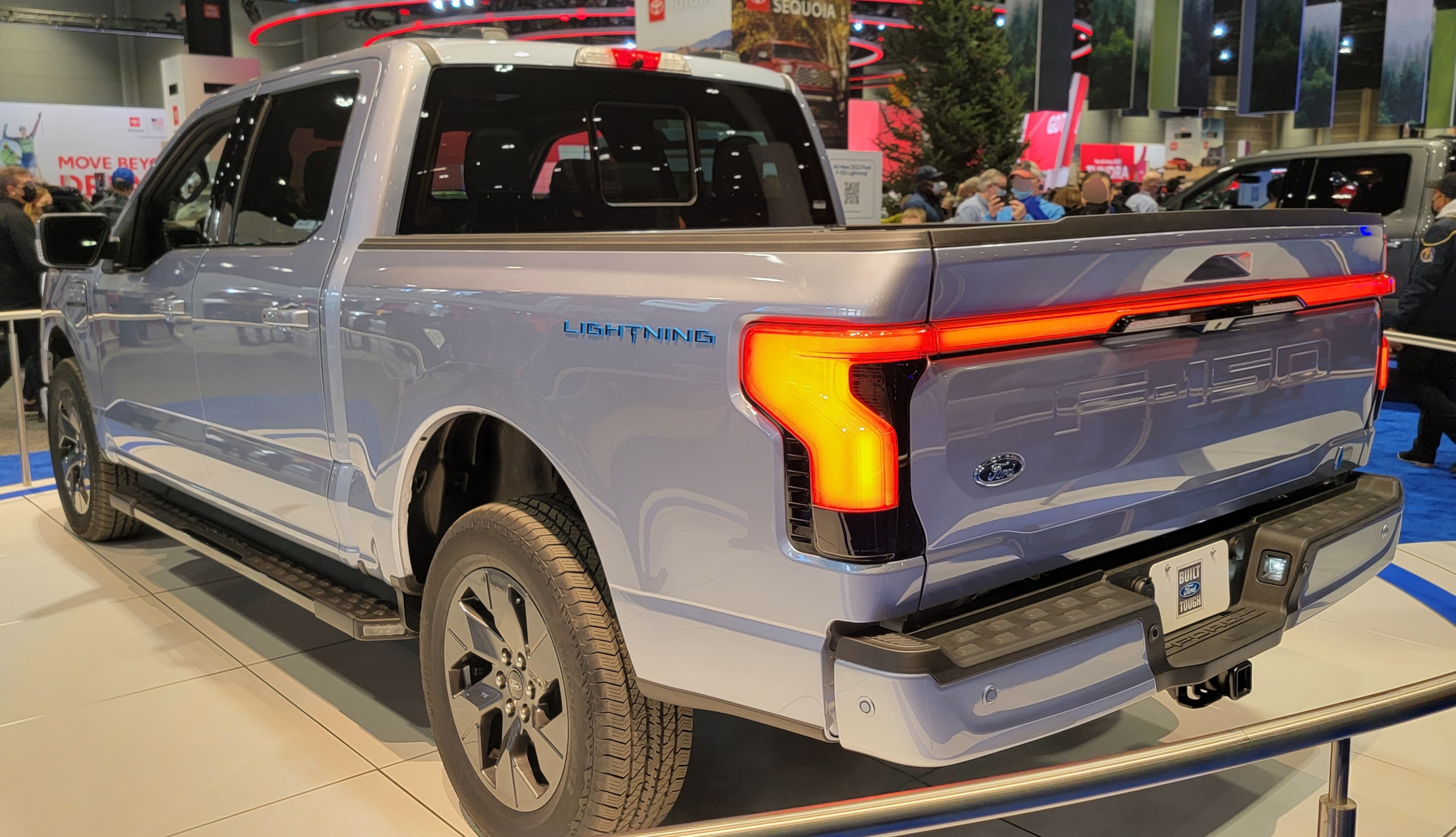
Ford F150 Lightning
"...halted production of the F-150 Lightning. General Motors followed with a $6 billion charge related to unwinding EV investments."
The Ford F-150 Lightning is an electric truck that can do everything a regular F-150 can, but it runs on electricity instead of gasoline.
The Ford F-150 Lightning is an all-electric version of Ford's popular F-150 pickup truck, designed to offer the utility of a traditional truck with the benefits of electric power.
electrification
"...the Detroit Giants, once racing towards electrification, now pivot back towards hybrids, traditional powertrains..."
Electrification means changing cars from using gasoline engines to using electric motors, which is better for the environment.
Electrification refers to the process of replacing traditional internal combustion engines with electric powertrains in vehicles, aiming to reduce emissions and reliance on fossil fuels.
E-REV
"...and China's beloved powertrain of choice, the E-REV, an extended-range electric vehicle."
An E-REV is a car that mainly runs on electricity but has a gas engine that helps it go further when the battery runs out.
E-REV stands for Extended-Range Electric Vehicle, which is a type of vehicle that uses an electric motor for propulsion but has a gasoline engine that can generate electricity to extend its range when the battery is depleted.
battery electric vehicles
"In 2025, battery electric vehicles accounted for 96% of new car sales, 98% in December alone, and we're talking about full BEVs here, battery electric vehicles, not even plug-in hybrids."
Battery electric vehicles are cars that run only on electricity, using batteries instead of gasoline. They don't produce any exhaust fumes, making them cleaner for the environment.
Battery electric vehicles (BEVs) are cars that are powered entirely by electricity stored in batteries, with no internal combustion engine. They are known for being more environmentally friendly as they produce zero tailpipe emissions.
plug-in hybrids
"not even plug-in hybrids. Tesla captured nearly one in five vehicles sold in the entire country, and combustion engines have been museum pieces rather than daily drivers."
Plug-in hybrids are cars that can use both electricity and gasoline. You can charge them like electric cars, but they also have a regular engine that kicks in when needed.
Plug-in hybrids are vehicles that combine a traditional internal combustion engine with an electric motor and battery. They can be charged from an external power source and can operate on electric power alone for a limited range before switching to gasoline.
Tesla
"Tesla captured nearly one in five vehicles sold in the entire country, and combustion engines have been museum pieces rather than daily drivers."
Tesla is a company that makes electric cars. They are known for their advanced technology and have become very popular for people who want to drive electric vehicles.
Tesla is an American electric vehicle manufacturer known for its innovative technology and high-performance electric cars. The company has played a significant role in popularizing battery electric vehicles and has a strong market presence in several countries.
high-emission SUVs
"Purchase taxes on combustion vehicles could reach 100% of the vehicle's value for large, high-emission SUVs, while EVs paid zero."
High-emission SUVs are large cars that use a lot of fuel and create a lot of pollution. Because of this, they may be taxed more to encourage people to choose cleaner options.
High-emission SUVs are sport utility vehicles that produce a significant amount of greenhouse gases and pollutants due to their fuel consumption. They are often targeted by higher taxes and regulations to discourage their use in favor of more environmentally friendly options.
combustion vehicles
"Purchase taxes on combustion vehicles could reach 100% of the vehicle's value for large, high-emission SUVs, while EVs paid zero."
Combustion vehicles are cars that run on fuel like gas or diesel. They burn this fuel to make the car move, which can create pollution.
Combustion vehicles are those that use an internal combustion engine, typically powered by gasoline or diesel. These vehicles emit greenhouse gases and other pollutants, which is why they are facing increasing taxes and regulations in many regions.
EVs
"for large, high-emission SUVs, while EVs paid zero. A 25% VAT exemption on electric vehicles meant immediate savings equivalent to thousands of euros."
EVs are cars that run on electricity instead of gas. They are better for the environment and often come with benefits like tax breaks.
EVs, or electric vehicles, are cars that are powered entirely by electricity rather than gasoline or diesel. They are often promoted for their environmental benefits and are subject to various incentives to encourage their adoption.
VAT exemption
"A 25% VAT exemption on electric vehicles meant immediate savings equivalent to thousands of euros. No annual road tax, no toll charges."
VAT exemption means you don't have to pay a tax that usually adds to the cost of things. For electric cars, this means you can save a lot of money when you buy one.
VAT exemption refers to the value-added tax that is not applied to certain goods or services, in this case, electric vehicles (EVs). This exemption can lead to significant savings for consumers, making EVs more financially attractive compared to traditional combustion vehicles.
toll charges
"No annual road tax, no toll charges. There were free municipal parking spaces waiting for your EV."
Toll charges are fees you pay to use certain roads or bridges. Electric cars sometimes don't have to pay these fees, which can save you money.
Toll charges are fees collected for the use of certain roads or bridges. Electric vehicles often benefit from exemptions or reduced fees as part of incentives to promote their use.
road tax
"No annual road tax, no toll charges. There were free municipal parking spaces waiting for your EV."
Road tax is a fee you pay to be allowed to drive your car on the roads. Some electric cars don't have to pay this fee, which saves money.
Road tax is a fee that vehicle owners must pay to use public roads. This tax can vary based on factors like vehicle emissions and weight, and many regions offer exemptions or reductions for electric vehicles.
municipal parking spaces
"There were free municipal parking spaces waiting for your EV. Access to bus lanes."
Municipal parking spaces are places to park your car that are run by the city. Electric cars can often park there for free, which is a nice perk.
Municipal parking spaces are parking areas managed by local government authorities. Many cities offer free or discounted parking for electric vehicles to encourage their use.
bus lanes
"Access to bus lanes. The benefits accumulated until really only those with very specific needs, deep pockets, or just a dogma of just hating EVs were left with combustion."
Bus lanes are special lanes on the road just for buses. Sometimes electric cars can use these lanes too, which can help them get around faster.
Bus lanes are designated lanes on roads that are reserved for buses and sometimes other vehicles, such as electric cars. Allowing EVs to use these lanes can help reduce congestion and promote their use.
oil wealth
"Norway possessed two crucial advantages that enabled this approach. First, oil and oil wealth."
Oil wealth is the money a country makes from selling oil. This can affect how they decide to tax cars and promote electric vehicles.
Oil wealth refers to the financial benefits that a country or region derives from its oil resources. This wealth can influence government policies, including those related to vehicle taxation and environmental regulations.
federal tax credit
"...The thing is America's incentives were very generous. The federal tax credit of up to $7,500 for new EVs..."
A federal tax credit is a way for the government to help you save money on your taxes. If you buy an electric car, you might get a tax break that lowers how much you owe.
A federal tax credit is a dollar-for-dollar reduction in the amount of income tax that a taxpayer owes to the federal government. In the context of EVs, it incentivizes consumers to purchase electric vehicles by offering a tax reduction for qualifying purchases.
incentives
"...The thing is America's incentives were very generous..."
Incentives are rewards or benefits that encourage people to do something, like buy an electric car. They can help make the purchase cheaper or more attractive.
Incentives refer to benefits or rewards offered to encourage certain behaviors, such as purchasing electric vehicles. These can include tax credits, rebates, or other financial benefits that make buying an EV more appealing.
EV credits
"Third quarter 2025 EV sales surged as buyers rushed to secure credits before the deadline."
EV credits are benefits from the government that help you save money when you buy an electric car. They can be tax discounts or cash back.
EV credits are incentives provided by governments to encourage the purchase of electric vehicles, often in the form of tax credits or rebates.
market share
"The market share was 10.5%, then the credit expired and demand evaporated."
Market share is how much of the total sales in a market a company has. It shows how popular or successful a company is compared to others.
Market share refers to the percentage of an industry's sales that a particular company or product controls, indicating its competitiveness in the market.
BEV
"BMW's BEVs were down 45.5% in Q4 in the USA, from almost 14,000 vehicles to 7,500."
BEV means Battery Electric Vehicle. It's a car that only uses electricity to run and doesn't have a gas engine at all.
BEV stands for Battery Electric Vehicle, which is a type of electric vehicle that runs entirely on electricity stored in batteries, without any internal combustion engine.
technology adoption curves
"The policy failure reveals a fundamental misunderstanding of technology adoption curves."
Technology adoption curves show how quickly people start using new technology. Some people are quick to try new things, while others take longer to adopt them.
Technology adoption curves describe how different groups of consumers adopt new technologies over time, typically categorized into innovators, early adopters, early majority, late majority, and laggards.
affordability as a barrier to EV adoption
"Consumers have always cited affordability as a barrier in the United States to going EV."
Many people say that electric cars are too expensive to buy, which makes it hard for them to choose an electric vehicle over a regular gas car.
Affordability is often cited as a significant barrier to electric vehicle (EV) adoption, as many consumers find the initial purchase price of EVs to be higher than traditional combustion engine vehicles, despite potential long-term savings.
EV
"...The US doesn't have a cheap EV market, so they can get EVs for 10, 13, 12,000 pounds..."
An EV, or electric vehicle, is a car that runs on electricity instead of gasoline. They are often better for the environment because they produce less pollution.
EV stands for electric vehicle, which is a type of vehicle that is powered entirely or partially by electricity. EVs are known for being more environmentally friendly compared to traditional gasoline-powered cars.
Leap Motors
"...nearly new Leap Motors and Great Wall Motor funky cats. These are small city cars..."
Leap Motors is a company that makes electric cars in China. They focus on creating small cars that are good for driving in cities.
Leap Motors is a Chinese electric vehicle manufacturer known for producing compact and affordable electric cars aimed at urban drivers. Their vehicles are designed for city use, emphasizing efficiency and practicality.
Great Wall Motor
"...Leap Motors and Great Wall Motor funky cats. These are small city cars..."
Great Wall Motor is a car company from China that makes various types of vehicles, including electric cars. They aim to provide affordable options for drivers.
Great Wall Motor is a prominent Chinese automotive manufacturer that specializes in SUVs and pickup trucks, as well as electric vehicles. They are known for their affordable pricing and focus on the domestic market.
kilowatt-hour
"...they're going to have the 30, 40 kilowatt-hour packs for city driving. But the way that Europe is built..."
A kilowatt-hour is a way to measure how much energy a battery can store. It helps you understand how far an electric car can go before needing to be charged again.
A kilowatt-hour (kWh) is a unit of energy that represents the amount of energy consumed by a device using one kilowatt of power for one hour. In the context of electric vehicles (EVs), it indicates the capacity of the battery and how far the vehicle can travel on a full charge.
total ownership costs
"According to AAA's analysis, EVs had the second highest total ownership costs amongst vehicle types when you factor in depreciation in the US."
Total ownership costs are all the money you spend on a car over time, not just the price you pay to buy it. This includes things like repairs, gas, and how much value the car loses as it gets older.
Total ownership costs refer to the complete expenses associated with owning a vehicle over time, including purchase price, depreciation, insurance, maintenance, and fuel costs. This metric helps consumers understand the long-term financial implications of their vehicle choice.
charging infrastructure
"The charging infrastructure gap also exacerbated the problem. America possessed approximately 168,000 public charging stations compared with Europe's 632,000 in 2024."
Charging infrastructure is the system of places where you can charge electric cars. It’s important because if there aren’t enough charging stations, it can be hard for people to use electric vehicles.
Charging infrastructure refers to the network of charging stations and related facilities that support electric vehicles (EVs). A robust charging infrastructure is crucial for the widespread adoption of EVs, as it affects how easily drivers can recharge their vehicles.
public charging stations
"America possessed approximately 168,000 public charging stations compared with Europe's 632,000 in 2024."
Public charging stations are places where you can plug in and charge your electric car when you're out and about. They are important for people who own electric vehicles to keep their cars powered up.
Public charging stations are locations where electric vehicle owners can recharge their cars. These stations are typically found in public areas such as parking lots, shopping centers, and along highways, making it convenient for EV drivers to access charging when needed.
trade-in schemes
"It replaced, at the time, them with targeted trade-in schemes, so almost $3,000, $20,000 RMB, if you scrapped an old vehicle and bought a new EV."
Trade-in schemes let you give your old car to a dealer and get money off a new car. It's a way to encourage people to buy new vehicles.
Trade-in schemes are programs that allow consumers to exchange their old vehicles for credit towards the purchase of a new vehicle. These schemes often include incentives to encourage the adoption of newer, more environmentally friendly cars.
purchase tax exemptions
"Manufacturers meeting them had access then to purchase tax exemptions and benefits as well."
Purchase tax exemptions mean you don't have to pay some taxes when you buy a car. This helps make buying certain cars cheaper.
Purchase tax exemptions are reductions or eliminations of taxes that buyers would normally pay when purchasing a vehicle. These exemptions are often used as incentives to promote the sale of certain types of vehicles, such as electric or hybrid cars.
non-plug-in hybrid vehicles
"Non-plug-in hybrid vehicles. That's a 34% market share in Japan."
Non-plug-in hybrids use both gasoline and electricity to power the car, but you can't plug them in to charge like a regular electric car. They make their own electricity while driving.
Non-plug-in hybrid vehicles combine a traditional internal combustion engine with an electric motor, but they cannot be charged from an external power source. Instead, they generate electricity through regenerative braking and the combustion engine itself.

Nissan Quests
"...ecause you're staying at home and playing on spin quests. And there's never been a better time to sign up ..."
The Nissan Quest is a type of family car called a minivan, which is designed to carry many passengers and their belongings comfortably. It's great for road trips or daily errands with kids because it has lots of room inside. People talk about it when discussing cars that are good for families.
The Nissan Quest is a minivan that was produced by Nissan from 1992 to 2017. It is known for its spacious interior, family-friendly features, and comfortable ride, making it a popular choice for families. The Quest often comes up in discussions about practical vehicles for those needing ample passenger and cargo space.
Request an Explanation
Heard something you'd like explained? We'll add it to this episode.
Sign in to request explanations for terms you heard.
Want to learn more?
Browse our glossary for plain-English explanations of automotive terms, jargon, and concepts.
Help improve this episode
See something that's not quite right? Our annotations are AI-generated and can sometimes miss the mark. Click the flag icon on any annotation to suggest a correction.