KTM is usually known for motorcycles, not cars. In this episode, it sounds like “KTM” is being used as the name of the event or group, not the car brand itself.
The Hyundai Veloster is a smaller car that’s meant to be practical but still look sporty. It’s not a large luxury car—more of an everyday vehicle with a unique design. People may bring it up because it’s a noticeable, affordable option in its class.
Genesis is Hyundai’s luxury brand, so it makes nicer, higher-end versions of cars than Hyundai’s regular lineup. The idea is to offer more comfort and premium features. It comes up when people talk about luxury cars that are still connected to Hyundai.
Brand
Daywoo
Daewoo (spelled “Daywoo” in the transcript) was a Korean car brand that used to show up in the U.S. more than it does now. It’s the kind of older brand people might still recognize from past years.
The Genesis G70 is a luxury sedan that’s meant to feel sporty. Here they’re talking about the 3.3-liter turbo version, which is the stronger engine option.
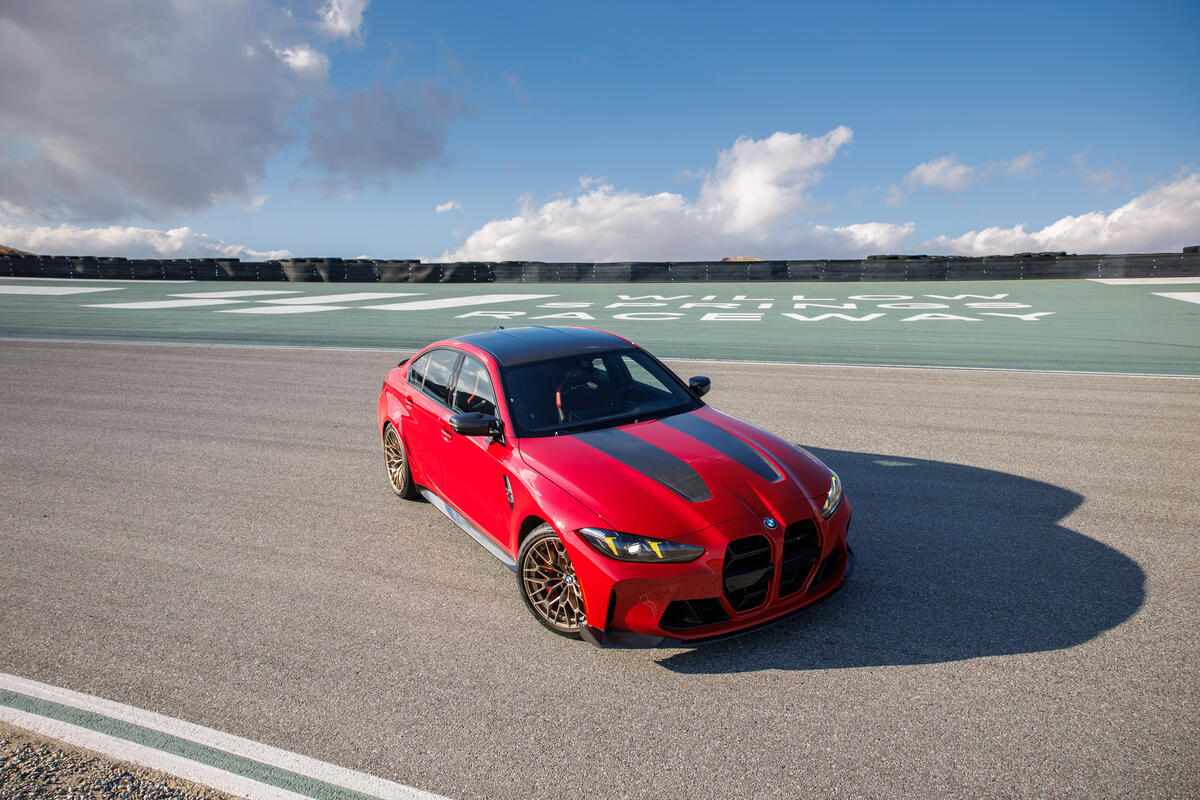
The BMW M3 is a sporty, higher-performance version of a BMW sedan. It’s made to drive more aggressively and feel more responsive than a regular model. People mention it because it’s known for performance and driving excitement.
Car
Hyundai G80
The Hyundai G80 is a luxury sedan. They’re saying there was a V8 version, which would make it feel more powerful than the usual smaller engines.
The Mercedes-Benz S-Class is a large luxury car meant to be very comfortable and feature-rich. It’s designed for a smooth, quiet ride and lots of convenience technology. It comes up in conversations when people compare top-tier luxury cars and what you get for the money.
The Kia K900 is Kia’s big luxury car. They’re comparing it to the Mercedes S-Class, basically saying it tries to compete with that kind of luxury for less money.
In car shopping, “the badge” refers to the brand emblem and name on the vehicle, which can strongly influence perceived status and desirability. The hosts argue that some buyers pay extra primarily for that brand identity rather than purely for the underlying engineering or features.
They’re talking about how people’s opinions about Hyundai and Kia can be stuck in the past. Some folks still assume they’re unreliable, while others say their cars have been trouble-free.
A 100,000-mile warranty means the car is covered for repairs for a certain number of miles. If something covered breaks before you hit that mileage, the warranty helps pay for the fix.
The Hyundai Kona is a small SUV-style car. It’s built on a platform that’s shared with other Hyundai models, so it’s not as “truck-like” as some bigger SUVs.
Front-wheel-drive means the front wheels do the work of moving the car. Many smaller SUVs use this layout because it’s simpler and usually gives good everyday traction.
A car platform is the main underlying structure and engineering that a car is built on. If two cars share a platform, they can be different on the outside but still be related underneath.
The Hyundai Sonata is a larger sedan than the Elantra. Here it’s brought up as another Hyundai model that likely shares engineering with other cars in the lineup.
Racing series often set rules about how big the engine is allowed to be. If the allowed range is, say, 2.1 to 2.7 liters, teams design their engines to fit inside that window.
Homologation is basically the rule that says a race setup has to be based on something you can buy or build for regular cars. Racing rules can force companies to use certain engine sizes, so they adjust the engine to qualify.
Term
rate pipe them
They mean modifying the exhaust so it’s louder. Usually that involves changing parts in the exhaust system to let gases flow more freely and make more noise.
Car
G35
They’re referencing the Nissan G35, a sporty V6 car from Nissan’s lineup. In this conversation, it’s used as a comparison for how similar Genesis coupes feel in power and vibe.
Car
G37 Coupes
They’re talking about the Nissan G37 Coupe, another V6 Nissan sports car. The point is that Genesis coupes were being compared to it because they’re in the same general performance category.
“In-house” means the car company makes the parts itself instead of buying them from another company. That can help them control quality and timing, and sometimes keep costs more predictable.
Bucket seats are contoured seats designed to hold you in place with deeper side bolsters. They’re commonly used in performance-oriented cars because they help reduce body movement during hard cornering.
Brakes are what slow and stop the car. For sportier setups, the specific brake parts can make a difference in how strongly and consistently the car stops, especially when driving hard.
Brembo is a company famous for making performance brake parts. The idea here is that using a premium brake brand can increase the cost of the car.
LIVE
in the rain for KTM week. Courage. How you doing, everybody? Good. Been braving it in
the rain for sure. A big shout out to Escondido cars and coffee. Having us out and then also
having that KTM Korean car week out here. Got some folks that braved it. I was driving
up thinking, okay, nobody's coming out, but we got a little crew coming out. So it's
it's raining today at, here in Escondido, you know, I checked the weather report and I
didn't think it was going to be raining today at all. Well, at least clearing up a little bit. But
today the weather is, well, actually right now the weather is starting to clear up a little bit.
It was pouring like crazy earlier and we were all huddled on the tent here and making sure we
didn't get all wet and the equipment didn't get wet. And so, but here we are. Cars are starting
to pour right now. How many KTM cars have you seen so far? I think we're at probably 20,
probably now. Really? Because I came here earlier. It's not nobody. You were the old one.
Yeah, it was just me and a Veloster in over on that side. But yeah, it looks like we got a good
turnout turnout for sure. Here at Escondido, it's my first time being here at the cars and coffee
Escondido. So how many people usually come to these things? These usually get packed. Like this whole
zone over here is usually pretty packed out, obviously on a good day. And you know, again,
they usually have some theme weeks here and there. So this is one of those themes weeks,
by the way, the Korean week, I guess, Korean cars. Now, as far as Korean cars go, what other
manufacturers? I know there's Kia, there's Hyundai. Is there anything else? Yeah, you got Genesis,
which is... Well, Genesis is Hyundai though. Yeah, like you got those like kind of spin-offs.
But you also, I love that Mike actually included Daywoo in there. Like you got Daywoo. I've heard
of Daywoo. They're Korean? Yeah. Yeah. And they don't have a huge presence here in the U.S. anymore,
but they did. And so there's some older Daywoo cars. And so that's kind of the gambit that you get
is like, yeah, Kia, Hyundai, then you got the spin-offs, Genesis, and some of those. But you
know, it's interesting just to see how they've grown over these years for sure. So obviously,
you're a Hyundai guy. You got the Hyundai Elantra N in series. Would you ever go Genesis?
I really wanted the G70. The G70 is a little bit more of the equipment. It's still a little bigger,
but the G70 has a 3.3. They have one with a 3.3-liter turbo. And those things, you know,
put out a lot of power. I missed the 5.0 they had. They did. Yeah. Yeah. When they had those,
no, they stopped doing those. And I did want to... They had the Hyundai G80, I think it was.
And they had a V8 version of that. That was one of my dream cars like back in the day.
Oh, man. You know, they were going head-head for Infinity, BMW, Mercedes, you know, it's...
I remember when the Genesis came out, they were saying like, you can get all the luxury
features of a BMW or a Mercedes for like half the price. Yeah. Actually, sorry to cut you off,
but I'm going to say there's the Kia K900 over there. There was like basically an S-Class competitor
that they... Really? What was the price tag on that compared to the price tag on a Mercedes?
I got to look it up, but I know they undercut a lot. Like, you probably could get that for like
60 versus like, you know, probably close to 100 for the equivalent S-Class.
So... Yeah, but I think you're paying for the name brand. We go to Mercedes or BMW or things
like that. It's kind of like you're paying for the... You're basically... You're part of the club,
the cool kid club, really. It's the badge. Yeah. It is the badging. And that's why
like a lot of people buy labels and they'll buy like clothing for just for the brand name
or the labels. I think people do the same thing with cars too. Yeah. And I think with like
Korean cars, it's like just the opposite of that. You know, it's like we can be cool too, but
I wonder if there's a stereotype and they not wanted to buy a Hyundai because of the Hyundai badge.
Yeah. There's... You know, that's been sort of the challenge. I feel like with them in the market
is that everybody kind of has a perception of them from early 2000s, even mid 2010s of
this was Hyundai and Kia. It was funny. I was talking to somebody yesterday how it's like,
you get both sides. You get people who like, you know, bought a Korean car and it broke down
the day after. No way. But then you got the people that literally they can't kill the car.
Like they've had it, you know, they're basically trying to find a way to get rid of it because
it just won't die. So you've had both sides and like... Yeah, I've heard a lot of like mechanics
say like they're horrible to work on or they're just like they break down. That's why they offer
the 100,000 mile warranty. Does both Hyundai and Kia offer the same warranty? I believe so. Yeah.
Okay. They're kind of the same company, aren't they not?
Weirdly enough, they are, but they do sort of kind of have their own marketing strategy. I went to
the auto show last year and Kia basically took over one side of the LA Auto Show and then Hyundai
took over the other. And they have all different displays, you know, even like some of the Kia
guys are like saying why you should choose the Kia version of this over the Hyundai version of that.
So they share parts, but they got totally different market strategies for sure.
So what is your favorite Korean car? Other than yours?
I didn't mind, yeah.
Bias aside, I mean, I do, I really like the, you know, I like the Kona in because it was just a
weird, you know, I was really close to getting the Kona in actually before I got the Elantra in.
It's like an SUV kind of one, right? It's like, I don't know if you can see like a big SUV. It's
a front wheel drive SUV, probably built on a regular car chassis, car platform. What car
platform to share a platform with? I think they're all on the same chassis, I think, because they
all have the same wheelbase essentially. Right, the same as yours? Yeah. Oh, so essentially it's
your car with like an SUV like a... Yeah, I might be wrong. I'll probably fact check myself later,
but I think it was, I think they tried to do almost like, you know, like Nissan,
Infinity, like kind of have like a platform that they can build multiple different, you know,
versions of a car off of. So I think a pretty, you know, similar scenario. Sonata as well is
kind of like that. I love the Sonata inlines. They're really cool. But I do like a lot of
the Genesis products. Like I said, I would have loved the Genesis G80. Even the G90 is also like
the, this long kind of stretched out wheelbase version. Those are cool. But I've heard that
there's a lot of really cool in stuff coming, particularly for Hyundai. Oh, really? What you
got? Hot take? Hot take. Yeah, I was like, I was looking at a couple news articles the other day,
and there's been question of whether Hyundai is going to stick with the two liter turbo,
or if they're going to upgrade to a two and a half liter turbo that they've used in other cars.
And there's basically confirmation because of a racing series that they're going to enter,
where the limitation on like the size of engine is either from 2.1 liter to 2.7 liters.
And so it would make sense if it's like a homologation for them to stretch out and go with
the two and a half liter because they can get more power out of it. And so they've released like,
you know, sound clips of the motor, and they've already kind of made their place in that racing
series. So people are saying that that's going to probably be the new in-car motor. So we shall see.
They're being real tight-lipped about it. But do you think it'll be rear-wheel drive?
Don't think so. As much as I would want, you know, as much as everybody wants that, I just,
I don't know quite if that's like in their ethos. Well, speaking of rear-wheel drive cars,
have you seen any of the Genesis Coupes here today?
No, that's a, and that's, that should have been on my list. And it's weird that those kind of get
like almost put in their own little like bucket of like all the older Genesis Coupes.
That's like the only like, I'm not saying aside from your car, of course, but like,
I like the Genesis Coupes. They stopped making those.
Rear-wheel drive manual. Very similar to the Z.
Very similar to the Z.
Yeah. So I miss those, you know, and.
My neighbor has one actually. I don't know if he probably wasn't there when you,
when you paid that visit, but he has a, I think he has a 2014 or something like that.
Is it the 2.0?
2.0, yeah.
Okay. The turbos, those were the base model. And then they had the 3.8 as the,
you know, premium package one, you know, big V6, very similar to the Z, very similar power output,
you know. The Z was probably a little high revving. I don't know the specs on the motor
compared to, but I just know like the horsepower seemed very similar to the Z's horsepower output,
things like that. But they're loud though, I know.
If you just like with a Z, if you just rate pipe them, you know, they get very loud.
But that's kind of the car I was going to think about getting,
if I was going to go into the Genesis realm, was the,
was the Genesis Coupes, probably a 3.8 liter.
But because it was probably very similar to a G35, G37 Coupes.
Yeah.
Things of that sort. And you know, the, and I think they had the V8 version,
not for that car, but they had it for their sedan, the 5.0. Was it the Genesis sedan?
I don't know if it was the,
wasn't it?
Oh yeah, you're right. Yeah.
It was the coupe, coupe didn't get it.
Yeah.
I can imagine they put a 5.0.
I know somebody's like swapped that motor in there at some point, just, you know,
but that, that would have been, I always thought the same thing with the Z's,
if they would have put in like that four, that four and a half liter that they had,
like in the FX45 and then the M45.
Oh, right.
If they would have brought that and put that in the Z, how cool that would have been.
But again, the Z has never had like a V8, so it would be really, you know.
That's true. That's true.
Changing the ethos a lot, for sure.
I don't think the little Hyundai could pretty much do whatever they want, you know,
like that's the thing they're kind of doing.
I wonder if Hyundai is kind of like,
like following, like, I know some of the design cues they've got,
they picked up from other manufacturers, you know, and interior and exterior,
things like that.
Do they build their own motors in-house or do they have to,
somebody else build them and they just put them in their car?
I heard that they do a lot.
They have a lot of manufacturing within the company,
even like manufacturing their own steel and different things
where some companies will go out and source those parts from others and bring them in.
I've heard that a lot of their construction process is actually in-house,
which, you know, they're doing their own manufacturing and everything.
Even one thing that they've said about like some of the components of the in-cars,
like the bucket seats and the brakes and things like that,
is they didn't want to go with, say, a Spark OC or like a Brembo seat,
because that would mean that they would then have to like charge more
because they're charging a premium to those.
And so they manufacture all of that stuff kind of straight out of the gate on their own.
And so the performance is still there.
And like, you know, even the aesthetic of like, you've seen the seats,
like how they look like sport seats and everything,
they've decided to try and have that be their cost saving, invest in themselves,
and then be able to kind of pass the benefit down to the customers.
But yeah, they do a lot on their own, which is pretty impressive.
I'm not going to lie.
Well, that's pretty awesome, man.
So hopefully we'll get to chat with some people from there with their cool JDM,
I'm sorry, KDM cars.
I'm going to call it JDM.
KDM cars today here at Escondido.
The sun hopefully is coming out soon.
Yeah.
And yeah, I see some blue skies somewhere around here.
So we will catch you on the flip side.
About this episode
Rainy Korean-car theme week at Escondido Cars & Coffee kicks things off with a Hyundai vs Genesis debate, starting from the Hyundai Elantra N. The conversation widens to Genesis engine options, Kia’s K900 positioning, and how “badge” value can sway buyers. Warranty coverage and shared parts between Hyundai and Kia come up, alongside platform talk. They also speculate on Hyundai’s racing engine displacement rules, then compare Genesis coupes to Nissan Z and discuss exhaust and component sourcing.
A special bonus episode of Cool Cars with Chris recorded live from KDM Week at Escondido Cars & Coffee in Southern California.
Despite rainy weather, enthusiasts still showed up to celebrate Korean performance and automotive culture, featuring Hyundai N models, Genesis sedans and coupes, Kia performance cars, and more from the growing KDM scene.
This episode explores how Hyundai, Kia, and Genesis evolved from budget-friendly brands into serious competitors in the worlds of performance, luxury, and motorsports. The conversation covers the Genesis Coupe legacy, Hyundai N performance engineering, luxury comparisons with BMW and Mercedes-Benz, reliability debates, future turbocharged N engines, and the rise of Korean car culture in the enthusiast community.
Topics include: • KDM Week at Escondido Cars & Coffee • Hyundai Elantra N and Kona N discussion • Genesis G70, G80, and Genesis Coupe talk • Korean luxury cars vs BMW and Mercedes • Hyundai and Kia reliability perceptions • Hyundai N performance rumors and racing development • Korean automotive culture and community growth
00:00 – Bonus Episode Intro from KDM Week 00:38 – Rainy Start at Escondido Cars & Coffee 01:20 – KDM Turnout Despite the Weather 02:05 – What Counts as a KDM Car? 02:45 – Hyundai, Kia, Genesis & Daewoo Discussion 03:50 – Genesis Luxury Cars vs BMW & Mercedes 05:05 – Badge Culture and Brand Perception 06:15 – Hyundai & Kia Reliability Debate 07:35 – Hyundai vs Kia Marketing Strategies 08:30 – Favorite Korean Performance Cars 09:15 – Kona N, Elantra N & Genesis Coupe Talk 10:00 – Future Hyundai N Engine Rumors & Outro