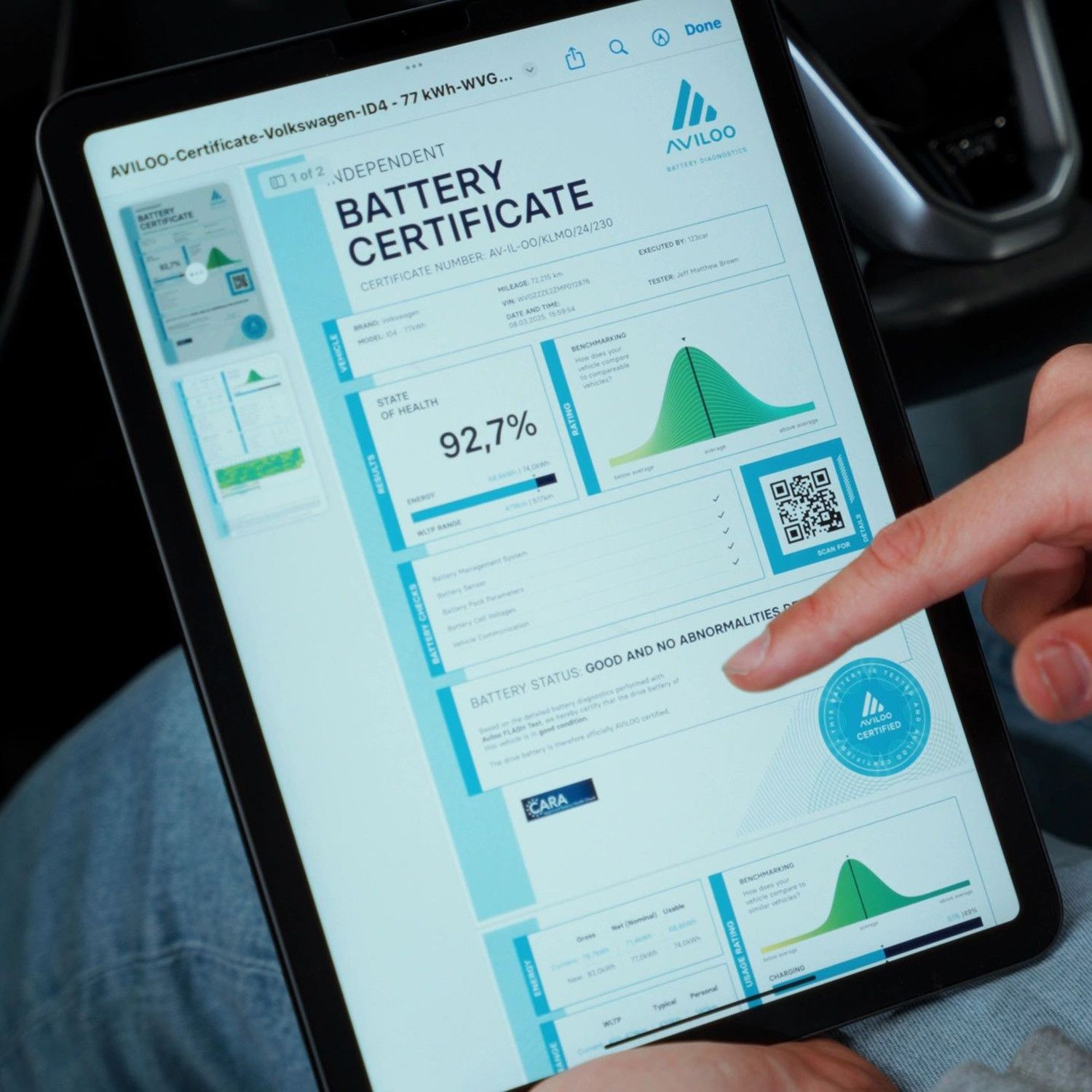
An insightful discussion with Nathan Gore-Brown, who is revolutionizing the used EV market by establishing standards for battery health testing. With over 30 years in the automotive industry, Nathan highlights the critical need for independent testing to alleviate buyer concerns about battery longevity. He shares his journey in founding Test EV and partnering with Avalu to provide accurate battery assessments. The conversation delves into the implications of battery health on vehicle value, the importance of transparency for consumers, and the potential for a more robust used EV market in Australia and New Zealand.
Welcome back to EV News Daily, and welcome to a special bonus edition: an interview today with a fascinating guest.
One big question is holding back EV adoption: is this battery any good? My guest today, Nathan Gore-Brown, is helping to establish the standard to answer that question.
Nathan brings 30 years of experience across three continents in the automotive world. Nathan has identified a flaw in the market. Buyers can’t verify the health of used batteries, so they’re hesitating, and that gap is stalling the market. Today he’s talking specifically about Australia and New Zealand, but we can paint those brushstrokes all around the world.
In 2025 he founded his new business, Test EV. By bringing independent testing from specialists Aviloo and taking that to Australia and New Zealand, he’s securing partnerships with some of the industry's biggest players, and helping to set the rules for how EVs are valued and sold.
He also serves as the Queensland director of the Australian Electric Vehicle Association and has developed national training programs for dealers. His work spans policy, training, fleet decarbonisation, and now the very infrastructure that makes EV purchases trustworthy. I think it’s fair to say Nathan is the expert in replacing guesswork with real data!
"...a decade of Aston Martin here in the UK, working with dealers in sales,..."
Aston Martin is a famous car brand from the UK that makes luxury sports cars. They're known for their stylish designs and fast performance.
Aston Martin is a British luxury sports car manufacturer known for its high-performance vehicles and elegant design. The brand has a rich history and is often associated with James Bond films.
"...all the way through to the iconic launch of the first Model 3."
The Model 3 is an electric car made by Tesla that is smaller and more affordable than some of their other models. It's popular for being efficient and having a long driving range on a single charge.
The Tesla Model 3 is a compact electric sedan that has gained popularity for its performance, range, and affordability compared to other electric vehicles. It is part of Tesla's lineup aimed at making electric cars more accessible to the general public.
"...I've been around the EV space for nine on a decade now, it's coming up to a decade. And in that time, bought and sold, developed and engaged with fleets to take on electric vehicles..."
Electric vehicles, or EVs, are cars that run on electricity instead of gas. They are becoming more popular because they are better for the environment and technology is improving.
Electric vehicles (EVs) are cars that are powered entirely or partially by electricity, rather than traditional gasoline or diesel. They are gaining popularity due to their environmental benefits and advancements in battery technology.
"...all of that conversation often leads to the residual values and the used market and the remarketing of electric vehicles to that public audience later on."
Residual values are how much a car is expected to be worth after you’ve used it for a while. It helps people know how much they might get if they sell or trade in the car later.
Residual values refer to the estimated worth of a vehicle at the end of its lease or ownership period. This value is crucial for understanding depreciation and the potential resale price of vehicles, especially in the context of electric vehicles (EVs).
"...there was a spark there about this whole battery testing space. And it led me on a journey to go around the world metaphorically, virtually, if you like, and have a look for the world's best EV battery health testing device."
Battery testing checks how well a battery is working, especially in electric cars. It helps figure out if the battery can still hold a charge and how long it will last.
Battery testing involves assessing the health and performance of a battery, particularly in electric vehicles. This process is essential for determining how much charge a battery can hold and how effectively it can deliver power over time.
"...as they were exploring their EV journey, it was a really important part to understand."
An 'EV journey' is the experience someone goes through when they decide to buy and use an electric car. It includes learning about how to charge it and how it works.
The term 'EV journey' refers to the process of transitioning to electric vehicles, including considerations like purchasing, charging, and understanding the technology behind electric cars.
"Is there a percentage of people who simply won't buy an EV?"
EV means electric vehicle. These cars run on electricity instead of gas, making them better for the environment.
EV stands for electric vehicle, which is a type of vehicle that is powered entirely or partially by electricity instead of traditional gasoline or diesel fuel. EVs are known for being more environmentally friendly and often have lower operating costs.
"...the number one reason for that was battery health. And there were some other questions about reliability..."
Battery health is about how well an electric vehicle's battery is working. It shows how much energy it can store and how well it can power the car, which affects how far you can drive before needing to recharge.
Battery health refers to the condition and performance capability of a vehicle's battery, particularly in electric vehicles (EVs). It indicates how much charge the battery can hold and how efficiently it can deliver power, which is crucial for the vehicle's overall functionality and range.
"...you settled on the Austrian company Avalu and their tech solution, you had a look at what else is out there."
Avalu is a company from Austria that creates technology to help check the health of electric vehicle batteries. This is important for people who want to know if a used electric car's battery is still good.
Avalu is an Austrian company that specializes in technology solutions for assessing battery health in electric vehicles. Their tech helps buyers understand the condition of EV batteries, which is crucial for making informed purchasing decisions.
"Because I know I've got an OBD dongle. I plug it in, car scanner gives me a percent, job done."
An OBD dongle is a small device you plug into your car to check for problems. It helps you see if there are any issues with the car's systems.
An OBD dongle is a device that connects to a vehicle's On-Board Diagnostics (OBD) port, allowing users to read diagnostic information and trouble codes from the car's computer. This can help in diagnosing issues and monitoring vehicle performance.
"I plug it in, car scanner gives me a percent, job done. That's not quite as simple as that."
A car scanner is a device that helps you find out what's wrong with your car by reading codes from its computer. It can tell you if there are any issues that need fixing.
A car scanner is a tool that reads data from a vehicle's OBD system, providing information about the car's performance, diagnostic trouble codes, and sometimes even real-time data like engine RPM or vehicle speed.
"So we're still using the old methods that we know from ICE vehicles that we're applying them to EVs."
ICE vehicles are cars that use gas or diesel to run. These cars are valued differently than electric cars, especially when it comes to things like how well the engine is working.
ICE stands for internal combustion engine, which refers to traditional vehicles that run on gasoline or diesel. The valuation methods for ICE vehicles differ from those used for electric vehicles, particularly concerning factors like engine condition and mileage.
"...seem to age as much with kilometers, particularly Model 3s, as they do with years."
The Tesla Model S is a fancy electric car that you can drive without using gas. It's popular because it can go really far on a single charge and has cool features like autopilot, which helps you drive. People talk about it to see how well it lasts as it gets older.
The Tesla Model S is a luxury all-electric sedan that has been a pioneer in the electric vehicle market since its launch in 2012. It is known for its impressive range, high performance, and advanced technology features, making it a significant player in the shift towards sustainable transportation. Discussions around the Model S often focus on its longevity and how electric vehicles can maintain their performance over time compared to traditional gasoline cars.
Polestar is a brand that makes electric cars, focusing on both performance and eco-friendliness. They are known for their stylish designs and modern technology.
Polestar is a performance electric vehicle brand that originated as a performance division of Volvo. The vehicles are designed to offer a blend of performance and sustainability, often featuring advanced technology and design.
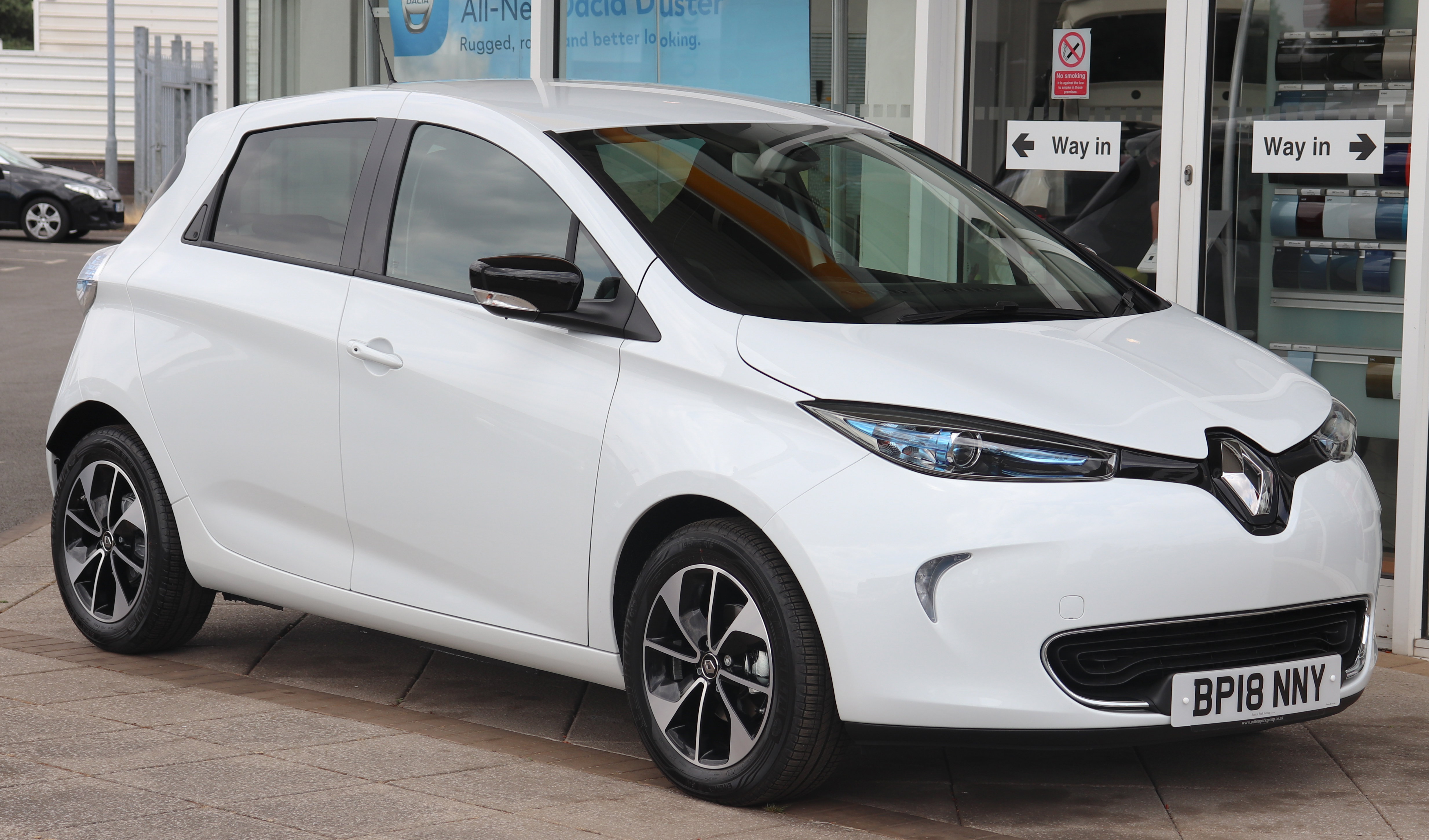
"...let it balance the cells. That was kind of more important in the couple of Renault Zoys that we had that get to 99."
The Renault Zoe is a small electric car that's great for city driving. It's known for being efficient and affordable, making it a popular choice for people looking to go electric.
The Renault Zoe is a popular electric vehicle known for its compact size and efficiency. It's designed for urban driving and has gained popularity in Europe as an affordable electric car option.
Car
Porsche KM plug-in hybrid
"So we did a Porsche KM plug-in hybrid the other day. And what we found in the report and in the scan was that there were two voltage sensors"
A plug-in hybrid is a car that can run on electricity and gasoline. You can charge it at home and drive it using just electricity for short trips, which is better for the environment.
The Porsche KM plug-in hybrid is a model that combines a traditional internal combustion engine with an electric motor, allowing for both electric-only driving and hybrid functionality. This type of vehicle is designed to improve fuel efficiency and reduce emissions.
"And what we found in the report and in the scan was that there were two voltage sensors"
Voltage sensors check how much electricity is in the car's battery and other parts. They help make sure everything is working properly and can alert you if there's a problem.
Voltage sensors are components that monitor the electrical voltage levels in a vehicle's systems. They are crucial for ensuring that the electrical systems operate within safe limits and can help diagnose issues related to the battery and electrical components.
"...what the other things that that software and the battery management system was going to do to it,"
A battery management system is a part of electric cars that helps keep the battery safe and working well. It checks how much power is left and makes sure the battery doesn't get too hot or too cold.
A battery management system (BMS) is an electronic system that manages a rechargeable battery by monitoring its state, calculating its secondary data, and controlling its environment. It's crucial for ensuring the safety and efficiency of electric vehicles.
"...what we call a pre-purchase inspection. So if you're going to buy your Polestar, but you want somebody to kick the tyres for you..."
A pre-purchase inspection is when a mechanic checks a car for problems before you buy it. It helps you know if the car is in good shape or if it needs repairs.
A pre-purchase inspection is a thorough examination of a vehicle conducted by a qualified mechanic before buying it. This inspection helps identify any potential issues or needed repairs, ensuring the buyer makes an informed decision.
"...I've got a warranty on my Polestar, third-party warranty. I took it out because it covers everything. It covers the battery pack."
A third-party warranty is a type of insurance that helps pay for repairs on your car after the manufacturer's warranty ends. It's from a different company, not the car maker.
A third-party warranty is an insurance policy provided by a company that is not the manufacturer of the vehicle. It typically covers repairs and replacements for various components, often beyond the standard warranty period.
The battery pack is the part of an electric car that stores energy so the car can run. It's similar to the batteries in your phone but much larger and more powerful.
The battery pack in an electric vehicle is a collection of battery cells that store energy to power the vehicle. It is a critical component that determines the vehicle's range and performance.
"hey, I really would like to get an extended warranty on my battery. Some markets, like in Europe, you have to provide as a sales, you know, as a use car dealer, you have to provide a warranty."
An extended warranty is like extra insurance for your car that helps pay for repairs after the regular warranty runs out. It can save you money if something goes wrong later on.
An extended warranty is a service contract that provides additional coverage for repairs and services beyond the standard warranty period offered by the manufacturer. It can cover various components and systems, giving peace of mind to car owners against unexpected repair costs.
"you have to provide as a sales, you know, as a use car dealer, you have to provide a warranty. It's legislative."
A used car dealer is a place where you can buy cars that have been owned by someone else before. They help people find and buy these cars, often offering deals and financing.
A used car dealer is a business that sells pre-owned vehicles. They often provide services such as trade-ins, financing options, and warranties to facilitate the sale of used cars to consumers.
"...which is when most battery warranties are covered to in most electric vehicles. You know, if you're getting close to that..."
A battery warranty is like a promise from the car maker that the battery will work well for a certain number of years or miles. If it doesn't, they will fix or replace it for you.
A battery warranty is a guarantee provided by manufacturers for the battery in electric vehicles, covering defects and performance issues for a specified period or mileage. Typically, these warranties last for a certain number of years or miles, ensuring that the battery will function properly during that time.
"and do you have a warranty claim before the warranty times out? Interesting."
A warranty claim is when you ask the car company to fix something on your car for free because it's still under warranty. It's like a guarantee that they will take care of certain problems for a set time.
A warranty claim is a request made by a vehicle owner to the manufacturer or dealer for repairs or replacements covered under the vehicle's warranty. This typically occurs when a part fails or a defect is discovered within the warranty period.
"Actually, all of the action is in the used market. Second, third, fourth hand cars."
The used market is where people buy and sell cars that have been owned by someone else before. It's a good place to find cheaper cars compared to buying new ones.
The used market refers to the segment of the automotive market where pre-owned vehicles are bought and sold. This market often sees a wide variety of vehicles at different price points and conditions, appealing to budget-conscious consumers.
Select text to request an explanation
Welcome back to EV News Daily and welcome to a special bonus edition and an interview
today with a fascinating guest.
One question stalls the used EV market.
Is this battery any good?
My guest today, Nathan Gore-Brown, is establishing the standard to answer it.
Now Nathan brings 30 years of experience across three continents in the automotive market,
beginning with auto electrics in his apprenticeship in Sydney at home and then that led him around
the world over a decade of Aston Martin here in the UK, working with dealers in sales,
moving on to Caterpillar and going back to Australia in Queensland and the first Tesla
store all the way through to the iconic launch of the first Model 3.
Well, Nathan has identified a flaw in the market.
Buyers can't verify the health of used batteries, so they're hesitating and this gap is stalling
the entire market and at the minute he's talking about Australia and New Zealand, but we can
paint those brushstrokes all around the world.
To fix it, he founded Zev Integrations, he's a consultant to many and leading on to earlier
this year, founding his new business test EV by bringing independent testing from specialists
Avalu and taking that to Australia and New Zealand.
He's securing partnerships with the likes of Red Book, Inspec, Pickles Auctions,
the NRMA and more as well.
These deals are setting the rules now for how EVs are valued and sold.
He's also served as the Queensland director of the Australian Electric Vehicle Association,
has developed national training programs for dealers, his work spans policy training,
fleet decarbonisation and now the infrastructure that makes EV purchases trustworthy.
I think it's fair to say Nathan is the expert on replacing guesswork with real data.
And welcome to the podcast.
Good to have you here.
Thanks, Martin.
It's fantastic to be here.
We've known each other for a long time.
You've been an advocate for this podcast and more recently a supporter of the show.
We'll get into that in a moment.
So first of all, thank you for everything you've done to support EV News Daily over the
seven, eight years, whatever that we've been doing this.
And we're a really interesting place in both of our EV journeys.
You are doing it in a way that is solving a huge problem for lots of people.
It's an Australia and New Zealand at the moment with battery testing.
But before we actually get on to the specific solution, was there a moment
where you realised that the market needs independent EV battery testing of used cars
or was it a slow drip, drip, drip?
It's probably a bit of a combination of both.
I've been around the EV space for nine on a decade now, it's coming up to a decade.
And in that time, bought and sold, developed and engaged with fleets to take on electric vehicles
in their fleets for years, more than 10,000 vehicles planned and supported councils and so on.
And so all of that conversation often leads to the residual values and the used market
and the remarketing of electric vehicles to that public audience later on.
And so there was a bit of a drip, drip there, but about a little over 12 months ago,
you did a story and that story on EV News Daily provided me with a bit of a catalyst.
There was a spark there about this whole battery testing space.
And it led me on a journey to go around the world metaphorically, virtually, if you like,
and have a look for the world's best EV battery health testing device.
So that was where it was. You're definitely part of that journey.
Oh, wow. That's cool. How did your experience over three decades working for the world's most
prestigious auto brands and the world's number one brand with Tesla?
How did that shape your understanding of what buyers need from used cars?
Particularly at Tesla, we had thousands of discussions.
We were doing 100 test drives a week out of Brisbane when I first started
with a great staff there that we built.
And we were having those consistent conversations of those, the what abouts from customers.
And as they were exploring their EV journey, it was a really important part to understand.
And as you do, you listen to all the nuances, you listen to all the questions,
you listen to the question of a new car sale, but then also some of that used cars.
Obviously, we sold approved used Teslas at that time as well as taking on used cars
to then help people into a Tesla.
So I've had those conversations dozens, hundreds, even thousands of times.
And so you start to get a bit of a pattern and you start to understand what the core,
I guess, fears or concerns are.
Is there a percentage of people who simply won't buy an EV?
I've started calling them the never bevers because they say,
with absolute certainty, I am never driving an EV.
And then you might come back in six months time and they've got their first one.
But either way, it's fine. It's fine. We won't hold it against them.
But is there a percentage of people, and maybe this changes market to market,
who say, well, I'm not going to buy an EV because the battery lasts five minutes,
like my mobile phone or my tablet, then they all go rubbish.
You've got to stick them in the skip.
There's definitely some data that's come out of Europe.
And then I think I've found it to be confirmed here in Australia and New Zealand is that
there's a group of never bevers that specifically focus their neverage towards used vehicles.
So people will buy a new EV and particularly have confidence to buy a new EV under the
sort of reliability and the warranty and all the other things that come with a new one.
But if it's used, and even if it's only a little bit used,
so still fully covered by warranty and so on,
about 50% of people surveyed have been told in a particular survey,
have been telling us that they wouldn't buy a used vehicle.
And the number one reason for that was battery health.
And there were some other questions about reliability, even in some cases,
you know, brand, the depth of that brand and whether or not they're going to be able to support them.
Before you settled on the Austrian company Avalu and their tech solution,
you had a look at what else is out there.
What is out there for EV buyers to understand what the battery health is like?
Because I know I've got an OBD dongle.
I plug it in, car scanner gives me a percent, job done.
That's not quite as simple as that.
Sort of.
And look, and I think that's the thing.
So if you think about, we stepped through it so the manufacturer could talk to the vehicle,
ask the vehicle a question about its battery health.
And similarly, your OBD dongle was asking that same question,
but from a third party app or similar.
So there's those kind of elements.
And then there's a couple of folks who have taken that a little bit further and they've got the dongle,
but they've got this sort of layer over the top of that with an app that generates a certificate of sorts.
And there's a couple as an American company.
There's a French based company that sort of do that thing as well.
Those guys have put a little bit of proprietary work over the top of this dongle concept.
And then there's Avalu and I'll come back to that a little bit in a second.
But in each of those other cases, what we're doing is we're taking the car's word for it.
It's like me asking you, Martin, how healthy are you?
And you say, I'm the pillar of health.
And then if we did a blood test, we'd find out that maybe your iron's a little low or whatever it might be.
And so that's the difference between all of the OEM and dongle kind of battery health testing devices,
which just take a percentage that the battery management system has provided us compared to
the Avalu system.
And one of the key drivers for me choosing it to bring to the market was that it does more than that.
It not only looks at that number that's come back from the car, but it then correlates that information
that it's got from charging information, temperature information, current draw information,
and pulls it all together and compares it over thousands of other tests to provide a real world
battery health score.
And it overcomes things like some manufacturers having the percentage that they announce out of the car
include the buffer of the battery that we can't play with.
It's interesting, isn't it?
So putting aside the people who say, I'm not buying an EV full stop, don't talk to me about it.
There's probably another tranche of people who go, well, yeah, I will buy a used EV,
but the value of it must go up and down.
Like I understand it in combustion world because miles driven is probably a good indicator of
has it had services and how many miles it done.
With an EV, of course, a lot of it comes down to the health of the battery and the bits that you
can't see.
There's no smoky exhaust as it were on an EV.
So how much are you finding the value of a used EV can swing up or down by maybe even thousands of
dollars?
How do the economics get impacted by battery health?
Well, certainly to replace a battery that is unhealthy is typically 50% of the value of the car
roughly even more than that as the vehicle is depreciated to a used car value.
So there's that challenge that's always overhanging an EV that is the area of concern.
I think the valuation of a vehicle based on its health is something that the market hasn't
quite got yet right now, at least here in Australia.
If you go and I've got an old Tesla and I'm going to have it valued in the marketplace,
I'm going to trade it in and similar, it's how many cases have done how old it is.
So we're still using the old methods that we know from ICE vehicles that we're applying them to EVs.
But that doesn't necessarily align.
I've got a vehicle that's got six years old and that's got 100,000 kms.
I've got also a friend who's got a slightly younger car that's got 400,000 kilometers.
It's that 260,000 miles or something.
Uber driver, he's a YouTuber and he does all sorts of bits and pieces that we tested that car.
And the difference between my car, which is slightly older, about a quarter of the case
and his car was my car was four points, four percentage points higher at 87 versus his at
sort of 83, 82, that sort of order.
And so we've got this situation where it's not case or age, but it's a combination of
those two things and model to model it changes.
So in my experience, Tesla's don't seem to age as much with kilometers, particularly Model 3s,
as they do with years.
So you can almost plot the years as the reason for reduction in battery health.
And it's just a phenomenon there.
Go and have a look at Hyundai and it's different.
Interesting.
Yeah, I guess you can't take people's word for how the vehicle's been driven.
It's the equivalent of one careful lady owner in, you know,
car dealer cliche seems a little bit 1970s to say that now, but you know,
because I leave my Polestar at 50.
It's got the slider like Tesla's have, and I just leave it at 50 because I don't do,
if I'm doing a long journey, I know about it the day before and I'll whack it up.
And I think when it gets to 80 or 90% on the slider, it'll say,
oh, you sure about this because you might be hurting the battery a little bit.
And then if I've got a really long journey, I'll put it to 100.
I don't, you know, it's fine.
The battery's fine.
But I'll leave it at 50.
Whereas if I come to sell that car, I've had it a couple of years now,
and I might say to the purchaser, oh, I leave it at 50%.
Like, well, that's just my word for it.
So data is important.
Let's just talk about why you chose this particular tech solution.
So you've partnered with Avalu.
They've got a couple of tests that they do in their system.
They've got a longer test where you cycle the battery,
and then they've got what they call the flash test, which is, you know,
plus minus 3% as accurate as the big test, as it were.
So what data are your devices collecting?
And how does it calculate this accurate report on the battery?
For years.
So Avalu's been going for seven years now on the team there.
Really clever guys.
You know, Nico, the CTO is just unbelievably clever.
And he's got about 15 or 20 years in the EV game in batteries
and lithium-ion batteries having been involved in the NPERA-A project and others.
So really clever Austrian folks.
And they have now generated testing over 400,000 tests done so far.
So they've got this massive database.
They know vehicles.
There's hundreds and hundreds of models covered.
And so I think that that's the start.
The premium test, where you charge the vehicle up to 100%
and you drive it down to 10%, you have the device plugged into it
and it takes all the data, thousands, millions of points of data.
And that's something that we can do and we used to do a lot of,
but we don't do as many of these days because we don't need to
because the accuracy of the work that the flash test can do.
So because that would require a driver over several days
and do typically, you know, 300 or 400 kilometers.
It's not really that viable,
particularly in a dealership or an auction house kind of environment.
So they develop the flash test,
which has been going for about a couple of years now
and we've got thousands and thousands of those tests.
And what you're able to do is plug the vehicle in
and run that test for three minutes.
It's like taking a video of the battery
and the battery system for three minutes.
And so over those three minutes, we can see things happening,
you know, the aircon's on or the radio's running.
And you can see a slight amount of energy being consumed.
And so the behavior of the battery changes
and all that sort of stuff.
But the reason I found that Avalu is so conducive
to being able to be scaled is it's plug and play.
So you don't have to tell the device
what vehicle you're playing with.
It knows, it takes the VIN number from the car,
it takes it into the device,
it then chooses the right software and runs the right program.
And then at the end of that test,
it's got a SIM card inside,
which then sends the packet of data back to Austria
for it to be worked on.
And then the email lands in the email box assigned to the device
within basically a minute of the test being done.
And you said before about it being accurate to 3%.
It's actually accurate to 1% plus or minus 1%
of that longer test in 99% of cases.
And then an absolute worst set of cases
where plus or minus 3%.
Super accurate and we take not only what the car said,
but we adjust the value of the real world battery health
based on the standard that's coming.
There's a new standard that's coming out of Europe
and we are already using that standard
for the way that we measure the energy inside the battery.
And I think that's the big thing.
There's no standard that's really being used
across the marketplace.
And we've been able to use the standard that's been proposed
to get ahead of the curve
and then deliver the results based on that standard,
the actual energy that you or I can drive with.
Interesting.
Yeah.
So even with the simple app that I've got with my dongle,
and I can look at the cell voltages of different cells,
and my wife looks at me and goes,
she's just such a loser.
But also, and that's just on a good day.
And she goes, but it doesn't mean the pack's any good.
I go, yeah, well, there might be something
that is a very low voltage compared to the others.
And that might be in my inexperienced way,
like, oh, maybe we'll just top-charge this one
and we'll do 100%, let it balance the cells.
That was kind of more important in the couple of Renault Zoys
that we had that get to 99.
And those cars would spend forever getting to 100.
And you could see them all just equalizing the cell voltages,
maybe as older technology,
or maybe it still happens in a different way in modern EVs.
But your heat map that you generate
can even identify down to cell level problems.
Absolutely.
Are there like real-world examples
of where this could save a buyer from making a bad decision?
Absolutely.
And I think the thing that you talked about there,
being able to access that information
that you'll be able to do through your dongle is one thing.
And again, let's go back to the blood test.
If I gave you a full, a result of a full blood test
and you look at it and you're like, what does that mean?
What's good?
What does good look like?
Can we over like that?
Oh, I had one as I'm approaching 50.
I had one last year,
where I spent a couple of hours in a clinic
having all sorts of things, blood's taken from me.
But when I got the report,
not only was it beefy and touch wood, I'm doing all right,
but they just gave me on each page a traffic light.
So it was like, you know, cholesterol, green.
And then there's all the data if I wanted to read it.
And I didn't understand half of it.
But you're absolutely right.
On each of these pages, there was a like, yeah, thumbs up,
green, amber, red.
And if any of the red ones, they put me onto a GP.
And luckily I didn't.
But you're right.
So I didn't understand that.
I understand EVs in a way that my wife doesn't.
And she's a nurse.
She understood this document and I didn't get it.
But I understood, oh, like, okay, traffic light system.
I get it.
So this is similar.
It explains it according to knowledge level.
And it provides, when there's something to know,
it provides a really plain English explanation
of what it is, why it is, and what to do next.
And I think that's a really important part for owners,
but also dealers, right?
You know, I've got vehicles being tested at dealers
and auction houses and whatever else that they've come in,
you know, and they're either boarded into stock
or whatever it might be.
And they really don't know what they bought.
And so that's another part of this process
is of understanding what you've got.
So some real world examples.
And ones that you might not have been able to see.
So we did a Porsche KM plug-in hybrid the other day.
And what we found in the report and in the scan
was that there were two voltage sensors
at different ends of the pack,
which had a really big difference in the voltage,
which was greater than would be acceptable.
And so we called that out as a problem
and with the voltage sensors.
And when I asked the guys at Avalu
to go into the deeper, darker detail
and find out what was really going on there,
what they found was that particular car
had a software version in it
that was nothing like any software
that they'd ever seen in that type of car
on the 1157 tests they'd done on the same vehicle.
And that moment, and this was for a dealer,
it was in stock and that gave those guys
the opportunity to take the car back to Porsche
and get the right software in it.
Because God knows what the other things
that that software and the battery management system
was going to do to it,
other than saying that these voltages are
quite a way out from each other
and not then detecting
that there was actually a voltage drop potential there
with a resistance problem,
which turns into all sorts of other drama.
So that's just one little example of like stuff
way under the skin
and then also comparing two values
that you might not see if you're just looking at the dongle
because you don't know what to look for.
That is amazing.
Because you can't tell how much energy is in a battery.
You can drain a fuel tank and I always think of the example
is can you put it in a wheelbarrow?
And if you can't, I understand it.
Like can you put some fuel in it?
Right, I get it, I'm a simple person.
But you can't put energy in the same way and understand it.
So you need solutions like this
to understand what it means,
cell voltage actually means.
Let's talk a little bit about test EV
and the business that you're building
only since the start of the year
is had incredible success in 2025.
You built a network of partners from auction houses,
red book, sales as well.
How have you convinced these major players
to very quickly adopt EV testing
through test EV into their operations?
It stems from a maturity curve.
And so there's some of my customers
and some of the folks in the marketplace
who have seen the tea leaves, they get it.
They understand the challenges
that they're hearing from customers
and the challenges that their teams are having.
And the potential, I think the big thing
is the potential value in used EVs
that isn't being realized.
The cars are being undervalued
because the market isn't confident enough
to have enough demand to then buy and pump the prices up.
And so a great example would be Pickles Auctions
who have seen the time coming.
In fact, they started doing this way before test EV.
They did it with one of the competitors
and they switched to Avalu through test EV
because they found that the operational capability
of the device was so much simpler for their team.
And the time it took to do was so much less
that that alone beyond the other accuracy pieces
which are greater than some of the competitors
was enough for them.
And so there's that whereas others
are starting further down the maturity curve
and I've been had to convince them a bit more,
started a conversation six months ago
and just finally they're starting to get on board.
And I think reality, and if I take it from a dealer point of view
they have to feel a little bit of pain.
They have to have that customer come in and go,
hey, nice car, what about the batteries?
Like, I don't know, it's a car, do you want one?
And then at that point they go,
no, you're right, I'm gonna go away.
And then they've lost that sale
and having to deal with a lead, a customer coming in.
That costs money, that costs time.
And so they don't want to lose that lead
and they want to be able to sell.
So they have to actually feel a little bit of pain
from a dealer point of view.
And then the consumers as well,
they've got a question that they want a solution to.
So in some ways I kind of think about it,
it's that they've got a headache
and here's the panel, the paracetamol
that to support them and get them over that discomfort.
And I think the other thing here has been,
I really tried to build a network
so that consumers that really want the service
that want to be comfortable can access it.
So we've pretty much every major city around Australia now
has some level of coverage,
have the ability to get hold of a test.
And I think that was a really important milestone
that we've achieved about a month,
two months ago, that sort of timeframe.
So what's the business model of Test TV then?
Because you're gonna have dealers
that might have a couple of EVs come through a week
or even a month as the market's immature
in some places in Australia,
or an auction house that's got to get through 50 vehicles a week
and they just want to plug it in, get the data move on,
plug it in as someone's job to just go down the line
and get those health certificates
because the auction is in two days time
and we've got to get the paperwork
uploaded to the website or whatever.
So what's your business model?
Are you charging a percentage on every test?
Are you licensing it?
You sell the boxes?
How does it work?
Yeah, I ultimately distribute an arrangement here
in Australia and New Zealand for Austria.
They're on a different time zone,
they're a different part of the world
but they don't necessarily have the ability
to run a business here from their local company laws
and all the other stuff that goes with it.
So and people on the ground, right?
And people who know the market
and I guess that's something that I've got
all of those things covered.
So yes, basically offering that reseller service,
taking it out of Europe
and providing it to those user customers
and helping them with that process.
So tech support as they go,
insights with the stuff that they've got.
So we've got a large customer
who's thinking about what their charging solution
might need to be in their businesses.
Well, now we've got data of the vehicles
that come into their business
and we can then start to understand
what is the need that they have,
what charging needs do they need to provide their vehicles
so they can then start to build.
So these parallel data points,
I guess the consultant in me is always there
and you're always looking for ways
that we can use the insights
that we have for other, for good, I guess,
instead of evil.
And what we do is offer that extra support for folks.
And look, I think over time,
we're going to start to see more and more information
come through this space and maybe even other products
that this group of used vehicle vendors,
in whichever way they are,
might need to have as well.
But Avalos is certainly the cornerstone of test TVs.
We've talked a lot about selling vehicles
and I understand absolutely why, if you're a dealer,
you might want to say to a prospect that walks in,
here's a certificate
from an internationally recognized organization
and the batteries, it's all good.
But what about the perspective of buyers?
Is there a market, I think when I bought the Polestar,
maybe I spent 49 pounds or 59 pounds
on one of these third-party tests that says,
right, there's no outstanding finance,
there's no leans on the car, whatever.
You're good to go.
It might be a little too expensive at the minute
for a buyer looking at maybe three or four cars
to pay for a test on each one.
But is there eventually a market where you go to buy a car
and you say to the person selling it,
hey, would you mind if we just do a battery test
and I'll pay for that?
Or is it still a little bit too expensive
for you to do that on the off chance
that the result might be bad?
Because it might save you $20, $30, $40, $50,000
by making a bad choice, not making a bad choice.
That's right.
And so that's a key part of test EV for me,
being a consumer advocate
through the Australian Electric Vehicle Association,
all that sort of stuff.
As a consumer myself,
I wanted to be able to make it available to the public
because about one third of vehicles,
at least in Australia, are bought through,
used vehicles are bought through a dealership,
but two thirds are peer-to-peer, right?
So if I'm going to come and buy your Polestar off you,
I will then get to the point where this is the car,
like we've got a good car in front of us,
we're happy with it.
So confirmationary, doing a test,
I think is something that I'm starting to see
a lot of consumers be interested in doing,
particularly driven by the buyer,
rather than a private seller.
I think in time, private sellers who want to sell their EVs
will potentially go and get a test as part of their,
hey, I'm selling my EV privately
and I'm trying to get the most money for it.
So if I invest a little tiny bit,
and we're talking in the order of about 1%
of the price of the battery
and half percent of the price of the vehicle
kind of pricing in Australia, $175 Australian dollars,
you're talking about it being a very small insurance policy
to know what's going on,
and about one to two percent of the vehicles
that we test do exhibit an issue,
and that issue is either resolvable and repairable,
or it's actually a problem,
and it's going to need some deep work,
and locally we've supported customers
who have come across a problem vehicle,
and then have some advocacy from an independent source
to help the dealer and the manufacturer
get on board with the repair.
So how might that work for individuals then?
So would that be going to a, in time,
going to a center, you get your windscreen replaced
in the supermarket car park sometimes?
They're like, oh, we've got a pop-up store,
if you've got a chip in your windscreen,
often the insurance company will cover it with no excess,
and like, oh, we're in the supermarket car park today,
so come and get the resin stuff.
Would it be you sending the kit out to somebody in the post,
and they get maybe three tests,
or something that's part of the cost,
or is it something where a gal or a guy in a van
turns up at your place, plugs it in,
and what does that business model look like in the future?
Yeah, so what we've seen is a couple of different business models.
We've got dealers and mechanical workshops
who have got a device in their business,
and they're offering it to consumers.
So you can go to their site and go and get a test,
and that's typically the cheapest,
because you don't have to worry about a mobile call-out fee
kind of arrangement.
So that is typically the most cost-effective way
to go and get a private test,
is finding one of our, on our website,
we have Finder Tester,
and those testing people are then available similarly.
We've got mobile services,
and those mobile services are typically aligned
to what we call a pre-purchase inspection.
So if you're going to buy your Polestar,
but you want somebody to kick the tyres for you,
go around it, check it out, make sure it's not,
all the wheels are pointing in the right direction,
they're also adding the ability to do a test.
So the likes of Redbook Inspect,
which is a large player here in Australia,
and lots of, now we've got lots of independent vehicle inspectors
who have also taken on the Avalu system,
will go out to the vehicle
and do the test as part of an inspection.
And so that provides the whole physical
and electrical piece of mind around the vehicle
that you're just about to buy.
So you typically do it after you've made
a pretty good confirmation,
not while you're still in the shopping phase,
but I know this blue one's the one I want to buy.
Okay, great.
Then you employ the tools and processes
and expertise to give you that piece of mind.
So moving a step up then from buying a car peer-to-peer,
moving a step up from remarketers, dealers,
and private dealers and things like that,
to where a lot of the trade get their stock.
So let's think about the market.
What would it look like in Australia
if every single EV or plug-in hybrid in Australia and New Zealand
that went through an auction house,
if every single one of those had a test EV certificate?
What would that do to the market, do you think?
Well, we're already kind of seeing that two big auction houses,
the two biggest auction houses in Australia have been testing.
And a good example is Pickles,
who do a vast number of them,
and are testing every single vehicle that passes through the lanes.
And there's a couple of things there that they've got.
They've got that piece of mind for the bidder.
So they've seen more bidders, more dealer bidders,
so not just private bidders, but more dealer bidders,
because dealers are becoming more comfortable.
They're seeing higher prices.
And they're seeing higher clearance rates.
Basically, it's sold first time.
All of this through confidence drives value ultimately
in the car business.
And that's exactly what they've been seeing.
And you buy a car as a dealer or as a person,
and you're then getting that certificate as part of that purchase.
And the same thing goes with big companies
like BCA, rich car auctions in the UK as well,
doing the same sort of thing using Avalu to test every vehicle
and provide that vehicle with the test.
And whether you're going to onsell a vehicle
because you're a dealer or you're a consumer like you or I,
and we're going to buy that car like you did your Polestar,
then you're going to be able to use that as part of your confidence.
I bought a good car or a dodged a bullet,
and that's what we've seen a bit of as well.
We have bullets that we need to dodge.
All right, let's change gear and talk about fleets.
Now, this is where thousands of vehicles
are under management of effectively one organization,
whether that is things like motability
or just large corporations that have a ton of vehicles
that they all as part of their decarbonization plans
over the next few decades will all be driving EVs.
So all the fleets will all be all EV,
maybe even quicker than private transport.
And so you recommend testing at different stages of a vehicle
within a fleet.
Why would you, if you run a fleet,
test the vehicles that are coming in from the factory?
Why would you have this test done when a vehicle comes in?
Well, I guess you wouldn't necessarily do it on every occasion,
but there are certain situations,
and you and I know some of those vehicles
that maybe haven't sold as well that fleets go on to buy.
And the example of that is a vehicle might sit on grass.
It might, as we say in the trade,
has been sitting there for maybe 12 months.
And do we know whether the people who are stewarding that vehicle,
sitting in an airfield or on a dock side or wherever it might be,
have they been charging it?
What's the vampire drain look like?
Has that vehicle sat at a very, very low state of charge
for a long period of time?
Because there's enough evidence around our world to say
that that is actually an accelerative issue
for battery degradation.
And so fleets often get swathes of cars,
whether you're a hire car company or you're a fleet company,
the manufacturer comes to you saying,
can I do a deal for you?
I've got all these cars and I'd love you to take 100 of them.
And they go, well, it's a good deal.
Let's sign the paper.
What are you actually buying?
Have you bought a car that's already lost a reasonable chunk?
And I think those fleets are often then being used by people.
And there's a duty of care that the range that it says on the tin
that the vehicle is being provided with
is actually what you're going to get,
because if you've got a 10% degradation on a vehicle,
it's new because it's been sitting and had a bit of a hard life
in its early days, then the driver and the fleet
isn't going to get not just the value,
but that driver might find themselves caught short
or caught shorter than they had expected.
So that's definitely a thing.
Testing after a crash as well.
This is a fascinating topic that I'd never even considered,
because when you have an accident
and maybe that goes through an insurance claim,
as long as the car drives and the battery pack isn't bent
and structurally it looks all fine
and you do a visual inspection from the outside
and there's no warning lights on the dash,
but then the idea of plugging something in
that gives not just the little dongle that I've got
in the very little system that I use,
but actually something that's a really deep dive
into the pack that runs those algorithms,
that makes sure there's nothing kind of out of order.
That's what isn't being done,
because when you file your insurance claim,
they're going to be like,
okay, so now we need to order these parts from the main dealer
or whatever, whoever's fixing the car,
and we need to get it back on the road
and the cost is going to be this.
I bet they're not thinking,
but let's make sure nothing broke that we can't see.
And there's two phases, if you like, to a crash.
You've got the beginning, the crash has happened
and you're getting the vehicle assessed.
If the car has got a battery problem
and you're going to work out what the value is to repair it,
the write-off value is then moved.
So that's another thing.
We're not seeing insurers yet testing a vehicle
at that point of assessment,
but when they get later on in their life
after the vehicle has been repaired,
what we have seen, and I've tested quite a few vehicles now,
is consumers saying, hey, thanks very much for fixing my car.
Yep, it looks all pretty again,
but how do we know that the battery's okay?
And so that has been a question for consumers
and even consumers who have been rejecting
taking the vehicle back until they're feeling confident about that.
And I can understand that
because there's several things that's gone on there.
Obviously, there's been works to the vehicle.
So is everything plugged in right
and everything doing the right thing?
Was there any sustained damage internally
to the battery during that period of time?
And so, you know, am I still getting back the vehicle
that I started with after an incident has occurred?
Interesting, isn't it?
And then what about insurance companies and warranties as well?
Because I've got a warranty on my Polestar,
third-party warranty.
I took it out because it covers everything.
It covers the battery pack.
It's the only thing that could conceivably go wrong
on a pretty well-engineered car.
This thing's five years old now.
It doesn't rattle, it doesn't shake.
But if the worst happens, and I always say to people,
I might be an advocate for EVs,
but they're machines and all machines will break.
I could be unlucky.
I've seen stuff on the Polestar forums.
People have problems.
I've had no issues.
But so I just took out a two-year warranty
that covered everything on the car, regardless.
But now you and I are talking about this.
If I was running a warranty company,
then what I'd have to do is take all of the warranties
that I sell, any claims that come in.
I'd have to average it over all of my customers.
And again, if I was running an insurance company,
I guess obviously the way insurance works is,
you know, you take everyone's money
and then you assume there's going to be some amount of crashes.
But actually a more sophisticated way
of ensuring vehicles and providing warranties
would be working with just a little bit more data
and going, well, actually,
let's just do a test on your battery first
and then we'll give you a price for the warranty
because you might get a discount if it's in, you know,
proper shape.
Is that part of the conversation or not?
I think it's part of the conversation.
I know it's part of the conversation
in some markets around the world.
It's not the conversation in Australia yet.
In fact, some of the warranty companies
that I've had conversations with are just like,
we just don't do e-beats.
We just don't do it.
That's okay.
We just don't do it.
Like, you know, at some stage,
whether it's next year or next decade,
the market will shift
and there will be a demand enough to then do that.
I think it's just a combination of lack of data.
Well, we've got some solutions for that these days
and just scared, you know.
And so I think as the market grows
and maybe as consumers demand,
hey, I really would like to get an extended warranty
on my battery.
Some markets, like in Europe,
you have to provide as a sales,
you know, as a use car dealer,
you have to provide a warranty.
It's legislative.
Whereas in Australia,
we don't have that issue in the same way.
You people three months
and if it's all right, then see you later.
So most dealers, you know,
are just trying to get over that three month barrier.
We will see those products soon.
And I think you can set the pricing
based on how healthy the battery is today
and how much degradation further will we warrant to?
And it won't necessarily always be that typical OEM approach,
the manufacturer approach,
where we've got 70% battery health
is typically where a warranty kicks in.
I think that's another time
when we see people wanting to do a test
is when they're getting close to warranty.
So something like, you know, 100,000 miles, 160,000 Ks
and nearing that eight year point,
which is when most battery warranties
are covered to in most electric vehicles.
You know, if you're getting close to that,
you're doing a test to understand where you sit
and do you have a warranty claim
before the warranty times out?
Interesting.
It's a lot of people get a lot of focus on new EVs.
I do, I hear on the podcast as well,
a disproportionate amount of attention goes to,
hey, a new EV's been launched.
Let's talk about it.
Actually, all of the action is in the used market.
Second, third, fourth hand cars.
That's why I'm so excited to talk about this.
We're seeing that in the UK now.
The UK has just gotten to that
critical mass in the used car space
and I think is a really exciting place to be.
Australia's still only got about 400,000 plug-in vehicles
on the road in total, which is a very small,
you know, under 2% of our market is EV at this point.
And so it's very much a growing burgeoning market,
about half the amount of vehicles percentage wise
each month put on our road are plugins
compared to the UK at 30%, we're like 15.
You know, it's a different point in the sphere,
but yet it's exciting in the UK particularly.
Well, for our listeners around the world
who are considering buying a used EV,
obviously they can't get an Avalu test through test EV just yet.
Maybe they can if they're in Australia, New Zealand,
but for the rest of us, maybe we can't do that just yet.
But what would be your one piece of advice
if they're going to go and buy a used electric vehicle?
And they haven't got all the insights
that you can provide yet.
With all of your experience,
what are the questions that we should be asking in the meantime?
Yeah, I'd say, you know, get in touch with Avalu
or a local Avalu reseller in each of those markets.
They are, they exist all over the world just like I do here.
Yeah, absolutely.
And request it, go into the dealer and say,
hey, that's a lovely car,
but can you provide me an independent battery health check?
And whether that's an Avalu or another, I don't know,
but ultimately that is what you're looking for to get the answer.
Just trusting the manufacturer,
you always talk about Dieselgate,
is not necessarily the right thing to do.
And so I would say having that independent check
from a reputable and certified provider like Avalu
is the one to do.
Amazing.
Well, look, thank you for joining us today on the podcast.
What a business you've launched already so far this year.
You're off and away.
What's going to be the next phase,
the expansion of Test TV in Australia and New Zealand?
What are you going to achieve in the next phase?
I think there's proliferation of more dealer groups
and resellers using it as part of their sales toolkit.
I think consumers asking for it in a peer-to-peer way
and so accessing it through our workshops
and our mobile testing crews, I think that's important.
And I think as we start to move forward
is moving away from this,
I'm worried about the battery too.
I will get an answer about the battery
and then really starting to have people
go and chase vehicles with good health
and do the right things about those with less good health
and having them repaired and resolved.
And we start to sort of segregate the market
instead of lumping everything as it must all be bad
and it's going to be landfill by the end of the week too.
Actually, these ones are really good and it's really fine
and it's got many, many years of life
and these ones over here actually need some love.
Amazing.
All right, look, thank you so much.
Find out more details at testTV.co
and if anyone listening to this is as much of a data nerd as me,
I would just love to have it done just for the sake of it.
And so that's where my mind has gone in this interview
and I'm like, I'm not selling my car.
I'm not buying a car.
I'd just love to know.
Now I've got to tell my wife I'm spending $175,
I mean a lot less in Great British Pounds on a battery test
just because, but I still want one done.
It'll be so interesting.
Nathan, thank you so much for joining us today.
Absolutely pleasure.
Thank you, man.
Request an explanation for:
3 cars
3 cars featured
Request an Explanation
Heard something you'd like explained? We'll add it to this episode.
Sign in to request explanations for terms you heard.
Want to learn more?
Browse our glossary for plain-English explanations of automotive terms, jargon, and concepts.
See something that's not quite right? Our annotations are AI-generated and can sometimes miss the mark.
Click the flag icon on any annotation to suggest a correction.
Report incorrect info
Suggest better explanations
Flag missing cars
More from EV News Daily - Technology and Business of EVs