Rob Dickinson, founder of Singer Vehicle Design, talks through the obsession that created the company: curating the “perfect” air-cooled Porsche 911 after being unable to modify a rare 1973 2.4S. From his early Lotus design job and modest music career to moving to Los Angeles and building a Frankenstein 911, he explains how Singer became a design-first brand that reimagines 911s with extreme hand-built standards (including thousands of hours of bodywork). Dickinson also covers Singer’s color philosophy, early challenges, and relationships with Porsche and engineer Norbert Singer, plus what comes next beyond 964s.
Singer Vehicle Design is perhaps the original Porsche 911 restomodding company, turning old 911s into classic-looking, breathtaking-driving machines, with exquisite attention to detail.
It was founded by British rock star and car designer Rob Dickinson, and the company has found such success that it’s to be the featured marque at this year’s Goodwood Festival of Speed.
Rob is a car enthusiast to the core. He meets Steve Cropley and Matt Prior to tell them about his life in cars and his love for air-cooled 911s.
"...y and I will be meeting Rob Dickinson, founder of Singer Vehicle Design. This episode is brought to you in association w..."
A Remastered 911 is a classic Porsche 911 that’s been rebuilt by a specialist shop. The goal is to keep the original style, while refreshing the car with improved parts and workmanship. The podcast mentions it because it’s a notable example of how classic cars can be reworked.
A “Remastered 911” refers to a Porsche 911 that’s been professionally rebuilt and updated by a specialist program, aiming to preserve the classic look while improving certain modern aspects. The podcast context includes meeting Rob Dickinson, founder of Singer Vehicle Design, which is strongly associated with this kind of remastering approach. It’s discussed because it blends heritage design with contemporary engineering and craftsmanship.
"Only 12 of those cars lifted in the right hand drive."
Right-hand drive means the steering wheel is on the right side of the car. The speaker is saying only a small number of these cars were made that way, which makes them rarer.
Right-hand drive (RHD) means the steering wheel is on the right side of the car, common in the UK and other markets. The speaker notes only a small number of these cars were built in RHD form, which directly affects rarity and collector value.
"moved to California in 2003 and built my own Hot Rod, what I thought was my own Perfect 9-11.
And the great thing, if some folks don't realize it, is that you take a 9-11 from 1965 and a 9-11 from 1998,"
A “hot rod” is a car that’s been modified to feel faster and more fun to drive. Here, they mean their custom Porsche build.
A “hot rod” is a car modified for performance, often with engine and chassis upgrades and a custom approach. In this context, the speaker uses it to describe their personalized 911 build after moving to California.
"I called it the Cafe Race, it was a car that I took to Willow Springs regularly and did autocrosses and track days.
And I fancied myself with Steve McQueen and James Dean, and I lived just below Mulholland."
Track days are organized events where enthusiasts drive their own cars on a racetrack under safer, controlled conditions. The speaker’s use of track days suggests their “Cafe Race” build was intended for repeated high-load driving, not just show.
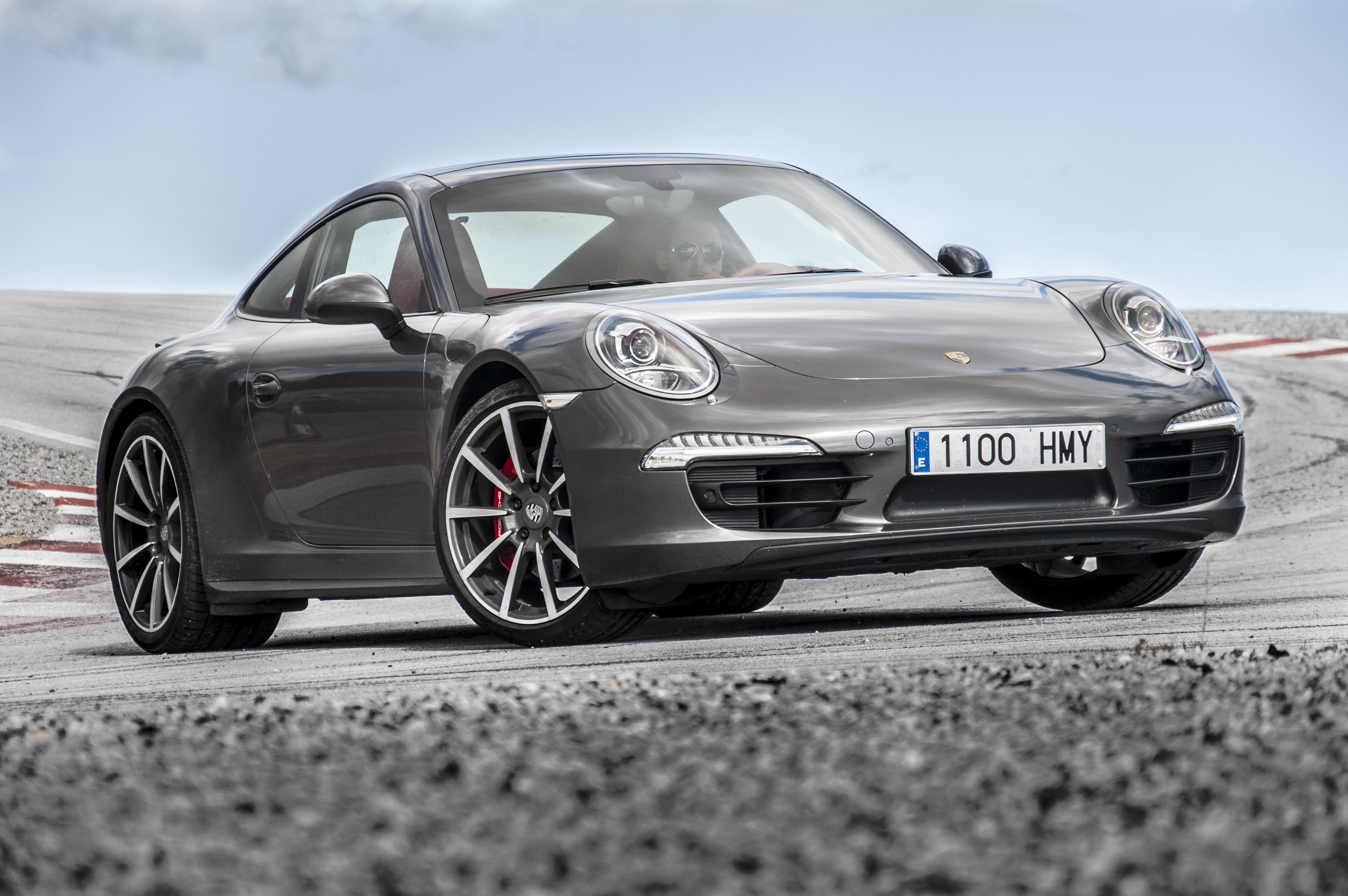
"[645.3s] Simple, evocative 9-11 with no spoilers.
[648.0s] Just the purest of 9-11."
The Porsche 911 is Porsche’s famous sports car. It’s known for its classic shape, and here the speaker means a clean, simple 911 style without flashy extras.
The Porsche 911 is the iconic rear-engine sports car line from Porsche, known for its distinctive silhouette and air-cooled heritage. In this segment, the speaker is describing a “pure” 911 look—simple and evocative—without extra add-ons like spoilers.
"And it was quite famous. It had quite a racing provenance. Oh, right."
“Racing provenance” means the car has a real racing history. Collectors care because it’s proof the car was used in competition, not just owned.
“Racing provenance” means the car’s documented history in racing—who drove it, what events it entered, and how it performed. For collectors, provenance can significantly increase value because it ties the car to real competition history rather than just being a well-kept example.
"...with no attempt to get any margin and make any money for it. All the first seven, eight years were making cars that cost us far more than we charged"
“Margin” is the profit they keep after paying for everything. They’re saying they weren’t really trying to price the cars so they would make money.
“Margin” is the profit left after costs. Saying they made cars with “no attempt to get any margin” means the pricing didn’t cover the true cost of production, so the business relied on other funding or acceptance of early losses.
"All the first seven, eight years were making cars that cost us far more than we charged"
They’re saying the cars cost more to build than what customers paid. That’s tough for a business unless they have money coming in from somewhere else.
This highlights a classic early-stage or passion-project business problem: production costs exceed sales price. In automotive ventures, that usually means long-term sustainability depends on investors, cash reserves, or later product/scale improvements.
"What is the supply of virginal 964s like, you know, because you've got through a few, haven't you?"
“Virginal” here means the Porsche 964 is in very original, unspoiled condition—more like a collector-grade car than something that’s been modified a lot.
“Virginal” is enthusiast slang for a car that’s essentially untouched: low mileage, original parts, and minimal modification or restoration. In collector circles, this matters because it affects originality, value, and how “authentic” the car feels compared with heavily worked examples.
"And we try and use the crappiest ones around. So we don't, we try and not cut up nice cars, but, but yeah, there's plenty, there's plenty of them around."
They’re talking about not destroying good cars for parts or projects. Cutting up a clean, valuable car can hurt its collectability and value.
“Cut up nice cars” means taking an otherwise good, valuable, or original car and disassembling it for parts or converting it into something else. In the classic-car world, this is controversial because it reduces the number of intact, collectible examples.
"So there was a huge amount of hand working that went into it. 1600 hours. That's no exaggeration. Bodyworking the cars."
“1600 hours” is how long they’re saying the bodywork takes. That’s a lot of time spent getting the panels and surfaces just right.
“1600 hours” is the quoted build time devoted specifically to bodywork. In high-end coachbuilding/restoration-style builds, such time is spent on shaping, panel alignment, and surface finishing to achieve a near-perfect appearance.
"Because we had to take and to get the highlighting right. Because I've been in door gaps, shut lines, highlighting. I was just like, nutty about it."
Door gaps and shut lines are the small spaces and seams around the doors. If they’re uneven, the car looks “off,” so builders obsess over getting them consistent.
Door gaps and shut lines refer to the visible spacing and the seam lines where doors meet the body. Achieving consistent gaps and clean shut lines is a key part of high-end fit and finish, and it’s often measured visually and by feel during assembly.
"We have to insert some process into it and we have to have better tooling so the cars fit together better."
Tooling is the special equipment that helps make and assemble parts accurately. If the tooling is better, the car’s parts line up better and the build is more consistent.
Tooling is the specialized equipment used to manufacture or assemble parts—like jigs, fixtures, molds, and machining setups. Better tooling improves dimensional accuracy, which is crucial for bodywork fitment and consistent assembly.
"And it's eye-watering now because we've got fantastic talent from the Formula One community,
from Aston Martin, from McLaren."
Formula One is the highest level of racing. People from F1 often bring a very detail-focused way of engineering cars, with lots of testing and performance know-how.
Formula One (F1) is the top tier of global motorsport, and it’s known for extremely advanced engineering. The speaker is saying Singer has attracted talent from F1, which typically brings a culture of precision, data-driven development, and high-performance systems thinking.
"And it's eye-watering now because we've got fantastic talent from the Formula One community,
from Aston Martin, from McLaren.
I had some fantastic people and they used to building proper cars in proper car companies."
McLaren is a famous performance car maker, and it’s also heavily involved in racing. The point is that their engineers tend to be very rigorous about performance and engineering quality.
McLaren is a British performance brand with deep roots in Formula One and advanced vehicle engineering. The reference suggests Singer is recruiting people accustomed to racing-level development standards.
"And it's eye-watering now because we've got fantastic talent from the Formula One community,
from Aston Martin, from McLaren.
I had some fantastic people and they used to building proper cars in proper car companies."
Aston Martin is a well-known British car brand that makes high-end sports cars. The speaker is pointing out that people from that world are helping with engineering and design.
Aston Martin is a British luxury sports-car and grand touring brand. Mentioning Aston Martin here signals that the company’s engineering talent and design culture are influencing Singer’s development approach.
"He says, Rob, who does your CMF?
And I really did say, what's CMF?
What is CMF?
Colors materials.
Colors materials and fabrics."
CMF is a design term for the car’s colors and what materials you use. It covers both the outside paint and the inside fabrics and textures.
CMF stands for Color, Materials, and Fabrics. In automotive design, CMF is the coordinated system that defines how the car looks and feels—everything from exterior paint color to interior textures and upholstery.
"And Bahama Yellow, which is the famous Porsche color and everyone had a Bahama Yellow in the 1960s, [1866.6s] was like the standard."
Bahama Yellow is a specific yellow paint color Porsche is famous for. Here, they’re talking about how good it looks and how it became part of a recognizable style.
Bahama Yellow is a well-known Porsche paint color associated with classic 1960s-era cars. In this segment, it’s treated as a signature shade that strongly influences how other colors and graphics look against it.
"And then I put these ghosted stripes that were Bahama Yellow with just a bit brighter. [1907.5s] And you're welcome, Porsche."
Ghosted stripes are stripes that aren’t super bold—more like a faint, blended pattern. Here they’re made by using a slightly different shade of the main yellow so it looks layered.
Ghosted stripes are a graphic design where the stripe pattern is subtly blended into the base paint, often using a slightly different shade of the same color. In this segment, the ghosted background uses Bahama Yellow with a bit brighter tone to create a layered, low-contrast effect.
"But I've got Bentley Continental T sitting outside."
That’s a Bentley grand tourer—an expensive, luxury performance car. The point here is that he already has one and it’s part of his car life.
The Bentley Continental T is a grand tourer from Bentley, known for its upscale comfort and performance. Mentioning it “sitting outside” sets the scene for the speaker’s current garage and priorities.
"which is maybe something that doesn't have someone else's badge on the car, we have a very clear view of what the joy of driving means to us"
A “badge” is the brand name on the car. They’re saying they don’t want to just put their name on a car made by someone else.
“Someone else’s badge” refers to rebadging—selling a car under a different brand name than the original manufacturer. They’re implying they want to build cars that are truly their own rather than rebranded versions of another company’s product.
"That would be a big project, isn't it? A car from scratch of your own. Big projects."
“From scratch” means you’re not just modifying an existing car—you’re building the project as a whole new vehicle. That’s a lot of engineering and testing to get it right.
A “car from scratch” means designing and building a vehicle as a new project rather than heavily basing it on an existing platform. It usually implies major work in packaging, engineering, sourcing, and validation to hit specific performance and quality goals.
"So I take my son to Malibu every Sunday, and we go car spotting. It's the best car spotting in the world, five or six cars and coffees than PCH."
Car spotting is when people go out in public places just to look at cool cars. Sometimes they also meet the owners and talk about what makes the cars special.
“Car spotting” is the hobby of going to public places to look at and photograph interesting cars in person. In car-culture areas like Los Angeles, it often turns into informal meetups where owners talk about their cars.
"It's the best car spotting in the world, five or six cars and coffees than PCH. And you just bump into people who are dripping with passion for cars"
“Cars and coffee” is a casual car meetup—usually in the morning—where people bring cars and hang out. It’s a fun way to see other people’s cars and learn what they’re into.
“Cars and coffee” refers to casual morning meetups where car enthusiasts gather to show their vehicles and chat. It’s a big part of modern car culture because it mixes socializing with real-world car talk.
"Absolutely. Porsche is quintessentially an aerodynamicist,"
An aerodynamicist focuses on how a car cuts through the air. That matters because it can make the car feel more stable and help it go faster with less resistance.
An “aerodynamicist” is someone who designs and optimizes how a vehicle moves through air. Aerodynamics affects downforce, drag, stability, and overall efficiency—especially important for high-speed sports cars.
"So we raised it 30 millimetres and put a gurney flap on the top"
A gurney flap is a small fin-like add-on on the edge of a wing. It helps the wing “work harder” by changing how air pressure builds up, usually adding grip.
A gurney flap is a small upright tab added to the trailing edge of an aero surface (like a wing or splitter). It increases downforce by altering pressure distribution and can be tuned for track conditions.
"We showed DLS, we got it on the Michelin stand at the Geneva Motor Show. One of my, I showed a car at the Geneva Motor Show in 2018."
The Geneva Motor Show is a big car event in Switzerland. Companies bring special cars there to show them off to the public and press.
The Geneva Motor Show is a major international auto show in Switzerland where automakers and coachbuilders often debut concept cars and prototypes. Being on the Michelin stand suggests the car was featured as part of a broader technology or tire-related showcase.
Select text to request an explanation
If you're a smoker or vapor ready to make a change, you really only need one good reason.
But with ZIN nicotine pouches, you'll discover many good reasons. ZIN is America's number one nicotine pouch brand.
Plus, ZIN offers a robust rewards program. There are lots of options when it comes to nicotine satisfaction, but there's only one ZIN.
Check out zin.com slash find to find ZIN at a store near you.
Warning, this product contains nicotine. Nicotine is an addictive chemical.
When it comes to managing money, forget the hype and look at the results.
Bill has a trillion dollars of secure payments powering our bill pay tools.
Instead of just moving money, Bill is powering the financial operations of nearly half a million customers.
So stop the guesswork and start scaling with the proven choice. Ready to talk with an expert?
Visit bill.com slash proven to get started and grab a $250 gift card as a thank you.
Terms and conditions apply. See offer page for details.
For me, it's about staying connected to my sports. I can follow the teams I care about, get real time scores, breaking news and highlights all in one place.
Download the Bleacher Report app today so you never miss a moment.
Hello and welcome to a bonus episode of the AutoCar Podcast, AutoCar Meets, where Steve Cropley and I will be meeting Rob Dickinson, founder of Singer Vehicle Design.
This episode is brought to you in association with our sponsor Anderson.
Visit Anderson-EV.com or search Anderson and find out about their range of premium, design focused EV charges and let their concierge service do the rest.
Thanks for joining us. Here's the pod.
Well, I'm delighted to say that we're joined by Rob Dickinson, who's the founder and executive chairman of Singer.
Rob, welcome to the show.
Thank you for having me.
I'm not a singer, but for the uninitiated, just give us a quick intro to the company and why we're here at Goodwood today.
Wow. We are here.
Well, the intro to the company, we started it.
I had an idea to, because I'm a Porsche 911 nut and I'm an ex-car designer, to add a very fierce faith as a result of a bunch of things that happened with my own modest collection.
My collection is a stupid work, because I had two.
I guess that's technically a collection.
I had a very fierce vision of what the perfect air-cooled Porsche 911 should be, and I wanted it.
And I thought other people would want it too, and that was basically the genesis of Singer.
And a big dose of that was arriving in Los Angeles.
I arrived in Los Angeles in 2003 to make a record.
I'd spent a lot of money in the 90s restoring a 1973 2.4S that was owned by Alvin Lee, the singer, from 10 years after.
So I had some rock and roll history to it, and I bought that car as a semi-complete restoration project and built and restored it to exact original specification, because it was a very rare car.
Only 12 of those cars lifted in the right hand drive.
And of course, at the end of it, at the end of 1999, when it was kind of finished, 1996, 1997, when it was finished, all I wanted to do was modify it.
All I wanted to do was make it my own, and that couldn't, because it was too rare.
Give us a chronology here, because you've had good few years as an extremely successful musician.
You were a car designer.
Modestly successful musician.
Okay, modestly successful, but car designer before that.
Yeah, worked at Lotus. Peter Stephen gave me my first job at Lotus.
Right, so you were a young guy when that happened.
I went to Coventry Polytechnic Universities now and did manage to scrape through two years of the four-year course.
Well done.
I persuaded my parents that I wanted to pursue rock and roll, and they said, you can have a year off, but you're going to need to get a job.
We lived on the East Coast. I was born in Norwich.
So I blagged my way into Lotus, and Peter gave me an interview in the foyer of Lotus.
I said, I'll give you a job.
So I showed him my portfolio and he said, I'll give you a job.
So I sat in a prefabricated unit with Simon Cox and Julian Thompson and Peter Stevens, and modelled the dashboard of the front wheel driver.
Land was being modelled in clay at the time.
Literally a shitty room in there. That was the Lotus design development.
I was there for a few months, and Peter was very sweet, and I learned a lot, as you can imagine.
And then music started to take off.
At that time, it was more attractive.
I just saw my life ahead of me for 30 years, perhaps a fancier studio, doodling wheel trims and stuff, and music was more...
So during those years, both the Lotus and the music, where was the 9-11 in...?
Well, absent in my life, because I couldn't afford one.
So we're talking 1988-89 here.
So the first thing I did buy with my modest success with music was a 3-2 career, an 87-3-2 career.
In America?
No, in England. So the 90s was the band era for me, and that was all in England.
But we went to America a lot, so I'd fallen in love with Los Angeles in 1992.
I just adored it. Sunshine, the food, the car culture, the weather. It just spoke to me.
I was a happy, happy guy, and I just loved Los Angeles. I just loved it.
So I ended up gravitated to living there in 2003.
But yeah, the 90s was all England, and I scraped together enough money to buy my first 9-11 in 1996.
What was wrong with the 9-11? You looked at it with a designer's eye and with a degree of freedom and so on.
What did you immediately want to improve or change?
Well, I don't think I necessarily wanted to improve anything.
I wanted to horrible, I've used the word, curate the right 9-11.
And something that existed in early 2000 was a club called The R Group in California,
which was started by Freeman Thomas, the designer.
Oh, yes.
Pete Weger, Chris Weger, another car nut, to celebrate sports purpose 9-11,
it's called 9-11 from the 60s and 70s, where you could buy a sports purpose book if you expect your new portion.
Now 11, you could spec it with a roll hoop and wider wheels and tires and rear wheel arches and stuff.
And the R Group was ostensibly started to celebrate cars of that ilk, early 9-11s that had been tweaked for maximum performance.
But of course, it also invited and welcomed people who had had a go at modifying their own 9-11s.
Air-cooled 9-11s, like actually pre-G model 9-11s, F model than early 9-11s.
And I joined that club because we're missing out a bit.
I built my own Perfect 9-11 as a result of being frustrated that I couldn't adjust my 2.4S in England,
moved to California in 2003 and built my own Hot Rod, what I thought was my own Perfect 9-11.
And the great thing, if some folks don't realize it, is that you take a 9-11 from 1965 and a 9-11 from 1998,
which is the arc of the air-cooled era, and you can interchange the parts to your heart's content.
So you've got that perfect opportunity to make your perfect pizza.
And I've built this, built this, built this, built this, and my initial vision for my own car,
which I built, which I did in 2003, 2004 in LA, with the funds that I got from selling the 2.4S,
was at that time, so my car was a 1969 car.
It had an engine from an 82 SC, had the brakes from the Boxster.
It was like this Frankenstein Bitzer, but it had a great aesthetic.
I called it the Cafe Race, it was a car that I took to Willow Springs regularly and did autocrosses and track days.
And I fancied myself with Steve McQueen and James Dean, and I lived just below Mulholland.
And I was a happiest man in the world in the early 2000s, because I was just living my dream.
I'd gone there, my band had split up, and I was there to make my first solo record.
So I was living in Hollywood, making rock music, and driving around in this fantastic car.
I had arrived, life had finally happened.
It's quite okay, doesn't it?
I was getting too old to rock and roll, so I was 40 or something.
People liked the car.
As I drove around in this car, in jaded Los Angeles, where everything is passe and everyone's seen everything else,
it got so much attention.
It got not from car nuts, just from record executives and lawyers.
I'd get stopped at traffic lights and people would say, can I buy it?
Constant asking for me to say.
What did they like?
They liked the aesthetic of it.
It was a stripped out, gorgeously proportioned, beautifully stamped, although I might say it myself.
Simple, evocative 9-11 with no spoilers.
Just the purest of 9-11.
But I do need to say where the inspiration for the car came from.
Both the R group, that sense that you can build your perfect Frankenstein 9-11 with the ingredients from the air-cooled era.
Supercar classics, one of the finest magazines ever.
On the front cover, it was a 9-11 issue.
It was this silver, it wasn't an ST.
It was a narrow body, short wheelbase car, but it had big flares at the back and no flares at the front.
This feature was so well-thumbed.
It's quite a famous car, it's silver.
I can't remember the name of it.
But the aesthetic of this car, and it had this stripe that went over the top.
It had a central filler coming out of the hood, so it could be filled either side of the pits.
Total road racer, but here it was photographed up in the Yorkshire Moors or something.
I thought, what a fantastic, and that became my, and that was from the mid-90s, that magazine.
That became, that was one of the reasons I wanted to modify the 2.4S, but I knew I couldn't because it was such a rare car.
But when I got to LA, boy, I went, fucking fantastic, let's go crazy.
And I bought my 69 off Hans Lapid, who was the head of the VW Advanced Studio in California,
whose father was Tony Lapid.
The head of Porsche Design, who did the 928 and the G-Model 911.
And there was pure chance that he was selling it, and I found it on the internet.
And I wanted a base car to build my perfect car.
What happened to the original?
So you got going with 911s, but the one that everybody loved when you were in LA in the first place.
That's sitting in my design studio.
Still got it.
Excellent.
I'm glad to hear that.
No, absolutely.
I haven't driven it for 10 years, but it's sitting there and just keeps looking at me when I walk into the studio.
It's great.
It keeps me honest.
So, I mean, we're now talking about a man with a...
How many employees?
Six thousand?
Six thousand?
Fuck no.
Six hundred.
Eight hundred?
Eight hundred, sorry.
Eight hundred.
Yeah, a bunch of people here in England.
And you've built five hundred or something, six hundred cars, haven't you?
I'm not sure.
Somebody said, well, that's what they say about you on Wikipedia.
No, really?
No.
Don't believe me.
But I mean, that is a big long step, isn't it?
It is.
It is.
It must have felt strange to be, you know, you were your own man as you eloquently described.
You know, suddenly you are sitting on...
I mean, that's a few years later, but sitting on top of a big organization, how did that happen?
Through no plan whatsoever, Steve, at all, the only fucking business plan we had was that
I convinced my father-in-law to be, he wasn't my father-in-law at the time, 2008, that I've
got an idea for a perfect Porsche 911 and he gave me some of his money.
He said, well, go and build it then.
And I didn't know what was going to happen.
Singer Vehicle Design was called Singer Vehicle Design because we were meant to be a bloody
design company, not building cars.
Building cars was not part of the plan whatsoever.
I wanted to have fun.
I think we coined this reimagining word, restored, reimagined, reborn.
It just seemed to be so perfect.
And it seemed to be so perfect for my increasing neurosis and obsession about trying to find
the brilliance and kind of dig down into the, to find the real kernel of what makes something
special, get rid of the shit that's not very good and optimize and optimize and optimize
until you've got something that's so polished that's hard to criticize.
And I knew that if my reasonable understanding of the Porsche 911 at that point, having been
deeply immersed in the Porsche community here in England and then in California, if anyone
could claim to know a thing or two about having a point of view about the 911, I could do it.
And I had a little bit of self-confidence under my wings because of the music.
I thought, fuck it, I'm going to present the best.
I'm going to say this is the best air called Porsche 911 ever.
Fuck it.
And I did.
And luckily the internet had been invented, 2008, and my putsper went public.
And was it always 911s?
Could it have been?
No, it had to be a 911.
It was something you had to, it was like a song that you have to get out of bed to write.
I was, I've been obsessed with it.
My father introduced me to the Porsche 911 on a French auto route in the south of France in 1970,
August 1970, I was five.
And this target went by us very quickly.
He said, that's a Porsche 911.
I went, that's fucking weird.
We were in a VW Beetle.
He said, look, look, look around.
We, me and my brother, we swiveled.
And there was this, it was a metallic green target, probably from the 1970s or as it looked brand new.
And it's, of course, it was France.
We had yellow headlights and it was, you know, it's, it's bow was up.
Oh, yes.
And it was, and it was coming towards us clearly quickly.
There's a very smiling face.
I mean, this, this, for a five year old, this, this is where the moment that really captured my fascination for the car.
This very open, wide, innocent, smiling face.
And as the car shot by, obviously, the, the camber on the car was like this, which is, which was like a friend.
And of course they had these cross-eyed real lights and it looked fucking angry, right?
And it went, it went, it went by, um, she felt like Huseby.
And my father, it was just that he said, that's a Porsche 911, boys.
Because my fuck, we were in a V, we were in a VW Beetle.
We were in a 68 Beetle.
So he was like, well, this is the grand thesis.
He liked the car himself.
I love, he was a total car nut, my dad.
I mean, he was into French cars.
Um, we were in a VW Beetle, but we went through Renault 16s and, and, and Citroens.
I mean, he was a total, he was a French teacher.
At a Francophone.
Everything the French did was fantastic.
No, I don't.
Square and French.
I couldn't put it.
So, so, so that was, and I was five, so it was not, it was just what the hell was that?
That's a, and of course, then I started reading magazines and then, and then, and then.
So it was always the Porsche 911 for me, although I'm a serial car perv.
Um, like, like all of us.
But for me, it was just such a special, special car and so aspirational for me.
It's the only thing I wanted to work hard to buy.
Right.
You know, and get one.
And I knew exactly what my first idea was going to be.
I wanted a G model without spoilers and the right nine, eight and nine inch Fuchs wheels.
I think that story, that super car classic story might have been headline, might have
been something like No Frills 911.
Maybe.
It was, it was, it was a, I think it was Lord Maxx, Lord Maxx for had some nine, 11s,
didn't he?
I think we were, I think you were driving one of his.
I'll dig it out.
I saw it at the magazine.
Here's a good, it's good to know.
It was a nine, 11, TR.
So it was a T.
Well, they called it TR, but the T didn't exist in the short wheelbase.
But it was, it was called the TR.
And it was a right, I think it was right hand drive.
And it was quite famous.
It had quite a racing provenance.
Oh, right.
Well, it's good to know that super car classics, super car classics did not make a pound note.
Well, in all these issues, but it was, it was an indulgence.
It was just a, it was an indulgence.
That's why it was so brilliant though, right?
But journalists and photographers.
And it is the one, people still pay money for them now.
Oh, it's genius.
But I mean, I think it's the blueprint for Magneto and road ratting wheel with great stuff.
I mean, I think, I mean, yeah, I mean, this is why we're here.
We'd like minded people.
And I think this is, this is, this is what's given me the confidence to have faith in what
I think is a good idea because it is a good idea because I know everyone else thinks it's
a good idea.
And I think what we needed to, sorry, what we needed to do was, was just have enough,
perhaps trying to answer your question from 25 minutes ago is have the refusal not to
fail.
And I think we thought it was a good idea.
I thought it was a good idea.
I'd spent a lot of my father-in-law's money and I had a lot to lose and I just didn't
want to fail.
And, and, and we would, we were determined that, that we wouldn't fail.
It was really, the first 10 years of singing were incredibly difficult because we had to
make up a big part of the business that we didn't imagine, which is building fucking cars
to ridiculously high standard with no attempt to get any margin and make any money for it.
All the first seven, eight years were making cars that cost us far more than we charged
for it.
You know, we've had to write the book on trying to make sense.
I mean, you said that we had all these employees.
Well, we've been tweaking the levers.
Like how many bloody people do we need to employ to make cars to a certain, to this extraordinary
quality and still try, despite the enormous cost we have, money we have to charge for
these cars to try and make a little bit of profit.
And it's, believe me, nothing for 15 or 16 years.
But we're still around and our order books are full for five years and everything is
going to be okay.
I knew everything would be okay.
Amazing.
As far, you can't really write that in a, in a, in a, in a decorate.
No, no, no.
And everything will be okay.
We'll, we'll, we'll, we'll design, we'll, we'll come up with the best portion I'll
ever in the world and everything will be okay.
Doesn't sound like a business plan.
That's the extent of our business plan.
So, but, you know, so we have, we have a, what have we achieved?
Well, I think we've achieved, we've got a, made a name for ourselves.
We were talking about, for having an attention to detail is, you know, whatever that means.
And we have an opportunity to do other things, of course.
And that, and that, that is, that is what, that is what we've learned ourselves.
We're keen to hear, I'm keen to hear about a few things.
What is the supply of virginal 964s like, you know, because you've got through a few,
haven't you?
Well, I'm not, we're not really, we have to scratch the surface.
I think they made 55,000 964s.
Oh, okay.
So we're all right.
There's no supply issue.
And we try and use the crappiest ones around.
So we don't, we try and not cut up nice cars, but, but yeah, there's plenty, there's plenty
of them around.
And the, I just want, I still want to understand how, where the customers came from because
they came in numbers, didn't they?
They did.
Well, after, it feels like overnight success, but it wasn't.
I mean, we had, we had a couple of early folks that just were enthralled with the idea and,
and took a massive chance at us, giving us a lot of money to, for a company that never
built a car in its life.
Yeah.
So, and of course one leads to two, two leads to five.
And at 13, that's when we thought we had a very come to Jesus moment.
I agree.
We think we have to stop.
We can't afford to make any more cars.
When was that?
A couple of years in sort of thing.
Something like that.
Because it's like, it's like, let go of the balloon now.
Because the higher you go, you are only going to die.
The bigger the injury.
Because the thing's on fire.
And if you've got a chance of saving, you're going to break a few legs, but yeah.
So when we just hung on, we just hung on and we just hung on and we just made sense of
it.
And more people came along and we hired more people and the cars got a little bit, had
a little bit more process in there.
They were totally hand built with, we had bodywork tooling, but rubbish tooling.
So there was a huge amount of hand working that went into it.
1600 hours.
That's no exaggeration.
Bodyworking the cars.
So the singer that I buy 1600 hours.
Say again?
The singer that I buy if I buy one.
That's just the bloody bodywork.
Jesus.
That is amazing.
Because we had to take and to get the highlighting right.
Because I've been in door gaps, shut lines, highlighting.
I was just like, nutty about it.
I thought, if it's not perfect, people aren't going to like it.
So I went down this huge rabbit hole of not really knowing what good enough meant.
So where does good enough begin and end when you're trying to do something that's better
than anybody else's?
If you're like me, you just stay in the recording studio for six months and your manager has
to physically drag you out because the record company has no money to pay the bill.
And it was kind of like, no, it's not ready yet.
No, it's not ready yet.
It's not ready yet.
And it was crazy.
And it was like, Rob, we can't build every car like this.
We have to insert some process into it and we have to have better tooling so the cars
fit together better.
And of course, these were learning lessons that took us years and years and years to
figure out.
But I just refused to give up and we had so many opportunities to give up.
Wow.
Amazing.
What did you recognize?
Can you remember a turning point?
Can you remember, was there a moment when you started to sleet truth and all that kind
of thing?
I think there was a moment where so many other people were involved that we couldn't fail.
Well, we can certainly fail, but there were other people shouldering the burden beyond
me.
And they were invested in it because they'd given us some money.
And then it was like, it became a point where I actually could pay myself some money after
a number of years.
And then I thought, well, okay, I've sold the idea.
We've got some proof that people want one and we've just got to figure out how to make
this into a business.
And that's when I've been extremely lucky to surround myself with 800 now, incredibly
fantastic people.
And we're really good at knowing what we're not good at.
We're really good at, I'm really good at MAZ, my partner, picking up the phone and getting
the best people in the world to help us and surrounding ourselves with really great people
because the idea seems to attract some really interesting people.
We've attracted some real talent that's helped us, of course.
But in the beginning, it was kind of just me and a few other folks.
Do you reckon you've, you talked about not knowing what good was, what they're having?
Good enough was.
Good enough was.
Do you reckon you understand that now?
Yeah.
But it's a horrible phrase, right?
Well, those things are just good enough, are they?
No, that doesn't sound good.
But they can't be perfect.
I mean, in my mind, they have to be perfect.
So I have a studio in Van Nuys in Los Angeles and it's the only thing that leaves there
as far as I'm concerned is perfection.
Of course, it's my opinion of perfection.
I surround myself with some really talented designers and we go in there and we try and
make everything perfect each day.
And then it gets diluted because then it has to be made.
And now we have the kind of rigor around our engineering, which is all done here in the
UK, to actually put budgets on things.
And of course, there was no budgets in the early days.
And it's eye-watering now because we've got fantastic talent from the Formula One community,
from Aston Martin, from McLaren.
I had some fantastic people and they used to building proper cars in proper car companies.
So it's an interesting collision of the culture of a hot rod, rock and roll kind of shooting
from the hip, which is where we started, which is part of the vibe, I suppose, because of
my background.
And the meeting of quiet, intelligent engineering reality and how those meet because you are
dealing with a lot of people who have to do things a certain way because that's the way
they've always done them.
So we're asking people to be a little bit more entrepreneurial in their thinking, but
still don't forget they're everything they learned at university and everything.
And so it's trying to keep the culture that started the company for the first 10 years
with the inevitable need for process and rigor and regimen is why we've hired Raj.
Got you.
Yeah.
It comes from exactly that background.
It comes from Ford and Multimatic.
Sorry about that.
Oh, no, no.
I was going to say, we've probably moved on a bit, but I was going to wonder how you feel
about an early one now when you see an early singer car, one of the first ones.
Do you still feel that left in a way that you would still be happy with now?
Yeah.
Yeah.
I do.
It's a good question.
Yeah, I do.
It's not like, I mean, they were, I don't think my standards of what good enough, whatever
that felt like in 2009 or 2010 when we did the first cars has changed.
You know, my four millimeter gap with the right radius is around the door is same now
as it was then, right?
And it's the perfect gap on a 911, four and a half.
There you go.
Once you've painted the gap.
Once you've painted the gap, that's a little sure.
No, but they do stand up.
They do.
There's an early white one out there that I was just walking around with.
That's a lovely car, the one down there.
Beautiful.
Yeah.
The thing you guys seem to be, you seem to be good at is, to me, is color as well.
You know, all your colors are intelligent colors.
They're not just white or red or anything.
I spent in 2012 with my friend James Carrow.
We inserted ourselves into a paint shop and came in there after hours and we mixed 75
color and we just go, oh, that's a fantastic blue.
I thought, well, we've already got 10 blues.
So we've got this.
I mean, I'm a color nut.
And I do think with, Morrie Callum came up to me, the ex-head of Design at Ford, I think,
in 2014.
He says, Rob, who does your CMF?
And I really did say, what's CMF?
What is CMF?
Colors materials.
Colors materials and fabrics.
I said, well, I do, Morrie.
He doesn't really, you know, there's 10 at this company.
That's me.
He said, you have no idea.
Every screen I walk past at Ford has got your fucking car.
And actually that specific car, we called it the New York car.
It was photographed in Soho in New York.
It's this lovely Stein Graves, stone gray, but with the hint of green.
And it's actually Mercedes color, which we tweaked.
And this sense of bright colors that had been had a drop of black put into them and a drop
of light put into them.
And I did it with red, blue, green.
And all these magical colors came out.
These kind of muted.
Is it bright?
And Bahama Yellow, which is the famous Porsche color and everyone had a Bahama Yellow in the 1960s,
was like the standard.
So my car that I bought from Hansel Green was Bahama Yellow.
I hated the color.
Fuck, it's Bahama Yellow.
And of course, I loved it.
And I remember, and Hans said to me, he said, you don't like this color.
So you don't like the color of the car, do you?
I said, no, I'm going to change it.
He said, no, no, don't change it.
And he picked off a leaf, a green leaf and said, look how good green looks against Bahama Yellow.
This was in 2001, just when I arrived in LA.
I went, fuck, that does look good.
So I kept the Bahama Yellow.
And I put Porsche in green.
And then I put these ghosted stripes that were Bahama Yellow with just a bit brighter.
And you're welcome, Porsche.
Everyone's fucking copied this idea.
This idea where you take a contrast color, you put the Porsche in contrast color,
and you do a ghosted background of the main color on the main.
And this is a blueprint.
And I thought, you know, we're going to do the best 9-11,
or we're going to try and do the best 9-11.
We're going to paint it these incredible colors.
And of course, the clients allowed me to pick their colors for them.
Well, what would you do, Rod?
I'd allow you to pick my colors.
And I'd say, well, I've got a few ideas, actually.
So all the first cars were all painted exactly how I wanted them.
And I knew that that was going to make a difference.
But that amounted to curation, didn't it?
That makes a set.
That makes a kind of genre, if you like.
Yeah, and we didn't really know the importance of it at the time.
But it makes for something that's immediately identified.
Yeah, I agree.
OK, so you got a long way.
What now?
We've agreed that you're not going to run out of 9-6-4s.
But what about having to go at something else?
Is there anything else?
You know, somebody needs to do something nice with a 9-8, for instance.
Well, I was at the Festival of Speed three years ago,
and this guy came around because he walked past and said,
Robert, it's very flattering, very nice.
He said, we're a big fan of what you do.
I wanted to do something like this.
He said, I clearly can't do a 9-11.
But do you want to come and look at my 9-8?
He said, you haven't done a 9-8, have you?
I said, well, we have, actually.
I said, but it doesn't look anything like yours.
Anyway, I won't say who the company is.
And again, Robert was talking earlier about the people
that have maybe been inspired by what we did,
maybe copied us, I don't know.
And I think the problem is,
they're not stupid enough to have started their company
in the way I did, which was without a plan.
They're starting their company to be a business.
And that's the problem for a lot of the, I see it.
The people that have been inspired by us,
I think Luca, is it Luca Betis,
the guy that does the Camaro stuff?
Yeah, just huge admiration for him.
And he visited when we launched the DLS.
He said, the only reason Camaro exists is because of your DLS.
Really?
Fantastic, right?
Because it's not a fucking Porsche 9-11.
He did something way more interesting.
He didn't copy up Lady Porsche 9-11.
But yes, there is,
Singer was about letting people know our point of view
about cars through the lens of the Porsche 9-11.
So, sounds a bit pretentious.
There is a philosophy around Singer, I think,
which is car nuts, like we all are,
who have enough stupidity or connections or money
to try and present something which we all are going to love,
because the company love it and we think you'll love it too.
There aren't many people running car companies like that,
or making silly decisions about products like that.
Singer exists purely because I had to present my thought
of what a perfect Porsche 9-11 looks like.
That philosophy that went into all the 9-11s we've done
is to celebrate what I think is the most important sports car
in the world, whether you love the 9-11 or not.
I just think it is reasonably unarguably
the most important sports car in the world
for a whole bunch of reasons.
And I thought, well, if we do the best one,
people will eventually come.
So, there was the faith asset.
But it was celebrating the Porsche's very reason for being,
which is that the old man wanted the sports car
that no one else bought, so no one else made,
so he designed his own.
And it was wonderfully German and wonderfully this
and that and the other.
And everything we do isn't Singer writ large.
By the way, it's Porsche 9-11.
Porsche writ large.
Porsche philosophy and when it comes to section and style
and everything else and performance and dynamism
and multifaceted use, of course,
which is why the 9-11 is so.
And Singer writ small.
We just happened to be the little company
that was dumb enough to try and do a perfect version of this car.
And so, I think we've tried to celebrate Porsche's heritage
in an honest way, in a sincere way,
because I really am a fan.
And of course, to get to your question,
of course, there is a lot of other stuff
within Porsche's uvra or past that we want.
Do I want to ask me if I want a perfect Porsche 356
sitting on my drive?
Yes, 928, yes.
Actually, a 356 would be amazing, wouldn't it?
I'll show you some pictures afterwards.
What about?
So, yes, the hope is that celebrating Porsche's heritage
for the next 20, 30 years is something white.
I want to do it because it's selfish.
I want those cars.
But I've got Bentley Continental T sitting outside.
I'm slowly singerizing on my own dime.
I'm a car perv.
The cars that we all love,
maybe we love them because of their imperfections.
Their imperfections drive me crazy.
If I'm going to have a Daytona, it's going to be bloody fixed.
You're not going to be driving it like a bus.
You're going to be sitting properly.
It's not going to have fabulous steering.
Fixed the steering, yes.
I mean, there's a lot that needs fixing on a Daytona.
But what a car.
Why drive around and accept those foibles?
Maybe it makes the car.
But in my mind, it's a finite list of iconic classic metal
that I want before I die.
And I'm 60.
I reckon you are an inspiration for energy and focus.
My time is running out to get these things done.
Now, whether they'll be singers or not.
One of my mates says to me all the time,
we're talking about age.
He says, just getting the hang of it.
Slowly getting my hand there.
I just spent time in your lovely country.
Where are you with more modern 911s, the fatter, bigger ones?
Are you still, do you feel all right about them?
Because some people don't.
Absolutely.
I've become very close with Andreas Poyniger at Porsche.
He's probably been to his office at BISAC.
He's got one picture on his wall in his office.
And it's one of our cars.
Oh, fantastic.
That must feel damn good.
He's such a legend, that guy.
So I, 2018, for my 50th birthday,
I bought myself a 2018 GT3 Touring.
And I picked it up at the factory.
And drove it around.
And it's a car which I think is peak 911.
And I think Andy does too.
Just basically a fixed 911R.
And it is, Maz has a speedster.
So we're the same generation.
So we have a coupe and he has a speedster.
And we constantly drive these cars and go, fuck, benchmark.
Pretty good.
Yeah.
For everything really.
Except the gear changes.
Not quite.
But in terms of what we might do in the future,
which is maybe something that doesn't have someone else's badge
on the car, we have a very clear view of what the joy of driving
means to us through the cars that we've had access to
and our knowledge in trying to build cars to these high standards.
And we just have this amazing outpouring of ideas that we want
to get through, whether it's other people's cars
or maybe a car we're at.
Which we're thinking about very seriously.
That would be a big project, isn't it?
A car from scratch of your own.
Big projects.
I use people.
Why wouldn't we be considering everything?
Maybe I don't have to.
Yeah.
There'd be a rocket scientist to know what might sing a D-next,
what they might do.
Some more Porsches out on 9-11.
They might do a Lamborghini.
Or they might do a Bentley.
Or they might do their own car.
I mean, we're looking at it all of it.
Because we are genuine, this never feels like a job,
which is so fantastic.
The music for me started to feel like a job,
which is why I stopped.
Oh, really?
But this doesn't feel, this is just life for me.
When will you have to decide?
Because where you're kind of comforted by your five years of stuff,
that would allow you to relax, in a sense, wouldn't it?
What will cause you to deviate from that?
Not being able to not show the world a great idea
that we think is fantastic.
So we're working on a whole bunch of stuff at the moment.
We've got a lot going on in my little domain.
And if it's great, and I can keep the business folks at bay,
we're going to do it.
We want it, and we want it on our driveway
because we think you guys will want it on your driveway
or our friends will want it on their driveway.
We're in the heart of the car culture in Los Angeles.
So I take my son to Malibu every Sunday,
and we go car spotting.
It's the best car spotting in the world,
five or six cars and coffees than PCH.
And you just bump into people who are dripping with passion for cars
and they're proud of their cars
and they're humble about their expensive cars.
And it's just like, I couldn't be in a better place
to feed my neurosis and my passion for this stuff.
And it's a bit of a microscopic climate
that's not perhaps reflected all over the world,
but I imagine that there are people like that all over the world
who are ready to save up for something that's really, really special
and goes above and beyond.
How are we for time?
Well, I think somebody will come at the door at some point.
They have already come to the door, so we should probably wrap up.
OK, two things.
Tell us about your relationship with Norbert Singer.
Ah, it's...
Sorry, Norbert Singer being a famous Porsche engineer
who's half done all the great things.
Absolutely.
Porsche is quintessentially an aerodynamicist,
but I think ran the motorsport department in the 80s,
responsible for the turbocharged era of success.
When we did DLS, picking up the phone and talking to people,
having the balls to pick up, we picked up the phone
and tried to get Hans Metzger on the phone,
and we picked up the phone and tried to get Norbert Singer to have a chat with us,
and they both said yes.
They both said yes largely because Frank Williams was involved.
Frank was still around in those days, and they went,
oh, yeah, we've come to England to meet Frank again.
What is this?
Frank, why are you fucking around with this Porsche?
This stupid car that we're in, this remarkable,
like, why do people like this Porsche 911 so much,
which is the people who worked on the car?
They're mystified.
Norbert said, why are you doing this?
It's a fucking ancient car, why do you do this?
You had your ductile won't work
because the air will separate off the roof, he said.
So that's why we got that splitter on the roof of the DLS
because Hans said you'll need something like that.
You're going to make your stupid ductile work,
which doesn't work on every other car.
So we raised it 30 millimetres and put a gurney flap on the top
and put the splitter and suddenly Eureka,
the bloody ductile, worked.
Fantastic.
So he consulted.
I remember he walked around DLS.
We showed it at a little pop-up thing in Stuttgart in 2000.
We showed DLS, we got it on the Michelin stand at the Geneva Motor Show.
One of my, I showed a car at the Geneva Motor Show in 2018.
It was fantastic, it was on Michelin stand.
And as it was in Europe, we took it to Stuttgart
and did a dog and pony show there.
And he came and he walked around there.
He's such a sweet, sweet guy.
Have you met him?
Yeah.
Lovely guy.
He walked around, rocked around this white DLS.
He went, Rob, it's perfect.
I tell you, he said that to me.
I said, Norbert, shut up.
He said, no, Rob, it's perfect.
And of course, Singer is called Singer,
partly because of what I used to do, but also because of him.
Someone suggested that we call the first prototype
that we might do if we formed a company.
This is in 2006.
Every prototype needs a name.
He said you should call your prototype Norbert.
Good idea.
I said, no, I don't like Norbert.
I like Singer.
I think we'll call it Singer.
No, we'll call the company Singer.
I still got the notebook.
All right, Singer.
I'd already done the logo.
As I was talking to, we're having this discussion.
And it was like, hang on.
Why is Singer the sweet song of the 9-Eleven engine?
Norbert Singer.
It became, it was like, all right, that's done.
Last thing, tell us about your relationship with Porsche.
Because a lot of your literature has a very careful disclaimer
that the two companies are separate and you do what you do
and they do what they do.
Have you ever had any earache from them?
Well, there's been a lot of interaction with Porsche.
Porsche are clearly aware of us.
We have to, I think in the early days we had to establish some trust
with them to let them know that what we were trying to do was sincere
and a lot of people have been trying to make money off the Porsche name
and we didn't want to do that.
And I think we, forgive me because there's things that I'm not allowed to talk about.
But I want to be honest.
We have a massive respect for Porsche
and I would hope that Porsche have some respect for us.
And I think we've, I think we clearly have to be,
respect Porsche's international property and trademarks and everything else
which we do at every turn.
But I would like to think that we haven't, we've only done good things.
But it's a stable relationship.
Yeah, for sure.
And it's evolving.
It's an evolving relationship for sure.
Got it.
Yeah.
Sorry.
No, no, it's not particularly easy to talk about, but it's good.
No, it's a clear answer.
Thank you.
Can I say it's good?
It's evolving.
Yeah, Bob Dickinson, thanks very much for your time.
Really appreciate it.
It was a fantastic honour to talk to you.
Oh, show us.
Stop, stop.
The honour's mine.
Pleasure.
Thank you.
So our huge thanks to Rob Dickinson of Singer and to our sponsors Anderson,
go to Anderson-EV.com for more details about their charges.
Steve Cropley and I will return on Wednesday with our regular My Week in Cars podcast.
See you then.
Thank you.
Thank you.
Thank you.
Thank you.
Request an explanation for:
2 cars
2 cars featured
Request an Explanation
Heard something you'd like explained? We'll add it to this episode.
Sign in to request explanations for terms you heard.
Want to learn more?
Browse our glossary for plain-English explanations of automotive terms, jargon, and concepts.
See something that's not quite right? Our annotations are AI-generated and can sometimes miss the mark.
Click the flag icon on any annotation to suggest a correction.