February 2026 brings new challenges for car dealers as used car prices stabilize at over $30,000 and monthly payments rise significantly. Industry leaders Matt Bowers, Miguel Martin, and Shane Wood share insights on effective strategies in this evolving landscape, emphasizing the importance of communication and inventory management. The episode also covers the shift in auto lending, the rise of AI in brand management, and the financial struggles of automakers like Stellantis as they recalibrate their EV strategies. Real dealer experiences and actionable advice make this a relevant discussion for today's market.
Today's show features:
- Matt Bowers, Owner of Matt Bowers Automotive Group
- Miguel Yelos San Martin, Principal of YSM Design, P.C.
- Shane Wood, General Manager of Bruce Titus Automotive Group
This episode is brought to you by:
Foureyes – Foureyes helps dealers turn data into action. Starting with a clean, connected data foundation across dealership systems, Foureyes empowers dealerships to use that data to drive consistent execution throughout their business. The data stays dealer-owned, vendor-neutral, and works with any tools or partners. More than a CDP, Foureyes is a reset for how dealer data gets put to work. Headquartered in Oregon, Foureyes employees live in 20+ states to be closer to the communities where dealers are. Visit https://www.foureyes.io/ to learn more
YSM Designs – brings decades of experience helping dealers create facilities that are both brand-compliant and operationally efficient. Every design is tailored to the unique needs of the dealership, balancing OEM standards with real-world functionality. With over 30 years designing automotive facilities, YSM knows what works. Learn more at www.ysmdesign.com
Check out Car Dealership Guy’s stuff:
CDG Circles ➤ https://cdgcircles.com/
CDG News ➤ https://news.dealershipguy.com/
CDG Jobs ➤ https://jobs.dealershipguy.com/
CDG Recruiting ➤ https://www.cdgrecruiting.com/
My Socials:
X ➤ https://www.twitter.com/GuyDealership
Instagram ➤ https://www.instagram.com/cardealershipguy/
TikTok ➤ https://www.tiktok.com/@guydealership
LinkedIn ➤ https://www.linkedin.com/company/cardealershipguy/
Threads ➤ https://www.threads.net/@cardealershipguy
Facebook ➤ https://www.facebook.com/profile.php?id=100077402857683
Everything else ➤ dealershipguy.com
"...this first week post-NADA, where that NADA hangover is real. The free money era has gone..."
NADA is an organization that helps car dealers in the U.S. It holds a big event every year where dealers meet to talk about cars and business.
NADA stands for the National Automobile Dealers Association, which represents the interests of automobile dealers in the United States. The annual NADA convention is a significant event in the automotive industry, where dealers gather to discuss trends, challenges, and opportunities.
"...used car prices have settled into a permanently higher range, and that's how dealers buy, stock, and sell inventory in 2026."
Used car prices are how much people pay for cars that have been owned before. These prices can change based on how many cars are available and how many people want to buy them.
Used car prices refer to the market value of pre-owned vehicles. Factors like supply and demand, economic conditions, and consumer preferences can influence these prices, which have recently settled at a higher range due to various market dynamics.
"low new vehicle sales are basically defining the pool of used vehicles that we're facing today. We're still going to see that supply gap flowing through the market."
Used vehicles are cars that someone else owned before you. They usually cost less than new cars and can be affected by how many new cars are being sold.
Used vehicles are cars that have had previous owners and are sold at a lower price than new cars. The market for used vehicles can be influenced by factors like new car sales and inventory levels.
"We're still going to see that supply gap flowing through the market, the result is much more expensive, used inventory mix."
A supply gap happens when more people want to buy something than what is available. In cars, this can mean fewer options and higher prices for buyers.
A supply gap occurs when the demand for a product exceeds the available supply. In the automotive market, this can lead to higher prices and limited options for buyers.
"The result is much more expensive, used inventory mix, and the majority of buyers are looking at monthly payments that are 30% to 40% higher than they were six years ago."
Monthly payments are the amount of money you pay every month if you borrow money to buy a car. It's based on how much the car costs, how long you take to pay it off, and the interest rate.
Monthly payments refer to the amount of money a buyer pays each month when financing a vehicle. These payments are determined by the vehicle's price, the loan term, and the interest rate.
"The bright spot is certified pre-owned. CPO vehicles deliver payments closer to regular units, used units sell faster, and carry factory warranties that buyers trust."
Certified pre-owned means the car has been checked and approved by the manufacturer, so it's more reliable than a regular used car. It usually comes with a warranty, which is like a guarantee that it won't have major problems for a certain time.
Certified pre-owned (CPO) vehicles are used cars that have been inspected, refurbished, and certified by the manufacturer or a third party. They often come with a warranty and other benefits, making them a more reliable choice for buyers compared to regular used cars.
"be the brand. I was going to try to go into top 25, top 30 MSAs in the country by image..."
MSA means Metropolitan Statistical Area, which is a way to group cities and towns that are close together and have many people living in them.
MSA stands for Metropolitan Statistical Area, which is a geographic region with a high population density and close economic ties, often used in market analysis.
"And so I bought a store in Dallas, Texas, you know, it's called North Dallas Chrysler Dodge Jeep..."
North Dallas Chrysler Dodge Jeep is a car dealership in Dallas, Texas, where you can buy Chrysler, Dodge, and Jeep cars.
North Dallas Chrysler Dodge Jeep is a dealership in Dallas, Texas, that sells Chrysler, Dodge, and Jeep vehicles, providing a range of new and used cars.
"So with the Stellantis acquisition, two big ones, Indianapolis and then Dallas."
Stellantis is a big car company that owns several smaller car brands like Chrysler, Dodge, and Jeep. It was created when two car companies merged together.
Stellantis is a multinational automotive manufacturing corporation formed from the merger of Fiat Chrysler Automobiles and PSA Group. It encompasses several well-known brands, including Chrysler, Dodge, Jeep, and others.
"In Dallas, you share a marketplace with Carvana. And Carvana has been in auto news recently."
Carvana is a company that sells used cars online. You can buy a car from them without going to a dealership, and they even have a special way to pick up your car from a vending machine-like structure.
Carvana is an online used car retailer that allows customers to buy and sell cars through their website, often featuring a unique car vending machine concept. They have gained attention for their innovative approach to car sales.
"...t they do with used cars. They take their four or six Chrysler franchises, whatever they have currently. They a..."
The Chrysler Six is an older car that had a six-cylinder engine, which was popular many years ago. It's part of automotive history and is interesting to collectors.
The Chrysler Six was a mid-20th century automobile that represented Chrysler's entry into the six-cylinder market. It is significant for its role in the evolution of Chrysler's lineup and is often mentioned in discussions about classic American cars.
"...oesn't. It doesn't take literally anything. Jeep Wranglers, German Shepherd puppies. Yeah, yeah. You can se..."
The Jeep Wrangler is a tough-looking SUV that can drive on rough roads and trails. People love it because it can go almost anywhere, making it great for adventures.
The Jeep Wrangler is a compact SUV known for its off-road capabilities and rugged design. It has a strong following among outdoor enthusiasts and is often discussed for its versatility and ability to handle challenging terrains.
"...you think Nissan, you think the Z, you think the Maxima, that's what you think."
The Nissan Z is a sporty car made by Nissan, known for being fun to drive and having a sleek design. It's part of a long line of Z cars that Nissan has made over the years.
The Nissan Z is a sports car that has a long history within the Nissan lineup, known for its performance and sporty design. It represents Nissan's commitment to producing exciting vehicles.
"...you think Nissan, you think the Z, you think the Maxima, that's what you think."
The Nissan Maxima is a larger car made by Nissan that offers a comfortable ride and sporty performance. It's designed for families but has features that make it feel more luxurious.
The Nissan Maxima is a full-size sedan known for its performance, comfort, and upscale features. It has been a flagship model for Nissan, often marketed as a 'four-door sports car.'
"...there is far more wholesale availability of new Nissan's and there is demand to buy them. Okay. Currently. And when there's that sort of imbalance..."
Wholesale availability means how many cars a manufacturer is selling to car dealers at a lower price. If there are too many cars and not enough buyers, it can cause problems for the dealers trying to sell them.
Wholesale availability refers to the quantity of vehicles that manufacturers are willing to sell to dealers at a lower price, which can affect supply and demand dynamics in the automotive market. An imbalance can lead to profitability issues for dealerships.
"...demand by the consumer. Honda, Toyota, Subaru, all these brands come on and that's one thing..."
Honda is a car company from Japan that makes popular vehicles like the Civic and Accord. They are known for making reliable and long-lasting cars.
Honda is a well-known Japanese automotive manufacturer, recognized for producing reliable cars and motorcycles. They are known for models like the Civic and Accord, which have a strong reputation for quality and longevity.
"...demand by the consumer. Honda, Toyota, Subaru, all these brands come on and that's one thing..."
Toyota is a car company from Japan that makes many popular cars, including the Camry and Prius. They are known for their reliability and innovation.
Toyota is another leading Japanese automotive manufacturer, famous for its innovative production techniques and reliable vehicles. The company is well-known for models such as the Camry and the Prius, which have set benchmarks in their respective segments.
"...demand by the consumer. Honda, Toyota, Subaru, all these brands come on and that's one thing..."
Subaru is a car company from Japan that makes vehicles known for their all-wheel drive, like the Outback and Forester. They are popular among people who enjoy outdoor activities.
Subaru is a Japanese automaker known for its all-wheel-drive vehicles and rugged designs. They are particularly popular for their SUVs and crossover models like the Outback and Forester, appealing to outdoor enthusiasts.
"...So let's talk about that pivoting from Nissan. We had the head of General Motors on the show last Wednesday..."
General Motors, or GM, is a big car company that makes many different brands of vehicles, like Chevrolet and Cadillac. They are important in the car industry and affect how cars are made and sold.
General Motors (GM) is one of the largest automotive manufacturers in the world, producing a wide range of vehicles under various brands, including Chevrolet, GMC, Cadillac, and Buick. They have a significant influence on the automotive market and industry trends.
"...they were very forward about, hey, we're controlling supply to help dealers be more profitable..."
Controlling supply means that a car company decides how many cars to make and sell. This helps them keep prices higher and make more money by not making too many cars at once.
Controlling supply refers to the practice of managing the number of vehicles produced and available for sale in the market. This strategy can help manufacturers maintain higher prices and profitability by preventing oversupply.
"...o New Orleans that wanted to buy a white Hyundai Palisade and there existed six or nine in the market, you..."
The Hyundai Palisade is a family-friendly SUV with lots of room for passengers and cargo. It's known for being comfortable and safe, making it a good choice for road trips.
The Hyundai Palisade is a midsize SUV that offers a spacious interior, advanced safety features, and a comfortable ride. It has gained popularity for families due to its three-row seating and modern technology.
"...there might be six or seven people that want to buy them. And there's 92 of them out there. And so it oversupply erodes profit..."
Oversupply means there are too many products available for sale compared to how many people want to buy them. This can cause prices to drop, making it harder for sellers to make money.
Oversupply occurs when there are more products available than there are buyers. This can lead to decreased prices and reduced profitability for sellers, as they may need to lower prices to attract buyers.
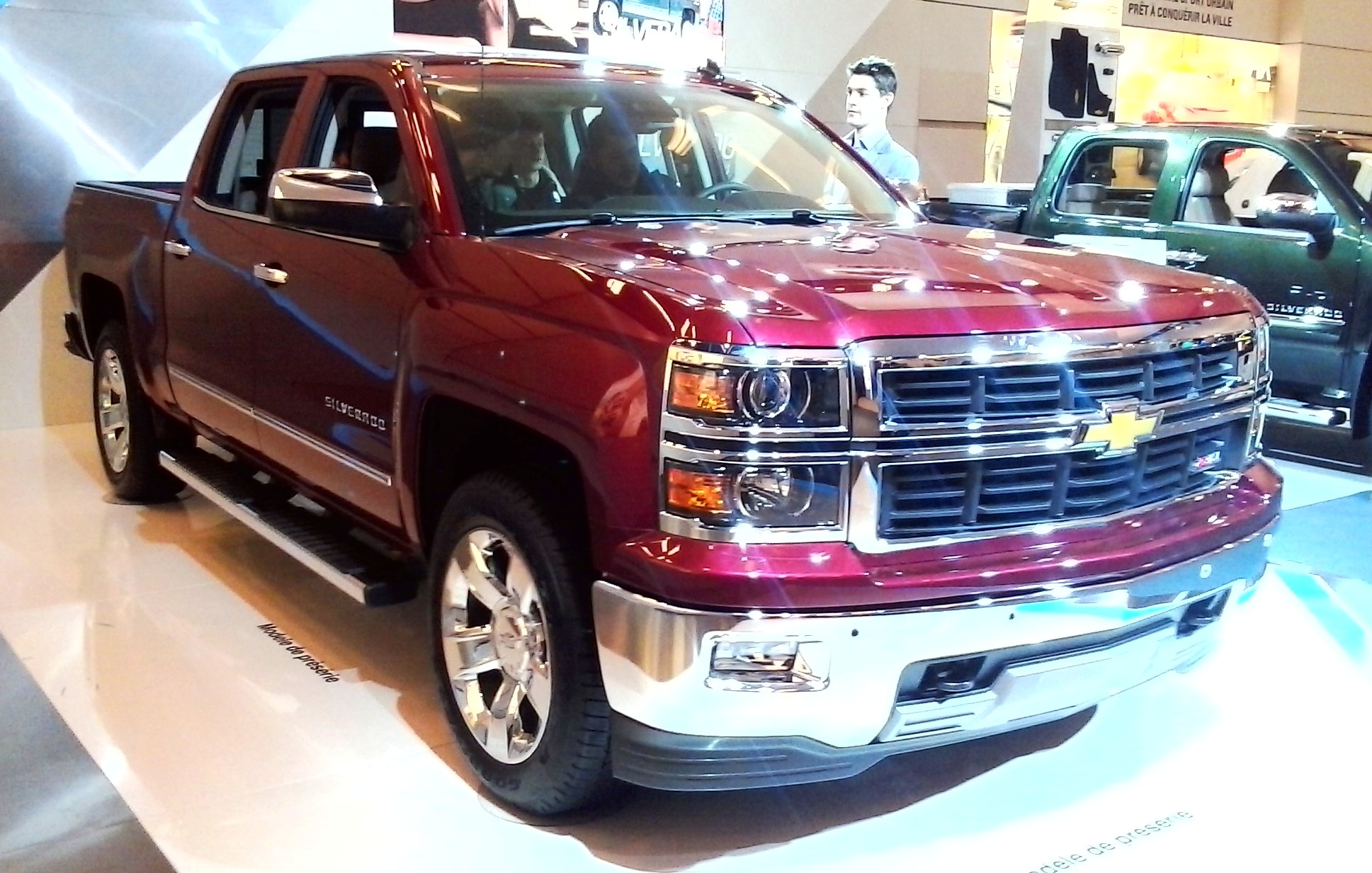
"...h. What am I going to say? I wish I had six more Silverados. I mean, look, I'll take that in my opinion. It's..."
The Chevrolet Silverado is a big truck that can carry heavy loads and is great for work or play. Many people like it because it can be used for many different tasks.
The Chevrolet Silverado is a full-size pickup truck recognized for its durability, towing capacity, and range of configurations. It's a popular choice among both work and leisure users, often discussed for its performance and versatility.
"...One big concern in automotive today is direct to consumer sales..."
Direct to consumer sales mean that car companies sell their cars straight to buyers instead of going through car dealerships. This is becoming popular with electric car makers.
Direct to consumer sales refer to a sales model where manufacturers sell their products directly to customers, bypassing traditional dealerships. This model is becoming more common in the automotive industry, especially with electric vehicle manufacturers.
"...like Tesla and Rivian and some of the others..."
Rivian is a new car company that makes electric trucks and SUVs. They focus on vehicles that are great for outdoor adventures.
Rivian is an American electric vehicle manufacturer focused on producing electric trucks and SUVs. Their R1T pickup and R1S SUV are designed for adventure and outdoor activities.
"...One of the biggest arguments is the franchise model..."
The franchise model is how many car companies sell their cars through independent dealerships. These dealerships have to follow certain rules and spend money to look nice.
The franchise model in the automotive industry refers to a system where manufacturers grant licenses to independent dealers to sell their vehicles. This model often requires dealers to invest in facilities and adhere to specific brand standards.
"...thinking of digital retailing, more online purchases and acquisitions, how is the shape of a dealership in 2026 changing to accommodate that online buyer..."
Digital retailing means buying and selling cars online instead of going to a dealership. More people like this way because it's easier and more convenient.
Digital retailing in the automotive industry refers to the process of buying and selling cars online, allowing customers to complete transactions without visiting a dealership. This trend is growing as more consumers prefer the convenience of online shopping.
"...because of lack of incentives from the government, but that's not going to change."
Government incentives are financial benefits offered by the government to encourage people to buy electric cars. This can include things like tax breaks or cash rebates.
Government incentives for electric vehicles often include tax credits, rebates, or grants to encourage consumers to purchase EVs. These incentives can significantly lower the overall cost of buying an electric vehicle.
"...when they get batteries that will go at the 500 mile range and whatnot, they will become mainstream."
A 500 mile range means that an electric car can drive up to 500 miles before needing to be charged again. This is important for people who want to travel long distances without worrying about running out of battery.
A 500 mile range refers to the distance an electric vehicle can travel on a single charge. This benchmark is significant as it addresses range anxiety, a common concern for potential EV buyers.
"...those cars don't need that much service like the ICE cars do."
ICE cars are vehicles that use gasoline or diesel engines to run. They are the most common type of car on the road today, but electric vehicles are becoming more popular.
ICE cars refer to vehicles powered by internal combustion engines, which burn fuel to create power. This is the traditional technology used in most vehicles before the rise of electric vehicles.
"...when you're selling a car and you only take three. We've pushed that up to 60. We look for trade-ins. We're feeling pretty good about that number."
A trade-in is when you give your old car to a dealership to help pay for a new car. It lowers the amount you need to pay for the new one.
A trade-in is when a customer offers their used vehicle as part of the payment for a new or used vehicle at a dealership. This can help reduce the overall cost of the new purchase.
"...but I build a car for the referral fee. My cost has gone up, but we're not buying these to wholesale them. We're buying them to sell them. I have a back-end finance team at the dealership."
The back-end finance team helps customers with money matters when buying a car, like loans and extra services they can buy after choosing a car.
A back-end finance team at a dealership handles the financial aspects of vehicle sales, including financing options, warranties, and additional products that can be sold to customers after the initial sale.
"CarMax offers top dollar for a car. They buy a lot of cars, but they also average $1,800 in discount once the customer comes for an active appraisal."
CarMax is a company that buys and sells used cars. They make it easy for people to sell their cars without having to negotiate prices.
CarMax is a well-known used car retailer in the United States that offers a no-haggle pricing policy, making the car buying and selling process straightforward for customers.
"I'm a big fan of Bob Ruth Ford. They buy a lot of cars off the street. They're just insane with what they can do from a third party, but like us,"
Bob Ruth Ford is a car dealership that sells Ford vehicles. They are known for buying a lot of cars from people who want to sell them.
Bob Ruth Ford is a Ford dealership known for its aggressive car buying practices, often sourcing vehicles from various channels, including trade-ins and direct purchases from customers.
"...the most recalled OEM of 2025, Ford, you would think does present a great opportunity..."
OEM means the original company that made the car or its parts. For example, if Ford makes a car, they are the OEM for that vehicle.
OEM stands for Original Equipment Manufacturer. It refers to companies that produce parts or vehicles that are sold under another company's brand name. In this context, it indicates vehicles made by Ford that are sold as new.
Select text to request an explanation
Hey everybody, welcome back to another episode of the Daily Dealer Live!
I'm your host, Sam Darkin. Thanks for choosing to be here this Wednesday,
February 9th, 2026. And welcome to this first week post-NADA, where that NADA hangover is real.
The free money era has gone. Payments are up, grosses are tightening, and AI, it's either
well your biggest opportunity or your next expensive mistake. Today, we've got operators
who aren't guessing. They're executing Matt Bowers, Miguel, Martin, and Shane Wood join us
to break down what's actually working today in February 2026. No fluff, no vendor pitches,
just real dealer strategy. But first up today, today's industry headlines.
First up today, used car prices have settled into a permanently higher range, and that's how
dealers buy, stock, and sell inventory in 2026. During a presentation at last week's JD Power Summit,
Jonathan Banks, Vice President of Product Development for Evaluation Services at JD Power,
revealed that average retail used prices at franchise dealers just hit over $30,000 in 2025.
Quote, low new vehicle sales are basically defining the pool of used vehicles that we're
facing today. We're still going to see that supply gap flowing through the market,
Banks explained. The result is much more expensive, used inventory mix, and the majority of buyers
are looking at monthly payments that are 30% to 40% higher than they were six years ago.
Meaning, dealers need to stock inventory that aligns with the payment bands
their local buyers can actually afford. The bright spot is certified pre-owned.
CPO vehicles deliver payments closer to regular units, used units sell faster,
and carry factory warranties that buyers trust. As Banks put it, it's one of the most underused
levers dealers have. I was able to speak at the JD Power event as an aside. Great event,
part of NADA. Maybe we'll get into that with some of our speakers today. Next up in the news,
auto lenders are opening the spigot again, and Banks are leading the charge. In 2025,
Banks became the largest auto lender for the first time in several years,
now holding nearly 28% of all auto financing. Last week at the 2026 NADA show, Experience
Head of Automotive Financial Insights Melinda Zabritsky told CDG News, quote, every bank I
talk with is in growth mode. They are buying a little deeper, a little older and stretching
terms to make deals work. What's the reason? Well, as captives pull back on subsidized rates,
once new car inventory normalized, Banks and auto finance focused companies
stepped in, scooping up more used loan volume and incremental subprime growth. And despite
elevated delinquencies, many of the worst 2022 era loans have largely worked their way through
the system. Outside those vintages, performance is holding up. Bottom line? Well, capital is
available, competition is back, and for dealers, that means more approvals, more options to structure
deals, and a noticeably friendlier financing environment heading into 2026. And actually,
one comment, again as an aside, I heard at NADA at AFSA, the captives are feeling a little overlooked.
Those OEMs that don't have subvented financing, either a 0% or some type of enticement for consumers,
the captives are feeling a little neglected in this era of less subvented rates. In other news,
a brand new report from Republican reputation. Another, in other news, a brand new report from
reputation rather, thank you, shows a clear divide opening up between average automotive retailers
and the top performers when it comes to brand management. Spoiler alert, the leaders in the
space aren't handling reviews manually anymore. Instead, they're using AI to pull together public
reviews and private customer feedback into one system so they can see how brand perception
connects to key operational issues in real time. The leading private dealer groups include Hendrick
Automotive at number one, Ken Ganley Automotive Group behind at number two, and McGovern Automotive
Group landing at number three. And as for the public's, Penske came out on top at first place,
AutoNation second, and Group 1 rounded things out in third place. Here at the Ziggler Auto Group,
huge friends and supporters of the Hendrick Group, so it's cool to see them landing at the top of
the rankings. The key here is instead of reacting after battery reviews hit, these dealers listed
are using AI to spot recurring patterns early and implement workflow adjustments fast. We've seen a
lot of that is called social listening, and the result is a continuous feedback loop that helps
leaders adapt faster and more precisely. Last up today, automakers are paying a steep price for
retooling their EV roadmaps, and Stellantis was the latest automaker to announce a massive ride-off
to the tune of 26 billion bucks, tied to its decision to pull back sharply from most electrified
vehicles. CEO Antonio Filosia said the hit reflects two things, overestimating how fast consumers
consumers would adopt EVs and poor execution along the way. Going forward, he said Stellantis'
EV strategy will move at a pace, quote, governed by demand, not command. Stellantis is also planning
to ruthlessly cut unprofitable models, selling at stake in a joint battery venture and refocusing
investment on plants and products that can actually make money at scale. But Stellantis isn't alone.
GM, Ford, and Volkswagen have all disclosed multi-billion dollar EV write downs,
as growth slows and policy support becomes, well, less predictable. Across the industry,
the total bill now tops 50 billion bucks. Looking ahead, as politics, incentives,
and consumer demand keep shifting, automakers are being forced to realign product plans with what
buyers are actually willing to pay for, and that's a wrap on today's industry headlines.
What a week! NADA is behind us. We had three very cool shows. We'll talk a little bit about
show number two, which was on Wednesday, where we were able to interview both the head of Nissan
and the head of General Motors. We also had Andy Elliott on the show. We'll be clipping up some
highlights from that. We had some tech issues, so if you're looking for that Wednesday episode,
you will have to search far and low because it's not online. But we are going to provide some clips
and an opportunity for both of those guests to pop back into the interview room here and
join us on a future episode of Daily Dealer Live. As a reminder to our entire listening
audience, please post your comments into the social media platforms where we are streaming
across all CDG social media platforms. We'd love to hear your comments today.
Bring them into the show. They changed the trajectory of what we're doing here.
Looking forward today to talking all things NADA for those who attended, talking products,
and talking strength on OEMs. And we may even get a comment or two on the Super Bowl. Was it a good
game? Not a good game. What did you think of the halftime? We'll get into all of that, plus
the most important items in all automotive. First up today, owner of Matt Bowers Automotive
Group. Welcome to the show, Matt Bowers. Matt, welcome. Thanks for being back.
Thanks for having me. Always great to be here. Hey, so the first question we always ask, Matt,
is how the heck is biz in your neck of the woods? I would say it's tougher than it has been. In my
company, we were up in, we were up last year, about 20% over 2024, which I was very pleased with.
However, I've seen in the last maybe 60, 90 days, it's been a little tougher across the board.
You're seeing what you see when it gets tougher. In my group, the best operators in my group
are at the top. And the guys that struggle with the basics, with managing inventory,
managing their behavior, managing their decision-making processes, all that,
they tend to struggle in times like now. Like nobody's walking in giving it to you.
You can't make a lot of mistakes in times like now and make a lot of money.
Today is about execution. We saw that this past week at NADA. So I'm curious, you separated the
high execution from those that aren't. Is there one or two things, Matt, that when you think about
those high executors, they're doing right in February 2026 that helps them to win versus the
rest of the industry, Matt? I think a few things. And I've noticed this. I've had my company for
10 years. We have nearly 20 stores, a fairly decent-sized group. The operators I have that
have the most success communicate the most, I would think. When they struggle, they over-communicate
actually. That's a common thing. The ones that struggle, I have to go find them.
They disappear off the face of the earth. It's more like, hey, I didn't want to bother you.
And it's like, bother me. What do you think is my money? What do you think?
Actually, I couldn't agree with you more, Matt. I see that in my own world. Those that are doing
well in executing communication is a topic in that execution. Those that aren't, they go into
hiding a little bit and they're tough to find. And that isn't the answer to poor execution, right,
Matt? Well, it's a comment. Again, the best operators in my company, and I have a couple I
consider to be extremely good to elite level operators, I speak to them the most. I communicate
with them the most. Hey, sanity check this for me, Matt. Hey, what do you think about this?
Hey, this is what happened and this is what I'm doing. Give me thoughts on that. Hey, this
isn't working. You have any idea? But the ones that struggle, crickets. I never hear from them.
And that's something I've found to be the case through the years. That's one big thing I would
say that managing inventories. Why we made money during COVID wasn't really so much margins. It
was more like supply and demand was incredibly unbalanced in our favor. So as a result, you
sold a new car, four days in stock, you paid four days of interest, the car manufacturer paid you
90 days of interest. We're all geniuses. Everything's working out for us. Well, now,
there's more supply in a lot of the OEMs than there is demand nationally or regionally where I'm at.
And the people that can understand how to manage inventories excel. Use car aging and
new car aging and stuff like that is an issue today. So before we go into use car acquisition
and discipline in that part, let's talk. Yossi brings a great question in. How's your latest
acquisition? You continue to grow as an auto group. And I do want to come back to the execution piece
and also your search for a general manager, right? Because you do have a couple posts out there
saying, hey, I'm looking for GMs. And we'd be curious to learn a little bit about what you're
looking for in that world. But tell us about your growth, your latest acquisitions, and how do
those acquisitions fit into your overall strategy, Matt? Yeah, you know, look, I had a thesis.
And I'm different than a lot of dealers, obviously. I think that's clear. But for me,
it's my own balance sheet in a bank. I don't have private equity. I don't have a bunch of LPs
from Canada sending me money. I don't have anything like that. So it's just, it's just me in a bank.
And so I have to get it right. You know, and I also have to be able to add value. I can't,
you know, some of the deals I see, you know, it's enormous money for a store that doesn't
make a lot of money. And sort of the pitch is like, well, there's only this many of this brand in the
country. To me, that's like buying a painting or something. You know, if I want to buy a painting,
I'll buy a painting. I'm here to try to make money, you know, for me and the people in the
company that work with me. So I had a theory that, you know, I would say the car manufacturers that
were the most beaten up over this last couple of years has been everybody's favorite talking
points has been Chrysler and Nissan, right? Now, there might be more to add to that list
sooner than later, by the way, but historically in the last couple of years has been Chrysler and
Nissan. And of the two, I thought, you know, Chrysler, you know, I decided that Chrysler would
be the brand. I was going to try to go into top 25, top 30 MSAs in the country by image
compliance stores that had full service capacity availability. So if I got it right, let's say,
I don't have to go put on a hard hat and go build bait like it's already there.
It's there. And, you know, and see if I can get good value on what I'm buying and then maybe
start there and build around with other brands, which is really the opposite of how a lot of people
do it. You know, let's go buy Toyota and go from there. Whoa. I said, let me try this and go the
other way. And so I bought a store in Dallas, Texas, you know, it's called North Dallas Chrysler
Dodge Jeep. I'm also not going to name them my name either. That's a new thing. So I'm not going
to name them at Bowers, whatever. Another one in Indianapolis, suburban Indianapolis,
which is called Indy Chrysler Dodge Jeep, which is a really good name. Glad they let me do that.
And those have been really recently in the last six weeks. Okay. So those are going fine so far.
The people I bought them for were nice people. Asbury Automotive was one of the big publicly
traded company. And the other people are really high line dealers from Austin, Texas, good people.
So with the Stellantis acquisition, two big ones, Indianapolis and then Dallas.
In Dallas, you share a marketplace with Carvana. And Carvana has been in auto news recently. Tell
us a little bit about your take on Carvana's continuing acquisition of Stellantis points and
how are you needing to be in the world versus Carvana? How does it change the marketplace
for you as a Stellantis dealer? I got to give it to Carvana. If they're anything,
they're not stupid people, clearly. They became billionaires out of executing on this idea. That
very timely idea on their side. They made it lost it and made it back. Of course,
which is every great story. I think that after being there, what I thought was going to happen
isn't exactly how it's happening. I assumed they were going to do the same sort of business
that car dealers do. We're going to go sell people in our local community. We're going
to bring them back to service. They don't do anything like that. Basically, what they do
is what they do with used cars. They take their four or six Chrysler franchises, whatever they
have currently. They aggregate all their inventory generally on a big website. And then they advertise
the cars at $5,000 or $6,000 net losers and ship them all over the country. I have yet to have the
first customer online or otherwise say, hey, you have a white one. They have a white one.
They're sending them all over the country. They're sending them mainly out of the market.
I think that would work. You have to hit the volume bonus every single month. You have to
not pay people a whole lot clearly to work there. You have to sell cars back of
advertising credits, floor playing credits. You're using all those. To me, you would be
sort of a test as if the OEMs did this. That's probably how they do, I guess.
DTM, direct to market by OEMs. I have had several people come to me and say, hey,
I bought this. I need help. I can't. So I've done some stuff relative to taking care of people after
the sale or in service like that, which maybe I'm sure they're working on. But that's been their
approach that I've noticed in the market with them. So is Stellanus allowing Carvan to buy
multiple points all across the country? Is it healthy for the overall Stellanus dealer network?
Is it a good move? Is it a bad move? I don't know that they told them, hey,
this is what we're going to do. We're going to go buy a bunch of cars, list 10,000 cars online
and sell them like this. It doesn't take a rocket scientist to get to that. No, it doesn't.
It doesn't take literally anything. Jeep Wranglers, German Shepherd puppies. Yeah, yeah.
You can sell it, throw the paper. You can do this, buy a whole shitload of it and then sell it below
everybody else and then not pay anybody. A guy moves a car on a transport truck and they drive it,
and that's it. I don't know. It's not the business I'm in, so I don't think it really affects me that
much. So I think that it's interesting. I actually put a post on LinkedIn recently about the Advertising
Covenant Chrysler at NADA, which I didn't attend, which is the first one I haven't attended in a
long time for various reasons. They are going to come out with an advertising covenant,
which I think will blow a hole in the side of this plan that's happening currently, if that happens.
And what is that covenant? What will that say? I don't know this once they come it up.
It's like other advertising covenants. It declares a minimum acceptable price that you can sell the
product at and advertise it online. You can sell whatever you want, but you can't advertise it
for any less than X, which is the same across your entire dealer body.
For a struggling brand, for Stellanus, is that a good overall strategy to have
a powerful entity like Carvana just put jet mode to the race to the bottom? The race to the bottom
is fast in that process. I think the number one Chrysler dealer in the country is actually in
Louisiana. So I'm actually the number two Chrysler dealer in Louisiana. I sell more retail to people
in Louisiana. Number one sells them much like I'm describing. They ship them all over the country,
like you would wholesale parts, drop shipping them and stuff like that.
Look, it's just not a business that I'm in or want to be in. And what we do is that we try to
sell people in our local market as many of them as we can, bring them into our service department,
and then bring them back over and over and over again. And that's how you kind of build a business.
Otherwise, we're doing some other business. We're doing, we're the distribution business,
basically, then, which is different than what I know. So it hasn't impacted me day to day a great
deal like you would think. But however, it's a serious thing. I mean, if, you know, if, you know,
what message would you give to Stellanus executives listening to the show today about that strategy
and allowing or not allowing Carvana to continue to acquire points with that strategy, that race to
the bottom? Well, I think there was a lot of unknown in the beginning. And I don't, you know,
again, I believe this is America, you know, if Carvana wants to figure out a better way to do it
than I or you or whoever, that's their right to do that. And I support that. But I think nobody
really knew what was going to happen. What was the plan? Yeah. Okay. Now we do. Okay. It's basically
a distribution setup where we're going to, you know, advertise the cars, $5,000, $6,000 back
in net invoice and drop ship on the people. If that's how we want to do it. Well, all hour. Yeah.
I don't know. Like it's a fleet sort of feel to it. The comment section is alive and
I'm going to stay mad. So yoga cars who we saw an ADA props to yoga cars. Thanks for being here
says Carvana will work around map easily with simple unlock button. Once it's one to one,
it's not mass advertising or if they use simple AI chat to reveal the pricing, they can probably
gamify their way through that. You have to okay, everybody can do that. I will just say this,
yoga cars that, you know, it's just not that simple. Okay, right? Like unlock a better price.
Like, is that what we want to say? Here's the best price, but unlock a better price. Okay. Like,
the real world, people don't get that. Like not everybody is me or you or yoga cars. Okay. Like
nobody knows what that means. Like, yeah, they just assume the price they see is the best price.
They don't know that there's a little secret password that you can get. Yeah. Like it's,
it's the, the, the, the additional step dilutes it, right? The, the initial and it'll probably
hamper them if there are covenants that say, oh yeah, first price. Yeah. I mean, that, that's not
what they do in their normal business. They, you know, so look, I think some of the advertising
covenants are, you know, like, look, I have a store, I'll tell you a quick story. I have a store
in Nashville, Tennessee. It's a Nissan store. It's a really good, it's a very good store. It leads the
state in sales. It's one of the biggest, if not the biggest service location they have in the
country. Very, very profitable stores. It's really, really well. Once in a while,
the dealers in Nashville, Tennessee will effectively use up a strike to say, like, you know what,
we're going to violate the covenant. We get three strikes. We're going to use one up.
When that store did that this year, they literally sold double the annual average double. Yeah.
Yeah. So I don't know, is the ad covenant working is what I'm saying? Is if you can take it off
and you sell twice as many cars to consumers, what's the point? Yeah. So you're saying some
dealers in 2026 strategize striking the ad covenant in order to get a little bit of a pop
and they measure it, right? Yeah. Everybody does. Okay. And so this store did, you know, so we used
a strike and sold 280 cars. Okay. Were you averaging 145 new or whatever it is? But I guess the way I
think about it is this, and I took some heat. You know, there's a gentleman who got really upset
with me on LinkedIn and told me that, you know, like, it's sad. He called me sad. Okay. That
my only idea was to aggregate the brand. And it's like, look, I think the dealers should do
whatever they want. And the consumer is the one that votes on that. Okay. If I want to do bad
business, people are going to figure me out and I ain't going to be in business very long. Okay.
Right. But I should have the creative ability to go do whatever. So it's a touchy subject with
these ad covenants. It's my only response to that, Matt, would be a large entity like a Carvana
and National Powerhouse does have ability through a network to put people out of business and 100
It's interesting. You know, a big, big debate in the marketplace today is, you know, do we allow
Chinese EVs to come into the US market, right? And it would affect, effectively, potentially
shut down a segment of, or a class of vehicles, right? A Walmart did that when it first came
into business. It shut mom and pops out. So I do think there does need to be thinking by OEMs
about, is this what they want, right? Because, you know, on scale, large national chains have
the power to impact business nationally. Fair or what would your response be?
I think that's 100% fair. And I think that Stalances, and look, I have plenty of friends
that work there and these are really good people, really good, talented people. I think there's a,
you know, we don't know. Let's give it a shot and see what happens here. Okay, so now we know.
You know, is this okay? And if it is okay, if it's not okay, then let's do something different.
But basically, that's the strategy. The strategy was a lot more simpler than I should have figured
it, but it's very simple. Stalances sending a message by accepting it and allowing it and moving
forward. Well, you know, it hadn't been that long is what I would say. There's time.
Carvana had one store in Phoenix. I don't think they did this like this. Okay. Like that store is
selling 50, 60 cars. The other ones, since they've gone to this method right here, they've sold a lot
of cars. Okay, they've consistently been the top five nationally. But I think, I think if anybody
wants to spend a ton of money on the internet and list the cars that's 6,000 and 7,000 back of
invoice, you deliver them to people's driveway, I think you can also sell a lot of cars. Now,
can you stay in business like that? I don't know. Well, my question, my question to that, Matt,
would be, was that accidental that it wasn't 0.1 where it began or was it intentional and part
of the evolving plan that it happened with? I have an idea on that. All right. So we've
talked to Lannis. That led headlines at NADA, particularly their dealer meeting, though neither
one of us was there. So we won't necessarily pull some takeaways. But I do know, Lannis' newest
ad campaign, Jerusalem Iyer at the meeting. I don't know if you had any feedback on that or if
you heard anything from that. But let's transition over to Nissan because you're a very well known,
very regarded Nissan dealer. We had Tiago on the show last Wednesday. He talked a lot about his
excitement, the change in the leadership team, the direction of the brand and his hopes for the
future. He was very adamant that Nissan is a rising brand, having kind of shed off the
challenges that they've had. What's your take, Matt, as a dealer? What's Nissan getting right
February 2026 and where are they struggling as they seek to turn this around?
You know, I have more caution in that regard. Same thing. I have a lot of friends at Nissan
that are in their executive and leadership team, nationally as well as regionally in the regions
that I'm in. People have known me a long, long time. They're really good professionals, great
people. I think there's a plan that is a good plan in place right now, but that's never really
been the issue with Nissan. It's been more like there's a good plan. Do the people in North America
have the ability or are they empowered to carry the plan out? Because Nissan is a company that's
really run from Japan. There's historically been some sort of a disconnect between the
Japanese leadership and the leadership in North America. That really began at the end of Carlos
Cohen's tenure and Jose Munoz's tenure. Chrysler, for all their ticks and fleas, their CEO goes to
their board, makes recommendations and they back him. Now, sometimes it ends up like Mr. Tavares,
where he messed everything up and now they're fixing it, but they're backing what they want to do.
I think Nissan has been a little bit different in that regard. So I think if the people in North
America are empowered to make decisions, I think that you can have a successful go. But I'm not
sure if that's going to happen. It hasn't happened in the last five years. I'll tell you that.
So Matt, it's interesting in the CDG circles that I'm in as there's conversations about Nissan.
That is a common theme. Is the US leadership empowered to make decisions? What would you need
to see from local Nissan dealership in the US that would be a sign that, hey, they have full
command authority. They're able to make the tough decisions to execute on that brand in the US
marketplace and make the decisions that the US market requires to be successful. What would you
need to see? Action. I think you need to see action. Okay. Where Nissan is a brand that
over the last recent couple of years, there has been a lot of talk, but when you really get down
to it, not a lot of substantive actions. Okay. They also have to figure out what their identity is
as a business. Like them or hate them, going in Mr. Munoz, you knew what you were getting.
They're going to wholesale cars. They're going to give you an objective and they're going to pay
you a bunch of money to hit the objective. Okay. It lets you do it however you wish to do this.
It's a brand that DNA was built around. Sporty, you think Nissan, you think the Z,
you think the Maxima, that's what you think. And now it's a brand that has an ad covenant.
They still wholesale the cars, so they haven't changed their method of producing cars. Like
there is far more wholesale availability of new Nissan's and there is demand to buy them.
Okay. Currently. And when there's that sort of imbalance, it creates profitability problems
at the dealer level. It creates, you know, dealers don't want to buy, like these are hard to run and
make money with. They're hard. Dealers don't want that. Dealers, the most desirable brands, if you
look at it, are the ones that have the most equilibrium between the wholesale supply and the
demand by the consumer. Honda, Toyota, Subaru, all these brands come on and that's one thing
they all share in common. So let's talk about that pivoting from Nissan. We had the head of
General Motors on the show last Wednesday. Many dealers across the GM network are saying, hey,
we need more vehicles, which is an interesting sentiment from General Motors who historically
built more vehicles than the market could handle. And they were very forward about, hey, we're
controlling supply to help dealers be more profitable. And he quoted, if memory serves,
I think he said dealers were 5% more profitable in 25 than they were prior years. It's not what we,
as dealers, want to hear. We want more supply to meet the demand. But any thoughts on GM's approach,
it's quiet, but it's been effective, it seems, even though we want more units.
Two thoughts. Okay. So General Motors has done an excellent job. Okay. It is very difficult to go
by a good General Motors store out there in the world. I have tried. Okay. I'm always looking for
that. And whenever I find that, it's just not me in the room trying to buy it. It's a crowded room.
Oh, yes. Okay. So they have done a great job. My stores, my General Motors stores make money
every month. They're the most consistent stores I have. And that's largely due to that
factor that you mentioned. There's a very balanced supply and demand approach
from their wholesale attitude. Now, it's difficult to take a store that's underperforming greatly
and then increase that store. If you're going to go buy a 50% sales effective store,
it's almost like, I call General Motors the Honda of the domestics. It reminds me a lot of Honda
when I work with Honda. It reminds me, you're not going to, you know, Nissan Hyundai,
you can get sales effective in 90 days if you got the right dude. Okay. Like you can make this
happen. Not with those guys. It's going to take a little bit longer than that. The second thing I
have to say is that, look, you know, there's a lot of car dealers that don't know what they're
talking about. Okay. I'm just going to be honest with you. I love everybody and I'm not right
about everything. I'm wrong about lots of stuff. Okay. Yeah. However, you know, we need more cars.
You know, what's the lesser of the two evils to have? Well, that's what I'm asking you. Yeah,
that's what I'm asking you. COVID already taught us this lesson. Yeah. Everybody agreed during
COVID will never go back to oversupply. And it's incredible how quickly so many OEMs went back
to oversupply. Immediately. Props to GM, they were in an oversupply situation prior to COVID.
And they've been very quietly executing on that discipline. Added to that, I think our Toyota,
to your point, Honda. Honda is probably a little bit on the chip piece, but still there. Subaru,
although the supply is increasing. I don't think dealers can have it both ways, Matt. And to your
point, which is the better, right? No. Complaining for more inventory or trying to get rid of the
stuff that's declining. I mean, look, I think it's shown us that when there's a good supply
in demand balance, you have profitability increases. That's not debatable. I don't think
that's debatable to anybody. You know, during COVID, if there were eight people in Metro New
Orleans that wanted to buy a white Hyundai Palisade and there existed six or nine in the market,
you could sell it, make people happy, make them a good deal and make a little bit of money
in all that and then not keep it on your floor plan for six months. Well, today, there might be
six or seven people that want to buy them. And there's 92 of them out there. And so it oversupply
erodes profit. And so COVID taught us this. So look, I think obviously, like, look,
General Motors has done two things without any debate. Their dealers make more money than they
used to and their stores are worth more money than they ever have been. Yeah. Yeah. What am I
going to say? I wish I had six more Silverados. I mean, look, I'll take that in my opinion. It's
a good math. Matt Bowers, I wish we could continue with you. We've got about 10 minutes over. The
producers are jumping up and down. We need you back because I'd love to hear more about your
strategy as it comes to hiring general managers. We've had many people on the show that say,
hey, what's the toughest job to hire for in today's day? It's not the service technicians
anymore. We can pay for them. It is good leadership boots on the ground. I know you've got some posts
out there. So we'd love to have you back to talk about that. And then also answer the question of
all these brands you have. And you've got many, who are you bullish of in 2026? But will you come
back in the next few months? We'd love to have you back to discuss that more. Yeah. I went through
a little bit of a relocation for my family. And then we've had some weather up where I live at.
And I'd love to come back sooner than later. All right. See to text me. Okay. We'll do it.
Matt Bowers, owner Matt Bowers, automotive group. Thanks for being on the show today.
Thank you for your perspectives. Thank you.
By the way, we could have like another 20 minutes with Matt. Fasting perspectives. He's
absolutely unvarnished. He's very transparent in how he shares his opinions and perspectives. And
you know, I think he's got a great take on Carvon and what Carvon is doing. Most dealers in today's
marketplace shrug their shoulders, say, hey, I'm not really in that space. It's not going to impact
me. And I don't think it's going to impact anybody until from a size perspective, they're large
enough for it to impact. But at that point, if it continues, it will be a continuation of that
race to the bottom. All right. Let's talk Four Eyes. Today's episode is brought to you by Four Eyes.
Four Eyes helps dealers turn on data into action, starting with a clean connected data foundation
across dealership systems. Four Eyes empowers dealerships to use that data to drive consistent
execution throughout their business. The data stays dealer-owned, vendor-neutral,
and works with any tools or partners more than a CDP Four Eyes is a reset for how dealers get data,
gets put to work, headquartered in Oregon, and they were also at NADA, visited their booth
during the time there. Four Eyes employees live in 20 plus states to be closer to the communities
where dealers are. Visit www.FourEyes.io forward slash to learn more. We appreciate
Four Eyes for supporting today's content, including that fascinating conversation just
now with Matt Bowers. You can click the QR code if you're on the show. After the fact,
you can go to the notes and go from there. So thanks to Four Eyes. Mohamed Yusuf said,
insightful and highly relevant points. Your perspective reflects real-world dealership
leadership, especially in aligning customer experience with measurable performance. That
comment targeted towards Matt Bowers. So thank you, Matt, again for being on. Let's transition
quickly. Miguel, Yellow Sand Martin, principal of YSM Design. Welcome to the show.
Miguel, welcome to the show. Appreciate having you on. So one of the first questions we ask
everybody, Miguel, is how's Biz tells who you are and what you do out there in the world, Miguel?
We are an architectural firm. We have been designing car dealerships for over three decades,
and we continue to do so. We represented the OEMs for some time, and now we are on the car,
on the dealership side. And business has been kind of soft and certain because of the economic
environment that we're in, the facts and forth of things that are happening in the market.
But it's beginning to get better now at NADA. I saw a lot of optimism. Let's put that way.
Fantastic. Yeah. In fact, there were a ton of people at NADA, more than have been there in
the past several years. And I think there was a lot of curiosity around, what are the latest
innovations and evolutions in automotive that can allow dealers to stay compliant? So you talk
about speaking compliant and successful and profitable. You build facilities. You talk about
image compliance. What are three non-negotiables that OEMs care about most when building facilities?
What do dealers overthink in 2026? It's mostly, this is a co-branding exercise because you have
the OEMs and you have the local dealers or the national accounts that you have. But it's mostly
anything that has to do with their image. You know, in some times it was a portal. Sometimes it was
several elements inside the building that make it look, that brand, you know, that identifies
the building with the brand. So it depends on the brand. There are certain things that, you know,
mostly is anything that has to do with the image from the outside. We started in 1994 with Ford
Motor Company and it was building a brand, branding a building. So the buildings are branded. The
buildings need to reflect the image of the dealer and also the OEM. But the OEM is, you know, they
have elements that come and go, but they're still there. You know, they change over time.
Yeah. Where do you think most dealers typically lose the most money in building a product?
They overthink it and they don't spend enough time in the pre-design effort when the
relationships inside the dealership are critical. Back in the days, I'm dating myself back in the
mid-90s, we used to spend a week inside the dealership talking to all the different players
in the dealership and learning about the relationships and who they were talking to,
interacting with. And things have changed because now we have the big national companies,
you know, the public companies that are playing in the game. But back in the days,
it was very important and learning how they interact with each other and how efficient they
become playing as a team. We're seeing video of some of your facilities and projects and they
are breathtaking. Every one of these facilities is just striking. There's a big emphasis in
2026 and beyond on light, natural light bringing open spaces and light inside of facilities.
That's a key element I see, common element in the designs you're creating.
It is a key element. In natural light, we are human beings. We like natural light. So when you
make an environment bright, it's inviting. It's nicer. You know, people expect that these days,
you know, back the old days when it was a dark hole where they were selling cars are gone.
One big concern in automotive today is direct to consumer sales. We've talked a lot about
Volkswagen through Scout coming into the US and getting approval in multiple states to go direct
to consumer. You know, we have the brands that never sold vehicles any other way like Tesla
and Rivian and some of the others. One of the biggest arguments is the franchise model,
well, and argument provides for better facilities, right? OEMs require dealers spend
significant sums of money to build beautiful facilities. You go to these direct to consumer
outlets like Tesla and the facilities are not that great. They're very spare. They're very
spartan. There's not a ton of expense. Talk to us about what, how do you see that? Like is the
money that dealers spend in these beautiful facilities well returned in sales and why do
these direct to consumers focus? You know, why are the facilities more spartan on those?
Well, for one thing, they sell cars that they don't care about the customer journey or anything
like that. It's mostly an online experience and their facilities are a soft part in my humble
opinion. We've worked with them over the years and, you know, having a nicer facility where the
expectations are much higher from the consumers back in the days when Lexus was the one that
started it all, when they started adding, you know, coffee bars and things like that inside
the dealership. Now a customer expects to have that in almost every brand. So I think having
a nicer facility is conducive to better business overall. Yeah. So I've been watching multiple
projects, both ground up builds, renovations, whatnot. One common theme I see in 25 and going
into 26 is over budget, right? It's tough to target bit budget. How do you keep a project
running on time and on budget from your perspective? It's again, doing your homework properly,
spending time in the very beginning and, you know, making sure that we hit all the targets,
but we stay within budget. We work a lot with construction companies from the beginning
and together with them. We're not enemies in this project and we work for one client and
one client only. So we spend a lot of time with them and making sure that they're happy as well
as the brand. You know, the OEM has to be satisfied with whatever it is that we're doing.
So the time spent in the beginning is critical in my personal opinion. I think it's, you know,
we need to spend a lot more time in the beginning. That's I think where the large companies, the
national companies are not as strong because they don't have a general manager that will stay in the
office forever. You know, we've had projects where the manager has changed three or four times during
the project. So spending the time in the beginning is critical. Paul Salisman online comments,
I'm curious Miguel's thought on the trend to open floor plans with fewer offices
and how those designs have worked in practicality for dealers in in 25 and 2026.
The open that has been always a debate, I think you need to offer a variety of options to the
customer. There are customers that will feel comfortable in an open environment and customers
that will not be the same. So you need to have options. You know, having the open floor is
more inviting is less threatening if you want. If you get somebody locked up in an office,
they feel that they cannot escape from jail as opposed to having it in the open floor. So it
has a lot to do with what kind of consumers you're targeting and how they feel inside your store.
What it's interesting, you know, in our increasingly digital age, thinking of AI,
thinking of digital retailing, more online purchases and acquisitions,
how is the shape of a dealership in 2026 changing to accommodate that online buyer and that digital
retail buyer? Is the shape of the facility changing quite a bit? Things are changing.
I guess you have the younger generations that don't expect as much as the older generations,
people of my age, but because some people, all they want to do is come and get the car and
leave. Another one, the experience, they know they need to have to come back for service,
so they want to go all together. So I think with age, things are changing slowly.
So EV capabilities really shaped facilities for the past several years as manufacturers made
requirements on not only having chargers, but also capabilities of performing service inside
facilities. Now there's a little bit of EV uncertainty or hesitancy. How are you adapting
for that on the architecture and the build side? And what advice would you give to dealers? Do you
accommodate EVs? Do you go all in? Do you build for future capacity depending on which way things
go? What's your advice? Well, I think EVs are here to stay. I don't think they're going to go
anywhere. They may have slowed down right now because of lack of incentives from the government,
but that's not going to change. Once they get to certain benchmarks and when they get batteries that
will go at the 500 mile range and whatnot, they will become mainstream. I think they have been
growing steadily, not maybe at the speed that everybody wants, but I think dealers need to
accommodate for that. That is the future. Now that is going to change the business model for them
and for us, including because those cars don't need that much service like the ICE cars do.
All right, so from a building perspective, last question up today. If a dealer watching the show
comes back from NADA and has a couple million bucks to invest today, what would you put it in,
of facilities leaning in on digital experience? Would you increase size of fixed ops and why?
Where would you put a couple million bucks if you're a dealer in 20 times?
I would do, well, if you want ROI, if you want immediate ROI, needs to go into a service area.
I don't think there's any doubts about that, but looking long term, I think you need to go into a
digital experience as well, because that's the trend that we're heading towards.
Miguel Yellow, San Martin, principal of YSM Design. Thank you so much for being on the show
today and sharing your perspectives on all things facility, including that tension between OEM and
dealer and how to strike that right balance on building a facility. Miguel, thanks for being
on the show. Thanks, Sam. Thank you for having me. Fun conversation. It's interesting. Have you
ever seen come in under budget and on time? Having someone great in his position is so important in
2026. I do think it's interesting that whole tension between direct to consumer.
All right, let's jump straight into our third and final guest for the day, Shane Wood, General
Mandra, Bruce Titus Automotive. Shane, welcome to the show. Thanks, Sam. Glad to be here.
You leave no doubt about the team you were supporting last night. Seahawks, right? Go,
Seahawks. None, none at all. Yeah, we're really happy about that. Did the game
disappoint or what was your take on Super Bowl 60 this year? No, I thought it was a phenomenal
game. We showed up. Would have loved to see a couple more offensive touchdowns, but no,
that was a great game. Had a lot of fun on that. Yeah. All right. Now, I'm going to go there.
This is non-automotive related, but we're all into branding. We all appreciate
something that works well. What's your take on the halftime show that was much talked about?
Bad Bunny. Did Bad Bunny deliver or was the alternate halftime show that was available?
I have no idea where it was, but I don't know. I thought it was well produced. It had a lot
of pretty girls in it. I always liked that. Someone told me, even if you can't understand it,
you can still let the rhythm of music move you. I don't know. Not my thing, but I can see why
some people were entertained by it. What's your favorite halftime show of a Super Bowl
thinking? I think Prince was badass. I really loved Janet. It was good. Yeah. I had a good one.
There's been a lot of really good ones. I saw Green Day at the beginning. I think Green Day
would have been a great halftime. I don't know if they've ever done it. What about Snoop Dogg?
I actually liked that one, too, back out last. It brought in all the classic 90s for those of
that age. I'm a West Coast guy, so I love Snoop Dogg. Well, hey, you went to NADA this past year,
this past week. What's your takeaway from NADA? Yeah, this was a really busy NADA. Some people
were speculating that it was going to be slow just because of the days, but it was packed.
I saw a lot of really cool stuff. Definitely an AI flex on almost every product,
which is natural. Some was real. Some was just an ingredient they'd love to sell.
No, I thought it was really good. We signed a couple of partners up, so I'm excited about
making some moves. What did you see that worked? What did you sign? What did you make a move on?
We moved to Call Review. I think they had a great product. We have a call
recording vendor, but this seemed like a better option for us. I signed up a cool
company called Icon that will put a GPS on our keys and one on the car. It will allow us to
sell that product to customers who are free to install everything. I'm going to sign up Mike
Karma as a scheduler. My whole thing is consolidating. I've got a lot of different
products that do a lot of different things. I'm loving seeing these businesses come in and
do a bit of everything. Mike Karma can replace my true video for video MPIs, can replace my text
to drive for communicating with customers, can replace AutoPoint for what that does. That's
going to be a good product for us as well. Is that the measure of success coming into 2026?
Yossi, Cardioship Guy himself has predicted that the tech stack is going to decrease in
number of vendors. To your point, we're going to be asking fewer people to do more. You saw that
with companies like Mike Karma. Do you think that's an increasing trend?
It needs to be. If you're a dealer, for instance, right now, I have Drive, I have Impel doing
service, I have FullPath on my chat. I have AI in all these weird places. That was another
product we added, was a CDP through FullPath. I was looking at Orbi, went with FullPath as a
CDP, and I'm going to do some marketing with them. I think you need to consolidate your data.
I think we need to speak from one place and definitely prioritize the customer base that
we have. In a world we're living in right now where things are a little tight. I think we need
to love the one we're with and understand that we got a huge book of business that we can be
creating new business from. Was there a moment at NADA where you learned something? You went in
seeking to solve problems. Was there an aha moment where you said, hey, I hadn't anticipated that,
or I didn't expect that, or I didn't think that was possible? No, not really. I wouldn't say that.
Let me think here. We saw a lot of really cool products. It's just like, honestly, you still
got to take a second to unpack everything because we demoed nonstop. No, I wouldn't say there was
anything that really surprised me, but I stayed pretty current with everything that's coming out
as it comes out. You talk about across your group that you're trying to create a culture of buying
across your entire store. What does that culture of buying look like day to day?
Yeah. It looks like this. It looks like, okay, I have an acquisition manager
communicating with customers that are coming in from service. That's one position, but the culture
is when my advisor presents the menu asking them what they want to do, they're also presenting
the option of, don't forget, we are interested in your car that is a high value car, which is
a challenge to get advisors into. We have a strategy that they don't lose the deal if we buy
the customer's car or they still get to keep the reconditioning work. In fact, it'll probably be a
bigger ticket for them because when it's an internal, everything's just a blank check for
those guys. It sounds like when a customer calls in, we ask if they're calling to buy or sell a car.
It is a third-party acquisition manager upstairs. Really, it's about every single employee.
I give a huge dollar amount for referrals to buy a car. It's 500 bucks.
Yeah, that's significant. How long have you had this in place, these steps?
This has been a good six months.
And what is the impact post versus pre? Because that's a pretty significant,
you've changed all the incentives to get everybody pointed towards acquisition, buying used cars,
which that's the atomic nuclear race in 2026 is how do you get that great used car,
not waiting around for it to buy it at auction?
Yeah. Well, at first, it feels expensive because we have a saying. I stole it from Danny Z.
I'm in a VAO 220 group with him and David Long, and he has a saying that he just says BFC,
and that's buy the effing car. If you're going to have a strategy of buying cars,
then you need to act like it. You can't start trying to UA or get cute. You need to buy the car
because that one car could be two deals. Those two deals could be
more and it becomes extremely valuable. You talk about the lifetime value of a customer.
We really think that each car represents a customer and referrals and be back. So we need
to buy the effing car every time. How did you pivot on the culture from that? Because to your point,
so many used car managers and teams and automotive leading up to this year felt like, hey, you know
what? If you could buy it right, if you could devalue it right, you could score that home run
rather than seeing the long view. You went from short-term gain to long view. How did you change
that culturally within your stores six months ago? Yeah. Well, it's like Matt was saying with his
GMs, the successful ones that communicate a lot. I read a book by Patrick Lancioni and it's called
The Motive where he talks about being the CRO, the chief repeating officer. That's what it's
about. We just talk about the vision, what we're trying to do here all the time. When we see people
do it right, we applaud it. When we see people doing it wrong, we talk about that too.
What are the metrics from six months ago to today in terms of acquisition? You mentioned, hey, it
feels expensive, but are you acquiring more vehicles? Has that resulted in higher sales on the
front end? What is the impact of this process? It is. It's still early. I just hired my third
party acquisition manager. I brought on BAN, Vehicle Acquisition Network. They've got a really
cool platform, but we've been tracking trade acquisition for about a year now. We were as
low as in the 30s and that's tough. That's tough when you're selling a car and you only
take three. We've pushed that up to 60. We look for trade-ins. We're feeling pretty good about
that number. I incentivize salespeople on top of their commission if there's a trade-in involved.
The 500 bucks that you're paying to LLT members, has that increased your recon cost or your cost
acquisition? Has that yielded a lower price point on acquisitions? What's been the effect on that?
Both. We have yielded a lower price point, but I build a car for the referral fee. My cost
has gone up, but we're not buying these to wholesale them. We're buying them to sell them. I have a
back-end finance team at the dealership. I have good sales managers when we do take a trade-in.
We do a pretty solid job at doing an active delivery. If there's reconditioning that needs done,
we're able to point that out and justify a lower price. Sometimes you've got to pay a
little bit more for the right car, but that's the car business.
Yeah. When you think about this acquisition, what's your best source right now as your teams
go out and just try to buy anywhere? Buy the freaking cars, you said. Is it service lane?
Is it private parties? Is it on digital channels? Is it trade-ins? Where's the best source today?
It's Facebook. Facebook is the single best source is Facebook Marketplace.
There's a lot of cars there. I know a lot of dealers put effort into that.
Usually it's a salesperson calling and they take a swing and they go through the motions
of appraising, but it takes time to buy cars off of Facebook Marketplace because most people
are trying to get a lot of money when they sell privately like that.
My question would be is what do most dealers miss about acquiring vehicles on Facebook
Marketplace February of 2026? Why do most people not see the opportunity you do?
They're impatient. They take a swing. They see the car and the customer is
over here and the dealer is over here and they take the swing and they don't make the deal and
they move on. It's no different than selling a car. It takes long-term follow-up. You could be
communicating with the customer and not every communication is another offer. A lot of it could
be a why buy. It could be, hey, don't forget, I'm still here. I know you're still looking.
I understand why you're asking more than the market can bear. I would be too if I were in your
shoes, but if you get to the point where you want the check, I've got that. Just staying in the game
long enough, it sounds simple, but that's a real key when you're looking private party because
everyone shoots for the moon at first, but if you're still there with a check and they got a payoff
and you can be that dealer for them, then you win. Six months ago, you started this
aggressive acquisition strategy. You've doubled your trade percent from 30 to 60. You hired a
third-party acquisition manager. As you sit down with that manager, what's the goal for the future
and what prompted you to hire this third-party acquisition manager and what's the goal for
the future, the vision of what this will be six months down the road? I'd love to see this build
into a team of buyers. I think that the more cars we can acquire, use cars is scalable endlessly,
in my opinion. All the cars that are bought on the marketplace are generally found online.
If you can find a place to put them, you can find a customer to sell them.
I have another piece of our dealership that's across the street. We're remodeling it. We're
little pride in that building over there, but I think that would be a pretty nice little
buying center. Right now, I have them up with the BDC. David Long is a good friend of mine.
He's been on the show before. He has. He's got a great strategy. He's been a great mentor for me.
He's right. I'm just riding with him. Last couple of questions. We go back to NADA.
See something that's not quite right? Our annotations are AI-generated and can sometimes miss the mark.
Click the flag icon on any annotation to suggest a correction.