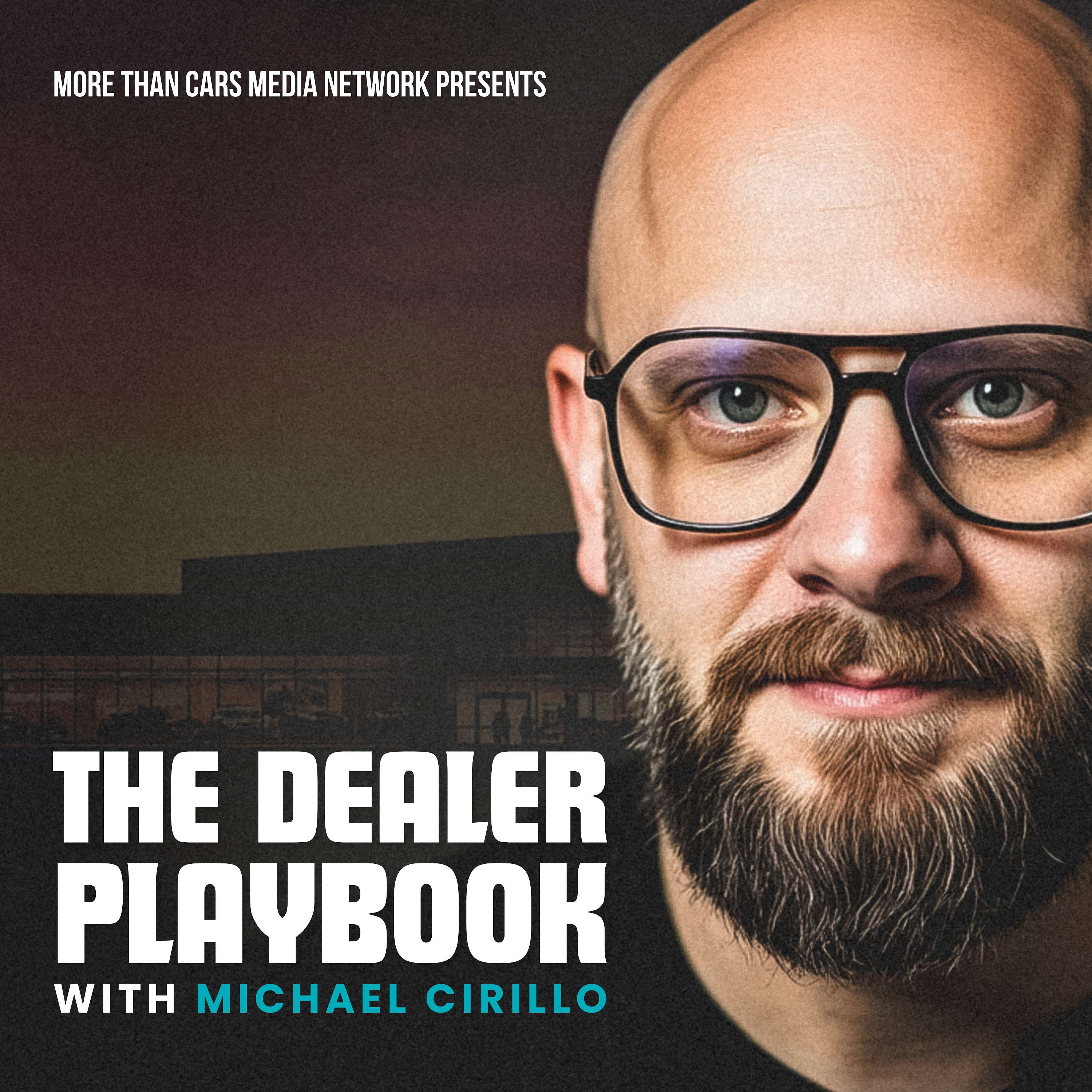
Brad Gelber, digital media and content marketing manager at West Herr Auto Group, shares insights on how to effectively market a dealership on social media. He emphasizes the importance of authenticity and storytelling, encouraging dealers to find their unique brand voice rather than relying on cookie-cutter approaches. Gelber discusses the evolution of social media platforms and the role of AI in content creation, advocating for genuine human connection over polished production. His journey into the automotive industry and the community-focused initiatives of West Herr highlight the significance of personal stories in marketing.
Topics:social media marketingauthenticitystorytellingbrand voiceAI in marketingcommunity engagementcontent creationdigital marketing strategies
In this episode my guest is Brad Gelber, Digital Media and Content Marketing Manager at West Herr Auto Group, the largest privately owned dealer group in New York.
Brad and I dive into what it really takes to market a dealership in today’s world without sounding like every other store in town. We talk about the role leadership and culture play in shaping a brand’s voice, why raw phone-shot content often outperforms polished commercials, and how to uncover stories that are hiding in plain sight inside your dealership.
You’ll also hear Brad’s perspective on using AI as a tool without letting it replace human creativity, the surprising value of a simple photo in a video-driven world, and his personal test for knowing whether a story is worth sharing.
If you’ve ever wondered how to move beyond cookie-cutter posts and start creating content that actually connects, this episode will give you the insight and inspiration to do it.
No annotations found
Be the first to request an explanation below.
Select text to request an explanation
What do you recommend somebody be thinking about who's in a similar position as yours to help build out or find that brand voice for their dealership? Everyone has their own story to tell, however big or however small you are, so it may not be to the scale of Scott Beeler and Lester, but everyone's doing something, and I think that's what makes you special, whether it's a dealer or whether it's non-automotive. There's something about that authenticity that I think shines through, and again, you know, the undertone of everything that I'm picking up from you, Brad, is authenticity.
Storytelling, it's all readily available to you. What do you say to those that are holding off because they're like, I bet you, he's got the fanciest Peter McKinnon-esque, Canon 1D, Mark, whatever. I don't have the fancy mics, I don't have the fancy camera. What do you say to those people?
Honestly, often the stuff that we just shoot right on this thing here, our phone, whatever now, like connects better with people.
How do you know what makes a good story or not?
I think, honestly.
One of the things that I enjoy most about producing the dealer playbook is hearing from you, the messages that I get of people who are getting so much value out of the podcast, applying it to their day-to-day workflows
and finding a thriving career right here in the retail auto industry. It means the world to me.
And you know, one of the ways that we make doing this possible is through my agency FlexDealer.
And, of course, in the spirit of providing value, I think this is a perfect time to head over to www.FlexDealer.com to show even further support for you, my beloved DPB gang.
Right now, if you go to my website, FlexDealer.com, you can get a full free PDF of my number one bestselling book, Don't Wait Dominate.
And the reason I think it's so special is that a lot of the topics that are discussed in this book are even more relevant today than ever with this surgeon popularized AI.
And people wondering, well, what can I do next? How can I have a competitive advantage? Well, that's all here in this book.
I'd love to be able to offer you a free copy of this. If you go to FlexDealer.com, it would mean the world to me, because that is how we continue to produce this show for you.
How to industry what's going on in this episode of the podcast, I'm sitting down with my pal Brad Galber. He is the digital media and content marketing manager at West, her auto group.
We're going to be talking about how you can effectively market and position your dealership online, specifically on social channels.
Brad, thanks so much for joining me on the dealer playbook.
Yeah, thanks for having me. I appreciate it.
I mean, tell me if I'm wrong. The largest privately owned dealer group in New York. Is that right?
Yeah, we often get that as like a surprise. I think a little bit just because, you know, people are, well, I guess maybe they assume downstate just because of population.
But if you think about it like from a geographic standpoint, just where do you put all the stores? I think it's the problem downstate.
Yep, you're a cractor. We're number one in New York and actually one of the largest groups in the country. Wow.
We're all so, yeah, before I worked here, I wouldn't have thought that that was located in the, you know, our area of New York Buffalo primarily.
But we're across three, three cities now in upstate New York Buffalo Rochester. We have one point in Syracuse. So we're pretty regionally condensed, which is a little bit unique for a group of our size, but yeah, number one in New York.
So, bro, the bills though. What is going on, dude? Yeah, yeah, yeah, I don't know. People may know that, you know, Josh Allen.
And we have a couple, a couple guys here that are part of what we call Team West her, which is our kind of spokesperson football related endeavor that we embarked on several years ago.
Steve Tasker also for, for the OG fans here's been a long time member of Team West her and it hurt, it hurts a little bit more when you're close to it.
And you get to know these guys on a human level, but yeah, we're kind of in morning mode still right now. We're trying not to talk about it too much.
You're doing it well with a smile on your face, but I can't, I'm like, bro, Allen, you get no more discounts on vehicles, bro. Come on.
You were playing like you didn't want it. What's going on? You know what I'm saying? I'll let, I'll let you say that. Yeah, I'll say it. I'm in Texas.
I'm far enough away. I was rooting for the man. I was rooting for him. Cheap and chiefs. Anyways, everyone other than people in Kansas City, I think we're rooting for him.
So yeah, that's fair. That's interesting. You bring that up. I might want to revisit that though later on, not the game, not the bills, but the advocacy, the program that you guys have built to reach deep into the communities, especially around something that is as charged as football.
How did you get into the car business?
I often tell people it wasn't on purpose. You know, I had gone, oh, I'm originally from Western New York. I went away to school in Boston actually.
And while I was in Boston, I kind of, I would come home to Buffalo for the summers, started doing internships primarily at ad agencies on kind of the more traditional side count management stuff like that.
And I just kind of stumbled across social, which I know isn't what you asked me exactly, but kind of social was at this point was just kind of taking off. I'd say it was back in, you know, 2011 time period.
So at that point, I had ended up working at a social agency embossed in that one of one of the accounts actually in my main account that I worked on was for Sonic Automotive, which is even bigger than Western.
So at the time, it just ended up being what was available to me. So that was kind of my first full-time gig was working just happenstance and automotive.
And then when I moved back to Buffalo, I joined a local startup here in Buffalo, which at the time there wasn't a lot of people doing social for businesses.
And when I joined there, even though we were small, it was myself, the owner and one graphic designer working out of the owner's kitchen at his house.
True startup, like I'm not kidding, it was legit, hard core startup, which was super cool and I learned a ton. But one of, again, there wasn't a lot of people doing this.
So businesses in the area had to rely on like a startup to help them with social. So one of the bigger auto groups, who's actually one of our competitors now, I was the primary point person for them for their social media bat, you know, in 2014 or so.
And again, just kind of like kept, kept falling into automotive, I always say, well, again, it wasn't like, hey, I want to work in automotive or I want to work for a car dealership or anything like that.
And then once I have kind of a mixed background on like broadcast media side, I've done some stuff, done some stuff with TV and radio and things like that on the sports side of things.
So my world always kind of kept colliding back together is a common theme. But after I dipped my toe in doing that stuff a little bit full time, I decided I really wanted to be back in marketing.
And I had reached out to several businesses locally that I thought I might be able to help them. I just, you know, I'd heard the names, I saw some stuff. I thought, you know, maybe I could lend my expertise, if you will, to what they were doing.
And Westcher happened to be one of them. And I sent Scott Beeler, who's our CEO, a email directly. And I told them they weren't hiring. There was no job post. I just told them, hey, I like, you know, I love what Westcher is doing. I think I could help on the social side.
And people listening or watching might be familiar with a good, good friend of mine, Matt Lashir, who was the marketing director at Westcher at the time. And Scott forwarded the email to Matt. And Matt and I ended up getting coffee, I think four or five times and just completely hit it off.
We're so on the same page, social marketing, everything content related wise. And they actually created a position for me at Westcher to come on and with their social with content, kind of finding their voice online.
And then I've been here almost eight years now. So it's just one of those things where you took the trust fall.
Yeah, you took the trust fall into the industry. And then you ran with it. So I understand what you're saying now that you kind of did it on purpose. Like it was on purpose, but it kind of wasn't.
Yeah, it just kind of coming up. And it was like this common theme. And now it's like, it's really what I've known now at this point.
I got to say to while we're while we're on the topic of Matt, one of one of my favorites in the industry, I don't know if he can be anything other than who he authentically is.
Totally.
He's the same. And and that is something that I think is so rare in our industry that I appreciate. So deeply resonates deeply with me.
Did he teach you how to solve a Rubik's cube?
No, no. I actually just saw him about an hour ago because funny enough, like his office is still right down the hall from even though he's now with streamlined full time.
And you know, I don't get to see him as often, but I still see him and I was given him a hard time because I saw his post on LinkedIn. And I was like, dude, I've never seen you solve the Rubik's cube. I didn't know you could even do that.
So you learn new things about people all the time, no matter how long you've known him.
His kid was given him a run for his money. He's like, oh crap. There was a minute there. He's like, oh, dang, I'm out.
Yeah, Sheryl.
You said a couple of things I want to touch on helping helping them find their brand voice. I think this is something that gets so overlooked, especially in the dealership industry, where most of the time it's a marketing agency that's doing some sort of cookie cutter something.
And everybody sounds the same. It's very transactional.
Totally.
What do you recommend somebody be thinking about who's in a similar position as yours to help help build out or find that brand voice for their dealership?
Yeah. And honestly, I've been on both sides of it because when I'm not to put anyone down or what they do, but when I was working at that agency out of school, that's what it was.
Like it was working for this mammoth, you know, Sonic Automotive, but it was essentially there was four or five of us on the account.
And we just our goal was just to get something posted. Like it was it was like completely cookie cutter.
Like you're saying in this templatized thing was you got to do one review posted it this day and you got to post this day.
So when I got to West, I was super fortunate that they have a such a strong community presence and such a strong like vision for who this company is culturally.
Who they want to be ethically that it's just radiated down from Scott Beeler and the leadership team.
And so for me here, it was really taking things they were already doing and just finding a way to showcase that through where people were finding their content.
At the time, Facebook was was the primary driver, but then Instagram came along and TikTok came along later.
And so you just kept having various channels, you know, that grew over the time.
But it really wasn't creating the voice as much as it was taking what was there legacy wise and finding a right way to communicate it to the people.
And I think that's probably the case for a lot of auto groups or dealerships is, you know, not not to plug anyone or anything.
But, you know, us, you know, the more than cars series has been awesome.
West tour was on that series.
But I watched these dealerships and the, and everyone has their own story to tell however big or however small you are.
So it may not be to the scale of Scott Beeler and West tour because, you know, that community wise, I don't know anyone that's running at the speed Scott's running.
But they're everyone's doing something and I think that's what makes you special whether it's a dealer or whether it's non automotive like everyone has their own story to tell.
So I think it's just finding and that and kind of your point like being immersed in it every day or being part of the company that's so much easier and again not putting down agencies or outside, you know, vendors because they do great work too.
But it's a lot more challenging to be able to tell those stories if you're not immersed in the company every day.
So on the inside, I think some of it's just helping tell those stories of what's kind of already happening every day.
Yeah, you've brought up a couple of I think really important ingredients to call out.
First is the affinity that you feel for the group's leadership, right?
That definitely is for me, just the thought of people waking up in the morning going to work for a company and or an individual that they have no affinity for makes it difficult.
So that's a critical ingredient ingredient and then I see the spill off of that in culture that you want to be there you you are in a position mentally as a result of the culture and the leadership with which you are open to seeing the story.
Sure.
Is it possible if you're in a position where you're like, but I got to do my job and like, what do you recommend to those individuals?
Because we know they're out there. We know they're probably listening or watching.
What do you say to them? Maybe a hopeful sentiment that's like, yeah, but you can still you can still get something out of this even if you don't want to be there right now.
Like, that's the thing, right? Like even, yeah, ideal, ideal world. We all love our job or we all love where we work, but again, not not super realistic.
I think it doesn't mean there aren't stories to tell our good people at your company. So one of the things I find has always been so important is, you know, again, I bring up Matt last year a lot, but he killed he'll be like, dude, you didn't have to plug me this whole time.
I love it because it's one more reason why he's going to share this episode out for us.
The thing if anyone follows him on LinkedIn or anything is like people over everything, right? Like that's always like his moniker. So like, but it's true.
Like the end of the day, people are a driver of this emotive response we feel like if you see, I always tell people I was talking to advising this local business ethics organization today that we do some work with on their social media.
And I was telling them like they were like, well, you know, if we post this, this award, we can just post the company's logo and say they won the award. And I said, or you could get the leader of the organization to take a picture of video with the award talking about why it's important to them, like seeing that face.
And acts it just a little bit further. So similarly to what you ask, like maybe they don't love the company they work with, but maybe there's a really good man or woman who's been there 30 years who like has a really cool story to tell.
Like maybe they view the company through a different vantage point because they've been there forever. And they know stuff that the person in marketing or social media doesn't know about the company.
So like there's still ways I think to tell stories or post engaging content without being in love with what you do. I think that's what makes us talented marketers.
Sometimes because look, I love Western, I love working here, but I think every day we always everyone has challenges in their job, even if they love it.
And there's there's difficult things, maybe leadership wants you to make the logo two times bigger.
But you run out of room to like story tell the rest of that whether it's graphically or through copy or or through in a video they want it to be twice as long and you're like, no, please, like so, you know, there's always going to be those moments where it's not perfect.
But I think that's where creativity, that's where like honing your craft comes into play. And you can still, you know, tell those stories even if it's not your dream job.
But what I what I love about what you're saying here, man, is is not once yet have you said, it's about the lighting, it's about the camera, it's about the platform.
You are saying, no, like here's a thing that is readily available to you, no matter your circumstances, it is finding the story and telling the story, which to me is just a signal that you are you are a creator through and through.
You you are a creator because you can find the thing that you want to talk about and you understand the power of storytelling. So I hope those listening and watching are picking up on that that's available to you right now.
But I know there are people thinking, yeah, but but Brad, just tell what's the what's the platform that's popping right now.
Does the platform matter if the story is sound, what's your take.
Hey, does your marketing agency suck? Listen, before we hop back into this episode, I know you know me as the host of the dealer playbook, but did you also know that I'm the CEO of Flex dealer, an agency that's helping dealers capture better quality leads from local SEO and hyper targeted ads that convert.
So if you want to sell more cars and finally have a partner that's in it with you that doesn't suck, visit flex dealer.com. Let's hop back into this episode.
Yeah, I mean, it does and it doesn't like to your point, I agree. I think the story comes first always like we can always tell we can find ways to to tell the story on the appropriate platform.
I guess that's what I would say right like it shouldn't be necessarily like look if you're a one one man or woman band and you you don't have the capacity to have a team and you don't have editors and you don't have graphic designers and you can't do everything customized.
I would tell you like find the right story first and that'll connect with people no matter the platform.
But if you do have the capacity or you are a little bit more advanced in some of these things, we try to hone the story to the platform.
So if it's tick tock, it's going to look a little different than it does on Facebook and does on Instagram than it does on acts or wherever we're posting LinkedIn.
But at the end of the day, the story is still the story. So if we do something kind of like out there that's a little bit more funny or it's a little bit more trendy because it's relevant on tick tock, we could probably find a way to clean it up a little bit and make it a little bit more connectable to an older demographic on Facebook.
So the story, the root of the story might still be the same, but just how we're telling it might change a little bit.
So I always tell people, you know, we do I do a kind of buy monthly workshop with sales folks here at Western where we talk about like, how do I leverage social media and what is social media and like, should I be on every platform and, you know, we get a whole different range of people in these in these workshops.
We get some people who have no idea anything I'm saying is completely foreign to them.
And then we get people who are like on Instagram and tick tock all day long and they're like, this is like 101, like way underneath my learning skills, but I tried to hone it to like everyone.
But in that workshop, we talk about like best ways to utilize social, not just from like a salesy like, hey, come on down today to 99 lease deal special.
But more of like an authentic connection to people that might one day want to buy a car if they know you work at West her. So like I try to give them that that understanding that it's a lot more than just this like sales tool, which is sometimes surprising to people because they think like, hey,
I just post this picture of a car online and I'm going to get 10 leads tomorrow and I'm going to get a bunch of shares and engagement and that's how it works.
And I'm like, no, not really like it's not quite that way, but it's it's a really interesting workshop and people ask a lot of good questions and stuff.
But yeah, I think it's just one of those things where you can educate two degree, but at the end of the day, the platforms will platform and the stories the story.
There's so many ways I want to go here and I'm having trouble deciding which which way I want to go. I hate that I'm going to go here. Let's, let's breeze past it, shall we?
Sure, AI.
You know, people are sitting there going, ah, here's this thing that'll be able to tell the story for us and stitch it together.
Does that rub you the wrong way? If so, why does it not? If so, why?
Yeah, like, that's a great question, honestly, and it's something I think about a lot in my role now with having a team here of primarily younger folks.
Like, I still think I'm young in myself, but like as you as you get older, you work with people who are even younger than you.
Yeah, but wait a minute. You did say Facebook for the older crowd. I instantly was like, well, you know, Facebook was my first primary platform too.
But I think when we talk about AI here, at least, and I know every organization's different. And again, AI might be a god send to people, like I said, that are by themselves in a department or a team that just don't have the resources to do everything.
But I view AI and everyone I've talked to here as a tool that can help be more efficient, but not replace what we're doing.
You know, when I actually went to the ASOTU conference last the most recent one, and we brought a couple of our team members here, and I brought with me our in-house videographer who does a lot of these cool car features.
And he actually was a freelancer for us. We love this work so much. We brought him on full time. His name's Jason, great, great guy, but super talented.
But I remember I was sitting with him at ASOTU when we were talking about, you know, one of the sessions was on AI and content creation through AI.
And even how there's a lot of really great companies out there right now that are leveraging AI to create video now that looks completely realistic.
And you know, him and I had a very transparent conversation afterwards just about like the future of content creation, and like is his job at risk.
And that whole sort of thing. And I think for me to him, it was like, I will never replace you like your artistry and your craft is like different from what a computer will make.
That's great. And it's, there's value in it because it can cause, you know, while it might take him several hours to shoot and edit a video, AI can do it like that.
But that doesn't mean that it replaced the artistry of what he's creating. So I think there's room for both as I would hedge it that way. I know that's not a transparent answer, but I think like there's room for AI to make you more efficient.
But I don't think at least here we're we're looking to replace the artist with with that right now.
Yeah, interesting. I might, you know, my, as I'm taking notes and I'm thinking about this like what are the aspects of the work that just I think will never be replaced by artificial and I know this might sound dumb, dude, but it's called artificial for a reason.
Yeah, it's like here we are right now. I feel like 2020 tail end of 24 now moving into 25 authenticity is something that's at the forefront of all of our minds, probably because of the undertone of artificial intelligence coming making its way.
But it just kind of shows that the human appetite is for real. It's we want authenticity sooner or later.
It's going to be revealed how many people didn't put any effort into anything anymore. And I think that's going to ruin the social deposits into the, you know, into the social bank accounts that we all kind of unofficially have in our in our souls and
to tell a story with emotion in a way that we using our human sense is no will connect with an audience, I think is, is pretty powerful that we are built.
I believe divinely by a creator who instilled not artificial intelligence in us, but intelligence.
For sure. No, I think that's like that's a great way to put it. And I think that, you know, you see all this stuff now like Hollywood soon we're not going to need actors or cinematographers or anything because people are just going to be able to do it all with AI and stuff.
And it's like, there's still a level of having a craft that connects with people. And I think the way you and I are having this conversation, like, you still want to connect with another human being who
shares teaches you new things or you connect with them on a, I'm an interest. And I don't think we're at a point where computers are just going to take that away from, from people.
I don't think so. I think even like look at what happened with the whole Marvel Cinematic Universe. That first it was new and exciting and holy smokes look at all the action and the Bapidipitipap and then right through the middle when we were growing tired of the CGI.
Yeah. Top gun Maverick slips in and because you know that they were all sitting in that aircraft flying at supersonic speeds and because of the mission impossible is where you know he's doing his own stunts.
Yeah.
There are like human nature kind of leans into that it becomes more exciting knowing that he wasn't wearing a pajama suit with all the dots.
You know, in a puppet head, there's something about that authenticity that I think shines through. And again, you know, the undertone of everything that I'm picking up from you, Brad, is the authenticity storytelling, it's all readily available to you.
I think it's because that are holding off because they're like, I bet you he's got the fanciest Peter McKinnon-esque Canon 1D Mark whatever shooting everything. I don't have the fancy mics. I don't have the fancy camera. What do you say to those people?
Honestly, this isn't just me saying this for to you know, refute what you just said. We have nice equipment here that we work with at times, but often the stuff that we just shoot right on this thing here or phone or whatever now, like connects better with people.
It honestly just ties back to what you just said about authenticity because sometimes we do the full production thing with the mics and the lights and the cameras and we share stuff.
And it feels like we're like feeding them like a commercial like it's like a produced piece that like is like, I don't need to see another car commercial right.
So it's like sometimes the raw stuff you just take a picture on your phone in the moment. I was saying today that that group I was telling you about the ethics board.
Sometimes I've noticed now and not to put video down because I love video and stuff, but like the old school just like posting a still photo on social media like cuts through the noise a little bit now and it works really really well still.
So it's like sometimes you don't need all that it's it's again and I already said this is like comes back to the story.
But if you have a really good story to tell it doesn't always have to feel like slick and produce like there's still space for that stuff and it like works really well in certain areas.
But other times I think people feel like you're you're just being authentic with doing it right on your phone or you know on on a non fancy camera if you will.
So I don't think it's about the equipment at the end of the day.
I truly believe like I keep saying that it's more about the story that tell or the company you're representing those sort of things instead of just what camera you shot it on.
Okay, I'm going to ask you this question.
Yeah, this is the question that the OG listeners wait for because they know it comes at the end after all the the ADD people dropped off at 12 minutes at 17 minutes at 20 minutes.
How do you know what makes a good story or not?
Yeah, I think honestly it's if you if you feel something when you hear it. I've seen a lot of stories on social media.
You know, whether it's LinkedIn's a great example right because I feel like LinkedIn's a unique space because people tend to tell a lot of the same stories.
It's always like the hustle the grind like why I was successful in my business endeavor because I did XYZ for you know this many days a week type of thing.
You get a lot of like people trying to coach other people on success or business tips and things which is which all good like great if that's if that's where your success lies.
It's awesome, but I think like we keep using authenticity and something we say a lot here too is this reciprocity sense on social media like it's not just about telling your story.
It's also about listening and engaging with other people's stories and that's where the authenticity comes from.
So for me if I see a story on social media or you know online somewhere and I feel like I'm driven to engage with it like it speaks to me.
Like to me that's a really good story because there's millions of stories we're seeing every day.
Like we're just inundated with them on our phones or eaters everywhere.
But if you feel compelled to like engage with it whether you're liking something, sharing it, commenting, sending it to your friend in the DM.
Like that to me is compelling because it did something and it you got it.
We didn't just swipe by it right so like to me that if you feel something or you feel compelled to do something with that story.
That's that's the top way I could say that.
I love it.
Draw you for me at least.
I love it.
I mean it makes so much sense to me did you feel something.
And nine times out of ten bro if you didn't feel something why are you so cold.
You know what what who hurt you not just kidding.
Hey man I've enjoyed this so much I am so excited that we got to share some time.
How can those listening and watching connect with you.
Yeah pretty much on on every social channel as you would imagine but you know I'm on LinkedIn.
It's probably professionally the easiest way to connect with me.
You know West her we're on everything too so if you want to kind of follow along with our journey what we're doing.
You can find us on your your network of choice but yeah like I'm always looking to engage with other people in the industry.
Like I said reciprocity learn from them hopefully learn something from me and always down to connect.
Well the man thanks so much for joining me on the dealer playbook podcast.
Appreciate you having me.
Hey thanks for listening to the dealer playbook podcast.
If you enjoyed tuning in please subscribe share and hit that like button.
You can also join us and the BBB community on social media.
Check back next week for a new dealer playbook episode.
Thanks so much for joining.
Request an explanation for:
Request an Explanation
Heard something you'd like explained? We'll add it to this episode.
Sign in to request explanations for terms you heard.
Want to learn more?
Browse our glossary for plain-English explanations of automotive terms, jargon, and concepts.