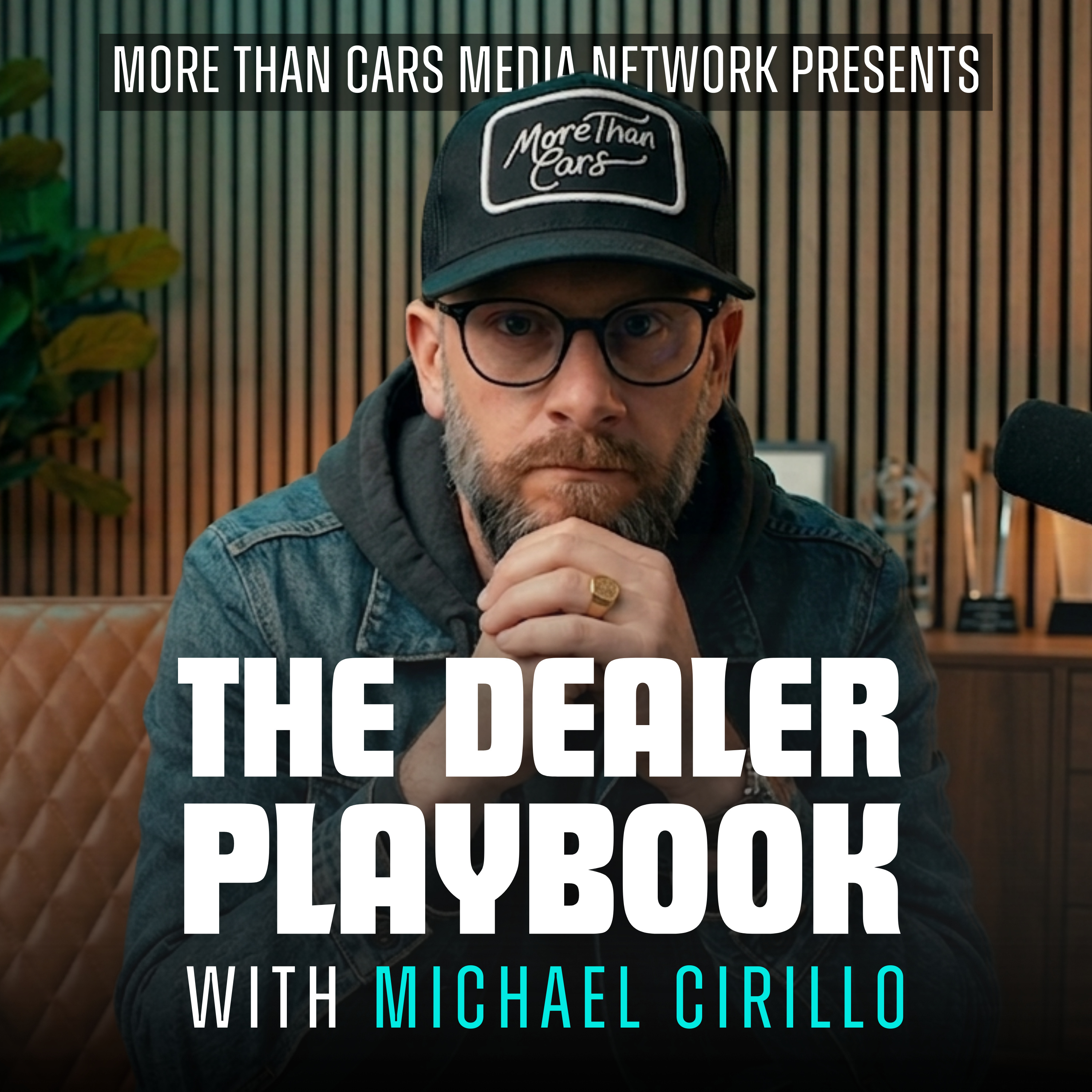
"From CPG to 17 Rooftops" — The Real Playbook Behind Running Marketing at Scale | Gary LaDue, Marketing Dir., Modern Auto
About this episode
Marketing at scale gets real when you’re managing “17 stores” and trying to stay efficient without losing agility. The conversation moves from why paper still persists—even in an “AI enhanced world”—to how a dealership group standardizes video and social workflows: store teams capture content, an agency uses “AI based” editing with brand guides and B-roll, and everything is scheduled through a calendar. Along the way, they stress iterative optimization, vendor trust, consent management, and guardrails so AI doesn’t hallucinate dealership-specific details.
Gary Ladue spent eight years in corporate CPG, managing paper and planning brands at Mead, before making the jump into automotive retail nine and a half years ago. Today he runs marketing and technology across a 17-store dealer group, and this conversation is about what actually transfers when you come into this industry from somewhere else.
Gary and Michael talk through what it takes to run marketing at scale across that many rooftops: the notebook-and-highlighter system Gary still prioritizes his day with, how his team built a six-month content pipeline using part-time shooters paired with an AI editing partner, and the simple effort-versus-payoff filter every new initiative has to clear before it gets resources. Gary's also candid about where AI still gives him pause, not the possibilities, but making sure it never gets pricing, inventory, or availability wrong in front of a customer.
You can connect with Gary on LinkedIn, he's easy to find by name.
Michael's takeaway: the best person to run your operation at scale isn't always the person who's been in cars the longest. Sometimes it's the person who learned discipline and systems somewhere else first, and had the sense to bring it with them.
Timestamps
(00:00) Intro
(00:31) Show Support and Free Book
(01:58) From Paper Brands to Career
(07:19) Digital Tools vs Efficiency
(10:49) Practical AI Across 17 Stores
(12:47) Scaling Social Video with AI
(20:18) Optimize Vendors and People
(23:47) Value Still Wins
(24:24) Defining Good Human
(24:54) Respect And Listening
(30:41) Longevity Through Uncertainty
(33:29) Consent And FTC Compliance
(36:14) AI Adoption And Fatigue
(37:28) Responsible AI Guardrails
(42:08) Connect With Gary
(44:05) Final Thanks And Outro
tech stack
"For us, there's a couple small pieces of our tech stack that we haven't really completed yet. [2017.4s] Simple things. [2018.3s] I'll start very tactical."
A “tech stack” is just the set of software apps a business uses to do its work. Here, it’s the tools used to manage marketing messages.
A “tech stack” is the collection of software tools a company uses to run its operations—often including CRM, marketing automation, analytics, and other systems. In this context, it refers to the marketing/communication systems that need to be coordinated.
consent management tool
"We're onboarding a consent management tool. [2023.7s] Why is that important? [2025.3s] Well, because we don't need to get in any legal trouble."
It’s software that records whether a customer agreed to receive marketing messages. If someone says “yes” or “no,” the tool helps make sure the business follows that choice.
A consent management tool helps a business collect and store a customer’s permission for marketing messages (like email or SMS). It also tracks opt-in/opt-out choices so the company can follow privacy rules and avoid contacting people who said “no.”
opt out
"We've got 15 different vendors that send out communication on our behalf and none of them talk to one another. [2037.3s] If somebody opts out or opts in to communication, well, all those other vendors don't know that. [2046.0s] We're centralizing all of it so that if a customer opts in, everybody else knows it and now we can go talk to that customer."
“Opt out” means the customer asked to stop getting marketing messages. The key is making sure all the different message senders stop too.
An “opt out” is a customer’s request to stop receiving certain communications. In marketing operations, it’s critical that every vendor and channel respects the opt-out so the customer isn’t contacted again by mistake.
opt-in
"We've got 15 different vendors that send out communication on our behalf and none of them talk to one another. [2037.3s] If somebody opts out or opts in to communication, well, all those other vendors don't know that. [2046.0s] We're centralizing all of it so that if a customer opts in, everybody else knows it and now we can go talk to that customer."
“Opt in” means the customer agreed to receive marketing messages. The point is that all the different systems should know that agreement.
An “opt in” is a customer’s affirmative permission to receive marketing communications. When multiple vendors are involved, opt-in status needs to be shared so everyone knows the customer is allowed to be contacted.
centralizing all of it
"We're centralizing all of it so that if a customer opts in, everybody else knows it and now we can go talk to that customer."
It means putting all the customer permission info in one place. Then every marketing tool can check the same answer before sending messages.
Centralizing marketing consent means consolidating opt-in/opt-out data into one shared system so every vendor and channel uses the same “source of truth.” This prevents customers from being contacted incorrectly when different tools don’t communicate.
Request an Explanation
Heard something you'd like explained? We'll add it to this episode.
Sign in to request explanations for terms you heard.
Want to learn more?
Browse our glossary for plain-English explanations of automotive terms, jargon, and concepts.
Help improve this episode
See something that's not quite right? Our annotations are AI-generated and can sometimes miss the mark. Click the flag icon on any annotation to suggest a correction.