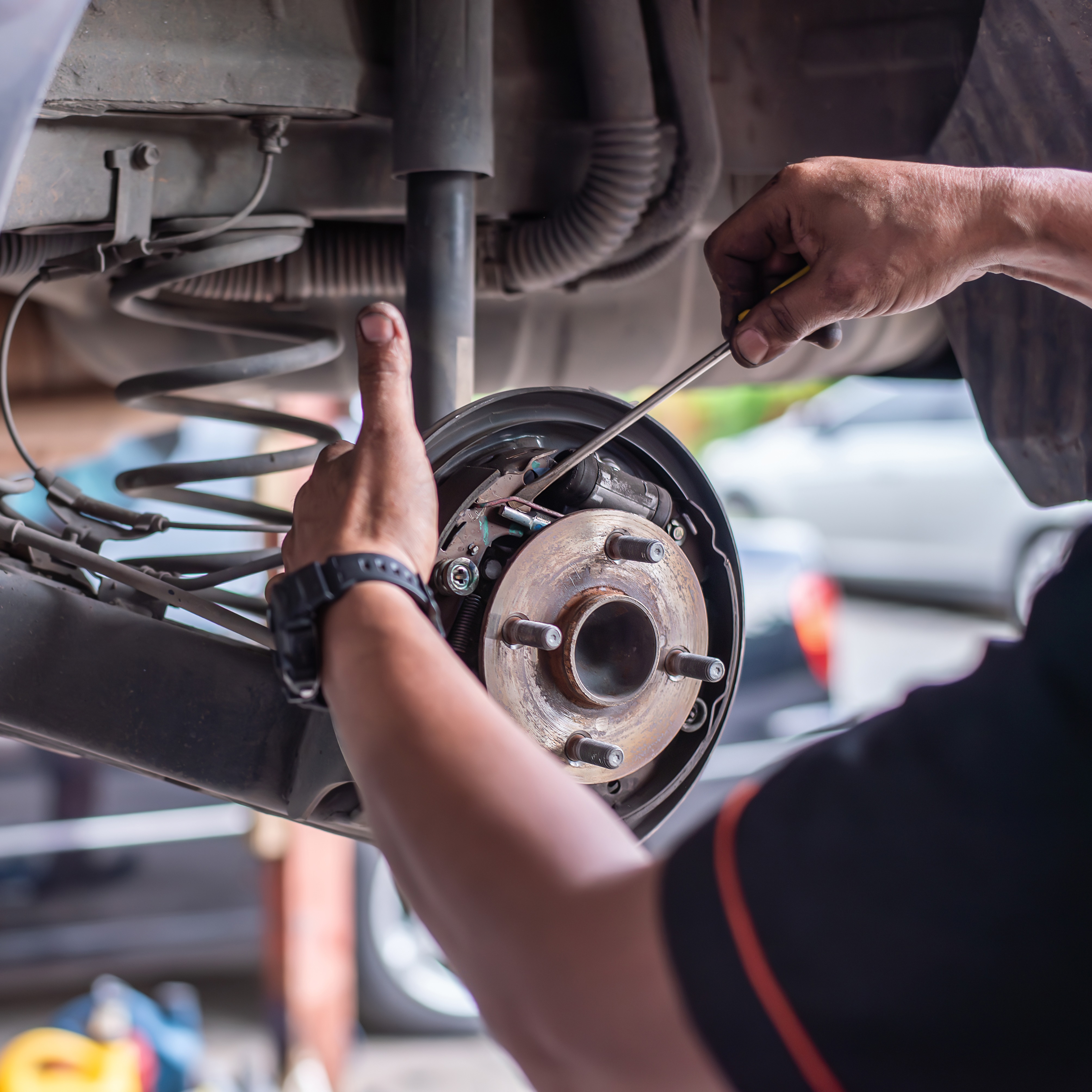
Resurfacing (turning) a rotor means machining its surface to restore a smooth, even braking face. Modern rotors are often thinner and lighter, so many shops replace rotors instead of resurfacing them once wear limits are reached.
A break-in period is the early time after you buy a new car. Some people think you should baby it and do an early oil change because parts are still “settling in.”
The “10,000 miles” reference is about manufacturer-stated oil change intervals that can be longer than older rules of thumb. It highlights that modern engines and modern oils/filters can often support extended service intervals when used as specified.
That dashboard battery light is a warning that the car may not be charging properly. If it keeps going, the battery can run out and the car could shut off.
The alternator generates electrical power while the engine is running. It both powers the vehicle’s electrical systems and recharges the battery; if it fails or undercharges, the battery light comes on.
Spark plugs are small parts that help your engine start and run smoothly. They create the spark that lights the fuel-air mixture inside the engine. If they’re worn out, the car may run rough or not start as well.
The manual has a specific step-by-step process for a reason. Doing it the right way helps prevent mistakes that could damage parts or cause the car to run poorly.
The safest move is to replace your spark plug with the same one that came out of your car. Different plugs can fit or perform slightly differently, and that can cause problems like rough running or misfires.
Oil additives are extra chemicals you pour into the engine oil. Some may help a little, but they usually can’t fix a real problem or replace regular oil changes.
Oil sludge is gunk that can build up inside an engine when oil isn’t changed often enough. It can make the engine less protected because oil can’t circulate as well.
Stop-leak is a product you add to the coolant to try to seal a leak. It can sometimes clog the small parts inside the radiator or heater, which can make the car run hot or stop making heat.
If tiny passages inside the cooling system get blocked, coolant can’t flow correctly. That means the engine may not cool down well, and you may lose heat inside the car.
The heater core is the part that uses hot engine coolant to warm the air for the cabin. If it’s clogged or not getting hot coolant, your car won’t blow warm air or clear the windshield.
The blower is the fan that pushes air through the heating system. If it’s weak or not working right, you can have hot coolant but still get little or no warm air.
Wheel alignment adjusts the angles of the tires so the car tracks straight and wears tires evenly. If alignment is off, the steering wheel can end up off-center and the tires can scrub, leading to premature or uneven wear.
The starter is what spins the engine when you turn the key or press the button. If the battery is weak, it may not spin the engine fast enough to start.
A gasket is a sealing component used between engine/drivetrain parts to prevent fluid leaks. If a gasket becomes brittle or cracked from heat cycles, it can start leaking and typically needs replacement.
The calipers squeeze the brake pads, and seals help keep brake fluid where it belongs. If the fluid is contaminated, these parts can wear out sooner.
LIVE
I end on this holiday weekend time once again to talk about cars or trucks or
vans or the problems you may be having with yours just because it's a holiday
doesn't mean these troubles don't don't happen. Denny Longback once again with
ASC certified technician Nick Stoffel from Lloyd's Automotive on beautiful but
damp. Grand Avenue in St. Paul I know Nick you you don't happen to be on
grand right now but thanks for joining us and happy Easter to you. You too Denny
as you know I kids are on spring break so we're actually in Palm Springs I had
to back to Minnesota this afternoon. Well you're coming back this afternoon what
what kind of weather have you experienced do I want to know? You don't. The kids are
sunburnt well they'll say that. Alright we'll have a safe trip back and I know
we'll be joining forces again that next week but in the meantime if you're new
to the show thanks for checking us out if you are experiencing a problem with
your cars I said you truck your van and you need to bring it in for service with
for your to your favorite shop or your favorite dealer but you want to know what
could be ailing that's what Nick does here give you a little analysis over the
radio or maybe you just want to ask a mechanic a question whatever the case
may be. You don't have to be a do-it-yourselfer though as Nick will
tell you we have quite a few folks who do call in and try their hands at fixing
their own vehicles but you don't have to give us a call send a text just one
number for either 6514619226 again either a phone call or a text if you
want to call and chat great if you want to just send a text either way 6514619226
text came in earlier this morning I'll just kind of simplify it here doesn't
say what kind of a vehicle it was but the point is he or she got new brakes
installed and like a week or two later they're starting to squeak and their
question is what can what can cause new brakes to squeak you've seen that you've
heard that. We have you know it could be something as the parts themselves knows
the defect and that the making of the part maybe something is a little
lubricating I think in this situation it's been a couple weeks if it's
constantly making this noise I take it back you know and hopefully they can
experience figure out which wheel which brake pad or which slide or whatever's
going on there but I would say I would you know if it continues to happen for
the next several days it's not going away take it back have them take another
look it could just be a defective part or maybe something needs a little more
lubrication. Here's something that I wanted about over the years I mean
parts have changed quality has changed what about brake parts in your career
you've been around for a few years in the business what have have brake parts
specifically I guess this brakes these days I don't know how many drum brakes
are around but have this brakes evolved into some pretty good quality stuff?
Absolutely you know it's you know as they've changed you know and if you can
if you're old enough you remember they were Morgan Organic pad you'd get 20-30
thousand miles out of them you'd resurface the brake rotors for one or
two brake jobs well now with the the ceramics and other components in those
pads we'll see brakes go 70-80 thousand miles depending on driving style and
type of vehicle obviously but with that kind of mileage you'll see that the
rotors are replaced now also with the fuel economy requirements and all the
emission standards they try to keep that rotating weight down so those brake
rotors are much thinner and lighter than they used to be but if you're getting
60 70 even 80 thousand miles out of a set of brakes I think that's pretty good
yeah I should say Nicholas grab a phone call Ralph checking in from Buffalo I
believe this morning thank you Ralph what is your question for Nick yes I just
purchased a brand new SUV and I'm wondering when I should have my first
oil change brand new vehicle I was checked owners manual depending on the
make a model might vary but I still firmly believe as we often say is that
5000 mile interval keeps it on a nice regular schedule keeps oil clean keeps
the filter new so my my recommendation we had go 5000 miles going forward I was
I was thinking of Steve Cannon's comment of when I was long being long in
tooth I remember many years ago about people saying well if you get a brand
new vehicle don't drive it over what 50 miles an hour or 60 or something take
it easy and then with all those metal shavings change the oil right away do
you remember you wouldn't I remember people telling you about that the break
in period or yeah you know we do certain repairs we'd have to let it run for a
certain period of time to break everything in set you know get everything
seated and set and I think there might have been some truths at that you know
in that time and era with the the quality the parts in the manufacturing but I
think today's day they've got most of that figured out where you go buy a new
vehicle you just go drive it like you would any other yeah no real break in
period I don't think but as far as the oil changes though I mean is it if the
manufacturer says oh you don't have to worry about it for 10,000 miles we on
this show is our listeners regular listeners know with with the great
oil that's available now synthetic 5000 is a good kind of target isn't it
absolutely and you know to that color's question know if they're of the
mindset you know it's a brand new vehicle I'd like to change your life for a
couple thousand miles there's nothing saying you can't do it it's just not
necessary you know it's peace of mind it's your vehicle you know you buy a
vehicle brand new today ads are gonna keep it for 15 years to 300,000 miles so
the little maintenance you do in the beginning goes a long way at the end so
like you said that 5000 mile interval and sometimes we'll say people will call
in or text and say I don't drive that much but in those situations I still
think the vehicle should get looked at twice a year so maybe the spring the
fall winter summer however you decide to do it split that interval into six
months whether or not the oil needs to be changed the car should still get a
good look at no I think that's really smart if a lot of folks many folks don't
drive or maybe they've got an extra vehicle or two and they just use it for
certain reasons and yeah that's a couple of times a year is good because other
things may be going wrong you don't know about it. Texter says this Nick is
there another reason the battery light came on if the battery is good in a
2012 ton of country. Typically if the battery light is coming on it's seen the
voltage dropping lower than it should be set up the alternator is the component
once a vehicle is running that creates that power the battery completes the
circuit and gives the reserve to start the vehicle but once your vehicle is
running you need that alternator to keep the vehicle operating and keep the
battery charged. Now if that light is on that's telling us that likely the
alternator is not charging enough to keep everything going so now you're using
the reserve of the battery at some point you'll run on a reserve 30 minutes
45 minutes an hour depending on the age of the battery at that point the vehicle
is likely to stall and you'd be stranded so if you ever see your battery light on
that's your heads up get somewhere quickly very quickly to have that looked
alright very good well very quickly we're going to take a quick break and be
right back in the other side if you have any kind of a car care question and
again maybe you want to always ask a mechanical question this is your chance
Nick will be with us till just about 745 our time goes by so quickly so if you
can think of anything you would like to ask Nick call us text us sooner rather
than later at 6514619226 gonna looks like a pretty wet weekend maybe even a
chance on Easter Sunday tomorrow with about a 30% chance of showers it's
gonna be a warmer though we're gonna get up to near 49 tomorrow if we do get a
chance of showers it's probably gonna be after lunch or so tomorrow at least
here in the Twin Cities light drizzle falling right now CCO temp 34 degrees
stay with us good Saturday morning to you it's a holiday weekend hope yours is
going well Denny Wong back with Nick Stoffel ASE certified tech at Lloyd's
Automotive in St. Paul answering any kind of a car care question you may have
this morning till just about 745 looking at another text and see if I can
piece this together Nick 280,000 miles help me break this down this morning
texture says I've got a 2019 Nissan Altima things have gone well paid the
car off in December normal brakes rotors light bulbs one alternator two
batteries later I'm enjoying this car I've got a lot of lights on then the car
operates and drives smoothly I'm afraid if I take the warning light and have
them checked out it'll cost me over what the car is worth to have it fixed do I
drive it and until or trade it in I guess that's that's what the texture
wants to know but there again you know we talk about not giving all the
information you never know what's behind there right get it checked out right
absolutely true and you know people come in maybe not daily but weekly for sure
and say oh this car is not worth it until you realize what it's worth cars are
worth more than we realize replacement cost is much more significant so you
have to start with let's figure out what's wrong with the vehicle once we
you know do the diagnosis spend the few dollars to have that figured out once
you know that you can prioritize maybe there's things that you don't need
today maybe you can put those off for six months or nine months or a year what
to have you or maintain or monitor maybe there's things you have to do today but
when you offset the cost of repair versus replacement think about you know
your insurance cost changes registration tabs change there's a lot more things
that we don't think about always and if you can get another two or three years
out of this vehicle you're likely money ahead obviously it's a pretty big
investment at one point to keep the car going but if you maintain that vehicle
for long period of time which it sounds like this texture has I think it's
worth having checked out assessed and likely to repair it keep it going yeah
and they get the cool the question was the final question do I drive it until
it just dies or do I trade it in but at least if you've got more information you
can make a better decision like you said maybe it's you do a couple of things
here and there you know just to keep it going at least you're gonna be more
well informed with that what's the best way texture wants to know to clean the
igniters what is that listener talking about I'm thinking they're meaning
injectors feel injectors so a lot of times that the the fields we have have
detergents and additives and that should keep them running clean obviously
there's aftermarket products and as we talked about from time to time if you're
looking for some maintenance obviously you can use one of those products to
kind of help clean out the fuel system fuel injectors I think it does a fine
job maintaining but if you have just got a diagnosis say the faulty injector
you're not gonna be able to repair a vehicle out of the can short of
replacement of the part or doing some sort of aggressive cleaning procedure
you're not likely gonna happen with like I said something you can buy off the
shelf and dump in the tank so a little more information needed there but I do
think that those products are fine products follow the instructions how
they're recommended and then weigh the cost you know depending on what that
product cost what's the what's the return on your investment you know once in a
while Nick we talk about or we get questions about spark plugs and again
depending on the vehicle do people can people ever change their own spark plugs
depending on the vehicle I know there's a lot of variables and you and I have
talked that in some cases kind of difficult it can be you know the way
they've designed vehicles and they kind of shoehorn everything under the hood
there and with all the aesthetics and all the noise dampening pieces of plastic
pieces out there sometimes it's hard to even find them even for the guys that do
it every day we end up having to get into our manuals and figure out the right
procedure now if you are comfortable you have the tools which is very important
you have the know-how you have the time to space by all means I think if you're
willing to attempt that I think it's a fine thing to do just make sure you
follow procedure you know there's things that can happen things that can get
broken there's torque sequences and specifications that need to be followed
so just make sure you have everything you need before you attempt it and the
other thing I would tell you is when you get those spark plugs out to see what
brand replace them with the exact same spark plug I know a lot of times you go
to a parts store they're gonna be a whole variety and they got a special on this
or that or this is just as good as or better than I would really stick with
whatever came out of the vehicle so whatever manufacturer whatever part
number try to buy the exact same spark plug so when you replace them you
have the same result yeah I think that's great advice if you have any kind of a
car care question let's hear from you Nick will be with us till about 745 this
morning 6 5 1 4 6 1 9 2 2 6 this listener via text is wondering how often
should tires be balanced that's besides when being replaced or or any
suspension related work I think that's a good question how often should tires be
balanced you know I guess it kind of depends on if there was a situation
you caught a bad pothole or if you're feeling something that seems different
on how it's riding obviously we rotate the tires probably more often but if
you're seeing something or noticing something different I think it's fair
a fair time to say hey I want to get my tires rotating while we're rotating
let's put a fresh balance on it makes it that they're wearing and riding
properly but it's you know it's one of those things that we don't we just want
to as often as maybe we should so I would say you know maybe it's halfway
through the tire life or every or a third you know you do it twice through the
tire like before replacement probably not the worst idea okay couple of
questions about the check engine lights this one in general wants to know what
are some common reasons a check engine light will be turned on well there can
be hundreds of different fault codes I can store unfortunately there's one
light that does a lot of stuff and we call it the check engine lights really
emissions light so an emissions for example can be your gas cap being lept
off which is probably the most common you don't properly seat the gas cap the
vehicle does an emissions test a purge test it's looking for any evaporating
emissions leak the cap is not tight it's gonna allow for that leak to happen the
car's gonna identify that and turn the light on part of the problems everybody
says oh it's just the gas cap and they ignore it well it can also be something
related to a spark plug that we're talking about like a misfire something
with a transmission that's slipping or some other things that can be very
expensive and also preventable if we see why it is on initially so if you have a
check engine light on as we've been saying and we talk about it doesn't mean
you have to do it all right today but at least if you know why the light is on
you can make a better informed decision on your investment and your time in your
budget here's something as you know Nick we get from time to time the
mechanic in a can their question he or she is via text do oil additives ever
work and what what what is some of them claim I've never used an oil additive
what's your feeling about that I think I know well that you know they once again
I'm not a chemist I'm not a scientist do some of these products do what they say
on the can to some extent I'm sure they do now is it going to make the car like
new renew after those one of those products years ago I doubt it or some
of those other products where they put the product in then drain all the oil out
of the car and run the engine don't do that that maybe it works for a minute
but it doesn't work for the long haul you know those products don't necessarily
hurt but they'd be quite expensive so you know if it's something you believe in
and you have a track history of it working for you keep doing what you've
been doing but if you're in a situation where something's not right which is the
reason why people ask these questions like oh I have this leak or I have this
field system issue or have this oil sludge problem can I use this product to
make that go away and the answer is gonna be no you're not gonna be able to fix a
car out of a can as maintenance as always yes I don't see a problem with it but
definitely talk with your dealership your mechanic get their advice their
recommendation so before you go forward with something you have a little more
information on your side. Texter wants to know I think we had this a couple of
months ago or so I never Texter says see cars overheating anymore do you as a
mechanic ever see cars that are overheating and for what reason? We
really don't you know the cooling systems have gotten so much better part of
that is where the engines are designed there's a lot less by-product meaners
a lot less exhaust and other contaminants get into the coolant so the
hoses don't fail like they used to I would say the most common thing we will
see is something related like a thermostat or a water pump failure but we
just don't see the hoses blow off like we did years ago in part of that's the
way the cars are designed much more much better and more reliable. I was thinking
what do they use maybe they're still out there there used to be a product I
think it was called stop leak yeah don't use that. What was that? Was that
something you put in the radiator right? Yeah you put so you put in the cooling
system to fix the leak but then those small passages in the radiator or the
heater car which is the bigger issue get restricted or plugged and there now you
don't have that hot coolant making its way through the heater course they
stopped the leak but now you don't have any heat so don't use any stop leak
product I'm gonna go on the edge there and say that's one product don't use.
Don't do it okay and Nick hang on we're gonna take a quick break have a look at
that holiday forecast and making way for more questions from you if you have
any kind of a car care question we still have time for yours as I said Nick will
be taking his leave about another 12 minutes or so call us text us 6514619226
from News Talk E3O this is WCCO and welcome back to our weekly car care on
the CCO radio Denny Wall here with Nick Stoffel ASC certified technician at
Lloyd's now I wanted to ask you for those that would like to maybe get some
help from Lloyd's how do we find you? Yes sir so as you know if you ever have a
question need some advice we will always answer that and help you out you can
call us at 651-228-1316 if you're in St. Paul you can find us on the corner
of Grant and Chatsworth which is 982 Grand Avenue if you need more
information check our website which is Lloyd's automotive.net. We'll do that
very thing and I know when Nick takes his leave we'll get you that same
information here's all you're gonna have to help me with this one. Texter says
what's your opinion on using DFM module or disabler to shut down cylinder
deactivation on a 5.3 liter GM engine? What is that? Well that's a touchy
subject because there is some known issues with the they're talking about
the displacement where they shut cylinders off under certain driving
conditions and there's a known issue with some of those Velvetrain parts that
will fail could also end damage a camshaft can be very expensive repair
there are products and ways of deactivating or eliminating that system
do your research talk to your shop your mechanic your dealership there's some
of those products out and I think they work just fine there's other shortcuts
that probably don't so if it's something you're looking at doing talk to the
pros get their sound advice make sure who is doing the work has done it before
but you know we tend not to get into that realm to be honest with you we kind of
put things back the way they were designed but I knew it I do know it's a
trouble point I do know that there's ways of deactivating or disabling that
system which can work all right interesting well thanks for the
texture for that here's a 2017 Ram 1500 that has no heat at least had no heat
the radiator and heater core were flushed and now it has heat at times
however texture says when I select a direction for the on the dash it might
blow only in the feet or on the window or nowhere also all the blend doors have
been replaced and still have the same issue wow what's going on there you
think I knew you were gonna say something about the blend doors but they
said they've been replaced well I think we need to determine whether even they
talked about flushing the radiator and the heater core so we need to determine
if it's a matter of heat napping generated or is it the fact that the
heat can't be displaced meaning that if there's something within the heater box
where the way the blend doors are operating the research the temp doors
you know something's not operating properly or is the heater core not
getting hot enough to give you heat so that's a first thing we need to
determine is like if it's if the cars bypassing the thermostats not working
properly or there's some sort of restriction somewhere where the hot
water is not making its way to the heater core if it's not hot enough that's
I can give you heat no matter what but if we have a good temperature in and out of
the heater core when now we have to figure out why is the blower not getting
that hot that air through the heater core to make heat to blow it onto us so
there's two different paths there that's the first step we need to figure out
which way we're headed once we know that then hopefully we can make a better
informed I know they said the blend door well there's temp doors there's
actuators a lot of research or there's a lot of different pieces within that
heater box that can control that heat temperature and where it's going so I
think we need to kind of pause here take a step back and figure out what where
we're starting at and go from there and of course wherever they have the work
done bring it back right absolutely if you're not making a headway there get
a second opinion you're not you need to have heat you need to have defrost it's
not worth just dealing with or putting up with it but you know ask for help call
around you know make that extra one extra effort yeah it's worth it yeah
absolutely looking at a text it's a rather long text but it basically they're
asking well you haven't talked about this you know when you're steering wheel
you're looking at it maybe you're at a stoplight and you're looking at it and
and you're going straight and the wheel is kind of crooked you know I mean it's
not even with your steering column I guess that's the way that's I guess the
best way I could put it what's going on there and is that correctable yes so if
your steering wheel is cantered it's not you know ready at noon we'll call it
like if it seems at the top of its off a little bit like at one o'clock or 11
o'clock likely or something wrong with the alignment the cars as the cars going
it's going to it correct itself in the manner where the cars are gonna go
straight to the best of its ability but in doing that it's going to shift or
change the steering a little bit which is gonna make your steering wheel be off
so if your toe adjustment is either way out of way in the cars are gonna go
straight but it's gonna scrub those tires as it goes down the road which can
cause premature or poor wear pattern so if you have a steering wheel that is
not perfectly level as you're going down the road take that in tell them let
them take it for test drive see for themselves they'll put it on the
alignment rack takes the measurements I think you're gonna find that the
alignment needs to be adjusted all right my not mine the texture says my
brother-in-law who knows cars says battery low voltage battery can cause
many issues like what correct the car cannot start you know a lot of the
systems in the vehicle need to have the 12-volt stop rate properly including the
starter right you know so you need to get the engine cranking engine is be
cranking at a certain speed for the vehicle to take over and manage itself
to get it fired up and running so if you have a low battery you but this might
not start all together you might have issues with the power locks even get
into the vehicle so if your battery is at the end of life or it's near end of
life have a test it if it's not getting the results you want you need to get
replaced for free and abstinent they're stuck somewhere there's a question it
just came in we were talking about the mechanic you know in a car in a can is
there a good product for oil leaks now if you got a real old car
Texter wants to know is there a good product for oil leaks on older cars so
anything that kind of stuff not that I know of you know if it's a rubber
sealer gasket that's become brittle you can't do anything undo that they haven't
used cork cork gaskets in decades so not likely that's the situation so the
truth is if you have a leak it's because something has failed now is it possible
something can be re-torque or adjusted sure likely I doubt it to be honest but
it is possible but the silicone that they use the rubber seals that they use
they have a life span also once they've heated and cooled and they've maybe
dried out or they started the crack causing a leak going think going way to
repair that's replaced that gasket unfortunately okay thank you Nick we
have time for maybe one more text my dealer wants me to do a brake fluid
exchange do you think this is necessary doesn't say what type of car what year it
yes I would say brake fluid is like with every fluid in the vehicle should be
maintained and serviced we often do it when we do a brake job depending on the
age and the mileage and the drive cycle of the vehicle will vary but that fluid
is hydroscopic meaning it'll collect moisture and it'll collect dirt you get
that working its way through this brake system it can cause premature wear in
the calipers and seals so maintaining your brake system not just pads and
rotors but also the brake fluid so that can that that can become contaminated or
just oxidized or whatever right not just change it when you get new brakes or
brake lines or something but it should be done occasionally I guess would your
owner's manual tell you that it might have an interval really you know they
can test it for moisture they can look at it you can see if it if that fluids
getting very dark it's starting to collect a lot of the debris and and
moisture it's something like I said it's one of those neglected forgotten type
of services but it will affect the caliper seals it will affect the brake
hoses so it is one of those items it's not done often but every couple years
every so many thousands of miles it should be serviced now if somebody you
know we talk about bringing your car in at least twice a year when somebody says
yeah I need it's time for you know six months check an oil change should the
technician be looking at things like that like a brake fluid absolutely you know
we try to have a process and procedures every time a vehicle comes in we're
looking at all the safety items you know check all the fluids the lights the
steering suspension now that doesn't include disassembling a bunch of stuff
or diagnosing a bunch of stuff right to give a vehicle a quick once over to
keep the driver informed is really important yeah absolutely what's
important is finding our way to Lloyd's automotive how do we do that yes sir so
if you have a question as always don't be don't hesitate to ask you can reach
us at 651-228-1316 and if you're at St. Paul we're at 982 Grand Avenue on the
corner of Grand and Chatsworth if you need more information check out our
website which is Lloyd's Automotive.net very good Nick thank you so much have a
good trip back happy Easter and let's talk one week from today sounds good
happy Easter to you also Danny thank you thank you Nick next awful from Lloyd's
Automotive yeah we'll be back again next week
About this episode
Brake squeaks after a fresh pad job, when to change oil on a new SUV, and what a battery light or check-engine light really means dominated the call-ins. Nick Stoffel explains why new brakes can still squeal (possible defective parts or missing lubrication) and how modern brake materials can stretch service life. Oil-change timing leans toward ~5,000 miles or manufacturer guidance, with twice-yearly checks for low-mileage drivers. He also warns not to ignore battery/charging issues, discusses common check-engine causes like gas caps and misfires, and covers tire balancing, injector cleaning, overheating myths, steering-wheel misalignment, and brake-fluid exchanges.
How to solve squeaky brakes and looking for the right parts to fix them. Other reasons why oil changes are important. Why a battery light turns on. How to best prioritize problems in your vehicle. How often should tires be balanced? Common reasons why the check engine light is on. Can cars be fixed with chemical additives? When to get your tires realigned. Ask our car care expert Nick Stoffel of Lloyds Automotive. Visit lloydsautomotive.net 651-228-1316.