
Brake-by-Wire Is Here… Are We Still Driving?
About this episode
Brake-by-wire takes center stage as the hosts break down Brembo’s “sensify” system—“true break by wire” that removes hydraulics and uses electronic motors at each wheel. They connect the tech to EV braking, per-wheel ABS behavior, and how it can change pedal feel, including panic-mode logic. The conversation then widens to AI-driven software and chip constraints, before pivoting to driving culture: manual-transmission restomods, GT-R/Skyline hopes, and real-world speed stories.
The future of driving just took another step away from… driving. BMW is bringing brake-by-wire to production—ditching traditional hydraulic systems in favor of fully electronic control. It’s a big leap forward in technology, but also raises a bigger question: are we slowly being disconnected from the driving experience altogether? EV drivers already rely heavily on regen braking—so does this even matter anymore, or is this the tipping point?
Meanwhile, Lucid just dropped a $1B loss, proving once again that building high-end EVs isn’t for the faint of heart (or wallet). Backed by Saudi funding, they’re not going anywhere—but can the next wave, like the Rivian R2, finally deliver the EV breakthrough the market actually needs?
On a more hopeful note, Nissan might be back. A new Skyline is on the horizon, and somehow Infiniti could be the one bringing back a proper manual sports sedan. Is this the comeback enthusiasts have been waiting for?
And speaking of performance—how fast is fast enough? Dan shares his run at 193 mph in a GT-R, still chasing that elusive 200 mph club.
The Avants Podcast is brought to you by our friends at STEK USA and Carter Seattle!
Not an Avants member? https://www.avants.com/member-plans
Leave us a review on Apple Podcasts!
Leave us a voicemail or send us a text any time at 425-298-7873!
We're doing give aways! Leave us a review on Apple Podcasts and we'll pick a random name every 25th review!

Tesla Model 3 Performance
"They'd gone through all that and then they put it on a couple of Tesla model three performances"
Tesla Model 3 Performance is a faster, sportier Model 3. The hosts mention it because it’s one of the cars that received the brake-related tech after testing.
Tesla Model 3 Performance is a high-output version of the Model 3 lineup, and it’s used here as an example of where Brembo’s “sensify” brake-related system showed up. The key point is that this technology moved from lab testing to real production vehicles.

Tesla Model
"...ough all that and then they put it on a couple of Tesla model three performances Took of the track with the Mic..."
The Tesla Model Y is an all-electric SUV. It runs on a battery instead of gasoline, and it can be very quick depending on the version. The podcast brings it up because people discuss how it performs in real driving and sometimes on tracks.
The Tesla Model Y is a compact electric SUV known for combining everyday practicality with a battery-electric powertrain. It often comes up in performance and track-style discussions because Tesla offers high-output variants and strong acceleration. In the podcast context, it’s mentioned alongside other Tesla performance talk, suggesting they’re comparing how different Teslas behave under spirited use.
brake-by-wire
"So what Brembo sensify is is basically break by wire, but I mean true break by wire It removes the hydraulic master cylinders the hydro whole hydraulic system in some cases"
Brake-by-wire means the brakes are controlled electronically instead of using brake fluid pressure. Sensors tell the car what you want, and motors create the braking force at the wheels.
Brake-by-wire replaces the traditional hydraulic brake system with electronic control. Instead of a hydraulic master cylinder pushing fluid to the brakes, an electronic actuator (often motors at the wheels) generates the braking force on demand.
Brembo sensify
"So what Brembo sensify is is basically break by wire, but I mean true break by wire It removes the hydraulic master cylinders the hydro whole hydraulic system in some cases"
Brembo sensify is a company’s electronic brake system design. It aims to replace brake fluid with motors and computers that control braking at the wheels.
Brembo sensify is Brembo’s brake-by-wire system concept. The key idea is eliminating hydraulics (in a “true” brake-by-wire setup) and using electronic actuators to apply braking force at each wheel.
hydraulic master cylinders
"It removes the hydraulic master cylinders the hydro whole hydraulic system in some cases All the way down to the wheels and it adds electronic motors at all four wheels"
A hydraulic master cylinder is the part that turns your brake pedal push into pressurized brake fluid. That fluid then helps squeeze the brakes at the wheels.
Hydraulic master cylinders are the components that convert brake pedal force into hydraulic pressure. In conventional cars, that pressure is sent through brake lines to the calipers at the wheels.
Drive-by-wire
"So and again, you're teaching me it on this too. Is this a lot like the the Drive-by-wire like emergency brakes that are on our cars and things like that"
Drive-by-wire is when the car uses electronics to control driving inputs instead of direct mechanical connections. The speaker is comparing that idea to electronic brake control.
Drive-by-wire refers to replacing mechanical linkages (like a cable or direct mechanical connection) with electronic control. The analogy here is that, like steering/throttle-by-wire, brake-by-wire uses sensors and actuators rather than purely hydraulic/mechanical force transfer.
BMW
"BMW is the first manufacturer So, you know, if you don't renew your membership to your brakes, they might stop"
BMW is the automaker mentioned as bringing this electronic brake technology to production. They’re planning to use it on one of their EVs.
BMW is described as the first manufacturer to put this brake-by-wire approach into production. The discussion frames it as being used on an upcoming BMW EV with independent, no-hydraulics braking at all four wheels.
fully independent system
"It will be a fully independent system Individual brakes all four wheels no hydraulics and it's a much simpler system now think of it"
A fully independent brake system means each wheel can be braked on its own. That lets the car adjust braking to match traction at each wheel.
A fully independent brake system means each wheel’s braking force can be controlled separately. With brake-by-wire, that enables different pressure levels per wheel based on traction and driving conditions.
brake caliper
"It's a little bit of friction. This can pull this can pull back the caliper even further Completely disengaging the brakes."
The brake caliper is the part that squeezes the brake pads onto the spinning brake disc. That friction is what slows the car down.
A brake caliper is the clamp that squeezes brake pads against the rotor to create friction and slow the vehicle. In the discussion, the concern is that even small drag can pull the caliper/pads slightly, which matters for EV efficiency and control.
regenerative braking
"This does matter on EVs, especially And then wouldn't there be some drag on those anyways because the regenerative braking?"
Regenerative braking is when an EV slows down and also charges its battery at the same time. It uses the motor to create resistance instead of using the brake pads as much.
Regenerative braking is how many EVs slow down while turning the drive motor into a generator. The generated electricity is sent back to the battery, reducing reliance on the friction brakes and improving efficiency.
brake line
"In a normal car You could damage a brake line which does happen"
A brake line is the fluid pipe that sends braking pressure to the brake calipers. If it gets damaged, some brakes may not work properly.
A brake line is the hydraulic tubing that carries brake fluid from the master cylinder to the calipers. If a brake line is damaged, it can reduce or eliminate hydraulic pressure to one or more brakes, which is why redundancy and per-wheel control are emphasized.
ABS per wheel
"And then like I mentioned before a little bit it can vary the The ABS per wheel So like if you lose traction on one wheel or one side like think of ice on one side of the road"
ABS helps stop the wheels from locking up when you brake hard. Here, the idea is that the system can control braking separately for each wheel, which is useful when grip is uneven.
ABS (anti-lock braking system) can modulate brake pressure to prevent wheel lockup during hard braking. In a brake-by-wire setup, the system can vary ABS behavior wheel-by-wheel, which helps maintain stability when traction differs across the car.
wheel lockup
"So like if you lose traction on one wheel or one side like think of ice on one side of the road You hit the brakes instead of ABS hitting all four wheels."
Wheel lockup is when the wheels stop turning while you’re braking. That makes the car harder to steer, so ABS helps prevent it.
Wheel lockup happens when a tire stops rotating during braking, typically because brake force exceeds available traction. When lockup occurs, steering control is reduced, which is why ABS modulates brake pressure to keep wheels near the traction limit.
traction differences side-to-side
"So like if you lose traction on one wheel or one side like think of ice on one side of the road"
If one side of the road is slick and the other side isn’t, the tires have different grip. The car can adjust braking per wheel to help keep the car stable and easier to steer.
Traction differences side-to-side (or wheel-to-wheel) mean each tire has a different grip level, such as when one side of the road is on ice. Brake-by-wire control can compensate by applying different brake pressures to maintain stability and steering feel.
wheel spin
"But either way even just hitting the front hitting the brakes or using the sensors to detect wheel spin and with slip There's a lot of advantages there so"
Wheel spin is when one or more tires start slipping and spinning faster than they should. The car can detect it and react to help you keep control.
Wheel spin is when a tire loses grip and rotates faster than the car is actually moving. Brake-by-wire systems can use sensors to detect this and adjust braking (and often other stability functions) to regain traction.
slip
"using the sensors to detect wheel spin and with slip There's a lot of advantages there so"
Slip is when the tires don’t grip the road the way they should. The car can use that information to brake more effectively and avoid losing control.
Slip refers to tires not matching the car’s intended motion—typically reduced traction between the tire and road. In braking control, slip detection helps the system prevent lockup and improve stability.
panic mode
"No matter what you hit your brakes hard enough, it will introduce a panic mode to the system Yeah"
Panic mode is what the car calls its emergency braking behavior. If it thinks you’re braking hard enough to need maximum help, it will step in to apply braking more aggressively.
Panic mode is an emergency braking strategy where the car rapidly increases braking intervention when it senses a driver is braking hard or losing stability. The goal is to maximize stopping performance and reduce the chance of wheel lock or instability.
pedal modulation
"It's much like think of like pedal modulation. You do on your own We're so used to doing it like I'll touch the pedal softly, but you can have comfort modes"
Pedal modulation just means gently and smoothly adjusting how hard you press the brake. The segment suggests brake-by-wire can change how that adjustment feels and how the car responds.
Pedal modulation is the driver’s ability to smoothly vary brake pedal pressure to control braking intensity. With brake-by-wire, the car can mimic or enhance that feel using software, including different response “modes.”
comfort modes
"but you can have comfort modes Sport modes where they're just breaking."
Comfort modes are driving settings that tune how the car responds—often making throttle/brake behavior smoother and less aggressive. In brake-by-wire systems, these modes can change braking response and the “feel” of pedal input.
Sport modes
"Sport modes where they're just breaking. Yeah basically"
Sport mode is a setting that makes the car react more sharply. In this context, it suggests the brakes may respond more aggressively when you press the pedal.
Sport modes are driving settings that typically make control responses quicker and more aggressive. For brake-by-wire, that can mean stronger braking intervention and a more immediate response when you request deceleration.
other systems of your car
"And you combine think of it come because it's electronic and combined with the other systems of your car "
The brakes don’t always work alone—modern cars coordinate braking with other safety and handling systems. That helps the car keep control, especially when grip is limited.
Modern brake-by-wire control is typically integrated with other vehicle systems (like stability/traction control and possibly steering or powertrain controls). That integration lets the car coordinate braking with traction and handling goals rather than treating brakes as a standalone component.
engine braking
"So as far as like using engine braking and things like that as well, exactly. Okay. Yeah, so all these systems can talk to each other much easier and"
Engine braking means the car slows down when you stop pressing the gas. The engine helps slow the car, and newer systems can blend that with the brakes for better control.
Engine braking is when you slow the car by lifting off the accelerator, letting the engine create resistance through the drivetrain. Modern brake-by-wire and vehicle control systems can coordinate this with braking so deceleration feels smoother and traction is managed more precisely.
carbon ceramic rotors
"Hydraulic brakes is in advances. They've become with carbon ceramic rotors and everything else in advanced ABS systems are still a pretty"
Carbon ceramic rotors are special brake discs made from a heat-resistant ceramic material. They can be great for performance, but they usually need a proper break-in process so they work correctly.
Carbon ceramic rotors are brake discs made from carbon-fiber reinforced ceramic material. They can handle high temperatures well and are often used on performance cars, but they require specific procedures to bed in and can behave differently than traditional steel rotors.
stopping distance
"So yeah, it's proven to be about 10 to 15 percent Reduced stopping distance on just a normal car. So that's that's a lot."
Stopping distance is how far the car travels before it fully stops after you start braking. Slippery roads and tire grip strongly affect it.
Stopping distance is the total distance a vehicle travels from when braking begins until the vehicle comes to a complete stop. It depends on tire grip, brake system behavior (like ABS), vehicle weight, and road surface conditions.
ABS in the pedal
"That's a big deal too and you don't feel the ABS in the pedal I've said this before and this is my flatter thing is this is gonna make us a worse driver or a better driver"
When ABS activates, the brake pedal can feel different due to rapid pressure modulation and wheel-speed feedback. Some drivers describe this as pulsing or vibration, and brake-by-wire systems aim to make that sensation less intrusive while still preventing lockup.
self-driving mode responsibility
"My stance is Extremely firm on that if you're in a car that is self-driving or not and you hit a pedestrian. It's your fault end of story period ... if you are in the driver's seat of the vehicle if you are in control of the vehicle"
They’re discussing who’s legally/ethically responsible when a car is using automation. The point is: if you’re sitting in the driver’s seat and the system is supposed to be under your control, you can still be held responsible for what happens.
The segment is about how responsibility is assigned when a vehicle is in a self-driving or autonomous-driving mode. The hosts argue that if a person is in the driver’s seat and has control/oversight, they remain responsible for crashes, even if automation was engaged.
autonomous driving mode
"I don't care what that car does if you say oh, it was it was an autonomous driving mode and it hit the pedestrian No, no, no, you are in control of the vehicle."
An autonomous driving mode is when the car tries to drive itself (at least for certain tasks). The hosts’ point is that being in that mode doesn’t necessarily mean the driver is off the hook.
An autonomous driving mode is a vehicle setting where the car handles some driving tasks automatically. In this discussion, the hosts emphasize that “autonomous mode” doesn’t automatically remove the driver’s responsibility if they are still in control or expected to supervise.
terms of service
"If you've read the terms of service, I don't mean like I mean like the massive warning that shine that comes up on the screen"
Terms of service are the rules you agree to when you use a service or product. In this segment, they’re using it to argue that the driver is still responsible, not the company.
Terms of service (ToS) are the legal agreement users accept when using a product or service. Here, the hosts reference ToS and on-screen warnings to support the idea that drivers are responsible even when automation is enabled.
keep your hand on the wheel
"much as we bitch about the Ford system and how many how many times it tells you to keep your hand on the wheel like It's better to be that way than not be like right"
That message is the car reminding you to stay involved while it’s doing some driving help. Even if the car can steer or hold speed, it wants you watching and ready to take over.
“Keep your hand on the wheel” is a common driver-assistance alert used to confirm the driver is monitoring the system. Many semi-autonomous features require driver supervision and will nag or escalate warnings if the system detects the driver isn’t engaged.
Ford
"much as we bitch about the Ford system and how many how many times it tells you to keep your hand on the wheel like It's better to be that way than not be like right"
They’re talking about Ford’s driver-assist features and how often the car tells you to keep your hands on the wheel. The point is that the system is designed to make sure you’re paying attention.
Ford is referenced here as the automaker whose driver-assistance system issues frequent “keep your hand on the wheel” prompts. Different brands implement supervision and warning strategies differently, which affects how intrusive the alerts feel to drivers.
autonomous off-road mode
"So yeah autonomous off-road mode. It's coming Climb rock. That's not as fun."
This is a setting where the car tries to drive itself on rough dirt or uneven ground. It uses sensors to help it steer and keep a steady speed, but it can still get confused by rocks, ruts, or steep obstacles.
An autonomous off-road mode is a driver-assistance feature that tries to steer and control speed on unpaved or uneven terrain. It typically uses sensors (cameras/radar/GPS/IMU) to follow a path and maintain a target pace, but it’s still limited by traction, obstacles, and how well the system can interpret the terrain.

Toyota Prius
"... was sent to us that went up there recently Is it Prius? Well, somebody said Prius But it but it's like i..."
The Toyota Prius is a car that uses both a gas engine and an electric motor. This helps it use less fuel than many regular gas cars. People often talk about it because it’s designed to be efficient for everyday driving.
The Toyota Prius is a hybrid car that became widely known for efficient fuel use and practical daily driving. It’s frequently discussed because it represents mainstream hybrid technology rather than a niche performance vehicle. In the podcast, it’s mentioned as a model name that someone tried to identify from a description, indicating it came up as part of a conversation about what a certain car might be.

Toyota Land Cruiser
"... it but it's like it's it's stock like Like stock land cruisers and things like that. I mean which You think oh t..."
The Toyota Land Cruiser is a large SUV made to handle rough roads and tough conditions. It’s designed to be strong and reliable, even without special upgrades. The podcast mentions it as an example of a capable, standard (stock) vehicle.
The Toyota Land Cruiser is a full-size, body-on-frame SUV built for durability and off-road capability. It’s often discussed because “stock” Land Cruisers are known for being capable without major modifications, especially in rugged conditions. In the podcast context, they’re referencing Land Cruisers as a baseline for what’s capable out of the box.
short wheelbase
"Truthfully if you're going up hell's hell's gate in something short wheelbase, you have bigger problems I was watching yeah long wheelbase"
Wheelbase is how far apart the front and rear wheels are. A short wheelbase car can feel more nimble on trails, but it may struggle more with steep obstacles or uneven ground if it can’t keep good contact with the surface.
Short wheelbase describes a vehicle with a smaller distance between its front and rear axles. On steep trails, a short wheelbase can make the vehicle more agile, but it can also increase the chance of getting hung up or losing stability depending on approach angles and traction.
long wheelbase
"Truthfully if you're going up hell's hell's gate in something short wheelbase, you have bigger problems I was watching yeah long wheelbase"
Long wheelbase means the front and rear wheels are farther apart. That can help a vehicle stay steadier and keep traction on uneven climbs, though it may be harder to maneuver around tight obstacles.
Long wheelbase means a larger distance between the front and rear axles. On rocky climbs, it often helps the vehicle keep more of its tires on the ground and can improve stability, but it can reduce maneuverability and increase the risk of scraping over obstacles depending on departure/approach angles.
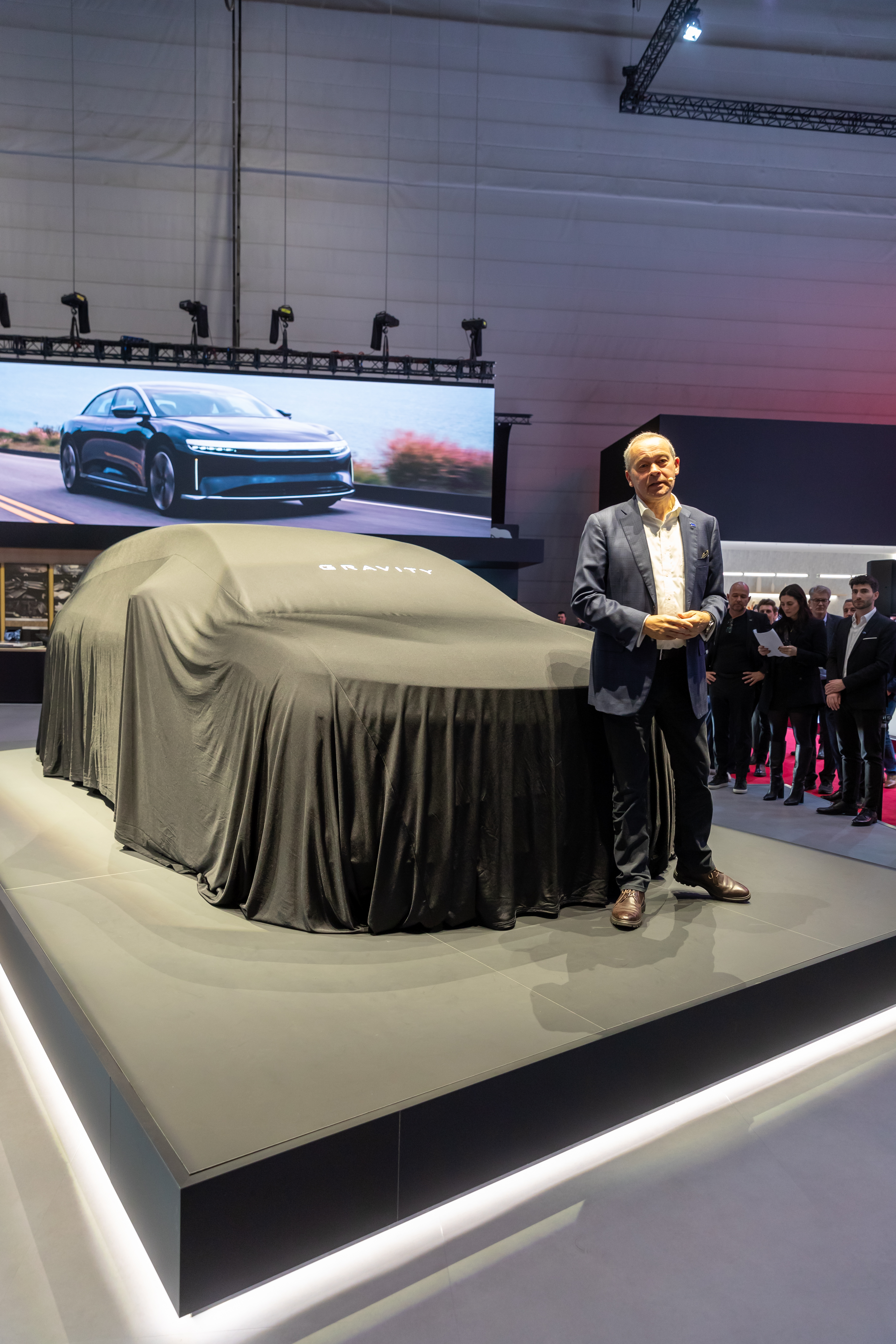
Lucid Gravity
"Yeah, I've been so you've seen the new lucid gravity around by the way So lucid the new basically like hypercar minivan they have they've got."
Lucid Gravity is Lucid’s electric SUV. In this clip, they’re saying it’s a real product you can buy, and they think it looks and sounds impressive.
Lucid Gravity is Lucid’s electric crossover SUV, positioned as a premium family-friendly vehicle. The hosts describe it as having a “hypercar minivan” vibe and note that it’s already being sold, not just a concept.
EV market downturn
"EVs around here are very very common So we get to see the creme de la creme of EVs all over is it a concept or no, no, no, they're selling it ... And we're seeing downturns in the EV market even with gas prices."
An EV market downturn means fewer people are buying electric cars than companies hoped. The hosts are saying that kind of slowdown can hurt EV makers’ sales and finances.
An EV market downturn means demand and/or sales growth for electric vehicles slows down across the industry. In this segment, the hosts connect that broader slowdown to why Lucid’s results look worse than expected, even while gas prices are changing.
first quarter
"Okay, so lucid produced 5,500 vehicles in the first quarter but delivered 3093 of its air sedans so and gravity crossover."
“First quarter” just means the first three months of the year. The hosts use it to talk about how many cars Lucid made versus how many it delivered.
“First quarter” refers to the first three-month period of a company’s fiscal year, commonly used to report production, deliveries, and financial results. Here it’s used to compare Lucid’s output versus deliveries.
GM
"What do you think that loss equal to considering that? GM is pulled out of the EV market in trucks forward is pulled out of the market in trucks"
GM (General Motors) is referenced here as pulling back from the EV market, specifically in trucks. That kind of shift by a major automaker can signal weaker EV demand or a change in strategy, which the hosts tie to the broader EV slowdown.
Lucid Air
"For sure, like if you want like the only thing that touches the 01 X is the lucid Air with the full performance package is the only thing he actually keeps up with it"
Lucid Air is an electric car. The hosts are saying it’s one of the few EVs that can match another fast EV in performance.
Lucid Air is an electric sedan known for strong straight-line performance and high-end trim packages. In this segment, it’s mentioned as the only EV that can keep up with the “01 X” in the performance category.
MSRP
"Everybody knows that but with an MSRP of around 50 grand and a 350 mile range That's pretty I think that's gonna be a sweet spot where people because at 80 to a 100000 dollars for the R1 versions"
MSRP is the official sticker price a carmaker lists for a car. Here, they’re using it to talk about whether the EV is priced in a way more people can afford.
MSRP (Manufacturer’s Suggested Retail Price) is the sticker price automakers publish before taxes, registration, and dealer add-ons. The hosts use it to argue that an EV’s “around 50 grand” pricing is what could make it more broadly appealing.
range
"Everybody knows that but with an MSRP of around 50 grand and a 350 mile range That's pretty I think that's gonna be a sweet spot where people because at 80 to a 100000 dollars for the R1 versions"
For electric cars, “range” means how many miles you can drive before the battery runs low. They’re saying 350 miles is a good target for everyday use.
In EV discussions, “range” refers to how far the car can drive on a full battery charge under specified testing conditions. The segment cites “350 mile range” as a key factor in making an EV feel practical.
EV pricing promises vs final pricing
"Long as they stick to that price the biggest thing that we've We've all seen of these EV market is the fact that they promise one price And then it comes out and in it the base model is ten to 50000 dollars more than they they said it was"
They’re talking about a problem where EV companies advertise a price, but when the car actually shows up, it costs more than expected. That makes it harder for shoppers to budget.
The hosts are criticizing a common EV-market pattern: companies advertise a target price, then the delivered “base model” ends up costing more. They frame this as a trust and affordability problem that affects whether buyers can actually plan around the announced MSRP.

Ford Mustang
"... beat this like a dead horse You know where we're mustangs and things like that are 50000 dollars So like an..."
The Ford Mustang is a sports car from Ford. Depending on the version, it can be quick and fun to drive, and it’s available in different price ranges. The podcast mentions it because people often talk about Mustangs when discussing performance for the money.
The Ford Mustang is a sports coupe/convertible known for its performance heritage and wide range of trims. It’s commonly brought up when discussing pricing and performance expectations, since there are both everyday and track-oriented versions. In the podcast, it’s referenced in the context of “Mustangs” being around a certain price point, suggesting they’re comparing what you get at that level.
Rivian
"Rivian's got some I think with the history of Indians got in the market They will probably stick to it... I'm sure they have a bunch of pre-orders Yeah, they have a ton of pre-orders. I'm excited to see it."
Rivian is a company that makes electric vehicles. Here, they’re talking about how Rivian is doing and what people think about the company’s newer EVs.
Rivian is an EV brand known for building electric trucks and SUVs, including the R1 series. In this segment, the hosts discuss Rivian’s market momentum and upcoming products like the R2 and R1s.
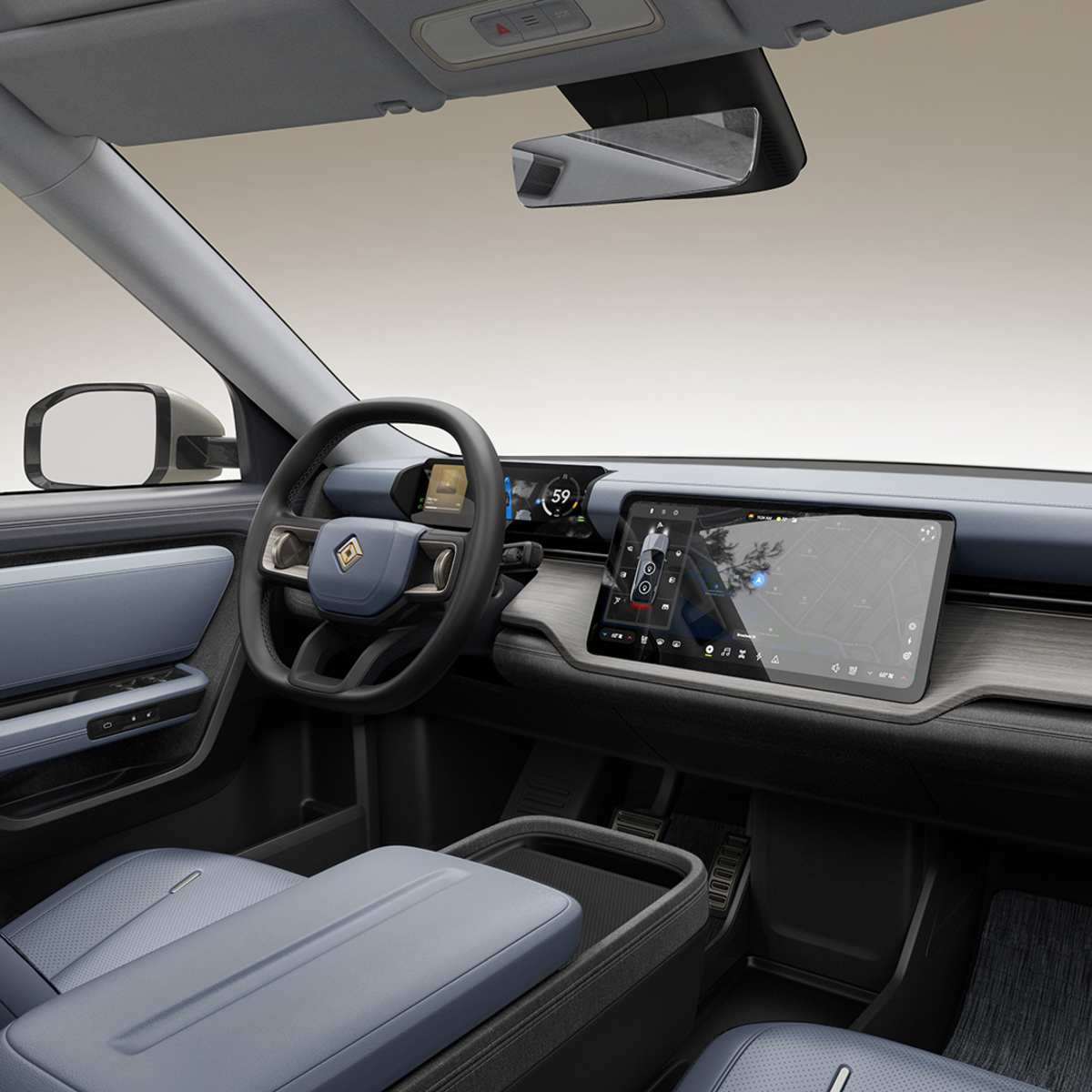
Rivian R2
"I think the R2 actually looks better than the R1s So just because I think the size was a better fit for the vehicle"
The Rivian R2 is an electric vehicle from Rivian. In this chat, they’re comparing how it looks versus Rivian’s other EVs, like the R1s.
The Rivian R2 is the brand’s smaller, more approachable EV compared with its larger R1 lineup. The hosts specifically compare its styling to the Rivian R1s, saying the R2 looks better to them.

Rivian R1S
"I think the R2 actually looks better than the R1s So just because I think the size was a better fit for the vehicle"
The Rivian R1s is an electric SUV from Rivian. The hosts mention it mainly to compare it with the Rivian R2—especially how the size and looks feel.
The Rivian R1s is an electric SUV in Rivian’s R1 series. In this segment, it’s used as the comparison point for the Rivian R2’s size and styling.
cruise control
"In other interesting news as far as cruise control So talked about the AI stuff as far as You know at self-driving and things like that"
Cruise control is the feature that keeps your car at a chosen speed. Here, they’re using it as the starting point to talk about newer, more advanced systems.
Cruise control is a driver-assistance feature that maintains a set speed without the driver holding the accelerator. The segment uses it as the baseline concept before discussing GM’s “next-gen” Super Cruise.
AI created
"GM's next-gen super cruise the code to write that turns out is about 90% AI created It's the their new version of cruise control is called super cruise"
They’re saying AI was used to write most of the software code. The point is that the system’s programming may have been generated by AI rather than written entirely by people.
“AI created” here refers to using artificial intelligence to generate software code. The host claims GM’s Super Cruise code is “about 90% AI created,” which is a notable claim about how driver-assistance software may be developed.
super cruise
"It's the their new version of cruise control is called super cruise And the code was written by AI 90% of it"
Super Cruise is GM’s system that can help with driving on certain roads, like highway driving. In this segment, they’re talking about it as a newer version of cruise control and how AI may have helped write the software.
Super Cruise is GM’s advanced driver-assistance system for hands-free highway driving. It’s discussed here as a “next-gen” version of cruise control, with the host claiming the underlying code was largely generated using AI.
restomod
"We're seeing resto mod quote-unquote resto mod 90s Ferraris with manual swaps Uh, we're you know more putting manuals and mercies too."
A restomod is an older car that gets updated with modern parts. The goal is to keep the classic style, but make it drive and feel better—sometimes even converting it to a manual transmission.
A restomod is a classic car that’s been modernized with newer engineering—often including updated drivetrains, suspension, and electronics—while keeping the original look. In this segment, they’re specifically talking about “restomod 90s Ferraris” that get manual transmissions via manual swaps.
manual swaps
"We're seeing resto mod quote-unquote resto mod 90s Ferraris with manual swaps"
A manual swap means converting a car to use a stick shift. It’s more than just swapping the lever—you typically have to change several parts so the car can drive properly with a manual transmission.
A manual swap is the process of replacing a car’s original transmission with a manual gearbox. It usually requires matching multiple components (like the clutch, shifter linkage, and sometimes electronics) so the car behaves correctly with the new drivetrain.
Infiniti
"Yep big time infinity and Nissan are Crawling their way back from the dead with the new skyline"
Infiniti is Nissan’s luxury car brand. The host is saying Infiniti is also trying to come back with cars people want.
Infiniti is Nissan’s luxury brand, and the host mentions it alongside Nissan in the context of a “comeback.” Here, it’s used as a brand identity for where the speaker thinks enthusiast-focused products will come from.

Nissan Skyline
"Yep big time infinity and Nissan are Crawling their way back from the dead with the new skyline"
The Nissan Skyline is a famous performance car nameplate from Japan. The host is saying Nissan is bringing it back as part of a renewed push toward cars enthusiasts actually want.
The Nissan Skyline is a long-running Japanese performance model, and the host frames it as a comeback vehicle for the brand. They’re specifically saying Nissan is “crawling their way back from the dead” with the new Skyline, implying a renewed focus on enthusiast-oriented models.
Nissan 400Z
"Is they're going to use them the engine from the 400z with the manual transmission and it's going into a Infinity q50 model first they're not going to have the skyline in the us of the"
The Nissan 400Z is a performance Z-car from Nissan. Here, the hosts are talking about it as a possible engine donor for a future car.
The Nissan 400Z is a modern Z-car that’s known for bringing back the classic Z-car formula with a performance-focused manual/driver experience. In this segment, it’s mentioned as a potential engine source for another upcoming Nissan/Infiniti model.

Infiniti Q50
"with the manual transmission and it's going into a Infinity q50 model first they're not going to have the skyline in the us of the GTR"
The Infiniti Q50 is a luxury sedan. The hosts are saying it could be the first car to get a certain engine and manual setup.
The Infiniti Q50 is a compact luxury sedan that’s been offered with performance-oriented powertrains and, in some versions, a manual option. In this segment, it’s referenced as the first place an engine/transmission plan could show up.

BMW G30
"But not the skyline so there's the skyline and GTR. Those are two different models. Remember that The skyline over here was the g 30 set g 35 g 37 And they're going to have it again with a manual and it's coming back"
The BMW 5 Series is a mid-size luxury car. It’s designed to be comfortable for everyday driving, but it can also feel sporty. The podcast mentions it while talking about different versions and how certain configurations might come back.
The BMW 5 Series is a mid-size luxury sedan known for balancing comfort with driver-focused handling. In the podcast snippet, it’s mentioned as part of a list of model generations (like G30/G35/G37) and the idea of returning to a manual setup. That kind of discussion usually comes up when people talk about which 5 Series variants are available and how they’re configured.
rev matching manual transmission
"I love that because Nissan remember they were the big ones who really got the rev matching manual transmission out there [1994.0s] It was Nissan who made it really popular now. Everybody does it which is really cool"
Rev matching is when the car helps line up the engine speed with the gear you’re shifting into. It makes downshifts smoother and easier, even if you’re not an expert at heel-toe.
A rev-matching manual transmission automatically (or semi-automatically) synchronizes engine RPM to the selected gear when you downshift. That makes heel-toe-style downshifts easier and smoother, reducing jerkiness and helping the driveline stay happier.
heel toe
"even if you love to heel toe, you know your way and rev match your gears [2012.0s] Which is a skill everybody should have it's pretty awesome when the car does it for you"
Heel-toe is a manual-driving trick for downshifting smoothly. You coordinate braking and blipping the throttle so the engine speed matches the lower gear.
Heel-toe is a driving technique used in manual cars where the driver uses the brake and accelerator together (with the right-foot “heel” and “toe” motions) to match engine RPM during downshifts. It’s commonly paired with rev matching to keep the car stable and the downshift smooth.
power shift
"So you can power shift through your gears like it's a ton of fun. So [2025.8s] Credit words do thanks Nissan. I'm glad they're bringing the skyline back"
Power shifting is aggressive manual shifting where you keep the engine producing power while changing gears, often with minimal lift between shifts. In practice, it’s used to maintain momentum and can feel faster because the drivetrain stays “on the boil” rather than coasting.
twin turbo
"they've very strongly suggested the GTR is coming. I hope it is a twin turbo"
Twin-turbo means the engine uses two turbochargers. That usually helps the car make more power and can make acceleration feel stronger.
A twin-turbo setup uses two turbochargers to force more air into the engine, improving power and torque. Depending on the design, twin turbos can also help reduce turbo lag by improving how quickly boost builds.

Nissan GT-R (R35)
"I think the GTR needs to be an automatic. It's just such a fast animal Godzilla car. Well, r35 was the first one... That car has always to me has always meant Incredible straight line speed."
The Nissan GT-R (R35) is a supercar famous for being extremely quick, especially in a straight line. The speaker is saying the automatic transmission makes it feel even faster and easier to use.
The Nissan GT-R (R35) is a high-performance sports car known for brutally quick acceleration and stability in a straight line. In this segment, the host emphasizes that it should be paired with an automatic because it’s “such a fast animal,” reflecting how the drivetrain choice affects launch and overall speed.
DSG
"I yeah, I did dsg. But yeah, yeah, sorry dsg, but"
DSG is a type of automatic transmission that shifts very fast. It’s designed to keep power flowing without long pauses between gears.
DSG is Volkswagen Group’s dual-clutch automatic transmission. It uses two clutches to pre-select the next gear, which can make shifts feel very quick and helps keep acceleration strong—something the host is comparing against a manual for the GT-R.
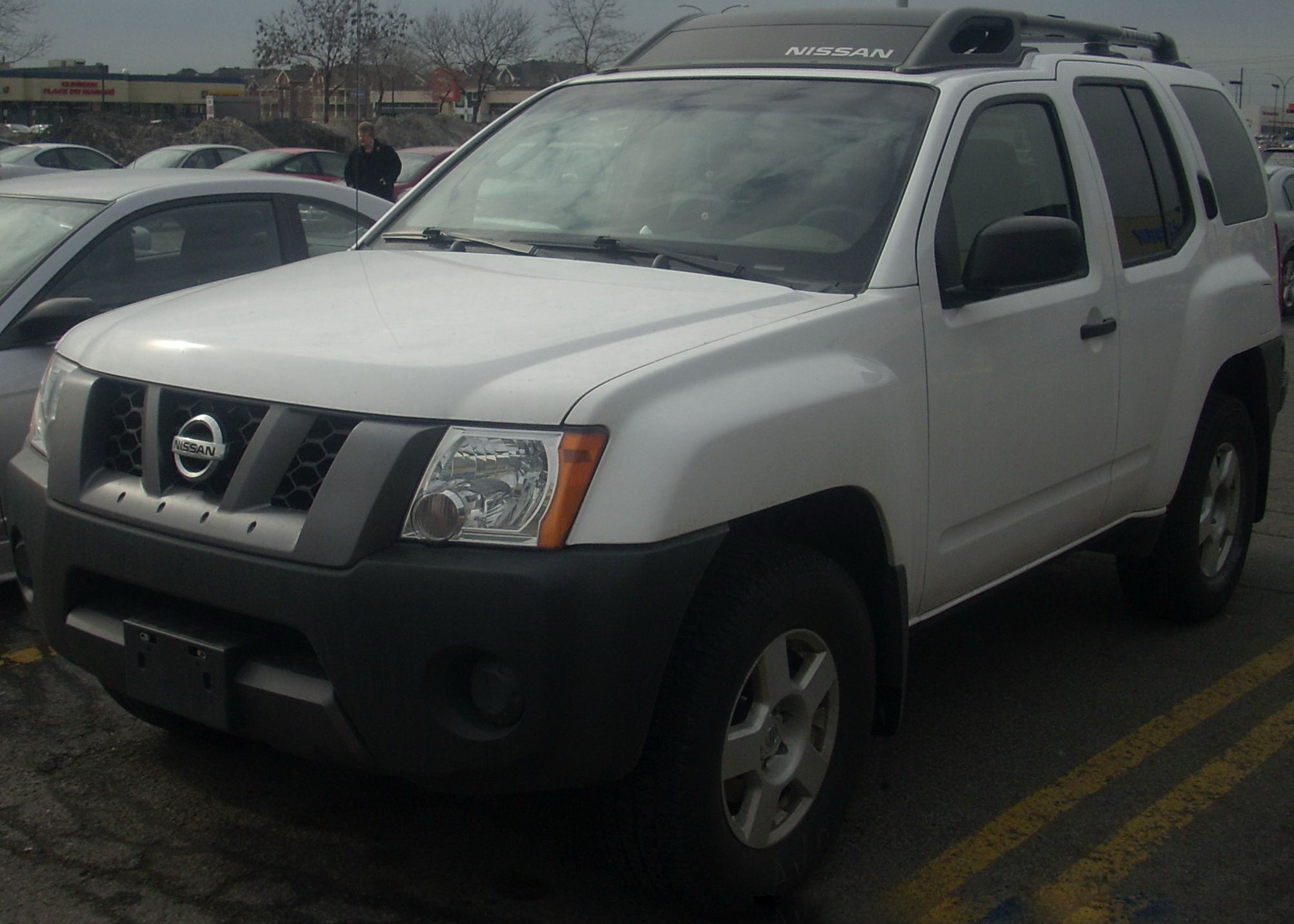
Nissan XTerra
"These ones made good trucks the XTERRA come back bring that back... The fact that that bulge in the back that was was built for a first aid kit because you were meant to go out and do Off-road things with it."
The Nissan Xterra is a body-on-frame SUV built with off-road capability in mind. The host points out a practical design detail—cargo-area “bulge” space—framing it as something intended for outdoor use (like carrying an emergency kit) rather than competing purely as a street-focused vehicle.
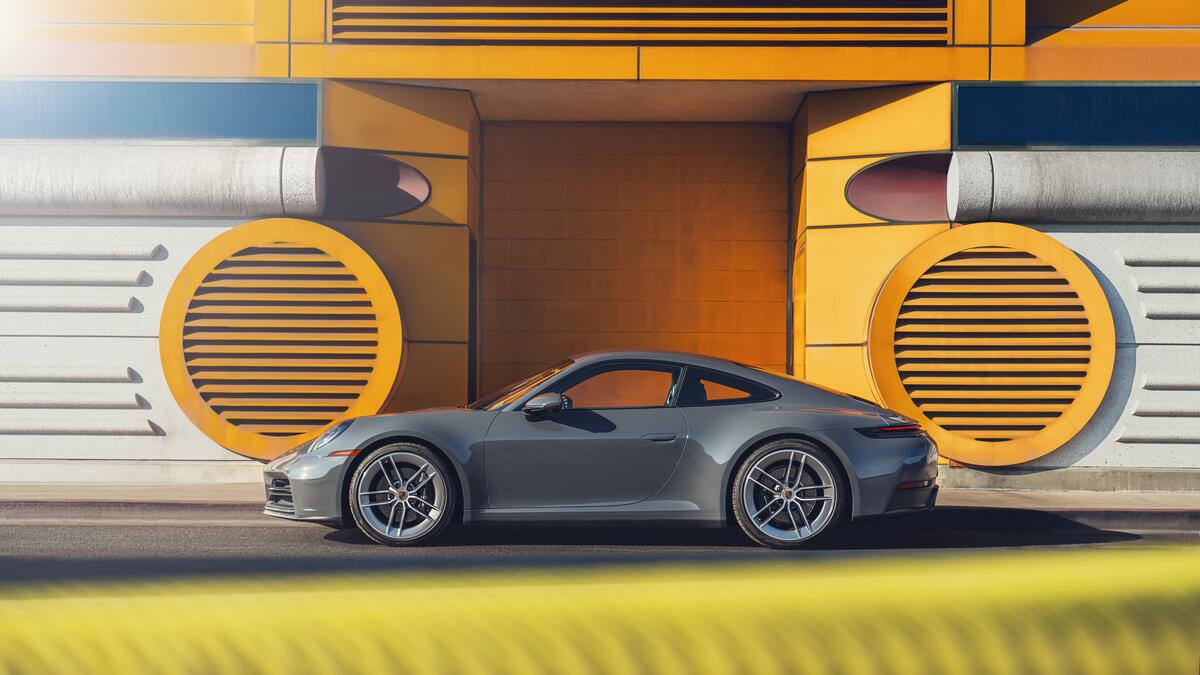
Porsche 911 Turbo S
"Not my turbo s the turbo s I had up to 175 that went I had it had room to go but it was um There's a lot of downforce on the turbo s really functional downforce and it, um Oddly enough was not as confidence inspiring it's that car's not meant to do that that car is meant to do 120 in curves like nobody's business"
The Porsche 911 Turbo S is a top version of the 911, built for fast driving with strong grip and stability. Here, the point is that it feels better in corners than as a “go as fast as possible in a straight line” car.
The Porsche 911 Turbo S is a high-performance 911 variant built around a turbocharged engine and track-focused traction and stability. In this segment, the host talks about how it feels at very high speeds and notes that it’s designed more for strong cornering than for straight-line speed runs.
downforce
"There's a lot of downforce on the turbo s really functional downforce and it, um Oddly enough was not as confidence inspiring it's that car's not meant to do that that car's meant to do 120 in curves like nobody's business"
Downforce is the aerodynamic “suction” effect that presses the car down onto the road. More downforce usually means better grip when you’re going fast, especially in corners.
Downforce is the aerodynamic force that pushes a car’s tires toward the road, increasing grip at speed. The host specifically credits “functional downforce” on the Porsche 911 Turbo S, but also notes that the car’s confidence and design intent may still favor cornering over pure top-speed runs.
dual funky drive shaft layout
"It's all that tech At the time it had a lot of tech The dual funky drive shaft layout which worked really well But it was the GTR."
A drive shaft is the part that sends power from the drivetrain to the wheels. Saying it has a “dual” layout means the car uses two shafts or a split arrangement to move power in a specific way.
A “drive shaft layout” describes how power is transmitted from the transmission to the wheels, including how many shafts are used and how they’re routed. The host’s “dual” description suggests a multi-shaft arrangement intended to package the drivetrain efficiently and help deliver power smoothly—an enthusiast detail worth clarifying because it affects how the car feels and how the drivetrain is built.
crest of a hill
"Yeah, and I it started on this like crest of a hill Um, and I I got over the crest So I didn't like wasn't launching over and then I had a little bit of a run"
A “crest of a hill” is the top of a hill. When you’re driving fast, the road shape can change what you can see and how the car feels over bumps.
A “crest of a hill” is the top of a rise where the road surface changes direction relative to the driver. That matters for high-speed driving because it affects visibility and how the car’s weight shifts, which can influence traction and braking stability.
braking distance from very high speed
"A safe 120 mile an hour corner, but at 193 that mile comes out you real real real quit You don't realize how much space it takes to slow down from 150 let alone 190"
They’re saying that if you go very fast, you need a lot more road to slow down safely. It’s harder to stop from higher speeds than it feels in your head.
The speaker emphasizes that slowing down from extremely high speeds requires a lot of distance. This is a physics-driven idea: at higher speed, kinetic energy rises quickly, so the car needs more time and road to shed that energy safely.

Mazda Rx7
"and it was a little over 180 in the rx7 Um, which had then blew the motor and then you did how much in rx7 180 plus good god Yeah, that was that single turbo conversion and a little 500 horsepower"
They’re talking about a Mazda RX-7 they pushed very hard. It’s a special kind of car because it uses a rotary engine, and in this story it was modified with a turbo and then the engine failed.
The Mazda RX-7 is notable for its rotary engine (Wankel design), which gives it a distinctive power delivery and sound compared with piston engines. In this segment the speaker describes a heavily modified RX-7 with a single-turbo setup and a lightweight “R1” track-focused configuration, used for a high-speed run that ended with the engine blowing.
blow the motor
"and it was a little over 180 in the rx7 Um, which had then blew the motor and then you did how much in rx7 180 plus good god"
“Blow the motor” means the engine failed badly. It’s usually a serious problem that can’t be fixed with a simple adjustment.
“Blow the motor” is slang for catastrophic engine failure, where the engine is damaged beyond normal repair. In a turbo car, this can happen from issues like overheating, detonation, oil starvation, or insufficient supporting hardware.
single turbo conversion
"Yeah, that was that single turbo conversion and a little 500 horsepower"
A single turbo conversion means replacing a factory turbo setup (often twin-turbo) with one larger turbocharger. That change can alter boost response and power delivery, and it’s a common modification path for making more peak horsepower on an RX-7.
500 horsepower
"Yeah, that was that single turbo conversion and a little 500 horsepower"
Horsepower is a measure of how much power the engine can produce. They’re saying the modified RX-7 made around 500 horsepower.
“Horsepower” is the engine’s power output, and in enthusiast circles it’s often used to compare how strong different builds are. In this segment it’s used to contextualize how much power the modified RX-7 had during the run.
2700 pounds
"And then that car only weight 2,700 pounds had nothing in it. It was an r. It was it was a 93 r1"
They’re talking about how heavy the car is. A lighter car usually accelerates and brakes differently than a heavier one, which matters when you’re driving fast.
Curb weight (here, “2700 pounds”) is the mass of the car ready to drive, and it strongly affects acceleration, braking, and how hard it is to slow down. The speaker uses the low weight to explain why the RX-7 felt so quick and why it could reach very high speeds.
catalytic converter
"I made it home, but I blew the turbo. I wonder why yeah the [2402.7s] The catalytic converter was so hot. It was glowing red under the car all the way even when I got home"
The catalytic converter is a part that cleans up exhaust. If it’s glowing red, it usually means the exhaust is running extremely hot—often because fuel isn’t burning correctly.
The catalytic converter is an emissions device that uses heat and catalysts to convert harmful exhaust gases into less harmful ones. If it’s “glowing red,” it can indicate excessive heat from unburned fuel or an overly rich condition, which can be damaging.
running too rich
"Going there and back it you you burn a ton of fuel and that was because that thing was running too rich [2426.3s] I had intakes on it in a mid-pipe, but I didn't have a tune. That's why it kept cutting out on me on pikes peak"
“Running too rich” means the engine is getting more fuel than it needs. That usually makes the car burn a lot of gas and can cause rough running if it’s not tuned correctly.
“Running too rich” means the engine is burning a fuel-air mixture with too much fuel compared to the amount of air. That can cause heavy fuel consumption and can also lead to issues like misfires or cutting out if the setup isn’t properly tuned.
tune
"I had intakes on it in a mid-pipe, but I didn't have a tune. That's why it kept cutting out on me on pikes peak [2431.1s] But it was just I mean it's better to be a little too rich than too lean in that"
A “tune” is like updating the car’s computer settings for how much fuel and spark to use. If you change parts but don’t tune it, the engine can run poorly or cut out.
A “tune” is an engine calibration update (often via reprogramming the ECU) that adjusts fueling, ignition timing, and other parameters to match modifications. After adding parts like intakes or exhaust components, a tune is often needed so the air-fuel mixture and throttle response stay correct.
intakes
"I had intakes on it in a mid-pipe, but I didn't have a tune. That's why it kept cutting out on me on pikes peak"
Intakes are aftermarket or modified air-induction components that change how much and how easily air flows into the engine. More airflow can require ECU changes (a tune) so the engine doesn’t run with the wrong fuel-air mixture.
mid-pipe
"I had intakes on it in a mid-pipe, but I didn't have a tune. That's why it kept cutting out on me on pikes peak"
A mid-pipe is part of the exhaust system. Swapping it can change how the exhaust flows, and that can make the engine need a computer adjustment to run right.
A mid-pipe is an exhaust section located between the downpipe and the rest of the exhaust system (exact layout varies by car). Changing it can alter exhaust flow and backpressure, which can affect how the engine needs to be calibrated for proper fueling and drivability.
Request an Explanation
Heard something you'd like explained? We'll add it to this episode.
Sign in to request explanations for terms you heard.
Want to learn more?
Browse our glossary for plain-English explanations of automotive terms, jargon, and concepts.
Help improve this episode
See something that's not quite right? Our annotations are AI-generated and can sometimes miss the mark. Click the flag icon on any annotation to suggest a correction.