Druids is a named section of the Brands Hatch track. The hosts are saying one driver nudged another there, which can happen when cars are braking and turning close together.
They mean the car got hit hard enough that it was basically like a safety test. The point is that the car’s structure held up better than you’d expect.
“Wets” are special tires for rainy conditions. If the track dries or isn’t wet enough, those tires can feel slow or slippery, and the driver loses time.
Brake bias is how braking force is split between the front and rear axles. A “brake bias shift” is an adjustment (often during a stint or between sessions) to change the car’s balance—helping the driver manage turn-in stability and how easily the car rotates under braking.
Tire lines are the darker paths on the track where cars have been driving. When the track is drying or changing grip, those lines show where the rubber is making it safer to drive faster.
The changeover point is when the track goes from “tires A make sense” to “tires B make sense.” It’s basically the timing decision for switching to the right tires for the conditions.
In racing, “flags” are the signals officials use to tell drivers what’s happening on track. The hosts are saying they’ll explain how that played out later.
This is a restart procedure borrowed from NASCAR. It tends to bunch the cars up and makes the restart more intense, so drivers have to be careful and quick to get going cleanly.
“Car lengths” is a racing measurement of distance, typically expressed as how many full car lengths separate two cars. It’s commonly used in live commentary because it’s easy to visualize and compare gaps during battles and restarts.
The braking point is where the driver decides to start slowing down for a turn. If the tires or track grip aren’t right, that point can move because the car won’t stop the same way.
Cold brakes can feel weaker or less consistent until they warm up. That matters in racing because you need repeatable stopping to hit the right corner entry.
Term
cutback maneuver
A cutback maneuver is an overtaking move where the driver changes direction to come back toward the inside line. The goal is to get alongside before the next corner or braking area.
If a car goes onto the grass, it usually loses grip compared to the road. That can make the car slide or feel out of control.
Term
Clearways
Clearways is a specific part of the Brands Hatch track. When the host mentions it, they’re pointing to the exact corner where something went wrong or was nearly lost.
The pit lane is the trackside lane cars use to come in for a stop. How long it is matters because it changes how much time you lose during the race.
Term
rollerbarrow
They’re describing a setup step during the pit stop where the car’s height needs to be adjusted. It matters because the new tires can change how the car sits on the track.
A “half spin” means the car starts rotating and slides sideways, but the driver manages to catch it before it fully spins out.
Term
no slip conditions
“No slip” here describes a situation where the tyres are maintaining traction with minimal wheelspin or sliding. In that state, drivers can place the car precisely because the grip level is consistent and predictable.
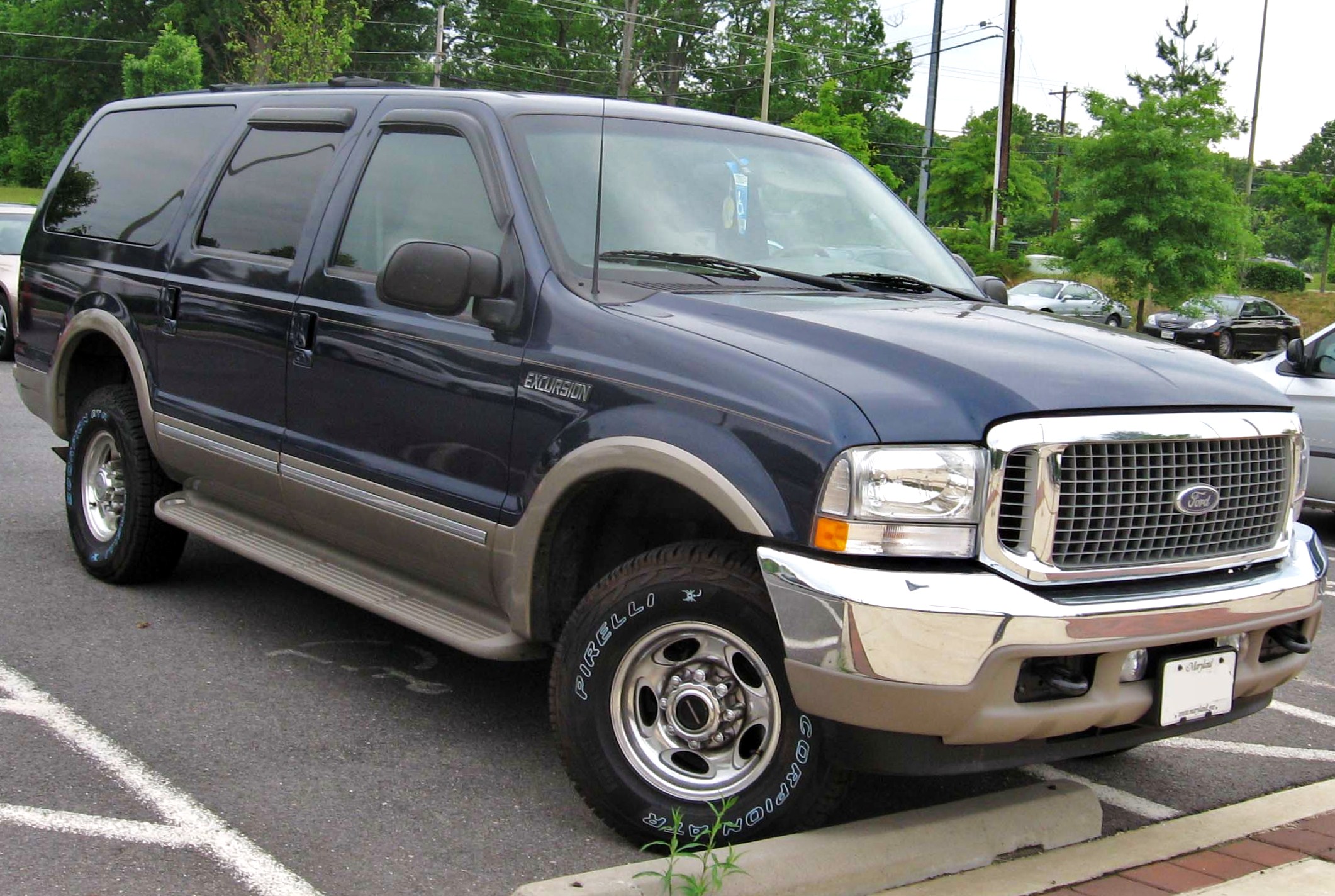
The Ford Excursion is a very big SUV meant for carrying people and doing heavy work like towing. In a motorsport setting, it might be mentioned because it was involved in something that happened around the pits or paddock. The focus is usually on the situation, not on it racing.
The pits are the race teams’ service area. Drivers go there to change tyres and sometimes fix problems, usually as part of the race strategy or after an incident.
A slick tyre is a race tire with smooth rubber and no grooves. It works best when the track isn’t wet, because it can’t push water out of the way like treaded tyres can.
Term
wet shot runners
This is about the cars using tyres made for wet weather. Those tyres have tread that helps them grip on a rainy track, so they can go faster than cars still on dry-track tyres.
A “big slide” is when the car starts to slide because the tires aren’t gripping enough. It can be controlled, but if it’s too much it becomes hard to steer and can cost time.
“Rear play” means the back of the car feels loose and unpredictable. That can make the car harder to control through corners, especially when you’re trying to go fast.
A “90 degree slide” is when the car turns sideways a lot while still going forward. It’s usually a sign of very low grip, and the driver has to react quickly to keep it from spinning out.
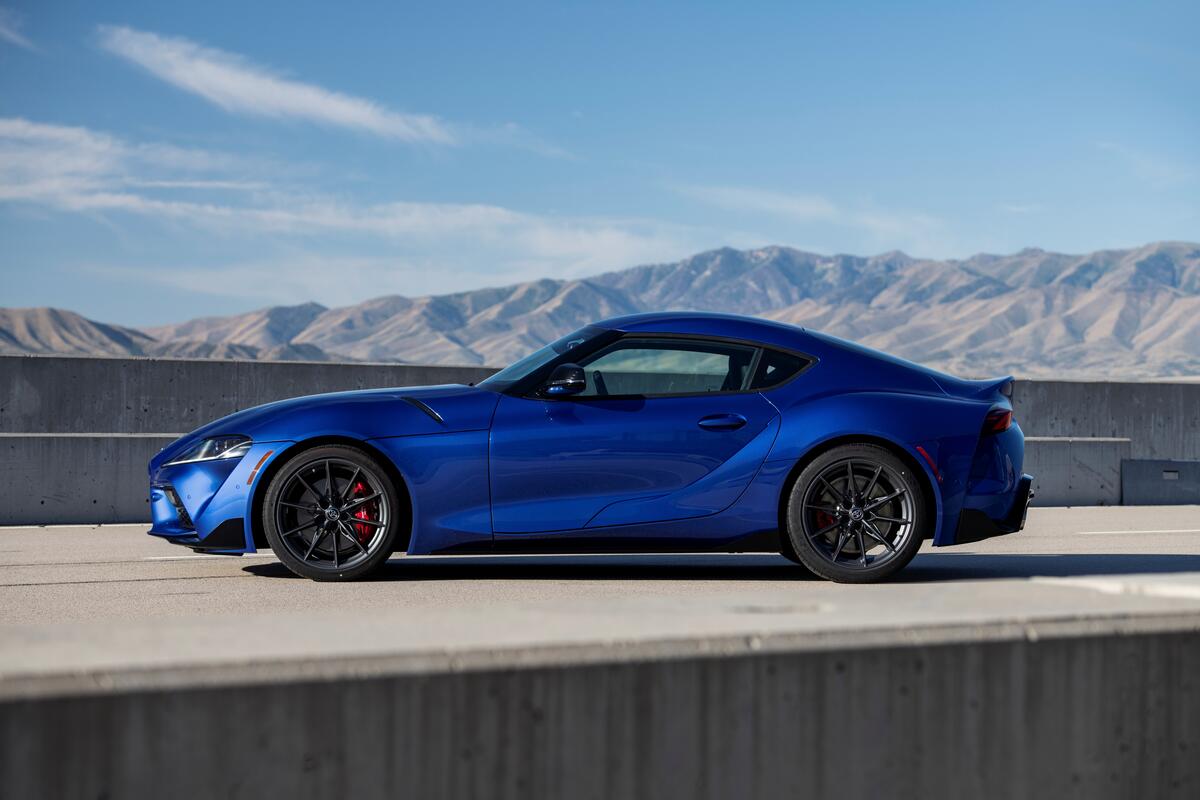
The Toyota Supra is a sports car built for speed and quick acceleration. In racing, it can sometimes be hard to control if the tires don’t grip well, which can lead to big slides. That’s likely why it’s mentioned with the driver struggling and having to correct the car.
The “inside line” is the route near the inside of the corner. It’s often faster because it’s shorter, but it can also lead to close fights and contact if cars are side-by-side.
“Three into one” means three cars are trying to go through the same tight spot at the same time. With limited space, it usually ends with someone getting pushed out or making contact.
A penalty in BTCC-style racing is an official consequence for a rules infringement (for example, unsafe rejoining, ignoring flags, or causing a collision). The hosts discuss whether a penalty should have been applied, which matters because penalties can change race outcomes and influence driver behavior.
After an incident, officials called stewards review what happened and decide if anyone should be punished. “No further action” means they didn’t think a penalty was justified.
Besides flags, race control can use lights around the track to give instructions. Drivers are expected to notice them and adjust their driving right away.
Instead of lining up in the usual fastest-to-slowest order, the race grid gets flipped. So some of the quicker drivers start nearer the back and have to work their way forward.
“Boxed in” means other cars block all the lanes, so the driver can’t pass or change direction easily. It usually costs time because there’s nowhere to go.
The “breaking point” is where the driver decides to start braking for a corner. Braking earlier or later affects how fast you enter the turn and whether you can make a move.
Radiators help keep the engine from overheating by cooling the fluid that runs through it. If something blocks them—like grass—the engine can get too hot and the car may need to stop.
In motorsport, “retire” means the driver stops competing and withdraws from the race, usually due to mechanical failure or damage. It’s different from finishing the race or being classified after repairs.
“Radiator cleared out” means they removed whatever was blocking the radiator so it can cool the engine again. If it stays blocked, the engine can overheat.
It means the cars are trading places in a very close, step-by-step way. Nobody really pulls away, but they keep challenging each other for small position changes.
They’re talking about a smart passing move. The driver pretends to go one way, then switches back to the other side at the right moment, so the car in front can’t easily block or counter.
Boost is extra pressure from a turbo that helps the engine make more power. In racing, drivers/teams can manage it to keep the car fast without losing control or traction.
Race craft means how good a driver is at racing smart, not just going fast. It’s about making the right moves at the right time and staying out of trouble.
It means the driver hasn’t fully “clicked” with how the car drives. When they’re tuned in, the car feels predictable and they can drive it confidently.
BMW is the car brand the hosts are talking about. They expected BMW to do well at this track, but the results didn’t match that expectation this weekend.
Damp track conditions reduce tire grip because rubber has less consistent contact with the surface. That often changes braking points, corner entry/exit traction, and how aggressively a car can be driven without losing control.
Snetterton is a circuit the series is heading to next, and it’s being used as a reference point for future predictions and how results might translate. Track-to-track differences (layout and weather) can strongly affect qualifying and race pace.
LIVE
In a weekend full of offs, spins and saves, Sutton swims five or ahead in a title race.
Hello and welcome back to the British Touring Card Podcast. We are going to bring you up
to date with all the action from the Sunday of Brands Hatch. We were down there ourselves.
We were. It was a little chilly in the end. I'm still cold. Yeah,
It has taken a little while to warm back up again. Yeah, as you said, we are only covering the
Sunday. Why? Because we've already covered the Saturday. So if you've missed that,
it's because you've not got your bell on and your Spotify, your Apple Podcast or your YouTube. Only
you can fix that. We can do no more. So go and make sure it's on. Get down the way early.
Yeah, we'll bring you plenty of contact throughout the season. And as per normal,
we've got our review of the weekend and we'll take into account every race individually.
And keep across all the action and controversy, shall we say, that we've had this weekend.
Yeah. And it's fair to say this weekend is a little bit of an imbalance of events. So race two
was one of the maddest races we've seen in touring cars for a while. So race one will be
covered. We are going to cover it, but there wasn't as much to happen. So don't be surprised
that that will be fairly quickly skipped through. So we can make sure we don't spend three days
talking about race two, rather, because that is where I say most of the action was.
Yeah. And of course, we'll have our up-to-date predictions and awards basically at the end
of the show to let you know how we fared and how generally drivers fared across the weekend.
There might not be time for that. That's fine. It'll be fine. Right. So we'll start with race
one on the Sunday then. And there were spots of rain as the cars would get ready for their green
flag. A lapse, two laps this weekend was the short circuit. And it was that horrible period
for a driver where it wasn't wet enough to come in for wets from the off and then she
really wanted to chance it and hoped that the heavens opened. But it was also tricky for slicks.
What I would say is that I think we saw in the minis that this was perfect conditions for slicks
at the front, wets at the back or vice versa, but we're not allowed to do that in the touring cars
anymore. And in case anybody was wondering who might be new to the sport while there's no
intermediate times, they don't exist in touring cars. It's wet or it's dry. It's as simple as that.
Yeah. We were reassuringly informed by Alan Hyde, the circuit commentator, one of anyway,
that we wouldn't see any rain on Sunday. He was confident. Yeah. Very confident.
Yeah. I suppose in a warm commentary box, the rain's less obvious. But also at the end of the
gamble, that you know, that end of the grid is 100% worth taking. You know, of course, remember
he's a great call at Donnington a few years back, which got him, I think, sixth in the end. Yeah.
So, yeah, he came in for slicks. When you were at the back of the grid, it makes perfect sense
to give it a gamble, particularly as, as I say, as the formation lap was continuing,
we did see it, the rain gets slightly harder. Yeah, it didn't really come to much in the end,
though. No. A few laps into the race, it did sort of like settle back down. And it was never
really enough to make the circuit greasy or slippery enough to cause any real troubles to any
drivers. Agreed. So, in terms of the start, De Leon decided he was going to disprove the myth
that a real drive car is the best thing to have off the line because he decided to go backwards.
Sutton got the best start offline, as you'd expect. This man is a demon. I've seen on
BTC House of Memes, they put it side by side. Full little drive one. No, it's Thruxton's start
a couple years ago. Yeah. It was race three, so I should get to the Manzan Madden. But yeah.
De Leon was obviously clearly fighting for grip. And what was quite good on this race was that we
did, I've been back to watch it. I know you haven't had time to, but we got the onboard from De Leon's
car through the first few laps. Yeah. And you could see just how much he was fighting that
steering wheel at all times. Even more, I know that, you know, when you watch any onboard, it's
never a smooth country drive, but the mountain he was fighting that car, it clearly was struggling
for grip. Yeah, we know that the BMW really struggles, especially in these colder conditions,
to get those tyres heated up, get into the race. And that can really make them struggle,
especially the last year here was a real stronghold for them, but in much, much warmer conditions.
Yep. Gordon Shedden must be wondering what it is about him that attracts rookies, because last year,
for the opening few rounds, he was stuck every time with Max Hall. This race, again, De Leon, who
not content with the RG barge that had Donnington, took this further forward at Brandt's Hatch,
locking sideways out of the end of Graham. I will say in De Leon's defence, the car was really
struggling for grip on these greasy-ish conditions. I think it's a little bit of unfortunate first
lap. Following on from his small incident that he had with Ingram on the Saturday, though, it looked
brilliant. I would agree with you. Morgan then decided to put pace to any chance of Plato racing
getting some silver for the weekend. Well, it wasn't actually his fault. Initially, we must admit.
Not wholly to blame, yeah. We were sat at Paddock Hillbend, and when we were there, it looked as if
he'd locked up on cold rear tyres and rear brakes. Harvey was convinced for most of the
race that he'd done it on his own. In fairness, Harvey, the replays didn't really show the
touch from Kamesh. There was no real damage to either the front of Kamesh's car or the back of
Morgan's. However, as we'll get to when I get into the corner in a bit, Kamesh did help Morgan
off into the rally. Yeah, the replays are really difficult to see from the only replay that I've
seen. I honestly thought that Ingram possibly had more contact with him than Kamesh did.
No, it was slightly unsettled from Kamesh under braking, but it just shows what a little touch
can do in these cars. Buxom also managed to lose it coming out of Druids, and he would then come in
to the pit lane for Wetz under the safety car. Obviously, a safety car was called for the Morgan
situation. This allowed Kamesh to go from 7 to 3rd after an opportunity arose when Sutton was
fighting Carter, was fighting Ingram. Those four were pretty much all together throughout the
race. Stopping positions, making life difficult. Collard has fully found the flash button on his
steering wheel as well. We then had the bit of bad news in the Jack Sears for Dexter Patterson,
who had a puncture which ended his race. He did well to get it out of the gravel and clear ways
to be fair to him because he went in a fair way in wet or dampish gravel with a puncture on the
front end of the car, so he did really well to drag that back to the pits. He did drag a load
of gravel onto the circuit, but he is what it is. Where are we? Collard then managed to get
into the lead at Paddock on lap 12, but he then ran slightly wider the exit of Graham Hillbender,
which allowed Ash back through. After that, Ash pretty much checked out from that point
and was able to go on to win a fairly simple race. We did see Dillion and Sheddon clash again.
Dillion then ran into Selby at clear ways. It's fair to say he had put his aggressive hat on
this weekend. I'm not sure there's a panel of that BMW that wasn't bent after the race.
Yeah, we'll get to that. You could say the same for both BMWs this weekend. They certainly got
into a little bit of argy-bargy. Yeah, agreed. Ingram then get into third position with a great
dive at Paddock Hillbender on Karrish. There was a little gap opened. Ingram sent it fully down the
inside and caught Karrish potentially a little bit napping, but a very good classic Ingram move.
We then had a bit of silliness at the back of the field with Selby. I will say in his defense
that Moffat had given him a fairly hefty love tap into Druids to get past. I'm not sure Selby's
action. I'll just drive into the back of you then and send you into the barriers.
Was a good response. It was a good chance for PMR to crash test the car.
I'll tell you what, it's built strong though. Although he spun around, hit the barrier,
he then continued. Yeah, completely agree. Completely agree.
So yeah, fell flat. We'll get to the penalties at the end of all three races. Should we do it that
way? Yeah, okay, no worries. Then, as I say, there's a fairly simple win for Ash after that,
which means at this point, he'd won 50 races. He has won one in six on average. When you consider
that for two seasons, he was in the MG, which was spotty. He was in the Subaru for one of those
seasons, which was dreadful. He's done pretty damn well, I'd say, to have that statistic.
A couple of quick talking points for race one. The Wets didn't work for Bucks or Hamilton.
It was a gamble, didn't pay off. Worth taking it, didn't pay off.
Chilton had a good recovery through the field after disappointing Saturday.
A road bottom was struggling throughout, really lacked pace, and it meant that Plato Racing,
who might have a few teething issues in different conditions, maybe,
were unable to get any points in race one. I think I saw afterwards that they said they made a bad
setup call on road bottoms car. Yeah, they did actually pick up one point in that race, but
that was only following on from penalties. Yeah, at that point. One driver, I must say,
who had a really good but quiet race was Sam Osborne. He went up into the top six,
went through the field, fairly unscathed as well, and just made good consistent progress.
Yeah, those conditions really suit him as well. He's pretty good in those conditions.
I think, again, in that Donnington race, which worked out of Hamilton,
memory says, did he win that? No, no. No, he's only winners. He got a podium that way,
that's right. Yeah, that's right. Yeah. Right, to bring up the race results for race one, then.
Ash Sutton took the win by just under a second from Ricky Collard, from Tom Ingram,
back on the podium once again, from Dan Hamish, Chilton and Osborne. So,
Napa and Virtue filling out the top six there. Just making that clear. Mikey Doble in seventh,
followed by Chris Miley in eighth, Charles Rainford Knight and Josh Cook tenth,
Darryl Leon in what was a tumultuous race in eleventh, followed by Gordon Sheddon, 12th,
Aaron Taylor Smith, 13th, James Dallin, 14th, and Dan Robotson, 15th. Now, this is post-penalties,
which we'll get to at the end. Yep. Josh Cook, isn't that one just a quickly highlight there?
He recovers fairly well through the pack. And it's mad to him that Rainford, sorry,
De Leon finished that low down, given he was second on the grid. Yes. Didn't quite go to plan
for him. No, not quite. I don't think there's anything else to cover from race one. What I will
say is that I'm very much enjoying having Collard racing him and Sutton are very fun together in
the paddock. And if there is any doubt, well, there's no doubt, but he has to have the full
season. I don't care how it's done, it's got to be done because he's so good. He's a really good
character as well, fits in nicely. Obviously, he's been around the paddock for a long time with his
dad, Rob, having been there and thereabouts. Just how he comes across in these interviews and stuff
like that is also almost quite infectious. He just loves the sport. He does. He does. I can't
necessarily say I'm used to all driver interviews. Some drivers, I'm not going to name names, but
you get the impression they don't necessarily love the sport or they don't show it as well,
whereas Collard, sorry, is pure, you know, as you say, infectious emotions sort of after car like,
I want to get something. He's just too damn good. I'm not necessarily playing the party
line of bloody, I've got a good car, which I'm quite like. He is straight down the middle.
I also liked the interview on the grid when they said, oh, it's starting to rain, what's that mean
for you? And he said, it means we'll be sideways, baby, which is quite fun. And it's also worth
pointing out as well that that is the first time he's driven that car in wet conditions,
being late to media day, not doing any of preseason testing over the media day.
And given them, as I say, that's his first time in the car and he's working out all the time,
brake bias shifts and that kind of stuff. Second, it's a bloody good result.
Tis, tis.
And it shows the caliber of drive that he is.
It leaves him really well off in championship as well by the end of this weekend.
And I must say it's a little reminiscent of obviously Proctor coming into that car and doing
so well. Is Collard going to be that main ally for Ingram going for another tilt at the title?
Yep. And I sincerely hope that he gets the full season we've just discussed.
Right, let's move on to the big and then this is going to be where
We've got plenty of action.
We have plenty of action. So race two. And it started in a similar vein to race one,
i.e. it was raining again, but it wasn't hard enough to go straight for the wets,
but it was definitely getting harder and getting harder quicker.
Yeah, they got onto the grid and we had that light sprinkling of rain, which he thought,
okay, this isn't going to make too much of a difference. And then they started their formation
lap, got to the second formation lap and we thought, hang on a minute, this is
starting to mean it a little bit. We actually had to pull the umbrella out at one point.
We did. It's worth pointing out that at this point, there was no spray on circuit and there
was no clear defined racing to wet line either. So it's definitely slicks for all cars.
You definitely couldn't have started that race in the wets, in my opinion.
Something that Chilton has said in those dry to wet races before is when you can start seeing
the tire lines on the circuit, you kind of know when that changeover point is.
And in those opening laps, we didn't really see that.
No, I completely agree. Sutton went away well, as he always does. I kind of lost
me at a bad start. I genuinely can't. I'm sure somebody will be able to comment
down below when it was, and that's fair enough.
Snip at some race to incoming.
There we go. Then we saw Selby off in the gravel at Paddock Hill Bend after losing it on his own,
difficult conditions, new car, rookie to the championship. He wasn't the only one that would
lose it in these conditions by any stretch of imagination, but not a good start given
the how race one ended as well.
Yeah, Ingram did have a poor start as well away from the line, and as a result of that
spin for Selby, a safety car was called nice and early.
Can I be a bit grumpy about something?
Go on.
It took them a hell of a long time to get themselves in position when the safety car was
out. The boards were out very early, and they're all overtaking each other and bunching into
clear ways. What are we doing? Can we please respect the circuit conditions? Thank you.
I've got Osborne, Smiley and Chilton were all having to sort themselves out on the same car,
and we saw an instant of it when I think Smiley was coming down Paddock in front of us and did
the brakes on and all the stops, which held up everyone behind, put a load of distance between
him and the car in front, and then eventually they did sort themselves out.
But it's taking too long, and we'll also get to about flags later on, and we talk about flags
at Donington Park, and we've had a bit of discussion on that in social media about it.
I think we need to see better standards across the field without naming. I think on this one,
you say you pulled three out there, you could easily name another 567 drives as
well. I get it that it's first lap, the field's bunching, but it's on the dash as well. You're
not having to rely on just fours, it should be on the dash. Collar took the restart very seriously,
this new NASCAR-style restart very seriously, didn't he? He was sniffing around, shall we say.
Yeah, he is an absolute pest, isn't he? In the best possible way, he's an absolute pest,
and he was literally on the back of Sutton's bumper, the entire restart with the light splashing.
But what I would say, difficult to see the lights when you're that close, but what I would say is
Sutton's restart was really good as well, and managed to pull like 34 car lengths on
Harlard, and just look quite comfortable on that restart. He wasn't really under any pressure,
especially going into T1. As the conditions were changing, he didn't really know where was the best
place to brake, so he had to make that little jump. Yeah, again, as I said before, we were sat
at Paddock, you could see all the twitching of the cars coming through there, in these only a
couple laps, still cold tires, still cold brakes, trying to work out where the braking point is
in slightly greasier conditions. Yeah, and then Carder could get through into the lead,
which was nice for him at Graham Hill Bend, having a lovely move on Sutton.
I know, it was just almost, it felt like Sutton missed the gear almost coming out the corner,
but Collard had a really good run through there, managed to get almost like a cutback maneuver
and get ahead before getting into McLaren. I've then got a bit further back that
road bottom spun at Paddock after hitting Moffat. Again, his difficult weekend continued,
it would go downhill or uphill as it turned out, even further from here, but it looked very silly.
Yeah, he didn't hit anything or anyone. He did manage to recover and get back into the race,
but the car never looked good for him all weekend, I must say.
It looks very unstable, like a breath of wind could slightly unsettle that car this weekend.
I will say that it was scuffle of Moffat. I mean, it was a bit silly from
road bottom, in my opinion. It was unnecessary and it ended his,
ended any chance of points really in that race.
Smiley was then on the end of two laser tools, Toyota's coming out of Druids and got pushed
extremely wide onto the grass in no uncertain terms to get out of the way, basically.
We also then saw Smiley, sorry, De Leon nearly lose it twice at Clearways and then on the straight
coming out of Clearways, managing to save both occasions, but he was really given the drifting
experience this weekend to that BMW. Then we had Rainford and Ingram battling for a good few laps.
They were chopping and changing. Rainford looked really good in this race and almost
preferred those slightly slick and sticky conditions. It just seemed to have that BMW hooked
up quite well and he was able to put it exactly where he wanted.
Yeah, he was able to get into first at Paddock on Ingram. I say, again, the top four
Sutton, Collard, Ingram, Rainford are all sort of swapping places throughout this,
throughout a couple of laps. Road bottom decided to pit for Wetz on lap 11. I think at that point
he had nothing left to lose and actually the rain wasn't getting better and he would be justified
because he was sitting the fastest lap, a couple of laps later, but probably Bran's hatch is that
if you're in the pit lane, it's a short lap. Even if it is wet, it's still a short lap and it takes
a lot of lap down. It takes two laps to change the car because you can't just put the new tires
on the car. You've got to slightly rise the right height because of the rollerbarrow at the end
and because the tires are slightly different in terms of diameter and depth, etc.
Then we had a real brown trials and trials moment. I've got here for Sutton. Rainford
tried to pass Sutton on the pit straight just before the exit.
Yeah, he thought he was going to get that run just underneath him and then Sutton,
I wouldn't say Sutton necessarily closed it off.
But in no uncertain sense, he said, no, you're not coming through. Rainford had to back out,
ran into the back of Sutton just slightly, all got a bit twitchy.
Yeah, well, I think Rainford clipped the grass beforehand, which obviously wet grass was slightly
unsettled at the car. Then I thought both of them were going into the concrete wall. I don't know
how either survived. Both of them held on really well.
I will say in terms of the move, I don't think it was ever on personally.
No, nor do I.
I don't think the space was there. Rainards would start to get heavy around lap 13. You can really
see on the TV cameras. I'm telling you, if somebody was there, you could really feel it,
it was getting wetter and wetter.
Yeah, and then Morgan was the second Plato car to come in for wet tyres.
I've got here lap 133, but I know I mean lap 13.
Yes, yeah, that makes sense. Dillion and Sheddon, who seem to be getting a
quite nice little bromance in some ways, came together again bashing door,
mirror door handle, sorry, again. I can't imagine. I think Sheddon might have a few
choice words for Daryl, shall we say?
Yes, yeah, I think that's fair. Kamish then was having to go at the other BMW,
managed to tap Rainford into a half spin at Clearways as well, managed to hold it somehow,
I don't know how.
Did he touch him? Did Rainford lose it? I couldn't decide.
I think there was a slight touch. Just one of those like, you know, those old Plato nudges
to Uncoming Through sort of thing.
Unset with the car.
Exactly. Yeah, yeah.
So I unsettled that rear and then consequent. Well, I don't know if it was consequently
or karma bitting back quite quickly. Kamish then had a big slide through
the paddock and ended up going off through the gravel.
Yes, which put Aaron Taylor Swift into fourth, but this boy had picked his way through the back
of the field quite nicely. He fought 14th on the grid, I believe, and just sort of quietly,
suddenly, was there.
Yeah, that 15, he looked like he had the car hooked up really well in no slip conditions.
Again, he was able to put it exactly where he wanted to.
And people were just falling by the wayside at this point.
We then saw Ingram into the back of Sutton through clear waves.
Sutton was able to flick the car around, bury the throttle and keep the position.
I think Ingram actually fared back out as well and wasn't about to overtake
as it would have clearly been a penalty.
Cook then managed to get by Ingram at about the same time,
Aaron Taylor Smith got by Sutton for the lead of a very simple move in the end.
Yeah. We had Kamish did go into the pits after that excursion through paddock as well.
Shedden was also into the pits on lap 16, we think possibly because of the
altercations that he'd been having.
Indeed. Osbourne took the Kamish line through paddock up the laps later and
managed to also go through the gravel. I will say again that the conditions were probably
at the worst around this point of the race. It was wet.
Yeah, pretty much everyone was still on that slick tyre as well,
so you were really just trying to survive. At this point, I think the wet shot runners were
34 seconds a lap quicker, but still having to make it through all the traffic,
so they were really making huge amounts of progress, especially having gone a lap down.
Yeah, I was literally about to say that Robot was going four seconds a lap quicker,
but we've only 10 laps to go and whilst being a lap down as well.
We had Cook off at paddock for a big slide himself. That car was so twitchy all weekend
and Cook did say on the grid that there was a lot of rear play in the car,
which is making it very difficult to drive. It might be one of the reasons that Buxton
is struggling so much with that car at the moment as well. I'll be interested to know how
differently set up that is to the laser tools car, because I haven't seen the same level of
sliding from those cars at all. I'm very, I don't know, swift into the lead,
Sutton indicated afterwards that basically he saw him coming and he got on this radio to his
pit of saying, is he on wet? It's because he was so much quicker and Sutton then said after
the interview that I'm going to let him go because he's ever going to go off. The speed is
going, he's ever going to put it in a wall or he's going to win the race. If he wins the race,
so yeah, unbelievable really. Shilton managed to have a spin coming through the habit on 19.
Again, he pitted at the end of the lap as well. It was really because of the conditions people
were. Yeah, just dropping that. Yeah, absolutely. We then saw Buxton retire of an issue, probably
again with the car. It's not really working for him at the moment in any way, shape or form.
Ingram then had a 90 degree slide himself at Clearways, another great save. I mean he was
90 degrees through this corner. Do you know what that save reminds me of? That Muller one where
he just buries the throttle and just manages to pull the car background. I think it helps obviously
with how the corner was laid out to straighten him back up, but what a save it was. It was. This
then gave Rainford a chance to try and take the position and he was holding the inside line
and it was a case of three into one doesn't really go at Druids. Yeah, Dobble was in on the
party action there as well. Yeah, and Rainford was sort of the unfortunate party as far as he was
put off after contact with Ingram. However, it was the smallest and nudges again.
And it was, to me, that is classic touring cars of three into one doesn't go. I don't necessarily
think it was a little almost sandwich pins. Yeah, sort of thing. And at the end of the day, Ingram
has to turn into the corner. And it's unfortunate that Rainford was there. There was no penalty
given for this, which I think is the right decision. Agreed. And fortunate for anyone who
was running well at that time. And then, oh boy, has massive off again through habit. He was
certainly finding out what the car could do through the gravel trap there. Rejoined basically
pretty much into the line of Robotton. Robotton had to make a voiding action.
No, I don't think think that that is one of the wider points of the track.
Yes, Robotton has the potential to come off slightly his line. However, I don't I think
you're being slightly generous as well. So as Osborne rejoined, Robotton coming up at a rate of
knots in a yellow flag zone, in a yellow flag zone, looks to go past Osborne down the inside
into Druids. A yellow flag zone gets two wheels onto the grass, unsettles the car,
and pushes Osborne exit stage left, same as Rainford into Rainford. Car spins out and lands
pretty much side by side with Rainford back in the gliding first.
Yeah, we won't talk about the penalties about this at the minute. I'll just talk about my opinion on it.
Yep. I think it's poor from everyone involved. I think that Osborne could potentially be
less in the, he could be, when you rejoin the track, he's supposed to in a safe manner.
He could rejoin more to the left, which is where he went off. I accept that.
I'm astounded that the flag wasn't seen by Robotton. I understand to a degree that Osborne
might have been blocking the yellow flag flashing from the side of the circuit,
but it's on the dashboard. And I'd have thought that he would have seen that Rainford's off in
the gravel anyway, a car in the gravel, and you'd be slowing down. I think that without
trying to be too hyperbolic about this, which is something that I am famous for, and I understand
that. If Rainford was going out of his car at that point, we could be looking at something
horrendous. It's so dangerous. It doesn't even have to be Rainford getting out.
It could be Marshall going to check. Marshall's were looking to get out from behind their post
and go out and attend to that Rainford car to make sure they could get him clear of the car
quickly to secure the environment that the car was left in. This just left a really bad taste
in my mouth. We'll discuss the penalties and why the decisions will come to you. I mean,
do you want to do that now as it's the biggest one of the weekends?
Well, first of all, we'll just finish that race off. So as a result of Osborne then going off,
the race was pretty much instantly red flagged. Because it was probably a jugs that the conditions
were worsening. Too many cars going off, especially when two cars are then contacted the following
going off in separate incidents. Therefore, red flag and check was called. Aaron Taylor Smith goes
on to take his first win in 10 years, which is astonishing. And he was quite pleased about it
when he got back to the bit last week. Yeah, he was pretty happy. I'm pretty happy with him
to say he's driven very nicely over the last couple of seasons. Probably deserved a win before,
what did deserve a win before now. And yeah, drove a very, very good race to get there.
Very good indeed by Aaron Taylor Smith. And yeah, just just driving very controlled
racing very tricky conditions. So with the red flag coming out, they count counted back to lap
or end of lap 20, which means that Aaron Taylor took the Smith took the Smith. Aaron Taylor Smith
took the win from Ashley Sutton from Ricky Collard in third, Ingram was fourth from Moffitt
in fifth, Mikey Doble sixth, Josh Cook seventh, James Dallin all the way up to eighth. Again,
one of those nice quiet races where he kept himself to himself was able to make good progress
throughout through the field. That's Paterson from the back of the grid up to ninth as well.
Daryl De Leon in 10th, Nick Hamilton scoring good points in 11th. He did stay on the slip
tire this time around. Smiley in 12th. And then the first wet shot runner of Dan Robotom in 13th
with Dan Harris in 14th and Adam Morgan 15th. So only 15 finishes all scoring points.
Yes. Shall we discuss the other flags? We'll do the rest of them later on because the
responsibilities aren't as sequential. So unsurprisingly, Napa launched an appeal with
the stewards about the incident. It was initially heard at 1641. And the original
what's the word? Ruling was, and I quote, having held a hearing and reviewing all
available video evidence, I feel that I am unable to take any judicial action with regard to an
incident between your two cars at turn two. You're reminded of your right to appeal.
So Napa did appeal this. They weren't happy with the decision. And I can understand why.
I can understand why. So we then get to the more the meatier part of the story. And we'll come
I'll come back a second in a minute as well. We'll deal with this and then we'll deal with
the fallout. And generally with an appeal process, normally the team that are appealing would then
bring forward more evidence to suggest that an appeal is necessary. All appeals, all bits and
pieces that go to the stewards, they have to be paid for. They're paid for by the teams.
They have to get that money. And if they win their appeal, they get that money back. If they
don't, it goes into a kitty at the end of the season. I'm pretty sure. But yeah. So it was
appealed. And the following people were present for the appeal. So I just want to make sure we go
through this in a fine tooth comb so nobody people can start crying afterwards that if it was anybody
else that played. Yeah, it's yeah. So present for the appeal were team manager Oliver Collins and
driver Sam Osborne from Napa Racing UK. Cateclean had team manager Jason Plato and driver Daniel
We had BTCC, the driving standards advisor James Cole. And we had onboard video from car 77 and
32. The overall decision was that the appeal was rejected and the clerk of the course's original
decision was upheld. The reason being, I'm going to read it out in full. I do apologize. It's a
little bit wordy, but I think it's important. Having considered the video evidence and verbal
submissions, the stewards note that the only yellow signal being shown was at the point immediately
before a car was in the gravel. So that I'm coming out of it now. That is the little they're
talking about the lightboard just before Druids. The signal was clearly visible in advance to car
77. And the stewards consider it likely that there's a brief moment when that signal was also
visible to car 32 down row bottom following before as is as is accepted by all present,
the yellow light was obscured for car 32 by 77. However, the stewards accept that the focus of
driver 32 at that moment would have been the movement of car 77, which had left the track
and rejoined ahead of him. And therefore the first awareness 32 had of the yellow signal
was when the signal appeared on his dash. At that point, he was already alongside 77 when 77
moved to the right and contact was made. Accordingly, the stewards consider that neither driver was
wholly or predominantly responsible for the incident that no further action is appropriate
is acknowledged by all present that is unfortunate that there was no earlier yellow warning of the
incident. So in short, the yellow flag wasn't visible and therefore Dan couldn't have been
expected to slow down is the to make that to simplify it and he was distracted by Osborne
leaving a rejoiner circuit. That is what it is. I can't say I fully agree, but it is what it is
and we haven't we we don't get to see all of the bits and pieces. Yeah, open to discussion down in
the comments. Please let us know your thoughts on that as well. We believe it is the most
controversial point of the weekend. It's certainly the point that everyone has been talking about
on social media as well. So let us know your thoughts down in the comments and obviously
keep them fair, keep them clean and no argument, please. Everyone's right to their view. Yeah,
absolutely. And it's important that we don't know anything. We don't see anything from that
room. I would find it surprising if the team hadn't been on the radio to say a car off at
Druid's. We've seen it on the limit that normally happens, but we that's pure speculation.
I'm also going to cover a little bit of unpleasantness as well. I think it's fair to say that
obviously I've I've nailed my colors to the master. I'm more in anger with the situation and robot.
I'm not getting a penalty than I am Osborne. So I think it's fair for balance to point out
that we saw some quite nasty stuff from Napa towards this is very much like a harking back to
the mid 2000s and the kind of rivalry that Plato and Neil had. And I'm sure a lot of you fans out
there that have been fans for a hell of a long time have seen the footage from Rockingham where
they wanted to have a good up go at each other in the pit lane. Yeah, agree. So following a hearing
of team principles, Jason Plato of Plato Racing and Peter Osborne of Napa Racing UK. I find that
Peter Osborne is guilty of contravening both using abusive language or behavior and additionally
having breached the motorsport UK race with respect code of conduct. He was fined £1,000 and
he's been referred to the Stuart slash motorsport UK for consideration of further penalties
to get some context to the incident. And I quote, after viewing video provided by Plato Racing,
and we discuss this incident with both Jason Plato and Peter Osborne, it's clear that Peter
Osborne went to the Plato Racing pit straight after the race had finished. He approached
team principle Jason Plato and verbally threatened violence against Dan Roe bottom. This came as
a result of an on track incident between the car driven by Dan Roe bottom and that Peter Osborne
son Sam. I'm not condoning the behavior in any way shape or form. You expect better from a team
principle. I think that is fair to say. I think that what I will add is that I can understand the
anger without condoning the reaction because particularly when it's your son involved as
well, it's been put off in a dangerous position on an accident you believe at the time,
this is before the Stuart's inquiry could have been avoided. I think it's also safe to say there's
probably not a lot of love lost between Roe bottom and Napa anyway from what happened at the end of
last season. If you cash your mind back, robot made a similar incident up at Druid's with Camish,
albeit no yellow flag that time, but a similar incident and outcome. But yeah, I think we'll
draw a line under it there. As you say, if people want to offer their opinion, they're more than
welcome to. I will just finish this section by saying that we must always respect the Stuart's
decisions. It's like any footballing or any sporting event, you might not always agree
with referee's decision. For example, a goal might be disallowed because a goalkeeper was
slightly touched on the arm and that then settles a title relegation race. That can happen.
You don't have to like it, but it is the rule ruling and it should be respected and we are not
for one minute suggesting there is any foul play or conspiracy theory or anything else
because of the team involved. You have to accept and be aware that the judicial findings are final.
Race three, then.
Yeah, is anything else right? Is anything else out of that before we go on?
No, absolutely far with that. Obviously, you've said...
You don't really give your opinion on the matter, though, I mean...
Don't let me take all the bullets on this one.
Having seen the replays, I think robot probably has enough time to react to go either side.
He chooses to go down the inside because that's generally how you would make an overtake.
I'm not sure... I'm not aware of how much sort of like closing speed there was. It was difficult to
see on camera and how much then reaction and thinking time robot would have had to which side
he chooses to go. But the fact is there were two wheels off the grass when he was trying to make
that move on Osborne, which in normal non-Yelliver racing is pretty much against what it should be.
So I'm surprised that there hasn't been a ruling to put a penalty out there.
Not sure what that penalty would have been, whether it had just been
our second penalty, 10-second penalty or what. I'm not sure what would suffice,
especially as you end up with a driver one out of the race and the other one well down the
points in that instance anyway. I think it's also fair to say just to interject there,
whatever penalty they gave, had the given one, people would still say it's too lean or it's
not lean or it's too harsh. So whatever ruling is given, something's going to be unhappy,
like of all rulings in the sport. Yeah, correct. So yeah, I just think, as we've said before,
drivers have got to be more aware of the flags that are being flown or the lights that are being
shown to what action there is happening in front of you on the circuit. Yes, I very much
understand the vision of being blinkered and right, I'm in my helmet, race car
and I want to go quick. I want to pass everyone that I possibly can. I understand that side of it.
I'm a competitive person as well. Are you? So yeah, I get that, but it has to be within the
rules and regulations. One last quick question on this. Do you think that flags would be better
to notice we went back to the waving system as in they capture attention more than flashing at the
side or is that literally how long is a piece of string car question? Yeah, it could be the same
as going, do we have a marshals post every 50 meters? Do we have it every five meters? Yeah,
yeah, yeah. Yeah, that's fair. So it's very difficult to say one way or another what can make
it better. One thing that I think can make it better is all drivers being more aware of what's
going on on circuit. All said, right, we'll take our own little red flag break here before going back
with race three. I've mentioned it before, but I will mention it again because we like to repeat
things in this sport. For example, we've got many multiple winners and many multiple champions.
Make sure you subscribe. It literally takes you seconds and it helps us in ways you couldn't,
we don't understand. So there's no way you could either because the algorithms work in mysterious
ways and for some reason numbers count. Yeah, we would love to be able to get to a thousand
followers, subscribers on YouTube by the end of the year. And the only way that's going to
happen is by you guys getting that button on down below and getting the bell on as well because
we're going to bring out plenty of content throughout the year, not just previews and reviews,
but news stories that break throughout the season and some little snippets of touring car history
as well. Absolutely. And if you're living with other people, get them to do it or do it on their
behalf. They don't need to know. It's all fine, but it helps us in ways that really help promote
and boost the pod and keep us motivated because it's always nice to see those numbers going up.
So yeah, thank you for all the comments already and we'll get back into race three now.
So after a lot of confusion about where the line was going to be drawn for the end of
race two, it was confirmed that Dallin would start on pole. He kept eighth position.
So he did start on pole four race number three. Yeah. And copy and paste Sutton with a monster.
Just one thing before we go on to the start. Camish was allowed to start outside of his
grid box due to oil from the F4 race before anybody starts to think, oh, Napa allowed special
privileges. We've seen this before where there is oil. I was mentioning commentary as well.
It was, but yeah, where is oil down on the grid spot? It felt he'd be unfair to expect him to
get away into the free oil conditions. But his teammate Sutton with a monster.
He's ridiculous. He was on the inside of the grid and he was on the outside of paddock.
I don't understand how he's done it. Yeah. So he started seventh on the grid, obviously,
following that reverse grid draw. And by the entry to Druids, he was nearly first,
but on the outside of Dallin. And yeah. And then by the end of the lap, he was third.
It's probably a right point as well. Ingram had also had a really good sight. He just said
nowhere to go. He got boxed in by slower cars and had nowhere to sort of take that speed.
Well, I had to kind of watch back twice was Sutton's breaking point into paddock.
So everyone else on the inside was breaking 20 meters earlier and he was still on the
accelerator going past them. He's just ridiculous. He is just ridiculous. Yeah.
Someone who had an awful start, though, Mr. Josh Cook,
managed to drop down to sixth, having started on the front row. We thought, OK,
Cook's pace has been decent this weekend. Are we going to see him challenging for a race victory?
No. No, sadly not. We also saw Moffitt sliding out at Druids on the opening lap as well. It was
unclear if he was helped into the slide off. It was car and cold tires and cold brakes, etc.
As the chemistry paddock, he did. He was enjoying that this weekend, wasn't he?
Yeah. He spun out, did touch the barrier, but managed to get back up onto the circuit
and get back going again. But it's certainly a weekend to forget for him.
Absolutely. The Ingram was able to get by Sutton into the lead by the start of lap two.
So that pretty much concludes his race. He drove off into the sunset and then had collards,
first bit of bad fortune all weekend where he was off the track and had to retire a couple
laps later with grass in the radiators. Yeah. Hamilton, his teammate, also got biffed off at
Graham Hill, put very wide on a quite bumpy piece of ground. And he also had to come in to get the
radiator cleared out. It was then declared that Moffitt's start was to be investigated after the
race. However, no penalties for us. I can see he was being given no idea what it was if it was a
potential creeping start or our position, but it doesn't matter because no action was taken.
Selby decided that he wanted to carry on his weekend of punching and especially coming out of
Druids. Yes. His favorite spot. Yep. And it was this time side by side with Smiley, as you say,
out of Druids down to the Graham Hill. I think this one was a little more 50-50 than the one he
had with Moffitt. Would agree. And both drivers kind of didn't turn away from it sort of thing
and sort of slid across the front of Smiley, then restrainting himself and they both carried on.
Further up the field, Michael Dover was clearly getting upset that we're only talking about
Ash Sutton overtakes because he decided to go all around the outside of Druids with third,
which is a fantastic move. Brilliant move. He was coming down the outside of Paddock before
that as well and just seemed to continue that momentum around Druids and have the inside of
Graham Hill. Excellent move. He then get himself into second on lap nine of the Simferentism boost
pass on the straight, but using the boost cleverly and well. We then had a late lunge by Sutton to
get third after a draw and ran slightly wide, which it took him a couple of corners to complete,
to be fair. He only got by Paddock, so it'd take him a little bit of time to complete the move.
Dallin, I fought raceway at the front, got passed by cars you might expect him to get
passed by, but didn't make it easy for them either. I thought he drove it well. He had a
really strong weekend considering how it started with an engine change after FP1.
He really clawed the weekend back and finished it as Jack Sears winner.
Absolutely. De Leon had charged his way all the way up to fifth, although he had had a few
bumps along the way again, making moves but making dents. He looked really quick in that final race
as did Morgan, who moved through the field really well, coming from 15th. I think it was
about four or five. He was up to seventh or eighth, and then did the race really strongly.
Buxton, again, his woes continued as off on his own at Clearways, rejoined, but was very
difficult. We came through him and then he'd park up at Druids to retire the car. Did well,
just get out of a dangerous position and give him that to his credit, but not a good weekend,
not a good start to his 2026 campaign, sadly. As you already said, Ingram was looking really
comfortable out front, and there seemed to be a lot of tip-for-tap battles in the midfield.
No one really majorly coming out on top or losing out because of it, just a lot of chopping,
changing back and forth in positions. Then we saw Sutton do what Sutton does,
which is a great move on Mikey Dabel for second position. Millimetre per eye.
It's just so good. He sets it up as if he's going to go around the outside, which
into paddock. Then, as Mikey tries to move over slightly to cut off the outside line,
cuts back to the inside, centimetre perfect. It's just such a good move.
Yeah. The way that he does it, there's not an opportunity for the driver in front to try and
then counter that once again. Because he's on the inside coming out of paddock,
he's then got the inside for Druids as well. He's able to complete the move quite easily.
I haven't got anything else for race three. I don't know if you do, but pretty much Ingram
then won by a country mile, and everything else was fairly civil behind. Yeah. Ingram won by just
over 3.8 seconds, which is a long way in this sport. From Ash Sutton in second, Mikey Dabel
in third. As we said, Darryl De Leon came through well and finished fourth overall.
From Josh Cook, from Adam Morgan, from Gordon Sheddon. Darlin was in eighth, followed by
Aaron Taylor Smith in ninth. Moffitt 10th, Patterson 11th, Chilton up to 12th, Rainford 13th,
Osborne 14th, and Lewis Selby 15th. Right. I should just cover off the penalties.
There's only race one to talk about. We've discussed the instance at race two. In fact,
it was a non-penalty anyway. Dan Kamish received a five-second penalty and three points on his
license for causing collision with Adam Morgan. I think the penalty points are slightly harsh,
I have to say. Five seconds is fair enough, but I think the points are a little bit harsh.
The stupid thing about the five seconds, though, is it made no difference to where he finished?
No, but they can't put him behind a car that's out. Yeah, I think that's... They could have
agreed penalty for the next race maybe, but believe me, I don't think it was that much of an
egregious move. He's got his braking a little bit wrong into paddock in greasy conditions.
I don't think it's terrific. Darryl Daly received a five-second penalty in round four for obtaining
an unfair advantage and an incident involving Gordon Sheddon, but no penalty points. Tom Chilton
received a five-second penalty for being out of position at the start of the race. I think I've
heard... I didn't see it on the rebuff. I think I heard he reversed in his pitbox to go backwards,
which is a bit daft. Then Lewis Selby received a 10-second penalty and received three penalty
points for what he did with Adam Offit. What I think is mad is I think that is a much more
egregious thing he did than Camish, and they've both got three penalty points, which I think is
a little bit... And then the time penalty was different as well. Yeah, so why the points are
different. I don't really understand that, particularly as I say that I think that Carrish's
was unfortunate, where Selby's was daft. Yeah, yeah. In the actions of the driver. No, I accept, yeah.
Right, shall we... Ah, there is time state predictions. That's a pity. Predictions,
predictions and then awards. And then awards, yeah. Lovely stuff. So obviously our predictions
throughout the weekend, we have a poll from the qualifying. We have the race to poll winner.
We have three winners on Saturday, as well as Jack Sears winner for the weekend.
You went for De Leon to grab poll. Did. I went for Ingram, and he did. So do that,
so that point there. You do get a point. You went from Offit to win in the spring. I went
for Ingram. Ingram's poor start. Son won that. Yeah, he said poor start. De Leon. Yes. De Leon
was more. That's an interesting synonym for poor start to be De Leon. But yeah, okay, fair enough.
Yeah, Saturn went on to win that. And then your three winners on the Sunday were Rainford, De Leon
and Patterson. No, we're near on that either. They don't look brilliant, do they? Not on the
car by the day. They don't look much better. I had Ingram, who of course did take a race win,
Rainford and Robottom, who had a stonkingly bad weekend. And then for Jack Sears, we both missed
out on this one. You went for Patterson, and I went for Osborne. I was looking quite hopeful
after that first race, but Dorling really pulled through. Yeah, Dorling was really good. And did
really well this weekend. So you have scored two points to my none. I have. And then in the general
section, these that gets better. I mean, neither is it particularly well here. I kind of last time
I had a no sweep across the weekend. But anyway, so I was hopeful for me. Well, not really. You've
only gained a point on me. No Sunday wins for Saturn or Ingram. That was rather comprehensively
disproved. Yeah, that was at the water quite, quite quickly. BMW to outscore PMR. I think
Mikey Doble pretty much did it on his own. Yeah, so I did the sums on this just because I need
clarity in this game. So De Leon and Rainford between them scored 34. Doble himself scored 34.
As a team, they scored 63, bearing in mind that two drivers had one non finish or one non
point score to finish each as well. So yeah, comprehensively beating on that one nearly
double you lost that by. Yep. Next one. Well, I mean, I shouldn't be getting too glib because I
went for all three German cars score a podium. One did. Doble got me a third of a point. Nobody
else decided to shut. And do you fare rain? If Rainford hadn't been punted off in race two,
there was a chance for podium that might have made race three interesting if Morgan could have
got himself a little bit higher. I went for three different Jax's winners. I was kind of
hopeful going into the final race. But as we've already said, Dorling did really well.
He really, really well wins over the weekend. No podium for Napa, sir. Yeah, they got three.
Yeah. No, they can't just didn't get a third in it. Just three podiums for Napa.
Just two in the first race. And then I went for Plato racing to have two or more DNFs now.
No. I didn't celebrate would be incorrect when Morgan went off.
Once he was at the car and fine. Exactly. Exactly. Once I knew he was fine. And then
when robot and had that spin in one of the other races, I was really quite hopeful of this prediction.
Well, after race two's incident, I did have to clarify very urgent the tracksides that a DSQ
does not count as a DNF. But yeah, no, that's that's fair enough.
Right. Well, that puts you 54 up just to clarify that situation, which means it's always
played forward to go to next and I've got to be a little bit more perhaps realistic in my
predictions. So starting to win a race. Best do that one coming. Let's do our driver awards.
We'll start with driver of the day. Just quick and easy. The man has not got less than a second
this season. It is ridiculous. I don't know how he's doing it, but that look so in his hand
looks so so good. Yes. Okay. Ingram's been a little unfortunate with penalties for boots and stuff
like that. And but yeah, something he's just it feels unbeatable at the moment. Yeah, you can say
he's been lucky. I agree with you, but Ingram didn't have the answers for him into the three
races this weekend either. Yeah, I know in race one, he went from the medium tire to try and
offset the boost to try and level it all out. The race two, he was nowhere near certain either.
You know, so yeah, both agreed it's certain one weekend and I just don't see any world at the
minute. Although what I will say just for just to try and temper expectations a little bit is that
at the halfway point of last season, we'd said that he'd won the championship. There's no way
that he could be clawed back the way it was going. And virtue did some hell of a work in the summer
to make sure the car would came back and was able to delivering from that title. It might well be
as we get through the season, the later circuits suit the Hyundai slightly better as well. So
don't run it all off just yet. Ingram is still sat in second place all beer. He's over 40 points
behind, which is a lot, but he's still in second. There's still eight rounds of racing to go. Like
there is a lot to be said on this championship yet. So don't turn off your television sets or
YouTube streams just yet. Who's your villain then? It's Dan Robotton, not just for the other
flag incident. That would be too obvious. And as we said, he was cleared of any wrongdoing by
the stewards. So that is important to stress. It wasn't a good weekend. He was nowhere on the
Saturday. He was nowhere in race one on the Sunday. Prior to the incident in race two,
he was nowhere there either. Yes, he got a bit a little bit of a reward in race three. I was
managed to pick up a few points, but given where some people might have expected the car to be,
compared to where they were this weekend, I think there was a little bit of a big gap to where
they could and perhaps should have been. And I didn't think he raced particularly well either
with the incident of Moffat, which we covered in race 12 but yeah, he didn't have great
pace, didn't have great race craft this weekend and just looked, it looked very much like a new
team learning a car, shall I say. I'm going to go for Camish. Yeah, I can understand that. I think
he had quite a poor weekend. Yes, okay. He managed to get, I think, a fourth in race one,
but then his weekend fell off a cliff. Yeah, cut the errors as well.
A couple of errors, getting yourself caught up in bits and pieces, not necessarily anyone else's
fault either. I understand conditions are difficult, but we know he's meant to be really
good in those conditions, as I was expecting a lot more. Yeah, I'm not sure he's quite tuned
into the car yet, potentially. And I think it must be also absolutely gutting to see how well
your teammate is doing, because you come into the season thinking new car, clean slate,
good chance here to get the one up in him. Bloody hell, he's not finished low in a second
in six races. And he's not, certainly he's been so good as well. I wonder if he's lost his mojo
a little bit. We'll have to see how he gets on. It's tough. It's really tough. I tipped him for
the title coming into the season, or to finish head of sudden, sorry, coming into the season.
Yeah, it's not looking as likely at the moment in time. Surprise good.
There are a couple of possibilities for this, but I think I'm going to have to go
for James Dallin. And that is because of how the weekend started for him having that injury
placement. You don't really know where the car's going to be when you miss out on a lot of running
in FP one. And then to come back and race really well, really cleanly, take two Jack Sears wins,
take the Jack Sears win for the weekend as well. And we said that restart needed to bounce back
from the weekend that they had at Donington and he's done exactly that. Okay, I was going to go
for the very same reasons, but I'm going to go for something different than just to add a little
bit of variety. I'm going to go with, I'm going to go for Aaron Taylor Smith. I don't think anyone
has had him down for a win. I would have said that he was vastly out shone by Sheddon at Donington
Park. But actually he drove a really good race and scored well in the other two races as well,
kept out of trouble and did pretty well. And also did some lovely fighting with Sheddon in
race three. I think it was without major take each other off, which is always nice as well.
Yeah, Dallin was my first pick, but I would happily change that to
Aaron Taylor Smith with a variety. What about your surprise bad then? It's BMW,
a circuit where I really expect them to go well. And okay, I know you can point it wasn't all their
faults. Obviously, Rainford was helped off in race two. Not a lot you can do about that, but they
weren't at their very best this weekend. I know it was damp. I know it was cold. I think to Dillion
start in race one was dreadful. The car seemed really hard to control all weekend. He was banging
into everything. Rainford had okay pace in race one, if not brilliant. Race two, yes, he had
promised, but obviously it ended in tears. They didn't really recover particularly well in race
three if I'm being honest. Again, difficult to come from the back of the grid in conditions that
don't suit your car necessarily, but would have had full allocation of boost or certainly
good boost. They did recover to points. But yeah, matching that to what Dillion's pace in race
three compared to Rainford's, just neither car that's good at the same time is what I'm trying
to get to the conclusion of here, which is a bit of a problem. Yeah, I think mine is actually going
to be Rainford himself. I didn't think he looked particularly at it this weekend. He was struggling
a little bit for pace, especially compared to Dillion. We saw what the car could do, especially
in that final race and how Dillion was able to progress through the field. And yes, for the start
of that, a lot was helped with boost allocation, but Rainford had a very similar boost allocation
and was still stuck down in sort of the mid-teens positions, battling with people. And I really
thought going into this weekend, as you did as well, that the BMW would show a lot more promise.
Yes, we had changeable conditions. We know they don't like it when it's a little bit colder.
I was expecting a bit more. Yeah, I was. I can understand that. Disappointed.
Do you have any final thoughts about this race and weekend? I don't need to know about...
I think we need a heated blanket. How old are we?
It was bloody chilly this weekend, wasn't it? It was. However...
I'm so glad I bought trousers this weekend. You do have a portable battery that...
Yeah, I know. Yeah, the heated...
We have the plug socket in it. We do. I was just setting it out there.
I was slightly worried about the optics of two early 30-year-olds turning up with a heated
blanket and tartan-travelling lease, but yeah. For me, whilst some...
And part of me does also like this one, so I'm going to be a slight hypocrite.
It was an old-fashioned touring car weekend for better or for worse this weekend.
Lots of rubbing, lots of banging, lots of dented parts.
Slightly surprised so much was gotten away with, I think it's fair to say.
Is that good? I'm not sure either way. I quite like to have some
rubbings racing, but I also think quite a few drivers overstepped the market points this weekend.
It does feel like we nearly always get a really good touring car weekend at the Brands Hatch Indie
Circuit, and this was another one of those, and the weather just sprinkled a little more
extra into it almost. I think even if we'd had a fully dry weekend, we'd have seen plenty of action
as well and plenty of talking points as we always do. But yeah, that lead that Sam's got at the top
is looking ominous. I'll tell you what's mad, because I was updating the table ready for the
graphic in a couple of weeks' time to go to Snetting. Rainford was second coming this weekend.
He's now ninth. I know. Mad, isn't it? It's just mad. And I think that once you take the top two
out of the equation, as I think that, yes, I think there's a bit of a slower start due to
you said a bit of bad luck and a bit of overboost issue. I think you could throw a blanket from
third to probably fourteenth. I wouldn't be shocked if anyone is. And we tell this in the
predictions that I wouldn't argue if you put a driver two places higher. It's going to be so hard.
That's always so tight. And it really depends on the circuit that we go to, the weather conditions
that we have that weekend, and how well the driver is feeling, whether he's feeling right up for it,
or whether he's a little under the weather or something, as to what sort of performances we're
going to get. Can I just put a final shout to a driver that we haven't really mentioned this weekend?
Nick Hamilton scored points in race two and I set the fastest lap prior to the change to Wetz.
I thought that we always said that wet weather racing is the great leveler. And he does really,
I think he's a really strong wet weather driver. And I thought he scored points to 11,
kept himself out of trouble in the trickiest of the three conditions races,
and scored really good points. So fair play, Nick. Fair play.
Yeah, we'll be back in a couple of weeks, or just under a couple of weeks time,
for Snetterton, longer circuit on the calendar. Certainly feels that way sometimes.
Not particularly your favourite, but hopefully we'll get some good racing and good entertainment.
It's not a favourite, it's not my favourite, but it's local, which does help. So we will be looking
to go as well. We'll confirm at near the time what the plans are. But until then, I hope you
enjoyed the review. Feel free to give your opinions down below, as Sam has said, with community
guidelines in place. And yeah, we'll speak to you soon. See you soon.
About this episode
Brands Hatch Indy delivered a wet-to-damp, tire-choice thriller, with the hosts bouncing between slicks and wets as conditions swung and rules limited clever setups. They pinpoint why timing was everything—“it wasn't wet enough to come in for wets from the off”—and how cold tyres and brakes shaped braking points and early slides. Safety cars, punctures, and yellow-flag confusion reshuffled racing, while penalties and stewards decisions added extra twists. Ash Sutton’s win and the weekend’s standout recoveries set up what’s next at Snetterton.