
BRANDS HATCH INDY BTCC 2026 REVIEW
About this episode
Brands Hatch Indy delivered a wet-to-damp, tire-choice thriller, with the hosts bouncing between slicks and wets as conditions swung and rules limited clever setups. They pinpoint why timing was everything—“it wasn't wet enough to come in for wets from the off”—and how cold tyres and brakes shaped braking points and early slides. Safety cars, punctures, and yellow-flag confusion reshuffled racing, while penalties and stewards decisions added extra twists. Ash Sutton’s win and the weekend’s standout recoveries set up what’s next at Snetterton.
WE BRING YOU ALL THE ACTION AND TALKING POINTS FROM BRANDS HATCH INDY RACEDAY.
grip
"De Leon was obviously clearly fighting for grip. And what was quite good on this race was that we did, I've been back to watch it."
Grip is how much traction the tires have. More grip means the car can turn and accelerate without sliding around.
Grip is how well a tire can hold the road surface, especially when accelerating, braking, or turning. In touring car racing, grip changes quickly with weather and tire temperature, which strongly affects lap times and driver confidence.
tyres heated up
"Yeah, we know that the BMW really struggles, especially in these colder conditions, to get those tyres heated up, get into the race."
Race tires work best when they’re warm. In cold weather they heat up more slowly, so the car can feel slippery at the start.
Race tires need to reach an operating temperature to deliver consistent grip. In colder conditions, it can take longer for the tires to heat up, which reduces traction and makes the car harder to drive early in the race.
Brand Hatch incidents and race incidents under safety car
"Following on from his small incident that he had with Ingram on the Saturday, though, it looked brilliant... he would then come in to the pit lane for Wetz under the safety car... Dexter Patterson, who had a puncture which ended his race."
They’re talking through what went wrong on track—spins, contact, and a puncture—and how the safety car changed the race order.
This segment focuses on multiple on-track incidents at Brands Hatch, including slides, contact, and tire failures. It also highlights how the safety car reshuffled positions and pit strategy.
locking sideways
"De Leon, who not content with the RG barge that had Donnington, took this further forward at Brandt's Hatch, locking sideways out of the end of Graham."
It means the car starts sliding sideways because the tires lose grip. That can happen if you brake too hard or the tires aren’t warmed up yet.
“Locking sideways” describes a car losing grip so the tires slide laterally while the car is still moving forward. In racing, it often happens when braking traction is exceeded or when tires are cold and have low grip.
cold rear tyres
"We were sat at Paddock Hillbend, and when we were there, it looked as if he'd locked up on cold rear tyres and rear brakes."
Cold tires don’t grip the road as well. If the rear tires are cold, the back of the car can get unstable, especially when braking.
“Cold rear tyres” means the rear tires haven’t reached operating temperature, so they provide less traction. With reduced rear grip, the car can become unstable under braking and may slide or lock more easily.
locked up
"We were sat at Paddock Hillbend, and when we were there, it looked as if he'd locked up on cold rear tyres and rear brakes."
Locked up means the brakes made a wheel stop spinning. When that happens, the tire can’t slow the car as effectively and it may start sliding.
“Locked up” refers to a wheel stopping rotating during braking, usually because the tire has lost traction. Once wheels lock, braking effectiveness drops and the car can slide, especially on low-grip surfaces.
puncture
"We then had the bit of bad news in the Jack Sears for Dexter Patterson, who had a puncture which ended his race."
A puncture is when the tire gets damaged and goes flat. In a race, that usually ruins your ability to keep driving at speed.
A “puncture” is a tire failure where the tire loses air, often due to debris or contact. In racing, it can quickly make the car unsafe and may force the driver to stop or limp back to the pits.
Paddock Hillbender
"Collard then managed to get into the lead at Paddock on lap 12, but he then ran slightly wider the exit of Graham Hillbender, which allowed Ash back through. After that, Ash pretty much checked out from that point..."
Paddock Hillbender is a well-known turn at Brands Hatch. Drivers use it to set up the next part of the track, so it’s often where passes happen.
Paddock Hillbender is a famous corner at Brands Hatch, known for its fast entry and the way it can set up the next section of the lap. In touring car racing, where cars are close together, it’s a common spot for overtakes and for drivers to run wide under pressure.
Graham Hillbender
"Collard then managed to get into the lead at Paddock on lap 12, but he then ran slightly wider the exit of Graham Hillbender, which allowed Ash back through."
Graham Hillbender is a specific corner at Brands Hatch. If a driver goes wide on the way out, it can make it easier for the car behind to get past.
Graham Hillbender is another iconic Brands Hatch corner, and the hosts are describing how running wider on its exit allowed an overtake. Corner exits are critical in touring cars because a small mistake can cost traction and line, giving the following car a better run.
Druids
"I will say in his defense that Moffat had given him a fairly hefty love tap into Druids to get past. I'm not sure Selby's action. I'll just drive into the back of you then and send you into the barriers."
Druids is a named section of the Brands Hatch track. The hosts are saying one driver nudged another there, which can happen when cars are braking and turning close together.
Druids is a key braking/turning area at Brands Hatch, and the transcript describes a “love tap” into Druids. In racing, incidents at named corners often reflect how hard braking and car rotation there can be—especially when cars are bunched up.
crash test the car
"Was a good response. It was a good chance for PMR to crash test the car. [448.4s] I'll tell you what, it's built strong though. Although he spun around, hit the barrier, he then continued."
They mean the car got hit hard enough that it was basically like a safety test. The point is that the car’s structure held up better than you’d expect.
“Crash test the car” is a motorsport way of saying the driver’s car took a heavy impact, likely with enough force to test structural strength. The hosts follow up by noting the car was built strong and kept going, which highlights how touring cars are designed to survive impacts.
penalties
"So yeah, fell flat. We'll get to the penalties at the end of all three races. Should we do it that way? Yeah, okay, no worries."
Penalties are official punishments in the race for breaking the rules. They can change who finishes where, so the hosts plan to explain them later.
Penalties are race sanctions applied for rule infringements such as contact, unsafe driving, or failing to follow race procedures. The hosts say they’ll cover penalties at the end of all three races, indicating multiple incidents may have led to official consequences.
wets didn't work
"A couple of quick talking points for race one. The Wets didn't work for Bucks or Hamilton. It was a gamble, didn't pay off. Worth taking it, didn't pay off."
“Wets” are special tires for rainy conditions. If the track dries or isn’t wet enough, those tires can feel slow or slippery, and the driver loses time.
“Wets” refers to wet-weather tires, designed for standing water and reduced grip conditions. The hosts say the wets didn’t work for Bucks or Hamilton, implying the track conditions weren’t wet enough (or were improving), so the tires couldn’t generate the grip needed.
wet conditions
"And it's also worth pointing out as well that that is the first time he's driven that car in wet conditions, being late to media day, not doing any of preseason testing over the media day."
Wet conditions just means the track is damp or wet. Cars grip the road less, so braking and turning have to be gentler to avoid sliding.
“Wet conditions” means the track has water on it, which changes tire grip and braking behavior. In wet running, drivers often need different lines and more careful throttle/brake inputs to avoid losing traction.
brake bias shifts
"And given them, as I say, that's his first time in the car and he's working out all the time, brake bias shifts and that kind of stuff. Second, it's a bloody good result."
Brake bias is how braking force is split between the front and rear axles. A “brake bias shift” is an adjustment (often during a stint or between sessions) to change the car’s balance—helping the driver manage turn-in stability and how easily the car rotates under braking.
formation lap
"lap, got to the second formation lap and we thought, hang on a minute, this is starting to mean it a little bit."
A formation lap is a “warm-up” lap before the race where cars line up and get ready to start. It helps everyone judge how slippery the track is.
A formation lap is a controlled lap where cars line up and get warmed up before the race start, typically behind a pace car or in a prescribed order. In wet or slick conditions, it’s also when drivers and teams assess grip and decide how aggressively to start.
slicks
"there was no clear defined racing to wet line either. So it's definitely slicks for all cars. You definitely couldn't have started that race in the wets, in my opinion."
Slicks are tires meant for dry weather—they don’t have grooves to push water away. If the track is wet, they can get slippery and lose traction.
Slicks are tires with no tread pattern designed for maximum contact in dry conditions. On a wet or damp track, slicks can lose grip quickly because they can’t channel water away, which makes them especially risky during a dry-to-wet transition.
tire lines
"when you can start seeing the tire lines on the circuit, you kind of know when that changeover point is. And in those opening laps, we didn't really see that."
Tire lines are the darker paths on the track where cars have been driving. When the track is drying or changing grip, those lines show where the rubber is making it safer to drive faster.
Tire lines are the visible rubber tracks that build up on the racing surface as cars pass over the same areas. In wet or drying conditions, tire lines indicate where grip is improving and can help drivers judge when to switch tires (the “changeover point”).
changeover point
"you kind of know when that changeover point is. And in those opening laps, we didn't really see that."
The changeover point is when the track goes from “tires A make sense” to “tires B make sense.” It’s basically the timing decision for switching to the right tires for the conditions.
The changeover point is the moment in a dry-to-wet (or wet-to-dry) race when the track conditions shift enough that a different tire choice becomes faster and safer. Teams and drivers watch grip indicators like tire lines and water on the racing surface to decide when to switch.
gravel
"Then we saw Selby off in the gravel at Paddock Hill Bend after losing it on his own, difficult conditions..."
Gravel is used as a runoff area to help slow a car if it goes off track. Getting stuck in it can be hard to recover from and may cause damage.
In circuit racing, gravel traps are areas designed to slow cars safely when they leave the racing surface. They’re a common off-track runoff feature, but they can also make recovery difficult and increase the chance of damage.
flags
"But it's taking too long, and we'll also get to about flags later on, and we talk about flags at Donington Park, and we've had a bit of discussion on that in social media about it."
In racing, “flags” are the signals officials use to tell drivers what’s happening on track. The hosts are saying they’ll explain how that played out later.
“Flags” refers to race control signaling (like caution or other status indicators) used to communicate track conditions to drivers. The hosts are teeing up a later discussion about how those signals affected racing.
NASCAR-style restart
"Collar took the restart very seriously, this new NASCAR-style restart very seriously, didn't he? He was sniffing around, shall we say."
This is a restart procedure borrowed from NASCAR. It tends to bunch the cars up and makes the restart more intense, so drivers have to be careful and quick to get going cleanly.
A “NASCAR-style restart” refers to a restart format where the field is controlled and then released in a way that emphasizes close racing and momentum rather than a slow, single-file rejoin. In touring car terms, it usually means tighter pack behavior, more risk of contact, and a bigger emphasis on getting the restart right.
car lengths
"Sutton's restart was really good as well, and managed to pull like 34 car lengths on Harlard, and just look quite comfortable on that restart."
“Car lengths” is a racing measurement of distance, typically expressed as how many full car lengths separate two cars. It’s commonly used in live commentary because it’s easy to visualize and compare gaps during battles and restarts.
braking point
"As the conditions were changing, he didn't really know where was the best place to brake, so he had to make that little jump."
The braking point is where the driver decides to start slowing down for a turn. If the tires or track grip aren’t right, that point can move because the car won’t stop the same way.
The “braking point” is the exact spot on the track where a driver starts slowing for a corner. It changes with conditions like tire temperature and grip, so in colder or greasier conditions drivers may have to brake later or earlier to match traction.
cold tires
"you could see all the twitching of the cars coming through there, in these only a couple laps, still cold tires, still cold brakes, trying to work out where the braking point is in slightly greasier conditions."
Cold tires don’t grip as well as they should. That can make the car harder to control and can change how and when you need to brake for corners.
“Cold tires” means the tires haven’t reached their optimal operating temperature yet, which reduces grip. In racing, that can make braking points harder to judge and can increase sliding in greasy conditions.
cold brakes
"you could see all the twitching of the cars coming through there, in these only a couple laps, still cold tires, still cold brakes, trying to work out where the braking point is in slightly greasier conditions."
Cold brakes can feel weaker or less consistent until they warm up. That matters in racing because you need repeatable stopping to hit the right corner entry.
“Cold brakes” means the brake system hasn’t warmed up, so stopping power and pedal feel may be less consistent. In racing, warmed brakes help deliver more predictable deceleration, especially when grip is changing.
cutback maneuver
"Collard had a really good run through there, managed to get almost like a cutback maneuver and get ahead before getting into McLaren."
A cutback maneuver is an overtaking move where the driver changes direction to come back toward the inside line. The goal is to get alongside before the next corner or braking area.
A “cutback maneuver” is a move where a driver turns back toward the inside (or toward the racing line) after setting up for a corner, often to create an overlap and force the other car to react. It’s a common overtaking tactic when there’s a narrow window to get alongside before the next braking zone.
McLaren
"Collard had a really good run through there, managed to get almost like a cutback maneuver and get ahead before getting into McLaren."
“McLaren” is the name of a part of the track. They’re using it like a landmark to say where the cars were when the pass happened.
“McLaren” here is a named circuit section/corner used to locate where the drivers were in the lap. It’s not the racing team/brand in this context; it’s a track reference for the overtaking sequence.
road bottom
"I will say that it was scuffle of Moffat. I mean, it was a bit silly from road bottom, in my opinion. It was unnecessary and it ended his, ended any chance of points really in that race."
In racing, “road bottom” means the car’s suspension gets compressed too far. When that happens, the car can feel unstable and harder to control.
“Road bottom” is a motorsport term for a car bottoming out—when the suspension compresses so far that the underbody or suspension components hit their bump limits. That can upset balance, make the car feel unstable, and increase the chance of losing control or damaging the car.
grass
"Smiley was then on the end of two laser tools, Toyota's coming out of Druids and got pushed extremely wide onto the grass in no uncertain terms to get out of the way, basically."
If a car goes onto the grass, it usually loses grip compared to the road. That can make the car slide or feel out of control.
Going onto the grass in a race is a major traction loss event because the surface has much lower grip than asphalt. Drivers often get pushed wide onto grass to avoid contact, but it can cost significant time and may destabilize the car.
Clearways
"We also then saw Smiley, sorry, De Leon nearly lose it twice at Clearways and then on the straight coming out of Clearways, managing to save both occasions..."
Clearways is a specific part of the Brands Hatch track. When the host mentions it, they’re pointing to the exact corner where something went wrong or was nearly lost.
Clearways is a named corner/section of the Brands Hatch circuit. Corner names matter in racing because they describe where braking, turning, and traction events happen, which helps listeners understand the race incidents precisely.
Wetz
"Road bottom decided to pit for Wetz on lap 11. I think at that point he had nothing left to lose and actually the rain wasn't getting better..."
“Wetz” are tires made for wet weather. They have tread that helps the car grip on a slippery track and move water out of the way.
“Wetz” refers to wet-weather tires used when the track is damp or raining. They have a tread pattern designed to provide grip and evacuate water, improving traction compared with slick or intermediate tires in those conditions.
pit lane
"because probably Bran's hatch is that if you're in the pit lane, it's a short lap. Even if it is wet, it's still a short lap and it takes a lot of lap down. It takes two laps to change the car because you can't just put the new tires on the car."
The pit lane is the trackside lane cars use to come in for a stop. How long it is matters because it changes how much time you lose during the race.
The pit lane is the dedicated lane where teams enter to service the car during a race. In touring car racing, pit stops can be strategically timed around weather changes, and the pit lane length affects how much time you lose versus staying out.
rollerbarrow
"It takes two laps to change the car because you can't just put the new tires on the car. You've got to slightly rise the right height because of the rollerbarrow at the end"
They’re describing a setup step during the pit stop where the car’s height needs to be adjusted. It matters because the new tires can change how the car sits on the track.
“Rollerbarrow” here appears to refer to a ride-height measurement or adjustment process used during pit stops. The host is saying you can’t just swap tires—you also need to set the car’s ride height correctly, because tire diameter and setup affect how the car sits.
ride height
"You've got to slightly rise the right height because of the rollerbarrow at the end and because the tires are slightly different in terms of diameter and depth, etc."
Ride height is how high the car sits off the ground. In racing, it changes how the suspension works and can affect traction and stability.
Ride height is the distance between the car’s body and the ground. In racing, changing ride height affects aerodynamics, suspension geometry, and how close the car runs to the ground—so it can strongly influence stability and grip, especially on uneven or wet surfaces.
back out
"Rainford had to back out, ran into the back of Sutton just slightly, all got a bit twitchy."
“Back out” here means the driver backs off to avoid a crash and regain control.
“Back out” in this context means easing off the throttle and/or reducing steering commitment to avoid contact or to regain control when a gap closes. It’s a driver’s immediate response to changing track position and grip.
twitchy
"Rainford had to back out, ran into the back of Sutton just slightly, all got a bit twitchy."
“Twitchy” means the car feels skittish and doesn’t stay settled. Small inputs can make it move around more than you’d expect.
In racing talk, “twitchy” describes a car that feels unstable and reacts sharply to small steering or throttle inputs. It often happens when grip is inconsistent—like on wet grass or a drying/wet transition—so the car can change direction unexpectedly.
wet tyres
"Yeah, and then Morgan was the second Plato car to come in for wet tyres."
Wet tyres are special tires made for rain and damp track. They grip the road better so the car doesn’t slide around as much.
“Wet tyres” are tires designed with a softer rubber compound and tread pattern to provide grip when the track is damp or raining. In wet conditions, they help reduce sliding and improve braking and cornering traction compared with dry-weather tires.
half spin
"Kamish then was having to go at the other BMW, managed to tap Rainford into a half spin at Clearways as well, managed to hold it somehow,"
A “half spin” means the car starts rotating and slides sideways, but the driver manages to catch it before it fully spins out.
A “half spin” is when a car rotates partway around—often losing rear grip—then recovers before completing a full spin. It’s a common description in motorsport when the driver saves the car but still loses significant traction.
no slip conditions
"He looked like he had the car hooked up really well in no slip conditions. Again, he was able to put it exactly where he wanted to."
“No slip” here describes a situation where the tyres are maintaining traction with minimal wheelspin or sliding. In that state, drivers can place the car precisely because the grip level is consistent and predictable.
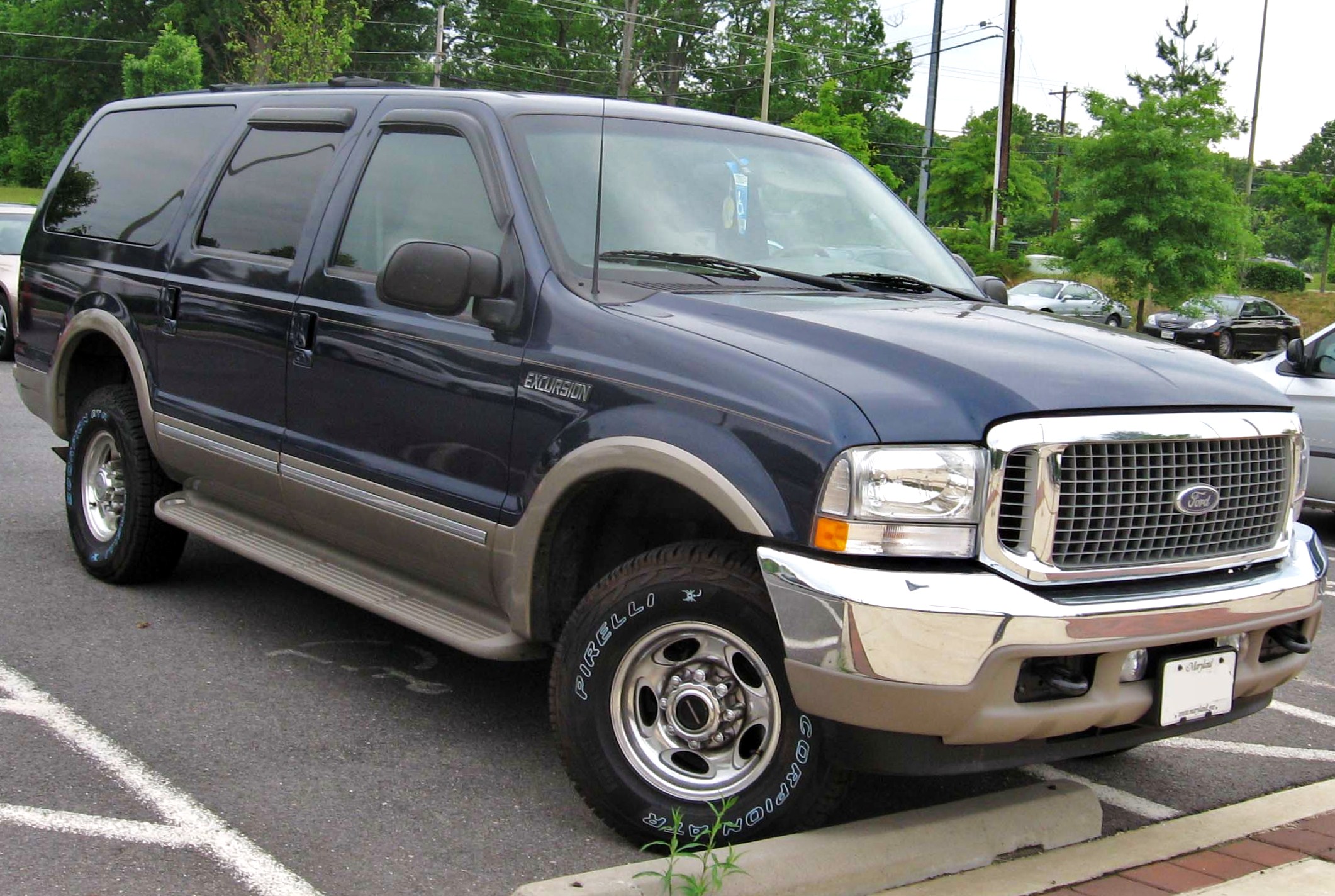
Ford Excursion
"...ah. We had Kamish did go into the pits after that excursion through paddock as well. Shedden was also into th..."
The Ford Excursion is a very big SUV meant for carrying people and doing heavy work like towing. In a motorsport setting, it might be mentioned because it was involved in something that happened around the pits or paddock. The focus is usually on the situation, not on it racing.
The Ford Excursion is a large, body-on-frame SUV designed for heavy-duty use, with roomy seating and a commanding towing/hauling focus. In a racing or paddock discussion, it may be referenced when someone talks about a vehicle making an unusual trip through the area—like going into the pits after an incident. That kind of mention usually highlights logistics or what happened around the event rather than performance on track.
pits
"We had Kamish did go into the pits after that excursion through paddock as well. Shedden was also into the pits on lap 16, we think possibly because of the altercations that he'd been having."
The pits are the race teams’ service area. Drivers go there to change tyres and sometimes fix problems, usually as part of the race strategy or after an incident.
In touring car racing, “the pits” are where teams change tyres, refuel (if applicable), and make setup adjustments during scheduled or strategy-driven stops. A pit stop can be triggered by incidents, tyre wear, or changing weather/track conditions.
slick tyre
"Yeah, pretty much everyone was still on that slick tyre as well, so you were really just trying to survive."
A slick tyre is a race tire with smooth rubber and no grooves. It works best when the track isn’t wet, because it can’t push water out of the way like treaded tyres can.
A slick tyre is a race tire with no tread pattern, designed to maximize contact patch and grip on dry or near-dry track surfaces. In wet conditions, slicks can lose grip quickly because there’s no tread to channel water away.
wet shot runners
"At this point, I think the wet shot runners were 34 seconds a lap quicker, but still having to make it through all the traffic,"
This is about the cars using tyres made for wet weather. Those tyres have tread that helps them grip on a rainy track, so they can go faster than cars still on dry-track tyres.
The phrase appears to refer to the cars running on wet-weather tyres during the wet phase of the race. Wet tyres typically have tread patterns that improve water evacuation, helping them maintain grip and reduce lap times versus slicks in rain.
big slide
"We had Cook off at paddock for a big slide himself. That car was so twitchy all weekend"
A “big slide” is when the car starts to slide because the tires aren’t gripping enough. It can be controlled, but if it’s too much it becomes hard to steer and can cost time.
A “big slide” describes a situation where the car’s tires lose grip and the car rotates while still moving forward. In touring-car racing, drivers often use controlled slides to keep speed through corners, but too much slide can make the car unpredictable and slow to drive.
rear play
"Cook did say on the grid that there was a lot of rear play in the car, which is making it very difficult to drive."
“Rear play” means the back of the car feels loose and unpredictable. That can make the car harder to control through corners, especially when you’re trying to go fast.
“Rear play” is driver-speak for the rear of the car being loose or moving around more than expected. In practice it often shows up as oversteer tendencies or a car that feels twitchy, making it harder to place the car precisely on corner exit.
90 degree slide
"Ingram then had a 90 degree slide himself at Clearways, another great save. I mean he was 90 degrees through this corner."
A “90 degree slide” is when the car turns sideways a lot while still going forward. It’s usually a sign of very low grip, and the driver has to react quickly to keep it from spinning out.
A “90 degree slide” means the car rotates so far that it’s nearly sideways relative to its direction of travel. That level of rotation usually indicates very low traction or a setup/line that triggers strong oversteer, and it requires precise throttle and steering to save the car.
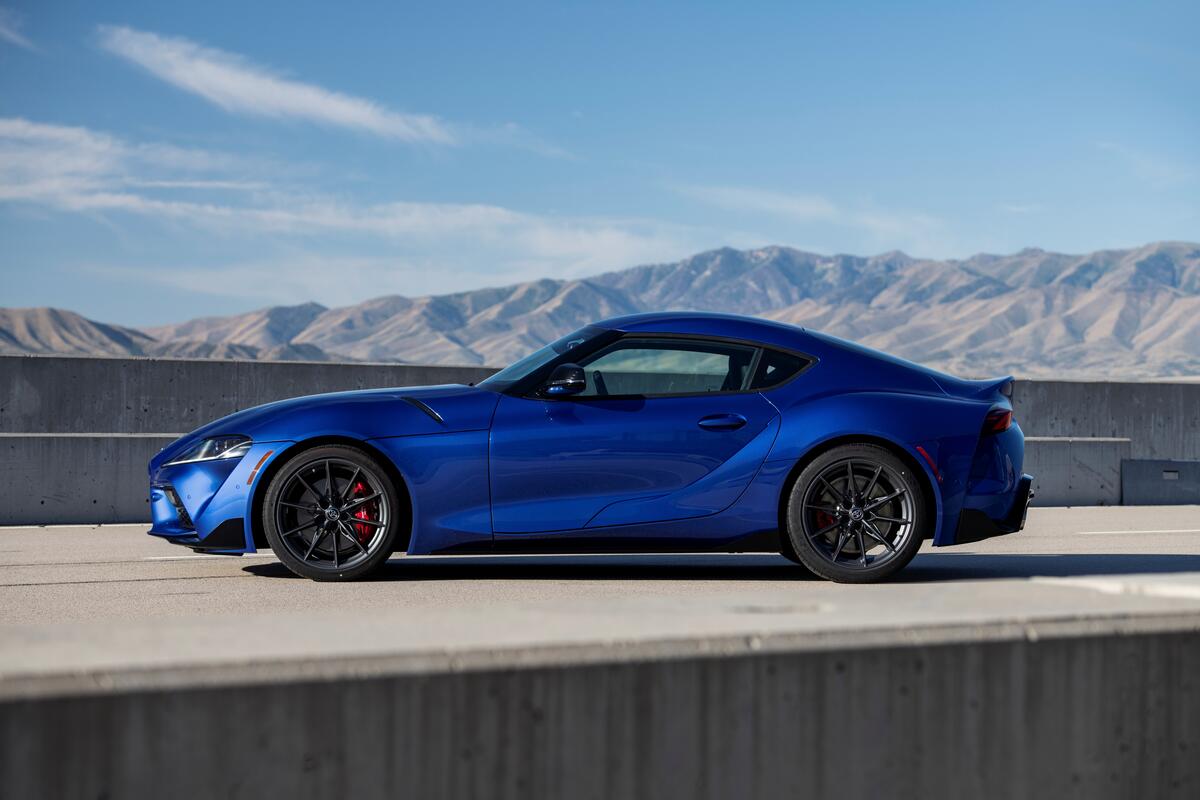
Toyota A90
"again with the car. It's not really working for him at the moment in any way, shape or form. Ingram then had a 90 degree slide himself at Clearways, another great save. I mean he was 90 degrees through this corner. Do you know what that save reminds me of? That Muller one where"
The Toyota Supra is a sports car built for speed and quick acceleration. In racing, it can sometimes be hard to control if the tires don’t grip well, which can lead to big slides. That’s likely why it’s mentioned with the driver struggling and having to correct the car.
The Toyota Supra is a performance sports coupe known for its strong power and rear-wheel-drive layout, making it a popular choice for both racing and enthusiast builds. In a motorsport context, it can be discussed when a driver is struggling with traction, balance, or control—especially when incidents like big slides or near-misses happen. That’s why it may come up in the podcast alongside moments where the car “isn’t working” and the driver has to save it.
inside line
"This then gave Rainford a chance to try and take the position and he was holding the inside line and it was a case of three into one doesn't really go at Druids."
The “inside line” is the route near the inside of the corner. It’s often faster because it’s shorter, but it can also lead to close fights and contact if cars are side-by-side.
The “inside line” is the path closest to the apex/inside of a corner, typically offering the shortest distance. In racing, holding the inside line can set up an overtake attempt, but it also increases the risk of contact if the other car is alongside.
three into one
"and he was holding the inside line and it was a case of three into one doesn't really go at Druids."
“Three into one” means three cars are trying to go through the same tight spot at the same time. With limited space, it usually ends with someone getting pushed out or making contact.
“Three into one” is a racing way of saying too many cars are trying to occupy the same cornering space at once. When the track narrows or the corner entry is tight, that many cars can’t all fit safely, so someone gets forced wide or gets hit.
penalty
"There was no penalty given for this, which I think is the right decision. Agreed. And fortunate for anyone who was running well at that time. And then, oh boy, has massive off again through habit."
A penalty in BTCC-style racing is an official consequence for a rules infringement (for example, unsafe rejoining, ignoring flags, or causing a collision). The hosts discuss whether a penalty should have been applied, which matters because penalties can change race outcomes and influence driver behavior.
rejoined
"Rejoined basically pretty much into the line of Robotton. Robotton had to make a voiding action. No, I don't think think that is one of the wider points of the track."
“Rejoined” means the driver is getting back onto the track after going off. Racing rules require them to do it safely so they don’t cause a crash.
In circuit racing, “rejoining” is when a driver comes back onto the track after going off-line (for example after a spin or running through a run-off area). It’s governed by safety rules: you must re-enter in a way that doesn’t endanger other cars, and that’s why drivers often get scrutinized for where and how they rejoin.
yellow flag zone
"as Osborne rejoined, Robotton coming up at a rate of knots in a yellow flag zone, in a yellow flag zone, looks to go past Osborne down the inside into Druids. A yellow flag zone gets two wheels onto the grass, unsettles the car, and pushes Osborne exit stage left"
A yellow flag means “slow down—something dangerous is on track.” Drivers have to be careful and ready to react, so passing gets riskier.
A yellow flag zone means marshals have spotted a hazard (like a stopped car) and drivers must slow down and be prepared for danger. In touring car racing, it’s also a cue to avoid aggressive moves because cars may be unsettled by the reduced grip or debris near the incident.
stewards accept / no further action is appropriate
"the stewards accept that the focus of driver 32 at that moment would have been the movement of car 77... Accordingly, the stewards consider that neither driver was wholly or predominantly responsible for the incident that no further action is appropriate"
After an incident, officials called stewards review what happened and decide if anyone should be punished. “No further action” means they didn’t think a penalty was justified.
In BTCC and other touring car series, race stewards review incidents and decide whether to penalize drivers. “No further action is appropriate” means the stewards concluded the incident didn’t meet the threshold for penalties, often after assessing responsibility and visibility of warnings.
yellow signal appeared on his dash
"And therefore the first awareness 32 had of the yellow signal was when the signal appeared on his dash. At that point, he was already alongside 77"
Instead of only seeing flags around the track, some cars show warning lights on the dashboard. That timing can affect whether a driver reacts in time.
Modern race cars can display caution information directly on the driver’s dashboard, such as a yellow warning when the track is under caution. This matters because a driver’s response depends on when they can actually see the signal.
over-take
"He chooses to go down the inside because that's generally how you would make an overtake."
An overtake is when one race car passes another while they’re both on the track. Here, they’re talking about passing on the inside line of a corner.
In circuit racing, an overtake is when one car passes another on track. The podcast is discussing a specific move (“down the inside”) where the overtaking car commits to a pass at the inside line of a corner.
lights that are being shown
"drivers have got to be more aware of the flags that are being flown or the lights that are being shown to what action there is happening in front of you on the circuit."
Besides flags, race control can use lights around the track to give instructions. Drivers are expected to notice them and adjust their driving right away.
Motorsport also uses trackside lights (in addition to flags) to convey race control messages such as caution, start/stop information, or other procedural alerts. The hosts are arguing that drivers should interpret these signals correctly to avoid making the wrong move.
reverse grid draw
"I don't understand how he's done it. Yeah. So he started seventh on the grid, obviously, following that reverse grid draw."
Instead of lining up in the usual fastest-to-slowest order, the race grid gets flipped. So some of the quicker drivers start nearer the back and have to work their way forward.
A reverse grid draw is a format where the starting order for a race is flipped based on a previous result (often the qualifying or earlier race). That means faster drivers may start further back, and overtaking becomes a bigger part of the strategy.
Dallin
"but on the outside of Dallin. And yeah. And then by the end of the lap, he was third."
Dallin is a named part of the Brands Hatch Indy track. When they mention it, they’re saying roughly where on the lap the position change happened.
Dallin is another named section/corner at Brands Hatch Indy that drivers reference when describing where overtakes happen. It helps listeners map the action to the track layout and understand how the pass was set up.
boxed in
"He just said nowhere to go. He got boxed in by slower cars and had nowhere to sort of take that speed."
“Boxed in” means other cars block all the lanes, so the driver can’t pass or change direction easily. It usually costs time because there’s nowhere to go.
Being “boxed in” means a driver is trapped between other cars with no clear gap to move into. In touring car racing, that often forces the driver to lift or slow down, losing momentum and speed on the next straight or corner.
breaking point
"I had to kind of watch back twice was Sutton's breaking point into paddock. So everyone else on the inside was breaking 20 meters earlier and he was still on the accelerator going past them."
The “breaking point” is where the driver decides to start braking for a corner. Braking earlier or later affects how fast you enter the turn and whether you can make a move.
A “breaking point” is the exact spot where a driver starts braking for a corner. In racing, braking earlier or later changes how much speed you carry into the turn and can determine whether you can overtake or defend.
spun out
"He spun out, did touch the barrier, but managed to get back up onto the circuit and get back going again."
A “spin out” is when the car starts rotating and you lose control of the direction. It usually means the tires lost grip.
A “spin out” is when the car rotates uncontrollably, typically due to a loss of traction at the tires. In racing, it often happens when grip is low (like cold tires) or when the driver brakes/turns too aggressively for the available traction.
radiators
"where he was off the track and had to retire a couple laps later with grass in the radiators."
Radiators help keep the engine from overheating by cooling the fluid that runs through it. If something blocks them—like grass—the engine can get too hot and the car may need to stop.
Radiators are the cooling system components that remove heat from the engine coolant. If debris or damage causes grass to block the radiator area, the engine can overheat and the driver may have to retire.
retire
"and had to retire a couple laps later with grass in the radiators."
In motorsport, “retire” means the driver stops competing and withdraws from the race, usually due to mechanical failure or damage. It’s different from finishing the race or being classified after repairs.
put very wide
"Hamilton, his teammate, also got biffed off at Graham Hill, put very wide on a quite bumpy piece of ground."
“Put very wide” means the car gets pushed toward the outside edge of the corner. That usually costs time and can lead to contact with the barriers.
“Put very wide” means a car is forced to run toward the outside of the corner, often exceeding the intended racing line. That can reduce speed, increase the chance of contacting barriers, and make it harder to recover position.
radiator cleared out
"And he also had to come in to get the radiator cleared out."
“Radiator cleared out” means they removed whatever was blocking the radiator so it can cool the engine again. If it stays blocked, the engine can overheat.
“Radiator cleared out” implies the cooling airflow path was blocked (by debris, grass, or damage) and the team needed to remove the blockage to restore cooling. Without that, the engine can overheat and force retirement.
tip-for-tap battles
"As you already said, Ingram was looking really comfortable out front, and there seemed to be a lot of tip-for-tap battles in the midfield. No one really majorly coming out on top or losing out because of it, just a lot of chopping, changing back and forth in positions."
It means the cars are trading places in a very close, step-by-step way. Nobody really pulls away, but they keep challenging each other for small position changes.
“Tip-for-tap” describes a close, back-and-forth style of racing where cars trade small gains—often by swapping positions lap to lap or corner to corner. In BTCC-style traffic, it usually means lots of defensive driving and opportunistic moves without a decisive breakaway.
great move on Mikey Dabel for second position
"Then we saw Sutton do what Sutton does, which is a great move on Mikey Dabel for second position. Millimetre per eye. It's just so good. He sets it up as if he's going to go around the outside, which into paddock. Then, as Mikey tries to move over slightly to cut off the outside line, cuts back to the inside, centimetre perfect."
They’re talking about a smart passing move. The driver pretends to go one way, then switches back to the other side at the right moment, so the car in front can’t easily block or counter.
The hosts describe a textbook racecraft overtake: Sutton sets up the move as if he’ll go around the outside, then cuts back to the inside at the last moment. By doing it from the inside coming out of “paddock,” he also keeps the inside line for the next corner (“Druids”), limiting the chance for the driver ahead to respond.
medium tire
"Yeah, I know in race one, he went from the medium tire to try and offset the boost to try and level it all out."
Racing tires come in different “types” that trade grip for lifespan. A medium tire is usually meant to give a good mix of speed and how long it lasts.
In touring car racing, teams choose from different tire compounds (often labeled by hardness/traction levels). A “medium tire” is typically a balance between grip and durability, so it can be used to manage pace across a stint or race.
boost
"Yeah, I know in race one, he went from the medium tire to try and offset the boost to try and level it all out."
Boost is extra pressure from a turbo that helps the engine make more power. In racing, drivers/teams can manage it to keep the car fast without losing control or traction.
“Boost” refers to the extra air pressure a turbocharged engine creates to increase power. In a race context, teams may adjust how much boost is available to manage performance and tire/traction behavior.
championship
"Although what I will say just for just to try and temper expectations a little bit is that at the halfway point of last season, we'd said that he'd won the championship."
The championship is like a season-long points race. You add up results from many events, so being behind by a lot doesn’t always mean it’s over.
A racing championship is decided by accumulating points across multiple rounds rather than winning a single race. That’s why a driver can be “clawing back” or “over 40 points behind” and still have a realistic chance later in the season.
race craft
"with the incident of Moffat, which we covered in race 12 but yeah, he didn't have great pace, didn't have great race craft this weekend and just looked, it looked very much like a new team learning a car, shall I say."
Race craft means how good a driver is at racing smart, not just going fast. It’s about making the right moves at the right time and staying out of trouble.
Race craft is a driver’s skill at managing the car and their position during a race—things like choosing when to attack, when to defend, and how to avoid mistakes. It’s less about raw speed and more about decision-making under pressure and traffic.
pace
"with the incident of Moffat, which we covered in race 12 but yeah, he didn't have great pace, didn't have great race craft this weekend"
Pace is basically how fast the car is running. If someone has “no pace,” they’re not keeping up with the front runners.
Pace is how quickly a driver (and car) can consistently run over a stint or session. In racing coverage, “good pace” usually means the car is fast enough to challenge, while “no pace” suggests it can’t keep up or is struggling to find speed.
tuned into the car
"I'm not sure he's quite tuned into the car yet, potentially. And I think it must be also absolutely gutting to see how well your teammate is doing"
It means the driver hasn’t fully “clicked” with how the car drives. When they’re tuned in, the car feels predictable and they can drive it confidently.
“Tuned into the car” describes how well a driver has adapted to the car’s behavior—how accurately they can predict and exploit its balance (turn-in, traction, braking stability). If a driver isn’t tuned in, they may feel off pace and make more errors.
mojo
"I wonder if he's lost his mojo a little bit. We'll have to see how he gets on. It's tough. It's really tough."
“Mojo” here means the driver’s confidence and rhythm. If they’ve lost it, they’re not performing as well as they normally do.
“Mojo” is a motorsport slang term for a driver’s confidence and sharpness—whether they’re making good decisions, hitting their marks, and feeling in control. When someone “loses their mojo,” it usually means results and consistency have dipped.
FP one
"And that is because of how the weekend started for him having that injury placement. You don't really know where the car's going to be when you miss out on a lot of running in FP one."
FP1 is the first practice session on race weekend. It’s when teams test and learn how the car feels before the important sessions.
FP1 (often written “FP one”) is the first free practice session of a race weekend. Teams use it to gather baseline data—setup direction, tire behavior, and car balance—before qualifying and the races.
BMW
"Yeah, Dallin was my first pick, but I would happily change that to Aaron Taylor Smith with a variety. What about your surprise bad then? It's BMW, a circuit where I really expect them to go well."
BMW is the car brand the hosts are talking about. They expected BMW to do well at this track, but the results didn’t match that expectation this weekend.
BMW is the car brand being discussed as the surprise disappointment at the BTCC event. The hosts are comparing BMW’s expected performance versus what they saw across the three races, including how the cars handled damp/cold conditions.
damp
"I know it was damp. I know it was cold. I think to Dillion start in race one was dreadful. The car seemed really hard to control all weekend."
Damp track conditions reduce tire grip because rubber has less consistent contact with the surface. That often changes braking points, corner entry/exit traction, and how aggressively a car can be driven without losing control.
Snetting
"I was updating the table ready for the graphic in a couple of weeks' time to go to Snetting."
Snetterton is a circuit the series is heading to next, and it’s being used as a reference point for future predictions and how results might translate. Track-to-track differences (layout and weather) can strongly affect qualifying and race pace.
Request an Explanation
Heard something you'd like explained? We'll add it to this episode.
Sign in to request explanations for terms you heard.
Want to learn more?
Browse our glossary for plain-English explanations of automotive terms, jargon, and concepts.
Help improve this episode
See something that's not quite right? Our annotations are AI-generated and can sometimes miss the mark. Click the flag icon on any annotation to suggest a correction.