
BTCP Q&A, YOUR QUESTIONS ANSWERED
About this episode
Recorded in the BTCP workshop during a UK heat wave, the hosts run a two-part Q&A that weighs touring-car health, costs, and the path to the next generation. They argue recent regulation choices—especially hybrid rules—didn’t work, while entry grids are leveling out around a 20 to 24 car field. The discussion turns to fan access (free-to-air and TikTok), why junior pathways are missing, and how rising expenses threaten BTCC’s survival in its current form.
WE ANSWER YOUR QUESTIONS ON THE BTCC AND US. THIS IS PART 1 OF TWO
super touring era
"Super Touring era. But I do think certainly, probably what, 2008 to maybe 2015, we had a really good, strong Touring car series..."
“Super Touring era” is a nickname for a time in touring car racing when the rules were meant to make the cars feel more like normal road cars. Fans often associate it with some of the most exciting, competitive racing in that category.
The “Super Touring era” refers to a specific period in touring car racing when the rules were designed to keep cars close to production models while still allowing high-level competition. In practice, it’s remembered for strong manufacturer involvement and very competitive, tightly matched racing.
20 to 24 car grid
"We're leveling out to more of a 20 to 24 car grid. Some might say more quality, ..."
A “grid” is just the number of cars that are entered to race. The host is saying the series is settling into roughly 20 to 24 cars per race.
A “grid” is the set of cars expected to start a race, and “20 to 24 car grid” describes the typical number of entries for each event. The host uses it to argue the series is leveling out in participation and competitiveness.
hybrid route
"I think that basically comes down to that, in my opinion, they got the regulations wrong over the last couple of years. They went down the hybrid route, it didn't work..."
A “hybrid route” means the race cars were changed to use a mix of power sources (like an electric assist alongside the engine). The speaker is saying that, in their view, it didn’t work out as well as hoped.
“Hybrid route” here means switching the touring car power units to include hybrid energy recovery/assistance systems. The host argues that this change didn’t deliver the intended on-track or series-wide benefits within the expected timeframe.
regulations
"I think that basically comes down to that, in my opinion, they got the regulations wrong over the last couple of years. They went down the hybrid route, it didn't work..."
“Regulations” are the rules that tell teams what they can build and how they can race. Here, the host is saying the rule changes had a big impact on how the series works.
In motorsport, “regulations” are the rule set that defines what cars are allowed to do and how they must be built and operated. The speaker’s point is that the recent rule changes affected competitiveness and participation, not just technical details.
budget outlays
"It puts independence off. It's a big budget outlays, and if you're going to change and intersperse changes throughout season after season..."
“Budget outlays” just means how much money teams have to spend. The host is saying the hybrid costs are big enough to make it harder for teams and partners to stay involved.
“Budget outlays” means the money teams must spend to run and develop their cars. The speaker argues that hybrid-related costs are a recurring expense that can discourage manufacturers, sponsors, and independent teams.
panel
"particularly as if you've got a panel in race three, you generally don't hear about it until the next race weekend"
A “panel” here means a discussion show segment where people talk about the races. The host’s point is that if it airs too late, fans won’t connect it to the race they just watched.
In this touring-car broadcast context, a “panel” is a studio or on-air discussion segment where drivers or experts talk about what happened in a recent race. The host is arguing that timing matters—viewers may not hear it until the next weekend.
BRDC website
"unless you're an anorak like us and go searching for it on the BRDC website."
The BRDC website is being mentioned as an online source for racing info. The host is saying most viewers won’t go hunting for it, so they may not hear about certain updates until later.
The BRDC website is referenced as a place where fans can find race-related information that isn’t immediately broadcast to viewers. In this segment, it’s used to explain why only “anoraks” go looking for it, while casual viewers miss it.
Alton
"if somebody had a panel team race three at where we've just been, Alton, by the time it gets round to Thruxton, you've probably, I mean, I've forgotten we've even gone to Alton"
Alton is being used as an example of one race location on the calendar. The host’s point is that by the time the next race happens, you may have already forgotten what happened at the previous one.
Alton is mentioned as a race stop in the touring-car calendar, used here to illustrate how quickly race-weekend news can get stale between events. The key point is the timing gap between rounds, not the track details.
Thruxton
"where we've just been, Alton, by the time it gets round to Thruxton, you've probably, I mean, I've forgotten we've even gone to Alton"
Thruxton is a racing track in the UK. The host is using it to explain that there’s often a gap between race weekends, so news or content from one event can feel old by the next one.
Thruxton is a UK motorsport circuit used for touring-car and other racing events. Here it’s referenced to show the time between race weekends—how a “panel” or discussion from one round might not land with fans by the time the next round at Thruxton arrives.

Honda Integra
"Well, so my car, I've gone for the Honda Integra. Yeah, I can understand that. It was an awesome car of its day."
The Honda Integra is a Honda compact car that also had a big racing history. Here, the point is that it was known for being tough and reliable in competition—like a “tank.”
The Honda Integra is a compact, front-wheel-drive performance car that became famous in touring-car racing for its strong, durable reputation. In this segment, the host highlights how it was “a tank,” tying that durability to its racing-era reputation and how it handled the rules of its time.

Acura Integra
"...n there. Well, so my car, I've gone for the Honda Integra. Yeah, I can understand that. It was an awesome c..."
The Acura Integra is a compact car made by Acura that’s meant to be fun to drive while still being usable day to day. In the podcast, it’s brought up because the speaker chose it as their own car. It’s often discussed as a car that feels sporty without being too big or complicated.
The Acura Integra is a compact, performance-oriented hatchback/sedan line from Acura, known for being practical while still offering an enthusiast-focused driving experience. In the podcast context, it’s mentioned as the speaker’s chosen car, likely because it matches the kind of feel and ownership experience they want. It’s a common topic in car discussions because it represents a balance of everyday usability and driver engagement.
Mr Plato
"It was an awesome car of its day. And it was much maligned by a certain Mr Plato for how strong and robust the car it was."
“Mr Plato” is a reference to a famous British touring-car driver. In this context, the host is saying Plato had strong opinions about the Integra, even though the car proved tough.
“Mr Plato” refers to Jason Plato, a well-known British touring-car driver. The host is using his name to point out that Plato criticized the Integra’s reputation—then the discussion pivots to why the car was still considered robust.
driver lineup
"rather than my three car or my three driver line up. Yeah, driver one for me. You have to put our son in there."
A driver line-up is just which drivers are assigned to race for a team. Teams pick drivers to match the car and the weekend’s conditions.
A “driver line up” is the set of drivers a team assigns to a car across a race weekend. In touring car series, driver combinations can be strategic because each driver’s style and strengths can suit different race conditions.
timing screens
"Even when we were at Stetson and we were lucky enough to be in the WSR garage, you could see how he was just reading that technical data off of the timing screens and looking at it every single lap for both cars"
Timing screens are the live race-information displays used by teams to track lap times, sector times, and other timing data. In a touring car pit/garage environment, engineers use that data to judge pace, manage strategy, and spot changes in performance lap-by-lap.
technical data
"Even when we were at Stetson and we were lucky enough to be in the WSR garage, you could see how he was just reading that technical data off of the timing screens"
Technical data is the numbers and measurements teams look at during a race. It helps them figure out what the car is doing and what to change.
Technical data in motorsport usually means the measurable inputs teams use to understand the car’s behavior—often including telemetry, temperatures, pressures, and performance indicators. Teams use it to diagnose issues and to fine-tune setup and strategy.
race engineers
"Even though you've got the two race engineers for each driver, also looking over those bits, he wants to be involved."
Race engineers are the technical people on a racing team who help the driver. They use data and experience to suggest changes and tactics during the race.
Race engineers are the technical specialists assigned to each driver/car who translate telemetry and timing data into setup and driving guidance. They coordinate things like car balance changes, tire/strategy calls, and how the team responds to track conditions.

Renault Laguna
"Right. Okay, so I'm going for the Nescaf Goldblend Renault Laguna as my car from the super touring era."
This is a race version of a Renault Laguna that was used in touring car racing. Touring car rules shape what parts you can change, so teams build a special race car based on a road-going model.
The Renault Laguna is a British Touring Car–era touring car associated here with the super touring category. In BTCC-style racing, the “Laguna” name points to a specific homologation-era platform that teams campaigned with race-prepped suspension, brakes, and aero to fit the super touring rules.
James Thompson
"James Thompson. What a driver. A champion. They didn't stay in the sport because he went to win other series."
James Thompson is a famous British race driver. In this episode, the host talks about him as a champion who did especially well in the older touring-car era.
James Thompson is a well-known British touring car driver, discussed here as a champion-level talent. The host credits his success to the “super tour era” and early 2000s, implying he was dominant during that specific BTCC-era of touring car racing.
Ash Sutton
"In a similar style, I'm going for Ash Sutton, like you say, I want to see him drive a super touring car because I would love to see how he gets on with it."
Ash Sutton is a current British touring car driver. The hosts are saying they’d love to see how he’d do in a super touring car, because they think he’s exceptionally talented.
Ash Sutton is a modern British touring car driver the hosts want to see step into a super touring car. The discussion frames him as a highly naturally gifted driver and connects his potential success to the “super tour era” style of racing.
super touring cars
"In a similar style, I'm going for Ash Sutton, like you say, I want to see him drive a super touring car because I would love to see how he gets on with it. Even more lairy, wouldn't they?"
A “super touring car” is a touring-car category built around the Super Touring regulations, known for high-performance, closely matched cars and intense wheel-to-wheel racing. The hosts want Ash Sutton to drive one to see how his style translates to that older, more aggressive touring-car format.
Steve Neal
"And if I was going to go for a team boss, which I'll go for the late great Steve Neal, kept that dynamics team together for a very long period, made it an incredibly successful racing team."
Steve Neal is discussed as a team boss who kept the “Dynamics” team together for a long period. The host credits him with building an incredibly successful racing team that was competitive across multiple eras of the series.
astronomical costs
"He asks, can the BTCC survive in its current form? And how can we keep teams and drivers with the current astronomical costs? I think the short answer is no, it can't survive in its current form because it is so expensive."
“Astronomical costs” is the host’s way of describing how expensive it has become to run BTCC teams and campaigns. The discussion links those costs to talent leaving for other series and questions whether BTCC can survive in its current form.
GTS
"And we're seeing a lot of top talent go to other series, not only on costs, I think it's important to know that every driver is going to the GT or of a series because of costs."
“GT” here means Grand Touring racing, a different motorsport category where teams and drivers often move when costs rise in touring cars. The host argues that many drivers end up in GT because it’s where the money and opportunities are, even if it’s not cheaper.
TCR prize money vs touring cars
"It's always back for me that TCR are able to offer [783.8s] money for winning stuff. That is bonkers and touring cars doesn't. Used to. Used to."
They’re comparing how much prize money different racing series offer. The point is that one series (TCR) rewards winners with money, while the other (touring cars) doesn’t do that as much.
The hosts compare how different touring car categories handle prize money and incentives for drivers. They specifically contrast TCR’s ability to offer money for winning with touring cars’ lack of similar driver-focused rewards.
pay drivers
"Obviously, this comes up a lot on social media or all these drivers pay to me that no, there's very few pay [795.7s] drivers on the grid. I think there's probably less than five of my guests on the grid."
A “pay driver” is someone who helps pay for their racing seat. The discussion here is about whether the sport relies on that kind of funding or mostly on team/series support.
A “pay driver” is a driver who brings money (often from sponsors or personal funding) to help secure a seat, rather than being fully funded by the team or series. The hosts argue that touring car grids have very few pay drivers, and that even those drivers may still be subsidized.
synthetic fuel
"Obviously, this year we've got [816.4s] rid of the hybrid and that saves some money. Obviously, we're looking at synthetic fuels, [820.2s] that's not cheap."
Synthetic fuels are fuel made by people rather than pumped from the ground. The idea is lower emissions, but they can cost a lot—so racing gets more expensive.
Synthetic fuels are man-made fuels produced from non-petroleum feedstocks, intended to reduce lifecycle emissions compared with conventional gasoline or diesel. In racing, they can be expensive and require teams to ensure the cars are compatible with the fuel’s properties.
halving the cost of competing
"Another question that is very [828.9s] along a similar line to that was also from Gary. So, he says with Collard Proctor and Lloyd in [833.4s] recent seasons struggling to fund their driver. We've seen this with a lot of independent drivers. [839.0s] How could we halve the cost of competing without damaging the prestige of the championship?"
They’re asking how to make it cheaper to race, ideally cutting costs in half, but still keep the championship respected and attractive. It’s about finding the right balance between money and status.
The question focuses on reducing the financial burden of competing in touring cars—specifically aiming to halve costs—without harming the championship’s prestige. This is a common motorsport governance challenge: balancing affordability, competitiveness, and brand value.
hybrid rules changes
"Whether that's just format or, as you say, bringing the hybrid in going, yeah, we've done that now [865.2s] and then kicking it out after three seasons. We got to a stage where hybrid was working"
They’re talking about the race series changing its rules about hybrid technology—adding it, then removing it later. Those changes can make racing more expensive and force teams to adapt quickly.
The hosts discuss how the touring car series introduced hybrid technology, then removed it after a few seasons. This kind of rules change affects development costs, team strategy, and how expensive it is to stay competitive.
saloon car championship
"touring cars is. So, yes, it's a saloon car championship. Yes, we race around the certain tracks that we have around the UK."
It means the racing series uses cars that are based on regular sedans you’d see on the road. The rules usually keep the race cars looking and behaving like those production models.
A “saloon car championship” is a touring-car series where the cars are based on production sedans (saloon cars). In practice, the series rules define how close the race cars must stay to the road-going body shape and layout.
formats across a weekend
"I'd quite like to see the formats across a weekend changed up sometimes. Maybe even having certain formats for certain weekends, not necessarily a set format across the whole season."
This is about how the race weekend is organized—like when qualifying happens and how many races you get. If the format changes, teams often have to change their strategy.
“Formats across a weekend” refers to how a racing series structures the sessions—such as qualifying and multiple races—within a single event. Changing the format can shift strategy, tire usage, and how teams manage risk across the day.
Silverstone
"So, maybe putting more emphasis on a weekend, a long circuit at Silverstone rather than a weekend at Nock Hill, where it's a nice short track circuit."
Silverstone is one of the UK’s best-known race tracks. It’s generally longer and faster than some other venues, so teams have to set the cars up differently.
Silverstone is a major UK racing circuit known for its long, high-speed lap and fast corners. In touring-car discussions, it’s often contrasted with shorter tracks because it changes how teams set up cars for braking, traction, and tire wear.
Nock Hill
"rather than a weekend at Nock Hill, where it's a nice short track circuit. So, [922.0s] yes, you've got to have good nucleus there, but there have got to be changes that happen over"
They’re comparing Silverstone to a shorter track called Nock Hill. Short tracks usually have more frequent turns and braking, so the racing feels different.
Nock Hill is referenced as a short-track UK venue in the discussion, contrasted with Silverstone’s longer circuit. Short circuits typically mean more braking events and tighter cornering demands, which can affect race strategy and car setup.
knock-on effects
"There are lots of problems in the world, which are causing knock-on effects in every industry. Costs of the basics such as fuel, well, metal fabricating costs, all that sort of stuff has gone through the roof in recent years."
They mean one issue causes other problems to follow. In racing, that can lead to higher costs and harder-to-get supplies.
In this context, “knock-on effects” means one problem (like global disruption) triggers additional downstream impacts across industries. For motorsport teams, that can show up as higher costs for fuel, materials, and parts availability.
metal fabricating costs
"Costs of the basics such as fuel, well, metal fabricating costs, all that sort of stuff has gone through the roof in recent years."
“Metal fabricating costs” refers to the expense of machining and forming metal parts used to build race components. When these costs rise, teams may reduce development pace or adjust budgets for parts and fabrication work.
IT infrastructure
"they all need IT infrastructure, and all that has gone through the roof as well. So it is getting hard on a global scale because of what's going on in the world and"
It’s the team’s computer setup—things like laptops and networks. Teams use it to manage data and keep everything running smoothly.
“IT infrastructure” is the hardware and systems a team relies on to run operations—like laptops, networks, and data systems. In modern touring-car teams, it supports engineering workflows, telemetry/data handling, and day-to-day logistics.
Alan Gow
"And I think that you, [991.0s] Alan Gow, as all-seeing as he may be, cannot predict what certain presidents or countries are going to close or open or attack or defend."
Alan Gow is a person mentioned in the BTCC conversation. The host is using his name to make a joke about not being able to predict what will happen next.
Alan Gow is referenced as a figure within the BTCC environment, described jokingly as “all-seeing.” The speaker uses his name to frame a point about uncertainty and how external events can affect the championship.
F1 Union
"F1 we have a driver's committee and they have to be able to agree to vote on things that happen within F1. And I think we need to see more of that within the touring cars... I don't think it's necessarily as powerful as the F1 Union."
In F1, drivers have a group that represents them and helps make sure they’re involved in decisions. The host is saying touring cars should have something like that, so drivers can agree on important changes.
In Formula 1, the “Union” refers to the drivers’ collective organization that represents competitors and helps coordinate agreement on rules and governance. The host is comparing that influence to touring car governance, arguing touring cars need a similar, more powerful driver-driven decision process.
cost-capping teams
"And I think it's clear to see on the BTC grid what teams have money and what teams don't. They've all got money but in varying forms. And going back to your point as well, I don't know... because I think touring cars isn't in the place where this works yet, cost-capping teams."
A cost cap is a rule that limits how much racing teams are allowed to spend. The host thinks touring cars haven’t reached the point where a cost cap would work smoothly.
A “cost cap” limits how much teams can spend in a season. The host suggests touring cars may not be ready for cost-capping yet, because the BTC grid still clearly shows financial differences between teams.
boost
"I'm not saying what changes... but I'm saying that having spoken to several of the grid, and actually you hear it in interviews when they talk to Louise and the tyres about the boost."
“Boost” is the extra pressure (often from a turbocharger) used to increase engine power. In this segment, the host ties boost to rule changes and driver consultation, implying that how much boost teams/drivers are allowed to run affects competitiveness and race outcomes.
tyres
"but I'm saying that having spoken to several of the grid, and actually you hear it in interviews when they talk to Louise and the tyres about the boost."
Tyres are the rubber contact patch that determines how much grip the car has. In racing, tyre rules and tyre behavior can heavily influence how fast you can go and how you plan your race.
In touring car racing, “tyres” are a performance-limiting component governed by rules and strongly affecting grip, strategy, and lap times. The host mentions interviews “about the boost” alongside “the tyres,” suggesting the current package (engine/boost plus tyre rules) is part of why drivers feel the sport isn’t in a good place.
go back to basics
"I do wonder whether touring cars has tried to, and this might help our costs, is go back to basics. Let's stop messing about with trying to even out races..."
“Go back to basics” means stop over-complicating things and use a simpler, clearer set of rules. The host thinks that could lower costs and make drivers feel the changes are more sensible.
“Go back to basics” here means simplifying the sporting/technical rule approach rather than constantly adjusting variables to equalize results. The host’s point is that touring cars might reduce costs and improve driver buy-in by focusing on a simpler, more stable ruleset tied to boost and tyre usage.
universal parts
"it’s very easy to go, yes, there should be more universal parts across cars and stuff like that to bring costs down, but then manufacturers go, well, I want to put our own twist on that."
Universal parts are parts that can be used on lots of different cars instead of being custom-made for just one team or model. That usually helps teams spend less money because they can share the same parts.
“Universal parts” are components designed to fit across multiple car models or teams. In racing, the idea is to standardize parts so teams can buy the same items more easily and cheaply, reducing development and procurement costs.
salvage route
"We've seen that with Playtoe this year about going down the salvage route, which is something that other teams haven't."
A “salvage route” means using parts taken from wrecked or scrapped cars instead of buying new ones. It can save money, but you have to make sure the parts are safe and allowed to be used.
A “salvage route” means sourcing components from damaged or end-of-life vehicles instead of buying brand-new parts. In motorsport, this can cut costs, but it also raises questions about part condition, traceability, and safety compliance.
second hand parts
"you know that you can get decent second-hand parts on the market. I'm not saying we turn it into a banger race, but I think every panel has got a dent in already, but what I'm saying is..."
Second-hand parts are used parts from older cars. Teams might use them to save money, but they still have to make sure the parts are in good enough shape and allowed by the rules.
“Second-hand parts” are used components taken from previously owned vehicles, often including race spares or scrapped cars. Using them in racing can reduce costs, but teams must manage wear, fitment, and any rules about approved sourcing and safety.
pay tiers
"I never want to see a situation where we start having pay tiers for what we have now. I think that's something we need to make sure we avoid."
“Pay tiers” means people get different levels of access or benefits depending on how much they pay. The concern is that it could make it harder for some teams to participate the way they do today.
“Pay tiers” here refers to a tiered access or pricing system—essentially different levels of payment determining what teams or participants receive. In motorsport, that can affect paddock access, hospitality, and overall participation costs, potentially changing the sport’s culture and competitiveness.
budget caps
"You mentioned earlier about budget caps, and yes, it is a possibility. We've seen them,"
Budget caps are rules that limit how much racing teams can spend. They’re meant to keep the competition fair so richer teams can’t just buy their way to better results.
“Budget caps” are limits on how much teams are allowed to spend over a season. The goal is to control costs and improve competition by preventing wealthier teams from outspending others, but they can also create pressure to find cheaper (and sometimes controversial) ways to operate.
ITV4
"yes, we've got this long running deal with ITV. It's ITV4, and I do wonder whether we need to get back to the days where we can get on to BBC, BBC2, maybe. Or just ITV1."
ITV4 is a UK TV channel. The hosts are talking about whether F1 should be shown on bigger, more widely watched channels to reach more people.
ITV4 is a UK television channel within the ITV network, often used for sports and motorsport coverage. The discussion here is about how broadcast reach (which channel) affects audience size and sponsorship value.
paywall
"about being behind a paywall. I would suggest that most people, and do let us know if you don't, but I think most people nowadays do have a subscription service"
A paywall is when you have to pay money to watch something. If a sport moves behind a paywall, fewer people who don’t subscribe may be able to see it.
A paywall is a system where viewers must pay a subscription fee to access content. In sports broadcasting, moving coverage behind a paywall can reduce casual viewership but may still work if the audience is already paying for streaming services.
Netflix
"but I'm thinking of your mum straight away. No, I know. Who would struggle to watch it going behind that? But if you're bringing in, if you're moving it to wards of paywall and something like Netflix, I think you'll still get a good amount of numbers viewing."
Netflix is a streaming service where you watch content online with a subscription. The hosts are discussing whether putting motorsport documentaries there could still reach lots of people.
Netflix is a streaming service that can distribute sports-related documentaries and content to subscribers. The hosts are weighing whether moving certain motorsport “behind the scenes” material to Netflix could still generate strong viewership and attract investment.
behind the scenes documentary
"going to be the behind the scenes documentary made for play-toe racing. It's going to be interesting to see where that finally ends up, whether it's going to be YouTube, whether it's going to be Amazon, Netflix, whatever."
A behind-the-scenes documentary is a film format focused on what happens off-track—team operations, preparation, and personal stories. In motorsport, it’s often used to grow fan engagement and create new sponsorship opportunities.
Nescafe Gold
"You look at all the cars and the majority of sponsors are in the industry in one way or the other. Gondola Day to Shredded Wheat, Nescafe Gold."
Nescafe Gold is a coffee brand. The hosts mention it as an example of a normal consumer product that could sponsor racing.
Nescafe Gold is a coffee brand name used as an example of a non-racing sponsor. The point is that motorsport grids are often filled with industry-related sponsors, and the hosts want more mainstream consumer brands.
engine oil
"You can't really give away samples of engine oil. It doesn't really work. But also, that means that it's very difficult for some jobs to bring their own motorsport-based sponsors to a grid..."
Engine oil is the liquid that keeps the engine parts from grinding against each other. It also helps cool the engine down. In racing, companies that make oil often sponsor teams because the oil is used constantly and the branding shows up everywhere.
Engine oil is the lubricant inside an engine that reduces metal-to-metal wear, helps carry heat away, and supports sealing between moving parts. In motorsport, oil sponsors are common because teams use large quantities and the branding is visible on cars and team gear.
tires
"because you can't have Toyo tires for argument's sake as your sponsor when there's good gear that are providing the current tires. You can't have Miller Oils as your main sponsor if your team is using a different oil..."
Tires are what actually grip the road or track. They affect how well the car turns and stops. In racing, if the series already has an official tire supplier, teams can’t just swap to a different tire brand as a sponsor.
In racing, tires are the only contact patch between the car and the track, so they largely determine grip, braking performance, and how the car behaves in corners. When a series has a current tire supplier, teams generally can’t choose a different tire brand as a sponsor without conflicting with the official supply arrangement.
scholarship program
"We need a scholarship program. It's as simple as that. We need a scholarship program otherwise we're going to end up with a gentleman's grid full of over 50-year-olds..."
A scholarship program is money and support for drivers who have talent but not the cash to race. The point here is to help more people get into racing, instead of only the wealthy being able to afford it.
A scholarship program in motorsport is funding and support aimed at helping talented drivers progress without needing wealthy family backing. The speaker argues it’s necessary to avoid a “gentleman’s grid” dominated by older, financially supported entrants.
gentleman's grid
"otherwise we're going to end up with a gentleman's grid full of over 50-year-olds who are doing it because they've got the income to do so."
A “gentleman’s grid” means the race is mostly filled by rich hobbyists who can pay their way in. The concern is that expensive racing can block talented younger people from getting a chance.
A “gentleman’s grid” is a derogatory way to describe a racing field where entries are mostly funded by wealthy amateurs rather than a broad pipeline of professional talent. The speaker uses it to criticize how high costs can keep younger drivers out.
legends
"Message from Stuart came in. He said, should legends become a permanent addition to the BTC circus? Yes. No. Okay. And is there a series you would add to the circus and what would you remove?"
“Legends” is the name of a racing series they’re talking about adding to the BTC weekend schedule. The host’s point is that if it shows up every race, it might get less exciting, and not every track is a good fit.
“Legends” here refers to a racing series/class being considered as a permanent addition to the BTC event lineup. The host discusses whether keeping it as a recurring support series would reduce novelty and whether every circuit suits it.
one-make-series
"But a one make series I think is a really good idea. Agreed. I agree. And if you've got something that could be adaptable to the longer circuits and to the shorter circuits, then that would be highly beneficial."
A one-make series means everyone races basically the same car model. Because the cars are so similar, it’s easier to compare driver skill and racecraft instead of raw car differences.
A one-make series (also called a spec series) uses cars from a single manufacturer/model family. That reduces performance differences between cars so racing is more about driver skill, setup within rules, and strategy.

Porsche Sprint
"So is there anything on the current format that you would take away and not have a back? Yep. There's two series. One's controversial. One I don't think is controversial. I don't think the Porsche Sprint adds a great deal."
“Porsche Sprint” is a Porsche racing category mentioned in the show’s discussion of touring-car support races. The point being made is that it may not help drivers progress as effectively as the main Carrera championship.
“Porsche Sprint” here refers to a Porsche-branded racing series within the broader Porsche racing ladder. The host is criticizing it as adding little value compared with the main Porsche Carrera championship.
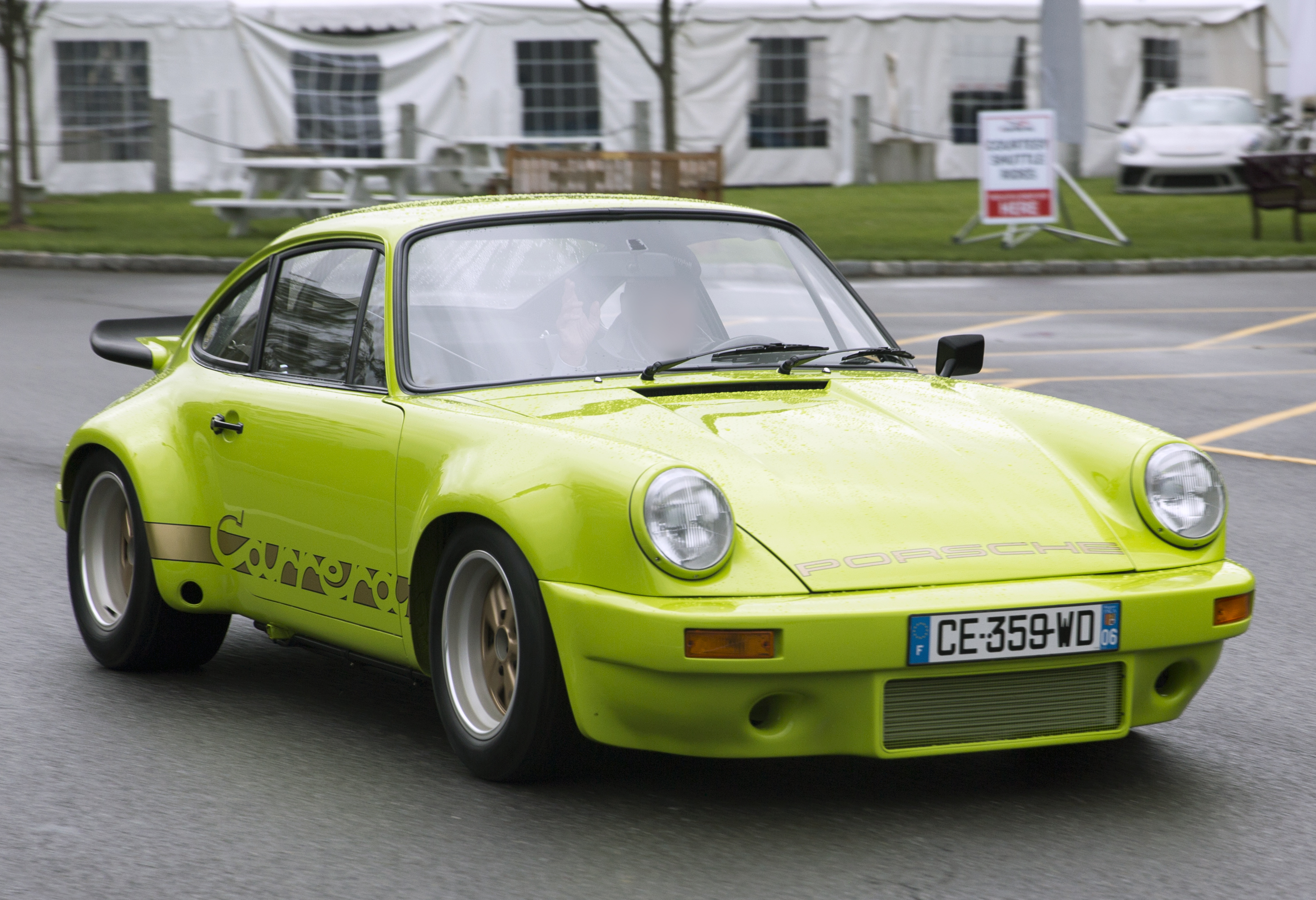
Porsche Carreras
"...p up with what the championship is doing with the Porsche Carreras. We know the drives that are in there. We can fol..."
The Porsche Carrera RS is a special, performance-focused version of the 911. It’s designed to be faster and more track-ready than a regular version, with changes that help it handle and accelerate better. It gets mentioned in racing talk because it’s closely tied to how race cars are built for speed.
The Porsche Carrera RS is a high-performance, track-focused version of the 911, built to deliver strong lap times with a lighter, more aggressive setup than a standard Carrera. In a touring-car or racing discussion, it often comes up because it represents a classic “race-bred” approach—how the car’s engineering and driver feel can match what a championship is trying to achieve. It’s also a shorthand for the kind of performance and setup choices teams and drivers chase in competition.
feeder series
"Live from us. I have a bit as well. It's not a feeder series. You're not getting the next touring car driver coming through Porsche Carrera because if they're successful in the Porsche Sprint, they go to Porsche Carrera GB..."
A feeder series is like a training league that helps drivers get noticed and move up. The host’s point is that this series doesn’t really bring the next touring-car drivers through the usual route.
A feeder series is a lower-tier racing championship designed to develop drivers and move them up to higher levels. The host argues that the Porsche Sprint doesn’t function as a true feeder because successful drivers jump to other Porsche categories rather than into touring cars.

Porsche Carrera Gb
"...y're successful in the Porsche Sprint, they go to Porsche Carrera GB and if they're successful there, they go to GT or..."
TOCA grid
"Agreed. I think that we've lost a lot of real good talent off the TOCA grid. I'm thinking King, I'm thinking Lewis Plato, I'm thinking who's..."
“TOCA grid” means the group of drivers racing in the touring-car series supported by TOCA. The host is saying some talented drivers have left that touring-car scene.
The “TOCA grid” refers to the set of drivers competing in the TOCA-supported touring car ecosystem. The host is lamenting that talent has moved away from that touring-car pipeline.
F4
"Oh dear. I would get rid of the F4s. So I would get rid of the F4s as well. ... Because at the end of the day, the long-term aim for those F4 drivers is not to be on the TOCA paddock."
F4 is a junior level of open-wheel racing for up-and-coming drivers. It’s meant to be a cheaper way to start in single-seaters before moving up to higher levels like F3 and F2.
F4 refers to Formula 4, a junior single-seater racing category designed as an entry point for young drivers. It’s typically positioned as a relatively affordable step toward higher formulas like F3 and F2.
TOCA paddock
"Because at the end of the day, the long-term aim for those F4 drivers is not to be on the TOCA paddock. Their aim is to go into Italy or F3 and to go to F2."
The TOCA paddock is basically the “base” area for touring car teams during a race weekend. The host is saying many F4 drivers don’t plan to stay in touring cars long-term.
The TOCA paddock refers to the team and driver area for TOCA-run touring car racing events. It’s where touring car teams operate during race weekends, as opposed to single-seater paddocks.
F2
"Their aim is to go into Italy or F3 and to go to F2. ... I think the JSCC is the perfect stepping stone to go into the touring cars or even possibly into Porsche."
F2 is a level of racing just below F1. It’s a big test for drivers because the cars are faster and the competition is tougher.
F2 is Formula 2, typically the major feeder series right below Formula 1. It’s where drivers face more powerful cars and stronger competition, making it a key proving ground.
F3
"Their aim is to go into Italy or F3 and to go to F2. ... When you see F1, you get F2, F3."
F3 is a higher level of open-wheel racing than F4. It’s where drivers try to show they’re ready for the next step up, like F2.
F3 is Formula 3, a step above F4 in the open-wheel development ladder. Drivers often use F3 to prove they can handle faster cars and more competitive racing before aiming for F2.
F1
"When you see F1, you get F2, F3. And Porsche. And the Academy."
F1 is the highest level of open-wheel racing. They’re using it as a benchmark for how drivers move up through the ranks.
F1 is Formula 1, the top tier of open-wheel motorsport. The host uses it as a reference point for how the single-seater ladder is structured (F1 → F2/F3).
Fiesta Juniors
"Yeah, I agree. When you see F1, you get F2, F3. And Porsche. And the Academy. ... I would replace that with something like Fiesta Juniors or the JSCC."
Fiesta Juniors is a junior racing series built around Ford Fiesta-based machinery, aimed at developing younger drivers. The host argues it could better fit as a stepping stone into touring cars than F4 does.
JSCC
"I really don't understand. And okay, I do sort of understand there are politics that goes on behind between different clubs and what is willing to be accepted into Bach or BRCC and stuff like that. ... But I think the JSCC is the perfect stepping stone to go into the touring cars or even possibly into Porsche."
JSCC is a junior racing series acronym. Here, the host is saying it’s a good stepping stone for drivers who want to move into touring car racing.
JSCC is a junior touring-car-related racing series acronym the host treats as a direct development step. In this discussion, it’s presented as a better pathway into touring cars (and possibly Porsche) than F4.

Ford Fiestas
"We've both seen Fiestas before. Obviously, Lewis Turkington is driving in those currently."
The Ford Fiesta is a small hatchback car. In touring-car racing, series organizers often pick one specific model so the racing is closer and more about driver skill. Here, they’re talking about the Fiesta-based racing that’s already happening.
The Ford Fiesta is a compact hatchback that has been used in touring-car racing as a one-make platform. In this segment, the hosts reference Fiestas as the current baseline for the series, including a specific driver competing in them.
Lewis Turkington
"Obviously, Lewis Turkington is driving in those currently."
Lewis Turkington is a race driver. In this part of the podcast, they mention him as someone competing in the current Fiesta setup.
Lewis Turkington is a touring-car driver mentioned here as currently racing in the Fiesta-based category. His name is used as an example of the existing driver lineup and what’s already working in the series.
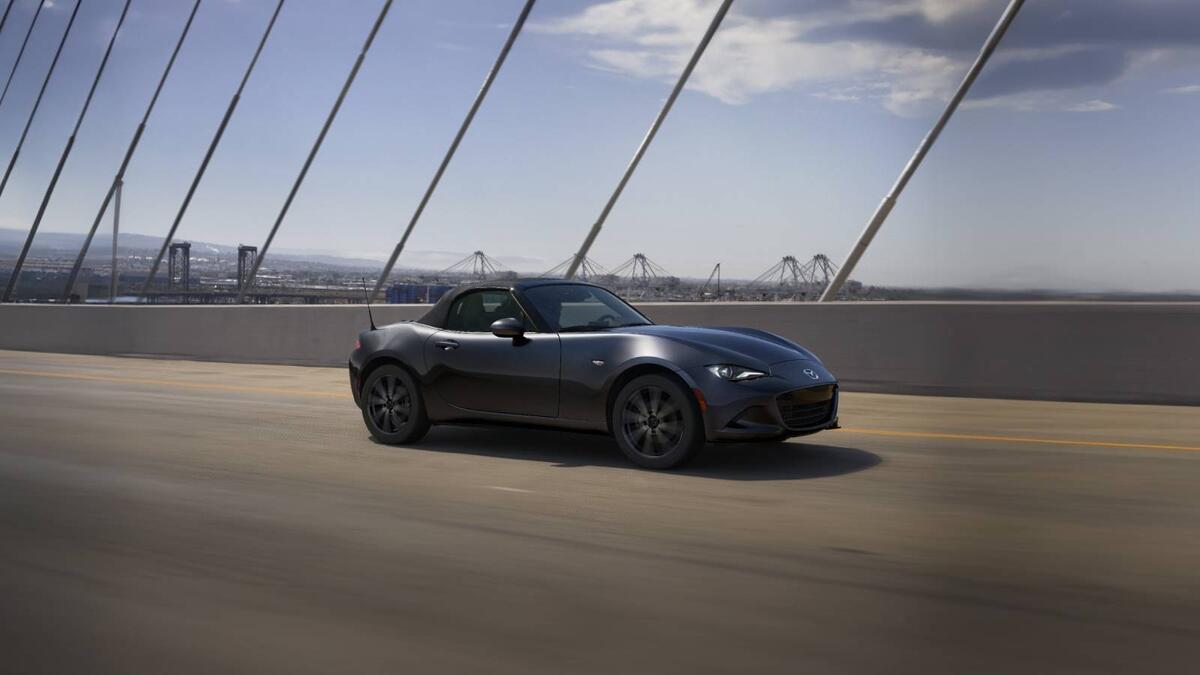
Mazda MX-5 Cup
"I'd also like to see something a bit fun, maybe like the Mazda MX-5 Cup, something like that."
The Mazda MX-5 is a small, lightweight sports car. An “MX-5 Cup” is a race series where most competitors use the same model, which helps keep the racing close and makes it a good stepping stone for drivers.
The Mazda MX-5 is a lightweight, front-engine, rear-wheel-drive roadster, and the “MX-5 Cup” refers to a one-make racing series built around that car. The hosts bring it up as a fun, different option for a junior/feeder championship.

Honda Civic
"I also quite like the Civic Cup, but perhaps not for a touring car."
The Civic Cup is a one-make racing concept built around the Honda Civic. The hosts mention it as something they like, but question whether it fits touring-car racing specifically.
one make championship
"I agree with you. I like a one-make championship. I enjoyed the days that we had the Clioz in there as a one-make."
A one-make championship is a race where most drivers use the same car model. Because the cars are similar, it’s harder for teams to “buy” speed with upgrades, so driving skill matters more.
A one-make championship is a racing series where competitors use the same (or very closely related) car model and typically similar performance parts. The goal is to reduce engineering and budget advantages, making results depend more on driver skill and race strategy.

Clioz
"I enjoyed the days that we had the Clioz in there as a one-make."
“Clioz” is a racing series based on the Renault Clio. When it’s a one-make championship, everyone races the same car model, so it’s easier to judge who’s driving best.
“Clioz” refers to a Renault Clio one-make championship the hosts say they enjoyed. One-make series use the same model (and usually similar-spec cars), which tends to emphasize driver ability and racecraft over car-to-car differences.
junior championship
"But if those costs come down, it will be really interesting to see how the junior championship, if it ever comes to fruition, what the costs are comparing that to the JSCC and the Fiestas."
A junior championship is a stepping-stone race series for drivers who are earlier in their careers. The hosts are debating whether it would be affordable enough to attract talent compared with other entry paths.
A junior championship is a developmental racing series aimed at younger or less-experienced drivers. Here, the hosts discuss whether such a series could be viable and how its costs might compare to existing feeder options like the JSCC and Fiesta-based racing.
close racing
"First thing first is, generally, we get close racing throughout the whole field, whether it's, okay, if we do have two drivers, like we've got Simon Ingram, who seem to be that class above the rest..."
Close racing means the cars are evenly matched, so they’re not spread out by huge gaps. That usually creates more overtakes and side-by-side battles.
Close racing describes situations where many cars are competing within a narrow performance gap, leading to frequent battles for position. The hosts connect it to the series format and to the idea that even when there’s a “class above” driver, others still fight rather than one car dominating.
Simon Ingram
"whether it's, okay, if we do have two drivers, like we've got Simon Ingram, who seem to be that class above the rest, they're still normally fighting each other..."
Simon Ingram is a driver they’re talking about as being stronger than most of the field. Even so, the hosts say the racing still stays competitive because top drivers keep battling each other.
Simon Ingram is referenced as a driver who appears to be “class above” the rest in the series, yet still fights with another top driver rather than running away. The point is about competitive parity and how the format produces battles.
position
"positions, chop and change quite often, which keeps, for me, the racing exciting and the sport exciting."
“Positions” just means where each car ranks on the track. If cars are close, they can trade spots often as the race goes on.
In touring car racing, “positions” refers to the order of cars on track at any moment. Because cars run close together, small changes in pace and strategy can swap positions lap after lap.
Ferrari GT
"Carroza and Spencer Aldridge over Napa and Xcelerate as two top engineers, that's the word, thank you, two top engineers in their field. Spencer's doing some work with the Ferrari GT."
“Ferrari GT” means Ferrari’s racing cars in the GT class. Those cars are race-prepped versions of road cars, and engineers often work on how they perform and handle in GT racing.
“Ferrari GT” refers to Ferrari’s Grand Touring (GT) racing category, where cars are based on production models but built for endurance/sprint-style racing. The mention implies an engineer working on Ferrari’s GT program or a GT-spec Ferrari project.
BTCC
"I know that I've been a bit moaning on this episode about not having enough talent going through, and I still stand by that, but there is young talent on the grid as well. Charles Rainford, Dow De Leon, Dexter Patterson,"
BTCC stands for the British Touring Car Championship. It’s a UK racing series where cars based on road models race closely together.
BTCC is the British Touring Car Championship, a UK-based touring car series. It features production-based cars racing on circuits with close, wheel-to-wheel competition.

Ford Got Ford
"...ers. We've got Mercedes, we've got Hyundai, we've got Ford, we've got Toyota, we've got big name brands ther..."
regs
"We've got a nice mix of cars. Yes, they're all moving towards the saloon because they're finding the fastest way to build their race cars. They're suiting these regs."
“Regs” means the rules for the racing series. Those rules affect how the cars are designed and what setups teams can use.
“Regs” refers to the rule set governing how cars are built and raced. In BTCC, the regulations shape things like body shape, aerodynamics, and allowed performance, which is why teams choose certain car designs.
pit lane walkabout
"And for that, you get generally 10 races with a pit lane walkabout, where you can get your autographs and access to the paddock all day unless there's a"
A pit lane walkabout is a time when fans are allowed into the pit area near the race cars. It’s usually when you can meet drivers, get autographs, and take photos.
A pit lane walkabout is an organized period where ticket holders can enter or move through the pit lane area to get close to the teams and cars. It’s typically paired with opportunities to meet drivers for autographs and photos.
autographs
"where you can get your autographs and access to the paddock all day unless there's a we're on my brand's hatch rates in the middle of the aisle."
Autographs are signatures from the drivers, usually on photos or programs. The host is saying touring car events make it easier to meet drivers for that kind of interaction.
Autographs are signed memorabilia from drivers, typically offered during fan-access periods at motorsport events. In this context, they’re part of the structured access experience described for touring car weekends.
Brands Hatch
"unless there's a we're on my brand's hatch rates in the middle of the aisle. The access fans get straight onto the barriers around the circuit to watch the racing up close,"
Brands Hatch is a famous race track in the UK that hosts touring car racing. People mention it because it’s a place where fans can get very close to the cars and drivers.
Brands Hatch is a well-known motorsport circuit in the UK, famous for hosting British Touring Car events. It’s often used as a benchmark for how close fans can get to the action and where access areas are located.
gearbox oil
"because you're that close, you can smell the engine oil, the gearbox oil, the fuel, the burning rubber, it is that is so and it's also free to watch on the telly as well."
Gearbox oil is the fluid that helps the transmission work smoothly. The host is saying you’re close enough at touring car events to notice those smells.
Gearbox oil is the lubricant used in a transmission/gearbox to reduce wear and manage heat. Mentioning it alongside engine oil emphasizes the speaker’s point about the sensory closeness of touring car weekends.
burning rubber
"you can smell the engine oil, the gearbox oil, the fuel, the burning rubber, it is that is so and it's also free to watch on the telly as well."
Burning rubber is the smell you get when tires get very hot and wear quickly during hard driving. The host is using it to explain the “you can smell it” feel of being close to the cars.
Burning rubber refers to the smell produced when tires overheat and wear rapidly under load. It’s a common sensory cue at motorsport events and is used here to describe why touring car racing feels more immediate.
tin top series
"but they haven't taken the touring car crown as the premiere tin top series of the UK in my opinion, other opinions may vary."
“Tin top” is racing slang for touring cars that look like normal road cars with a closed body. When they say “premiere tin top series,” they mean the most important/leading touring-car championship.
“Tin top” is motorsport slang for touring cars—production-based cars with enclosed bodywork (as opposed to open-wheel or prototype race cars). Calling TCR or another series the “premiere tin top series” is essentially saying it’s the top touring-car championship.
learning curve
"But there's always going to be a learning curve when you're bringing in new bits and pieces for that."
A “learning curve” means it takes time for teams to figure out how to adapt when rules change. The first season with new regulations often requires new car setups and adjustments.
A “learning curve” here means teams and drivers need time to adapt when new regulations or technical rules are introduced. Even if the intent is to improve racing, the first season(s) can involve misunderstandings, setup changes, and performance surprises.
Nick Hamilton
"as competitive as the others. We look at this season, Nick Hamilton has already taken a Jackson's overwind for the weekend. Outright points as well."
Nick Hamilton is a race driver in touring cars. The hosts are saying he’s already scored well this season, which usually means he’s been finishing near the front consistently.
Nick Hamilton is a touring-car driver referenced here as having already taken an “outright points” haul this season. In BTCC context, that points success is a sign of strong race pace and consistency against the field.
outright points
"We look at this season, Nick Hamilton has already taken a Jackson's overwind for the weekend. Outright points as well."
“Outright points” means points you earn for your overall finishing position in the race. It’s not just points for beating people in your own group—it’s based on where you finished overall.
“Outright points” refers to scoring points based on overall race position, not just within a class or category. In series like the BTCC, that means you’re earning points for where you finish relative to everyone, not just a subgroup.
Matt Jackson
"You look back through the history of the sport, how many amazing drives have he had come through a series? Matt Jackson, James Thompson, Yvonne Muller, Colin Turferton, Matt Neal."
Matt Jackson is a racing driver the hosts mention as an example of someone who progressed through touring cars. They’re using him to illustrate how drivers can move on to bigger wins later.
Matt Jackson is named as one of the drivers who has come through touring cars and later achieved major success. The point of listing him is to show how BTCC can be a stepping stone to higher-level championships.
Yvonne Muller
"You look back through the history of the sport, how many amazing drives have he had come through a series? Matt Jackson, James Thompson, Yvonne Muller, Colin Turferton, Matt Neal."
Yvonne Muller is a racing driver the hosts bring up as someone who progressed from touring cars to major success. They’re using her as another example of the sport’s talent pipeline.
Yvonne Muller is listed among drivers who have come through touring cars and later won championships. Her mention highlights that the series has produced successful drivers across different eras and backgrounds.
Colin Turferton
"You look back through the history of the sport, how many amazing drives have he had come through a series? Matt Jackson, James Thompson, Yvonne Muller, Colin Turferton, Matt Neal."
Colin Turferton is one of the drivers mentioned in the hosts’ “history of the sport” list. They’re using him to show that touring cars have produced drivers who can succeed elsewhere too.
Colin Turferton is named as part of a historical list of drivers who have had notable touring-car careers and then moved on to other achievements. The hosts are using the list to argue that BTCC has a strong track record of developing winners.
Matt Neal
"a series? Matt Jackson, James Thompson, Yvonne Muller, Colin Turferton, Matt Neal. Drivers that have gone on to be world touring car champions, GT champions in Rob Collard."
Matt Neal is another driver mentioned as an example of someone who did well in touring cars and then went on to bigger success. The hosts are using him to emphasize how tough and high-skill the series is.
Matt Neal is included among drivers who have come through touring cars and achieved championship-level results. The hosts’ broader point is that BTCC is competitive enough to reveal top driving talent.
Rob Collard
"Matt Jackson, James Thompson, Yvonne Muller, Colin Turferton, Matt Neal. Drivers that have gone on to be world touring car champions, GT champions in Rob Collard."
Rob Collard is mentioned as a driver who won championships in GT racing after doing well in touring cars. The hosts are using him as another example of crossover success.
Rob Collard is referenced as a driver who became a GT champion after success in touring cars. The hosts use him to show that BTCC alumni can win in other categories, not just in touring-car racing.
Darren Turner
"Yeah, okay, there's been some, but actually sometimes it's not the sport for them. Darren Turner comes to mind, never really settled in the touring cars, but an incredible GT driver and a long driver."
Darren Turner is mentioned as someone who didn’t fully click with touring cars, even though he was very strong in GT racing. The hosts are basically saying not every great driver adapts to every type of race.
Darren Turner is used as an example of a driver who “never really settled” in touring cars but was still an incredible GT driver. The hosts are contrasting how different racing disciplines can suit different driving styles and strengths.
Dare I say, look at what Dan Kamich did
"And we've seen it with other drivers recently. Dare I say, look at what Dan Kamich did, his formula forward and in Porsche's, and he came in, yes, he was very close to winning a championship, we won't talk about that too much for his sake."
Dan Kamich is a driver the hosts talk about as an example of someone who joined touring cars and found it tough to fight for the title. They’re using his experience to show how competitive the series is.
Dan Kamich is discussed as a driver who came into touring cars from other racing contexts and faced difficulty reaching the championship-deciding moments. The hosts frame it as evidence of how strong the regular BTCC field is.
Formula Forward
"And we've seen it with other drivers recently. Dare I say, look at what Dan Kamich did, his formula forward and in Porsche's, and he came in, yes, he was very close to winning a championship, we won't talk about that too much for his sake."
“Formula forward” here sounds like the hosts mean single-seater “formula” racing experience. They’re saying that coming from that world doesn’t automatically make touring cars easy.
“Formula forward” appears to refer to a formula-style racing background (single-seater “formula” racing) rather than touring cars. In this context, it’s used to explain that drivers coming from different disciplines may need time to adapt.
Request an Explanation
Heard something you'd like explained? We'll add it to this episode.
Sign in to request explanations for terms you heard.
Want to learn more?
Browse our glossary for plain-English explanations of automotive terms, jargon, and concepts.
Help improve this episode
See something that's not quite right? Our annotations are AI-generated and can sometimes miss the mark. Click the flag icon on any annotation to suggest a correction.