
About this episode
Brown March bounces between small-engine tinkering and classic-car auction talk, with plenty of banter in between. The hosts troubleshoot a two-stroke petrol strimmer that wouldn’t restart after years, then explain why it fired instantly once set to full chogun. Later, they run a “pick a car” segment, landing on a 1986 Mercedes-Benz 300 SL and discussing R107-era details, documentation, and convertible rust-prone areas. The episode also covers real-world ownership issues on a Mk7 Golf and winter lubrication advice.
Jonny and Richard have some concerns about a popular singer. Also in this episode, accidentally starting a strimmer, sensational new information about Jason Plato’s purple leather jacket, some troublingly powerful trousers, becoming a stuntman for gangly men, a listener’s album cover mystery solved, getting Yacht Rock wrong, sad bangers (songs, not cars), a Golf filler flap problem, and another fine pick from the Car & Classics auctions.
For early, ad-free episodes and extra content go to patreon.com/smithandsniff
To buy merch and tickets to live shows go to smithandsniff.com
This episode is sponsored by Car & Classic https://candc.li/uc1yqz
Hosted on Acast. See acast.com/privacy for more information.
egg crate grill
"So I don't think that's anything I think it was. I love that egg crate grill. I'm sure that's a 68 like I said before"
An “egg crate” grill is a grille design made of small, repeating rectangular openings that resemble an egg carton. It’s a distinctive styling cue often associated with certain classic muscle-era front-end designs.
383 4-speed
"because I nearly bought a 68 Plymouth Roadrunner, 383 4-speed actually before buying my Dodge."
“383” is the engine size—an old-school big V8. “4-speed” means it has a manual gearbox with four forward gears, so you shift gears yourself.
“383” refers to the engine’s displacement: a 383 cubic-inch V8, which was a common big-block size in late-1960s Mopar muscle cars. “4-speed” means the car uses a four-forward-gear manual transmission, typically giving the driver more control over acceleration and engine speed.

Plymouth Roadrunner
"...said before because I nearly bought a 68 Plymouth Roadrunner, 383 4-speed actually before buying my Dodge."
The Plymouth Road Runner is a muscle car, meaning it’s built for quick acceleration and a sporty feel. The podcast mentions a 1968 model because the speaker almost bought one with a powerful engine and a manual transmission. It’s brought up as part of their car-buying story.
The Plymouth Road Runner is a performance-oriented muscle car that’s especially associated with the late 1960s. It’s often discussed because it offered a strong mix of power and affordability for its time, making it a popular choice among enthusiasts. The podcast references a near-purchase of a 1968 Road Runner with a 383 and 4-speed, emphasizing how close the speaker came to owning one.

Dodge Charger
"..., right, that's it. I'm definitely destined for a charger and went on that mission. So, but it is yet that ..."
The Dodge Charger is a car made for strong acceleration and a sporty look. People talk about it a lot because it’s known for performance and a classic muscle-car style. The podcast mentions it because the speaker feels drawn to owning one.
The Dodge Charger is a classic American muscle car known for its big, powerful V8 heritage and long hood/short deck styling. It often comes up in car conversations because it represents a specific era of performance-focused design and has a strong enthusiast following. In the podcast context, it’s mentioned as a personal “mission,” highlighting its cultural and emotional pull.

Nissan Micra
"...ch, because it reminds me, what is the JDM Nissan Micra? Oh, it's that, okay, well, that's all right."
The Nissan Micra is a small car designed for everyday driving, especially in tight city spaces. The podcast mentions the “JDM” version, which just means the version made for Japan. The speaker is using it to confirm what model they’re thinking of.
The Nissan Micra is a small, city-focused car known for being practical and easy to drive. The podcast brings up the “JDM” Micra, which refers to versions sold in Japan, often with different equipment or specifications than other markets. It’s mentioned briefly as a point of recognition for the speaker.

Mercedes SL
"because I brought up the Mercedes SL and how I feel like the SL has just sort of somehow lost its magic and you don't really see them around anymore,"
“SL” is Mercedes’ roadster line—cars meant to feel sporty and upscale, often with a soft top. The host is basically saying that, in their view, the SL doesn’t feel as exciting or special as it used to. That sets up why they’re talking about a specific SL example from the past.
The Mercedes SL is the brand’s long-running “Sport Leicht” (sport/light) roadster line, built around open-top grand touring. The host’s comment that the SL “lost its magic” is about how the model’s appeal and desirability can change over time as styling, technology, and market tastes shift. It’s a useful framing device for comparing different eras of the SL nameplate.

1986 Mercedes-Benz 300 SL
"And this week, Johnny, I have picked for you a 1986 Mercedes-Benz 300 SL, the classic,"
The Mercedes-Benz 300 SL is a famous Mercedes roadster/GT name. When the host says “1986 Mercedes-Benz 300 SL,” they’re talking about a later SL-era version of that model line, not the earliest legendary 300 SL from the 1950s. The point is that the SL name still matters, but the host thinks it doesn’t feel as special anymore.
The Mercedes-Benz 300 SL is a classic grand tourer known for its distinctive engineering and design heritage. In 1986, the “300 SL” name refers to the R107-era SL line (the long-running SL roadster platform), which is often discussed as a contrast to the earlier, more iconic 300 SL models. This makes it a good reference point when the hosts talk about the SL line “losing its magic.”

Mercedes-Benz Mercedesbenz 300
"And this week, Johnny, I have picked for you a 1986 Mercedes-Benz 300 SL, the classic, the Dallas shape, the R107."
The Mercedes-Benz 300 SL Roadster is an older Mercedes sports car designed to be fast and comfortable for long drives. It’s considered a classic and is known for its distinctive design. The podcast mentions it because it’s a famous, collectible model.
The Mercedes-Benz 300 SL Roadster (W198) is a classic luxury sports car from the late 1950s, built for high performance and grand touring. It’s significant because it’s one of the most celebrated Mercedes sports cars, and the roadster version is especially sought after by collectors. The podcast calls it the “classic” shape, tying it to its iconic design and history.
Bruno Sacco
"This era of SL was designed with the involvement of legendary Mercedes designer Bruno Sacco in Italy in his brown bag."
Bruno Sacco was a famous designer at Mercedes-Benz. The hosts are saying he had a hand in designing the Mercedes model era they’re talking about.
Bruno Sacco was a legendary Mercedes-Benz designer credited with shaping the look and design philosophy of multiple Mercedes models. In this segment, he’s referenced as being involved in the design of the Mercedes SL era they’re discussing.
PDI sheet
"It's got its original PDI sheet and factory spec sheet. It's got a new soft top."
PDI means pre-delivery inspection—basically the inspection done before the car is sold. The PDI sheet is paperwork that records what was checked when the car was new.
PDI stands for pre-delivery inspection, a checklist used when a new car is inspected before it’s handed to the customer. A “PDI sheet” is valuable documentation because it can show how the car was set up and verified at delivery.
factory spec sheet
"It's got its original PDI sheet and factory spec sheet. It's got a new soft top."
A factory spec sheet is the original paperwork showing how the car was built—its options and configuration. It helps you confirm what the car was supposed to have from the factory.
A factory spec sheet is the original build/option documentation from the manufacturer that lists how the car was configured. It’s useful for verifying the car’s original equipment and confirming whether later changes match the factory order.
soft top
"It's got a new soft top. It's also got the color-matched hard top."
A soft top is the fabric convertible roof used on many roadsters. Replacing it matters because it affects weather sealing, insulation, and how the car looks and feels day-to-day.
hard top
"It's got a new soft top. It's also got the color-matched hard top."
A hard top is the solid roof piece for a convertible. It can make the car quieter and more weather-protected, and “color-matched” means it’s painted to match the body.
A hard top is a rigid roof panel used on some convertibles, often to improve insulation, reduce wind noise, and provide a more secure feel. “Color-matched” means it’s finished to match the car’s body paint for a more factory-like appearance.
straight six
"And I would say the 300 in this car, the straight six, [2499.1s] you might argue is all you need, because it's a cruiser."
A “straight six” is an engine with six cylinders lined up in a row. It tends to run smoothly, which is why these cars feel relaxed to drive.
“Straight six” means an inline six-cylinder engine where all cylinders are arranged in one line. It’s often praised for smooth, even power delivery, which fits the cruiser personality the hosts describe.
MBtec
"because it's seen as posh, but first of all, [2543.5s] in a lot of Mercedes, it's not actually leather, [2545.4s] is it? It's MBtec. [2547.8s] That's right, quality faux leather."
MBtec is Mercedes-Benz’s type of faux leather. The hosts say it looks posh like leather but is actually a quality synthetic material that holds up well over time.
MBtec is Mercedes-Benz’s brand name for a high-quality faux-leather upholstery material. In this segment, the hosts argue that MBtec can wear very well and may not be “real leather,” but it still gives the premium look and durability people want.
faux leather
"It's MBtec. [2547.8s] That's right, quality faux leather. [2551.3s] Yeah, well, that's it. [2552.4s] It's quality, it wears very well,"
Faux leather is fake leather made from synthetic materials. It’s meant to look like real leather, and in this case the hosts say it wears well.
Faux leather (also called synthetic leather) is a man-made upholstery material designed to mimic real leather. The hosts use it to explain why some “leather-looking” Mercedes interiors may actually be MBtec and still wear well.

Dodge Avenger
"...come out of it unscathed. That's where I found my Avenger touring car, so damn you, car and classic."
The Dodge Avenger is a car model made by Dodge. In the podcast, it’s mentioned because the speaker found one that matched what they wanted for touring. It’s part of their personal car history.
The Dodge Avenger is a nameplate used by Dodge for a mid-size car, and in the podcast it’s referenced in a personal story about finding an “Avenger touring car.” It’s being discussed as a meaningful part of the speaker’s journey with cars, rather than as a deep technical topic. That context suggests it’s tied to a specific vehicle they owned or pursued.

Delorean DMC-12
"...to remember whether you should put a capital L in DeLorean. Oh, because it's capital D, lowercase e."
The DeLorean DMC-12 is a sports car with a very unusual look, including stainless-steel panels and doors that open upward. It’s well known and easy to recognize. The podcast is mentioning the name and spelling because it’s part of the car’s identity.
The DeLorean DMC-12 is a distinctive sports car famous for its stainless-steel body panels and gullwing doors. It’s frequently discussed because it’s instantly recognizable and has a strong place in pop culture, which keeps it relevant even decades after production. The podcast’s focus on capitalization underscores how iconic the name is.
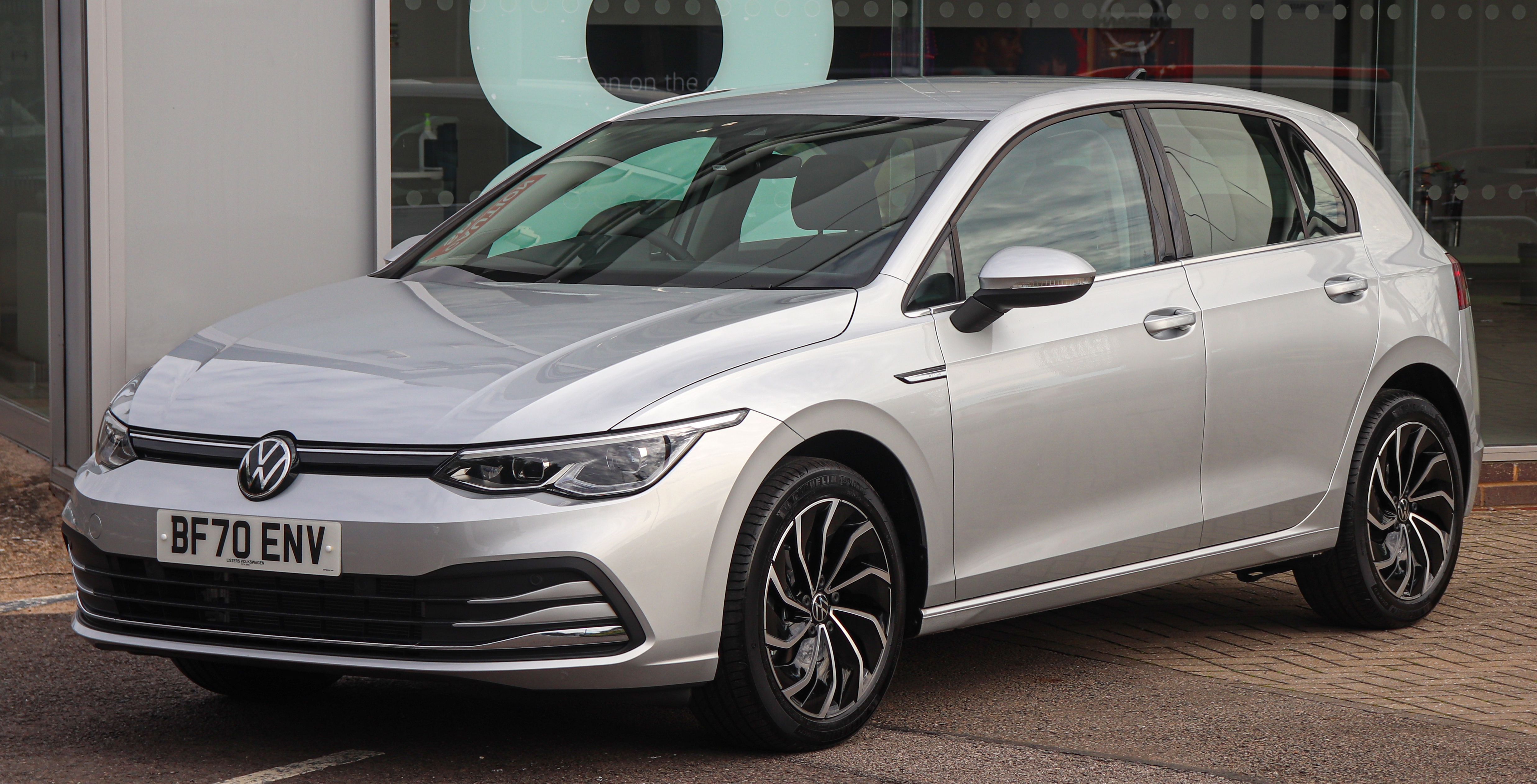
Mark 7 Golf
"She's got a Mark 7 Golf, which when she was... She had to have some surgery recently, and she couldn't drive for a few weeks, and she asked me if I would take the car out for a run..."
“Mark 7 Golf” is a Volkswagen Golf from the Mk7 generation. It’s the kind of everyday car people buy for commuting—practical, comfortable, and not trying to be flashy.
A “Mark 7 Golf” refers to the Volkswagen Golf Mk7 generation, a mainstream compact car known for being practical and easy to live with. In this segment it’s described as a mid-spec diesel with DSG, which points to a common commuter setup: efficient diesel torque plus an automatic gearbox.
diesel DSG
"Mark 7 Golf, just bog-standard mid-spec diesel DSG, just go, well, this is all you need, isn't it?"
DSG is Volkswagen’s type of automatic gearbox. It’s designed to change gears quickly and smoothly, and when combined with a diesel engine it can feel especially easy to drive day to day.
“DSG” is Volkswagen’s dual-clutch automatic transmission, designed to shift quickly by using two clutches for odd/even gears. Paired with a diesel engine, it’s often chosen for smooth commuting and strong low-end torque, which can make the car feel effortless in everyday driving.
fuel flap
"actually, can you help me with a problem? Can't get the fuel flap open on my Golf?"
The “fuel flap” is the hinged door that covers the vehicle’s fuel filler opening. If it won’t open, it’s usually a latch/actuator or release-mechanism issue rather than anything to do with the engine itself.
actuator
"And there's a little sort of actuator thing that rotates to lock the flap shut, and it just sticks or breaks, and that's it, and you can't..."
An actuator is a small moving part that does the “push/pull” action for a mechanism. If it jams or fails, the flap won’t open properly.
An actuator is a mechanical/electromechanical device that moves to perform a function—here, rotating to lock the flap shut. When the actuator sticks or breaks, the flap can fail to open even if you apply force.
WD-40
"And I spent ages squirting WD-40 and stuff into it in the hope we could free it off, and people online said, you just sort of keep pushing it and pushing it, and eventually it might release."
WD-40 is a spray people use to loosen stuck parts. Here, they tried it to get the mechanism working again, but it still wouldn’t open.
WD-40 is a penetrating lubricant/water-displacing spray people often use to free stuck mechanisms. In this case, the host tried it to unstick the actuator/flap mechanism but it didn’t solve the underlying sticking/breaking issue.
flatten the battery
"And locking and unlocking the car as well to the point where I was like, I'm just going to flatten the battery. I've done it so many times. Couldn't get the bastard thing open..."
They’re worried that repeatedly trying to unlock things will drain the car’s battery. If it gets too low, the car may not work until the battery is recharged.
“Flatten the battery” means draining the car’s battery by repeatedly cycling the locks/ignition-related electronics without success. If the battery voltage drops too far, the car may stop responding normally until it’s recharged.
fuel filler flap facia
"There's an era of Volkswagen where the, like, the fuel filler flap facia just comes off, because Polo's like that shape of Polo..."
That’s the decorative trim around the little door you open to put fuel in. If it falls off, it’s annoying because it can rattle, look bad, or get lost.
The fuel filler flap facia is the trim panel/cover surrounding the fuel door (the flap you open to refuel). If it “comes off,” it’s usually a fitment or attachment problem that can leave the fuel door area exposed or cause the trim to be lost.

Volkswagen Polo
"There's an era of Volkswagen where the, like, the fuel filler flap facia just comes off, because Polo's like that shape of Polo from, like, sort of previous generation to the one we have now."
The Volkswagen Polo is a small Volkswagen car. Here they’re talking about a common annoyance where the outside trim around the fuel filler flap can pop off and get lost.
The Volkswagen Polo is a compact car line where the fuel filler flap area is discussed as a recurring fitment issue. In this segment, the host says an older Polo shape (from a previous generation) tends to have the fuel filler flap facia/outer cover come loose and fall off.
MOT
"It needed the car was coming up for service in MOT anyway, and she's just like, I just won't drive it very much..."
In the UK, an MOT is a regular safety check your car has to pass to be allowed on the road. The host is saying the car was due for that check soon, so the repair could be bundled in.
MOT is the UK’s annual (or periodic) vehicle inspection that checks roadworthiness and safety items. In the segment, the host mentions the car was coming up for MOT anyway, which is why the owner delayed driving and planned to have the fuel filler issue fixed at the same time.
solenoid release
"And I don't like anything that's a solenoid release, which is so crucial, because you're relying on one component that will either make or break the interaction."
A solenoid release is an electrically controlled latch. When you press the button, it uses electricity to trigger the latch—so if that part fails, the door won’t open reliably.
A solenoid release uses an electrically controlled coil to pull a latch mechanism. In car applications like a boot/trunk release, it means the latch actuation depends on that one electronic/mechanical component working correctly.
boot release is a solenoid
"Obviously, the door handles are pure mechanical. Boot release is a solenoid, and they always fail."
Here they’re saying the trunk/boot lid opens using an electric latch (a solenoid). If that electric latch breaks, you can’t open the boot normally.
The boot/trunk release being a solenoid means the latch is triggered by an electric actuator rather than a purely mechanical linkage. The hosts are pointing out that this design can be prone to failure compared with mechanical releases.
electronic handbrake
"the first Renault Scenic that had an electronic handbrake, so sort of two generations ago, maybe. Yeah. They used to fail and jam on."
Instead of a cable you pull with your hand, an electronic handbrake uses a motor to clamp and release the brakes. If it malfunctions, it can get stuck and won’t let the car move normally.
An electronic handbrake uses a motor and electronic control instead of a traditional cable to apply and release the rear brakes. Because it’s software- and actuator-driven, it can fail in ways that a cable handbrake wouldn’t—like jamming or refusing to release.

Renault Scenic
"a mate of mine in the car trade told me about, the first Renault Scenic that had an electronic handbrake, so sort of two generations ago, maybe."
The Renault Scenic is a family-friendly van-like car. Here it’s being used as an example of an early model that had an electronic parking brake that sometimes got stuck.
The Renault Scenic is a compact MPV (multi-purpose vehicle) known for practical family use. In this story, a specific early Scenic generation is mentioned for having an electronic handbrake system that could fail and require a manual override.
manual override
"was scrabbling around in the boot to find the manual override for electronic handbrake that releases it. Sort of like, buried under the spare wheel well or something."
A manual override is a backup way to control something when the usual electronic system doesn’t work. In this case, it’s how you can release an electronic handbrake if it’s stuck.
A manual override is a backup mechanism that lets you release or operate a system even if the normal electronic control fails. For an electronic handbrake, it’s typically a physical release procedure so the car can be moved safely.
barn find
"Look, if you haven't seen the barn find that went live last week, it's actually, I think, one of our most highest viewed barn finds in recent history."
A “barn find” is a car that’s been sitting unused in storage for a long time and gets discovered later. Sometimes it’s in great shape, and sometimes it needs a lot of repairs.
A “barn find” is an automotive term for a vehicle that’s been stored away for a long time—often in a barn or similar building—and is only recently discovered or brought back to attention. Because the car hasn’t been driven or restored for years, barn finds can range from surprisingly preserved to needing major work.
Request an Explanation
Heard something you'd like explained? We'll add it to this episode.
Sign in to request explanations for terms you heard.
Want to learn more?
Browse our glossary for plain-English explanations of automotive terms, jargon, and concepts.
Help improve this episode
See something that's not quite right? Our annotations are AI-generated and can sometimes miss the mark. Click the flag icon on any annotation to suggest a correction.