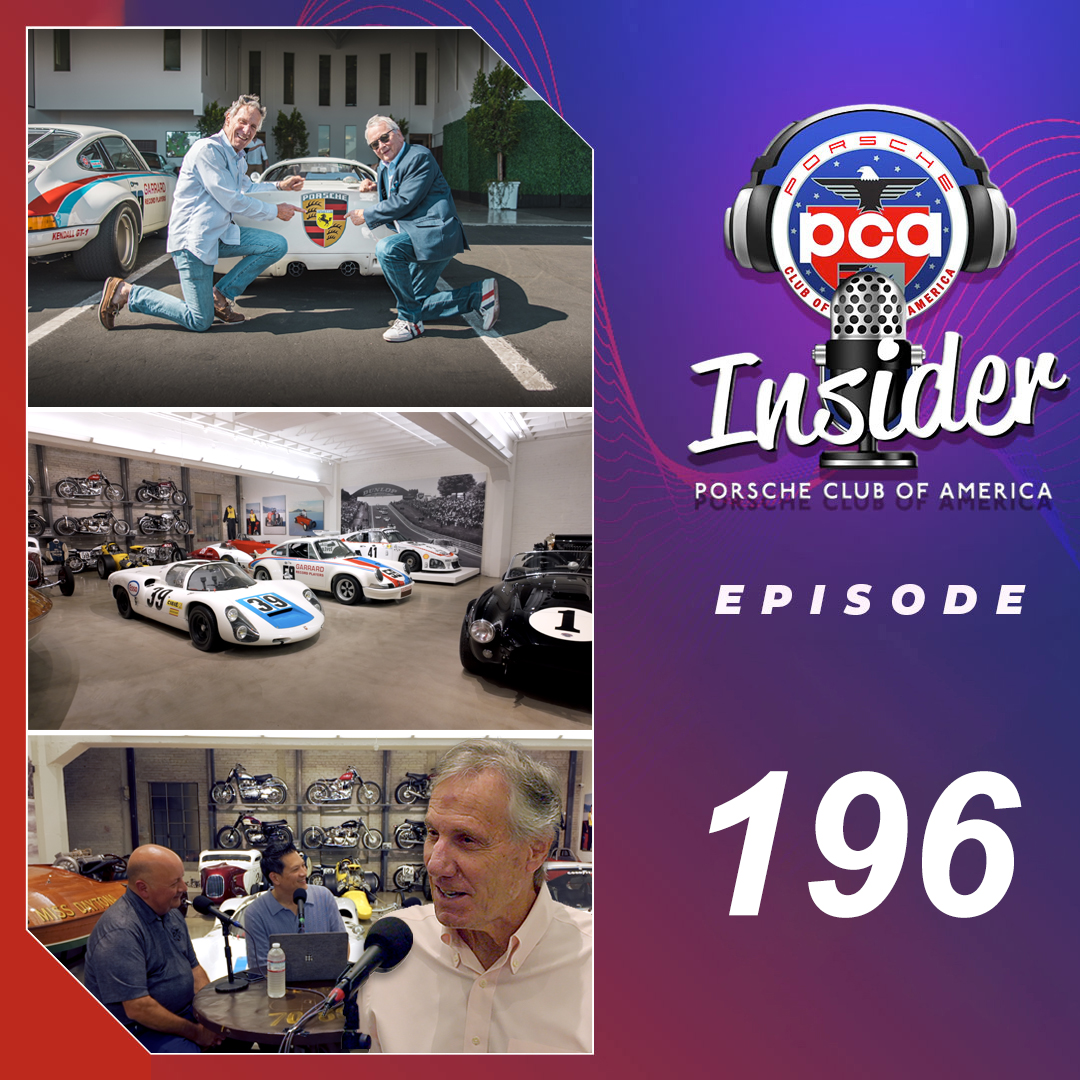
Bruce Meyer shares his deep passion for Porsches and the automotive world in this engaging conversation. From his first Porsche purchase in 1961 to his impressive collection today, Bruce recounts fascinating stories about iconic cars, including the legendary 917 and the unique history of his RSR and 935 models. He reflects on the evolution of car culture, the importance of hot rodding, and the thrill of driving. With insights into the Porsche community and his experiences with notable figures like Steve McQueen, this episode is a treasure trove for car enthusiasts.
On this episode, we’re at Bruce Meyer’s garage in Los Angeles, and we get to spend ninety-minutes talking about cars. Bruce is a fixture in the southern California car scene and is renowned for being the co-founder of the famous Peterson Automotive Museum. He is also a master at story telling and had us captured with the stories about his cars and how he found them. From Steve McQueen’s Speedster to a 910 that won Le Mans to the 935K3 that had an infamous history, you, like us, will be hooked on this episode.
"...especially Pirelli. Pirelli tires have to achieve the highest levels of performance, safety and noiselessness and grip on the road surface."
Pirelli is a famous brand that makes tires for cars and motorcycles. They are known for making high-quality tires that help cars perform better and stay safe on the road.
Pirelli is a renowned Italian tire manufacturer known for producing high-performance tires for various vehicles, including sports cars and motorcycles. They focus on innovation and safety, catering to both everyday drivers and motorsport enthusiasts.
"...what you've done for PCA in the short time as an official PCA member..."
PCA is a club for people who love Porsche cars. They have events and activities for members to enjoy and connect with other Porsche fans.
PCA stands for the Porsche Club of America, a club dedicated to Porsche enthusiasts that organizes events, drives, and gatherings for members to share their passion for the brand.
The Kia Stinger is a type of car that combines sporty performance with a comfortable sedan design. It's known for being fun to drive and looks good too.
The Kia Stinger is a sports sedan known for its performance and sleek design. It offers a variety of engine options and has been well-received for its driving dynamics and styling.
A hot rod is a type of car that has been changed to make it faster and more powerful. People often modify older cars to create unique and speedy vehicles, which is a popular hobby.
A hot rod is a modified car, typically an older model, that has been enhanced for performance and speed. The hot rod culture originated in the United States in the 1940s and is closely associated with car enthusiasts who enjoy customizing vehicles.
"...a hot rod. And I would draw pictures, you know, in the front of a 32 Ford is a pretty easy thing to draw."
The '32 Ford is a classic car from 1932 that many people love to modify and customize. It's famous in car culture, especially among hot rod enthusiasts.
The Ford Model 32, commonly known as the '32 Ford', is a classic American car that became iconic in the hot rodding community. Its design and performance made it a popular choice for customization and modification.
"whether it was a, you know, a Model A or a Model T or a 32 or 34, you know, that's where it all started."
The Model T is another famous car made by Ford that changed the world because it was the first car many people could afford. It made it easier for families to own a car.
The Ford Model T, produced from 1908 to 1927, is often regarded as the first affordable automobile, making car ownership accessible to the general public. Its production revolutionized the automotive industry with assembly line manufacturing.
"whether it was a, you know, a Model A or a Model T or a 32 or 34, you know, that's where it all started."
The Model A is an old car made by Ford that people loved because it was affordable and reliable. It helped many families get around in the early 1900s.
The Ford Model A was a popular car produced by Ford from 1927 to 1931. It is known for its affordability and reliability, and it played a significant role in automotive history as one of the first cars to be mass-produced after the Model T.
"...had lunch every Friday at the Nethercutt Collection, which is classic cars. But Phil Hill told me about the Low Flyers..."
The Nethercutt Collection is a museum where you can see many old and classic cars. It's a place for car lovers to appreciate the history of automobiles.
The Nethercutt Collection is a renowned automotive museum located in Sylmar, California, showcasing a vast array of classic and vintage cars. It is known for its impressive collection of automobiles and its dedication to preserving automotive history.
"... bell, but Phil Remington is like. You watch the Cobra documentary with Adam Carolla, you see it. Exact..."
The Shelby Cobra is a fast sports car from the 1960s that is famous for being lightweight and powerful. People love it for its looks and its success in racing.
The Shelby Cobra is a high-performance sports car that was produced in the 1960s, known for its lightweight design and powerful V8 engine. It has become a legendary vehicle in automotive history, celebrated for its racing pedigree and classic styling.
"...Stu Hillborn, Hillborn Injection, Travers and Coons. They built all the Jim Travers and Coons, Traco."
Hillborn Injection makes special fuel systems that help engines run better, especially in race cars. They help deliver fuel more effectively to the engine, which can make it faster.
Hillborn Injection is a company known for its innovative fuel injection systems, particularly in racing applications. Their products have been widely used in performance engines to improve efficiency and power delivery.
"That was the first speed shop in Southern California, the SoCal speed shop."
SoCal Speed Shop is a famous car shop in Southern California that helps people build and customize fast cars. It's well-known in the car community for its history and contributions to car racing.
SoCal Speed Shop is a historic automotive speed shop located in Southern California, known for its role in the hot rod and custom car culture. It has been influential in the development of performance parts and custom builds since its inception.
"That car is an actual, it's a belly tank from a P38 fighter plane and, and, you know, Alex got out of the service and thought, you know, that's aero, you know, right?"
The P-38 Lightning is a famous fighter plane from World War II. Its fuel tanks were used to create special race cars called belly tanks, which are designed for speed.
The P-38 Lightning is a World War II-era fighter aircraft known for its distinctive twin-boom design and versatility in combat. Its fuel tanks were often repurposed for building belly tank race cars.
"That car is an actual, it's a belly tank from a P38 fighter plane and, and, you know, Alex got out of the service and thought, you know, that's aero, you know, right?"
A belly tank is a special kind of race car made from old fuel tanks of fighter planes. They are designed to be very fast and are often used in racing events.
A belly tank is a type of race car built using the fuel tanks from military aircraft, particularly World War II fighter planes. These tanks are streamlined and lightweight, making them ideal for speed racing, especially at events like Bonneville Salt Flats.
"...I don't want to go too deep into Bonneville. We're really not here about Bonneville, but, but the idea at Bonneville, these guys aren't..."
Bonneville is a place in Utah known for car racing. It's where many cars go to see how fast they can go on a flat, dry area.
Bonneville refers to the Bonneville Salt Flats in Utah, a famous location for land speed records and racing. It has a long history of automotive events where vehicles are tested for speed on a flat, dry surface.
"So if something works and it goes down the salt flat straight or the dry lake straight..."
Land speed racing is a type of racing where cars try to go as fast as they can on flat land. It's usually done on places like salt flats.
Land speed racing is a motorsport where vehicles compete to achieve the highest speed over a measured distance on land. It often takes place on flat surfaces like salt flats or dry lakes.
"So if something works and it goes down the salt flat straight or the dry lake straight..."
A salt flat is a flat area covered with salt, and it's used for racing because it's very smooth and allows cars to go really fast.
Salt flats are flat expanses of ground covered with salt and other minerals, often used for land speed racing due to their smooth surface. They provide ideal conditions for achieving high speeds.
"So if something works and it goes down the salt flat straight or the dry lake straight..."
A dry lake is a lake that has no water in it, and the flat ground can be used for racing cars because it's smooth.
A dry lake is a lake that has dried up, leaving a flat surface that can be used for various activities, including land speed racing. Like salt flats, they offer a smooth area for high-speed runs.
"...it was called the Tom Thumb Special, it's still painted with yellow kind of weird kind of tribal, you know, art on the side."
The Tom Thumb Special is a special car that has a unique look and is known for racing. It has interesting designs on it and is part of racing history.
The Tom Thumb Special is a specific vehicle known for its unique design and history in land speed racing. It features distinctive tribal art and is part of the lore surrounding early racing vehicles.
"They were sharing ideas, be it aerodynamics or engine or whatnot to go faster and faster."
Aerodynamics is about how air flows around cars. Good aerodynamics helps cars go faster and use less fuel by reducing wind resistance.
Aerodynamics refers to how air moves around objects, particularly vehicles. In automotive design, improving aerodynamics can reduce drag, increase fuel efficiency, and enhance stability at high speeds, which is crucial for performance cars.
"...one of the leading, you know, design people were Singer. And I remember when they came out and they were reimagining the car..."
Singer is a company that takes old Porsche 911 cars and makes them look and drive even better. They add special features and designs that make the cars unique and stylish.
Singer Vehicle Design is a company known for its high-end restorations and modifications of classic Porsche 911s, particularly focusing on enhancing performance and aesthetics while maintaining the original character of the vehicle.
"But I remember when the guys were building choppers and cafe bikes. And Harley just didn't get it until maybe the late 70s..."
Choppers are specially modified motorcycles that look different from regular bikes. They often have longer front ends and unique designs, making them stand out.
Choppers are custom motorcycles that have been modified to have extended front forks and a unique design, often emphasizing aesthetics over practicality. They became popular in the 1960s and 1970s, particularly in the custom motorcycle culture.
"But I remember when the guys were building choppers and cafe bikes. And Harley just didn't get it until maybe the late 70s..."
Cafe bikes are a type of motorcycle designed for speed and style. They usually have a simple look with low handlebars and are inspired by racing bikes.
Cafe bikes, or cafe racers, are a style of motorcycle that emphasizes speed and style, often featuring a minimalist design, low handlebars, and a racing-inspired look. They originated in the 1960s in the UK as a way for riders to race between cafes.
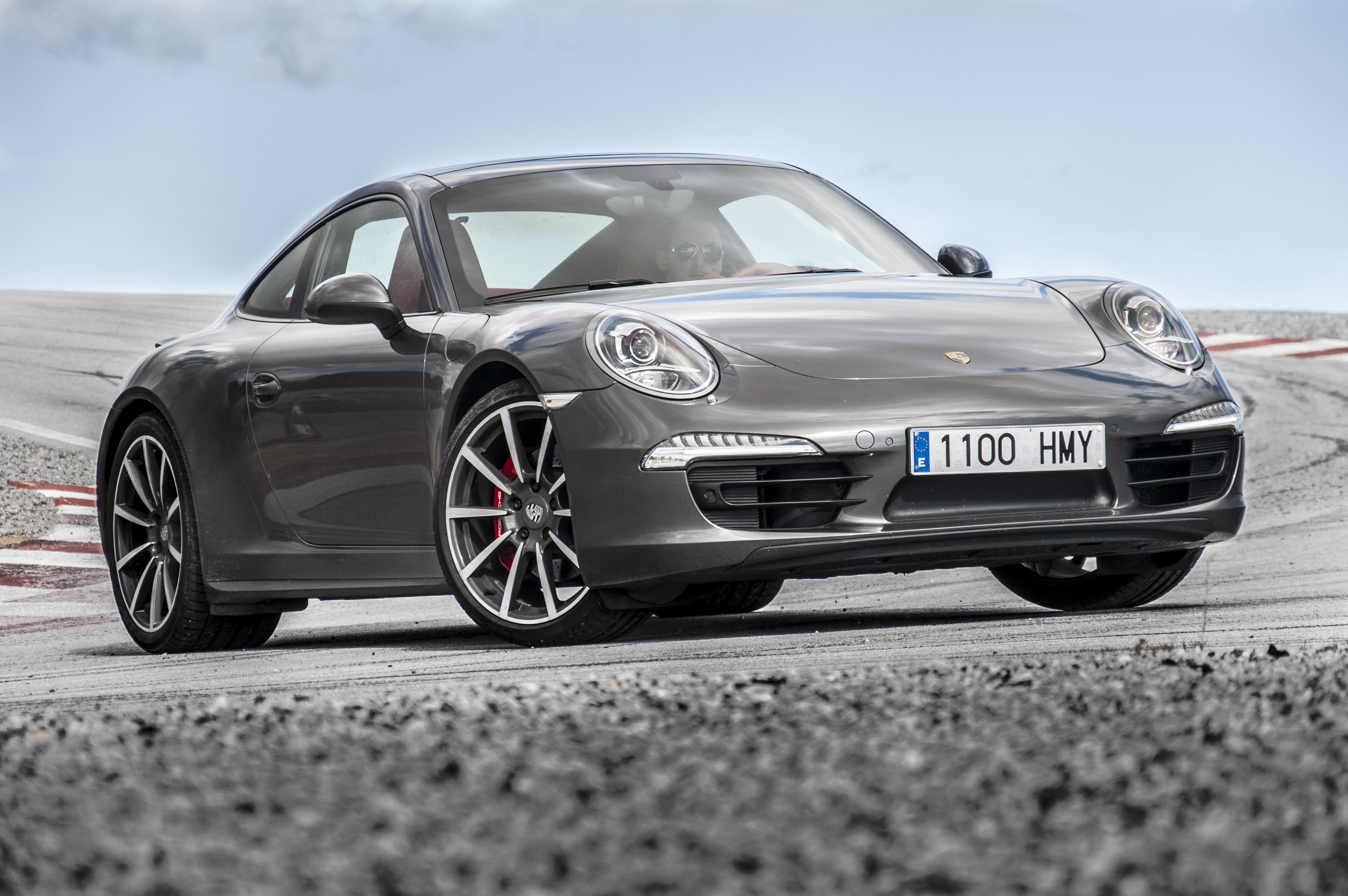
"There's just something that seems like wrong about a wooden dash. But then I have a friend of mine that has a wooden dash in his 9-11. Is it that's under wishes or whatever you call it?"
The Porsche 911 is a famous sports car that many people love because of how it looks and drives. It has been around for a long time and is known for being fast and stylish.
The Porsche 911 is an iconic sports car known for its distinctive design and rear-engine layout. It has been a symbol of performance and luxury since its introduction in 1964, making it a frequent topic of discussion among car enthusiasts.
"...ht, you got the wooden year shift knob out of the 917. That does not qualify you."
The Porsche 917 is a super-fast race car that became famous for winning big races in the late 1960s. It is known for its unique design and amazing speed.
The Porsche 917 is a race car that gained fame in the late 1960s and early 1970s for its dominance in endurance racing, particularly at the 24 Hours of Le Mans. Its innovative design and powerful engine made it a significant milestone in automotive engineering.
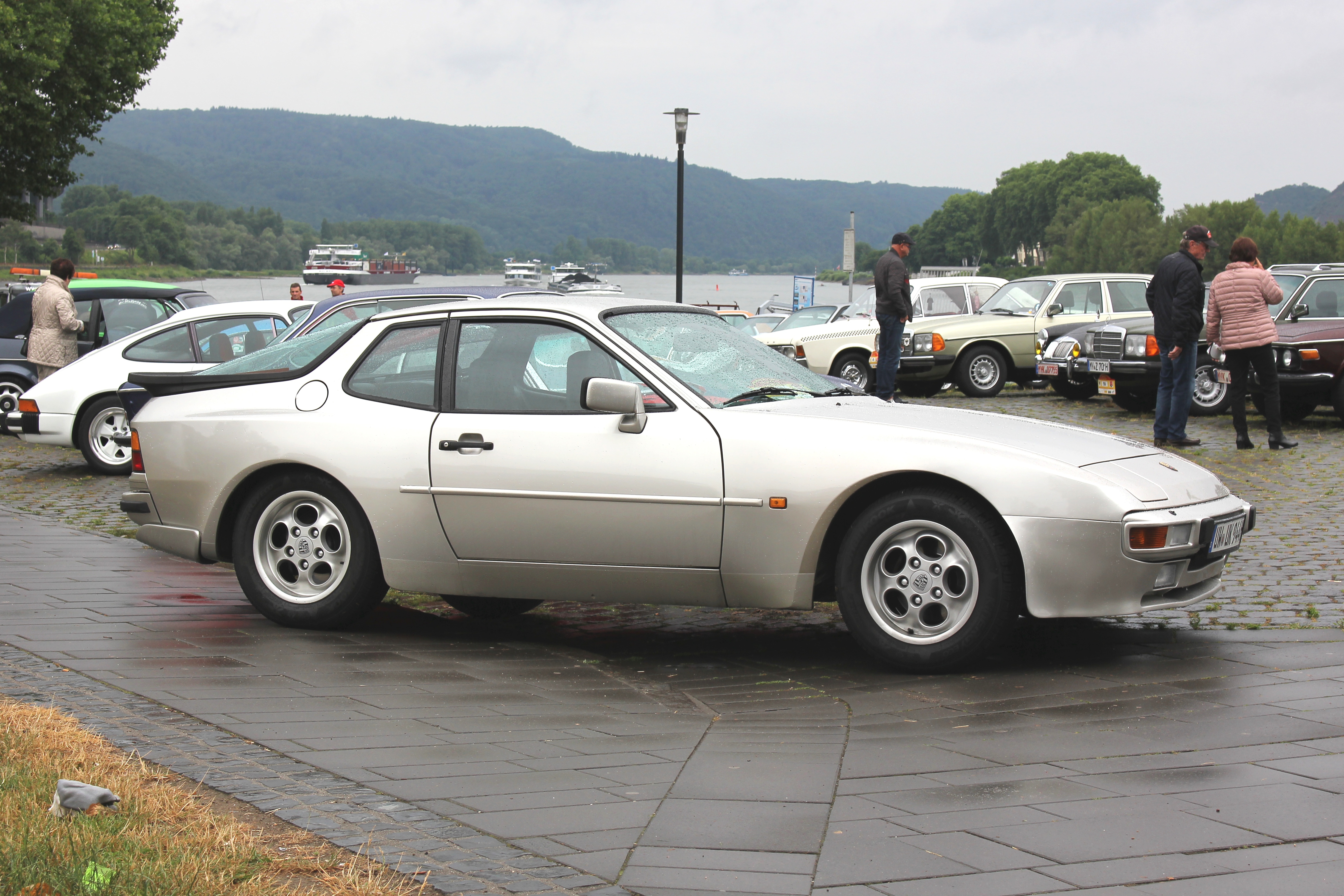
"maybe you're restoring a 944 Turbo or maybe you need a part for one of these cars back here..."
The Porsche 944 Turbo is a sporty car that has a turbocharged engine, making it faster than the regular 944. It's known for being fun to drive and is often sought after by car fans.
The Porsche 944 Turbo is a high-performance variant of the Porsche 944 sports car, known for its turbocharged engine and balanced handling. It was produced during the 1980s and early 1990s and is popular among car enthusiasts for its performance and design.
"I wanted a Chevy Biscayne, the cheap post with a big engine, 409 and a four-speed, you know."
The Chevy Biscayne is a car made by Chevrolet that was popular in the 1960s. It was known for being a budget-friendly option with a lot of space.
The Chevy Biscayne is a full-size car produced by Chevrolet from 1958 to 1972. It was known for its affordability and was often used as a base model for various configurations.
"So I bought the Porsche in 1960. It was the 61 Porsche."
The speaker bought a Porsche car in 1960, which is from the year 1961. This was an important time for Porsche as they were starting to become well-known for their sports cars.
The speaker mentions purchasing a Porsche in 1960, specifically referencing the model from 1961. This period is significant in Porsche's history as it marks the early years of the brand's iconic sports cars.
"...ryone had a camera to say, look at this guy, it's 356. All you have to do is look, Roger, did anyone s..."
The Porsche 356 is an older car that was the first one made by Porsche. People admire it for its beautiful design and its importance in the history of the company.
The Porsche 356 was the first production car by Porsche, introduced in 1948. It is highly regarded for its classic design and is often celebrated by collectors and enthusiasts for its role in establishing the brand's reputation.
"...we're looking at the black 300 here. You bought Steve McQueen's Black Speedster."
The Porsche Speedster is a special version of Porsche cars that is lighter and designed for better performance. It's famous for its classic look and is loved by car fans.
The Porsche Speedster is a lightweight, high-performance variant of the Porsche 356 and later the 911, known for its minimalist design and sporty driving experience. It has become an iconic model among car enthusiasts and collectors, often associated with classic automotive culture.
"...they had the 904 and the 906, but those cars really had a lot of like production car bits, the wheels, so forth."
The Porsche 906 is another classic race car from the 1960s, known for being very light and successful in races. It was designed to be fast and competitive on the track.
The Porsche 906, also known as the Carrera 6, is a race car produced in the mid-1960s, notable for its lightweight design and success in various racing events. It was built to compete in sports car racing and is recognized for its engineering excellence.
"...they had the 904 and the 906, but those cars really had a lot of like production car bits, the wheels, so forth."
The Porsche 904 is a classic sports car from the 1960s that was designed for racing. It's known for being lightweight and fast, making it a significant model in Porsche's history.
The Porsche 904 is a sports car produced by Porsche in the 1960s, known for its lightweight construction and racing pedigree. It was one of the first cars to use a fiberglass body, which contributed to its performance on the track.
"everything. Except for your Corvette. Not the C6."
The Chevrolet Corvette is a popular sports car from America that many people love for its speed and cool looks. It's been around for a long time and is often seen as a symbol of American car culture.
The Chevrolet Corvette is a classic American sports car that has been in production since 1953. Known for its powerful performance and sleek design, it represents the pinnacle of American automotive engineering.
"... to keep moving forward. Backstory on the 73-911 Carrera RSR 2.8. How did you come across that one?"
The Porsche Carrera RS is a special version of the 911 sports car that was made for racing and is very light. It's very popular with collectors because of its history and performance.
The Porsche Carrera RS, introduced in 1973, is a lightweight and high-performance version of the 911 that has become a classic among collectors. Its combination of racing pedigree and road usability makes it a highly sought-after model.
"...e Aventador is just stunning. Absolutely. And the Huracan is amazing. It's a great car. And you look at th..."
The Lamborghini Huracan is a fancy sports car that looks really cool and is super fast. It has a powerful engine and is known for being one of the best luxury cars you can buy.
The Lamborghini Huracan is a luxury sports car that was introduced in 2014 as the successor to the Gallardo. It is celebrated for its striking design, advanced technology, and powerful V10 engine, making it a standout in the supercar market.
"... be, is Trans-Am. Corvettes, Pontiacs, Mustangs, Camaros. So, Porsche builds this... Now, I have a theory ..."
The Chevrolet Camaro is a sporty car that looks tough and is built for speed. It came out in the 1960s and is often compared to the Ford Mustang.
The Chevrolet Camaro is a muscle car that was first introduced in 1966 as a competitor to the Ford Mustang. It is known for its aggressive styling and powerful engine options, making it a favorite among car enthusiasts.
"old chassis, they just said, here's the new one. Because they didn't think it was going to be worth anything. Yeah. And Jaguar, we've, you know, D-types, you know, you had the rear suspension, the monocoque and the front suspension, you know, and any, those were throwaway parts."
The Jaguar D-Type is an old racing car from the 1950s that is famous for its sleek shape and winning races. Many people think it's one of the most beautiful cars ever made.
The Jaguar D-Type is a racing car that was produced in the 1950s and is renowned for its aerodynamic design and success at the 24 Hours of Le Mans. It is considered one of the most beautiful and significant racing cars in automotive history.
"...it, it could have been a feature film. Full, full Suburbans, guys in black. He hired the, like this speciali..."
The Chevrolet Suburban is a big SUV that can carry a lot of people and stuff. It's been around for a very long time and is great for families or anyone needing extra space.
The Chevrolet Suburban is a full-size SUV that has been in production since 1935, making it one of the longest-running nameplates in automotive history. It is known for its spacious interior and versatility, often used for family transport and commercial purposes.
Select text to request an explanation
Welcome to the Porsche Club Insider, your one stop for all things Porsche and PCA.
Here's your host, Vu Gwin and the Insider Crew.
Welcome everyone to Episode 196 and man, this one I'm just going to tell you in advance
is probably going to be an extended version.
I hope so.
You've seen the title so you know where we're at, but I feel like I'm a young kid in a
candy store.
I don't know where to focus.
My eyes are just constantly moving around and I'm extremely excited, but before we introduce
our guests, I just want to welcome and thank you to everyone that makes this possible,
especially Pirelli.
Pirelli tires have to achieve the highest levels of performance, safety and noiselessness and
grip on the road surface.
Innovative tires that can satisfy even the most specific mobility needs of the end consumer.
Thank you all for listening.
If you aren't currently a PCA member and you own a Porsche, what are you waiting for?
Grab that VIN and make yourself a PCA member.
For those of you that don't currently own a Porsche, check out our Test Drive program.
We'd love to unlock some resources to help you find that special Porsche for your driveway
or your garage.
Of course, in this episode, we are going to meet and talk with, how would I say, automotive
royalty.
He keeps chuckling, but it really is and where we are in California.
This is somewhat of a bucket list visit for us.
I think if you're in the cars, you've heard his name.
Absolutely.
Thank you, Bruce, for welcoming us to your garage.
You've been a member since 2015, but you've been around obviously cars much longer than
that.
Most people will say that the title that probably follows you around the most currently is that
you're the co-founder of the Peterson Museum, but hopefully we're going to dig much deeper
on this podcast and let our members know what you've really done in the past.
Here we are.
You're the ultimate car guy.
We can't wait to find out about how you got into cars, what attracted you to Porsches
and how did you acquire these wonderful pieces, not only the Porsches, but some of these other
cars.
Manny, how are we going to stay focused?
We only have an hour.
I was going to say, we tried to focus on Porsche because we got to see here about the other
cars before we started recording, at least some of them.
I almost feel guilty that we're not going to be able to cover some.
Well, it's a pleasure having and sharing it with true enthusiasts, which you both are.
It's an honor for me.
I never think of myself as anything less than a car jamoke, just somebody that, it's in
your DNA.
You can't put it in and you can't take it out.
And I have some very dear friends that have extraordinary collections and have wonderful
sons, but they have no interest whatsoever.
So my family, we didn't have the money and the idea of wasting your time on a car.
Their family couldn't afford a car.
So what bigger waste of time could there be than a car?
It was extravagant, right?
Oh, yeah.
And my dad, he'd buy a few-year-old car and drive it till the wheels fell off, and it
works for me.
I've got an old car, I'm nursing along.
But I just never dreamed that I'd have two cars, no less cars than my dreams.
So this is very special for me.
And I mentioned how long you've been officially a PCA member, but I think what you've done
for PCA in the short time as an official PCA member, you've done a lot for us.
Because when there's been displays at the Peterson, in fact, you had a very prominent
display made for the Porsche Club of America.
You had our 60th anniversary vehicle on the Porsche display there.
That meant a lot to us to be asked to send over our own memorabilia to be showcased.
So thank you for that.
Oh, no, the PCA is amazing.
When I bought my first Porsche back in 1961, I bought it, or it was delivered.
The POC was the club, the Porsche owner's club.
Especially out here.
Yeah, especially out here.
And they did driving events in Jim Connors and that kind of thing, and I can share with
you a picture of me with my 61 Porsche with the Bursch exhaust and the Stinger Outback
thing.
The Stinger, yes.
And I was Dan Gurney or something, you know, far from it.
But the PCA just does an amazing job.
And your magazine, I just treasure.
You know, when that comes, I just sit down, turn everything off, and just, you know,
enjoy it.
And I love the human interest stories.
And thank you for all of your support with Panorama.
I'm going to say thank you on behalf of Rob Sasse, our editor, and the access you've
given us to cars, locations.
A little factoid is you're one of the very few people that were on the cover of Porsche
Panorama.
They don't show many faces.
They don't show many faces, and you are actually on the cover.
Our editor had his face on it a few months ago.
I haven't had my face on it.
You haven't had your face on it, but he's had his face on it.
That was pretty darn special.
But thank you for, again, all of your support.
So let's just start with a few quick questions, and then I've got some housekeeping, and then
we'll go into digging a little bit deeper.
So you talked about your first Porsche in 1961.
But I know more of you from the hot rod side.
And I believe, like, from the family side you talked about earlier, the car scene was
not necessarily passed down to you.
Oh, not necessarily.
It was an understatement.
So when I was growing up in the 40s, Robert E. Peterson started Hot Rod Magazine, and
that was the first magazine that I ever subscribed to.
And so I loved hot rodding.
I was born in Hollywood, the epicenter of hot rodding.
And so I used to just dream about hot rods.
And I would draw pictures, you know, in the front of a 32 Ford is a pretty easy thing
to draw.
I mean, I don't do it very well even then or today.
But you know, that's something I drew on my notebooks, always just dreaming about, you
know, a hot rod.
And that was never meant to be, because my, that was just, I could have been a Hell's
Angel as far as they were, because my parents were not hot rod, oh my God.
And so I subscribed to Boys Life, which was a scouting magazine and hot rod magazine.
And, you know, if Hot Rod, my parents got to it first, it would just magically disappear.
You know, just he'll get over it.
Oh really?
And it was funny because when I went off to college, my room had models and a lot of automobile
memorabilia.
And when I came back for my first semester, it was like a guest room.
They'd cleaned it out.
They'd thrown it all away, you know.
No, they didn't.
So yeah, they fixed it.
You know, they got it out of me, you know, but it just lit the fire.
But so I didn't have that kind of parental love.
Yeah.
I had a lot of parental love.
It was an automotive love.
Oh no, they taught me.
I would never be who I am today without my parents, but yeah, the automotive side just
wasn't part of it.
So it's in my DNA.
I've always loved hot rods.
And I just, hot rods are just so important to, you know, technology, advancement, everything.
Everything in here is a race car, pretty much.
And I think racing and hot rods are where technology and advancement comes from.
That's where they learn about a lot, aerodynamics, performance.
And hot rods in my generation, that was, you know, where we learned our trade, whatever.
Right.
And whether it was a, you know, a Model A or a Model T or a 32 or 34, you know, that's
where it all started.
And every community had a hot rod club.
Now I was, my parents just would have nothing of me joining a hot rod club.
And I was okay with that because I was working.
But every community had a hot rod club.
And one of the local clubs in Santa Monica, which is adjacent, was called the Low Flyers.
And I, and for 30 years, I had lunch with Phil Hill and JB, they were like five of us
that got together and had lunch every Friday at the Nethercutt Collection, which is classic
cars.
But Phil Hill told me about the Low Flyers, which was a local club.
And one of the members was Phil Remington.
I don't know if that rings the bell, but Phil Remington is like.
You watch the Cobra documentary with Adam Carolla, you see it.
Exactly.
Phil, Phil Remington was maybe the most talented fabricator engineer.
He got it.
Stu Hillborn, Hillborn Injection, Travers and Coons.
They built all the Jim Travers and Coons, Traco.
They built all the engines for Roger Pinsky, Jack Engel.
This is all in the Low Flyers.
If you look up Low Flyers, it is just, it is amazing.
So that is the kind of geniuses you had.
They came out of World War II with all this, between war and motor sports, you can, technology
just blooms.
It's just the pressure's on.
So they, they, they had their combat pay, probably a picture of their girlfriend and
a picture of the car they'd love to have in their walls.
And so they came back and they, and they started hot running and the Low Flyers, they had lots
of clubs around here.
And, and so I'm, I just, I've always been a fan and very respectful of the hot
runners.
Behind me is, is a SoCal belly tank, which was Alex Exidius.
We celebrated his birthday here in this garage for many, many years with, with Edis
Kanderian and Vic Edelbrock and Alex Exidius and Don Perdom.
We'd all get together every March 22nd and we'd celebrate his birthday.
That was the first speed shop in Southern California, the SoCal speed shop.
That car is an actual, it's a belly tank from a P38 fighter plane and, and, you know, Alex
got out of the service and thought, you know, that's aero, you know, right?
It was, and so that's what they used to create the first, you know, Bonneville kind of car.
So, so it just went on from there.
They've always been a fan of those guys and thankfully for me, we restored a lot of great
in historic cars.
Every single one of them, the owners and builders have been alive and helped with it because,
because we love putting these guys in the limelight.
Alex Exidius, the Pearson brothers, Don Perdom, Don Spencer, Bob McGee, all those guys were
who's who and hot rod in the 40s and 50s.
So we've included them in all of our efforts and it's been very gratifying, you know, because
the Pearson brothers who built that Pearson Brothers Coupe, that was the world's fastest
Coupe and it was a car that was the first kind of car we restored and it had a wonderful
history where it was, I don't want to go too deep into Bonneville.
We're really not here about Bonneville, but, but the idea at Bonneville, these guys aren't
high dollar for the most part, high budget guys.
So if something works and it goes down the salt flat straight or the dry lake straight,
they just keep adding power.
That's the way you make it go faster, you know, and that car went from 1950 to 1992.
It was running never, never ran the full all the time and it ended up going well over 200
miles an hour with a big block blown Chevy in it.
So when I discovered which car it was and it looked just like that, it was called the
Tom Thumb Special, it's still painted with yellow kind of weird kind of tribal, you know,
art on the side.
It didn't work for me, but when the fellow that Tom Bryant, who I bought it from,
you know, he couldn't believe anybody'd want this clapped out thing.
And he said,
Is that a road and track Tom Bryant?
No, no, a different Tom Bryant, but yeah, Tom Bryant, there's another great name.
So, so anyways,
So you're in the hot rod scene and now you're I believe your, your day job was real estate?
No, my day job, I had a candle shop here in this building.
Yes, the candle.
We can go into the career bar, but that's another hour.
That's another maybe for the next time.
But, but I don't know where I was going with this, but
but what I would have, probably losing my train of thought, you're bringing up engineering.
And to me, the hot rodding is so important because it advances the need or the journey
to get that speed, right?
They were sharing ideas, be it aerodynamics or engine or whatnot to go faster and faster.
And so back in, I think it was 2006, the Porsche parade was in Portland, Oregon.
And Porsche sent a couple engineers to be guest speakers for our tech events during the parade.
And one of the events they did was a night at the drag.
So we went to the local drag way.
And you know, it's run what you wrong on a Friday night type thing.
So a lot of the Porsches came and the drag way accommodated us and gave us our own like a session
and whatnot, blah, blah, blah.
But what I thought was interesting, I was walking, we were walking around with the engineers,
German engineers from Porsche and they were so fascinated by the American hot rods.
And they were walking up to the owners, you know, these German accents and asking them,
why did you do this?
Why did you do that?
What does this do?
And, you know, they were the American hot rodders were very free with their information.
You know, we did it because it is when we did this.
And I thought, what?
I wish I could have recorded it because you had to hear the Germans, you know,
and I'm thinking, do they realize who these guys are?
These are guys from Weissach that are really curious why they changed this on their engine.
And they're American cars, not the Porsches.
And I thought, much to your point, that's what hot rodding does, right?
It improves the breed, if you will.
And it's kind of universal admiration.
And like Charles March, the duke that puts on the good wood, he has a hot rod.
And early on, but when he first started, he asked me to bring a hot rod over.
We brought hot rods over.
But they are all over France.
They're all over Europe.
They're all over Sweden and Scandinavia.
And I think there's a real appreciation and admiration for what some of these guys created.
That's why we're here, actually, in Southern California this weekend,
because of Unstock, which is PCA's celebration of Porsche hot rods.
Yes.
You know, we're not, we're not always the Concord field, all original,
as it left the factory.
But what other people have done to their cars to make them faster,
to improve what Porsche did.
And many times, it's also just an extension of style, your personal style, into your car.
You don't get me started.
Because I think Unstock, I always said Unstock, but Unstock, yeah, Unstock.
Sounds cool.
Made up words.
I have to give my wife credit in case she's listening.
But my wife came up with that.
I was like, sounds a little German if you had a umla out to it.
It means nothing.
I love, no, no, I think it's fantastic.
Because early on, I mean, you would never deviate from anything that came out of the factory.
And for me, like one of the leading, you know, design people were singer.
And I remember when they came out and they were reimagining the car.
And doing stuff with woven leathers and colors.
And I thought, you know, that is so cool.
That's the essence of hot rodding.
Yeah. And so I can do that.
And I can relate to that.
So, so I think it is so great and Porsche encourages it.
And the fact that it's at the Porsche dealerships that is that PCA is doing Unstock is fantastic.
They will go through the concor and the parking lot at events when they come
and take pictures of modification stickers.
They love to take pictures of stickers.
I asked them one time, I said, why are you taking pictures of stickers?
Because I want to go back and show my guys what the Americans do to their cars.
So we can get ideas and we can do the same thing when we build our cars.
And I thought, oh, it's really, really fascinating.
Well, that's very open-minded of them.
And it is not unreminiscent of Harley-Davidson.
I grew up racing motorcycles.
Motorcycles.
You weren't supposed to, I hear.
Oh, no.
No, no, no.
Another hour story.
Oh, yeah.
That's another life on motorcycles.
But I remember when the guys were building choppers and cafe bikes.
And Harley just didn't get it until maybe the late 70s,
they came out with a cafe racer.
I mean, they finally figured out this is what they want.
We might as well start doing it ourselves.
And in a way, Porsche's done that with their help.
You know, with.
Special wishes, Sunder one.
Oh, please, you know.
That's the factory hot rod shop.
Yeah.
Tell us what you want and we'll build it.
Any color combination, any motor combination.
That's hot rodding.
The wooden dash.
Oh, yeah.
I'm not a big fan of that.
There's just something that seems like wrong about a wooden dash.
But then I have a friend of mine that has a wooden dash in his 9-11.
Is it that's under wishes or whatever you call it?
Yeah, that's why you say that.
Because I have friends that always talk about their,
especially in their Mercedes and they have the wood dash.
I'm like, why is there wood?
Woods are for like wagons.
I don't, why do you have wood in your car?
Well, it's the great, I'll just give me that carbon
or give me the stainless steel or give me,
okay, no hate mail, please.
That if you have wooden dashes, I didn't mean to.
It's just fine.
It's fine for you.
What's great about it?
I gotta get myself out of this hole.
You know, what's great is at Unstack, everything's fine.
Everything is fine.
If it makes you happy, that makes me happy.
It killed me when I had to tell people with stock GT3RS is that
there's a Porsche parking area that you can come park to watch,
but you can't enter the car in the show because it's not modified
enough.
I realize you had this beautiful RS fricking the factory,
but this is about modified cars.
Right, you got the wooden year shift knob out of the 917.
That does not qualify you.
Exactly.
All right, let me thank one of our corporate sponsors here,
Auto Atlanta.
If you're chasing down parts for your Porsche,
maybe you're restoring a 944 Turbo or maybe you need a part
for one of these cars back here, you can give them a call.
Either way, Auto Atlanta has you covered.
They've been taking care of Porsche since 1978.
Every Porsche part you need, they can ship it internationally.
They have expert tech advice.
You can give them a call.
They can help you with detailing.
They can help you with full mechanical restorations or just
regular servicing.
They also buy and sell pre-owned Porsches.
Anything that you might need, you want to put in your garage
or put a new lease on life on the one that you have, give them a call.
Head to autoatlanta.com.
There's a 5% coupon code, PCA, the number 5, OFF.
And get 5% off your first order at autoatlanta.com.
Porsche parts, Porsche people, Porsche passion since 1978.
So first question for you, sir, is when was the first time you saw a Porsche?
That's a good question because it's almost a fluke how I ended up being a Porsche guy.
Because I always loved hot rods.
And then after hot rods, and I spent time in the drag strip and did all that whole thing.
And then I decided what I wanted to do was get a high horsepower Chevrolet with the
four-speed, you know, the cheap post-body, you know, just, and so my dad who'd just,
you know, forbid anything automotive or anything around,
he told me that if you save your money, I will pay for half your first car.
So that was a pretty cool, that was an incentive.
And so I mean, I did work, what he didn't know is that I had cars and motorcycles.
Already?
Already, but it was a nice thing for him to do.
And so I remember, he thought I was ready when I was about 19 years old
and or 20 somewhere around there.
And so I knew exactly what I wanted.
I wanted a Chevy Biscayne, the cheap post with a big engine, 409 and a four-speed, you know.
Base car with a big motor.
Yeah. And it was, it was $2,400.
And so my dad said, you know, okay, I'm in, you know, I'll do half of that.
And then just before I ordered it, I lived in Hollywood and there was a fellow John Von Neumann
who was the Porsche, Porsche distributor, competition motors.
And by the way, I'd seen these, we kind of recognize, I'd seen these though.
That's his Testerosa over there.
That's John Von Neumann.
I can, I can go on about that car too, because, and I knew John Von Neumann.
So, so I remember Porsche always had kind of a sporting, you know, profile.
And I'm a sporting kind of guy, at least I thought I was.
And so I, so I just, you know, drifted into his showroom, competition motors,
and sat with him and he explained to me and I liked it because it, it was, it could help my
image, you know, which wasn't great.
But I thought, you know, this was a really cool thing.
It was, it was competition car.
It was not like all the other Chevy's and Ford's that were around.
And I always kind of liked taking a different route.
So I was able, and he explained to me that if I picked up a car at the factory, I could save money
because I was just thinking, how would I get this down to $2,400?
Well, I got it to $2,700.
I went back to my dad and, and I explained to him that I'm going to, I'm going to do a compact car.
Whoa, he loved that.
Finally, we've gone through to him.
We've gone through to him.
That's right.
Compact.
Compact.
60 horsepower.
European sense.
Yeah.
It was like, it was like no extras except signal red.
I love the signal red.
That was a quite a hustle.
I gotta say, that's quite a hustle.
It was good.
And he went for it because he couldn't tell you it from a Porsche or a Peugeot or a Pontiac.
You know, you know, this sounded good.
It was a small car, economical, you know, 60 horsepower, not kind of a step up from a Volkswagen.
So he went for it.
And I also convinced him that what I needed was to get some culture.
And I needed to go abroad.
You don't take a month out of school.
So, so.
Ultimate also.
This is the ultimate salesman.
Oh yeah, I was, I was good.
I gotta say.
And, and, and he was amazing.
So that's, so I bought the Porsche in 1960.
And did a Euro delivery.
I slept with that brochure.
I mean, I remember it's somewhere, it was part of the stuff probably my parents.
So what year would this have been?
60, 60.
It was the 61 Porsche.
And the 60s and 61s are pretty similar, just a few little defining differences.
But I remember I had that brochure.
I could look, it was like every night I look at, oh my God.
Do you not have that brochure?
Do you know?
We need to get to that brochure.
I have, I have, I, I, I, at, at the Litme, I found one.
You did find it.
Okay.
That's what I say.
We're going to put an MPV out for a 60 brochure.
It was signal read.
It was, oh God.
So, so anyways, I counted the days.
So I went and picked it up in Europe and, and that was in 61.
Wow.
And, and anyways, I brought it back.
I was nobody that I, none of my friends knew what a Porsche was, none of them.
And most people around here, you flash your lights, you know, maybe
every few days or something, you know, there weren't a lot of Porsches around.
Can you share what was it like to take Euro delivery in 1961?
You know, it was maybe the most exciting day of my life.
I mean, it was like an advent calendar, you know, just checking off the day
so I get to the Porsche factory.
And it was very personal.
They had a building and they had European deliveries and had the, you know,
European license plate.
Works one, works one probably.
It, I don't know, you know, I probably should know.
But so I, I remember getting it and then I drove it around Europe
and it was just, you know, parking at a special place at night.
And I, and then I took it to Bremerhaven and shipped it home.
And it was just one of the most.
How old were you at this point?
So in, in 61, I was 20 years old.
I was gonna say, you said 19, the deal with your dad.
So 20.
Yeah.
Doing a European delivery.
Isn't that amazing?
That's incredible.
You were out here in LA.
Did Jimmy Dean's death or, you know, his involvement in Porsche have any influence?
I think you did.
I think, you know, the cool guys, the McQueen's and the James Dean's,
whoever the cool guys were at the time, you know, there were,
there were enough Porsches out here that, that, you know, that it was impressive.
And I think Jimmy, you know, James Dean, you know, Blackboard,
Jungle, you know, Giant, all those things.
Probably, I probably, you know, I never wrote down why I did it.
But when I back into it, I think, you know, it was probably just a cool thing to do at the moment.
Yeah.
And, and, and I liked the image of the car and it was different.
You're upscaling your own image.
Yeah.
And Dean, and Dean Jeffries, who's a hot rider, had a, had a career.
I mean, just enough, there was just enough influence that I thought,
you know, this high horsepower Chevy can wait.
I'm going to do this Porsche thing.
And I remember when my best friends went to Annapolis and he came back and they had some
kind of special deal when you graduated with, with Pontiac and he had a Pontiac with a 421,
had a little flags on the side and it was a convertible and, you know, automatic, sadly.
But I, but, you know, he couldn't understand why anybody would want something so slow as this,
you know.
But anyway, so I drove it and I enjoyed it.
And so when, when did it click for you?
Because you're going from cars with a bunch of horsepower, much bigger.
And you go to this compact car that your parents think you made a very sensible choice.
But there's an emotion that we were talking about earlier with these
smaller mechanical cars, maybe not the highest of horsepower,
but there's something special there.
Like when did it click for you?
Well, I think it clicked when I bought the car.
Yeah.
I mean, I think, I, I mean, I, I just think I wouldn't have bought it unless
something told me that this is what I should have.
Also, believe it in God.
God said, Bruce, buy one of these.
Was there a car that you test drove when you saw Mr.
Bondu? Oh, no.
No, you just had to believe that it was going to be okay.
All the cool, the cool people had it.
Oh yeah.
No, there was no, there was no test drive to see what.
No, I probably wouldn't have bought it if I had a test drive.
Really?
But you know, it's not a car that, you know, is any like a big performance car.
But it, but it went away.
So as you can tell from around here, I just like everything on the ground.
So there was a fellow named Al Kadroby that had a shop over here in Culver City.
As soon as I got it back, I mean, I could get into it like a little bit of a dive.
I can send you a picture of the car.
Yeah.
I had, I put fake knockoffs on it, but these knockoffs were so real, realistic looking.
They were chrome wheels that was a backing plate with a knockoff.
I mean, you could help yourself.
I couldn't.
And then I took it to Al Kadroby.
I lowered it.
Yeah.
I put on a birch exhaust because Roger Birch had just started scientific automotive out.
You got a stinger hanging out the back.
And I got this, oh yeah.
You know, I mean, I just wanted to look like a race car.
So, and it was, you know, and what it had, Porsche has always been about momentum.
And I remember I lived close enough to Sunset Boulevard where I could, you know,
open it up and yeah, open it up, you know, 50 miles an hour.
But, you know, I had my, you know, midnight, you know, midnight runs on Sunset Boulevard,
you know, really cool time.
It was the best.
I mean, I was born exactly at the right time in the world history and automotive history.
I'm quite jealous.
Like, I mean, I wish I were so old now.
I think we lived a couple times now.
But man, some of the stuff that you're sharing.
Oh, pretty, pretty special.
Well, back then the dumb stuff you did wasn't documented on social media.
Not everyone had a camera to say, look at this guy, it's 356.
All you have to do is look, Roger, did anyone see that?
I would have been that guy.
And then so I had it all the way through school.
And then when I graduated college, I took a bartending job up at Lake Tahoe.
And there's a famous boat restorer there called Sierra Tahoe Boat Company.
Anybody that's into boats will know them.
And the owner was a fellow named Dick Smith and Morland Weissel.
And Morland Weissel had a gull wing with a Chevy engine in it.
The light, I mean, it was like perfect.
It was a foreign car, but it had all the, you know, so I sold my Porsche.
I sold it at Lake Tahoe.
And I bought this gull wing with a Chevy engine in it.
And that was Cobra quicker than a Cobra.
I went to the drags, of course, first thing.
In a gull wing.
In a gull wing.
And it got 113.
Wow.
I mean, that's quick.
The put gives us some perspective to especially younger people listening.
What did a gull wing go for back then?
I can tell you to the penny.
Yeah.
I paid $4,000.
That was my net worth.
I mean, I literally shook my piggy bank.
I sold my car.
I took all my years, you know, my summer's earnings at Lake Tahoe.
And it all totaled four grand.
And I drove home like the proudest cat.
And with a Chevy engine, and it was so well done.
It had Rudge wheels, factory Rudge wheels.
I can share a picture with you.
That was 1960.
Quarter mile at, we would say a hundred and what?
Hundred and thirteen.
A Cobra might do a hundred.
So that's like a 12 second quarter back in the day.
It was in the thirteenths.
Thirteenths, yeah.
But it was so fast.
Yeah, it was super quick back in the day.
Was it carbureted or?
It had two half beast.
And it was, honestly, I drove it for a year.
Now, I couldn't have been more proud that it had a Chevy engine.
But when I'd open up the hood, people go, oh no.
And it hurt my, you know, I'm a sensitive guy, you know.
Oh.
So I sold it to my roommate.
If you're into wines, Bill Harlan, Harlan Wines.
He's like king, you know.
And he still has it today.
With the Chevy, we did a rally.
We did a rally October, you know, just a couple of weeks ago.
And he still has it with the Chevy.
And the interesting thing is my son, whose loves performance cars,
he said, Dad, you supposed you could ever get that away from Bill.
And I said, Bill, this, he sells nothing.
So when I'm up there, I'm just kind of, you know,
Bill, are you getting tired of this thing?
You've had it since 1965, you know, you've had.
He said, it's my son's favorite car.
And I love it.
I'll never sell it anyway.
Good for you.
It's in the family though.
So you can't feel bad about that.
Like if it was missing, that's one thing.
But at least you know where it is that's being loved.
I mean, it's, I couldn't ask for it better.
That's awesome.
I should ask that friend who's the president of the Goldwing Club,
whether that car is allowed in with the, uh.
Oh, I would rock it and be proud of it.
Do you know what's interesting when I had it,
it ran through this big exhaust, like a drain pipe.
And it sounded just like, like, and I had solid lifters.
Now, Bill, he's done some engine mods.
He put a crate motor in it with, with the hydraulic lifters.
I kept the solid lifters in it, the big exhaust.
You couldn't tell that it wasn't a Goldwing.
The only way I could tell that it had a Chevy,
it was a reverse trigger, you know, like on the,
in the sixties Chevy, you know, the reverse.
That's how I figured out that what a dream car this was.
But he still has it and he loves it.
For him.
And, um, yeah.
Most anyone can work on it.
Well, anybody.
Oh, no, I had it all.
Like this is what I should have.
AutoZone and get parts in case you're on a rally.
So I've never, I've always had a Goldwing since 1960.
We're looking at one right now.
Yeah, I think, I don't, and, and, and he's,
since it was dark blue when I had it,
he painted it black and it looks just like that.
Well, do you know originally what it was that, that car?
I'm guessing it was dark blue metallic.
It was our point.
Yeah.
Cause that was pretty original when I got it.
You know, back then you, Goldwings were four or five grand.
Wow.
Yeah.
And there, and I don't think if you're Chip Foos or
I don't think you could design a prettier car than that.
And, and, and we, I put a lot of miles in the Goldwings
and I, we have a roadster as well.
And they're just fabulous driving cars.
Just rolling, um, automotive art really.
Yeah.
Should we get back to Porsches?
Yes.
And so I want to go back to, you mentioned,
you mentioned, um, a name that we want to ask about
and it's back to a Porsche.
And it's also a black, we're looking at the black 300 here.
You bought Steve McQueen's Black Speedster.
I did.
Manny mentioned to me that there was a funny story of,
you sold it and something else happened later down the road.
Yeah.
Yeah.
So I bought it, I want to say in, in like the middle late 60s,
uh, I paid $1,800 for it.
Rudge wheels.
From Rudge wheels.
Rudge wheels, factory black, black interior.
And, and, um, the fellow, I, it was at a car show out in,
in the San Fernando Valley.
And I just thought it was a good looking thing, you know.
And, um, he, I, he said, as I was driving it off,
basically this car belonged to Steve McQueen.
I didn't care.
I mean, Steve, I didn't even know what, I mean, I,
it's cool that it was his, but it didn't matter.
And, um, and so I had it for a lot of years, like a dozen years.
What year was this?
58.
It was the right one.
58 Super.
No, what year did you get it?
Oh, I think I got it in 67, 68.
Oh, so that was, wow.
Yeah.
Were you looking for a black one?
No, I wasn't looking for anything.
Okay.
I just, you know, I'm real picky on what I like and what I don't like.
And everything in here, um,
You say you're picky, but you fall on things that are like,
or things fall on you that are just so,
No, no, I'm, I'm not here just out of genius.
That has nothing to do with it.
It's just being, you know, lucky.
So this falls in your lap and you decide.
Yeah.
And it was cool car.
Back then I was spending most of my time on a motorcycle.
And I was dating my wife and,
you know, it was just a car.
You know, it was my car.
That's the car.
And my roommate,
anyways, it went to him for a little while,
then it came back to me.
And so the epicenter of kind of the cool Porsches in town was,
it was Bob Smith Porsche Audi.
Bob, it was Bob Smith Porsche,
crossing Bob Smith both ways in Hollywood.
And they did, you know, McQueen,
all the cool guys would hang out there on Saturday.
You drive your car up and it was like an early cars and coffee.
And so I just mentioned to Pete Smith,
who was the proprietor.
I said, you know, this car belonged to Steve McQueen.
Oh yeah.
And he was really good friends with Steve.
So I didn't want to sell it.
I love the car.
And about probably shortly thereafter,
McQueen calls me.
He said, Bruce is Steve McQueen.
Really, you know, yeah, sure it is.
And he said, you know, you've been telling people,
you have my old Porsche.
And it's really, I can tell you,
I sold it to a stockbroker and he totaled it.
So what you have isn't my car.
I'm going, it's fine.
I love the car.
But I want to see what you have.
I'm going, okay, fair enough.
So I mentioned to my wife, Ray Leigh,
and I said, Steve McQueen called
and he wants to see the car.
And of course, she's kind of a car person.
She'll do stuff that appeals to her.
That's, she didn't want to mess with you.
I'll go on that ship.
Yeah. So she drove out.
And remember, we met out in Westwood
because he was living in Malibu
and I was living in Hollywood.
We met halfway in the middle, which was Westwood.
Like in a parking lot?
No, on a street corner.
I forget.
You're meeting, honey, we're going to go meet Steve McQueen
on the street corner.
Yeah. He picked a place.
I forget where it was.
It was in the Westwood Village,
but it was not in the commercial area.
And I, and he was there waiting
when I got there and I pulled up and you could see his eyes
were ready to pop out, you know.
Oh my God.
You know, and he came up to the car
and, and back in the early days of racing,
they used recapped tires.
That's what you use.
All right.
And Gardner Reynolds was the
recapper of choice for all the,
they did kind of a
a Goodyear, Blue Street kind of adaptation,
you know, their own little version.
Like a performance recap.
Re-performance recap.
Okay.
And I, unbeknownst to me, that was this,
his tire was in the spare.
In other words, I didn't realize it was a Gardner Reynolds
recapped because I didn't, you know,
I never studied what it was.
And so, so he, so he goes to behind the seat
and he just takes the car and he just like
pulls the, you know, the square weave off.
And he goes, that's where my roll bar was.
And he said, let me see up front.
And he said, oh, that's my Gardner Reynolds recap.
You would think it was like being reintroduced to your,
he said, oh, you got to sell me this car.
I said, you know, Steve, I'm glad you like it.
I'm very happy with the car.
I'm glad you like it too, but it's not for sale.
You said no to Steve McQueen.
I did.
It didn't last that long.
Because I can tell he really wanted it.
And at the time he was buying a lot of cars and motorcycles
and he was living up, he was living in Malibu
and married to, oh God, I can't thank you for a name right now,
but an actress.
And he called me like every week, Bruce,
you don't understand what this car means.
The first new car I ever bought for myself, I raced it.
Oh, you got to sell me this car.
And so I thought, you know what, I said to my wife,
you know what, I wasn't my primary car,
but he really, really, really wants this car.
And I'm going to do a solid.
I'm going to sell it back to Steve.
So I said to Steve now, look, here's the deal.
This was market price.
There was no premium.
But if you ever sell the car, it's got to come back to me.
And I'm thinking he'll get tired of it in a month or two or six
or whatever.
And I'll be hearing back from Steve.
Well, sadly, he got cancer.
He loved the car.
And then he passed away and he left it to Chad.
And sadly, Chad has passed.
And now the grandson Chase has it.
I think that's the only thing they have of Steve's,
that they treasure.
Wow.
And just like my gullwing went to the right person,
that went to the right person.
Yeah, you can't feel bad about that.
I mean, look, and if it went to Steve and then he sold it,
and it had ever been sold on and on and on,
and I just go, what a dumb shit that I didn't keep it.
Yeah, no, definitely.
It's in the family.
It's in the family.
It's in his family.
It's where it ought to be.
It's where it ought to be, exactly.
And it was a fabulous car.
Wow.
That's incredible.
There's also a story about a 67-910.
Oh, this one.
This one.
Oh, yeah.
How does one come across this car and decide to take it home?
Well, this was for sale.
This had a long-term owner, I should think of his name,
in Ohio that had it for like 30 some odd years.
I would say about 30 years ago, I became very enamored with Le Mans.
And we've got seven Le Mans winners in here.
When I say winners, you know, won their categories.
All right.
And so I just, that's the only race that seems to matter now is Le Mans.
That is the race.
Sure.
And so it was Mark Leonard down in La Jolla had this car for sale.
And just, it said one is category,
finishing the top 10 Le Mans, one is class.
And that appealed to me.
And so I bought it.
Was it, it was for sale or you knew that?
It was for sale by him.
By him.
Ah.
And I, you know, I've probably everything in here I've overpaid for.
But in the long run, you're doing just fine.
You know what?
I say buy the best and cry only once.
Yeah.
This car is the first prototype that Porsche came out with real prototype.
Before that they had the 904 and the 906,
but those cars really had a lot of like production car bits, the wheels, so forth.
So, so Piek, who was running Porsche and at that period, he was really into racing and,
and, and using all the technology, the advanced technology, you know, they had the 917.
So this has, you know, knock proper like 917 ish wheels.
It's the first prototype they had.
It's a 910 because you think, well, if they had to come out with the 907 and 908 and 910,
no, they did a 9010 and 907 and 908 and then on.
But I don't know where they came up with the numbers, but this is a 910.
And it's a, it's very, very original car.
I can't speak for the body, but the chassis and the engines I've had,
you know, experts come in and verify that it is the real, real.
It's the first real prototype.
I love the look of it.
I have a model on my desk, just, just the profile.
I keep models, you know, I, first of all, I think you can enjoy this hobby, you know,
one eight, one, one 43rd, one 18, one, you know, one 12 scale, just because I just love models.
And, and so I look at this a lot.
I always thought these were amazing that they just had two liter engines in them.
They were still in that category, you know, they hadn't gone to the big
12 cylinder yet and it was still a two liter engine, but it was going against the,
it was a giant killer, going against the Ferraris and Jags and S and Martins of the time,
but it was just a two liter flat six.
And if I remember, if I can remember, I'm going to send you a picture.
This is, so Dr. Porsche, Wolfgang Porsche came into town about two years ago and he,
and he wanted to go for a ride in the 935, which wasn't, it just not possible to put a passenger
seat. Yeah, I was like, where are you going to, where, how are you going to do that?
What we can do is I said, there is an extra seat in the, in the RSR.
So anyways, my son took this car and I have a picture going down PCH with a whole bunch
of Porsches. This car is, you can drive it on the street.
I was about to ask you that, is this, because this is the last of these streets.
It is the last.
Prototypes.
Exactly right. Everything in here, except everything in here, we've driven on the street,
everything.
Except for your Corvette.
Not the C6.
Yeah, yeah.
But, but I mean the, the 60.
Yeah, the 60 you got.
Yeah, every, I forgot it. Yeah, you're right. Everything with the exception of that.
Yeah.
Yeah. And the dragster.
And maybe in my Bonneville thing in the back, but, but, but I was understandable.
Totally understandable.
But it's even that Pearson Brothers coupe, we've driven that.
And, you know, so I'm going to show you, I'll just share with, you know,
little b-roll on that.
So cool.
All right, let's, let's move on. There's more, there's more.
And for those of you that are listening, I hope you're enjoying this as much as we are.
And we're trying to get to all of them, but we might not, but hang in there.
We're going to keep moving forward.
Backstory on the 73-911 Carrera RSR 2.8.
How did you come across that one?
Okay. So, so, um, there's historians in the PCA that'll probably tell me I'm wrong,
but my understanding is.
The comments help us.
Don't worry.
Don't worry.
I'll be waiting for the comments.
Yeah, the comments will come alive.
But, but Porsche was run by the PIEC family and, and the PIEC's and the Porsche's got along,
but didn't get along perfectly well.
So, and, and PIEC was developing some of the great prototypes, you know, 917's amazing,
but there's that expression, you know, sell on, when on Sunday sell on Monday,
that doesn't work so well in a 910 or a 917.
So, and the Porsche family wanted to sell cars and, you know, make it a real business.
And so in, in around 1972-ish, they, they decided that they were going to
take the family out of the overall management and put in Furman, Ernst Furman,
who was already at Porsche and a known winner.
And so he does, it was under his leadership that they decided they were going to race profile
cars, cars that somebody could recognize that's a Porsche.
And so they, in order to homologate these cars as production cars, they needed to make
500, I think, and that's, hence the 73 RS.
And, and so they were not available in the U.S. 2.7.
It was an upgrade and, and they made 500 and then they made another 500 and then they made
another 500. So they, they ended up making approximately 1500 and it is maybe my most
favorite driving car ever, ever, ever, ever. Wow. It is, I don't want to, I don't want to hurt my
feelings over here. The Cobra guys are listening. The Cobra guys, yeah, those guys don't listen to this.
They're not listening to ours, our channel here. So, so, so I had an RS
touring, which was a street car, for a lot of years, decades. And, and then I was in, in Scottsdale,
maybe, I don't know, gosh, maybe five years ago, something like that. And I'm with a friend of
mine, a very knowledgeable Porsche guy, Bruce Canapa, you know. Oh yeah. Oh yeah. Another
who's who. Yeah, yeah. So Bruce, so Bruce and I were walking by my RS, it's an actually an RSH.
He said, that's a homologation car. And I'm going, okay, you know, I didn't know what it was.
Which is right around the corner. Yeah, I didn't know what a homologation car it was.
Unfortunately, you guys can't see it, but we'll hopefully have B-roll. It's sitting right over
there. And, and, so he said, I know that car. And I'm going, really, you know, he said, I made
him an offer, but Bruce, you know, buys right and sells right, right? Right. Why pay less?
Yes. Yes. So anyway, and by the way, Bruce has worked on every car in here, including the hot
rods. And he's a very good friend. But I listened. And when he got kind of excited about that,
I said, well, what did you, what did you think it's worth? He said, well, I offered him this.
And he said, I think it's worth that. You know, I'm going, okay. I said, you mind if I put it
off? And he said, nah, go ahead. You know, so, so, um, Shelby Myers, I said to Shelby, you know,
I'm interested in that car. And, um, this is what I'll pay. And, and Shelby says, let me take it
to the owner. The owner was from Bangkok. And he couldn't export the car for some reason. You can't,
I don't know what the, you know, the laws are, but he could, and had been sitting for years,
you know, just hadn't been used. And it was restored by Nate Cantwell. I'm sure some of your
listeners would know Nate Cantwell. This guy is like as good as it gets in the world of Porsche
restoration. I mean, when's the Manhattan Trove? I mean, he's, he is the guy. And so I thought, well,
I'm going to call Nate and he said, Bruce, that car is the most original RS I've ever restored.
And it was, you know, I would be doing myself an injustice if I didn't give a shout out to the guy.
Yeah, sure. Let me just, let me just look on my phone because I would be nothing without my phone.
And the car, like I said, while he's looking that up, Manny, if you looked at it closely,
it's meticulous. And it's, oh my gosh, I did not realize it didn't have pop out rear windows.
Yeah. I mean, all the neighborhood. Mark Heiningey. Okay. Now, and people in,
in Seattle, Portland will know Heiningey. He had this car and he had Nate restore it for him.
And I did a little bit of homework enough to find out that this was like absolutely
unquestionably the car. And so Porsche made 1500 RS RS's and then they made, I think it's two or
300 light weights. I might, my, my lifeline over there. Tom, your, your live human Google,
your car Google over there. We play a lot here together. Anyways, they made a few hundred
light weights and then they made, there were 17 of these RSH's and what they did, evidently,
something like they would pull them off the line and, and submit them to the FIA
to homologate these cars for racing. And so as, as the, as the production line went on, they would
upgrade certain things, change certain alloys, spring rates, whatever, wheel sizes, you know,
that kind of thing. And so this car was the first, it's one of the last cars made. It might be
17 of 17 or 15 of 17 homologation cars, but it has a, I want to say selenium case,
because what engine case, because the first ones were magnesium. And so from what I understand,
when they, when they were increasing the capacity from 27 to 28 to three liter, whatever, they were,
the studs were pulling out of the block. So they, they changed a, a, a more robust alloy.
So this is an alloy, it's probably aluminum, magnesium, something. And, and, so this was
the test bed for the next generation. Right. Wow. So that's the only one with this.
How cool is that? It's, I think it's pretty cool. But other than that, having,
Nate Cantwell restore the car, it is sublimely fantastic. It is, it is so different than my
touring. I think they have like brass bushings. So it, it, it makes a little more rickety,
rackety noise, but in the sweetest way, in the sweetest way, the noise we love. Yeah, exactly.
And, and, and it just runs fantastic. So did you tell us when we first got here,
that's your drive around town car? I keep it at home because we're on Porsche events.
You know, I don't, let me just say where we are. I can't say where we are, but where we are,
there's a lot of traffic here. And it would be very nervous to be driving that.
I would have no problem driving it anywhere. It's just a wonderful car. And, and, and, and one of
the things we enjoy is driving, you know, everything in here we drive, except those that
we decided we did. So, and driving that car is, I, I love small cars. And, and, you know,
we have newer Porsches, but they don't do it for me. You know, I know the lift comes when you go
up my driveway and it goes back down and does all that stuff, but it's a big ass car. You, you know,
it, that, that car looks like. The newer cars are much bigger. But it, but it, but you know,
we did that exhibit at the Peterson celebrating the 60th anything and it was called the Porsche
effect. And when you, you can see a gamut and you can see a turbo Carrera or, you know,
992, 992, whatever, you know what it is. There's no question about it. And Porsche has been just
fabulous in their designs, you know, and I think each iteration, there's certain generations that
covet the balance of analog versus digital or, or performance, right? So the people that are in the,
the modern cars, I mean, they're such capable cars. They're incredibly reliable. They can do
anything in it. But as you get into the old generation, older generations, and that, that
have more of a personality, and it's not about total performance. It's about how engaged you are.
Like you said, the, the crickety sounds of the brass bushings to someone that's in a modern car,
that seems like that would be something negative, but to someone that's driving an early car,
they're like, that's cool. Like that's, that means I know what the mechanics are doing for me as
I'm going through the corner. A newer Porsche could run away from most everything in here,
most everything in here. So if you want that runaway speed, you know, when you're my age,
you know, it's more about finesse and, and, and momentum and, and memories. Yeah. There's a romance.
That's why you shouldn't just have one. I tell people that all the time. I'm like,
you don't have to choose. You can have the older car. You can have a newer car. There's no rule
that says you just can only have one Porsche. And what's wonderful about the early 911s is that
they're just so beautiful. And, and some people are putting our, I think the
RS flares are just great. You know, and so they're putting RS flares on, you know, regular not,
you know, street 67s and 68, you know, looks fantastic. Looks fantastic. And it's just fine.
Unstuck would welcome. Absolutely. It'd be one of the three visible
modifications that they have to submit. What I love about, I guess, to me, I bemoaned when they
finally evolved with the 996. Because up until that point through the 993, my first 911 was a
964. I bought it used and I remember I went down to champion Porsche, flew down and I'm sitting
in the car and the sales ladies next to me and I looked at her and I said, you got to help me. I
said, I've never sat in one of these. I don't know what I'm looking at. And she said, Oh, she said
most people that have are buying these have owned it before and they haven't changed anything since
1964. And fast forward a couple years later, I'm in a 67 911. And sure enough, she was right
everywhere. I like the sunroof motor, the odometer, everything was still there. And the same spot it
was even in 1990. And I thought you really got to respect the company that said, you know what,
if it works, we're not going to mess with it. The Porsche effect, right? Exactly. Exactly. I mean,
isn't it amazing when you think about brand management, how wonderful. I mean, you got Rolex
and some like Coca Cola, maybe, and Porsche, they just managed it so well. They could have taken,
they could have gone wrong, you know, when they were eliminating the 911 or they could have gone
wrong. Listen, I love Lamborghinis love Lamborghinis. And I really respect them. But, you know, I think
some of their marketing is appealed to like non Porsche people, right? And, you know, and they're
the ones that, you know, peel out after the, you know what, I don't want a recent podcast where
we're talking about, right? Yeah. And how they're leaving meets. We didn't single out Lamborghini
or any particular brand. And by the way, I love, I respect Lamborghini. You're right. It's a different
breed of folks and they're not necessarily enthusiasts. And they're great cars. They are
great cars. But sometimes, like, I love, I would love to have like a hurricane. I love a hurricane.
I'll say it publicly. But I feel like if I were to get one, I would get lumped into that crowd that
I don't necessarily want to belong to. Does that sound right? No, no, no. I'm sorry. I'm sorry.
Comments. I'm sorry. No disrespect. But you know what I mean? I know what you mean. And by the way,
I think, I think like the Aventador is just stunning. Absolutely. And the Huracan is amazing.
It's a great car. And you look at the Qantas, the Mura. These are freaking great. And you know,
retrospective of the Peterson, the history of Lamborghini. And it's owned by Volkswagen, right?
Yeah. So it's in the family. It's in the family. That's why it became really reliable. Yeah,
really. That's when Wednesday took over it. And suddenly, I mean, who would have thought that
back before Volkswagen bought them, they would never built an SUV. And now I think we passed three
of them on the way over here. You know, they did what was necessary to survive and they became
reliable. Yeah, that's true. A little German engineer. Since you mentioned the Peterson,
is the Porsche brand one of those reliable? Like if you want to fill the museum with traffic, that
if you were to bring back a Porsche display, you know, on a regular basis, like it,
does that work for the museum? Uh huh. Okay, good. That's that. And our Porsche days, you know,
when we celebrate Porsches, I mean, it's a turn away crowd. In the parking lot, in the museum,
Porsche has a following that is amazing. It used to be Shelby. Shelby was our number one,
and it's still pretty strong, but nothing like Porsche. Nice. We're so fortunate that the brand
that we, you know, we do this every day, we do it on the weekends, and we're very fortunate that
the brand we've hung our hat on is doing so well in that. Pick the right one. Yeah, we really did.
We're very fortunate. I think with the Steve Earl that said, if you want a successful event,
feature Ferrari or a Porsche, and you'll score home run every time. The brand allegiance is so
strong. Yeah. Let's talk about this very, very incredible car, this 935. How does one...
You're going to skip right over the RSR? Well, yeah, I mean, okay. Let me, let me.
It's very hard. I'm not surprised, too, as much as you're in the audio, and they're
sponsored by Gerard. I know. I know, boy. If we're going in some kind of order. Okay, we're going
in order. Okay. Look at Bruce calling you out. Yes, sir. Let's go to the... Bruce, now you know
what I got to do. Oh, I feel sorry. You're skipping over the script. Okay, yes. All right, let's go.
Number 59. So, I think that the RS and the RSR, I think the RSR is like maybe the most beautiful
shape ever, ever, you know, ever. And you know what's interesting to my eye is that when they
backdate, they customize, they unstock things, and they all come out looking like an RSR.
An RSR is not, you know, if you, with the young people, it's not as desirable as a GT3
paint, a sample, whatever, you know. So, I think... Educated ones. I think the educated ones,
young ones, no. Well, I think that is just as good as it gets. And that's my generation with
Hurley Haywood and... I was going to say, but you throw in the brumos history and livery. I mean,
is there anything more iconic, at least in the U.S., than this right here? And I bemoaned when
the brumos name left the dealership. Thank God they have a museum to keep it alive, but wow.
Have you been to the museum? Yes. Dan Davis? Yes. Great guy. So, I don't know,
it almost speaks for itself, but that is... So, Porsche, when they went racing in 73, right?
The most important race is Le Mans, but I mean, it's Daytona, Sebring, Le Mans,
Targa Florio. Those were the race, and they won them all with an RSR. That is incredible. So, now,
in the U.S., like the loved race, other than the Can-Am used to be, is Trans-Am. Corvettes,
Pontiacs, Mustangs, Camaros. So, Porsche builds this... Now, I have a theory that this has a lot of
the technology of the Daytona winner, the 73, because right after Daytona, Peter Greg won it,
Jack Atkinson, who was the crew chief, had to get the car right back to Germany,
like the next day. And I think the reason is they didn't want anybody to do too deep a dive to see
the little trick shit they did. So, I think, I hope, in my dream, this is the rejuvenation of the
Daytona winner, because this car, they built this car, especially for Peter Greg, to contest Trans-Am
and IMSA. Now, Trans-Am were these big thumping VHs, and this car was a double winner in 73. It
won overall IMSA and overall Trans-Am, which I think is pretty awesome. It's a very trick car. It has
a lot of firsts. I feel very fortunate to have this car. It's just so special. And in the U.S.,
like you say, it was Brumos. In Europe, it was Martini. Those were the kind of the liveries.
So, I can just sit and look at this car and visualize reading Competition Press and reading
about Peter Greg, who I thought was just the coolest dude, Navy Intelligence. Do you know
how the number 59 came about? No. Oh, I learned something. I know how Brumos' name came, but
not the 59. Yeah, Brundage Motors. So, Peter Greg was a naval intelligence. Peter Greg was an awesome
driver. Totally cool dude. It's just sad at the end. So, he was naval intelligence on the USS
Forstall. And if you look up USS Forstall, it's number 59. Aircraft carriers had these big on the
landing. Yeah. It's 59. So, all of his cars were 59. It came from that. Look at that. We learned
something new all the time. Did not realize that. And that's why you all have to listen. You can fact
hear. Just see his insider podcast. And this is an interesting car because with RSRs,
with almost any race car, you got to be really careful when you go to buy one. Yeah. Because
you can replicate a Competition Cobra or an RSR to like even some of the best judges can't. So,
I've been like overly, overly, overly careful. And I just, I'd always liked the RSR. So,
there's a fellow, Andy Prill, who's a Porsche finder in Europe. Well respected. I was just
mentioning to Andy, you know, I'd love to find an RSR. And I'd found one that he looked at. He said,
Bruce, don't walk away from this. Run away from it. It's one of those like Washington's acts,
you know. The head's been changed only once and the handle twice, but it's the original
acts. Right. This was, this oftentimes happens in the world of Porsche and race cars because
of the tools. They get the shit beat out of them. And it wasn't unusual for the factory to give you
a new chassis when you bolt it up. And if they didn't want to require you to just send in the
old chassis, they just said, here's the new one. Because they didn't think it was going to be worth
anything. Yeah. And Jaguar, we've, you know, D-types, you know, you had the rear suspension,
the monocoque and the front suspension, you know, and any, those were throwaway parts.
And you could build a car from any one of those now and it would be a genuine Jaguar.
Anyway, so I found this car. It was a DK engineering in the UK. And they had it,
it was in the back of their showroom, just the tip of the front was showing. And so I said to
Andy, I said, would you be kind enough just to go look at this car? Just, I'm just curious.
I figured it was a clone, but I just love that livery. And he came back and said, Bruce, that's
the Trans Am Imsa winner. I'm going, no. And he said, he said, well, we can find out because
there's ways. And so I, for five months, I got the Porsche Forensic deep dive experts, you know,
there's a lot of those out there, but I wanted every one of them to agree that this was the car.
And so they did metallurgy. They tested the thickness. They cut a piece out of it. Wow. It was,
it was, it was, it convinced me in a condensed, and he said, this is the car.
And cause after it's finished racing,
Kemp, Charlie Kemp had it. And then it raced with an Armoral livery. And then there's a
fellow named Danny McLaughlin who had AIR. He used to do, he used to take splashes,
splashes off cars and recreate them. And anyways, it had a history, good history,
but, and it was continuous. And then it went to a fellow in France who painted this and
raced it. And then he sold it to a very wealthy Austrian who decided, I'm going to, this is
cars worthy of doing. And he took it to the best body shop recommended by Porsche family. And then
it went to a Max Ted page, Lee Max Ted page in London to do the mechanical. So he did it.
He spent a fortune doing it the right way. And then it was all done. He had started racing in
a new Mercedes. And he thought the new Mercedes was safer, which it was. And he thought, you know,
this is too nice. I'm going to sell it. And I just happened to be right there at the right time.
Because I mean, this, this is fabulous. And I have pictures of taking Wolfgang Porsche on a
rally in this car. So anyway, it's good fun. Now the 935. Yes. That's that car, that car should
probably be under glass at the factory. You know, it's, it's, it's a Kremmer 935. So, you know,
Kremmer was like AMG. They would, they hot rod it. And, and did a lot of very
unique modifications. Unique modifications. An aero and upside down transmission,
water, air cooled intercoolers. They, you know, that's what you sometimes get with when you,
when you turn it over to hot riders, the factory can't think of everything.
So they created that car. If you look at the roof line from here, you can see a 911 roof line,
but there's a second roof. Yes. Like a double glass, right? Yes. Not, not a lot of people
know that because when they went through, that's like from a copy of the Moby Dick, I think, right?
Yes. Well, what it is, what's interesting is, so I'd heard these stories about,
you know, the Wittingtons and how they came about buying it. And it was so like crazy
that I thought, I got to find out what the real answer is. So I went and I interviewed
Manfred Kremmer, Klaus Ludwig and the Wittingtons and all the stories jibed. But what's
interesting, Manfred Kremmer said when we took this car through scrutineering at Le Mans, they
weren't going to allow it because they said with the Group 5, which that is, you have to have the
original rear window in there. And what you've got there is that, you know, and so he explained
the rear windows in there. Underneath. You know, it's that kind of trick shit, you know. I use
that shit word a lot. Hot riders, I think that's a hot riders dictionary. Is that acceptable?
It's acceptable. Okay. So, and there's, they did, like even
Roof, when he did the Yellowbird, he took the rain gutters off. Right. You just don't realize,
I ran Bonneville for years, and you don't realize how Arrow matters. And they have a little piece
of rubber that fills in the leading edge of the drain of the rain gutters in that car.
Special mirrors, special bodywork, they made that car as slippery as they could.
They had that CP, did all the, you know, the wind tunnel and all that. So that's,
that's a pretty darn special thing. And if you look at a factory 935, it's very
different than that. I mean, it's cool, but it's just different.
Yes. It's very similar to what the folks at Monti, right? They, they live and breathe
racing on the track and they take, they may not necessarily do anything to the motor,
but they know the Arrow, they know the suspension, they know the race craft.
What I love about this car though, and this Arrow, unlike Monti, where everything's now
Porsche is very particular on who drives the cars, who they're getting involved with.
But back then, it wasn't so much so. And I think that didn't the factory supply Klaus,
the driver, and then. Yeah, that's exactly right. Klaus, Klaus was like the driver
back in 79. He was the guy. He'd won the, you know, championship with Mercedes and
the factory. And he was the factory Kramer guy. You know, he was hot and, and, and, and a good
looking guy. And I went and interviewed him, by the way. And you see all the pictures of
Klaus, this wavy German here. I just looked like rock star, you know, downhill racer,
gold medal. And then I went and I interviewed him about three years ago at Essen. And this guy's
my age. And he didn't have any hair. Oh, and, and, and I remember going up to the, to the Mercedes
hospitality area at Essen, you know, I wanted to see Klaus Ludwig and he, and he said, well, he
just left. He went downstairs. I mean, I just passed an old man going downstairs. Anyway,
so I went down into his class and he was great. No, he is Klaus Ludwig. He's a, he's a pro.
But, and the Wittingtons, you know, they're sketchy. Yes. But you know, when you think
about at that period, you know, you had the drug dealers. Yeah. This was a way you could
spend your cash and have fun with it. You know, but still goes on to the stake. I mean,
what's that long ago? We had a fun way to launder your money. Yeah. Yeah. Well,
Parnelli Jones is a really good friend of mine and the, and the Wittingtons went and bought a whole
setup, indie setup from, from with the wedding, sold into the wedding, all cash.
Manfred Krimmer's wife said it took her like the better part of a day to count cash, you know,
for the drive and then to buy the car. And it is quite a, quite a story. But it, it, it is,
it was a drug infested series. Is this the car where he brought up a two case of cash because
he wanted to drive? Yes. First. Was that what the story was? Well, what's interesting, I have a
friend of mine, Charlie Nierberg, who has a great Porsche collection, by the way, and a,
and a certifiably great driver. But he went to Le Mans because he wanted to drive a Le Mans. Now,
you can go to Le Mans being, you know, Charlie Nierberg, a wealthy, good driver, or you can go
wealthy, wealthy and pay, or you can be, come with a great sponsor. So, so, so, Charlie went to,
paid up front to drive this Ferrari at Le Mans and the owner of the car, Charlie said, well,
I want to go in the owner of the car. I said, I'm going to go first. And the guy went and ran out
of gas at the farthest, you know, just basically, Charlie never even got to drive the car. So the,
you know, the Wittings were smarter than that. So they, they sat with, with, with Kramer and they
said, look at Don, the elder said, look, I want Bill to go first, then I'll go and then your guy
Klaus can go. Your guy Klaus. Yeah. And, and man, that's not the way it's going to work. He said,
this is my car and Klaus will go first. And, and then you guys work it out. And so those guys,
right, like this is a day before, you know, when they're strategizing, they said, well, if it's
our car, well, if it's your car, you do whatever you want. He said, well, what does it cost to be
our car? Now they're already paid enough to buy the car, to drive it and to have it, you know,
have it, you know, backed up. And, and he said, well, and, and Klaus literally going to interview
him, he was telling me this story. He said, you know, I never got a commission because I was the
one that came up and said another $200,000. So they'd already paid $200, over $200 to drive it,
then they paid $200 more to buy it. So they could drive first. So they could drive first.
But you're right. Driving first is. Cash is king. Some things don't change. But they end up winning.
They don't wreck the car. They're going to wreck the car before Klaus could get in.
Exactly. And then then he would be able to, for Klaus could get in. Klaus wouldn't want it to win,
obviously. Yeah. And, and, and is a privateer and American, Americans. Yes. And it was just like
never really, it's a 9-11, it never even come close to anything like that before. It was epic.
Yeah, definitely. And then right after that, they get indicted and went away. And it was so funny
because I learned, I met the Weddingtons and they said, we went to Yale and I'm going, really, you
know, that was there where, you know, they were went away. Yeah. Yale with a J. So how did you,
how did this come? How did you look out into this car? I'm guessing you weren't looking for it.
I was absolutely not looking. You're catching on. He's catching on. He's catching on.
No, I was not looking for it. And, and I had restored a very important Indianapolis winning
car from 1952, driven by Troy Rutman. And I owned the car for 30 years. I grew up,
there's a raceway here called Ascot Park. And it's a flat track and TT track. And I grew up
at that track with the Agagianians. They ran it. And J.C. Agagiania was a big race promoter and he
owned Parnelli's car. And he also owned Troy Rutman's car. So this was the last dirt car to
ever win Indy, the youngest driver ever, really good looking car. And I found this car back in
a long, long time ago, maybe 40 years ago, maybe longer. And I had the car. We would,
we took it all over to Oklahoma, to Troy's birthday. And it went everywhere. And Troy was
still alive and went with the car. He was a recluse in Florida. And when I restored the car,
I paid for him to come out and then he fell in love with the car. So everywhere the car went,
Troy went and he was signing autographs. It was a really big deal. So Parnelli Jones had a collection
of great cars. And Parnelli's partner, Vel Meletich, Vel had passed away and the family wanted to,
you know, monetize the collection. So Parnelli, and Parnelli was probably,
you know, 70 back then or 75. And he thought, well, this is probably a good time to sell stuff. So
the Indie Speedway said, went to Parnelli, they agreed on the price. And they said, okay, we'll
do this deal, but you got to include the Agagianian special in this thing. So Parnelli, Canary,
Bruce, I'd have a big favor. What, what, what, you know, Rufus, I call them Rufus. What's that? He
said, I, and he told me the story. So I got to include your car in this pack and I said, I don't
want to sell that car. And, and I mean, I was literally dreaming of, that car was like maybe
the most famous car I had. One Indie, it was a champ car. It checked every box from me. I said,
but they needed this car to make the deal. They needed the car to make the deal. So I, so after,
you know, and my Evan, my son, who's a Porsche and car guy, he says, do it, you know, you know,
didn't mean much to him, but it meant a lot to me. And so I said, okay, well, I'll trade it,
find something to trade. And, and so when the winnings went to Yale,
with a J, with a J, they, they, the government wanted to seize everything they had,
because it was all 100% that was bought with dirty money for 100%. And so, so they wanted to get rid
of everything. So the government have less of a feeding frenzy. And they donated this car to the
Indie Speedway Museum. Oh, wow. At which the Indie Speedway, what the shit do we do? There I am.
How about word of the day? What are we going to do with this? And they put it in the basement for
30 years. That thing sat in the basement for 30 years. So, so, so when they were doing the deal
with Parnelli, they said, well, Bruce needs an exchange. And they said, well, you know, we've
got this. And they're going, no, no, no, no, this, you know, I said, I said, that, that could work.
So I, that's what we did. We did it. We did it like a donation exchange. It was a transaction winner
for an Indie way that ladies and gentlemen, that's karma. Well, you know, they, they, they sold the
LM, Indie went, you know, that LM Ferrari, Indie winner to Indie, excuse me, Lamont. Yeah. Lamont
is not Indie for them. And so, so anyways, to make a long short, short, this car meant nothing to
them, nothing. And they sold all, you know, they sold the great Mercedes, they sold the, the LM Ferrari,
because that's, that's not their word. No, it's foreign stuff. We want the good old American.
Good stuff. So anyways, that's how I came across this. And, and then again, I sent it to Bruce
Canapa and, and cause I wanted to drive it. And that car is, you know, 850 horsepower, rear wheel drive.
Big, you know, it's like one step above a nine, 17, 10, one step below, excuse me. And, and so it's
just badass. And, and so. Is it like when the boost kicks in? Do you know, it's just a hair raising
ride. And, and I've learned with certain cars, you want to make sure you're going
absolutely straight. Because if not, it's going to turn around right in your, right in your tracks.
So I'm very cautious with that. You know, I'm sure somebody in a good running RS could whip my
asset at, at Laguna Seca, because I, I've lived by this motto, you know, any of the history I could
add to any car in here would be bad. You know, I don't want to, we all know those great drivers
that have, you know. But you, and I'll tell the listeners, you got a YouTube disc. Bruce Canapa
played it, played it like the awesome practical joke on you with this car.
It was so well executed. Yeah. And, and, and that's a whole segment in itself. But, but basically
he had just finished the car. We were taking it to Monterey. And as bad fortune went to have it,
the, the winnings are getting re-indicted. So, so, so there's a guy named Albert Arceiro,
who's an Arceiro rig racing family. And so Albert is showing pictures of the, of guys
walking out of, out of WorldJet, which was their company with computers and files. And so there,
so we're all laughing like those guys, you know, they can't, they're going back to their old
winning ways and they're just, you know, so we're all laughing, you know. So it was so timely.
So we get the car up to Laguna Seca and Bruce engineers this takeover that was like,
I mean, it, it, it could have been a feature film. Full, full Suburbans, guys in black.
He hired the, like this specialist consultant that was a real life attorney, worked for the
government and was in special forces. He had a connection with somebody that had real glocks
and handcuffs and badges. They had real license plates, you know, government license plates
on the cars, Suburban, the Dodge. That's the ultimate prank. It was Danny Sullivan,
who's a really good friend of mine. He was there and Danny, I love Danny and, and, and, and Danny's
with a group of guys is that Danny said this is a prank. And after about a minute or two, Danny's,
I don't think he's a prank. Honest to God, there was not anybody, including me, that thought for
one nanosecond this was anything but real. And they hired these actors with rapper and they look
like Marines, like no neck, you know, just, they weren't going to let anybody get near me. They,
they pranked me good. That's so cool. Well, there's one more story of the yellow car over there,
but let me get through some administrative stuff here. Just make sure you head over to pca.org
to sign up for our PCAs newsletters. We have performance news, e-brake news and mart fresh
news all free. Tech taxes East will happen. I know we have the dates. Do you remember them?
They were like, we'll put them on 21st, I think 22nd, February. Yes, February. And then we have
workshop union Amelia Island, March 6 registration opens December 10th. Recently, we did tech tactics
live, how to keep your Porsche looking new with Tim McNair. Great episodes. So if you haven't checked
that out, please do so. If you're looking to race with PCA members online, you can check out PCA
simracing.com. And if you're looking for insider swag, you can find bottles, mugs, t-shirts at
PCA's web store. And if you're looking for insider podcasts, because after you listen to this podcast
today, this particular episode, I'm sure you're a fan and you want to show your love for the podcast.
Again, your address information to podcast at PCA.org. And before we close, we've got to talk about
the little yellow car over there. Sure. So again, I was not looking, but a friend of mine
was over at roof. I used to call it rough. That's how you know. What do you know? What do I know?
And so he was over at roof and and he saw this car. So it's a yellowbird lightweight because they
made touring and they made light weights. And this is like a super special car. So he saw the car there
and and and so Alois Roof, the proprietors said, you know, this is the my very first one I ever
made. I made it first production car, first production car, because he always still has the
prototype, which ran fascination, you know, at the Nurburgring and competed in that shoot out with
road and track. Right. He still has that. Visually, the only difference is has knack of ducks. The
only there's only difference in the cars than most people don't realize it. No, no. But that is
exactly correct. It has these black knack of ducks on their rear wings. But so Alois was saying,
you know, I built this car to model it after our prototype because we just blah, blah, blah, blah,
blah. And this is the very first one CTR, which is a Group C engine, T for turbo R for roof CTR
001. That's what this is. And and it belongs to a Japanese customer. And he wants us to paint it
and kind of freshen it up. And so it's the first one. So this friend called, he said, would you
ever sell it? Well, I don't know. It's the Japanese blah, blah, blah, make a long story short.
It turned out that Pete Stout, who's a well known Porsche guy and also past Porsche Panorama Editor.
Yeah, good guy. He just happened to be in the garage with my son, Evan. And we're talking about
that. Pete, what do you think of the yellow, yellow bears? Oh my God, you know, so he goes on
and on and on and on and on and on and on and on and on and on and on and on and on and on. And
so I didn't even know about yellowbird. I knew about it like everybody.
Just from the magazine. Oh yeah. And fascination. I've seen that.
Seeing you go sideways. Yeah. Yeah. I'm not with me. But but so so he just said it's maybe the most
exciting Porsche ever. So blah, blah, blah, make a long story short. I said, I'll see if the guy
will sell it. And then what I want you to do is rebuild the engine and paint it and leave the
factory. They're gonna. Oh yeah, right at the roof. Yeah. And so we made a deal and we did it.
And that car, that car is as fast as anything. What year was that when you purchased it?
It was probably 10 years ago, maybe. Okay. But you know, that thing is, you know, by the way,
an interesting side note, that car is a narrow body. And and that gave him,
Alweez said they gave him 10 miles an hour top in. No rain gutters, special mirrors. You know,
Alweez is, you know, no jamoke. Yes. You know, he's the real real. And he figured it out.
And he went over and kicked ass. Oh, when we talked about like beginning, he was a hot rodder.
Yep. He had rotted the 911s. 100%. Right, right down your lane. We had the first Unstock.
You brought, yeah, I brought that five years ago, four years ago, I don't know.
West Coast Customs. But yeah, West Coast Customs.
And we drive that car. I mean, that car, my son is like a way better driver. And and he,
you know, he can drive the modern stuff. And Tom, that works with me, he's also a kid.
That car, that car excites them. Yeah. And that's what so that is my ode to current.
But you bought that, like, talk about buying it at the right time. Because it seems like insane,
how much it's crazy that CTRs are going for. This year, this year's auctions alone to see the
numbers that car is pulling. We had a Luis over the summer on the podcast. And you know, we talked
about this, how this is insane, the pricing of it's like suddenly everyone I'm sure he can't believe
it. Yeah, it was he was very happy, obviously. But it's almost like they're finally seeing their
due. And then it was like a secret how great these cars were. It was interesting because that car is,
you know, 2025 Wicked Fast. And I want to say a year or two ago, one sold for like a year ago,
six million. So I look at I don't I just don't sell anything. I'm really picky. I really
picky what I buy. You two can go to the same therapist. Happily, happily go to the same therapist.
You know, I'm very, I'm very picky on what I buy. And I target it, I just probably and and and I just
don't have any reason to sell it. And so but Evan, we were just talking about the yellow bird. And I
said, Evan, what do you think this is worth? Because we just sometimes talk amongst ourselves.
And he and he said, what do you think it's worth? I said, you know, I think this thing could be
worth a couple $3 million. And then that right then it sold the other one sold for six. Yeah,
that wasn't number one. Yeah, exactly. No, and it wasn't really even a lightweight. It just had low
miles and unbelievable. Yeah, pretty, pretty special. Well, this has been special. Thank you so
much for inviting us. Thank you for supporting us with Unstock and Panorama. You know, hopefully,
in the future, we will find maybe a few more cars to talk about. Maybe go to the museum and do
something fun there. For those of you that are listening, I hope you enjoyed this episode.
Certainly has been special for Damon, Manny and I and we went over the typical hour, but I think
it was well worth it. And so with that, I want to thank you all for listening. Be sure to like,
comment and subscribe, consider sharing our show, especially this one
with fellow Porsche enthusiasts. Until next time, stay safe and we'll catch you down the road.
Thank you. Thanks so much for you, Manny. This has been a real pleasure for me.
Request an explanation for:
18 cars
Scroll for more
18 cars featured
Request an Explanation
Heard something you'd like explained? We'll add it to this episode.
Sign in to request explanations for terms you heard.
Want to learn more?
Browse our glossary for plain-English explanations of automotive terms, jargon, and concepts.
See something that's not quite right? Our annotations are AI-generated and can sometimes miss the mark.
Click the flag icon on any annotation to suggest a correction.