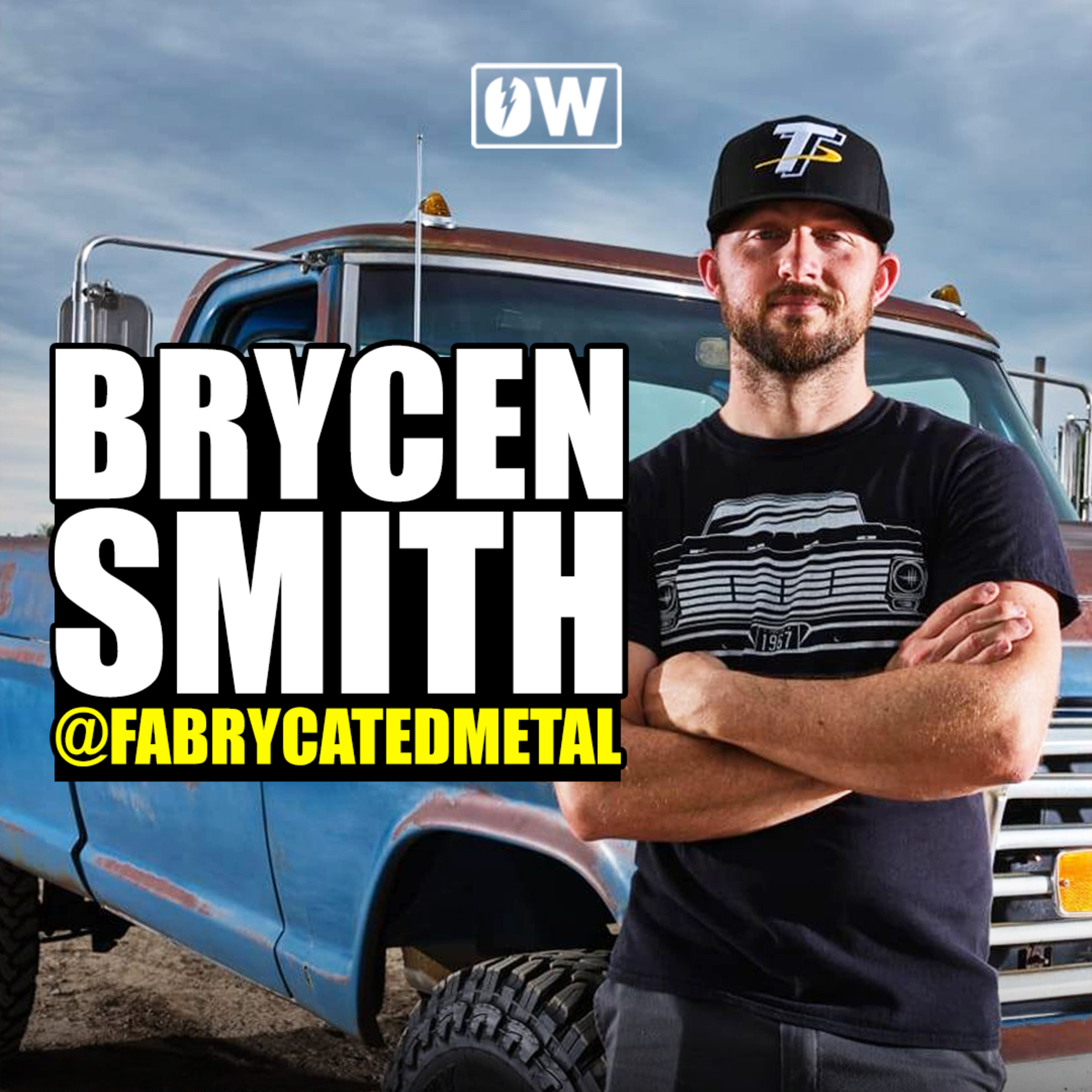
Brycen Smith of PRD Design shares his journey from fabricating metal to running a successful custom truck shop. He discusses the evolution of his passion for classic Fords, particularly the high boy trucks, and how he transitioned from working at Ironworks to starting his own business. Brycen highlights the importance of customer relationships, the challenges of running a business, and the satisfaction of building unique vehicles that resonate with their owners. He also touches on the technical aspects of his builds, including the integration of modern technology into classic designs.
This week on Oil & Whiskey, we’re joined by Brycen Smith for an honest conversation about shop life, learning through experience, and finding your footing in the automotive industry.Brycen talks about his path so far, the realities of working in and around builds, and what it’s like navigating an industry where growth comes from showing up, paying attention, and putting in the time. Rather than big highlight moments, this episode focuses on the day-to-day lessons, mindset shifts, and practical experiences that shape people early in their careers.
Grab official Oil & Whiskey gear at oilandwhiskey.com. Good time, bad advice, great shirts.
"It was like on the most part stage at SEMA and the whole thing."
SEMA is a big event where car lovers can see new parts and accessories for their cars. It’s like a huge auto shop fair.
SEMA (Specialty Equipment Market Association) is a trade show and industry organization that showcases aftermarket automotive parts, accessories, and customization.
The Coyote is a powerful V8 engine made by Honda. It’s used in the fast Civic Type R and gives the car a loud, sporty sound.
The Honda Coyote is a 5.7‑liter V8 engine introduced in the 2015–2020 Honda Civic Type R and later used in other models. It’s known for its high-revving performance and distinctive exhaust note.
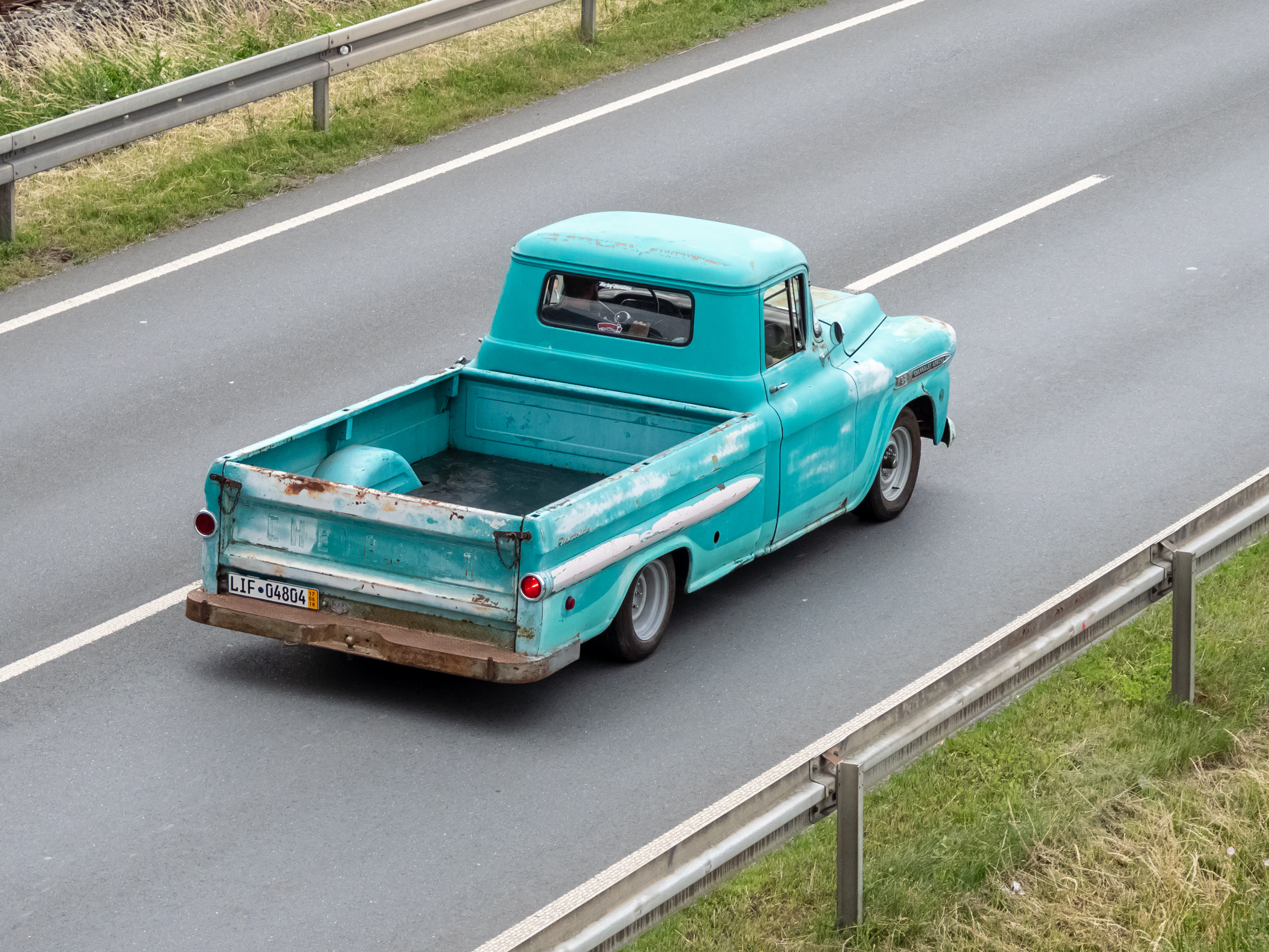
"...out of the inside of a frame rail of a 57 Chevy pickup truck."
A 1957 Chevy pickup is an old American truck that people often modify for shows or personal projects. It’s known for its strong body and classic look.
A classic American pickup truck from 1957, produced by Chevrolet. It’s a popular platform for custom builds and hot rods due to its sturdy frame and classic styling.
"[1468.6s] like, can we sandblast this? I'm like, how are we going to save your original paint?"
Sandblasting is like blasting a surface with sand to clean it off. It helps get rid of old paint or rust so you can start fresh.
Sandblasting is a surface preparation technique that uses high-velocity abrasive particles to clean, smooth, or texture a material’s surface. It removes paint, rust, and old coatings to expose the underlying metal.
"[1793.7s] still in the small shop, there was a 57 Chevy truck that a local customer had brought in ... [1800.0s]"
A 1957 Chevy truck is a vintage American pickup truck. It’s famous for its strong build and classic look, making it a popular choice for collectors and restorers.
The 1957 Chevrolet truck, often referred to as a '57 Chevy', is a classic American pickup known for its robust body and iconic styling. It was produced by Chevrolet as part of the C-10 series, popular for its durability and straightforward mechanical design.
Turbo tubing is the metal pipe that links the turbocharger to the engine. It has to be strong and the right size so the turbo can work properly.
Turbo tubing is the piping that connects a turbocharger to an engine’s intake and exhaust systems. It must be precisely sized and heat‑treated to handle the high temperatures and pressures generated by a turbo.
The exhaust tube is the part that carries hot gases from the engine out of the car. It needs to be made of metal that can handle high heat and fit correctly so the engine runs well.
Exhaust tubing refers to the metal pipe that carries exhaust gases from a vehicle's engine to the tailpipe. It must be heat‑resistant and properly sized to maintain backpressure and performance.
"[2926.1s] well, man, I'm tired of like doing trans tunnels and wheel tubs and doing stuff like this"
It’s the area around each wheel that keeps it in place and protects it from damage.
A wheel tub is the part of a car’s body that surrounds and protects each wheel, often providing structural support and housing suspension components.
"[2926.1s] well, man, I'm tired of like doing trans tunnels and wheel tubs and doing stuff like this"
It’s a cavity inside the car where the gear box sits, letting the engine send power to the wheels.
A transmission tunnel is the hollow space in a car’s chassis that houses the gearbox and driveshaft, allowing power to be transmitted from the engine to the wheels.
"...but it was 2015 Mustang rear end, uh, which is all the independent stuff. And so at the time..."
The Mustang is a popular sports car from Ford. The 2015 version had new tech and a fresh look.
The Ford Mustang is a classic American muscle car known for its performance and iconic styling. The 2015 model continued the line with updated technology and a refreshed design.
"he made this, like, tea kind of style roadster. That's cool. Very cool."
A roadster is a small, sporty car that usually has two seats and can have its roof taken off or removed. It’s built for fun driving rather than comfort.
A roadster is a lightweight, two-seat sports car with an open or removable top, designed for spirited driving and often featuring a low-slung chassis.
"The dude's got a Porsche GT3 RS. He's got a Porsche to car. He's got a Bronco."
It’s a very fast, sporty car made by Porsche that’s built mainly for racing and quick driving.
The Porsche 911 GT3 RS is a high-performance, track-focused version of the iconic 911 sports car, featuring a naturally aspirated flat-six engine and lightweight construction.
"for just years and years and seen it, you know, around his dad's company. And then it was a two-wheel drive"
Two‑wheel drive means the car only pushes on two wheels, usually front or back. It’s common in everyday cars and is easier to maintain than four‑wheel drive.
A vehicle that powers only two of its wheels, typically the front or rear axle. Most standard cars are two‑wheel drive, which is simpler and lighter than all‑wheel systems.
"and, you know, we converted it to four-wheel drive and all that stuff. But I mean, that again,"
Four‑wheel drive means the car can push on all four wheels at once, which helps it go better on mud, snow, or rough roads. It’s common in trucks and SUVs.
A drivetrain that sends power to all four wheels simultaneously, improving traction on slippery or uneven surfaces. Often used in off‑road vehicles and trucks.
"a video on the truck that we did that I converted it to four-by-four and he was like, I don't even know"
Four‑by‑four is just another way to say four‑wheel drive. It means the car can push on all four wheels, which is good for tough terrain.
A colloquial way to refer to four‑wheel drive, emphasizing that all four wheels receive power. Often used in informal conversation about off‑road capability.
"[5323.1s] I bought this truck as a tool drive. Oh, there it is right there... [5328.9s] I just, I've always liked that body style."
A tool drive truck is a small pickup that people use to carry tools and supplies around work sites. It’s built for practicality, not speed.
A tool drive truck is a light-duty vehicle designed primarily for transporting tools and equipment. It typically has a low, wide cab and a short wheelbase, making it ideal for work sites.
"a 76 Mercedes 450 SEO. That's an interesting topic because I'm really curious about that."
This is a big, fancy car made by Mercedes in the 1970s. It has a powerful engine and lots of room inside, so people like it for its classic style.
The Mercedes-Benz 450 SEL is a luxury sedan from the 1970s, known for its robust V8 engine and spacious interior. It was popular among enthusiasts who appreciate classic German engineering.
"[6358.9s] going to be pretty wild. It's that one right there. It was, I mean, these trucks are pretty rare from 67 to 72. They only made about 20,000 crew cabs."
From 1967 to 1972, Ford made only about 20,000 trucks with a crew cab design. They were used for hard work and are now rare and valuable to collectors.
Between 1967 and 1972, Ford produced only about 20,000 crew cab trucks in the F-Series lineup. These vehicles were primarily workhorses and are now considered rare collectors’ items.
"[6542.0s] somebody had changed out the mirrors to something else. So we found what those are the mirrors that the truck originally would have had."
Mirrors are the little glass pieces on the sides of a truck or car that let you see what’s behind and beside it. Replacing them can improve how well you can see other cars or obstacles.
The side view mirrors on a vehicle that allow the driver to see traffic and obstacles behind and beside the car. They can be replaced or upgraded for better visibility or style.
"I don't want to have to mess with carburetor and blah, blah, blah"
A carburetor is a device that mixes air and gasoline together so the engine can run. Modern cars use a different system called fuel injection.
A carburetor mixes air and fuel in the correct ratio before it enters the engine cylinders. It was common on older cars but has largely been replaced by electronic fuel injection.
"I just put something, you know, fuel injected in there"
Fuel injection is a way the car’s computer sprays gasoline into the engine instead of using an older mixing device called a carburetor.
Fuel injection delivers gasoline directly into the engine’s intake system using electronic controls, providing better fuel efficiency and performance compared to carburetors.
"I bought two brand new brake calipers from the same brand from the part store and one shows up and it's just bare cast steel. The other one is zinc plated."
Brake calipers are the parts that press the brake pads against the wheel to stop the car. They can be made of different metals, and some are coated with zinc to help them last longer.
Brake calipers are the components that squeeze brake pads against the rotor to slow or stop a vehicle. They come in various materials and finishes, such as cast steel or zinc‑plated, which affect durability and heat dissipation.
"And so we used the wheelwood caliper and put it over a factory rotor, because most guys with the four trucks like to run 16 inch steel wheels"
Wheelwood makes parts that help cars stop better. They make things like the pads and metal discs you find on a car’s brakes.
Wheelwood is a specialty manufacturer known for producing high-performance brake components, such as calipers and rotors, often used in aftermarket upgrades.
"I started selling the first year, with that very first kit that it fit 76 to 79, Dana 44, and Dana 60 axles."
The Dana 44 is a type of axle that helps trucks carry heavy loads and go off the road. It’s known for being strong and reliable.
The Dana 44 is a heavy-duty axle commonly used in trucks and off‑road vehicles. It provides robust strength and durability for high torque applications.
"a small closed knuckle, and there's a large closed knuckle. And it fits both."
Think of a closed knuckle as the part that holds your wheel in place and lets it turn. It’s like a small box around the wheel that keeps everything working smoothly.
A closed knuckle is a suspension component that houses the wheel hub and bearings, allowing the wheel to rotate while maintaining steering geometry. It is called "closed" because it encloses the wheel assembly, protecting it from debris.
"[6909.4s] oh, if it had this GVW use this model, this and this GVW use this"
GVW is the total weight a truck can safely carry. Think of it as the maximum load limit for the whole vehicle, including everything inside it.
GVW stands for Gross Vehicle Weight, the maximum total weight a vehicle is allowed to carry including its own weight plus cargo and passengers. It’s a key spec for trucks because it determines what kind of tires, brakes, and suspension are needed.
The Pontiac Catalina was a big, comfortable car made in the 1960s that many people still like for its classic look.
The Pontiac Catalina was a full-size car produced by General Motors’ Pontiac brand from 1955 to 1977, known for its spacious interior and classic styling.
"[7275.8s] boroughs had a chassis and then, you know, it's the stuff..."
The chassis is like the skeleton of a truck; it holds everything together and supports the weight.
The chassis is the structural frame of a vehicle that supports the body, engine, and other components.
Select text to request an explanation
Sengen, a voice note. Shop new featherweight jackets now, at Lululemon.com.
With Vemo Stash, a taco on one hand, and ordering a ride in the other, means you're stacking cash back. With Vemo Stash, get up to 5% cash back when you pick a bundle of your favorite brands.
Are more cash when you do more with Stash. Vemo Stash terms and exclusions apply, match $100 cash back per month, see terms of Vemo.me slash stash terms.
It was like wild-ticking UTI, they would always have commercials on. Wild-tick had it from the marketing side, they were always way cooler looking at UTI stuff.
UTI obviously felt like a NASCAR pit crew guy you would go, it just had the uniforms, the look, the wild-tick felt more exotic.
It also doesn't sound like something that your girlfriend tells you she just got either.
Do you have any idea what was going on? What was going to happen?
I was hoping it would maybe get to like 55 or 60, and that was just out of total, in my head, that was kind of a pipe green.
That was the home run number, that was like the home run number.
And then there's very few times in my life that I've actually been speechless.
And when that thing, you know, when the hammer dropped at 130, I just did like a new challenge for SEMA for Jeff Dunham.
It was like on the most part stage at SEMA and the whole thing.
You had to have a little car seats in the back for all the little dummies and socks.
But the Godzilla is actually about six inches narrower than a coyote.
I think the coyote, George Potete said it best.
Oh, here we go. I agree with you, but here we go.
When George said, Jeff.
Good coyote.
He did. You never felt VTEC.
I was just going to say that.
I mean, I felt it.
I know you can't feel VTEC. You're next still fine.
You've obviously never felt VTEC.
You're listening to another episode of oil and whiskey.
I'm your host.
No, I always wanted to do that.
Sorry.
This week we have Bryson Smith fabricated metal, Instagram handle fabricated, spelled with a Y.
Just so it should show up, but just so everybody knows.
Owner of PRD designs, right?
PRD design.
All the way in person in studio.
Bryson, good to have you.
As always, this episode is brought to you by a WeatherTech.
Floor liner HP is WeatherTech's top to your floor mat.
It's the next generation of floor mat protection after WeatherTech's best selling flagship product, the Floor liner.
A necessity if you care about your car and want to keep it looking pristine.
New car helped maximize resale value when it's time to trade it in.
Older pre-owned car make it look better with a simple interior refresh upgrade.
Mask the wear and tear laser measured to fit your exact making model with thousands of applications available for older and newer models.
No one has the depth of coverage that WeatherTech offers, constantly adding to the list with its latest vehicle releases.
High wall design for ultimate year-round protection.
Its raised edges contain dirt, water, sand, snow, and everyday messes, keeping that factory carpet in its original condition.
Super durable and hefty so it lies flat, won't warp or degrade over time.
Soft touch feel, nibs on the underside and retention devices help them stay securely in place.
American made in Bowling Brook, Illinois.
Go to WeatherTech.com to check out their floor liner HP and find your application.
Thanks for coming out, dude.
Thanks for having me.
It was a fairly easy drive over here.
We actually made it multiple times this year.
We come over to a company called Ready Strip.
It has things stripped.
Yeah.
A little closer that we do.
Make the haul all the way out there.
Yeah, I mean obviously when you live out in the middle of nowhere in Iowa, you're going to find where places can accommodate what you're trying to do.
How far of a drive is it?
Well to hear was five and a half hours, but yeah it's like right at five.
It'll be about nine going home to get a snow storm to drive through.
It'll be fun.
Well, I was going to stay the night because I was looking at 4.45 this morning.
Yeah, so yeah.
And then it was like, yeah, it's supposed to snow and I was like, oh, it's maybe just in Chicago.
And I was like, nope, it's supposed to do the same thing at home.
When it does snow, it usually follows the exact trajectory of like your path home.
So I don't always get straight down 80 all the way.
It'll die out right.
It'll die out 20 minutes for you.
Exactly.
Well, Bryce was kind enough to bring us a, this is the first wrapped fully wrapped.
This is exciting.
It's my first gift for you.
It's a present of the year.
It's time to go ahead and open that thing up.
I'm a good kid this season.
Yeah.
It's a confetti bomb.
I was thinking about the radio.
Jingle all the way.
You see that?
It's an Arnold Schwarzenegger.
Sinbad.
It's thinking.
It's nice.
Yeah, we got to look carried away with the tape.
Sorry.
Okay, branding.
Never miss an opportunity.
There you go.
Yeah, right there.
I was going to have some wrapping paper made that I figured that was a little overkill.
Look at that.
Right there.
Overhead.
So PRD stands for project, ruptured duck.
It's what it, yeah, it's what it stands for.
Yeah.
That was what I actually, I was doing the car project and came up with a website for the
car which was PRDDesign.com and then when it came down to the shop, it was kind of like,
you know, I was going to kind of keep that for the shop name as, you know, kind of a way
that in the future, someday when the car gets finished by the time I die, it'll kind of live
on as an ode to the car project of, you know, something that's affected my career a lot.
So.
Well, this one's a new one.
Oh, they got name tags on them.
Sorry.
This one's an absolute new one.
I wanted to bring something from Iowa figured to get an Iowa whiskey in there.
I've never had it.
Seat of Ridge.
Seat of Ridge makes some pretty good stuff from what I hear.
I have had theirs a little bit by the time.
The quintessential signature blend.
See, handcrafted from pure, multi-barley, agent, American oak and uniquely cast finish,
the particular sort of married matured with upfront, deep stone fruit balanced by a subtle
peat finish.
The single malt sets a very similar to a rich and complex sweet thanks, dude.
Oh, man.
I figured, you know, candies, free ridges, fillery, yeah, appreciate that, man.
I've got a little sweet treats on the side there.
I dig it.
Thanks, man.
I appreciate that.
That'd be cool.
Let's crack this open.
Yeah, absolutely.
Seater.
We're going to need some of those, Josh, before you scamper off with them.
I don't know unless I'm tricking at it, fills the mess.
Oh, see, poor Phil can't be with us tonight.
I'm going to eat all Phil's candy though.
Well, he already opened it.
So he's already going to have to do that.
I don't know what happens.
He's already going to have to do that.
I don't know what happens.
And they sucker for a snickers.
Yeah, I'm not much of a regular candy person, but usually if I go to a candy bar, it's
a snickers.
I eat like a fat kid candy when I'm away from my wife, not allowed to have that.
I got you.
Centuries old techniques.
Man, thank you very much, Bryce, and that's amazing.
No problem.
Some dude.
And you wrap that yourself.
I did.
Get attention.
Don't do that.
Don't know how you...
Cheers, dude.
Yeah, absolutely.
Cheers.
Look at that.
That's a great glass.
Oh, yeah.
Single malt whiskey.
Yeah.
Damn.
That's pretty damn good.
Quite drinkable.
It's for someone who's enjoyable.
Generally not a PD guy.
That's got very much more like bourbon kind of sweeter notes than it doesn't have the
band-aid aftertaste.
I love it.
It needs stuff.
The band-aid aftertaste.
That's a rough one.
Yeah, when I was getting nervous with scotches and stuff like that, especially when somebody's
like, oh, man, this one's, you know, 27-year, and it's super this, super that, and it's
whoa.
Or when the description has leather, hints of leather shoe in it, then you know it's like,
oh, it's going into it.
I don't know.
How big of a hint of leather shoe is that?
How many miles are on those shoes?
It's just like a smidgen of it.
Oh, man, we've been looking forward to doing this and this can be fun.
There's a lot to your story.
A lot.
Yeah.
You've been around the block, man.
Done some cool stuff.
Yeah, it's been, it's been an interesting journey.
I don't, you know, I kind of feel like I watched some of these, you know, podcasts that
you guys put on, and I'm always, I'm always, you know, I'm always intrigued, obviously,
you know, guys like Troy and Ring Brothers and all that just to hear what they've got
to say, obviously, the amount of experience and all that stuff because they're old, you
know, and then, obviously, we're going to do this.
I'm like, I'm going to talk about it and, you know, I start, I've mentioned it a few
people and they're like, dude, you don't know what kind of stuff I'm like, I guess I need
to.
Yeah.
You guys don't need to go back to my own story, my own head.
Yeah, you probably get numb to it, right, because your head's down, you're on the gas.
You're not thinking about where you were, thinking about where you're going.
I'm assuming.
Yeah.
And you got a cool thing going now, but I mean, damn, I've known you since your iron works
days.
Yeah.
You were before that.
If that's where you cut your first place, yeah, right at a wiretick, and was there for
seven years, and then went to work for Alan Palmer for a year, really, there's no Alan
per well.
So worked for him for a year.
That was kind of my way out of the first place and then went from his place to Scott's
Outrads.
And was there for six years and obviously it was Alan like super non-committal in hiring
you.
It is a problem with commitment.
Great guy.
I can't commit to shit.
Would you love him to death?
Would you build when you were at Alan's?
Was that the Mustang?
They already had it mostly done.
I did.
I don't know if you guys were calling that the white Mustang.
Yeah.
I like that.
Yeah.
If you looked at the door windows in that car, it had metal door frames like around the
top of the windows.
Yeah, really?
Even though it's a Mustang, it's not straight ahead of that.
But for whatever reason that was something I wanted to do, and I shaped all those things.
So the glass actually slid up into a little sheet metal channel.
Yeah, I've done it.
It was.
Yeah, that was kind of a lot.
I mean, other than some other little tiny mechanical things, whatever it's about all I did on it.
I don't know.
When I was at Alan's, I think we did like a new challenger for SEMA for Jeff Dunham.
It was like on the most part stage at SEMA and the whole day.
Do you have a little car seats in the back for all the little dummies and stuff?
No, but it was, it was purple and it was.
He's into weird shit.
Yeah.
Dunham's into weird shit.
Well, so one of the things we worked on was one of the, I don't know which specific one.
I think it was from the Batman Returns with Catwoman and Michael Keaton.
Anyway, one of the Batmobiles that Jeff Dunham had, we kind of restored that deal and, you
know, whatever.
I did some work on that.
It was kind of just bouncing around everywhere.
But.
Take us through the hiring process at Ironworks because coming right off the heels of listening
to Levi's story, coming out of a wild tech and, you know, sending out resumes and getting
hired.
I want to hear about how that process was and when did it start.
A lot of guys out there that are, that are, either trying to get into the industry,
haven't gotten into or just got into it, I think it's a, it's something we don't talk near
enough about about the landing of the job when you have limited, limited skills, limited,
limited skills.
Yeah.
Interesting.
I'd be interested to hear how you arrived at, like, that's the spot.
This is where I want to go because you're, you were Iowa guy originally, right?
Oh, Ohio.
Oh, yeah.
Yeah.
Went to, went to Blair'sville, Pennsylvania, Ohio Tech campus and then, you know, was there
for 10 months this or whatever and then, yeah, basically it was either, you know, move
home and try to find a job in a dealership or, you know, whatever that way.
You know, by the time, I mean, this is 2005.
So at the time when you would graduate, they would have you list a couple of states that
you'd be interested in finding jobs in and if they had any, any contacts that were looking
for employment or employees at the time they would send information out.
And so I just put, at the time I put Ohio because that's always the way I lived and then
I put Florida and I put California, I was actually born in Florida and part of my thought
was just good weather and, you know, whatever down there.
But then California because, so I graduated high school in 2004, but right before then
that was when American Hot Rod was on TV.
And I mean, California, man, that was hot rod.
That was when the light bulb went off, you know, like, hey, that's the mecca.
You mean you can get a job working in a hot rod shop, like working on classic cars and
like, that's what I want to do.
And get talked to like that every day.
Well, obviously as a high schooler looking at it from the entertainment standpoint, that
side of it didn't really click in my head.
No, of course not.
But it was, no, it was, I mean, we talked about it a hundred times is, that's the unfortunate
thing that's missing today in the high school side of things of the selling that, that
wow, and that cool, and that like holy shit, I can do that for the living.
Also creative.
Well, part of what made me go to Wyotick was that American Hot Rod was on TV.
And then Wyotick would also have, it was like Wyotick and UTI, they would always have
commercials on whatever, but then also like right about that same time, one of the reps
for Wyotick came to my high school and we walked into lunchroom and he had like a table
set up and had a TV behind him and they had this promo video on.
There's just hot rods on the screen and all of a sudden I'm like, I can go there and
learn how to work on hard work.
Wyotick had it from the marketing side.
They were always way cooler looking at UTI stuff.
Yeah.
UTI just always, I don't know, they had a ton of commercials, I mean, if you were watching,
I don't know, was that spike TV at that point, or was it still the Nashville network?
Spike TV, probably.
Probably spike at that point.
Nashville is before then.
Yeah.
But I mean, those UTI, they were just like a repeat, constant repeat, but UTIs just felt
like a NASCAR pit crew guy you would go, like it just had the uniforms, the look, Wyotick
felt more exotic, like it had a lot more to offer.
Well, it doesn't sound like something that your girlfriend tells you she just got
either.
I should have changed the name, like that's not, yeah, not the best.
Somebody said, at some point in the early days, it should have probably come up.
Well, I think, to your point, I think UTI kind of had, it was almost like they were appealing
more towards commercial-wise anyway, more guys that wanted to work in.
The other mechanics stuff.
Yeah, Wyotick was more geared towards, their marketing was all based on the cool factor,
the hogrod, the custom car, the whatever, because they obviously had their base programs,
but then it was like, come take our street ride class, so when I went, I mean, obviously,
Wyotick's gone through insane changes since I went, but it was chassis fabrication class,
and then it was also mixed with high performance engines, and then they had their streetrod
class, which was then you learned how to do custom painting and sheet metal repair and
that sort of thing, but it was, they did such a good job around that end of it of just
marketing that to, hey, come take our base classes, but be cool and take these classes
like for fun, you know, and yeah, so, you know, like I said, the light bulb went on,
I went there and, you know, it was broke as a joke, and basically I wanted to take more,
I wanted to take the streetrod class, but then just had zero money to make it happen.
So, you know, all of a sudden my stepmom called me up one day and was like, hey, they sent
you some information about a place in California looking for, you know, people, and I'm like,
I can't afford to move to California, like, you know, it was just kind of a pipe dream
at that time, and a good friend of mine who lived next door to me when I was at WIOTEC, you
know, I'm like, hey, yeah, there's this place. I actually, so I called him up, Dr. Roger
at the phone, on the phone at the time and, you know, he's like, yeah, fly out here and
try out for the job, that sort of thing. And then, little did you know, it was just West
Texas. It wasn't really California. You say you can't afford California. I mean, that's
like L.A. Bakersfield, yeah, you can probably, now you're like, yeah, I can afford this.
When you're in Blair'sville, Pennsylvania, and you have like 20 bucks to your name, everything
is expensive. But, yeah, so I talked to him. He's like, yeah, fly out here and try out for
the job. I was like, well, okay, yeah, sure. And then I was telling my neighbor about it.
And I'm like, he's like, what are you going to do? I'm like, I'm not flying out there.
I'm like, you know, I can barely buy lunch, you know? So, but he was actually from California.
And he lived in, he was like from the corona area. And actually, I think he still lives there.
His name is Rory. But he, he was like, I'll do it all alone. You the money to fly out there.
Like, that's no problem. Just, you know, get out there, get the job and then pay me back.
And I'm like, yeah, I'm not going to take your money. And he's like, no, seriously.
And he like gave me the cash for a plane ticket, which was nuts, you know, and, uh, and, uh,
it's at the 20% interest rate.
Well, so, yeah, so I, uh, you know, I hung out, uh, you know, in Baker'sville for a couple days,
you know, Rodger off me the job. And, uh, I called, I called home and, uh,
because I had a round trip ticket, you know, and I was, so I talked to my dad and I'm like,
you know, he's off me the job. He's like, what do you think? I'm like, well, if I fly home,
I'm gonna have to get a job just to get the money to fly back there, you know, because I'm here now.
Quite the predicament. Yeah. So, uh, he's like, well, why don't you just stay? He's like, you
can find a place to stay. We'll ship your clothes to you, all that stuff, you know, I'm like, okay.
And, uh, so yeah, Rodger's like, we can sleep on, I got, I got a spare room. I don't have a bed.
So I literally for like the first four months, I slept on the floor on some blankets and, uh,
ran at a room from Rodger for a couple months. That was, uh, yeah, but it was, it was cool at the,
I don't know, about a year or two. Well, I guess it would have been probably another year and a half
or so after, uh, after I got out there, I went to SEMA and ran into my, my old, uh,
next door neighbor from Wyotech and, uh, gave him his money back for his airplane ticket. That was,
that, that's pretty cool. And it's cool. That was a legit feeling. Yeah. I was like, yeah, that's bad.
Yeah. Anyway, because I, you know, we kind of lost touch a little bit, but then when I saw him,
I'm like, dude, I owe you money. And I just, you know, it's like, this, this is going to happen. It
felt so good to like, that's cool. Pay that favor back. But uh, sure. Yeah, it was just, uh, really,
I mean, I was, like I said, I mean, I was so broke. I probably took any job at that point. But, uh,
what, what, what Rodger senior, what, what was the interview process? Like, what he put you on?
How does that work in interview? Yeah. I mean, he had a couple guys working for him. Um, and I think, um,
you know, really, it was just having some ability, like, I knew how to basically tick well. I mean,
it was fairly terrible at that point. But, uh, um, you know, I mean, I think you just saw that I was
at least somewhat capable. And uh, I think I started working for him with like nine bucks an hour.
And, uh, you know, I think that's what he's still paying, guys.
I guess, um, roadstitch up way more like if you, if you're, you're, you're, you're, you're a priority design
case. Still hiring employees, by the way. Um, but yeah, so, uh, I started off like, I mean,
just literally anything. It was like, you know, hey, I need somebody to do this. I'll try it.
You know, that was the thing for me is like, uh, I guess if I mess it up, I learned something.
You know, and I still have that mentality. I'm like, you know, obviously even trying to run a
business. It's like, you know, well, I messed it up. Well, do you guys have learned something?
Figure it out. How does that apply? And we were going to bounce all over. We're going to come
right back where we're at. Yeah. Thinking back about you starting out at Rodgers sticking your hand
up. Yeah, absolutely. I'll do that. We also know that, you know, a lot of that stuff, when you are
learning and you have a limited skill set, also when you watch the shows, you went to class,
like, it would be a hot rod builder. Never on any of those ads, rightfully. So they shouldn't have.
Never on any of those ads. They showed the car coming in and they're like showing the disassembly,
showing the antifreeze pouring out, you know, and then the showing you're like, you know,
busing up undercoat underneath or, you know, it's chopping tops and painting. Yeah, it's exactly
all right. But they don't ever do the dynamite sticking to your dickies and stuff like that.
They don't ever. Well, yeah, because I mean, I remember like the, I mean, because I moved there.
So synchody mile was my first day of work. That's it. All I always remember that is for John
York. That's the fifth. The rate and cases.
The reason, obviously, I always remember that because that was the first time my life, I ever had
legit Mexican food because obviously when you're from Ohio, it's like very Midwest Mexican food.
And that's the first day of work. We went to Mexican restaurant in California. And that was
I was addicted to Mexican food. I am too. I can't help it. It's hard not to when you're
I mean, our shop, our shop used to be in Elgin, which is like 40 miles west of here. And
Elgin's basically like Mexico, right? It's, it's high population of Mexicans. It's very authentic.
Like, and everywhere you go, I mean, it is legit. So many different ways you could have said that.
There's a lot of authentic Mexican food in those tacos every day for lunch, man, and good stuff.
Oh, yeah. Love tacos. So you remember synchody mile, authentic Mexican food.
Yeah. And I mean, that's like I said, that was my first day of work out there. But I guess
some trying to remember where I was going, oh, the summertime to your point about what
what they show and don't show about hot rod building is, yeah, you know, you get a job like sweet.
I'm going to be, yeah, chopping tops and painting flames. It's not a little shorty cigar.
I see no gas welding. You know, you're stuck in Bakersfield and it's 110 degrees and you're scraping
grease and dirt and oil and whatever else out of the inside of a frame rail of a 57 Chevy pickup
truck. And just that kind of stuff, you know, it's like, yeah, this, I don't recall this in the
commercials. But, but now thinking through that and now being a shop owner and having employees
and hiring new talent, right? And then doing, getting them to do those things,
does that, do you think about that when you're like onboarding a new guy and saying, hey,
this is some of the stuff you do or that's so long gone? It's, you take it for granted. You're just
like, no, you're going to strip all that undercoat and you're going to cut the tunnel out and you're
going to do that. Like, that's part of it. Yeah, I think, I think for me, obviously growing up,
you know, from being 18 literally getting my first job in hot rod shop to, you know, where I'm at
now is like, I see the process of things and even for the guys, I think anybody that I do hire,
they probably have it better than I ever would have had it back then. Now, I mean, when I started
at Ironworks, I mean, we're like a 23 hundred square foot shop and, you know, it was not a very
large place. So a lot of times I say, you know, in order to do the dirty work, you got to be outside
doing it because there's just no space. You know, and even then, I mean, I've got 7,000 square feet.
So it's not huge, but, but even still, like, I'm always like, how can we get this clean, the fastest,
quickest way to where, yeah, to where I don't have to pay a guy ridiculous amount of hours or whatever
it may be to go scrape stuff, you know, outside in the sweltering heat, there's always going to be
some of that, you know, it's obviously, I mean, there's a truck we finished last year that
the entire truck from the tail pan of the bed all the way up the top of the firewall and the
whole bottom side of the hood was all done in that black tar undercoating like way back in the day.
But we were building this truck to save the original paint on the outside.
It makes it nice. So it was like, because it was a very nice survivor, and, you know, it was like,
sorry guys, but you're going to spend a lot of time outside grinding undercoating also.
I mean, literally like three weeks of billing on grinding undercoating and gets, you know,
because I mean, you can't leave it on there because then you can't code anything over the top of it,
because it's all that oily tar stuff and just mirrors. Oh, it's all, yeah, wire, push it.
I don't care what you go at it with. There's no good way to get it off. So, yeah, the customer's
like, can we sandblast this? I'm like, how are we going to save your original paint?
If you were dry, I splashed any of it. I would love to try that. I have looked into it.
It's just such a, the closest place I found to us that does it is like now in St. Louis.
And I'm like, we've done it a few times. The local welding supplier will rent you the machine.
So they bring it in with just this massive tub of dry ice and it's, it's like 50-50. You get the
right car and it is like the secret weapon and it just sheets off of there and you've got just
mint original metal underneath it. But the stuff like you're talking about the like gooey tarry it,
you could be there and you'll know right away. You either hit it and it starts like flaking off
or just sheeting off or it just says, fuck you. You'll push it. Just sort of like,
he's like, you're going to come harder. Yeah. Yeah. No, I hear you there. It's a,
because even when you go out with a wire wheel or whatever it may be, I mean, you're either like,
all right, this is coming off easy or it's like, I'm going to be here forever. Is anybody figured out
the technique? Like, we run it all the time because we're doing survivors and there's just certain
thing. There isn't a tool that exists. Like, we'll take just a little propane torches and a,
you know, like a gasket scraper or a putty knife to try to get the bulk of it because you hit it
with a wire wheel. It just gums up. You can't touch it with an abrasive pad because it's just
gone. Like, there's no good tool for when you're not going to, what are you going to mask the whole
car, put it on a rotisserie, push it outside, sandblast, and even that it's, there's,
if it does tarry tarry sandblasting doesn't, it's either the only thing. I mean, I think there's
something to the dry ice thing. I just, I don't know if there's a way you could freeze it. You know,
because when it's all gummy like that, there's nothing you do with it, but yeah, when it's a,
if you could somehow freeze it and then, you know, chip it off or grind it off at that point and be,
I don't know, but, you know what liquid nitrogen would do. I used to think, like, first
shatter the native floor. Just liquid nitrogen and then just like going there with an air hammer and
hit the floor and just shatter it. Oh, that's going to go in a 10 minute job. I feel like this needs
to be like a Mythbusters video or something. It does. Of course, somebody's got to have the answer
and chime in and like comment on that because somebody's going to be like, oh, you guys have been
missing the boat for all these years. That's what I'm open for. With all that stuff, do you feel like,
you know, how generally like, as a father, you usually want to, I don't know, do better than,
like, we're not not subject to your kids to the things you had to put yourself through. Do you feel
like you're in that position or are you more than like, you fuck that? I did it. You're gonna do it.
You're gonna get it done. I bust my ass doing this stuff. Yeah, I mean, there's a lot after.
I mean, I think there's something to be said, obviously, when you run in the business, you know,
you don't have to do that stuff anymore. But I mean, I like to think for myself, I try to think in
the way that like, there's nothing I would ask my guys to do that I wouldn't be willing to do myself.
Yeah. You know, I mean, obviously it's all part of the job that needs done, you know, and the TV in
general has made the hot rod building into such a glamorous, glorious thing, which obviously,
we all do it because we love it. But, you know, at some point, it's work. It's dirty work. It's,
you know, hard work. It's, you know, there's times where you're gonna be riding the undercoating off.
And like, what'd you do today? Well, here, let me explain it to you. And then it's like, well, it doesn't sound
very glamorous at all. But it sure helps to have that under your belt because to your point, like,
you never want to ask somebody to do something that you wouldn't do yourself. But I know when I,
when I got my start working for Bill, the very first thing that I did was that he handed me this like,
sandblasting helmet must have been from like the 60s or 70s.
Yeah, it's called diving helmet. And a homemade pressure blaster sent me over to Home Depot to get
silica sand like playground sand because he didn't want to spend the money on like actual abrasive sand
and made me put up like a party tent in the, like a cheapo party tent in the backyard. And then I
took some old 33 three window cube back there. And the helmet plugged into compressed air like into
your piston compressor. So I was breathing that all day. And then the rest of the crap I was breathing
was all the silica sand. And in the middle of the summer, I think I spent like a month out there.
And that sand, I mean, that sand doesn't do shit, right? You're just irritating the car.
Just more from the metal. But haven't gone through that. Now it's like, dude, I don't feel bad asking
you to grind some undercoding. Like the car's on a lift. You've got like fresh air. Like there's
a exhaust fan right behind you. You got all the tools you want. You're not standing on the beating
side. Exactly. So going back to ironworks. So they're there. You're just doing whatever it is
and slowly progressing. When what was the first bit of skill set thing that started taking off
before others, you know, some people it's tubing work. Sometimes it's, you know, forming,
sometimes it's welding. And I mean, in the very beginning, it was a lot of chassis work type stuff.
And I think in general, for most people, it's probably just to learn that because of, you know,
obviously the sickness of the metal, it's a little more forgiving in certain aspects and whatever. But
there was, I don't know, I can't remember what year it was that we moved from the 2300 square
foot shop to the 10,000 square foot shop they had. But the, there was before we moved and we're
still in the small shop, there was a 57 Chevy truck that a local customer had brought in that the
entire inside of that roof like above the windshield. There was a big eyebrow panel there. It was all
rusted out, you know, rotted out. And you know, he's like, well, how do we need to build this? You
know, I was just again, I'll try it. You know, I had no clue what I was doing. But, you know,
worked with a guy that, you know, he would always teach me little bits and whatever. And I
remember building that panel. And I'm sure if I looked at it now, I'd be like, oh,
but I remember that at that point, I was like, and this actually looks pretty good. Like, I was,
you know, I was pretty excited about it. And that gave me, that gave me the bug for the sheet metal
side of things. And that's where, you know, I just felt like, I don't know, it was just a different,
you know, it's a different type of fabrication. I mean, the chassis stuff is, you know,
is what it is, you know, but the sheet metal, there's just a whole different level of, you know,
I guess, intensity as far as the way you get to think about it. And, you know, understanding how
the metal is going to move and, you know, react. And we know what are you going to do. And so,
that gave me the bug for the sheet metal stuff. So then, yeah, I really started trying to hone in on
that. And, and yeah, over the next, you know, years, like I said, whatever opportunity I got to
do sheet metal work, that's, that's what I always gravitated toward because it just, like I said,
that's just what I got the most enjoyment out of. I mean, I, I've kind of always tried to
know how to do as much as I can evolve it. And that, because I think, you know, in general, as you
know, when you're trying to hire people, I mean, the guys, you know, if you get one guy that knows how
to do 10 different things fairly well, he might be more valuable than the one guy that can do one thing
really, really well. You know, and that's just because you can kind of split him out. And so,
that was always my mindset. It was like, all right, you know, I might not be perfect at any of it,
but if I know how to do more of it, I can at least broaden what I'm capable of doing on all the
different projects. And then eventually I'll find the couple of things that I really hone in on,
you know, until those skill sets, you know, yeah, rise up. So you said you're at Rodgers for
what seven years? Seven. So come to the time, move on. I'm not see how to phrase this. I mean,
I'm interested in, I'm always interested in. There's no, this isn't a dig, there's no right or wrong
answer, isn't it? You just talked about coming out of wild tech. I mean, coming out,
yeah, coming out of wild tech and just so happy to be doing the job, right, getting a job. And it's
a job and a hot rod shop. And you work there for seven years. And then there's a time of I'm
going to leave this job. And for whatever reason, you know, there's everybody's got the reason
stuff. I'm so interested in the where your mindset was at the point you were leaving and the things
that happened along the way. Oh, everybody's all, I mean, the time times come to make a change,
you know, but there's, there's, I'm interested in the, in the mentality or the mindset at that point
of why, why, you know, why? And then you look, sometimes you'd be look back and like, man,
wasn't that long ago? And I was like, just super excited over the moon to have this job. And now
I'm like, I just can't take it anywhere. I got to find the next thing, you know, and nobody's
to blame for that. It's just, it's the things that happen. I mean, I mean, I just had a guy
leave a couple weeks ago and, you know, no hard feelings on my end. I mean, I don't, you know,
if somebody's off for a better opportunity or what they feel is a better opportunity, it's not my
place to be mad about it or, you know, whatever. So, you know, and that's where for me, you know,
being the employee and working for people, that's helped shape my mentality when it comes to the
employer side of it is like, you know, if somebody wants to leave, like, I mean, I don't, I mean,
obviously, if I'd be bummed to lose people in general, because you hope people enjoy what we're
doing and want to stay. But, you know, so like for me, at those times, you know, it'd be different
things. I mean, so, you know, I mean, even at that point, I was 24 years old, whatever it was,
maybe there's 25 anyway. You know, but I think in general, just looking for a fresh start,
just, but also, you know, there was a, that was a, even mentally, it's a huge, it's a huge thing
to be at your first place of employment and then leave that place because there's that side of
your mind that tells you like, what if I can only do this there? You know, and if I leave here,
am I capable of the same stuff? You know, and I think that's a huge finding out for your, for
people, and personally like me, it was like, once I moved even to Allen Shop, you know, Allen
didn't have nearly equipment. And, you know, some of that stuff as far as like metal shaping in
those things. But for me, it was, it's even, even with the scaleback equipment, I was still capable of
doing things that I was doing. And so it, you know, allowed me to kind of build up personal
confidence in my skills. And then when I moved to Scots, like I said, I worked around for about a
year, I moved to Scots. You know, I, I came in and Scots had a lot of equipment, you know, so
that it was kind of feeling like getting back, you know, to lease some machinery and stuff I was used
to. And then, you know, starting to shine over at Scots, it was just, I think, again, you know,
obviously there's different reasons I'm wanting to go into all that stuff. But as far as like
leaving, it was just, you know, looking for something different, I was getting ready to get married.
It was different things going on in my own life and just looking for a change. And so
made it happen. And then, you know, again, part of building the confidence of my own skill set was
being able to go somewhere else and still achieve what I thought I was capable of achieving. But
was nervous because I'm like, oh, can I actually do this somewhere else? You know, but, yeah, I mean,
I think in general, I think I think we all, you know, when it comes time to leave somewhere,
matter why that is or what it is. You know, when you're the employee, I mean,
if something's going to better your life, I mean, it's at least the way you feel, you know, anyway.
Well, there's a couple of things. I mean, at the risk of getting too, too deep, but I think it
when you say, like, you know, if somebody's going to get going to a better opportunity, there's
no hard feelings, you know, I'll agree. All that's great. You know, and most people would say,
especially, you know, in public, where it's being recorded and everybody can hear that, uh, oh,
yeah, is this being recorded? Uh, interesting. Where this is going. You know, it's, well, it's just,
everybody's listened long enough. It's real, real, real, you know, and this is something
in my mind. And I want to talk about it and say, Phil's not here, so should I time stamp it to
edit? No, Phil's not here, so we don't have to edit anything. There's, uh,
being a business owner and a manager of people now, right? You have a different mentality. And
there, regardless of what you want to say, anybody wants to say, and this isn't a wrong thing,
there is, um, employees, fabricators, um, that come through car builders, CNC machinists, uh,
all kinds of employees in this industry that come through at different stages of the game in
their life and in your life of the, of the shop. Um, and as those progress through and it's time
for them to move on, they, they, not all are the same, right? Sometimes there is absolutely zero
hard feelings and the time has come for everybody, you know, and it's, you wish and not the best,
you stay. There's other times you can stay friendly and it's not hard feelings where you're like,
fuck this guy. I want to see him fail, but you can't, you can't pass up the, you can't not talk
about the personal feelings where it's like, mm, that one hurts. Yeah. And he feels talking about
Roger's thing like Roger let you sleep, you know, in his room, you know, he had a room for you,
put you up, he saw you from very little to what you are. Again, no hard feelings. I'm not trying
to get too deep, but there, there is a time when that happens, you're like, man, moving on, like,
I feel like I've invested in, you know, again, you don't want to be the one like, I'm the one that
made him, right? But you're like, you're the, you know, personal, you're like, human nature is to be
like, now what? Like, I've done all this to just get to the good. Now we're, now we're supposed to be
at the good point. Like now he's supposed to be my ace employee. Now we've got another seven years
of doing, you know, what we need to be doing. And there's going to be those times with you too,
where you're like, man, I, you know, I give the guy alone and I give this and this is how he
repays me. It's the other, the flip side to that is talked about seven years, you know, it's time
for a change, it's time for this. Both the employer and the employee, after you have a period of time,
you can look back about it. I think the thing that's not talked about a lot is when you have very
limited to zero skills and you're consuming it at a rapid pace and you're trying to be the best,
you see fairly large steps and gains up this, up the stair step, right? You know, from,
from day to day and week to week, you're like, man, 10 days ago, I couldn't even do this
and I'm doing this now at a fair and you keep doing that. You keep doing that. Well,
the belker, you know, after you get to a certain point, right, you're, you're pretty good at a lot
of things. Well, going from pretty good to the best doesn't happen in those same steps, right?
It's over years. So then you get to where you think that you've stalled, right?
The employer is kind of like, well, man, he's now he's get to the point where like now we're ready
to start cranking and doing things. You're looking at it's like, well, now I'm just like, I've plateaued,
there's nothing else to do. I've need to go to the next shop to get, again, I bring up the dopamine
rush, you know, all the time and it is that. It's like, no, I need to, what's the next thing that's
going to push me to learn? And I think, I think that's the, at the detriment of a lot of
employers and employees, if not understanding that, that metric, and then also realizing like, well,
if that's the thing I'm wanting, maybe I need to have an honest conversation with the shop owner
or the manager about like, I just feel like I'm not seeing those stair steps anymore. So what can we
do here? Because those things generally don't exist at the other shops either, right? Because once
you get to a certain level, it's just the same. Does that make any sense where I'm going with it?
Yeah, I'm tracking with, I mean, it's, it's, well, it's very interesting and it's almost like,
you know, as you're saying that I'm taking it, it's like, it's like this puppy turned into a dog,
right? This is puppy's journey to a dog. There's all these mile and it's happening like,
yeah, but it's like, I'm learning to weld. Now I can shape, oh, I know how to shrink and stretch,
like, I can stand in front of the English wheel. Oh, I learned how to use the pole max.
But once he's growing up dog, he's growing up dog for a while. And it's like, now I know all these
things. There, because there is a plateau, it's like, once you sort of, you're not going to
master it, but you've got the resources and you're comfortable with using the equipment and you're
making things now. And then there's that sort of plateau period where it's like, okay, now I'm just
using these skills. And now I've reached the point where I'm a productive employee and asset
to the team. And that always seems to be right about the time when it hits the, I want to grow as a
fabricator, which is what I want to, I want to ladder step. Right. Because it's like, we'll do,
you, right now you're in this sweet spot. Use, now you're, now you're an employee. Now you're
valuable. But it's, you know, it's human nature, I think, in this industry that that's right
about the time that maybe boredom sets in curiosity. What else is out there? Instagrams, I mean,
just this vast sea of seeing cool shit that's going on at other shops. And then, you know, you
start poking around. And that wasn't a question. There's no right or wrong answer. I think it was
something interesting to kind of go through that because it really is. I think, I mean, I think,
yeah, you're spot on all of it. I mean, I think, you know, for me, you know, decided to leave
ironworks. It was, you know, there's a guy Sean McDougal that worked for Roger at the same time. And,
you know, he was like kind of my mentor, you know, during those seven years. And he kind of would,
he left for a little bit and would come back and, you know, whatever. But he still knew a ton. He
was just like, he just has that. He always used to joke that he was left handed. So it was just his
art, his artistry side, you know, you know, coming out at him and all that. But anyway, he, you
know, he taught me a ton. And just, you know, I learned so much from him. And, you know, like I said,
I think he, I think at one point, he had left kind of there towards the end. And pretty much
everybody else in the shop was younger than me. You know, and I was only 20, you know, 25, you
know, and so I just felt like I just felt like I was at a plateau. Like I just felt like where am I
going to learn more from? You know, because the guy that I considered my mentor was kind of in and
out, whatever. And there was, you know, different things there. And I just felt like, you know, for me,
I didn't know where next would be. And I didn't, I don't know if I didn't really like that feeling
of, of feeling like, you know, I'm at this plateau. But am I only here because of where I'm at?
Or can I take this further? You know, you know, somewhere else than whatever. And, you know,
again, like I said, you know, when you leave somewhere, you know, I was, I was on a personal journey
a little bit of trying to find out about myself a little bit, you know, as a, as a fabricator
and whatever. And I think my perspective on it now is that like, you know, I knew, obviously,
I even look back at things I know I did back then. And I'm like, I know I would have just cringed,
probably if I looked at it now, you know, but as far as like, you know, quality of working on
sort of thing. But like, you know, when it comes to, I guess the overall picture of what I can do,
I've, I felt like just the fabricator guy. Like, this is what I am. I'm, I'm a fabricator guy.
This is going to be, but, you know, when I moved on to Owens and I want to move down to scots,
you know, I felt like my, always, my mentality of always trying to push myself to learn more
and to do more, you know, scots, I really got to do a lot more. I mean, I was only there for
six or eight months and you made me shop for them. And, you know, next day, and though I'm like
wiring cars and, you know, doing stuff like that. So we're, you know, I started broadening out
my skill sets. And to me, I was kind of my journey of becoming, going from just being a fabricator
to kind of becoming a builder. You know, and knowing more about the entire thing. I mean,
obviously, scots does tons of, you know, suspension stuff and, you know, whatever that way. But just
learning, I guess that side of it, too, is like learning, you know, just not how to weld sheepnote
together or, you know, weld some, you know, two backs from member together or build some
headers or whatever, but just actually taking that and understanding why we're doing what we're doing
and, and planning the whole process out and kind of becoming more of a builder. And I think
that's the journey for me was kind of going up to that next level of multifaceted. It's important
to be a car builder in this industry. That's probably one of the biggest issues I see with guys
that are solely focused on sheet metal is that when it comes time to venture out past that,
there's a lot of other aspects of building a car. And they just, they're great at it. They focus
so much on their craft, but it's like, dude, then just do that because these are, there's a lot
that goes into plumage. He's a unit. No one that thinks around that. So to hear, but either
pursue it, learn it all and become sort of a multi tool or stick, sting your lane, stick with
what you know, don't, yeah. When some people, I mean, some people are better served just staying in
their lane. Yeah. I mean, and it's not a slight anybody like, but two tubing guys, tubing guys.
No, because they, I mean, there's some that are out there. I mean, I've brought this up before,
See something that's not quite right? Our annotations are AI-generated and can sometimes miss the mark.
Click the flag icon on any annotation to suggest a correction.