A 1963 Corvette is a classic Chevrolet sports car from the early 1960s. It’s popular with racers because it has a strong aftermarket and lots of parts support.
The Ford F-150 is a popular full-size pickup truck. Keeping six of them in storage usually means they’re being prepped for racing or repeated events, not just regular use.
Texas 2K is a drag-racing event in Texas. Saying a car is a “winning Texas 2K car” means it has won at that event.
Company
HPP
“HPP” here is the name of the shop the speaker worked for. They’re saying customers would contact that shop and request the speaker’s help on their cars.
A coupe is a car body style with two doors and a roof that doesn’t open like a convertible. People often think of coupes as more sporty-looking than sedans.
Headers are special exhaust parts that replace the factory exhaust manifold. They help the engine push exhaust out more efficiently, which can make more power.
Nitrous is a system that injects a special gas into the engine to make it produce more power quickly. It’s powerful, so it has to be set up and tuned carefully.
An alignment rack is a machine shop uses to set your wheels so they point the right way. If you’re racing or constantly changing suspension settings, you may need alignments more often.
A sequential transmission is a gearbox where you shift through the gears in order. It’s common in racing because it can make shifting quicker and more repeatable.
Qualifying is the session where cars run to set their starting position or bracket placement for the next round. In drag-racing contexts, qualifying performance often determines matchups and can affect how the team tunes the car for traction and consistency.
MoTeX is a computer that controls how the engine runs. It helps manage things like fuel and timing, and it can also include safety limits so the engine doesn’t get pushed into dangerous territory.
An ECU is the engine’s control computer. It uses sensor data to decide how much fuel to inject and when to spark so the engine runs correctly and safely.
“2000 horsepower” means the engine is making a huge amount of power. At that level, the car needs careful tuning and safety controls so it can survive and keep running hard.
Term
limp deck
“Limp deck” usually means the car is in a protective mode. If something goes wrong, it limits power so the engine and drivetrain don’t get damaged.
Term
twin turbo era
“Twin turbo era” refers to a period/style of builds where engines are upgraded with two turbochargers instead of one. Twin-turbo setups can improve boost response and top-end power, which is why they became common in high-horsepower drag racing.
“LT based” means the build is using GM’s newer LT V8 engine family. That matters because the engine design determines what parts and turbo setups can fit and work well.
The oil system is how the engine gets oil to the right places. In racing, the engine can run harder than normal, so the oil system often needs upgrades to keep everything lubricated and cool.
They switched to a fuel mix that includes ethanol. Different fuel burns differently, so the car’s fuel setup and tuning have to match so it runs hard and safely.
A belt drive pump is a pump that’s powered by a belt from the engine. It helps keep the right pressure/flow to the system when you’re pushing the car hard.
A roll cage is a safety frame inside the car. It helps protect the driver if the car flips or hits something hard.
Term
bolt in cage
A bolt-in cage is a safety frame that’s installed with bolts. It can be less strong than a cage that’s fully integrated/welded in, so it may not protect as well in a hard crash.
A “cage” is a steel safety frame inside the car. It’s there to protect the driver if the car flips or gets hit, and it also helps the car stay strong when it’s launched hard. Race cars typically need this for safety and rule compliance.
Term
Bolton cage
A “Bolton cage” sounds like the roll cage that was already in the car. The speaker is saying it wasn’t enough for what they’re doing, so they’re planning a more serious safety cage. (The exact product/type isn’t fully clear from the transcript.)
A “12 point cage” is a more extensive roll cage. Instead of just a few bars, it’s built with many connection points to the car so it can protect the driver better and keep the car from flexing too much. It’s common in serious drag builds.
“Fire suppression” is a system that can put out a fire automatically. If something catches fire in the engine bay, it releases an extinguishing agent quickly to help protect the driver and limit damage. It’s common on serious race cars.
MoTeC is a racing computer system. It can show the driver important engine numbers in real time and also record data so the team can figure out what to change.
Sensors are the car’s measuring devices. They collect information (like temps and pressures) so the racing computer can show it to the driver and help the team diagnose problems.
Term
parameters
“Parameters” are the numbers the car measures while you drive. They help the team see what’s happening and adjust the tune or setup.
On an automatic race car, a trans break is a setting that holds the car still while the engine revs up. Then you release it to launch hard and consistently at the start line.
A foot break means you’re holding the car with the brake pedal while you rev the engine for launch. It’s different from using a trans brake, which holds the car using the transmission instead of your foot.
“Bump” here means a quick, small brake release to get the car to move a little. It’s like inching forward instead of doing a full launch.
Term
big red light
A “big red light” used on a MoTeC screen is a common racing strategy: a clear, unmissable visual cue that tells the driver to change states (here, “get off the break”). It reduces mistakes during staging/launch by turning a complex control condition into a simple instruction.
“Data” here means the numbers the car records while it runs. They look at those numbers to figure out what worked and what to adjust for the next pass.
A PD blower is a supercharger that pushes air into the engine using a belt-driven compressor. Since it’s mechanically driven, it can make power show up quickly instead of waiting for a turbo to spool.
“Instant torque” means the car starts pulling right away when you hit the gas. Some superchargers and turbo setups can make that happen faster than others.
When a turbo “spools up,” it’s basically winding itself up using exhaust gases. Until it’s spinning fast enough, the car may feel like it’s waiting before the big power hits.
Term
carved back halves
That phrase is describing how the car really starts to pull hard in the second half of the run, especially with traction at the rear tires. It’s more about feel and grip than a specific measured part.
The “330 mark” is a reference point during a drag race—like a checkpoint partway down the track. People use it to say when the car starts gaining on the other.
“Heavyweight” is a racing category with specific rules. In this case, it’s mainly based on the car’s weight and what power-boost parts you’re allowed to use.
A “25 pound grace” means you get a small buffer on the weight rules. It’s basically to account for scale differences so you’re not penalized for tiny measurement errors.
They’re limiting the turbocharger size to 72 millimeters. A bigger turbo can usually make more power, so this rule keeps cars from getting too far ahead.
In a race, cars line up in a queue to run. “De-queued” means the car got taken out of that lineup because it didn’t meet the rules for the class it was trying to enter.
Term
cross bolts
“Cross bolts” here likely refers to a required fastener/bracing setup used with the turbo installation to meet safety or rule requirements. The key idea is that the turbo setup isn’t just about power—it also has to be physically secured in a way the rules accept.
A “street car” is a car that’s allowed to be driven on public roads. For racing classes, that usually means it has to be insured/registered and meet basic street-legal requirements, not just be a track-only race car.
A “stock gas tank” is the original fuel tank that came with the car. Keeping it stock can be important for rules that require the car to still be set up like a normal street car.
They’re talking about an older racing rule set where the car had to be driven on the street for a set amount of time before racing. After you got back, you weren’t allowed to open the hood, so teams couldn’t do last-minute changes and the car had to stay “street-like.”
“LS” refers to GM’s LS-series V8 engines (a popular swap platform in the aftermarket). In this context, the speaker is talking about running an LS in a Mustang and also having an LS already in their SilverCube, which is typical of modern drag/street builds.
The Turbo 400 is a strong automatic transmission that’s popular in drag cars. Saying “LS Turbo 400” means they combined a GM LS engine with that transmission for a high-power build.
A catch can is a small device that collects oily vapor that would otherwise get pulled into the engine’s intake. It helps keep the intake and turbo area cleaner, especially on boosted builds.
Concept
thought process
They’re basically saying the turbo build has to be planned, not just assembled. You have to think through how the turbo and the rest of the engine setup will work together.
Once you’re chasing extremely high horsepower numbers like 3,500–4,000, the car needs a lot more careful engineering. It’s not just about making power—it’s about making it reliably and safely at that extreme level.
The “Turbo 400” is a strong automatic transmission used a lot in drag racing. “Lock-up” means the transmission can reduce converter slip so the car accelerates more efficiently and predictably.
ProMods are a type of drag racing class where cars are heavily modified to run fast times. The builds focus on making big power and getting it to hook up consistently.
That means the turbochargers are mounted farther back in the engine bay area. Where you place heavy parts like turbos can change how the car balances and how the exhaust flows to the turbos.
“On scales” means weighing the car to see how the weight is split front-to-rear (and sometimes side-to-side). Builders do this because moving parts can change how well the car hooks up.
Wayland is the customer/driver tied to the race car story in this segment. The host says they’ve built his cars for years and that he wins a lot of races.
Downpipes are the pipes that take exhaust out of the turbo and send it farther down the exhaust system. Where they can go depends on where the turbo and headers are placed.
A “CAD guy” is someone who designs parts on a computer using 3D modeling software. It helps you plan where parts will fit before you start cutting and welding.
Term
cutting and welding
Cutting and welding are how you make custom metal parts. You cut the metal to shape it, then weld pieces together so they fit and hold up.
Two-wheel drive means only two wheels get power instead of all four. With a powerful build, that can change how well the truck hooks up when you accelerate.
The Shelby GT500 is a very high-performance Mustang. It’s made to be faster and more powerful than a standard Mustang. The episode brings it up because it was a featured car topic previously.
The GT 500 is a supercharged, high-performance version of the Ford Mustang. Here, they’re describing a custom build where they add twin turbochargers and change the intake so the car makes much more power than stock.
A bottom mount turbo kit puts the turbo(s) closer to the bottom of the truck instead of up top in the engine area. That changes how the exhaust and intake parts are routed and can make the install fit differently.
Whipple is a company that makes superchargers. A “Whipple job” usually means adding that supercharger and getting the truck tuned so it can handle the extra power safely.
A “stock tune” is the factory settings for the engine computer. They’re saying they thought they could get extra boost even without a fully custom performance tune.
Term
TBM brakes
“TBM brakes” are upgraded brakes from a specific brand. If you’re making more power or driving harder, better brakes can help you stop more reliably.
“Tuning” is adjusting the truck’s computer settings so the engine runs correctly with the new parts. Without it, the engine can run poorly or unsafely.
The “computer” is the truck’s engine brain that controls things like fuel and timing. “Tricking” it means getting it to behave differently than stock so the modified setup works.
Here, “piping” means the tubes that move the boosted air around the engine. If the piping leaks or fits poorly, you won’t get the boost/power you expect.
J-Fab is a performance company/brand that builds parts and tuning for turbo setups. Here, they’re credited with getting big boost results without changing the factory computer.
A “stage” kit is a set of aftermarket upgrades sold in levels. Stage one is the smallest upgrade, and stage two and stage three add bigger changes for more power. Builders usually tailor what’s included to what the engine and turbo setup can handle.
Term
twin 64, 67 comps
That phrase is describing a twin-turbo setup—two turbochargers working together. The “64/67” part is about the turbo size, which affects how much air the engine can push and how quickly it responds. Bigger turbos generally support more power, but they also require supporting upgrades.
Ron Shearfab is mentioned as a person who’s well-known for building intercoolers. The host is saying he does high-quality work, especially for turbo setups that need strong cooling. It’s like a recommendation for a specialist in that part of the build.
An intercooler cools the hot, compressed air from the turbo before it goes into the engine. “Air-to-air” means it uses outside air to cool that charge, while “air-to-water” uses a water system to move heat away. Cooler intake air helps the engine make more power and reduces knock risk.
Logging is when the tuner records what the engine is doing—like boost and air/fuel—while you drive or run it on a dyno. Then they use that data to make the tune better and safer.
A three-bar MAP sensor can measure higher boost levels than a lower-range sensor. That helps the engine computer know the real pressure so it can fuel and time the engine correctly.
They’re saying the new turbo parts connect to the factory exhaust using the right mounting points. That way you don’t have to replace the entire exhaust system.
“Stage two” is a more aggressive version of a Whipple supercharger kit. It’s designed to make more power, but it usually needs supporting parts and tuning to work right.
A pulley is part of the belt system that controls how fast the supercharger spins. Changing it can make more boost and power, but it also makes the engine work harder and usually requires a matching tune.
A “tune” is the computer settings for the engine. A “Whipple tune” is specifically adjusted so the car runs correctly with that supercharger and makes the expected power.
Term
Whipple cap
Whipple is a company that makes superchargers—devices that force extra air into the engine. Here, they’re talking about a supercharger “kit/stage” that can be upgraded to make more power.
They’re basically saying the supercharger is working much harder at higher boost. That extra strain can create more heat and wear, so the rest of the setup has to be ready for it.
A boost controller is a device that helps control how much boost the turbo/supercharger makes. It’s used to hit the power goals without pushing the engine beyond safe limits.
A trans filter cleans the transmission fluid by catching small debris. That matters because worn parts can shed particles that would otherwise keep circulating.
Automatic transmissions use clutch packs with friction material to transfer power. If you drive hard, that material can wear down and create debris that needs to be filtered out.
“High side” means the part of the fuel system that runs at higher pressure. That matters because high-pressure fuel is needed for certain injection types.
Port injection means the fuel is sprayed into the intake passage before it enters the cylinder. It’s one common way engines deliver fuel.
Term
return
A “return” is when extra fuel is sent back toward the gas tank. Some builds change that plumbing depending on how they’re upgrading the fuel system.
Term
Holly brushless pump
A brushless fuel pump is an electric fuel pump that doesn’t use worn-out motor brushes. People use them in performance cars because they can handle heavy fuel demand more reliably.
Fuel pressure is the “push” that sends gas from the pump to the engine. If it’s too high, the engine can get too much fuel, and the tuner may think something in the fuel system isn’t right.
“Trans cannot take it” means the transmission (gearbox) is the limiting factor for the power/torque the car can handle. Even if the engine and fuel system are capable, the transmission can fail if torque is too high or if it’s not built for that load.
E85 is a fuel blend with lots of ethanol. It can help an engine make more power, but it usually needs more fuel to do it, so you often upgrade fuel components.
Term
built 10 or 80
“Built” here means the transmission internals are upgraded for durability. The speaker is saying their kit includes a stronger automatic transmission plus a torque converter.
In an automatic, a torque converter can slip a bit to smooth things out. “Lock-up” means it can clamp down and transfer power more directly, which helps the car feel more efficient and can handle harder driving.
Term
hydro star
“Hydro Star” sounds like the name of the person/shop doing the transmission work. In this context, they’re helping build parts to make the drivetrain handle big power.
In racing builds, calling yourself the “guinea pig” means you’re the test case for a new or unproven drivetrain setup. The risk is that the parts may fail under real-world stress (launches, heat, and repeated hard runs) before the builder has enough data.
A clutch in an automatic transmission is like a friction pack that clamps to connect parts of the gearbox. The “F clutch” is a particular clutch inside the transmission that’s responsible for the overdrive/high-gear behavior.
Overdrive is the “cruise” gear that helps the engine spin slower when you’re going fast. The overdrive clutch is the part inside the automatic transmission that engages that cruise gear.
In an automatic transmission, a clutch pack is a set of friction surfaces that squeeze together to transfer power. If there aren’t enough clutch-pack “layers” or capacity, the transmission can overheat or wear out faster in certain gears.
The clutch has friction material that grabs when it clamps. Higher-temperature material is designed to handle more heat without losing grip or wearing out as quickly.
Suncoast is a company that makes upgraded transmission parts. In this story, they’re using a Suncoast kit to strengthen the transmission so it doesn’t fail under hard use.
Vehicle shipping is just getting your car transported by a trailer/car carrier. For racing or events, you have to plan early so it shows up on time. Otherwise you can miss the event or scramble at the last minute.
A torque converter is part of an automatic transmission that helps transfer power from the engine to the drivetrain. In racing, people upgrade it because it can change how the car launches and how quickly it accelerates. The goal is usually to make the engine hit its strongest power range sooner.
“To the wheels” means how much power actually reaches the tires. That matters because the transmission and torque converter have to work under that real load.
The “stock block” is the factory engine foundation inside the motor. It means they didn’t replace the whole engine with a stronger custom block—they kept the original one.
Term
gen four, gen three motors
“Gen three” and “gen four” just mean different versions of the same engine over time. The point they’re making is that these versions are tough enough to handle more power than stock.
Term
ET
In drag racing, ET means “elapsed time,” basically how many seconds it takes the car to get through the timed run. A smaller number is faster.
The eighth mile is a shorter drag race distance—one-eighth of a mile. A lot of people race this distance because it’s less punishing than the full quarter mile.
“10 speed” means the truck’s automatic transmission has 10 gears. When you race, the timing of those gear changes matters a lot for how well the truck accelerates.
“60 to 130 times” means how fast the vehicle accelerates from 60 mph to 130 mph. It’s a measure of how strong it feels at higher speeds, not just off the line.
“A424” sounds like an engine setup used in a truck. The way it’s described (“the draggy”) suggests it was built or used for quick acceleration and drag-style driving. It’s mentioned because it relates to how the truck performed.
Anti-lag is a way to keep a turbo from losing boost when you lift off the throttle. “Rolling” anti-lag means it’s doing that while you’re driving, not just during a single moment like a launch.
Brake boosting is when you hold the car with the brakes while the engine is revved to get the car ready to launch. People talk about it with turbo cars because it can help the turbo build boost before you roll out.
Term
boost leash
A “boost leash” is a tuning/control term for limiting or shaping turbo boost behavior—often by restricting how much boost is allowed and when. In practice, it’s used to manage drivability, traction, and turbo stress, especially on high-boost street/drag setups.
In drag racing, “six foot” is how fast the car gets moving in the first 6 feet. It mostly shows how well the tires hook up and how strong the launch is.
They’re talking about their Ford Mustang as a baseline for what they’ve already achieved at the track. Then they compare that to what their truck can do.
Four-wheel-drive trucks send power to all four wheels. That usually helps the truck get traction off the line, so it can accelerate harder without spinning the tires.
A quarter mile is a common drag-racing distance—roughly 400 meters. Saying “not running quarter mile” means they’re not doing the usual drag-race length.
A sleeve block means the engine cylinders have extra liners installed inside the block. That helps the engine survive higher boost/power by protecting the cylinder walls from cracking or damage.
Rods and pistons are internal engine parts that take the force from combustion. When you add more power, people often upgrade these parts so they don’t fail before the rest of the engine does.
That phrase means the engine block can break due to too much stress from high power. It’s the kind of failure that stronger cylinder protection (like sleeves) is meant to prevent.
An interchiller is a device that cools the air going into a boosted engine. Cooler air is denser, so the engine can use it more effectively and it can help prevent overheating and knock.
“Rip off the AC system” here means repurposing the car’s air-conditioning plumbing and controls as part of the cooling circuit for the intake charge. It’s a packaging/engineering approach to move heat using existing hardware rather than building a completely separate system.
Intake air temperature (IAT) is the temperature of the air entering the engine. In forced-induction cars, lower IAT usually means denser air and more consistent ignition timing, which can translate into better performance and reduced knock risk.
Term
DA
DA typically refers to “density altitude,” a way of combining air temperature and barometric pressure to estimate how dense the air is. Denser air supports better combustion and more power, so cooling intake air can effectively reduce the car’s “effective DA.”
HP Tuners is software that lets you change how a car’s computer runs the engine. “Cracked” here means they figured out how to tune that specific Corvette’s computer.
Term
twin kit
A “twin kit” usually means a dual turbo setup. The idea is to add more air to the engine so it can make more power.
“5.5 liter” is how big the engine is. Bigger displacement engines often make strong power, and that’s why people want to tune or add turbocharging to them.
The “E-ray” is a special Corvette that uses a hybrid setup with electric assist. It’s designed to help with grip and acceleration compared to a normal Corvette.
“Overhead” here means the extra costs of running the business, like paying people and covering day-to-day expenses. If overhead is high, the business often has to charge more.
“Make it better” here is shorthand for a common performance-car strategy: start with a cheaper platform and use upgrades to surpass the output of a higher-priced factory trim. It’s essentially a value-focused build philosophy—spend less up front, then invest in the right modifications.
Term
DCT transit
DCT refers to a dual-clutch transmission, which uses two clutches to pre-select gears for quicker shifts than a traditional automatic. “Transit” here sounds like the host is referring to the DCT’s control/behavior being available for tuning, which matters because DCT shift logic is tightly tied to the car’s power delivery.
Foot-pounds measure torque, which is the engine’s twisting force. Higher torque usually means stronger pull, but components can only handle so much before problems show up.
“Coyote” is a nickname for Ford’s 5.0-liter V8. When someone says Motec already supports the Coyote, they mean the tuning computer works with that engine.
Term
8
The “8” is referring to an 8-gear transmission. The tuning system may not be able to control the shifting for that gearbox, even if it can tune the engine.
A piggyback is an extra computer you add that works with the car’s original computer. It tweaks what the engine computer does, but it’s designed so the factory dash and other electronics still function.
A standalone system means you’re using a new engine computer that runs the engine by itself. Since it’s not using the factory computer, you may need extra monitoring so the gauges and readings work the way you expect.
GT500 is a performance version of the Ford Mustang. It’s a popular car to modify, and here they’re talking about how engine tuning computers can be set up to work with the car’s electronics.
Traction control helps prevent the tires from spinning when you accelerate. It senses wheel slip and then reduces power so the car can hook up and move forward more effectively.
Car
LMP car
An LMP car is a purpose-built race car from the Le Mans Prototype class. It’s the kind of car you’d see in endurance racing, and the host is saying it really impressed them.
Carbon fiber is a super-strong, lightweight material used in race cars. Using it helps the car be lighter and stiffer, which can improve speed and control.
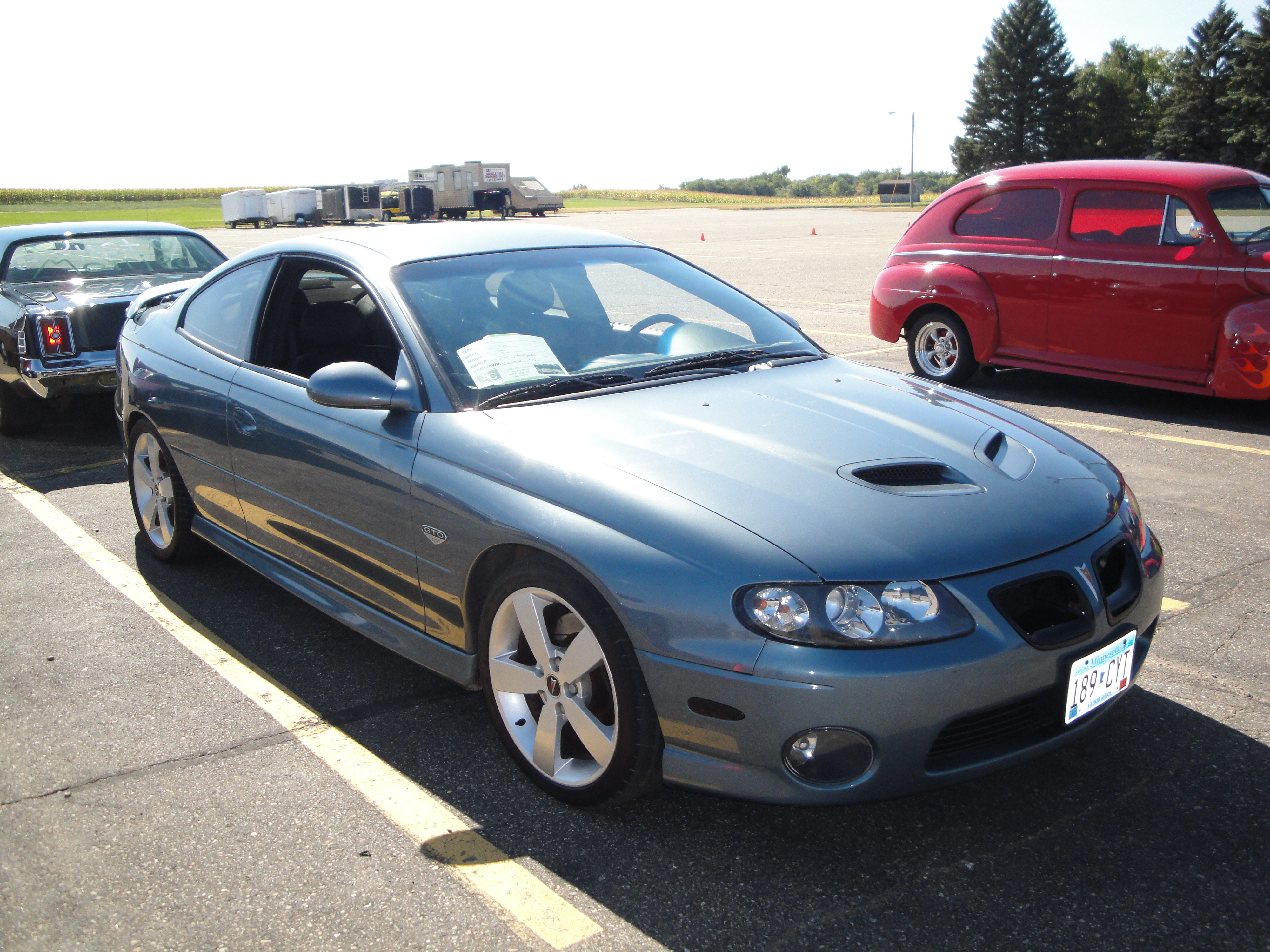
The Pontiac GTO is a famous muscle car. When owners swap in different engines, they often need custom exhaust parts so everything fits and performs well.
An engine swap means replacing the engine with a different one. When that happens, the exhaust and headers often need custom work because the parts don’t line up anymore.
A “street truck” refers to a vehicle build that’s aimed at street use (or at least street-like behavior) rather than being a purpose-built drag-race machine. In these discussions, it’s often contrasted with Pro Mod because street builds usually have less extreme modifications and lower budgets.
“Street Outlaws” is a racing scene where people race on the street and it’s also the name of a TV-style franchise. The host is saying he enjoyed being part of that world.
“Turbo work” means upgrading a car’s turbo system to make more power. It often requires tuning and additional parts so the engine can handle the extra boost.
“Zoomies” is slang for a loud exhaust setup that makes the car sound extra aggressive when you rev. It’s usually done with an exhaust cutout/dump-style feature.
The Supra is a sports car made by Toyota. It’s known for being a fast, performance-focused model, and people often compare it to other cars from similar time periods. In this episode, it’s mentioned as part of that era-based discussion.
The Mustang is a sports car made by Ford. The episode is talking about the older Mustang style from around 1990–1991, often called the “Fox body.” It’s mentioned because it’s a well-known Mustang generation.
“Back half” means modifying or replacing the rear section of the car’s structure for drag racing. People do it to make the back end stronger and better for high power and hard launches.
Term
X275
“X275” is a drag-racing tire setup (a specific tire width/class). Wider, stickier tires help the car launch harder and go faster in a straight line.
“55 Chevy” is a 1955 Chevrolet, a classic American car that’s super popular for show and restoration. It’s the kind of car people build to look perfect and stand out at car events.
Term
full kill
“Full kill” is slang for the most aggressive power setting. In other words, it’s like turning everything up to the max for maximum speed/pull.
“Dead hooks” means the truck grabs traction right away when you launch, instead of just spinning the tires. It usually points to good tires and a drivetrain setup that can put power down.
Cutouts are a device you add to your exhaust that can open a valve and let the exhaust exit more directly. When it’s open, the truck gets louder and more aggressive.
Stock mufflers are the original exhaust silencers that came with the truck from the factory. They’re saying they didn’t replace the mufflers, but they changed other parts to make it sound different.
Break-in is the first period after an engine is new or freshly built. You drive it in a careful way at first so the engine parts can “seat” properly and last longer.
This is a special, track-oriented version of the Dodge Viper. The ACR trim is meant to be pushed hard on a road course, so it’s a “dream car” for people who like serious driving.
Concept
Camaro train
“Camaro train” just means the show is staying on the topic of Camaros. It’s a casual way to say they’re talking about Camaro builds again.
LIVE
This episode is brought to you by 6XD Gearbox.
More on them later.
So how I discovered you was through our mutual friends over at Accelerator Racing Solutions,
who I had on three episodes ago.
And they do a lot of Camaro stuff, but there's a little bit more than Camaro stuff in here, right?
Oh yeah.
Yeah, I got everything in here.
I got everything in here.
63 Corvette, Nova Pro Mod behind me, an O2 Camaro, ZL1.
And then I have six F-150s in storage.
Holy shit.
Okay, just pull this towards you, just a little bit.
Yeah, there we go.
Perfect.
Yeah, you're good over there.
Yep, perfect.
OK, so how do we get to where we are at today?
How did this all start?
Because obviously, you're doing some F-150 stuff.
We have a winning Texas 2K car right behind you.
I see you smiling over there, Billy.
But we're not.
Is that your car there?
It's not his.
No, no, no.
No, it's not his.
Hold on.
I looked at it and I said, I'm like, all you Camaro people
look the same.
Yeah, they all, yeah.
Yes.
But nonetheless, how do we get to where we're at today?
Because you're kicking out some awesome kids,
you're building some awesome cars.
How did this all start?
So I've never, I've only had one, I guess,
I want to say legit job.
But this is all I've ever done since I was a kid.
I've always loved cars when I grew up.
And the performance world, I've always
wanted to go fast and make things go fast.
And so I started my first job at RPM.
OK.
It was in Louisville before.
And that was, oh man, I think 99.
99?
99.
Yeah, I'm 45.
So I want to guess that.
I look a little younger, right?
My beard probably has like 10 years now.
But yeah, and I want to say 99, 2000, I started at RPM.
Just stayed there for 67 years.
They end up closing the doors.
And then I went to HPP Racing.
OK.
And they're out of Garland now.
I stayed with them for, man, like 15 years.
Stayed with them for 15 years, left there.
Then I went to a company called Anything Automotive in Denton.
And when I went there, I loved HPP.
Manny is the owner's name.
He was a really great boss with me.
I learned a lot.
Like when I went to all these shops, I learned like a ton.
Took a little, took learned, do this,
do this, don't this.
And my uncle and my wife kept telling me, hey,
you got to open your own shop.
And what period was this?
What year?
Where you had roughly?
Really?
Like, oh.
They've been telling you that for a long time.
Yeah.
I'm trying to think of like when I accepted it.
Yeah.
It's scary.
Even when you think about going into a business
for yourself or whatever.
I won't.
10 or 11 is where I really started thinking like, OK,
I think I can do this.
Because what ended up happening is when I was at HPP,
he would many, they would call and be like, I want J to work
on my car.
And because at that time I was fabricating,
doing turbo kits, doing all the fab work for HPP at that time.
And I would get the manual.
He's like, hey man, this guy called.
He wants you to work on a car.
OK, cool, whatever.
You know, I didn't understand that aspect of the business
at that point.
They were getting a wait list for customers to get on J's list.
Yes.
Yeah.
So when I started having, I was like, you know, like maybe
I can like do this.
And were you doing some side work at this time?
Or is this all through the company at this point?
So I didn't do any side work at the time.
Because I was very loyal to many.
Very, very, I'm a very loyal person just in general.
And so I felt like if I started doing side work,
just that loyalty like basically goes out the window
and I didn't want that to happen.
That's when I left.
So when I left, I already kind of had the game plan of let
me start saving money, let me go somewhere else,
and let me like try to figure that out.
So I go to anything automotive.
And I learned a lot there.
It would like how they ran their business
was I mean completely different how H&P ran their business.
I was like, oh, wow, this is really new.
And I'm glad I went there.
I feel everything happened for a reason.
Because I could see different aspects of the business.
So I go there for a year.
And I'm like, all right, I'm done.
I'm going to start my business.
And I'm going to do it out of my house.
But during probably four or five months into that year
with anything automotive, I started doing.
I had people contacting me through Facebook.
Hey, will you build my car?
I'll build my car.
OK, great.
So Brian is the first guy.
Man, I forget his last name.
It's like Laylac or something.
He had a split bumper Camaro.
And it was like a full build.
And I was like, OK, how do you want to do this?
This is the shop I'm at.
No, no, no, I don't want no shop.
I want you doing.
You want to hire you direct.
Yeah, he's like, I want you to do the car.
I was like, I'm going to do it out of my garage.
He's like, I don't care.
Where you do it?
So I started doing that.
I had a house in Carrollton.
Had a big garage, which was fortunate that I had that.
So I started building the car and I started posting up pictures
on Facebook.
And then after that, like it exploded.
OK.
So and what time frame are we at at this point then?
We are 2017.
OK.
Yeah.
So how does the work change then?
Like, do you start doing like just small things here and there?
When did when to full of like race car programs come into the door,
I guess.
So when I was at anything automotive, there was a guy Armando.
And so when anything automotive brought me to their company,
it was only to build like race cars.
Now, but I was doing that at HPP as well.
Doing like Manny's race car.
I built that car from like ground up.
So I had already started doing that like into into HPP.
So like early 2000s or 2010, 11, 12
is when that started happening.
So I meet Armando and when I left anything automotive,
they basically were like, all right, we're not doing performance no more.
They went off into like just doing regular like maintenance.
And they're still in business now in the same spot.
So then I get Armando's car and it was Mustang coupe, like a 91 or
90, 91 coupe.
Yeah, someone there.
It's a coupe.
Bright orange.
Bright orange is called Hellboy.
And that's where I really started making the scene for building race cars.
OK, OK.
Or more platform of just me.
Right.
Because yeah, on my own, because like I would go to HPP and they're like,
oh, there's an HPP car.
Well, well, Jay built it, but it was still HPP's car.
Then anything.
It was still anything automotive car.
So finally, when I was like, man, I want to do this on my own
because I'm building these cars and like I always got a little irritated
because sometimes shops, but I get it now.
Like when I have my shop, I kind of see where the owner comes from.
With that aspect of it, how they say, oh, it's a HPP car or anything,
our motor car, I wanted my recognition, basically.
Well, kind of like, you know, like when you open like a Mercedes or like a Nissan
like GTR hood, you see who built the engine.
Exactly.
Yes.
Yeah, they're trying to give them some type of credit, right?
Is there any shop that does that at this point?
Like, yeah, it'd be kind of cool, right?
Like, like if you had like a big fab shop, then you'd like give credit to the guy
like fabricated by Jay or whatever, something like that.
Right.
Yeah.
Kind of cool.
We do have some tags that we put on.
Yeah, we'll put, yeah, we put tags.
And so when you open it, you see like on Billy's car, right?
When you open it, you see J fab, my clock and everything to try to get, you know,
that out there.
But like motors, like Oaks Performance, like now they're Valka, like you buy a
motor from them and they have Valka says Oaks Performance on the Valka.
Yeah.
Yeah.
So you kind of like know, right?
But that gives them their recognition for what they did for that motor, right?
And that's basically what I wanted when I was like, forget this, like I'm out.
Llamando's race car was the first one you had a three foot J foot sticker on the back.
Yes.
I mean, like that's when everybody goes, who the freak is J fab?
Oh, that's that car.
Now, well, people knew me like, like they know me from the track.
I showed to the track, they know who Jay is, blah, blah.
But at this point, it was like, for say now it's, he has his own shot, which really
was in my garage.
Yeah.
So a big part of any business is like the advertising.
So is this you, are you going to race tracks meeting people?
Are you like, how did your work get out there?
How did the business grow?
Facebook.
Facebook's just people just sharing what they did with you.
Facebook was the biggest.
And Facebook to this day is still my biggest avenue of workload.
Like 100%.
Okay.
Yeah.
A lot of times the fab work speaks for itself.
And so when somebody sees something he's built, it doesn't look like other cars.
And they're like, man, I really want to, I want to know what that is.
Or who built that?
100%.
And it's just, it sells itself.
Yeah.
So I start going.
So I started in the garage, started working, you know, I worked out of my garage for.
Three years.
Yeah.
And it was great.
Then I met Parker.
So right when I met Parker, I end up going back to HPP, but not like full time.
What ended up happening is Manny gets involved with street outlaws.
Okay.
So he calls me from PRI and Monza's on the phone.
And Manny's like, Hey, bro, you know how to build headers.
And I'm like, of course I know how to build headers.
And so I sent him a picture so they call me and Monza's on the phone and Monza's
like, Hey, you want to build like my turbo?
My turbo kid.
And I'm like, heck yeah.
So I basically was going, I still had all my work at my house and then I would go to
HPP and I would start working on Monza's car.
And once Monza hit, it turned into Kamikaze.
I did it turned into the purple car.
I forget what his name was.
Oh, Doc.
The dart.
Oh, so I did.
I did headers on Doc's car, but it was a nitrous car.
But I did Doc's.
I did Reaper's car.
I did like two of Reaper's cars.
And, um, oh man, I forget the guy.
I see Kamikaze.
It's the clear, but it's the fire.
Yeah.
The El Camino.
El Camino.
Yeah.
The El Camino.
Um, and then I did, I forget his name.
He's still in it now.
It's the blue firebird, like the 67.
That guy was baller for there for a while.
Yes.
Yeah.
Yeah.
So I did his car and, um, towards the end of
that, man, he was just like, Hey, man, why don't you just
like come back because I was coming like two or three days
out of the week and I was still doing, you know, my stuff.
And then as that's going, me and Parker had started developing
more of a relationship.
He brought me his 93 Cobra, his 55 Chevy that he had.
And so I started working on his, he basically was just like a,
a client at that point.
And, um, he lived.
Man, 10 minutes down the road as a crow flies.
Yeah.
Yeah.
So like he runs a roofing business, impactor roofing.
And I worked like all day.
So he would come like at four o'clock and just hang out at the garage
and watch me build cars and 345 nights a week.
We're both checking out of work, going home, changing
the grass and food and we're going to be in the garage pulling cars.
Yeah.
He would tell me, Hey, you want, uh, Arby's, no, Boynham.
Talk about our Arby's like always talk about Arby's right.
So I tell Manny, yeah, I'll come back.
So we made an agreement.
I brought all my customers to HPP.
I got a cut of that and I got financially like hourly or I think it was
like a salary or something at that time.
And, uh, they moved to Garland to the big shop that they're in like now.
And man, I don't think I was there.
You made the move, but you were doing a lot of driving and it was just kind of like,
yeah, man, I was spending $400 in tolls a month.
Holy shit.
Yes.
It was to go all the way over there.
It cost you more to go to work every day and then longer days.
Yeah.
And then here we come back to that recognition that I was talking about.
Now it was leaving as HPP and that started like chipping away at me and it would
make me matter and matter and matter.
And, uh, I just, I didn't like it.
I wanted to go back again.
Me and Parker, I have been doing his stuff at my house.
So I was working from my house, working full time for HPP and then it's chipping
away, chipping away, chipping away at me.
And it really started like bothering me.
And I forget the conversation.
I think I call park and I go, Hey, I'm going to leave.
I'm going to leave HPP.
I'm going to go back to my garage for like four weeks in a row.
Like we talked probably 10 times a day and he's just like, man, I'm tired of this.
I love it.
I'm tired of this.
I love it.
So he would tell me, I have a shop and I'm like, no, like I get it.
I get it, but no, like I'm going to go, you know, I'm going to figure it out.
I'm going to go back to my garage.
So, and he told me every time I have a shop, shop and I'm like, all right.
And I net it for whatever reason, it just never came to my mind.
Never dawned on you.
Yeah.
That well, Parker's trying to offer me a shop.
It just, I was like, forget it.
So the day I quit, I called park.
And at this point, this is a year in.
Yeah.
This is a year of me, because I was at HVP for a year.
So this is a year in of me developing a friendship with Parker.
And I call I said, dude, I'm going to quit.
And here in like 30 minutes, I'm not on a Friday.
I remember his lunchtime on a Friday.
And he goes, Jay, quit and come to my shop.
I have a shop.
Now he has a shop over there.
I keep thinking it's a shop, bro.
He's got, we have eight cars over there.
We got a 5000 slip of building across the street.
And my mind, yeah.
And in my mind, I'm like, dude, I can't work.
There's too many.
And he goes, just show up, just quit and come.
And I'm like, all right, cool.
I'll do it.
I'll call my wife.
Hey, I'm quitting.
I'm done.
She already knew it.
This is when my uncle at the same time was like, hey, stop,
like go back out on your own.
We'll figure it out financially.
And I'm like, all right, great.
So I quit, tell him I'm leaving.
And I stayed for like two weeks to finish.
I was actually working on Reaper's car.
And I needed to finish Reaper's car because they didn't have nobody in the shop
at that time that did anything that I did remotely.
So I leave and I come and this door's open and show up.
I'm like, oh, the door's open.
That's cool.
Go to park.
And so he walks over and he's like, hey, this is your shop.
And I'm like, what?
And he's like, yeah, this is the shop that I kept telling you about.
This is the man cave.
Every guy in town wants to have a man cave like this,
where you can put your stuff in there and work and take care of your cars and whatnot.
And I showed him it.
Yeah.
And as like you rolled in, we're like in a really nice neighborhood.
And it's all of a sudden, these really nice shops.
Yeah.
Yep.
So it's really unexpected over here whenever I give people my address or they show up,
they're like, yo, I just went through this like really nice neighborhood.
Like, man, this is cool.
The little waterfall and everything.
Yeah.
Everything.
Yeah.
Most people are like, you have a fab shop in Frisco, Texas?
Yes.
Yes, we do.
That's what I was thinking, because this is like a nicer part of town from my understanding.
And I'm just like a fab shop like is usually on the outskirts.
The lake is two minutes that way.
I saw it.
Frisco's right here, you know, little elms up the street.
I mean, we're in the middle of everything.
Yeah.
I was looking at the map.
I'm like, this is like a nice neighborhood.
I'm like, what's this little like warehouse area here?
I'm like, it's just different.
Yeah.
Yeah.
No, 100%.
So he was like, man, this is your shop.
And I'm like, man, let's like, let's do this.
Let's do this.
And that was Friday at five.
We were waiting on the guy that had previously rented it out just to get some stuff out of here.
Yeah.
And by Monday, we were moving stuff in.
We'd had the new bandsaw and all the stuff coming.
Yeah.
Lifts, everything.
The good thing I think that best thing I did financially is I saved
my money.
How much.
Okay.
This is a good advice for other business owners.
How much did you have saved the way to be like, I could take a chance on myself again?
So, okay, let's go back when I started my garage.
I had $1,500 to my name.
Okay.
It wasn't a great idea, but I had $1,500, four people in line and I told my wife
and my wife had all the confidence in the world in me and I had like none.
And I go, baby, I got four cars.
She's like, look, you're going to do what you're going to do.
Your work's going to stand for itself.
Keep posting it on Facebook.
Don't worry about it.
And I was like, all right.
So literally started with $1,500 to my name.
But when I got here and parked, I didn't even know parking, but well, eventually did.
I had saved 40 grand.
So wherever I went, right now, and I love it.
And I can say this and not a lot of shop owners can say this.
I owe nothing.
I have no debt.
I don't, everything is paid for in the shop.
And that's what I really wanted because I knew in a business and I've seen it again,
right from these, all these different companies that I've been with,
they owe a lot of money to like different things or they got a dyno or they're paying
an alignment rack off or whatever it may be.
I wanted to come in debt free.
When you get to a certain level in a build, whether it be drag racing or drifting,
road course, or just the badass streetcar, you'll have to upgrade your transmission.
And when we're talking sequential transmissions, there's no one on the planet
would have stronger gearbox than 6XD.
And the proof is in the pudding here folks.
Half the FD field is rocking a 6XD and even 3000 horsepower vipers have not been able to tame
the best that 6XD has to offer.
So if you're ready to take it up a notch, go to 6XDgearbox.com.
And when contacting them to place an order, use code Minoxide5 or reach out via socials
to figure out how one of the baddest transmissions on the planet could fit in your build.
Let's get back to the show.
A lot of these guys start spending money faster than they're making it.
Yes.
And that just doesn't go very far.
Exactly.
So now all the profit that I'm making is going straight to my bank account because I don't owe
anything.
So that was probably the best thing I had ever done was save every nickel and set the $400 in
tolls.
But yeah, it paid itself off me saving my money is what it really, really was.
But I don't suggest anyone $1,500 if you're listening to go into a business.
But I had the clientele.
So I knew once I had this and they were all big jobs.
So I knew I was going to make 15 grand or 10 grand, 5 grand.
And I knew at that point that I could sustain myself out of those four cars.
I could live off of that for 78 months.
Right.
Buy you some time basically.
Yes, exactly.
And then, but once that it was since I did that in.
Just going to double check this one real quick.
Yeah.
I want to say I think 2016 is when I went to go work for myself out of my garage.
From that day, I said yes.
I have always been two to five months out of work.
That's going to be my next question is how far out, how far out are you right now?
Five months.
Five months.
Okay.
So I got to get on a list right now then.
Yeah.
Yeah.
You got to have one 50 built or if you need to turn it.
And we'll get into that because that's where it's really.
We got a board over there.
We got to keep them in line.
Yeah.
Yeah.
That's where it really kicks in is the F-150 scene.
But yeah, we can get to that.
So come in and start going.
Going to work.
Going to work and I had my client.
We had Armando's race car, which was a big car at the time.
Yeah.
So Armando's car again was like my shop car.
And unfortunately, Armando passed away.
So that kind of hit.
I didn't go to the track for.
You know, it was for years.
A couple years.
Like four years.
I didn't go back to the track.
Wow.
So that hit me pretty good.
But I love it because I met Billy.
So, yeah, well, I, so this is a funny story.
So I meet Tiana.
I'm at the track.
You know who Duane Biddle is?
Biddle Motorsports.
They're out of.
Austin.
Austin.
Well, they're downouts.
Just north Austin.
Yeah.
So something was going on with Tiana's car.
And Duane's like, oh, that's Jay.
Hold on.
Let me go get Jay.
So I walk over and I think it was like a water overflow can or something that needed to be bigger.
And that was the first job I did for Tiana and Brandon.
And they had sent me a sketch and I made it, shipped it to them.
They were here locally.
Well, locally, but 30 minutes away.
Yeah.
34.
Yeah.
Yeah.
They're at McKinney and Brandon was like, hey, like what do you do?
And so I was like, check out my Facebook.
And so you check them on Facebook and.
We started our relationship with them like right when they got here from California.
Okay.
So this is like what?
20, 20-ish sort of?
Yes.
Roughly.
Yeah.
Yeah.
That's when they came over here.
Roughly, I think.
It's funny because we took that car over there and they,
that was like one of the first mo-tex they installed in a Z01.
Yeah.
And that's Parker's car.
Got.
Okay.
Yeah.
That's Parker's.
Got.
So he calls me three years ago, correct?
Three years ago.
And he goes, hey, I got a customer.
He wants to win 2K.
Money's not an option.
What do we do?
And I'm like twins.
We do turbos.
Yeah.
Turbos.
He's like, all right, like let's do it.
Get a quote from me and let's go from there.
So I don't think I heard from Brandon at that point for like six months.
And he calls me and again, I'm like 345 months out.
And he goes, hey, you ready?
I go ready for what?
I forgot all about like the conversation we had.
The Texas 2K car.
He goes, the Texas 2K car, we're going to build it.
And we're going to go and go, bro, we got like three months.
He's like, yeah, I know.
Money's not an option.
Let's do it.
So sure enough, that's when I meet Billy.
And we start building his car and I was working like 20 hour freaking day.
Literally the 2K that we went to two years ago.
I got done Sunday and no Saturday, the week of right.
So Texas 2K starts Monday.
You get to set up Sunday.
I finished Billy's car.
We take it to Brandon and Brandon.
I don't think he slept at all whatsoever.
And we show up Tuesday for qualifying.
Yeah.
And that's how close we got with Billy's car.
We got MoTeX.
MoTeX is great.
Okay.
MoTeX is like the one, like the best ECUs that you could put on a car.
It does everything and anything you possibly can think of.
But what's the but?
The but is it will MoTeX you.
It does more than what you can think of.
Well, it has so many safety parameters.
Okay.
So here we go.
We build Billy a 2000 horsepower car.
Billy had never been a 2000 horsepower car in his life.
And with me and Brandon together, we're like, okay, we're going to go in steps and steps.
Right.
So 2K, you know, you get like one hit a day.
Tuesday, you get a hit.
Wednesday, you get a hit.
Friday on and on.
So we progressively were getting Billy up, up, up, up.
And at that time, I think we got all the way to like Friday and we were third qualifier.
Yeah.
So we're in there.
Third or fourth qualifier with Billy never going down the track in the car.
Brandon and me guessing at what to do.
And at this point too, Brandon is he's, I wouldn't say unfamiliar with the MoTeX by any means,
but also unfamiliar with the safety parameters.
Well, yeah, this is like an entirely new setup at this point.
Like he was working on mostly Magnuson or starting on super charge build at this point.
Yeah.
Yeah.
I believe and I believe on the first twin turbo car that he started doing.
I believe so.
You could rotate that mic by the way if you want.
Yeah.
I want to talk to you, sir.
Yeah.
Yeah.
It's good.
Like about a fist away.
Yeah.
Perfect.
Yeah.
Should be good.
Yeah.
But anyways, so yeah, because like there's just so like when you came to them with this build,
it was going to be the most over the top build that they've done at that point.
Right.
Yes.
100%.
Most power.
Well, I take that back.
At this time, Brandon had a really fast Mustang.
Did you ever see that?
Oh, his personal car.
His personal car was a twin turbo LS.
Yes.
That thing was stupid crazy.
So for sale too, I believe.
No, no, no.
There was one before that.
Oh, no, no, no.
That's Tiana's car.
Oh, okay.
Yes.
He had his own car that probably made right around like 1800, 1900 horsepower.
Okay.
I actually sold it for him and he owes me still for that.
I'll pause real quick.
I'll just go on the limp deck.
Oh.
I'll be fine.
That will stop last time.
I'll be fine.
All right.
Perfect.
Should be good.
There we go.
So we end up, he sold that car and then Tiana still had her grudge car.
You can say, you remember the grudge car, the Mustang, the gray one.
So yeah, they had very close to what he was getting.
So it wasn't like new to the twin turbo era because that's what he had,
but definitely LT based, Camaro based was that was the first one for Billy.
So we get to Friday and no, we get to Saturday.
Saturday we get three test hits or two.
Which time?
The two years ago.
Two years ago, I think we did three test hits.
So I want to say those three went extremely great and we kept creeping, creeping, creeping.
And I think at this point we were like number two.
Actually, no, I was in the eight slot.
Yes.
Eight qualified.
Yeah.
Yeah.
Eight qualified.
But we weren't worried because on the last pass we knew, all right, this is game on.
We're going to show up on Sunday and we're going to like, get them.
So we come Sunday, we win the first round.
No, no, no, I actually, so I, so this is where I got my tech.
So everything was going good.
And we went into the first round on Texas 2K of 25 and I was up against Bow Dental.
Okay.
Yeah.
Okay.
So we go line up, make the hit.
I got him off the tree and then I lost oil pressure from the MoTeC by one PSI and it killed the motor.
One PSI, bro.
And then Bo just left and I was like, are you kidding me?
What just happened?
So Ram pulls the log.
He's like, it was one PSI.
So that's where the safety parameters kind of.
It was a little too tight on the safety.
Yeah.
Yeah.
So we got a hit on Sunday.
Then we get a practice hit Sunday and I think that's where we went fast.
Yeah.
We might have Sunday morning.
There was one of the passes either Sunday or Saturday.
We made a really fast pass and we're like, boom, we're, I think we went like an eight
oh or something.
Yeah.
Yeah.
It was 18
And we knew the next hit was going to be a seven because at that point only one,
Chris Bailey was running a seven at that point.
So that's where I, we knew the car had the potential to win in one dang PSI.
One PSI.
That's all it was.
Shut it down.
But that's part of racing, unfortunately.
Yeah.
Yeah.
Exactly.
But to come back this year and just take it all, what did that kind of look like?
Was there any changes to the car?
What did that look like?
Yeah.
A lot.
Yeah.
We did a lot of, we did a lot of safety upgrades.
Obviously we did the oil system because after that we did fueling.
So we started running a mixture of alcohol and E this year.
Okay.
So we did that as well.
Yeah.
Belt drive pump, full cages, Simon says I'm going way faster.
Before I just had a roll cage in it, which was completely unsafe.
A bolt in.
I was going.
A bolt in cage.
It was not safe.
So it's got a full cage in it now.
So yeah, we went into it this year, just past Texas 2K and I told Jay Brandon,
I was like, look, we're winning this thing this year.
I don't care what it costs, get it done.
And so I gave them carte blanche on whatever they wanted to do to the car as far as wiring,
mode text, turbos.
I didn't care.
I was like, we're winning.
I don't care what it takes.
So me and Brandon get on the phone and we're like alcohol.
Wait real quick.
So you and Brandon had a conversation first or like, was this a group conversation or?
It was group.
Yeah.
Okay.
So after this is kind of like when you take kick one person out of the group call.
So we kick you out of the group call.
And it's you and Brandon talking at this point.
Yeah.
Yeah.
So what did this conversation look like?
You know, the good thing is me and Brandon think a lot alike.
So there was no like the surferancy.
We like, we knew, all right, we're going to go alcohol.
I got to put belt drive, fuel pump on it.
Like I need to do a real cage in it.
It was a Bolton cage.
I put a 12 point cage in it, pulled the dash out, did everything really nice in his car.
Fire suppression.
Fire suppression.
Like just little, all little things.
The biggest thing was alcohol, fuel system cage.
But as for turbos, power system, it was all, yeah, it was all great.
I believe he went to like a bigger MoTeC.
Yes.
Yes.
So we went to the 182 MoTeC with the MoTeC dash.
So we had extra outputs and actually right now we're out of outputs on that car.
So you were telling me the other day.
That's how much, how much sensors we now have on that car.
It's pretty, pretty insane.
But that MoTeC kit is legit.
And with that dash in there, I mean, just what the parameters that you get to see
as far as me being in the car and the way that Brandon set it up.
It's insane.
It's pretty killer.
Real quick, I want to talk to you about this because you're on the driver's side of things
and you're learning all this stuff as you go.
Are you getting coached by Brandon like between passes?
Like what does that look like?
What does it looking at the data look like?
Yeah.
So it's really, it's Jay and Brandon basically telling me,
hey, this is what you're doing wrong.
This is what you're doing right.
You fix this.
Shorten up your burnout, lengthen your burnout, drag it through.
So it's a lot of coaching from Jay and Brandon.
I mean, honestly, I had never been in a car that fast before.
The fastest I had gone before was in like the mid eights.
So I mean, going from an eight second car to a mid seven second car.
I mean, that's a big jump.
Yeah, it's a completely different game.
So it's them coaching me, teaching me because Jay's been drag racing for a long time.
Brandon has been drag racing and even Tiana, she was helping me out as well.
Tiana's a beast.
Yeah.
That's why I heard.
She's a beast.
On that tree, she is killer.
Like I would not want to race against her.
She'll drive the bumper and still whoop your tail coming down off of a wheel.
Tiana's a beast.
Yeah.
I do not want to race against her.
Good thing this year you got some seat time.
Yeah.
Yeah.
So that was the difference.
Oh, really?
Still, I mean, I gave it to Brandon on Friday.
The week of.
Yeah.
We still came really close this year, but we didn't.
The previous year, I think Brandon actually brought me the car to Texas 2K and I was already
there that Monday.
Yeah, he says you were already like going in a tech line or something like that.
Yeah.
Yeah.
So I mean, that's how close we were last year as far as getting that car down.
I mean, it came down to, I think Brandon was up until three in the morning trying to finish that car.
He still had a couple of things to do that Monday.
So he brought it up Monday morning or Monday afternoon.
Me and Tiana got to the track.
We got everything set up.
He brought me the car.
We teched it and that was pretty much it as far as seat time.
Like it was just the practice runs.
You were assessing the bump and the parking.
Yeah.
Yeah.
I was assessing the trans break and the bump in the pits and I had actually never used a trans
break or a bump before that because I was always a foot break guy.
So learning that whole setup was just completely foreign to me trying to figure out all that stuff.
And I know a couple of times Brandon would yell at me because I would sit there on the
trans break and my foot on the break.
In my head, still a foot break guy and I'm letting off on the trans break and it's just
not doing anything.
He's like, dude.
No, he would bump.
He would bump but the car wouldn't move because he's on the brakes.
Right.
So he couldn't bump in and we're screaming, get off the brakes.
So it took a lot of them yelling at me and me.
Tell me what he did on the screen.
Oh yeah.
This sounds cool to MoTeC his.
Yeah.
So after, after last year and me trying to figure out trans break and the bump and stuff,
Brandon was like, look, we have a MoTeC screen we can put in there.
And on that screen, I can put a big red light that says get off the break.
And that's what it's on there right now.
So if I'm on the break, it lights up red says get off the break.
So I get off, get on my train.
That's awesome.
And get on there.
So I remember.
But it's, it's, it's, it got a lot more familiar as I started to get in that car and started to go
through rounds this year.
I didn't have an issue at all.
As far as I can remember.
Yeah.
This year was perfect.
The biggest thing this year, Tuesday we had unlimited testing, which was great.
Yeah.
Tuesday was testing in tune.
So it wasn't, it wasn't qualifying or anything like that.
So we, me and Brandon are like, all right, same tune of the last pass that we got MoTeC on that
we knew would go like a seven or eight, oh, on that pass.
And I think off the trailer, we won an 82.
82 or 83.
Yeah.
One of those.
So when that happened and then we went back and we looked at the data, it was like no power.
Yeah.
I looked at Brandon, me and Brandon were like, dude, it's over.
Like it's game over.
Yeah.
I think we were only on 20 pounds on that.
Yeah.
It was like 19, I believe.
Yeah.
Yeah.
It wasn't a whole lot.
And I was like, oh, it's on.
And I told him, Brandon, we can't get MoTeC.
Like we just can't get MoTeC.
So we made, I think we ended up running an 80 Tuesday.
And we left it alone.
Then Wednesday, we made a hit, same hit, turned it up a little bit more.
But what happened this year, it was cold and then it got hot.
Yeah.
So right.
If you remember that, I think it was like 50s on Tuesday and like 60s on Wednesday.
And so we get to Thursday.
And this is where we go about drag racing and knowledge.
A lot of drivers know this.
I start looking at my weather and I'm like, yo, Brandon,
Friday, we have to go balls out and we got to make a pass at three o'clock.
Three o'clock was like, I think 85 or 89 degrees.
Yeah.
At the time, it was like 60s.
I was like, bro, what the car's doing now, it ain't going to do what it's going to do on Friday.
So we had a game plan.
Brandon had a tune.
We looked over the tune.
And also Wes, Wes was a big, Wes was big.
If you know who Wes is.
Yeah.
I think I've briefly met him.
Maybe.
Wes was always on the line.
Wes was reading the, reading the track for us, telling us how much tire PSI to go on.
Wes was a big part.
Yeah.
Wes, Wes would line me up every single time.
He was, he was great.
Yeah.
He's a great part.
So we all get together.
Like, all right, this is the pass that we're like, we want to do.
So Friday, we get, we get screwed by the clock.
If you remember that.
Yeah.
Yeah.
It showed him go red and it wasn't red.
But he, yeah, he made the pass and we go.
Back and we look at the data and we're like, oh, this is better.
We could put more power into the car.
And the data showed he ran like a seven 80.
So we're like game on.
So I think we put just like a little bit more.
They gave us our own hit and it was later.
It was like 435, which got it like a little hotter.
And I said, Brandon, whatever this is, this is the tune because it's only going to get hotter
from here.
I think Sunday was like 90.
Yeah.
It was a hot weekend.
Yeah.
Yeah.
It got hot.
Really.
And we went an 87.
Yeah.
So that's the, the past.
So when I did the additional pass, yeah, I got out of the groove and so if you see my car on the videos,
you see it basically does a wheelie the entire track.
So it's moving like this and I'm short.
I'm only 56
And so I'm trying to see over the thing.
I can't see anything while I'm driving and I, my car's going sideways.
I don't know.
And then once I noticed that I'm about to hit the cone, I'm trying to steer out of it.
But my front is so light, there was no steering.
So I just had to let it go.
So just the tip of the bullhorn hit that last cone, which is what dequeued me on that pass.
And that would have took the number one qualifier.
Yeah.
But we had the data.
So we knew that, oh, okay, this is going to take, the car's going to take it, the track will take it.
Saturday morning, we're going to show up and hit number one qualifier.
Yeah.
No problems.
We knew it.
Yeah.
So Friday we go in because I think it was Thursday that I hit the cone.
Friday night.
Friday night.
Okay.
Because then we go Saturday.
Okay.
And so then Saturday we go in, we make, I think we're third or fourth up and we make a rip.
And then I did a 750 something.
Yeah.
So I think that 753 at 186 miles an hour.
And that put me over a half a second above the first place person.
I think it was, uh, simple was currently sitting at first that point in time.
I think he was at an eight oh.
So I ran a 753 750 something that point time.
So I jumped up a bunch.
I mean, I was in first by leaps and bounds.
And that was in heavyweight, right?
That was in heavyweight.
Yes.
Yes.
You can see the energy of the track though.
Yeah.
Yeah.
Everybody was just like, oh.
Yeah.
Except for my crew.
Everyone was, I mean, you can see the videos.
Everyone was excited.
Everyone was jumping down there like, holy crap.
Like, and that was my PB as well.
PB as far as time, PB as an hour.
Now put your wear on the list for the fastest Camaro.
So around sitting in four for fastest Camaro.
Okay.
It was a four.
Okay.
I think it was said three or four when I had Brandon Piana.
So, okay.
That's, that's moving.
Yeah.
So we take that information and we got together, me, Brandon, and Wes, we got together.
And I was like, all right, we don't like, it's over.
We don't even turn a car.
We actually started turning the car down on Sunday.
And, um, we went to Billy and we're like, hey, I said, I go Billy, I did my job.
I did all the fab work, all the everything.
Brandon goes, I did my job.
Wes was like, I did my job.
We're like, Billy, go win the race.
There's nothing we could do no more.
Okay.
There's nothing, no more coaching.
Billy, it was all in Billy's hands.
Yup.
It was all in his hands.
It was lights out.
That first pass was so perfect.
I remember just watching it filming and going, you couldn't ask for anything better.
Yeah.
But, and what's cool is, uh, people might not know if you go back and look.
Friday, the car never ran slower than a second, seven second pass.
It ran 77777
Consistent.
All through Saturday and then the whole entire race on Sunday.
It kept running sevens.
Yeah.
Okay.
So explain this to me then.
So at that point, what was the, before you got the twin turbo car, what's the fastest you ever ran?
So my personal best when it was a, uh, 2650 Maggie was an 850 or 840 something.
Okay.
So right around there, like 170.
It's like mid eight.
Yeah.
Yeah.
Okay.
How different is it going into a twin turbo car?
What was it?
Was it a learning curve?
Oh my God.
It was insane.
Like the differences are just nine day difference.
I mean, uh, not only just having the trains break and the, the bump, but just where the power comes on.
I mean, with a PD blower, I mean, you got instant torque ride.
So you're, you're pretty much gone.
Um, with that turbo, when it's spooling up, I mean, I'm going, but that thing,
I think I carved back halves.
I mean, once that thing gets going, it is freaking gone and you're holding on like it's a freaking rocket ship.
So, um, and the final round, um, when I raced against Keaton, uh, who's a great guy, um,
we left and we were pretty much right here up until maybe the 330 mark and then hiding even before,
I think even before that, it was way before then.
Yeah.
Yeah.
Yeah.
And it, it just left.
Just run in and just carry you up the back.
Yeah.
We gave, uh, we gave Billy a scramble and we're like, yo, whatever it takes, if you blow the motor up,
we don't care.
If you think he's in your vicinity, grab the scramble.
And I think we had like 30 on top of the gate and he was already 30, 35 pounds or something.
I think like that.
And we're like, just grab it.
It'll like, it'll take it.
Just go, but I, you never grabbed the scramble.
No, no, no, he's gone.
No, he's gone.
I didn't, I didn't grab scramble and I was actually so confident in that car.
If you watch the video in the final round, um, I actually let Keaton leave first because
I didn't want to red light myself by accident.
Right.
So I stayed there for a minute because I knew that car had the power and had the
capabilities to run it down regardless of what was going on.
So that's why if you watched Keaton leaves and then I leave, I just didn't want to screw myself.
I'm like, I'm not going to do this in the final round.
That's the worst way to lose, man.
That's not how I'm going to lose.
So we were going and I looked over, I see him and I'm like, about to hit the scramble button
because I thought he was, and then I just, just left.
I'm like, I'm good with that.
What I love the most too about it is we never touched that car.
We put gas in it and air pressure and that's it.
We didn't have to, we didn't change the plugs.
We need to do it like gas air pressure.
Yeah.
That was it.
This year was probably the most consistent in that car was it had no issues, no failures,
nothing bro, no, no, when we got Motek once, but, um, but beyond that,
everything else was, was fantastic.
I mean, the tuning, we got Motek as we made too much fuel pressure.
Yeah.
Yeah.
So the Motek had a high fuel pressure.
So we hit like, I think like a hundred and like 30 or something fuel pressure and it was set to
like 120.
Yeah.
And we're like, what is going on?
There's no way I, the pump and I always just had to change one little.
Yeah.
Yeah.
It was a point little thing.
And then, uh, when we went into the finals, Brent was like, I'm taking every, every safety
office car.
Oh, I told him to, I go, I don't care.
What we do to this car as far as blowing it up, whatever, whatever it takes to win, we're doing,
he goes, I'm taking every safety out then and it's on you.
I'm like, that's fine.
I'm like, if I blow the motor, we'll just buy a new one and put it in.
I don't care.
So we had a, I had a funny like saying with Billy when I first, Billy first came in and I told
Brian, I said, yo, money, don't win races just to let you know.
And I don't care how much money you dump into it.
So when we won, I said, all right, money won the race.
Money won this time.
Money actually, I was going to get a shirt that was made.
Money got me this win at Texas 2K and give it to Bill.
You got to get that shirt.
You got to make it happen.
It was all said and done.
Everybody did their job.
Billy did his job.
Yeah.
He won the race.
Yeah.
Which by the way, I don't know if that trophy is in the camera shot.
You want to pull a little closer to you?
Yeah.
We're just going to make sure right there.
Perfect.
And that's mine.
They actually, we actually got our own.
Yeah.
Which is real.
So I had, I contacted Peter about getting some extra trophies made because I wanted Jay
and I wanted Brandon to have a trophy of their own.
I mean, they both put in so much time in that car.
They were the past shoot three years, four years.
They've been on that car both together trying to get me to this spot where we wanted to be.
So Peter authorized the guy that builds these to build me two others.
And so I had him put JFab on one.
And had put accelerated on the other for them to have so that way they could have their
own trophies.
I mean, they were a huge part of this program and get me here.
And they're continue to go and continue to be that for me as well.
Yeah.
We have an old another list of stuff we're going to do now.
Oh, do you?
Yeah.
We got some stuff coming out.
Guys, you're already first.
What's going on here?
We know that we now have a target on our back because of how fast we were this year.
Because I don't think there was any other heavyweight car that even came close
to the time.
I think it was like you said a half second was the next.
Yeah.
I think Sipple had run one.
He ran a 780 on Tuesday.
Yeah.
Never.
Yeah.
When it was cold.
When it was cold.
Never again.
Good DA.
He ran a 780.
I don't think he backed that up at all.
But I was able to back up that seven seconds consistently after that.
Well, we heard it from a birdie that some street cars and the street class are going to come back over
to heavyweight.
So yeah, we're just going to prepare for that.
Okay.
Yeah.
There's some people that want to come back over to heavyweight that was not in heavyweight this year.
Interesting.
Okay.
Come back because I decided to take the title away from all the Dodge guys.
Some of the Dodge guys are going to be coming back over to try to reclaim that title.
Yeah.
So okay.
Class wise, right?
This is the other thing to take into consideration.
Do you have to worry about rules?
This whole new list of parts that are coming on.
Is there anything yet?
What are the constraints I suppose?
So on the heavyweight, it is basically power adder.
How many you have?
So you can have a single power adder, NA or two power adders.
So the class is limited to by weight.
So you have to be at least 4,000 pounds.
Plus or minus 25, they give you a 25 pound grace when you go through the scales.
Just in case the scales are a little off.
Okay.
So you have to be 4,000 pounds.
Turbo size is limited to 72 millimeter.
Okay.
That is one reason why I think there was a
trackhawk that actually entered and their turbo size was larger.
They got de-queued because of their turbo size.
Gotcha.
You have to have cross bolts with the turbo.
Beyond that, it's just you have to have it ensured, registered, and it has to be a street car
to be in that class.
Which he still has radiator.
Even though we went to alcohol, we kept everything.
Like he can go drive that car.
Yeah.
Go on a cruise.
Stock gas tank, everything.
Just go.
Yeah.
Yeah.
That would be awesome if they implemented that rule.
By the way, he had to go drive for a half hour on the street for a street car class.
But back in the day, that's how it used to be.
That's what I heard.
If anyone remembers that.
Yeah.
It was a 30 minute drive.
Like anytime, and then like when you came back, you couldn't open the hood.
Like anything, you just started racing.
That was the true street class back then.
But now they call it more like daily driver class, which them dudes are really fast.
They're really fast still.
Yeah.
My F-150 was you can get F-150s in a little bit.
My F-150 is a daily driver, but it runs like mid-fives.
Well, before we get into F-150s, I want to ask you this, right?
Because it seems like you're very involved.
Like you're the fab guy, but it looks like you know a little bit about everything,
especially if you're working with Brandon.
Does this come from your personal racing experience?
Like where does all this knowledge come from?
HPP.
HPP.
Yeah, HPP because I was there for so long.
So I was even telling my guy, Tom, I had one of the first, we were talking about
Holley's this morning, I had one of the first Holley ECU systems for an LS and a Mustang back in 05.
So I had an LS already in my SilverCube.
I should have brought it.
He told me to bring it, but I know.
He told you to bring it.
Yeah.
I had an LS Turbo 400 with a Holley in 2003.
So think about that.
2003, that was still Camaros like this.
That were on the street and I already had a 408 in it and all kinds of stuff.
So, oh yeah, people that had never seen before in their life, I would open the hood and they're
like, what the heck is that?
It's Corvette motor, you know, back in the day.
So that's, that's how far back I go, just with knowledge.
Okay.
When you worked on everything, the doddies, the chords.
The knowledge is still the best.
Yeah.
There's nothing I don't know how to do on a car or make on a car.
Like there have been times where it's like, what are you going to do?
I'm like, I'm about to make it.
I wouldn't make it right in front of him.
He's like, holy crap.
Jake, you know,
One thing about this shop, if there's no point.
Well, real quick, get the mic, steal the mic back.
Yeah.
One thing about this shop, if there's not a part made for the car,
Jay just throws out a pencil and like makes it.
Yeah.
You know,
I remember my first time being in a fab shop and just like,
they didn't have the part.
They just made it within an hour and I'm like, what the, you know,
it's, yeah.
Yeah.
We're notorious for catch cans or like, you know, water cans or,
man, I mean, when you're building a turbo kit, you can build anything.
Yeah.
Yeah.
Yep.
What's the most intense build you've ever done in your career?
I guess under a timeframe,
Billy's under a timeframe, the street outlaw cars was a lot.
Okay.
What made them a lot?
The amount of work that you put in the, like the thought process in it,
these cars are making 3500, 4000 horsepower.
This car behind me will make almost 4000 horsepower behind me.
It's just not about throwing a turbo kit on it and saying, okay,
this is what's going to work.
Now, the great thing about turbos is let's say,
let's say 1300 and under.
I've seen the most ugliest turbo kits ever in my entire life and turbos don't give a crap.
They're going to make the power.
It'll make it work.
They don't care.
They really don't.
But once you start getting into the 15, the 2000, the 3000, 4000, a lot of thought process goes into it.
Primary size of your header tubes, the up pipes, is it three inch, three and a half,
is it two and a half?
Because now you got to think about how do I spool, twin 98s, the motor, it's a big block Chevy,
what the cubic inches, we put a turbo 400 lock up in it.
So the thought process at that point goes where, okay, this dude ran X ET.
Well, we ran this ET because we had a little bit more thought process into it.
So cars like this, ProMods.
ProMods is where it really, a lot of stuff comes into play.
So you can see the turbos are back in the firewall, right?
Well, I put it on scales.
We put the car on scales and I started placing the turbos in different spots of the car.
Those turbos are exactly where they need to be.
Even if I had that turbo two or three inches forward, it throws the scaling off of the car.
Crazy enough every time someone comes and see this, this is Wayland.
He's called El Cacui.
He's big.
He wins a lot of races.
Dude, he only street races that car.
That's not a track car.
It's not a track car.
Holy shit.
I'll probably see the track one time because we'll go, I built,
Wayland's been one of my customers for shoot like six years.
I built every single one of his cars.
This, the same car, the only thing on this car that is his car, El Cacui,
is the quarter panels and a roof.
This is completely whole redone.
Everything head to toe on that car.
So the amount of time of sitting there, like Park will come in and I'm just like staring
at the car and he's like, what are you doing?
I'm like, I need to figure out this.
This need to be an inch here or an inch here.
That's where a lot of time goes into builds like this.
Well, this specific car, you've built half a dozen times already.
This is phase six and it's over the top.
So every time he builds the car, it's getting better and faster and better and faster.
New setup.
You know, how do we take what worked last time and make it work better this time?
Yeah, exactly.
And then that's why it like Billy's car, sometimes it doesn't.
Sometimes they don't and catastrophic things happen.
But also it's why Billy's car went so smooth.
I spend so much time and thought process into where everything is.
How is it going to work?
But the biggest part is I used to be a mechanic and I'm like, how in Billy's car,
he has two and a quarter header primaries.
I don't know if that's that's big.
Okay.
I can change the spark plugs in 10 minutes.
So it's just little stuff like that being a mechanic, knowing that and then being a
fab guy and knowing, okay, I'm going to have to work on this car.
I'm going to have to take this off.
How easy and how fast can I do it?
But still, is it going to be efficient for how much power that the car needs to make?
It's got to be functional and maintainable.
That's the same time.
Okay.
What's the most difficult part when you're trying to envision a car like this,
where every bend matters?
What's the most difficult part?
Headers.
Headers.
Headers.
Headers is the most difficult because it's the most compact, crazy stuff going on.
After that, it's the turbos where it's at, the downpipes are going to go where they go.
Because you kind of, you set everything up on a car, me, I do, based off of the headers.
Where does the header going to come forward?
Is it going to come backwards?
Is it going to come out from the side?
And then after that, then you start figuring out everything else after that.
Okay.
What about when it comes to designing?
Are you a CAD guy?
You got a little cardboard cutout?
It's like, how does that...
Man, you're not gonna...
It's all up in here.
You wouldn't believe it if you saw it happen.
Hold on, it's all in my head.
Okay.
It's all, it was, I'd never had done this.
You'll check it out one day.
I made like a short and I literally take this piece, it's the last piece on and I go,
click a clink and it's like perfect.
It's literally like, sometimes I don't even use a...
I think Billy's seeming, I like put my fingers up and I'm like, okay, we're good.
But I mean, I just done this for so long.
I see all these guys and man, I'm not knocking y'all, please don't hate me or,
you know, put some comments in your deals.
They have like all these like Legos and they're building headers out of these Legos.
And I'm like, homie, I would have built the header by the time you built that Lego.
By the time they made their Lego setup, he's already got a thing built.
Yeah.
So that to me is just like wasted time.
But again, if I was starting off like doing fab, it's a great idea.
So that's, I'm not knocking it.
I just been doing this.
This is all I've ever done.
Yeah.
For what?
20 years at this point?
How long have you been fabbing officially?
Yeah.
Like 23, 24 years.
Yeah.
I was like 17.
So Tom, y'all can't see Tom over here.
My guy, he had a goofy Honda, what was it?
Tiberon.
A Tiberon.
And I was like 16 years old building his downpipe at another shop for another guy at this point.
So it just goes way far back, way far back.
Even when I was a kid, my mom used to always tell me she would give me stuff and I would
like take it all apart and I would put it back together just to see what I could do or
fab it or do whatever.
And she said every time I'd put it back together, something had changed, but it changed because
of how you wanted that part or toy to play with.
I've always had, it's the vision, right?
Like, quarterbacks have a vision of the field or a race car driver,
Formula One cars, they have that vision of the track.
When it came down to just making stuff, just making it, I've always had the vision that
it was in here and it just went to here.
It's fun to watch some days.
You come in and he starts with just a plate on the head and he just goes to work, man.
And he starts cutting and welding and before you know it, you're like, man,
that looks pretty impressive, dude.
Is there so what's next for the business side of things?
And do you scale this?
Do you get a guy to help you in the future?
Or do you just like being like tinkering in here yourself?
So I have a mechanic.
He's a full-time mechanic.
His name is Brian.
Me and him have been like, I've known him for 30 years.
So he's my boy.
He's old fart.
He's like 57.
He's crazy in the head.
I love him to death, but he's my mechanic because I always get, you know,
brand them, hey, will you do a clutch or do a trans?
And he's really helped me in an F-150 world.
We can get into that later.
But I've always felt something.
And I think my customers, which Billy is a customer, so you like kind of understand
as Park was my customer at 1.2.
I don't have a $15 an hour guy working on your car.
It's me working on your car.
So when I build a turbo kit and when I do something,
you came to me because of the skill or because of a picture you saw on Facebook or you saw a
car at the track and you're like, holy cow, like Jay, like did that.
It's not like some kid working on your car when it comes to me.
It's actually J-Fab working on your car.
And I've always just left it at that.
I don't, this is where I've learned.
I don't want to get bigger.
I like it.
People want to wait for me.
They're going to get an awesome product and they're going to get my whole heart.
Everything that I build, like this car or that car, I look at it if it was my car.
Would I do this on my car?
And I build it like it's mine.
And I think that's where the customers love it the most.
And then obviously I'm like five months out right now and they appreciate the work and
the wait for it.
And I'm blessed with that too as well.
Still blows my mind coming out of my garage and coming to even this.
It's only 1800 square feet, but I love it to death.
I wouldn't.
He's told me, let's get a bigger shop.
I'm like, no, I learned from other shops.
Like I'm not going to do it because corners start getting cut and you get more volume and
you start hiring these guys that are good, but it's not my good.
It's not to my quality.
We have a certain level of perfection and it's just hard to match.
Yeah.
You don't want to be in QuickBooks two hours a day.
Running payroll and all that.
Yeah, exactly.
So I, and again, Billy, Billy spent a lot of freaking money with me, but when he won that
race, I would assume I've never asked them.
He probably said in his head, like, this was worth it.
This is wonderful.
Run that mic back.
Hold on.
Here's your customer testimonial.
Yeah.
I mean, the, just the quality that Jay puts out and in the time and effort and the love
into the car.
I mean, that's what, why I'm still here.
And that's why I'm, I only trust Jay and Brandon with my cars because they actually care.
And so they build cars like it's their own.
They don't cut corners.
Everything is basically perfect on any of these cars that they do.
So yeah, the, the fab work on there, when I saw the turbo kit, when he got
done with it, I was like, that is a work of art.
It was insane.
And Billy's seen me do something to his car and I don't like it and I will cut it back
off of his car and I'll remake it.
And that's my month.
Like that's my time.
Like I didn't charge him for that.
It's just again, like where I put myself in my standards, my standards need to be high
because again, I'm still blown away for the, the blessings that I get to work on cars like
Billy's or like this pro mod.
And so I give it, you know, a hundred percent my all towards it.
What's your favorite project been so far?
Haltech has once again pushed the envelope today.
We are talking GM.
Sorry everyone else at the end of 2025 day announced their new transmission interfaces
for our GM listeners, which is a solution for those with four L and six L series transmissions.
So whether you have a drift car, drag car, or a high powered street car, you could finally
rip out that rinky dink almost two decade old OE setup and get set up with everything that a
standalone ECU has to offer without the compromise to learn more and go to tune by Sean sh8wn.com
to learn about how a haltech can take your build to the next level.
And while you're at it, check out the various plug and play solutions for your platform as well,
including some install videos.
As always, you can use code monoxide for 5% off.
Let's get back to the show.
F 150s.
F 150.
Okay.
We've been talking about F 150s.
Let's talk F 150s.
Does this come from a personal love or is it just because you see they're awesome or they're
at now?
So I'll tell you a story.
There's a good story behind it.
21.
Roughly 2021.
2021.
Park buys a F 150 and he brings it and I'm like, what the heck did you buy that for?
And he's like, no, we're going to like do this and this.
And I'm like, yeah, technically I had a leftover blower from another truck.
Yes.
Yeah.
Yeah.
I bought a two wheel drive F 150 single cab and I showed up and I
said, we're going to make this thing badass.
And he's like, what?
It's a freaking truck.
Dude, I come from cars and Mustangs.
I'm like, it's a stupid freaking truck.
Nobody wants this truck.
So we build it and it makes like great power for a blower and I drive it and I come back
and I'm like, oh my God, this is like really fun.
It's a good time.
Yeah.
It was a good time.
So it was an interesting part is like, I never drove it again.
Park sells the truck.
And over the like 22, 23, 24, you start seeing these dudes midnight, right?
Midnight performance.
And we I start seeing these trucks and parks like, man, look at these trucks.
So we're, I start following F 150s and the end of 23 Parker comes to me and he's like,
hey, let's go to Ford.
Let's order 2024 trucks.
And I'm like, man, I'm not going to buy no truck.
And he's like, no, dude, we got to do it.
Like let's go buy it.
Let's go order the trucks.
And I'm like, no, bro, like you do it.
And again, at this point, I don't need business.
I'm still four and five months out on work.
I don't I do turbo kits and all that stuff.
I don't I don't need it.
So he goes, he orders is sure enough.
I think like eight months later, we go pick it up.
So we get in the truck and we're driving it and stuff.
And I go, man, let me look underneath this truck.
So I look underneath the truck and I go, yo, well, this is a four wheel drive truck,
by the way.
Four wheel drive, single cab, four wheel drive truck.
And I'm like, hey, hold on.
When me and Park first started, I was a big believer in everything is custom per car.
Right.
There's no car I've ever done.
That's the same.
I don't make jigs like to like mass produce.
I've never been a believer in that because I always wanted the customer to feel that
when they spent that much money, they're getting something personally.
Signature that I made for them.
Right.
So that had always been in my mind of doing that because I knew that when I would do these
trucks, they would be a cookie cutter like kit.
Right.
So I get on a truck.
I look, I'm like, Park, I can build a turbo kit for this.
And put them underneath.
We can put them underneath the truck and go to town.
So there was no tuning out.
Well, you want to back that up?
Yeah.
So we did a GT 500 the year before.
Yes.
And the owner was like, I want a twin turbo GT 500.
So we said, okay, let's figure this out.
So we put twin turbos underneath the GT 500, cut the intake, kept it, built this badass car.
And that's kind of what led him to this.
Let's do a bottom mount turbo kit for the truck.
Yes.
Yeah.
That's what you're right.
100%.
Actually, it's sitting over there torn apart and I have the car in storage for a football player,
Matt Pryor.
So I look under and I'm like, yo, like I can, like we can do this, but there was no tuning available.
So for the 24, 25, 24, 25.
So we put it on pause and at the end of 24, I started doing like Whipple jobs,
like on F-150s.
On F-150s because at that point, only Whipple would give you a tune for a 24 truck.
Right.
If you remember that the whole like uproar about these F-150s.
So again, my experience and my knowledge going back to back in the day, I go to park, I go, yo,
I can trick this freaking computer.
And he's like, what do you mean?
I was like, I know Whipple has access to the computer, but I can change this.
And I think we can run like eight or nine pounds of boost on a stock tune
with me tricking certain aspects of it.
So he's like, bro, let's do it.
So I was like, all right, I'm going to find a truck.
So 24, the truck.
I've got mine.
We drove it to basically go pick up his.
Yeah.
So his, the, you couldn't get a truck at all at this point.
They were hard.
And I spent like three months trying to find a truck
and I call my boy Dalton.
I worked on his Mustang.
He's a manager at a four dealership.
And I said, bro, find me a truck.
And he was trying to find a 24.
24.
Yeah.
And he's like, dude, it's impossible.
He's like, you're going to have to order a truck.
A 25.
And I'm like, dang it, man.
So I was like, fine, let's order a 25 truck.
So I put an order on for a blue one, all the features that I wanted.
And he's like, all right, bro, like see you in like seven months.
And I'm like, son of a gun.
I was like, all right, it is what it is.
Then at the same time, this full billy shows up with the blue F-150 truck.
With a whip on it.
With a whip on it.
So I was like, sweet, let's get into this.
So we all had, you know, F-150s.
So my guy calls me three weeks later and he goes, yo, this guy backed out.
It's black.
I was like, I'll be there in freaking 30 minutes.
Showed up, bought the truck.
So now we have two trucks.
Now we have two trucks.
Okay.
And then like I go to my wife and I go, hey, I'm about to spend a lot of money.
But I think it's going to pay itself out.
And she's like, all right, like, what are you thinking?
I'm like, man, it's like 25 grand.
And she's like, all right, I trust you.
Like do it.
I buy wheels, all the turbos.
Suspension.
Suspension.
Freaking TBM brakes.
I buy everything.
Intercoolers.
My truck had 380 miles and I pull the motor out.
Take it to Gary Oaks.
He puts them up.
Dude, there's no, but there's no tuning.
So I sound insane when I'm doing this, but I knew I could trick the freaking computer.
Well, we're telling everybody, hey, we're going to do this.
And they're like, why are you doing this?
So yeah, I started like showing an intercooler and turbos and stuff like,
and everyone that follows me, they're like, no way.
We're on a bunch of F-150 pages and stuff.
And they're like, man, you're nuts.
I'm getting people literally cussing me out.
You can't tune that thing.
How stupid I am.
And I'm like, all right, just watch.
So I literally took three weeks off and I built my whole entire truck,
put twins on it, freaking went out, ripping on it.
And I started blasting it all over that.
We're making videos going to lunch.
Yeah.
Making videos on lunch, making booths and everything.
Like what the heck is going on?
You must have like cracked the computer.
And I'm like, no, I just, I know how to do like certain things and then ka-poof.
Everybody thought we were fine with whipples.
I became the third biggest F-150 shop in all of the United States.
There's midnight, there's coyote directing and there's me.
And right now I'm blown and up, but I love it.
I love the F-150.
It's like my truck outside makes 13 on a horsepower.
Okay.
It's nuts.
But go back.
I make three kits for people and I install them.
I going back to a jig, I will not make a jig.
Every twin turbo truck that you want for me, I'm going to build it on the truck.
It's not a pre-cut.
Yeah.
When you drop your truck off, you build it to your truck.
I'm not doing it.
There's, and they can, I don't care what they say.
These F-150 kits are coming from China.
I'm not getting my stuff from China.
All my stuff is American made.
It's vibrant piping.
Unless vibrant skin of vagina, fine, whatever it may be, but all my stuff is American made.
Yeah.
Manufactured here, all that stuff.
Exactly.
It's all my stuff is here.
Comp turbos are my sponsorship on those.
My guy Ernie up there, I get all my kits come with comp turbos.
So everything is manufactured in the United States.
And I was really a big believer.
Again, I want the best that I could do and for the product that I'm going to give to people.
I built three kits and it started getting out.
Holy crap.
J-Fab figured out how to make eight pounds of boost on a stock computer.
And these are our personal trucks.
We built our trucks.
We're out hot riding them and people are like, what the heck are you guys doing?
So this is another thing that I did at Billy knows it, Park knows it.
My truck was the guinea pig.
We went rounds and rounds with my truck.
Nope, this didn't work.
Nope, that didn't work.
Oh man, this worked.
So whenever I sell, like now I have stage one, stage two, stage three kits on these trucks.
I do everything head to toe transmission.
I build my own converters.
Go through that actually.
So what a stage one.
Let's start with that.
Yeah.
So stage one kit is my twin 64, 67 comps.
You know who Ron Shearfab is?
Not personally.
The big like intercooler guy does a lot of air to waters, air to air, high quality like stuff.
Garrett Kors.
It's the best.
You want to the best intercooler, air to air, any water, you go to Ron Shearfab.
Okay.
That's what he's known for.
Ron Shearfab 1500 horsepower intercooler.
And then all like I said stainless steel piping, aluminum piping.
It comes with spark plugs, GT 500 map sensor, a tune by Rob Shoemaker.
You know who Rob Shoemaker is?
So me and Rob hooked up.
He does that.
I go through pickle performance.
They do, it's a really good situation that me and Rob and Josh have.
Obviously I don't have time to do the tuning, do the drivability.
So I take my trucks to Josh.
Okay.
Josh goes through, he does all the tuning, the logging, the street tuning and the dyno.
Brings it back to me.
I give you, here's your truck.
Stage one, 700 horsepower to the wheels.
Okay.
And that's turbo kit, spark plugs, tune, three bar map sensor.
That's everything a stage one includes.
And it bolts up to your stock exhaust or you can put it on if you want.
It's stock exhaust.
14 seven out the door.
Well, okay.
Tax style, everything 14 grand, 700.
So let's just put that into perspective of something, right?
So I'm going to give you 700 to the wheels.
If you want to go buy a stage two Whipple, that's 10 grand.
It's about 15 to $1,800 to put on.
So you're up at let's say 12 grand.
You would have to get headers.
You would have to get a tune and you would have to get a pulley to get to that.
You're almost 20 grand.
Okay.
And I'm 14 seven installed out the door, tax title, license, everything.
So that was, that has been my biggest marketing strategy that you do.
What's the power difference between the two?
Oh, I don't make 700.
Like the Whipple will make 700, but you're, you're spending 20 grand.
Yeah.
Okay.
So we'll say, okay, we're apples to apples.
Apples to apples.
Now, if you just bought a stage two Whipple and put it on the truck with the Whipple tune,
it's going to make 575.
Oh, okay.
Yeah.
Yeah.
Yeah.
You take mine, you're going to make 700.
So to get to 700 with a Whipple, you have to do all these other
add things to get to where mine is.
But this is the perfect part.
My stage one, which it would go in stages, I build it the cap.
Well, let's put it this way.
A Whipple cap, you can make 525 with like a 4.0 pulley from Whipple stage one.
And if you max it out, 3.0 pulley, built motor, everything, 1100.
And do your like stressing the crap out of that blower.
Right.
You max the next up.
1600.
Okay.
So I'm giving you a turbo kit that can make 500 or you can make 1600.
You can kind of grow with it.
You can grow with it.
Yeah, you'll do a built trans and built converter, built motor down the road.
And then you can get to 1600.
You're not doing like, you're not buying a stage one Whipple, then you got to do the stage two
Whipple and then you got to do the crank support.
You got to do the headers and you got to do all of this stuff to get to that.
I'm literally giving you that in my stage three.
So we'll go to stage two.
Okay.
Stage two basically is just a boost controller.
Boost leeches what I run with an onboard air system.
And that's like basic on air compressor instead of CO2.
If anyone knows that.
On my stage two, I do a trans cooler that I've mounted in the back with the trans filter.
The trans filter in these 10 R80s is like humongous because the 10 R80 is going to go out.
They're known for that.
But as they're going out and that clutch materials like eating away, I catch it with my filter
instead of it going back into the trans and getting into all these little crevices and
silinoids and stuff like that.
So my stage two is 18 seven out the door and you get the boost controller, the install,
all push lock fittings from vibrant, no vacuum hoses and stuff like that.
It's all quality stuff.
Trans cooler with the fan double trans cooler that I'm out in the back with the filter adapter,
all a and lines and a fuel system.
Okay.
So my fuel system, all these people have triple pump setups and they're like five grand for
the triple pump set up all the lines, all the everything.
I'm like 2300 bucks with FIC 1000s.
So again, I come from ZL1 world and Corvette world.
And I think you might know the company is DX.
DXX.
Yeah.
So they do the standalone fuel pumps, right?
Well, F 150 has 16 injectors technically.
You have high side, high IP ID and then you have your regular port injection.
So I'm like, wait a minute, I don't got to do this like big crazy fuel system and a return
on all the stumps and do what I do on freaking all the ZL ones and Corvettes I did back in a day.
So I take a Holly brushless pump, I tap a hole into the gas sink in the back and I'm
mounted in the back.
My truck right now has that pump ID 1300s and fuel lines from snow performance and all
A and fittings and I make over 1300 for $2300.
When we had it on the dyno, the tuner was like, I think there's a problem.
There's too much fuel pressure.
Yeah.
Yeah.
We're like, bro, you got like 110.
Yeah.
I was like 110 is never going to run out of fuel.
And I was like, oh, I'm just because they didn't want to tune it.
They wanted me to do a return cell fuel system.
I was like, homie, this is my truck.
If it blows up, don't worry about it.
I know it's going to work.
It's the same thing I do in ZL ones.
And when he did that, he was like, holy crap.
I've never seen fuel pressure like this.
Yeah.
So let's go back to now.
You want to take a Whipple and make my stage two is 850 to the wheels.
OK.
The reason why I stopped at 850, your trans cannot take it.
Gotcha.
It's going to blow up like 100%
about a 10 speed heat kills a 10 speed.
And the higher you get on the quicker they die.
Yeah.
So power is going to kill it.
So I stopped at 850.
Now you get to a Whipple and now you got to do a fuel system.
So let's say you do the other people's fuel systems,
snow performance, that's another like five grand.
So now you're I'm 18, I think 18, 7 or 18, 4 out the door.
And remember to get to 700, you were still like 20 grand.
Right.
So now I'm still under 20 grand to make 850 with E85 and a fuel system,
everything out the door ready to go.
Now you got to spend another five grand and install for a Whipple to make 18 to make 850.
OK.
So now you're like 25 grand.
Right.
So that's my 850.
My stage three kit is my built 10 or 80 and my converter.
When you say you're built 10 or 80, you're doing that in house or I don't do it in house.
My guy does it for me.
OK.
So you have a guy.
But it's mine.
And specifically he only sells it to me.
I have, I guess you could say the partner, the trade.
He only builds them for us.
He only builds them for us.
OK.
So you got your 10 or 80 and then my built converter.
So I have my own converter made out of through another guy.
OK.
Same thing there specifically to me.
I've had people try to call him.
Don't call him because he didn't do it.
It's Mike Reeves from Freak Show.
If you know who that is, he's out of Abilene.
Does a lot of race car stuff.
So basically what I did is I went to all my race car guys and my trans.
His name is Nate, a hydro star here in Dallas.
And I go, hey, Nate, it's a 10 or 80.
Like he just did this lock up trans.
I'll make 4,000 horsepower.
Tell me you can't build this trans.
So again, I'm the guinea pig.
He took my 10 or 80.
He researched it, did everything.
And so far we're shoot 20 transmissions in zero issues.
What's the common?
Why can't you push the 10 or 80?
What's the failure point in them?
The F clutch is the overdrive clutch.
So when they did the 10 speed, all the gear ratios are all like a little funky,
like how they how they are.
And what ends up happening is like you get into seventh and eighth gear
when you're going like 150 through a quarter mile or even like eighth mile to 130 or whatever
that it is.
So it just it can't there's only there's only so many clutch.
I don't want to say how many because I forget.
There's only so many clutch packs.
So what you do is you go in there and you add like two more clutch packs to the F clutch,
or you do higher temperature clutch material on it.
So we do all Suncoast.
So we get a Suncoast kit and that's what my guy puts it in.
As he puts it in there and so far like zero issues.
He checks everything.
He makes sure everything's perfect before it's assembled.
He doesn't just toss it from the box and go in there and say, hey, it's built.
No, he actually measures everything checked.
So we'll buy like it's it really stinks that the industry is like this is because he calls me.
He's like, yo, dude, we got to buy another like trainee like kit.
I'm like, why?
He goes, dude, the steels and the clutches are all different sizes.
And I can't get my clearances that I need for each clutch pack that goes in it.
And I'm like, okay, here we go.
So I pay for it and we he does it.
But that truck I've had it in my truck for a year, making over a thousand.
Now I make 13 zero problems with the transbreak.
But again, it's like me.
I go to people that want to work like me.
You're probably going to need to ship your car soon or know somebody that will.
And as someone who used to work in freight logistics, I understand the difficulties
of finding reliable transport, especially when trying to make it to rallies,
race tracks, or the warehouse to hide your Corvette, because you're going through a
messy divorce and when she says everything, she means everything.
Anywho, next year is the proud owner of sure thing logistics.
Having traveled much of the country with every type of vehicle you can imagine,
he's got the experience and reliability that you want to ensure a safe journey for your pride and joy.
If you want to find out what it takes to ship your vehicle, go to surethinglegistics.net,
fill out the intake form and be sure to let him know I sent you.
Let's get back to the show.
He takes all the prize names Nate and he takes all the pride in the world with how he
builds his transmissions.
Freak show, Mike Reeves, my converter, same thing.
Sent it to him, open it up.
Hey, this is what I think we need to do.
I know converters.
This is what I think we need to do to it.
He did his thing.
He sent it to me, put it in my truck, boom, ready to go.
Now, and I'll tell everyone right now, we have broke our converters, me and him,
but we make like 1300 now.
So we have exceeded the limit of that converter and now we're going to go into another converter
for that power range and a lot of people, companies will hide that and not say,
oh, no, my converter is not breaking, which everyone knows they are.
So that's another thing is like, I will tell you, no, my converter breaks at that power level.
We, you got to go to this converter and do this one.
Okay.
So to go back to the stage, you said you have the converter and you have the trans
or just sorry.
Yeah.
Yeah.
Stage three.
Yeah.
That's into my stage three.
Yep.
Is there anything else that goes into stage three at that point or is transmission converter?
That's it.
I give you a thousand horsepower to the wheels.
Okay.
Gotcha.
How do we get to 1300?
And is that just you being to get any big motor?
Motor.
Okay.
We start with the stock block up.
Motor.
That's how good these gen four, gen three motors are in the Mustangs and the trucks,
like they take a thousand no problem.
Correct.
Like Billy, Billy makes nine, 50 or nine, 60 stock motor.
He's on a Whipple.
He's on a Whipple.
Yeah.
We maxed him out.
Like he's, we could go, well, when he's not maxed out, he needs a motor and then he's
maxed out, but Billy's good.
Yeah.
Tell him, leave that truck alone.
Yeah.
Okay.
He's probably going to go turbo seeing the all.
Yeah.
So what's next then?
What are you trying to push the F-150s further?
Like we're not going to get.
Yeah.
So I went out.
Um, I went out three months ago and I run a five,
65 at 126.
That's up there around the fastest, uh, ET for F-150 like four way street truck for
real.
I don't like my tailgate still on and my bumpers are on.
I don't know if you've seen these.
They have no bumpers and no tailgate.
At least 45 hundred pounds.
There's a curkey seat in it.
Like I drove to the track.
I weighed 4603.
I ran a five, 60 at 126 and drove that sucker home on slicks on slicks.
So that's an eighth mile.
Have you done any quarter mile stuff yet?
I haven't done quarter mile.
Most F-150 guys are eighth mile guys.
Yeah.
And I don't think I will.
Man, quarter mile is really hard on stuff.
And again, what's going to end up happening is I'm going to get into that seventh and eighth
gear and that 10 speed and it's not going to like it.
So I kind of, I stay away from quarter mile times.
Okay.
But like, oh, for instance, you know, 60 to 130 times.
Are you familiar with those?
The draggy.
My truck did a 424.
Okay.
60 to 130.
It's like, that's GTR.
Yeah.
Yeah.
Getting up there.
Yeah.
And that's what no rolling anti lag.
If I had rolling anti lag, oh man.
Difference.
Oh yeah.
Yeah.
Okay.
That's no rolling.
Are you just like brake boosting at that point?
Or not even brake boosting.
Just forget.
Or I guess.
Okay.
When we're talking 6130s.
Couple edits on the boost leash and let it go.
Yeah.
I make my hit around 48 to 52 miles.
Gotcha.
Okay.
I was going to say like you come in steam rolling.
Okay.
Yeah.
Well, okay.
Maybe we could talk about this.
This is interesting.
Just off subject of that.
Sure.
I'm new to this 60 to 130 thing.
Right.
So I'll go to the draggy chat and I will see people that do like their,
their eighth mile hit from start to finish.
Right.
And they'll post their 60 to 130.
And I'm like, well, wait a minute.
It's a running start.
You had a running start.
So then I'll see people.
Oh, that's so fast.
It's so fast.
And then some of us will say, no, that's not a real 60 to 130.
You need to start from here.
So I'm getting so many different confusing conflicts between that 60 to 130.
Yeah.
I think everybody just starts just below 60.
That's what I figured.
Yeah.
Yeah.
Any, yeah.
If you want to lower IQ, just go to the draggy form, man.
It's so bad.
Yes.
Yes, it is.
It's GTD versus 01 talk in there now anyway.
Yes.
The debates are ridiculous.
So my, my thing is, is like, no, your 60 to 130 time is not correct when you started from a dead stop.
Like I, I legitimately think if you start, like I said, 45 to 55 miles an hour,
and then you start and then that's a legit 60 to 130.
If you want to get super legit, you start at 59 miles an hour or whatever.
But yeah, it depends who you ask.
But I think ultimately it's like, if the numbers there, right?
Like, yeah, because like if you're not going to go eighth mile racing, you're not going to,
you're going to look at your 60 to 130 from a dig anyway.
Yes.
So is that, do you think that's a fair representation of that then?
I don't think because you're from a dig.
You're, you have so much momentum.
Sure.
Okay.
Right.
You have so much momentum coming in hot.
You're coming in hot as heck.
Wow.
Because you're also, yeah.
I think you got to be, and I think we're, I could be wrong, but maybe as a group we could
like come to this conclusion.
The reason why you have this 60 to 130 is because people are role racing.
Right.
Right.
When you're role racing, right?
So you are at least 30 to 60 miles an hour when you start the race on the street.
And I think that's where this 60 to 130 E.T. started coming to play.
If you're in Michigan or wherever and like, Hey, I'll smoke you because I did a 430 and
you only did a 530.
So you can, you can race each other with your draggy times.
Yeah.
State to state, right?
But you can go to a real role racing event.
Or you can pump people out because you, you run a certain time.
Real role racing events, they have a speed limit you have to get to specifically.
Yeah.
Where you bust out.
So like there are rules to real 61 30.
Yeah.
You can't go too slow and you can't go too fast.
Sure.
Yeah.
So that's where I stand.
I'm new to it.
So who knows.
We stick with the rules.
Yeah.
So yeah, the F 150 stuff's gone crazy over the last year and a half.
If I go like a fast 60 to 130 from a desktop, I'll post that crap up in the heart of you.
No, I know.
Yeah, exactly.
No, you know who you should talk to.
I mean, you got his stuff on your F 150.
Kelly Akin.
Yes.
He's got that shit dialed.
Yeah.
It's not like.
So I have a shock.
It's like, Oh my God.
I made a big difference.
That was a freaking gigantic.
That's when you ran the 565.
Yes.
I didn't really fancy it.
So I did it for a truck is extremely good.
I haven't seen like, I'm sure there's faster ones, but a real street truck.
Little OJ went a 135 six foot.
I went a 134 six foot dude in a 4,000 pound 46.
That's freaking getting it.
Like I'm really every time I do something to these S 150s and I do so because I come from
these worlds.
Like my Mustang runs for eighties at the track, right?
And I'm like, Holy cow.
This is nuts.
What these four wheel drive trucks like can do.
And we haven't, I have not felt I've gotten to that limit of where like, okay, this is,
this is it.
I really think I can run like a 540 or 550 and drive it home.
And that's freaking insane.
That's awesome.
Yeah.
It's insane.
Yeah.
Well, in anything we do, we just keep taking it as far as we can go.
Yeah.
We'll get to one level and go, all right, we need to keep going.
Yeah.
So when do we get a billion to heavyweight with a with an F 150 build?
And what's going on?
Billy's trying to tell me to get an F 150.
He's like, yo, put your F 150 in and I'm like, I'm not running quarter mile.
I don't think I've seen any F 150s.
One was one.
One, a Kodi direct, right?
Joe Tech.
Joe Tech had a white one.
But it broke.
Actually, Billy was supposed to race him first round.
He broke.
Yeah, he broke.
Probably had it done already.
Yeah, that's why I was trying to get a million.
Yes.
Okay.
Yeah.
Because I know, because I've seen David's brought his stuff out there too, right?
Like he's pretty fast as well.
Right.
Do you work out, do you collaborate with these other guys as much?
So, midnight knows me.
I have never talked to Manuel.
I don't know how good of a relationship we would have.
Like if we talked, I think like, I know he's gotten kind of mad at a couple people because
like some people go in and be like, I think someone called me like the F 150 King at one
point or something.
Well, I'd be offended if I was because he's got these doing some stupid.
They're doing some shit.
Yeah.
Yeah.
Yeah.
So like he like, I get it.
He like laughed at it.
And even in one of the posts, like he had posted that green truck with the gold wheels.
So sick.
I love that thing.
And I said, I said, man, you're the F 150 King.
I'm just the F 150 guy.
Right.
That people.
So I even put myself under and I do because they have that crap like on lock.
I give them all respect in the world for what they do.
It's insanity.
Yeah.
So then, then I have Coyote direct.
I feel a second, which is Dave.
Yeah.
I've talked to him a couple of times, not like in person, just over a message.
Even like last week.
So I'm going to put a Suncoast bolt together converter in my truck and I hit him up and I said,
Hey, bro, you're the only person that you're the only person I know that makes the power that I make
or beyond, you know, me for sure.
I don't have a sleeve block.
I still have I have rods and pistons, but no sleeves.
So I'm really already pushing that level of like cracking the block in half or whatever the sleeves break.
But I was like, Hey, bro, like what's your experience with, you know, the Suncoast?
I see little OJ.
Now Manuel is saying all about, you know, bolt together and they've gone through every converter
company there is and they're all breaking everything.
And Dave like instantly hit me back.
He's like, Yeah, bro, I got him in five trucks.
They're all flawless.
Like awesome.
I'm like, OK, sweet.
So yes, we do.
We do.
But in a sense, too, we're still all, I guess you could say in competition with each other at the same time.
It's crazy, though.
Like I wanted things I'm noticing, especially down here in Texas, actually,
every single episode I've asked, like, who do you collaborate with?
And it's like direct competitors.
Like they all kind of work together.
It's pretty sweet.
Yeah.
So and then that's the same with me and Brandon, right?
Like, I know my field of work and he knows his field of work and we work really good together,
you know, shopped it.
There's so as you see every time you come down here, there's so much work.
It's every shop can be full and and be backed up.
And I don't know if it's ever going to run out because the like Texas is so big.
And yeah, we're seeing the performance in Texas is awesome.
Yeah.
He's got a full year of, listen, I come from Minnesota.
We only have half a year.
We shut down for like two weeks and then other than that, we're good to go.
Yeah.
Yeah.
Yeah.
Yeah.
Because your summers get.
Is that basically when you guys shut down as in the summers?
No, we just go race at night.
Well, when the sun goes down, we just go race.
So we kind of offset that too.
I don't know if you are familiar with interchillers.
FIC chillers.
So forced induction interchillers.
So we started putting interchillers and vehicles down here.
So like a lot of supercharged cars.
He's got one.
I got one.
He's got one.
So we basically rip off the AC system and we cool the motor.
So our air intake temps in the middle of summer was 100 degrees out or 35.
So basically the system uses your existing AC system on the car.
And it goes through another system that has water running through it or coolant.
That cools down like your supercharger.
So we did it with our twin kits.
We did went to air to water and we do it.
So like you said, it'll be like 105 outside, but my air intake temps are 50 degrees.
So I make my own DA.
Yeah.
You could say.
Yeah.
Okay.
That helps a lot.
Well, and the nights get a lot cooler here too, which helps.
You could still say 100.
It's still 100, but at least it sounds like 100.
But if you got the interchiller on, you run around here at night, man,
the truck doesn't know any difference.
Yeah.
Okay.
So what's next for you then?
What's the next year to three years look like?
What's next to sitting out front?
The Z06.
So we next just like the F-150 market.
We saw that we recognize it and we ran with it.
And then a couple months ago, we're sitting in the shop just like this B.S.
and and you know, we're looking at our phones and no, it goes farther back.
Well, the idea goes.
Look, so Parker, like two years ago, I'm looking at a Z06 and I'm like,
stop it, bro.
There's no tuning.
Like leave it alone.
So through two years, she kept like three months, four months.
I'm looking at a Z06.
Stop it.
I'm looking at a Z06.
Stop it, bro.
Looking at a Z06.
Stop it, bro.
And then it was like a Wednesday when it that tuning dropped.
HP tuners announces, hey, we've cracked the Z06.
The, you know, the Corvette, you can tune him out.
He comes over.
I'm looking at a Z06.
Stop, bro.
He goes, tuning is available.
Okay, let's do it.
It was like instant.
Let's done.
Call Brandon Brandon.
Tuning's out.
Sure is.
What are you going to, he goes, oh, you're going to do it, aren't you?
And I'm like, oh, yeah, I'm going to build a twin kit for it.
And I'm going to do it, master or not say mass reduce it.
I'm going to do the same thing I did with the F-150.
I'm going to do to the Z06.
That's the next thing.
Okay.
So our idea was to bridge the gap for somebody that can't afford to find a ZR1.
We're going to build you one that's better than a ZR1.
Okay.
Any reason why you didn't just do it with like a stingray or something?
Man, that 5.5 liter motor is just incredible.
Okay.
The Z06 is a different animal.
Yeah.
And I think too, I think people can get mad at me if you want.
The person that buys a Z06 is not the person that buys like a E-ray or a stingray.
A stingray.
A stingray, yeah.
So I wanted to kind of market that type of person with that.
And
it's just an incredible question.
That's the best way.
Yeah.
That's the best way I can explain it.
Like, okay.
We got a price in mind or I have a price in mind that I've talked to him about and it's
like way lower than like everybody else's.
So that's what I'm trying to target.
That's what I do with the F-150s.
Right.
I'm so much lower in price than everyone else.
And the reason why is because I'm doing it.
Okay.
I don't have five people doing it and the overhead and everything else.
So like when for you and your company, when you do it, you're not it.
Imagine if you had to pay three other people to go edit all these videos.
Right.
You'd be like, man, this is stupid.
I can't afford this.
But when you do it, it's time isn't free, but it kind of is at the same time.
Yeah, it depends.
Yeah.
You right?
Is it worth it?
Yeah.
So for me, I'm going to go and I'm going to develop, you know, a kit and I'm going to do it the same
way.
Do the F-150.
I'm going to, I'm going to make my intercooler.
I'm going to send it to Ron Sheerfab.
He's going to mass produce it for me.
Like I've got five intercoolers upstairs that he sends to me like every three months.
Okay.
Because I, that's how many turbo kits I have.
Six twin turbo kits in line right now and Zach ECU masters.
He's one of them.
Yeah.
Right.
And his is next.
So I have all of those lined up and it's just me doing it.
So that's, that's how I'm going to, we're going to attack the 06 world.
And what I love the most is Brandon is going to be our tuner.
So again, collaborating with another shop, they do really good at what they do and I do
and we're like, we're excited to be able to, to do that with Brandon.
Yeah.
I mean, you know, if you look at a ZR one, it costs you 200 grand, you know,
who can afford $200,000 car?
You can get a base model 06 for a hundred grand.
Yeah.
That really makes it, it opens the market for a lot of people.
50 grand added.
Yeah.
And we can throw a turbo kit on it, do what we do.
True J fab style.
We take something, make it better.
You can afford it, but you can make more power than a ZR one.
Right. Yeah.
So we're just going to do what you have to do better.
Yeah.
That's going to be awesome to see where that goes.
Have you torn it apart and looked under there already?
Yeah.
I already got the idea already.
All the parts are sitting in house.
Yes.
We're just waiting to clear some space.
So we get to work.
Okay.
So what's the, because did they unlock TCU tuning with that as well yet or not quite?
I don't think that's fully unlocked yet, but that's got the DCT transit.
I mean, it's, I think they're good up until like a thousand or 1200, whatever,
foot pound something.
Yep.
Yeah.
Something like that.
Again, we're going to have a base model turbo kit.
If you want to make a thousand, it's going to live.
And the base model is going to live.
It's easy because those things make like 580 to 600 NA.
Yeah.
So it's like, I'm going to, we're only going to put like five pounds of boost to that thing.
You don't need a big controller.
Yeah.
You don't need a boost controller.
A little bit of a fuel system, the same thing I'm going to do to these court, like the,
the F-150s that I did, the ZO ones and make a package to where like you can come pick up
a thousand horsepower, Z06 for like roughly
40 to 50 grand.
Like anything else, it's going to be a upgrade.
You know, if you go to stage two, there's going to be a stage two at some point.
If you want to go to stage three, you make 1500, you're going to, you know,
that's when the transmission will come.
And that's when hopefully Motec is on that.
And then we take it to ARS and then it's a party.
Hey man, I really, I really want, I hope Motec comes out with the F-150 stuff.
There's still not stuff for that.
Yeah.
I guess I've never seen them before.
I heard they're working on it.
I know that you, I know a guy that does, well, I'm sure you know, Chud up in Michigan.
He's got the link on his.
And then I don't know who, what's the other go to?
But are they controlling the 10 speeds?
That's, I have no idea.
That's the part.
I don't know, I think he's a 400 in there.
Ah, see, see, Motec has already for a coyote,
but they don't have anything to control the 10 or eight.
Okay, I see what you're saying now.
That's the thing.
Once that, I'm like, I like, God, I'll get 20 grand later, but it was Motec's expensive.
But I want to be like, I tune my own Holly, I tune my own vehicles.
And it drives me nuts that I have to rely on somebody else
to like do something to my truck.
Make edits and stuff.
So once the Motec comes out or like it's, so FuelTech does it though too.
I can go buy a FuelTech and do it, but.
Put a turbo 400 in a truck and let it work.
But the Motec, the gangster thing about Motec is like Billy's and Brandt and
Parks are like all of them, they're piggybacks.
So all your gauges work, everything factory works.
FuelTech, you have to have the FuelTech monitor and like nothing works
because it's literally a standalone system.
Motec integrates that into your existing car that you own and do it like the GT500.
I has a Motec on it as well.
And I just did a piggyback and like Kaboom, all the gauges, everything works perfect.
That's what I want.
I street drive my stuff.
Yeah, it's like how standalone do you want to get?
Yes, exactly.
So I, when Motec drops, it's going to be like hopefully.
The right product.
Yeah, you dropped something there.
Have you done any like GT 500 builds then?
About GT 500?
Oh yeah.
Yeah, yeah, yeah, yeah.
Because I know that's common to go Motec.
Like who's the to the code?
True Street does it.
Did we do a YouTube video on the GT 500 build?
Yes, I got a, so my YouTube, I didn't even talk about that JFab performance is my YouTube.
You could check like I have the GT 500 on there and all my builds are on there the last like,
I think year.
Couple years.
Maybe two years I've been doing or one year or whatever.
But yeah, the GT 500 is on there and it's Motec.
And that was a fun build.
When that thing was done, that was incredible.
Yeah.
Yeah.
Like man, just the traction control, everything that is involved at the Motec is still on the
20s.
It was incredible.
It's freaking gangster.
Yeah, that thing was fun.
Okay.
I want to, I'll scroll through to Instagram.
I saw the LMP car.
What's the story with that thing?
The LMP car, bro.
Oh my god.
And I might be getting more of those.
So I couldn't believe this.
It really like shocked me.
You know who 21st century is?
I don't know.
21st century Fox or?
For a long time.
It's like 20.
Yeah.
Right.
24.
Lingenfelter.
You know, Lingenfelter.
Yeah, I have them on.
So John Page had connections with Lingenfelter up.
I think Lingenfelter is in Michigan.
Yeah.
Yep.
So they started a shop down here, I mean decades, 20 years ago.
Yeah.
Early 2000s.
And yeah, early 2000s.
I came like 10 minutes from working with John Page and it's called 21st Century.
And they're again, Lingenfelter, right?
So that's where like we kind of started with that.
So out of nowhere, a guy calls me, his name's TJ.
And he's like, hey man, I heard you're the guy to build headers.
And I'm like, OK, cool.
Like what's going on?
I just took it like a regular customer or whatever and and talk to him.
I know nothing about LMP cars.
So I have no clue what he's talking about.
I'm just like, OK, sure.
So I'm acting like I know what I'm talking about.
And he starts sending me pictures.
And I'm like, holy crap.
This is freaking gangster.
And he ends up, I said, hey, by the way, like who like where'd you.
He's like, oh, John Page from 21st Century.
I'm like, holy crap.
I haven't heard John Page's name in years.
And he's like, man, he talks really highly of you.
He was the only person who says you got to take it to J.
And I'm like, OK, cool.
So that that was really cool.
And Billy and I haven't dropped it yet because Billy messed up the the the card.
Billy has like it was like a two hour video on the video footage.
OK, Billy has me building everything from head to toe, all of it.
And that car was a ton of freaking fun to work on.
And I I I finish it, send it back.
And then like he just called TJ called me like two weeks ago.
And he's like, hey, man, he goes every shop that I've gotten like the car to
because I guess it goes to like different spots or whatever for different things that they're
that they're doing on it.
And they're like, yo, the headers is amazing.
They're like, they're going to start calling you.
They're going to use you for like awesome all these cars.
What do you so I guess how familiar are you with the car?
Like what series is it in?
Or like no clue, bro.
No clue.
Yeah, no, no, no, no.
Someone told me it was an LMP.
So my brother-in-law that does my YouTube's names, Alex Garcia, my wife's brother,
I sent him a picture of it.
And I have TJ.
I think it's an F1 car.
I don't know.
I just put F1 car.
And he's like, no, dude, that's an LMP car.
Like that's legit because I guess there's like some lower grade ones that like are like
Latchie Burr.
This is not the lower grade one is like the legit.
I saw I had like an LME motor in there as well.
Yes, it's got an LME motor in it.
Yeah.
So it's like the cream of a crop, I guess an LMP car.
Or whatever.
Or the car when it was here, like we saw it, it's awesome.
Yeah, that, it's all carbon fiber.
Like the frame is like half inch carbon fiber.
It's nuts.
That car was awesome.
I will tell you, I'm glad you brought that up.
It's probably one of the funnest cars I've built.
And I just did headers and exhaust on it.
What made it so fun?
I get the uniqueness of it.
Nothing ever, I've never gotten anything.
I did get a Lotus.
Was it a Lotus?
Like a 78?
Yes.
No, it was a one off car and I can't remember what it was called.
It was a Lotus.
It was like, it was an odd name.
No, it was a Lotus.
Was it?
No, what was it?
It was a Lola.
Lola.
A Lola.
A Lola.
A 68.
It was a car.
Bro, it had like, it had the real magnesium wheels.
I don't know if you know it.
Like you have to like, you can't run those after so long.
They're like, like insane money on them.
And I did headers and exhaust.
I do a lot of headers and a lot of exhausts for custom stuff.
A lot of 69 Camaros, GTOs, like stuff like that,
that when they go and put a different motor in,
no one makes nothing for it.
So they come to me and I make it.
But I guess just the uniqueness of that car
and the quality of what that car is, like it taught me,
man, I need to raise like my standards even more.
Just in seeing the stuff that was on that car.
It's insane when you get to that level.
Like when we're talking several million dollar budgets and stuff,
like it's stupid.
Yes, 100%.
I was like, oh my gosh, this is sick.
So I'm that he just called me, like I said, like two weeks ago.
So I can't wait if I get a couple of those cars in.
Man, you know, it's funny though, is when the car came in,
we were looking at what was on it and we're like, this is
not what we would do.
And when the car was done, the owner was like,
I've never seen anything like this.
That's awesome.
Yeah, the headers and everything that were on it.
I'm like, oh my God, like I go, I call, I was like,
yo, how long did you have this?
And he goes, oh man forever.
And but the car never like performed well.
And I said, bro, you're gonna have no problems at all when I'm done.
Yeah.
If you go to my YouTube channel, so it takes 90th year racing.
So I did the entire video for Jay.
Put it on my channel.
I gave him an SD card, but I put the wrong file on there.
So that was my bad.
But if you go to and you can watch the video, I have him,
you can see his fab work.
I recorded all of his fab work, exactly what he does, how he works.
It's about an hour long video of just him fabbing up in exactly how he does.
And I cut everything on this.
Yeah.
Yeah.
Everything on my there.
My there.
So he's over here just eyeballing it.
I'm asking him, like, how do you know?
He's like, I just know.
And he goes back over here and cut stuff.
He's like, that's perfect.
I'm like, man, that's gangster.
That's awesome.
Is there anything else you wanted to touch on
before I pop my usual three question?
Any fun projects or anything?
We went through the truck.
The 06 is next.
I'm really excited about that.
I just I really kind of want to touch base.
You know, many midnight does know who you were because this car in previous form.
Put it on.
Gringo.
Yeah.
Race.
Del gringo.
Yeah.
Yeah.
Oh, no way.
Okay.
So we have the turbos in the back of this thing.
There's a video out there where they called they called Waylon out.
And Waylon went to Houston and did an off the trailer race for like 10 grand.
And Waylon put it on him in one.
Okay.
And no gringo.
That truck is no joke.
That thing is insane.
Yeah.
Actually, we bought a Nova from Randy years ago.
Like I've met Randy's a really cool guy.
But man, that truck is insane.
Yeah.
What does it take to get a truck like that?
100 grand.
Troy, 200 grand.
That green one, they said there's probably 300 grand in that.
The rollers probably 100 grand for sure.
But that's, you know, you're talking pro mod versus street truck.
Yeah.
I say that because it's
El gringo is just back half.
It is not a full not like the green one, but yes.
No body panels and oh yeah.
Yeah.
For sure.
Yeah.
Yeah.
Yeah.
No El gringo stayed coyote.
Did he?
It's like a five to Predator.
The other cars, the other cars were big ones.
Like a little OJ went to a big block.
The green truck is a big block, but little gringo or little gringo.
Little gringo.
Gringo stayed like coyote.
El gringo.
El gringo.
Yeah.
Let's just put that out there.
El gringo is sick.
The rap is sick.
Everything about that truck is awesome.
And that Randy dude, that guy can drive.
Yeah.
Yeah.
Actually, I do want to talk a little bit about the street outlaw stuff.
So do you have a lot of fun doing those?
Man, I did.
I'm glad.
Yes, I did.
It was pretty cool.
My son's not here and he's he was
He was little.
Like six years old at the time.
Okay.
And I watched all the street outlaw videos and he loved the Monza.
So like one of the cool iconic things is when Monza came, I brought Titus and
and Monza was super cool with them and took pictures with them and stuff like that.
And and he told, you know, my son, six, he's like, you're my favorite car.
I always want you to win and stuff.
So that was really cool.
I became really good friends with Kamikaze Chris and I've done a lot of work for him.
Just like even over the years, I had his Camaro here like two years ago and did some turbo work to it.
I even gone to Oklahoma and done zoomies for one of his boys on his Corvette.
Man, we were going to loan him.
We were going to loan him my car to do that daily driver.
Yeah, he was.
Yeah, we were going to give him the ZL1.
He ended up getting like an El Camino or something.
So I mean, I had a lot of fun doing that.
I talked to big chief like quite a bit when we when we built.
Man, what was the car?
The El Camino.
Kamikaze.
So I guess it had been a year that flipped had passed away and that was Flip's car.
If you know who that was, right?
And I was going way back then.
Oh yeah, this is way back.
Yeah.
So that was Flip's car, but I never knew that was really big chief's car.
I believe he gave it to Flip.
Flip drove it.
Yeah.
When he passed away, they gave it to Kamikaze to drive.
So big chief came and and looked at it.
And that's when me and big chief became, you know, introduced each other.
Well, I don't say like friends, but I've talked to him on the phone.
He's called me and said, Hey, man, if I ever got projects or whatever,
I want you to like come and, you know, do header jobs and stuff like that.
Can't wait to see that guy come back.
Yeah, for sure.
This is YouTube channel is doing pretty good.
Yeah, YouTube channel is doing great.
He's I want him to see him racing again.
I want to see the crow.
Yeah.
Well, so a little background on me.
So I actually I watched all.
I didn't watch the last season.
Every single season last year before PRI.
Because like I never watched it as a kid.
I always would see it like it was before my bedtime, right?
But after my bedtime, right?
Because I'm 26, right?
So it's like so like it was on discovery.
I didn't know it was always after like 10 o'clock.
So I was like, all right, I talked to all the I didn't watch all these car shows.
I watched like my main thing was like West Coast customs as a kid.
And then what was top gear, obviously, and there's a couple others in there.
But I never watched Street Outlaws as a kid.
So it's like an episode here and there.
So I watched every season last summer.
I went through all this.
So like this is all fresh on my mind.
So boosted.
So boosted ego is Eric Bain.
Like I built that car.
Chris boosted GT.
I built his orange car.
Okay.
Therefore I'd say built but turbo kit or whatever.
Yeah, I keep they keep popping up because I keep remembering.
What was the?
So many of these guys cars.
Wilhoit the Nova 2.
Oh, yeah, I built that first turbo kit on his.
Yep.
The mistress.
The mistress.
That's right.
Yeah.
Yeah.
Which one was your favorite?
Anyone in particular?
I think probably Kamikaze because I got to meet big chief.
I was always a big fan.
And of course you want to meet like the most famous guy on the show, right?
I guess as you're watching it, you could really you would want to be like,
I want to meet big chief, right?
Right.
I think Daddy Dave was always my favorite.
Yeah, Daddy Dave was.
I never.
So I actually I did build a truck for Daddy Dave.
His S10 is daily driver one.
Oh, yeah.
I love how you're just like forgetting all these.
I do.
I'm so many.
But I would say Kamikaze is just doing that, seeing what it meant for big chief and flip
and everything that flip did with that car.
I think that was probably one of the iconic moments, I guess you would say,
because I got to like be in the background and see like big chief like walk around the car.
And the best thing about that car.
And to get the recognition for it.
Like big chief was really happy how the car was turning out.
And that meant a lot to me because I know how much like it meant to him.
And then we went out to dinner that night and big chief just the whole time sat there and talked to me.
Like just turbo stuff and turbo kits and things like that.
So I think that was probably up there in my my top builds or when flip drove the car.
He truly drove that car.
Oh, yeah.
That was a hunk of junk and flip just freaking let that.
Yeah.
Yeah.
That was impressive.
Did you do anything like later on?
Like as the show grew that you were like work on some of the cars then as well?
Or is this just more so early on or?
A couple years ago.
Oh, really?
Yeah.
Yeah.
On Chris's the Transam.
The Transam.
Okay.
Kamikaze brought a Transam here for an event.
It was there.
What?
I don't know.
Got in like a week.
We put a motor.
Yeah.
Motor plate transmission suspension.
Turbo kit.
Damn.
The whole the work.
Like a week.
Yeah.
Yeah.
Yeah.
And he stayed at a hotel down the street and was over here just kind of
ordering pizza and hanging out and shooting the shit.
Yeah.
That's awesome.
Yeah.
He's cool.
Well, anyways, at the end of every episode, I like to ask the guests one question.
It goes like this.
You could pick three cars.
You had to pick a daily driver, a show car, and a track car.
You have an unlimited budget.
Build whatever you want.
Choose whatever you want.
What are you picking?
All right.
So my first one's what?
Track car, show car, daily.
So track car.
I think I would stay with my Mustang.
The Mustang overall is probably one of the best set up cars you could get like from the
factory.
Okay.
How the rear end is suspension to geometry.
This is a no three.
No, he's no like a 90 a Fox body.
Oh, yeah.
Oh, yeah.
Fox.
Fox body.
The Fox body overall is probably the best that you could get to where I could put
an amount of money in it.
Right.
I wouldn't back half it because I don't think it needs it.
Because there's foxes going like low fours on like an X275 with a big block which wins.
So that would be my race car.
I got a show car.
Man, when we leave here, we're going to, when we're done, we're going to go show you something.
It would be Parks 55.
Okay.
55 Chevy is like that iconic going back to what's that movie like not greaser, the old
graffiti.
Okay.
You're seeing graffiti.
I know you're really go watch graffiti.
What's his name?
Oh man, what's his name?
Indiana Jones, dude.
Harrison Ford is in a 55 Chevy and I always like loved that car since like I was a kid.
But it would be a show car and you're going to see his as a show car.
And I'm building it how I would build like my car.
It's immaculate.
I love that car.
That'd be my show car.
Okay.
And then street.
Yeah, daily.
Bro, I love my F-150 bro.
F-150s.
Okay.
It's, it's, it's insane.
You got to understand it.
These 1300 horsepower F-150s on the street.
I need to take you for a ride.
You can go get groceries.
You can go pick up parts or you can, you know, beat a McLaren and have a freaking laugh on the way home.
So people, I get all my customers will come in and be like, all right, Jay, like how much boost you're on?
Dude, I'm on full kill.
It's 1340 all the time.
And I can go to any street and that truck dead hooks.
Like it's, it's, it sounds crazy.
I guess just because I'm in that it might be a Z06 in three months whenever we do twins on it or something.
But man, I have so much fun and I get so many looks in that truck that I never had before.
And I've smoked like GTR Porsches and turbo and then like they'll come up next to me like what the, and it's on 20s like that.
And that's what I went the Ford 24 with was on those 20s.
Okay.
And people look at it like, what the freak is that when I was at 2k, me and Tom were smoking GTRs on the freaking highway.
And they're like, what the heck is done to that truck?
So I think just the whole all around of the F-150 and everything that it brings, that's my daily driver.
Okay, fair enough.
Yeah, no, I love whenever I see a single cab on the street.
You never know.
No, you don't.
Yeah.
They're very humbling.
You can't even hear my truck run.
What's that?
So quiet.
You can't even hear my truck running.
It's so quiet.
It's stock mufflers, but then I got cutouts and twins and stuff.
But yeah.
All right, let's go with you next.
Daily show track.
Daily?
Oh man, I don't know.
That's now that we've had the Z06 driving that thing around because we've had to put some miles on it just because the computer's got a break in,
motor's got a break in.
That thing is fun to drive.
Even in a it's so cool.
Okay.
That's a good car.
It will start.
It sounds like an R1 bike.
Yeah. Does that have a stock exhaust still?
Oh, it does still have a stock exhaust.
Okay. When you get on that, what are you doing?
You gotta make them an exhaust.
Well, the turbos are exhaust.
Yeah.
That's going to be the different, man.
I don't know.
Track car 69 Camaro.
I think, you know, you can't beat the look of a 69 Camaro with the track, especially
like freak shows car.
That thing is just ridiculous.
That thing is sick.
I'd love to pilot that car.
And then again, man, like show car, man, we're working on a 69 charger that's kind of behind the scenes right now.
Once we get done with that thing, I think that'll be the show car of all show cars.
Okay.
Okay.
Swing that mic over.
I got to hear what you guys say.
I think you're going to be the most creative one.
I have a few.
Well, actually, it's probably going to be boring.
So for a daily driver, the L1.
Okay.
I mean, just a stock ZL1.
So I have a 20 the orange one sitting out there.
That's mine.
Okay.
So that one, Brandon built in MoTeX.
So it's a thousand horsepower car.
But for as far as daily driving, that thing is so comfortable.
I love that car.
So I've got that and the race car, both ZL1s.
I mean, that's how much I love ZL1s.
Like the 16 platform to me is probably one of my favorite platforms.
For a show car, 69 Camaro.
And for a actual, let's say a track car, like an actual road course car, what I actually want,
and I'm trying to get a hold of so Brandon can do some MoTeX to it, MoTeX stuff to it,
would be a 2017 ACR Viper.
Okay.
That's like my pinnacle of car that I want to get.
Yeah.
Yeah, we got to get you on that.
So you would fit in that.
Yeah.
Yeah, that's tough.
Yeah.
Yeah.
So that would be my like also exotic car.
I'm not into like the Ferrari or Lamborghini kind of stuff, but the ACR Viper, man, that's such a beautiful car.
Well, if you want to keep going on the Camaro train, one of my friends is building a Pike's Peak car,
it's a six gen, making about, you know, whatever a thousand, whatever wheel,
throwing a 6xd on a MoTeX and all that.
So just sprinkling an idea on your ear.
You know, you gotta keep it, it Chevy now.
Come on.
No, real quick, where can everybody find you then?
So you can find me on Facebook, JFab Performance or JFab Garcia.
I do a lot more JFab Garcia posting.
He does all the JFab Instagram is JFab Performance fabrication.
Yeah.
And then Instagram same JFab Garcia.
And then also, like I said, I really enjoy the YouTube part of all of this stuff.
And just how everyone like views it and gets comments from like all over the world.
It's JFab Performance on YouTube.
Okay.
And then do you guys have any socials to shout out or anything?
Oh, man, I'm we just managed the shop page.
Yeah.
And then Billy.
Yeah, I do.
You gotta follow Billy.
You're doing some fun shit over here.
So Facebook, Instagram and YouTube is all texted in 93 Racing.
Most of my YouTube stuff is how to sub actually on F 150 stuff.
So that's how I started my YouTube channel was same thing, buying an F 150 and starting to do
actual install videos and showing people how to do installs and all on these trucks.
So I pretty much built that truck.
They helped me out a little bit on a couple of things.
But yeah, so that's where you can find me.
Awesome.
Well, first of all, thanks guys.
Thanks for coming on to the show.
Yeah, I got all your socials and everything.
But yeah, thanks for coming on.
Thanks for coming here, man.
Yeah, it was awesome.
We were out like I've been super excited ever since Brandon told me like my wife and my son and
Bill was like, I clean the shop like you have no clue.
I'm not up to the Brandon and Tiana shop level, but I have a really nice.
Now you can eat off of that floor over there.
That's crazy.
Yeah.
Yeah.
But anyways, thanks fellas.
Thank you for everybody for listening and we'll see you all next time.
Original notes
Jay Garcia of Jayfab Performance Fabrication joins the show to share his journey from working at HPP Racing to building Street Outlaws cars, winning TX2K with Billy's twin turbo ZL1, and building custom twin turbo kits for the Ford F-150 platform.