
Buying cars for the fuel crisis
About this episode
Fuel prices spark a buying-and-keeping strategy: Edward grabs an E-gas Falcon to diversify away from diesel and premium petrol, aiming for cheap fills and “apocalypse” practicality. The crew also trades real-world efficiency stories—Honda Insight hybrid battery fixes, low-consumption challenges, and commuting math—plus ongoing mechanical sagas (a crank-angle-sensor Saab drama, indicator quirks, and various maintenance). They compare notes on the All Four Day Falcon show (fewer cars, mostly Falcons, but standout builds like engineered BF Utes). The episode ends with a wide-ranging car quiz and a few classifieds-style plugs.
On this episode of Car Torque, Matty, Ed, David, Rob, Scotty, Jim, Chad and Anthony discuss their latest updates. Ed shares his latest purchase and why that might be the best answer for the fuel crisis. The Boys then discuss All Ford Day.
The boys then battle it out in the quiz at the end of the show!
Don't forget to subscribe, rate and review!
Please follow this show on Spotify. It really helps!
Support us and become a Patreon! https://www.patreon.com/cartorquepodcast
Check out our merch here! https://cartorquepodcast.secure-decoration.com/
Check us out on YouTube: https://www.youtube.com/channel/UCybzrcsj4nhADsyfYKtXPzwhttps://
carloop.com.au
David and Eds Podcast Autoretro
https://open.spotify.com/show/5aOi9R8WfqOccEfnm2vslQ
Car Torque Merch here!
https://cartorquepodcast.secure-decoration.com/
Car updates
Car Quiz
2026
Ford
all ford day
egas falcon
fuel crisis
australia
paint and panel
mechanical fixes
accord euro
saab
honda
front wheel drive
"And it's front wheel drive. Sorry, have you got anyone you want to thank?"
Front-wheel drive means the front wheels do the work of moving the car. Many normal everyday cars use it because it’s efficient and cost-effective. It can feel a little different than cars where the back wheels drive.
Front-wheel drive (FWD) means the engine sends power to the front wheels. It’s common on everyday cars because it packages efficiently and can be cheaper to build. Handling and traction characteristics differ from rear-wheel drive, especially in slippery conditions.

Rolls-Royce Cullinan
"You haven't bought a Rolls-Royce Cullinan or something. Well, in the grand scheme of things, you've bought the apocalypse car, haven't you?"
The Rolls-Royce Cullinan is a super-luxury SUV. People bring it up when they mean “the most expensive, over-the-top” kind of car.
The Rolls-Royce Cullinan is a luxury SUV from Rolls-Royce, known for its very high-end interior and comfort-focused ride. It’s often used as a benchmark for “ultra-luxury” in the SUV category.
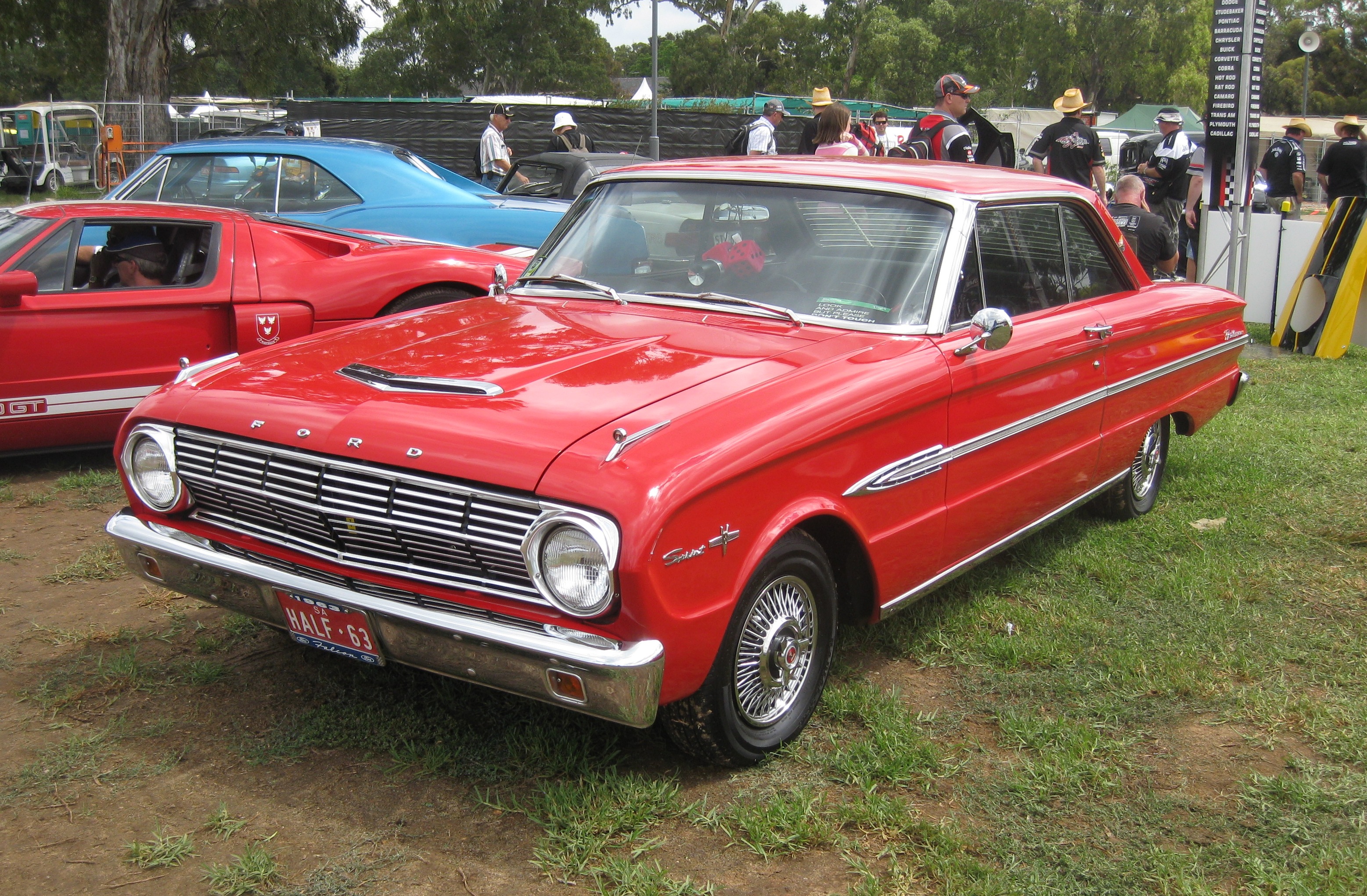
Ford Falcon
"...me you, mate. Welcome you to the fraternity, the Falcon Brotherhood. Is this the first one?"
The Ford Falcon is a car model that was especially popular in Australia. The podcast talks about it like a club, which means many people really love these cars. It’s often remembered for being a classic, enthusiast-style vehicle.
The Ford Falcon is a long-running Australian-built car line that became a cultural icon, especially among local enthusiasts. The podcast frames it as joining a “Falcon Brotherhood,” which points to its strong fan community and identity. It’s discussed because it represents a specific era of performance and ownership pride.
V8
"I mean, it wasn't that long ago that I was driving the big girl to Canberra and back. Running the V8 and loving life. It was like it was the 1980s."
A V8 is a type of engine with eight cylinders. It usually means strong performance, but it can also use more fuel than smaller engines.
A V8 is an engine configuration with eight cylinders arranged in a “V” shape. V8s are often associated with higher fuel consumption than smaller engines, which becomes a key point during fuel-price spikes.
interest rates
"And then it feels like now we're in the early 90s recession. Interest rates at, you know, they're not quite there, of course, but back then they were 17% or 19% or something. David will remember that well."
Interest rates are the cost of borrowing money. If they’re high, car loans cost more each month, so fewer people can buy the same cars.
Interest rates affect car affordability because they influence loan payments for financed purchases. When rates rise, monthly costs go up, which can reduce demand and change what buyers can realistically afford.

Honda City
"And I think we said it last time I was on the Honda City. It's probably the most economical car that I own. So for me to run the Honda City, you know, for one tank, I get about 450 Ks out of a tank."
The Honda City is a small Honda that’s known for being pretty cheap to run. Here, the host is using it as an example of a car that goes far on one tank and costs less to fill.
The Honda City is a small, fuel-focused sedan/hatchback that’s often chosen for low running costs. In this segment, it’s used as the speaker’s baseline for “most economical car” and cost-per-tank budgeting.
LPG
"every time I drive past the servo, LP gas back then was 79 cents a liter. I was like, this is quite the contrast."
LPG is an alternative fuel that some cars can run on. If it’s cheaper per liter than petrol, it can make driving much less expensive.
LPG (liquefied petroleum gas) is an alternative fuel that can be cheaper than petrol, depending on local pricing and availability. The speaker references LPG pricing (“79 cents a liter”) as a major factor in how economical a car felt at the time.
heavy duty tow bar
"But it's got a heavy duty tow bar, which is good for towing my caravan or trailers or other things."
A heavy-duty tow bar is the hitch hardware made to tow bigger loads safely. If you tow a caravan or trailers often, this is the kind of upgrade you want.
A heavy-duty tow bar is a reinforced hitch setup designed to handle higher towing loads than a standard tow bar. For owners towing caravans or trailers, it’s a practical feature that can reduce the risk of fitment issues and improve towing capability.
headlight flasher
"So it had a headlight flasher like in 1971, which is great little feature. Cause if, you know, someone's turning or you're not sure, you can just flash your lights and really easily in them just with this little, little pressure switch at the end of the, um, indicator stalk."
A headlight flasher is a quick “flash” of the headlights you can do to get someone’s attention. It’s usually a momentary button so you don’t have to turn the headlights fully on.
A headlight flasher is a momentary switch that briefly turns the headlights on (often for signaling) without fully switching the headlight system. Many cars implement it via a button on or near the indicator stalk for quick “flash” signaling.
D cell batteries wired together
"...but the, the battery box that says do not touch, you will die if you open it, um, has five D cell batteries wired together and it's got 20 sticks of these five D cell batteries."
They’re describing the hybrid battery as being made from many standard D-cell batteries connected together. It’s a throwback design that makes the battery feel more “DIY” than today’s sealed hybrid battery packs.
The speaker describes an older hybrid battery pack built from multiple D-cell batteries wired together. This is a notable “old-school” design detail that helps listeners understand how some early hybrid systems were packaged and serviced compared with modern sealed high-voltage modules.
liters per 100 Ks
"And he was getting about five and a half, six liters per 100 Ks. Anyway, he pulled it."
They’re quoting fuel economy in liters per 100 kilometers. Lower numbers mean the car uses less fuel for the same distance.
“Liters per 100 Ks” is a fuel-economy measure (L/100 km), common outside the US. It’s used to compare how efficiently a car uses fuel before and after repairs.
kilometers (Ks)
"How many Ks did you go and what did it cost you? ... Can we cup it at like a certain amount of kilometers? ... let's say 400 or 500 Ks."
They’re talking about kilometers—distance. They want to compare fuel costs using the same distance (like 400 or 500 km) so the numbers are apples-to-apples.
“Ks” is shorthand for kilometers, and the speakers propose pricing/estimating costs over a fixed distance (e.g., 400–500 km). Using a consistent distance makes fuel-cost comparisons fairer between different cars.
80,000 Ks
"80,000 Ks. Well, there you go."
“80,000 Ks” means the car has about 80,000 kilometers on it. That’s a useful checkpoint for thinking about routine maintenance and how much the car has been used.
“80,000 Ks” means 80,000 kilometers on the odometer. It’s a milestone that can matter for maintenance planning, especially for scheduled services and wear items.
combined cycle
"Okay. 4.3 to 4.6 liters per 100 on a combined cycle."
“Combined cycle” is a test that mixes city driving and highway driving to estimate overall fuel use. It’s a useful comparison number, but your real results can be different.
“Combined cycle” is a standardized fuel-economy test that blends different driving conditions (typically city and highway) into one figure. It’s used so buyers can compare cars consistently, even though real-world results vary by driving style and traffic.
F1 car
"cases you'll get at that current consumption. So we have to get like an F1 car. Yeah."
An F1 car is a super high-tech race car. The point here is that they’re talking about needing something extremely efficient, like what you’d see in racing.
An “F1 car” is a Formula 1 race car, which is engineered for extreme efficiency and performance under tight rules. In this context, it’s being used as a benchmark for efficiency/technology—though real F1 cars aren’t practical for normal road buying.
flux
"Paration, use flux and you clean the spot and you'll be right. It was just, it just wouldn't stay there."
Flux is a paste or liquid you put on metal before soldering. It helps the solder stick by cleaning the surface so the connection can actually form.
Flux is a chemical cleaning agent used during soldering. It helps remove oxidation from metal surfaces so the solder can flow and bond properly.
one of the last ones off the line
"It's a 2016. [1957.1s] One of the last ones off the line. [1958.8s] Oh, yeah, yeah."
That phrase means the car was built near the end of that model being made. People often like late-production cars because they may include the final improvements, and they can be rarer.
“One of the last ones off the line” means the car was produced near the end of that model’s production run. Late-production cars can be desirable because they may have final updates, but they can also be harder to find and sometimes command a premium.
supercharged
"[1966.9s] That's a V8 5-litre. [1968.8s] V8 5-litre Supercharged Manwell. [1970.8s] Yeah, that's cool."
A supercharger is a device that squeezes more air into the engine. More air usually means more power, so the car can feel faster, especially when you accelerate.
A supercharger is a forced-induction device that compresses incoming air before it enters the engine. This increases the amount of oxygen available for combustion, which can raise power and torque compared with the same engine without forced induction.
10,000Ks
"[1976.1s] Yeah, it's only got 10,000Ks on it. [1977.7s] So it's like a brand new car. [1979.2s] Yeah, so."
“10,000Ks” means the car has about 10,000 kilometers on it, which is pretty low. Low mileage usually means less wear, but you still want to check maintenance records.
“10,000Ks” refers to about 10,000 kilometers of mileage (roughly 6,200 miles). Low mileage like this can make a used car feel closer to new, but it’s still important to consider service history and how the car was driven.
petrol
"And spent $146 on petrol last week and from Monday to, sorry, from, I think I refueled on Sunday and just topped it up now, which was $68, I think."
“Petrol” just means gasoline. When petrol prices go up, it gets more expensive to drive, so people start thinking harder about what car they should use.
“Petrol” is gasoline, the fuel used by many internal-combustion cars. In a fuel-crisis discussion, the key point is how fuel cost changes your total monthly driving budget and can influence which cars people choose to buy or drive.
oil leaks
"and a few other oil leaks that every mechanic seems to change. They mind about what's causing it."
Oil leaks are when engine or drivetrain oil escapes from seals, gaskets, or fittings. They matter because they can lead to low oil levels, contamination of other components, and in some cases fire risk if oil contacts hot surfaces.
clutch
"So, but drives well, I think like as I had already learned anyway, [2322.8s] you know, needs a new clutch, got to get roadworthy and stuff like that. [2325.5s] But it does drive really, really well."
The clutch is what lets you shift gears on a manual car. If it needs replacing, that usually means extra work and cost before the car is ready to drive.
A clutch is the friction device that connects and disconnects the engine from the transmission on manual cars. Needing a new clutch is a common maintenance item on older vehicles and can be a major cost when budgeting a used-car purchase.
test drive
"He didn't even want to test drive it. [2606.9s] I was like, have a go. [2608.2s] Like, have a go of what it feels like."
A test drive is just taking the car for a short drive before you buy it. It helps you feel if something is off, like the ride or brakes. If someone doesn’t want to test drive, it usually means they trust the seller or the deal is too good to question.
A test drive is when a buyer drives the car to evaluate how it feels in real-world conditions (ride, steering, braking, and comfort). In private sales, skipping a test drive can happen when the buyer is already confident or the car is priced aggressively.
radiator and heater hoses
"I've got all new radiator and heater hoses on that car."
Radiator and heater hoses are part of the vehicle’s cooling system, carrying coolant between the engine, radiator, and heater core. Replacing aging hoses helps prevent leaks and overheating, which is especially important before a long trip.
evaporator behind the dash
"like the radiator is old, uh, hose are all old, um, the evaporator behind the dash,"
The evaporator is the part of the air conditioning that actually cools the air inside the cabin. If it’s behind the dash, fixing it can be a bigger job than something under the hood.
The evaporator is part of the AC system where refrigerant absorbs heat to cool the cabin air. When it’s located “behind the dash,” repairs can be labor-intensive because the dashboard area often needs to be partially removed.
Lego Ute
"I thought was really hilarious was the Lego Ute. So, this one guy made his FG into a Lego Ute."
A “Lego Ute” is a pickup-style car that’s styled to look like LEGO. It’s usually a fun, attention-grabbing makeover rather than a serious performance upgrade.
A “Lego Ute” is a themed ute build where the exterior styling is made to look like LEGO bricks or LEGO-like parts. It’s more about visual gimmick and creativity than performance, and it often involves custom wheels, body graphics, and trim.
plug-in hybrid
"and then plug-in hybrid [3689.5s] and GS Sport, plug-in hybrid, all-wheel drive."
A plug-in hybrid is part electric and part gas. You can charge it at home or at a charger, and it can still use gas when the battery runs low.
A plug-in hybrid (PHEV) combines a gasoline engine with an electric motor and a battery that can be charged from an external outlet. That lets you drive some distance on electricity alone, while the gas engine covers longer trips or when the battery is depleted.
throttle
"It was a lot of throttle, it was fun. That's true, it was fun."
Throttle is how hard you press the gas pedal. More throttle usually means quicker acceleration and a more exciting drive.
Throttle refers to how much you press the accelerator pedal, which controls engine power delivery. When someone says “a lot of throttle,” they’re describing more aggressive acceleration and a more energetic driving feel.
Ks
"And he had it from New. Doesn't do a lot of Ks, because he's in Melbourne."
“Ks” just means kilometers—how much the car has been driven. Fewer Ks usually means less driving wear.
“Ks” is shorthand for kilometers, a common way to describe mileage in Australia and other countries using the metric system. Low “Ks” generally means the car has been driven less, which can affect wear and what maintenance items are most relevant.
watch list
"So anybody interested, let me know. There's currently, I think 26 people on car sales who have added to their watch list,"
A “watch list” refers to people tracking a listing (commonly on marketplaces) so they can monitor price changes or availability. The speaker’s mention of “26 people” implies demand and can influence negotiation dynamics.
cruise control
"So that's the cruise control, the electric windows, all those other goodies."
Cruise control lets the car hold a steady speed for you. If it doesn’t work, it can be a small-but-real issue when you’re deciding what the car is worth.
Cruise control is an electronic system that maintains a set speed without you holding the accelerator. On older cars, it’s a useful comfort feature, but it can also be a negotiation point if the vacuum/electronic components are worn or non-functional.
electric windows
"So that's the cruise control, the electric windows, all those other goodies."
Electric windows are the power windows you control with a switch. On older cars, the motors or switches can wear out, so it’s worth checking they work properly.
Electric windows use motors and regulators to raise and lower glass instead of manual cranks. On older vehicles, window motors, switches, and regulator tracks can fail, so confirming operation is part of a smart pre-purchase inspection.
aircon
"I think the aircon worked too when I drove it. Yeah. Aircon needs a good regas, but that's, yeah, you get that."
Air conditioning (“aircon”) is the system that cools the cabin. If it’s not blowing cold, it may need refrigerant added or it could be leaking.
“Aircon” (air conditioning) is a refrigerant-based climate system that can be expensive to repair if it leaks or needs service. The speaker later mentions regassing, which is a common maintenance item when the system isn’t holding refrigerant.
Request an Explanation
Heard something you'd like explained? We'll add it to this episode.
Sign in to request explanations for terms you heard.
Want to learn more?
Browse our glossary for plain-English explanations of automotive terms, jargon, and concepts.
Help improve this episode
See something that's not quite right? Our annotations are AI-generated and can sometimes miss the mark. Click the flag icon on any annotation to suggest a correction.