
BYD Flash Charging UK 2026, EV Car Tax Changes & Social Leasing Explained | Primetime EV
About this episode
Primetime EV ties together three big UK EV threads: BYD’s ultra-fast flash charging rollout, the latest tax changes that make some mid-priced EVs cheaper to own, and the push for social leasing to widen access. The discussion also keeps coming back to infrastructure reality, especially charger reliability and whether the market is being built for today’s cars or the 2030 fleet. The overall tone is that EV pricing is unusually competitive right now, but policy and access still matter a lot.
0:00 Introduction Five stories, thirty minutes
1:30 BYD Flash Charging - UK 2026200 stations, Uxbridge first, 1,500kW explained
8:00 Car Tax Changes April 2026
£50k threshold, BiK changes, which cars benefit
14:30 Public Charger Reliability
71% success rate, why chargers fail
20:30 Social Leasing — £77/month
T&E UK proposal, France precedent
26:30 ZEV Mandate Review
What the review means for buyers now
28:00 Q&A
Four questions answered
29:30 Join the Club
primetimeev.com/club
BYD Flash Charging is coming to the UK in 2026. BYD UK confirmed this week they're targeting 200 Flash Charging stations here by end of year — first station at BYD's Uxbridge HQ, before the Denza Z9GT arrives in August or September. The system delivers 1,500kW — four times faster than the fastest rapid chargers currently on UK motorways. Open to all EVs via CCS2 connectors.Car tax changed on 1 April. The Expensive Car Supplement threshold for EVs moved from £40,000 to £50,000 — saving buyers of the Tesla Model Y, Kia EV6, BYD Seal and Hyundai Ioniq 6 over £2,200. BiK rate changed from 3% to 4% — still five times cheaper than petrol on company car tax.Public charger reliability: legal requirement is 99% uptime. Actual first-time success rate: 71%. Only 3.9% of UK operators meet the legal standard. I look at why — payment terminals, back-end API failures, physical maintenance issues.T&E UK and EVA England joint letter to government: social leasing of EVs for £77/month for lower-income households. France launched a similar scheme in December 2023 — planned for 25,000, got 90,000 applications.ZEV mandate formal review confirmed for 2026. Manufacturers currently averaging £11,000 discount per EV to hit targets. 2026 is likely the peak competitive pricing window for UK EV buyers.──────────────────⚡ FREE: Join the Primetime EV ClubCheapest public charging rates every month · Best lease deals · Weekly EV digest👉 primetimeev.com/club📧 [email protected]──────────────────
BYD
"So the big story being what's happened with BYD announcing flash charging and 1500 kilowatt charging in the UK. They're coming and it's going to happen soon."
BYD is a company that makes electric cars and batteries. Here they’re talking about new, faster charging they say is coming to the UK.
BYD is a Chinese electric-vehicle and battery company that’s announcing new fast-charging plans for the UK. In this segment, the hosts focus on BYD’s “flash charging” and very high-power charging targets.
flash charging
"So the big story being what's happened with BYD announcing flash charging and 1500 kilowatt charging in the UK. They're coming and it's going to happen soon."
“Flash charging” means charging an EV very quickly. Even if the charger is capable of high power, the car and battery temperature still affect how fast you can actually charge.
“Flash charging” is a marketing term for extremely fast EV charging, typically aiming for very high power levels and short session times. In practice, the car’s battery chemistry, thermal management, and the charger’s power delivery all determine how close you get to the headline speed.
1500 kilowatt charging
"So the big story being what's happened with BYD announcing flash charging and 1500 kilowatt charging in the UK. They're coming and it's going to happen soon."
1500 kilowatts is how much electrical power the charger can provide. In theory it means faster charging, but only works if the car can handle that power too.
1500 kW is an extremely high charging power level for EVs, far beyond typical public fast chargers. Higher power can reduce charging time, but only if the vehicle can accept that power and the charging system can deliver it reliably.
200 stations
"BYD confirmed it's this week. There's going to be 200 stations and I'll tell you where the first one's going in."
They’re saying there will be about 200 charging locations. More locations generally means it’s easier to find a working charger when you need one.
The segment mentions deploying 200 charging stations as part of the UK rollout. For EV drivers, the number of sites matters because it affects queueing, geographic coverage, and how often you can find an available charger.
car tax changed on April 1
"Second, car tax changed on April 1. There's a change that saved some EV buyers over two grand and I've barely seen it covered properly."
They’re talking about a UK tax rule that changed on April 1. That can change how much money you pay to own or run an EV.
This refers to a UK policy change affecting how EVs are taxed starting April 1. Tax rules can directly change the total cost of ownership and may shift which EVs are affordable for buyers.
99% uptime
"Third, public charger reliability. There's a legal requirement now that 99% uptime for rapid charges."
“Uptime” here means how often the public fast chargers are working when people show up. 99% uptime is a target meant to make charging more dependable.
“Uptime” is how often a charger is actually available and working when drivers try to use it. A 99% uptime requirement is meant to force operators to maintain rapid chargers so failures are rare.
public charger reliability
"Third, public charger reliability. There's a legal requirement now that 99% uptime for rapid charges. The actual success rate when you plug in and work, it works, is first time is 71%."
Public charger reliability is how consistently chargers work for drivers without errors or downtime. The hosts discuss both the regulatory expectation (99% uptime) and the observed real-world success rate, then aim to explain the technical causes of failures.
rapid charges
"There's a legal requirement now that 99% uptime for rapid charges. The actual success rate when you plug in and work, it works, is first time is 71%."
“Rapid charges” are the fast public chargers you use to top up quickly. The hosts are saying these chargers aren’t meeting the reliability target yet.
“Rapid charges” are high-power public EV chargers intended for quick charging sessions. The segment contrasts the legal reliability target for rapid chargers with real-world success rates.
social loosing
"Fourth, I'm going to talk about a joint letter in front of the government right now asking for EVs at £77 a month for low-income households. It's called social loosing and it's going to be important."
“Social loosing” appears to be a transcription error for “social leasing,” a UK-style scheme idea where eligible low-income households get access to EVs via subsidized leasing costs. The segment frames it as a way to broaden EV adoption beyond higher-income buyers.
ZEV mandate review
"Fifth, the ZEV mandate review, where it's heading, what it means for deals right now because the answer is more interesting than you think."
A ZEV mandate review refers to reassessing rules that require a certain share of new vehicle sales to be zero-emission vehicles (ZEVs). Changes to the mandate can affect pricing, availability, and incentives for EV deals in the short term.

Z9 Denza Z9
"That car is the Denza Z9 GT which I talked about about two weeks ago. Denza is BYD's premium sub-brand. European orders opened last week at 115,000 euros."
The Denza Z9 GT is the first EV they expect to use the new “flash charging” setup in the UK. It’s a premium BYD-related car, and the idea is that the same battery/charging tech will eventually show up in more mainstream BYD models.
The Denza Z9 GT is a premium EV model mentioned as the first UK “flash charging” car that will arrive around August or September. Denza is positioned as BYD’s premium sub-brand, and the point is that the charging tech will roll down into other BYD models later.
blade battery
"We've seen exactly that pattern with the original blade battery started at the top, now it's in the Atto 3 and the seal."
BYD’s “blade battery” is a specific battery design used in their EVs. The hosts are saying BYD tends to introduce newer battery tech in top models first, then later it shows up in more affordable cars.
Blade battery is BYD’s battery design, named for its long, flat “blade-like” cells. The hosts use it to illustrate how BYD’s advanced battery platform starts in higher-end applications and then spreads across the wider lineup over product cycles.

Byd Seal
"We've seen exactly that pattern with the original blade battery started at the top, now it's in the Atto 3 and the seal."
The BYD Seal is another BYD EV they mention as getting the newer battery tech. They’re using it to show how BYD rolls out improvements across different models.
The BYD Seal is mentioned alongside the Atto 3 as another model that receives the blade battery technology. It’s part of the argument that BYD’s advanced battery platform spreads across the lineup over time.

Atto 3
"We've seen exactly that pattern with the original blade battery started at the top, now it's in the Atto 3 and the seal."
The BYD Atto 3 is used as an example of a more common BYD EV that eventually gets the newer battery tech. The point is that the newest tech doesn’t stay only in the most expensive models.
The BYD Atto 3 is referenced as an example of how BYD’s battery technology moves from top-tier models into more mainstream cars. The segment connects this “technology trickle-down” to the same pattern they claim for the blade battery.
1500 kilowatts
"Flash charging delivers up to 1500 kilowatts. The fastest UK EV charger on UK motorways at the moment at the best is Gridserve and Osprey hubs."
1500 kilowatts is the headline charging power they’re talking about for this new “flash charging” system. It’s far higher than most highway chargers today, which is why they need special infrastructure to handle it.
1500 kW is the claimed maximum power level for BYD’s flash charging in this segment. It’s used to emphasize how much higher this is than typical UK motorway charging (often around 350–400 kW), and why the infrastructure challenge is so significant.
Gridserve
"The fastest UK EV charger on UK motorways at the moment at the best is Gridserve and Osprey hubs. They top out at about 350 kilowatts some are getting to 400 kilowatts"
Gridserve is one of the companies running fast charging hubs on UK motorways. The hosts mention it to compare today’s top speeds (around 350 kW) with the much higher flash-charging target.
Gridserve is cited as having some of the fastest UK motorway EV charging hubs, topping out around 350 kW in the segment. It’s used as a comparison point to show how much higher BYD’s flash charging power claims are.
10% to 70% in five minutes
"In practice 10% to 70% in five minutes that's the ready in five number they keep using. 10% to 97% basically full in nine minutes even at minus 30 Celsius 20% to 97% in 12."
This is a benchmark for charging speed: going from 10% battery to 70% in about five minutes. They also warn that you only get that kind of speed if your EV has the right battery setup.
“10% to 70% in five minutes” is a charging performance target used to describe how quickly the battery can accept power during flash charging. The segment later clarifies that these times depend on the car having the compatible battery system.
minus 30 Celsius
"10% to 97% basically full in nine minutes even at minus 30 Celsius 20% to 97% in 12. Now I want to be straight about something that speed only applies if your car's got the compatible blade battery two system."
They’re saying the fast-charging results still apply even in very cold weather (around -30°C). Cold temperatures can make EV batteries charge slower, so this is meant to reassure listeners about winter performance.
The segment mentions charging performance “even at minus 30 Celsius,” highlighting cold-weather charging capability. Cold temperatures can reduce battery performance and charging acceptance, so this is used to show the system aims to maintain fast charging despite freezing conditions.
CCS2
"Your current EV can still plug in the stations use CCS2 that's the standard European connector so they're open to everyone but you'll charge at whatever rate your car can accept the five-minute thing is the next generation."
CCS2 is the common charging plug used on most EVs in Europe. Even if you plug into the new stations, your car will only charge as fast as its own system allows.
CCS2 (Combined Charging System, “Type 2”) is the standard European plug used by most EVs for DC fast charging. The segment says existing EVs can use these flash-charging stations, but the charging speed will be limited by what the car can accept.
on-site battery storage
"The infrastructure question is the interesting one how do you get 1500 kilowatts out of the parking bay without tearing up the grid connection. BYD's answer is on-site battery storage."
This is like a “battery buffer” inside the charger. Instead of forcing the power grid to deliver the full huge charging power instantly, the station stores energy first and then releases it quickly when you plug in.
On-site battery storage means the charging station includes its own large battery pack. The station charges that pack more slowly from the grid overnight, then releases a burst of power when a car plugs in—helping avoid overloading the grid connection while still delivering very high charging power.
super fast charging
"grid update needed that's incredible so the battery system will allow you super fast charging they don't need infrastructure for it so they won't be branded BYD just flash charging open network"
Super fast charging means you can charge an EV much quicker than usual. How fast you actually go depends on both the charger and your specific car.
“Super fast charging” refers to charging an EV at very high power so the battery can add a lot of energy quickly. It’s usually limited by both the charger’s output and the car’s onboard charging capability.
open network
"so the battery system will allow you super fast charging they don't need infrastructure for it so they won't be branded BYD just flash charging open network any EV can use them so if you've got a current Nissan Aria a Tesla a Volkswagen ID4 you can plug into a flash charger"
An open network means the charger isn’t locked to one car brand. More EVs should be able to use the same charging points if they’re compatible.
An “open network” means the charging system is intended to be usable by multiple EV brands and models, not just one manufacturer’s cars. In practice, it relies on standard communication and compatibility so the charger can negotiate charging rate with the vehicle.

Nissan Aria
"...k any EV can use them so if you've got a current Nissan Aria a Tesla a Volkswagen ID4 you can plug into a fla..."
The Nissan Ariya is an electric crossover. The podcast mentions it to explain that you can plug it into a fast charger, and it will charge as quickly as the car allows.
The Nissan Ariya is an all-electric crossover built for comfortable daily use and modern EV features. In the podcast, it’s mentioned as an example of an EV that can use fast charging—meaning you can plug it into a high-power charger and charge up to the rate the Ariya supports. This matters for understanding charging speed and compatibility when planning trips.

Volkswagen Id4
"...ve got a current Nissan Aria a Tesla a Volkswagen ID4 you can plug into a flash charger and charge it ..."
The Volkswagen ID.4 is an electric SUV. The podcast is talking about charging it on a fast charger and how quickly it can charge, which depends on the car’s own charging limits.
The Volkswagen ID.4 is an all-electric compact SUV designed for everyday driving with practical range and space. It’s discussed in the context of fast charging—how you can plug it into a “flash”/fast charger and charge at the maximum rate the vehicle supports. That’s important because EVs don’t all charge at the same speed even on the same charger.
infrastructure
"Here's why I think this matters beyond the headline speed numbers we're in the middle of a big national conversation about charging infrastructure government money is going in rapid charges are being installed"
Here, infrastructure means the chargers and the electrical work around them that make fast charging possible. If the planning assumptions are wrong, the network may not fit how people will charge in the future.
In this context, “charging infrastructure” refers to the physical network of chargers and the supporting electrical upgrades needed to deliver power reliably. The discussion highlights how government funding and planning assumptions affect what gets built.
dwell time
"the whole motorway charging business model depends on dwell time the coffee the food the retail priced around a driver who's going to be there for a while if the charging window collapses to five or nine minutes"
Dwell time is how long you’re parked at the charger. If charging gets much faster, people may stop for less time, which changes how nearby shops and services make money.
Dwell time is the amount of time a driver stays at a charging station. Traditional motorway charging models assume longer stops (often 20–45 minutes), so businesses plan around customers being there long enough to buy food, coffee, and other services.
charging window
"if the charging window collapses to five or nine minutes and the technology to do that lands in the UK this year then the question for anyone making infrastructure decisions in 2026 is"
A charging window is basically how long you need to stay at the charger. If it becomes much shorter, people will spend less time at the services nearby.
A “charging window” is the time period during which a driver can complete charging before moving on. The episode argues that if flash charging reduces stops to around 5–9 minutes, the whole customer behavior and charging-station business model changes.
expensive car supplement
"...any new car above 40 grand triggered something called the expensive car supplement the luxury car tax on top of standard road tax you paid an extra 440 pounds a year for five years..."
It’s an extra tax the UK adds if a car costs more than a certain amount. Even if the car isn’t “luxury” in the usual sense, the price threshold can make some EVs pay more.
In the UK, the “expensive car supplement” is an extra charge added on top of standard road tax when a car’s price is above a set threshold. In this segment, it’s described as applying to new cars over £40,000 for a fixed period, which can significantly increase the cost of buying certain EVs.
luxury car tax
"...triggered something called the expensive car supplement the luxury car tax on top of standard road tax you paid an extra 440 pounds a year for five years..."
It’s an extra tax the UK charges for more expensive cars. In this episode, they’re saying EVs can get caught by it because batteries make the car cost more.
“Luxury car tax” here refers to the UK’s additional vehicle tax charge applied to higher-priced cars, layered on top of standard road tax. The segment frames it as a reason some EVs were paying extra simply because their battery costs pushed them over the price threshold.
battery packs
"...electric cars cost more to build than their petrol equivalents mostly because of the batteries so a perfectly normal family EV was tripping the tipping tripping the 40k threshold purely because batteries are expensive..."
“Battery packs” refers to the large rechargeable battery modules installed in an EV. The host argues that battery cost is a major reason some otherwise normal family EVs can cross the price threshold that triggers extra tax.
zero emission vehicles threshold moved from 40 to 50 000 pounds
"from April the threshold for zero emission vehicles moved from 40 to 50 000 pounds zero emission vehicles only petrol and diesel stays at 40k..."
The government raised the cutoff price for EVs to get the better tax treatment. So more EVs now qualify and pay less tax, even if the car itself hasn’t changed.
This is the key policy change: the price threshold for when a vehicle qualifies for zero-emission tax treatment increased from £40,000 to £50,000. The host explains that this removes the supplement from many EVs that were previously just over the old limit, even if they aren’t “luxury” cars.

Tesla Model
"...the tesla model y long range starts at about 44 grand until april supplement over 2200 extra over five years from april it's gone..."
They’re using the Tesla Model Y Long Range to show how the new EV tax cutoff helps real buyers. The car’s price is in the range that used to trigger extra tax, but the higher cutoff means it no longer does.
The host uses the Tesla Model Y Long Range as an example of an EV that sits around the old £40,000 threshold. They explain that from April, the supplement is removed because the qualifying threshold for zero-emission vehicles moved up, even though the car itself didn’t change.
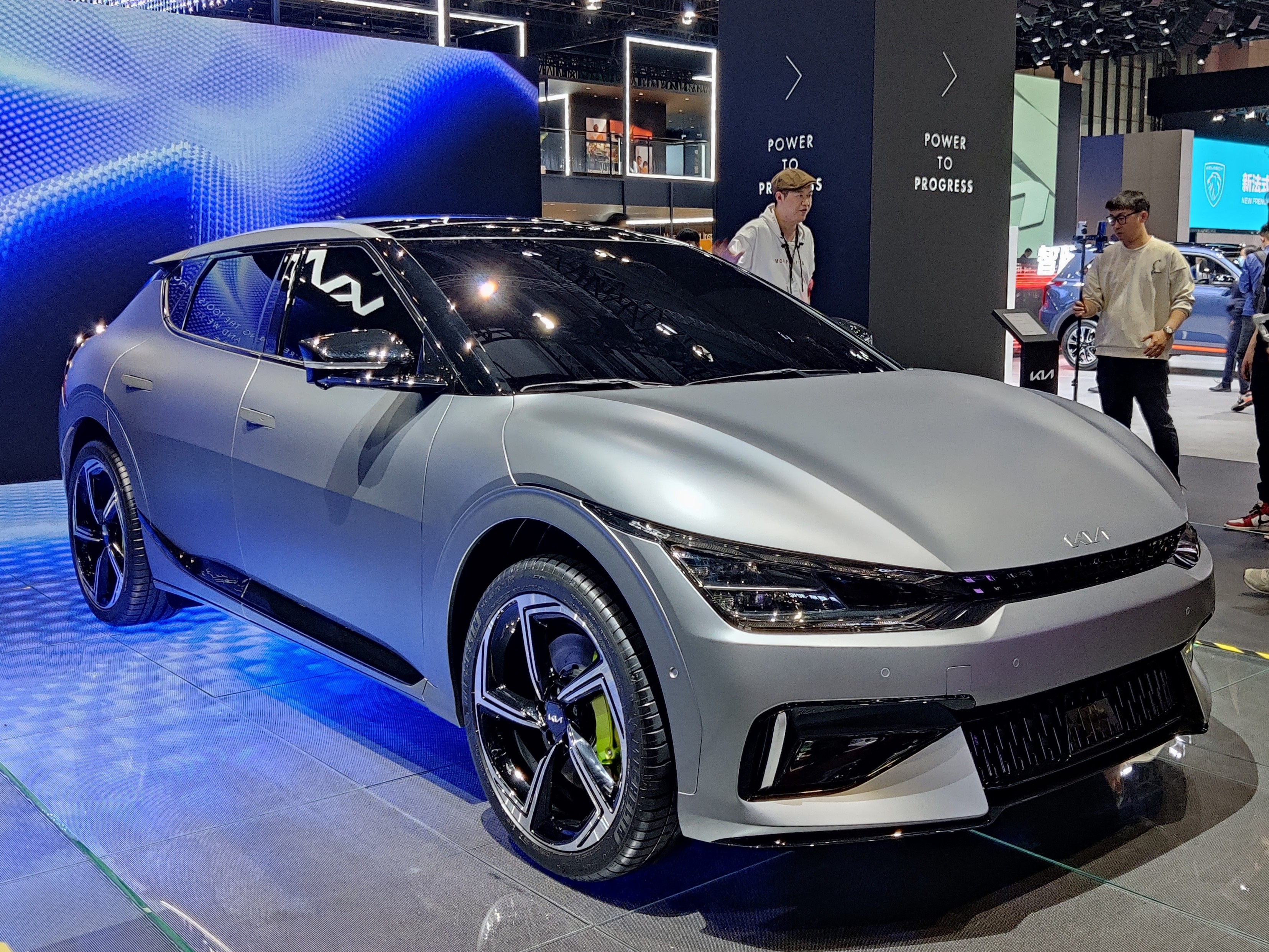
Kia EV6
"...nothing changed about the car the threshold moved kia ev6 gt line hyonder Ioniq six long range..."
They mention the Kia EV6 GT-Line as another EV that used to pay extra tax because it was just over the old cutoff. With the new higher cutoff, it should qualify for the better treatment.
Kia EV6 GT-Line is mentioned as one of the mid-sized family EVs whose price falls into the £42,000–£46,000 band. The segment says these models were previously caught by the old EV tax threshold but become exempt after the threshold increases.

Hyundai Ioniq
"...the threshold moved kia ev6 gt line hyonder Ioniq six long range byd seal excellence..."
They’re saying the Hyundai Ioniq 6 Long Range is one of the EVs that now falls under the higher tax cutoff. So it should avoid the extra tax that applied before.
The Hyundai Ioniq 6 Long Range is listed as a qualifying EV example in the £42,000–£46,000 range. The host’s point is that the policy change exempts these cars from the expensive-car supplement without requiring any change to the vehicle itself.
BYD Seal Excellence
"...hyonder Ioniq six long range byd seal excellence all in the 42 to 46 000 pound range all previously caught all now exempt..."
They include the BYD Seal Excellence to show how the new EV tax rules affect everyday buyers. Because it’s in that price range, it should no longer pay the extra tax that used to apply.
BYD Seal Excellence is mentioned as another EV in the £42,000–£46,000 band that previously triggered the supplement but becomes exempt after the zero-emission threshold increases. The segment frames this as a shift that makes practical family EVs cheaper to buy.

Bmw I4
"...these are mid-sized family evs... cars above 50 000 pounds bmw i4 m50s meseli z qe the taycan..."
They mention the BMW i4 M50s as an EV that’s still expensive enough to keep paying the extra tax. The new rules help many EVs, but not the most expensive ones.
BMW i4 M50s is cited as an example of an EV that remains subject to the expensive-car supplement because it’s priced above the relevant threshold. The host contrasts these higher-priced EVs with the mid-priced models that become exempt.

Porsche Taycan
"...cars above 50 000 pounds bmw i4 m50s meseli z qe the taycan Porsche still call the supplements didn't disappear..."
They bring up the Porsche Taycan to illustrate the “not everyone benefits” side of the tax change. Very expensive EVs can still fall outside the exemption.
The Porsche Taycan is used as an example of a higher-priced EV that still has the supplement applied even after the threshold change. The segment’s takeaway is that the policy shift mainly benefits the mainstream EV price bands.
benefit in kind rate
"...it's worth flagging the bik bik rate which is the benefit in kind rate for company car drivers for electric cars went from three percent to four percent..."
If your employer provides an electric car, the tax system treats that as a benefit to you. The “benefit in kind” rate is the percentage used to calculate how much tax you owe for that perk.
The “benefit in kind” (BIK) rate is the taxable value assigned to company car drivers for the personal benefit of using a car provided by an employer. The segment says the BIK rate for electric cars increased from 3% to 4% on 6 April, affecting how much company-car tax employees pay.
company car tax
"...and that's what they're doing the rate you pay a company car tax on so it's at one percentage point..."
“Company car tax” in the UK is calculated using the BIK rate and the car’s value, determining the employee’s tax cost for receiving a company vehicle. The segment notes that the change effectively means an extra 1 percentage point in the BIK rate for electric cars.
BIK change
"[683.4s] at work is currently sitting on the fence about salary sacrifice because of the bik change send [688.6s] them these numbers the gap is still enormous one more practical thing on this"
They’re talking about a change to the EV tax rules for company cars. When the change starts matters—some people are affected immediately, while others may not be able to change their situation after buying.
The episode refers to a BIK rule change that affects how EVs are taxed when provided as company cars. The key point is that the timing and eligibility rules determine whether you can benefit from the new calculation.
total cost of ownership calculation
"[703.1s] you're in the market right now or reconsidering something you looked at before and thought [706.9s] just over budget it's worth a second look the total cost of ownership calculation has changed"
Total cost of ownership means looking at the whole cost of having a car—like tax, running costs, and payments—over time. The episode’s point is that the overall math can change even if the car’s price tag stays the same.
Total cost of ownership (TCO) is a way to estimate what it costs to run a vehicle over time, not just the purchase price. The episode says the TCO calculation has changed even if the sticker price hasn’t, implying tax/charging/financing assumptions are different now.
rapid charging bay
"[737.5s] a service station found a rapid charging bay plugged in and then nothing's happened screen frozen [744.6s] payment error connector that wouldn't latch or it started then stopped 30 seconds later for no"
A rapid charging bay is the fast-charging spot at a public station. It’s meant for quicker charging than regular outlets, and the episode links it to specific rules for 50 kW+ chargers.
A rapid charging bay is a dedicated spot at a public site designed for fast charging, typically with higher power levels than standard chargers. The episode ties this to the regulatory definition for chargers at 50 kW and above.
public charge point regulations
"[749.6s] payment error connector that wouldn't latch or it started then stopped 30 seconds later for no [749.6s] reason you're not imagining it i've got the data now there's a legal requirement under the public [755.2s] charge point regulations rapid charges 50 kilowatt and above must hit 99 uptime averaged across the year"
These are UK rules for public EV charging stations. They set performance expectations—like how often the fast chargers should actually be working—so drivers aren’t left with broken or frozen stations.
Public charge point regulations are UK rules governing how public EV charging networks must perform. The episode specifically cites a requirement that rapid chargers (50 kW and above) meet a minimum uptime percentage averaged across the year.
kW
"[755.2s] charge point regulations rapid charges 50 kilowatt and above must hit 99 uptime averaged across the [762.0s] year that's been enforceable since november 24"
kW is a measure of charging power—higher kW usually means faster charging. In the episode, they’re talking about chargers that are 50 kW or more.
kW (kilowatts) is a unit of power used to describe how fast a charger can deliver energy to the car. The episode notes that the regulatory uptime requirement applies to rapid chargers at 50 kW and above.
first time success rate
"you plug in and it works first go was 71 one in three attempts fail so why does this actually happen because the number one thing understanding it is another the number is one thing understanding"
It’s basically: when you plug in, how often does it actually begin charging right away. A charger can be “working” but still refuse to start if the payment or software part has a problem.
First time success rate is the percentage of charging attempts that successfully start on the first try. In this segment, it’s contrasted with “uptime,” because a charger can be powered and online while still failing to start a session due to payment or software issues.
contactless payment system
"payment terminal failures are common the contactless payment system on rapid charges are built similar standards as a vending machine and they fail at similar rates"
A contactless payment system lets you pay by tapping a card or phone at the charger. The segment explains that these systems are built similarly to vending-machine payment terminals, so they can fail in comparable ways when the payment workflow or backend is down.
API call to the network server to authorize the session
"when you tap your card the charger makes an api call to the network server to authorize the session if that servers down or there's a software bug or a dropout between the charger in the back end nothing happens your side the charger physically works the session just never starts"
Before charging starts, the charger has to “check in” with a remote computer to confirm you’re allowed to start. If that check fails, you can be stuck at the charger with no charging even though the plug is working.
To start charging, the charger typically contacts a network server to authorize the session—often via an API (application programming interface). If the server is down, there’s a software bug, or communication drops, the charger may appear to work physically but won’t begin charging.
cable management
"then there are physical failures connect to damage from previous users cable management that stops the plug seating properly"
Cable management is how the charging cable is routed, supported, and handled at the station. Poor cable management can lead to damage or wear that prevents the plug from seating properly, causing charging failures that are maintenance-related rather than technology-related.
maintenance failures vs technology problems
"these are maintenance failures not technology problems worst at works worst at the busiest charges with the least frequent maintenance visits"
The hosts distinguish between failures caused by maintenance (damaged cables, weather screen damage, poor plug fit) and failures caused by the underlying charging technology or network systems. This matters because maintenance issues can often be fixed quickly with better upkeep and parts replacement.
public charger failure
"there's also a home charging point worth making here and if you can charge at home overnight a public charger failure is an inconvenience for the people who can't renters flat owners households without driveways"
Public charger failure refers to situations where a driver can’t start charging at a shared station. The segment frames this as a bigger barrier for people who can’t charge at home (e.g., renters or households without driveways), because they rely on public infrastructure.
Tesla Supercharger network
"there are networks that perform genuinely well osprey grid surf tesla supercharger network consistently better reliability data than the industry average"
Tesla Superchargers are fast charging stations run by Tesla. The episode is saying Tesla’s network is often more reliable than many other public charging options.
The Tesla Supercharger network is Tesla’s branded network of fast-charging stations. The hosts use it as an example of a network with consistently better reliability data than the industry average.
Osprey
"there are networks that perform genuinely well osprey grid surf tesla supercharger network consistently better reliability data than the industry average"
Osprey is a company that runs public EV charging stations. In this episode, they’re saying Osprey’s chargers tend to work reliably.
Osprey is an EV charging network brand. The hosts mention it as one of the networks that shows strong reliability data compared with the industry average.
reliability data
"consistently better reliability data than the industry average part of what new reporting requirements should eventually do is make those differences visibly visible publicly"
Reliability data is basically a scorecard for how dependable charging stations are. If a network has good reliability, it means you’re more likely to be able to charge when you show up.
Reliability data refers to measured performance of charging networks—such as how often chargers are working when drivers arrive. The hosts argue that publishing this data helps drivers choose networks they can trust on long journeys.
reporting requirements
"part of what new reporting requirements should eventually do is make those differences visibly visible publicly so drivers can make informed choices about which networks to trust"
Reporting requirements are official rules about what information companies must share. In this case, it’s about publishing charging network performance so drivers can pick more dependable places to charge.
Reporting requirements are rules that force charging networks (or related parties) to publish certain performance information. Here, the hosts say new reporting should make differences between networks visible so drivers can make informed choices.
social leasing
"okay social leasing this one um i think is important because i've watched evs uh become an important part of people's lives but there are a lot of people who've been left out of the equation in wanting to get access to an ev"
Social leasing is a program that helps lower-income households get access to an EV without paying the full cost upfront. It’s basically a more affordable way to lease a car.
Social leasing is a scheme designed to make EV ownership more affordable by subsidizing or structuring leases for lower-income households. The hosts frame it as a way to help people who are being left out of the EV transition.
two-tier transition
"eva england called it a two-tier transition that's quite a popular expression these days and honestly right now that's what it is"
A two-tier transition means the EV shift isn’t helping everyone equally. Some people get cheaper access to EVs, while others are stuck with higher costs and dirtier cars for longer.
A two-tier transition describes a situation where EV adoption and benefits mainly reach higher-income households first, while lower-income households face higher costs and greater exposure to pollution from older cars. The speaker argues the current shift is effectively creating “tiers” of who benefits.
universal credit
"eight-year subsidized lease for households on universal credit key workers or below defined income threshold monthly cost 77 pounds"
Universal Credit is a UK government benefit for people on lower incomes. In this plan, it helps decide who qualifies for cheaper EV leasing.
Universal Credit is a UK means-tested benefit used to support people with low income or who are out of work. In the proposal described, it’s used as an eligibility gate for subsidized EV leasing.
lease car insurance maintenance and charging all in one payment
"there's also abundant lease car insurance maintenance and charging all in one payment about 222 pounds a month for a car dependent households rural residents key workers who can't use public transport"
Bundling lease car insurance, maintenance, and charging into a single monthly payment is a “one bill” approach to EV ownership costs. It reduces the need for separate budgeting and can make the total cost easier to predict for households with tighter finances.
scrappage element
"and a scrappage element traded an older petrol diesel car for 2000 pounds off the lease brings it down to as low as 56 pounds a month for eligible households"
A scrappage element is extra help if you trade in an old car. The older car gets taken out of use, and you get a discount toward the EV lease.
A scrappage element is a policy incentive that provides money when you trade in an older vehicle for removal from the road. Here, trading a petrol/diesel car for a discount helps reduce the effective monthly cost of the EV lease while cutting emissions.
vehicle levy on heavy SUVs
"how it gets paid for a large vehicle levy on heavy suvs the ones that are getting heavier and more expensive and driving everyone's insurance up t&e's analysis"
A vehicle levy is a tax or fee applied based on vehicle characteristics, intended to influence purchasing and usage. In this proposal, the levy targets heavy SUVs, which the speaker says are getting heavier and more expensive, and argues it would help fund the transition.
electric car grant
"the government's existing 1.3 billion electric car grant grant budget could also be retargeted this isn't asking for new money is asking for existing money to reach people who can't who currently get none of it"
An electric car grant is money from the government to make EVs cheaper. The idea here is to use the existing grant money to help different people who aren’t getting it now.
An electric car grant is government funding intended to reduce the upfront or ongoing cost of buying or leasing an EV. The speaker says the existing grant budget could be redirected (“retargeted”) to reach households that currently receive none of it.
fleet turns over slowly
"they keep paying higher running costs on older vehicles for longer that's the outcome if it doesn't get addressed which is why the france data point matters"
This means people keep older cars for a long time before replacing them. If that happens, some households—especially lower-income ones—may not benefit from cheaper EV running costs quickly.
“Fleet turns over slowly” describes how long it takes for older vehicles to be replaced by newer ones across a population. If turnover is slow, lower-income households can remain in older, higher-running-cost vehicles for longer, even as EVs become available.
zero-emission vehicles mandate (zv mandate)
"quick one to close it's the zv mandate and i want to focus on what it means for you as a buyer ... the mandate says manufacturers have to sell an increasing percentage of zero-emission vehicles"
This is a government rule that pushes car companies to sell more electric/zero-emission cars over time. If they don’t meet the required targets, they can face financial penalties.
A zero-emission vehicle (ZEV) mandate requires automakers to sell a rising share of zero-emission cars each year. The speaker discusses how targets are set (e.g., 33% by 2030, 80% by 2035) and how enforcement works via penalties if manufacturers miss the required share.
ZEV mandate fine
"the argument from smmt that's the society of motor manufacturers is this in 2025 manufacturers averaged 11 000 pounds of discount their electric car sold ... the fine for not hitting the target is 12 000 pounds per car"
If a car company doesn’t sell enough electric cars to meet the rule, it has to pay a penalty for each car short. The speaker says companies may weigh discounts against paying that penalty.
The speaker refers to a penalty (“fine”) paid per car when manufacturers fail to meet ZEV mandate targets. This changes the economics for automakers: they may compare the cost of discounts versus paying the per-vehicle penalty.
electrification
"it's not a mandate it's a tax on investment and electrification that argument's got some merit"
Electrification means moving from gas/diesel cars to electric cars. It also implies companies investing in making and supporting EVs.
Electrification here means shifting vehicle powertrains and energy use toward electric propulsion (EVs and related infrastructure). The speaker frames it as an industrial transition that depends on investment and policy strength.
mandate pressure
"the mandate is one of the main things forcing competitive pricing right now manufacturers need to hit targets they're discounting to do it if the mandate softens"
A government rule sets targets for EV makers. If the targets are strict, companies often lower prices to meet them. If the targets get easier, the discounts usually shrink.
The hosts are describing a government mandate that forces automakers to meet targets, which in turn affects pricing. When the mandate is tight, manufacturers discount more aggressively to hit those targets; if the mandate softens, discounts tend to ease.
Tesla's supercharger network
"from everything that does exist independent surveys driver forums operator data tesla's supercharger network consistently out performs the open networks on first time success for ccs networks"
They’re saying Tesla’s own fast-charging network tends to work more reliably when you plug in. That’s partly because it’s designed around Tesla cars.
The hosts cite Tesla’s Supercharger network as consistently outperforming open CCS networks in first-time charging success. This is often attributed to tighter integration between Tesla cars and Tesla-managed charging hardware/software.
five minute speed
"you won't get the five minute speed unless your car has byd's compatible compatible battery system it's an open net but you'll charge it whatever rate your car accepts"
They’re referencing a claim that you can charge very quickly—around five minutes. But the hosts say you only get that benefit if your EV has the right BYD-compatible battery.
“Five minute speed” refers to a marketing-style claim about very rapid charging time. The hosts clarify it won’t be achieved unless the EV uses BYD’s compatible battery system, meaning charging speed depends on battery and charging hardware compatibility.
salary sacrifice
"but the stations work for everyone now third salary sacrifice a lot of companies pause their schemes after the benefit in kind changes is it still worth it yes it is"
Salary sacrifice is when you trade some of your take-home pay for a benefit your employer provides. With EVs, that can change how tax is calculated, so it may make the car cheaper than it looks at first.
Salary sacrifice is an arrangement where employees agree to give up part of their cash salary in exchange for a benefit—often a company car. In the UK, it can change the tax and National Insurance impact of getting an EV, which is why it’s discussed alongside BIK.
benefit in kind changes
"but the stations work for everyone now third salary sacrifice a lot of companies pause their schemes after the benefit in kind changes is it still worth it yes it is"
In the UK, if your employer gives you something valuable instead of cash—like a company car—that can be taxed as a “benefit in kind.” If the rules change for EVs, your tax bill can go up or down even if your salary stays the same.
“Benefit in kind” (BIK) is the UK tax treatment of non-cash perks provided by an employer, such as a company car. For EVs, changes to BIK can significantly affect how much income tax you pay based on the car’s value and the EV-specific rules.
T&E
"coalition behind it matters t&e eva england trade unions charities and businesses from across the industry are all saying the same thing"
T&E is a group that focuses on transport policy and how it affects the environment. In this context, they’re one of the organizations saying the same thing about EV policy.
T&E is an abbreviation for Transport & Environment, an organization that works on transport policy and emissions. In the transcript, it’s cited as part of a coalition influencing or commenting on EV policy proposals.
EVs accessible for everyone
"the question now is purely political will whether this government wants to be the one that made evs accessible for everyone or the one that let the transition stay a two-tier system"
They’re talking about whether EV support will help everyone afford EVs, or mainly benefit wealthier people. The idea is whether the transition to EVs becomes “two-tier,” where some people get help and others don’t.
This is a policy framing about whether EV incentives and programs will broaden access beyond higher-income buyers. The hosts contrast a “one-tier” approach (wider affordability) versus a “two-tier system” (EV access limited by income).
public charging attempts failing
"one in three public charging attempts failing and now you know why the serious proposal for evs at seventy seven pounds a month for households that need the most"
This is about EV charging stations in public not working properly—like when you try to plug in and charge, but it won’t start or fails. It’s a practical issue that affects whether EVs are convenient day-to-day.
“Public charging attempts failing” refers to real-world problems where EV drivers try to use public chargers but the session doesn’t start or doesn’t complete. This can be caused by charger reliability, connectivity/payment issues, or network management problems.
lease deals
"if you want the full detail the source links the week's biggest charging rate comparisons best lease deals that's the club also free link in the description"
A lease deal is an offer to pay monthly to use a car for a fixed period. At the end, you typically return the car (or sometimes buy it, depending on the contract).
“Lease deals” refers to advertised financing offers where you pay to use a vehicle for a set term, usually with mileage and end-of-lease conditions. The hosts mention comparing lease deals as part of the show’s practical guidance for EV shoppers.
Request an Explanation
Heard something you'd like explained? We'll add it to this episode.
Sign in to request explanations for terms you heard.
Want to learn more?
Browse our glossary for plain-English explanations of automotive terms, jargon, and concepts.
Help improve this episode
See something that's not quite right? Our annotations are AI-generated and can sometimes miss the mark. Click the flag icon on any annotation to suggest a correction.