
C.R.E.A.M. #75 - The New 3 Series, Ranking The Worst Drivers and Road Works
About this episode
Edwin, William, and Benjamin kick off with garage updates (a rebuilt gearbox concern, a Clio that won’t start, and the McGann returning this weekend) before diving into Ben’s ongoing battle with Bristol’s ULEZ cameras—where paperwork and a DVLA mismatch lead to fines being cancelled. The crew then recount a chaotic day filming BMWs, including an M140i track experience and an ML63 fence “incident.” BMW and Audi design news sparks debate, followed by a heated, rules-based ranking of the worst drivers (from middle-lane hogs to high beams). Roadworks and subscription “conspiracy” talk close things out.
⚪️ Get 20% off your next Car Vertical check using code CREAM 👉 https://www.carvertical.com/gb/landing/v3?utm_source=infl&a=TDC&b=38b26e3a&voucher=cream20🍦 Follow C.R.E.A.M. socials!https://www.instagram.com/carsruleeverything/Edwin: https://www.instagram.com/edwin.klinkenberg/Will: https://www.instagram.com/willchandlr/ 📬 Enquiries: [email protected]
misfire
"Galardo been working on today. It had a little bit of a misfire. It was going sort of... And now it's better."
A misfire is when the engine doesn’t burn fuel correctly in one or more cylinders. That can make the car run rough or feel weak, and it can sometimes cause warning lights.
A misfire is when an engine cylinder doesn’t ignite properly during combustion. It can be caused by issues like ignition components, fuel delivery problems, vacuum leaks, or engine sensor faults, and it often triggers warning lights or rough running.
hot hatch
"[158.4s] And also, the guys from all to Alex [159.8s] are potentially doing a hot hatch thing."
A “hot hatch” is a regular hatchback, but tuned to be faster and more fun to drive. It’s usually quicker than a normal hatch and handles better too.
A “hot hatch” is a performance-focused hatchback—typically a smaller car with a more powerful engine and sport-tuned suspension. Enthusiasts like them because they balance everyday practicality with quick acceleration and handling.

Honda S2000
"...l get a little payment on that. I also, with the S2000, right? So once I found out last year that it ha..."
The Honda S2000 is a small sports car designed for fun driving, especially with quick throttle response and high engine revs. The podcast talks about something they found out about an S2000, which could be important for maintenance or buying decisions.
The Honda S2000 is a lightweight, rear-wheel-drive sports car famous for its high-revving engine and driver-focused feel. The podcast references an S2000 and mentions discovering something “last year,” implying a specific issue or ownership detail came to light. That kind of mention often matters because it can affect maintenance planning for a car that’s known for spirited use.
coilovers
"[449.0s] It doesn't, it doesn't work anymore. [451.4s] It won't start. [452.9s] We, so the car, despite it being rule, I put it on coilovers and I got my 16 [457.5s] inches heads and it looks fantastic."
Coilovers are a suspension upgrade that lets you change how high or low the car sits. People use them to make the car look better and sometimes handle more sharply.
Coilovers are adjustable suspension components that combine a spring and shock absorber, letting you lower the car and tune ride height (and sometimes damping). The speaker says they put the car on coilovers, which is a common modification for stance and handling feel.
ratty
"[460.0s] Like it really does look fantastic. [462.7s] It's still a bit ratty. [464.3s] Like that car is never going to be an ultra clean car, but it still looks cool."
“Ratty” is slang for a car that looks rough or worn—scratches, faded paint, or generally not “clean” cosmetically. The speaker contrasts that with the car still looking cool due to its stance and vibe, even if it’s not an ultra-clean build.
bumpstart
"So drove at home on a bumpstart, got it here. And yeah, just as it started now, fully dead."
A bumpstart is when you start a car by getting it moving and then letting the engine catch. People do this when the battery is dead and the car won’t start normally.
A bumpstart (also called a push start) is starting a car by rolling it and engaging the drivetrain—typically used when the battery is too weak to crank the engine. It works best on manual-transmission cars and depends on the engine and fuel/ignition systems allowing a restart.

Porsche Cayenne
"Yeah. You know how we had a Cayenne with an X-Project car? I know 63 with the ML63 w..."
The Porsche Cayenne is a luxury SUV that’s designed to drive more like a sports car than a typical family vehicle. In the podcast, it’s mentioned because it was part of a project and is being discussed alongside other performance cars.
The Porsche Cayenne is a performance-oriented luxury SUV from Porsche, known for blending everyday practicality with strong driving dynamics. It comes up in the podcast because the hosts mention having a Cayenne tied to an “X-Project” and also reference a specific related Mercedes model in the same discussion. That makes it a relevant example of how these vehicles are used, modified, or compared in real-world projects.
tipper
"Is it a tipper? It's a tipper. It just tips the bed out."
A tipper is a truck/van setup where the back bed can tilt up to dump whatever’s inside. It’s built to move the bed, so damage can be more than just cosmetic.
A “tipper” is a vehicle with a tipping mechanism that raises and tilts the cargo bed to unload materials. The key point is that the bed and its mounting/controls are designed for lifting, so impacts can affect alignment or sealing around the body.
weather seals
"And the guy said, with camper vans, you have, they have lots of different seals like weather seals in the back. When one drives into it, you've got that already done because it, even if it hits it slightly"
Weather seals are rubber or composite gaskets that keep water, wind, and dust out of vehicle openings. On camper vans, seals around doors/windows/vents are especially important, and a low-speed collision can “mash” or dislodge them, leading to leaks.
580 horsepower
"...his M140i, which was 580 horsepower with rolling anti-lag, which is one of the greatest things man has ever created."
Horsepower is a way to describe how much power the engine makes. When someone says a car has 580 horsepower, they’re saying it’s been tuned to be much stronger than stock.
Horsepower is a measure of engine power output. In tuning contexts, quoting a number like “580 horsepower” is meant to communicate how far the car has been modified beyond stock performance.
track day
"Ours for driving on roads and a little bit of track day, whereas his is a dedicated track car that can go on the road."
A track day is when people drive their cars on a race track for fun and practice. It’s not a race, but you can push the car more than you would on normal roads.
A track day is an event where drivers take their cars to a closed circuit for timed or coached driving. It’s different from racing because the focus is usually on safe practice, learning, and enjoying the car’s performance limits.
1800 horsepower
"[924.3s] Ricky's also on smoke. [925.5s] LLF has offered for us to drive his car. [928.2s] That's a little bit more power. [929.2s] And that has 1800 horsepower."
“1800 horsepower” means the car makes a huge amount of power. Cars with numbers like that are usually heavily modified, and they need strong drivetrain and good traction to use it.
“1800 horsepower” is an extremely high power figure, typically associated with heavily modified cars (for example, big turbo setups, extensive engine work, and traction-focused upgrades). At that level, power delivery and drivetrain strength become as important as raw engine output.
bucket seats
"but it's got bucket seats and a mad steering wheel and stuff. The other Ricky's car has three times that one."
Bucket seats are the sporty-looking seats that hold you in place better. They’re shaped to keep you from sliding around when you corner.
Bucket seats are deep, contoured seats designed to hold you in place during spirited driving. They usually provide more lateral support than standard seats, which can make the car feel more “sporty” even before you talk about performance numbers.
write off
"It's a write off. Yeah. It's just a write off now. You know what?"
A “write-off” means the car is totaled. It’s usually too expensive to fix compared to what the car is worth, and that can make it harder to sell later.
A “write-off” means the insurer or authorities consider the car a total loss—repair costs are too high compared with the car’s value. Depending on the severity, it may be categorized as salvage and can affect future resale and insurance.
facelift
"So I assume like a facelift. It's like an LCI will become the petrol one."
A facelift is when a car gets updated during its model run. Usually it’s mostly styling changes (like the front end) and sometimes tech or small mechanical tweaks.
A facelift is a mid-cycle update to a car’s design and features—often including changes to the front/rear styling, lighting, bumpers, and sometimes infotainment or powertrain tuning. The hosts are speculating that the upcoming petrol version will effectively be a facelift.
10-2
"The disconnect between the 10-2 or 10-2, the three and nine areas of the steering wheel that are not only connected to the centre of the steering wheel, is to represent the divide..."
“10-2” is where you place your hands on the steering wheel—one around the 10 o’clock spot and the other around 2 o’clock. It’s a common way to hold the wheel for better control.
“10-2” refers to a common hand position on the steering wheel: one hand near the 10 o’clock position and the other near 2 o’clock. It’s often discussed in driver-safety guidance because it provides good control and reduces airbag-related injury risk.
leak
"[1614.4s] It's going... [1615.7s] That is a bad looking... [1617.5s] There's a leak, by the way. [1618.9s] Yes. [1619.2s] Everyone's watching this."
They’re saying the car has a fluid leak. That means something is leaking from under the hood or underneath the car, and it’s worth checking because it could be anything from a small problem to a bigger one.
They’re describing a fluid leak on the car. In car talk, “leak” usually means something is dripping or seeping from the engine bay, underbody, or cooling/brake areas, and it can indicate anything from a minor hose issue to a more serious failure.
The Bangle Butt
"Oh, that's actually true. The Bangle Butt. But again, that had sort of like retro vibes,"
“The Bangle Butt” is a nickname for a BMW design feature that makes the back end look very distinctive. People either like it a lot or think it looks a bit forced.
“The Bangle Butt” is an enthusiast nickname for a pronounced BMW rear-end styling cue from the Chris Bangle design era. It’s often discussed as a polarizing design element—some people love the distinctive look, while others think it’s trying too hard.
retro features
"[1805.3s] It's not. [1805.6s] I don't think it looks retro, [1806.5s] but it's the retro features like the grills. [1808.3s] That's what annoys me."
“Retro features” means styling details that look like they came from older cars. The speakers are debating whether adding a few of those details actually makes the car feel truly retro.
“Retro features” refers to design elements that intentionally echo older styling cues—like grille shapes or headlight/bumper details. The discussion is about whether using a few retro cues makes the whole car feel retro, or instead just mixes eras.
design language
"[1809.1s] That's what annoys me because you can't give it [1810.7s] one retro feature and say... [1812.5s] So sorry. [1812.8s] ...that it looks like design language."
“Design language” means the overall style rules a brand uses so its cars look like they belong together. They’re saying that if you add retro bits, they should fit the car’s overall look, not just be pasted on.
“Design language” is the consistent set of styling cues a brand uses across models—proportions, lighting shapes, grille/headlight themes, and surface details. The speakers are arguing that using retro elements (like grille styling) should align with the overall design language, or it can feel mismatched.
kidney grills
"[1822.5s] I did what the front was, okay? [1824.2s] Sorry, did you specify that? [1825.4s] Out of interest? [1827.5s] The front, [1828.1s] with the kidney grills, [1828.9s] that's the only thing that makes it [1830.2s] like an old B&W."
Kidney grills are the recognizable front grilles on many BMWs. They’re a design feature that helps people tell what brand a car is at a glance.
“Kidney grills” refers to BMW’s distinctive grille shape—two vertical, rounded openings that resemble kidneys. They’re often used as a quick visual identifier for BMW front-end styling, especially in discussions about how a car’s design “looks like” an older BMW.
render
"[1834.0s] The back's all right, [1834.6s] which is a render of it. [1835.8s] That's fine. [1836.7s] That's actually better. [1838.9s] That's not different to what I've just seen. [1840.3s] Because that's a render of someone, [1841.6s] not the actual one."
A “render” is a computer-generated image or visualization of a car design, often used by designers or media before the real vehicle is finalized. In this segment, the speakers distinguish between a render and the actual car, implying the visuals may not match the final product.

Audi A6
"[1862.4s] I'd say that is an A8. [1865.8s] A6. [1866.2s] Don't tell me that's an A6. [1868.3s] Dead."
The Audi A6 is another luxury Audi sedan, just not as large or “top-tier” as the A8. They’re basically saying the photo could be an A6 instead of an A8.
The Audi A6 is a mid-to-upper-size luxury sedan positioned below the A8. The hosts mention it as an alternative to the A8, which highlights how similar Audi’s sedan styling can be across model lines.

Audi Q7
"But they have a Q7. [1898.8s] That's the size of an X5 [1900.2s] in their terms."
The Audi Q7 is a bigger SUV from Audi that can fit more people. The speakers are using it as a yardstick for how large the Q9 might be.
The Audi Q7 is a mid-to-large three-row SUV in Audi’s lineup. In the segment, it’s used as a reference point for sizing—how big the rumored Q9 would be relative to existing Audi SUVs.
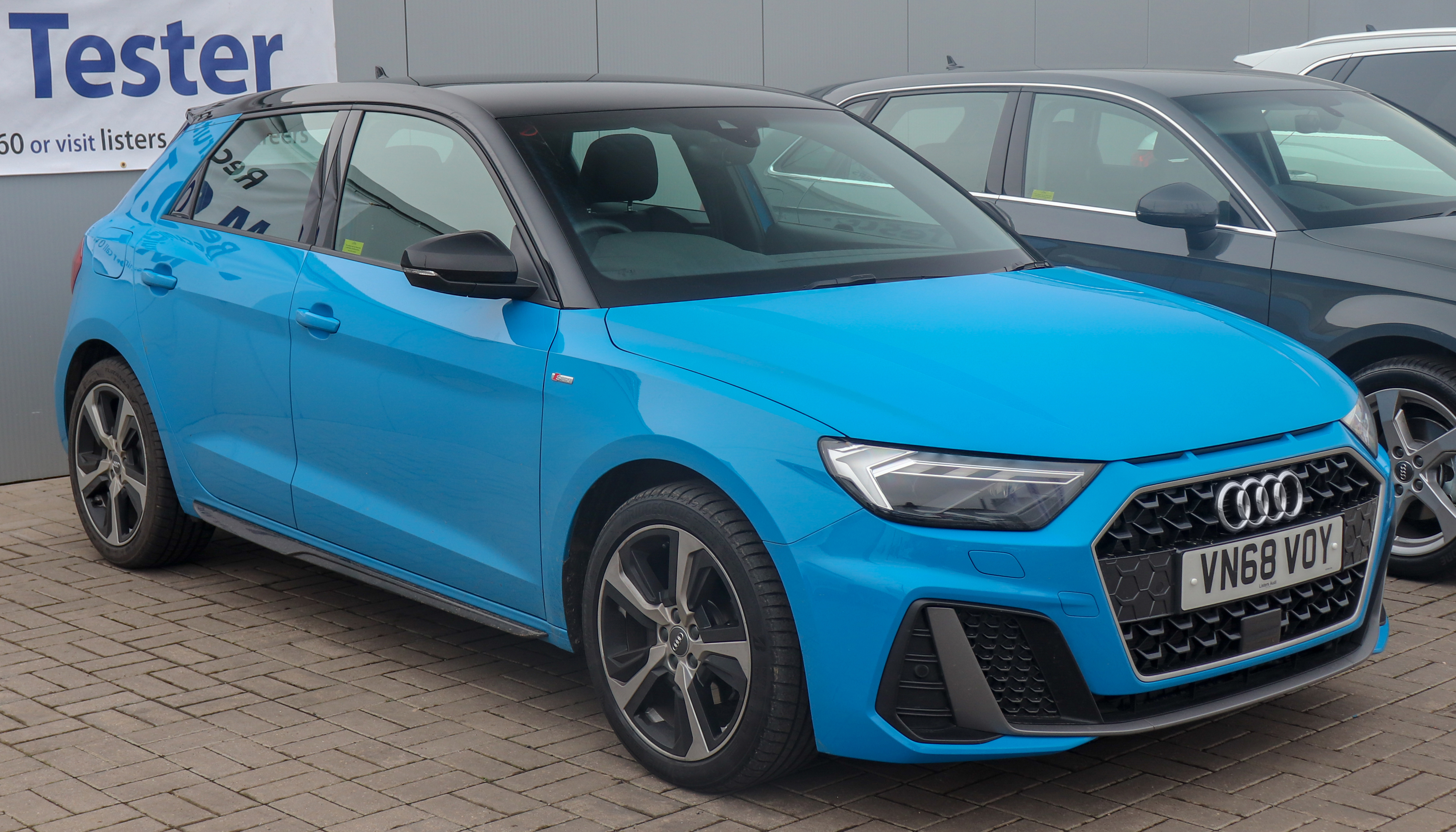
Audi A1
"Businessmen don't rock around in A1s. No. The bigger the business, the longer the car."
The Audi A1 is a small Audi hatchback. Here it’s being used as a contrast—like saying a smaller car doesn’t look like the kind of vehicle you’d expect a business owner to drive.
The Audi A1 is a small premium hatchback. In the conversation, it’s used as a shorthand for a “smaller” or less executive-looking car compared with larger Audi models.

Audi S8
"[2070.1s] some very cool A8 based things. [2073.2s] You've got S8s. [2074.0s] You've got like, [2074.5s] they made a V10."
The Audi S8 is the performance-focused version of the A8, typically tuned for higher output and sportier driving dynamics. Mentioning “S8s” highlights that even within the A8 family, Audi offered higher-performance variants.
V10
"A V10. A V10. No V10 in there. No V10."
A V10 is an engine with 10 cylinders arranged in two rows. It usually shows up in higher-performance cars and tends to be expensive to run and maintain.
A V10 is an engine with 10 cylinders arranged in a “V” layout (two banks of five). It’s typically associated with high-performance cars because it can rev freely and make strong power, but it also adds cost and fuel use.
V8
"We're getting rid of the four cylinder going back to a V8. Now that's business."
A V8 is an engine with eight cylinders in a V shape. It’s often associated with stronger acceleration and a more powerful feel, even if it can use more fuel.
A V8 is an engine with eight cylinders arranged in a V layout (two banks of four). Compared with smaller engines, V8s typically deliver stronger low-end torque and a more “muscular” driving feel, but they can be less fuel-efficient.
four litre V8
"And the in that last one, you could have the four litre V8 still. So that's that's in and they were S8s."
This means the car has a V8 engine that’s about 4.0 liters in total size. V8s usually feel strong and smooth compared to smaller engines.
A “four litre V8” describes an engine with eight cylinders arranged in a V configuration, with a total displacement of about 4.0 liters. Displacement is one way manufacturers describe engine size, and V8s are often associated with strong power and smoothness in luxury/performance cars.
heated seats
"[4367.4s] I mean, well, let's say you can subscribe to have a little bit more power. [4371.0s] Or heated seats or what. [4372.8s] But what would you actually do?"
Heated seats are seats that warm up using electricity. Some cars let you turn them on from the screen or even pay for extra features later.
Heated seats are an in-car comfort feature that uses electric heating elements in the seat cushions and backs. Many modern cars let you activate them via the infotainment system, and some brands offer them as a subscription or remote activation add-on.
Request an Explanation
Heard something you'd like explained? We'll add it to this episode.
Sign in to request explanations for terms you heard.
Want to learn more?
Browse our glossary for plain-English explanations of automotive terms, jargon, and concepts.
Help improve this episode
See something that's not quite right? Our annotations are AI-generated and can sometimes miss the mark. Click the flag icon on any annotation to suggest a correction.