
C.R.E.A.M. #91 - Ben Bought a Car, Live Chicken On The M25 and Flat 8 Engines
About this episode
Ben’s car woes kick things off: “Well, I'm still in a gentle ruin a little bit because I have no air con,” so he drives home with the windows open. The crew then swaps between track stories and used-car drama—Fiesta coolant/limp-mode trouble, CV boot grease, and a “classic Renault breaking” boot split—before diving into buying advice and vehicle history checks with Carvertical. The episode ends with engine-layout talk (“Flat eight”) and a practical fuel-octane explainer, plus plenty of M25 live-chicken chaos.
⚪️ Get 20% off your next Car Vertical check using code CREAM 👉 https://www.carvertical.com/gb/landing/v3?utm_source=infl&a=TDC&b=38b26e3a&voucher=cream20🍦 Follow C.R.E.A.M. socials!https://www.instagram.com/carsruleeverything/Edwin: https://www.instagram.com/edwin.klinkenberg/Will: https://www.instagram.com/willchandlr/ 📬 Enquiries: [email protected]
recharge air con
"Also, we'll say before we get to you, you can recharge air con. But anyway, we'll get to that."
“Recharge air con” means adding refrigerant to the car’s air-conditioning system. If it keeps needing recharging, there may be a leak somewhere.
“Recharge air con” means topping up the vehicle’s air-conditioning refrigerant so the system can cool properly again. If it needs frequent recharging, it can indicate a leak in the A/C system.
Santa Pod
"We went to Santa Pod recently, did some racing with RS6. We won't tell you if there are problems or not."
Santa Pod is a UK drag strip. People go there to race cars in a straight line and see how fast they accelerate.
Santa Pod is a drag racing venue in the UK, known for straight-line acceleration runs. It’s a common place for enthusiasts to test cars’ quarter-mile-style performance and compare launches.
Nurburgring
"But in the more distant memory is a white McGann that decided to break at the... Not at the Nurburgring, near the Nurburgring."
The Nürburgring is a famous race track in Germany. It’s the kind of place car people talk about because it’s challenging and well known for testing cars.
The Nürburgring is Germany’s famous motorsport complex, best known for the Nordschleife (the “North Loop”) and its reputation as a benchmark for car performance. The host mentions a breakdown near the Nürburgring, tying the story to a well-known driving/racing destination.
CV boot grease
"But yeah, CV boot grease. It might have made it home."
It’s the special grease used in a car’s drive-joint. That grease sits inside a rubber cover (a boot), and if the cover gets damaged, the grease can leak out and look scary—like oil.
“CV boot grease” refers to the grease inside a constant-velocity (CV) joint’s rubber boot. The boot keeps the joint lubricated and protected from dirt and water; if the boot tears, grease can sling out and make it look like a serious fluid leak.
drive shafts
"But had the drive shaft actually had its pants on the way home, it would have just taken..."
The drive shaft is the part that sends power from the gearbox to the wheels. If something on that system is damaged, the car can lose drive or start making a mess of fluids.
The “drive shaft” is the rotating shaft that transfers power from the transmission to the wheels. If a drive-shaft-related component leaks or fails, it can quickly turn into a reliability problem—especially on a long drive or track session.
timing belt
"It's on the timing belt, orc's belt side. Which means it's the annoying one to do."
A timing belt is a belt inside the engine that keeps the engine’s moving parts lined up. If it fails, the engine can be badly damaged, so it’s a big deal.
A “timing belt” synchronizes the engine’s crankshaft and camshaft(s) so the valves open at the correct time. If it’s the belt-side of a component and it fails or is disturbed, the consequences can be severe (including major engine damage).

BMW 130I
"What car did you drive back? Oh, I drove a 130i with the bouncest suspension known to man. But I ..."
The BMW 1 Series is a smaller BMW car designed for easier driving and parking than bigger models. The 130i is a performance version with a stronger engine. People talk about it because it can feel sporty, including how it rides over bumps.
The BMW 1 Series is BMW’s compact car line, typically offered as a smaller, more driver-focused alternative to larger BMW models. In your excerpt, the speaker mentions driving a 130i and specifically calls out the suspension feel, which suggests the conversation is about how the car rides and handles. The 1 Series often gets discussed for its compact size and sporty driving dynamics.

Renault Megane E-Tech
"But that's by the by. And the Megane had ice-cold aircon for one day. Now, Will came i..."
The Renault Megane E-Tech is an electric car version of the Megane. Instead of using fuel, it runs on a battery and an electric motor. The conversation about air conditioning is about how comfortable it is to live with day to day.
The Renault Megane E-Tech is an electric version of the Megane, focusing on battery-electric driving rather than gasoline or diesel. It’s being mentioned in the context of air conditioning performance, which is a practical day-to-day topic for EV owners. Podcasts often cover EVs like this when discussing real-world comfort and usability.
AC
"Because I might just delete the AC now because I want that car to be an extreme hardcore track car."
“AC” is the car’s air conditioning. It cools the cabin, but for a track car some people delete it because it adds extra stuff and weight, and it’s not as important on track days.
“AC” here means the car’s air conditioning system. On a track-focused build, people sometimes remove or disable it to reduce weight and simplify the engine bay, since they don’t need cabin cooling while driving hard.
coolant
"Oh, yeah, no, it ate a lot of coolant. Consistently."
Coolant is the fluid that carries heat away from the engine to prevent overheating. “Ate a lot of coolant” suggests a leak or failure that caused the system to lose fluid repeatedly, which can quickly lead to overheating and engine damage if not addressed.
limp mode
"And then went into limp mode as well. And then went into limp mode."
Limp mode is when the car intentionally reduces power to protect the engine. It usually happens because the car detected a problem with a sensor or system and wants you to drive carefully to get it checked.
Limp mode is an engine-protection strategy where the car limits power and sometimes changes how it responds to the throttle. It’s typically triggered by a fault detected by sensors, so the driver can get to safety or a workshop without causing further damage.
air pipe
"We thought it was because there was an air pipe that was unhappy and was bypassing a sensor."
An air pipe is the tube that carries air into the engine. If it’s not sealed or fitted properly, the car’s sensors can get the wrong information and the car may go into limp mode.
An air pipe is part of the intake/air plumbing that routes air to the engine. If it’s loose or “unhappy,” it can cause incorrect airflow readings, which may lead the ECU to flag a fault and trigger limp mode.
sensors
"We thought it was because there was an air pipe that was unhappy and was bypassing a sensor. We tightened that up."
A sensor is a small part that measures conditions for the car’s computer. If something is bypassing or messing with the sensor, the computer may think there’s a problem and limit power.
In this context, a sensor is a device that measures something the engine management system needs—like airflow, pressure, or temperature. If an intake component is bypassing or disturbing a sensor, the ECU may interpret it as a fault and activate limp mode.
crashed damaged
"Oh, has it ever been crashed damaged for chance? Yes, twice. Possibly even thrice."
“Crashed damaged” means the car has had an accident and was repaired afterward. Multiple accidents can sometimes lead to hidden problems even if it looks fine.
“Crashed damaged” refers to a vehicle that has been involved in an accident and then repaired. Even if repairs look good, repeated crash history can affect structural integrity, alignment, and long-term value.
car vertical report
"And you would know that if you had run a car vertical report which happened to be a sponsor of this week's podcast."
A CarVertical report is like a “history check” for a used car. It can show things such as whether the car has been reported as having accidents.
A “CarVertical report” is a vehicle-history report service. It compiles data points (like prior reported accidents and other records) to help you assess a used car’s history before buying.
written off
"It doesn't just tell you if it's [611.1s] been written off either."
“Written off” means the car was considered a total loss by an insurance company. That usually happens when fixing it would cost more than the car is worth.
“Written off” means an insurer has deemed the car a total loss, usually because repair costs are too high compared with the car’s value. It’s a major status change that can affect resale value and future insurability.
assessment
"It'll tell you if it comes out [613.0s] of an assessment, which is very [614.1s] useful because most checks will"
An “assessment” is the evaluation step after a car is damaged. It’s when the insurer decides what the next outcome is—like whether it can be repaired or treated as a total loss.
In vehicle history reporting, an “assessment” refers to the insurer’s or claims process where the car is evaluated after damage to determine repairability versus total loss. The episode highlights that some checks may miss whether the car “comes out of an assessment,” which can indicate the outcome of that process.

Renault Sport
"I always forget all of our Renault Sport stuff. He messaged Will actually and"
The Renault Sport Spider is a Renault sports roadster, meaning it’s a smaller, open-top style car meant for fun driving. It’s part of Renault’s sport-themed lineup. People mention it when talking about Renault’s more enthusiast-focused models.
The Renault Sport Spider is a Renault performance-focused roadster concept/derivative that’s associated with the brand’s sport division styling and driving intent. It’s brought up in your excerpt as part of “Renault Sport” model talk, suggesting the episode is cataloging or reminiscing about Renault’s sport lineup. These cars often get mentioned for their niche appeal and enthusiast interest rather than mainstream volume.

Dodge Road Runner
"Valid in store and online. Hey, Road Runner. You're, you're one fast bird."
The Dodge Road Runner is a muscle car, meaning it’s built for strong acceleration. It’s known for a performance-focused character and a loud, sporty image. People mention it when they want to talk about fast, classic American cars.
The Dodge Road Runner is a muscle car model associated with strong performance and a bold, performance-oriented identity. It’s frequently referenced in car conversations because it represents a specific era of American high-power driving. In your excerpt, it’s being used as a playful, punchy reference—“one fast bird”—which fits the Road Runner’s reputation.
Quaife Diff
"But that car, Quaife Diff, Rebuilt Gearbox, I never got it back with the Rebuilt Gearbox properly."
A “Quaife Diff” is a special type of differential (the part that sends power to the wheels). It helps the car keep traction better, especially when the road is slippery or one wheel loses grip.
A Quaife Diff refers to a Quaife-branded differential, typically an aftermarket limited-slip differential. It helps transfer torque to the wheel with more grip, improving traction when one side starts to slip.
rebuilt gearbox
"But that car, Quaife Diff, Rebuilt Gearbox, I never got it back with the Rebuilt Gearbox properly."
A rebuilt gearbox means the car’s transmission was opened up and repaired. It usually happens when something inside wore out or broke, and the goal is to make it work properly again.
A rebuilt gearbox means the transmission has been taken apart and repaired or replaced with new/renewed internal parts. This is often done to fix wear, damage, or shifting issues, but it’s also a sign the car had a problem that needed attention.
belts done
"So you've now got that. It's had the belts done. It's got the Diff."
“Belts done” means the car’s belts have been replaced. Belts help run important engine components, and replacing them on time helps avoid breakdowns.
“Belts done” indicates scheduled belt replacement has been carried out. On many engines, belts (such as timing belts or auxiliary belts) are critical maintenance items—if they fail, they can cause serious engine damage.
refurb wheels
"It's got the Diff. It's got refurb wheels, new tyres."
Refurb wheels are wheels that have been repaired and refinished. It’s basically a “make them look good again” process, sometimes after curb scuffs.
Refurb wheels are wheels that have been refinished or repaired after damage or wear. This can include cleaning, repainting, and fixing curb rash or minor damage to restore appearance and sometimes structural integrity.
new tyres
"It's got refurb wheels, new tyres."
New tyres are fresh tires on the car. They usually improve grip and braking and mean you won’t need to replace tires right away.
New tyres means the tires have been replaced with fresh rubber. That matters for grip, braking performance, and ride quality, and it also reduces near-term maintenance costs for the buyer.
liquid yellow
"but otherwise you'd pay double that for a liquid car. Oh, easy. Especially with those mods,"
“Liquid yellow” is the name of the car’s yellow paint color. Some paint finishes are more costly than basic colors, so it can affect the overall price.
“Liquid yellow” refers to a specific paint color/finish name used for a yellow car. Named paint colors matter because certain finishes (especially special-effect paints) can be more expensive to apply and maintain.
mods
"Oh, easy. Especially with those mods, you're probably paying"
“Mods” just means upgrades or changes people add to a car after it leaves the factory. Depending on what’s changed, it can make the car faster or more unique—and usually more expensive too.
“Mods” is shorthand for aftermarket modifications—changes made to a car beyond factory specification. In enthusiast circles, mods can include engine, suspension, wheels, and tuning, and they often affect both performance and resale value.
10 grand
"you're probably paying nearly 10 grand for a liquid yellow car"
“10 grand” is just a casual way of saying around ten thousand pounds. They’re using it to estimate the car’s price after modifications.
“10 grand” is slang for about £10,000 (or roughly that order of magnitude in local currency). The hosts use it to estimate how much the modified car could cost.
tuned
"it won't happen instantly because the car's getting tuned and he's going through a little"
“Tuned” means the car’s settings are adjusted so it runs properly with the upgrades. It can make the car feel smoother and respond better when you drive it.
“Tuned” here refers to calibration work on the car’s engine/ECU so it runs the way the modifications intend. Tuning can change throttle response, boost/fueling behavior (for forced-induction cars), and overall drivability.
the Ring
"unbelievable at the ring. The CV boot was nothing to do with that was old-part type stuff."
“The ring” usually means the Nürburgring, a very famous race track in Germany. People use it to judge how good a car is because it’s tough and twisty.
“The ring” is a common shorthand for the Nürburgring in Germany, a famous circuit used to test and benchmark sports cars. Enthusiasts often talk about it as a real-world measure of how fast and well a car performs under stress.
wheel wobble
"There were a couple of annoying bits and pieces. I had a wheel wobble that means I think I need new wheels."
Wheel wobble is when the wheel doesn’t spin smoothly and you feel a shaking or vibration. It can be caused by a damaged wheel or tires that aren’t balanced correctly.
Wheel wobble is a vibration or oscillation in the wheel/tires that can come from imbalance, bent wheels, or worn suspension components. In this context, they connect it to needing new wheels.
Vulcan Alpha
"I was unhappy. I was in the trenches that day. Ben was having a tough day and whenever I was having a tough day, I walked over to him"
Vulcan Alpha is where they worked on the car before going to the track. It sounds like a workshop/garage setup where they could lift the car and do repairs.
Vulcan Alpha is mentioned as the location where they spent time working on the car before the track opened. In this context it functions like a garage/workshop space with access to a ramp.
balanced
"But no, I saw I got them balanced as best I could. So I had a little vibration at like 120."
Balancing is when a shop adds small weights to the wheel so it spins evenly. If it’s not balanced, you can get vibrations at highway speeds.
Wheel balancing is the process of matching the weight distribution of a tire and wheel so they spin smoothly at speed. If it’s done well, vibrations at certain speeds (like around 120) should be reduced.
rev limiter
"But other than that, it was all good. I had a little fight with what, you know, I believe the rev limiter should be at one point."
The rev limiter is a safety system that stops the engine from spinning too fast. If you hit it, the car won’t let the RPM keep climbing, which helps protect the engine.
A rev limiter is an engine control feature that prevents the engine from exceeding a safe maximum RPM. When they say the rev limiter “should” be at a point, they’re talking about the RPM limit where the ECU cuts fuel/ignition to protect the engine.
Hack Engineering
"But hey, look, it's fine. The car survived, but I'll be speaking to Ben at Hack Engineering."
Hack Engineering sounds like a car shop or tuning workshop. They’re saying they’ll talk to that shop to sort out what went wrong.
Hack Engineering is referenced as the place they’ll speak to after the car’s issues, implying it’s a workshop or tuning/engineering shop involved with the car’s setup. The name matters here because it indicates where the problem will be diagnosed or adjusted.
cream calipers
"But yeah, I'm so happy with that car. Also, the cream calipers are sick. Every time I get out of the car, I look at it and go, that's just cool."
Calipers are part of the brakes that squeeze the brake pads to stop the car. “Cream calipers” here is mainly about the look—having the brake parts painted a light color so they look cool behind the wheels.
Calipers are the clamping components of the brake system that squeeze brake pads against the rotors to slow the car. “Cream calipers” is a visual customization choice—painting or choosing calipers in a light color—meant to make the brakes stand out when you look through the wheels.
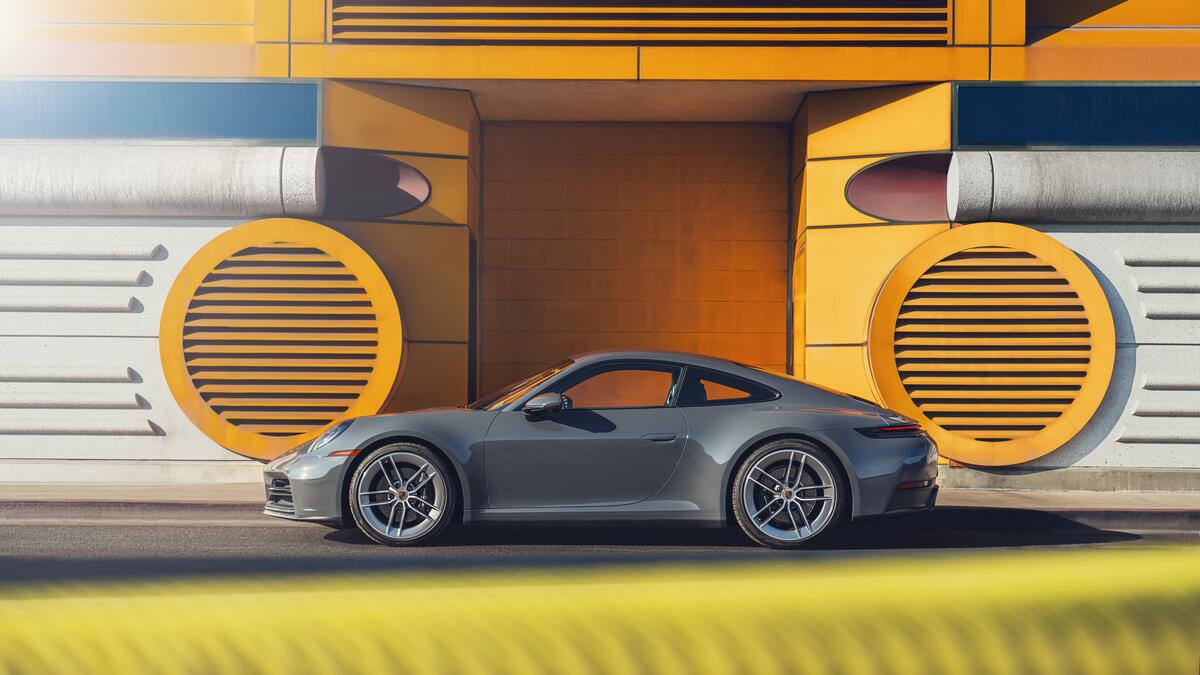
Porsche 996
"And it has also inspired me to get an old friend out. I'm getting the 996 out. I have, I've been, I was thinking about it."
“Porsche 996” means a specific generation of the Porsche 911. It’s basically the “996-era” 911, and people talk about it a lot because it’s a recognizable step in the 911’s evolution.
“Porsche 996” refers to the 911 generation with the internal code 996. It’s a widely discussed 911 era because it brought a more modern look and electronics compared with earlier 911s, while still using the classic rear-engine layout.
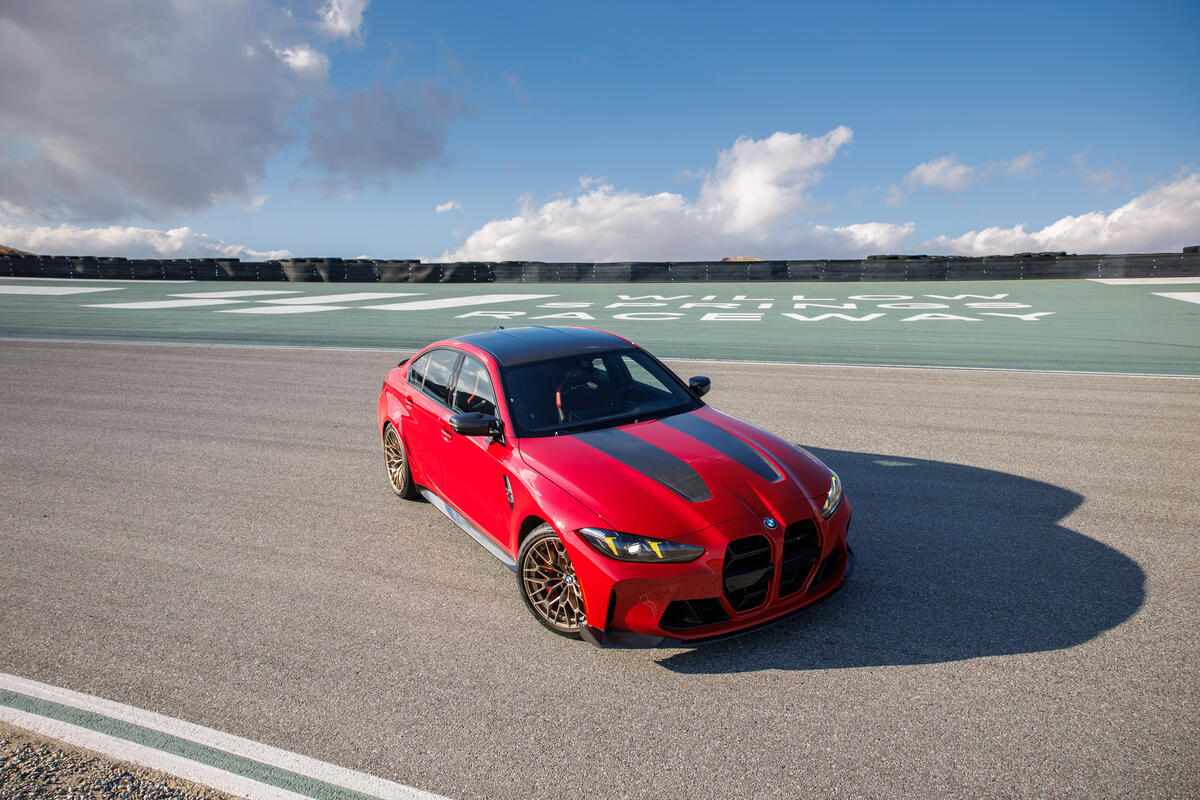
BMW M3
"I don't want to turn the M3 into a full track car. I don't, I don't like the idea of anything being a full track car, but I could get the 996 out and we could do some, do some days on that."
The BMW M3 is BMW’s high-performance version of the 3 Series. Here, they’re saying they don’t want to use it as a full-time track car, so they can keep it for normal use.
The BMW M3 is BMW’s performance-focused M division sedan/coupe built for track-capable driving. In this segment, the host specifically says they don’t want to turn the M3 into a full track car, implying they want to preserve it rather than use it as a dedicated track tool.

Clio
"My Clio is ready for my girlfriend to learn in. I need something. I don't want to use the M3. We did, you did also say that you're going to get the Clio back up and going."
A Clio is a small Renault hatchback. They’re using it as a practical car for their girlfriend to learn in, and they’re getting it fixed up with parts so it can be driven again.
The Renault Clio is a small, everyday hatchback that’s often used as an inexpensive, practical car for short trips and learning to drive. In this segment, the host says their Clio is ready for their girlfriend to learn in and that they’re ordering parts to get it back up and running.
engine's come out
"[1312.7s] oh no, the engine's come out. [1314.3s] That's a totally new engine. [1315.2s] Oh, I had to redo it."
This phrase means the engine had to be removed from the car. That usually happens when the problem is serious or difficult to fix without taking the engine out.
“Engine’s come out” is shorthand for an engine removal job, where the engine is taken out of the car for repair or replacement. It usually implies significant labor and time, often because the issue is hard to access in-place.
Will's 130i
"Now, Patrick, who works with us, was in Will's 130i as passenger seat. [1353.0s] I was behind him in my M3."
This is a BMW 1 Series 130i. It’s a smaller BMW that’s known for being fun to drive, and here it’s the car Will is in while they’re traveling.
The BMW 1 Series 130i is a compact rear-wheel-drive BMW built around a performance-focused inline-six engine. In this story, it’s the car Will is riding in as a passenger, which helps anchor the episode’s real-world driving scenario.
M 25
"I was behind him in my M3. [1354.9s] We're on the way back in on the M25. [1359.2s] Now, look, we've talked about it before."
The M25 is a big UK motorway that goes around London. It’s the kind of road people use for longer trips and busy traffic.
The M25 is a major motorway in the UK that loops around London. It’s commonly used for commuting and long motorway trips, which is why it shows up in real-world driving stories like this one.

Neuer Class
"Okay. The Neuer class, I believe it's called, when is that correct?"
“Neue Klasse” is BMW’s plan for a new generation of car design and engineering. It’s not a single car model by itself—it’s more like the foundation future cars will be built on. The podcast is likely discussing when that new platform is expected to arrive.
“Neue Klasse” (German for “New Class”) refers to BMW’s next-generation vehicle platform strategy, aimed at defining how future BMW models are built. It’s significant because platform changes can affect everything from interior packaging to powertrain integration and driving characteristics. In your excerpt, the speaker is clarifying the name and timing, which suggests the discussion is about upcoming BMW plans.

X5
"This is the X5 on screen. And he's got X's in his headlights."
The BMW X5 is a luxury SUV that’s meant to feel more “sporty” than a typical family car. Here, they’re talking about how the headlights and styling look on the X5.
The BMW X5 is a midsize luxury SUV known for its sporty driving feel compared with many family-focused SUVs. In this segment, the hosts are describing the current-generation X5’s front lighting details and overall styling.

X5M
"Like an X5 doesn't look good, but an X5M looks kind of cool."
BMW X5M is the fast, performance-focused version of the X5. They’re saying the regular X5 doesn’t look great to them, but the X5M looks better.
BMW X5M is the high-performance version of the X5, tuned and equipped to deliver much stronger acceleration and more aggressive handling than a standard X5. The hosts contrast the base X5’s looks with the X5M’s more “cool” appearance.

McLaren W1
"Well, we've also put in here about the McLaren W1 race mode."
The McLaren W1 is a modern McLaren hypercar, built around the idea of maximum performance with advanced aerodynamics and a track-capable setup. The hosts specifically mention its “race mode,” implying it has configurable driving behavior for more aggressive driving.
race mode
"Well, we've also put in here about the McLaren W1 race mode."
Race mode is a button or setting that makes a car act more “track-focused.” It usually makes the throttle and driving controls more aggressive so the car responds faster when you push it.
Race mode is a driving setting that changes how a performance car behaves—typically sharpening throttle response, adjusting steering feel, and altering traction/stability control behavior for track-style driving. In this segment, it’s mentioned as part of the McLaren W1’s features.
McLaren 788HS
"Speaking of McLaren, there is another McLaren's news. [2055.1s] It's called the McLaren 788HS. [2058.0s] Which stands for High Sport."
McLaren is a British supercar brand, and “McLaren 788HS” is a special version of one of their cars. In this segment, they’re talking about what the “HS” name means and that it’s meant to be a rare, track-focused build.
The McLaren 788HS is a special-edition McLaren model name tied to the brand’s “High Sport” concept. The “HS” suffix is being discussed as a naming meaning, and the episode frames it as a track-focused, very limited run.
Mansori
"It looks a bit Mansori. Well, this is, this happens a lot on the, when they do like LTs and stuff."
Mansory is a company that customizes supercars with very flashy, aggressive styling. When someone says a car “looks Mansory,” they usually mean it looks heavily modified and a bit overdone.
Mansory (often stylized “Mansori” in speech) is a well-known German tuner that modifies luxury and supercars with aggressive styling. When the host says something “looks a bit Mansory,” they mean it has an over-the-top, aftermarket visual vibe.

675 LT
"Like remember the 675 LT had those mega-spoky wheels? Horrible looking wheels. Again, looked quite Mansori."
The “675 LT” is a McLaren supercar variant. The host is pointing out that its wheel design can look very extreme, and they didn’t like how it looked.
The “675 LT” refers to the McLaren 675LT, a track-focused supercar variant in McLaren’s lineup. The host is using it as an example of how certain wheel designs can look extreme or “horrible” depending on the spec.
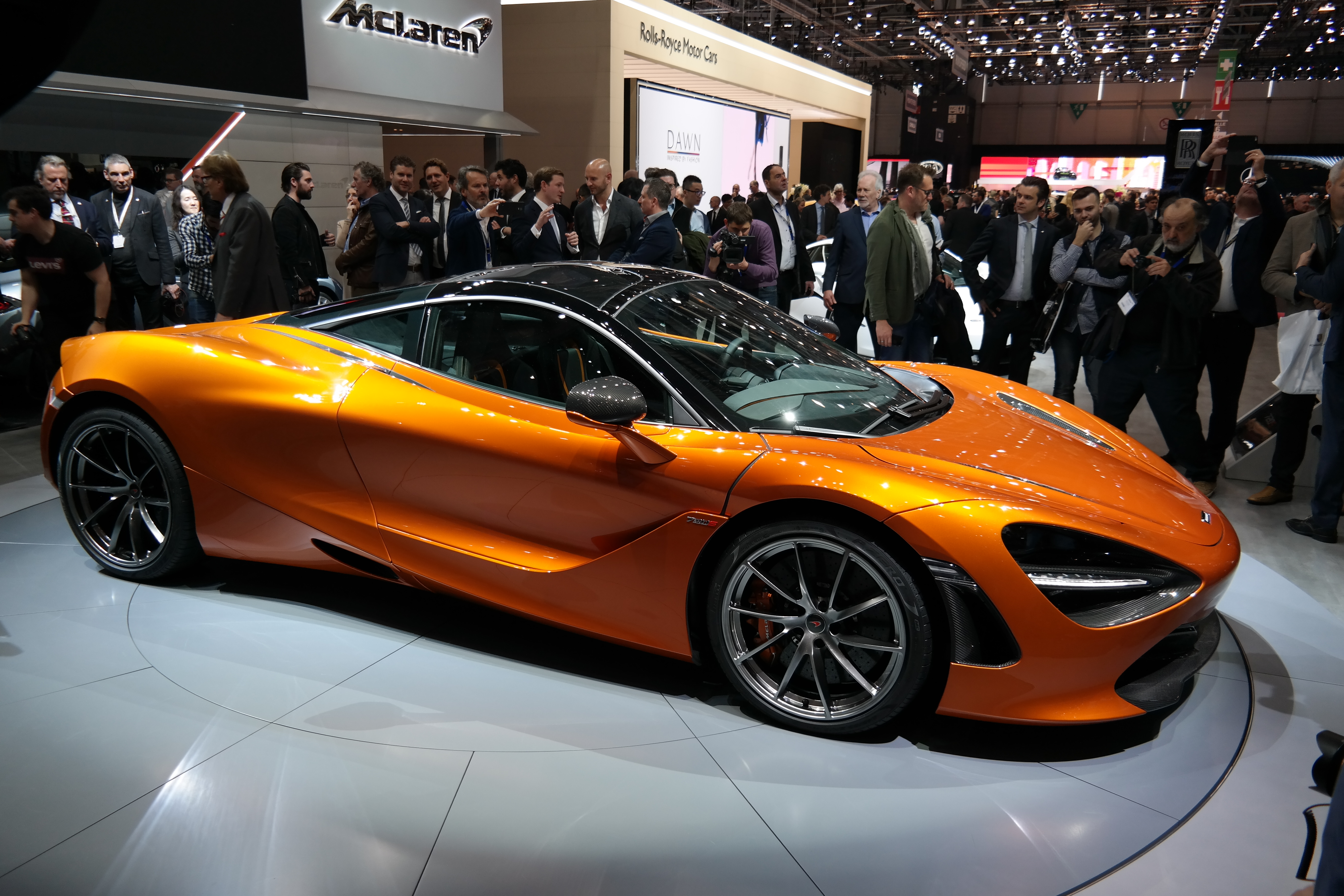
McLaren 720S
"this is the final version of this shape of McLaren. But it was a 720S."
The McLaren 720S is a high-end supercar from McLaren with a turbocharged V8. It’s the starting point for the more extreme versions the host is talking about.
The McLaren 720S is a modern supercar built around McLaren’s lightweight carbon-fiber approach and a turbocharged V8. It’s known for its sharp styling and track-focused feel, and it became the baseline for later “extreme” variants.

McLaren 765
"The extreme version of the 720 was a 765, which is my favorite because I think it just looks very amazing."
The McLaren 765 is a more extreme, higher-spec version of the 720S. The host likes it because it looks and feels like the top end of that generation.
The McLaren 765 is the “extreme” variant the host is referencing, positioned above the 720S in McLaren’s lineup. It’s part of the same family of cars, but tuned and specified to be more aggressive in performance and presentation.

McLaren 750
"I think it just looks very amazing. 750. And then this is now the 750."
The McLaren 750 is another higher-spec McLaren the host mentions alongside the 765. They’re basically saying the numbers can confuse people, but these are different versions.
The McLaren 750 is another “extreme” style variant the host contrasts with the 765. The key point in the discussion is that the naming is easy to mix up, but the 750 and 765 refer to different cars/eras within McLaren’s lineup.
flat-8 engine
"The thinking man's 750S. It's a cat and coal. You know, we're never going to see this again."
A “flat 8” is a type of engine with eight cylinders laid out in a sideways “V” shape. It’s often used in performance cars because it can fit well and help the car handle nicely.
A “flat 8” engine is an eight-cylinder design where the cylinders lie horizontally in two opposing banks, forming a low, wide layout. This configuration is commonly associated with certain high-performance sports cars because it can help with balance and packaging.
flat eight
"[2203.4s] Roof. [2203.9s] Flat eight. [2204.8s] I have seen this. [2205.6s] So Roof."
A “flat eight” means an engine with eight cylinders arranged in a sideways “box” shape. It’s a layout often found in premium sports cars, and it can help the engine sit lower in the car.
A “flat eight” is an engine with eight cylinders arranged in two banks of four that lie opposite each other horizontally. This layout is commonly associated with smooth balance and low center-of-gravity packaging in certain high-end sports cars.

Cadillac V16
"...ff the limiter. It's got heirs of the new Bugatti V16 to it, in my opinion. I heard lots of good turbo ..."
The Cadillac V16 is an old Cadillac model known for having a very large V16 engine. It was built to be extremely powerful and luxurious for its time. People bring it up because it’s a rare, impressive piece of car history.
The Cadillac V16 refers to a rare, high-end Cadillac model that used a V16 engine configuration, emphasizing luxury and power. It’s a notable piece of automotive history because a V16 layout is uncommon and was used to showcase engineering ambition. In a podcast, it may come up when discussing big-engine legends and how they compare to modern performance talk.
Bugatti V16
"It's got heirs of the new Bugatti V16 to it, in my opinion. [2282.3s] I heard lots of good turbo noises."
A “V16” is an engine with 16 cylinders arranged in a V shape. The host is saying the car they heard had a similar kind of dramatic sound to a Bugatti V16.
Bugatti’s “V16” refers to a 16-cylinder engine in a V configuration, known for producing a very distinctive sound and character. The speaker is comparing the noise/feel of the flat-eight car to the kind of presence associated with Bugatti’s V16.
turbo noises
"I heard lots of good turbo noises. [2283.8s] Now, Ben, do you know about Porsches and flat eights?"
“Turbo noises” are the sounds you hear from a turbocharger. They often show up when you accelerate and the turbo spools up.
“Turbo noises” refers to the audible sounds produced by a turbocharger, such as spool-up whine and blow-off/recirculation sounds under load changes. Enthusiasts often use this phrase to describe how a forced-induction engine sounds when accelerating.
flat engines
"I felt like we were really not doing flat engines really. No one's doing them. Who are doing flat engines?"
A “flat engine” is one where the cylinders sit in two sides, like a book opened flat. Because of that shape, it can feel smoother and often sounds different than a typical V8 or inline engine.
“Flat engines” are engines where the cylinders are arranged in two banks on opposite sides of the crankshaft, creating a low, wide profile. This layout is commonly called a boxer engine in many applications, and it changes how the engine feels and sounds compared with an inline or V engine.
Paul Shaw
"Who are doing flat engines? Paul Shaw. Paul Shaw and,"
Paul Shaw is mentioned as a person connected to making or working on flat engines. In this conversation, he’s brought up as an example of someone who’s involved in that niche.
Paul Shaw is referenced here as someone associated with flat-engine work or development. The context suggests he’s linked to the niche of horizontally opposed/flat engine designs, which is why he’s brought up in a discussion about who is “doing flat engines.”
Ferrari
"Paul Shaw. Paul Shaw and, and Ferrari. Not quite, but kind of."
Ferrari is a famous supercar brand. The host mentions it because Ferrari is one of the brands people associate with exotic engine designs, even if this specific “flat engine” claim isn’t a perfect fit.
Ferrari is a performance car brand known for using unusual engine layouts and high-performance V engines, and it’s also associated with flat-engine history in enthusiast circles. Here, the speaker is comparing Ferrari’s approach to the idea of “flat engines,” implying partial overlap rather than a straightforward match.
flat 12
"Is it flat, what, flat 12? It's not really a flat 12, no. There's some of them on modern V6."
A “flat 12” is a very rare kind of engine with 12 cylinders arranged in two flat rows on opposite sides. It’s the kind of layout people associate with exotic cars, but not many modern engines use it.
A “flat 12” refers to a 12-cylinder engine with a flat (horizontally opposed) cylinder layout. In practice, it’s rare in modern cars, and the discussion here suggests the speaker is distinguishing between true flat-12 architecture and other “flat-ish” configurations.
flat crank pin
"That's a flat crank pin. There's, there's, very gets very nerdy. But Ben, I'd like you to play a, play a noise please."
A “crank pin” is part of the engine’s crankshaft that the connecting rods attach to. Saying “flat crank pin” points to a specific crankshaft geometry that can change how the engine runs and sounds.
A “flat crank pin” is a crankshaft detail that affects how the crankpins are phased and how the engine’s cylinder firing events are timed. That timing can strongly influence the engine’s balance and the character of its sound and vibration.
V8
"I would think that's AMG4L to V8. It's just sounds a little bit muted, a bit dull."
A V8 engine has eight cylinders arranged in a V shape. It’s a popular setup in faster cars because it can make strong power.
A V8 is an engine with eight cylinders arranged in a “V” shape. The layout helps balance smoothness and power, and it’s a common configuration for performance cars.
downpipe whistle
"It's got those whistles. Because of the whistles. Whistles and a little bit of downpipe whistle."
“Downpipe whistle” refers to a high-pitched sound that can come from the exhaust system right after the turbo, often influenced by exhaust routing, flow, and any leaks or design features. Enthusiasts sometimes associate it with turbocharged cars because the exhaust pulses are strong there.

Porsche Man
"...ght you would be more interested because you're a Porsche man. Yeah, but it's, I don't really understand on rou..."
body kit
"[2445.3s] Like the only one I know is that one, which is the wide looking ones. [2448.6s] It's kind of the more extreme ones. [2450.1s] Most of them look like a... [2451.7s] Oh, I know what the body kit ones, but I like this."
A body kit is extra parts added to a car to change how it looks. It often makes the car look wider or more aggressive, which is what they’re talking about here.
A “body kit” is an aftermarket set of exterior parts—like bumpers, side skirts, and sometimes spoilers—used to change a car’s look and aerodynamics. In this discussion, it’s tied to the “wide” or more extreme Porsche-like styling they’re describing.
1987
"So that you are aware that came out in 1987. But it looks like that, I'm saying."
1987 is mentioned as the year that version came out. Car people use years like this to figure out exactly which version of a model they’re looking at.
1987 is being used as a reference point for the car’s model year or generation timing. In enthusiast discussions, a specific year helps identify which version of a design you’re looking at, since the Porsche 911 changed styling and engineering details over time.
DLS
"You think a DLS looks... A DLS is mental. Is that? Yes. Show me DLS."
“DLS” here isn’t a normal car word—it’s a shorthand nickname for a particular version of a car. The hosts talk about it like it’s a specific trim/variant they can point to and compare.
“DLS” is an enthusiast shorthand that typically refers to a specific Porsche 911 variant/trim people recognize by that acronym in the context of air-cooled 911s. In this segment, Ben and the other host treat it like a named car spec they can “show” and discuss visually, so it’s likely a model/trim code rather than a generic term.
back date
"Exactly, but a back date looks like a original G body with like all the nice chrome bits."
A “back date” is when someone modifies a newer car to make it look like an older one. It’s basically styling it to match a past time period.
A “back date” is a modification where a newer car is styled to look like an older model year or era. In this context, the speaker is saying the design cues resemble an older “G-body” look, especially with chrome and period styling.
G-body
"Exactly, but a back date looks like a original G body with like all the nice chrome bits."
“G-body” is a nickname for a particular older car platform used by General Motors. People use it to describe the general look and proportions of cars from that era.
“G-body” is an enthusiast shorthand for a specific American car platform used by General Motors in the 1970s–1980s. When someone says a car “looks like a G-body,” they’re usually referring to the body shape and styling cues associated with that generation of GM cars.
MG
"Anyway, Ben, you've put in here the MG unique design. Have you seen this? ... Now, MG meaning that's that English company, right?"
MG is a car brand from the UK. The hosts are talking about something new MG has shown and confirming it’s the English company.
MG is a British car brand (originally Morris Garages) known for compact, sporty models and a long history in the UK and motorsport. In the segment, the hosts are discussing an MG design concept/feature and clarifying that MG refers to the English automaker.
concertina type thing
"This is their new... It's like a preview of it, like a concept type thing, right?"
A concept car is a design study that previews styling, technology, or future direction, but it may not be the exact production vehicle. Hosts often describe early reveals as “concept” when the details are still tentative.
EV
"But this is going to be an electric car. They've released it at Goodwood."
An electric car runs on electricity from a battery instead of petrol. You charge it using a plug, and when you slow down it can reuse some energy.
An electric car is powered primarily by an electric motor and a battery pack, rather than a gasoline engine. It typically charges from the grid (at home or public chargers) and uses regenerative braking to recapture some energy.
Goodwood
"They've released it at Goodwood. I'm just going to see if I can find the information on it."
Goodwood is a famous UK venue where car makers show off new cars. It’s especially known for big car events and launches.
Goodwood refers to the Goodwood Festival of Speed and other events at the Goodwood estate in the UK, where automakers often debut concept cars and new models. It’s a high-visibility venue for performance and enthusiast-focused releases.
R50
"As you know, all the R50 or whatever it would have been called. Yep."
R50 is a code name people use for a particular Mini version/generation. They’re using it to refer to the specific Mini design they’re comparing against.
R50 is a model code used to refer to a specific Mini generation/variant internally. In this conversation, it’s mentioned as “R50 or whatever it would have been called,” implying they’re talking about which Mini-era design they mean.
electric car market
"[2775.6s] Now I want to see what the production version looks like. [2777.7s] Because they say it's supposed to cost around 20 grand. [2782.1s] So that puts it at the lower end of electric market."
“Electric market” just means the world of electric cars. They’re saying the price they heard would put it toward the cheaper end of electric cars.
“Electric market” refers to the segment of the car market focused on battery-electric vehicles (EVs). When they say it’s “lower end of electric market,” they’re talking about a relatively cheaper EV price tier.
four door or a five door
"[2787.7s] Yeah, come on now, Charlie. [2789.2s] It's doing that thing that I hate again, again, again on any modern car, [2794.1s] especially a modern small car, where it's a four door or a five door."
“Four door” and “five door” describe hatchback/body configurations where there are four or five openings to the cabin (typically 2 front doors plus 2 or 3 rear doors). In car talk, this is often used to distinguish practical family-oriented layouts from smaller or more compact body styles.
Lanzanti
"Lanzanti, we're back out again on some crazy stuff. ... So if we haven't explained it beforehand, Lanzanti are a company that were involved in racing with McLaren F1s back in the day."
Lanzanti is a company that takes very expensive, track-focused cars and helps turn them into street-legal versions. The hosts are basically saying they do custom “make it road legal” conversions.
Lanzanti is a specialist company that performs bespoke conversions of high-end hypercars and race cars into road-legal vehicles. In this segment, they’re described as having worked on conversions involving cars associated with McLaren F1s and other extreme models.

Mclaren F1S
"So if we haven't explained it beforehand, Lanzanti are a company that were involved in racing with McLaren F1s back in the day."
The McLaren F1 is a famous supercar from the 1990s that many enthusiasts consider a benchmark. In this episode, it’s brought up as part of Lanzanti’s racing background.
The McLaren F1 is a legendary 1990s supercar known for its race-derived engineering and the iconic three-seat layout. Here, it’s mentioned because Lanzanti is described as having been involved with racing McLaren F1s in the past.

Huayra R's
"So they did Huayras, Huayra R's, Zondara R's and... F1s a lot."
The Pagani Huayra R is the more track-oriented, hardcore version of the Huayra. The hosts are using it as an example of the kind of extreme car Lanzanti works with.
The Pagani Huayra R is the track-focused, no-compromise version of the Huayra, built with racing intent. In this segment, it’s included in the list of cars Lanzanti has been involved with converting.
MOT
"I reckon they've just got a really friendly MOT tester. They've just got a Bluetooth MOT man that will go,"
MOT is the UK’s yearly check to make sure a car is safe and meets emissions rules. If it doesn’t pass, you can’t legally drive it on public roads.
MOT is the UK’s mandatory annual vehicle inspection that verifies roadworthiness and emissions compliance. Passing (or failing) an MOT determines whether the car can legally be driven on public roads.
fog light
"We've got a couple of headlights on it, tail light, fog light. Emissions don't worry about it."
A fog light is an extra light on the front of a car meant to help you see better in fog or bad weather. It’s usually placed lower to avoid shining light back into the fog.
A fog light is an auxiliary front lamp designed to improve visibility in poor weather like fog or heavy rain. It’s typically mounted lower on the bumper and has a beam pattern intended to reduce glare.
tail lights
"We've got a couple of headlights on it, tail light, fog light. Emissions don't worry about it."
Tail lights are the rear lights that help other drivers see your car, especially at night. They’re different from the brake lights, which come on when you slow down.
Tail lights are the rear lamps that indicate the car’s presence and are used for visibility at night and in low light. They’re distinct from brake lights, which illuminate more brightly when you slow down.
headlights
"We've got a couple of headlights on it, tail light, fog light. Emissions don't worry about it."
Headlights are the front lights that help you see the road at night. Here they’re mentioned because the car needs the right lighting to be legal to drive.
Headlights are the front lamps used to illuminate the road ahead at night or in poor visibility. In this context, they’re being discussed as part of making an imported car “road legal” for UK use.

Fiat 500
"Emissions don't worry about it. Don't worry, we'll stick it in a Fiat 500. Very noisy, don't worry about it."
The Fiat 500 is a small car that’s popular for city driving. Here it’s mentioned as an example of a normal, road-legal car setup.
The Fiat 500 is a small, city-focused car from Fiat, known for being compact and easy to drive/park. In this segment, it’s used as a stand-in for a typical road-legal UK setup when they’re talking about emissions and lighting requirements.

Mercedes-Benz Aclass
"It's just the best news anchor the world has ever seen. It's just the CLA or A-Class A45. It's that platform."
The Mercedes-Benz A-Class is a small luxury car, usually a hatchback. It’s meant to be practical for daily driving while still feeling “premium.” People talk about it because there are different versions, including more performance-focused ones.
The Mercedes-Benz A-Class is a compact luxury hatchback/small car line designed for everyday practicality with Mercedes-style features. It’s often discussed alongside other compact Mercedes models because the A-Class platform can be offered in different performance levels. In your context, the conversation references the CLA and A-Class A45 and calls out the shared platform idea.
torque
"“I want you to guess the power. I want you to guess the torque.”"
Torque is the engine’s twisting force. More torque generally helps the car feel quicker when you press the accelerator, especially at lower speeds.
Torque is the twisting force the engine produces, and it strongly affects how quickly a car accelerates, especially from low speeds. It’s measured in newton-meters (Nm) in many modern specs.
0-60
"“And a 0-60. No, just a...” “Okay.”"
“0-60” is how fast a car goes from standing still to 60 mph. Lower time usually means the car feels quicker in everyday acceleration.
“0-60” is shorthand for 0 to 60 mph (or km/h in some markets), a common acceleration benchmark. It measures how quickly the car can reach a set speed from a standstill, combining engine output, gearing, traction, and drivetrain behavior.
horsepower
"“I’m going to say it’s got 650 horsepower.” “Okay.”"
Horsepower is a number that tells you how much “pull” the engine can make. Higher horsepower usually means the car can accelerate more strongly.
Horsepower is an engineering measure of how much power an engine can produce. In car discussions, it’s commonly used as a headline number for performance, especially acceleration and top-end capability.
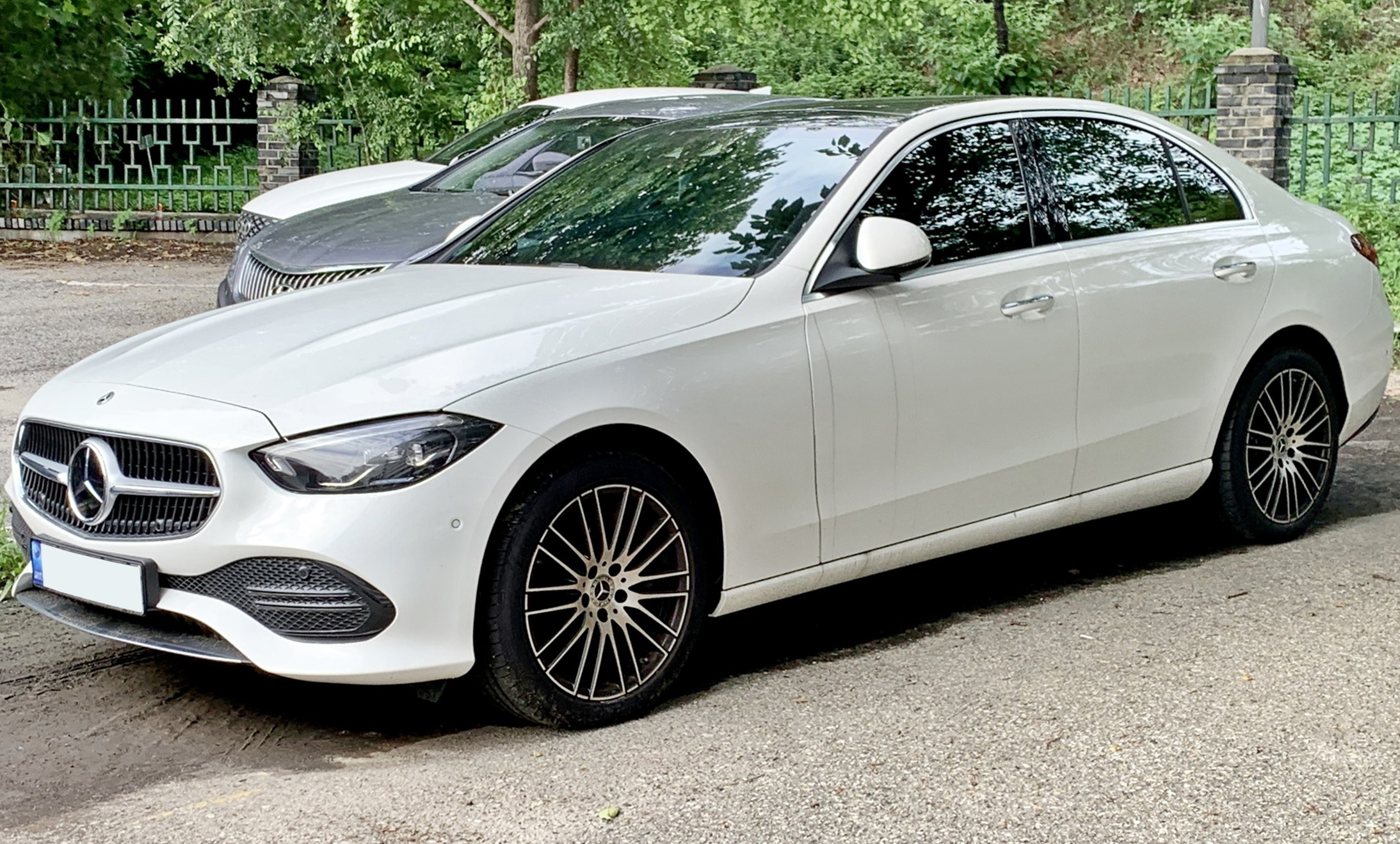
C63
"680 horsepower. So, it's the C63. Yeah, power chain."
“C63” is a Mercedes-AMG model name. It’s the sporty, high-performance version of the C-Class, and here they’re talking about a hybrid version with both a gas engine and electric motors.
“C63” refers to the Mercedes-AMG C-Class performance model line. In this context, the hosts are discussing a high-output, hybrid version, which is why they’re also talking about electric motors and kilowatts alongside horsepower.
hybrid
"But it's a 45, though. So, it's a hybrid. Yeah."
A hybrid car uses two kinds of power. Usually it has a gas engine and an electric motor working together.
A hybrid powertrain uses more than one energy source—typically a combustion engine plus one or more electric motors. That’s why the discussion shifts from horsepower to electric motor output in kilowatts.
kilowatts
"Because it's got up to 500 kilowatts from three axial flux motors. So, that would be batshit fast. What does that mean?"
Kilowatts are a way to measure how much power something can produce. Electric cars often talk in kilowatts because it’s how motor output is rated.
Kilowatts (kW) are a unit of power used for electric motors and battery systems. The hosts are converting the car’s electric output into kW to explain why it’s so fast, alongside the earlier mention of horsepower.
electromagnetic flux
"The key feature of axial flux motors is that the electromagnetic flux is aligned parallel to the motor's axis."
Electromagnetic flux is basically how strong the magnetic field is and how it moves through the motor. Motor designers care a lot about it because it determines how effectively the motor can make turning force.
Electromagnetic flux is a measure of how much magnetic “field flow” passes through a given area. In motor design, how the flux is oriented and transferred between stator and rotor strongly affects efficiency and torque production.
rotors
"Here, the stator is enclosed on the left and right by two rotors in a sandwich-like structure."
Rotors are the parts inside the motor that actually spin. They work with the fixed magnetic field from the stator to turn electrical energy into motion.
Rotors are the rotating components of an electric motor that interact with the stator’s magnetic field. In axial-flux motors, the rotor discs are arranged to receive magnetic flux efficiently, helping convert electrical energy into turning force.
stator
"Here, the stator is enclosed on the left and right by two rotors in a sandwich-like structure."
The stator is the “fixed” part of the motor that creates the magnetic field. The moving parts (rotors) interact with that field to make the motor spin.
The stator is the stationary part of an electric motor that generates the magnetic field. In the axial-flux design described here, the stator is enclosed by rotors on both sides to create efficient magnetic coupling.
H-configuration
"This design, also known as H-configuration, allows for the ideal transfer of the magnetic flux from the stator's magnetic field to the rotors."
H-configuration is a way of stacking the motor parts so the magnetic field can be used more effectively. It’s like arranging the components in a sandwich so the motor can turn with better efficiency.
H-configuration is a specific axial-flux motor layout where the stator is sandwiched between rotors on both sides, forming an “H-like” structure. The goal is to transfer magnetic flux efficiently from the stator’s field into the rotors to produce torque.
tons
"Also, surely now it weighs a million tons again. Because all of the C63 was 2.2 or something ridiculous. So now the CLA-45, which wouldn't have been a light thing before,"
They’re using “tons” to talk about how heavy the car is. Heavier cars can stop differently and feel different to drive, especially around older, lighter vehicles. The point is that weight is changing over time.
“Tons” here is being used as a curb-weight unit to quantify how heavy the cars are. Curb weight is the mass of the vehicle ready to drive (with standard fluids and equipment), and it strongly influences braking, tire wear, and how cars behave in traffic. The hosts are using these numbers to argue that modern cars are getting heavier.
SUVs
"Most of the cars driving around... You had SUVs that were heavy, "
SUVs are a type of car that’s usually bigger and heavier than a normal sedan. The hosts are saying more people drive these heavier cars now. They connect that to how safe it feels for older, lighter cars.
SUVs are “sport utility vehicles,” a body type that’s typically taller and heavier than sedans or hatchbacks. In this segment, the hosts mention SUVs as part of the trend toward heavier vehicles on the road. That mass difference is central to their safety argument.

Chevrolet Malibu
"a 60s Chevy Malibu. Malibu. Malibu."
The Chevrolet Malibu is a common family car. Here they’re talking about how it holds up in crashes, comparing different years and how severe the damage can be.
The Chevrolet Malibu is a mainstream mid-size sedan from Chevrolet. In this segment, it’s being discussed in the context of crash testing and how different generations of the Malibu fare in impacts.
crash test
"Malibu versus Malibu crash test. There is a 1958."
A crash test is a controlled impact used to evaluate how a vehicle protects occupants and how the structure deforms. Here, the hosts reference “Malibu versus Malibu” crash-test footage to compare how different eras of the same model handle severe collisions.
Request an Explanation
Heard something you'd like explained? We'll add it to this episode.
Sign in to request explanations for terms you heard.
Want to learn more?
Browse our glossary for plain-English explanations of automotive terms, jargon, and concepts.
Help improve this episode
See something that's not quite right? Our annotations are AI-generated and can sometimes miss the mark. Click the flag icon on any annotation to suggest a correction.