
C.R.E.A.M. #76 - Edwin's New Car, Rogers Files Declassified and T50 Too Good?
About this episode
Edwin reveals his long-awaited purchase: a 2003 TVR Tuscan (ultra-green) with surprisingly complete history, then celebrates how it immediately “invaded his soul” once driven. The crew also covers “rule” updates: a declassified-feeling story about a Range Rover drive-shaft failure, Ben’s ongoing garage chaos, and a surprise video concept they tease but won’t explain. Later, they debate modern Ferrari “touch” buttons, Koenigsegg’s rumored IPO value, tuning culture fading, and whether the Gordon Murray T.50 is too clinical. The episode ends with a V5 ownership Q&A and a funny filming mishap.
🛜 Get your exclusive NordVPN deal here ➵ https://nordvpn.com/podcast/?coupon=creampod&utm_medium=affiliate&utm_term=&utm_content&utm_source=aff8358&utm_campaign=off292 It’s risk free with Nord’s 30 day money-back guarantee!✌⚪️ Get 20% off your next Car Vertical check using code CREAM 👉 https://www.carvertical.com/gb/landing/v3?utm_source=infl&a=TDC&b=38b26e3a&voucher=cream20
🍦 Follow C.R.E.A.M. socials!
📬 Enquiries: [email protected]

TVR Tuscan
"The car behind me in question is a 2003 TVR Tuscan four litre in tropical green, ... It's quite green."
A TVR Tuscan is a British sports car. “Four litre” means the engine is about 4.0 liters, which helps define which version it is.
The TVR Tuscan is a British sports car known for its raw, analog driving feel and distinctive styling. The “four litre” refers to the engine displacement, which is part of how people identify the specific Tuscan variant.
voxel color
"...in tropical green, which is a voxel color. It's quite green."
They’re describing the paint as having a super intense, vivid look—almost like it’s “made of pixels.” It’s more about how it looks than a technical paint spec.
“Voxel color” is a niche/enthusiast term used here to describe the paint’s look—like a highly saturated, almost “blocky” or pixelated color impression. It’s not a standard automotive industry color system, so the key takeaway is that the speaker means an extremely vivid, intense green.
MX-5
"We drove. We wanted to drive cars that were the same price as an MX-5 brand new."
The MX-5 is a Mazda roadster (the Miata). They’re basically saying they wanted to compare cars that cost about the same as a brand-new MX-5.
“MX-5” is the common name for the Mazda MX-5 Miata, a lightweight, affordable roadster. In this context, the hosts are comparing budgets—what else you could buy to drive for roughly the same money as a new MX-5.
CarVertical
"This episode is sponsored by CarVertical. We have to shout out the guys there."
CarVertical is a service that checks a car’s history for you. It can help you spot potential red flags when you can’t easily inspect the car or talk to the seller.
CarVertical is a vehicle history-report service. It’s used to help buyers understand a car’s background (such as reported incidents and ownership history), which is especially useful when purchasing at auction.
car at auction
"When you buy a car at auction, you obviously do not have any way of looking around it. Or you can't speak to the seller."
Auctions can be tricky because you often can’t fully check the car or talk to the seller. That’s why people use vehicle history reports to reduce the risk of surprises.
Buying a car at auction usually means you have limited time and limited access to the vehicle’s history and condition. That’s why tools that check vehicle history (like CarVertical) are valuable—especially when you can’t easily inspect or verify everything in person.
color desirability affecting resale value
"[347.8s] I'm still not sold on the color though. [349.8s] I love it. [350.4s] Obviously, the color you wanted is harder to find. [353.2s] They're probably worth more money. [354.2s] They're about double."
They’re saying the car’s color matters to buyers. If the exact color is rare, people may pay more for it.
The speakers connect paint color to market demand, noting that the “color you wanted” is harder to find and therefore worth more. This is a common collector-car dynamic: rare or highly desired factory colors can command a premium.
chameleon blue
"[353.2s] They're probably worth more money. [354.2s] They're about double. [355.8s] A chameleon blue Tuscan because of the Americans. [358.5s] That's the color Americans want."
“Chameleon blue” is paint that looks like it changes color depending on the light. It’s usually a more expensive, eye-catching option.
“Chameleon blue” describes a color-shifting paint that can appear different shades depending on lighting and viewing angle. These specialty finishes often cost more and can strongly affect resale value because they’re visually distinctive.
wrap
"It has to be the color. It can't be, it can't be a wrap that's like nearly it. You do get some really nice modern raps."
A wrap is like a big vinyl sticker that covers your car’s paint. It can change the color and style without repainting.
A vehicle wrap is a vinyl film applied over the car’s paint to change color, add graphics, or protect the surface. The speaker contrasts wraps that are “nearly it” versus matching the exact desired color.
new steering wheel
"And I'm like, what about a cage? What about a new steering wheel?"
A “new steering wheel” is an upgrade to make the car easier and nicer to drive hard. It can improve grip and comfort, especially during track driving.
A “new steering wheel” is a common track-focused upgrade, often for better grip, reduced weight, and improved ergonomics during aggressive driving. Many track wheels also pair with quick-release hubs, which can change how quickly you can get in/out and how the wheel feels under load.
drive shaft
"My car is at the pub. So the drive shaft fell out. Now, like I didn't it didn't snap it fell out."
The drive shaft is the part that sends power from the gearbox to the wheels. If it falls out or disconnects, the car may not be able to move under its own power.
A drive shaft transfers torque from the transmission to the differential/axles. If it comes loose or disconnects, the car can lose drive to the wheels and may become undrivable.
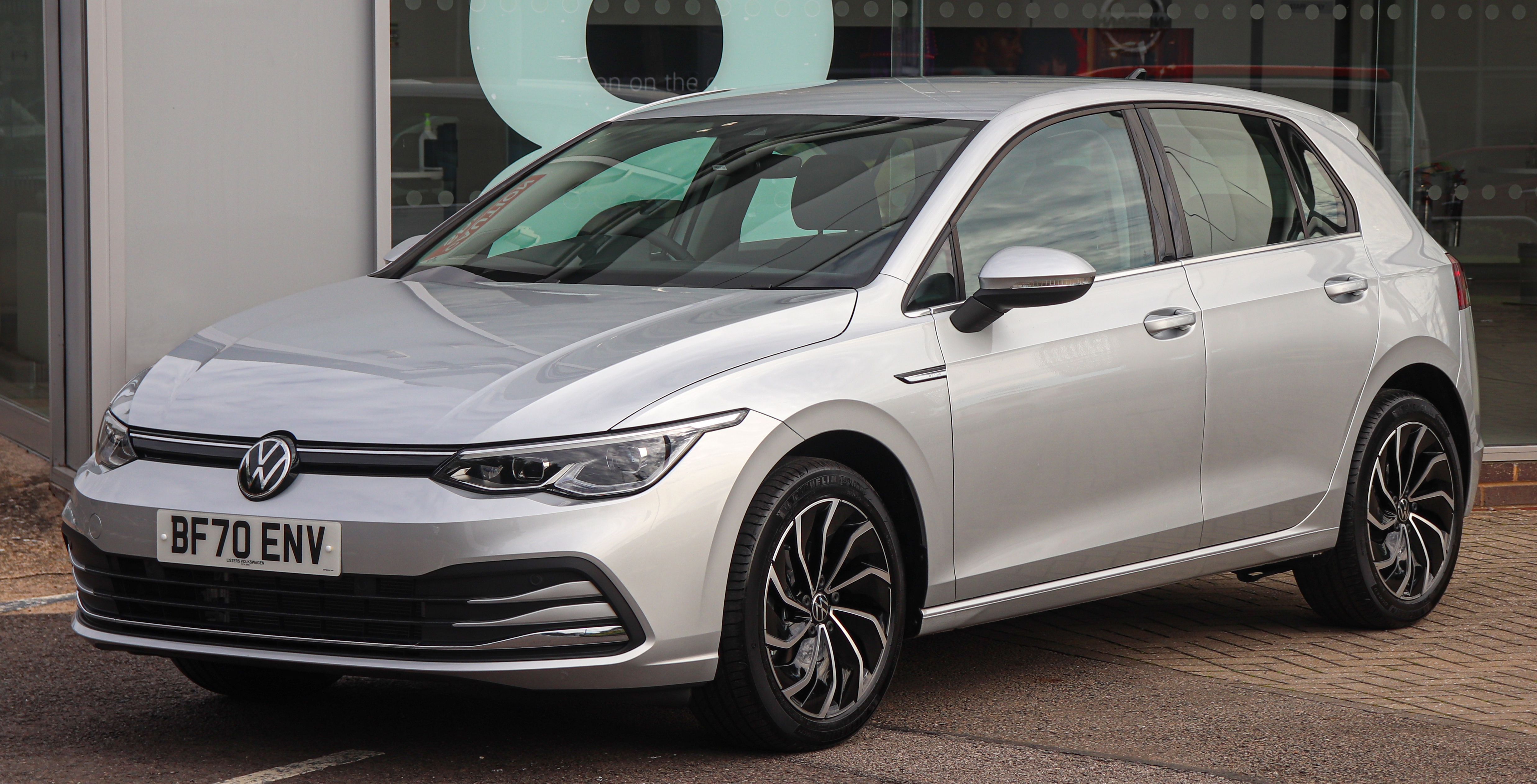
Volkswagen Golf
"I love my golf. [1046.7s] And it was good for carrying camera gear around [1048.0s] and I had a nice pleasant journey home."
The Volkswagen Golf is a compact car that’s popular as a practical daily driver. In this context, it’s being praised for utility—carrying camera gear and making the trip home comfortable—rather than for outright performance.
subframe
"So here's... It's a little bit crusty, but it's not... The subframe is not folding out of it."
The subframe is like the bike’s supporting “frame within the frame” that holds up the rear/seat area. If it’s not “folding out,” that means it doesn’t look bent or pulled out, which is important for safety and handling.
A subframe is the secondary frame structure that supports parts like the seat, tail section, and sometimes the rear suspension components. When someone says it’s “not folding out of it,” they’re checking that the subframe hasn’t bent or separated from the main chassis due to impact or corrosion.
arches
"But I mean, the arches, I checked them. They look..."
The arches are the panels around the wheels. They’re a common place for rust because they collect road spray and salt, especially in winter.
“Arches” here refers to the wheel-arch areas (the body panels around the wheels) that trap water, salt, and debris—especially when a vehicle is ridden in winter. Those areas are common spots for rust because they’re exposed and hard to keep perfectly clean.
rusty
"But I mean, the arches, I checked them. They look... Rusty. Crusty."
Rust is metal damage from moisture. They’re checking the wheel-arch area to see how bad the corrosion is and whether it’s getting worse.
Rust is corrosion of metal, often starting at exposed edges like wheel arches (“arches”) where water and road grime collect. The speaker is assessing the severity of corrosion on the bike’s bodywork/areas around the arches to judge whether it’s getting worse over time.
curb
"No, it just was resting against the curb. It was a precision manoeuvre."
A curb is the raised edge along the side of the road. If the car touches it, it can be a sign you’re cutting it close—especially with wheels and tires.
A curb is the raised edge at the side of the road. In driving terms, touching or resting against it can indicate how close the car is to the edge and whether the driver is being careful with clearance.
wet
"It was really raining. It was wet. I'd say it was wet. It was very wet."
“Wet” road conditions significantly reduce tire-road friction, which can turn normal cornering/acceleration into a traction-limited situation. Drivers often need to reduce speed and be gentler with steering and throttle to avoid sliding or going off the road.
tyres
"Also, may I say, what tyres were you on that day? [1493.0s] This was after. [1493.9s] This was after."
Tyres are the rubber parts that touch the road. When it’s raining, the right tyres (and how worn they are) make a big difference in how well the car sticks and stops.
“Tyres” are the rubber contact patches between your car and the road. In wet conditions, tyre choice and condition strongly affect grip, braking, and how confidently you can steer.
dailying it
"Also, you'd been dailying it at the time. I think when you do drive a car that you really like and you keep driving it your daily and you rely on it, you do start to lose something."
“Dailying” just means driving the car every day. The idea here is that if you use it constantly, it can start to feel less special.
“Dailying” means using a car as your everyday driver rather than saving it for weekends or special occasions. The host is describing how repeated use can make a car feel less exciting over time, even if you still like it.
dream car
"...it will be, it will be through the fuel, along with your first level dream car and wheels, first level dream car."
A “dream car” is the car someone really wants to own someday. It’s usually their favorite or most exciting option, even if they don’t have it yet.
A “dream car” is the specific vehicle someone wants most, often tied to personal goals like performance, style, or ownership experience. In car communities, it’s commonly used to describe a long-term wish list item.
start button
"[2181.3s] I'll show you just so you have context. [2182.7s] Yes, please. [2183.1s] That's the start button now. [2184.2s] That's horrible."
A start button is the button you press to start the car. They’re saying the newer version looks bad and doesn’t feel right compared to the normal buttons.
A start button is the push-button used to start the engine, replacing a traditional key-based ignition. The speaker is criticizing the new/updated start-button interface as visually and ergonomically worse than the older layout.
Koenigsegg
"So there's a, Koenigsegg might be going public. Wow. So explain by piece of it."
Koenigsegg is a car company that makes very high-end super/hypercars. Here, they’re talking about the company possibly becoming public, which means regular investors could buy shares.
Koenigsegg is a Swedish hypercar manufacturer known for high-performance engineering and limited production. In this segment, the discussion is about the company potentially going public, meaning shares would be traded on a stock market.
BMW
"I was going to say, like a BMW or an Audi must be, you know, 100 trillion scrillions."
BMW is a big car company from Germany. They make lots of popular luxury and performance cars.
BMW is a major German automaker known for performance-oriented cars and luxury models. In the episode, it’s used as an example of a “big” company with massive valuation.
Audi
"I was going to say, like a BMW or an Audi must be, you know, 100 trillion scrillions."
Audi is a well-known car brand from Germany. They make comfortable cars, and many models are built for good traction in bad weather.
Audi is a major German automaker within the Volkswagen Group, famous for its Quattro all-wheel-drive system and upscale interiors. Here it’s mentioned alongside BMW as another “big” brand with enormous market value.
Tesla
"The car manufacturer that is the most valuable on earth. On Tesla. Yeah."
Tesla is a company that makes electric cars. In this bit, they’re saying Tesla is the most valuable car company.
Tesla is an American electric-vehicle (EV) manufacturer that became one of the most valuable automakers globally. The episode uses Tesla as the punchline for “the car manufacturer that is the most valuable on earth.”
BYD
"Then you've got Toyota at 205 billion. You've got BYD at 107. Xiaomi at 80 billion, which I think make phones."
BYD is a big Chinese company that makes electric cars. It’s also known for making batteries, which helps it build EVs at scale.
BYD is a Chinese automaker and battery technology company that has grown rapidly in electric vehicles. When people cite BYD’s “value” or investment scale, it’s usually tied to its EV and battery manufacturing footprint.
Honda
"They also make a car. Honda at 65 billion. General Motors at 53 billion. Do you get the point?"
Honda is a well-known car company from Japan. It makes lots of cars, including hybrids, and it’s a big player in the global market.
Honda is a major Japanese automaker with a long history in both gas and hybrid vehicles. In discussions like this, Honda’s “worth” is often used as a proxy for how strong its business and future EV/hybrid strategy is.
General Motors
"Honda at 65 billion. General Motors at 53 billion. Do you get the point? Talk to me about the range that we're looking at."
General Motors, or GM, is a big U.S. car company. They make many different kinds of vehicles and are a major player worldwide.
General Motors (GM) is a large American automaker that competes globally across multiple vehicle segments. Mentioning GM alongside other automakers highlights how major legacy manufacturers are valued and positioned for the EV transition.
Porsche
"I'm going to go, I could do a Porsche. So, but Porsche is, there's going to be lots of other people you're going to have to bash heads with."
Porsche is a famous German sports-car company. People often choose it because it makes high-performance cars, and here it’s brought up as a brand someone might want to get involved with.
Porsche is a German sports-car brand known for performance-focused engineering and a strong enthusiast following. In this segment, it’s mentioned as a potential brand to invest in or “buy your way into” influence.
exhausts
"So, you see like these exhausts that you're all developing. Put it in the bin. I just want, what I would like is a pipe that exits the cup."
Exhausts are the components that route engine gases out of the vehicle, and they strongly affect sound, backpressure, and sometimes performance. The speaker is reacting to exhaust designs being developed, specifically wanting a simpler, more direct-looking outlet.
AC Schnitzer
"So you would go for the well-known name brands, the AC Schnitzer body kit, the Alpina, or that's what the AMG."
AC Schnitzer is a German company that makes upgrade parts for cars. If you hear “AC Schnitzer body kit,” it usually means a more reputable, higher-quality aftermarket look/performance package.
AC Schnitzer is a well-known German aftermarket tuner that produces performance parts and body kits, especially for BMWs. When someone mentions an AC Schnitzer body kit, they’re usually talking about a higher-end, established option rather than a generic eBay-style kit.
Alpina
"So you would go for the well-known name brands, the AC Schnitzer body kit, the Alpina, or that's what the AMG."
Alpina is a German company that takes certain BMWs and turns them into special, higher-end versions. Their upgrades are usually considered more refined than basic aftermarket mods.
Alpina is a German automaker and tuner known for factory-like performance upgrades, typically based on BMW models. Their cars and parts are often viewed as more “premium” than typical aftermarket tuning.
AMG
"So you would go for the well-known name brands, the AC Schnitzer body kit, the Alpina, or that's what the AMG."
AMG is Mercedes-Benz’s performance brand. When people bring up AMG in a tuning discussion, they mean a well-known, established performance option.
AMG is Mercedes-Benz’s performance division, responsible for many of the brand’s high-performance engines and models. In the context of tuning, it’s being used as an example of a recognized “name brand” performance source.
Request an Explanation
Heard something you'd like explained? We'll add it to this episode.
Sign in to request explanations for terms you heard.
Want to learn more?
Browse our glossary for plain-English explanations of automotive terms, jargon, and concepts.
Help improve this episode
See something that's not quite right? Our annotations are AI-generated and can sometimes miss the mark. Click the flag icon on any annotation to suggest a correction.