Spring Mountain track time kicks things off with Shenu’s GT4 and C8 Z06 impressions, including how Corvette/Cadillac driving schools and coaching make modern cars approachable. The hosts debate whether today’s cars are “too fast” to exploit, then pivot to canyon/track experiences with a dialed 981 GT4 and a lightweight-vs-confidence discussion. Automotive news covers Ford GT Mark IV’s Nürburgring run and what “track-only” really means versus street homologation. The episode ends with a budget-to-$250k track-car buying guide and a listener question on Lotus reliability and prep.
What happens when you take a C8 Z06 on track, compare it to a Porsche GT4, and break down the best cars for track driving at every budget?
In this episode of Full Throttle Talk, Blair and Shinu go deep into real-world driving experiences—from Spring Mountain Raceway to canyon runs—plus the latest performance car news and Nürburgring lap time debates.
🔥 In this episode:
First-hand experience driving the C8 Z06 on track
Why modern performance cars are getting too fast
Porsche GT4 canyon drive: precision vs feel
The truth about track vs street car performance
Nürburgring controversy: race cars vs production cars
Best track cars by budget:
Why driver skill still beats horsepower (humbling track story included)
💡 Whether you're a weekend canyon driver or thinking about your first track day, this episode breaks down what actually matters—and what doesn’t.
🎧 Listen / Watch Full Episodes:
YouTube, Apple Podcasts, Spotify
📩 Get the Full Throttle Talk Newsletter:
👉 FullThrottleTalk.com
"I was at Spring Mountain, you know, which is this Country Club race track, and we should do an episode on these Country Club tracks in the future..."
Spring Mountain is a race-track facility in Nevada where people go to drive and get coaching. It’s known for being a good place to learn and drive cars on track.
Spring Mountain is a well-known motorsports facility in Nevada that hosts track days and driving experiences. It’s especially associated with high-quality instruction and structured sessions for drivers of many skill levels.
"Yes. What is GM's affiliation? Yeah. So, there's a Corvette driving school out there, [226.0s] and then Cadillac has their V-Series school out there. So, there's on campus, I mean, dozens,"
Cadillac also has its own track-driving training program for its V-Series cars. The point is that the facility hosts training for different GM performance brands.
The segment compares programs, mentioning that Cadillac runs a V-Series driving school at the same facility. It highlights that multiple GM performance brands use the track for structured owner training.
"So yeah, GM has been basically subsidizing the tuition for for owners. [310.8s] You know, you buy a Corvette and then I think it costs a thousand bucks or something like that [316.9s] for you to come out and have a couple of days on track."
GM helps pay for the track-day training for Corvette owners. So it can cost less than you’d expect for a real instruction program.
The speaker says GM effectively subsidizes the cost of the track experience for owners. This matters because it reframes the driving school as a benefit tied to purchasing a Corvette, not just a standalone paid event.
"I've had I've had a few different lotuses. I have had a different aerial Adams, you know, BAC mono, but it was that was in my dedicated track car..."
The BAC Mono is a very track-focused, lightweight car. It’s designed to feel very connected to the driver, which is why it’s a good comparison point for how different the Z06 feels on track.
The BAC Mono is a lightweight, single-seat track-focused car from British manufacturer BAC. It’s known for being extremely driver-centric, which is why the speaker mentions it as part of their prior track-car experience before comparing it to the Corvette Z06.
"So my lease is lighter. It doesn't make as much power. So guess what? It's much easier on the consumables."
Consumables are the things that wear out faster when you drive hard—like tires and brake parts. Track driving makes them get used up quicker.
“Consumables” are parts that wear out quickly under track use, such as tires, brake pads/rotors, and sometimes fluids. The speaker connects power/weight to how quickly these items get used up.
"Coming from you, you are like the, you are the king of lightweight. You don't typically care about big horsepower."
Lightweight means keeping the car’s weight down. A lighter car usually feels more responsive and easier to drive fast on a track.
Lightweight emphasizes reducing vehicle mass to improve handling, braking, and driver feel without relying solely on peak horsepower. The speaker frames this as the other host’s philosophy—engagement and feedback over raw power.
"Yeah, Sapphire blue was, I had a white one first, but I actually hated the bucket seats. And I kind of hated the white."
Bucket seats are shaped to wrap around you more than regular seats. They can feel great when you’re driving hard, but if you don’t like the shape, they can be uncomfortable.
Bucket seats are deep, contoured seats that hold you in place more firmly than flatter seats, improving support during aggressive cornering. The speaker says they “hated the bucket seats,” which is a notable comfort/ergonomics preference that can affect track-day enjoyment.
"And the car was all over the road. The alignment was so out of whack... So for whatever reason, the alignment that they put on the car... he actually made some adjustments..."
Alignment is how the wheels are aimed. If it’s wrong, the car can feel twitchy or pull around, and the tires can wear out faster.
Alignment is the adjustment of a car’s suspension angles (like camber, toe, and caster) so the tires track correctly. If it’s “out of whack,” the car can feel unstable and wear tires quickly; track-oriented driving often benefits from dialing it in.
"...basically got the alignment to the aggressive side of a factory spec."
Factory spec is the recommended wheel alignment settings from the manufacturer. Going to the “aggressive” side usually makes the car feel sharper, but it can affect tire wear.
“Factory spec” means the alignment settings the manufacturer recommends for normal use. The speaker says they got the alignment to the aggressive side of those factory targets, which can improve turn-in and responsiveness at the cost of potentially more tire wear.
"they made kind of a top of the line model, which was a turbo charge. It was a four cylinder with a turbo on it..."
A turbo is a device that compresses air before it goes into the engine. That helps the engine make more power, but there can be a delay before it really kicks in.
A turbocharger forces more air into the engine, allowing it to make more power and torque than a comparable naturally aspirated engine. The tradeoff is “turbo lag” or delayed response while the turbo spools up.
"the turbo or the car just lacks so much horsepower and torque. It's kind of painful to drive around town..."
Horsepower is about overall pulling strength over time, and torque is the twisting force that helps you accelerate. Turbo engines often add a lot of torque, especially once the turbo kicks in.
Horsepower is a measure of how quickly an engine can do work, while torque is the twisting force that helps with acceleration and pulling power. A turbo often boosts torque significantly, which is why turbo cars can feel stronger once they’re on boost.
"I know I need to get on boost for this thing to make power. Got to spool up. Yeah. So I finally get on boost..."
Boost is the turbo’s “extra push” of air into the engine. When you’re on boost, the engine can make more power than when you’re not.
Boost is the extra air pressure created by the turbocharger. More boost generally means more potential power, but it also depends on engine tuning, fuel, and how quickly the turbo can reach that pressure.
"I wasn't going to have a PPI done in New York. I didn't care that much, but getting parts for these things is going to be a little bit of a challenge."
PPI stands for pre-purchase inspection—an independent mechanic checks a used car’s condition before you buy it. Skipping a PPI can mean you miss problems like misfires, worn components, or hidden damage that later become expensive to fix.
"Okay. Chat GPT gave me bad info on which spark plugs to buy. So my mechanic did come down while I was out of town and he's like, yeah, these are the wrong plugs. We got to figure out, you know, he got the right plugs, but he's got to go find them."
Spark plugs are what light the fuel in the engine. If you put the wrong ones in, the engine may not run right and can misfire.
Spark plugs ignite the air-fuel mixture in each cylinder. Using the wrong spark plugs (wrong heat range or fitment) can cause misfires, poor performance, or even engine damage over time.
"[1799.4s] you know, and that's when I like, that was the first time I ate some humble pie on track. I was
[1803.2s] like, okay, well, maybe it is about the driver more than it is. So it was, it was funny. I,
[1809.1s] yeah, that was my first real, you know, track day humble pie, you know, experience."
A track day is an event where drivers take their own cars to a racetrack for practice and laps, usually with coaching and open sessions. The host uses it to describe their first “humble pie” moment—learning that driver skill can matter as much as horsepower.
"...Ford GT mark for they're calling it, um, lap the Nurburgring..."
The Nürburgring is a famous race track in Germany. People use lap times there to compare how fast cars really are because it’s a tough course.
The Nürburgring (often called “the Ring”) is a famous German circuit known for its long, complex layout and elevation changes. Lap times there are widely used as a benchmark for real-world performance because the track is demanding and repeatable for manufacturers.
"[2025.5s] secret. And it was kind of this skunk works thing. And here's kind of a quick, funny story."
“Skunk works” describes a small, highly secretive team working on advanced projects outside normal corporate processes. The speaker uses it to explain how Ford handled early development work for the GT project.
"has a company called Auto Dromo, and he got the contract to make the watch. And it's just a beautiful watch."
Auto Dromo makes watches that are connected to racing and car brands. Here, they’re the company that got the contract to design and build the watch for this car project.
Auto Dromo is a company that makes watches tied to motorsport and specific car projects. In the segment, it’s described as the contractor that produced the watch associated with the car.
"it was all about the top speed that they could achieve on the Mulsanne Strait, where top speed matters."
Top speed is how fast the car can go at its maximum. The speakers say the track’s long straight (Mulsanne Strait) is where top speed matters most.
Top speed is the maximum velocity a car can reach under specific conditions. The segment ties top speed to the Mulsanne Strait, implying the car’s setup and engine choice were optimized for straight-line performance.
"It's a longer car for more aerodynamics. It's got bigger, you know, bigger wings, bigger arrow."
Aero is how the car’s shape affects airflow. More downforce from wings helps the car stay planted at speed on a track.
Aerodynamics (aero) is how a car’s shape and appendages manage airflow to create downforce and reduce drag. The segment links longer bodywork and larger wings/“arrow” to improved aerodynamic efficiency for track performance.
"But yeah, you know, it's exciting. I think Jim Farley, you know, Ford CEO"
Ford is the car company behind the CEO being discussed. The segment uses Ford’s leadership to explain why they care about beating GM’s track results.
Ford is the automaker whose CEO (Jim Farley) and performance efforts are discussed in the segment. The speaker frames Ford’s motivation as competitive, especially after GM set track times.
"I think it's interesting to see Hyundai has really been trying to lead with design. You know, their quality has lagged the first world country cars, the Japanese cars, the American cars, the European, some of the European cars, I should say, like Germans, let's just say."
Hyundai is a car brand that’s been trying to stand out. Here, the point is that they’re leaning hard on good-looking design to attract more buyers.
Hyundai is using design as a key strategy to broaden its appeal. In this segment, the host argues that Hyundai’s recent styling direction is meant to compete with stronger-performing brands in quality and overall perception.
"That was kind of cool to me to see that, that new, and I think it's called the Boulder, I think. Oh, yeah, yeah, yeah. Yeah, the Boulder. So it is, well, the boxy rugged, off-road kind of aesthetic, it's, it's in right now."
This is about the look of rugged off-road SUVs—more square and upright, like they’re meant for trails. The host is saying that look is popular right now and helps sell these vehicles.
A “boxy rugged” off-road aesthetic refers to styling cues associated with trail-ready vehicles—upright proportions, squared-off body shapes, and a purposeful stance. The host connects this look to current consumer trends and to the success of off-road-focused models like the Bronco.
"And you look at what Ford did with the Bronco, which was a massive hit. And I mean, I've, every time I see a well set up Bronco, and especially a Bronco Raptor, I mean, the little kid in you comes out and you think, man, I want one of those."
The Ford Bronco is Ford’s off-road SUV. The host is saying it became a big hit, and that’s why other brands are trying to make similar rugged vehicles.
The Ford Bronco is Ford’s modern off-road SUV built to compete directly in the rugged, trail-oriented market. The host highlights its popularity and specifically calls out the Bronco Raptor as an especially exciting version.
"And for Hyundai to be doing this, I wonder what everybody else is doing, like, you know, or your friends at General Motors, you know, where is the rugged Bronco fighter..."
General Motors is the big company that owns several car brands. The host is basically asking why GM hasn’t brought out a rugged competitor like the Bronco.
General Motors (GM) is the parent company behind multiple major brands, including Chevrolet, GMC, and others. Here it’s used to reference GM’s lineup and whether it has a similarly rugged, Bronco-style competitor.
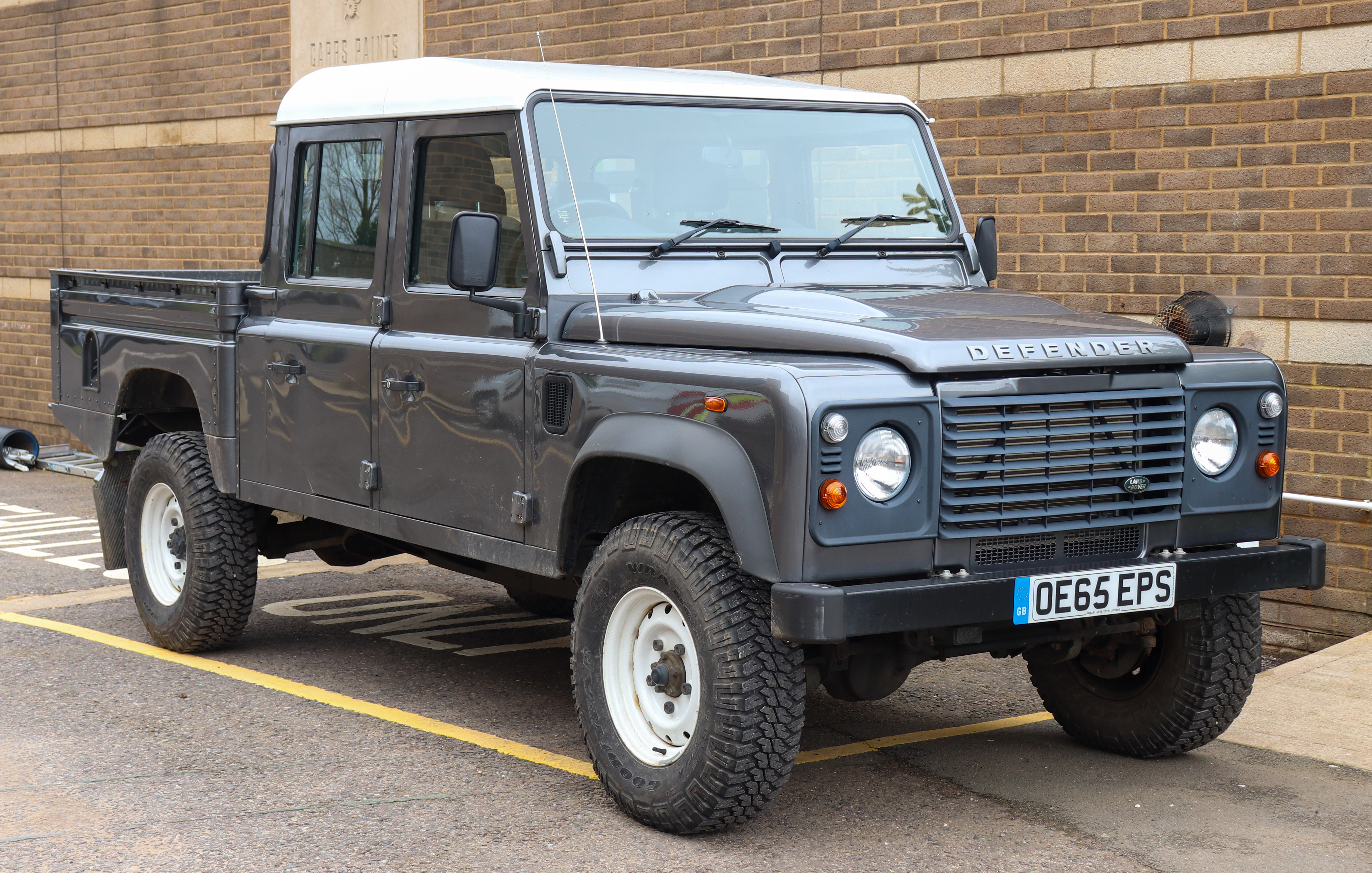
"It's funny, my buddy has a Land Rover Defender Octa. So they put the Twin Turbo V8 from BMW"
The Land Rover Defender Octa is a tougher, more extreme version of the Defender SUV. In this story, it’s notable because it’s been given a very powerful twin-turbo V8 setup, making it feel more like a wild off-road machine than a normal SUV.
The Land Rover Defender Octa is a high-performance, off-road-focused variant of the Defender. The speaker highlights its unusual powertrain swap: a Twin Turbo V8 from BMW, which is a big part of why it feels like a “different experience” compared with a typical Defender.
"You need a roll bar. You need brakes like any, any car."
A roll bar is safety equipment that helps protect you if the car tips over. Track cars often add one because it’s safer when you’re driving harder.
A roll bar is a safety structure installed in the cabin to protect occupants during rollovers or severe impacts. Track cars often require them for safety and sometimes for rule compliance, especially as speeds and driving intensity increase.
"I did have carbon ceramic rotors on this car,
spec from the factory, but it's just the confidence in the braking,"
Carbon ceramic rotors are special brake rotors designed for track use. They help the brakes stay consistent when you’re braking hard over and over.
Carbon ceramic rotors are high-performance brake rotors made from carbon-ceramic material. They can resist fade better than conventional iron rotors under repeated hard braking, and they often provide strong, consistent pedal feel on track.
"[4254.3s] the street. Sorry. You know, something like, oh, I'm really fast on the street. I'm like, yeah, [4257.7s] but trust me, you're not at wide open throttle for very long compared to the race track."
Wide open throttle is when you floor the gas pedal. On the street you don’t stay there for long, but on track you often do, which makes the car work harder.
Wide open throttle (WOT) means the accelerator is fully depressed, sending maximum airflow/fuel demand to the engine. The speaker contrasts street driving (less time at WOT) with track driving (more sustained high load), which matters for heat, stress, and component wear.
"...they had an e-ray, the powertrain out of an e-ray. And you look at that, wow, there's a lot of stuff going on there."
Powertrain is the combined system that produces and delivers power—typically the engine, transmission, driveshaft, differential, and any hybrid/electric components. The speaker uses “powertrain” to illustrate how modern cars can have many interacting subsystems.
Select text to request an explanation
Welcome to Full Throttle Talk, the podcast where horse power meets conversation from
supercars to classic legends, high-revving tech to motorsport mayhem. We covered all,
straight from the driver's seat, whether you're a gearhead or racer, or just love the thrill of
the open road, you're in the right place. Buckle up, hit the gas, and let's go full throttle into
today's episode. Just a couple of car idiots, you know, blabbing about stuff. Where is Tim? I
mean, I've heard, I've heard he's car shopping, looking for F1s with Sam Altman and Elon Musk.
I think, that's the rumor. I'm not sure, but I think he's, you know, he's off looking for F1s
right now. Sam Altman, the king of AI, you know, we can only hope to keep up with Tim and the AI,
you know, expertise. So, anyways, we're happy to be back. We've got a lot to talk about, and I'm
super thrilled to hear from Shenu, because we're going to do this like we have been doing it,
which is, you know, we want to know, or we're going to share what we've done in cars this week.
So, I'm going to turn this over to Shenu, who's had a very fascinating week, and I think something
we all need to hear more about. You drove a GT4 this week, you drove a C8 C06 on track.
Yeah, it's been a fun week. Let's dive into that. Blair, it's been such a fun week. I've
been having a great time. I was at Spring Mountain, you know, which is this Country Club race track,
and we should do an episode on these Country Club tracks in the future, because they're
just popping up all over the place. And so, I was at, you know, arguably the largest one in the
country. It's outside of Las Vegas in this little town called Parump, Nevada. And I keep my little
race Elise there, and was on track with that car, having some fun, and managed to line up
first a little ride in a new Z06. And then I got a session in one with an instructor, and
let me tell you, that is a fast car, huh? So, I do have a couple of questions. So,
you've been a member at Spring Mountain for how many years now?
You know, since 2014. So, I guess, was it new around 2014?
No, it was new, I want to say in 2004, 2003, is when the current owners bought it, okay? It
actually predated them. There was a guy that was running that place, but it was much, much smaller.
When I first went there, is when the current owners first bought it. It's a gentleman by the
name of John Morris. And John sadly passed away last year, but what a dynamo, man. That guy was
pretty amazing. And he laid out a vision for that place. And they really have realized it over the
course of these, you know, 20-some years. You know, there's nine miles of racetrack there. It's
GM runs out there quite a bit. But yeah, yeah. Do they have a driving school? Is that?
Yes. What is GM's affiliation? Yeah. So, there's a Corvette driving school out there,
and then Cadillac has their V-Series school out there. So, there's on campus, I mean, dozens,
you know, dozens and dozens of black wings and dozens and dozens of C8 Corvettes in all iterations,
including the new ZR1. It's pretty amazing. If you saw some of the video footage of the new
Grand Sport C8 Corvette on track, those videos were all shot there at Spring Mountain. It was
funny. I was watching the videos of the car during the introduction and I'm like, hey,
I recognize that corner. Wait, I recognize those mountains. So, is that one of those if you buy a
Vette or whatever, you get to go drive there and have like a half day on track? Is that what we're
talking about? It's amazing. They put on a school there. And I mean, they've been running Corvette
schools there from pretty much the beginning. And there's a guy, you know, a former racer, Ron
Fellows, a Canadian guy that made a name for himself back in the day. And he's really the namesake on
the school. And, you know, they've been there through multiple generations of Corvettes, but
where it's really gathered started to gather steam was with the C7. And then now with the C8, man,
it is really, really busy. So yeah, GM has been basically subsidizing the tuition for for owners.
You know, you buy a Corvette and then I think it costs a thousand bucks or something like that
for you to come out and have a couple of days on track. And it's quite a thorough
instruction. And I mean, not just driving on track, but also just even the controls of the car.
Like, you know, these cars have gotten so complicated nowadays that you got menu after
submenu after, you know, electronic, you know, thingy that you got to get figured out and the
instructors walk you through all that. So pretty impressive. In 12 years, how many dedicated track
cars have you had different ones? And they all been lotuses? I mean, we don't have to go into
every car. Yeah, you driving a Z06 on track. That's what I'm curious about.
Yeah, well, I mean, I've had I've had a few different lotuses. I have had a different aerial
Adams, you know, BAC mono, but it was that was in my dedicated track car, but I've driven all
of them on track, of course. But the spec race Adam was dedicated track only, you know, we ran
actually the winter race series out there for for the for aerial. And it was it was really fun,
really fun car. But yeah, no, the Z06, how does the Corvette thing come to be for a member?
What was this event? Or was it a special like you got hooked up somehow? Or was it offered to
members? Yeah, yeah, no, I got the hookup. I, you know, because I've been a member there for so
long. I just talked to the general manager, Dave, you know, Dave Petrie, what a nice guy, you know,
and you know, I said, Hey, Dave, anyway, I can get, you know, a couple of laps in a Z06. And he
goes, I think I can figure that out for you. So he lined up a really great instructor, this this
kid Peyton, who's been there for 10 years. What a what a nice guy. He kind of walked me through
the car and even the controls. And, you know, you know, again, all the electronics on the car is
quite quite impressive. And then, you know, we went out and I did a few laps. And, you know,
like I had been in my car, which is 200 horsepower release. And I had to completely recalibrate my
thinking, you know, everything about the Z06 was so much faster, right? Every corner was coming up
way faster than it was previously, you know, the brakes just stop on a dime. You know, the
cornering speeds are just insane. So yeah, you know, I kind of sheepishly said to Peyton, I'm
going to do a little session before I actually get comfortable in this thing, because it is so fast,
so much faster than I was expecting. And so he was, well, hey, would you like to see what this car
can do? You know, after I did my session, I'm like, heck yeah. And so he hops in the car. And then
we see what the car can really do. And I was like, Oh my God, you know, absolutely impressive.
Absolutely impressive. What a great driver. What an amazing car. I got to tell you GM, you know,
kudos to them. They really have made an amazing, amazing sports car that is
insanely fast on the track. Well, we're going to talk a little bit more about track cars and
street cars that make good or bad track cars and what needs to be done to them. So from a guy coming
from many years of experience driving dedicated track cars, you know, you're the like steady hand.
I wrote a full throttle talk article recently that said, Hey, take your car and go track it.
And ever the engineer, you know, the wise guy that you are an actual wisdom, not smart ass.
But with some wisdom, you said, Well, there's some things you want to think about a little bit
before you maybe just go out there willy-nilly. So we're going to talk a little bit about that.
But C806 out of the box. I mean, I know your intention is not necessarily used as a track car,
but like, how was that? I mean, you felt like compared to your dedicated track car, you know,
that is set up for that purpose. Sounds like this was a pretty incredible, you know, set up right
out of the box. It was. Yeah. I mean, look, I think that's the key is like, you know, these cars have
gotten faster and faster and faster. But, you know, there are trade offs to all of this. So
my lease is lighter. It doesn't make as much power. So guess what? It's much easier on the
consumables. So yeah, I think what is that later? Like maybe a segment three or four or something
like that. We're going to talk a bit about reflect back on your article, my article about this. And
but what I will tell you is that, yeah, this Z06 is so fast. And, you know, I think I have said
previously that I plan to get one next year. And, you know, my intention was not to take it on track,
but after driving this one on track, I'm like, oh my God, I have to drive this on track because
it is incredible. Absolutely incredible. So it didn't do anything to dissuade your
future plans or rethink your future plans in terms of, you know, because the critique that I've had
on modern sports cars, and I think a lot of people is they're too fast. The limits are so high.
You can't exploit it. So I think that's what's fascinating about this discussion for me.
Coming from you, you are like the, you are the king of lightweight. You don't typically care about
big horsepower. You want engaging involvement, feel feedback, all of those things. And yet
you're pretty excited about what you experienced. Yeah, I was. I was, you know, it's funny because
the owner of Spring Mountain, you know, when the C7 Z06 came out, he tossed me the keys to one. He
says, you've got to go drive this thing. And, you know, again, I went out and I was like, wow,
this is really, really fast. And it's really, really capable. But I got out of the car going,
well, I wasn't really having that much more fun. Certainly it's faster, you know,
but this C8, it was a bit different. You know, the steering feel felt better to me.
And it's been a while, it's been a couple of years since I drove a C7 Grand Sport.
But it feels to me that the C8 steering response was much better. But I'll have to do a real,
you know, side by side comparison at some point here. You know, certainly the dynamics of a mid-engine
car are fundamentally different than that front engine C7, right? So.
Well, they certainly overwhelmed that chassis. They got to the point where they could not,
by all accounts, that C7 Z06 was just too much car, too much torque and power to put at the
front of the car, you know, driving the rear wheels, but just accept the whole thing.
That's exactly it. They needed more weight on the rear driven wheels. And so they just recognize
they've got to move to a mid-engine architecture in order to deliver the performance that they need
to be competing on the world stage. So yeah, that was the real reason. I know, you know,
some of the old school Corvette, you know, loyalists were up in arms about moving from
the front engine to their mid-engine. But, you know, in the end, you know, it's their desired
race at that high level that drove them to move to that.
Well, when I think of the epicenter of the sports car enthusiast car world right now,
I think of, well, C8 Corvette, but specifically C8 Z06 to me. And then I put up a car, you know,
in my backdrop here for those who aren't viewing this, which is my old 981 GT4. And you, which I
think is 91, 718 GT4 is also kind of at the epicenter of sports cars. And you got to rip one
of those up a canyon this week, too. I did. It's the same color. Do you know what color was that?
Yeah, Sapphire blue was, I had a white one first, but I actually hated the bucket seats.
And I kind of hated the white. So this was, I put a picture of my white car. I had that for
just a couple of months. And then I sold it and bought this Sapphire blue, which is the same color
you just had in your possession, right? Yeah. Yeah. So a local friend of mine
had just bought the car and drove it home from this dealer in kind of Central Coast California.
And the car was all over the road. The alignment was so out of whack. Yeah. It was really bad.
So this was a 2016 981, right? Correct. So, and he just bought it from the dealer.
So we're talking about a 10 year old car at this point, which is wild to think about.
Yeah. Yeah. So for whatever reason, the alignment that they put on the car, some people clearly
didn't test drive the thing because it was bad. And so he actually made some adjustments to it,
in his home garage. He's a pretty accomplished race car builder and driver. He's raised for years
and he's got a really fun, cool garage. But to really get it fully dialed in, he's like,
look, man, I need to get it on your Hunter alignment rack to get the thing dialed in. So
we put it on the rack and basically got the alignment to the aggressive side of a factory
spec. And so, yeah, I had a chance to drive that thing on one of our fun roads.
Have you driven one of these before? I had. I had, yes, previously, but this was the first time,
if I'm honest, that I got to drive it for that length of time on such a twisty road.
I've driven them on some fun roads, but this was probably the best road that I got to drive it on.
A road that this car really is made for. So when we first started this podcast,
you knew we were talking about lightweight cars. And I said, well, I would put my 3,000 pound
981 GT4 in the discussion of lightweight cars. And then you and I became better friends and
then I bought your 111 RS and I'm like, okay, maybe the 981 GT4 is not necessarily a lightweight car.
So what was the drive like? What's your takeaway from this car and your experience?
Yeah, I mean, I drove it on this road that I know like the back of my hand. It's one of my
absolute favorite roads called DeLuz. And the car is really fast. It's as fast as I really
need it to be on that road, but it definitely feels big compared to the Lotus because it is much
bigger. And as you're driving it through some sections of that road, which are pretty narrow,
you feel the width of the car. You feel the heft of the car. And that's actually good too. In some
cases where you're running over some undulations and broken pavement where this car just steam
rolls it better than the Lotus does. The Lotus is so light, you feel those things in a way that
this car kind of just steam rolls over. So yeah, it was fun. I enjoyed it. I thought it was a really
good car. I think Porsche have done such a wonderful job with that car and the people that own them,
they got themselves really one of the great winners, I think, of the last couple of decades for sure.
Well, it's fascinating because I bought mine. I went to a 981 Cayman S first.
And then after about seven months, I was like, well, I like this, but I just want more. So I
sold it and bought these GT4s. And I keep asking myself why I only own the car for 11 months. Now,
I have car ADD, no doubt. And I get very obsessive about new experiences and wanting to try everything,
especially at that point when I hadn't experienced as much as I would have liked to have.
But, you know, I'm a big fan of these cars. It might come up later again in our discussion,
frankly. They are fantastic, but I think what bothers me most about these cars, and I don't know
what your perception was, but... And by the way, this car was a manual too. So that was...
Yeah. Well, the first year in 981, they only made manual.
Oh, okay. There was no PDK?
No. I didn't realize that.
Not until the 718 came around, you could option it with the PDK, but
do you think there's merit to this idea that Porsches at times are just too perfect? They're
too good? Having driven that car, now you got to drive it in one of the two best
places or ways for a car like this.
Yeah. No, I think that car is really good. And I wouldn't say that it's too good or too perfect.
I think it's got a bit more character. And, you know, the size of the car,
any way you slice it, it is on the bigger side. So that would be the one reason why I would say
it's not perfect. You know, the steering was good.
Which is like the smallest car Porsche that makes or made for a long time.
Right. But it still feels big, you know. And, you know, look, the steering is good, okay?
But it's not lotus, you know, good, right? And so I still love steering, you know,
the feel and that matters to me. I had an E36 M3 and then when the E46's came out,
I thought I'll let me go test drive it. And the steering was kind of numb. And I was like,
ah, well, you know, I don't think this car is that exciting to me, you know.
But so I tend to be a little bit more slanted towards steering feel as far as being something
that's important to me. You know, it's hard to argue with, frankly, how good that car is. It
is really good. But they sound awesome, too, don't they? Yeah, yeah, absolutely. You know,
here's, I was just talking to my friend yesterday who he says, well, I'm car agnostic, you know,
brand agnostic, you know, because I like, I like, you know, cars for what they are. And I'm not
trying to make my Corvette into a Lotus and I'm not trying to make a Lotus into a Corvette,
you know, blah, blah, blah, blah, right? And I agree with him. And I think that's the way,
personally, I've always been is like, try to, you know, you enjoy that car for its strengths,
and don't try to make it like another car that's fundamentally different. Like to make that car,
you know, feel like a Lotus, it just, I don't think, I think it's difficult because it's,
it's a thousand pounds too heavy, you know, for that, for your ever, ever to really achieve that.
But at the same time, you know, the Lotus is too light to ever feel a stable at high speed,
or going through bumps, like, you know, a big, big heavier car with a longer wheelbase can,
can, can accomplish. It's only Shanu Mapleton calls it GT4 big and heavy.
Yeah, exactly. Well, listen, man, I've been talking about what I was doing. What about you?
You had some stuff going on with the Mitsubishi, right?
Yeah, well, exactly. So a few weeks back, I had mentioned that I bought this
1994 Mitsubishi Bravo K-Van as my little run around golf cart is the idea, throw the kids in it,
and it's got, mine is in this picture. I've got a picture of mine and my brother's side by side.
Um, so I got this car. Which one, which one is yours? Yours?
Mine's all the solid gray one. He's got the black one. Okay, cool. Cool. Yeah. So he,
he's got the naturally aspirated three cylinder that revs to 9k and awesome little van.
And when I was looking, these things are hard to find and you especially set up the way I wanted
it. Well, they made a GT turbo. We're going to lose whatever audience we've had. We're going to lose
them here getting into, you know, some of the specifics of these Japanese K-Vans. So I, I'll
try to make this brief, but they made kind of a top of the line model, which was a turbo charge.
It was a four cylinder with a turbo on it. And I didn't want that. I'm kind of giving that little
screamer three cylinder naturally aspirated van. That's what I wanted, but I couldn't find one.
And then, and then I started to think, well, you know, the turbo or the car just lacks so much
horsepower and torque. It's kind of painful to drive around town. It's so slow, but hilarious,
like slow in the best ways, but almost too slow. So I thought, okay, maybe I'll just buy this GT
turbo. It's got about, you know, 50, 70% more torque, a whopping 62 pound feet or something.
And so it shows up. I get it off the track or off the truck from New York and I went and drove
it and like the car's running fine. The van is, and I take it over to like, but it felt really
freaking dead off boost. And I mean dead off boost. So, which I thought, okay, well, that's how
turbos are. I mean, one of the things I don't love about turbocharged cars, but so of course,
as two middle-aged dudes do who are looking for entertainment outside of work and family,
my brother and I take these out, we go drag racing. And so yeah. And I thought, well,
and the guy who sold this to me, he's like, oh man, this is going to be, he knew all about my
brother. And he's like, you're going to have the, the faster turbo model. So he's, he's not going
to be thrilled about that. Well, we line up, we just did a roll from like, you know, five miles
an hour or something. And on go, he freaking takes off and I'm like, okay, I know I need to get on
boost for this thing to make power. Got to spool up. Yeah. So I finally get on boost. And at best,
we were the same speed. So what I'm getting at is, I think I've discovered this car's not totally
running right. And I took it over to a buddy. It's got a little boost gauge right mounted at the top
of the steering column. It's making like 0.4 bar boost, whatever the hell that measure is. I don't
know. But, and in the drive video I watched the guy had posted like a year ago on Facebook or
somewhere, it was making more than that. So, and then, then my buddy was an engineer and really
well versed. He drove it. And then he listened to me pull away from his house and he called me
and he's like, dude, I think that thing's only running on three cylinders. So I'm, I was gone
this week on a family vacation, but I've got, I've got some work to do on my Mitsubishi Bravo to get
up to speed, you know, which just shows the reality of you take risks on this. I wasn't going to have
a PPI done in New York. I didn't care that much, but getting parts for these things is going to
be a little bit of a challenge. You can get on my already bought spark plug wires from Japan.
Okay. Chat GPT gave me bad info on which spark plugs to buy. So my mechanic did come down while
I was out of town and he's like, yeah, these are the wrong plugs. We got to figure out, you know,
he got the right plugs, but he's got to go find them. And so I, I'm like chomping at the bit.
This thing is rad. It's in great shape. It's got curtains in the back. It's like, you know,
all the electronics. I love the way the front of that, that roof kind of tips up and, you know,
it's so cool. Well, it's got the super arrow roof. Both of these do the whole thing for tracks
and then the front tilts. And so if I can get this thing running right, that's, that's my goal.
And you will, you will. Yeah. It's, so I'm, I'm excited about this. I want to put a sound system
in it, have fun with the kids. That is, um, that, that's the plan. So I didn't get to drive a GT4
and a zero six on track. I'm still riding high for my track day in the, the one 11 RS.
Um, maybe, which is incredible, man. I'm still like, yeah, I love watching those videos. If you
just go and buy people, it was wonderful, man. You know, a car with no arrow and you're passing
these guys with wings. It was just great. I love it. Well, you know, every time I've driven
probably 10 different road cars on track and it's always like high anticipation concern of how,
how is this going to perform? How comfortable am I going to get in this car? I mean, that's part
of the excitement of it. But I'm telling you, this car right from the jump, because you feel
everything. Like you just said, there were moments in my GT4 and we can maybe get a later date
described, you know, try to compare this car to some of the other sports cars I've driven.
Yeah. 98 one GT4 is a great one. I tracked it many times. I love that car. Big fan of it.
But there were like plenty of pucker moments in the GT4 and it's not because powered
away is better. I think it's slightly better in this, this Elise that you built. And it's just,
I think, you know, you feel so much more in that car that the confidence I got in that thing
from literally the first corner was like, you know, just communication matters a lot. And
so you can't duplicate that in a GT4 as much as I love them. And I think they're fantastic.
Well, you showed that driver matters. Okay, man. I mean, it's a good car, but I got to tell you,
you know, you totally, you know, you totally impressed me. I'm getting credit at the car
more than my skill, but it was, it was awesome. I can't wait to go back soon. Can't wait to drive
it. It's starting to warm up here in Salt Lake. So that car will see plenty of road days,
few track days throughout the summer. It'll be awesome. I'm excited.
So listen, I, you know, I am a big believer in driver skill. And maybe this is a good time
for me to tell this funny story. When I thought I was Billy badass on the racetrack and was passing
ZR1 Corvettes. Okay. So in what? Yeah. You know, this is kind of a track oriented episode today
anyways, right? So, so maybe, maybe, yeah, let me tell you this story. We, it was, I had got on
racetrack on the racetrack with a BMW club, you know, back in Minnesota. So I was on Brainerd
International. It was like the mid nineties. I had a 325 I with a Dynan suspension on it
and had a Billy boat exhaust on it. So this is an E 36. E 36. E 36. Yes. And I had done talking
like 180 horsepower, probably tops, right? Yeah. Yeah. But you know, 325 170. Yeah. Yeah. But, but
yet again, it was, it was, um, it was fast enough for a guy who was new to, to being on racetrack,
on racetracks, right? And I'd probably done two or three track days or maybe more than that at
that point. Well, I was on the track and I saw a ZR1, you know, from the early nineties, like a C4
ZR1, the Lotus built. Yeah. With the kind of squared candle lights. Yeah. Yeah. Yeah. Lotus
designed in Mercury Marine built. Yeah. Just a badass car, right? And I think I got to go
fact check myself on this, but I think they started to get banned from certain autocross
or whatever events because they were, they were making too much power and too fast. Oh, really?
Yes. My, uh, my buddy's been looking for one of those and shared that fact with me. I'll have
to go brush up on it, but fast car for the time. I mean, it was pushing the boundaries. Yeah. You
know, a very special car. Well, Brainerd has a one mile front straight. Okay. And it goes into a
fast sweeper. So I see this car in front of me and I'm closing in on this guy going into turn one,
turn two, I'm all over him. You know, in the back side of that track, I was all over this guy,
you know, a couple, you know, a couple laps like this and he wouldn't let me buy. Finally,
he lets me buy it. And I'm like, yes, I passed the ZR one. I'm a badass, you know? And so I'm
driving along and all of a sudden in my rearview mirror, I see this little car is like approaching
me. Same program. He starts catching me on by turn three and he's all over me in the back end of the,
of the track. And we get onto the front straight and I pull away from him, you know, and it takes
him back until about turn three or four to catch me, but then he's all over me, right? I'm like,
man, what is this? And so finally I point him by and it was a 318 Ti. Do you remember those cars?
A little coupe, right? It was a little hatchback. Yeah, E36 hatchback four cylinder, right? I had the,
I had the, you know, the six cylinder clearly outgunned him power wise, but this dude could drive,
you know, and that's when I like, that was the first time I ate some humble pie on track. I was
like, okay, well, maybe it is about the driver more than it is. So it was, it was funny. I,
I, yeah, that was my first real, you know, track day humble pie, you know, experience. And so
we've all, we've all, we've all been there. I've, you know, blown by a GT3 RS and my Civic Type R
and then a Miata just comes freaking barreling down on it. It's like, you know, it's, I was showing
one of my, uh, video of one of my boys and trying to get them excited about it always. And
and I showed a video of him, you know, the one I posted running down that C stingray and,
and I said, bud, you're not officially racing, but you're trying to catch the guy in front of
you and he's trying not to let you catch him. So like, that's part of the competitive thing about
it that makes it so fun. And yes, you do have to eat humble pie from time to time and say, okay,
go ahead and go buy me, even though you have 110 horsepower and your Miata,
driver's skill does matter. So speaking of which, moving along, if we may, to, uh,
Shenu, this automotive news, the story that caught my eye this week. Did you, did you see the,
um, the Ford GT mark for they're calling it, um, lap the Nurburgring. Oh, you, you have a picture.
You're doing my dirty work for me. I do. Yeah. Cause I saw the same bit and I was like, oh man,
look at this. This is great. Well, it's funny because, you know, I, we talked about this
a podcast or two ago, maybe, maybe last one about to get posted. I'm a big fan of the first
gen Ford GT, the 2005. Um, I love manual. I hear the rowdy. I love the interior and those things.
And obviously they look like a GT 40, but the second gen Ford GT, twin turbo V six, never excited
me nearly as much until you see one of these things in person. I don't know if you have,
but I've driven one. Yeah. So you've driven one. Okay. Well, you have to tell us something about
that. But when I first saw one, the car I saw, believe it or not was post Malone's car. He lives
here in Salt Lake and he's got a bunch of cars and his dad is like active in the car community here.
So he'll bring his cars out there all white and the Ford GT is like the most rad looking design
ever. You get behind and you see those like tunnels in between the vendor. And so anyways,
one of those, it was like, um, is this a prototype car? Just ran it and or a track set up, ran it
in six minutes and almost 16 seconds, becoming the fastest American automaker around the track.
So, you know, this is an impressive feat. I don't always know what to make of these
lap times, frankly, around the Nürburgring. What have they done to the car? They got the GTD out
there. And I think it barely did a barely break seven minutes when it first went around. But now
I hear they're they're trying to go back and improve on that time, which they apparently have
recently. I think I saw that as well. There's a lot of speculation that it's not really the current
production car and that it'll be a future GTD, you know, iteration. So I need to know about this
second gen GT and in this lap. Yeah. So I mean, I know quite a bit about four GTs and I even got
a tour of their secret studio. I don't know if you heard that story. They had a secret studio
in the basement at Dearborn that yeah, when they were working on that project, it was super top
secret. And it was kind of this skunk works thing. And here's kind of a quick, funny story. I'll tell
you, they had an actual physical key to get into the studio. You know, everywhere else at Ford,
like most big companies, you have these, you know, cars to scan badges to scan you in, right? Well,
they realize that, oh, my God, that can be hacked. But we got if we go back to a conventional key,
nobody will have that. And though they won't be like, but I got a special tour of that of that
studio. It was amazing. If you think this car looks good, they had at least two or three other
designs that were equally, you know, forward, you know, thinking, look, I like this new design
more. I like the 0506 a lot, but it's a very retro design. And I think it's certainly palatable to
the vast majority of people, but it doesn't move the design, you know, forward. It was just a kind
of a rehash of an old, you know, the great GT 40 design, which I still love the car, right? And I
spent a weekend hammering an 06, by the way. Yeah. And so the new one, I feel like, hey,
they took the GT 40 elements and design, but they moved it forward in a progressive way that
still is visually appealing, but then functionally is working. And, you know, like they specced that
V6 engine in there. The reason for that was for aerodynamics. Okay. They wanted to go back to
Le Mans and win. Which they did, right? Yeah, which they did on the fifth anniversary. Okay.
So my fraternity brother Raj was the president of Ford North America at the time. And that was,
this was his pet project. And that's actually how I got the special tour of the studio. And the story
behind that, there's, I mean, there's more to it. And maybe in a future episode, I should talk a bit
more about it. But I helped design a watchbox for the Ford GT owner's watch. And so that's what gave
me access to the studio. But anyhow, that is awesome. Yeah, like that, like the watch that
you got, if you bought one of these things, you got access to buying the watch, you didn't get
a watch with the car, but you had to have the car in order to get the watch. So a friend of mine
has a company called Auto Dromo, and he got the contract to make the watch. And it's just a beautiful
watch. But anyways, the new car, you know, it was all about the top speed that they could achieve
on the Mulsanne Strait, where top speed matters. And so Arrow is what really dictated the
engine choice. So when they introduced that car, or when they announced it, a lot of people gave
them heat about, oh, a V6, you know, but it was all about EcoBoost. Yeah. But here's the thing,
they had to tune down the race car. Okay, the street car actually made more power than the race
car, because they were being limited by the rules of the race, right? And so
the V6 had plenty of power to achieve what they needed to. And frankly, they went out in one. And
so this new car, this Mark IV or whatever the heck it is, it's a pure track only car. Okay,
it's longer. It's a longer car for more aerodynamics. It's got bigger, you know, bigger wings,
bigger arrow. The engine's even been uncorked. So because there's no regulations on it. So they
just dialed up the power as well. So it's a pretty exceptional car. I mean, look, it's a track,
it's a race car. They went to the NERPA Green with a race car. And it's Multimatic. Multimatic is a
Canadian company who build these four GTs. But they're really, they helped develop this Mark IV
as well. And I'd probably argue they probably led the development of it.
You know, Multimatic are this $2 billion automotive parts company that produced the Aston Martin
Valkyrie, the Ford GT, the Ford GTD Mustang GTD, you know, the AMG project one. And but they really
make their money with all sorts of stuff like tailgate mechanisms and F-150 suspension components
and things like that. But yeah, you know, it's exciting. I think Jim Farley, you know, Ford CEO
and when GM went out there. Yeah, I'm sorry. He's a big racer. Yeah, he cares about this stuff.
He is. Yeah. He's a, I think, I think a former Toyota guy. But anyways, he, you know, when GM
went out there and set those times with the ZR1 and ZR1X, he goes game on, you know? So I think
they probably were just waiting, you know, to get their cars out and beat GM. But you know, this
is coming out with a pure race car. Okay, well, big deal, you know, with ZR1X and ZR1 are homologated
street cars. Well, I mean, that's, that's how I feel when I read this a little bit or see this news,
because it does say this Mark IV rides on a custom carbure-fiber Multimatic chassis
with a longer wheelbase, but it says it's a track only version of the car.
Yeah. And like, well, anybody could take a race car out there, couldn't they?
Right. And go faster than. So I don't know how to feel about this.
Well, I think, you know, it's exciting as an American to see an American car company go out
there with a product of theirs that you can buy. I mean, it's two million or a million and a half
or whatever the hell it is. But you could buy this car and you could go have fun with it
and drive it. So it's cool to see that they're pushing the envelope. But I think, you know,
people, you know, enthusiasts like us, there's no reason for us to be confused about what this
thing is, which is a track only race car. And to conflate that with a street car, well,
that doesn't make any sense either. So let's see, Ford, can you actually beat the ZR1X
with an actual street car? That's how Molligan meets emissions and has all the safety requirements,
right? So that's still TPD. Maybe we should call Tim right now, you know, just even get him on the
line to, you know, wax lyrical about the ZR1X, tell everybody about the performance. Anyways.
Yeah. Well, you know, Tim, you know, if it's not Tim, it could be me, you know, the way the road
that I'm on nowadays. Well, listen, I've always said I want to drive these things. I want to
experience what they're about and it's undeniable how incredible they are. And the fact that a ZR1X
is, you know, putting up time similar to this track only for GT is incredible. So
that's my new story. I think there's at least a half a second or a half a minute difference
between the two, I believe, you know, was the ZR1 like six, six, I'm going to look it up.
Yeah, look it up. It's, it's, you know, as the ZR1X already run on the Nurburgring or just
the ZR1X. It has, it has both. Yeah, both have as long with the ZO6, right? They came out and they
showed the times on all those cars. 650, 649 for the ZR1X. So yeah, we are talking about
a fairly big difference. Yeah, that's a big difference. But again, one's a street car,
one is a race car. So I think that was, you know, just again, it just tried to get it, get some
attention, you know, Jim Farley trying to, you know, get some eyeballs, you know, on their product,
which is, which is fine, you know. Well, yeah, I like it. I think it's, it's, it's fun, fun to talk
about. Yeah. That blue car, let's just look wonderful. It's like, oh man, you know, that is
pretty badass. So yeah, I mean, I think that's much more exciting than the news that I had queued
up, which was Hyundai showing a Jeep and Bronco, you know, competitor and, you know,
I talked about the Toyota Celica a week or two ago. So yeah, that's true. So I don't have to
feel so bad about bringing up something kind of boring, you know, but not at all. This, this
looks way more interesting than the Celica, which is probably going to be lame. Yeah. Well,
you know, look, man, I think it's interesting to see Hyundai has really been trying to lead with
design. You know, their quality has lagged the first world country cars, the Japanese cars,
American cars, the European, some of the European cars, I should say, like Germans, let's just say.
But they're what I think the way they've tried to break through to a broader audience lately,
you know, the last 10 years, certainly last, you know, half dozen years is through design.
And I think this thing looks pretty cool. You know, it's not super retro. I think it's more,
you know, progressive and futuristic without being too futuristic, right, without being too
avant-garde. So anyways, I guess we don't have to go too much further than that. But I, but I,
that was kind of cool to me to see that, that new, and I think it's called the Boulder, I think.
Oh, yeah, yeah, yeah. Yeah, the Boulder. So it is, well, the, the boxy rugged, off-road kind of
aesthetic, it's, it's in right now. And you look at what Ford did with the Bronco, which was a massive
hit. And I mean, I've, every time I see a well set up Bronco, and especially a Bronco Raptor,
I mean, the little kid in you comes out and you think, man, I want one of those. That,
that is super cool. And, and, and for Hyundai to be doing this, I wonder what everybody else is
doing, like, you know, or your friends at General Motors, you know, where is the rugged Bronco
fighter, you know, the K5 Blazer re-incarnate. It's, it came out with this Blazer that's
both EV and gas, I think, and it's like, oh man, that looks like the Equinox's big brother.
Yeah, I know, ho hum, right? You know, they're so ho hum. So I think these things are cool.
It's funny, my buddy has a Land Rover Defender Octa. So they put the Twin Turbo V8 from BMW
in that thing. Yeah. And it's, it's like 600 something horse and it's off road and it's wide,
it's got, it's like, got the Raptor grill lights because it's too wide, you know, by
regular, regulation standards, you have to have those. And the thing is just awesome. You feel,
it's, it's, it's a different experience of being one of those things. You just want to go find
something to run over, go find dirt somewhere. Well, listen, if, if, if I can champion GM a
little bit, I'd say that that Hummer EV SUV, I actually like that thing a lot. I think it looks
really cool. I mean, the fact that it's 10,000 pounds, well, that maybe that's something I don't
particularly like, but I love the styling of that thing. I think it's pretty cool. And I feel like
they, they push some boundaries to, to create something that is really nutty and, and just a
little quick funny backstory on that. One of our friends, their daughter was working at GM and she
was working on the Hummer project and they said at the Proving Grounds, they could get that thing
to pull wheelies. It made so much torque and imagine a 10,000 pound truck popping a wheelie,
you know, it was like crazy. I'm like, what, this is amazing. So yeah, they tuned that out.
Well, they need to put this new LS6, 6.7 liter, they're putting in the Grand Sport
and future Stingrays into a Hummer and make it verbal a little bit. And then,
and they probably shave a few thousand pounds too. And it would be, that would be pretty interesting.
But yeah, well, I'm all about it. Yes, kind of boring, but way more interesting than the Toyota
Celica. So not, but not boring. I'd look at that thing. It looks awesome. You put a picture of
it behind you there. And yeah, I think it's kind of cool. How is that not cool?
Yeah, because we're about to talk about sports cars more, right? Like the next segment, this or
that, right? Should we jump straight into that? I think we should. And so obviously this episode
has been very track focused. I mean, Shenu is, you know, an inspiration to us all, those of us
who should be tracking more or want to. So we've got, we've got some serious brain power behind
this tracking discussion. And I love street cars. I love street dual purpose cars.
Go listen to a few podcasts ago. You guys, we kind of went through this thought exercise of
what I should buy and to replace the old Audi R8 that I had. And one of the criteria was,
I want to be able to take it on track from time to time. So what we've decided to look at and
discuss is, you know, three cars that we might recommend for one for around 30 grand, whether
you have track experience or not, one for around a hundred grand, and one if you've got 250k to
spend. And you don't want a dedicated race car. Now, the other thing we're going to do is I wrote
a full throttle talk article about, you know, why people don't track their cars and why they should.
And you were like, you know, the wise old man that you are kind of.
Oh, your article was excellent. But I had to add a couple little bits to that, you know, that's all.
I love the emotional side takeover of, hey, go track this. And you did a nice job saying, well,
the just just adding color to the conversation about, there is more to think about than what I
alluded to in a short discussion. But maybe we can talk a little about that as it relates to
these three cars. So is this a good time for you to also interject that, hey, if you if you're
not getting our newsletter, you ought to subscribe because we're we're we've we've had some interesting
articles. I feel like, you know, everyone's had some pretty insightful things that I think a lot
of our listeners here might enjoy reading. I totally agree. Full throttle talk.
Yeah, thanks for nothing. Apparently, business is booming. So he's leaving us for
dead for a short time period. But we love him for it. Anyways, the first car,
Shenu, I'm going to let you if you've got around 30 grand, we don't need to stick so close to this.
What would you tell somebody to buy whether they have track experience or not, but they don't want
to throw big money at a car dual purpose street car? Yeah. Well, really, there's two cars that I'm
sure, you know, come to mind for a lot of people. The Miata is certainly one of those cars. You
know, the Miata is just a great car. It'll teach you everything you need to know about being on
track. It's a car that is well, well, you know, understood. And then the other car, honestly,
that I feel like that's in that category are those GR 86 and BRZ FRS derivatives.
You could go pick up one of those for less than 30 grand and that's rear wheel drive.
It's a fun lightweight car that, you know, the aftermarket has figured out what it needs to
run reliably and safely on track. So yeah, that's that those cars are my real choices for the under
30 grand. So let's stick with Miata for a second. You know, it's cliche. It's the cliche answer,
but Miata's are the most spectacular car. They are the most for all of those out there who who
are saying, yeah, Miata's are lame, you know, they don't make enough power. You can't go fast.
I tell people all the time and it shocks them. Maybe the layman, let's call it, not the real
enthusiasts, but Mazda Miata is the most raced car in the world. Why is that? And what, you know,
thinking about the different generations, obviously there's the spec Miata series,
which is really, really fascinating, but those are track only cars. They're not street cars anymore.
What, what's generation do you think? Because when I think of it, Miata track car, I rarely
see NDs, the new ones on track, to be honest. I don't know totally why that is. My buddy,
he tracked his before he sold it, but you see NAs and NBs like far and away, I think most frequently.
What, why, why is that? And what are those cars need from your,
from, from, from your standpoint to be a reasonable learning tool and fun machine?
Well, look, I'm not a Miata experts. Okay. So I can't give you good advice on what you need to
up fit your car with to go to the track. I've got a few things once you're done. Yeah. Yeah. Yeah.
But, but they, they, they've sold a million of those cars, you know, over a million of them. And so,
you know, to your point about, you know, how successful they've been on track, you know,
and it comes from Mazda's support of grassroots racing, you know, and supporting Mazda cup
and spec Miata so that people had a series where they can go run a very cost effective car and a
car that if you crash is doesn't cost an arm and a leg to, to, to repair, you know, you can buy a
fender for a really cheap. And that's why, you know, they're out there rubbing, you know,
banging off of each other. It's like a pinball game, you know. And so,
yeah, you know, look, I think it's a, it's a great car. It'll really teach you good driving dynamics.
It's clearly a momentum car. But I will tell you, man, there isn't a day on track when I'm out with,
with, you know, in my Lotus where there isn't a Miata out there, that's frankly passing me,
you know, they are exceptionally fast, you know, and, and, you know, look, I'm just an
average driver, I think, you know, but the, but the Miata's can really be hustled around pretty
quickly. So I feel like for the money, it's, and it's hard to beat. Maybe you should have hung
onto that Lotus that made almost 300 horsepower, you know, I think that would have, oh wait,
you sold it to me and, you know, it's nice to be able to pull away from those guys in the straight.
Well, that's, that's exactly, you know, a nice thing. And, and, and, you know,
I might just have to do that with, with my current track day car, you know, my lease and
turn that thing into, you know, a monster like the one that we did before. Well, take a Miata,
you know, like they can go really quickly. And that's what people don't understand. You will
come to appreciate that when you take your Cayman out there or whatever. I mean, I learned that
right away getting my GT4 on track, how you cannot shake those guys, a well set up Miata
in the corners. You just cannot do it. So, you know, you get, always got this pesky little
nat on track, which is the Miata guy that won't go away depending on what track you're, you're
running. And you don't think it's a spectacular platform. We'll just go out there with more
horsepower and watch how easily they stay on your back bumper. It's, it's pretty fascinating.
You need a roll bar. You need brakes like any, any car. And there's with Miata, there are certain,
there are a lot of levels to where you can take that. So I'm going to go with a car that
surprised me big time one day on track. And that's a C506.
Okay. That car has 405 horse and torque right around there. Right. You can get a scruffy one
for 20 grand. And I'm convinced, unless it's a GT Porsche, now this was the crux of the articles
we have written to kind of counter each other. You know, basic mod, just to go have fun and
learn a little bit. Pads and fluid are really important, you know, brake wise. Most of these
cars fade quickly and it gets frustrating. You know, you lose your stopping capability,
unless you're in, you know, some of these more expensive, well-set cars. Which will never happen
to you with your Lotus, by the way. Yeah, it didn't, didn't a week or so ago. So,
but yeah, this, it was a week ago today, actually, this C506, this kid was driving it and it was
well set up and he was so fast. So, if you want to really have maximum involvement and learn to
drive, I think first or second gen Miata, I've never driven a GR86 FRS on like aggressively. I
think they're fantastic. I believe, I can believe that they're awesome, but you know, Miata have
experience with, pick your level of speed, you know, you can add power to, but then you bring
in cooling into the conversation with turbos and LS swaps, whatever. But what a phenomenal car. If
you want out of the gate more speed, but you won't probably smile as much and you won't,
you won't learn as much, most likely, then C506 for the same money is, you can set it up well,
make a lot of crazy noise and like beautiful noise out there, which is part of the fun.
Yeah, that car is kind of a cool one too. They did some special stuff with that one, but
let's get to the next segment. The next segment was like a hundred grand, right? Like what would
we choose at a hundred grand? What, I'll let you go first. What did you choose?
Well, it's, I mean, I would like to say the car I just bought from you, but I'm gonna,
we've talked enough about that. I think most guys don't want that level of,
you know, niche and engagement, if you will, a little too engaging. But once again, a 981 GT4,
like what you just drove, I mean, this is just an inspiring car to be on, be in on track.
It is so capable. It's set up well. I did have carbon ceramic rotors on this car,
spec from the factory, but it's just the confidence in the braking, the confidence,
you know, in the front end, the steering, absent Lotus and probably some of these other
niche cars. I call them niche aerials and whatever you get as much involvement and feedback as I
think is about anything. So I say a 981 GT4, incredible car. You can go quickly, you can learn,
you can start to explore the limits and that thing. And it's like plug and play, great,
great little dual purpose car. Yeah. No, I think you're, you're spot on, you know,
you've got some arrow too, which really gains, you know, some confidence at the higher speeds. And
yeah, well, listen, I, I chose, you know, of course, I had to go back to, to my favorite brand,
which is Lotus. And I, I, for a hundred grand, I said, okay, either in a lease or if you're a
those two cars, you know, for under a hundred grand can deliver a really, really fun driving,
you know, experience on track. And the things that need to be done to those cars to make them
reliable on track is pretty well understood. So you can get out there with either of those cars,
in my opinion, and, and really learn to have fun, particularly if you want a manual transmission
car, both of those cars, you know, come with manuals. And so you can get a chance to,
to have fun with, with a, with a manual transmission on the race track.
Avora GTs are awesome. And they're, they're set up more aggressive than like an Amira is, right?
Aren't they? They are the box a little more track appropriate. Yes, exactly. They're,
you know, the Amira is really good, but the Avora is just a little bit more sharper. It's just a
bit more sport sports car, you know, the steering, the shifting, the overall feel of the car
is just a little bit more for that person looking for that extra bit of feedback. So I like the
Avora's quite a bit. So your buddy calls you, Shenu, you're the, you're the, you're the king of
lightweight involving sports cars. And says, I got about quarter million dollars. Got some track
experience. And, you know, to, to, to wealthy guys, even if it was a first car, they just,
they, they, they want, they want the best. If you can afford that, they want the best,
they want a track. Shenu, what do I buy? Don't tell me to save my money and put it
towards driving instruction, which is probably the right answer. So what, what are you telling
that? All right. So, so listen, I, that is a part of my answer, but car, okay. Cause the car is
extremely fast. And I don't care who you are. This would be a great first track day car
if you are really serious and, and you have that kind of budget. Okay. So I say get a zero six,
okay. And set aside some money because you'll have plenty, you know, because zero six is not
going to cost you 250 grand. Okay. Right. Get this six, get all the racing gear, get all the safety
stuff and get a coach. Okay. Get a coach, do at least six sessions with a guy, maybe 10,
you know, 12 sessions with him and you will absolutely be fast as hell. You'll be safe.
You'll be confident. You'll have all the things that you need because that car is crazy fast.
And for a new beyond track, it's frankly almost too fast. And so I think certainly taking the zero
six school, let's bring mountain would be a good first step. And, but getting a coach to really,
really help you with that would help. Well, you, you, you took maybe what I could be convinced
to be the answer for the last price category is buy a pre-owned zero six and do that instead of a
981 GT four, but it is cliche is all get out. But I would tell that buddy, dude, you just have to
buy a GT three. And if you can do that, you can afford some instruction to go, go learn how to
drive the car. And I have not driven a C eight zero six. I'm jealous of your experience. I think
what I'm most interested to know is how I know it's bigger and heavier than a nine 11 GT three,
but it's how close, how close can you get in terms of precision front end response?
Because that is the magic of these GT threes and fours, frankly, is you get a really precise
bit of steering front end response. It's sharp. It's, you know, it has an approachable nature
to it that I think really lends itself well to driving hard because you don't get the vagueness
that now keep in mind. I think that vagueness gets even less apparent when you go from a GT four
to a Lotus Elise. And that's what was so revelatory for me in my last track day, but this, these are
great middle of the road. And frankly, all night, modern nine 11, just they add a little element
of precision that I don't know not having much experience with C eights you can get. And that's
what do you make of that? Do you felt like, I mean, you said it was pretty sharp.
Yeah, it was okay for the speeds that we're going at. It was, it was absolutely enough, you know,
the steering feedback to me was absolutely acceptable. You know, you could ride the
curbs with that car all day long. You know, suspension was just so good. You know,
I would need to drive both cars side by side to be able to give you an honest answer about,
you know, steering feedback between the two. What I will tell you is that at the zero six
was good. It was was adequate for me, you know, at the speeds on track. Yeah. So I think on the
streets, that's where, you know, at lower speeds, my, I suspect the GT three is going to be better.
Well, what's so fascinating and compelling to me about the C eight zero six, I kind of want
you to buy it already so I can fly down again and visit you. I'll meet you at spring mountain in
Vegas. But for once, because Corbett's always had the performance to match GT threes, especially
the straight line performance. I mean, lap times have always been pretty, you get the,
but, but what you've never had is exotic motor that matches GT threes until the C eight zero six.
Exactly. And that's what is so fascinating to me. I think for a hundred grand use for one 30, 40
specced out really freaking well. And we already talked about how many great colors you can put
on a C eight and they're not going to like, you know, take your right arm in order to paint it green
or purple or whatever else. Like, you know, I saw metallic compel gray. Yeah. Metallic gray one
this morning going into the office and man, it just looks so aggressive. You're the form factor
of a mid-engine car. It's so exotic. You know, it's just so desirable and attractive. Look,
I love nine 11s. You know, it's one of my favorite sports cars, but you know, it still looks a bit
like a frog in comparison to most mid agents, you know, exotic. So I know when I say things like
that, but I listen, I love frogs. Okay. But I want it to be a herpetologist when I was a kid. Okay.
So there's my little, you know,
Well, you know where that really hit me recently with nine 11s. And I was in, I think I was in my
three two Carrera before I sold it. We were coming down out of the canyon. We got onto the freeway.
We had an incredible morning drive and my buddy pulls up to me on the interstate next to me in
his nine nine three. And man, I, you know, I hate waiting into these. Well, I don't hate it. I'm
waiting into some really murky waters of like pissing people off. But I looked over at that nine
nine three, which I always thought was such a gorgeous car. And I'm like, kind of looks like a
frog. It's like the side profile. And you had a nine nine three. And it was like sometimes you
can't unsee it. And you're like, well, again, I just, I've recommended two Porsches and this
challenge. I'm like, I am a fan, but every now and then the ordinary look of those cars really
resonates and you could argue or like hits me and you could argue that it's just pure beauty.
And a lot of guys, that's what they do. But like sometimes you see them and you think, man,
C eight gets a lot of hate for not being a great looking car. A lot of the circles that I've run
and driven in a lot of guys like to bash C eights. I do not. I'm like, especially being behind that
one on track the other day, getting right up on its bumper. It's like, man, what, what a,
what a compelling car for the money. And then period. It's just the every man's super car.
Yeah. I look, I'm not a big fan of the styling of the, of the stingray,
but the zero six with the wider body, with the wheels, I feel like they struck the right styling,
you know, with that particular version, the grand sport, of course, that, you know,
shares that body. So I think those are the ones that I like. I'm not super crazy about the stingray,
but the stingray with the right set of wheels on it. Nah, it's a different animal altogether.
Different kettle of fish, but well, they're not, they're not classic timeless beauties, but they're
they do that little kid thing in you. We all fell in love with super cars.
We all fell in love with the car that really grabs your attention. You just want to look at
C eights are doing that, especially the wide body cars. Yeah. I mean, look, I mean,
the Lamborghini Cuntosh, you know, for, for guys of my, you know, generation, that was a
wild, crazy looking car. And, you know, I think Chevy has grabbed a bit of that and, you know,
to their credit. I think they're, they're getting a whole bunch of new eyeballs. And I think it was
Tim, right? That wrote the article about, you know, younger generation, not necessarily having
the same hangups about Corvette that some of us older Gen X or boomer, you know, people that,
you know, have the hangups about old Corvette, you know, things. And now these young kids have
actually grown up seeing Corvette racing at Lamar and, you know, doing things on a different level.
And so they're more, you know, open to the brand. So, you know, one of these days,
I have to tell a funny story about when I was in my 993 and this little old lady that came up to
me and said, Oh, that must be the, the, the newest version of a car I used to drive in the 70s.
And I said, Oh, yeah, really? You know, she goes, Yeah, I had this. It was such a, it was,
it was, did you ever see her be the love bug? You know, she thought I was driving a
Volkswagen Beetle, like the updated Beetle, you know? Oh my God, it was hilarious. I had to
start laughing. And I'm like, I'm sorry, this is actually a portion I love it. She goes, Oh, okay.
That is awesome. Well, our last segment is a listener question that has come in.
A guy named Greg hit us up and he said, I've always been interested in the Lotus,
but a little afraid of the unknowns. How reliable are they? And what should I think about before
taking the plunge coming from portion BMW? Well, that was obviously really interesting to me because
I'm, I'm a new Lotus owner having come from multiple BMWs and portions. So I'm getting
turned over to you first and foremost. Let's say somebody, they're not going to be a track rat
in this car, but they definitely want to do some performance driving, but mostly street and canyon
type work. Dispel the Lotus or confirm the Lotus fears for many of us. I've been there.
Yeah. I mean, look, the Lotuses are so much fun on the street. You know, if you go to the track,
there are a couple of considerations. We did kind of a funny thing. We call the track trilogy of
terror. You know, three things that you got to consider on the Elise and Exige in particular,
you know, one being oil starvation, the other being the tow links, and then finally fuel starvation.
And so there's some really simple fixes for all of those. And, you know, so if you take care of
that, you can, you can run reliably on the racetrack. You know, coming from BMW Porsche, the funny
thing is that's exactly the path I was on. I was in the BMW club. That's what got me on the racetrack
first. Then I joined the Porsche club. And then I finally got a Lotus. And so the BMWs and the
Porsches tend to be a lot more, they're, they're, they're heavier certainly because they have much
larger hardware and components that are set up for really endurance racing. Whereas Porsche or
Lotuses are more sprint cars. So everything vibrates loose. So you've got to, you know,
inspect the cars, nuts and bolts, you know, make sure everything's tight before you get out there
and race the thing. But yeah, they're, they can be very reliable. So for Greg, I would say, hey,
don't be afraid, you know, just, just reach out to a load of specialists, you know, certainly,
you know, we know the cars, talk to them about what you're looking at and what you'd like to do.
And the solutions are pretty affordable. And you can go out and have just a, just a hell of a good
time. Well, what about, well, it's funny, you say, hey, you got to inspect this stuff because
they were at a lose. Everything rattles loose. Not, not the most confidence inspiring set,
you know, statement. But you, it's funny, you told me, what was the concept where you marked
with a marker? Yeah, paint marker. Yeah, you paint marker the hardware so that you can see
if the nut and bolt is loose, right? It's a really important thing on these cars. So you got to kind
of take a peek at the car before you get on track with it. Otherwise, you know, that those nuts and
bolts could be loose. Well, I've already failed my first objective because I didn't do that before
my track day, you know, I just, it's like, now that you've done one, you can, you can get in there
and yeah, but check it out. So what would you say to Greg? Because I've had this question for myself
and others many times. They say, well, I don't, I don't live by a Lotus dealer, a Lotus shop,
or maybe I, I live somewhat remote, you know, from a, from a big city. I'm not in Southern
California where, you know, kinetic just happens to be an hour or less away. Right. What do you,
what's your thoughts about that whole conversation, mechanic, maintenance, service, repair?
Right. So that was like my counter article to yours about taking your car out on track.
You know, and being able to really enjoy what these modern sports cars can do. You know,
and part of it is, is recognize the responsibility that you have as a car owner that's going to the
race track where the duty cycle is so, it's so much more severe than driving on the track or on
the street. Sorry. You know, something like, oh, I'm really fast on the street. I'm like, yeah,
but trust me, you're not at wide open throttle for very long compared to the race track. You know,
and so, you know, when you, so the thing with the Lotus is they're very simple cars. So as long as
you have a competent mechanic locally, they can look at the car and say, oh, this is pretty simple,
you know, and it's not intimidating at all. You know, particularly the older, the leases and
exeges, even the Avoras, they're, they're, they're very, very simple cars. So if you are not mechanically
capable, just take it to a mechanic you trust and have him do an inspection on the car. And it can
be just a quick inspection. You know, most of the car clubs have, they require that you do a
technical inspection before you bring your car to the track. And so that's something that you
should follow with the Lotus because trust me, when I say everything riles loose, it really does on
these cars. Well, it's interesting you say that because I had my buddy come down to look at this
van and, you know, he hadn't seen the Lotus before. So I have various mechanics when I need
certain jobs done, but if it's just random, odd stuff, whatever, he'll come over, he is an actual
professional mechanic, come on the weekend, get side business, whatever. And I asked him that
very question, because he dug around a little bit, helped me with one of the shifter cables.
But I said to him, like, how does a Toyota Corolla engine and gearbox and whatever, I'm like,
how digestible is that for you? How comfortable would you be, you know, with what you're looking
at, especially in an Elise? And he's like, oh, yeah, it's not rocket science. This is all fairly
straightforward, you know, mechanical stuff. It really is. Yeah, the cars are quite simple,
you know, compared to a lot of modern cars. You know, I was at a local Corvette specialist and
they had an e-ray, the powertrain out of an e-ray. And you look at that, wow, there's a lot of stuff
going on there. But it's very well engineered, you know, you can see the difference with car
manufacturer producing high volume, what they're able to do. So yeah, no, Greg, listen, don't be
scared, get after it, man. You know, you can have fun, but recognize you've got to go in
with a bit of prep and find that mechanic who is comfortable working on sports cars and simple
sports cars. And you know, like if you find a race shop, though, the Lotus is a very simple car for
them. Yeah. Well, it took me a while to get over my fears, you know, that's why Porsche just thrives
is, you know, there's a dealer close by, you know, you're just getting turned the key and it's going
to work. But I don't know, I think most people I talk to say the Lotus thing is just that it's
it's a car guys car for sure. And it felt like the right step in my evolution having owned a
bunch of BMWs still have my E46 M3. And, you know, it's but but coming out of the Porsches that I've
owned, I was I was wanting to dive deeper into the world of driving and driver's cars. So,
you know, so far, it's only been a few weeks, but I've driven the car hard, whatever, I'm ecstatic
that I got over my fear and took the plunge. But I recommended a couple of Porsches on this
podcast. Don't accuse me of being a Porsche hater, please. I'm not. So, you know, I think we all love
Porsche. There's just no way around that. I mean, what a great brand, what a bunch of great products.
Yeah, well, most Porsche guys can just throw a Lotus into the garage as well. So do that and then,
you know, dip your toe into the water. But I think on that note, Shanu, we've wrapped up our first
episode without Tim. Yes, we'll see how long for you die hard. Tim fans out there. We will see
how long that, you know, his hiatus goes. But we look forward to bringing the same stuff, you know,
and and having fun with this. So absolutely. Absolutely. Anyway, so I appreciate you. Full
throttle talking, find on Instagram. You, we're going to find out exactly how to get subscribed
to that newsletter. There's a YouTube channel, of course, right? YouTube channel. You can,
you can see some of the images we put behind the podcast and obviously on Spotify,
Apple podcasts. And we would like to build a cool community. So please, if you like what you hear,
if you think you might, which is the ethos of who we are and what we're about,
send it to a buddy, send it to a couple of buddies. We would appreciate that. We just
want to build a cool community around this. So awesome. Shanu, there's nothing else you want to
add. I appreciate it, brother. I think that's it for this week. J-man. All right. Talk soon.
Thanks, Blair. Take care, buddy. See you. Bye. See you guys.
Request an explanation for:
3 cars
3 cars featured
Request an Explanation
Heard something you'd like explained? We'll add it to this episode.
Sign in to request explanations for terms you heard.
Want to learn more?
Browse our glossary for plain-English explanations of automotive terms, jargon, and concepts.
See something that's not quite right? Our annotations are AI-generated and can sometimes miss the mark.
Click the flag icon on any annotation to suggest a correction.