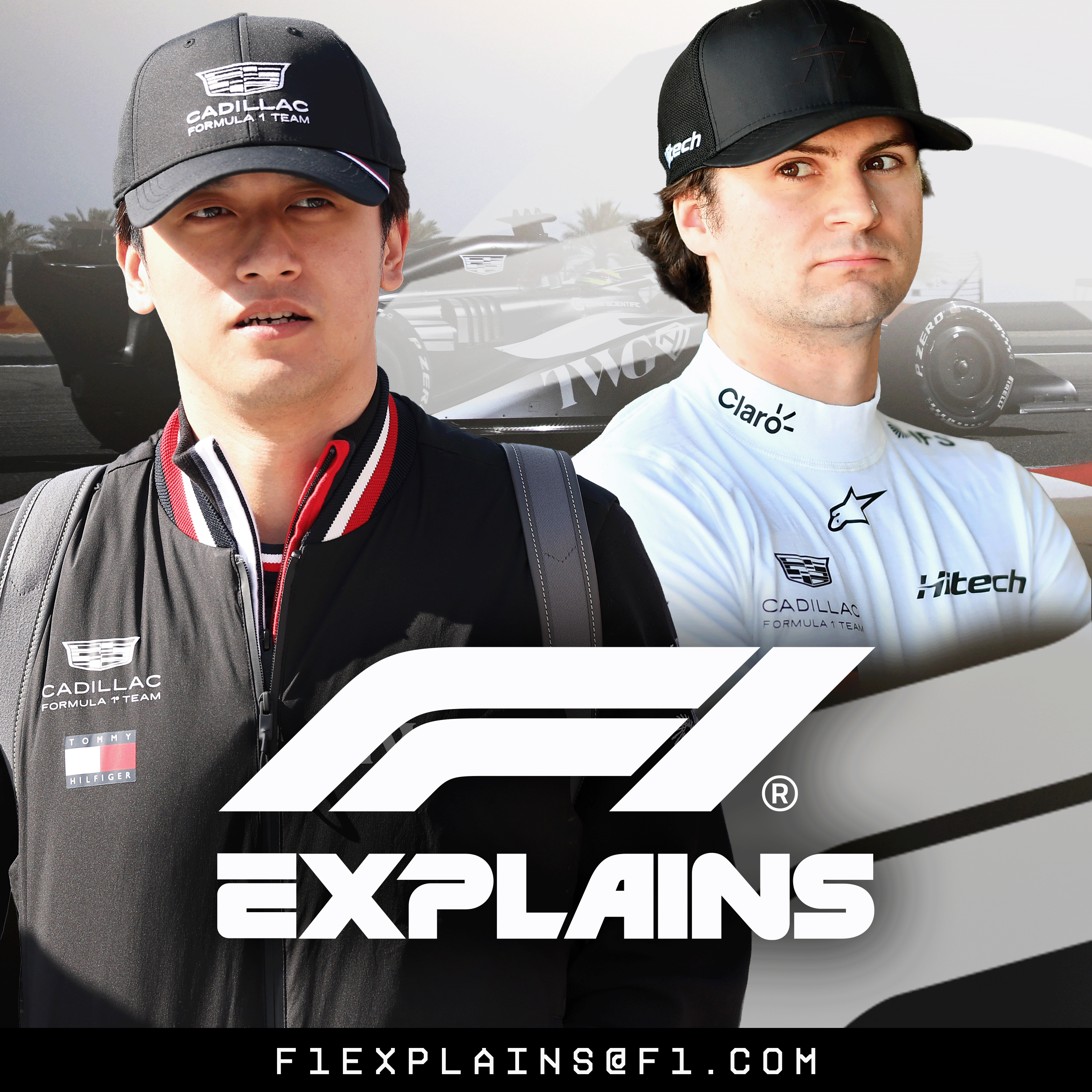
Cadillac is a car brand that’s involved with the racing program. In this episode, they’re connected to the drivers who are there as test and reserve drivers.
A test and reserve driver is like a backup and helper for the team. They practice and support development, and they can replace a main driver if needed.
Formula 2 is a stepping-stone series that helps drivers earn their way to Formula 1. It’s where many future F1 drivers race before getting a chance in F1.
IndyCar is a big open-wheel racing series based mainly in the United States. The driver is saying they’ve raced there before, so Miami’s similar racing environment feels familiar.
Homestead Miami is a race track near Miami that has hosted major racing events. The guest is saying they’ve raced there before, just not in this specific Miami event.
Concept
F2
F2 refers to Formula 2, a feeder series for drivers aiming to reach Formula One. The segment discusses racing an F2 weekend in America and what the first F2 experience was like.
In Formula 2, the weekend typically includes multiple races, including a “feature race” (the main race) and a shorter sprint race. The segment references finishing P7 in the feature race, which is the more significant result of the weekend.
Track evolution means the track gets better (or sometimes worse) during the weekend. As cars drive on it, rubber builds up and the surface can become grippier, changing how the cars handle.
A setup is how the team adjusts the car to match the track. If the track grip changes, they tweak the car so it drives predictably again.
Term
high-speed assist
High-speed assist is anything that helps the car stay stable when you’re going very fast. The discussion is basically saying that at those speeds, you can’t afford mistakes because the car can get out of shape quickly.
“Relayed the circuit” means the track surface was resurfaced or relaid with new material. New or dusty resurfacing can temporarily reduce grip and change how tires build rubber, which affects car setup and driving confidence.
A simulator is like an advanced driving computer system. It helps the team test how the car might behave and helps the driver practice and improve without using the real race car every time.
Term
cars
In this context, “cars” means the special race cars built for Formula One. They’re not like normal road cars—teams constantly adjust and improve them for each race.
A wind tunnel is a lab where air is blown over the car parts to see how they affect speed and grip. F1 teams use it to improve how the car “cuts through” air and how much it sticks to the track.
Term
arrow packaged
This sounds like they’re talking about the car’s aerodynamic setup—basically the wing and body shape choices. Improving that package can make the car grip better and go faster.
Pirelli is the tire supplier in F1, and tire testing is when they check how their tires perform. It helps them and the teams learn what the tires are like in real driving.
Concept
Spielberg
Spielberg is where the Red Bull Ring race track is in Austria. It’s a real F1 circuit, and the track layout can make practice sessions a big deal.
The chassis is basically the car’s main frame. The floor is the bottom part that helps the car stick to the track by shaping airflow—so changing both is a big deal for how the car drives.
Valtteri Bottas is the driver being talked about. They mention that he’s very active online and that fans seem to like seeing his life off the track too.
A reserved driver is basically the team’s backup. If the main driver can’t race because of injury or illness, the reserved driver can take over. They’re chosen ahead of time so the team has a qualified replacement ready.
Sometimes a driver can’t race, and a backup driver has to take over quickly. The team needs that person ready so they can jump in and drive the car with minimal disruption.
FP stands for practice sessions during the race weekend. Drivers use these sessions to test the car and get comfortable with the track before the important qualifying and race.
A permanent road course is a real race track that’s built for racing. It’s not a regular city street setup, so it stays the same more often and is easier to prepare for.
Ovals are race tracks shaped like an oval. They usually involve mostly turning one direction at high speed, so driving style and car setup habits can be different from road courses.
G-force is how hard the car is pushing you during driving—like when you brake hard or take a fast corner. It’s measured in “G,” where 1G is basically the force of gravity.
The cockpit is where the driver sits and controls the car. If the simulator matches the real car’s seat and controls, it’s easier to drive the same way on race day.
A race weekend is the whole event leading up to the race—practice, qualifying, and then the race. Teams use the time to adjust the car and be ready for anything that changes.
Concept
resetting your session
If you crash in a simulator, you can usually restart right away and try again. In real racing, a crash can cost a lot more time and damage, so you’re more cautious.
Track time just means how long you get to drive on the real race track. Outside of race weekends, it’s hard and expensive to get much of it, so teams rely more on simulators.
“Data” means the numbers and measurements the team collects while driving. It helps engineers understand what’s happening and improve the car and simulator.
Telemetry is basically the car’s “data log” from a lap. By comparing it between the simulator and the real car, teams can tell if the driving is truly the same.
A “laser scan track” refers to using laser-based surveying to capture a circuit’s precise geometry—curbs, banking, and surface details. Teams use that data to improve simulation accuracy and reduce the gap between sim driving and real driving.
After a race, drivers get very hot inside the car. An ice bath helps cool them down fast so they can feel better and recover sooner for what comes next.
A “home Grand Prix” just means a race that feels special because it’s close to where someone is from or where they’re based. They’re calling Miami a big home event for the people they’re talking to.
Charles Leclerc is a Formula One driver. They’re joking that the dog’s favorite driver is Charles Leclerc.
LIVE
Hello everybody and welcome to F1 Explains, and of course, more importantly, welcome
back to Formula One Racing. We did it, we got through the break. My name is Christian
Hugel and I am studs talking to you from somewhere I have never recorded an episode
of this podcast before because I am on the beach. Welcome to Miami Beach. We are about
an hour from the Hard Rock Stadium, about an hour from the circuit where the Grand Prix
will be this weekend, because for the first ever time at the Miami Grand Prix, we have
also taken over a big chunk of the beach for the official Fan Fest. I can see in front
of me loads and loads of sand. It would be more of a surprise if there wasn't sand, what
with it being a beach. Somebody has done a sand sculpture of a car and the F1 logo and
the checkered flags in front of me, which is very impressive. I do worry about its
structural integrity over the course of the whole weekend, I can't lie to you, but for
the moment it looks absolutely fantastic. There's a man opposite him carving the team's
logos into sand and doing a great job as the Haas logo. He's currently doing the Mercedes
logo, he's doing a brilliant job and sat on everything from benches to what are they
producer Jamie? What do you call those things? It's not a parasol, what is it?
I'd say it's a miniature gazebo over a deck chair.
Lovely, a miniature gazebo over a deck chair. Yes, fans are sat on there looking at the
big ticketmaster stage, which acts as the main stage here at the Fan Fest, and that
is where we are going to be doing this week's episode of F1 Explains with some special guests
from Cadillac, their test and reserve drivers Colton Herter and Joe Granieu. Joe is of course
a Formula 1 veteran of several seasons racing with the Sauber Alfa Romeo team and Colton
is an IndyCar winner who is racing in Formula 2 this season, hoping to get enough super
license points to one day be able to get himself on to the Formula 1 grid. They are part of the
Cadillac team who this weekend are about to embark on their first home Grand Prix. Colton
will be racing a home Grand Prix in Formula 2 as well as F2 comes to town here this weekend,
and we are going to get them onto the main stage to put your questions to them right here at the
Miami Beach Fan Fest. Guys, we've got a full on TV show style set here. Do you like our sofas?
They're very low, but do you like them? Feels good. Feels good. Yeah, it's comfortable. It's
guys, not your first time in Miami I'm sure, but welcome. What do you reckon to our beach
set up Colton? Have you ever done anything quite like this on a beach before? It looks comfortable.
I feel like you guys need like some coronas or something down there. It does look very nice,
so I am jealous. Got any drinks on the go guys? Yeah, I thought they might. Now Joe,
you've raced on the circuit, what's it like? Yeah, I mean the track is absolutely, you know,
it's a great track with a lot of hard sections, especially sector one or that, but then you know,
we're building and making the track get better and the track is getting more grip here, which is
good for the cars. And then I think for the fans of you guys, I think it's a very enjoyable weekend,
even you are here for vacation or for the race, you know, it is super calm and relaxed. There's a
lot of things happening and of course Formula One is the way to go. Oh, absolutely. Right, Colton,
you, am I right in thinking won't have raced on the track yet? Yeah, never. But you're not new to
Miami, I take it. Now you're from California, so you're used to the sunshine. What are the
main differences between California and Miami? It's definitely more humid out here. You know,
you feel the heat more, especially inside the race car. We do a lot of racing in IndyCar in
Florida, obviously, and so I have that experience. But first time in Miami, you know, I'm very excited
that we get to race here. It wasn't something that was on my bingo card this year that we're
going to be able to have an F2 race in the States, so I'm excited for it. Well, I just said, I'm
sure it's not your first time in Miami. Is this the first time you've ever been here? No, no, I've
been here before. IndyCar used to race at Homestead Miami down south. I've raced there a couple of
times in junior series and I came, I think I came the first year that they had this race on
to watch as a fan. Nice, nice. And as a sports fan, more than anything, what a cool place to host
a race with the Dolphin Stadium with such sporting heritage here. Must be a cool place to come.
I mean, I'm a Bill's fan, so I love watching the Miami Luz. Sorry guys, you guys are Dolphins fans,
but yeah, but it's a, no, it's cool, cool scenario, cool backdrop for everything. Yeah,
it always feels like sports combined. Joey, are you a fan of any of the particular sports?
I mean, I watch NBA, so. Nice. Yeah, I'm obviously not fluent too much like the NFL and also the
baseball, but I know, like, there's a lot of things interesting here, but NBA is what I'm watching,
but yeah, I'm obviously, I'm not unfortunately supporting Miami Heat, but like, I'm a massive
Kobe fan, so you know, the team are sporting, which is, yeah, Lakers and then following the
playoffs is happening right now. So yeah, but I do looking forward to go to some of the games,
the matches, just to, to be on the court side. I think it's a really cool experience.
That's always good fun. And Colton, you mentioned that you didn't expect to be
racing F2 in America this year, but circumstances, here we are. It's going to be an F2 race,
F2 race this weekend. Now, also your first was in Australia last time out,
talk to us about your first experience in F2. What was the weekend like?
You know, I think it's very different to what I was used to before. You know, I think the track,
the amount of track time you get is quite low compared to what you would get in Formula One
or IndyCar. So you need to be quick when you get onto the track and your learning needs to be
as fast as it can be. So yeah, it was enjoyable. It was very different. Obviously, there's going
to be a lot of different things for me this year jumping into this and really need to pick up on
it as fast as possible. And P7 in the feature race, an up and down weekend elsewhere, but
it must have been a challenge to adjust from IndyCar. It's a different car. How much of a
different feel is it? What was it like making the adjustment? Yeah, I mean, the way that you
find lap time in the F2 cars is very different to the IndyCar and the ways of where you might push
are very different. So there is a big adjustment period on that side of things. You know, happy
to get points, but obviously we want to do better than what we did in Melbourne.
Excellent. And excited to go on this circuit. Obviously, you're within the Cadillac team.
Have you spoken to the likes of Joe about racing on it? Because as you've not driven it yet,
what are you expecting from it? I think the track surface looks very particular.
As far as how rubber gets put down, there's not a huge track evolution through the weekend. So
maybe the car might feel a little bit more on top of the track and sliding a little bit more,
which is kind of what I've seen from Formula One in the past, but I think he would know better than
me. What's the key to success on it, Joe? I mean, for me, it's like just making sure you feel
comfortable and taking steps in the first beginning and get the track time. I think for here, you
know, I remember first time here, back to the first ever Miami Grand Prix, the surface was
slippery as hell. There was like no evolutions happening and then joined the session, but there
was a massive one between the sessions. But then when you finish your FP1 to FP2, it reset back to
zero. So yeah, you need to adapt your car, your setup, due to that. So it's a challenging and
one and also is how much comfortable you are in this high-speed assist because there's no
room for error. You know, you're going there with such a high speed and then with a little
error with the surface, you just go straight into the world basically. Well, there's so much for you
guys to get used to because I remember the second year they'd relayed the circuit and it was dusty
because they'd relayed it. I was in the pit lane for FP1 and the cars go out on the track and there's
these plumes of dust from where the circuit has been relayed. I was just a sweaty mess covered
in dust and sun cream. But little things like that, like a dusty surface if it's been relayed,
that can change things for you guys massively, can't it? Yeah, for sure. I think it's going to be
not much difference. Unfortunately, I think for this year, for every time, because there's not a
lot of cars or series running on that during the period or weeks before. But the track, do they
clean that every evening to make sure they wash a little bit of the track, just to clear off the
dust to help us when we start the session. So it's not so dusty, which is just improving for the
grip. It's very important. But then, besides from that, it is something quite special about Miami
and that's why it's so different. But I'm happy how it is, you know, as long as the track is not
breaking up and everything stays, you know, how it is. Excellent, excellent. So let's talk a little
bit about Cadillac. We mentioned the home race for UNF2, but a first home race for the team
as a whole. Colton, what's it like stepping into Cadillac for the first season in Formula One?
What's it been like for you to start on this new adventure with the team?
You know, I think, for me, it's been very proud. You know, it's cool that we have this really big
American manufacturer, big American team in Formula One. And everybody at the team is so
motivated to compete, right, and so motivated to get better. So I'm really excited to see kind of
through this year the strides that they make. And obviously, this is a big one for us to come
home for the first of three. Joe, what's been the main difference going from a more established team
that have been around a number of years? Obviously, you went from racing with Salva into Ferrari now,
here with Cadillac. What's been the main difference with, like, this new team? And what wisdom have
you been able to impart on them? I think I'm just super, you know, proud, firstly, with the guys,
how the team is coming along, because it's not easy these days when you're making a completely new
team in Formula One. Everything's starting from scratch, and then you try to build up your team,
build up your facility, build up your simulator, your factory, your wind tunnel, your cars, you know,
just all these little things really matter. But for us to put in a team all together starting
from last year, that was pretty insane job, and just to have the car running on ground in the
test. And then when we get to the race, you know, we are making sure the ability is well,
we're finishing the race, and we're improving, we're getting our arrow packaged improving.
So I think every individual did a massive, you know, good job over the last year and a half,
and to this point, and then there's a long way to go. And for us, you know, we're here to make
sure, of course, own the respect from the other teams, as well as try to compete, try to bring
the team into a top midfield, and so on, and more forward. So yeah, looking forward to be in this
brand new adventures, and yeah, being a part of that, I'm very extremely excited about it.
Now he's not here, so it's a good opportunity to do this. Can I talk to you guys about the boss?
So I interviewed Graham for the first time, Graham Loudon, team principal of Cadillac. Now,
neither of you guys are British. I'm a Brit. Graham is from Newcastle. Newcastle, right at the top
of England, north of the UK. It's quite a distinctive accent, the Geordie accent. How are
you guys with understanding what on earth he's saying? Because I struggle sometimes with the
Geordies and I'm English. So do you guys understand the word Graham says? And has he bored you about
Newcastle United Football Club yet? No, I think he, I think he dumps it down for us when he's there.
He sounds a lot more Southern when he talks to us. At least for me. Oh, so he brings the accent
down, like down the UK. Yes, yes, yes, yes. It would be hard for me. It's more of like a midlands
once it gets to, I think, when he's talking to us. Now, I'm a midlands accent. That's impressive,
it's impressive local knowledge of the UK that is. Geordie, talk to you about football yet?
Yeah, but firstly with the accent, you know, I have no issue because when I moved to UK for
like racing, I lived in Sheffield. So that's, that's a harder one, I think, to understand.
Sheffield's a good accent. It's quite, it's quite a tricky one. But once you understand that,
the other seems to be a little bit settled down, you know, because Yorkshire is,
it's something a little bit different. So are you from Yorkshire? No, I see.
He's loving it. So yeah, for me, no issues understanding Graham also. And he does,
you know, calm down when he speaks. So you don't, you don't hear that. But football,
definitely he talked about it. You talk about Newcastle. He's keeping a track a lot with some
other teams as well. You know, a lot of massive, I would call soccer is here. Yeah, soccer here,
football in the UK. Yeah, football fans in the team, you know, so yeah, they, they keep me
a track on their, they score the leaderboards. Yeah, have you got a team? Real Madrid.
It's the Real Madrid fans in. Colton, you got a soccer team? No. No, I just like. Would you like
one? Do you want to go with Newcastle like the boss? Who's good right now? Arsenal? Arsenal and
Manchester City battling in the Premier League. I'll go with Arsenal. My, my engineer is a big
Arsenal fan. So I know that's, I know they're doing good. We've just crowned Colton her to an
Arsenal fan. Amazing. Now you are going to be doing some FP1 sessions this year. First of which is
in Barcelona, I understand. How excited are you to get out there into a Formula One car?
I'm super excited. You know, especially for me, it's going to be a first on an F1 weekend.
And, and it's going to be, it's going to be super special. I think it's, it's super exciting for
me. It's going to be a big week for the team too, because right after I'm done with that, we got Joe
in the, in the car for two days for Pirelli tire testing. But yeah, it's going to be cool. And,
and to get to do a couple of those is going to be super special. Joe, do you remember your first
time getting behind the wheel? I presume it was in an FP1 session. And what advice would you give
to Colton? Because that's a moment for any driver, right? Yeah, honestly, I would say just enjoy the,
the whole weekend, enjoy that moment. I think it's very special because I think every single race
you enjoy when you grow up as a kid, starting from cars, you dream to be driving F1, to be
F1 driver one day. So when you get that experience, I think, you know, being a road key, you just,
you don't need to feel any pressure, you know, just go for it and just, you know,
take it easy and just enjoy that moment. That's why I did. And that was the advice I got given
by Fernando Alonso when I was having the first FP1 in 2021 in Spielberg. So yeah, I had a session,
I just had the best day of my life that year. Oh, that's cool. Hey, Fernando's a good person for
advice. If you're going to listen to anyone, listen to Fernando, he's a wise old fox.
This is F1 Explains, the official F1 podcast. That's all about explaining the sports and we are
live on stage at the official fan fest here on Miami Beach, recording this show,
looking out across the palm trees, golden sands and lots of merch stands and that sort of thing in
the distance. It's a beautiful day here in Miami. And our listeners have been emailing F1 Explains
at F1.com with their questions for you guys. Are you up for answering some listener questions?
Let's do it. Let's do it. This first one is from Hannah. Hannah is in Germany. Hannah says,
I would love to learn more about the differences between reserve drivers and test drivers.
Are there any rules about those roles? So Joe, your title is reserve driver. Colton,
you are test driver. What are the main differences between the two? Colton, let's start with
I would say we both test but I do a little bit more of the UP stuff because he's not a rookie,
he can't do those. And so I guess that's kind of where I come in. Yeah, I mean that's the main
difference. So firstly, you know, we both involve a lot heavily in the teams, meetings and you know,
simulator, try to get some feedback, try to improve the car and then during the race weekend,
of course, reserve driver, you have to be kind of 24-7, be ready to be if anything happened,
you step in the car. And for Colton, it's more like he gets to do a lot of FP1s,
the documentary sessions, which you get time on the car and for his experience, for his knowledge.
So that's the main difference. And yeah, both, you know, we have our own kind of things we need to
focus on as well. And was it been like working with Valtteri Bottas and Sergio Perez, obviously to
vastly experience Formula One drivers, race winners, you know, fought for titles. I'm imagining it's
a lot of fun, particularly working with them on a new project where you're building a team
up from scratch. Colton, what's that been like working with the guys? Yeah, I think it's good
to have guys like that in the building that bring that massive amounts of experience and
can kind of lead the charge from the driver's side technically. And you know, I think hearing
kind of how they go about their business, especially on a race weekend is interesting and
you know, where they kind of pick out weak points and how they attack them throughout the weekend.
So yeah, I think it's good to just be there with a pen and paper and kind of try to soak it all in.
Sergio, what are they like to work with? Tell us something we might not know about the boys.
Yeah, honestly, with Valtteri is like coming back together, you know, we've been together for
three years in the same team. And then we've been to get into the new era of Formula One,
we introduced this brand new chassis and floor and the car. So we've been working together in
that way and Valtteri is no difference. And I knew him saying that my day one in Formula One that
he's very honest and he's very less open to give feedback to the team. That's I think a team like
Cadillac F1 needed because we're coming from, you know, a lot of new stuff coming, putting
together. So we need the people to be transparent and then to be efficient, know what they're doing
with their experience from different teams as well. So yeah, from that side is super,
super, let's say, blending. And with Cecho, it's a little bit for me just to be working together
with him for the first time. So I'm still trying to, of course, know more about him. But I think
he's super talented as well, gives a good feedback to the team and helps the team to drive forward,
which yeah, I'm proud just to be, you know, working alongside them.
Is that the main reason you wanted to join Cadillac, to be reunited with Valtteri after being
teammates before? Is that the main reason? No, but yes, you know. It's probably not the main reason,
but yeah, yeah. But I'm just happy somehow we just came on together, you know, being in the same team
again. Destined to work with Valtteri. Although I think since you last worked together, he's
become this social media sensation. Is he always filming things and that sort of thing? He's become
such a viral superstar, Valtteri Bottas. Yeah, he's been like just being a little bit like him,
you know, I think over the last couple of years. So yeah, some things he do, I will never do in
my life, but he enjoyed that part of things. So yeah, people like him and it's a little bit more,
I think, encouragement for the people. And then I think he enjoyed the part of being, you know,
a different kind of lifestyle, being just off on the track, which is cool, you know. He does
whatever he wants. That's fine. Yeah, you've got to have life away from Formula One. You've got to
have fun, right? This question is from Kayla and Kayla is from New Jersey. Kayla says,
who replaces a driver if they are injured or sick? And how are they picked? Is it the
reserved drivers? Is it the test drivers? And what do they do on a day-to-day basis? Are they
required to train? So Joe, we'll start with you. Let's talk about, we've spoken a little bit about
this, but more the requirements of the role, more generally the training. And then obviously,
as Kayla says, who ultimately steps in? Well, normally it's the reserved driver,
because for a reserved driver, you have to have a super license. And then that's why the team
always need a reserved driver for their, for their like team. And also there's some reserved
drivers also can be rented to other team as well, depends on your own contract. But yeah, for that,
if something happens, definitely that will be the one stepping in. But you know, both, both of them
are very important, because test drivers does a lot of testing, because there's certain times,
you know, I have to be at the track or doing something, but there will be a lot of things
we need to test where it gives the opportunity for the test drivers to do so. And we've seen
loads of examples in recent years in Formula One, drivers having to step in last minute.
Nick Holkenberg gained a bit of a reputation at one point for it, stepping in on a few occasions.
Is it a strange feeling being at a race knowing it, it is possible that you could be thrown in at
any moment? Yeah, it's, it's kind of a different feeling, I would say, because obviously had that
last year. So now I'm kind of used to that. But like, you have to be forever get ready. And
you have to be patient. That's first, because you don't know when the opportunity comes.
Firstly, you don't want, you know, anyone to have been in trouble and then
being sick or whatever. But like, you're there just to be in case something happened,
in case the team really needed you in the last minute. So it could be like, you wake up one day,
you get a call, like you're driving today. So these things could happen. And then, yeah,
I'm waiting to do so. So you have to still stay, let's say, pretty much trained and stay also
on top of all the, all the engineer details, just to following what the race team are doing
every single weekend. Colton, Joe just mentioned, you're in the process of collecting your
super license points. Talk to us a little bit about the, the role away from, you know, that
points collection, you're obviously racing in F2. You'll still be doing things like getting in the
simulator and providing feedback to the team, right? Yeah, I mean, obviously the, the most
important thing for me is the on track time that you get and, and doing the FP ones, that's where,
as a driver, I think you could be most helpful towards the team. But obviously there's a lot
going on behind the scenes in, in both of us on the simulator quite a bit, you know, but kind of
like he said, both race fit ready to go. Just need that super license. Absolutely. Right,
let's get to another question. This is from Amanda from Nashville. Sticking with you Colton. Colton,
Amanda says, Colton, coming from IndyCar with many ovals, how does your prep change for a fully
circuit based calendar like F2 and F1? Do you have to unlearn old habits or refine different
skill sets? That's a really interesting question for Amanda. Yeah, and, and no, it's, it's pretty
straightforward when you're doing the prep for, for the permanent road courses. And it's similar to,
to what kind of, how I would prepare myself for, for a race week in an IndyCar. So not much has
changed. Obviously there's less prep on ovals now this year. But yeah, no, it's very similar.
Joey, something that really interests me, because you will have gone through different race series
throughout your career, you know, as you rise up the motorsport ladder. We spoke a little bit
about it at the start of the show. But how much is similar between series to series and how much
changes as a racing driver when you get in a new car, a new series, even go on a new circuit?
How long does it take to get into the swing of things? And where are the similarities?
I mean, first, firstly, I think the simulator only can be maybe probably about 85% of representative
of the realistic cars, just because you don't really get this G force feeling, you don't get this
fear or this issue on your mind that if you go over your limit, you are losing the car, you are,
you know, getting massive damage built for the team. So, and that makes your representation
really low as well. And you have to be making sure you do the right thing and be fast, be quick
as well in the same time. So, that's the biggest difference, but also the simulator we're working
every single day, the week, just to making sure we can get as close as to the real track
and real car. And we have the exactly same cockpit, same seat, same pedals, same steering wheel. So,
we just get used to that. And we try to simulate this on race weekend as well. So, the driver
get to a race weekend like Miami, we're ready. We know what's happening and then if there's
something change, emergency, we are there for that. There's nothing new we need to learn. So,
which is prepared. You've actually, you've been a bit psychic here because you've actually picked
up on a few things from Amanda's next question. Amanda sent in two and she also said, how close
is simulator performance to the real car and what still can't be replicated? I've asked this question
to drivers in the past and the thing they always come to is, you're not as fearful of crashing
in simulators. Is that the biggest one? For sure. That's one of the biggest one because that's,
you can approach very differently when you have things like that, you know, in your mind because
real life, if you go beyond the limit and then, or if you go under the limit, there's a massive
time difference and you could easily find in yourself, but you have to trust the comfortable
on the car, just to fill the car in, you know, going like 300, 290 kilometers an hour and then
that's differently simulated because you can try to set up driving a little bit over the limit
because you knew if there's something happen, you're resetting your will, you know,
you're resetting your session, you can go again, so that's the biggest difference, but then,
yeah, you need the simulator to be good as well, to be representative.
The simulator to me feels like a really cool toy. I'm a gamer, I like gaming, so it just looks to
me like a really cool video game. Am I anywhere near with that, Colton? It's fun until you do a lot
of it. Because you guys have been there a long time sometimes, aren't you? Yeah, and we were talking
about it before, it's like, the motivation factor is pretty low in the winter when you go in and it's
dark outside, then you spend 12 hours in a dark room and you come out and it's dark again and you
don't see the sun. Has it been like today at any point? Exactly, so days like that are a little
bit tough, but for the most part, you know, it's such an important tool because not only is it,
you know, impossible to really get track time outside of F1 weekends, it's so expensive if you
do. So, you know, having a tool that's relatively cheap compared to the real thing is super important.
But also, correlating simulators is a big part of your go-go role, isn't it? Joe, if there's a bit
where, for example, you drive the car and something has felt different in the car to how it felt on
the simulator, that's a real key part of your role to feed that back, right? Yeah, so like when we
are race drivers or when we are, let's say, after the race weekend, we're always trying to get back
on the sim, so we're making sure we get the right feedback, the right data, we're carrying exactly
the same speed, look similar on the telemetries compared to real life. And also, you know, we can
understand a little bit, what's the difference on the track? Is there something we need to change on
the laser scan track? So, yeah, there's all these little details which end of the day makes a massive
difference because you need to feel not just comfortable in the sim because for us to be quick
in the sim is never a priority, it's more about making sure we're driving exactly the same way
we would do operating when we're at the racetrack, when we're driving the real thing, so that's what
really makes the big difference. Our final question on this week's F1 Explains is a lot
less technical. It is from Tommy in Maryland. Tommy says, why do drivers take ice baths after
races? I noticed this happening several times throughout Drive to Survive and also in the F1
movie. Colton, how are you with the ice bath? I somewhat enjoy it. Do you? Yeah, it's not bad.
What how? I think you just kind of, if you can suffer through the first 15 seconds of it, then
it's easy after that. But obviously, the big part of that is to lower the core temp. You know,
your internal body temperature is so hot inside the race car after being in a really hot cockpit,
but also wearing three layers of clothing, especially when you look at some of the guys
coming out of the cars from this race in like Singapore, even here, when it's going to be super
humid, you could lose quite a lot of weight. So that's just something you're just red hot,
basically. You got to get get cooled down as fast as possible. And Joe, the science behind it is it
helps with muscle recovery, doesn't it? So it helps you drivers recover quicker? Yes, it's more like
recovering at the time. Yeah. So we don't do every race, at least I don't do every race, like
Miami will be a good place to start. I think during the season, it's hot. But I think normally it's
like Colton mentioned, you know, Singapore, and then we have that very hot one, which is Doha,
Qatar, all these things that we jumping straight away, just so you can cool your body, cool your
temperature. We lose like three kilos during a session, just pure on water, you know. So there's
a lot of energy you lost. And that is a quicker recovering to put you back. And then you're ready
for all these media interviews and team briefings after. Yeah, well, this is true. I bet it's more
enjoyable than some media interviews you have to do, not this one, of course, you've had a wonderful
time here. I'll put words into your mouth. But do you enjoy them like Colton? I do enjoy them,
but that first 10 seconds, I definitely hate it because it's like you're breathing heavily,
try to catch your breath. But like, it's cool after I've never done one. It just I don't like
being cold. I'm not a good cold person. So it looks like my idea of absolute health. I've never
done one and nor do I intend to. Guys, this has been a lot of fun. Can we please have a round of
applause for Joe Guanyou and Colton Hertha? Well, thank you very much to Cadillac on a massively
busy first ever home Grand Prix and to Colton and Joe. We're back on the beach. Excuse me,
Madame. Excuse me, guys. Hello. What's your name? Nancy. Nancy, and what's your name? Oliver.
Oliver Nancy. We've just recorded a podcast on the main stage. I don't know if you caught it,
but I'm less interested than that. I'm more interested that you bought your dog to the
Formula One event. Who's this? This is Toby. Hi, Toby. Toby's sniffing the microphone.
Toby's intrigued by the microphone. What breed is Toby? He's a Palm Ski, a Pomeranian Husky.
He's beautiful, black and white and fluffy. Hot dog right now. I bet he is hot. What does
you think of Formula One? What does he want? He wants to drive. He could. He could, right?
Absolutely. Does he want to win? Who does he want to win? Yeah. Oh, just Charles Leclerc,
obviously. Ferrari. Toby's a big Charles Leclerc fan, is he? Absolutely. Guys,
it's been lovely to talk to you. Toby, lovely to meet you. You're beautiful. Oh, Toby, you're
gorgeous boy. Thank you, guys. I appreciate that. For you, Jamie, I'm sorry. I just had to
get a dog on the podcast. Granted, not the most vocal dog. I hope you don't mind me interrupting
the end of the pod to get a dog on. It's a bit poor. What a shame. It's been a really nice
show up until that point. It really had. That was a rough joke from you. Anyway, moving on,
as I was saying before I got distracted by a dog, that does happen in my life. Thank you very much
to Colton Herter, to Jo Guan Yu and to the Cadillac team. I'm sorry, so I nearly got in the way of
somebody walking across the beach with a buggy sort of thing. This is the perils of recording
a podcast on an actual beach. It really is quite chaotic. Listen, new episodes every Friday and
coming soon to F1 Explains, we are going to be talking to Laura Muller, talking about the
differences and the challenges faced by the race engineers in this new era of Formula One. Do they
have more stuff to do with the different engine modes? What's it like communicating with the
drivers? We'll be talking about all of that very soon on F1 Explains. Don't forget to hit like,
follow us, subscribe for new episodes. Of course, we're now on the same feed as F1 Nation. Tom
Clarkson and the team will be here to debrief the Miami Grand Prix after the race. Make sure you
listen to that. Also, there is Beyond the Grid, our sister podcast, which has lots of guests coming
up. I believe we've got some David Coulthard on the way. I believe we've got some Jenson Button
on the way all in future weeks. Is that correct, producer Jamie? That is correct. The latest episode
is with Arvid Lindblad. That's out now. Arvid Lindblad, I'm aware of his work about to embark
on his first ever Miami Grand Prix. Lovely. Don't forget to listen to those pods, loads to keep you
entertained and we'll be back next week with another F1 Explains from Miami Beach. My name is
Christian Hugill and we're back next week. Bye for now.
About this episode
Colton Herta and Zhou Guanyu join the hosts on Miami Beach to talk through Cadillac’s first home Grand Prix, the challenge of building a Formula 1 team from scratch, and what their different driver roles involve. They also compare F2, F1, and IndyCar preparation, dig into simulator limits, and explain how reserve drivers stay race-ready. The conversation closes on the physical grind of hot weekends, recovery routines, and a light beachside cameo from a fan’s dog.
What’s the difference between a ‘Test Driver’ and a ‘Reserve Driver’? Well, who better to answer that than Cadillac Test Driver Colton Herta and Reserve Driver Zhou Guanyu?
Colton and Zhou join Christian Hewgill ahead of Cadillac’s first home race in Miami to answer your questions about Formula 1.
How does F2 compare to Colton’s previous career in IndyCar? What’s it like working with Valtteri Bottas and Sergio Perez? Who replaces a driver if they are injured or ill? How close is simulator performance to the real car? And why do drivers sometimes plunge themselves into ice baths after a race?