New car inventory is how many brand-new cars are sitting unsold. If there are fewer cars available, dealers can charge more; if there are more cars available, you’re more likely to see deals.
“Unsold” means the cars are on lots but haven’t been bought yet. If lots have a lot of unsold cars, the dealer or manufacturer usually has to offer stronger discounts to sell them.
Incentives are discounts or money-off deals that lower what you actually pay for a car. Big incentives usually mean the car isn’t selling as fast as expected.
Volkswagen is a well-known car brand that also sells electric vehicles. Here it’s mentioned because Volkswagen is offering big discounts to sell more EVs.
Profit margin is basically how much profit a business makes compared to what it sells. If margins are high, the company is keeping more money after paying its costs.
Gross profit is the money left over after the direct costs of selling the car. It’s often used to estimate how much profit a dealership makes per vehicle before broader business expenses.
Floor plan is the way dealerships borrow money to stock cars on their lot. If cars sit longer, the dealership can pay more in financing costs, which hurts profit.
Kelly Blue Book (KBB) is a well-known automotive pricing and valuation brand that publishes estimates for vehicle values, including trade-in and retail pricing. Referencing KBB signals the hosts are grounding their discussion in widely used market pricing data rather than just opinions.
It means brand-new cars sitting at dealerships that haven’t been sold. If lots of cars are unsold, dealerships may have to lower prices or offer deals to move them.
Dealer lots are the parking areas where car dealerships keep cars waiting to be sold. If lots get crowded with unsold cars, it usually means the dealership needs to sell them with discounts or incentives.
The Dodge Charger is a popular American car known for its sporty, muscle-car style. Here it’s mentioned because it’s selling more slowly than other cars, which can lead to better deals.
This is referring to Stellantis, a big car company that owns multiple brands. The point here is that when their dealers had too many cars, the company eventually adjusted pricing to help sales.
The Jeep Grand Wagoneer is a big SUV designed to feel more luxurious than a typical family vehicle. The podcast mentions it with a very high price to show how expensive some premium SUVs can be. It’s the kind of vehicle people shop for when they want more space and higher-end features.
MSRP is the price the manufacturer lists on the car’s sticker. If the MSRP is too high for what buyers want, lowering it can make the car easier to sell.
Transaction price is what people actually pay when they buy a new car. It’s different from the sticker price because it can reflect discounts, rebates, and incentives.
Seasonally adjusted means they’re correcting for normal seasonal swings, so June can be compared to other months more fairly. “Average rate” is basically how fast sales are happening, not just the total number sold.
Oversupply means there are more cars available than people are buying at that time. When that happens, dealers often have to offer bigger discounts to sell them.
“Mega discounts” just means very big deals—prices cut more than usual. It usually shows up as a bigger reduction than you’d expect from the sticker price.
Subcompact SUVs are the smaller, cheaper SUV/crossover class. They’re generally less expensive than compact or larger SUVs, so they’re often where shoppers go when budgets tighten.
The Nissan Rogue is a popular Nissan crossover SUV. The host brings it up to show that some models you might think of as “small” can be included in the subcompact SUV discussion.
“0% financing for 60 months” means you can borrow the money with no interest for five years. That usually lowers the monthly payment, but you should still compare the overall deal to other offers.
The host is saying some shoppers can’t afford the bigger SUVs anymore, so they switch to smaller, cheaper ones. It’s basically a budget-driven downgrade in vehicle size.
This means the typical price people pay when they buy a car. It’s different from the list price on the window sticker because it reflects what sales actually happen for.
It means the manufacturer is helping pay part of the cost so the car is cheaper for the buyer. In car shopping, that usually shows up as rebates or financing discounts.
Ram is a brand that makes pickup trucks. In the podcast context, it’s mentioned as one of the truck brands that isn’t moving much in the market right now. That helps explain whether truck prices and demand are changing overall or staying steady.
Ford is the car company being used as an example of a big truck seller. The hosts are talking about how Ford’s trucks fit into the overall market pricing and discount trends.
Stellantis is a large car company that owns multiple brands. Here it’s mentioned because its truck brands (like Ram) are a big part of the data the hosts are discussing.
“Credit history” is the record of how you’ve borrowed and repaid money, which lenders use to judge risk. In auto financing, it directly affects whether you qualify for low promotional APRs and how low the rate can go.
Promotional rates are special loan terms a car company or dealer offers to make the monthly payment cheaper. They’re usually only available for certain cars and for people who meet the credit requirements.
“0% interest” means you borrow the money and don’t pay extra interest on top of the price. It’s often used to push sales of cars that aren’t moving as fast as expected.
The Subaru Outback is a widely sold family car that’s known for being practical and good in bad weather. Here it’s mentioned to show that the biggest discounts don’t always apply to every Outback—most buyers are shopping in a lower price range.
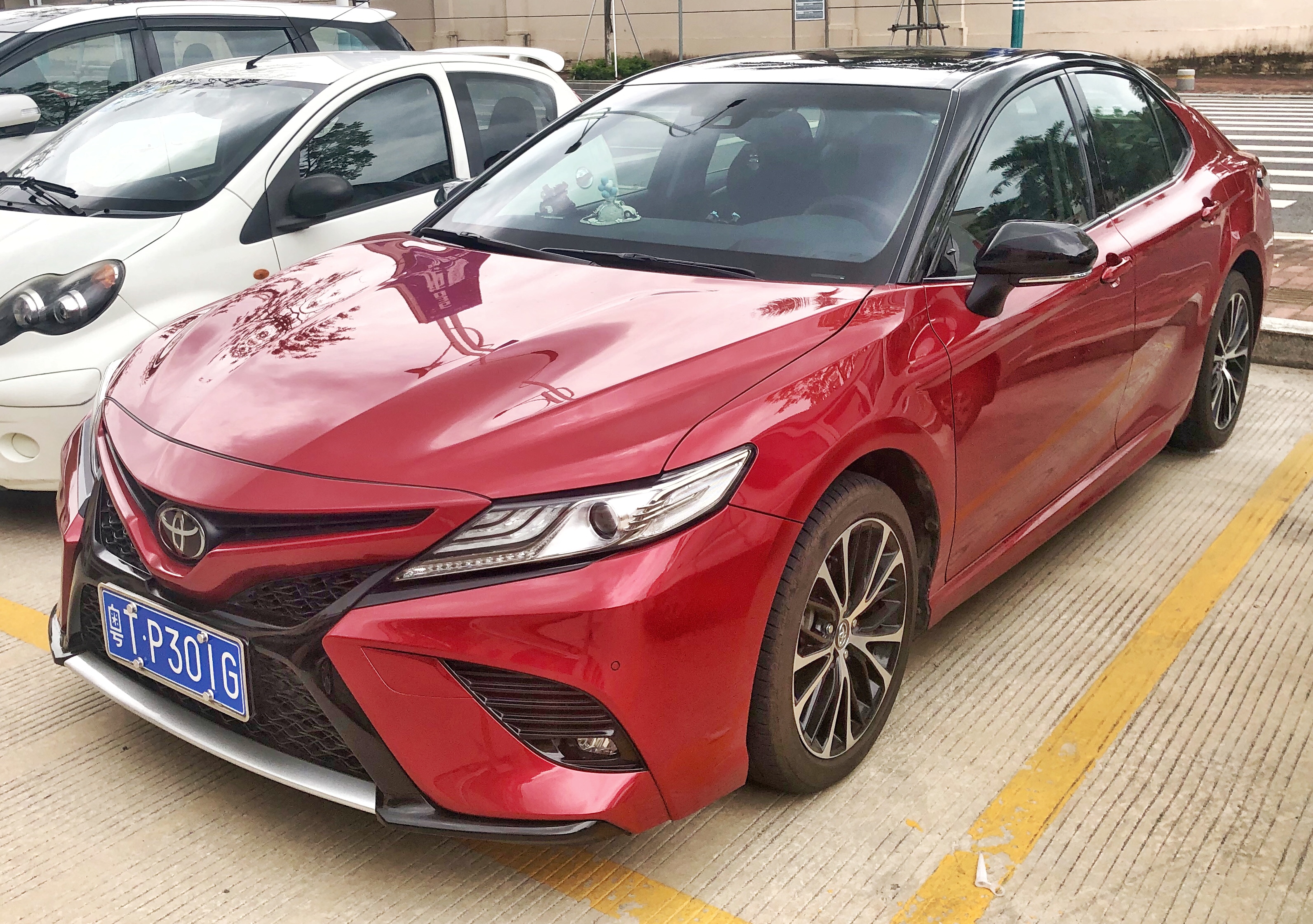
The Toyota Camry is a very common, everyday car. They’re using it as an example of how you can sometimes get a big discount off the price, depending on the exact car and dealership situation.
A “minimum credit score” is the lowest credit score you need to qualify for a certain loan deal. If it’s lowered, more people can get the better financing rates.
“Sub-vented” financing means the car company is helping cover the cost of the low interest rate. So you can get a cheaper loan than you normally would.
A “first-time car shopper” is someone buying their first car. Because they may not have a long credit history, they’re more likely to need special financing offers to qualify for good rates.
“Unsold new 2025” means there are brand-new cars from the 2025 model year sitting on lots that haven’t sold. If lots are full, dealers often offer bigger discounts to get them sold.
Your credit report is a file that shows how you’ve handled borrowing money in the past. Car lenders look at it to decide whether you’re likely to pay them back.
A first-time car buying program is a special loan deal meant to help people who don’t have much credit history. It usually has rules like a minimum credit score and a required down payment.
A tier one rate is the best loan interest rate category. It’s usually for people with excellent credit, and it’s the kind of deal that shows up in the most attractive ads.
The Ford Bronco Sport is a smaller SUV in Ford’s Bronco lineup. The hosts mention it because it’s one of the vehicles that can be included in special financing offers for first-time buyers.
The Ford Mustang is Ford’s famous sports car. The hosts say it’s now part of the first-time buyer financing list, which is a big expansion from the earlier models.
The Ford Bronco is Ford’s rugged, off-road SUV. The hosts say it’s now included in the first-time buyer financing deals, meaning more people can qualify.
The Ford F-150 Lightning is the electric F-150 pickup. The hosts say it’s included in the first-time buyer financing program, which could help more people qualify for an EV purchase.
Concept
desperation
Here, “desperation” means the feeling that some first-time buyers are under pressure to get approved for a car loan. The host is arguing that making deals easier to qualify for can still lead to problems later.
“Tier one” is a lender category for customers who look least risky. Being in the top part of that tier usually means you can qualify for the best financing offers.
Your monthly payment is the amount you have to pay every month to keep the car. The hosts are pointing out that a high payment can be hard on a new buyer’s budget.
Auto insurance is what protects you financially if something happens to the car. The hosts are reminding listeners that insurance can be expensive, especially for younger or newer drivers.
They’re warning that adding more debt and bills at the same time can make your finances spiral. The idea is that it gets harder to handle unexpected costs.
The Ford F-150 is a popular big pickup truck. “STX” is a particular trim level, and here it’s being used to show how Ford’s financing deals can affect what you pay each month.
This means the seller is a dealership that’s been approved by the program or website. The claim is that it should be more straightforward and less likely to add unexpected extras.
This means cars sitting at dealerships that haven’t sold. If there are a lot of them, the dealer or manufacturer may offer deals to get them moved.
Term
$750 down
“$750 down” means you pay $750 upfront when you buy the car. That lowers how much you have to borrow, which can change the loan cost.
Term
$700 a month payment
That’s the monthly amount you’d pay for the loan. It can be tempting to focus only on the monthly number, but the length of the loan and total cost matter too.
LIVE
It's noon here in Vintner City, New Jersey.
Wait, that's a question question.
Yeah.
Was that your ab workout for the day when you leaned back like that?
Was that your core workout?
Pretty much, yeah.
Okay, there you go.
All right.
Sorry.
I had to ask.
No, no.
I love it.
So as I was saying, it's noon here in Vintner City, New Jersey,
Enternations Capital, Washington, D.C.
And this is Courage Live for Tuesday, July 14th,
also known as Tattoo Tuesday with your host, me, Ray in Vintner.
No, I'm not getting a tattoo today.
And our dear friend, Zach, my son, that handsome young man
who is going to put a little more ink on that body of his.
How are you today, handsome?
I'm doing well.
Pops ran my eight miles this morning feeling nice and strong,
knowing you got your work.
We lost you.
What happened to Zach?
Zach, get yourself back because the people don't know that we're being
brought to us by CarEdge, dear.
That was, I accidentally hit my keyboard the wrong way.
Sorry about that.
Dad, today's show is brought to you by us at caredge.com.
Sorry about that.
Folks, my dad and I, for the past six,
we're coming up on seven years.
It'll be seven years in December.
I've been working on caredge.com to support shoppers like you.
For example, we have a car search.
We have a buying service.
We have Ask CarEdge, our research center, dealer reviews,
and you can start everything off with a free consultation and meet our real team.
Please spend some time back at caredge.com
and meet some of the community members who we have helped so much.
Dad, I'm just realizing something.
I'm going to add under more here our community forum.
We always forget to make sure that it's easy to access our community forum.
It's under research here, community forum,
but spend some time over there.
We'll add it to the more dropdown.
Two, the big story this morning we're talking about.
There's a video that's going viral here on YouTube, and it is titled,
Car Dealerships Are Getting What They Deserve Finally.
Thomas Seiberg, congrats, Thomas.
It is such a fun moment when a video goes viral.
We watched this video.
We thought it was super interesting.
Dad, I thought we could react to this today.
I also thought we could talk about it in the context
of the latest Kelly Blue Book data that just came out as well.
And we also have some information from Cox Automotive about negative equity
and how we are in such a dire situation there.
But let's start here with this YouTube video.
Again, it's gone very viral.
Car dealerships are getting what they deserve.
Finally, what's going on in this video?
What's the story?
Car dealerships can't sell cars.
The car market's going to...
Be careful.
Nothing here is intended to be...
Here's what's going on in this video.
It is the epitome of whatever YouTube creator tries to do,
which is to...
Ourselves included.
Yeah, we are YouTube creators.
We are equally as guilty as anyone else on this platform
when it comes to hyperbolic headlines.
And this is his hyperbolic headline.
And God bless him.
I mean, it did go viral.
And there have been any number of creators, us included,
who have said the market's going to collapse.
It's going to do this.
It's going to do that.
We make predictions that just don't seem to come true.
And I believe it was last week or the week before last where I said,
the market's not collapsing.
Prices aren't really going to go down.
If you find a car, you'll buy it today
because it's going to be cheaper today
than it's going to be in the future.
And that's just the way it is, in my opinion.
And so could there be pockets of car dealers
getting what they deserve somewhere in America?
Yes, I am sure there are areas in America
where car sales are sluggish or down and dealers are struggling.
But as many commenters have said in our comments,
please show me the car dealers that have gone bankrupt
and explain to me why they have.
And there have been some that have gone because...
I don't know, Dad.
I'm going to push back on you.
And also, I just want to flag, like,
we very infrequently react to other people's videos
because there's no ounce of us that wants to be disparaging.
And that's why Dad, I stopped you
because I don't think when you use that voice,
like you pretend to be someone else.
I don't think your intent is to be disparaging,
but someone could perceive that as you being like,
oh, they sound that way.
Just kind of make sure everyone understands
no aspect of this is meant to be disparaging.
We are as guilty as everybody else.
Maybe in some cases, guiltier if that's possible.
But I disagree with you, Dad.
I do think that a lot of car dealers are...
I mean, whether they deserve it or not is someone's judgment.
But I think a lot of car dealers are struggling right now.
I mean, we're going to look at the Kelly Blue Book information here
in just a second.
But I'm pretty sure, Dad,
there are many dealers who are losing money.
They are making significantly less than they did before.
And yes, we have seen bankruptcies.
You know we've seen bankruptcies in dealers going out of business.
I mean, there's...
You could even just look at what car...
We haven't seen a lot of new car dealers.
I mean, yes.
Are there some individual new car dealers
that have gone out of business?
Absolutely.
Have there been some individual new car dealerships
go out of business during the best of times?
Absolutely.
If you're stealing from your business...
We see this happen, unfortunately, fairly often.
Yeah, it's much easier for you to,
well, then run that business into the ditch, okay?
But the truth of the matter is,
even though in some cases, inventories are backing up,
especially at some brands, more so than others.
Even with that, we know that the automobile makers
are producing fewer vehicles.
They are not letting inventories get so out of hand
that in the long run, it will be a major problem, in my opinion.
And the reason I can say that is during the best of times, 2016,
when the new car industry sold 17.3 million new cars,
high watermark ever in the history of the U.S. automobile industry.
New car inventories at new car dealerships on a monthly basis
averaged around three and a half million new cars
that were available either on the ground or in transit.
New car inventories today are about 2.8 million.
During the pandemic, new car inventories were running 800,000 to 900,000.
So they have tripled, but they haven't gotten back to where they were.
And that is why.
And you can go to the front page of automotive news
and it tracks it on a daily basis.
You can see that there are fewer cars available for sale today
than there were at this time 30 days ago.
There's pricing, there's inventory.
So, you know, there's 2.8 million vehicles available,
which is almost 200,000 less vehicles than a month ago.
So that indicates to me that the automakers understand
that there's a slowdown.
And understanding that slowdown, they go,
we don't need to produce as many cars as we would have
or as we might like to.
And so that's why I don't really think dealerships are getting what they deserve.
And believe me when I say this, nobody should appreciate that hyperbolic headline more than you
because there are many on this platform who would suggest
that you are the king of hyperbole.
And I, as your father and great defender, would have a hard time
defending that.
I hear you.
I do think there is nuance in all of this conversation.
Like it's lost in a title.
And so this notion of getting what they deserve.
Well, I think a lot of the theme in that video is for years,
dealerships were marking up vehicles well in excess of MSRP
and quite frankly taking advantage of customers
because it was a supply shortage but demand was quite high.
You just mentioned the numbers and I love rooting things in the numbers.
New car inventory was down to 800,000 vehicles available for sale nationwide.
Right now we're at 2.8 million.
So you're saying triple.
It's almost four times the amount of inventory.
And the reality is that actually is significantly lower than it was pre-pandemic.
And so are dealers getting what they deserve?
Again, subjective.
If you think they do, don't.
Dealers, the reality for many of them is they don't have as much inventory as they did before.
Yet some are sitting on.
We still have almost 100,000 unsold 2025 new cars sitting out there.
We know, Dad, some of these EVs, for example, I'm looking at Hyundai and Kia and Volkswagen.
I mean, we're talking incentives well in excess of $10,000 just to get rid of these vehicles.
So it is nuanced.
It absolutely is nuanced.
But overall, these manufacturers to your point are smarter today than they were in the past.
They are not stacking them deep and selling them cheap to these dealers.
The one caveat or the one interesting thing, I think, is Philanthus.
They went way out over their skis.
They totally oversupplied their dealers with inventory.
Now they're working with Carvana.
Maybe they will just keep producing vehicles.
Who knows what happens there?
But that's kind of an aside.
In general, they are being smarter.
They're producing fewer vehicles so that they can control pricing better.
And the truth of the matter is, not to pick on anything that he said in the video,
but one of the things that he said in the video was that lending institutions, banks,
and others have made it harder for people to get approved for a car loan.
And what we know, based on yesterday's data that we shared, and it was shared,
I think it was through Cox.
Yeah, it's Cox Automotive, yeah.
More people were getting approved for car loans than ever before.
So it's not harder to get somebody approved for a car loan at the moment.
It's easier.
It might be a tad bit harder on the subprime side of things,
but on prime lending, whether you are a lower tier in prime or higher tier,
it is easier than ever to get approved for a car loan.
It is easier than ever for an American consumer at this point to put themselves into severe debt
when it comes to buying a car for a ridiculously long repayment term.
So I get what he's trying to say, I really do, because there are some
dealers that are struggling to sell cars that are way oversupplied with cars,
and then there are some brands that are undersupplied with cars.
But for the most part, the vast majority of people who are buying new cars today,
through studies that have been done, are American families that have a household income
of $150,000, which is nearly double what the average household income is in this country.
So it still indicates to me that the upper middle class and wealthy people
are a significant size of the population that can still afford to buy cars.
And even if that number of cars being sold is $15.8 million, as opposed to the $16.2 or $16.3
last year, even at those numbers, at the profit margins that the automakers have,
they're still making a tidy profit, most of them. And most of the dealerships are making more.
I mean, even though average profit per new vehicle sold is lower today than it was a year ago,
or two years ago, it is nowhere near what it was in 2016 when they sold 17.3 million cars,
when new car gross profits averaged $200 to $300 per car sold. Those numbers are still
significantly above that. And on average, I would guess today that number is still close
to $2,000 or beyond. So yeah, our expenses up at dealerships are floor plan.
For sure, pops.
Yes. I want to turn here from Dan. So I'm a little lost. What's the story here? So, Dan,
let's just come full circle here. There's a video going viral on YouTube, which we love to see
other creators have success like that. Absolutely. Trust me. Me and my dad, when our videos do well,
it warms our heart. We're happy for Thomas and anyone who has success on this platform.
Car dealerships are getting what they deserve. Finally, there's a lot of nuance to this is
really the story here today, because one of the things that we fall prey to in the content that
we create as well, and we trust that people will actually listen to the words that come out of our
mouth beyond what's necessary to get YouTube to push the title wherever it needs to be pushed to,
is that there's nuance here. And I do want to talk about some of that nuance, and I want to
reference the Kelly Blue Book. And the nuance is that for some dealerships, they are not getting
what they, quote, unquote, deserve. They're making more money hand over fist than ever before. I'm
talking about Toyota for a moment here. There are other manufacturers and their franchise
dealers that are struggling mightily right now, dad. And I'm thinking about how we track
unsold new inventory back at CarEdge.com. We're still sitting at back at CarEdge.com slash
unsold. We are still sitting at 96,000. We've broken the 100,000 threshold. 96,000 left over
2025 for older new cars sitting on dealer lots right now. And you know what I'm going to do,
dad? I'm going to scroll down and I want to look at what makes it's 34,000 of them are Ford. So if
like, if there is a manufacturer right now where their dealers are really, really feeling the burden
of having a lot of inventory that they can't sell, it's Ford dealers right now. These Ford
dealers still have 34,463. The next closest is Chevrolet with 8,993. Unsold 2025 are older vehicles.
That's the nuance here. Like those dealers that have that inventory, yeah, they're not happy
right now. They have lost a lot of money on that inventory. We could talk about the Dodge Charger,
one of the slowest selling vehicles in the United States. One of the things I wanted to talk about
today in addition to the data from Kelly Bluebook is Volkswagen dealers. BW is trying to cut another
10% of their workforce nationwide. Like crazy what's going on at Volkswagen. So
nuance, that's the story of today. And I think even more onus on shoppers to do the research
necessary to have realistic expectations as they navigate the car buying process.
Here's additional nuance. Please. Three years ago, two years ago,
Stalantis dealers were overwhelmed with inventory. I mean, literally overwhelmed with inventory with
having no idea where they were going to park it all. Yeah. And it was all extremely high priced
stuff. I mean, when we went to Staten Island and we were doing that weekend car sale bit,
and they had a grand Wagoneer on the showroom floor that was $115,000 or $120,000.
I mean, I don't know who you're selling that to. Today, are they still overstocked to a degree,
but much less so than they were two or three years ago? Has Stalantis as a corporation figured
out that they needed to lower MSRPs again in order to encourage their customers to come back?
They did. And even though they still might be slower selling than, well, obviously Toyota or Honda
or others, they're nowhere near where they had been three years ago when their dealer body
was pitching a fit and ready to, I don't know, storm the gates. I mean, they were refusing,
obviously. Inventory, they were asking for regime change, new leadership. Let's pull this
thread a little bit more. This is where the data from Cox Automotive and in particular,
Kelly Bluebook is super interesting. Yes. June, evidently dead, where new car transaction prices
increased by a percent year over year to $49,758. I'm going to read this verbatim.
Vehicle sales in June were healthy with the seasonally adjusted average rate at $16.5 million.
The highest point in 2026 sales volume, according to Kelly Bluebook estimates,
was higher by 7.6% year over year. Now get this. My dad is saying that these manufacturers,
some of them Jeep in particular, Stalantis more broadly, jacked up the prices too much.
And so yes, that's where some of the oversupply was happening. Dealers were pissed off and
customers obviously could go get mega discounts. Yes. Sales of subcompact SUVs, where the average
transaction price was $31,113 in June, increased by more than 23% year over year. Whoa. Whoa.
You're a shopper out there right now. You know what you're not going to have if you're shopping
for a subcompact SUV? A heck of a lot of leverage. Now again, nuanced based on the model, for example,
that I'm thinking, does the Rogue count as a subcompact SUV? Yeah. Because last time I checked,
Nissan has 0% financing for 60 months on the Rogue and you should be shooting for a 10% discount
off of MSRP. It's going to be different, right? Different makes, different models, different
geos, but a 23% year over year increase in sales for subcompact SUVs means customers want cheaper
vehicles, cheaper options, and that's where the dealers are selling more cars. So interesting.
What it means to me is the people who would have bought a mid-size or full-size SUV
realize that they no longer can and so that they have stepped themselves down to the small SUV.
And so that's what it indicates. You have taken a large percentage of buyers who would have bought
a mid-size or a large SUV and you have turned them into small SUV buyers because that's all they can
afford. Now that's not to say that the big SUVs aren't still selling. They are. Their sales are
up, I think, 2.5%, which is one of the smallest percentage growth of any of the segments out there,
but it's still growing. And I mean, I remember reading down further in the article what some of
the average transaction prices were by a model line and it's scary. Yeah, here they are on the
screen. Let's review them. So we'll start from the bottom and work our way up. Compact cars,
prices are up 2.4% year-over-year to $27,978. Subcompact SUVs, prices are up 2.3% year-over-year
to $31,133. Full-size pickup trucks, that's F-150s, folks, and the like. Up 2.1% year-over-year,
$66,427. Compact SUVs, $37,707, up 3.7%, and mid-size SUVs, almost $50,000, $49,792,
up 2.2% year-over-year. Those are some... I mean, look at the pickup truck prices.
That the average selling price for a pickup truck today is over $66,000 for a brand-new one.
So let's stick on pickup trucks for a second because Alian, or Aline, excuse me, wants to know
what's the truck market looking like now and then near future. I'm going to scroll down just a
little bit lower because this is where we get to see how manufacturers think about supporting
and incentivizing the sale or subventing the sale of their vehicles. What we're going to look at
at this chart is how much as a percentage of the transaction price are manufacturers incentivizing
the sale of their vehicles. And you can see here, and we know full-size trucks, pickup trucks,
they make up the majority of what brands like Ford and Stellantis with Ram and obviously Chevrolet
Cell and GMC. We're flat, man. So the orange line, this is one of the most interesting charts in the
auto industry because it just shows you how crazy things got back during the pandemic.
The orange line fell off the face of the earth back during the pandemic. The amount of incentive
that manufacturers were giving went from, in most cases, 10% of what you were paying. You were buying
a $50,000 vehicle. They were going to give you $5,000 in incentives. Well, during the pandemic,
that number got down to instead of $5,000 in incentives, you're looking at $1,000 in incentives.
So it was crazy how much things change while prices went sky high. We've been stuck at 7% now,
dad, for years. For two years now, it seems like manufacturers are content here.
So what's the market look like for some of these trucks? It kind of looks flat. It looks the same
as it looked last month. It looks the same as it looked last year. They're managing their inventory
better and they're not incentivizing things significantly higher. In a word, and this is a
word that I've used when I've done interviews and the hosts have asked me, well, as consumers,
what should we do? Well, I'm going to share this word with consumers because it's a word that the
manufacturers have grasped onto. That's called discipline. They have become disciplined in
that they're not going crazy with incentives. It is at a 7% level that is probably where it's
going to remain because they're disciplined in the amount of vehicles that they are building.
They're disciplined in the amount that they're willing to incentivize to sell them.
And as consumers, you need to be disciplined in what it is you can afford and not allow yourself
be disciplined enough to not allow yourself to look at things that fall outside of that.
So it all boils down to discipline for both the automakers and the American consumer at this point,
in my opinion. And I agree with your opinion. The manufacturers are demonstrating this discipline.
It's an opportunity for consumers to demonstrate their discipline.
Two, let's turn here to the chat from PKRJJ6598. Thank you for the kind contribution.
Wow, look at this. Yeah. Talk about a slow selling vehicle. Got $8,000 off of a 50. Also
talk about an expensive vehicle, which is the average price of cars. Got $8,000 off of a $50,500
Subaru Outback Touring XT. Got it to $42,500 using car edge negotiation expert as a start.
Awesome. Financed it at 1.9% for 75 months, $656 a month versus the extreme $947 a month
for 72 months, like we talked about yesterday on the show. Pops and Zach, their tactics work.
That's an awesome experience. This is awesome. This is really awesome.
That is awesome. And may I explain to people, like yesterday, when we were using 10.68%
for new cars, well, that's the average. And yes, many commenters said, well, yeah,
but what about all those promotional rates from the captive lenders?
The truth of the matter is less than 10% of all buyers qualify for the best promotional rates.
You have to have exceptional credit to qualify for those rates. Those rates look good in
advertisements. They just don't will normally fit your credit history.
So yeah, I get that there's the promotional rates and promotional rates are needed in many cases
to move cars. 0% interest is a great rate. I mean, I don't know how you beat that rate.
And you and I both know I've said this a gazillion times. Typically, 0% interest rates are offered
on vehicles that, well, the public has zero interest in. So that's part of the problem.
But there are vehicles and there are pockets of the country where you can find deals like
that gentleman found. You have to realize that the vast majority of Subaru Outback customers
are not looking for a $50,000 Outback. That $50,000 Outback is an outlier
at most Subaru dealerships. For sure. It's like that Camry that we saw with our car
at Tranceeers customer. It was like almost a $50,000 Camry that we got like
six grand off of or something like that. It's like, okay, but dad, I do want to call out one thing.
Again, this is the nuance of the situation. You're talking about how 1.9% financing for 75
months. Most people don't actually qualify for that. It is interesting though. This is some of the
nuance in the auto industry. This was Friday, June 12th. Ford lowers minimum credit score and
down payment for first-time buyers. This is the second time we've seen Ford take a move like this
where they've actually made it easier for customers to get access to their sub-vented,
0.9%, 1.9% interest rates. This is the second move we've seen from them. Again, nuance and also
where the research becomes so handy. If you're a first-time car shopper right now,
Ford's more likely to give you a deal that you actually can't get elsewhere because
they're the ones that are feeling the pain right now. For example, 34,000 left over,
unsold new 2025. It's again, just really, really, really important to do that research
because that's not happening over at Subaru right now. That's not happening over at Toyota.
That's the difference. No. The truth of the matter is most automakers aren't going to
make it even easier with a smaller down payment for a first-time buyer.
I've been around this industry for a long, long, long time.
Yeah. Do you attract more customers when suddenly you say,
okay, as a first-time buyer, we're going to... If you have no negative credit on your credit
report, regardless of how limited that credit report is, we're going to treat you as somebody
that has exceptional credit. That's what these first-time car buyer programs are, yeah.
Yes, yes. With that, we will lend you money as if, well, you can actually afford to pay it back.
Will it help them sell some extra vehicles? Yes. Will it create some situation for some
people that shortly thereafter, they wish they didn't find themselves in? Yeah, because I've seen
it. I want to put you on the spot because I'm going to show you the data here in a second.
What do you think the minimum credit score is now to qualify for Ford's first-time car buying program?
600. Okay. Then what do you think the minimum down payment is that they're requiring
to get one of these vehicles? $1,000. All right. My dad's pretty close. They
meant from a 640 score down to 620. You need to just have a 620 or higher to qualify for
the first-time buyer program. Yeah. The down payment was lowered from $1,000 to $750 at the same
exact time. Yeah. My dad's right. You get max tier one rate. Again, put this into perspective. Max
tier one rate means when you see the advertisements of 0% financing, that's max tier one rate.
Ford's lowering. Okay, but if you have $750 to put down, you have a 620 or greater,
and they've extended which vehicles that qualify for this. This used to just be things like the
escape Bronco Sport, Maverick, Ranger, and Mustang Mach-E. Now it includes the Bronco, Explore,
Mustang, F-150, and the F-150 Lightning. Just think about this for a second and get more talking
about the whole premise of today's show is this video is going viral. Dealers are finally getting
what they deserve. Again, deserve is judgment. We're not here to judge anything. We're just
sharing our opinions. This is the nuance. Ford and those dealers, whether you look at the unsold
cars or what they're doing on the first-time buyer program, or they did this last year too,
dad, they made it easier for all shoppers to get access to their tier one options. This is
desperation. Imagine you're a first-time buyer. Typical first-time buyers are youngish.
Absolutely, yeah.
Okay, so let's say you're a recent college graduate, 21, 22 years old, limited credit,
but no bad credit. You're a 630 credit score, and you qualify for max tier one,
and you only have to put $750 there. For whatever reason, you want a pickup truck.
And an average pickup truck today sells for $66,400 some bucks.
Let's find an F-150, dad. Let's make this as real as possible. So Ford, and we're going to shop for
an F-150, and we want a nice one because we're excited.
You know, it could be just graduated. Of course we want a nice one.
Yep, so let's find one here. Okay, so we found this.
Don't do that nice.
All right, we can't afford that nice. Maybe a Lariat?
Do a $64,000 one.
Here you go. The dealer's got the discount on this thing down to $64,141.
Okay, and you're going to put $750 down?
We're going to get, what are they offering right now? I think 0% financing.
I don't know. I have no idea.
But okay, even at 0% financing for 16 bucks, as a recent college graduate with limited income and
limited credit experience, can you really afford a $1,121 a month payment?
Well, we haven't even talked about automobile insurance yet.
Haven't talked about how you're going to fuel it.
It's 0% financing, excuse me, for 36 months, so bear with me for a moment here. Let's correct that.
Yeah, yeah, okay. So you're not doing that even if you qualify?
Fascinating.
And so what's their rate? Do they have a special rate of any kind at 60 months or 72 months?
You know, might it be 6.9 or 7.9? The point is, if you are a first-time buyer and you take
advantage of this, what you don't realize is they are actually taking advantage of you
because you are going to put yourself in a position financially that is going to be difficult for you
to handle because if you're a recent college graduate, you very well might have some student
loan debt that you have to take care of along with your rent and your auto payment and your
and your automobile insurance. It is a slippery slope that most people are
really familiar with how to navigate that slope.
And if I may, Dad, we've got to hear this comment early in the show from Steve,
75 months for financing is insane. Well, look at this. This is actually the special offer right
now on those leftover 25s. So again, what's so fascinating here, and again, this is the nuance
of what's happening in the auto industry right now is Ford has made it easier than ever before
to get approved for their first-time car buying program, which again, as part of the first-time
car buying program, all you get on the other side of that is access to the absolute best
interest rate options that they have. So that's tremendous. So that's 2.9% financing for up to
84 months on some of these leftover 2025. So let's jump back over here, Dad. We were looking
at a brand new 2026. Yes. Let's do, bear with me for a second, courage.com. I'm going to slash
unsold. And let's do a 2025. Yeah, let's do a 2025. And yeah, let's look at an F-150.
Let's look at this F-150 right here. Perfect. This one's an F-150 STX. Okay. This is from one of
our certified dealer partners. Great. So there's going to be no BS games. There's going to be no
add-ons, nothing like that. But let's come down here now and let's look at this. So we're going
to put our $750 down. What was it? 2.9% for 84 months. This is how Ford's figuring out ways
to move more cars at a time when Ford dealers are still oversupplied with unsold new vehicle.
I mean, it's just fascinating the links that they're going to try and get a $700 a month payment
to maybe a first-time car buyer does feel reasonable. It's below average.
It is below average. No, yeah. It's $76 below average. Doesn't mean you should saddle yourself
with that type of payment, but it is. You as a recent college graduate are probably above average,
and your payment could be below average. Also, obviously, like we talked about on
yesterday's show, he didn't watch yesterday's show. Please do it with the car loan apocalypse,
an 84-month loan, even at 2.9% means you're paying back way more than the principle,
just the principle. There's a lot of interest that gets accrued over that time.
In this case, it wouldn't be that much interest because it's only 2.9%, but it still adds up.
It still adds up. Yes, it still adds up, yes.
Folks, if you've enjoyed today's show, please subscribe to the channel. We go live Monday
through Friday at noon Eastern. My dad and I, we have so much fun talking about all things
going on in the car market. Again, a friendly reminder, today's show was brought to you by our
company, CarEdge.com. Back at CarEdge.com, we have the car search that we're using on the show
today. We also have our buying services. We also have Ask CarEdge, our research center, dealer
reviews. You can start everything off with a free consultation. Encourage everyone who's been a part
of today's show to check out CarEdge.com. We appreciate. One other thing. Yes.
Check out our CarEdge community. Yes, the community forum as well. The CarEdge
community forum, it's just under, let me show you here, under research community forum. Spend
some time on the community forum and learn more about how our awesome community can help you
navigate your car buying process. As well, we are back, excuse me, tomorrow with more CarEdge
Live. Looking forward to it. Dad, nice job on green shirt Tuesday. Had no clue we were doing
that, but glad that we are matching. Yes, I would have worn my darker color green had I gotten the
memo, but telepathically, I knew for whatever reason, we're green today. We're green today.
All right, folks, enjoy your afternoon. Thanks so much for spending some time with us, Dad.
I love y'all. I'll talk to you later on. Yes, and we all can't wait to see that tattoo.
As this is tattoo Tuesday, ladies and gentlemen, make it nice.
Yes, I'm getting a tattoo later today. Thank you for telling everyone. Love you, Dad.
They need to know. No one needs to do that. All right, bye.
About this episode
CarEdge Live breaks down a viral YouTube reaction arguing that “Car dealerships are getting what they deserve finally.” The hosts use Kelly Blue Book and Cox Automotive data to challenge claims of a collapsing market, saying “the market's not collapsing” and “Prices aren't really going to go down.” They connect dealer stress to inventory shifts—pandemic lows versus today’s “2.8 million”—and explain how incentives, markups, and financing promos (often credit-tiered) are being used to move unsold stock.
Today on CarEdge Live, Ray and Zach discuss the latest on car dealerships. Tune in to learn more! Hosted by Simplecast, an AdsWizz company. See https://pcm.adswizz.com
for information about our collection and use of personal data for
advertising.