
This is Toyota’s bigger family SUV with three rows of seats. The key idea is that the back seats are meant to be comfortable enough for adults, not just kids.
All-wheel drive helps the car stay grippy by sending power to multiple wheels. “Available” means you might need to pick a specific version of the car to get it.
Sometimes car dealers add extra charges that aren’t clear at first. The claim here is that the service helps prevent those surprise add-ons so you can see the real total price.
They’re describing a service that helps manage the car purchase for you. Instead of you doing all the back-and-forth, they help coordinate it so it’s less stressful.
“Record low inventory” means there aren’t many cars available to buy. When that happens, dealers don’t have to discount as much, so buyers often pay more.
It’s basically a way to measure how many days’ worth of cars are sitting on lots. If that number is low, it means cars are selling faster than new ones are coming in, so prices usually stay high.
The new car market is about brand-new cars that dealers have (or can get quickly). If new cars are scarce, it often pushes people toward used cars, affecting used-car prices too.
Day supply tells you how long the current stock of cars would last if sales keep going at the same rate. If it’s low, there aren’t many cars available, so prices tend to stay higher.
Used car inventory is just the number of used cars dealers have available to sell. When that number gets low, it’s harder to find the exact car you want and prices can firm up.
They’re citing a specific tracking database (V-Auto) that collects market data. That matters because it lets them compare today’s inventory levels to earlier years using the same measurement source.
Leverage is how much power you have to negotiate. If dealers have plenty of cars to choose from, they’ll bargain more; if cars are scarce, they don’t need to offer big discounts.
A trade-in is when you bring your current car to the dealer and use it toward the next purchase. When used cars are hard to find, dealers rely on trade-ins to restock lots, so they may pay more for them.
The “beginning of the pandemic” refers to the early COVID-era disruptions that caused supply constraints and demand shifts across both new and used vehicles. Those conditions helped drive rapid used-price increases, and the hosts say today’s situation feels similar.
Modern cars need computer chips to work. When there aren’t enough chips, car companies can’t build as many cars, so there are fewer vehicles available for sale.
“Dealer inventories” are the cars sitting on dealer lots (and in their pipeline) ready to be sold. If fewer cars were built and sold earlier—because of supply issues—dealers have less stock now, which contributes to the used-car shortage.
Buying a car that’s a couple years old can be cheaper because it already took the biggest drop in value. You’re often paying less while still getting a relatively recent vehicle.
Financing means you’re paying to own the car eventually. Leasing means you’re paying to drive it for a few years, then you usually return it—so the costs and rules can be different.
Inventory refers to how many used vehicles are available for sale. “Record low inventory” means the supply of used cars is at its smallest level in the last five years, which typically pushes prices up.
The “depreciated used car” idea is that a car loses value in its first few years, so buying slightly used can be a better deal than buying new. The hosts argue that this traditional value strategy is failing when used prices rise faster than expected.
Supply and demand means: if there are fewer cars than people want, prices go up. If there are lots of cars and not many buyers, prices usually go down.
Car
one-year-old Toyotas
They’re using “one-year-old Toyotas” to show how crazy the market is—people are paying more for a nearly new used Toyota than it cost when it was new.
FOMO is when you feel like you’ll lose your chance to buy if you don’t act now. When car inventory is tight, that pressure can make people pay more than they expected.
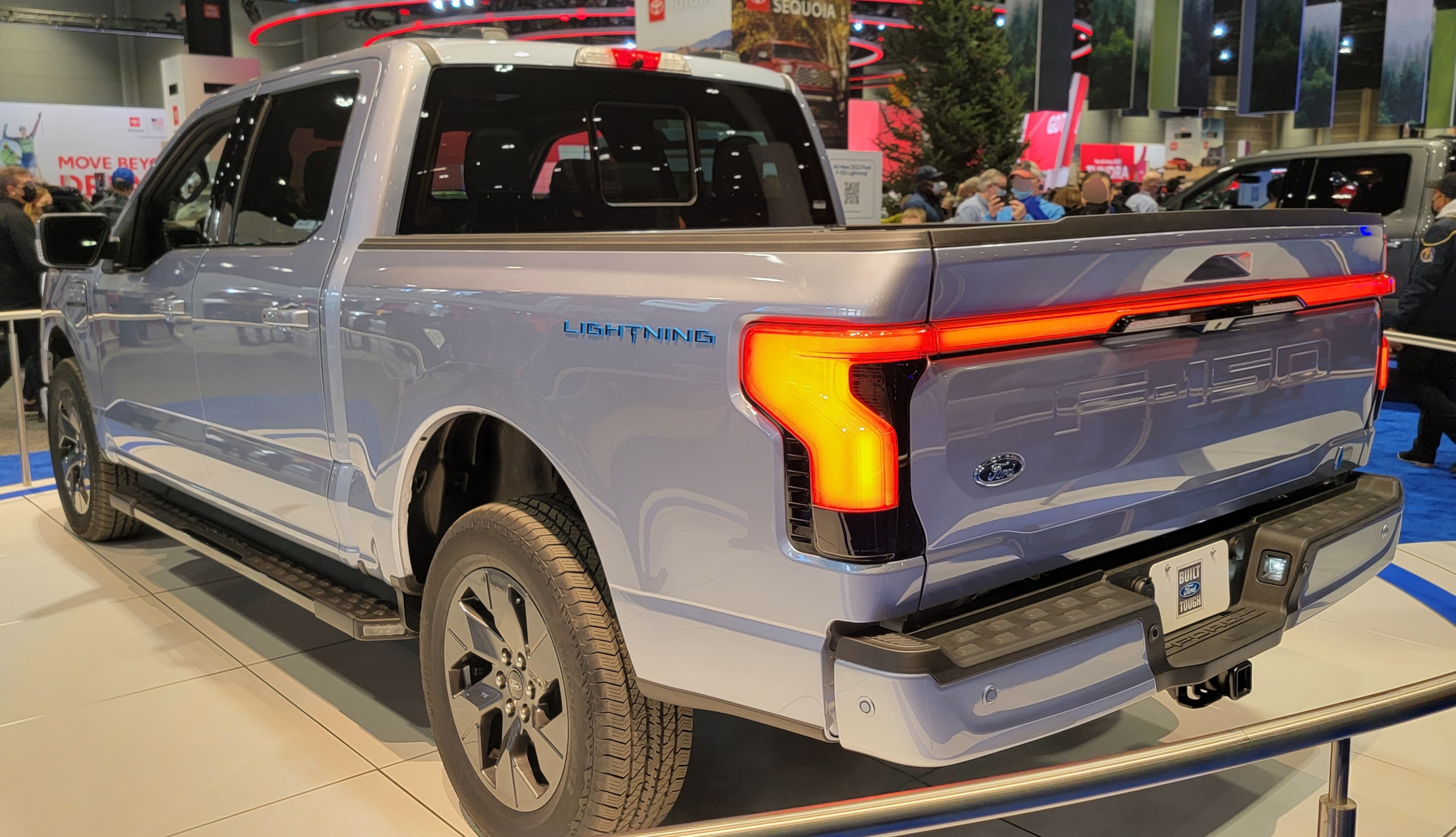
The Ford F-150 is a popular full-size pickup. They’re using it to show what happens in the market when you can’t easily find the newer, lower-mileage trucks you want.
This is a chart-style comparison that looks at two things together: how much the car costs and how many miles it has. It’s useful because it shows what you can realistically buy for your budget.
Certified pre-owned usually means a used car got inspected and comes with extra coverage compared to a regular used car. Here, they’re saying these trucks don’t qualify for that “certified” status.
Term
dealer website
The dealer’s website is where you can find the listing details for a specific car. It’s also where you can check whether it qualifies for certified programs and what perks come with it.
Sometimes a dealer will call a used car “certified” using a company other than the car brand. The problem is the rules and warranty can be different, so you should verify what you’re actually getting.
Mileage tells you how much the vehicle has been driven. Around 140,000 miles usually means more wear, so it’s notable when the price is still very high.
Older cars usually cost less because they’ve been used for a long time. The hosts are pointing out that this one isn’t getting the “older car discount” because the market is still tight.
The out-the-door price is the final total you pay, not just the advertised price. It includes the extra stuff like fees and taxes.
Concept
definition of insanity
It’s a dramatic way of saying, “Why would you keep doing this if it doesn’t make sense?” The hosts are basically calling out how buyers are getting stuck paying too much.
A recall is when the maker says, “This car has a problem—bring it in and we’ll fix it.” Even if recalls were done, it still doesn’t mean the car will be trouble-free forever.
The hosts are highlighting how buyers often can’t pay cash for an older, high-mileage vehicle, so they rely on auto loans. Longer loan terms can make the monthly payment “comfortable,” but they also increase total interest paid and can affect affordability.
Blue Advantage is Ford’s CPO-related coverage/benefit branding mentioned here as part of the certification program. The hosts use it to illustrate how manufacturers set (and sometimes expand) the eligibility window for certified used vehicles.
They’re asking what the warranty actually covers and for how long. A warranty can be helpful, but you want to know the details, not just that it exists.
MSRP is the “sticker price” the manufacturer suggests. If a car sells above MSRP, it means you’re paying more than that sticker price, usually because the car is hard to find.
Low mileage just means the car has been driven fewer miles than average. Buyers usually pay more for that because it can mean less wear. Here, though, low mileage isn’t bringing the price down like it used to.
CarMax is a company that sells used cars. In this segment, they’re mentioned because one of their listings shows how high some used prices are right now.
Concept
used car prices vs new car availability
If new cars are hard to get, people often turn to used cars—even if used prices are high. Sometimes the smartest move is still buying new, because the used premium can be worse than the difference.
Your consideration set is the list of cars you’re willing to think about before you buy. If someone only focuses on one option and ignores alternatives, they may end up paying more than they need to.
The Lexus GX is a luxury SUV. It’s built to feel more like a rugged truck than a typical family crossover, and here they’re using a 2026, low-mileage example to talk about what buyers can actually find right now.
Concept
filtered right here
They’re talking about using the website’s search filters to only show cars that match what they want, like low mileage and a certain price range. When inventory is tight, filtering is how you quickly find the limited options that are out there.
“BMW Rockville store” indicates the dealership location where the vehicle is being sold. Even though the car discussed is a Lexus GX, the listing can be hosted or managed through a dealership group or website that also sells BMW, which is common in multi-brand retail operations.
Carfax is a service that looks up a car’s history using records from different places. If it says the price is “fair,” it means the report thinks that asking price matches what similar cars with similar history usually cost.
AutoNation is a big company that owns and runs many car dealerships. If your local dealer is part of a larger group, pricing and inventory strategies can be influenced by that parent company.
“Dealer orders” refers to placing a request for a specific vehicle configuration rather than buying whatever is already sitting on the lot. In low-inventory conditions, ordering can help buyers avoid markups and sometimes secure pricing closer to MSRP, depending on the dealer and availability.
“Days’ supply” is a market metric that estimates how long current vehicle inventory would last if sales continue at the current pace. A low days’ supply typically signals scarcity, which can drive dealer markups and make it harder to find the exact trim you want.
They’re talking about a market statistic that estimates how many days of new cars are available. The hosts argue the real situation may be even tighter than the headline number.
The used car market is what happens to prices and availability for cars people have already owned. If new cars are hard to find, more buyers turn to used cars, and prices can go up.
The idea is that doing your homework helps you avoid overpaying. Instead of buying on impulse, you compare options and understand what the market is doing.
A dealer trade is when your dealer finds the car at another dealer and arranges to swap it over for you. It’s one way dealers try to get you what you want when local inventory is limited.
Term
$15,000 Delta
A “delta” is just the difference in money. They’re saying the price gap could be huge—like $15,000—if you don’t shop carefully or negotiate.
When something is hard to find, people sometimes pay a lot more just to get it right away. That’s what the “pay whatever it takes” story is about.
Concept
record-low inventory (market tightness)
“Record-low inventory” refers to an unusually small supply of vehicles available for sale. When supply is tight, buyers compete for the same cars, which can raise prices and reduce negotiating power.
Penske is a major automotive and logistics company, and it also operates dealerships and related services. Mentions like this usually come up in discussions about pricing, inventory, and how industry leaders view consumer affordability.
Negative equity means your current car is worth less than you still owe on it. When you trade it in, the difference usually gets added to your new car loan, so you end up paying for that “underwater” amount too.
Concept
inventory (market supply)
Inventory means how many cars dealers have available to sell. If there are fewer cars around, it’s harder to shop around and you may have less power to negotiate.
Concept
Regional supply vs. demand map (inventory heat map)
The hosts describe a map that categorizes areas by relative supply and demand for a specific vehicle. “Green” indicates lower supply/higher demand (or vice versa depending on the legend), while “orange/red” indicates higher supply/lower demand, helping explain why prices and availability vary by region.
“Days on the lot” is a measure of how long a used vehicle sits at a dealership before it sells. Lower days-on-lot usually means higher demand or tighter supply in that area, while higher days can indicate weaker local demand or more inventory.
A residual value is what the car is expected to be worth at the end of a lease. If that number is too low or too high compared to what the market is really paying, it changes whether it’s smart to buy the car or return it. They’re saying the numbers don’t match reality right now.
Concept
net out neutral
They mean that after you add up the money you get for your old car and the cost of the new one, the difference might be close to zero. It’s basically saying the swap may not cost you much overall. They’re tying it to how strong used-car prices are.
They’re saying don’t just accept the first offer you’re given. You can usually do better by negotiating—trying to get more money for your current car and paying less for the new one. The key is to take a few steps instead of rushing.
When a lease ends, the car gets returned—those are called lease returns. What the car is actually worth in the real market matters a lot. If it’s worth more than the buyout price, it can be a great deal to buy it instead of returning it.
At the end of a lease, you can often buy the car for a pre-set price. If the car is worth more than that price, buying it can be cheaper than buying a similar car elsewhere. They’re saying this could be a good move again if the market stays strong.
A market update is basically a quick report on what’s happening in the car-buying market. It helps you understand whether cars are easy or hard to find and whether prices are going up or down.
An out-the-door quote is the final price you pay at the dealership. It includes the car price plus things like taxes and fees, so you can compare deals more fairly.
Rear seat entertainment is a system with screens or media for passengers in the back seats. It helps keep people occupied on longer drives.
LIVE
Dear Crew, it's Toyota. With an adult-sized third row, everyone's welcome in the Grand Highlander.
From sports fans to eco buffs and movie fans.
Sink back in the Sienna with an available rear seat entertainment system.
Slip into the RAV4 with available all-wheel drive and let's go!
Toyota. Find yours at toyota.com.
Toyota. Let's go places.
It's noon here in Ventura City, New Jersey and our nation's capital, Washington, D.C.
and this is Car Eng Live for Friday, April 24th.
Can you feel the love in the air?
Yes, that's right. The Arizona Cardinals drafted Jeremiah Love yesterday
and perhaps we'll have a running game this year. Who knows?
Anyway, your host today or me, Ray, here in Ventura, Zach,
feeling the love in Washington, D.C., ladies and gentlemen.
How are you today, handsome?
Doing well. I did yoga this morning and dad, I learned I am not very flexible
so I've got some work to do over there.
Today's show, folks, is brought to you by CarEdge.com.
If me, my dad and our incredible team can help you out with our car buying service,
please go to the website and learn more.
Whether you're leasing or buying, CarEdge contacts dealers for you,
removes hidden fees and handles every step of the car buying process, saving you time and money.
Learn more under Save Money and learn more about our car buying service.
I encourage you to meet our team of concierges as well.
Huge congrats to Nick here.
He's done 283 deals for our community members.
Incredible. Saved over a million dollars over those 283 deals.
You can see some of those savings down here.
Some recent deals Nick has helped our community members with
thanks to Nick and our incredible team back at CarEdge.com.
Go there to learn more.
Now, dad, on the show today, we're going to be talking about the used car market
and the fact that we have record low inventory levels.
All right, here's the deal. I want to start here.
We're going all the way back in time.
You ready to go back in the wayback machine?
I'd like to be young and healthy again. Yes, absolutely.
Two years ago, dad, going to put you on the spot.
Two years ago, what do you think the total number of used cars in inventory
were in the United States?
And I'll put you on the spot here.
What do you think the day's supply was?
How many days supply of inventory do you think the used car market had?
Two years ago.
And if you want to put some guesses in the chat, put them there as well.
$2.47 million, and it was a 58-day supply.
Now, for context here, we're actually going to start things off with the new car market.
Why? To help juxtapose the difference between new car and used car dynamics.
This data came out just last week.
Folks, there are 2.89 million new cars in inventory 79 days supply.
Okay, so use those as a barometer.
We jumped back, dad, two years ago.
Yes.
On the used car side of things, we had 2.22 million, and we had a 44-day supply.
So let that sink in for just a moment.
Historically, the used car market has had significantly less day supply of inventory.
Obviously, you can see we just grounded ourselves in the new car day supply.
It was 79 versus 44 two years ago, and it had fewer vehicles available.
2.22 million versus today's new car market has almost 3 million.
I'll give you another chance to redeem yourself, dad.
What about last year?
Now that you know what it was two years ago in the used car market,
what were conditions in the used car market when you were ago today?
How many vehicles in inventory and what was the day supply?
Again, two years ago, it was 2.22 million and 44-day supply.
What do you think it was last year?
1.97 million and a 39-day supply.
All right, you hit the money with the day supply.
39-day supply and 2.14 million used cars in inventory.
You ready for this year, pops?
I'm not sure.
You shouldn't be because, dad.
We have hit the lowest level of used car inventory since at least 2019.
That's as far back as the V-Auto data set goes.
We are under 2 million used cars in inventory, 1.95 million and a 37-day supply of inventory.
Help all of us.
I know you say this weekend and week out, day in and day out, hour out, now we're in.
What does it mean, dad, when there's a 37-day supply of inventory
and less than 2 million used cars in inventory?
What does that mean for the used car market and for used car buyers?
It means, as a customer, you're screwed.
It means realistically, you have very little leverage.
The dealers are turning their inventory so quickly
that they're not really interested in hearing what you have to say
when it comes to the type of the discount you would like off the prices they're asking.
And because there's such a short supply, less than 2 million,
that means whatever used cars become available to dealers either via trade-ins
or outright purchases or through auctions, they're paying more for
because they can't afford to lose getting another used car for their lots at the moment
because there's such a shortage of quality used cars.
So if you're looking for a one, two, or three-year-old used car,
you're going to pay through the roof.
I mean, literally.
We're seeing some Toyotas, dad, used Toyotas, one-year-old used Toyotas,
sell for more than their original MSRP on the wholesale market right now
and obviously to retail customers.
That is eerily reminiscent of where we were at the beginning of the pandemic
in some ways that the used car market today to your point screwing customers
reminds me of where we were back.
What was it? 2021 maybe?
Like whenever the pandemic was really ripping in raw and used car prices were going through.
Astronomical.
Astronomical.
Yeah.
Well, please know that there were 10 to 15 million new cars
that were scheduled to have been built globally during the pandemic
and after the pandemic because of the chip shortage that were never built.
Well, if they were never built, they were never sold.
And if they weren't sold, it means there's none of those potential vehicles
that would have been built and would have been sold coming back into dealer inventories today,
which is why we have such a shortage of pre-owned cars.
Something I predicted five years ago.
Something when I spoke to our good friend Chris the other day.
Chris was a buyer at a large dealer group in the DMV area.
And he retired and well, guess what?
He's now only semi-retired because he's a buyer for another large dealer group in the DMV area.
And the amount of used cars that they're selling,
the amount of used cars that they're buying, the prices that he has to pay
are just astronomical and he doesn't see an end to it because there's such a shortage of cars.
I want to show some more charts here, Dad, but I want to call something out off the top here.
The old adage to get a good value, get a two or three-year-old used car.
It's already depreciated.
I saw a TikTok the other day.
You know me on TikTok.
And there are people in the comments talking about you want to get a value
because it was comparing financing versus leasing a new car.
And all the comments were, don't be an idiot, get a two-year-old used car.
And all I could think to myself was, oh, how the market has changed.
You have no leverage in the used car market right now.
Prices are astronomical.
Look at this chart.
Here is the past five years of used vehicle inventory.
It is the lowest it has ever been.
At the same exact time, Dad, look at this chart and you're looking at the dark blue line right here.
Yes.
See that right there?
This is sales.
We have the third highest level of used vehicle sales over the past five years at the exact moment
where we have the all-time record lowest inventory.
The old adage, I just again want to call it the old adage.
You get a better value when you buy a two- or three-year-old depreciated used car.
It does not make sense in today's market and that needs to be shouted from the rooftops.
It is totally different than it has been in the past.
The first law of economics holds true at the moment.
That's the law of supply and demand.
The supply of quality used cars, pre-owned cars, one, two, three, four-year-old,
high quality, lower mileage, pre-owned cars.
That supply is so low and the demand for those cars is so high that as you stated earlier in many cases,
one-year-old Toyotas are selling used for more than what their MSRP was when they were new.
You know, I remember, it's like summer reruns.
I remember watching this TV show five years ago where the same thing was happening.
People, there was that fear of missing out on a vehicle and people were paying more for pre-owned ones
than you could have bought a brand new one for if you could have found the brand new one.
Let's do a little bit of a live experiment here, Dad.
I am so interested in doing this.
I've come to the CarEdge CarSearchStad and I've toggled for nationwide Ford F-150s and I just have used selected up here.
Let's go to our new little price versus mileage matrix.
Let's take a little peek here.
What you get from a price perspective versus the amount of miles on that vehicle.
You're looking, let's say you're in the market and you only want to spend $20,000.
Yes.
Boop, boop, boop, boop, boop.
Right here, you're looking at 80,000 miles, 100,000 miles.
It looks like that there's the majority of them have 120,000 to 150,000 miles.
I'll go ahead and click on that so we can see what some of that inventory starts to look like.
You can see here, look at this for a second, y'all.
Let's show certified pre-owned.
They're not certified pre-owned.
They're not factory certified pre-owned because A, they're too old and B, they have too many miles.
Let's take a peek at the dealer website then.
Could they be third party CPO, which means nothing?
Yes, that they could be.
Let's see here.
You can see the listing on the dealer website.
Eligible benefits.
All right.
Anyway, this is crazy.
Yeah.
$21,748.
To get yourself, what did this have on it?
It had 140 something thousand miles.
141,000 miles.
And it's 11 years old.
And then that, if I may, if I may.
Yes.
Coming back over here.
Now let's go to the map view.
There is not a single state, I guess Utah is the one state where it's a buyer's market for used Ford F-150s.
And again, just to juxtapose this, I'm going to lead this up, but I'm going to go ahead, shop cars, shop new in a new tab.
And bear with me for a moment here.
Now we're looking at new vehicles, four years.
And we're going to do, wait for it, F-150, and we're going to do map view.
I see a lot more green when I'm looking at the new car market.
Yes.
New car market for Ford F-150s, used car market for Ford F-150s, new car market for Ford F-150s, used car.
I mean, it is just a bloodbath if you're looking for a deal on a used, in this case, F-150.
And the reason I think it's pertinent to use an F-150 as an example here, Dad, is because Ford Chevy Toyota Honda Nissan account for 51% of all used vehicles sold right now.
I feel bad for somebody that's about to spend almost $22,000 or over $22,000 with fees on an 11-year-old 140,000 mile pickup truck.
I mean, you know, you want to talk about the definition of insanity.
I mean, that right there is, how?
How can, I suppose you could say to yourself, well, you know it's got to be in pretty good shape.
It's probably had 15 or 20 recalls done in those 11 years.
Okay, so from a recall perspective, all the crap that was banned with it might have been fixed by now.
Perhaps, but you're talking, you know, I'm not going to suggest that a truck is used up at 140,000 miles.
It's not.
Not today.
40 years ago, perhaps, but not today.
Yeah.
But to have to pay that much for an 11-year-old vehicle with those type of miles, that is just, and let's face it,
that person more than likely is not walking in and paying cash.
So that person has to look for a way to finance that 11-year-old vehicle with 141,000 miles.
How long do they have to finance it for in order to have a comfortable monthly payment?
Dad, I hate to do this too, but I'm grateful for you, Dan C.
Yes.
Ford certified pre-owned, excuse me, Blue Advantage is up to 10 years old and under 150,000 miles.
We've seen a proliferation, excuse me, of manufacturers extend what had previously been pretty stringent
requirements for certified pre-owned programs and make them quite extended.
I think Hyundai and Kia also go up to now 10-year-old used cars can be certified pre-owned.
So I think it is worth calling out that.
Well, Dan, thank you for pointing that out and still doesn't mean much.
What does that get you?
On a 10-year-old less than 150,000 mile Ford and if it is a Ford CPO, what does that get you?
A one-year 12,000 miles worth of warranty of some type of warranty?
What does it actually get you?
But whatever, I suppose it's a good selling point.
So, Pops, that was a Ford F-150 example.
Let's move to the Toyota market.
We know that is a market where some of the used vehicles are selling above MSRP.
Let's do this, Dad.
You can search on thecaredge.com car search, new and used and even certified all at the same time.
So let's do that.
Let's come in here now and let's look at Toyota.
Oops, let me type an O instead of a P, Toyota.
And what's one of their vehicles that is flying off the shelves?
I mean, they all are.
RAV4?
You want to do a RAV4?
What's one that might be selling above MSRP?
Maybe the Grand Highlander?
So new.
So new?
All right, we can do RAV4.
Yeah.
So we'll come here.
41,000, almost 42,000 used, new and certified Toyota RAV4s out there on the market.
If I'm not mistaken, wasn't it two years ago that the RAV4 actually displaced the Ford
pickup series as the number one selling vehicle in the United States?
A run that Ford had had for 40-some years.
So I think it was just two years ago.
So, yeah, I think a RAV4 is a good choice here.
So let's look at our little chart here.
Yeah.
All right.
You're not finding low mileage, sub-$20,000 RAV4s.
They don't exist.
They really, really don't exist.
You're going to be spending at least $25,000 if you want below 20,000 miles.
We come out here and maybe I'm at a sub-$20,000 price point.
You want a RAV4 for $15,000.
You're looking right here, Dad.
You're at 80 to 100,000 miles on it.
You're at even more, are in the 100 to 120,000 miles on it, 120 to 150,000 miles on it.
You want to be at a sub-$10,000 price point.
Look at this.
All right.
Excuse me.
I had a 10 to $15,000 price point.
You're well into $150,000 for us on that vehicle.
I am very interested here.
The more expensive low mileage ones.
Let's click into that.
I'm going to get rid of new in the car search here and I just want to see what shows up.
Now we're looking at used and certified pre-owned ones.
Okay.
I mean, that's crazy, $50,000 for a Toyota RAV4 folks with 8,000 miles on it.
When did RAV4s become $50,000 cars?
Not too long ago, apparently.
I'm so curious though.
This is way over the original MSRP.
Maybe we're missing an option or something here, but I mean, this is crazy.
Well, it's an XSE for goodness sake.
I think we found our first example on some RAV4s, in this case, that's selling above
original asking price.
Original manufacturer suggested retail price, I should say.
Yeah.
20,000 miles and they're asking $41,000 for it.
Almost seems like a veritable bargain, doesn't it?
No.
The key word there is almost.
Here's another one, CarMax, $51,000 and it's got 2,800, like the market for certain used
cars right now.
Yes.
It's so out of whack.
Well, because you can't get a new one.
So for somebody that wants a used one, they're going to...
The uneducated consumer will pay more for a product than an educated consumer.
And somebody who has their heart set on one of those won't take in the consideration any
of the information that's available to them that might suggest...
Go get a new one.
Sounds crazy, but the new is a better value maybe.
Yes.
Yes.
Even if you have to wait.
What about a Lexus GX?
I just want to do one more.
Okay, sure.
So let's come here.
We like a Lexus.
We like Lexus.
Let me get rid of Toyota, Lexus.
Now we're talking about a GX and again, we've got this filtered right here.
We've got this filtered right here.
We're looking at, you know, what is this?
The more expensive under 20,000 miles.
Of course.
So this is a relatively new one.
Yes.
It's a 2026.
I would say that's relatively new.
Go to the dealer website.
This is being sold at BMW Rockville store.
I've been to, dad.
Well, not the new facility.
We've never been to the brand new facility.
We had spent some time in the old facility.
So Carfax is saying this is a fair value.
Let's really dig into this for a second.
Okay, original Windows sticker.
Here's what I was looking for.
And if I'm not mistaken, BMW of Rockville today is owned by AutoNation.
Yes, it is.
Yeah.
So look at that, dad.
So the original MSRP was $74,254.
And what are they asking for?
$88,995.
You know, who wouldn't want to pay an extra $15,000 for somebody to put 5,000 miles on
the vehicle?
So if you...
And look at this.
And look at this.
Market's still tight on the GX550, but better than a couple months ago.
Thank you for that space, but what?
So, you know, just maybe.
Just maybe.
If that's the vehicle you have to have, just maybe you need to look at other types of
vehicles.
I get, you know, that Alexis is Alexis, but why would you pay $15,000 more for something
with 5,000 miles on it than the manufacturer suggested it should sell for when it had zero
miles?
Supply and demand.
Answer your own question.
Well, yes, it is.
And that is why regardless, I think...
I actually think the point is regardless of if you want to spend your money on Alexis
GX or not, this is proof positive that go buy a new one at MSRP.
If you...
I mean, there's a whole...
If you can't...
Yeah, but Dan, there are dealers out there that are doing this.
We have a few partners that we work with at CarEdge.
They'll do orders.
You'll get a vehicle at MSRP or below even in some cases that are very tricky vehicles.
I mean, I want to be very clear here.
This is the old adage of I'm a used car shopper, so I'm getting a better...
You're getting crushed.
What did you say earlier?
We're getting screwed.
Used car shoppers need to know they're getting screwed in today's market, because again,
where we started out today's show, we actually level set for a moment here.
This is the current new car market dynamic.
Almost 3 million vehicles and inventory in a 79 day supply, which go watch our other
show earlier this week talking about the new car day supply.
Me and my dad both think it's BS.
We think it's much higher than this.
Absolutely, yes.
Because last month it was closer to 100 than it was.
Yes.
Whatever.
Directionally, it's significantly higher than historically.
This is two years ago what the used car market looked like.
This is last year what the used car market looked like.
This, don't hold your breath for it.
This is what the current used car market looks like.
You're getting screwed.
We've proven it now a handful of times with whether it's an F-150 or a RAV4, or in that
case, the GX550, which is going to be the most egregious example possible.
You should just...
I can't believe I'm saying this.
You want a good value in the car market today?
Look at new cars unless your budget constraints are so far like sub-$20,000.
Then that doesn't exist.
That doesn't exist in the new car market except for the Nissan Versa.
Yes, but I was going to say, wait a second, if you want a good value and price is not
an object, why would anybody buy that 5,000-mile GX that we looked at?
Because they can't get their hands on a brand new one anytime soon.
I want everybody that says, I have to have it, we'll do it and pay a price to be able
to do it.
Keep me honest that even though the market has changed and now is very much on the used
car side, a sellers market, which we should cross on in a bit more detail here in a second,
it still goes back to the informed and educated shopper will be the better off financially
shopper.
If you just go walk into your local Lexus dealership and say, I need a GX today, that
Lexus dealer will figure out a way to get you home on one.
They'll dealer trade, they'll find a CPO, they'll do whatever.
It's a really used one.
Yeah, exactly.
Versus, I'm not saying you have to use our services at Carage, just do your research.
Don't just walk into a dealership.
We're talking about a $15,000 Delta.
Yes.
Oh, Delta Dawn, baby.
I could almost sing that song.
You know what I mean though?
I actually think so many aspects of the car market haven't changed, which is you go in
uninformed and uneducated, you're going to get taken advantage of today just like you
would have a year ago, just like you would have a decade ago, just like you would have
a century ago.
This is further proof of something that I have said forever that I learned early on in
the car business.
Those who can afford to pay the least pay the most, and those who can afford to pay the
most pay the least, except when it comes to those who can afford to pay way too much to
buy a current model year car with miles on it because they can't get it without miles
on it.
This is, and the only reason they would do that is because they have no patience.
And I'll share a quick story with you.
I remember back in the, I guess it was the late 70s, maybe early 80s, there was a turntable
I wanted for my record collection.
And I was living, I think at that time, in Glassboro, New Jersey, and the story that
had it was in Cherry Hill, New Jersey.
You know, typically on a nice day, wouldn't be much of a problem.
This happened to be a snowstorm, and you know, I was just as dumb as some of these people
buying these used GXs because I said, well, I can't wait for the snowstorm to stop.
I've got to have it right now.
And I put my ass in my car, and I ran the risk of killing myself or killing others by
traveling in the snow to go pick up this turntable that really wasn't going to change
my life one way or the other.
So I get why people sometimes act stupid, stupidly or foolishly and just say, well, I got to have
it this second and I'll pay whatever it takes and I'll do whatever it takes.
So I'll pay $15,000 more because my neighbor who wants one can't get one because I bought
it.
For sure.
And I would just say it's a financially irresponsible.
It's not necessarily stupid or dumb.
You're putting a judgment on that, which you know what, there are a lot of people who are
in a situation in life that are very different than you and me.
They can afford on an $80,000 purchase or $90,000 to be financially irresponsible to them.
That doesn't change their lives.
For you and me, that changes our lives, $15,000 changes our lives.
But you know what, more power to those people.
Is it important though with the platform we have to educate as many people as possible
as to what the dynamics are in the market?
Because for most people, we don't have the luxury.
I don't have the luxury to go willy-nilly lose $15,000.
That changes a lot in my life.
That changes a lot in your life.
That changes a lot in the lives of many people that listen to this podcast.
Make the smart decision is all we employ.
Make the financially responsible, excuse me, decision is all we employ you to do.
Listen, I remember having an area vice president for the Penske Granization tell me that an
extra $50,000 a year won't impact your life.
I said, well, it might not impact yours because you're making $1,000,000 a year.
But it'll certainly impact mine because I'm not making anywhere near that you've seen
to that.
So, you know, everything is relative, $15,000 is significant.
But it was funny when the area vice president said that to me because, well, he was wearing
a $50,000 plus Rolex Daytona on his wrist that he had recently purchased.
So, yeah, you know, $50,000 meant nothing to him, but it would mean something to most
people and, you know, truth be told $15,000 means something to most people, especially
when you consider, as we talked about earlier this week, that the average amount of negative
equity on vehicles traded in today is nearly $7,200.
So, the vast majority of people could never afford that $15,000 in my humble opinion.
I don't think that one's so opinionated that I think that's the reality.
I want to do one more experiment here and then I want to come back to the chat.
The thing that I want to do on the experiment that we looked earlier in the show at the
map view, which again, the map shows you kind of red or green, red being parts of the country
that are really low supply and high demand for a particular vehicle, and green being
areas of the country which are low or higher supply and lower demand.
I want to do the same thing.
We did it for F-150s.
I'm very curious to do it with the RAV4.
So, I want to come here, Dad.
I'm going to choose Toyota.
I'm going to choose RAV4.
And now I want to do the map view of used, yeah.
I was curious.
I was curious if there were any pockets.
Looks like South Dakota maybe has a slightly higher, yeah, you can see here.
South Dakota has a slightly higher supply and demand of vehicles.
Vermont, you got a little bit of a better shot.
Most of the country obviously in orange and red here.
Don't they like Toyota's in Vermont?
I mean, let's click in, Dad.
Yeah, we don't got a lot going on.
It's up here in St. Albains.
We got one that's been sitting for 104 days.
Otherwise, these cars are 28 days on the lot, 26 days on the lot.
Now, I mean, these used vehicles are turning over quick.
So, super interesting to look at.
All right, let's come here to the chat, Dad, from Rich.
Appreciate it, Rich.
I couldn't help myself.
The Roach Coach car.
Well, the Roach Coach that I remember was the food truck that would pull up to a dealership
every morning and serve really bad morning breakfast sandwiches and coffee and sodas
and then they'd pull back up again at lunchtime
so that the techs could go get them.
Oh, my God.
No way, Rich.
Rich is coming through with the strangest vehicle we've ever seen.
Yes, I like that.
I mean, look at them eyes, baby.
Hey, question here from David.
How much of a good extended warranty cost?
It's negotiable.
When you go to the dealership, it's negotiable.
Do your research online.
We have a calculator back at CarAge.com.
Go to CarAge.com slash warranty and you can get an estimate for what a warranty cost would be.
There, use that as negotiating leverage at the dealership.
All right, one other thing I wanted to bring up in the context of all this.
Yes.
It's a double-edged sword.
My 2021 Hyundai Launcher, this is from Oracle Rabbit Blend.
Yes.
It's still worth kind of what I paid for it.
So, it defies what people say about residuals.
This, I think, is very, very, very true.
Now is probably as good a time as ever to sell your used car and buy a new one if you want,
because you're kind of going to net out neutral.
Like, you're going to get a newer car.
You're going to sell your used car for probably what you paid for it or somewhere around there.
To be clear here, you're going to have to negotiate.
Like, there are steps to sell your car for the most money possible.
You shouldn't just take the first off or anyone gives you.
But, yeah, residual values do defy logic right now.
And that is a huge hope.
Sometimes they do.
We saw that earlier this decade when the market value for so many of those lease returns that
were coming back, the residual values were 25%, 30%, 35% below what the market value was.
It was one of the few times in the history of the industry where if you were somebody that
had a lease car, it would have made great sense for you to purchase it at the end of the lease
rather than turn it back into the dealer.
Yep.
So, we could be coming into another moment of that.
Yes.
It's something to be aware of.
A huge message for people to understand.
All right, folks, again, if we can help you out with anything,
meet my dad and our awesome team back at CarEdge.com.
Let's actually take a second here.
Dad, remind everyone, bear with me for a moment, team.
Boom.
Let me pull this up on the screen.
We got an awesome group of people behind the scenes, folks.
Many of you don't know this, but they're about, I don't know, 30 of us at CarEdge.
So, please take some time, learn more about our awesome team.
We're here to help.
We want to make it a better process for you, all things car-related.
So, please check out the website, CarEdge.com.
We appreciate your continued support.
And we're back on Monday.
We have a Toyota dealer joining us on Monday, Dad.
Give us a market update for what's going on with Toyota.
So, tune in for that.
And yeah, we appreciate everyone being a part of this.
Would that be Tyler, the Toyota dealer?
Tyler, the Toyota dealer.
He'll be with us on Monday.
It just rolls off the tongue, doesn't it?
Tyler, the Toyota dealer.
It does indeed.
Yes, yes.
I'm looking forward to it.
All right.
Enjoy the upcoming weekend, everyone, Dad.
Enjoy your afternoon.
Oh, I have a media engagement at one o'clock today.
I have spectrum news.
I never heard of them, but what the heck?
We're going to talk about the RAV4, Toyota RAV4 experiment
that we did earlier this year.
Nice.
Where we requested out-the-door quotes from 100 Toyota dealers.
So, yeah.
Well, thank you for doing that, pops.
Folks, we're back on Monday.
I'll see you then.
Love you, Dad.
Yeah.
Have a great weekend, everybody.
Love you too, Hanson.
Dear crew, it's Toyota with an adult-sized third row.
Everyone's welcome in the Grand Highlander.
From sports fans to eco buffs and movie fans,
sync back in the Sienna with an available rear seat entertainment system.
Slip into the RAV4 with available all-wheel drive.
And let's go.
Toyota, find yours at Toyota.com.
Toyota, let's go places.
If you like the show, please take a moment to rate, review, and subscribe.
It really does help the show to grow.
Thank you for listening.
About this episode
Record-low used-car inventory is crushing buyer leverage, and the hosts lay out the numbers and show it in real listings. They compare used vs new “days supply,” noting used is at a 2019-or-earlier low (about 1.95M cars, ~37 days). With demand high and supply tight, dealers pay more at auction and pass it on—sometimes even pushing 1-year-old Toyotas above original MSRP. Live searches for used F-150s, RAV4s, and even a Lexus GX highlight how low-mileage “deals” are gone, while new cars can be the better value if you can wait. They also discuss extended warranties, regional inventory differences, and the possibility that selling now could net near-neutral results thanks to unusual residuals.
Today on CarEdge Live, Ray and Zach discuss the latest info on the used car market. Tune in to learn more! Hosted by Simplecast, an AdsWizz company. See https://pcm.adswizz.com
for information about our collection and use of personal data for
advertising.