
Car Pro Radio Show May 16 26 Hour 1
About this episode
Leasing and buying decisions kick things off with practical mileage advice, including a story about “a guy that put 223,000 miles on a leased Camry.” The show then pivots through real-world vehicle reviews and shopping guidance: why the Chevy Trax can be a value pick, how three-row SUVs compare on hybrid and cargo practicality, and what to watch for with used trucks and fuel economy. Warranty strategy comes up repeatedly, from Teslas to extended coverage, alongside reliability talk on starters, alternators, and turbo engines.
Car Pro Radio Show May 16 26 Hour 1
Hosted by Simplecast, an AdsWizz company. See pcm.adswizz.com for information about our collection and use of personal data for advertising.

Chevrolet Trax
"What could we do for you today? [329.4s] I was calling as promised with their average man review of a Chevy Trax [335.1s] I have one of the rental cars this week and I've heard you talk about them and brag about them [340.9s] I'm like okay, let's see if he's telling the truth"
The Chevy Trax is a small SUV made by Chevrolet. Here they’re talking about how it drives in everyday situations—especially when you need to speed up to join highway traffic.
The Chevrolet Trax is a compact crossover SUV from Chevrolet, aimed at buyers who want an easy-to-drive daily vehicle. In this segment, the host and caller focus on how the Trax feels when accelerating and merging onto the freeway, which is a common real-world test for a small crossover.

Envista Buick Invista
"...nd that is that vehicle so much, the Trax and the Buick Invista For that matter, because it's the same car"
The Envista is a small crossover SUV meant for everyday driving and easier parking than bigger vehicles. The podcast says it’s very closely related to other similar small crossovers, meaning they share a lot of the same design and components. That’s why it comes up—people want to understand what’s really different.
The Envista is a compact crossover that’s being discussed in relation to other small crossovers, with the podcast claiming it’s essentially the same vehicle as the Trax and Buick Invista. That kind of “same platform” talk matters because it can influence how parts, driving feel, and options are shared across closely related models. It’s brought up because buyers often want to know what’s actually different when names change.
start-stop system
"My wife mentioned that the trunk space is a little small [459.9s] And then also, it doesn't have the start-stop system on it [463.5s] But I didn't notice it for about the first day and a half"
A start-stop system turns the engine off when the car is stopped and turns it back on when you start driving again. It can help save gas in traffic, and the host says this vehicle doesn’t have it.
A start-stop system automatically shuts the engine off when the car is stopped (like at a red light) and restarts it when you’re ready to move. The goal is to reduce fuel use and emissions in city driving, which is why its absence can be noticeable to drivers.

GMC Acadia
"Presently, well I did own a GM, I still do a GMC Acadia It's got 2,000 miles on it, so I bought a relative Lexus RX"
The GMC Acadia is a family SUV. Here, it’s Judy’s current car, and she’s thinking about switching because she wants something that sits higher and can carry more.
The GMC Acadia is a midsize SUV from General Motors (GMC) known for family-friendly space and everyday drivability. In this segment, it’s Judy’s current vehicle, and she’s comparing it to other SUVs based on ride height and practicality.

Lexus RX
"It's got 2,000 miles on it, so I bought a relative Lexus RX And I'm not, it's a 2017, it runs great, but I'm not happy with how low to the ground it sits"
The Lexus RX is a comfortable midsize luxury SUV/crossover. Judy says it’s a good-running car, but she wants a higher-riding vehicle.
The Lexus RX is a popular midsize luxury crossover from Lexus, typically chosen for comfort and a reputation for smooth, low-stress ownership. In the segment, Judy says she bought a relative’s Lexus RX (a 2017) but doesn’t like how low it sits.

Toyota Grand Highlander
"So I'm currently looking at the Grand Highlander The Toyota, the Kia and Hyundai So I was wondering which one's the best one that you would recommend that sits up off the ground with a few bells and whistles on it ... But, you know, I think for the long haul, if I were you, I would probably go with the Grand Highlander"
The Toyota Grand Highlander is a bigger family SUV. The host recommends it because it has available four-wheel drive and a hybrid setup, which they say is strong and proven for the long run.
The Toyota Grand Highlander is a larger, family-oriented SUV positioned as a practical alternative to other three-row crossovers. Here, the host recommends it for Judy’s needs, citing Toyota’s four-wheel-drive system and its hybrid system as key strengths.

Hyundai Palisade
"Okay, you know, I love the Telluride and the Santa Fe, or excuse me, the Telluride and the Palisade from Hyundai That's their 23 road SUVs They're terrific, they come with a long 10 year, 100,000 mile warranty ... You can now get the Palisade and the Telluride in a hybrid But we don't have the history on the long term reliability that I've got with the Toyota"
The Hyundai Palisade is a large family SUV with three rows. The host notes you can get it with a hybrid and that it has a long warranty, but they still recommend the Toyota for proven long-term reliability.
The Hyundai Palisade is Hyundai’s three-row SUV, aimed at buyers who want a roomy family vehicle with lots of features. In this segment, it’s discussed as an option that can be had with a hybrid powertrain and comes with a long warranty, but the host prefers Toyota for longer-term reliability history.
Hyundai Telluride
"Okay, you know, I love the Telluride and the Santa Fe, or excuse me, the Telluride and the Palisade from Hyundai That's their 23 road SUVs They're terrific, they come with a long 10 year, 100,000 mile warranty ... You can now get the Palisade and the Telluride in a hybrid"
The Hyundai Telluride is a big family SUV with three rows. In this segment, it’s compared to other options based on features, warranty coverage, and whether a hybrid version is available.
The Hyundai Telluride is Hyundai’s three-row SUV, designed for families who want space and feature content without going to a luxury brand. The host mentions it alongside the Palisade, including the idea that it can be ordered with a hybrid and that Hyundai offers a long warranty.
10 year, 100,000 mile warranty
"They're terrific, they come with a long 10 year, 100,000 mile warranty They got a lot of bells and whistles on them"
A warranty is coverage that helps pay for certain repairs if something goes wrong. Here, the host mentions Hyundai’s long warranty—10 years or 100,000 miles—to make the case for those SUVs.
A warranty is a manufacturer-backed promise to cover certain repairs for a set time and mileage. The host specifically cites Hyundai’s “10 year, 100,000 mile warranty” as part of why the Telluride and Palisade are appealing.
four wheel drive system
"And there's a couple of reasons, one is Toyota's four wheel drive system is terrific And that standard on the Grand Highlander and their hybrid system is just the best in the auto industry"
Four-wheel drive means power can go to all four tires. That can help you get better grip in bad weather or on rough roads, which is why the host brings it up for the Grand Highlander.
A four-wheel-drive (4WD) system sends power to all four wheels, improving traction when roads are slippery or uneven. In this segment, the host highlights Toyota’s 4WD system as a reason to choose the Grand Highlander.
hybrid system
"And that standard on the Grand Highlander and their hybrid system is just the best in the auto industry Nobody's done it longer and nobody does it better ... You can now get the Palisade and the Telluride in a hybrid But we don't have the history on the long term reliability that I've got with the Toyota"
A hybrid uses both a gas engine and an electric motor. The idea is to use less fuel, and the host says Toyota’s hybrid experience is more established than the newer hybrid options from Hyundai.
A hybrid system combines an internal-combustion engine with an electric motor to improve efficiency and reduce fuel use. Here, the host argues Toyota’s hybrid system is especially well-proven, while noting Hyundai’s hybrid availability is newer so there’s less long-term history.
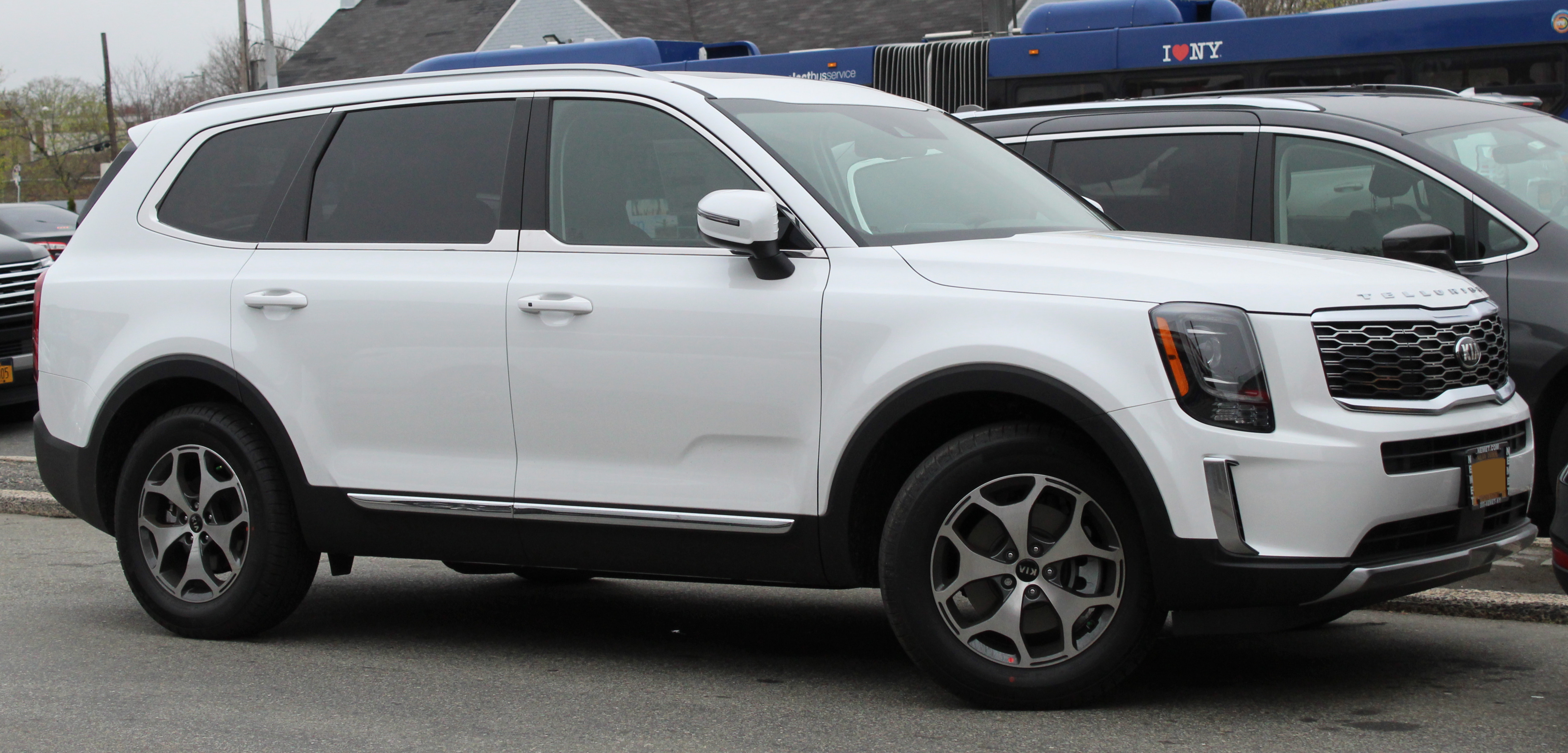
Telluride
"Because frankly, I find the Palisade and the Telluride to be extremely enjoyable vehicles to drive But I can't tell you with certainty that, you know, ten years, well over 100,000 miles"
The Kia Telluride is a family SUV with three rows of seats. The host is talking about whether the hybrid system will last for many years and high mileage.
The Kia Telluride is a midsize three-row SUV that’s popular with families for its roomy cabin and easy-to-live-with layout. Here, the host groups it with the Palisade and then shifts to concerns about how a hybrid system will hold up over long mileage.

Palisade
"Because frankly, I find the Palisade and the Telluride to be extremely enjoyable vehicles to drive But I can't tell you with certainty that, you know, ten years, well over 100,000 miles"
The Kia Palisade is a big family SUV. The host is talking about whether its hybrid system will last as well as Toyota’s hybrid system.
The Kia Telluride and Kia Palisade are large, family-focused SUVs known for comfortable seating and practical interior packaging. In this segment, the host is comparing them as enjoyable vehicles to drive and discussing how their hybrid tech may age over time.

Highlander
"So for those reasons, I'd either go with the Grand Highlander or I'd go with a regular Highlander If, you know, the Grand Highlander's going to be probably five grand more, but you get more room"
The Toyota Highlander is a family SUV with three rows. The host is saying it’s usually cheaper than the Grand Highlander, but you give up some space and interior upgrades.
The Toyota Highlander is a midsize three-row SUV that’s positioned as a more affordable alternative to the Grand Highlander. Here, the host contrasts it with the Grand Highlander on price and space, noting that the Grand Highlander costs more but offers more room and a nicer interior.
third row that folds flat into the floor
"As long as it's got a third row that folds flat into the floor and all three of those do Then you're going to have more cargo areas probably than you need"
Some SUVs let the back seats fold down so the floor becomes flatter. That makes it easier to carry bigger items without awkward steps in the cargo area.
A third-row seat that folds flat into the floor lets you create a more usable cargo area by removing the “hump” behind the second row. The host is using this as a practical shopping criterion: more flexible cargo space is better than running out.

Ford F150
"Well, we're looking at the possibility of getting a used Ford F-150 somewhere 22, 23, 24 ... That's got, you know, that used miles on it and hybrids"
The Ford F-150 is a popular big pickup truck. Here, they’re talking about a used one and how the hybrid version can help with gas mileage, especially if you drive gently and pay attention to towing gearing.
The Ford F-150 is a full-size pickup truck known for offering multiple powertrains, including hybrid options, aimed at improving fuel economy without giving up towing capability. In this segment, the hosts discuss buying a used F-150 and focus on how its hybrid setup affects real-world mpg and towing-related gearing choices.
miles to the gallon
"It's not going to get 30 miles to the gallon ... it'll get 25 miles to the gallon out on the highway"
Miles to the gallon (mpg) tells you how efficiently a vehicle uses gas. Higher mpg means you go farther on the same amount of fuel.
Miles to the gallon (mpg) is a measure of fuel economy—how far the vehicle can travel per unit of fuel. The hosts contrast what mpg you might expect in real driving versus optimistic estimates, noting that driving style and gearing matter.
rear axle ratio
"Unless you buy a rear axle ratio that's actually geared for towing ... If you're not, watch that rear-end axle ratio"
Rear axle ratio is the truck’s gearing that changes how it pulls and how it feels at highway speed. The “towing” gearing can help with hauling, but it may cost you some gas mileage on the road.
Rear axle ratio is the gearing between the driveshaft and the rear wheels, and it strongly affects how the truck accelerates and how efficiently it cruises. A ratio geared for towing typically helps the truck pull at lower speeds, but it can reduce highway fuel economy.
Power Boost
"I've reviewed, it's called the Power Boost ... But it's a great performing truck"
PowerBoost is Ford’s name for a hybrid version of the F-150. It uses gas plus an electric assist to help with efficiency and drive feel.
“PowerBoost” is Ford’s hybrid powertrain branding used on certain F-150 models, combining a gasoline engine with an electric motor to improve fuel economy and provide strong low-end response. In this segment, it’s referenced as the specific setup the host has reviewed multiple times.
window stickers
"Because, you know, forget what the window stickers tell you"
Window stickers are the printed labels on a car that show estimates like fuel economy. They’re saying pickup numbers on the sticker can be overly optimistic compared to real driving.
Window stickers are the official labeling on new cars that list estimated fuel economy and other specs. The hosts argue that for pickup trucks, the sticker estimates often don’t match real-world results.
hybrid batteries
"I've seen them now with 200,000 miles and the battery is still running strong. And hybrid batteries are coming down in price, big time"
Hybrid batteries are the battery packs that power the electric part of a hybrid car or truck. The big questions for owners are whether they last for many years and what it costs to replace one if it ever needs to be rebuilt.
Hybrid batteries are the high-voltage battery packs used in hybrid vehicles to store electrical energy for the electric motor. Their long-term reliability depends on factors like heat management and how the vehicle is driven, and replacement costs can strongly affect ownership cost.
rebuilt battery
"So, you can get a rebuilt battery now for a lot less than a brand new one, that's what I would do"
A rebuilt battery is a hybrid battery that’s been repaired and put back into working condition. It’s often cheaper than buying a completely new battery, which can make hybrid ownership more affordable.
A rebuilt battery is a refurbished hybrid battery pack where the components are serviced or replaced to restore function, usually at a lower cost than a brand-new pack. This matters because hybrid battery replacement can be expensive, so rebuild options can change the total cost of ownership.
Tesla
"Well, the one I'm looking at is Tesla... But they actually have a two-year warranty on any of their used cars... And I have to be careful with Tesla because a lot of states they don't have Tesla dealerships... We got service centers"
Tesla is an electric-car brand. The key point here is that when you buy a used Tesla, warranty coverage and where you can get service matter a lot—especially if your state doesn’t have Tesla dealerships.
Tesla is an electric-vehicle brand that sells cars through a direct-to-consumer model rather than a traditional dealer network in many areas. In this segment, the hosts focus on how Tesla’s used-car process and warranty coverage affect buying decisions, especially where service centers are available.
certified
"And they go through them and they... It's like a certified Right"
“Certified” usually means the used car was checked and approved under a program. It often comes with extra protection like a warranty compared with a regular used car.
“Certified” refers to a used-car program where the seller (here, Tesla) inspects the vehicle and backs it with specific coverage terms. It’s meant to reduce the risk of buying a used car by adding a standardized check and warranty.
factory warranty
"If I were looking at a Tesla I would definitely go with the factory warranty And, you know, they've got their service centers"
A factory warranty is the warranty that comes directly from the car maker. The idea is that it’s usually the easiest to use and most reliable to rely on when something goes wrong.
A factory warranty is coverage provided by the vehicle manufacturer. The host’s point is that, for a Tesla, buying with the factory warranty can be safer because it aligns with Tesla’s service network and warranty terms.
service centers
"And, you know, they've got their service centers And I have to be careful with Tesla because a lot of states They don't have Tesla dealerships"
Service centers are where you take the car for repairs. If they’re far away, it can be harder to get warranty work done quickly.
Service centers are the locations where a brand’s technicians perform repairs and warranty work. For brands like Tesla, having nearby service centers can strongly affect how practical it is to use warranty coverage.

2014 Honda Civic LX
"Hey, I'm thinking about replacing my son's [1664.7s] He's got a 2014 Honda Civic LX [1667.6s] And he's driven the wheels off of it [1669.6s] And he's looked around and decided that"
A 2014 Honda Civic LX is a regular, everyday compact car. The caller is saying their son has put a lot of miles on it and is now looking to replace it.
The 2014 Honda Civic LX is a mainstream compact sedan from Honda’s Civic lineup. In this segment it’s notable because the caller says it’s been heavily used (“driven the wheels off of it”), which frames the decision to replace it with a newer hybrid Civic.
hybrid development timeline
"Honda's hybrid system [1687.8s] Because they were late to the dance [1692.0s] Compared to their number one competitor [1694.4s] Which is the Toyota, right?"
The host is basically comparing how long Toyota and Honda have been working on hybrid cars. The longer a company has been refining the technology, the more reliable and effective it tends to become.
The host is making an argument based on how long each automaker has been developing and refining hybrid technology. This “time in the market” matters because hybrid powertrains improve through repeated engineering, production, and real-world feedback.

Toyota Prius
"Compared to their number one competitor [1694.4s] Which is the Toyota, right? [1696.3s] So Toyota's been building the Prius for 27 years"
The Toyota Prius is one of the most well-known hybrid cars. In this conversation, it’s used to show that Toyota has been making hybrids for a long time.
The Toyota Prius is a hybrid car that became the benchmark for mass-market hybrid technology. Here, the host uses it as the reference point for how long Toyota has been building hybrids compared with Honda.
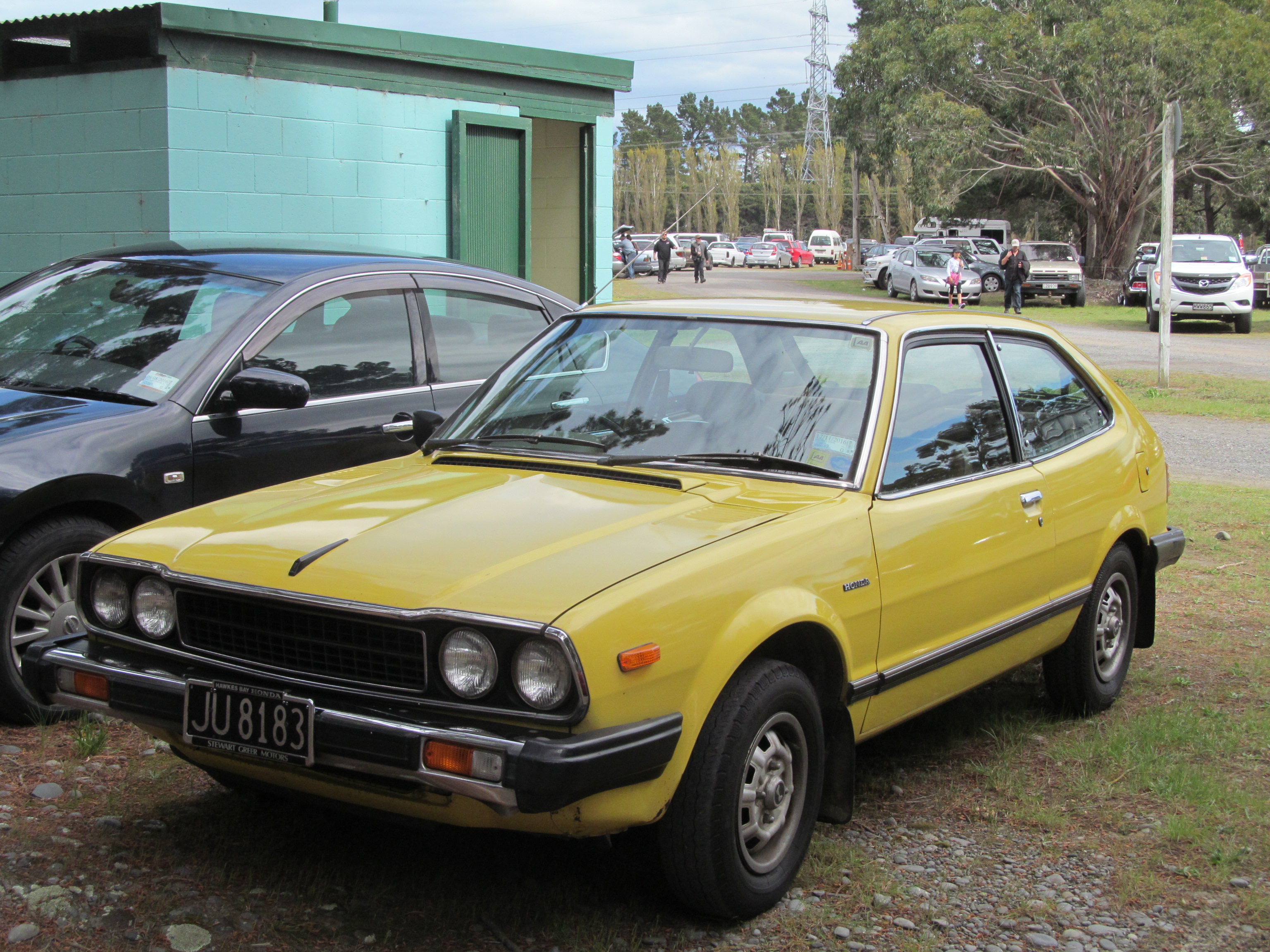
Honda Accord
"And the Civic has always been a, you know, [1726.5s] Civic and Accord [1728.3s] If you were looking for a car"
The Honda Accord is a bigger Honda than the Civic, usually with more room. The speaker is recommending it as a solid, reliable option.
The Honda Accord is a midsize sedan (and in some years, a coupe) that’s been a mainstream alternative to the Civic for buyers who want a bit more space. In this segment, it’s grouped with the Civic as a dependable, “hard to beat” choice.

Toyota Corolla
"Similar to Corolla and Camry [1734.5s] Really good cars [1735.4s] And there's so few choices in cars today"
The Toyota Corolla is a very common, practical compact car. The speaker is saying it’s one of the dependable choices worth considering.
The Toyota Corolla is a compact car that’s often recommended for its long track record of being easy to own. Here it’s mentioned as part of the same “really good cars” set as the Camry and other mainstream models.
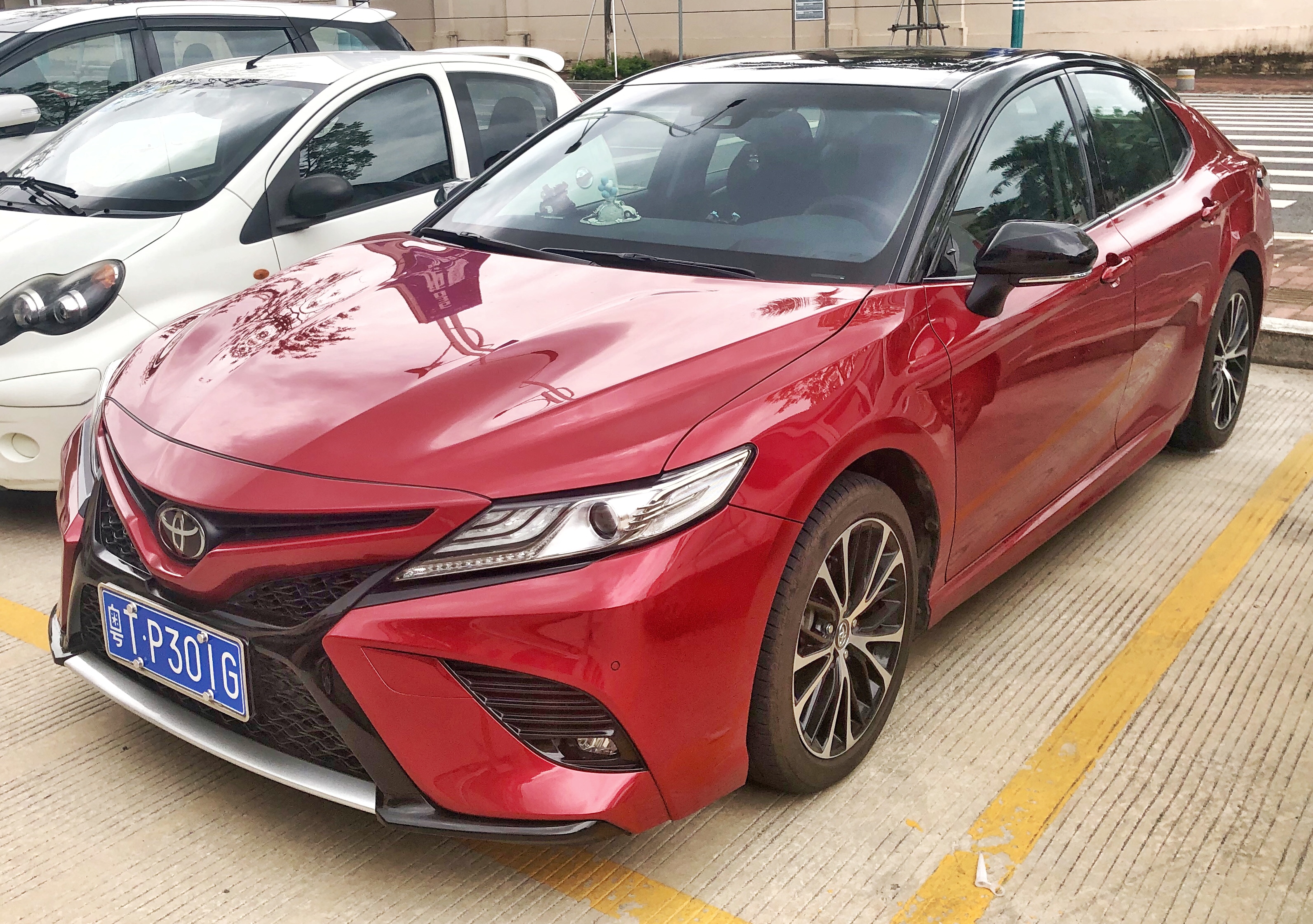
Toyota Camry
"Similar to Corolla and Camry [1734.5s] Really good cars [1735.4s] And there's so few choices in cars today"
The Toyota Camry is a popular midsize sedan. The speaker is listing it as another dependable option in the same group as the Corolla.
The Toyota Camry is a midsize sedan known for being comfortable, practical, and widely sold over many model years. In this segment, it’s grouped with the Corolla and other Honda/Toyota options as “really good cars.”
electrical issues
"[1792.6s] Yeah, yeah, now he's had a lot of electrical issues [1795.1s] With his 2014 [1795.9s] I think we're on starter number four"
Here, “electrical issues” means the car’s electrical system isn’t working right. In this case, it’s showing up as repeated problems with starting and charging.
“Electrical issues” in this context refers to problems in the car’s power and control systems—often including the battery, starter, alternator, and related wiring/charging behavior. Because the failures are concentrated in starting/charging components, it suggests a systemic electrical problem.
starter
"With his 2014 [1795.9s] I think we're on starter number four [1798.0s] And third alternator"
The starter is what turns the engine over when you press the button. If the starter keeps failing, something in the car’s electrical system may be causing it to burn out early.
A starter is the electric motor that cranks the engine to get it running. If a car needs multiple starters, it can indicate a deeper electrical or power-supply issue (like weak battery/charging problems) rather than just a worn-out starter.
alternator
"[1798.0s] And third alternator [1799.7s] And it's surprising to me [1801.3s] So I was a little reluctant to go back in the same direction"
The alternator charges the battery and powers the car’s electrical systems while the engine runs. If it keeps failing, there may be another electrical problem causing it to die repeatedly.
An alternator generates electricity while the engine is running and keeps the battery charged. Replacing an alternator multiple times suggests the charging system may be being stressed by another fault (wiring, battery, or power draw), not just the alternator itself.

Gmc Sierra
"...o let's jump right in Okay, what I've got is a 22 GMC Sierra 1500 Yep"
The GMC Sierra EV is a pickup truck that runs on electricity instead of gasoline. The podcast mentions a Sierra from 2022, which likely means they’re talking about how that truck works in everyday use. Electric trucks are usually discussed around how they drive and what charging is like.
The GMC Sierra EV is an electric version of the Sierra 1500 pickup, bringing battery-electric power to a full-size truck platform. In the podcast context, the discussion is centered around a “22 GMC Sierra 1500,” which suggests the conversation is about a specific Sierra model year and how it’s being used or evaluated. Electric trucks like this are often discussed for their real-world practicality, charging considerations, and ownership experience.
code
"They ran a code... They got like nine codes on it"
When the host says the dealership “ran a code” and found “nine codes,” they’re referring to diagnostic trouble codes stored by the vehicle’s onboard computer. These codes point to specific faults (like sensor issues or emissions-related problems) that can be read with a scan tool.
turbocharged
"Actually, it's a 2.7 turbocharged"
Turbocharged means the engine has a device that compresses air before it goes into the engine. That helps a smaller engine make more power and feel more responsive.
Turbocharged means the engine uses a turbocharger to force more air into the cylinders. That lets a smaller engine produce more power than it otherwise could, which is why a “2.7 turbocharged” engine can feel strong even in a work truck.
four-cylinder
"Because I just a four-cylinder in a work truck... Didn't make sense"
A four-cylinder engine has four combustion chambers. The host is basically saying that, for a work truck, they didn’t think a smaller engine setup would make sense.
A four-cylinder engine has four cylinders that burn fuel to make power. The host is using it as a comparison point—preferring a setup that makes sense for a work truck—because engine layout and cylinder count can affect how the vehicle feels and how it’s expected to perform.
Request an Explanation
Heard something you'd like explained? We'll add it to this episode.
Sign in to request explanations for terms you heard.
Want to learn more?
Browse our glossary for plain-English explanations of automotive terms, jargon, and concepts.
Help improve this episode
See something that's not quite right? Our annotations are AI-generated and can sometimes miss the mark. Click the flag icon on any annotation to suggest a correction.