
Car Pro Radio Show May 30 26 Hour 3
About this episode
Dealership shopping and listener stories kick things off, including a caller who wanted a 4Runner without a four-cylinder turbocharged engine and another who was disappointed by the ID. Buzz price. The show also covers how to stream live at carpro.com and dives into big-ticket ownership decisions: extended warranties, certified pre-owned differences, and whether to lease annually for safety tech. Comfort and long-term value come up too, with sedan vs SUV ride advice and Lexus vs Genesis durability comparisons.

Toyota 4Runner
"Mark, welcome. Good morning, Jerry and Todd. Thank you for taking my call... I wanted a four-runner that doesn't have a four-cylinder turbocharged engine."
The Toyota 4Runner is a tough SUV built for rough roads and trails. Here, the caller is saying they wanted a 4Runner that doesn’t use a small turbocharged four-cylinder engine, and instead wanted the more traditional engine option.
The Toyota 4Runner is a body-on-frame SUV known for rugged off-road capability and a traditional, truck-like layout. In this segment, the key detail is the buyer wanting one without a four-cylinder turbo engine, which points to preferring a naturally aspirated V6 configuration over smaller turbo power.
four-cylinder turbocharged engine
"I wanted a four-runner that doesn't have a four-cylinder turbocharged engine. You told me what year to get."
This means the engine has four cylinders, and a turbocharger helps it make more power. Some people prefer or avoid turbo engines depending on how they drive and how they’re maintained.
A four-cylinder turbocharged engine uses a turbocharger to force more air into the cylinders, allowing a smaller engine to make more power. The “turbo” part is the specialized bit: it’s a forced-induction system that can change how the engine feels (often more low-end torque) compared with naturally aspirated engines.

Volkswagen Id Buzz
"You waited with you for the new Volkswagen van and was the ID buzz and was kind of disappointed in the price."
The Volkswagen ID. Buzz is an electric van inspired by the classic VW Bus. The caller says they waited for it but didn’t like the price when it came out.
The Volkswagen ID. Buzz is an all-electric version of the classic “Bus” concept, built on Volkswagen’s ID electric platform. In this segment, the caller mentions waiting for it and being disappointed by the price, which is a common real-world shopping factor for EVs.
vehicle kill switch
"I wanted to get your thoughts a bit a little bit deeper about the vehicle kill switch. I mean, this has been going around for a bit and we're hearing... the government's just going to hit a button and turn the whole thing off like as you're driving down the interstate."
A vehicle kill switch is a feature that can remotely disable a car. The idea is that if authorities think something unsafe is happening, they could stop the car from continuing.
A vehicle kill switch is a system concept where a car can be remotely disabled so it won’t start or keep running. In the discussion, it’s framed as a government-controlled action that could shut the car off while driving if certain conditions are detected.

Ford Expedition
"...still wrecking like crazy. He totaled a brand new expedition. I had him driving back in 2001. Oh, my. Oh, he w..."
The Ford Expedition is a big SUV built for families, road trips, and carrying more people or gear. It’s also commonly chosen when you need extra space. The podcast mentions it because something happened to a new one, which naturally leads to discussion about the vehicle in real life.
The Ford Expedition is a full-size SUV designed for seating, towing, and highway comfort. The podcast context mentions a brand-new Expedition being totaled, which is the kind of real-world event that often brings up safety, crash outcomes, and insurance/repair considerations. It’s also a vehicle people choose when they need more space than a midsize SUV.
transmission
"Did they try to tow a 7,500 pound trailer in with their ascent? And now suddenly they got transmission problems."
The transmission is what helps your engine’s power get to the wheels in the right “gears.” If it breaks, it can be a costly repair.
A transmission is the drivetrain component that changes engine output into the right gear ratios for acceleration and cruising. When it fails, the repair bill can be very high because it often requires major labor and parts.
extended warranty
"However, to add to that, I would tell you that if you use that warranty one time, the odds are good, it'll pay for itself with the cost of repairs today because they've gone through the roof... So yes, I would buy an extended warranty on any car approaching 60,000 miles..."
An extended warranty is extra insurance for your car repairs after the regular warranty runs out. If something expensive breaks—like the transmission—it can help cover the repair cost.
An extended warranty is coverage you buy beyond the factory warranty period to help pay for certain repairs after the car’s included coverage ends. It’s especially relevant for expensive failures like transmissions, where repair costs can be thousands of dollars.
air conditioning compressor
"It goes on. I mean, just a frigging air conditioning compressor that we know is going to fail, especially in Texas. It's going to fail. It's $3,000."
The air conditioning compressor is the component that pressurizes the refrigerant so the A/C system can cool the cabin. When it fails, it can be an expensive repair because the system often needs diagnosis and refrigerant service as well.
Chase.com
"Now, luckily, I have a very good company that I endorse named Chase.com, and that's spelled C-H-A-I-Z.com."
Chase.com is a service that helps you find an extended car warranty. The host says it helps compare options and prices so you can pick one that fits your situation.
Chase.com is presented here as a warranty-shopping service that matches customers with extended warranty options. The host claims it compares warranties and pricing based on the buyer’s criteria.
LifeWave patches
"Okay, I've been hearing a lot about the LifeWave patches, and they sound amazing. And I'm thinking I want to try them for myself. But can you tell me how they work?"
LifeWave patches are a product being discussed, but they aren’t related to how cars work. This part of the conversation is about the patches themselves, not a car repair or car technology.
LifeWave patches are a non-automotive product mentioned in the segment, and they’re not a car-related term. Since this episode slice shifts to a health product question, it doesn’t map to a specific vehicle system or automotive concept.

Mazda Cx50
".... Okay, here we go. Okay, I got a 2026, uh, Mazda CX50. Yep. I just purchased it and I paid cash. So I w..."
The Mazda CX-50 is a compact SUV meant for daily driving. It’s designed to be comfortable and easy to live with, while still feeling fun to drive. The episode brings it up because someone just bought a 2026 model.
The Mazda CX-50 is a compact crossover SUV that’s built for everyday driving with a focus on comfort and a driver-oriented feel. In the podcast, it’s specifically referenced as a 2026 model purchased with cash, which signals it’s being discussed as a current, real-life ownership choice. It’s likely mentioned because it offers a practical SUV shape with a more engaging driving experience than some competitors.
factory certified pre-owned
"but one of the most clicked items in the newsletter this week are factory certified pre-owned cars worth the extra money... make sure that it's factory certified... Factory certified is a grueling check checklist that's got to be gone over with every car."
This is a used car that the car company itself approves. It has to pass a strict inspection, and you usually get a warranty that comes from the manufacturer, not just the dealer.
“Factory certified pre-owned” means the automaker (not just the dealer) sets the inspection and certification rules for a used car. The car has to pass a detailed checklist, and the automaker backs it with a warranty tied to that certification process.
factory-certified vs dealer-certified used cars
"factory certified pre-owned cars worth the extra money... make sure that it's factory certified... Factory certified is a grueling check checklist... and then the factory warrants that car..."
They’re talking about when a used car is truly “certified” by the manufacturer versus just labeled that way by a dealer. The big idea is that factory certification usually means a stricter inspection and a better warranty.
This segment focuses on how “factory certified” used cars differ from generic “certified pre-owned” listings. It covers what the certification process includes (inspection checklist) and why the warranty backing matters when deciding whether to pay extra.
161 point check
"When I was in the Ford business, we had a 161 point check... It didn't matter how old the car was. It got new windshield wiper blades... If the tires had... just very little wear, you replace the tires."
That “161 point check” is basically a long checklist a car has to pass. It means they inspect a lot of different things and may replace small wear items to meet the certification standard.
A “161 point check” refers to a multi-item inspection checklist used in a certification program. It typically covers both safety items and condition items (like tires and even replacing worn wiper blades) so the car is brought as close to “like-new” condition as the program allows.
Lexus
"Most of them are six years or 100,000 miles from when the car was new. Lexus, for instance, their L certified has got a phenomenal warranty... three years, but it's unlimited mileage."
Lexus is the brand used to illustrate a good certified-used warranty. The host says Lexus’s certified program includes a warranty for about three years and it doesn’t limit you by miles.
Lexus is used as an example of a factory-certified program with strong warranty terms. The host specifically calls out Lexus “L certified” as having a warranty that lasts about three years with unlimited mileage.
unlimited mileage
"Lexus, for instance, their L certified has got a phenomenal warranty. It's like three years, but it's unlimited mileage."
Unlimited mileage means the warranty won’t stop just because you drove too many miles. This is especially helpful if you put a lot of driving on the car.
“Unlimited mileage” means the warranty coverage doesn’t have a mileage cap. That matters because many warranties are limited by both time and miles, so high-mileage drivers can run out of coverage sooner than they expect.

Buick Roadmaster
"...you're the car pro, right? Yeah. Okay. You're the roadmaster. That's right. I'll take that too. Henry and marb..."
The Buick Roadmaster is a car model name from Buick that’s known for being a big, comfortable vehicle. The episode mentions it as a specific car being discussed or referenced in a conversation. It’s not a modern compact car—it’s tied to older, larger-car styling and comfort.
The Buick Roadmaster is a classic full-size car nameplate that’s associated with older American luxury and big-car comfort. In the podcast context, it’s referenced as “the Roadmaster,” suggesting a discussion about a particular vehicle or a story involving that model. It’s brought up because it represents a distinct era of large, comfortable cars.
towing capacity
"Now, most of them have a pretty decent towing capacity, 5,000 pounds up to 8,000 pounds. And the reason I tell you that is because it does affect the ride."
Towing capacity is the maximum weight the vehicle can tow safely. The host is saying SUVs often have higher towing ratings, and that can influence how the ride feels.
Towing capacity is the maximum weight a vehicle is rated to pull safely, usually measured in pounds. The host connects higher towing capacity (5,000 to 8,000 pounds) with SUV design choices and says it can affect ride quality.
truck chassis
"So many of the big SUVs are truck based, but in other words, they've got a truck chassis under them. And with that comes a rougher ride, but you also get more capacity."
A truck chassis means the car is built on a separate frame, like many trucks. The host is saying that this kind of construction can make the ride feel less smooth than a typical sedan.
A truck chassis refers to a body-on-frame style construction where the vehicle uses a separate frame, similar to traditional trucks. The host claims this setup is associated with a rougher ride compared with sedans, which typically use unibody construction.

Lexus RX
"The Lexus is a very close second. Whether you go with an RX or a TX or a GX, those all ride smoothly, but it's not going to be as smooth as a car."
The Lexus RX is a luxury SUV model. The host is saying it rides smoothly and is a good comfort option, even if it won’t feel as smooth as a sedan.
The Lexus RX is a mainstream luxury SUV line that’s often praised for comfort-focused tuning and a quiet cabin. Here, the host groups it with other Lexus SUVs (RX/TX/GX) as riding smoothly, though not as smooth as a sedan.

Es350
"Look at the, look at the Lexus ES 350. It's got a nice smooth ride. It's going to be, it's going to be comparable in size to your Camry, but it's going to have a nicer interior and it's going to ride better."
The Lexus ES 350 is a comfortable sedan. The host recommends it if you want a smoother ride than most SUVs, and says it’s similar in size to a Camry but feels more refined inside.
The Lexus ES 350 is a comfort-oriented midsize sedan built around a smooth, quiet ride rather than sporty handling. The host specifically recommends it as a sedan alternative to SUVs for smoother driving, and compares its size to a Toyota Camry while emphasizing a nicer interior and quieter cabin.
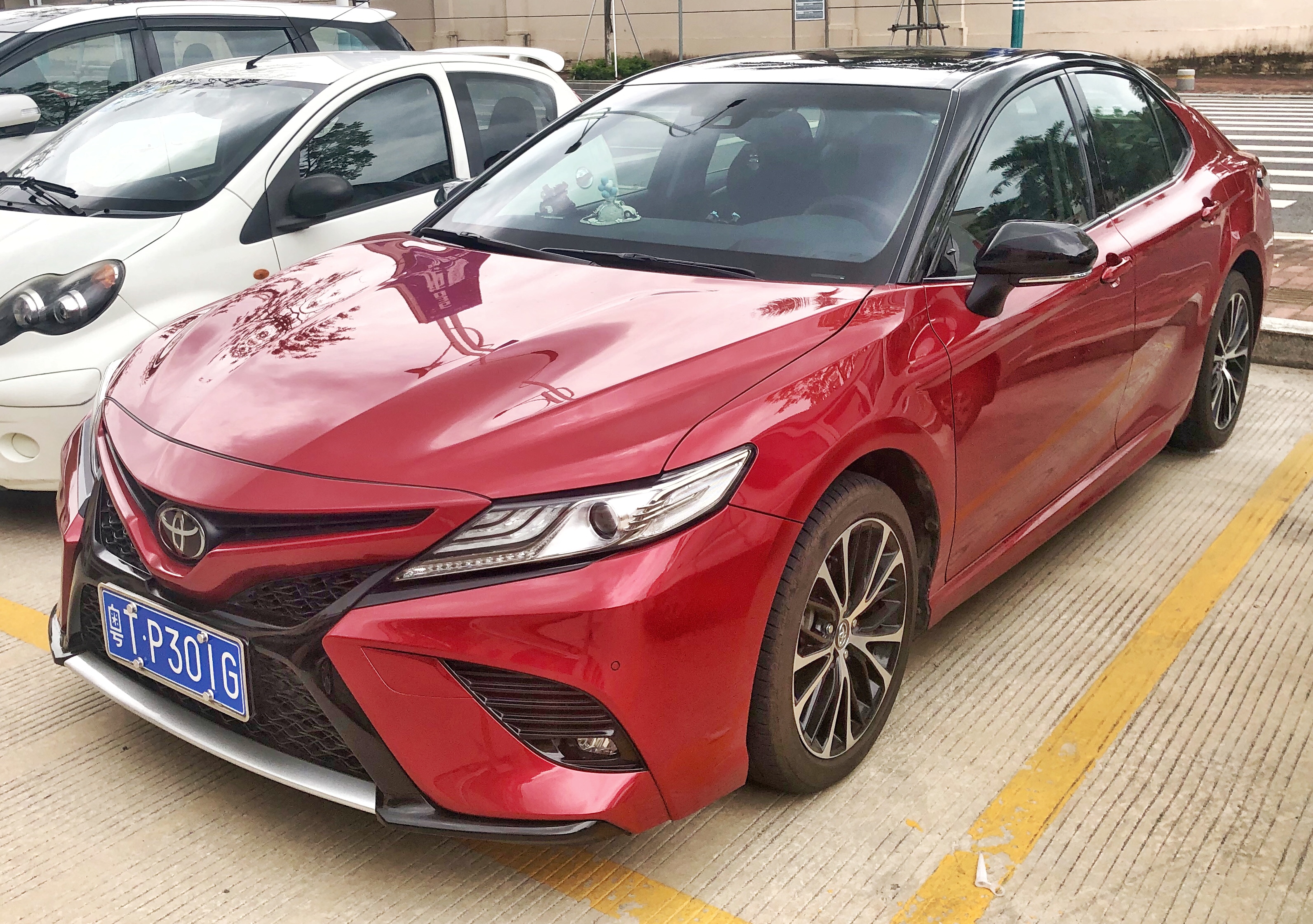
Toyota Camry
"..., oh, it's going to be comparable in size to your Camry, but it's going to have a nicer interior and it's..."
The Toyota Camry is a regular passenger car (a sedan) meant for daily driving. People talk about it a lot because it’s a typical size and it’s comfortable inside. In this episode, it’s used as a reference point for how another car will compare.
The Toyota Camry is a midsize sedan built for everyday commuting, comfort, and long-term usability. It often comes up in discussions because it’s a common benchmark for size and practicality when comparing other cars’ interiors and ride comfort. In the podcast context, it’s referenced as the “baseline” for what another vehicle will feel like in terms of space.

Genesis G80
"And then last but not least, look at the Genesis G80. That, my friend, is a road car and it will, it is so quiet and so smooth and it's got so many neat features. If you buy a new one, it comes with a 10 year, 100,000 mile warranty."
The Genesis G80 is a luxury sedan. The host says it’s extremely quiet and smooth, and that new models include a long warranty (10 years or 100,000 miles).
The Genesis G80 is a luxury sedan aimed at providing a quiet, smooth ride with a feature-rich interior. The host describes it as especially quiet and smooth, and adds a buying detail: new ones come with a 10-year/100,000-mile warranty.
60,000 mile warranty
"It's not the 10 year, but it's got a five year, 60,000 mile warranty. So if you go with a certified Genesis, that might be the way to go"
A warranty like “60,000 miles” means the manufacturer/dealer will cover certain repairs up to that mileage (and often within a time limit too). It’s basically a safety net for the next stretch of driving.
A “60,000 mile warranty” is coverage that lasts for a set time and/or mileage limit, whichever comes first. Here, the host is contrasting it with a longer “10 year” warranty and emphasizing that the certified car still has substantial coverage left.
certified Genesis
"and it still comes with a lot of warranty left. It's not the 10 year, but it's got a five year, 60,000 mile warranty. So if you go with a certified Genesis, that might be the way to go"
“Certified” means the car was checked and comes with extra warranty coverage. So you’re not just buying any used Genesis—you’re buying one that’s been approved and backed by a warranty.
“Certified” usually means the car has passed an inspection and comes with an extended, standardized warranty from the brand or dealer. In this segment, “certified Genesis” implies you’d be buying a used Genesis with a known warranty-backed condition rather than an unverified used car.

Toyota Crown
"I would definitely look at the new Toyota Crown and see what you think about it. Everybody I've helped get one of those cars just loved it."
The Toyota Crown is a Toyota model that’s meant to feel more upscale than a basic sedan. The host is saying the newer Crown is worth checking out because people who got one really liked it.
The Toyota Crown is a long-running Toyota nameplate that’s known for blending comfort and tech with a more premium feel than typical mainstream Toyotas. In this segment, the host recommends the “new Toyota Crown” based on positive experiences from people who helped get one.

Beetle Vw Bug
"Anyway, first car was a 67 VW bug. Oh, cool. Came back from Europe when they used to drive them in Europe, bring them over here and sell it."
The VW Beetle—often called the “VW bug”—is a classic, recognizable car with a long history. The caller is talking about their first car, a 1967 Beetle, and how they bought it after it came back from Europe.
The Volkswagen Beetle (the classic “VW bug”) is an iconic air-cooled-era compact that became famous for its simple, durable design and huge enthusiast following. The caller describes buying a “67 VW bug,” which highlights how these older Beetles were imported and sold in the past.

Chevrolet Impala
"And then the worst, unfortunately, was I had a company car Chevy Impala. And the first one I had was fabulous. I loved it."
The Chevrolet Impala is a big, traditional American sedan. The caller is sharing how their company Impala experience started great, but the next one had major problems.
The Chevrolet Impala is a full-size American sedan that historically served as a common fleet and family car. Here, the caller says their company car was a Chevy Impala and that the first one was “fabulous,” then the second one turned out to be a “lemon.”
lemon
"So I ordered the same car, the same paint job and everything. My kids were upset that I basically repeated the car. The second one was special lemon."
A “lemon” is a car that turns out to be seriously defective and doesn’t get fixed properly. The caller is saying their second Impala had that kind of problem.
A “lemon” is a car that repeatedly has serious problems and can’t be fixed after a reasonable number of attempts. The caller uses it to describe the second Chevrolet Impala they ordered, implying it had persistent defects.

2019 Highlander
"And Tess in Houston, you are next on the car pro show. Hello Tess. Hello. What can I help you with? Can you hear me? Yes sir, just fine. ...I'm driving a 2019 Highlander. So I've got 120,000 miles now and I'm"
A Toyota Highlander is a family SUV. Here, the caller is talking about their 2019 model and how many miles it has, which is useful context for what it’s like to live with over time.
The Toyota Highlander is a mid-size SUV known for practical family use and a comfortable, easy-to-drive layout. In this segment, the host/ caller mentions a 2019 Highlander with 120,000 miles, which frames the discussion around real-world ownership and usage.

Jeep Grand Cherokee
"...anks, Jerry. Nice to talk to you. I have a 2024 Q Grand Cherokee. I have seven payments left on my lease. I moved ..."
The Jeep Grand Cherokee is a larger SUV meant for family trips and everyday driving. It can also handle rougher roads better than many regular SUVs. The episode references a 2024 model in the context of someone leasing and then moving around with the vehicle.
The Jeep Grand Cherokee is a midsize SUV known for its off-road capability and available luxury features. The podcast mentions a 2024 model, which highlights how people use it as a long-term family vehicle while on a lease. It’s discussed because it blends everyday driving with more rugged capability than many typical SUVs.
lease
"I have seven payments left on my lease. I moved from Southern California to Idaho, so I can't turn it in at the dealership I bought it, but I want to buy the thing out."
A lease is like renting a car for a set time with monthly payments. If you want to keep it, you can buy it out by paying the lease’s required amounts.
A lease is a contract where you pay to use a vehicle for a set period, rather than buying it outright. In this segment, the host explains how lease buyouts work in practice: you pay the residual value and remaining payments, then complete the process through the dealer.
residual value
"You'll have to take it back to the dealer. You're going to owe the residual value plus the remaining payments. If you call whoever the lease company is, they will be able to give you a net payoff, and that's the amount that you want."
Residual value is the price the lease company says the car will be worth at the end of the lease. If you want to keep the car, you usually have to pay that amount (plus what’s left on your lease).
Residual value is the pre-set amount a lease assumes the car will be worth at the end of the lease term. When you buy out a lease, you typically pay the residual value plus any remaining payments (and sometimes fees), which is why it matters for the total cost.
net payoff
"If you call whoever the lease company is, they will be able to give you a net payoff, and that's the amount that you want. [2179.4s] That's the amount that you write a check for today."
Net payoff is the total buyout price the lease company tells you. It’s the exact amount you’d pay to end the lease and own the car.
Net payoff is the total amount you must pay to settle the lease buyout, after accounting for the lease’s remaining structure (like residual value and remaining payments) and any applicable charges. It’s the number you use to know exactly what check amount you’ll need today.

Genesis GV70
"...t another new vehicle, an upgraded package of the GV70 Sport, gave his wife the two-day old now used car..."
The Genesis GV70 is a luxury SUV, meaning it’s designed to feel nicer inside and more comfortable to drive. The episode mentions the “Sport” version, which is a higher-trim package. It’s brought up in the context of someone getting a nearly new GV70 for their wife.
The Genesis GV70 is a compact luxury SUV that’s aimed at drivers who want a more upscale interior and driving experience than typical mainstream SUVs. The podcast mentions a GV70 Sport package and a short time between buying and selling/using it, which reflects how people treat it as a “newer” used vehicle option. It’s discussed because it combines luxury features with a smaller SUV footprint.
Request an Explanation
Heard something you'd like explained? We'll add it to this episode.
Sign in to request explanations for terms you heard.
Want to learn more?
Browse our glossary for plain-English explanations of automotive terms, jargon, and concepts.
Help improve this episode
See something that's not quite right? Our annotations are AI-generated and can sometimes miss the mark. Click the flag icon on any annotation to suggest a correction.