In the podcast, “seagull” sounds like a bird, not a car. The speaker talks about not feeding seagulls and that their schedule was busy. There isn’t a vehicle to explain here.
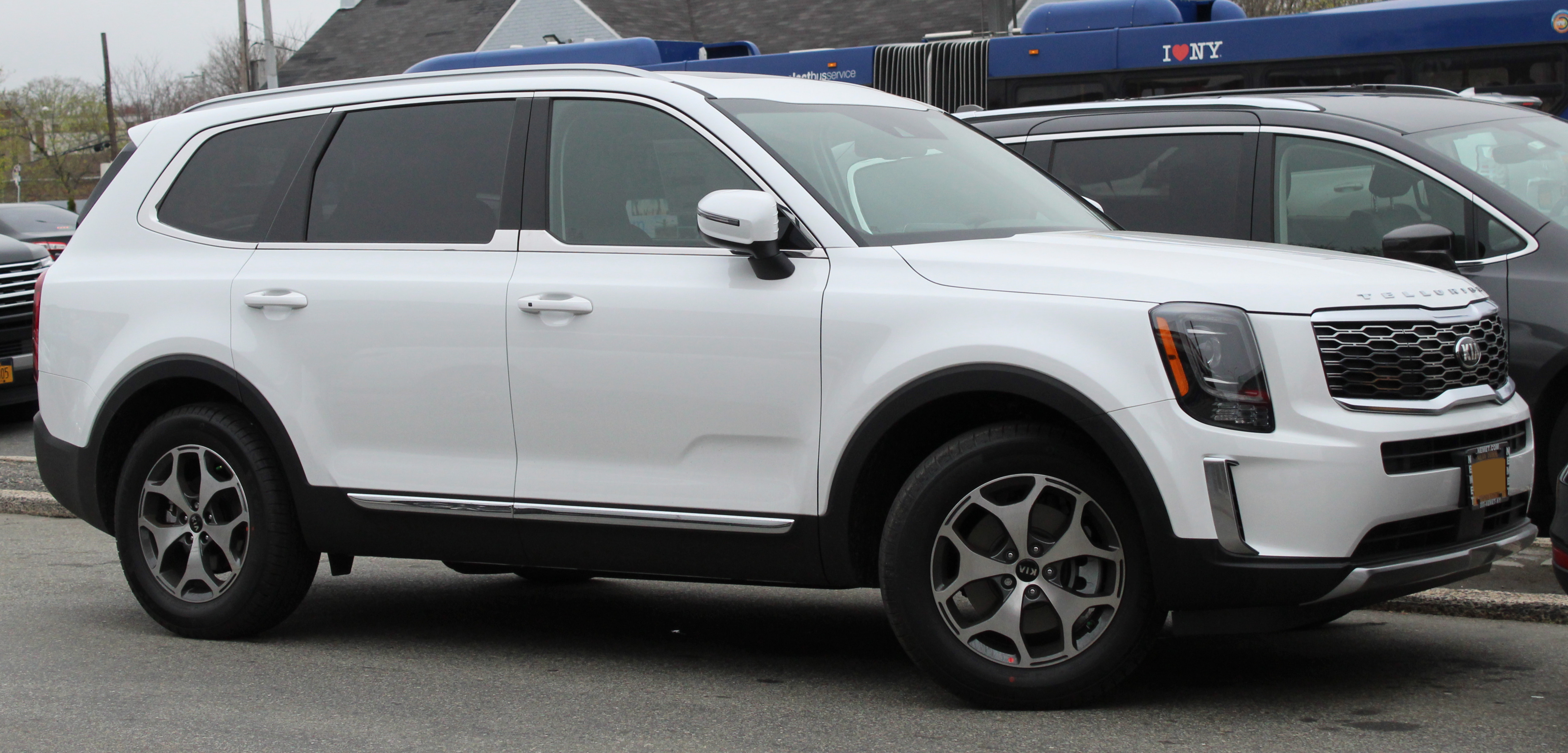
The Kia Seltos is a small SUV from Kia. It’s positioned below the Sportage, and the host says it’s been in the U.S. for a few years (starting around 2019).
The Kia Sportage is a compact SUV. It’s built for everyday driving with extra space compared to a sedan. The podcast mentions it to explain how it fits above a smaller Kia model in the lineup.
A hybrid uses a gas engine and an electric motor together. That can help it use less fuel, and they’re saying this car will finally offer hybrid choices.
This phrase means bringing high-tech features to cheaper cars. They’re saying the car will have modern tech—like a streaming setup—without costing as much as luxury models.
The Ford F-150 is a large truck made for tasks like carrying things and towing. People talk about it a lot because it’s a very common model. The podcast mentions it while discussing a Ford factory visit.
Concept
EVs and gas cars going down the same production line
This describes a “mixed-model” or shared-line manufacturing approach where electric vehicles (EVs) and gasoline cars are assembled on the same production line. It’s notable because EVs remove the engine and many related components, yet factories still reuse a lot of common body, chassis, and assembly steps.
Full automation refers to using robots and automated equipment to perform most manufacturing tasks instead of relying on manual labor. The segment frames it as a shift toward reducing the number of people needed on the production floor.
A “Gigafactory” is a very large manufacturing site associated with EVs and batteries, designed to produce at massive scale. The host references Tesla’s Gigafactory in Texas to contrast how that kind of facility builds vehicles compared with more conventional plants.
Tesla is an EV-focused automaker known for building vehicles and large-scale battery/vehicle production facilities. In this segment, the host references visiting Tesla’s Texas “Gigafactory” to compare manufacturing approaches.
The Tesla Cybertruck is an electric pickup truck. It looks very different from most trucks because of its sharp, boxy shape. The podcast brings it up when describing Tesla’s factory and the truck’s appearance.
The Kia Carnival is a minivan from Kia. Here, they’re talking about a Carnival hybrid and a special roof add-on that makes it more like a small shuttle/bus and gives more usable space inside.
A roof extender is an aftermarket or OEM roof-mounted structure that increases the usable interior space above the standard roofline. In this case, it’s used to make the Carnival feel more like a small bus by adding headroom and supporting multi-row seating layouts.
The Volkswagen Bus is a type of van with a very recognizable look. It can be set up to carry a small group of people, including versions with four seats. The podcast mentions it while describing a bus-like setup and seating.
A roof box is a storage box you mount on top of a car for extra luggage. The hosts are using it as a comparison because the vehicle’s shape makes it look like it has one, even though the real change is more space inside.
The Volkswagen ID Buzz is an electric version of the old Volkswagen Bus. Here, they’re talking about a new “sleeper” setup that lets it work like a mini camper for overnight trips.
A “sleeper version” is basically a car setup meant for sleeping overnight. In this case, it’s like a mini camper: seats fold flat, you add a mattress, and you can close curtains.
“Lay the seats flat” means the back seats can fold down into a flat surface. That’s important if you want to put a mattress on top and sleep comfortably.
EV means electric vehicle. It’s a car that runs on electricity stored in a battery, and here they’re discussing how it still uses a little power even when it’s in a low-power mode.
Overnight sleep mode is a low-power operating state where an EV reduces energy use while still keeping certain systems ready. The host is using it as a real-world test: leaving the truck in that state overnight results in only about a 1% change in battery state of charge.
The Ford F-150 Lightning is an electric pickup truck. It can provide power so you can plug in devices or equipment. The podcast mentions it because the speaker uses it like a power source for charging other vehicles or gear.
A power outlet is a built-in plug you can use to run chargers and other electronics. The host is saying he uses the truck’s bed outlet to charge other car batteries when the parking garage doesn’t have outlets.
The Honda Element is a small, box-shaped vehicle that’s designed to be practical. It’s known for having a flexible interior and a unique look. The podcast talks about it as something that’s being made more tech-focused.
The Oldsmobile Cutlass is an older American car model. The podcast mentions it because the speaker is thinking back to what a Cutlass from around 1970 looked like. It’s part of a memory about styling details.
The Buick Roadmaster is a model name from Buick. The podcast mentions it because the speaker is trying to remember a vehicle name that sounds like a big, family-type car. It’s brought up as a guess rather than a detailed description.
The Honda Odyssey is a family minivan. It’s made to carry people and gear easily. The podcast mentions an older version that had a vacuum feature in the trunk area.
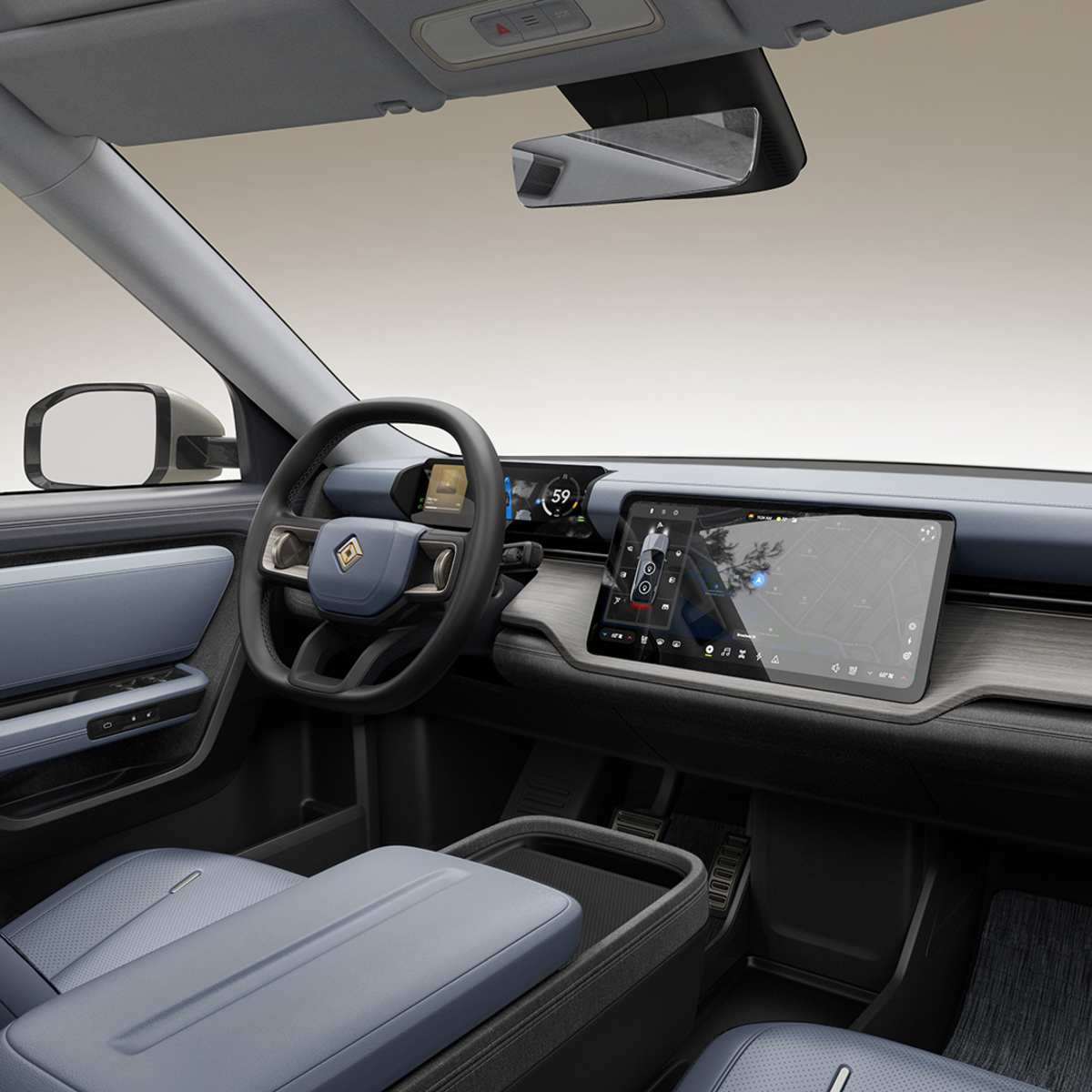
The Rivian R2 is an electric vehicle made by Rivian. The podcast is talking about which features it has compared to another Rivian model. Specifically, it mentions that a Bluetooth-speaker feature isn’t included on the R2.
Demo mode is a vehicle setting used for showrooms where systems may run in a scripted way (for example, screens, lighting, and infotainment) to demonstrate features without normal driving operation. The segment links demo mode to a showroom setup that later caught fire.
An autonomous car is one that can drive on its own. In the conversation, they’re saying it would be nice if you didn’t have to drive yourself during your commute.
The Kia EV9 is an electric SUV. They’re saying it might show up as the car you get in ride-hailing apps, especially because it can be cheaper to run than some alternatives.
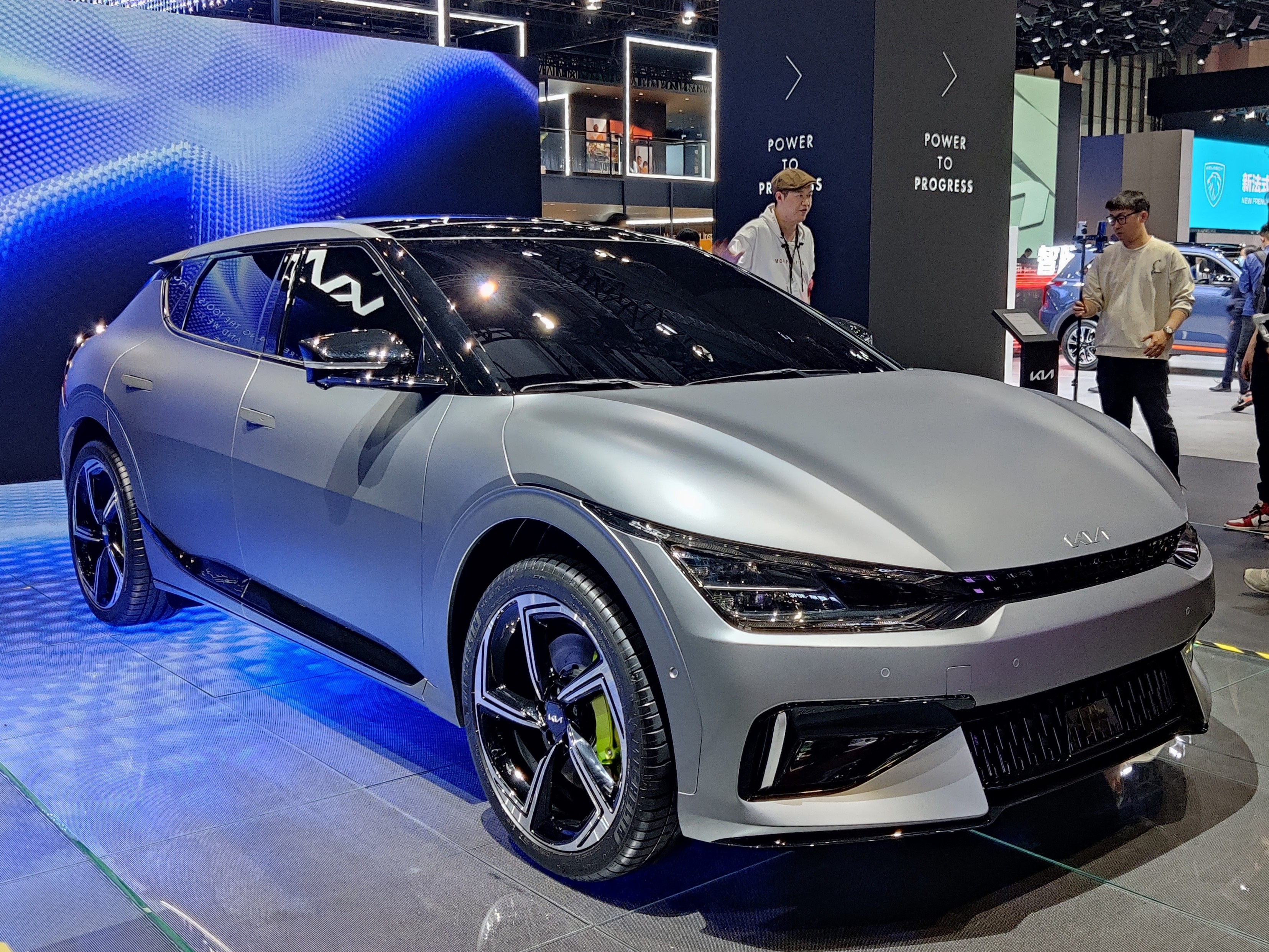
The Kia EV6 is an electric Kia crossover. The host says it feels less like the right fit because it’s shaped more like a hatchback compared with the EV5.
Car
Hyundai EV5
The Hyundai EV5 is an electric Hyundai that’s smaller than the EV9. They’re saying it’s a nice-looking, good-sized EV, but the tech is a step simpler than the bigger one.
Car
Hyundai EV9
The Hyundai EV9 is Hyundai’s bigger EV. In this discussion, it’s the “more advanced” one they’re comparing the EV5 against.
“400 volts” is the electrical system voltage in the EV. Higher-voltage EVs can often charge faster, so this number helps explain why one EV might not charge as quickly as another.
Term
800
“800” means the EV is built with a much higher-voltage electrical system. That setup is often used to help the car charge faster when the charging station supports it.
Car
Hyundai EV6
The Hyundai EV6 is Hyundai’s EV that’s described here as having a hatchback-like shape. The hosts use it as a comparison point, suggesting the EV5’s overall package is a better proposition for them than the EV6’s body style.
Car
BMW G-Wagon competitor
The “G-Wagon” is a famous, boxy Mercedes SUV. Saying “competitor” means another brand is trying to make a similar kind of rugged, stylish luxury off-roader.
The G-Class is a luxury SUV with a very recognizable, boxy shape. It’s designed to handle rough roads while still feeling upscale. The podcast brings it up as a reference for the kind of vehicle people are talking about.
Alpina makes special versions of BMWs. They’re usually tuned to feel smoother and more upscale than the hardcore BMW M models, even if they’re still fast.
The BMW M5 is BMW’s performance flagship in the 5 Series line. It’s the kind of car people compare against when they’re talking about fast, sporty BMWs.
Alpina 7 is a special BMW 7 Series that’s tuned by Alpina. The hosts are basically saying it’s the “more refined” alternative to BMW’s most extreme M-badged version.
BMW’s M division is BMW’s performance brand. It’s the part of BMW that makes the sportier, more aggressive versions, and the hosts are saying BMW wants Alpina to sit alongside that.
The Mercedes-Benz S-Class is a luxury car designed to be very comfortable and feature-rich. It’s meant for people who want a top-level driving and ride experience. The podcast mentions the S-Class Coupe because the speaker likes that style.
Car
Alpina 7 series
The Alpina 7 series is a BMW 7-Series that Alpina modifies to drive better. Here, the host talks about it as a big, powerful 12-cylinder car that still feels smooth when you push it on a race track.
“12 cylinder power” means the car has a V12 engine—an engine with 12 cylinders. That usually makes the power feel very smooth and strong, especially compared with smaller engines.
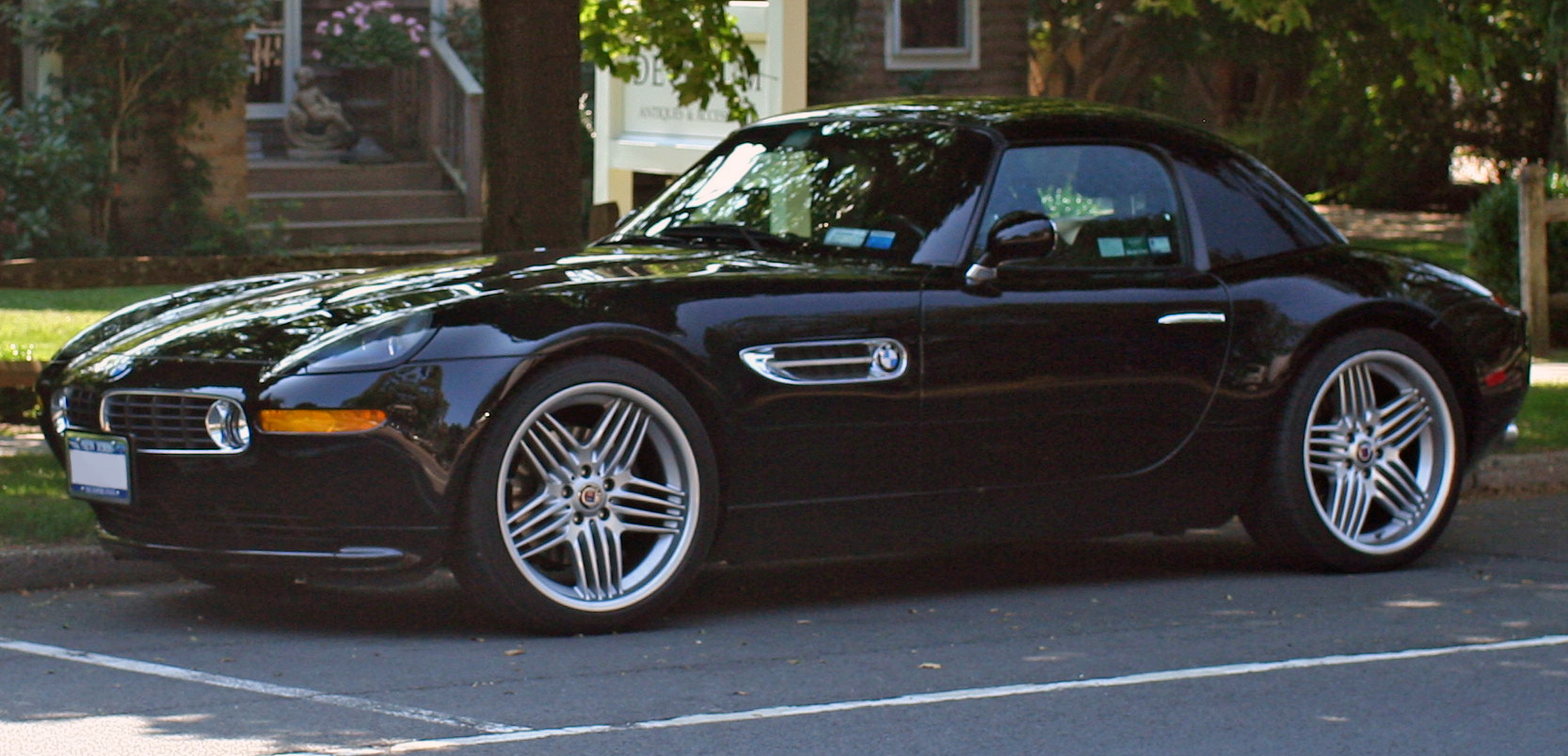
Alpina took the BMW Z8 and made it its own. It’s a special, limited roadster that’s more about a curated driving feel than just being the fastest thing out there.
Car
Alpina Z1
The Alpina Z1 is a very rare roadster that was based on a BMW 3 Series platform. Its big gimmick is the doors—when you open them, they can drop down into the car’s body instead of swinging out normally.
The BMW 3 Series E30 is the 1980s generation of BMW’s compact executive car, and it’s a key reference point here because the Alpina Z1 is described as being based on that platform. The E30 is widely known in enthusiast circles as a foundation for many special builds and performance variants.
Term
retracts into the lower half of the door
They’re talking about a door that doesn’t swing open normally. The top part slides back into the door instead, so it uses less space outside the car.
A rocker panel is the metal strip along the bottom edge of the car, near where your feet would be when you get in. It’s part of the car’s side body structure.
BMW has a distinctive front grille shape that fans recognize right away. The host is saying even a smaller version still makes the car look like a BMW.
The Land Rover Freelander is an older Land Rover SUV. The host is comparing it because it had a special retractable glass feature in the rear door area, which is similar to the unusual design they’re talking about.
Retractable glass is a window that can move out of the way. The host is using it to describe a car design that lets you open up the rear area in a special way.
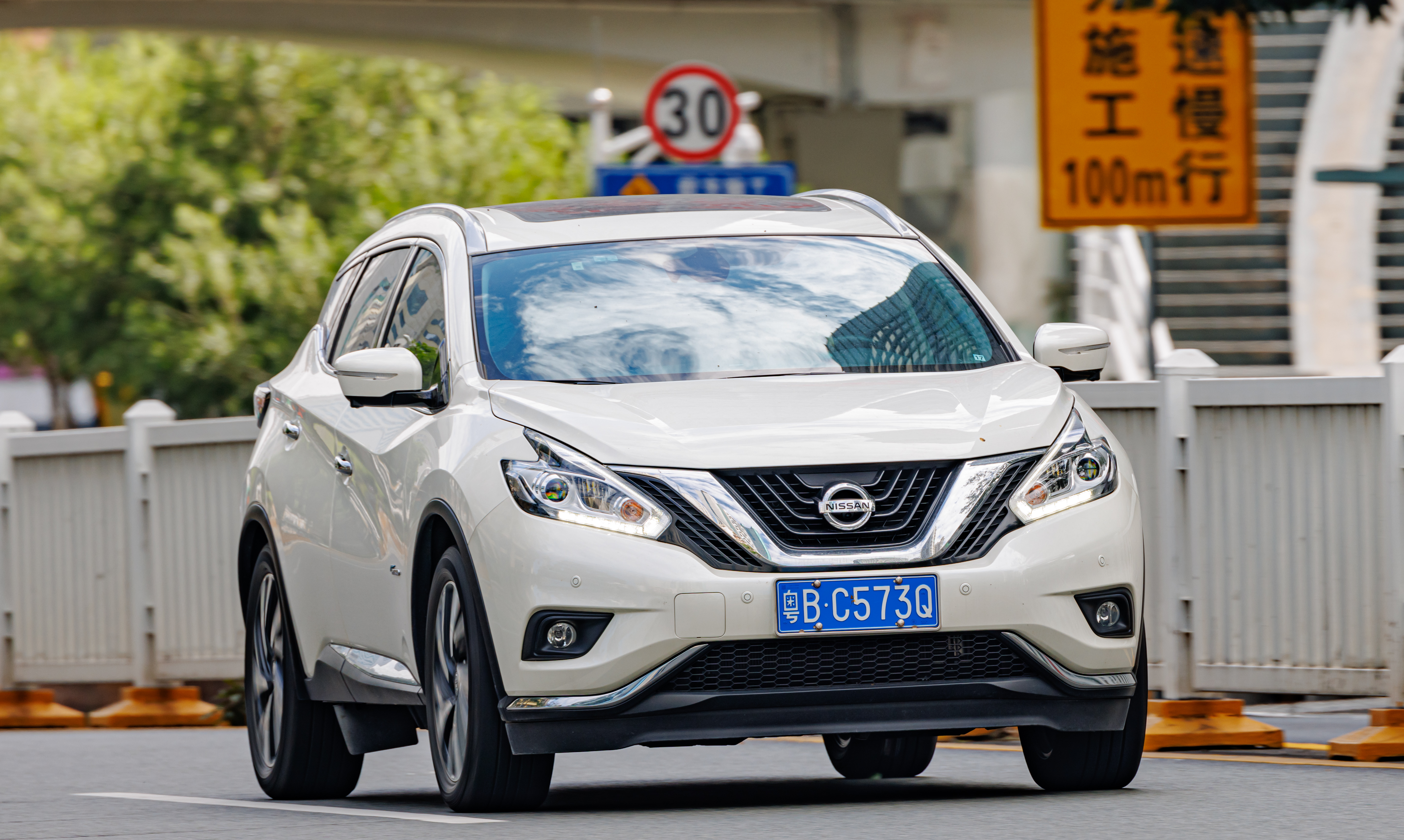
The Nissan Murano is usually a crossover SUV. Here they’re talking about a “convertible” version as an example of an odd idea that can make the car less practical.
A retracting rear wing is a spoiler that can slide in or out. It’s meant to change what the car looks like and how air flows around it, but it adds moving parts.
They’re talking about why car ideas don’t just get approved because they sound cool. Features have to pass safety rules, legal requirements, and testing before a company can sell them.
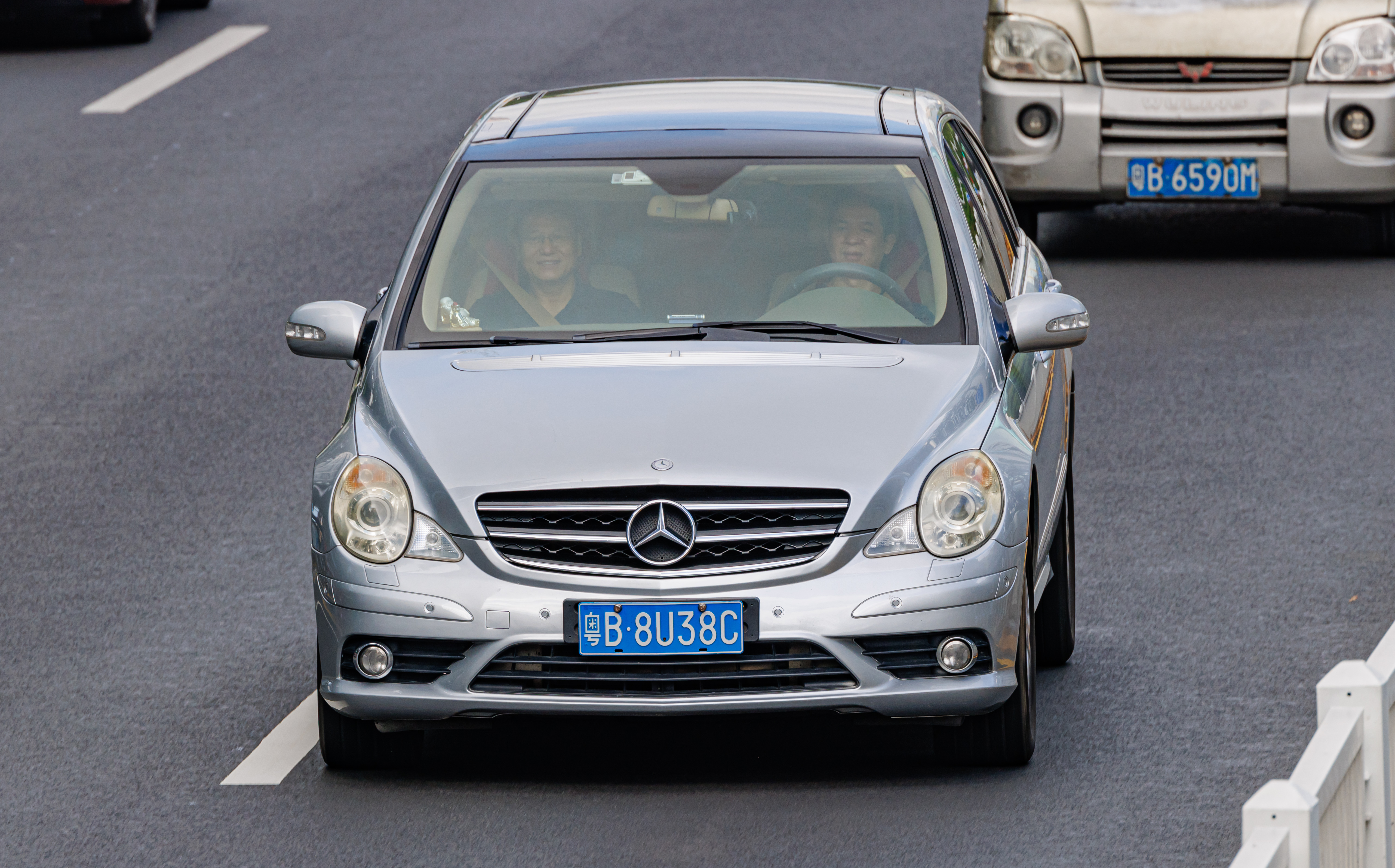
The Mercedes-Benz R class was Mercedes trying to blend a minivan’s family space with an SUV’s look. The idea sounded good, but it never really caught on with most buyers.
The Chrysler Pacifica is a minivan. Minivans are designed to fit families and lots of cargo in one vehicle. The podcast mentions it as a minivan model that some people don’t want.
The Land Rover Range Rover is a high-end SUV. It’s designed to be comfortable for everyday driving while still being able to handle rough roads. The podcast mentions it because they ended up choosing a Range Rover.
Car
Mercedes R350
The R350 is a version of the Mercedes R-Class. They’re pointing out that even if the listing price looks cheap, a high-mileage example can still turn into a costly ownership situation.
The Mercedes-Benz 600 CL is a top-tier luxury Mercedes. The hosts are using it to show that when a car has lots of complex systems, repairs can get very expensive over time.
The Acura CL is a two-door luxury car. The podcast mentions it while talking about what cars were bought in a certain year. It’s included as part of that comparison, not as the main focus.
The Tesla Model S is an electric luxury car. The hosts are considering buying one with lots of miles and focusing on whether the battery has degraded enough to matter.
EV degradation means the battery in an electric car can lose some of its range as it ages. That’s why a high-mileage EV might be cheaper, but you should think about how much range you’ll still get.
The Indy 500 is a premier American open-wheel race held at Indianapolis Motor Speedway. It’s known for high-speed oval racing where drafting and aerodynamic effects strongly influence how cars feel and how they pass.
Formula One (F1) is the top tier of modern open-wheel racing, with highly engineered cars and a focus on precision aerodynamics and tire management. Drivers moving from F1 to IndyCar often need to adapt to different car dynamics and racecraft.
Concept
hard transition
A “hard transition” between Formula 1 and IndyCar is the change in car behavior and racing conditions, especially aerodynamics and how cars interact in traffic. Even talented drivers can need time to adapt their braking, throttle, and steering inputs to the new downforce and airflow effects.
An “air pocket” is basically weird airflow around the car. When you’re in the disturbed air behind or near other cars, the car can feel like it’s shifting around more than you’d expect.
Drafting means driving close behind another car so the air resistance is lower. It can make the following car feel like it’s moving around a bit because the air around it is constantly changing.
Oversteer means the back of the car starts to slide more than the front. The driver has to react quickly to keep the car from spinning out.
Term
snap back
A “snap back” is when the car suddenly jerks back the other way after it was sliding. It’s risky because it can happen faster than the driver can react.
Rahal is the name of a racing team. In this segment, they’re talking about which driver is driving for that team.
LIVE
All right, before we get into it, a word from FanDuel and right now new FanDuel customers
can bet $5 and get 150 and bonus bets if your first bet wins.
That's right.
Turn five bucks into 150 and bonus bets just for getting started.
When every possession matters in the playoffs, FanDuel makes it easy to get closer to the
action from player props and your favorite stars to all the tools you need to back them up.
FanDuel puts player research at your fingertips so you can check the stats, trends, and matchups
all in one place and make your picks with confidence.
It's everything you need all in one app, so don't miss your shot.
Head to fanduel.com slash believe to get started.
That's fanduel.com slash B-L-E-A-V to get started.
It's FanDuel.
Play your game.
Must be 21 and over and present in select states.
Gambling problem, call 1-800-Gambler.
How are you doing?
I'm all right.
Thanks, Matt.
Still fighting off the jet lag a little bit.
Four days away in career is, four or five days away in career is just enough to screw up the
body clock, it seems.
It was a big trip.
We talked a little bit about it last week that you're heading out to this.
I know oftentimes you get caught up and the schedule is very busy,
but somewhere in the process you posted something.
And I don't know if you were attacking a bird or a bird was attacking you,
but I think you were trying to give it a french fry and it took a finger.
This was a weird thing that normally it's like, don't feed the seagulls.
We had a, the schedule was pretty packed.
I think it's a cultural thing, but when you go on these trips, they like to make sure that
you get value and they get value.
So my diary was from press conference 7.40 in the morning through to late at night,
which is fine, but you have a pretty hectic schedule.
But then at the end of the trip, we did have a little bit of downtime, which was really nice.
And we took this boat ride in the center of Seoul and they had this idea to feed the seagulls.
So you end up on your boat with these little fish.
And the idea is to feed the seagulls as you, as you power along.
And then you have a guy that comes along with a broom because obviously seagulls are
renowned for dropping things as well as taking fish out your hands.
So you have somebody come along with a mop to keep the, keep the boat clean.
So it's a, it's, have you ever been to career?
No, it's, I've been a handful of times now, but I hadn't been for about 15, 15 years.
And it's a fascinating, it's a fascinating country.
And Seoul has become this big sort of metropolis now.
But we actually, we actually journeyed south down the country and quite a long drive.
And then you get out and see a kind of different, a different world, a lot more agriculture.
And then we went down to a plant where they make some of the contemporary kiosk,
which was, was super interesting to, to see as well.
So lots of, lots of Korean food, which I'm a fan of.
Lots of, lots of travel around the country.
Then we caught a 200 mile an hour train back to Seoul, which was fun.
So it was a, yeah, it was a fun trip.
Jet lag, I don't know whether it's getting old, jet lag killed me.
I got off, we landed, it's a 16 hour time difference.
So then you think, well, it's only kind of eight hours then if you kind of think about it.
So we arrived, hadn't slept for a long time, went to bed, woke up at 1 a.m.
That was it night over.
So we were all struggling a bit with that, but it was a really fun trip.
And it is nice to go to, I suppose it's a bit like when you go to Detroit,
you get a feel for GM and Ford and still answers that you don't have if you're not in the homeland.
And so it's really interesting to go to Korea to kind of feel the culture a little bit.
And then to see, you know, we had a dinner with a lot of the executives and everything
else and you get a much better sense of the company than you do just, you know,
talking to the American headquarters.
Yeah. So what was the point, agenda?
Did you go out for a specific car that they were going to talk about,
maybe it's embargoed, or was it to more to kind of peek behind the curtain of the company?
It's always a bit of a clear Monday.
So this was the Kia Seltos.
And as we speak on Monday, I think the embargo is tomorrow.
So they, they said it embargo, give everybody a chance to put their content together
in the videos and everything else.
So it's a, it's a fun, it's a, so I can't say too much,
but the Seltos sits below the Sportage in the Kia lineup and has existed in the US,
I think since 2019. But when it first came out, it hasn't been a huge,
because it's a little bit smaller. It's kind of Honda HRV sized.
Yeah.
But this new one is a little bit bigger, quite a lot bigger in size.
And I think the US team have got quite, quite big ambitions for it.
We've already seen it, had a look around it.
It's a really, I think it was at the New York Auto Show, really handsome little car,
a decent amount of space inside.
It's going to be priced like 25 to 30,000 bucks.
This is all stuff that we, we knew in, in New York.
First time we're going to have a hybrid versions.
There's going to be three different engines.
So there's quite a lot that's going for it.
And I think it's going to appeal to people who, you know,
maybe look at a sport and say, maybe I don't need something as big as that,
or maybe I can just save money.
I think it's, you know, Kia's on a roll right now.
We love the new Telluride.
And I think the Celtos looks and feels like a, a baby Telluride.
Okay.
And, you know, when you, and a lot of the technology is shared, you know,
we talked a lot on the show about democratization of technology.
You've still got a screen with Netflix and everything else.
So, you know, we went to Korea, we'd seen it in New York,
but we actually went to Korea to drive it.
So I won't talk too much about how it was, what it was like to drive.
But as a aesthetic thing, it looks great.
The interior is really good.
Honestly, for the money, I think it's going to do really well.
You know, I've, I've visited a few of the manufacturing plants now as have you.
How does it, how does the Korean plants seem compared to, I don't know, maybe I,
here I was Nissan in Tennessee.
I was at the Ford Rouge F-150 plant.
And even, I even saw some differences in those.
Pretty, pretty significant differences in those.
What is the, what does the Kia facility look like?
Not wildly different, to be honest.
I thought the interesting thing with, for me, was that they have EVs and gas cars
going down the same production line.
Yeah.
When you think how different they are as from a kind of architecture perspective and,
you know, the technology and, you know, you haven't got an engine in one of them,
everything else.
So that was interesting to me that both go down the same line together.
They've moving on part of their facility towards pretty much full automation.
So getting, you know, getting rid of people, I suppose.
But, you know, there was nothing, I mean, the cars they're building there,
like the Sport, as you know, are relatively conventional cars.
So, I mean, I remember going to Tesla and the Gigafactory down in Texas and
the Cybertruck looks completely different because it's quite an innovative vehicle
and the way they build it is, is, is rather different.
I think, well, unless you'd got into the real nitty gritty, I think going into the care
plant, you wouldn't say, this feels, you know, sort of revolutionary in any way.
But, you know, you also get a sense of, a sense of scale.
Everything's, you know, it's a, it's a big company now.
Yeah.
You know, when I went to, to Detroit for the Rouge plant, like it's,
it's also part museum, right?
So there's, there's kind of that aspect of it.
And, and they're cranking out so many F-150s.
Like it's just massive, massive facility and all they do is just F-150s.
And then I go to, to Tennessee and Nissan's there and Nissan has several Nissan vehicles
and Infinity vehicles kind of all mixed in on the same thing going on.
Like you're driving by in the little golf cart and you'll see, you'll see, you know,
like a, like a little cart of sorts with a bunch of body panels and stuff for an
Infinity and then you'll see it for a Nissan.
You'll see it for something else.
And, and so yeah, this huge facility as well, but sort of like under one roof,
they're building all of these vehicles where Ford was more like a campus with
completely separate buildings and, and a little bit more like the autonomy of like,
I work on, I work at F-150s.
I don't, I don't do anything else.
I just do F-150s where somebody would go, I work at Nissan, right?
And you kind of do all of it there.
So it sounds like Kia kind of has a bit under one roof as well.
I remember going to the Ford plant in Zarl, Louis, which again, he's very old school
planted on the Franco German border.
It's where Ford has a facility.
I think it's still there.
They used to build a focus in Europe there when I, when I went and visited it.
And they had a guy who was the front right doorman and normally they rotate staff
because obviously it gets a little bit boring if all you're doing is bolting in a dashboard
for eight hours a day, whatever your shift is.
But there's one guy apparently basically refused to move.
So he'd been doing the front door for like 16 years.
And you know, it's, it's, it gives you a real insight into the industry.
And I think this is why it's so fascinating that you've got, you know, people like me
testing cars, writing about cars, you've got people designing cars, engineering cars,
and then you've got people screwing, you know, screwing them together.
And it's a very different discipline.
And honestly, it's something I'd be rubber shot because my attention span is terrible.
And I'm barely going to get it through the podcast, but it's, you know, I have a massive
amount of respect for people who, who build the cars and do it meticulously because it is rinse
and repeat, you know, you screw in a dashboard, the next car comes down the line, you screw in
a dashboard and it, you know, it keeps going.
You know, but one thing you notice now is I saw it more at the Ford plant because I got more of
up close, you know, view of all this is every part that's coming over on some sort of machine
or being pulled out of a box and being installed is has some sort of barcode, QR code, everything
gets scanned before it gets installed.
Right. And I'm sure that's for a number of reasons.
I'm sure it's, you know, identifying the part and verifying it was installed and when it was
scanned in and efficiency of employees and build, you know, like all of that stuff is
happening kind of all at once.
But interesting how that is a big process of it now is everything has to be scanned.
Yeah, everything's, everything sort of meticulous, make sure the right thing goes on the right car,
which is pretty fundamental.
And you also realize that the implications of everybody talks about quality,
but if there's a problem and they stop the line in these places, the money they lose is
like by the minute, it's quite staggering.
I've been in places where like there's a alarm gone, red light, something's gone wrong, robots,
you know, robots fallen over or whatever it may be.
And, you know, for a full capacity and you stop building cars, that's a huge issue.
So and also you realize that if the plant is not at full capacity and sometimes they work
three shifts, 24 hours a day, sometimes two.
But if you're, you know, if you're struggling to sell the car, you realize how much money
and infrastructure both in equipment, personnel, and that's why
that's why things go south really quickly.
Yeah. All right.
So talking about the trip there.
So you land, they pick you up, they shuffle you over to a hotel.
What time do you land?
Landed at 5 p.m., which was, oh, I don't know, like middle of the night LA time.
Like the day later, the day earlier?
The day later.
So you fly Sunday lunchtime, land Monday night, which takes a little bit of getting your head around.
My kids loved it because every time I called up, they're like, what day is it?
Yeah. So we're right.
You completely missed Monday on the way in.
So completely missed Monday and then got two Fridays.
Two Fridays on the way back.
Exactly. And we got picked up in this, this thing called, you know, the Kia Carnival
Minivan, which you sold here.
Well, the Kia Carnival was just got to write up on the Edmunds site right now.
So if you guys are interested, there's it.
It is. We like 26 Kia Carnival hybrid.
It's a nice thing.
It's a, you know, I like many vans.
I think they're, you know, unfairly derided and we enjoy the, enjoy the Carnival.
It's a good value as well.
But we picked up in one that looked like a Carnival with a roof box.
Well, that's interesting.
Maybe it's an airport shuttle luggage, et cetera.
But then we opened the sliding door and the roof box isn't a roof box.
It's like a roof extender.
And this is something that Kia sells themselves in, in, in Korea.
And I think a few of the markets, but not in the U.S.
And it's a genius idea because what it basically does,
he's almost turned it into like a little bus and they do four-seater versions.
Looking up, they do like four-seater versions, six, seven-seater versions.
So it's like a posh version of a minivan.
And you've got way more headroom.
So you sort of get into it like a, like a bus in a way.
It's got a big telly.
So you can be entertained.
You've got curtains across the, across the windows.
And it just feels way more luxurious than a typical Carnival.
And I was like, this is really, this is really cool.
Yeah.
And apparently it's a, a thing in Korea.
There's a whole bunch of them,
a lot of them running backwards and forwards to the airport.
We weren't in the four-seater version, which looks super luxurious.
We were in like a six-seater, but it was just really fun
because it looks like a roof box, but they basically just cut away the roof.
And it just gives you loads more headroom.
So you get this real feeling of space and luxury.
And apparently it's not a huge amount of money.
It's not that, it is more than the Carnival, but it's, but it's still,
you know, it's cheap relative to a, to a luxury car.
Right. Out there it's cheap, you know, little, little storage,
little fridge, little, I, I just looked it up and,
but it's a little foot massager.
Yeah. Yeah, apparently.
Yeah. I didn't get to try that, unfortunately.
I, when they were, whatever the new version of the Kia Carnival,
the high limousine, there was like a PDF.
So that's what I'm looking at.
This is a couple of years old to 2023, but it's cool.
I don't think, I don't think it's changed much.
Yeah. That is, that is basically the, the principle of it.
And it just made me think about, it was interesting, the same week
Volkswagen came out with the 2027 version of the ID bus,
which has now got like a, a sleeper version, which is quite fun.
So you can now, if you go back to like the sixties,
the Volkswagen bus was like the surfy thing that people slept in overnight.
And still it's, you can still rent them,
certainly where I live, you can rent them and go off camping in them.
And the big missed opportunity of the bus seemed to be that they hadn't cashed in
on that kind of coolness and cleverness, particularly inside.
Yeah. It was just kind of a boring,
and I had an interesting insight into it.
Somebody shared with me that it was developed by
Volkswagen's commercial team, not by the road car team.
And maybe that was part of the reason why they didn't really embrace
the kind of fun element inside.
So I think it looked quite cool from the outside.
The inside was boring.
And now they're trying to put that right.
So they've now got like a sleeper version where
you can lay the seats flat in the back, put mattress over the top,
shut the curtains.
And then there's other clever stuff, like it's doing like managing air flow
and the electric and everything else power because it's an EV.
So in theory, it's good at this sort of stuff.
Right. So I don't know if it has to be on the whole time,
but like when if you're doing like an overnight sleep mode,
it does have some amount of power, whether the vehicle's on, you know, like
the Ford Lightning, I can leave it on and plug stuff into it.
And I know I've said this before,
I use it most to plug in the charger like the C-TEC charger for my other vehicles
because there's no outlets in the parking garage.
So if I need to charge a battery in a car, I just use my truck and run the power outlet
in the bed of the truck and run chargers on it.
But you leave it on the whole night and I come in the next morning and it's
maybe 1% difference in battery, you know, in the overall like EV charge.
So yeah, pretty minimal.
Yeah. And I think this is kind of where they should have started for me with the bus.
And the Carnival got me thinking about it because it was like, you know,
there's a lot of cars that have the potential to be clever or potential to be fun
and then don't really cash in on it.
And the bus was certainly that, yeah, it had a two-tone paint,
but then you got inside and it's like, it kind of feels like a van,
not even necessarily a minivan, it feels more like a kind of van-van.
Yeah.
Van with seats.
And now I think, you know, they're trying to, they're trying to embrace the cool element of it.
So I think they've got more tech, they've got different Tesla charging.
And so because they skipped, they skipped the 26 model year,
I think it was selling much more slowly than what they thought.
So they just said, right, forget the 26, then we'll bring more updates for 27.
And that's kind of where it's landing now.
Yeah.
So if you think about some of the cool features, I mean, you can go back quite a ways.
There was, I mean, it probably started with things like maybe it was Chrysler and 56,
you know, had like a record player, you know, like you just put a record in there.
And did that work?
I don't know.
Although, is that when you were stopped,
you could turn it into like, well, I think it was on,
it was on kind of a spring loaded, it like absorbed its own vibration.
I can't imagine it worked well because it didn't take off as like the next big thing.
I can remember I've been an in-car, the first in-car CD players were terrible because it's like,
no, no CDs don't skip, yeah, they do.
They do, they do, in cars they do.
Yeah, right, you had to make it better and it's like, what's going on?
Yeah, so Chrysler had that and I think some others did as well.
And, you know, and then modern day cars, we got things like,
I want to say, BMW was one of the first is not like a fridge, but it was like,
like the air conditioning vents pumped into a center console storage.
So you can keep like a couple of cans cool, you know, that kind of thing.
So you're like, oh, it's kind of a fridge, but it's really just sort of a passive cool.
Yeah, there's a few people did that, didn't they?
And it was like, but then if you had the heater on, it wasn't really, you know,
like could you isolate it as air conditioning?
Yeah, I don't think you could do, I'd say, but now they must do it a different way because
instead of sort of like a vent in the center console storage, there's some cars have just
the button and it just cools it, it's an actual like little cooler, if you will.
I wouldn't call it a fridge because that would sort of imply you can reach the 32 degrees, but
having sort of that cooled compartment, that's kind of a neat feature.
And then there was, there were some other things back in the day were like where
seats can swivel around.
So like you park your car and then you go like completely.
You see the EV9 will do that in Europe, but it won't do it in America.
That's a legislative thing.
Yeah, well, before rules got in the way, like in the 70s, we had it, like an Oldsmobile
cutlass, like maybe 1970 Oldsmobile cutlass had like a swiveling seat.
What was the Dodge, what was the Dodge called?
Because I had a friend in the UK who bought one on like a used, like an 80s one.
It was the one with like the big velour seats.
It was kind of like a minivan, but like an SUV minivan thing.
Is it Roadmaster or something?
No, no, what was it called?
No, what was it called?
A complete brain fold.
Yeah, yeah, it's living my mind.
Like a Dodge van with like massive kind of armchairs in the back of it.
And I remember because it had like big, thick carpet and a friend of mine bought one in the UK
and then realized it did like six miles to go.
And so I couldn't afford to run it, but it was cool.
Trying to think of what that was.
Well, my general point was, why are you looking that up?
My general point was a lot of the cleverness.
Like where, where do you get more cleverness back in?
You know, the Honda used to have that odyssey with the vacuum in the trunk.
And then I think they had supplier problems and that went away.
But it's such a cool idea.
You got kids.
I think Toyota has it.
Does the Toyota Sienna might have?
Does it have it?
No, the Honda was always the one that had it.
I don't know whether Toyota then copied it.
I know Honda took it out in the end.
I think it was some sort of supply issue.
And then, you know, we drove that Chinese car, the Geely a couple of weeks ago,
that had the pull out fridge that could also double as like a keep your food warm.
I thought that was clever.
But there isn't, I don't feel like there's enough of this thing.
And yeah, you've got plug outlets now.
And, you know, with EVs, you can, as you're saying, you can plug different things in,
but that's just a power outlet.
You know, where are these like really kind of clever lifestyle stuff?
Correct me if I'm wrong, but Rivian, like if you parked a Rivian and you were out camping,
you can use the air suspension to level the Rivian.
So like if you were on uneven ground, instead of using like air jacks,
like on a motor coach or something like that to kind of level it out,
the Rivian can level itself out using the air suspension.
So, you know, like if you're kind of on an angle or something, it can level you out.
That way, if you did your your tent or something in the back, you get level ground,
which is a pretty cool use of the air suspension.
The Rivian also have done the, they've done the little torch in the door,
which is quite cute.
They've done the pull out Bluetooth speaker.
Rolls Royce, you know, the umbrella.
Yeah.
And the, but the Bluetooth speaker pull out Bluetooth speaker isn't in the R2.
It's only in the R1 because I presume it's quite, quite expensive to do.
But yeah, everybody else is like, oh, you got a cup holder.
Happy days.
You know, it's like, there's a little bit, I feel like there's more scope for imagination
and getting into Kio.
I was like, yeah, it might look a bit odd, but they could do something about that.
So this, this, this makes sense.
I know Mercedes are bringing out the VLE.
Have you seen that thing?
It looks, it's, it's, it's a Mercedes.
It's like a, it is a minivan.
It's a Porsche minivan, which in essence is a bit like this high limousine Carnival.
And they're trying to, I think it's going to be a lot of that luxury airport run crowd.
So it's trying to take the van aesthetic, make it luxurious, cool, interesting.
I, my instinct is that they'll struggle with it apart from like the chauffeur market.
Yeah.
But at least they're, at least they're trying to do something a little bit different.
Right.
And out here, I mean, what do you do?
You sell 30 of these things to the wind in Las Vegas and then, and then what?
I think like, I mean, I think like Uber Blacks and that sort of thing.
A lot of, you know, LA, the sort of luxuries, those people, you know, taking,
taking people to parties and things like that.
But they, there are a nice way, all these things, everybody kind of like mox, you know,
minivans, everybody looks at these things.
Oh, well, it's kind of, it looks commercial and everything else.
But then you get in, you've got tons of space, you know, it's a box.
It makes a lot of sense.
You've got tons of space.
You can engineer them nicely.
It's, it's a good way to travel.
You just got to get past the psychology.
If this is a, this looks like a van and not like a limousine.
I mean, think about it next.
Faraday is doing it too, right?
Faraday Future, I think they're doing it too.
Yeah, that's not going to happen.
Yeah, it's Chinese.
That was an attempt to keep the company going.
I think that's going to happen.
That's a Chinese van that they're trying to turn into a Faraday.
That's the one with the tele at the front, isn't it?
On tele on the nose.
Yes.
It was like very AI driven and had a tele screen in the front.
And I went down to their Southern California facility.
I don't want to call it a main thing.
It's more of a design studio.
And then something happened like two weeks after I was there,
they have like a little showroom with another Faraday Future like plugged in,
you know, because EV and it's in some sort of demo mode and it caught on fire.
So they had a little bit of bad luck down there, but the Mercedes looks nice.
Yeah, I think this is one of our people.
I think there's a role for these vehicles.
They do really well in, you know, this sort of van thing makes a lot more sense in Asia.
But I think, you know, as a family vehicle or as a executive airport shuttle or whatever,
they make a lot more sense than an S class, but whether people see it that way.
But then I think they've also got a cash in on it.
And that was the thing seeing the carnival.
What we're talking about is, yeah, you've got a foot massager.
Now it might sound ridiculous, but maybe that's a nice thing to have.
And the seats massage you and cool you and watch the telly,
or you can do your work or you've got little tables that come out.
There's there's a lot of ways that if you're going to, especially in, you know,
solar's got bad traffic like the rest of the, you know, the rest of the great metropolis,
and sort of like having a table, doing some work, watching the telly.
I mean, we talked about before saying, as much as we like to drive cars, yes,
your commute from, from where you live to the office, it'd be nice if the car was,
if you weren't given a ride with a nice driver and a foot massager autonomy would be
an autonomous car wouldn't be the worst thing in the world.
Get a couple emails done.
I just don't love the idea of a foot massage.
You were like, other people have had their feet in there.
Right. I think you own that car.
I don't think it would have to be my foot massage.
I have a bit of a CD about those sort of things.
Yes.
But thinking about it,
yeah, it was, what is the market for it?
Like, do we have that much out here?
Oh, what I was thinking was is out here, like all the nice Ubers turned into a black
Kia EV9.
Yeah.
But they did a deal in LA and now, yeah, Ubers blacks can be EV9s,
which is probably really cost-effective to run.
So no more, you know, escalades are on the way out.
It's all EV9s.
And I don't know if I just see them all the time or I just see the same like three
all the time because they're all black and you can't tell the difference.
But I think Kia told me they did a deal for a certain number
and it's all a balance of, in some ways it's good that you get bumps on seats,
but some ways it's bad that the Ubers tend to be lower trim models and they,
you know, maybe they've had a lot of bumps on seats and they don't feel the best.
I think it's a real balance.
It's a little weird, like going into career and seeing,
the majority is a bit like turning up in Detroit and everything's,
you know, everything belongs to, every car on the road basically is an example of the big three.
There's a lot of patroaches and they don't buy the, there's a lot of historical reasons
why they perhaps don't buy many Japanese cars.
You know, the Chinese cars are there.
BYD had big advertising, but not many on the road yet.
So nearly everything you see is a Hyundai Kia.
And then you see other stuff that they make that they don't export to the U.S.
They've got something called an EV5, which I think is great.
It looks again, sort of EV9, but a bit smaller kind of model Y size.
And I was talking to the U.S. guys like, why don't we bring this in?
This is much more, feels much more appropriate to the market than the EV6,
which is more of a hatchback.
That was a cool looking thing.
They've got some interesting sedans.
Hyundai have got a few sedans that we don't have over here as well.
So that's always kind of interesting to see.
And then also like, looking at the design against the backdrop of career always gives
you a different impression.
Like a sudden escalade came past us and an escalade just looks so incongruous in Seoul.
Yeah.
In the way that it doesn't in Detroit.
So it's always, it's always really interesting doing these trips.
And, you know, it's like when you get to Germany and see everything's a German car
and you get a different perspective.
I'm going to take a quick look at the EV5.
The EV5, it looks like a baby.
It looks like a baby telluride, but it's a nice size, nice interior.
Apparently the technology isn't as quite as sophisticated as the EV9.
It's not charging and everything else.
It's 400 volts, not 800.
That was part of the reason they didn't bring it in.
But I thought it was a really nice looking thing.
Good size, interesting woodwork well in the US.
So whether they change their mind and bring it in in the future or wait till the next generation,
I thought that was a better proposition than the EV6, which is that kind of like hatchback thing.
Yeah, but it looks good.
Yeah, looks like a cool thing.
All right, let's take a quick break.
We'll be right back.
Biopro Plus, it's a 100% drug free hormone health formula that helps guys over 40 get
leaner, tighter and stronger naturally.
I've been taking it.
I continue with that journey.
I'm into it for a few months now.
So whether you're just getting started or a seasoned pro in the gym,
Biopro Plus is the answer to help you get off the couch and break through plateaus.
Go to bioproteintech.com slash car cast for $100 off your first order.
There's no commitment and you can cancel at any time.
That's bioproteintech.com slash car cast.
Quick reminder, if you're watching games this week,
jump on FanDuel, whether it's NBA spreads, player props or same gay parlays.
FanDuel makes it easy to get in on the action.
Download the FanDuel app and place your first bet today.
All right, we're back.
So overall, it seemed like a good trip, kind of a short, short trip,
but you got a little bit of time off, got a chance to take a look around and
revisit Korea for a day.
It's a nice, it's a great trip, lovely thing to do.
What's on the docket next?
Do you have another big trip or you got to send somebody else?
No, I'm home now for a little bit.
I've got a little vacation coming up in July,
but I've got to get my head down and get some work done.
Okay.
Well, not that it wasn't work last week,
but I've got a few meetings to attend, a few budgets to write, that kind of thing.
So I'm going to go down the test track later today
when we've finished this, catch up with the test team, see what's going on.
Got a few things, a few interesting cars in.
Yeah, it's all happening.
I know you've been out of town, but your team has been hard at work.
There's been quite a bit of news coming out of BMW, right?
BMW had mentioned somewhere about possibly a G-Wagon competitor,
and I'm sure there's a bunch of AI photos that have popped up
to kind of show what a G-Wagon with BMW grill would be, that kind of thing.
But this BMW Alpina concept, have you taken a look at this yet?
Yeah, it looks beautiful, doesn't it?
I mean, it doesn't it?
But for this sort of context, Alpina had always been independent.
They were wine producer, had some epic wine collection.
I've been to Alpina many, many years ago, and I've always been a huge fan.
Their pitch was always, we're going to do a rival.
It's always going to be similar money to something like an M5,
but automatic when the M5s were manual, and maybe not as fast,
but a little bit more kind of couture, if you like, a little bit more refined,
generally sound a little bit different.
It was almost like the thinking person's M5.
And I've always been a huge fan of them.
And if you couldn't get an M7, you can get the Alpina 7, right?
Yeah, the US relationship's always been a bit weird,
because Alpina was a standalone company.
So if you were in, in Europe,
the way there was a lot more Alpina models, diesel, three, so there's all sorts of things,
you would go to an Alpina.
There was BMW dealers that had relationships with Alpina,
and you would go there.
So it's a standalone purchase.
But in the US, they always brought in like one or two.
I think they had the X7, six series,
and they were sold through official BMW dealers.
So it was a slightly different relationship,
but it also meant that they didn't do,
they didn't really do competing cars.
So you couldn't get the Alpina 5 series, for example.
So, and then BMW bought Alpina.
So now they're saying, okay, we're going to have the M division,
and we're going to have Alpina.
And it seems like the vision for Alpina is,
let's be much more focused on luxury performance and design,
and less on just outright umph.
And this first concept looks really cool.
It does, it looks really, it looks really good.
And I'm a sucker for like the big two-door GT cars,
like S-Class Coupe and stuff.
So this looks really good.
I had this, I was gonna say,
I had this funny thing a few years ago.
I was doing an event, and there's probably not many things
I can claim that I have done that probably nobody else has done,
but I was doing this like a charity stock car race at Irwindale.
And during one of the practice days,
it was getting late at night, you know, sun went down,
everyone was clearing out, they had lights out up on the track,
and I was there in an Alpina 7 press car.
And so I just went to the guy and I was like,
we're done for the day, right?
I was like, yeah, can I go out and get two more laps,
three more laps?
I go, but I want to drive the Alpina 7.
So I did, I did a couple of laps around the oval at Irwindale
and an Alpina 7 series.
A beautiful car.
Which is flawless, right?
It's seamless.
It ran great and yeah, big car, 12 cylinder power to it,
and to be able to kind of open it up around a banked oval,
which I don't know how many people do that in any 7 series,
or let alone the Alpina 7 series.
But yeah, I was with a friend,
we were also racing in the event with me,
and we just did laps around the, around Irwindale.
I'm also wondering like whether,
I can't see it in this concept,
but Alpina had a very distinctive color scheme,
which was like blue and green.
And I always think looked really, really cool.
It was on, you know, it was on the instrument dials.
So they would always do like enough to make it feel different,
like change the steering wheel leather,
different dials that were tended to be blue dials.
If you look, then they had these blue and green stitching.
And it might sound a bit naff,
but actually they did it in a very tasteful way.
I'm just looking at this concept.
I don't think they're embracing that,
which I think could be a bit of a shame.
So it's hard when they like buy something
and then try and reinvent it.
And they had, they always had these sort of wire wheels as well.
Looks like they've tried to pay homage to that.
But yeah, that color scheme was really cool.
It's like a 20 spoke or something wheel that they had.
It was kind of an identifying mark for them.
Night had a clean, but yeah.
Yeah. And it was a cool design.
I remember the Z8, the Alpina Z8.
That's right. Yeah.
They also did an Alpina Z1,
you know, with the one with the little,
the doors that came, no, it's sold in the U.S.
They had the doors that came down, little roadster.
Yeah.
Where you could push a button and the whole door
would like descend into the sill.
So you were...
Right. You know, it's interesting
because I've only seen it sort of pop up once or twice at auction.
But we just never really saw many of them out here.
I don't think they were ever sold out here.
I don't think there were many sold.
I mean, it was, it was based on the 1983 series, the E30.
And it was just a cooling two and a half liter engine.
You know, so not fast.
It was basically a three series with a, you know,
with this cool body, but just as a,
as a fun, interesting car.
And then Alpina did a version as well.
So you get an Alpina, Alpina one that's like exclusive on exclusive.
Never sold in the U.S.
Certainly a struggle to get one into California.
There you go. Such a cool little thing.
Yeah.
See you all.
And trying to explain the door.
It's like the door instead of opening, it's like half a door
and the upper half retracts into the lower half of the door,
which would be sort of like the rocker panel of the door.
And interesting because this isn't the first time a car has been done this way.
There was a car way back, it was a concept car.
And I forgot who the manufacturer was,
but it was a concept car from back in the day where
it was front and rear seats, but instead of a four door,
it had one big door and instead of swinging open,
it would retract down, but it would retract and fold underneath the car.
It would go underneath like the floor pan of the car.
There was many flaws and issues with that design
because it didn't go like into a sleeve.
It wasn't like protected.
It literally went under the car.
So if there was something under the car, for example,
or you parked on a bit of a peak, this thing would have retracted and slammed into it.
So BMW's solution was to go half door and have it suck down into the door.
It's cool.
I don't know, it just didn't catch on or the performance numbers weren't there
or just maybe the technology didn't really work that well.
I don't think it was massively safe as a concept.
So I think also it's probably like, I think they were hand built.
They were probably very expensive to produce and it was done as like a little halo car.
I think there's like 89, it came out or something,
but I'd really fancy it to be a wonderful car for California when the sun's shining.
It's super cool.
I don't think it ever, you know, they were never sold.
I don't know how you get it through smog or whatever,
but maybe because it's the three series engine.
But you know, interesting because that slope nose was other than like M1 or eight series,
it's like there wasn't a lot in the BMW lineup to its whole life that had that kind of look to it.
No, and also like the kidney grille is quite modest, you know, very small in fact.
And you know, but it still has that, it still feels like and looks like a BMW.
It's those are shows that you don't have to,
you don't have to have like an enormous kidney grille to say BMW.
It seems like that door would would be a fuss.
It has to like suck in and then go down.
It can't just go flush down.
It has like a thing.
It's like a track that has to follow.
And I'm sure there are many out there where the doors don't work.
And then you just you just keep it as a rag top and you kind of hop over the edge.
It reminds me of the the early generation Land Rover Freelander, which had a retractable,
like the foreigner does today, but it has a retractable glass in the rear door.
But they were famous for going down and not reappearing,
which in a country where it rained a lot, that was a problem.
Yes.
And then what was the GM where the back would open up?
It was like an SUV and it was ugly.
And the whole back would I know you guys listening or no,
they're yelling at me right now going, it's the whatever.
But I can't recall what it was.
It almost brings this full circle to like trying to do interesting, cool things.
And why, you know, why people don't do it.
And I suppose we were talking on on the trip about because we were talking about this car
and I think then it was like, remember the evoke that I'm very recently evoked cabriolet?
I mean, it was unbelievably heavy and had no luggage space.
Murano convertible, obviously another one.
But yeah, what was the obvious?
OK, so I'm thinking of the GMC Envoy.
The GMC Envoy had, do you remember it?
No.
No, OK, I'm going to bring up a picture.
I'm not even going to pretend.
Yeah, I'm going to bring up a picture because you're going to absolutely change everything
you're doing and go buy one of these.
All right, here's your GMC Envoy.
My Envoy.
Oh, so it just has like a retracting rear wing and so you can put it.
It's like a target in the back.
So you can put the carriage clock or a.
Oh, I see.
So basically you can just have stuff sticking out of the rear hatch.
Yeah, so it was like a retractable rear glass, but but like 20% of the roof as well.
So if you want to put like a washing machine in the back of the car,
you can because you can stand it vertically and it will just sort of pop out.
Yes, and it had like a big instead of a tailgate had like a big door.
And you could, oops, I lost that.
That's actually quite cool.
So it's sort of like halfway from between an SUV and a truck.
Right.
But it has like it.
So it's like target target meets truck meets SUV.
Yeah, that's a tiny image, but it's interesting.
If the proportions were weird, it was like bulbous in the back and all that stuff.
But it was.
It was interesting meeting.
You just imagine like the meeting when that was signed off.
I say, I'm going to do like, you know, you like trucks and SUVs and you like targets.
Have a look at this.
Yeah.
It's like, well, how many people are buying tops and put it on the back of their trucks?
And like, why don't we just do that?
You know, you carriage clock.
Carriage clock.
I put it in.
But it was sometimes it's like, you know, some executive who's got a target or something
or like, you know, struggle to get his something.
Yeah, it's a great idea.
We've had this conversation before where you look at something in a car
and a design idea, a functionality idea and go,
how did it get past the multiple layers of, you know, design and engineering and safety
and legal and marketing and testing and like everybody was like, we love this.
And maybe the VLE will be put.
I hope the VLE succeeds.
I think it's a cool concept.
But Mercedes of all the brands has this tendency because they did like the R class as well.
Yes.
R class was like Mercedes does a minivan except he didn't have sliding.
No, he didn't have sliders.
So it's like an SUV meets minivan, right?
Wasn't a big success.
I remember they even did AMG versions.
I remember coming to the US to drive it.
Remember the Mercedes PR guy who was quite, you know, not very good at telling the company line.
He said, yeah, there's vehicles that we should do and vehicles that we shouldn't do.
And maybe this is one of the like, it's like, what's this?
I mean, listen, on paper somewhere, someone's going, look, there are affluent families,
you know, they're sitting around, you know, Newport Beach and they want a minivan,
but they don't want that Pacifica.
It doesn't fit their, you know, community, right?
Maybe, maybe we can sell a few, you know, in Newport Beach.
And then people are like, now I just get it.
AMG to not one out, sell it for 150 grand.
Yeah, right.
They ended up just getting Range Rover.
So it was fine.
And then the depressing thing is, you know, we almost like what we're talking about at the
beginning, the depressing thing is these things don't work and everybody then just gets super
conservative.
And, you know, I think the buzz was to go back to the buzz.
I think that was a great example of something that had a wonderful opportunity.
I was super excited about it.
I live in a big surf community.
I thought they were going to sell a million of them here.
And I think it's quite a nice thing to drive.
The range doesn't go far enough.
I think it looks cool, but then the interior is a bit boring.
But hopefully now they're capitalizing on that and making it kind of more of a lifestyle
vehicle.
Don't try and sell it as a minivan, sell it as a lifestyle vehicle.
And again, made me think of the Kia and, you know, we'll see.
I mean, you look at used prices, you can get that minivan for like 12 grand, sometimes less.
Which one?
The Mercedes.
The BMW R.
Yeah, they weren't well built in that era, though.
That was the era where Mercedes quality went to, you know, Mercedes quality really plummeted.
Yeah, I would be nervous about buying an R-Class.
Anything goes wrong.
It's going to cost you a fortune.
Well, there's a 2008 R350 with 120,000 miles on it.
And they're asking 3,980 bucks.
Yeah, that would, there's a couple of red flags in there.
You're saying it's the worst $3,900 you're going to spend?
Before my time, so it wasn't sanctioned by me, but Edmunds bought a, because I know,
because I drove it once when I came over here to see them, they drove, they bought a
600 CL Mercedes.
But again, the same year as the R-Class, when Mercedes quality went to pieces, air suspension,
and it just cost, it just cost like a billion dollars or something to run over time.
I can't remember the exact numbers, but I do remember everybody saying that, you know,
we bought it for six grand and spent 20 and sold it for 10 or something.
It's really easy to do that.
Well, you can get those GMV envoys for about five grand, 5,500.
So that might be the way to go.
I am thinking about buying a Model S with like tons of miles for like 10 grand,
13 grand, just to consider that, look at that whole like EV degradation.
But that's more of a kind of interesting tech story.
I think any luxury car you've got to be very, very careful with at bargain prices.
Yeah.
All right, we're going to wrap things up for today.
Glad you had a good trip.
We'll get into the Celtos, right?
A little bit more, maybe next week when the embargo is lifted and driving impressions and
stuff as well.
So yeah, what else is on the docket?
You guys hitting the U-Drags?
When do you guys do that?
No, we've got to put some cars together.
It's a challenge.
Honestly, the challenge has become that manufacturers don't want to lose.
So sometimes they don't want to give us cars.
So we're working on it.
It will return, but as it's got more popular, it's got harder to achieve bizarrely because
now it's like, oh no, we don't want to lose in front of a million people.
That reminded me of the documentary.
So we did the documentary, The 24-Hour War, Ford versus Ferrari at Le Mans.
It was a great doc, if you guys haven't seen it.
And for the longest time, we couldn't get Ferrari to engage in the film.
And their official response was, why would we participate in the story where we lose?
I mean, that's fair enough to be honest.
We want to draw attention to the fact that
eventually they saw some of the other work we did, like the Newman film.
And they're like, ah, it's a part of the history.
We're making a comeback.
So they ended up participating.
But also on that note, there is a new Bobby Ray Hall documentary that we've completed by,
say, we, but it's coming through Adam Krohler's production company.
It's a Bobby Ray Hall doc.
It's on FS2 on one of the Fox networks.
It is playing pretty much all the time, leading up to the Indy 500.
So if you want to see a great little one hour doc about Bobby Ray Hall, check that out.
It's on FS2.
I mean, as far as I've seen so far in my area, it's on Fox Sports too.
But maybe you can get it on other platforms.
On demand or something.
Well, Outland is finished now, so I've got something else to watch.
Well, this is 44 minutes, so this should be pretty easy to watch.
You can watch the Indy 500.
It's kind of like F1 that you love, but, you know, in a circle.
Yeah, I enjoy the F500.
I'd never been, I desperately need to go.
I had been invited a couple of times, trips planned,
and then, you know, families and stuff got in the way.
So I'm not going to this year because my dad's coming out to see me instead,
which is the right reason not to go.
But yeah, I always enjoy, even when I lived in the UK, I always watched the Indy 500.
And that year, when Alonzo nearly won it, but his engine blew up when he was like
seventh or something, that was super exciting.
They just did, you know, the qualifying and stuff that,
so they're getting ready.
It's going to be fun.
It'll be good.
It is.
I mean, I've driven on a couple of ovals, and if you don't grow up with them, it's terrifying.
I have huge respect for everybody who does that.
And I've taught a couple of British racers who were very successful,
professional race drivers who tried racing on an oval.
And one of the guys had this big reputation of like alpha male as a British touring car
champion.
He'd raced in, he'd won all sorts of things, single seaters, everything.
And he went to, they did, they tried to launch a NASCAR equivalent.
I think it was called NASCAR or something bizarre in Europe.
And he said he was racing on an oval.
They built one in the UK.
They built a rocking them over in the UK.
I think Indy car race there or Indy racing league.
And yeah, he said it scared him.
If you're not used to it, it's quite scary.
We are in Europe, don't crash as much.
You don't hit walls.
I think you've got to grow up with it.
I like the qualifying was over 230 mile an hour averages.
And that car is sliding up the bank on the oval.
And it's crazy.
But anyway, I know you're more of an F1 fan than an Indy car fan.
Well, yeah, no, I like both.
But Mick Schumacher has qualified for the Indy 500.
Yeah, he's, he's having a bit of a tough baptism in Indy car.
I mean, he's, I think as a driver, he's seen it as good, but not great in Europe.
You know, he won GP two, which is like formula 21 below formula one,
but not, not his first attempt.
And the really good guys tend to win it their first attempt.
So, or at least being the top, top couple, he had an okay formula one career,
but kept, kept crashing.
So yeah, be interested to see how it goes.
But you know, because again, hard transition,
I think they can be quick over a lap because they're talented and all the rest of it.
But I remember talking to Mark Blundell, something enough on that one now,
but Mark Blundell, who was a formula one, had a few podiums in formula one,
then came to Indy car and won some races.
I think he was pretty, it didn't win the championship, but was, was right up there.
And he was telling me that the weirdest thing that he got had to get used to is that you're
sitting in an air pocket and the cars like constantly moving around.
You don't see it on TV because it's quite subtle.
But when you've got cars drafting you, or when you're following something,
you're like, you're sort of like moving around a little bit because of the aerodynamics
and everything else.
And he said, he took him a long time to get his head around that.
And also the fact, and I think Nigel Mansell found this as well,
when he stuck it in the wall, but you can't catch them as easily.
Like once they're gone, you've got to let them go.
And I think Mansell had a massive accident and so did Nelson Piquet from him and nearly cost him
his legs.
Where like the European guys tried to, you know, tried to turn into the slide.
And then it kind of then does fish, you know, then it flips back the other way and
smashes you into the wall.
And I remember Mark telling me who had a massive accident.
Again, nearly lost his legs.
And he told me that was the hardest thing.
In Europe, you grow up on circuits, you know, the car oversteers,
you turn into the slide, you try and hang on to it instead of just letting it go.
And he was, yeah.
So then your last thing you want to do is have it snap back the other way.
Then you basically straighten the wall feet first, which is what happened to him.
So anyway, I have massive, massive respect for those guys.
Yeah. Well, Indy 500 cool event.
We mentioned Rahal.
Mick Schumacher is driving for Rahal.
He's on the RLL teams, on the Rahal team.
So anyway, yeah, we'll check that out.
All right, we're wrapping it up for today.
Guys, thanks so much.
And we will see you next week.
Until then, keep the air and the spare and the bag and the wheel.
About this episode
Jet-lagged after travel, the hosts talk through their Korea media trip and how a press embargo works, then get into the Kia Seltos and why it’s getting hybrid options. The conversation widens to factory realities—shared EV/gas lines, automation, and why stopping a line is “by the minute” expensive. Korea-specific cabin quirks (like a Carnival roof extender) lead into other “funky” features, from EV power outlets to cooled compartments and unusual door designs.