
CarCast+Edmunds - Alistair visits Korea and funky features on car, some we miss and some we don’t.
About this episode
Jet-lagged after travel, the hosts talk through their Korea media trip and how a press embargo works, then get into the Kia Seltos and why it’s getting hybrid options. The conversation widens to factory realities—shared EV/gas lines, automation, and why stopping a line is “by the minute” expensive. Korea-specific cabin quirks (like a Carnival roof extender) lead into other “funky” features, from EV power outlets to cooled compartments and unusual door designs.
Follow @motorator
Follow @weaveroncars
Follow Bravago Beverages
Hosted by Simplecast, an AdsWizz company. See pcm.adswizz.com for information about our collection and use of personal data for advertising.

Seagulls
"...ird thing that normally it's like, don't feed the seagulls. We had a, the schedule was pretty packed."
In the podcast, “seagull” sounds like a bird, not a car. The speaker talks about not feeding seagulls and that their schedule was busy. There isn’t a vehicle to explain here.
“Seagull” in the podcast context appears to be a reference to a bird rather than a car model. The speaker mentions not feeding seagulls and describes a schedule that was busy. Since it isn’t a vehicle, there’s no car-specific explanation to provide.

Kia Seltos
"So this was the Kia Seltos. And as we speak on Monday, I think the embargo is tomorrow. So they, they said it embargo, give everybody a chance to put their content together in the videos and everything else."
The Kia Seltos is a small SUV from Kia. It’s positioned below the Sportage, and the host says it’s been in the U.S. for a few years (starting around 2019).
The Kia Seltos is a compact crossover SUV in Kia’s lineup. In the episode, Alistair notes it sits below the Kia Sportage and has been sold in the U.S. since around 2019, which helps explain why it’s a newer model compared with older Kia nameplates.
embargo
"And as we speak on Monday, I think the embargo is tomorrow. So they, they said it embargo, give everybody a chance to put their content together in the videos and everything else."
An embargo is basically a “don’t post yet” rule for news. Car companies use it so everyone publishes new-car information at the same time.
An embargo is a media restriction that prevents journalists from publishing details about a new car until a specific release time. In the segment, the host says the embargo is tomorrow, so the company gives outlets time to prepare their content.

Kia Sportage
"...can't say too much, but the Seltos sits below the Sportage in the Kia lineup and has existed in the US, I th..."
The Kia Sportage is a compact SUV. It’s built for everyday driving with extra space compared to a sedan. The podcast mentions it to explain how it fits above a smaller Kia model in the lineup.
The Kia Sportage is a compact SUV positioned as a step above smaller models in Kia’s lineup. It’s commonly discussed because it balances everyday usability with available technology and features. The podcast references it in relation to where it sits in the brand’s lineup compared to a smaller sibling model.

Honda Hrv
"because it's a little bit smaller. It's kind of Honda HRV sized."
The Honda HR-V is a small crossover SUV. Here, they’re using it as a benchmark to explain how big the car they’re discussing is.
The Honda HR-V is a subcompact crossover SUV known for being easy to park and for offering practical space for its size. In this segment, it’s used as a size reference point for a newer, larger model.
hybrid versions
"First time we're going to have a hybrid versions. There's going to be three different engines."
A hybrid uses a gas engine and an electric motor together. That can help it use less fuel, and they’re saying this car will finally offer hybrid choices.
A hybrid version uses both an internal-combustion engine and an electric motor to improve efficiency and reduce fuel use. In this segment, the hosts say the model will be offered with hybrid options for the first time.
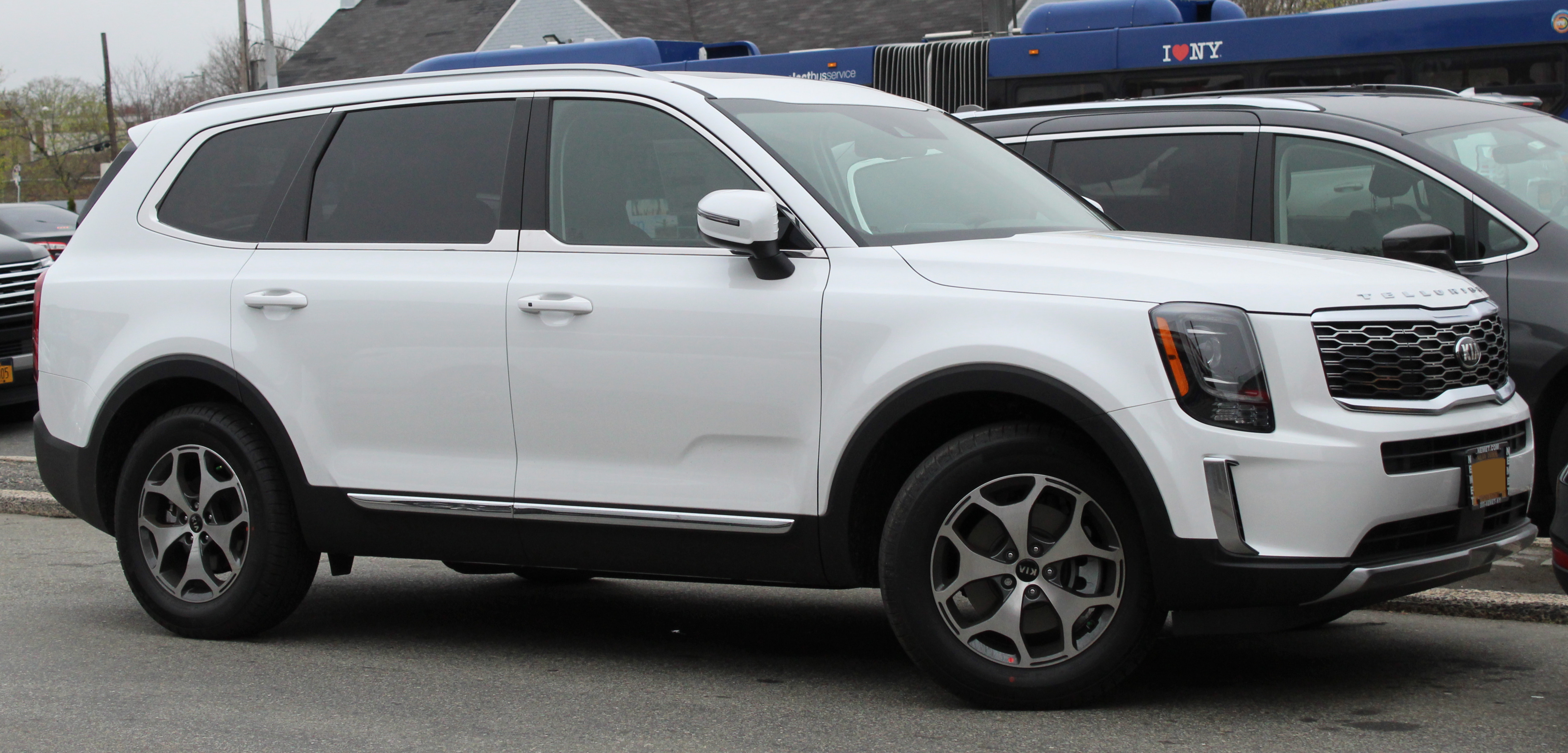
Kia Telluride
"We love the new Telluride. And I think the Celtos looks and feels like a, a baby Telluride."
The Kia Telluride is a bigger family SUV with three rows of seats. They’re saying another Kia model feels like a smaller version of that same idea.
The Kia Telluride is a midsize three-row SUV that became popular for offering a lot of space and features for the money. In the segment, the hosts say another Kia model feels like a smaller “baby” version of it, tying the comparison to design and overall vibe.
democratization of technology
"and a lot of the technology is shared, you know, we talked a lot on the show about democratization of technology. You've still got a screen with Netflix and everything else."
This phrase means bringing high-tech features to cheaper cars. They’re saying the car will have modern tech—like a streaming setup—without costing as much as luxury models.
“Democratization of technology” means taking advanced features that used to be limited to expensive cars and making them available on more affordable models. The hosts connect this to the idea that the car will include modern infotainment features like streaming apps.
screen with Netflix
"You've still got a screen with Netflix and everything else. So, you know, we went to Korea, we'd seen it in New York, but we actually went to Korea to drive it."
Some cars now let you stream shows and movies right on the dashboard screen. They mention Netflix as an example of that kind of feature.
In-car streaming services let passengers watch content through the vehicle’s infotainment system. The hosts mention Netflix specifically to highlight how infotainment features are becoming more mainstream.
Nissan
"here I was Nissan in Tennessee. [389.5s] I was at the Ford Rouge F-150 plant."
Nissan is a car company. Here, the host mentions visiting a Nissan factory in Tennessee to compare it with other factories.
Nissan is an automaker that builds vehicles and powertrains in large manufacturing plants. In this segment, Alistair references visiting a Nissan plant in Tennessee to compare how different factories operate.
Ford
"I was at the Ford Rouge F-150 plant. [393.8s] And even, I even saw some differences in those."
Ford is a car company. The host brings up Ford’s factory as a comparison to other plants.
Ford is a major automaker with its own manufacturing network. The segment uses Ford’s Rouge plant as a reference point for comparing production differences between factories.

Ford F150
"here I was Nissan in Tennessee. I was at the Ford Rouge F-150 plant. And even, I even saw some differences in those."
The Ford F-150 is a large truck made for tasks like carrying things and towing. People talk about it a lot because it’s a very common model. The podcast mentions it while discussing a Ford factory visit.
The Ford F-150 is a full-size pickup truck built for everyday work and hauling, and it’s one of the most widely recognized trucks in the U.S. It’s often discussed because of its scale, frequent updates, and the way it reflects what manufacturers are building for mainstream truck buyers. In the podcast, it comes up in the context of visiting Ford’s plant and noticing differences in production.
EVs and gas cars going down the same production line
"I thought the interesting thing with, for me, was that they have EVs and gas cars [411.1s] going down the same production line. [412.9s] Yeah."
This describes a “mixed-model” or shared-line manufacturing approach where electric vehicles (EVs) and gasoline cars are assembled on the same production line. It’s notable because EVs remove the engine and many related components, yet factories still reuse a lot of common body, chassis, and assembly steps.
full automation
"They've moving on part of their facility towards pretty much full automation. [431.0s] So getting, you know, getting rid of people, I suppose."
Full automation refers to using robots and automated equipment to perform most manufacturing tasks instead of relying on manual labor. The segment frames it as a shift toward reducing the number of people needed on the production floor.
Gigafactory
"I remember going to Tesla and the Gigafactory down in Texas and [444.4s] the Cybertruck looks completely different because it's quite an innovative vehicle"
A “Gigafactory” is a very large manufacturing site associated with EVs and batteries, designed to produce at massive scale. The host references Tesla’s Gigafactory in Texas to contrast how that kind of facility builds vehicles compared with more conventional plants.
Tesla
"I remember going to Tesla and the Gigafactory down in Texas and [444.4s] the Cybertruck looks completely different because it's quite an innovative vehicle"
Tesla is an EV-focused automaker known for building vehicles and large-scale battery/vehicle production facilities. In this segment, the host references visiting Tesla’s Texas “Gigafactory” to compare manufacturing approaches.

Tesla Cybertruck
"...o Tesla and the Gigafactory down in Texas and the Cybertruck looks completely different because it's quite an ..."
The Tesla Cybertruck is an electric pickup truck. It looks very different from most trucks because of its sharp, boxy shape. The podcast brings it up when describing Tesla’s factory and the truck’s appearance.
The Tesla Cybertruck is an all-electric pickup known for its unusual, angular design and its focus on battery-powered performance. It’s frequently discussed because it represents Tesla’s approach to building a truck with a very different look and technology than traditional pickups. The podcast references it while talking about Tesla’s Texas facilities and how the vehicle stands out visually.

Kia Carnival
"And we got picked up in this, this thing called, you know, the Kia Carnival [751.8s] Minivan, which you sold here. ... We like 26 Kia Carnival hybrid. ... So it's like a posh version of a minivan. And you've got way more headroom."
The Kia Carnival is a minivan from Kia. Here, they’re talking about a Carnival hybrid and a special roof add-on that makes it more like a small shuttle/bus and gives more usable space inside.
The Kia Carnival is a minivan built to feel more like a people-mover than a basic family hauler. In this segment, the hosts discuss a Carnival hybrid and a special roof-mounted accessory that changes how the van is used and how much space it provides.
roof extender
"But then we opened the sliding door and the roof box isn't a roof box. [782.3s] It's like a roof extender. ... And it's a genius idea because what it basically does, ... And you've got way more headroom."
A roof extender is an aftermarket or OEM roof-mounted structure that increases the usable interior space above the standard roofline. In this case, it’s used to make the Carnival feel more like a small bus by adding headroom and supporting multi-row seating layouts.

Volkswagen Bus
"...ly does, he's almost turned it into like a little bus and they do four-seater versions. Looking up, the..."
The Volkswagen Bus is a type of van with a very recognizable look. It can be set up to carry a small group of people, including versions with four seats. The podcast mentions it while describing a bus-like setup and seating.
The Volkswagen Bus is a classic van known for its distinctive shape and its ability to be configured for passengers, including four-seat setups. It’s often discussed because it’s an iconic vehicle that can be used as a people-mover or customized for different uses. The podcast mentions it while describing a small bus-like setup and seating configuration.
telly
"It's got a big telly. So you can be entertained. You've got curtains across the, across the windows."
A “telly” is basically a TV screen. In this vehicle, it’s there so passengers can watch things during the ride.
In-car “telly” refers to a television screen used for passenger entertainment. Here, the hosts highlight it as part of the Carnival’s upgraded cabin experience in Korea.
roof box
"We were in like a six-seater, but it was just really fun because it looks like a roof box, but they basically just cut away the roof. And it just gives you loads more headroom."
A roof box is a storage box you mount on top of a car for extra luggage. The hosts are using it as a comparison because the vehicle’s shape makes it look like it has one, even though the real change is more space inside.
A roof box is an external storage container mounted on the roof, typically used to carry luggage or gear. In this segment, the hosts say the vehicle looks like it has a roof box, but instead the roof is cut away to create more headroom—so it’s a visual cue for the cabin’s added space.
headroom
"And it just gives you loads more headroom. So you get this real feeling of space and luxury."
Headroom is how much space you have above your head when you’re sitting. If there’s more headroom, the cabin feels less cramped and more comfortable.
Headroom is the vertical space inside a vehicle between the floor/seat area and the roof. More headroom makes it feel more open and comfortable, especially in a modified cabin like the cut-roof Carnival described here.
foot massager
"Out there it's cheap, you know, little, little storage, little fridge, little, I, I just looked it up and, but it's a little foot massager. Yeah. Yeah, apparently."
A foot massager is a built-in comfort feature that massages your feet. It’s the kind of extra luxury add-on you might find in a premium vehicle.
A foot massager is an in-cabin device that applies pressure or vibration to the feet to reduce fatigue and add comfort. The hosts mention one in the Korean Carnival setup, framing it as part of the “luxury” features in the shuttle-style vehicle.

Volkswagen ID Buzz
"Yeah. That is, that is basically the, the principle of it. And it just made me think about, it was interesting, the same week Volkswagen came out with the 2027 version of the ID bus, which has now got like a, a sleeper version, which is quite fun."
The Volkswagen ID Buzz is an electric version of the old Volkswagen Bus. Here, they’re talking about a new “sleeper” setup that lets it work like a mini camper for overnight trips.
The Volkswagen ID Buzz is an electric reinterpretation of the classic Volkswagen Bus/Transporter. In this segment, the hosts focus on the newer ID Buzz variant that’s being positioned as a “sleeper,” turning it into an overnight camping-style vehicle.
sleeper version
"Volkswagen came out with the 2027 version of the ID bus, which has now got like a, a sleeper version, which is quite fun... So they've now got like a sleeper version where you can lay the seats flat in the back, put mattress over the top, shut the curtains."
A “sleeper version” is basically a car setup meant for sleeping overnight. In this case, it’s like a mini camper: seats fold flat, you add a mattress, and you can close curtains.
A “sleeper version” in a vehicle context means a configuration designed for overnight use. Here it’s specifically about the ID Buzz being set up so the rear seats lay flat, a mattress goes on top, and curtains close for a camper-like sleeping space.
lay the seats flat
"So they've now got like a sleeper version where you can lay the seats flat in the back, put mattress over the top, shut the curtains."
“Lay the seats flat” means the back seats can fold down into a flat surface. That’s important if you want to put a mattress on top and sleep comfortably.
“Lay the seats flat” describes a seating system that can transform from normal passenger seating into a flat sleeping surface. That matters for camper-style conversions because it allows a mattress to sit securely without large gaps or steep angles.
EV
"and the electric and everything else power because it's an EV. [952.8s] So in theory, it's good at this sort of stuff."
EV means electric vehicle. It’s a car that runs on electricity stored in a battery, and here they’re discussing how it still uses a little power even when it’s in a low-power mode.
EV stands for electric vehicle—cars that use electric motors powered by a battery instead of a gasoline engine. In this context, the host is talking about how an EV manages power for features like airflow control and how much battery it uses in an overnight sleep mode.
overnight sleep mode
"Right. So I don't know if it has to be on the whole time, [958.8s] but like when if you're doing like an overnight sleep mode, [962.2s] it does have some amount of power..."
Overnight sleep mode is a low-power operating state where an EV reduces energy use while still keeping certain systems ready. The host is using it as a real-world test: leaving the truck in that state overnight results in only about a 1% change in battery state of charge.

Ford F-150 Lightning
"...whether the vehicle's on, you know, like the Ford Lightning, I can leave it on and plug stuff into it. And I ..."
The Ford F-150 Lightning is an electric pickup truck. It can provide power so you can plug in devices or equipment. The podcast mentions it because the speaker uses it like a power source for charging other vehicles or gear.
The Ford F-150 Lightning is an all-electric version of the F-150 pickup, designed to keep the truck’s practicality while switching to battery power. It’s often discussed for its ability to supply power for tools and devices, which is why it can be mentioned alongside charging gear. In the podcast, the speaker references leaving it on and plugging items in.
C-TEC charger
"I use it most to plug in the charger like the C-TEC charger for my other vehicles [973.7s] because there's no outlets in the parking garage."
C-TEC is a brand of battery charger. The host uses one to charge batteries on other vehicles, and he powers it using his EV truck.
C-TEK (spoken here as “C-TEC”) is a brand of battery chargers/maintainers used to charge and keep batteries topped up. The host uses it as an example of the kind of charger he runs from the EV truck’s outlet.
power outlet
"So if I need to charge a battery in a car, I just use my truck and run the power outlet [983.2s] in the bed of the truck and run chargers on it."
A power outlet is a built-in plug you can use to run chargers and other electronics. The host is saying he uses the truck’s bed outlet to charge other car batteries when the parking garage doesn’t have outlets.
A power outlet in an EV (or EV truck) is an onboard AC/DC supply used to run chargers and other devices. Here, the host describes using the outlet in the bed of the truck to run charging equipment when there are no wall outlets available.

Honda Element
"...'re trying to, they're trying to embrace the cool element of it. So I think they've got more tech, they've ..."
The Honda Element is a small, box-shaped vehicle that’s designed to be practical. It’s known for having a flexible interior and a unique look. The podcast talks about it as something that’s being made more tech-focused.
The Honda Element is a compact, boxy crossover-style vehicle known for its distinctive design and flexible interior layout. It’s often discussed because it’s a “quirky” model that emphasizes practicality and customization. The podcast mentions it in the context of embracing the “cool element” and adding more technology.

Oldsmobile Cutlass
"...y, like in the 70s, we had it, like an Oldsmobile cutlass, like maybe 1970 Oldsmobile cutlass had like a sw..."
The Oldsmobile Cutlass is an older American car model. The podcast mentions it because the speaker is thinking back to what a Cutlass from around 1970 looked like. It’s part of a memory about styling details.
The Oldsmobile Cutlass is a classic American car nameplate that was especially popular in past decades, including the 1970s. It’s often brought up in nostalgic conversations about styling and the “muscle-era” look of that time. The podcast references a 1970-era Cutlass in the context of a remembered design detail.

Buick Roadmaster
"...e a minivan, but like an SUV minivan thing. Is it Roadmaster or something? No, no, what was it called?"
The Buick Roadmaster is a model name from Buick. The podcast mentions it because the speaker is trying to remember a vehicle name that sounds like a big, family-type car. It’s brought up as a guess rather than a detailed description.
The Buick Roadmaster is a nameplate associated with larger Buick vehicles, historically known for being roomy and aimed at comfort. In the podcast, it comes up as a possible “SUV/minivan” style name the speaker is trying to recall. The discussion is more about the name and category than detailed specs.

Honda Odyssey
"...ss back in? You know, the Honda used to have that odyssey with the vacuum in the trunk. And then I think th..."
The Honda Odyssey is a family minivan. It’s made to carry people and gear easily. The podcast mentions an older version that had a vacuum feature in the trunk area.
The Honda Odyssey is a minivan built for families, with a focus on space, practicality, and easy everyday use. It’s often discussed because of its long-running role in the minivan segment and the variety of convenience features it has offered over the years. The podcast specifically references an older Odyssey setup involving a vacuum in the trunk.
air suspension
"you can use the air suspension to level the Rivian... instead of using like air jacks... the Rivian can level itself out using the air suspension."
Air suspension is a suspension system that uses air pressure to raise or lower the car. It can help the car sit level even if the ground isn’t flat.
Air suspension uses air-filled springs (instead of steel coils) to adjust ride height. Because it can raise or lower the vehicle, it’s useful for leveling on uneven ground and for comfort tuning.
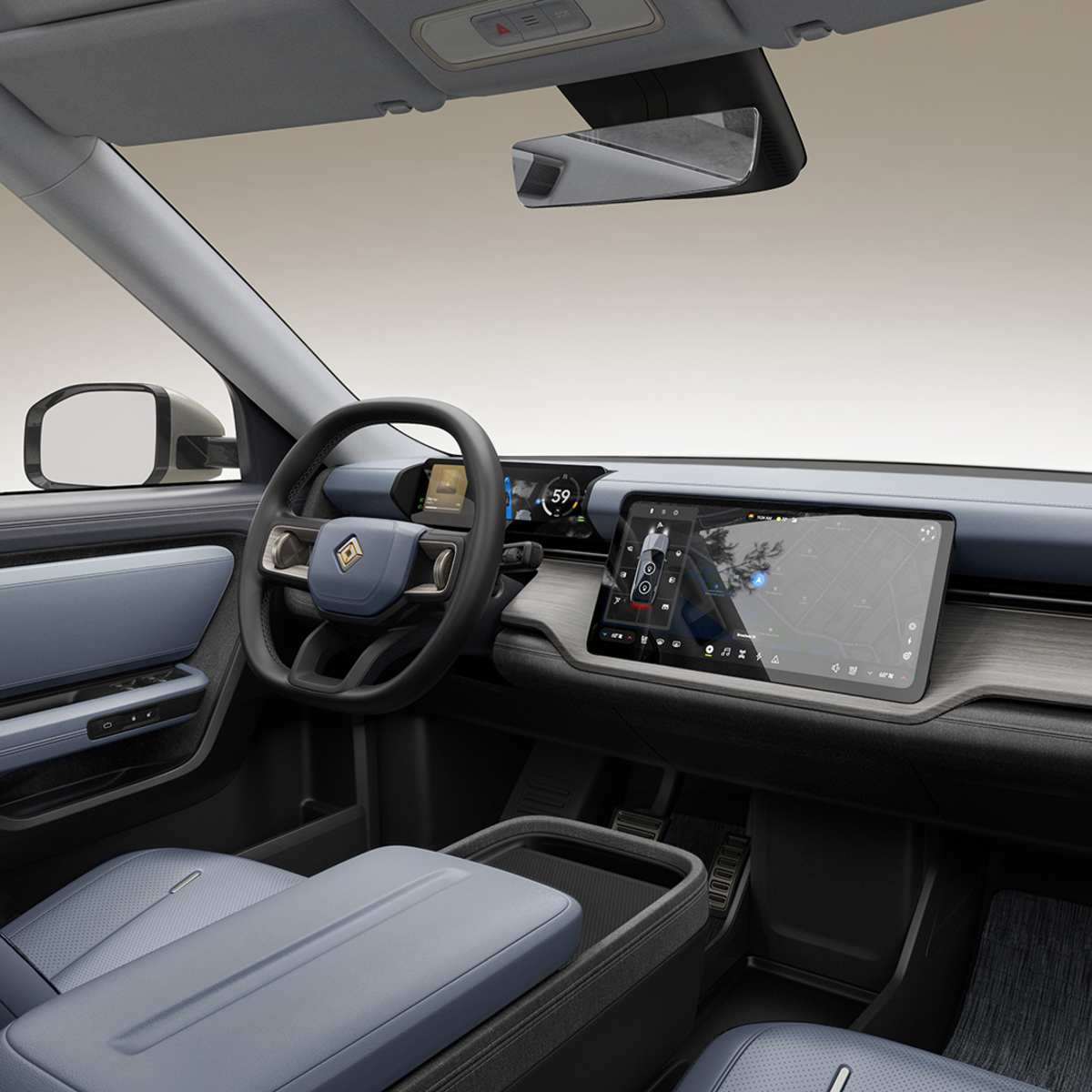
Rivian R2
"...h speaker pull out Bluetooth speaker isn't in the R2. It's only in the R1 because I presume it's quite..."
The Rivian R2 is an electric vehicle made by Rivian. The podcast is talking about which features it has compared to another Rivian model. Specifically, it mentions that a Bluetooth-speaker feature isn’t included on the R2.
The Rivian R2 is an upcoming or newer Rivian electric vehicle positioned as a smaller, more accessible model than the brand’s larger offerings. It’s discussed in terms of features and equipment differences between models. The podcast specifically mentions that a Bluetooth-speaker-related feature is present in the R1 but not in the R2.
Faraday Future
"Faraday Future, I think they're doing it too. Yeah, that's not going to happen. Yeah, it's Chinese. ... And then something happened like two weeks after I was there, ... it caught on fire."
Faraday Future is an electric-vehicle company. The conversation here is about their EV plans and a demo setup that apparently had a problem.
Faraday Future (FF) is an EV brand that has tried to build and launch electric vehicles, including high-tech concepts and production plans. In this segment, the hosts discuss FF’s efforts and a demo/showroom situation at a facility.
demo mode
"because EV and it's in some sort of demo mode and it caught on fire."
Demo mode is a vehicle setting used for showrooms where systems may run in a scripted way (for example, screens, lighting, and infotainment) to demonstrate features without normal driving operation. The segment links demo mode to a showroom setup that later caught fire.
autonomous car
"your commute from, from where you live to the office, it'd be nice if the car was, if you weren't given a ride with a nice driver and a foot massager autonomy would be an autonomous car wouldn't be the worst thing in the world."
An autonomous car is one that can drive on its own. In the conversation, they’re saying it would be nice if you didn’t have to drive yourself during your commute.
An autonomous car is a vehicle that can drive itself using sensors and software, without a human actively controlling steering and speed. The hosts are contrasting that idea with the “nice driver” commute experience and joking about how extra in-car features might matter more if you’re not driving.

Kia EV9
"Oh, what I was thinking was is out here, like all the nice Ubers turned into a black Kia EV9. [1594.8s] Yeah. [1595.2s] But they did a deal in LA and now, yeah, Ubers blacks can be EV9s, [1601.3s] which is probably really cost-effective to run."
The Kia EV9 is an electric SUV. They’re saying it might show up as the car you get in ride-hailing apps, especially because it can be cheaper to run than some alternatives.
The Kia EV9 is a fully electric, three-row SUV from Kia. In this segment, it’s mentioned as a vehicle that can replace “nice Ubers” in certain markets, highlighting how EVs are being used for ride-hailing fleets.

Cadillac Escalade
"So no more, you know, escalades are on the way out. It's all EV9s."
The Cadillac Escalade is a big luxury SUV. The host is saying you don’t see as many of them anymore because electric SUVs are taking over.
The Cadillac Escalade is a large, luxury full-size SUV. Alistair is saying it’s being replaced in visibility by EVs—specifically EV9s—suggesting a shift in what people are driving and using day-to-day.

Kia EV5
"They've got something called an EV5, which I think is great. It looks again, sort of EV9, but a bit smaller kind of model Y size."
The Kia EV5 is a smaller electric Kia. The host thinks it would fit the U.S. market better than some other Kia EVs because of its size.
The Kia EV5 is a smaller battery-electric model in Kia’s EV lineup. Here, Alistair compares its size and styling to the EV9 and discusses why it might fit the U.S. market better than other EVs.

Tesla Model Y
"It looks again, sort of EV9, but a bit smaller kind of model Y size."
The Tesla Model Y is an electric crossover. The host is using it as a way to describe the EV5’s size.
The Tesla Model Y is a compact battery-electric crossover used as a common size reference point. Alistair uses it as a benchmark for how big the Kia EV5 feels—“model Y size.”
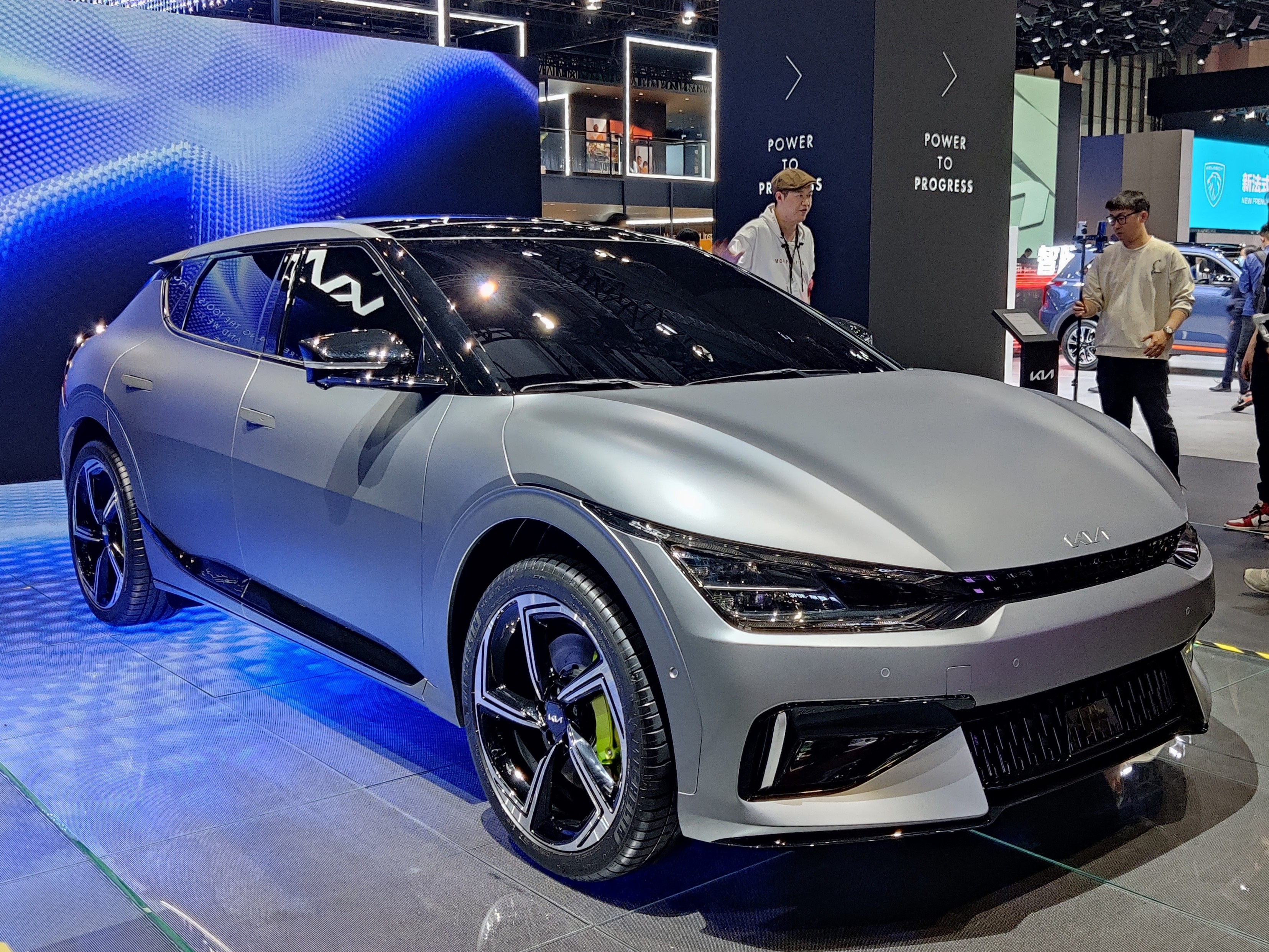
Kia EV6
"This is much more, feels much more appropriate to the market than the EV6, which is more of a hatchback."
The Kia EV6 is an electric Kia crossover. The host says it feels less like the right fit because it’s shaped more like a hatchback compared with the EV5.
The Kia EV6 is a battery-electric crossover that’s typically offered with a more hatchback-like shape. In this segment, Alistair contrasts the EV6’s body style with the EV5, arguing the EV5 feels more appropriate for the U.S. market.
Hyundai EV5
"I'm going to take a quick look at the EV5. The EV5, it looks like a baby. It looks like a baby telluride, but it's a nice size, nice interior."
The Hyundai EV5 is an electric Hyundai that’s smaller than the EV9. They’re saying it’s a nice-looking, good-sized EV, but the tech is a step simpler than the bigger one.
The Hyundai EV5 is a smaller electric SUV/crossover positioned below Hyundai’s larger EV lineup. In this segment, the hosts compare it directly to the Hyundai EV9 and discuss how its electrical system is less advanced.
Hyundai EV9
"Apparently the technology isn't as quite as sophisticated as the EV9. It's not charging and everything else."
The Hyundai EV9 is Hyundai’s bigger EV. In this discussion, it’s the “more advanced” one they’re comparing the EV5 against.
The Hyundai EV9 is Hyundai’s larger, more advanced electric vehicle in the same family of EVs. Here, the hosts use it as a benchmark for EV5’s technology level and charging/electrical capability.
400 volts
"It's 400 volts, not 800. That was part of the reason they didn't bring it in."
“400 volts” is the electrical system voltage in the EV. Higher-voltage EVs can often charge faster, so this number helps explain why one EV might not charge as quickly as another.
“400 volts” refers to the vehicle’s high-voltage electrical system used to power the electric drivetrain and to support fast charging. Compared with higher-voltage EVs, a 400V architecture can limit peak charging power and overall charging speed on compatible chargers.
800
"It's 400 volts, not 800. That was part of the reason they didn't bring it in."
“800” means the EV is built with a much higher-voltage electrical system. That setup is often used to help the car charge faster when the charging station supports it.
“800” here is shorthand for an EV’s higher-voltage system (800V class), which is designed to enable higher charging power and faster charging on supported infrastructure. The hosts contrast it with the EV5’s 400V system to explain differences in charging capability.
Hyundai EV6
"I thought that was a better proposition than the EV6, which is that kind of like hatchback thing. Yeah, but it looks good."
The Hyundai EV6 is Hyundai’s EV that’s described here as having a hatchback-like shape. The hosts use it as a comparison point, suggesting the EV5’s overall package is a better proposition for them than the EV6’s body style.
BMW G-Wagon competitor
"BMW had mentioned somewhere about possibly a G-Wagon competitor, and I'm sure there's a bunch of AI photos..."
The “G-Wagon” is a famous, boxy Mercedes SUV. Saying “competitor” means another brand is trying to make a similar kind of rugged, stylish luxury off-roader.
A “G-Wagon competitor” refers to a rival to the Mercedes-Benz G-Class, the boxy, off-road-capable SUV that’s become a status icon. The hosts are discussing BMW potentially entering that same market segment.

G-Class Gwagon
"There's been quite a bit of news coming out of BMW, right? BMW had mentioned somewhere about possibly a G-Wagon competitor, and I'm sure there's a bunch of AI photos that have popped up"
The G-Class is a luxury SUV with a very recognizable, boxy shape. It’s designed to handle rough roads while still feeling upscale. The podcast brings it up as a reference for the kind of vehicle people are talking about.
The G-Class is a rugged, boxy luxury SUV known for its distinctive styling and off-road capability. It’s frequently discussed as a benchmark for “go-anywhere” luxury. The podcast mentions it in the context of news about a possible competitor, using it as a reference point for what people mean by that type of vehicle.

BMW Alpina concept
"But this BMW Alpina concept, have you taken a look at this yet? ... It was almost like the thinking person's M5."
Alpina makes special versions of BMWs. They’re usually tuned to feel smoother and more upscale than the hardcore BMW M models, even if they’re still fast.
BMW Alpina refers to Alpina’s BMW-based performance cars, typically tuned for a more refined, luxury-oriented driving feel. In this segment, the hosts discuss a BMW Alpina concept and compare it to BMW’s M cars, especially the M5 and the idea of an “Alpina 7.”

BMW M5
"It's always going to be similar money to something like an M5, but automatic when the M5s were manual..."
The BMW M5 is BMW’s performance flagship in the 5 Series line. It’s the kind of car people compare against when they’re talking about fast, sporty BMWs.
The BMW M5 is the high-performance “M” version of the 5 Series, known for strong straight-line speed and track-capable handling. Here, it’s used as a benchmark for pricing and performance when comparing to Alpina’s approach.

Alpina 7
"And if you couldn't get an M7, you can get the Alpina 7, right?"
Alpina 7 is a special BMW 7 Series that’s tuned by Alpina. The hosts are basically saying it’s the “more refined” alternative to BMW’s most extreme M-badged version.
The Alpina 7 is Alpina’s BMW 7 Series-based performance-luxury model, positioned as an alternative to BMW’s top M-badged sedans. In the segment, it’s framed as the option you’d choose if you “couldn’t get an M7.”
M division
"So now they're saying, okay, we're going to have the M division, and we're going to have Alpina."
BMW’s M division is BMW’s performance brand. It’s the part of BMW that makes the sportier, more aggressive versions, and the hosts are saying BMW wants Alpina to sit alongside that.
BMW’s M division (often called “M”) is BMW’s performance sub-brand, focused on higher-output engines, sportier chassis tuning, and track-oriented driving dynamics. The transcript frames BMW’s plan to pair Alpina with M, implying a clearer split between different performance-and-luxury philosophies.

Mercedes-Benz Sclass
"And I'm a sucker for like the big two-door GT cars, like S-Class Coupe and stuff. So this looks really good."
The Mercedes-Benz S-Class is a luxury car designed to be very comfortable and feature-rich. It’s meant for people who want a top-level driving and ride experience. The podcast mentions the S-Class Coupe because the speaker likes that style.
The Mercedes-Benz S-Class is the brand’s flagship luxury sedan, built to deliver a high level of comfort, quietness, and advanced features. It’s often discussed because it represents the top tier of Mercedes technology and refinement. The podcast specifically mentions the S-Class Coupe style as something the speaker finds especially appealing.

Alpina 7 series
"and I was there in an Alpina 7 press car... I was with a friend, ... I go, but I want to drive the Alpina 7... a couple of laps around the oval at Irwindale and an Alpina 7 series."
The Alpina 7 series is a BMW 7-Series that Alpina modifies to drive better. Here, the host talks about it as a big, powerful 12-cylinder car that still feels smooth when you push it on a race track.
Alpina 7 series is a BMW 7-Series-based luxury sedan tuned by Alpina, a German modifier known for making the big cruiser feel more cohesive. In this segment, the host highlights it as a “big car” with 12-cylinder power and describes how it feels when driven hard on a banked oval.
12 cylinder power
"It's seamless. It ran great and yeah, big car, 12 cylinder power to it, and to be able to kind of open it up around a banked oval..."
“12 cylinder power” means the car has a V12 engine—an engine with 12 cylinders. That usually makes the power feel very smooth and strong, especially compared with smaller engines.
“12 cylinder power” refers to an engine with 12 cylinders, typically arranged as a V12. More cylinders can mean smoother power delivery and strong high-end output, which is why V12 cars are often described as effortless and “smooth.”
banked oval
"...and to be able to kind of open it up around a banked oval, which I don't know how many people do that in any 7 series, or let alone the Alpina 7 series."
A banked oval is a race track with rounded turns that are tilted. The tilt helps the car stay planted and go faster through the corners.
A banked oval is a track shape (oval) where the corners are tilted upward so the car can carry more speed through the turn. The banking helps counter some of the lateral forces, making high-speed cornering more stable than a flat corner.
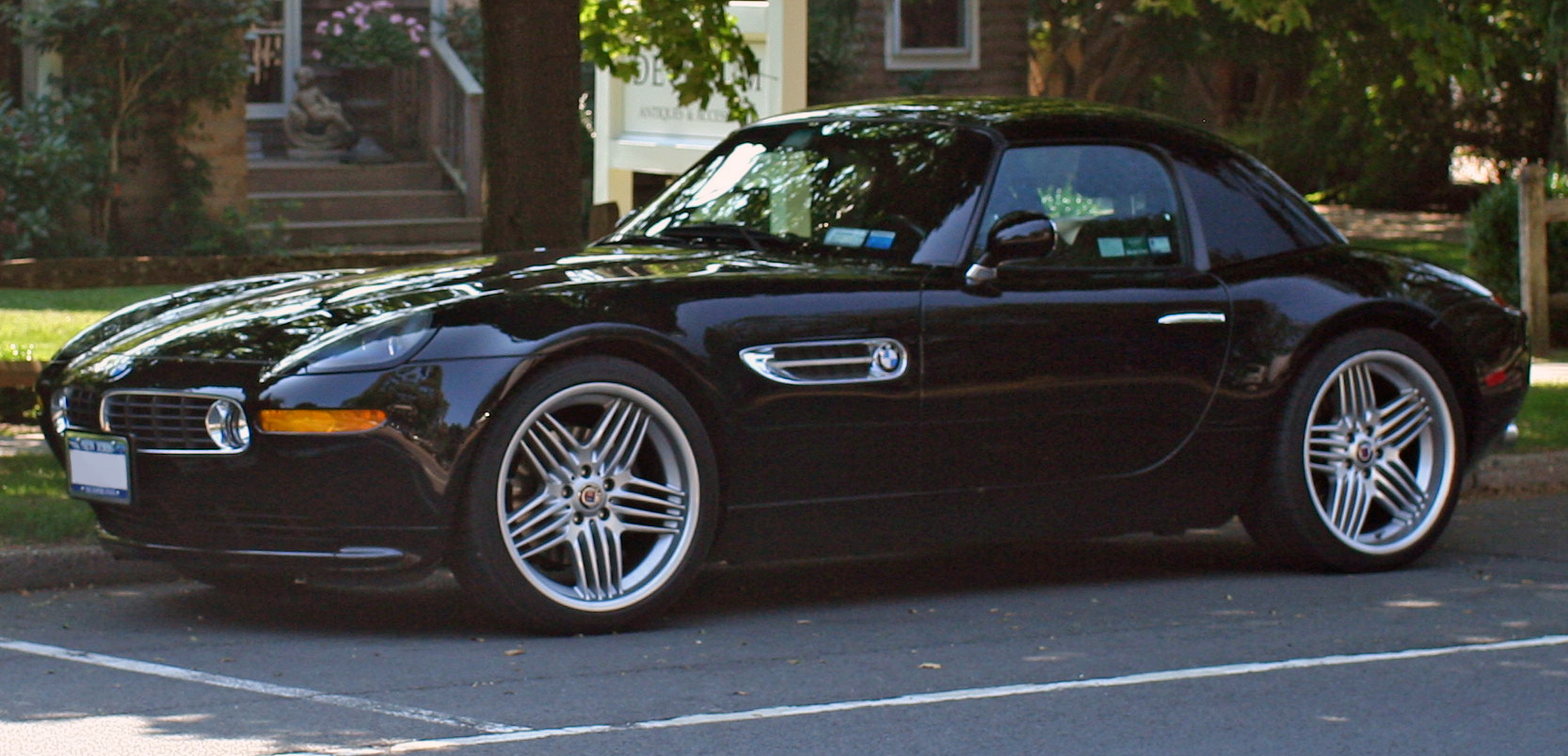
Alpina Z8
"I remember the Z8, the Alpina Z8. That's right."
Alpina took the BMW Z8 and made it its own. It’s a special, limited roadster that’s more about a curated driving feel than just being the fastest thing out there.
The Alpina Z8 is a BMW Z8-based roadster tuned by Alpina, a German performance brand known for making BMWs feel more bespoke. It’s remembered for its limited availability and Alpina’s focus on refined performance rather than raw track numbers.

Alpina Z1
"They also did an Alpina Z1, you know, with the one with the little, the doors that came down... Where you could push a button and the whole door would like descend into the sill... it was basically a three series... based on the 1983 series, the E30... And then Alpina did a version as well."
The Alpina Z1 is a very rare roadster that was based on a BMW 3 Series platform. Its big gimmick is the doors—when you open them, they can drop down into the car’s body instead of swinging out normally.
The Alpina Z1 is a rare, BMW-based roadster concept built on the 1983 BMW 3 Series (E30) platform. What makes it stand out is the unusual door design: the doors can be operated so they descend into the sill when opened, which is why it shows up as a “funky feature” car.

BMW E30
"I mean, it was, it was based on the 1983 series, the E30. And it was just a cooling two and a half liter engine."
The BMW 3 Series E30 is the 1980s generation of BMW’s compact executive car, and it’s a key reference point here because the Alpina Z1 is described as being based on that platform. The E30 is widely known in enthusiast circles as a foundation for many special builds and performance variants.
retracts into the lower half of the door
"And trying to explain the door. It's like the door instead of opening, it's like half a door and the upper half retracts into the lower half of the door"
They’re talking about a door that doesn’t swing open normally. The top part slides back into the door instead, so it uses less space outside the car.
This describes a door mechanism where the upper portion doesn’t swing outward; instead it moves back into the door structure. It’s a type of “retracting” or “folding” door design meant to change how the car opens and how much clearance it needs.
rocker panel
"which would be sort of like the rocker panel of the door."
A rocker panel is the metal strip along the bottom edge of the car, near where your feet would be when you get in. It’s part of the car’s side body structure.
The rocker panel is the body panel along the lower side of a car, between the doors and the wheel wells. In this context, the speaker compares the lower half of the door to that area of the body.
concept car
"There was a car way back, it was a concept car."
A concept car is like a show-and-tell prototype. It’s built to demonstrate an idea, even if it never becomes a normal car you can buy.
A concept car is a prototype built to showcase new styling, packaging ideas, or technologies that may not be production-ready. The speaker uses it to reference an earlier attempt at a retracting door concept.
floor pan
"It would go underneath like the floor pan of the car."
The floor pan is the main metal “base” under the carpet inside the car. It’s the part that forms the floor structure.
The floor pan is the structural sheet-metal (or stamped structure) that forms the car’s interior floor. The speaker’s point is that the earlier concept’s door mechanism folded down underneath the car, into/near the area of the floor pan.
smog
"I don't know how you get it through smog or whatever,"
“Smog” is polluted air from car exhaust. “Getting it through smog” means the car has to pass an emissions test so it doesn’t pollute too much.
“Smog” refers to air pollution created by vehicle exhaust, and “getting it through smog” means passing an emissions inspection. The host is implying the car’s emissions equipment or engine choice could make it difficult to comply in places like California.
kidney grille
"the kidney grille is quite modest, you know, very small in fact."
BMW has a distinctive front grille shape that fans recognize right away. The host is saying even a smaller version still makes the car look like a BMW.
The kidney grille is BMW’s signature front grille shape, named for its kidney-like contours. In this segment, the host argues you don’t need an oversized kidney grille to still look unmistakably like a BMW.

Land Rover Freelander
"It reminds me of the the early generation Land Rover Freelander, which had a retractable,"
The Land Rover Freelander is an older Land Rover SUV. The host is comparing it because it had a special retractable glass feature in the rear door area, which is similar to the unusual design they’re talking about.
The Land Rover Freelander is an early compact SUV from Land Rover, notable for unusual practicality features for its era. Here, the host compares the segment’s car to the Freelander because the Freelander had a retractable glass panel in the rear door area, creating a similar “funky” access/roofline effect.
retractable glass
"but it has a retractable glass in the rear door."
Retractable glass is a window that can move out of the way. The host is using it to describe a car design that lets you open up the rear area in a special way.
Retractable glass is a window panel that can slide or fold away to change how much open-air access you get. In this segment, it’s used as a design reference for how the Freelander’s rear door could open up in a distinctive way.
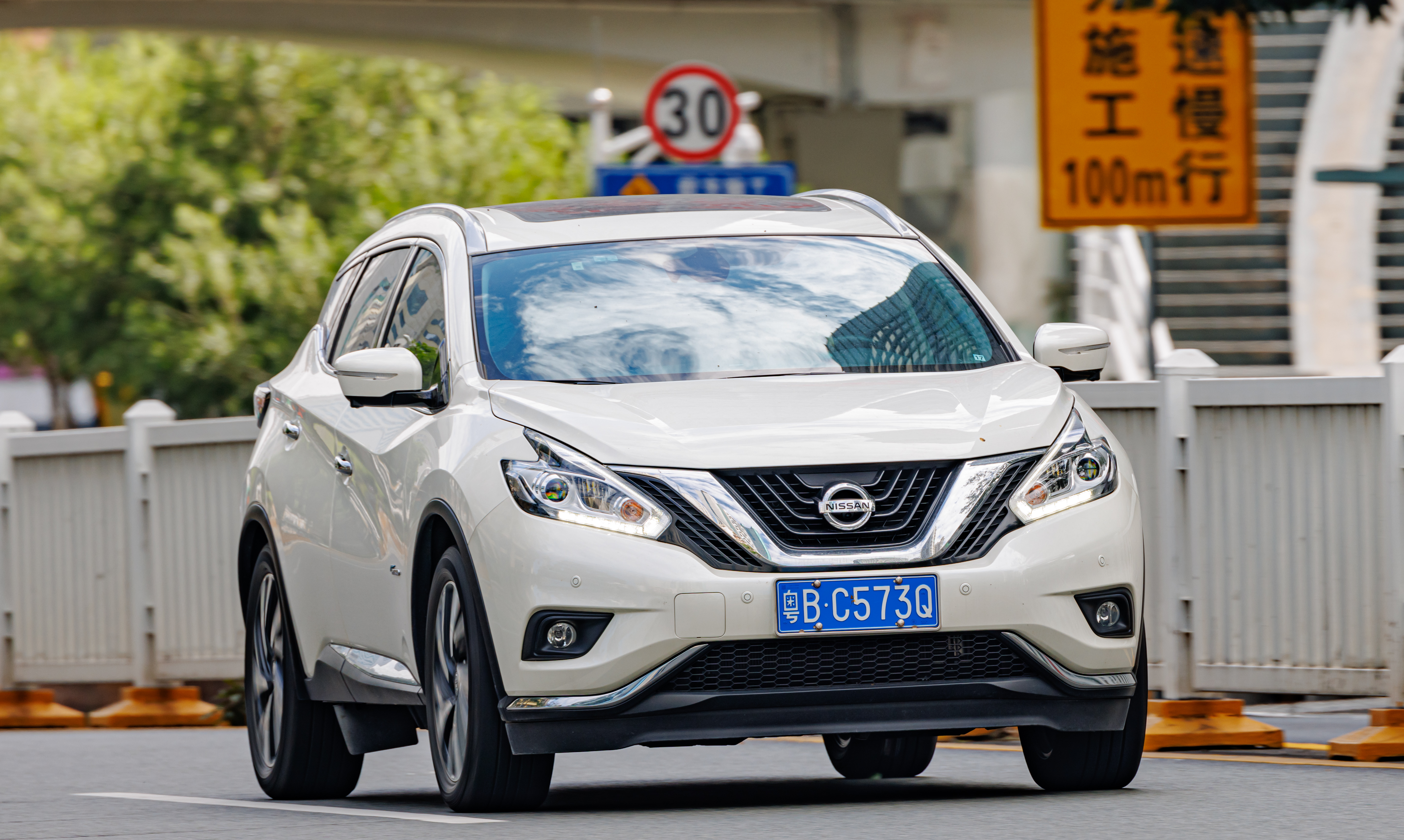
Nissan Murano convertible
"I mean, it was unbelievably heavy and had no luggage space. Murano convertible, obviously another one. But yeah, what was the obvious?"
The Nissan Murano is usually a crossover SUV. Here they’re talking about a “convertible” version as an example of an odd idea that can make the car less practical.
The Nissan Murano is typically a crossover/SUV, but this segment mentions a “Murano convertible” as an example of an unusual body style. The point is that converting an SUV platform into a cabriolet often creates compromises like added weight and reduced practicality.

GMC Envoy
"OK, so I'm thinking of the evoke that I'm very recently evoked cabriolet? ... I'm thinking of the GMC Envoy. The GMC Envoy had, do you remember it? ... All right, here's your GMC Envoy. ... Oh, so it just has like a retracting rear wing and so you can put it."
The GMC Envoy is a GMC SUV. In this conversation, they’re pointing out a weird design feature—its rear wing can retract.
The GMC Envoy is a midsize SUV from GMC that’s being discussed here for its unusual “funky features.” In this segment, the key detail is the retracting rear wing, which changes the vehicle’s look and function.
retracting rear wing
"My Envoy. Oh, so it just has like a retracting rear wing and so you can put it."
A retracting rear wing is a spoiler that can slide in or out. It’s meant to change what the car looks like and how air flows around it, but it adds moving parts.
A retracting rear wing is an aerodynamic spoiler that can move in and out rather than staying fixed. In practice, it’s used to change the car’s appearance and potentially its airflow depending on conditions, but it can also add complexity and packaging challenges.
design and engineering and safety and legal and marketing and testing
"We've had this conversation before where you look at something in a car and a design idea, a functionality idea and go, how did it get past the multiple layers of, you know, design and engineering and safety and legal and marketing and testing and like everybody was like, we love this."
They’re talking about why car ideas don’t just get approved because they sound cool. Features have to pass safety rules, legal requirements, and testing before a company can sell them.
The hosts are describing how a car feature has to clear many approval gates before it ever reaches production. Beyond styling and engineering, safety compliance, legal/regulatory requirements, marketing strategy, and real-world testing all influence what actually gets built.
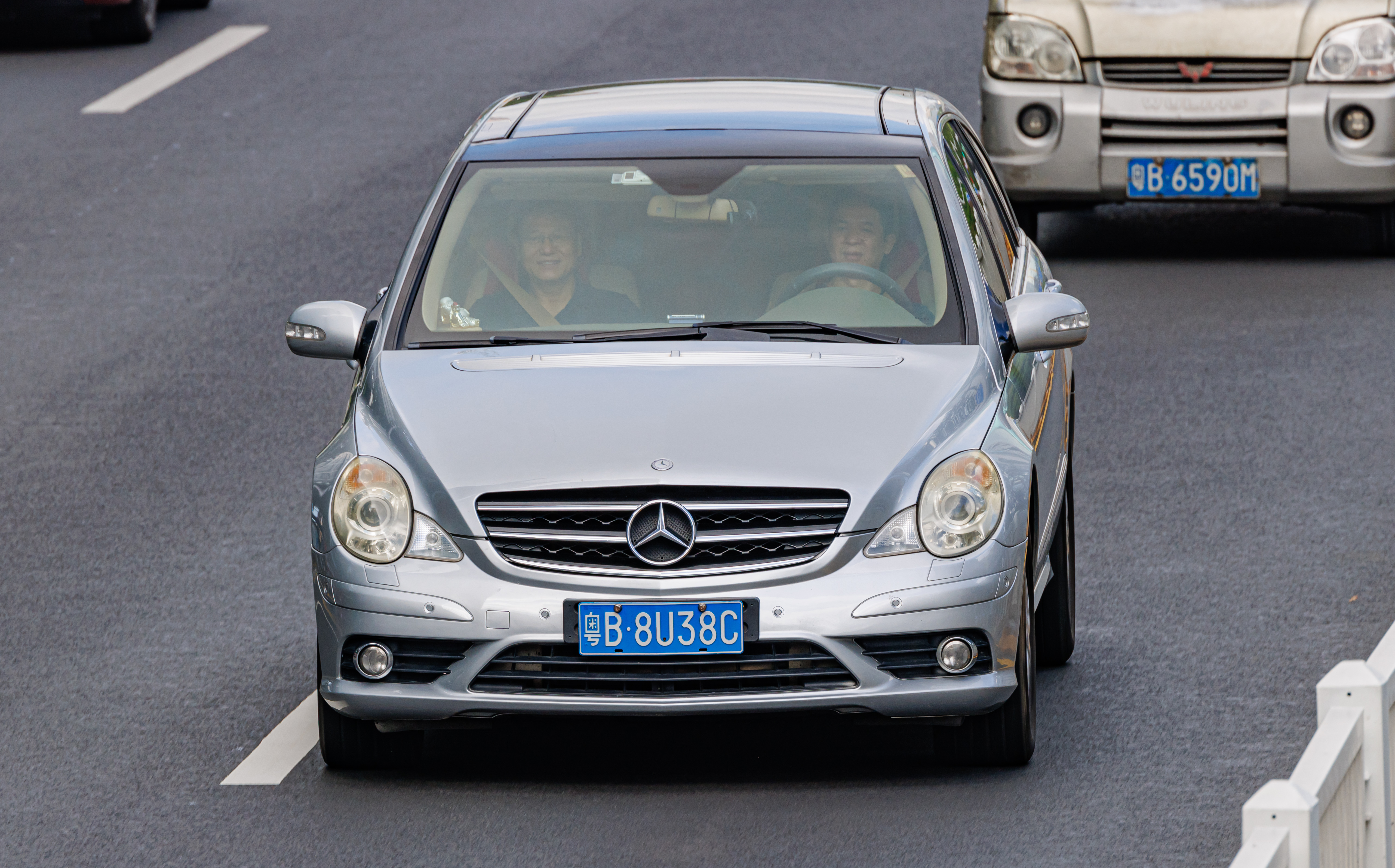
Mercedes R class
"But Mercedes of all the brands has this tendency because they did like the R class as well. Yes. R class was like Mercedes does a minivan except he didn't have sliding."
The Mercedes-Benz R class was Mercedes trying to blend a minivan’s family space with an SUV’s look. The idea sounded good, but it never really caught on with most buyers.
The Mercedes-Benz R class was an unusual “crossover” between a minivan and an SUV, aiming at families who wanted space but also a more upright, SUV-like stance. It’s remembered as a niche idea that didn’t become a mainstream hit, even though Mercedes later offered performance-oriented AMG versions.
sliding
"R class was like Mercedes does a minivan except he didn't have sliding. No, he didn't have sliders."
Here, “sliding” means sliding doors, like the ones on many minivans. They help you open the door without needing as much space next to the car.
In this context, “sliding” refers to sliding doors—common on minivans—used to make it easier to get in and out in tight parking spaces. The speaker is contrasting the R class’s layout with a typical minivan setup.

Chrysler Pacifica
"...and they want a minivan, but they don't want that Pacifica. It doesn't fit their, you know, community, right..."
The Chrysler Pacifica is a minivan. Minivans are designed to fit families and lots of cargo in one vehicle. The podcast mentions it as a minivan model that some people don’t want.
The Chrysler Pacifica is a minivan aimed at families who want a practical layout and modern features. It’s often brought up in conversations about minivans because it’s a mainstream option for people who need lots of interior space. In the podcast, it’s mentioned as a model some people don’t want for a particular reason related to fit or preference.

Land Rover Range Rover
"Yeah, right. They ended up just getting Range Rover. So it was fine."
The Land Rover Range Rover is a high-end SUV. It’s designed to be comfortable for everyday driving while still being able to handle rough roads. The podcast mentions it because they ended up choosing a Range Rover.
The Land Rover Range Rover is a premium SUV known for its upscale interior, off-road capability, and overall “luxury utility” positioning. It’s discussed because it’s a flagship model for the brand and often becomes the default choice when people want both comfort and rugged ability. In the podcast, it’s referenced as the vehicle they ended up with after considering something else.

Mercedes R350
"Well, there's a 2008 R350 with 120,000 miles on it. And they're asking 3,980 bucks. Yeah, that would, there's a couple of red flags in there."
The R350 is a version of the Mercedes R-Class. They’re pointing out that even if the listing price looks cheap, a high-mileage example can still turn into a costly ownership situation.
The Mercedes-Benz R350 is a specific R-Class trim/engine variant. The hosts use a 2008 example with high mileage to illustrate how low asking prices can hide expensive repair risk.

Mercedes-Benz 600 CL
"Edmunds bought a, because I know, because I drove it once when I came over here to see them, they drove, they bought a 600 CL Mercedes. But again, the same year as the R-Class, when Mercedes quality went to pieces, air suspension..."
The Mercedes-Benz 600 CL is a top-tier luxury Mercedes. The hosts are using it to show that when a car has lots of complex systems, repairs can get very expensive over time.
The Mercedes-Benz 600 CL is a flagship luxury coupe/CL-series model known for high-end features and big-engine complexity. Here it’s used as an example of how, in the same era the hosts criticize, expensive systems (including air suspension) can drive up long-term costs.

Acura CL
"...r here to see them, they drove, they bought a 600 CL Mercedes. But again, the same year as the R-Class..."
The Acura CL is a two-door luxury car. The podcast mentions it while talking about what cars were bought in a certain year. It’s included as part of that comparison, not as the main focus.
The Acura CL is a performance-oriented luxury coupe from Acura’s lineup, known for being a two-door option with a more driver-focused character. It’s mentioned in the podcast as part of a comparison involving other luxury vehicles and a specific purchase year. The speaker references seeing and buying a “600 CL” Mercedes in the same year as the R-Class, which frames the Acura CL as part of that timeframe conversation.

Tesla Model S
"I am thinking about buying a Model S with like tons of miles for like 10 grand, 13 grand, just to consider that, look at that whole like EV degradation."
The Tesla Model S is an electric luxury car. The hosts are considering buying one with lots of miles and focusing on whether the battery has degraded enough to matter.
The Tesla Model S is an all-electric luxury sedan that’s often used as a benchmark for EV ownership costs and battery longevity. In this segment, it’s brought up as a bargain-priced option where the key question is how much battery (range) degradation to expect.
EV degradation
"I am thinking about buying a Model S with like tons of miles for like 10 grand, 13 grand, just to consider that, look at that whole like EV degradation."
EV degradation means the battery in an electric car can lose some of its range as it ages. That’s why a high-mileage EV might be cheaper, but you should think about how much range you’ll still get.
EV degradation refers to how an electric vehicle’s battery performance and range can decline over time and with use. The hosts suggest considering this when shopping for a high-mileage Tesla Model S at a low price.
Indy 500
"But anyway, I know you're more of an F1 fan than an Indy car fan. Well, yeah, no, I like both. But Mick Schumacher has qualified for the Indy 500."
The Indy 500 is a premier American open-wheel race held at Indianapolis Motor Speedway. It’s known for high-speed oval racing where drafting and aerodynamic effects strongly influence how cars feel and how they pass.
Formula One
"So yeah, or at least being the top, top couple, he had an okay formula one career, but kept, kept crashing."
Formula One (F1) is the top tier of modern open-wheel racing, with highly engineered cars and a focus on precision aerodynamics and tire management. Drivers moving from F1 to IndyCar often need to adapt to different car dynamics and racecraft.
hard transition
"But you know, because again, hard transition, I think they can be quick over a lap because they're talented and all the rest of it."
A “hard transition” between Formula 1 and IndyCar is the change in car behavior and racing conditions, especially aerodynamics and how cars interact in traffic. Even talented drivers can need time to adapt their braking, throttle, and steering inputs to the new downforce and airflow effects.
air pocket
"And he was telling me that the weirdest thing that he got had to get used to is that you're sitting in an air pocket and the cars like constantly moving around."
An “air pocket” is basically weird airflow around the car. When you’re in the disturbed air behind or near other cars, the car can feel like it’s shifting around more than you’d expect.
An “air pocket” in IndyCar terms refers to the turbulent, low-pressure airflow region created by the car ahead and the track environment. Sitting in that disturbed airflow can make the cockpit feel like the car is constantly moving around, even if it’s subtle on TV.
drafting
"But when you've got cars drafting you, or when you're following something, you're like, you're sort of like moving around a little bit because of the aerodynamics and everything else."
Drafting means driving close behind another car so the air resistance is lower. It can make the following car feel like it’s moving around a bit because the air around it is constantly changing.
Drafting is when a car follows closely behind another car to reduce aerodynamic drag. The lead car’s airflow helps the trailing car move more efficiently, but it also makes the trailing car feel “floaty” or unsettled due to shifting airflow and pressure waves.
turn into the slide
"In Europe, you grow up on circuits, you know, the car oversteers, you turn into the slide, you try and hang on to it instead of just letting it go."
When the car starts sliding, the driver steers toward the direction the car is rotating. That helps the tires bite again and can prevent a spin.
“Turning into the slide” describes the driver steering in the direction the car is rotating so the tires can regain some grip. In oversteer, this is often paired with careful throttle control to stabilize the car.
oversteers
"In Europe, you grow up on circuits, you know, the car oversteers, you turn into the slide, you try and hang on to it instead of just letting it go."
Oversteer means the back of the car starts to slide more than the front. The driver has to react quickly to keep the car from spinning out.
Oversteer is when a car’s rear end loses grip more than the front, causing the car to rotate toward the outside of the turn. Drivers often manage it by steering and throttle inputs to keep the car from spinning.
snap back
"So then your last thing you want to do is have it snap back the other way. Then you basically straighten the wall feet first, which is what happened to him."
A “snap back” is when the car suddenly jerks back the other way after it was sliding. It’s risky because it can happen faster than the driver can react.
A “snap back” is the car abruptly rotating back the other way after a slide, often because grip returns suddenly or the driver’s inputs change. It can be especially dangerous because it can throw the car into the wall before the driver can correct it.
Rahal
"We mentioned Rahal. Mick Schumacher is driving for Rahal. He's on the RLL teams, on the Rahal team."
Rahal is the name of a racing team. In this segment, they’re talking about which driver is driving for that team.
Rahal refers to Rahal Letterman Lanigan Racing, a well-known IndyCar team. The hosts mention it in the context of which driver is currently racing for that team.
Request an Explanation
Heard something you'd like explained? We'll add it to this episode.
Sign in to request explanations for terms you heard.
Want to learn more?
Browse our glossary for plain-English explanations of automotive terms, jargon, and concepts.
Help improve this episode
See something that's not quite right? Our annotations are AI-generated and can sometimes miss the mark. Click the flag icon on any annotation to suggest a correction.
2 community members have helped improve this episode.