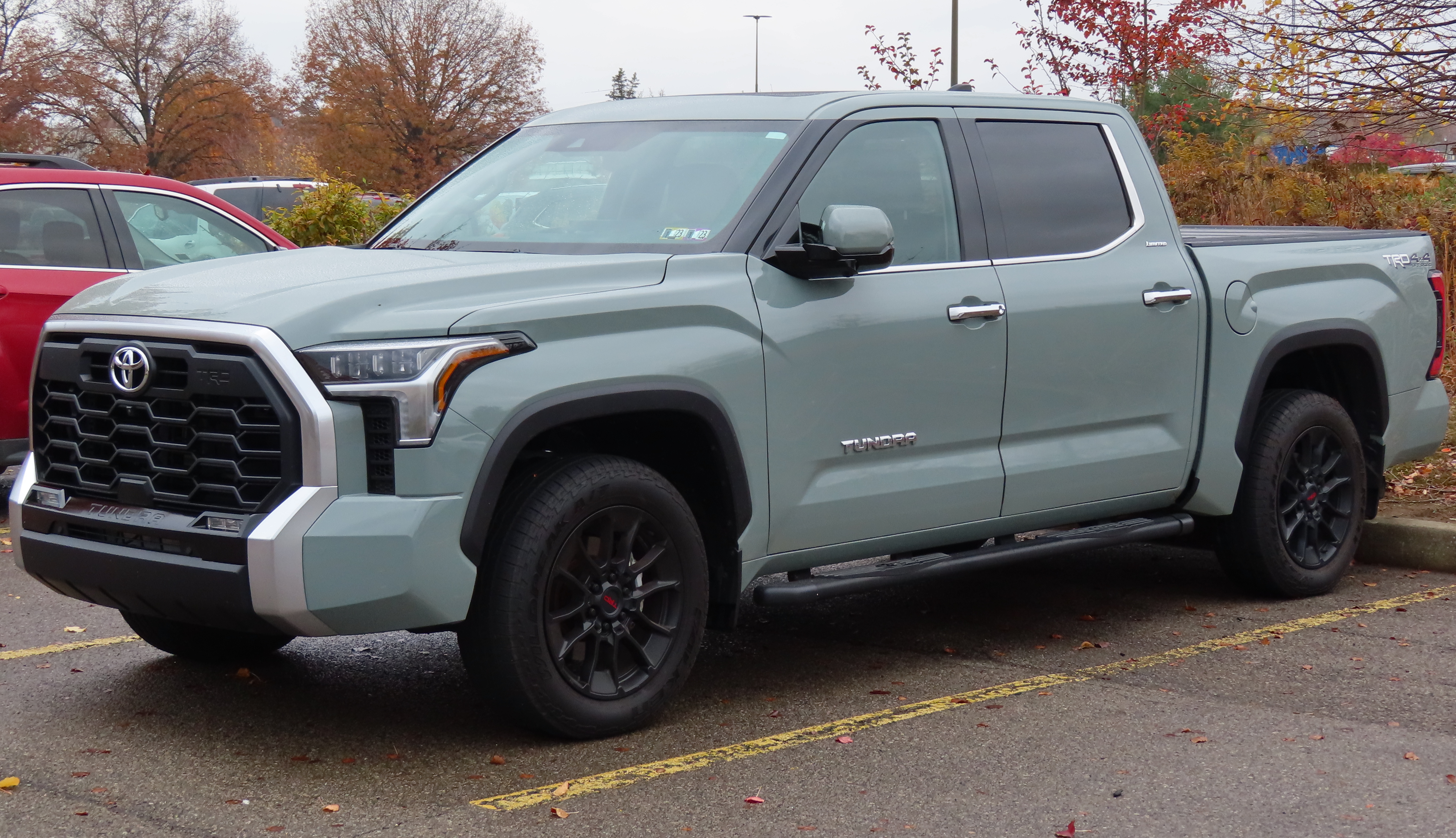
A Toyota Tundra is a large pickup truck. People use it for carrying things, towing trailers, and taking it on trips. The podcast mentions it as a truck you’d bring along for outdoor plans.
Tesla is mentioned because the person Ford hired previously worked at Tesla. That matters because Tesla is strongly associated with electric cars, so the hire brings EV know-how.
“Model T moment” is a comparison to the original Ford Model T, which changed how cars were made and sold. Here it means Ford thinks EVs could be a similarly big turning point.
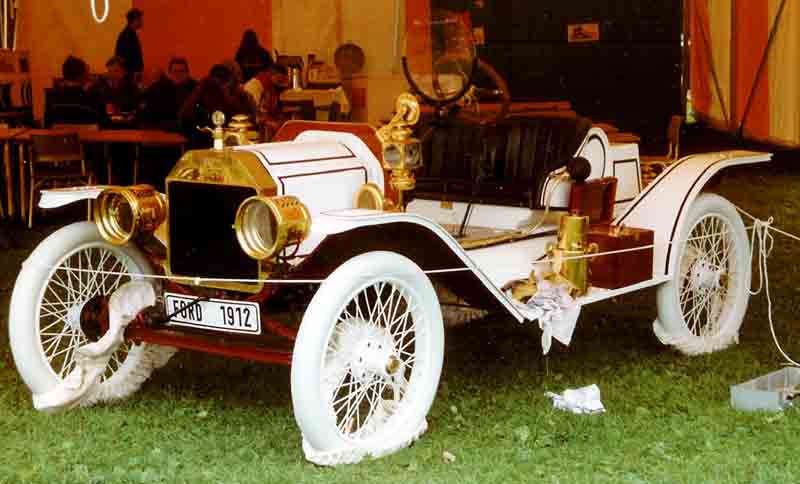
The Ford Model T is an old, historically important car. It was one of the first cars made in large numbers so more people could afford a car. The podcast uses it as an example of a big turning point in car history.
EV infrastructure refers to the systems and facilities needed to support electric vehicles, such as charging networks and the operational support around them. In the segment, the hosts note Ford spending money on infrastructure as part of making EVs more competitive.
It means the company tries to do more of the work itself instead of outsourcing to lots of vendors. That can help them move faster and make changes sooner.
The “traditional” process described is a supplier handoff model: the automaker writes a specification, sends it to suppliers, and then iterates through back-and-forth responses. The host argues this workflow can be slower and more expensive than a more integrated approach.
It means the company tries to control more of the connected systems that go into making the car. That can help them coordinate better and avoid slow handoffs.
The Ford Edge is a midsize SUV for normal daily driving. It’s built to carry people and gear comfortably. The podcast mentions it as an example of a vehicle that could help a company feel more modern.
An EV truck is a pickup that runs on electricity. The hosts are saying electric trucks can be harder to sell than electric SUVs because buyers use trucks differently and have different expectations.
The Ford Lightning is Ford’s electric pickup. The hosts are saying it hasn’t gone smoothly, and those problems can make EV trucks harder to sell than other EVs.
Licensing technology means one company lets another company use its ideas or inventions. In this case, Ford could share EV technology with the new group, and if Ford thinks it’s more valuable to license it, they can do that too.
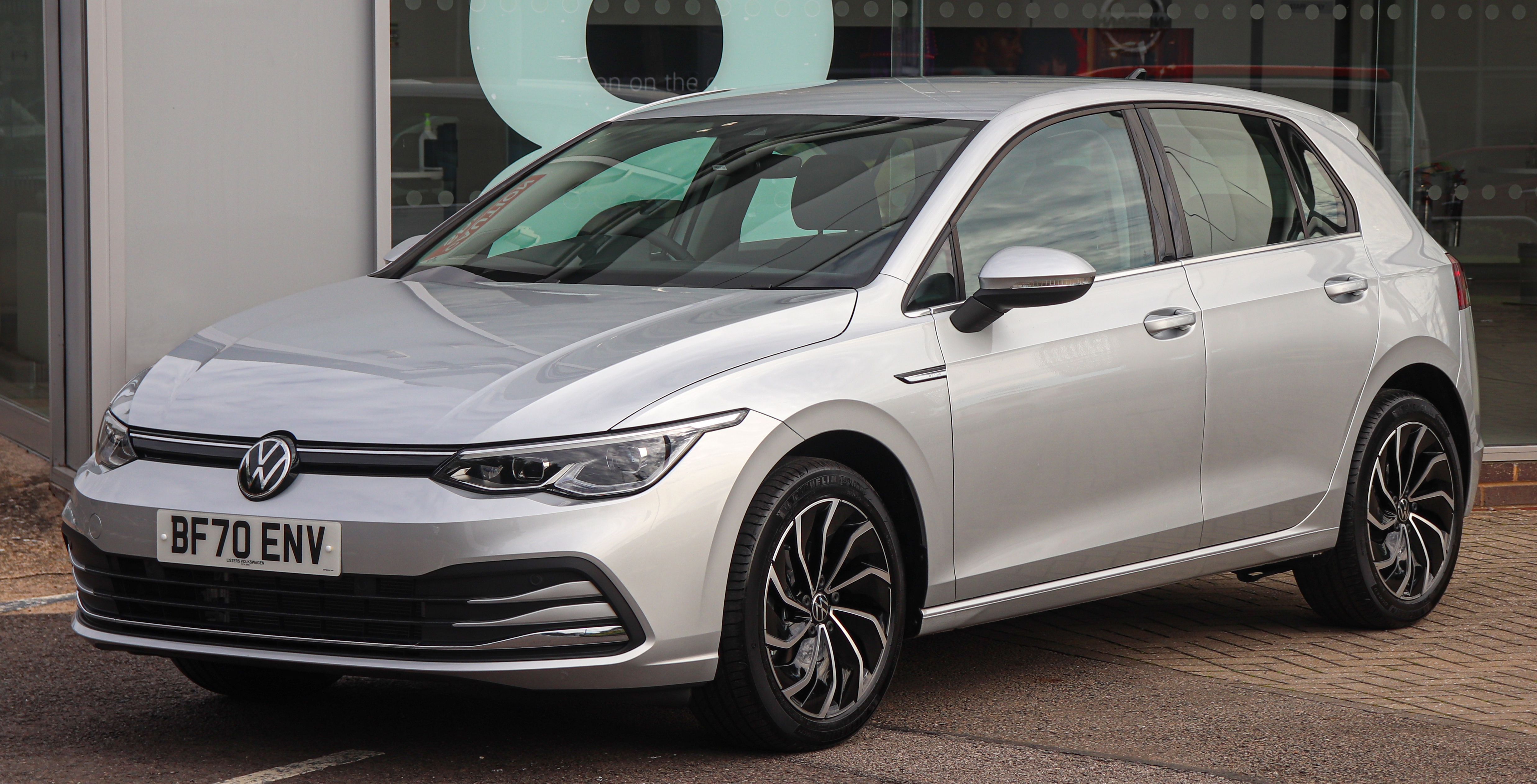
The Golf is a regular passenger car model that also has sportier versions. The podcast mentions it in connection with performance parts used in racing. The key point is that some Golf performance setups use specialized technology.
They’re describing a workspace where the company can do almost everything in-house. Instead of handing parts of the job to other companies, they can go from early design to building prototypes in one place.
A prototype is an early version of a car that gets built to test ideas before the real production cars. It helps engineers catch problems early and refine the design.
Term
CMC machines
CMC machines are computer-controlled machines that help make parts accurately. They’re used to turn digital designs into physical pieces during development.
The Escort is a compact car model from Ford. The podcast mentions a specific older version called the Escort Mexico from around the late 1970s to early 1980s. It’s being referenced as part of car design history.
Think of a modular EV platform like a reusable “car skeleton.” Ford can build different EVs (like a truck and an SUV) using many of the same parts, which helps keep costs down and makes it easier to roll out new models.
Car
Ford Mach-E
The Ford Mach-E is one of Ford’s main electric vehicles. The hosts mention it as an example of how using shared EV parts and designs can make EVs more efficient and easier to build.
It means one problem makes another problem worse. If a vehicle is heavier, it needs bigger tires and brakes to handle it, which can make it even heavier and more expensive to maintain.
They’re talking about the braking system. If the vehicle is heavier, the brakes have to do more work, so they often need to be larger or stronger to stop reliably and last longer.
Here “mass” just means how heavy the car is. A heavier car needs more effort to speed up and stop, so parts like tires and brakes have to work harder.
Term
battery improves
They mean the battery technology gets better over time. That can help the car go farther and work more efficiently without needing as much extra weight or expensive hardware.
Aerodynamics is about how smoothly the car moves through air. If the car is shaped to cut through air better, it needs less energy, so it can go farther on the same battery.
The Cadillac Escalade is a big, luxury SUV. They mention it to make a point that some EVs built for huge size can end up being too heavy and expensive.
The Chevrolet Silverado EV is a pickup truck that runs on electricity. It’s meant to replace the usual gas engine with an electric power system. The podcast mentions it as a truck that’s still being offered and developed.
Lucid is an electric-car brand. In this segment, they’re using Lucid as an example of an EV maker that’s already getting farther on a charge than many others.
They mean charging the EV to about 80% most days instead of filling it to 100%. That’s often done to help the battery last longer, while still giving enough distance for normal driving.
Charging infrastructure means the availability and convenience of charging stations. If there are more reliable chargers where people drive, you don’t have to have the absolute longest range to make the car practical.
The Chevy Bolt is an electric car. They’re talking about how EV batteries and charging rules are changing—specifically, whether it’s okay to charge up to 100% more often.
State of charge is just how full the battery is, usually shown as a percent. If the battery is fuller, the car can often go farther—so range numbers depend on that percentage.
An EV range test is a repeatable driving test that estimates how many miles an EV can go on one full battery. It’s meant to make EVs easier to compare fairly.
Horsepower is a number that describes how strong the car’s power is. Higher horsepower often goes along with faster acceleration, though feel also depends on how the power is delivered.
Zero to 60 time is how fast a car can go from stopped to 60 mph. A shorter number usually means the car feels more responsive when you accelerate.
Term
instant talk
They’re talking about how EVs respond right away when you hit the gas. Because the electric motor gives power quickly, it can feel more lively than a typical gas car.
The Volvo EX30 is Volvo’s small electric SUV. The host is pointing out that it doesn’t have a traditional start button—once you get in and the key card/fob is recognized, the car basically “wakes up” and is ready to drive.
A key fob is the small remote you use to unlock and start the car. A key card is another kind of access—often you just keep it with you and the car recognizes it.
EV means electric vehicle. It’s a car that runs on electricity stored in a battery, and this part of the conversation is about how EV prices in the used market are changing.
“Used lease prices” refers to the pricing you see when previously leased vehicles are sold on the used market. For EVs, lease returns can flood the market and push prices down, which is why the host says the used EV market is “so cheap” right now.
The Toyota 4Runner is a rugged SUV that’s built for off-road driving. They mention it because they’re going off-roading and it’s the kind of vehicle that can handle that.
Negative equity means your trade-in is worth less than what you still owe on it. If that shortfall is added to a new loan, you end up borrowing more money overall.
Leasing an EV is a financing method where you pay to use the car for a set term, typically with lower monthly payments than buying. For EV shoppers, lease terms and residual values matter because EV prices and incentives can change quickly.
Used car prices are the prices you pay for cars that have already been owned. For EVs, those prices can change fast as the market and incentives shift.
Mercedes EQS is Mercedes’ top all-electric sedan. Since it’s the more expensive one, it can look like a big bargain when prices drop in the used market.
The Mercedes-Benz EQE is an electric car (a sedan). It uses a battery and electric motor instead of a gasoline engine. The podcast brings it up as one of Mercedes’ electric models with the EQ name.
The Cadillac Optiq is an electric Cadillac. In this segment, they’re using it as an example of an EV that ended up feeling like a good fit, even after some initial hesitation.
Laser-etched means a laser is used to create a design by cutting or changing the surface. Here it’s describing a decorative branding detail on the car.
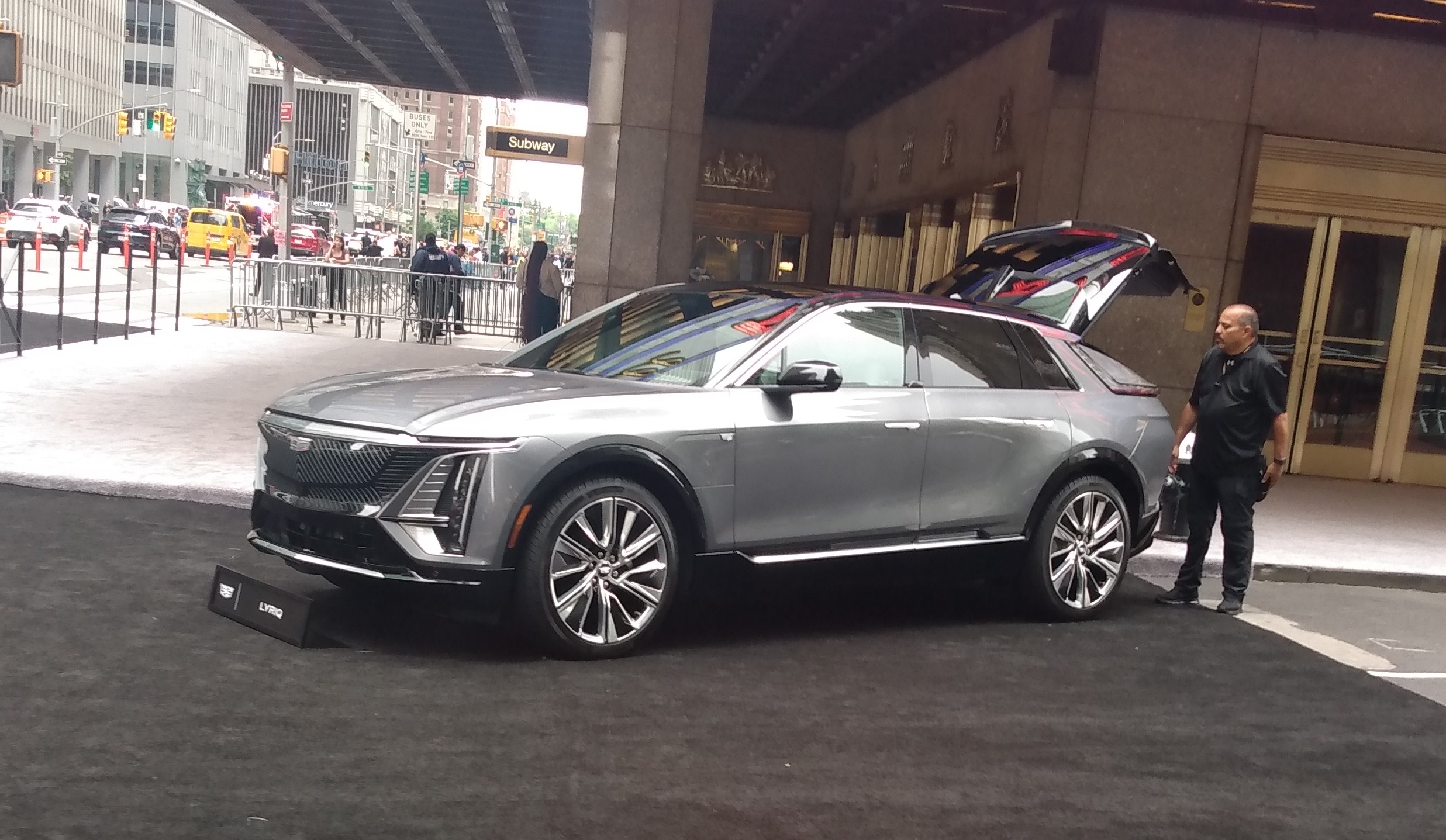
Cadillac Lyriq is an EV from Cadillac, and the hosts mention it while discussing used-car deals and used EV pricing. They contrast it with the Optiq and frame it as part of a list of “best deals,” implying the Lyriq’s market value is attractive relative to alternatives.
Used car values means what the car is selling for after it’s been owned before. For EVs, those prices can change a lot, which is why used deals can be better than you’d expect.
The Audi Q6 e-tron is an electric SUV. They’re saying it’s a fairly big, practical EV, and they discuss how its name changed and what you might pay for one used.
The BMW X5 is a luxury SUV that’s bigger than a small crossover but not a full-size truck. It’s designed for comfortable driving and family use. In the podcast, it’s used as a benchmark for how large an SUV is.
Certified pre-owned means the used car gets checked and approved under a program, usually with extra coverage. The hosts are saying that the warranty included with CPO can make the higher price worth it.
An extended warranty is extra protection after the original warranty ends. It can reduce the risk of expensive repairs, which is why it changes how “good” a used-car deal feels.
The BMW i4 is BMW’s electric car that’s shaped like a 4-series. When a model is being phased out, used prices and what warranties are available can shift.
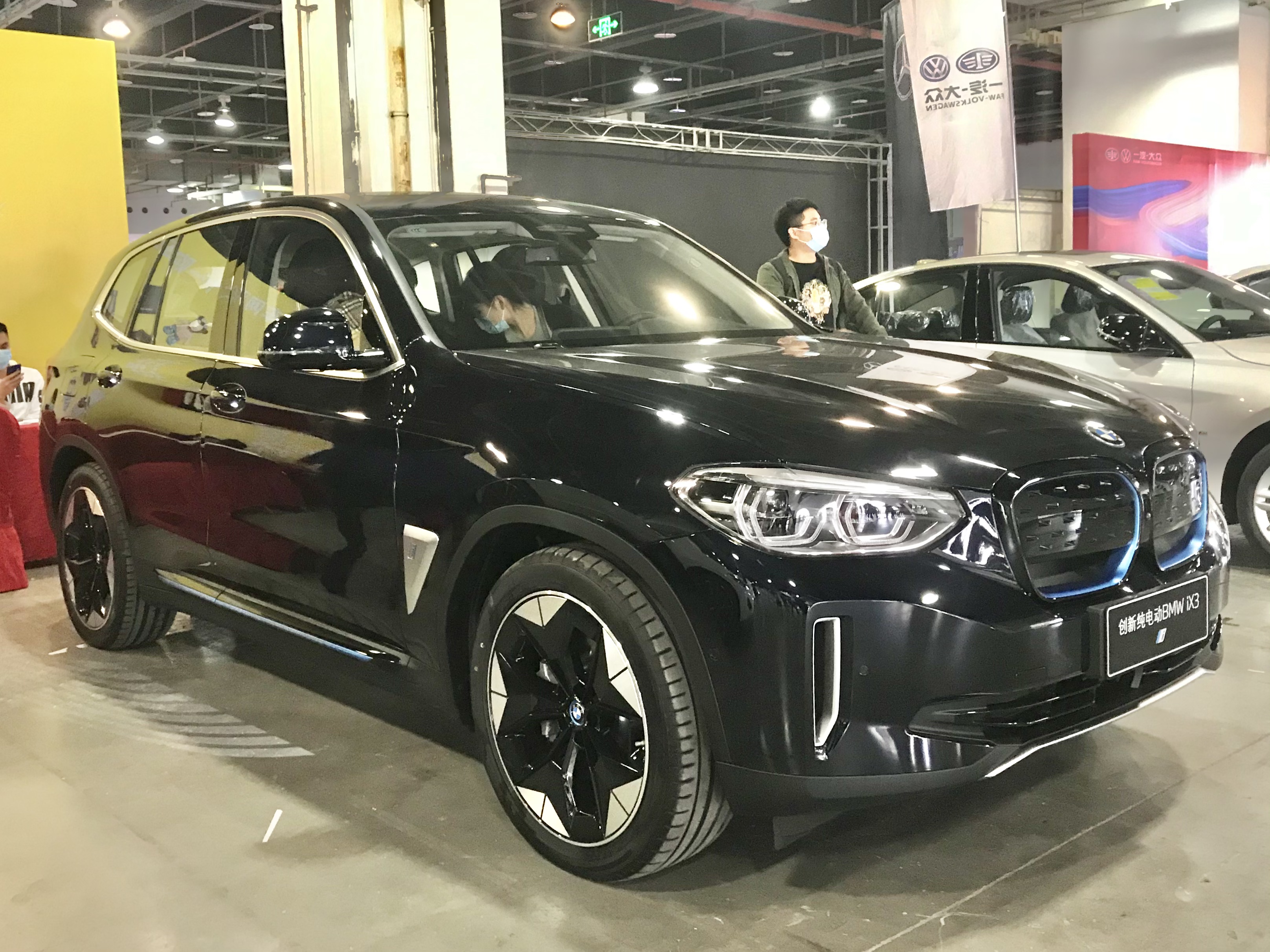
The BMW iX3 is BMW’s electric SUV. Here it’s used as a comparison point to explain why the BMW i4 is “going out of production,” implying BMW is shifting EV focus/availability toward the iX3.
The BMW iX is BMW’s all-electric SUV. The hosts say the newer “facelifted” version looks better than the earlier one, even though some people still don’t love the styling. They also point out that used prices can be under $50,000.
The BMW i5 is an electric car that’s meant to be like BMW’s 5 Series, but powered by electricity. The hosts say it looks like a regular 5 Series and that used prices can make it cheaper than the sticker price. It’s discussed as part of used-EV value.
Sticker price is the manufacturer’s listed retail price (often shown on the window sticker) before discounts. The hosts use it to frame how much cheaper an EV can be in the used market—citing roughly $25,000 off—and how aggressive lease deals can effectively lower the cost of getting into a new EV.
Battery degradation means an EV battery slowly loses some of its ability to store energy as it ages. The point here is that the battery usually doesn’t become useless quickly, so you shouldn’t expect a dramatic range drop after just a few years.
The Hyundai Ioniq 6 is an all-electric sedan. In this discussion, it’s mentioned as another EV you can potentially buy for much less than you’d expect based on the sticker price.
Lease deals are promotions that let you drive a car for a few years while paying a monthly amount, instead of buying it outright. They’re saying the lease offers on new EVs are currently very good, which affects whether used is the better deal.
The Hyundai Ioniq 5 is an electric vehicle. The discussion here is about how much its price might fall after a few years, and how that compares to leasing costs.
Depreciation just means how much the car’s price falls as it gets older. They’re saying EVs may lose value fastest at first, and then the drop might slow down after a few years.
The Tesla Model Y is an electric SUV. It runs on electricity instead of gasoline. The podcast brings it up as one of the Tesla models people might shop for when looking at EV prices.
A fast charger is a quicker way to charge an EV. It can be harder on the battery if you use it all the time, so some owners prefer slower charging for everyday use.
Here, “battery life” means how long the EV battery stays healthy and continues to hold a lot of charge. The discussion compares people who avoid full charges versus people who charge to 100% often and say their battery still looks fine.
Charging overnight means plugging in at home (or wherever you park) and letting the battery charge slowly while you’re asleep. It’s a common workaround when fast chargers aren’t convenient.
Term
30 to 40%
“30 to 40%” is how full the battery is. The host is saying they plug in when the battery isn’t too low and not too full, which can be easier on the battery.
They’re talking about how fast the charger can put energy into the EV. Faster chargers add energy quicker, but the exact time depends on the car’s battery and the charger’s speed.
Fast charging is when you charge an EV quickly using a high-power charger. It can be harder on the battery than slower charging, especially if you keep charging all the way to 100%.
Term
Walmart parking lot
They’re talking about public fast chargers you might find at places like retail parking lots. When you plug in, the charger starts up and you can hear cooling fans.
Term
fans start kicking in
When you plug into a fast charger, it often turns on cooling fans. That’s normal because the charger gets hot while delivering high power.
The Ferrari 550 Maranello is a high-end sports car made by Ferrari. It’s designed for fast driving and comfortable long trips. The podcast brings it up because people often modify or build special versions based on it.
Spiker is a small Dutch company that makes exotic supercars. The hosts say it’s returning and that its cars have a very unusual, aerospace-style look inside, with parts of the mechanical system visible.
Pagani is an Italian supercar brand famous for extremely high-end interiors and visible engineering details. The hosts compare Spiker’s interior vibe to Pagani’s—specifically the way mechanical components and linkages can be showcased rather than hidden.
Term
mechanical bits and linkages
“Linkages” are the physical moving connections that make one part move another. The hosts are saying Spiker shows these mechanical parts instead of covering them up.
“Engine-turned” is a fancy way of finishing metal so it has a crisp, repeating pattern. On the dashboard, it’s mainly for looks—like a detailed, premium texture.
They’re talking about an Audi V8 engine—an engine with eight cylinders arranged in a V shape. They mention it because it helps explain why the car felt exciting and desirable.
when you look at the footprint, but not really considering
how much they're trying to put under one roof.
That's right. And I think that's the idea.
Have smaller, more discrete teams that are empowered
rather than making it kind of big and bureaucratic.
And there's a couple of little interesting sort of things
that I couldn't help notice wandering around.
They've, in the design studio, they had an escort Mexico
from, I think, the late 70s, early 80s,
which was a European car, I think they ever sold in the year,
but he's that kind of iconic Ford rear-engine little escort rally car.
And I said to the designer, that's cool.
He said, yeah, it's the European car.
And he's just sitting there as like inspiration.
I thought that was quite sweet.
And then we went into the, they have like a prototype,
they have a room where all the prototype vehicles come back
to be updated and everything else.
But when they're going out on the road,
and they had a Hyundai Ioniq 5N in there,
which I thought was quite fun.
That was obviously one of the benchmarking cars.
So, yeah, really, really interesting.
And, you know, an interesting group of people,
it's more of a, the feel of it is more of a tech company
that happens to be dabbling in cars than a car company,
which I guess is the whole point.
Did they talk about why they picked Long Beach as the location?
Just talent.
I think, you know, one of the things Alan talks about
in the interview, because I asked him, you know,
if you're going to bring everything in house,
you're fighting for quite a small number of people
who are specialists in this area.
And I use the analogy.
Bagel Sir Alex Ferguson was the manager of Manchester United
football club for a couple of decades or more.
And he talks in his autobiography
about there not being enough world-class soccer players
to go round.
So, you're all fighting over a small amount,
you know, a small number of players.
And he feels like that in the EV space,
that, you know, there aren't that many people yet
with this kind of level of expertise and experience.
So, I think you have to go with the,
you have to go where the talent is.
There's a lot of talent now in Southern California,
you know, you think about who else is around here.
You've got Rivian here.
You've got even people like Slate at the road.
But singers down there, a zinger.
The singer, zinger, SpaceX of course is.
Piscar was, so there's probably some people looking for jobs.
Tesla's design center, you know,
Tesla's design centers here, SpaceX is here.
You know, there's a lot of talent in the area.
It's got a nice place to live, which I thought,
and I think beyond that,
the psychology of not being in Detroit,
you know, a little bit out of sight, out of mind,
I think he's also probably really a pro.
Yeah, I, because it kind of changes the environment,
changes the conversation.
Like, if you, because there's so much history
and legacy in Detroit,
even as they continue to modernize things,
but there's still just a way of doing things,
I think, in building cars,
and people that have worked at that company,
or even generations,
family generations that have worked at Ford
or other companies in that area.
So doing it down here is a little different.
But, you know, also these days,
you hear a lot about, hey, let's go to Tennessee,
let's go to Texas, you know, there's,
it's a little bit cheaper to do it there.
It's not cheaper to do it in Long Beach.
It's not cheaper to do it in Long Beach.
But I also think, you know,
the psychology of a company,
if you're going to say to a group of people,
you know, like, you don't have to follow the same rules
as everybody else.
And there's definitely an element of that.
Then having them, you know, five hours flight away
probably makes, probably makes quite a lot of sense.
You know, if they're in the next building and, you know,
it's, it's a challenge.
The way it was always put to me
by the Ford Performance guys,
was like the special forces, you know, in the, in the,
you know, if you're in the Marines or whatever,
or if you're a SEAL team or something,
then, you know, the fact that, you know,
you're allowed to have a beard
and you're allowed to grow your hair long and, you know,
it doesn't tend to get you, but you better work,
you better deliver.
And I think there is a, there is undeniably
a lot of pressure on this project.
It's got to deliver and, you know, we'll see.
Yeah. So, and then we're starting to hear a little bit more
and starting to see little teasers of, of this, you know,
$30,000 modular EV platform that Ford's been developing,
I guess, starting with a small pickup truck of sorts, EV.
And then from there, how that involves,
evolves into maybe a small SUV.
But the idea is just so much more shared platform,
shared components, optimizing the efficiency like,
you know, we've seen this with,
with Mach-E and other vehicles at different manufacturers,
them saying, you know, we over engineered it
as too much cooling or as too much wiring.
And we're, you know, we're just like,
as we start to optimize,
we're able to just cut weight down of,
of just components and just making it just smarter,
lighter, more efficient.
And all of that adds to reduced cost
and potentially greater range as well.
Right. Because that's the big,
that's the big thing that they're trying to, you know,
howdy, because it's all negative.
You increase the, the mass, you increase the brakes,
you just get into this vicious circle,
which we've seen with hybrids as well as with EVs
that suddenly you've got a 10,000 pound vehicle,
which has got to have massive tires, massive brakes,
massive everything.
You know, the wear, the durability,
everything becomes critical
because this thing is suddenly a commercial vehicle
in many ways, rather than a passenger car.
And until the battery improves,
and then the other thing is the cost.
So one of the things they said,
which I've heard from other people is,
you know, at the moment on an EV,
a battery is still 40% of the cost.
It's so crazy.
So, so if you want to go further,
then you increase the size,
you know, and let you either add efficiency
or you add battery.
And if it's 40% of the cost,
you really don't want to add battery.
So if you can eat away a little bit with aerodynamics,
with, you know, clever packaging,
with a little bit of weight saving here or there,
anything you can do to reduce the size of that battery
while still going as far makes total sense.
So that's the, the game that they're playing is,
you know, let's keep the battery a sensible size,
keep the weight down, keep the cost down.
And we do that by being clever.
So it's, it's a cool challenge.
And I don't want to, again,
give the game away in the interview,
but we were talking about, okay, 30 grand,
somebody goes into a dealership,
you've got either a Maverick hybrid,
a Ranger, which isn't much more than that,
or a, or this new EV truck,
it's still going to be a,
it's still a job to get that consumer to say,
hmm, shall I buy the EV or shall I buy the Maverick?
Maybe I could buy the hybrid or shall I buy the Ranger?
So there's a, there's a job to be done.
There's a job to be done with the dealers for sure.
That's the difference.
Yeah. The problem is, if the EV is 220 miles of range,
people are getting over that.
Like as consumers were chasing range,
we're going after the most amount of range.
And if you go GM's route, like Escalade and Silverado,
you have a 10,000 pound truck with a massive battery
that cost $120,000, which now they're discontinuing
because they're like, it's ridiculously big
and expensive and heavy.
And it's just, it's just not,
financially, it doesn't make sense for the company.
Even if as a consumer, we can look at it and go,
oh, we can get, I don't know,
400 miles of range out of a giant truck.
I don't think they're killing the Silverado EV.
That's still continuing.
Yeah. I don't think that that,
that big platform that they have is going to last.
Oh, you mean in the long, long term?
Yeah. I mean, they'll not iterate on it.
But yeah, just to be clear, they're not killing,
it's not, they're not killing it instantly.
That's still going.
So doing something that's more efficient,
but we need to, at some point,
other than a few vehicles that are starting to come out, right?
The new BMW that's over 400 miles of range,
there's a few things lucid in some cases, Rivian,
but to go from this, like, sort of 300 mile-ish is the average,
to jump to 500 mile-ish is the average.
That's the next, in my opinion,
sort of the next big benchmark that we need to reach,
especially if we charge to 80% most of the time
and only use that full 100% sometimes.
Well, that's the other thing that's going away.
There's two interesting things about that.
One is, if you improve the infrastructure,
then that 500 mile range becomes less critical.
If people have confidence in the infrastructure,
then they don't, they don't need it.
It's also about how you're using the car,
because if this is, you know,
if you're buying this truck to be, you know,
a city car or a business tool
and you're not driving massive miles,
then you don't need the range, so why buy it?
So, you know, buy the range, buy the range that you need.
And the other thing is the technology
is now moving away from 80% charge.
And that's the neat segue into another car
we're going to talk about, which is the Chevy Bolt.
They're also now saying, actually,
don't worry so much about the 80%.
The chemistry is changing.
We're making improvements.
Now you can charge consistently to 100%.
Oh, is that true?
Is that what they're saying?
That's coming.
Yeah, so they're big.
And I think the four trucks going to be the same.
Now, it still takes longer.
You know, the charging curve still slows down
when you get to home, but it doesn't matter
if you're charging it overnight at home.
But I think we are going to move into an era
where you can charge your car to 100%
in the way that you charge your iPhone
or your Android to 100%.
So that will help because it gets past that idea
of, well, it's 300 mile range,
but actually it's only 220 or something
because I'm only supposed to charge it to 80%.
So now we'll get to 100% charging.
It's, you know, things are getting better.
It just needs to be an attitude change.
Well, which, you know, the Bolt,
if we could move on to the Bolt.
Yeah, let's do it.
I know that was on our little agenda.
Yeah, we just tested the Chevy Bolt.
And this was the car that we were like,
why did this go away?
Because we always quite like the Bolt.
And it sort of went away.
And now it's come back for a year or something.
So it's been away for three years.
It's come back for a year.
A full confession.
I personally have only ridden in it.
I haven't driven it, but we have thoroughly tested it.
And we did it, put it through the Edmunds EV range test,
290 miles of range, starting price of 29 grand.
You know, nice, a nice little thing.
And actually reasonably spacious inside.
Trunks a little bit small, but passenger space is OK.
You know, decent, you know, just a nice,
you know, just a nice all-round little thing.
Yeah, yeah.
You know, quite a, quite an appealing car.
And particularly if you're, you know,
most families in the US,
let's face it, two car families.
This could be an ideal second car for really
210 horsepower, but we tested it zero to 16,
just over seven seconds.
So I'll still feel quick.
Yeah, it's going to feel nippy,
because you got all that instant talk as well.
So it doesn't feel, doesn't feel slow.
You know, it sort of drives pretty,
he drives pretty well.
You know, obviously commenting on the team's driving experience
on my view from the passenger seat.
But yeah, we thought this was a nice thing
and probably what the market needs.
And looking at some of the photos,
like I like that it has just sort of a conventional interior.
I've been driving some funky things recently.
I'm driving the Volvo EX30, which is nice.
I kind of like it.
It's just, there's a few things, you know,
there's no start button.
You kind of get into it and it just, it's alive.
You know, it has like a key card or fob or both.
I don't know, they gave me both.
I don't know which one is activating the car,
but the bolt looks like it's pretty conventional.
Gauge is in front of you,
entertainment screen in the middle, you know,
yeah, the bolt is pretty normal looking.
The bolt is just a sort of nice, sensible product.
The only challenge with it, which is what we talked about before,
is I think if you're buying an EV and you want a new car with,
you know, the tech and the range,
this makes a lot of sense at 30,000 bucks.
The challenge is, as you might be the segue,
that there are the use market for EVs is so,
well, the EV use market, they're so cheap at the moment.
And the used, the used lease, sorry,
the use prices are cheap.
And the lease prices on a new car are really cheap.
That actually the MSRP is not as significant.
You know, if you can lease an IONIQ 5 for
two 30 bucks a month or whatever it is at the moment,
depending on where you live,
actually the $30,000 car is becomes less relevant
because frankly, the lease deals were amazing.
Yeah. Let's talk about some of those used prices.
When we get back, let's take a quick break.
Bio Pro Plus, it's a 100% drug-free hormone health formula
that helps guys over 40 get leaner, tighter and stronger naturally.
I've been taking it. I continue with that journey.
I'm into it for a few months now.
So whether you're just getting started
or a seasoned pro in the gym,
Bio Pro Plus is the answer to help you get off the couch
and break through plateaus.
Go to bioproteintech.com slash car cast for $100 off your first order.
There's no commitment and you can cancel at any time.
That's bioproteintech.com slash car cast.
We're headed to Camp Toyota and the fun starts now.
We're kicking things off by kicking up mud.
Jump in campers.
We're going off-roading in a four-runner.
Next, we're heading to the hot springs in a RAV4.
And finally, park your tundras and Tacomas around the campfire
because we're roasting marshmallows.
Your summer start here.
Dealer inventory may vary,
so you're participating Toyota Delivery Details event and stream first.
Toyota, let's go places.
You're on a GLP One.
Your appetite is changing.
Your cravings quiet down.
And food noise is finally fading.
But now you're wondering, how do I manage my side effects?
What do I eat to stay strong?
How do I break through a plateau?
Because reaching your weight loss goals can take more than meds.
That's where Weight Watchers MedPlus comes in.
The support designed to help you navigate what comes next.
With trusted experts who guide you,
food plans that work with your body,
support to help manage side effects,
plus access to GLP One medication.
Weight Watchers MedPlus is designed to help you lose more weight.
Watch it work.
Get started today at WeightWatchers.com.
All medical services are provided
through our affiliated medical group, Weight Watchers Clinic.
Medications require eligibility and prescription.
Individual results may vary.
See site for more details.
Okay, we're back.
So a couple of weeks ago, we had Jessica Caldwell on.
She's the head of insights at Edmunds.
We talked about negative equity into car loans
and just some ways around it.
And that led to a conversation of EVs, leasing EVs,
and used car prices, which is interesting,
especially in the EV world.
Because there are some very pricey EVs.
I think I had mentioned during that conversation,
I noticed the Mercedes, the sedan, the EV, say EQ, E?
E, EQE and EQS, yeah.
Yeah, where I was just walking down the street the other day
and I'm looking at, I'm going,
I think that was a $90,000 car.
You can get for half the price now, less than half the price.
And it was a nice enough car to drive.
Like, it was nice.
So at the time, I was like,
doesn't feel quite as nice as I expected
from a $90,000 Mercedes.
But you get into it at a $40,000 price point,
you're like, all of a sudden, this is like,
oh, this car speaks to me.
Yeah, it's like when we were leasing,
we got a Cadillac Opti, which we talked about on the show.
And my wife was like, I'm not really sure about this
sticker in the back window.
And I said, firstly, it's laser-etched
and it's the art and design motif.
And secondly, at this price, we can get over it.
That's right, right.
Don't look at that.
There's an 18-speaker Hi-Fi and it's $300 a month.
You can get over a lot when it's half the price
of everything else.
And actually, the Optiq is a very nice little car.
But we put a list together of some of the best deals.
There is a Cadillac on there, actually.
It's the Lyric rather than the Optiq.
And this is actually looking at used car values.
There's a video and we've got a written piece
at edmunds.com slash news.
And yeah, I mean, there's a lot of car here,
like Audi e-tron, a neighbor of mine bought one.
And he leased one, went back and the lease was up.
The buy-out fee was stupid.
So he said, oh, I'm not having that.
And then he just went and bought another one
on the use market and saved himself like 20 grand.
I mean, you can get an Audi e-tron.
Like that's the big one.
That's the kind of Q8 size car.
You know, for like, we've got here
average price on Edmunds, 22.5 grand.
I mean, 75 new.
I mean, this one says Q6, not the Q8.
The Q8 I drove, I like.
It's now known as the Q6 e-tron.
It was originally the, no, the Q6.
Yeah, I think it was originally called the e-tron.
Then it became the Q6 e-tron.
But it's a big, it's a big like GLE X5 sized SUV.
It's a nice, you know, not, you know, just sensible, nice.
Not like, you know, not at the time,
we didn't think it was the most amazing thing
ever as a new vehicle.
But honestly, for like low mid-20s,
it's a hell of a lot of car.
I mean, if you can get this thing for 25 grand,
or even less, it's definitely worth considering, you know.
I mean, you've got to bear in mind that, you know,
it's an Audi, things like tires,
they're thinking, you know, parts
will be that little bit more expensive.
So, you know, if you're like squeaking
to get to 22.5 grand, it's probably not the car for you.
But if you're looking around for bargain
and accepting that, you know, a few, you know,
things go, things repair costs,
or get a warranty or whatever on it.
Well, that's the other thing is, listen,
if you go to your Audi dealer or something,
and there's the certified, or even CarMax,
and there's the certified pre-owned,
and it has the extended warranty built in,
and now you're paying maybe 27,000 or so for it, 28,000.
It's probably worth that cost and go,
yeah, listen, I'd love to have the 100,000 mile warranty.
If I could find one for 35,000 miles on it,
you give me the 100,000 mile warranty
and sell it to me for 27,000.
That's not, that's not the worst case scenario.
It's a BMW i4, love, you know, I think that's,
so they had the i4, which is just going out of production,
because the iX3 is here.
So that's the one that looks like the four series
or the four series Gran Coupe.
Yeah.
Again, nice driving car, I think it looks quite cool,
lot less controversial looking than the iX,
which is also on our list.
But I mean, i4's mid 30s,
that's a $60,000 plus car when it was new.
It's funny, because whoever built this page for you guys,
that's one of the best pictures I've seen of the iX so far.
Yeah, well, that's the facelifted iX,
which he got a bit better looking in the second generation.
iX is actually, I think, I mean, this is a really,
we ran one for a year and we really enjoyed it.
If you get past the looks, which are polarizing,
the interior is fantastic, great car.
Again, now under $50,000.
I mean, not cheap, cheap, but under $50,000.
i5 is another car that we really like, you know,
looks like a five series, basically is a five series,
but it's electric, Cadillac Lyric.
But the i5, you know, you can knock $25,000 off the sticker price
in the used market.
So that's, that's good.
Cadillac Lyric, I think it's a really handsome car,
a little bit different, big as well.
Yeah, another one.
You take $25,000 off the sticker price in the used market.
And the bit that, I know we talked about this on the show
before I got too repetitive, but you know,
the fear of battery degradation, it's not an iPhone.
I keep saying this, it's not an iPhone.
It's not like the battery is dead after a couple of years.
You're not really going to notice a significant drop off in range.
You know, these are viable, perfectly viable cars.
In fact, we're working on a project.
We might go out and buy like a super high,
high mileage EV just to, just to prove the point.
So thinking about that as an idea at the moment.
Okay.
Ioniq 5, yeah.
Yeah, Ioniq 5.
Ioniq 6.
I mean, 25 grand from Ioniq 5.
Those are half price off sticker.
I mean, that's the one I would say look at the lease deals,
because the lease deals on a new one are so aggressive at the moment.
They are still going to balance that out.
Cadillac as well.
Like you said, you just got one.
So I would look at Cadillacs because the lease deal,
like you said, for 300 bucks a month,
you get the brand new vehicle with, you know, it's not,
it's not terrible.
But if you don't want a lease and you do want to get something,
you know, used for cash, you know,
and you look at it, okay.
So 20, 25 grand safe from Ioniq 5, three years time,
how much is it really going to go down?
And you've got to compare that to the lease price,
what you would spend on a lease over three years.
Or two or three years.
Some of these are quite short leases versus how much
do you think you're going to spend maintaining
and how much is it going to go down on an Ioniq 5?
But you've got to think if you're buying like a model,
Tesla Model 3, which is also on the list at the low 20s,
you know, is it really going to be worth like 10 grand?
It's hard to see.
You still got to believe that, you know,
a couple of years time it's still going to be worth like, you know,
15 plus.
So it's an attractive proposition.
The rate of which it loses its value starts to slow down.
When, you know, when the first three years
you've already knocked off 50%,
it's going to start to slow down a little bit.
But interesting to your point about the battery
and charging to 100% and how long does it last?
You know, again, I mentioned this before,
because I own a Lightning, I'm in a bunch of different
Lightning groups.
And yeah, there's some people that are really concerned
and going, I only charged 80%.
I never go above 80%.
I do it religiously.
I don't charge on the fast charger because, you know,
someone says that fast charging it lowers the battery life.
So we, you know, we do a slow charge.
But there are guys and girls, presumably, that in that group
that drive these groups, most of the guys are,
most of the people that drive it are the guys that drive it.
And going, you know, I commute every day.
I go long on it.
I'm at 100,000 miles.
I charge 100% every single time.
And my battery health is hasn't diminished at all.
Like I'm 100,000 miles into this truck, 100% charging.
Battery life hasn't changed according to the, you know,
the data on the screen that you can access.
Our parent company has a partnership or a share in a
company called Recurrent, which looks at, has a lot of this data.
Maybe we should get the, I know the CEO,
well, we should get him on the show.
All their data suggests the same thing.
I mean, it's not no degradation, but it's pretty minimal.
And also it can be a construct of time versus mileage.
It's not always mileage that's the issue.
You know, there's some moments that actually time
is more of a factor than mileage.
So a lot of the norms associated with gas vehicles
kind of go out the window.
But you're right, it's frankly life's too short to,
to be kind of worrying about like this 80%
or don't fast charge it and everything else.
I can't really get into that.
You know, you've got to hopefully enjoy these vehicles as well.
But you're right.
I mean, there isn't a 30,000 mile model three,
three years old for like low twenties or something
is a steal right now.
Yeah. And you know, with, with my truck, in this apartment complex,
the chargers are all pretty slow.
So you either charge it all day or you charge it overnight.
And I usually throw it on the charger when I'm down to
between like 30 to 40%, 35, 36% just because I know
if I charge it overnight, the next day without getting up
at five in the morning, I can go and, and grab it.
And it won't be 100% charge, but I don't specifically go,
Oh, stop charging at 80% or I got to wake up early
and get it off the, you know, 80%.
I was like, there's a few times I charge to 100%,
but most of the time I just find the rhythm of going,
I'm going to put it on the charger overnight.
It's maybe six o'clock or seven o'clock at night.
There's a charger open.
I'm going to put it on.
I'm going to move it in the morning.
And somewhere in the morning, I'm going to be somewhere
between 80 and like 92%.
You know, somewhere 87, 88%, 90%, whatever.
I was like, okay, that's just, for me,
it's just about the timing and the convenience of it.
It's not really trying to like super calculate.
Now I don't want to plug it in that noon
and then leave it on overnight
because I don't want to get up at six in the morning
and feel like I have to move my truck.
And I just feel guilty because we have shared chargers.
And if you're fully charged and you're still plugged in,
there's kind of an idle fee.
I don't even know if they've actually charged that
because I've never done it,
but also other people wait for the chargers.
So I don't want to just leave my truck there like 80%.
You don't want to be that guy.
Yeah, I don't want to be that guy.
And I haven't, as long as I've lived here
and had that truck, I haven't.
So for me, I just kind of do them.
And I think, oh, I'm going to plug it in tonight
if there's a charger open and let it charge.
And yeah, I've done it to 100% a few times.
But just because in my head, I'm going,
I got to charge to 100% because I got to go to San Diego
or Oceanside or something like that.
Right.
But for the most part, it's just charged around convenience.
But I wonder if that's slow, not a trickle charge.
It's like seven kilowatts an hour.
So it definitely takes some time.
Yeah, that's what your typical home charger is.
It's somebody who's seven and eight typically.
And I wonder if that contributes to battery longevity
more than just charging to 100%.
Like which one hurts more?
I don't know.
There is evidence that fast charging
where you're trying to stuff as many electrons
in as quickly as possible and charging to 100%
has some impact.
But also, as I said, in the Bolts, a case in point of this,
the technology is evolving where this will become
actually less and less of a concern.
So I think this will be one of those things,
a bit like every way to pull the choke or something
in the old days.
I think this will be something a little back on.
I can't remember when we could only charge you 80%
and it used to take like 45 minutes to charge a car
at a fast charger.
You know, this will happen eventually,
but it's just going a bit slower
than what people anticipated.
There's a couple of those big chargers that I've been at,
in a Walmart parking lot or something.
And then you plug in and you hear that thing click on
and fans start kicking in.
You're like, I don't think I want to stand next to this thing.
I don't know what sort of radiation's happening
in my body right now.
But also, in my experience, when that does happen,
you're like, oh, thank God it's working.
Yeah, that's true.
It's just to hear that fan kick in
and then you get the little click
and it's like you start to see your range go up.
You're like, oh, thank God.
Yeah, and you could start going and then you walk away
and then your phone app starts going on.
Hey, you're at 80%.
We're going to start slowing this down
and charging you more depending on the charger
if you're at a mall and it's like,
you better get to your vehicle
because now we're getting frustrated.
You've been here for 39 minutes.
I was in Passa Robles going back from car week
when trying to charge a Cadillac
and I was getting all these beeps on my phone.
I was trying to stuff the sushi down
and that's the problem.
It's like, if you don't get back in five minutes,
you're going to start charging it.
I was like, well, I've still got my spicy tuna to go.
So it'll get there.
It'll get there.
And I think that the full circle,
like the Ford thing, what they're doing on is really exciting.
It also makes you realise
actually one final comment on that factory,
when you look at a company like Slate
is a full on startup
or even sort of where Tesla and Rivian was,
we look at actually what goes in to creating a car
and not just the infrastructure
but the human talent as well.
You realise how difficult it is for a company like Slate
to start from nothing and build something really,
try and build something cheap.
So yeah, it's complex,
but also it's amazing that we're seeing so many
startup car companies popping up
and not just like Slate in the EV world
and spin off brands like Scout.
But the things like Gordon Murray coming back
and Singer doing their thing
and Singer having their cars
and to some extent these sort of reimagining
Avaludo and Superleggera doing their thing
on the Ferrari 550
and even groups like Hennessey still doing full cars.
It's amazing to me that the idea of building a car from scratch
is crazy, I didn't tell you, you must have saw this.
So Spiker is coming back.
Spiker?
Yeah, are you aware?
Goodness, the Dutch supercar manufacturer.
Nobody could ever understand that business to start with
because they never built enough cars to look in any way viable.
I can't say what the story is,
but we've had Spiker bring cars on to the car cast over at the studio
many, many years ago, 15 years ago or so,
and they were funky, cool cars.
Yeah, they always look great.
Yeah, and like expose mechanical bits and linkages,
kind of like a Pagani on the interior.
And like engine turned dash pieces,
very aerospace influenced.
The legacy of that company goes back to 1880, I think.
And the company kind of went in and out of business a few times.
The CEO, Victor Muller or Victor Mueller,
I'm not exactly sure how to pronounce his name,
he is the one spearheading this again.
And I don't know if they've been like in stealth mode for a while
or they just had tooling and factory stuff lined up the whole time.
But all of a sudden, there's an announcement going,
we're coming back and we're bringing a car to debut
at the quail this year in August.
I'm like, that seems quick.
That's bold.
It seems, yeah, that's what I said.
I didn't know that.
It's like, there's a lot of dreamers out there
and the odd one makes it through.
But there's an awful lot that don't.
You know, the one they brought to us was a funky cool car
and had an Audi V8 in it.
It was like 400 horsepower.
It was cool.
And this is one of those cases where the failure of the company
made the car more desirable.
People were really buying it when he was making it.
But bless you.
But now that they've been out of business for years,
the Spiker has really been catching on at the auctions.
Like it's pulling good money at the auctions.
And maybe that is one of the things that kind of got the attention of investors
or private equity or whoever's bankrolling this relaunch of Spiker.
There's always so much ego involved.
And you know, that old adage about how do you start with a,
you know, how do you make a small fortune
to start with a big one?
That's definitely, and I think that the passport,
all these classic cars or all the sort of high end stuff is,
it's a passport to a lifestyle.
You know, you can turn, hey, I'm at Quail.
You know, you get, you sort of buy into a lifestyle,
into good words and everything else.
And that's a big part of it.
But I'm amazed.
I hadn't heard that.
Yeah, sort of.
I could never understand in the first instance
how that company was viable for what they were creating
and what they were charging and everything else.
And they did this thing where they're like,
we can't sell any Spikers, but we're going to buy Saab
and then we're going to also sell those cars.
And yeah, so they're going up 96 days.
I don't think you can build a car in 96 days.
So hopefully they're done soon.
There are some videos on their website with their CEO.
And then it's just kind of interesting.
I'm curious to see what the story is going to be, but
you can buy Spikers sunglasses in the meantime.
Now I'm done with that.
But the cars were cool.
I mean, yeah, the detailing.
Some of the detailing is beautiful.
Yeah, the car is couture.
It's cool.
Yeah.
I like the picture of him like here working on the chassis,
but like in his suit.
In his linen suit.
In his linen suit with a tie.
Well, Porsche were telling me the other week that
the reason they're doing so many GT cars is that the number
of like 100 million worth families globally has risen exponentially.
So there is suddenly a lot more people with serious money to spend on this stuff.
So sadly, we're not part of it.
The margins are there and they need that.
If they can't earn the money that they need to earn on volume,
they need to do it with some out of this world exclusive cars.
I mean, I know we're at the end of the show.
Maybe we can save it for another week, but I did see some data this week about
they did like a profitability chart.
You know, like how profitable Ferrari is about everything else.
And like I think Lucid was at the bottom of how much they're losing per vehicle,
but it's really interesting.
Like how many Ford's do you have to sell to equal one Ferrari?
Yeah.
How many Ford's do you have to sell just to equal that tariff fee on this window
sticker we looked at last week on the 12 cylinder?
Exactly.
But all that tariff might be coming back yet.
We'll see.
Yeah, we'll see.
All right, we're going to wrap things up.
I have a good trip.
You're going to Korea.
We'll talk when you get back.
Yeah, thank you.
Yeah, I think we should still do it.
Deal to a show next week and we'll be able to tell you all about it.
I think it's a 13 hour flight or something on Sunday.
Okay.
So it's fly at like midday and do you sleep on a plane?
Do you sleep well on a plane or no?
Not in the day because also you've got that problem is you don't want to sleep
because then when you land, it's still 5 p.m.
So then you've got to stay up.
Otherwise you've got no hope.
I don't sleep well on a plane.
Okay.
I'll do some work.
Have a gentle do some work.
Well, we only need you to wait for an hour on the podcast.
So whatever it's going to take, Red Bull, Monster, Coffee is my friend and just a
just to prop you up for an hour.
Exactly.
Feel free to like rest your chin on the sack of books.
And I guarantee that as soon as I get home, the kids will be mine.
There will be no there'll be no sympathy for my jet like that.
I know none.
All right, have a good trip.
But we'll see you guys next week.
And until then, keep the air and the spare and the bag and the wheel.
I drive my bus in a busy city.
That's why road safety is so important to me.
I know that I must slow down and be extra careful when I make a wide turn.
Buses need more room than cars.
Everyone can help keep our roads safe.
Next time you're driving, remember to give buses plenty of time and space to finish
turning before driving ahead.
Let's all plan to share the road safely.
Learn how at www.sharetheroadsafely.gov.
Hey campers.
It's Jan from Toyota.
This summer we're headed to Camp Toyota and the fun starts now.
We're kicking things off by kicking up mud.
Jump in campers.
We're going off roading in a forerunner.
Next, we're heading to the hot springs in a RAV4.
And finally, park your tundras and Tacomas around the campfire
because we're roasting marshmallows.
Your summer start here.
Dealer in between mayberries.
You're participating Toyota dealer for details event and student first.
Toyota, let's go places.
This is the new Weight Watchers.
Built for real life and real results.
No matter what mode you're in.
Maddie went all in for her big day and lost 33 pounds.
Emily lost 85 pounds and hit her goal while still living her life.
Weight Watchers gave me the tools and I feel amazing.
Join the millions of members and lose weight with the number one
doctor recommended weight loss program.
Lose more at WeightWatchers.com.
At six months, participants in a clinical trial of Weight Watchers program
lost an average of 12 pounds.
Dinner time.
It's more than just a meal.
It's when work comes to a halt where macaroni masterpieces are made
and little moments turn into lasting memories.
With the blue cash preferred card,
you can get 6% cash back at US supermarkets.
So you can bring home the flavors that bring everyone together.
We did say everyone make the special moments even more rewarding.
Learn more at americanexpress.com slash explore dash bcp.
Terms and cash back cap apply with blue cash preferred.
About this episode
Used EV timing comes down to real-world charging and pricing: hosts argue the “fear of battery degradation” is overstated and point to aggressive lease deals and big used discounts. They also dig into Ford’s Southern California EV push—visiting an Irvine-area facility, describing a “Model T moment,” and explaining how Ford is building an end-to-end prototype operation. Along the way, they compare EV development speed strategies (“failing fast”) and debate range, charging habits, and battery wear.