
CarCast+Edmunds - Is now the time to buy a used EV? What’s in store for Ford’s new EV headquarters in Southern California?
About this episode
Used EV timing comes down to real-world charging and pricing: hosts argue the “fear of battery degradation” is overstated and point to aggressive lease deals and big used discounts. They also dig into Ford’s Southern California EV push—visiting an Irvine-area facility, describing a “Model T moment,” and explaining how Ford is building an end-to-end prototype operation. Along the way, they compare EV development speed strategies (“failing fast”) and debate range, charging habits, and battery wear.
Follow @motorator
Follow @weaveroncars
Follow Bravago Beverages
Hosted by Simplecast, an AdsWizz company. See pcm.adswizz.com for information about our collection and use of personal data for advertising.
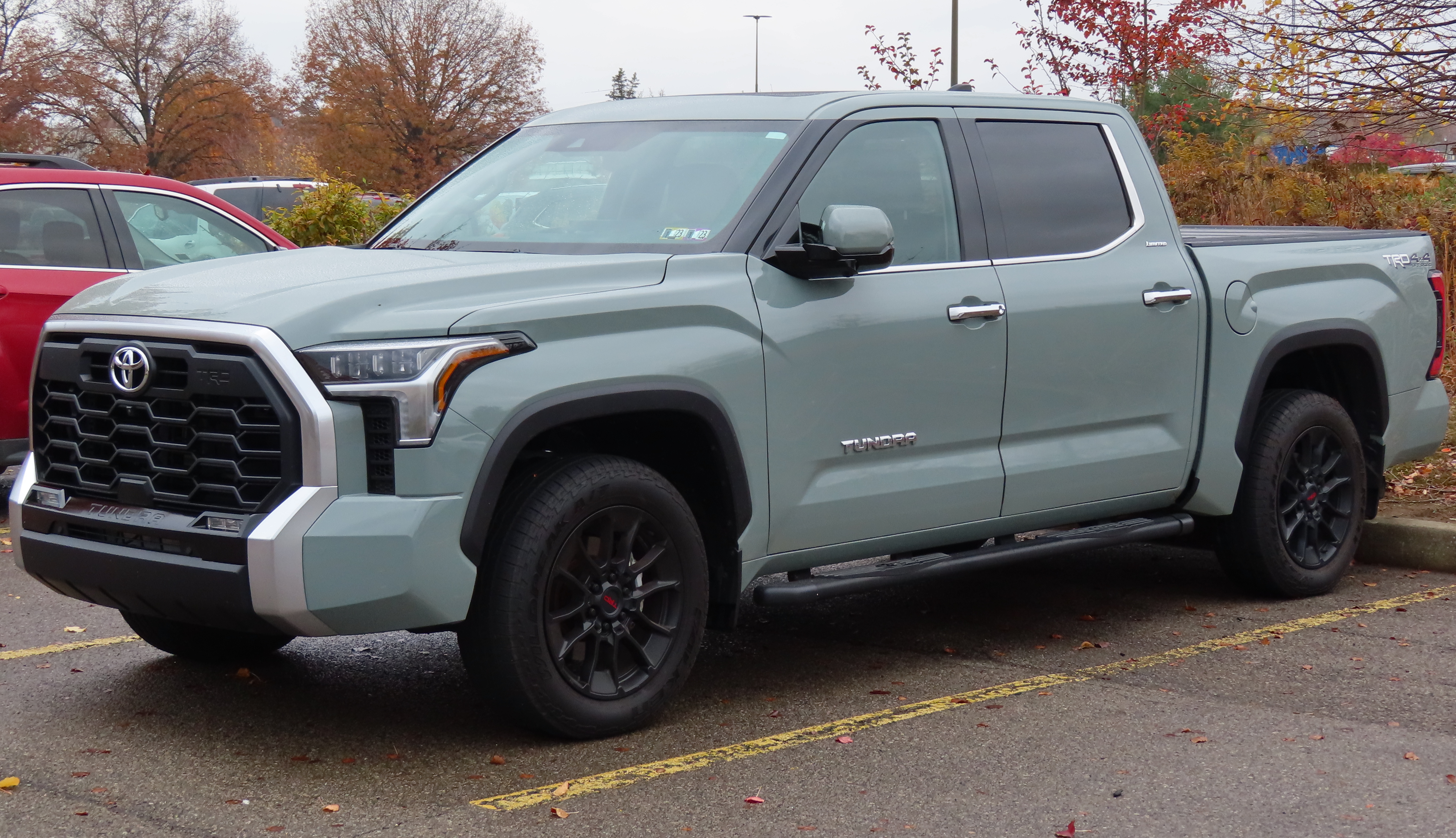
Toyota Tundra
"...the hot springs in a RAV4. And finally, park your Tundras and Tacomas around the campfire because we're roa..."
A Toyota Tundra is a large pickup truck. People use it for carrying things, towing trailers, and taking it on trips. The podcast mentions it as a truck you’d bring along for outdoor plans.
The Toyota Tundra is a full-size pickup truck built for towing, hauling, and everyday driving. It often comes up in conversations about practical trucks that can handle road trips and outdoor use. In the podcast context, it’s mentioned alongside other trucks as something to park around a campfire—highlighting its “go-anywhere” role.
Ford
"Yeah, I actually went down twice in the last week and the second time I spent an hour interviewing Alan Clarke, ... effectively the head of Ford EVs. ... Ford is trying to, Jim Farley, the CEO came out and said, we're going to reinvent, this is the Model T moment, ..."
Ford is the car company in this story. They’re investing in electric-vehicle work—both people and facilities—to make EVs more competitive.
Ford is the automaker being discussed, specifically its push to build and scale EVs. The segment focuses on Ford hiring leadership for its EV program and investing in EV-focused facilities and infrastructure.
Tesla
"Really interesting, ex Tesla was a big hire for Ford and he's running this program."
Tesla is mentioned because the person Ford hired previously worked at Tesla. That matters because Tesla is strongly associated with electric cars, so the hire brings EV know-how.
Tesla is referenced as the prior employer of Alan Clarke, highlighting how Ford is bringing EV experience from a company known for electric vehicles. In this context, it signals Ford’s attempt to accelerate its EV program by hiring talent with EV-specific background.
Model T moment
"Jim Farley, the CEO came out and said, we're going to reinvent, this is the Model T moment, we're going to reinvent how we do cars."
“Model T moment” is a comparison to the original Ford Model T, which changed how cars were made and sold. Here it means Ford thinks EVs could be a similarly big turning point.
“Model T moment” is a metaphor comparing Ford’s current EV push to the transformative impact of the original Ford Model T. The phrase implies a major reinvention in how cars are designed, produced, and brought to market.

Ford Model T
"...ut and said, we're going to reinvent, this is the Model T moment, we're going to reinvent how we do cars."
The Ford Model T is an old, historically important car. It was one of the first cars made in large numbers so more people could afford a car. The podcast uses it as an example of a big turning point in car history.
The Ford Model T is the famous early mass-produced car that helped make automobiles widely available. It’s often used as a historical reference point for “reinventing” how cars are made and sold. The podcast frames it as a “Model T moment,” meaning a major shift in the way the industry operates.
EV infrastructure
"And what's really interesting, spent a lot of money on infrastructure,"
EV infrastructure refers to the systems and facilities needed to support electric vehicles, such as charging networks and the operational support around them. In the segment, the hosts note Ford spending money on infrastructure as part of making EVs more competitive.
bring everything in house
"[639.1s] but they're trying to bring everything in house, [640.9s] which is what Tesla did successfully. [643.5s] I think Tesla own almost all, and Rivian actually,"
It means the company tries to do more of the work itself instead of outsourcing to lots of vendors. That can help them move faster and make changes sooner.
“Bringing everything in house” means a manufacturer tries to control more of the vehicle’s development and production internally instead of relying on many outside suppliers. The goal is tighter coordination, faster iteration, and potentially lower costs by owning more of the “ecosystem” around the car.
supplier handoff process
"[650.4s] So if you think about how a car is traditionally made, [653.4s] you write a brief and you send it to the supplier, [656.8s] and then the supplier comes back with something"
The “traditional” process described is a supplier handoff model: the automaker writes a specification, sends it to suppliers, and then iterates through back-and-forth responses. The host argues this workflow can be slower and more expensive than a more integrated approach.
own the whole ecosystem
"[666.9s] So what they're trying to do is bring everything in house [670.4s] and do it Tesla style and own the whole ecosystem. [673.7s] And then obviously they'll still have suppliers"
It means the company tries to control more of the connected systems that go into making the car. That can help them coordinate better and avoid slow handoffs.
“Own the whole ecosystem” refers to a vertically integrated strategy where a company controls multiple parts of the EV supply chain and technology stack. Instead of treating suppliers as separate modules, the manufacturer aims to coordinate everything to reduce development time and cost.
failing fast
"[685.0s] There's this whole motive of failing fast. [688.7s] If something's not gonna work, [690.1s] let's find out fast and move on."
It means trying ideas quickly and learning fast. If something doesn’t work, you stop early instead of spending months building the wrong thing.
“Failing fast” is a product-development approach where teams test ideas quickly and discard what doesn’t work early. In an EV context, it’s used to shorten the time between design changes and real-world feedback so vehicle development doesn’t drag on.

Ford Edge
"...can turn Ford into much more of a kind of cutting edge organization. And then presumably, can you apply ..."
The Ford Edge is a midsize SUV for normal daily driving. It’s built to carry people and gear comfortably. The podcast mentions it as an example of a vehicle that could help a company feel more modern.
The Ford Edge is a midsize crossover SUV designed for everyday family use with a comfortable ride and practical space. It’s the kind of vehicle that can represent a brand’s broader product direction and design priorities. In the podcast, it’s referenced as part of a discussion about making Ford feel more “cutting edge.”
EV truck
"And the one thing that's been most difficult to sell [785.5s] is EV trucks. [788.4s] Rivian struggled to sell the truck relative to the SUV."
An EV truck is a pickup that runs on electricity. The hosts are saying electric trucks can be harder to sell than electric SUVs because buyers use trucks differently and have different expectations.
An EV truck is an electric version of a pickup or similar light-duty truck, and the segment treats it as a distinct market challenge versus EV SUVs. The key idea is that buyers’ needs—range expectations, charging access, towing/cargo habits, and price—can differ enough that EV trucks may sell more slowly even when EVs overall are popular.

Ford F-150 Lightning
"So Ford themselves have obviously had lots of issues [796.6s] with the lightning, as you know well."
The Ford Lightning is Ford’s electric pickup. The hosts are saying it hasn’t gone smoothly, and those problems can make EV trucks harder to sell than other EVs.
The Ford Lightning is Ford’s electric pickup truck, and the hosts mention it as an example of an EV truck that’s had “lots of issues.” In EV-truck discussions, that’s a shorthand for the real-world challenges that can affect sales and customer satisfaction, like production, software, or delivery/ownership friction.
licensing that technology
"And then if Ford feels like there's maybe more value [842.4s] in licensing that technology, then that's also available."
Licensing technology means one company lets another company use its ideas or inventions. In this case, Ford could share EV technology with the new group, and if Ford thinks it’s more valuable to license it, they can do that too.
“Licensing that technology” means Ford could allow another company to use specific EV-related technologies in exchange for terms like fees or royalties. The hosts are contrasting that with Ford being the sole owner/operator, and they’re discussing how a startup-like structure can still be funded by a parent while monetizing tech through licensing.
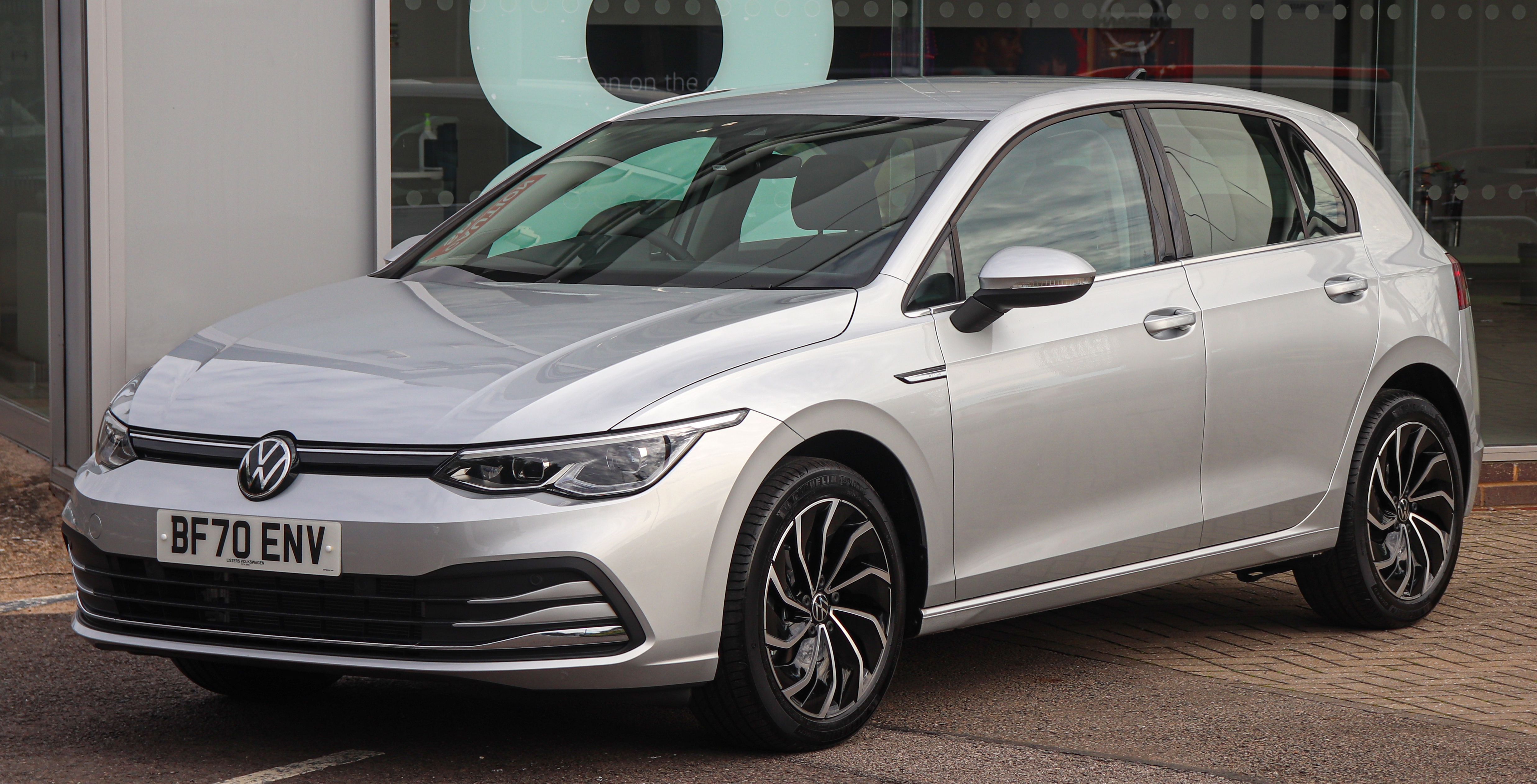
Golf Gtd
"... race car products and things like the GT and the GTD, they use Multimatics, which is sort of not a For..."
The Golf is a regular passenger car model that also has sportier versions. The podcast mentions it in connection with performance parts used in racing. The key point is that some Golf performance setups use specialized technology.
The Golf refers to the Volkswagen Golf line, which includes performance-focused variants like the GT and GTD. In the podcast context, it’s mentioned in relation to race-car-related products and the use of Multimatics. That suggests the discussion is about how certain driveline or performance components are applied in higher-performance applications.
A to Z functioning facility
"saying that this was going to be a sort of a A to Z functioning facility where they can design an engineer and almost fully build prototype vehicles."
They’re describing a workspace where the company can do almost everything in-house. Instead of handing parts of the job to other companies, they can go from early design to building prototypes in one place.
An “A to Z” facility is a vertically integrated development space where a company can handle the full workflow—from early design through engineering and prototype building—without outsourcing most steps. In this context, it’s describing Ford’s EV headquarters as a place to design, engineer, and nearly fully build prototype vehicles under one roof.
prototype vehicles
"where they can design an engineer and almost fully build prototype vehicles. You know, they have, you know, like what we're seeing on the screen, clay modeling to all sorts of CMC machines"
A prototype is an early version of a car that gets built to test ideas before the real production cars. It helps engineers catch problems early and refine the design.
Prototype vehicles are early, pre-production cars built to validate design choices, packaging, manufacturing methods, and system integration before mass production. They’re especially important for EV programs because battery, power electronics, software, and thermal systems all have to work together.
CMC machines
"clay modeling to all sorts of CMC machines and, you know, engineering, electronic development, software teams."
CMC machines are computer-controlled machines that help make parts accurately. They’re used to turn digital designs into physical pieces during development.
“CMC machines” refers to computer-controlled manufacturing equipment used to produce parts with high precision. In automotive design studios, these machines are often used for making tooling, prototypes, or detailed components from digital models.

Escort Mexico
"...round. They've, in the design studio, they had an escort Mexico from, I think, the late 70s, early 80s,"
The Escort is a compact car model from Ford. The podcast mentions a specific older version called the Escort Mexico from around the late 1970s to early 1980s. It’s being referenced as part of car design history.
The Ford Escort is a compact car that has multiple generations, including performance and rally-oriented versions. In the podcast, it’s specifically referenced as an “Escort Mexico” from the late 1970s to early 1980s, pointing to a particular historical variant. That’s why it comes up in a design-studio or heritage context.
modular EV platform
"…starting to see little teasers of, of this, you know, $30,000 modular EV platform that Ford's been developing, I guess, starting with a small pickup truck of sorts, EV."
Think of a modular EV platform like a reusable “car skeleton.” Ford can build different EVs (like a truck and an SUV) using many of the same parts, which helps keep costs down and makes it easier to roll out new models.
A modular EV platform is a vehicle “base” designed so the same core architecture can underpin multiple models (like a pickup and an SUV). By sharing components and mounting points, automakers can reduce cost and speed up development while improving manufacturing efficiency.

Ford Mach-E
"…optimizing the efficiency like, you know, we've seen this with, with Mach-E and other vehicles at different manufacturers,"
The Ford Mach-E is one of Ford’s main electric vehicles. The hosts mention it as an example of how using shared EV parts and designs can make EVs more efficient and easier to build.
Ford’s Mach-E is an all-electric crossover that helped establish Ford’s modern EV lineup. In the context of the discussion, it’s referenced as an example of how shared EV components and platform choices can improve efficiency across different models.
vicious circle
"Right. Because that's the big... You increase the, the mass, you increase the brakes, you just get into this vicious circle, which we've seen with hybrids as well as with EVs"
It means one problem makes another problem worse. If a vehicle is heavier, it needs bigger tires and brakes to handle it, which can make it even heavier and more expensive to maintain.
The “vicious circle” describes how adding weight to an EV (or hybrid) forces bigger components to cope with it. More weight typically means larger tires and brakes, which adds even more mass, and that can raise wear and operating costs.
brakes
"You increase the, the mass, you increase the brakes, you just get into this vicious circle"
They’re talking about the braking system. If the vehicle is heavier, the brakes have to do more work, so they often need to be larger or stronger to stop reliably and last longer.
“Brakes” here refers to the braking system components that must handle higher loads from a heavier vehicle. When mass increases, brakes typically need more capacity (bigger rotors/calipers and stronger friction material) to maintain stopping performance and durability.
mass
"You increase the, the mass, you increase the brakes, you just get into this vicious circle"
Here “mass” just means how heavy the car is. A heavier car needs more effort to speed up and stop, so parts like tires and brakes have to work harder.
In this context, “mass” is the vehicle’s weight. Higher mass increases the energy required to accelerate and the braking effort needed to slow down, which can drive up component size and wear.
battery improves
"And until the battery improves, and then the other thing is the cost."
They mean the battery technology gets better over time. That can help the car go farther and work more efficiently without needing as much extra weight or expensive hardware.
“Battery improves” refers to advancements that increase usable energy, efficiency, or power delivery from the battery pack. Better batteries can help EVs maintain performance while reducing the need for extra weight and cost elsewhere.
aerodynamics
"So if you can eat away a little bit with aerodynamics, [1330.4s] with, you know, clever packaging,"
Aerodynamics is about how smoothly the car moves through air. If the car is shaped to cut through air better, it needs less energy, so it can go farther on the same battery.
Aerodynamics is how easily air flows around a car. On EVs, better aerodynamics can reduce energy use, which helps the car achieve more range without increasing battery size.
weight saving
"with a little bit of weight saving here or there, [1334.4s] anything you can do to reduce the size of that battery"
Weight saving is making the car lighter. A lighter EV usually uses less energy to move, which can help it go farther without a bigger battery.
Weight saving means reducing a vehicle’s mass using lighter materials or design changes. In EVs, less weight generally improves efficiency, which can translate into more range or lower required battery capacity.

Ford Ranger
"a Ranger, which isn't much more than that, … Maybe I could buy the hybrid or shall I buy the Ranger?"
The Ford Ranger is a mid-size pickup truck. In this segment, it’s brought up as another option besides an EV.
The Ford Ranger is a midsize pickup that’s often chosen for its balance of size, capability, and cost. In this discussion, it’s part of the “what should I buy?” comparison set alongside EVs and hybrids, showing how mainstream truck buyers may not be ready to switch to EVs.

Ford Maverick
"…job to get that consumer to say, hmm, shall I buy the EV or shall I buy the Maverick? Maybe I could buy the hybrid or shall I buy the Ranger?"
The Ford Maverick is a smaller, more affordable pickup truck. Here, it’s mentioned as the non-EV option people might choose instead of an EV.
The Ford Maverick is a compact pickup known for being relatively affordable compared with bigger trucks. In this segment, it’s used as a key alternative shoppers consider instead of an EV, highlighting how buyers weigh truck practicality and price against EV range.

Chevrolet Silverado
"…like Escalade and Silverado, you have a 10,000 pound truck with a massive battery that cost $120,000… Even if… we can look at it and go… I don't think they're killing the Silverado EV…"
The Chevrolet Silverado is a large pickup truck. In this segment, it’s used to explain why some EV versions may be too costly or heavy to keep making.
The Chevrolet Silverado is a full-size pickup, and the hosts discuss GM’s EV approach using the Silverado as an example. They argue that pairing a very heavy truck with a massive battery can drive up cost and weight, leading to discontinuations—even if consumers can imagine long-range numbers.

Cadillac Escalade
"…if you go GM's route, like Escalade and Silverado, you have a 10,000 pound truck with a massive battery…"
The Cadillac Escalade is a big, luxury SUV. They mention it to make a point that some EVs built for huge size can end up being too heavy and expensive.
The Cadillac Escalade is a large luxury SUV, and in this segment it’s referenced as part of GM’s EV strategy. The hosts use it to illustrate a business problem: very heavy, very large vehicles paired with massive batteries can be too expensive and inefficient to justify.

Chevrolet Silverado EV
"... a giant truck. I don't think they're killing the Silverado EV. That's still continuing."
The Chevrolet Silverado EV is a pickup truck that runs on electricity. It’s meant to replace the usual gas engine with an electric power system. The podcast mentions it as a truck that’s still being offered and developed.
The Chevrolet Silverado EV is an all-electric version of the Silverado pickup line. It’s discussed as a major electric-truck continuation rather than a short-lived experiment. In the podcast, the speaker says it’s still continuing, emphasizing that the electric truck program is ongoing.
Lucid
"The new BMW that's over 400 miles of range, there's a few things lucid in some cases, Rivian, but to go from this, like, sort of 300 mile-ish is the average, to jump to 500 mile-ish is the average."
Lucid is an electric-car brand. In this segment, they’re using Lucid as an example of an EV maker that’s already getting farther on a charge than many others.
Lucid is an EV brand known for targeting very long driving range with large battery packs and efficient powertrains. In this discussion, Lucid is grouped with other EV makers as examples of companies already offering higher range than the “average” ~300-mile class.
Rivian
"there's a few things lucid in some cases, Rivian, but to go from this, like, sort of 300 mile-ish is the average, to jump to 500 mile-ish is the average."
Rivian is an electric-car company. They bring it up here because Rivian is one of the brands already offering longer range than many EVs today.
Rivian is an EV brand that makes battery-electric vehicles and is mentioned here as one of the companies pushing toward higher range. The hosts use Rivian as part of the comparison between current ~300-mile EVs and the next “benchmark” around 500 miles.
charge to 80%
"especially if we charge to 80% most of the time and only use that full 100% sometimes."
They mean charging the EV to about 80% most days instead of filling it to 100%. That’s often done to help the battery last longer, while still giving enough distance for normal driving.
Charging to 80% refers to limiting the battery’s state of charge for everyday use rather than routinely charging to 100%. This can reduce battery stress and slow capacity degradation, while still providing enough usable range for most trips.
charging infrastructure
"Well, that's the other thing that's going away... One is, if you improve the infrastructure, then that 500 mile range becomes less critical. If people have confidence in the infrastructure, then they don't, they don't need it."
Charging infrastructure means the availability and convenience of charging stations. If there are more reliable chargers where people drive, you don’t have to have the absolute longest range to make the car practical.
Charging infrastructure is the network of public and private charging stations that determines how convenient EV charging is. The hosts argue that if charging infrastructure improves, then the “500-mile range” target becomes less critical because drivers can rely on frequent, easy charging instead of needing maximum range.
80% charge
"And the other thing is the technology [1507.7s] is now moving away from 80% charge. [1511.8s] And that's the neat segue into another car [1513.5s] we're going to talk about, which is the Chevy Bolt."
For many EVs, people used to avoid charging to the very top. “80% charge” means you stop charging at about 80% to help protect the battery over time.
“80% charge” refers to the common EV habit of limiting daily charging to around 80% battery state-of-charge. The idea is to reduce battery wear by avoiding the highest voltage levels most of the time, though newer battery chemistries and thermal management can make higher daily charging more acceptable.

Chevy Bolt
"And that's the neat segue into another car [1513.5s] we're going to talk about, which is the Chevy Bolt. [1515.8s] They're also now saying, actually, [1517.3s] don't worry so much about the 80%."
The Chevy Bolt is an electric car. They’re talking about how EV batteries and charging rules are changing—specifically, whether it’s okay to charge up to 100% more often.
The Chevrolet Bolt is a compact electric car known for being one of the more affordable EVs with a practical real-world range. In this segment, the hosts discuss how newer EV battery and charging guidance is shifting toward charging to 100% more routinely, which affects how Bolt owners plan daily charging.
100%
"The chemistry is changing. [1521.3s] We're making improvements. [1522.2s] Now you can charge consistently to 100%. [1525.9s] Oh, is that true?"
Charging to “100%” means topping the battery all the way up. They’re saying newer EV battery tech may make charging to the top less risky than before.
Charging to “100%” means filling the EV battery to its maximum state-of-charge. The segment suggests newer battery chemistry and improvements may allow more consistent 100% charging without as much concern for battery degradation as older guidance implied.
charging curve
"Now, it still takes longer. [1535.6s] You know, the charging curve still slows down [1538.3s] when you get to home, but it doesn't matter [1539.8s] if you're charging it overnight at home."
The charging curve is how fast your EV charges over time. It often charges quickly at first, then slows down as the battery gets fuller.
The charging curve is how an EV’s charging speed changes as the battery fills up. Even if you charge overnight at home, the curve typically slows down near higher states of charge, so the last portion of charging takes longer than the early portion.
state of charge
"it's 300 mile range, but actually it's only 220 or something because I'm only supposed to charge it to 80%."
State of charge is just how full the battery is, usually shown as a percent. If the battery is fuller, the car can often go farther—so range numbers depend on that percentage.
State of charge (SoC) is the EV battery’s current charge level, usually shown as a percentage. Range estimates can change depending on SoC because the battery’s usable energy and the car’s power limits vary as the pack gets fuller or emptier.
EV range test
"And we did it, put it through the Edmunds EV range test, [1601.0s] 290 miles of range, starting price of 29 grand."
An EV range test is a repeatable driving test that estimates how many miles an EV can go on one full battery. It’s meant to make EVs easier to compare fairly.
An EV range test is a standardized way to estimate how far an electric vehicle can drive on a full charge under controlled conditions. It helps compare real-world efficiency between different EVs more consistently than guessing from advertised range alone.
210 horsepower
"This could be an ideal second car for really [1638.3s] 210 horsepower, but we tested it zero to 16, [1641.9s] just over seven seconds."
Horsepower is a number that describes how strong the car’s power is. Higher horsepower often goes along with faster acceleration, though feel also depends on how the power is delivered.
Horsepower is an engine power rating that indicates how much work the powertrain can do over time. In EV discussions, it’s often paired with acceleration tests because the motor’s torque delivery strongly affects how fast the car feels.
zero to 60 time
"This could be an ideal second car for really [1638.3s] 210 horsepower, but we tested it zero to 16, [1641.9s] just over seven seconds."
Zero to 60 time is how fast a car can go from stopped to 60 mph. A shorter number usually means the car feels more responsive when you accelerate.
Zero to 60 time measures how quickly a car accelerates from a standstill to 60 mph. For EVs, it’s often used to highlight strong low-speed torque and how “quick” the car feels in everyday driving.
instant talk
"So I'll still feel quick. [1645.7s] Yeah, it's going to feel nippy, [1646.9s] because you got all that instant talk as well."
They’re talking about how EVs respond right away when you hit the gas. Because the electric motor gives power quickly, it can feel more lively than a typical gas car.
The speaker is describing the immediate “pull” you feel from an EV when you press the accelerator. EVs deliver torque quickly from low speeds, so acceleration feels immediate compared with many gas cars.

Volvo EX30
"I'm driving the Volvo EX30, which is nice. [1675.1s] I kind of like it. [1676.1s] It's just, there's a few things, you know, [1678.1s] there's no start button."
The Volvo EX30 is Volvo’s small electric SUV. The host is pointing out that it doesn’t have a traditional start button—once you get in and the key card/fob is recognized, the car basically “wakes up” and is ready to drive.
The Volvo EX30 is a small, modern electric SUV from Volvo, designed around an EV-first interior and driver interface. In this segment, the host highlights its key-card/fob access and “no start button” setup, which is typical of many current EVs where the car powers up when you enter and authenticate.
key card or fob
"You know, it has like a key card or fob or both. [1686.6s] I don't know, they gave me both. [1687.6s] I don't know which one is activating the car,"
A key fob is the small remote you use to unlock and start the car. A key card is another kind of access—often you just keep it with you and the car recognizes it.
A key fob is a small wireless transmitter used to lock/unlock and authenticate the driver. A key card is an alternative access method where you tap or carry the card to start and operate the vehicle—common on newer EVs and tech-focused cars.
EV
"I think if you're buying an EV and you want a new car with, [1713.0s] you know, the tech and the range, [1715.0s] this makes a lot of sense at 30,000 bucks. [1718.8s] The challenge is, as you might be the segue,"
EV means electric vehicle. It’s a car that runs on electricity stored in a battery, and this part of the conversation is about how EV prices in the used market are changing.
EV stands for electric vehicle, meaning the car is powered primarily by one or more electric motors and a battery pack. In this segment, the host discusses EV pricing and how the used market affects whether it makes sense to buy a used EV now.
used lease prices
"And the used, the used lease, sorry, [1732.7s] the use prices are cheap."
“Used lease prices” refers to the pricing you see when previously leased vehicles are sold on the used market. For EVs, lease returns can flood the market and push prices down, which is why the host says the used EV market is “so cheap” right now.

Toyota 4Runner
"We're kicking things off by kicking up mud. [1816.3s] Jump in campers. [1817.3s] We're going off-roading in a four-runner."
The Toyota 4Runner is a rugged SUV that’s built for off-road driving. They mention it because they’re going off-roading and it’s the kind of vehicle that can handle that.
The Toyota 4Runner is a body-on-frame SUV known for off-road capability and a rugged, trail-focused setup. Here it’s mentioned as the vehicle used for off-roading, which highlights why certain SUVs are chosen for rough terrain.

Toyota RAV4
"We're going off-roading in a four-runner. [1819.6s] Next, we're heading to the hot springs in a RAV4."
The Toyota RAV4 is a popular compact SUV. They’re just saying they’ll use it for the next part of the trip after the off-roading.
The Toyota RAV4 is a compact crossover SUV that’s widely used as an everyday vehicle and for light adventures. In this segment it’s simply the next stop vehicle for a trip to hot springs, contrasting with the more off-road-focused 4Runner.
negative equity into car loans
"We talked about negative equity into car loans and just some ways around it."
Negative equity means your trade-in is worth less than what you still owe on it. If that shortfall is added to a new loan, you end up borrowing more money overall.
Negative equity is when you owe more on your current vehicle than it’s worth. When it gets rolled into a new car loan, it increases the amount you’re financing, which can raise your monthly payment and make it harder to get ahead financially.
leasing EVs
"And that led to a conversation of EVs, leasing EVs, and used car prices, which is interesting, especially in the EV world."
Leasing an EV is a financing method where you pay to use the car for a set term, typically with lower monthly payments than buying. For EV shoppers, lease terms and residual values matter because EV prices and incentives can change quickly.
used car prices
"And that led to a conversation of EVs, leasing EVs, and used car prices, which is interesting, especially in the EV world."
Used car prices are the prices you pay for cars that have already been owned. For EVs, those prices can change fast as the market and incentives shift.
Used car prices are what previously owned vehicles sell for in the secondary market. In the EV world, used prices can move quickly due to new model releases, changing incentives, and rapid shifts in demand.
Mercedes EQS
"I noticed the Mercedes, the sedan, the EV, say EQ, E? E, EQE and EQS, yeah."
Mercedes EQS is Mercedes’ top all-electric sedan. Since it’s the more expensive one, it can look like a big bargain when prices drop in the used market.
Mercedes EQS is the brand’s flagship all-electric sedan, positioned above the EQE. Because it’s a more premium model, it often starts at higher prices, so changes in used pricing can feel especially dramatic to shoppers.
Mercedes EQE
"I noticed the Mercedes, the sedan, the EV, say EQ, E? E, EQE and EQS, yeah."
Mercedes EQE is an all-electric Mercedes sedan. It’s part of Mercedes’ EV lineup, and its price can change a lot as the market shifts.
Mercedes EQE is an all-electric sedan in the brand’s EQ lineup. It’s designed to compete in the mid-to-upper EV market, and its pricing can swing significantly depending on incentives and used-market dynamics.

Mercedes-Benz EQE
"...ed the Mercedes, the sedan, the EV, say EQ, E? E, EQE and EQS, yeah. Yeah, where I was just walking dow..."
The Mercedes-Benz EQE is an electric car (a sedan). It uses a battery and electric motor instead of a gasoline engine. The podcast brings it up as one of Mercedes’ electric models with the EQ name.
The Mercedes-Benz EQE is an all-electric sedan in Mercedes’ EQ lineup. It’s discussed alongside other EQ models because it represents the brand’s approach to electric luxury in a sedan body style. In the podcast, it’s mentioned as part of the naming set—EQ, EQE, and EQS—when talking about Mercedes EVs.

Cadillac OptiQ
"Yeah, it's like when we were leasing, [1974.5s] we got a Cadillac OptiQ, which we talked about on the show. [1978.0s] And my wife was like, I'm not really sure about this sticker in the back window."
The Cadillac Optiq is an electric Cadillac. In this segment, they’re using it as an example of an EV that ended up feeling like a good fit, even after some initial hesitation.
Cadillac OptiQ (often stylized as Optiq) is a Cadillac EV that’s discussed here in the context of leasing and used-car pricing. The hosts use it as an example of how an EV’s features and branding can feel personal, even when the buyer is initially unsure about details like the rear-window sticker.
laser-etched
"And I said, firstly, it's laser-etched [1986.0s] and it's the art and design motif. [1989.3s] And secondly, at this price, we can get over it."
Laser-etched means a laser is used to create a design by cutting or changing the surface. Here it’s describing a decorative branding detail on the car.
Laser-etched refers to a manufacturing process where a laser removes or alters material to create a precise design or text. In automotive design, it’s often used for branding or decorative graphics that look crisp and can be integrated into glass or trim.
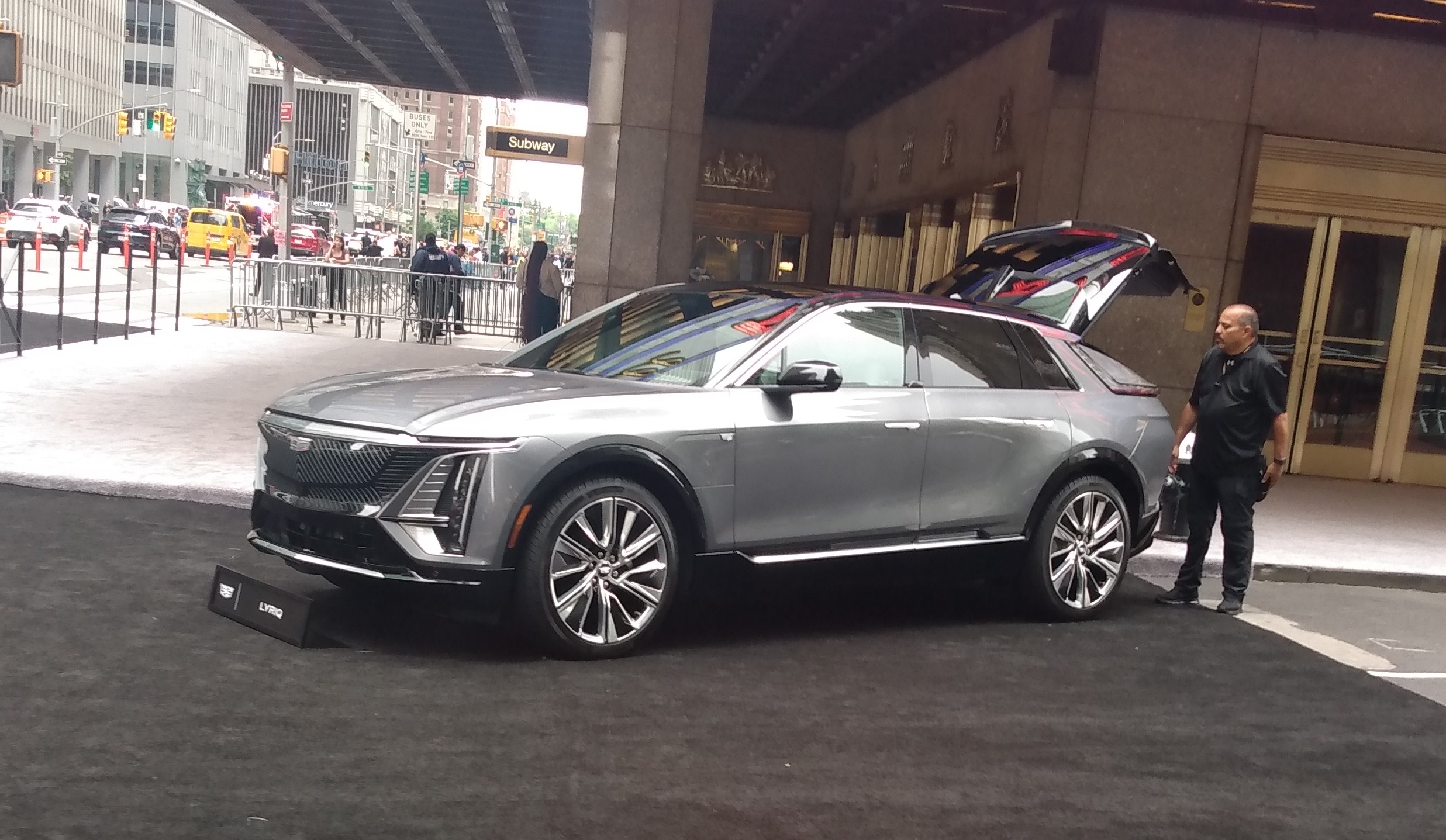
Cadillac Lyric
"There is a Cadillac on there, actually. [2013.6s] It's the Lyric rather than the Optiq. [2017.7s] And this is actually looking at used car values."
Cadillac Lyriq is an EV from Cadillac, and the hosts mention it while discussing used-car deals and used EV pricing. They contrast it with the Optiq and frame it as part of a list of “best deals,” implying the Lyriq’s market value is attractive relative to alternatives.
used car values
"And this is actually looking at used car values. [2021.2s] There's a video and we've got a written piece at edmunds.com slash news."
Used car values means what the car is selling for after it’s been owned before. For EVs, those prices can change a lot, which is why used deals can be better than you’d expect.
“Used car values” refers to what a vehicle is worth on the pre-owned market, which heavily affects whether buying an EV makes sense. For EVs especially, used pricing can differ from the original purchase price due to incentives, battery/technology perceptions, and how quickly new models arrive.
buy-out fee
"And he leased one, went back and the lease was up. [2037.0s] The buy-out fee was stupid."
A buy-out fee is the price to buy the car when your lease ends. If that fee is higher than what the car is worth, it can feel like a bad deal.
A buy-out fee is the amount you pay to purchase the vehicle at the end of a lease, typically based on the lease’s pre-set terms. If the buy-out fee is high relative to the car’s market value, it can make buying the leased EV unattractive.
use market
"And then he just went and bought another one on the use market and saved himself like 20 grand."
The “used market” just means buying a car that someone already owned. In this segment, they’re saying used EVs can cost a lot less than new ones.
The “used market” refers to buying pre-owned vehicles from dealers or private sellers rather than purchasing new from the manufacturer. The hosts use it to argue that EVs can drop in price enough to create large savings versus new pricing.

Audi e-tron
"I mean, you can get an Audi e-tron. Like that's the big one. That's the kind of Q8 size car."
The Audi e-tron is an all-electric Audi SUV. Here, they’re talking about it as a used EV option and comparing its size and price to other vehicles.
The Audi e-tron is Audi’s electric SUV line, known for packaging a battery and electric drive into a family-friendly crossover. In this segment, the hosts compare it by size to other Audi models (they mention Q8 sizing) and discuss used pricing.

Audi Q6 e-tron
"I mean, this one says Q6, not the Q8. The Q8 I drove, I like. It's now known as the Q6 e-tron. It was originally the, no, the Q6. Yeah, I think it was originally called the e-tron. Then it became the Q6 e-tron. But it's a big, it's a big like GLE X5 sized SUV."
The Audi Q6 e-tron is an electric SUV. They’re saying it’s a fairly big, practical EV, and they discuss how its name changed and what you might pay for one used.
The Audi Q6 e-tron is an electric SUV from Audi’s e-tron family, positioned as a mid-to-large crossover. In the segment, the hosts explain the naming evolution (it was originally called the e-tron, then became the Q6 e-tron) and frame it as roughly GLE/X5-sized for buyers shopping in the mid-$20k range.

BMW X5
"...he Q6 e-tron. But it's a big, it's a big like GLE X5 sized SUV. It's a nice, you know, not, you know, ..."
The BMW X5 is a luxury SUV that’s bigger than a small crossover but not a full-size truck. It’s designed for comfortable driving and family use. In the podcast, it’s used as a benchmark for how large an SUV is.
The BMW X5 is a midsize luxury SUV known for combining everyday comfort with strong performance and advanced features. It’s often used as a reference point for size and feel when comparing other SUVs. The podcast mentions it in the context of an SUV being “X5 sized,” emphasizing that general footprint and category.
certified pre-owned
"and there's the certified, or even CarMax, and there's the certified pre-owned, and it has the extended warranty built in, and now you're paying maybe 27,000 or so for it"
Certified pre-owned means the used car gets checked and approved under a program, usually with extra coverage. The hosts are saying that the warranty included with CPO can make the higher price worth it.
“Certified pre-owned” (CPO) is a program where a manufacturer (or sometimes a retailer) inspects a used car and backs it with specific coverage. In this segment, the key point is that CPO can include an extended warranty, which can make a higher purchase price feel more justified.
extended warranty
"and there's the certified pre-owned, and it has the extended warranty built in, and now you're paying maybe 27,000 or so for it"
An extended warranty is extra protection after the original warranty ends. It can reduce the risk of expensive repairs, which is why it changes how “good” a used-car deal feels.
An extended warranty is coverage that lasts beyond the standard warranty period, helping pay for certain repairs if something fails. The hosts frame it as a major factor in used-car pricing—especially when comparing cheaper cars versus ones with warranty coverage included.

Bmw I4
"It's a BMW i4, love, you know, I think that's, so they had the i4, which is just going out of production, because the iX3 is here."
The BMW i4 is BMW’s electric car that’s shaped like a 4-series. When a model is being phased out, used prices and what warranties are available can shift.
The BMW i4 is an all-electric 4-series–style sedan/coupe from BMW’s EV lineup. In this segment, it’s mentioned as a model that’s “going out of production,” which matters because pricing and availability for used buyers can change when production ends.
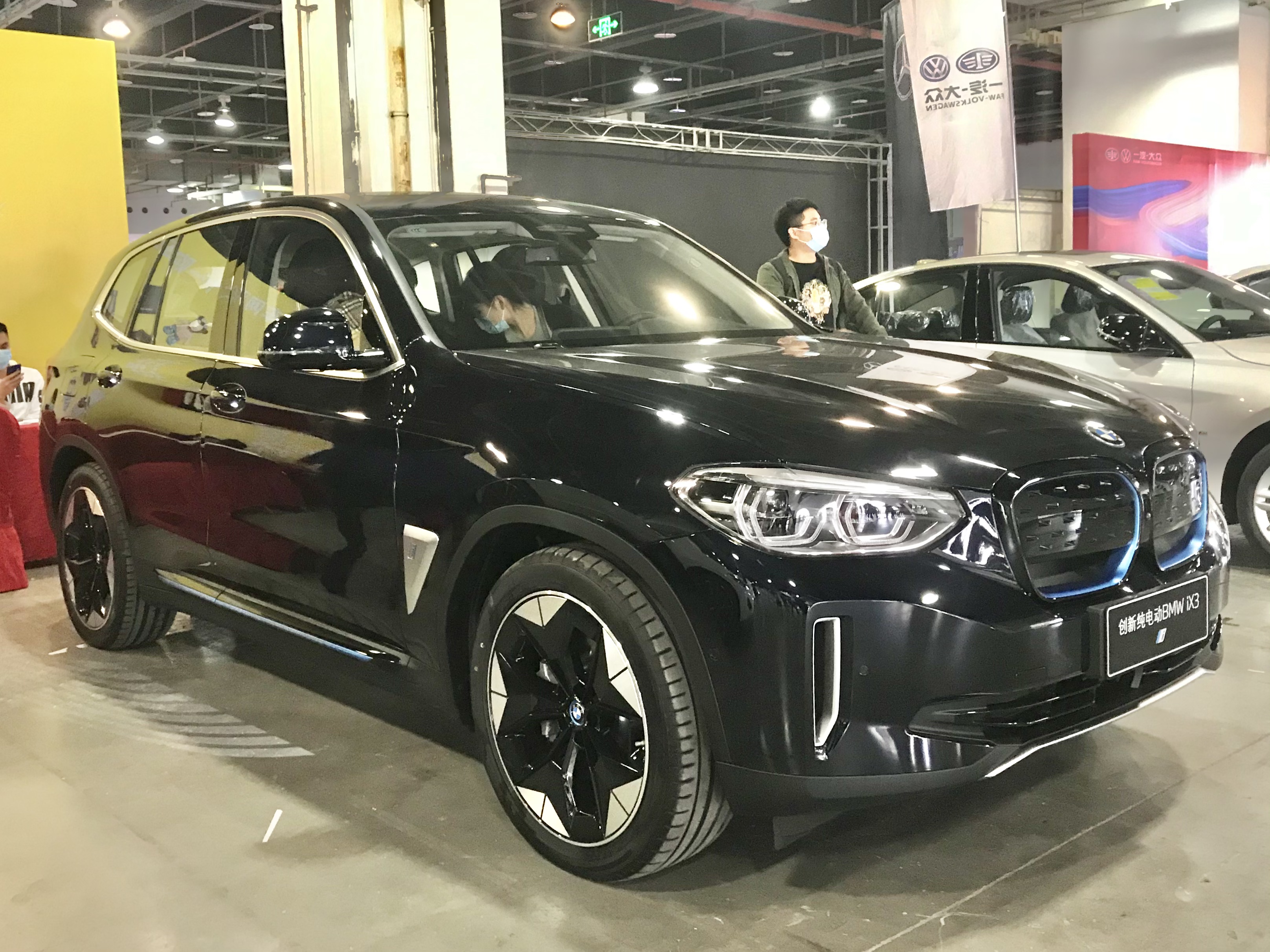
BMW iX3
"so they had the i4, which is just going out of production, because the iX3 is here. So that's the one that looks like the four series"
The BMW iX3 is BMW’s electric SUV. Here it’s used as a comparison point to explain why the BMW i4 is “going out of production,” implying BMW is shifting EV focus/availability toward the iX3.

BMW iX
"lot less controversial looking than the iX, [2176.9s] which is also on our list. ... [2192.0s] Yeah, well, that's the facelifted iX, [2193.9s] which he got a bit better looking in the second generation. ... [2206.1s] Again, now under $50,000."
The BMW iX is BMW’s all-electric SUV. The hosts say the newer “facelifted” version looks better than the earlier one, even though some people still don’t love the styling. They also point out that used prices can be under $50,000.
The BMW iX is BMW’s electric SUV built around a full-electric drivetrain, known for its distinctive styling and upscale interior. In this segment, the hosts discuss the iX’s looks as polarizing and note that the facelifted version improved its appearance. They also mention used pricing dropping under $50,000, which is relevant to the “used EV” buying question.

BMW i5
"i5 is another car that we really like, you know, [2213.3s] looks like a five series, basically is a five series, [2215.7s] but it's electric, Cadillac Lyric."
The BMW i5 is an electric car that’s meant to be like BMW’s 5 Series, but powered by electricity. The hosts say it looks like a regular 5 Series and that used prices can make it cheaper than the sticker price. It’s discussed as part of used-EV value.
The BMW i5 is BMW’s electric version of the 5 Series concept, aiming to deliver the feel and size of a traditional executive sedan with an EV powertrain. In this segment, the hosts emphasize that it “looks like a five series” and discuss how used-market pricing can reduce the effective cost. That’s central to the “is now the time to buy used EVs?” theme.
sticker price
"Yeah, another one. You take $25,000 off the sticker price in the used market. And the bit that, I know we talked about this on the show before I got too repetitive, but you know, the fear of battery degradation, it's not an iPhone. ... I mean, 25 grand from Ioniq 5. Those are half price off sticker."
Sticker price is the manufacturer’s listed retail price (often shown on the window sticker) before discounts. The hosts use it to frame how much cheaper an EV can be in the used market—citing roughly $25,000 off—and how aggressive lease deals can effectively lower the cost of getting into a new EV.
battery degradation
"And the bit that, I know we talked about this on the show before I got too repetitive, but you know, the fear of battery degradation, it's not an iPhone. I keep saying this, it's not an iPhone. It's not like the battery is dead after a couple of years. You're not really going to notice a significant drop off in range."
Battery degradation means an EV battery slowly loses some of its ability to store energy as it ages. The point here is that the battery usually doesn’t become useless quickly, so you shouldn’t expect a dramatic range drop after just a few years.
Battery degradation is the gradual loss of a lithium-ion EV battery’s capacity over time, which can reduce how far the car can drive on a charge. The hosts argue that, unlike a phone battery, EV batteries aren’t expected to “drop dead” after only a couple of years, so range loss may be less noticeable than people fear.

Hyundai Ioniq 6
"Ioniq 5, yeah. Yeah, Ioniq 5. Ioniq 6. I mean, 25 grand from Ioniq 5."
The Hyundai Ioniq 6 is an all-electric sedan. In this discussion, it’s mentioned as another EV you can potentially buy for much less than you’d expect based on the sticker price.
The Hyundai Ioniq 6 is a battery-electric sedan known for its efficient shape and long-range focus. The hosts bring it up alongside the Ioniq 5 to illustrate that multiple Hyundai EVs are seeing large discounts relative to their original sticker prices.
lease deals
"So I would look at the lease deals, because the lease deals on a new one are so aggressive at the moment. They are still going to balance that out. Cadillac as well. Like you said, you just got one. So I would look at Cadillacs because the lease deal,"
Lease deals are promotions that let you drive a car for a few years while paying a monthly amount, instead of buying it outright. They’re saying the lease offers on new EVs are currently very good, which affects whether used is the better deal.
Lease deals are financing offers where you pay to use a car for a set term and mileage, typically with a lower monthly cost than buying. The hosts note that current lease deals on new EVs are “so aggressive” that they can influence the best time to buy—balancing discounts in the used market against what you can get by leasing new.

Hyundai Ioniq 5
"you know, used for cash, you know, and you look at it, okay. So 20, 25 grand safe from Ioniq 5, three years time, how much is it really going to go down?"
The Hyundai Ioniq 5 is an electric vehicle. The discussion here is about how much its price might fall after a few years, and how that compares to leasing costs.
The Hyundai Ioniq 5 is a popular battery-electric crossover, and its used pricing is heavily influenced by how quickly EV values drop early on. In this segment, the hosts focus on how much an Ioniq 5 might lose value over a few years versus what you’d pay under a lease.
depreciation
"The rate of which it loses its value starts to slow down. When, you know, when the first three years you've already knocked off 50%,"
Depreciation just means how much the car’s price falls as it gets older. They’re saying EVs may lose value fastest at first, and then the drop might slow down after a few years.
Depreciation is how much a vehicle’s value drops over time, which is especially important for used EVs where pricing can change quickly. The hosts argue that the rate of value loss for these EVs may slow after the first few years, affecting whether buying used is a good deal.

Tesla Model
"...ou've got to think if you're buying like a model, Tesla Model 3, which is also on the list at the low 20s, you ..."
The Tesla Model Y is an electric SUV. It runs on electricity instead of gasoline. The podcast brings it up as one of the Tesla models people might shop for when looking at EV prices.
The Tesla Model Y is a compact electric SUV that’s widely discussed because it sits in the popular “mainstream” EV segment. It’s often compared on price and availability, especially when people talk about buying an EV around the low-$20k range. In the podcast, it’s referenced as part of the list of Tesla models someone might consider.

Tesla Model 3
"But you've got to think if you're buying like a model, Tesla Model 3, which is also on the list at the low 20s, you know, is it really going to be worth like 10 grand?"
The Tesla Model 3 is an electric car. They’re debating whether its used price will drop as much as some people expect over the next couple of years.
The Tesla Model 3 is a mainstream electric sedan, and it’s often used as a benchmark for EV depreciation because many buyers compare it across lease and cash purchase scenarios. Here, the hosts question whether a Model 3 bought in the low-$20k range could realistically be worth only about $10k after a few years.
fast charger
"I don't charge on the fast charger because, you know, someone says that fast charging it lowers the battery life. So we, you know, we do a slow charge."
A fast charger is a quicker way to charge an EV. It can be harder on the battery if you use it all the time, so some owners prefer slower charging for everyday use.
A fast charger is an EV charging setup that delivers higher power than standard charging, allowing quicker top-ups. The tradeoff is that frequent high-power charging can increase battery stress and heat, which is why some owners avoid using fast charging as a default.
battery life
"someone says that fast charging it lowers the battery life. So we, you know, we do a slow charge. But there are guys and girls, presumably, that in that group that drive these groups, most of the guys are,"
Here, “battery life” means how long the EV battery stays healthy and continues to hold a lot of charge. The discussion compares people who avoid full charges versus people who charge to 100% often and say their battery still looks fine.
In EV talk, “battery life” usually refers to how long the battery can keep delivering usable capacity before it noticeably degrades. This segment contrasts owners who limit charging (e.g., never above 80%) with others who charge to 100% repeatedly and claim their battery health hasn’t dropped.
battery health
"I'm at 100,000 miles. I charge 100% every single time. And my battery health is hasn't diminished at all. Like I'm 100,000 miles into this truck, 100% charging."
Battery health is a way to tell how good the EV battery is over time. The car may show it on a screen so you can see whether the battery is degrading.
Battery health is an EV’s measured or estimated condition—often tied to remaining capacity and internal resistance. Many EVs provide a dashboard readout or diagnostic screen so owners can track whether degradation is happening over time.
Recurrent
"company called Recurrent, which looks at, has a lot of this data. Maybe we should get the, I know the CEO, well, we should get him on the show."
Recurrent is a company that studies used electric cars. They use real-world data to understand how EV batteries wear out over time.
Recurrent is a company that analyzes used EV data to estimate how battery health changes over time. In this segment, they’re cited as having data that supports the idea that EV degradation can be relatively minimal under typical use.
time versus mileage
"And also it can be a construct of time versus mileage. It's not always mileage that's the issue. You know, there's some moments that actually time is more of a factor than mileage."
This is the point that EV battery wear isn’t just about miles driven. How long the car sits and how you charge it can also affect battery health.
The idea of “time versus mileage” is that EV battery wear isn’t driven only by how many miles you drive. Calendar time, charging habits, and how the battery is used can matter as much or more than odometer mileage for battery aging.
charging overnight
"the chargers are all pretty slow. So you either charge it all day or you charge it overnight. And I usually throw it on the charger when I'm down to between like 30 to 40%, 35, 36% just because I know"
Charging overnight means plugging in at home (or wherever you park) and letting the battery charge slowly while you’re asleep. It’s a common workaround when fast chargers aren’t convenient.
Charging overnight usually means using slower residential charging to top up the battery while you sleep. The hosts connect it to real-world constraints like limited charging speed in an apartment complex, which changes how EV owners manage daily charge levels.
30 to 40%
"And I usually throw it on the charger when I'm down to between like 30 to 40%, 35, 36% just because I know"
“30 to 40%” is how full the battery is. The host is saying they plug in when the battery isn’t too low and not too full, which can be easier on the battery.
The “30 to 40%” figure refers to state of charge (SoC), the battery’s remaining energy level. Charging around mid-range SoC is often discussed because it can reduce time spent at very high or very low battery levels, which may help limit battery stress.
trickle charge
"But I wonder if that's slow, not a trickle charge. [2599.4s] It's like seven kilowatts an hour. [2603.9s] So it definitely takes some time."
A trickle charge is a slow way to charge. The idea is that charging slowly may be easier on the battery than charging quickly.
A trickle charge is a very low-rate charging method that adds energy slowly. In EV discussions, the point is usually whether slow charging is gentler on the battery than faster charging, especially for overnight or convenience charging.
kilowatts an hour
"But I wonder if that's slow, not a trickle charge. [2599.4s] It's like seven kilowatts an hour. [2603.9s] So it definitely takes some time."
They’re talking about how fast the charger can put energy into the EV. Faster chargers add energy quicker, but the exact time depends on the car’s battery and the charger’s speed.
“Kilowatts an hour” is being used here to describe charging power/charging rate (how fast energy goes into the battery). In EV charging talk, people usually mean kilowatts (kW) for power, and the time it takes depends on the battery size and the charger’s kW output.
battery longevity
"And I wonder if that contributes to battery longevity [2613.3s] more than just charging to 100%. [2615.6s] Like which one hurts more?"
Battery longevity means how long the EV battery lasts before it starts losing range. Charging habits can influence how quickly the battery ages.
Battery longevity is how long an EV battery can keep good capacity and performance before it degrades noticeably. Charging habits—like how often you charge to 100% and how quickly you charge—can affect long-term wear.
fast charging
"There is evidence that fast charging where you're trying to stuff as many electrons in as quickly as possible and charging to 100% has some impact."
Fast charging is when you charge an EV quickly using a high-power charger. It can be harder on the battery than slower charging, especially if you keep charging all the way to 100%.
Fast charging is a way to recharge an EV at a high power level, so the battery can accept energy quickly. Because the battery has limits on how fast it can take charge, fast charging can affect battery wear and charging behavior—especially when pushing toward very high state-of-charge like 100%.
Walmart parking lot
"There's a couple of those big chargers that I've been at, in a Walmart parking lot or something. And then you plug in and you hear that thing click on and fans start kicking in."
They’re talking about public fast chargers you might find at places like retail parking lots. When you plug in, the charger starts up and you can hear cooling fans.
This is a reference to public fast-charging locations, often installed at retail parking lots for convenience. The key detail is the “big chargers” experience—plug in, then the equipment starts running cooling fans and control systems.
fans start kicking in
"And then you plug in and you hear that thing click on and fans start kicking in. You're like, I don't think I want to stand next to this thing."
When you plug into a fast charger, it often turns on cooling fans. That’s normal because the charger gets hot while delivering high power.
EV fast chargers use active cooling (fans and sometimes liquid cooling) to keep power electronics within safe operating temperatures. The audible fan start is a normal sign the charger is powering up and managing heat during high-power charging.

Ferrari 550
"Avaludo and Superleggera doing their thing on the Ferrari 550 and even groups like Hennessey still doing full c..."
The Ferrari 550 Maranello is a high-end sports car made by Ferrari. It’s designed for fast driving and comfortable long trips. The podcast brings it up because people often modify or build special versions based on it.
The Ferrari 550 Maranello is a V12-powered grand tourer from Ferrari, built for high-performance long-distance driving. It’s a notable model because it represents a classic era of naturally aspirated V12 performance. The podcast mentions it alongside other tuning and coachbuilding-style efforts, highlighting its popularity as a platform for special builds.
Spiker
"So Spiker is coming back. [2808.5s] Spiker? [2810.4s] Goodness, the Dutch supercar manufacturer. ... [2860.7s] The CEO, Victor Muller or Victor Mueller, [2864.4s] I'm not exactly sure how to pronounce his name, [2866.6s] he is the one spearheading this again."
Spiker is a small Dutch company that makes exotic supercars. The hosts say it’s returning and that its cars have a very unusual, aerospace-style look inside, with parts of the mechanical system visible.
Spiker is a Dutch supercar brand known for low-volume, coachbuilt-style cars. In this segment, the hosts describe Spiker’s distinctive design language—showing mechanical linkages and using aerospace-inspired interior details—plus the idea that the company is “coming back” under CEO Victor Muller/Mueller.
Pagani
"[2835.1s] Yeah, and like expose mechanical bits and linkages, [2839.4s] kind of like a Pagani on the interior. [2841.9s] And like engine turned dash pieces, [2846.8s] very aerospace influenced."
Pagani is an Italian supercar brand famous for extremely high-end interiors and visible engineering details. The hosts compare Spiker’s interior vibe to Pagani’s—specifically the way mechanical components and linkages can be showcased rather than hidden.
mechanical bits and linkages
"[2835.1s] Yeah, and like expose mechanical bits and linkages, [2839.4s] kind of like a Pagani on the interior. [2841.9s] And like engine turned dash pieces, [2846.8s] very aerospace influenced."
“Linkages” are the physical moving connections that make one part move another. The hosts are saying Spiker shows these mechanical parts instead of covering them up.
In automotive design, “linkages” are mechanical connections that transfer motion between components (for example, between controls and actuators). The hosts are highlighting a design choice where these parts are visible, emphasizing mechanical character rather than hiding it behind panels.
engine-turned dash pieces
"[2839.4s] kind of like a Pagani on the interior. [2841.9s] And like engine turned dash pieces, [2846.8s] very aerospace influenced. [2850.6s] The legacy of that company goes back to 1880, I think."
“Engine-turned” is a fancy way of finishing metal so it has a crisp, repeating pattern. On the dashboard, it’s mainly for looks—like a detailed, premium texture.
“Engine-turned” refers to a decorative metal finishing technique that uses fine, repetitive patterns—often resembling guilloché or machining marks. On a dashboard, it’s used to create a high-end, watch-like visual texture that also signals craftsmanship.
Audi V8
"You know, the one they brought to us was a funky cool car and had an Audi V8 in it. It was like 400 horsepower."
They’re talking about an Audi V8 engine—an engine with eight cylinders arranged in a V shape. They mention it because it helps explain why the car felt exciting and desirable.
An Audi V8 refers to a V8 engine design associated with Audi. In this segment it’s used to describe why the car they saw was “funky cool,” with the hosts citing a power figure (about 400 horsepower) to emphasize its appeal.
auctions
"But now that they've been out of business for years, the Spiker has really been catching on at the auctions. Like it's pulling good money at the auctions."
An auction is where multiple buyers bid against each other to buy a car. The hosts are saying Spiker cars are selling for strong prices there.
Auctions are marketplaces where cars are sold to the highest bidder, often used for rare or collectible vehicles. In this segment, the hosts argue that Spiker cars are “pulling good money” at auctions, which signals strong collector demand.
Request an Explanation
Heard something you'd like explained? We'll add it to this episode.
Sign in to request explanations for terms you heard.
Want to learn more?
Browse our glossary for plain-English explanations of automotive terms, jargon, and concepts.
Help improve this episode
See something that's not quite right? Our annotations are AI-generated and can sometimes miss the mark. Click the flag icon on any annotation to suggest a correction.