

Dodge Ram
The Dodge Ram is a pickup truck, meaning it’s built for hauling and tough driving. The podcast focuses on the Ram TRX, which is the more extreme, performance-oriented version. It’s brought up because it’s a big, high-impact truck model.

Ram TRX
The Ram TRX is Ram’s super-powerful pickup truck. It’s known for having a big V8 engine and being able to handle rough driving, not just the street.
EV
EV means electric vehicle. Instead of running on gasoline like most cars, it uses electricity from a battery to move the vehicle.

Dodge Charger
The Dodge Charger is a famous performance car model from Dodge. The hosts are using it as an example of how the brand’s engine choices have been changing over time.
V8
A V8 is a type of engine with eight cylinders. It’s often associated with strong power and sound, and the hosts are talking about brands bringing that back.
crash testing
Crash testing is how car makers check safety by testing what happens in a crash. The hosts are saying adding a bigger engine can change the car’s structure, so safety testing becomes a bigger job.

Challenger Hellcat
The Challenger is a muscle car, meaning it’s built for strong acceleration and performance. The episode mentions it with a Hellcat engine, which is the high-power version. It comes up because it represents the loud, fast side of muscle cars.
Hellcat engine
The Hellcat engine is a super-powerful V8 used in certain Dodge performance cars and trucks. The hosts are saying the Rumblebee version uses that big, high-output engine.

F-150 Raptor
The Ford F-150 is a popular large pickup truck. The podcast talks about performance versions of it, like an R-style model and the TRX idea. It’s mentioned because the F-150 is the starting point for those higher-performance trims.
Hemi
“Hemi” is an engine design where the combustion chambers are shaped like a half-sphere. The hosts are saying the truck got the Hemi back, and that’s what people were hoping for because it changes how the truck performs.
zero to 60
Zero to 60 is how fast a car or truck accelerates from a standstill to 60 mph. It’s a simple test number people use to compare acceleration between different versions of a vehicle.
straight six
A straight six is an engine with six cylinders in a straight line. They’re comparing it to the V8 and saying the straight six can be good, but they want more noticeable performance differences.
powertrain
Powertrain refers to the vehicle’s main mechanical components that generate and deliver power—typically the engine (or motors), transmission, and drive system. Here, they’re talking about how the truck’s powertrain choices create the “real differentiation” people want.
Redbud Motocross Park
Redbud Motocross Park is a dirt track in Michigan where motocross bikes race. They used it to test the truck on rough ground, but the course was small so they couldn’t fully test its top speed.

Renault Wind
The Renault Wind is a small car designed to feel fun and easy to drive. In the episode, it’s mentioned in a moment about letting a vehicle rev or accelerate. The point is about how it behaves when you push it.
0.7 quicker
They’re talking about how much faster the truck is from a stop to 60 mph. A difference of less than a second can still be noticeable and usually means better launch and power delivery.

Raptor R
The Raptor R is Ford’s most extreme off-road pickup. They’re using it as a comparison point to show how the Ram TRX stacks up in speed and power.
throttle response
Throttle response is how fast the truck “feels” like it’s reacting when you hit the gas. If it’s improved, the power comes on a bit more quickly and predictably.
stiffer springs
Springs are what support the truck’s weight. Stiffer springs help the truck stay higher and handle better when there’s more weight up front.
dampers
Dampers are the shock absorbers. They control how the truck moves when it hits bumps so it doesn’t bounce uncontrollably.
Fox shocks
Fox Shocks is a company that makes off-road shock absorbers. The hosts mention it because it’s popular and widely recognized in off-road racing culture.
Bilstein
Bilstein makes shocks and suspension parts. The hosts are praising their off-road shock design for handling hard impacts and jumps.
remote reservoirs
Remote reservoirs are extra shock-fluid containers placed away from the main shock. They help the shocks stay consistent when you’re hitting bumps hard over and over.
secondary bump stop
A bump stop is like a safety stop for the suspension. A secondary bump stop means there’s an extra layer of protection when the suspension compresses fully, improving control during big hits.
bump stops
A bump stop is a cushion/safety limit that prevents the suspension from bottoming out. It helps keep the truck from getting damaged when you hit big bumps or land hard.
suspension travel
Suspension travel is how far the suspension can move up and down. If it has enough travel, the truck can soak up big bumps and landings instead of getting jolted or bottoming out.
rebound
Rebound is how the suspension springs back after it gets pushed down. If it rebounds too quickly, the truck can bounce and lose grip right when you need it most.
over kick the landing
Over-kicking the landing means the truck bounces too high after it lands. That bounce can mess up your next move, like turning or accelerating.
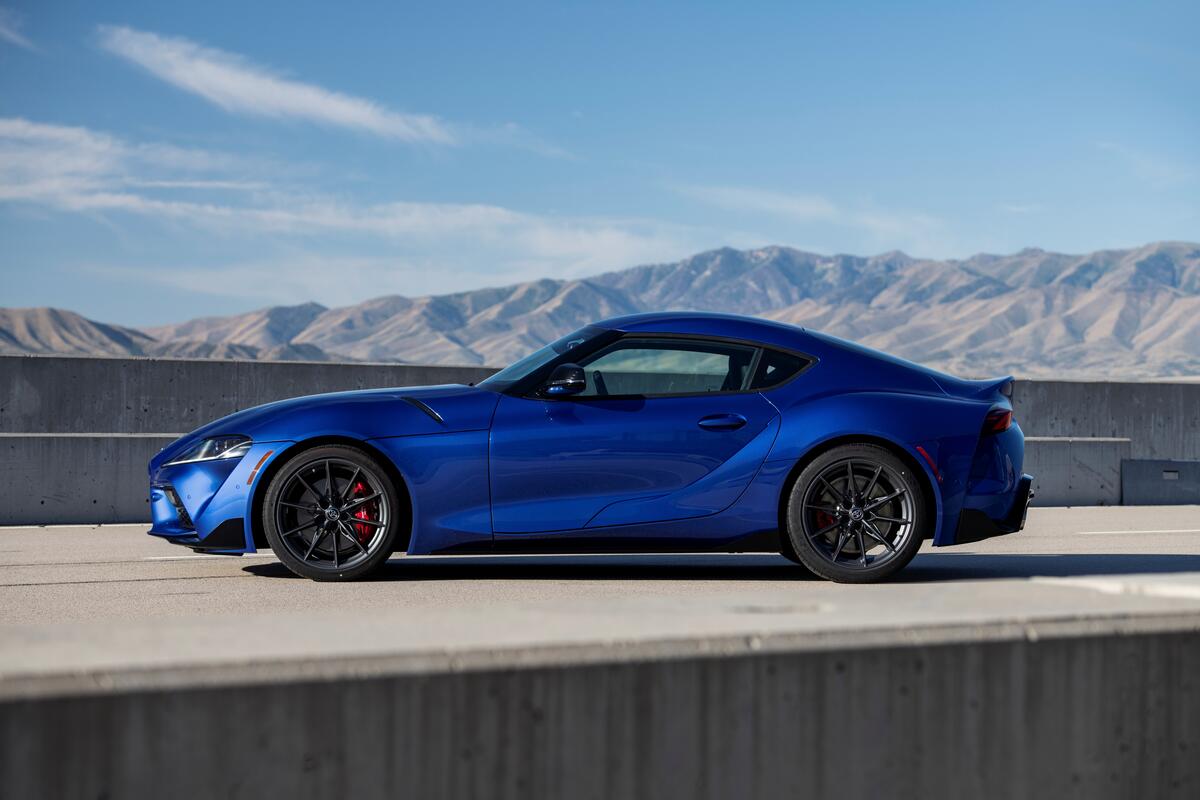
Toyota A90
The Toyota Supra is a sports car designed to be fast and fun to drive. In the episode, it’s mentioned during a test where the driver had to slow down quickly right after a jump. That shows how the car handles demanding situations.
hard on the brakes
“Hard on the brakes” describes aggressive braking force. In off-road jump-to-turn situations, hard braking can compress the suspension and shift weight, which affects steering grip and whether the truck can rotate into a tight corner.
lose traction
Lose traction means the tires can’t grip the road/dirt anymore. When that happens, the truck can start sliding instead of staying pointed where you want.
go sideways
“Go sideways” means the truck starts sliding sideways instead of staying pointed the right way. It usually happens when the tires lose grip during a fast transition like landing and turning.
adjustable suspension
Adjustable suspension means the truck can change how stiff or soft it rides. That helps it handle rough off-road terrain without beating you up on the highway.
launch control
Launch control is a feature that helps the vehicle accelerate as hard as possible from a stop. It coordinates things like power delivery and traction so the truck can get moving quickly without spinning the wheels as much.
off-road mode
An off-road mode is a button or setting that changes how the truck behaves for dirt, rocks, and bumps. It usually makes traction and stability systems less restrictive so you can move more smoothly off-road.
Baja mode
Baja mode is an off-road setting meant for desert racing conditions—loose ground and lots of bumps. It helps the truck apply power and traction in a way that’s easier to control when the surface isn’t grippy.
on-road compliance
On-road compliance is how comfortable and smooth the truck feels over normal road imperfections. It’s basically how well the suspension absorbs bumps while still keeping the tires planted.
sidewall
The sidewall is the part of the tire that flexes between the road and the wheel. A taller/more flexible sidewall can make the ride smoother because it absorbs more of the bumps.
heated and ventilated front seats
Heated and ventilated seats do two things: they warm you up and they also blow air to cool you down. That makes the cabin more comfortable in both cold and hot weather.
heated and ventilated seats
Heated and ventilated rear seats let back-seat passengers warm up or cool down too. It’s a nicer feature than just having it in the front seats.
graphics package
A graphics package is an add-on that gives the vehicle extra visual styling—like stripes or decals. It’s basically the “look” option, and it can cost extra.
gloss black panels
Gloss black paint is a shiny black finish. It reflects light, so it usually looks more dramatic than a flat or matte black.
two-tone
“Two-tone” just means the truck has two different paint colors. Usually one color is on the roof and another is on the rest of the body.
red racing stripe
A red racing stripe is a bold stripe on the vehicle, usually meant to look sporty. It’s often part of a styling package.
beadlock wheels
Beadlock wheels are special rims that help keep the tire securely attached to the wheel. They’re commonly used for off-roading, where you may run lower tire pressure to get better grip.
titanium inserts
Titanium inserts are small pieces made from titanium. Titanium is strong and resistant to corrosion, and it can also help keep things lighter.
SRT badge
The SRT badge is a label that tells you a car was tuned or developed for performance. Here, they’re saying the company wants that badge to show up more often across different brands.

Jeep Grand Cherokee
The Jeep Grand Cherokee is a popular SUV model. They’re talking about the possibility of an SRT-branded performance version of it.
Ford F150
The Ford F-150 Lobo is a sportier version of the F-150 pickup. The discussion is basically saying it’s not as serious a performance truck as the Ram TRX.

Ford Lobo
The Ford Lobo is a pickup truck model name. In the podcast, it’s mentioned in a way that suggests it’s not mainly focused on being a performance truck. It’s used to talk about what kinds of truck options are out there.
Ford Performance Supercharger
A supercharger is a device that helps the engine breathe better by pushing extra air in. The “Ford Performance” version is an aftermarket/performance kit meant to make the truck faster than stock.
leather interiors
Leather interior means the seats and some cabin surfaces are covered in leather instead of fabric. It’s a comfort-and-luxury option that can affect how “complete” a trim feels.
upgraded sound system
An upgraded sound system is a better audio setup than the basic one. It usually means clearer sound and stronger speakers.
quarter mile
The quarter mile is a standard straight-line race distance used to measure how fast a car or truck accelerates. Faster times generally mean stronger acceleration.
0 to 60
“0 to 60” is how fast a car can go from standing still to 60 miles per hour. Lower numbers mean quicker acceleration.

Lotus Excel
The Lotus Excel is a sports car built for speed and driving feel. The episode talks about a track where its performance on a straightaway doesn’t last past a certain distance. That’s why it’s mentioned—because it shows how the car performs in a measured test.
brake kits
A big brake kit is an upgrade that helps the car stop better and handle repeated hard braking. It usually needs enough wheel clearance to fit the larger parts.
six-piston
“Six piston” describes the brake caliper having six pistons. That can help the brakes clamp more evenly for stronger stopping, especially when you brake hard multiple times.
Johnson Valley
Johnson Valley is a popular off-road spot where people test trucks on rough desert terrain. It’s a good place to see how well off-road trucks handle real obstacles, not just smooth roads.
instrumented wise
“Instrumented” testing means measuring performance with tools (like data loggers and timing equipment) rather than relying only on seat-of-the-pants impressions. When they say the TRX will outperform “instrumented wise,” they’re implying the measured results—like acceleration, speed, or consistency—should be noticeably better.
competitive nature
They’re basically saying car companies compete by trying to beat each other. That competition can make newer cars better and more exciting for buyers.
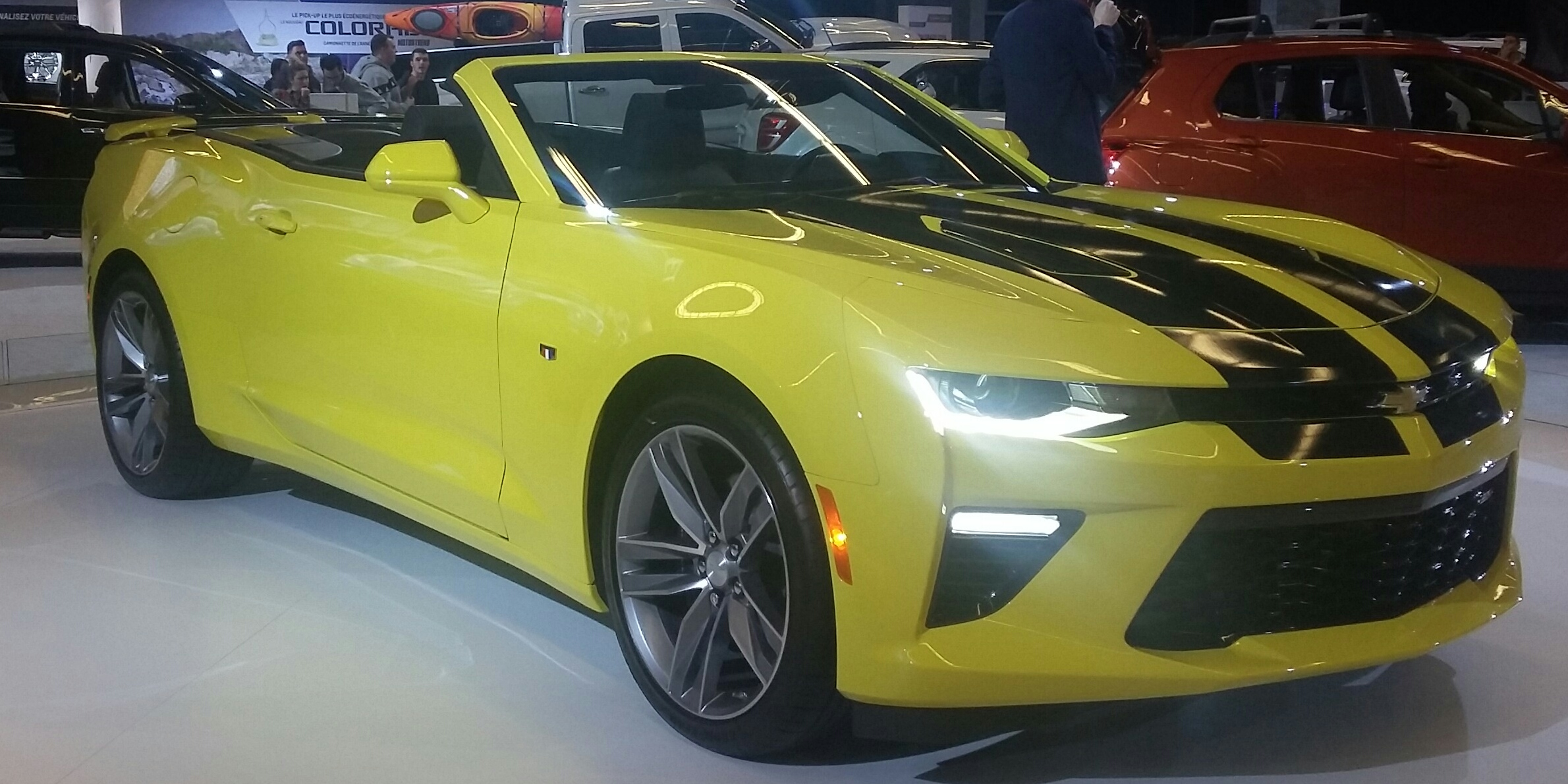
Chevrolet Camaro
The Chevrolet Camaro is a sporty, performance-focused car. The podcast talks about wanting a new Camaro because it would keep competition in the muscle-car category. It’s mentioned as a way to bring more variety and rivalry to the market.

Chevrolet Corvette
The Chevrolet Corvette is a sports car built for high performance. The episode mentions that a lot of work and engineering has gone into its design over time. That’s why it’s discussed when people talk about how serious the brand is about performance.

Mustang
The Ford Mustang is a long-running pony car that’s used as a benchmark for pricing and brand identity in the U.S. market. Here, it’s specifically referenced as the “price range gap” GM would try to fill with a new Camaro.
modular platform
A modular platform means car makers design a shared “base” that many different models can use. It helps them build different body styles without starting from scratch every time.

Ford Gt
The Ford GT is Ford’s high-end supercar. The discussion is about whether Ford should rely on a big “halo” car versus using Mustang racing and the Mustang platform to strengthen the brand.

911 GT2
The Porsche 911 GT2 is a very track-oriented version of the 911. The host is using it as an example of how Porsche offers multiple performance variants that reinforce the brand.

Lexus ES
The Lexus ES is a luxury sedan from Lexus. Here, they’re talking about the ES coming in different powertrain versions—hybrid and a fully electric version—so it’s not just the same car with a small tweak.
EV version
An EV version is a fully electric car. Instead of using gas like a normal car, you charge its battery to drive.
hybrid version
A hybrid uses two kinds of power—an electric motor and a gas engine. It can switch between them or use both, which usually helps with efficiency.

Lexus LS
The Lexus LS is Lexus’s top, bigger luxury sedan. In this conversation, it’s brought up as the “real” Lexus choice compared with the ES.

BMW 7 series
The BMW 7 Series is BMW’s top big luxury sedan. They mention it to show which kind of high-end buyers the Lexus ES is (or isn’t) competing with.

Mercedes S class
The Mercedes S-Class is Mercedes’s top luxury sedan. They bring it up as an example of the big, premium competitor to the Lexus ES.
all-wheel drive hybrid
An all-wheel-drive hybrid sends power to all four wheels. That can help the car grip better, especially on wet or slippery roads.
single motor electric
A single-motor EV uses just one electric motor to move the car. It’s different from all-wheel-drive EVs that use two motors for extra traction.

Toyota Grand Highlander
The Toyota Grand Highlander is a three-row SUV, and the hosts use it as a real-world size benchmark for the newer Lexus ES. They’re emphasizing that the ES’s length is now comparable to a large family SUV, which is unusual for a sedan.
three row SUV
A three-row SUV is an SUV with seats in three rows, so it can carry more people. When you fold the seats down, it also creates a lot more room for luggage.
cubic feet
Cubic feet is a way to measure volume—how much stuff a space can hold. Here, they’re using it to describe how much cargo room you get when the seats are folded.
executive seating package
An executive seating package is a set of upgraded features for the seats. Here it means the rear seats get extra comfort stuff like heating, cooling, and massage, plus a fold-out footrest.
heated ventilating
Heated seats warm you up, and ventilated seats blow air to cool you down. It’s a comfort feature you’ll usually find on nicer trims.
massaging seats
Massaging rear seats are seats with built-in motors that create a massage effect for passengers. It’s usually included on higher-end comfort packages.
zero to 75
Zero-to-75 measures how quickly a car accelerates from a stop to 75 mph. It’s a way to see how strong the car feels when you’re getting up to highway speeds.

BMW i5
The BMW i5 is BMW’s electric sedan. Here they’re comparing the single-motor version’s acceleration and overall efficiency versus other EVs, to show how the setup affects real driving feel.
single motor versions
A single-motor EV uses one electric drive unit to move the car, usually powering one axle. Compared with dual-motor setups, single-motor cars often trade some acceleration potential for efficiency and cost, which can show up in 0–60 and range/charging discussions.

A6 Sportback Etron
The A6 e-tron is an electric Audi car. The podcast is talking about how fast it can accelerate from a stop, especially in the 0–60 mph range. It’s mentioned because those acceleration results are part of how EVs are compared.

Audi Etron
This is Audi’s electric A6 Sportback. The hosts are using it as a comparison point to show that the single-motor version can be quicker than the Lexus ES EV in acceleration tests.
Lexus ES EV
This is Lexus’s electric version of the ES. In this discussion, the hosts are basically saying it’s not as fast and doesn’t go as far as you’d expect, especially compared with other EVs they’re talking about.
charging speeds
Charging speeds describe how quickly an EV can add energy during charging, typically influenced by battery size, battery temperature, and the car’s charging hardware/software. This segment suggests the Lexus ES EV also doesn’t lead on charging performance compared with competing EVs.
dual motor version
Some EVs have two electric motors instead of one. That can make them faster, but it can also reduce range because the car is using more energy to move and accelerate.
floaty
“Floaty” means the car feels like it’s kind of floating over bumps instead of staying planted. It’s usually a sign the suspension isn’t controlling the car’s motion very tightly.
battery
In an EV, the battery is the big heavy pack that stores electricity. Because it’s heavy, it can change how the car rides and handles compared to a lighter hybrid.
over sprung
“Over sprung” means the suspension springs feel too stiff. That can make the ride feel less smooth, particularly on rough pavement.
TNGAF
TNGAF is a Toyota vehicle platform that multiple cars share. Because it wasn’t designed specifically for EV batteries, the EV version has to fit the battery into a layout that was originally meant for other powertrains.
dedicated EV platform
A dedicated EV platform is a car design built specifically for electric cars and their batteries. If the EV is based on a platform meant for other powertrains, it can be harder to fit the battery perfectly, which can affect how the car rides.
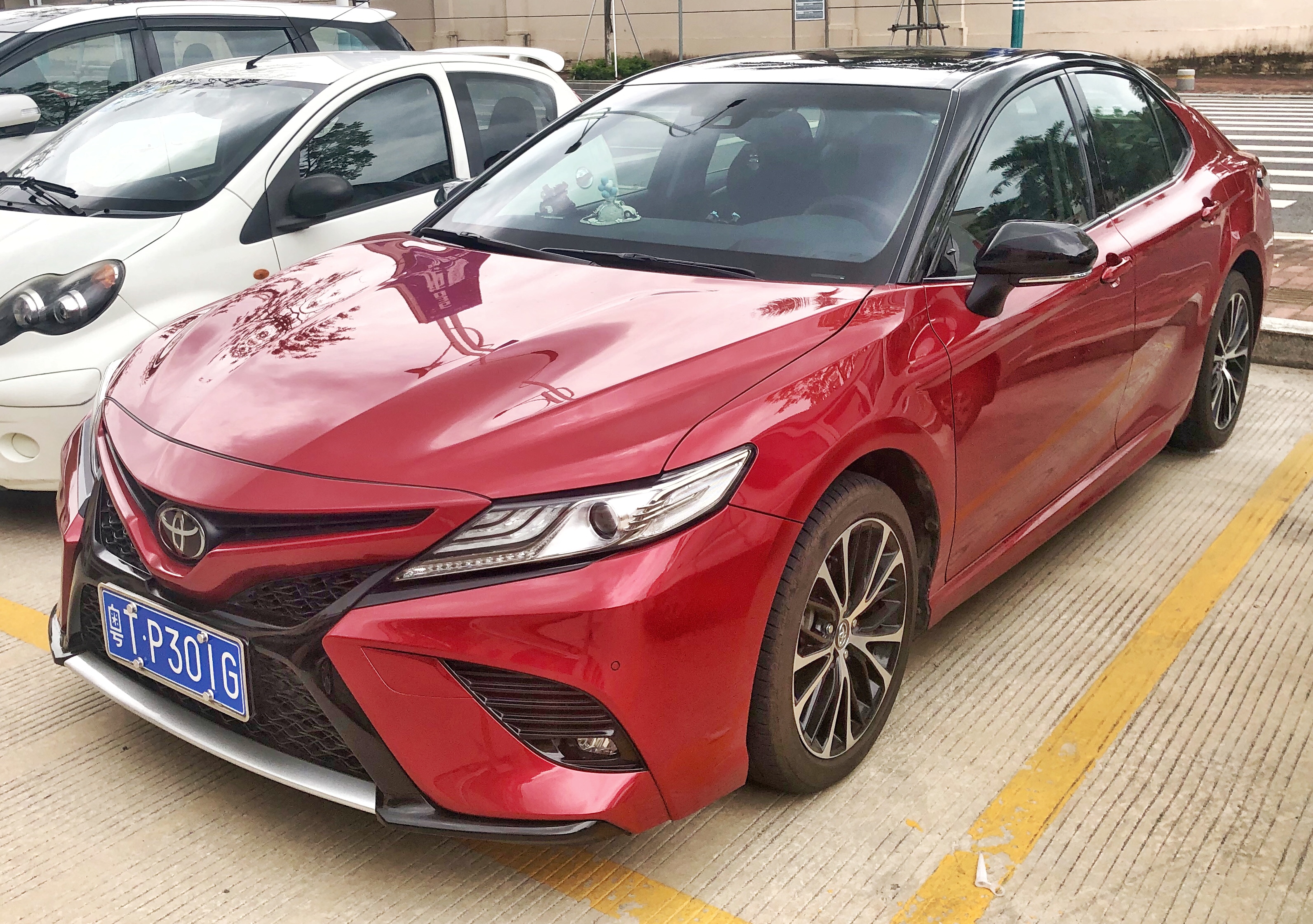
Toyota Camry
The Toyota Camry is a regular, everyday car that’s built to be comfortable and practical. The episode mentions that similar design and parts can show up in other Toyota vehicles too. That’s why it’s brought up in a conversation about shared engineering.
BZ
The Lexus BZ is mentioned as another EV with a similar battery-pack setup. The idea is that the car’s platform limits battery size, and battery development is expensive, so manufacturers reuse what they can.
development cost
“Development costs” means the money and effort required to create new battery technology. Because it’s expensive, companies often reuse battery designs instead of starting from scratch every time.
electric motor
Electric motors are the parts that use electricity to spin the wheels. Because they respond instantly, they make the car feel smooth when you start moving.
system horsepower
System horsepower is the total power the car can make when all its power sources work together. It’s the combined number you see in specs for hybrids and EVs.
front motor
A front motor is the electric motor that powers the front wheels. If it provides most of the power, the car’s driving feel is mostly determined by what the front wheels are doing.
rear axle
The rear axle is what connects the drivetrain to the rear wheels. If the car has a rear motor, it can send power to the rear wheels through the rear axle.
miles per gallon
MPG tells you how far the car can go on a gallon of gas. Even hybrids use some gas, so they can still be rated in MPG.
range
Range is how far the car can go before you have to recharge or refuel. Using more electric power can reduce how far you can go on a given charge or fuel.
luxury trim
“Luxury trim” means the more expensive version of the car with nicer features. Here, they’re saying the hybrid version doesn’t come in that top package, so you may not get the premium leather.
hybrid two
“Hybrid two” sounds like a specific version of the hybrid model. The important part here is that this version doesn’t come with the top “luxury trim,” so you lose some premium interior options.
real leather
“Real leather” means the interior uses actual animal hide leather. The hosts are saying the hybrid version doesn’t get it unless you choose the luxury trim.
synthetic
Here, “synthetic” means man-made materials instead of real ones like leather. The hosts are saying the hybrid version uses synthetic materials rather than real leather.
rubberized material
“Rubberized material” means the surface is coated or textured to feel like rubber—usually grippier and softer. They’re saying the new ES steering wheel feels more like that than like traditional leather and wood.

Forester Hybrid
They’re comparing the Lexus ES’s interior feel to a Subaru Forester Hybrid. The point is that the Lexus’s new materials feel more synthetic and rubbery, similar to what they’ve noticed in the Forester hybrid.
black ash wood
“Black ash wood” is a type of dark wood trim used on the inside of the car. They’re pointing out that the older ES had this more traditional luxury look compared with the newer synthetic feel.
touch points
“Touch points” means the parts of the car interior you interact with—like the buttons, controls, and the surfaces your hands touch. They’re saying BMW’s touch points felt less nice than you’d expect from a luxury brand.

BMW X3
The BMW X3 is a luxury SUV. Here they’re talking about the interior—specifically how the places you touch and feel (materials and controls) didn’t match what you’d expect from BMW.
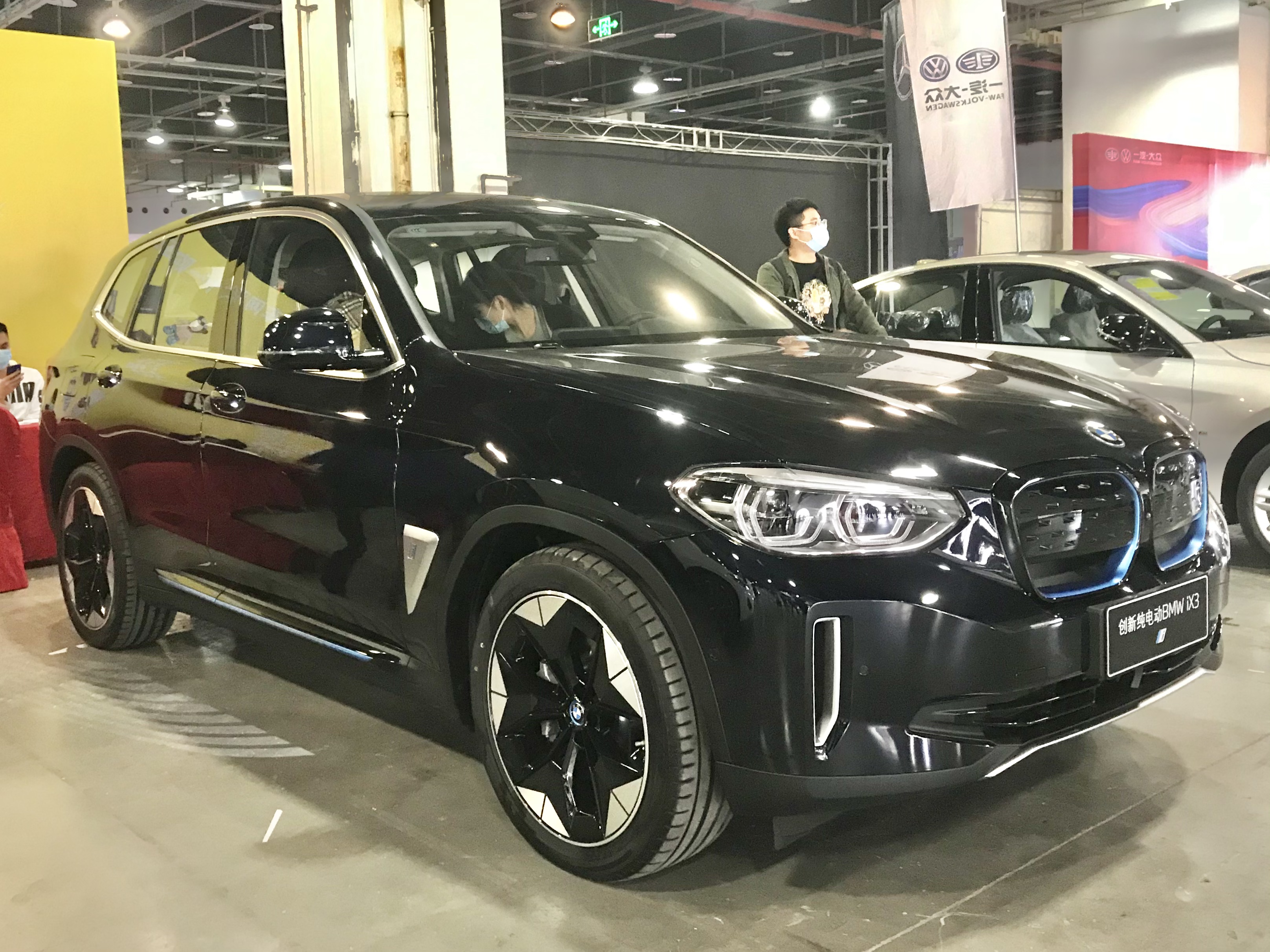
BMW iX3
The BMW iX3 is the electric X3. In this segment, it’s mentioned to support their point that BMW seems to have improved the interior feel after earlier criticism.
Neue classic cars
“Neue Klasse” is BMW’s name for a new wave of cars and design direction. The hosts are using it to say BMW is trying to make the interior feel more premium again.
steering wheel
The steering wheel is the part you hold to steer the car. They’re saying the material can wear differently over time depending on what it’s made of and how you use it.

BMW X5
The BMW X5 is BMW’s midsize luxury SUV, and it’s often used as a reference point for how BMW’s cabin materials and perceived “quality” evolve over model years. Here, they connect that to a broader point about how BMW interiors (from roughly 2020–2023) may not feel as “high touch” as earlier versions.
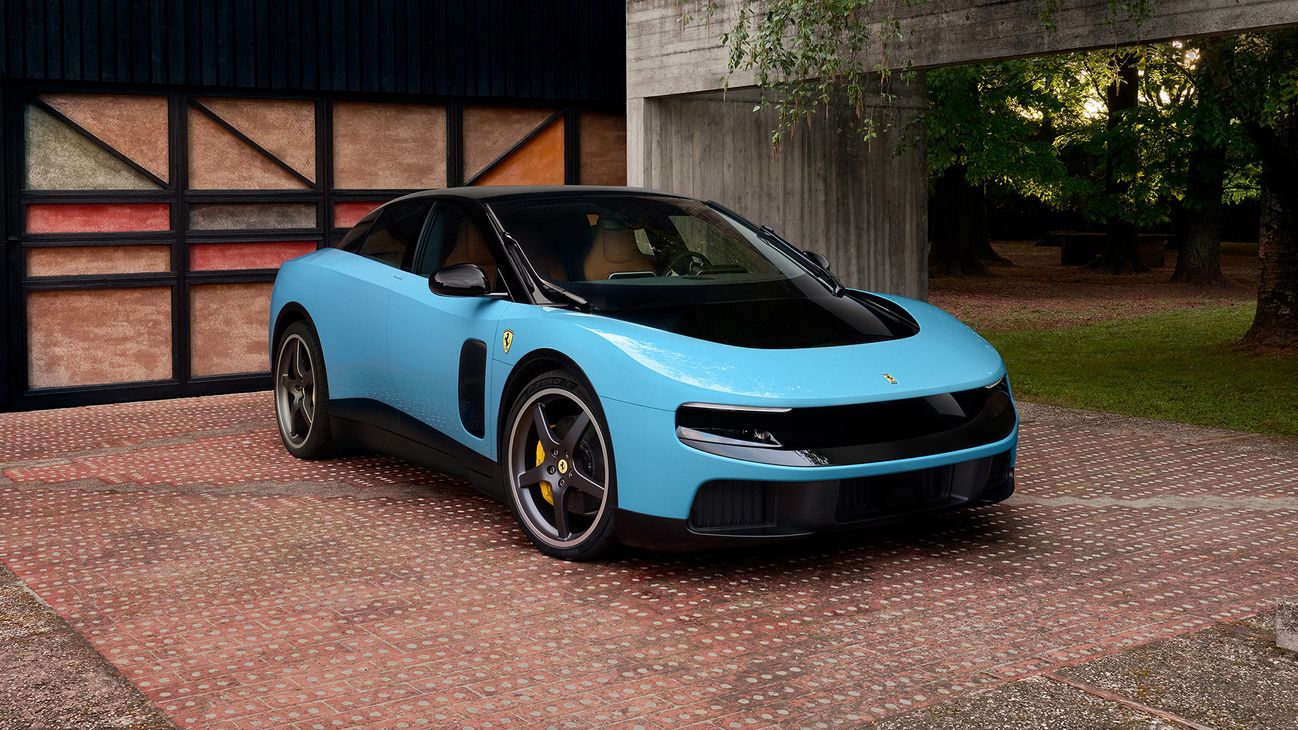
Ferrari Luce
The Ferrari Luce is a Ferrari model that people are talking about. The podcast says there’s been controversy around it, meaning not everyone agrees or it sparked debate. It’s mentioned because it’s a notable new topic in the car world.
5-speed manual transmission
A “pseudo manual transmission” is when a car tries to feel like a manual. It may let you “shift” like a manual, but the car is still using an automatic-style gearbox underneath.
traditional automatic transmission
A “traditional manual transmission” is the classic kind where you use a clutch and a shifter to change gears. The point here is that Ferrari thinks their powerful engines don’t pair well with that traditional feel.
simulating it completely through the speakers
This is when the car plays made-up engine sounds through the speakers. The hosts are saying that some versions sounded weird, but newer ones can feel more natural and fun.

Hyundai Ioniq 5N
simulating the shifts
Simulating the shifts means the car “acts” like it’s changing gears. It tries to copy the timing and feel of a manual shift even if the gearbox isn’t truly manual.
full automatic mode
“Full automatic mode” means the car is doing the work for you. You don’t have to manually choose settings—so it handles things like how the car responds when you press the pedal.
shift mode
“Shift mode” is an EV feature that tries to mimic the feeling of shifting gears. Instead of changing gears mechanically, the car changes how it delivers power so it feels like a shift.

Lexus Rz
The Lexus RZ is an electric Lexus. The host is talking about its “shift mode,” which is supposed to make the car feel like it’s changing gears, but they say it doesn’t work well.
start-stop feature
A start-stop feature turns the engine off when you’re stopped (like at a light) and turns it back on when you go. It’s mainly there to help reduce pollution and save fuel.
gated manual shifter
A gated manual shifter is a gear lever that moves into fixed gear positions, like in many classic manual cars. It gives you a more “real” shifting feel because the shifter is guided into the right slots.
drive-by-wire
Instead of a physical cable or rod directly moving the transmission, the car uses electronics. Your shifter movement becomes an electronic signal that tells the car what to do.
DCT
This is a transmission with two clutches working in parallel. That lets it switch gears faster than a traditional automatic, because it can pre-stage the next gear.
simulated manual EV
It’s when the car lets you choose gears like a manual, but it’s still an automatic system doing the work. You get the “manual” feel without actually controlling the clutches directly.
overdrive gear
Overdrive gears are the ones meant for highway cruising. They help the engine spin slower so the car can be more efficient and relaxed at speed.
proper feel
“Proper feel” is about whether the car responds in a way that feels right to the driver. It’s not just about shifting—it’s about making the response match your expectations.
manual cars
A manual car is one where you shift gears yourself using a clutch pedal. In stop-and-go traffic, you have to keep using the clutch a lot, which can be annoying.
clutch
The clutch is a pedal that helps you change gears smoothly. Press it in, shift gears, then release it so power transfers again.
manual mode
Manual mode lets you drive more directly by choosing the gears (or how the car shifts). It’s often used when you want more control, like on winding roads.
gated sort of manual
A “gated” manual-style shifter refers to a shift mechanism with defined positions and a more mechanical feel, like a traditional gear lever. In modern cars, it can be used to mimic the sensation of a conventional manual even when the drivetrain is electronically controlled.
programming
Here, “programming” means the car’s computer settings that control how the powertrain behaves. It’s what helps the car feel smooth when you’re trying to drive it like a manual.
electric power steering
Electric power steering (EPS) uses an electric motor to help turn the wheels, instead of a hydraulic pump. Early EPS systems were sometimes criticized for not feeling as natural, but later generations improved steering “feel” and responsiveness.
beta test
A beta test is like a trial run before something is fully finished. The idea is to collect feedback while it’s still being improved.
Daytona
“Daytona” is being used as a style reference to the classic race-car look from the Daytona era. It’s more about the vibe than a specific car you can buy today.
long nose front engine
This phrase means the engine is up front, and the car’s front end is stretched out in design. It’s a traditional layout that can affect how the car feels when you drive it.
12-cylinder
A “12 cylinder” engine has twelve combustion chambers. People like them because they tend to run smoothly and sound special, and that’s why the host keeps bringing it up.

Ferrari 599
Ferrari 599 is a V12 Ferrari with the engine up front, giving it that long-nose look. The host is saying this is the kind of Ferrari they prefer.
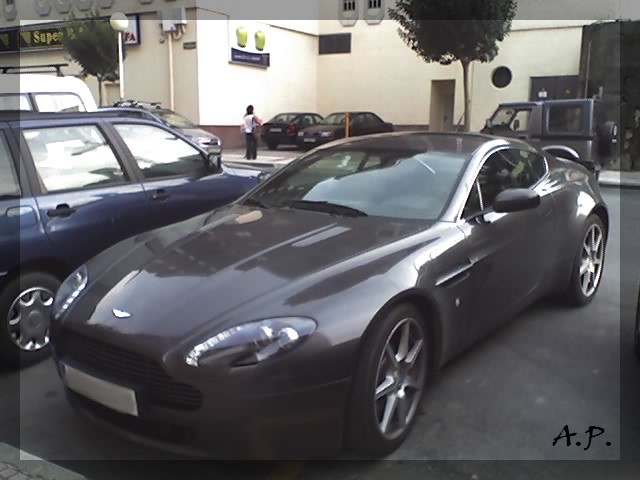
Aston Vantage V8
Aston Martin Vantage V8 is the V8 version of Aston Martin’s Vantage. The host likes it, but they’re saying that if they’re buying an Aston Martin, they personally want the bigger 12-cylinder engine instead.
heavier
Here “heavier” means the bigger engine option adds weight to the car. That extra weight can make the car feel different to drive compared with a lighter engine.
more stuff to break
This is basically the idea that a bigger, more complex engine can have more parts that could fail. It’s a common reason people hesitate before buying a higher-end engine option.
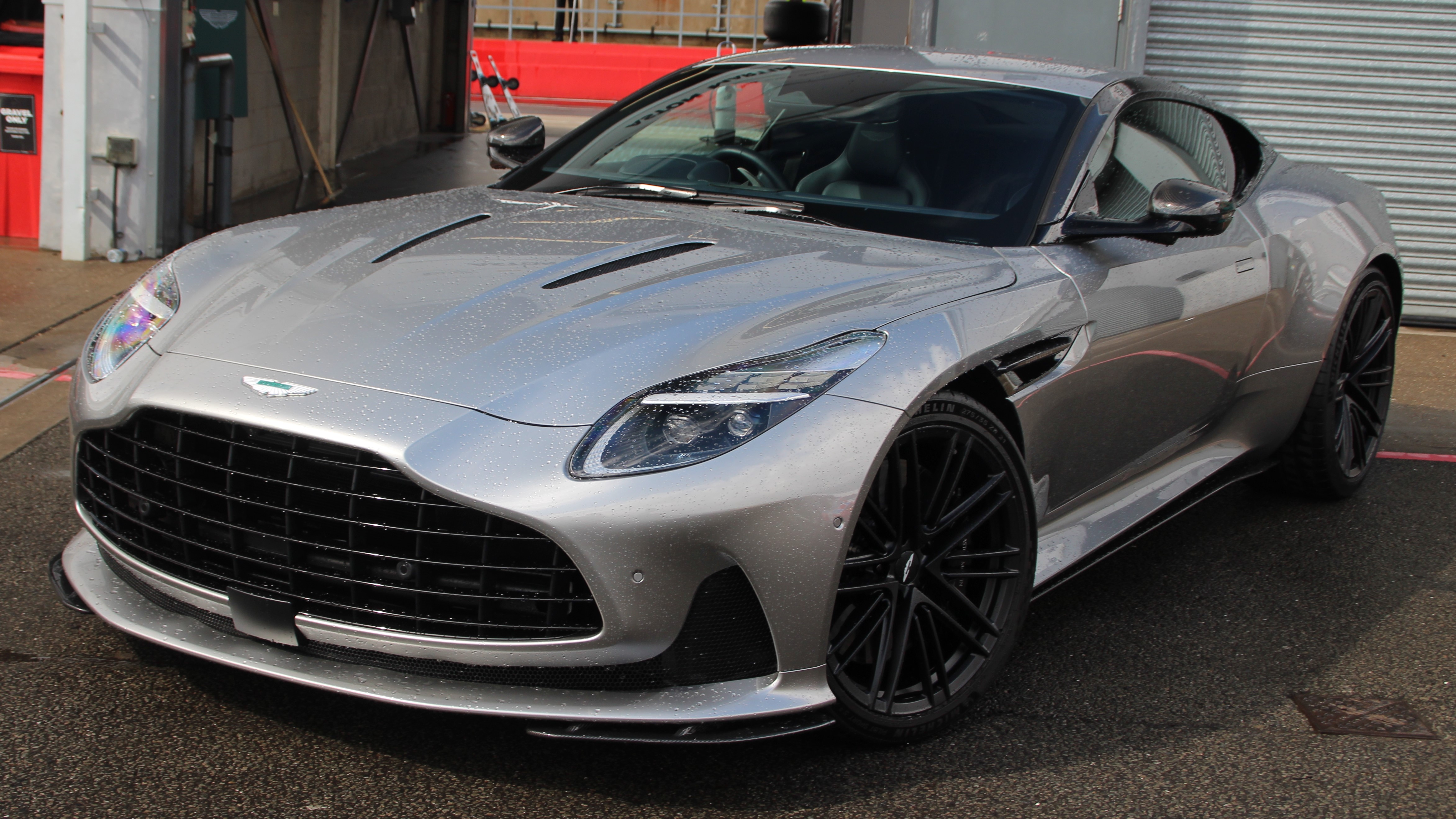
Db12 Volante
The DB12 Volante is Aston Martin’s open-top version of the DB12. The host is saying it’s the best Aston Martin you can buy at the moment.
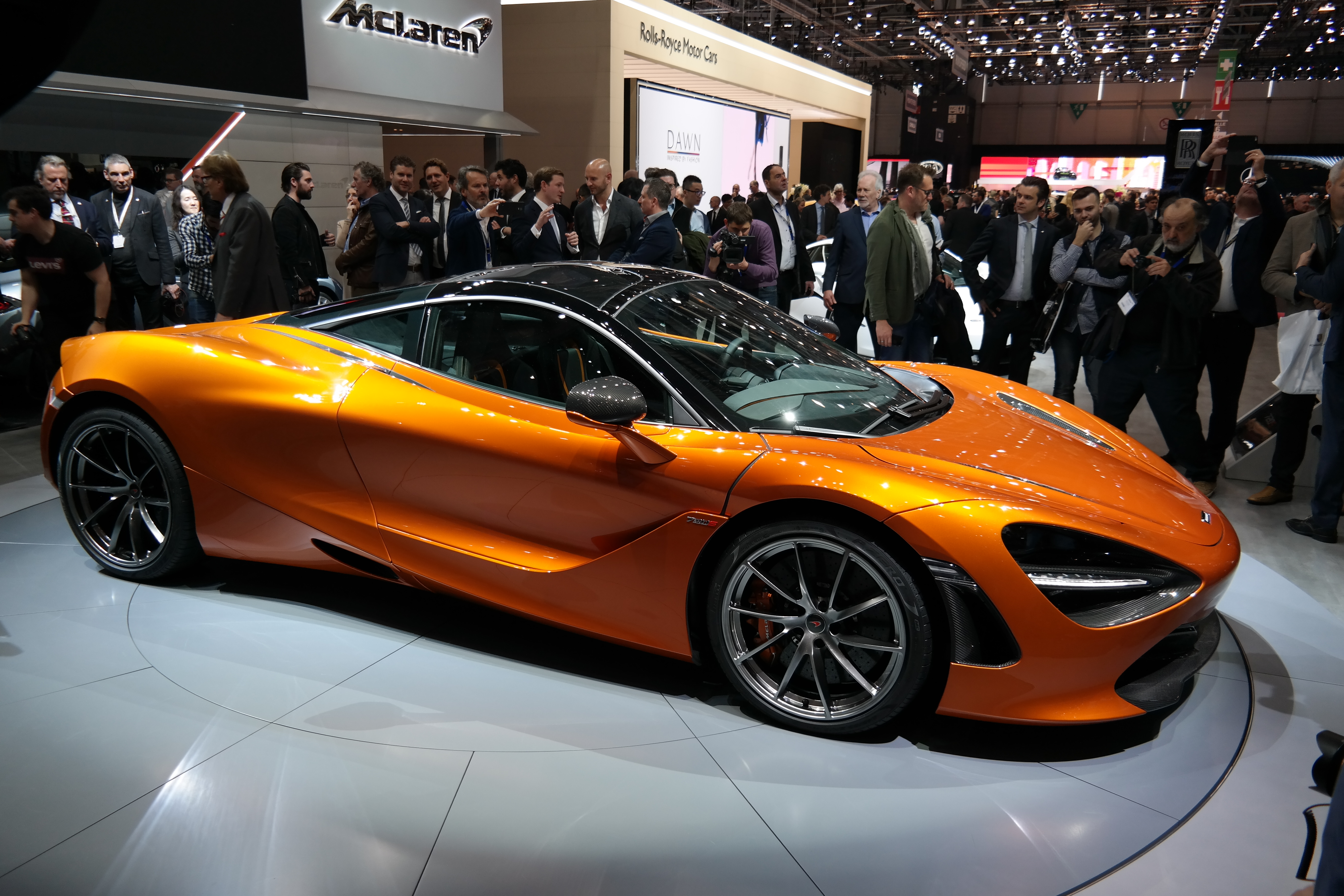
McLaren 720S
The McLaren 720S is a high-end supercar that’s designed to feel fast and sharp. In this discussion, it’s the car people tend to love after driving, and it’s being weighed against a Ferrari choice based on styling.
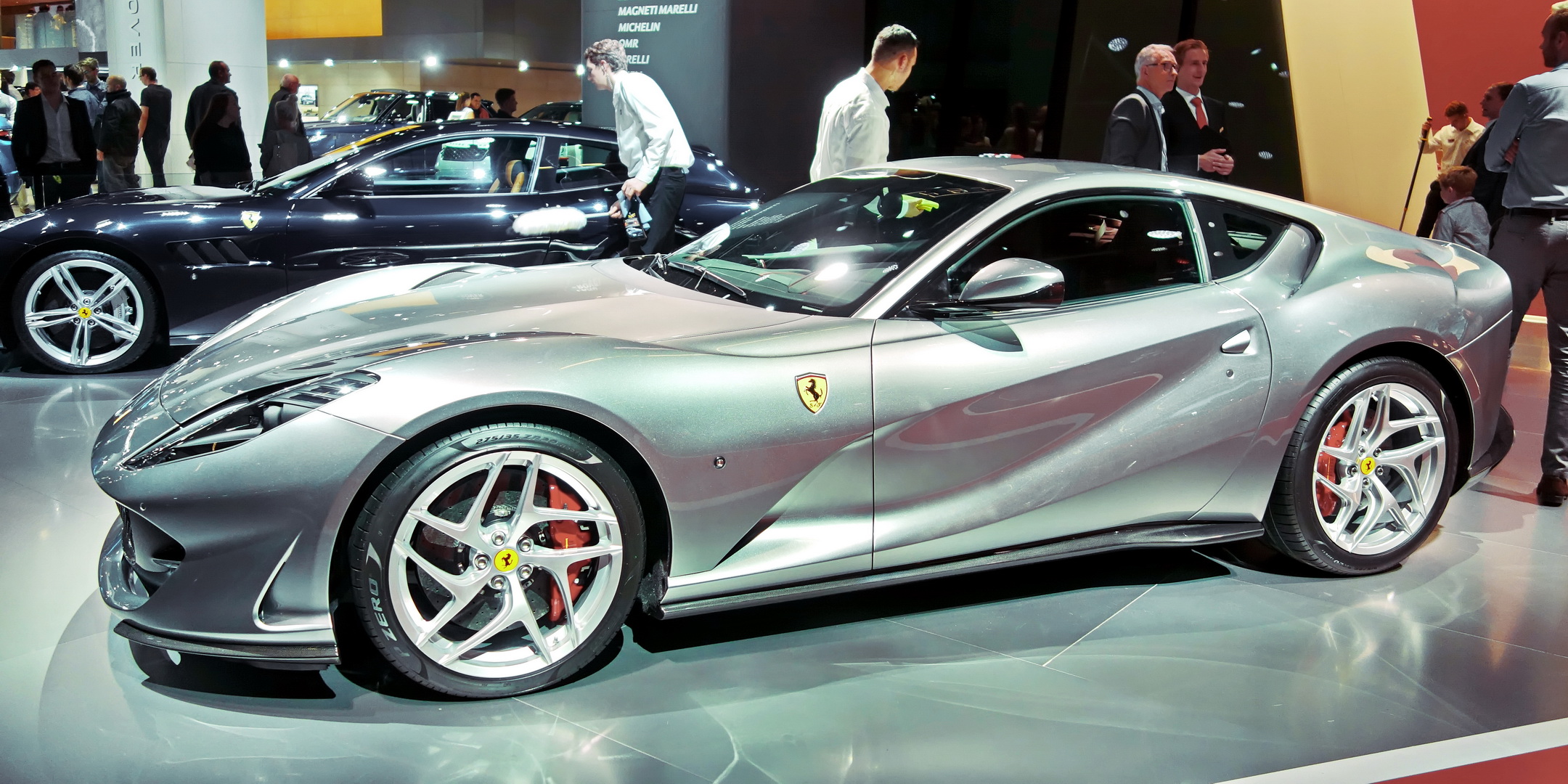
Ferrari 812
The Ferrari 812 is a top-tier Ferrari that’s famous for a big V12 engine that revs high. Here, the point is that someone would pick it for how it looks, even if it’s not the fastest option in the comparison.

Tesla Model S
The Tesla Model S is a fully electric car, meaning it runs on electricity instead of gas. In the podcast, it’s mentioned because the speaker is talking about Tesla’s lineup and what models are available or changing. It’s one of Tesla’s best-known electric sedans.

Tesla Model X
The Tesla Model X is a fully electric SUV. In the podcast, it’s mentioned along with the Model S while talking about Tesla’s lineup. It’s one of Tesla’s main electric SUV options.

Tesla Model Y
The Tesla Model Y is an electric SUV. Here they’re talking about a longer version that adds a third row, and whether that extra seating is worth it in real life.
dog house (greenhouse)
The “greenhouse” is the part of the car that’s basically the windows and roof over the cabin. If they raise it, it can give taller passengers more headroom in the back seats.
headroom
Headroom is how much space you have above your head. They’re saying the third row needs more headroom, so the roof area has to be shaped differently.
leg room numbers
“Leg room numbers” are the measurements carmakers publish for how much space people have for their legs. The hosts think those numbers can be misleading for the third row once you’re actually sitting there.

Ford Explorer
The Ford Explorer is a popular SUV model. They’re using it as a reference point to judge whether the third row in the longer Model Y will feel usable.

Hyundai Palisade
The Hyundai Palisade is a three-row family SUV. They’re saying the third row in the longer Model Y might feel about like what you’d get in a Palisade.
third row
The third row is the back seat area meant for extra passengers. It’s usually the tightest row, so people often judge how usable it is when they talk about leg room and head room.
wheelbase
Wheelbase is the distance between the front and rear wheels. If that distance increases, it usually changes the car’s overall shape and can help with interior space—especially for passengers in the back.
overhang
Overhang is the part of the car that sticks out past the wheels. If the wheelbase grows but the overhang doesn’t, the car’s shape and how the doors line up can feel more balanced.

Honda Crv
The Honda CR-V is a popular family SUV. In this discussion, it’s mentioned because its rear doors open wide, which makes it easier to get a child seat in and out.

Hyundai Ioniq 9
The Hyundai Ioniq 9 is an electric vehicle. The podcast mentions that a fully loaded version is around the high-$70k range and compares it to other EVs. It’s brought up because it’s part of a price-and-value comparison.

R1S
The Rivian R1S is an electric SUV with three rows. In this segment, it’s mentioned because it costs more than some other large EVs they’re comparing it to.

EV 9
The Kia EV9 is a three-row electric SUV. They mention it because it’s being compared on price to other big EVs, like the IONIQ 9.
calligraphy
“Calligraphy” is Hyundai’s label for a nicer, more premium version of a vehicle. It usually means upgraded materials and styling compared with the base trims.
hybrid all-wheel drive
“Hybrid all-wheel drive” means the car uses both a gas engine and an electric motor, and it can send power to all four wheels. That can help with grip and can also improve fuel economy.
FSD package
The “FSD package” is Tesla’s software add-on that enables more advanced driving-assist features. It costs extra, and the discussion here is about how using the car’s tech doesn’t necessarily mean you can ignore the rules while driving.
touchscreen
A touchscreen is the car’s main screen for things like maps and controls. In this segment, they’re saying you can use the car’s screen, but you can’t use your phone while driving.
self-driving mode
“Self-driving mode” means the car is doing some of the driving for you. But in many cars, you still have to pay attention and be ready to take control.
fine print
“Fine print” means the detailed legal wording. The host is saying the exact wording of the rule is what matters if the situation ends up in court.
level three driving
“Level three” means the car can drive itself in certain situations and doesn’t always require you to constantly micromanage it. But if it asks you to take over, you have to respond.
level two
“Level two” means the car can handle some driving tasks, like steering and keeping speed, but you still have to watch everything. You’re still responsible for taking over if the car gets confused.
Waymo mode
Waymo is the autonomous-driving company being used as a benchmark for higher automation. In this segment, “Waymo mode” is equated with level three, implying the car (not the driver) is expected to take more responsibility in that scenario.
hurry mode
“Hurry mode” is a Tesla setting that changes how aggressively the system drives (for example, by targeting higher speeds). It’s relevant because it can lead to behavior that feels more assertive, including faster-than-expected speed changes.
405
“405” is shorthand for California’s Interstate 405, a major Los Angeles-area freeway. Mentioning it matters because it’s a real-world traffic environment where driver-assistance behavior can be tested and evaluated.
adaptive mode
“Adaptive mode” is a setting where the car tries to automatically adjust to what’s happening around it. Here, it’s being discussed in terms of how the car’s speed behavior can differ from a normal mode.
level three system
“Level three” means the car can do a lot of the driving for you, like steering and speed, but it’s not fully hands-off forever. The driver still has to be ready to take control if the car asks.